Developmental changes in the L-arginine/nitric oxide
pathway from infancy to adulthood: plasma asymmetric
dimethylarginine levels decrease with age
Thomas Lu¨cke
1,*, Nele Kanzelmeyer
1,
Markus J. Kemper
2, Dimitrios Tsikas
3and
Anibh M. Das
1 1Department of Pediatrics, Hannover Medical
School, Hannover, Germany
2
Department of Pediatrics, University of Zurich,
Zurich, Switzerland
3
Institute of Clinical Pharmacology, Hannover
Medical School, Hannover, Germany
Abstract
Background: The L-arginine/nitric oxide (NO) pathway
has
multiple
physiological
functions
including
vasodilation, inhibition of platelet aggregation and
neurotransmission.
Asymmetric
dimethylarginine
(ADMA), an endogenous inhibitor of all known NO
synthase isoforms, has adverse effects on renal and
cardiovascular function in adults. It is unknown
whether ADMA might also exert similar effects in
younger individuals including infants. Also, reference
data for important members of the L-arginine/NO
family, notably ADMA and the NO metabolites, nitrite
and nitrate, in infancy are lacking.
Methods: In the present study, we investigated the
status of the L-arginine/NO pathway in 34 healthy
vol-unteers aged 2 days to 24 years by measuring the
concentration of ADMA, nitrite, nitrate and L-arginine
in plasma and urine using gas chromatography-mass
spectrometry and gas chromatography-tandem mass
spectrometry methods.
Results: We found that ADMA levels in plasma
decreased with age (Pearson correlation coefficient
rs–0.619, p-0.001). In contrast, urinary excretion of
nitrate (rs0.471, ps0.036) and nitrite increased with
age (rs0.484, ps0.037).
Conclusions: Our study suggests that in infants ADMA
biosynthesis accompanied by an inhibition of NO
syn-thesis is higher than in adults and diminishes
consid-erably with age.
Clin Chem Lab Med 2007;45:1525–30.
Keywords: age-dependency; asymmetric
dimethyl-arginine (ADMA); childhood; infancy; nitric oxide
(NO); nitric oxide synthase (NOS).
*Corresponding author: Thomas Lu¨cke, MD, Carl-Neuberg-Straße 1, 30623 Hannover, Germany
Phone: q49-511-5323220, Fax: q49-511-5328073, E-mail: [email protected]
Introduction
In humans, three subtypes of nitric oxide synthase
(NOS) are known: the inducible NOS (iNOS), the
endothelial NOS (eNOS) and the neuronal NOS
(nNOS) (1). These enzymes oxidize the imino group
of the terminal guanidine group of L-arginine to NO,
with L-citrulline being the second reaction product (2).
NO is involved in the regulation of blood pressure via
vasodilatation in the inhibition of platelet
aggrega-tion, in the inhibition of platelet and leukocyte
adhe-sion and in neurotransmisadhe-sion (3–5). Anti-proliferative
and anti-atherosclerotic effects are attributed to NO
(6). In vivo, NO is rapidly oxidized to nitrate and
nitrite, which are excreted in urine. Since detection of
NO itself in vivo under basal conditions is very
diffi-cult (7, 8), nitrate and nitrite in plasma and urine may
serve as indirect parameters for estimating NO
pro-duction in vivo (8).
The activity of NOS is effectively controlled by
endogenous inhibitors with the L-arginine analog
asymmetric dimethylarginine (ADMA) being the most
important (9, 10). ADMA is produced by methylation
of protein-associated L-arginine catalyzed by N-methyl
protein transferases (11). After regular proteolysis,
ADMA is released into the circulation. The bulk of
endogenously produced ADMA is hydrolyzed to
L-cit-rulline and dimethylamine (DMA) by the enzyme
dimethylarginine
dimethylaminohydrolase
(DDAH)
(11), which is highly expressed in the liver (12). Both
ADMA and DMA are excreted in urine. Rough
esti-mates indicate that approximately 80% of daily
pro-duced ADMA is eliminated by the kidney as DMA (13).
In various disorders, notably renal (7, 14–17) and
cardiovascular (18–23) diseases, biosynthesis and
bioavailability of NO are compromised. Infusion of
ADMA in healthy adults has been shown to exert
adverse effects on cardiovascular and renal function
at blood concentrations similar to those found in
patients with cardiovascular pathology wreviewed in
ref. (24)x. A reduction of NO synthesis predisposes to
atherosclerosis (25). Oral administration of L-arginine
has a protective effect with respect to plaque
forma-tion (18). The concentraforma-tion of circulating and
excre-tory members of the L-arginine/NO pathway, notably
of ADMA and of nitrate and nitrite, may be a useful
prognostic tool in assessing the risk for renal and
cardiovascular diseases, especially for the
develop-ment of atherosclerosis (18, 26).
In the present study, we investigated the L-arginine/
NO pathway in healthy infants, children and
adoles-cents, and quantified both in plasma and in urine
relevant members of the L-arginine/NO family with
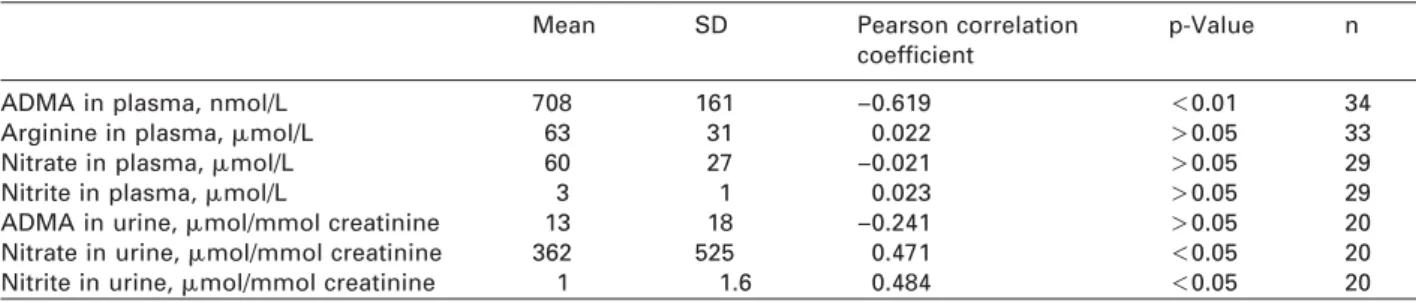
Table 1 Plasma concentrations and creatinine-corrected excretion rates of the members of the L-arginine/NO pathway meas-ured in the present study and their correlation with age.
Mean SD Pearson correlation p-Value n
coefficient
ADMA in plasma, nmol/L 708 161 –0.619 -0.01 34
Arginine in plasma,
m
mol/L 63 31 0.022 )0.05 33Nitrate in plasma,
m
mol/L 60 27 –0.021 )0.05 29Nitrite in plasma,
m
mol/L 3 1 0.023 )0.05 29ADMA in urine,
m
mol/mmol creatinine 13 18 –0.241 )0.05 20Nitrate in urine,
m
mol/mmol creatinine 362 525 0.471 -0.05 20Nitrite in urine,
m
mol/mmol creatinine 1 1.6 0.484 -0.05 20NO, nitric oxide; ADMA, asymmetric dimethylarginine.
indicator function, as well as L-arginine in plasma, the
endogenous precursor of NO.
Materials and methods
Participants
We included in our study 34 healthy volunteers (10 females, 24 males) aged between 2 days and 24 years. The volunteers were admitted to hospital for minor elective surgery (ingui-nal hernia, circumcision, orchidopexy) and blood was drawn for routine presurgical work-up. Subjects with underlying systemic diseases, such as cardiovascular, oncological, renal or metabolic disorders were excluded. The study was per-formed in accordance with the Declaration of Helsinki ethical guidelines. It was approved by the Ethics Committee of Hannover Medical School and written informed consent was obtained from the parents or the participants themselves. We obtained 2 mL of blood using EDTA monovettes (Sar-stedt, Nu¨mbrecht, Germany), as well as 5 mL of spontaneous urine from each volunteer.
Analytical methods and statistics
All biochemical parameters were analyzed by using previ-ously reported validated methods and by considering ana-lyte-specific features including blood collection and centrifugation, as well as storage of plasma and urine. In addition, quality control was performed as described else-where for the individual analytes (27–29). ADMA in plasma and urine, as well as L-arginine in plasma were determined by gas chromatography-tandem mass spectrometry (GC-MS/MS) on a TSQ 7000 quadrupole mass spectrometer (ThermoElectron, Dreieich, Germany), as described else-where (27). Nitrate and nitrite in plasma and urine were determined simultaneously by gas chromatography-mass spectrometry (GC-MS) on a DSQ quadrupole mass spectro-meter (ThermoElectron, Dreieich, Germany), as described previously (28). Urinary excretion of the biochemical para-meters was corrected for creatinine excretion. Urinary cre-atinine was determined by HPLC, as described recently (29). Sample size for the single parameters varied due to the limited amount of urine and blood available in young children.
Data are presented as mean (standard deviation, SD) and were compared using the Student t-test for unpaired sam-ples (SPSS, version 13; SPSS Inc., Chicago, IL, USA). Cor-relation of circulating and excretory biochemical parameters with age was assessed using the Pearson correlation test (SPSS, version 13). A p-0.05 value was considered statisti-cally significant.
Results
The mean concentration of ADMA, L-arginine, nitrite
and nitrate in plasma and the mean
creatinine-cor-rected urinary excretion of ADMA, nitrite and nitrate
of healthy volunteers investigated in the present
study are summarized in Table 1. Pearson correlation
coefficient (r) obtained from the correlation of each of
these biochemical parameters with subject age are
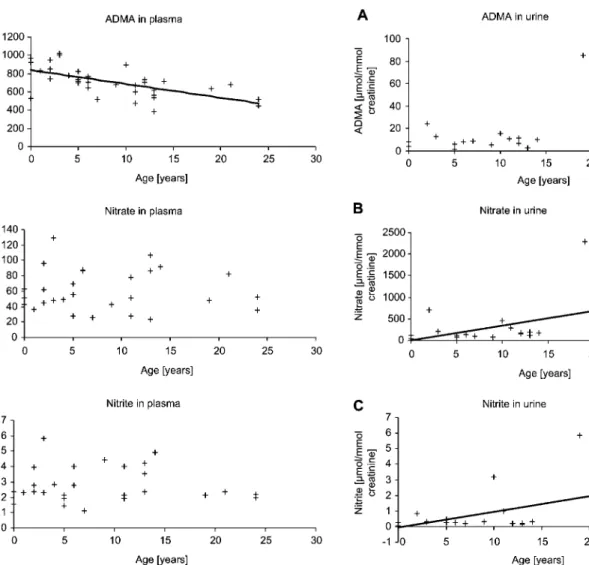
reported in Table 1. These correlations are graphically
shown for circulating (Figure 1) and excretory (Figure
2) ADMA and nitrate and nitrite.
We found a decrease in ADMA concentration in
plasma with increasing age (rs–0.619, p-0.01;
Fig-ure 1A). This finding was accompanied by increases
of
urinary
excretion
rates
of
nitrate
(rs0.471,
ps0.036; Figure 2B) and nitrite (rs0.484, ps0.037;
Figure 2C) with increasing age. No significant
age-dependent changes were found for nitrate in plasma
(ps0.92; Figure 1B), nitrite in plasma (ps0.91; Figure
1C), L-arginine in plasma (ps0.90; data not shown)
and ADMA in urine (ps0.13; Figure 2A).
Gender differences were not detected in our study.
Furthermore, no significant correlation was found
between ADMA in plasma and ADMA in urine, ADMA
in plasma and nitrate or nitrite in plasma, ADMA in
plasma and nitrate or nitrite in urine, ADMA in urine
and nitrate or nitrite in plasma, and ADMA in urine
and nitrate or nitrite in urine (data not shown).
Discussion
Data in the literature on the concentration in the
cir-culation and in the urine of relevant members of the
L-arginine/NO family, e.g., on nitrite and nitrate
reflecting NO production rate and ADMA reflecting
extent of NOS inhibition, in young healthy subjects
are rare and heterogeneous (15–17, 19, 20, 27, 30, 31)
(Tables 2 and 3). Also, in most of these studies sample
size was very small. In addition, a comprehensive
analysis of the above-mentioned members of the
L-arginine/NO family is not reported in any of these
studies. This lack of data makes it difficult to assess
changes of these parameters, and thus of the status
of the L-arginine/NO pathway under
pathophysio-logical conditions including inborn diseases, such as
citrullinemia (32) or Schimke-immuno-osseous
dys-Figure 1 Correlation between plasma concentration of (A) asymmetric dimethylarginine (ADMA) (ns34, rs–0.619, p-0.05), (B) nitrate (ns29, rs–0.021, p)0.05), or (C) nitrite (ns29, rs0.023, p)0.05) and age of healthy infants and young adults.
Figure 2 Correlation between urinary creatinine-corrected excretion rate of (A) asymmetric dimethylarginine (ADMA) (ns20, rs–0.241, p)0.05), (B) nitrate (ns20, rs0.471, p-0.05), or (C) nitrite (ns20, rs0.484, p-0.05) and age of healthy infants and young adults.
plasia (33). In our opinion, there is a need to establish
comprehensive reference data for infants, children,
teenagers and adolescents since the L-arginine/NO
pathway is involved in the pathogenesis of different
pathological states, e.g., renal (7, 14–17) and
cardio-vascular (18–23) diseases or hyperlipidemia (26, 34).
In the present study, we investigated the status of
the L-arginine/NO pathway in 34 healthy individuals
aged 2 days to 24 years by measuring ADMA,
L-argi-nine, nitrate and nitrite both in plasma and in urine
using GC-MS/MS and GC-MS techniques. We found
that
during
childhood
ADMA levels
in plasma
decreased considerably from about 1000 nmol/L in
infancy to approximately 400 nmol/L in adolescence
(Figure 1A). To the best of our knowledge, a
correla-tion between ADMA in plasma and age has not yet
been reported in healthy children (aged 2 days to
16 years). The concentration of ADMA in plasma of
healthy adolescents (aged 16–24 years) involved in
the present study is very close to that reported in the
literature (Table 3) (35–37). Interestingly, in healthy
adults plasma ADMA concentration has been found
to correlate positively with age wreviewed in ref. (35)x.
Thus, in a group of 157 healthy adults circulating
ADMA concentration correlated with age (rs0.44,
p-0.001); however, ADMA concentration increased
from 430 nmol/L for young adults (20–30 years) to
only 540 nmol/L for elderly adults (70–80 years) (35).
Therefore, numerically the decrease of circulating
ADMA concentration by almost 600 nmol/L within the
first 20 years of life can be regarded as dramatic in
comparison with the increase by only 110 nmol/L of
ADMA from 20 to 80 years of age. Nevertheless, small
increases in circulating ADMA concentration in
adult-hood should not be underestimated, because
increas-es of the order of 100 nmol/L in circulating ADMA
concentration may be associated with pathologically
highly relevant conditions, such as coronary artery
disease (38) and other cardiovascular and renal
dis-eases (35–37). Unlike in circulation, ADMA excretion
in urine remained almost unchanged over age (Figure
2A). Therefore, it is unlikely that the considerable
age-dependent decrease of ADMA in plasma found in our
study is due to an increased renal excretion from the
postnatal period until adulthood. A more likely
expla-nation could be a decrease of ADMA synthesis, an
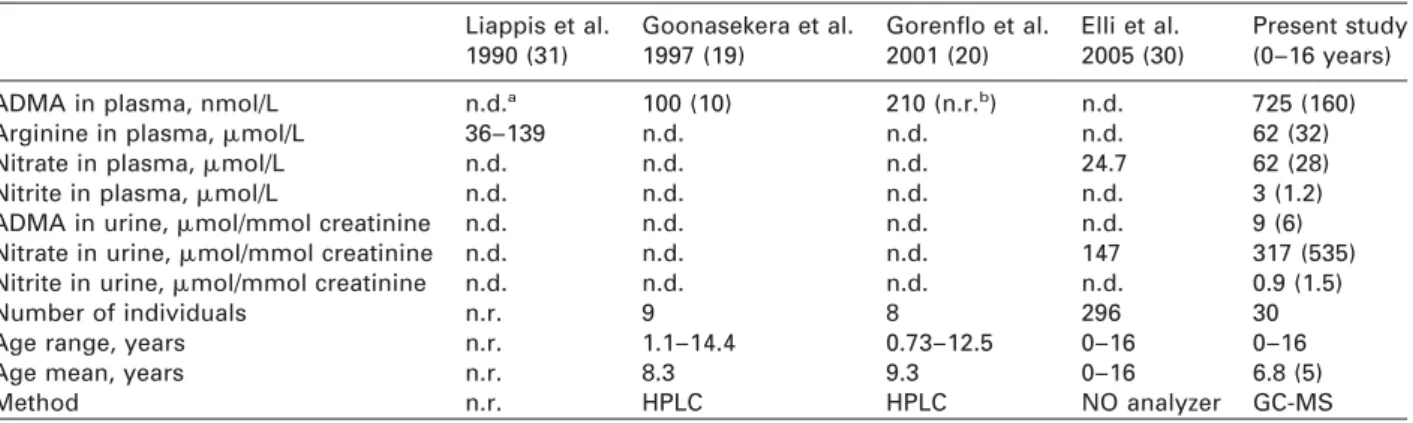
Table 2 Summary of reported plasma concentrations and creatinine-corrected excretion rates of members of the L-arginine/ NO pathway in healthy children.
Liappis et al. Goonasekera et al. Gorenflo et al. Elli et al. Present study 1990 (31) 1997 (19) 2001 (20) 2005 (30) (0–16 years)
ADMA in plasma, nmol/L n.d.a 100 (10) 210 (n.r.b) n.d. 725 (160)
Arginine in plasma,
m
mol/L 36–139 n.d. n.d. n.d. 62 (32)Nitrate in plasma,
m
mol/L n.d. n.d. n.d. 24.7 62 (28)Nitrite in plasma,
m
mol/L n.d. n.d. n.d. n.d. 3 (1.2)ADMA in urine,
m
mol/mmol creatinine n.d. n.d. n.d. n.d. 9 (6)Nitrate in urine,
m
mol/mmol creatinine n.d. n.d. n.d. 147 317 (535)Nitrite in urine,
m
mol/mmol creatinine n.d. n.d. n.d. n.d. 0.9 (1.5)Number of individuals n.r. 9 8 296 30
Age range, years n.r. 1.1–14.4 0.73–12.5 0–16 0–16
Age mean, years n.r. 8.3 9.3 0–16 6.8 (5)
Method n.r. HPLC HPLC NO analyzer GC-MS
an.d., not determined.bn.r., not reported. NO, nitric oxide; ADMA, asymmetric dimethylarginine; GC-MS, gas
chromatography-mass spectrometry.
Table 3 Summary of reported plasma concentrations and creatinine-corrected excretion rates of members of the L-arginine/ NO pathway in healthy children and young adults.
MacAllister Kielstein et al. Al Banchaabouchi et al. Tsikas et al. Present study et al. 1996 (15) 1999 (16) 2000 (17) 2003 (27) (16–24 years)
ADMA in plasma, nmol/L 360 (90) 1000 (100) 409 (87) 389 (62) 570 (108)
Arginine in plasma,
m
mol/L n.d.a 75.5 (3.9) n.d. n.d. 71 (22)Nitrate in plasma,
m
mol/L n.d. 39.1 (1.9) n.d. n.d. 54 (20)Nitrite in plasma,
m
mol/L n.d. n.d. n.d. n.d. 2.2 (0.2)ADMA in urine,
m
mol/mmol creatinine n.d. n.d. n.d. 25.2, 18.4 33 (35)Nitrate in urine,
m
mol/mmol creatinine n.d. n.d. n.d. n.d. 1034 (921)Nitrite in urine,
m
mol/mmol creatinine n.d. n.d. n.d. n.d. 2.7 (2.5)Number of individuals 9 37 37 12 4
Age range, years n.r.b n.r. n.r. 23–64 16–24
Age, years 24 (4) 68.3 (1.1) 64 (14) 35.6 22 (2.4)
Method HPLC HPLC Amino acid analyzer GC-MS GC-MS
an.d., not determined.bn.r., not reported. NO, nitric oxide; ADMA, asymmetric dimethylarginine; GC-MS, gas
chromatography-mass spectrometry.
increase in ADMA metabolism by DDAH or both. To
investigate these possibilities, additional
measure-ment of DMA in plasma and urine would be required.
In the present study, the urinary excretion rates of
nitrate and nitrite increased with age (Figure 2B, C),
reflecting elevation of whole body NO production
until adulthood. In line with the results of our present
study, we found an increase in urinary excretion of
nitrite and nitrate in a subgroup of
7–12-month-old children compared to younger children aged
1–6 months w257
m
mol/mmol creatinine vs. 360
m
mol/mmol creatinine (39)x in the control group of a
previous study comprising 18 age- and sex-matched
healthy children, suggesting that in healthy humans
NO synthesis starts to increase soon after birth. In
contrast, in Zellweger syndrome, a rare peroxisomal
disorder, urinary excretion rate of nitrite and nitrate
was found to correlate negatively with age in very
young children aged 1–12 months in the same study
(39). We do not have evidence that alimentary or
envi-ronmental factors caused the increases of nitrate and
nitrite excretion in urine of our healthy young
volun-teers. It is more likely that the age-dependent increase
of NO synthesis, as indicated by increased levels of
nitrate and nitrite in urine, is the result of decreased
ADMA levels in plasma, which would result in
reduced inhibition of all NOS isozymes (10).
L-Argi-nine plasma levels did not show any age-dependency
in our healthy young children. Thus, it is unlikely that
the diminished NO synthesis in infants as compared
to adolescents is caused by an age-dependent
decrease in substrate availability for NOS. The design
of our study and the biochemical parameters
deter-mined do not allow to estimate the activity or
expres-sion of individual NOS isoforms. Recently, circulating
nitrite has been suggested to mainly reflect eNOS
activity in humans (22). In our study, plasma nitrite
did not change with age. Should circulating nitrite
indeed reflect eNOS activity, the results of the present
study would suggest that eNOS activity is rather
unal-tered from birth until adulthood in healthy humans.
Our study supports the hypothesis that the excretion
rate of nitrate in the urine is a reliable non-invasive
method to assess gradually, long-lasting changes in
whole body NO synthesis under basal conditions, as
well as upon pharmacological or physical treatment
(8).
Children with circulating ADMA concentrations
sim-ilar to and even higher than those measured in
vari-ous diseases including renal and cardiovascular
diseases (35–38) are clinically healthy, suggesting
that in infancy alternative mechanisms may exist that
counteract the inhibitory action of ADMA on NOS.
Possible mechanisms could involve participation of
potent vasoactive substances from other pathways,
such as prostacyclin from the cyclooxygenase
path-way. It is worth mentioning that prostacyclin mimics
many NO functions, notably vasodilation and
inhibi-tion of platelet aggregainhibi-tion. The interplay of the
L-arginine/NO pathway with the cyclooxygenase
path-way observed previously in the Zellweger syndrome
(39) is supportive of such a concept.
In summary, we found that ADMA in plasma fell
considerably with age in a group of young healthy
individuals and that this fall was accompanied by an
increase of nitrate and nitrite excretion in urine. We
hypothesize that NOS-antagonism by ADMA is more
pronounced in infants compared to young adults. Our
findings may be of particular pathophysiological
rel-evance, because in adults a slight elevation of ADMA
concentration in plasma has been identified as a risk
factor for renal and cardiovascular diseases. Long
lasting changes in whole body NO synthesis are best
assessed by measuring urinary excretion of nitrate.
Acknowledgements
The authors would like to thank Bibiana Beckmann for excel-lent laboratory assistance and Frank-Mathias Gutzki for per-forming mass spectrometry analyses. We are grateful to Dr. Bernhard Vaske, Biometric Institute, Medical School of Han-nover, HanHan-nover, Germany for helping us with statistical analysis.
References
1. Forstermann U. Endothelial NO synthase as a source of NO and superoxide. Eur J Clin Pharmacol 2006;62:(Suppl 13):5–12.
2. Marletta MA. Nitric oxide synthase structure and mecha-nism. J Biol Chem 1993;268:12231–4.
3. Moncada S, Bolanos JP. Nitric oxide, cell bioenergetics and neurodegeneration. J Neurochem 2006;97:1676–89. 4. Moncada S, Higgs EA. The discovery of nitric oxide and
its role in vascular biology. Br J Pharmacol 2006; 147(Suppl 1):S193–201.
5. Rees D, Palmer R, Moncada S. Role of endothelium-derived nitric oxide in the regulation of blood pressure. Proc Natl Acad Sci USA 1989;86:3375–8.
6. Cooke JP, Dzau VJ. Nitric oxide synthase: role in the genesis of vascular disease. Annu Rev Med 1997;48: 489–509.
7. Tolins JP, Palmer RM, Moncada S, Raij L. Role of endo-thelium-derived relaxing factor in regulation of renal hemodynamic responses. Am J Physiol 1990;258:H655– 62.
8. Tsikas D, Gutzki FM, Stichtenoth DO. Circulating and excretory nitrite and nitrate as indicators of nitric oxide synthesis in humans: methods of analysis. Eur J Clin Pharmacol 2006;62(Suppl 13):51–9.
9. Vallance P, Leone A, Calver A, Collier J, Moncada S. Endogenous dimethylarginine as an inhibitor of nitric oxide synthesis. J Cardiovasc Pharmacol 1992;20(Suppl 12):S60–2.
10. Tsikas D, Boger RH, Sandmann J, Bode-Boger SM, Fro-lich JC. Endogenous nitric oxide synthase inhibitors are responsible for the L-arginine paradox. FEBS Lett 2000; 478:1–3.
11. Leiper JM, Vallance P. The synthesis and metabolism of asymmetric dimethylarginine (ADMA). Eur J Clin Phar-macol 2006;62(Suppl 13):33–8.
12. Kimoto M, Whitley GS, Tsuji H, Ogawa T. Detection of NG,NG-dimethylarginine dimethylaminohydrolase in human tissues using a monoclonal antibody. J Biochem (Tokyo) 1995;117:237–8.
13. Achan V, Broadhead M, Malaki M, Whitley G, Leiper J, MacAllister R, et al. Asymmetric dimethylarginine caus-es hypertension and cardiac dysfunction in humans and is actively metabolized by dimethylarginine dimethyl-aminohydrolase. Arterioscler Thromb Vasc Biol 2003;23: 1455–9.
14. Vallance P, Leone A, Calver A, Collier J, Moncada S. Accumulation of an endogenous inhibitor of nitric oxide synthesis in chronic renal failure. Lancet 1992;339:572–5. 15. MacAllister RJ, Rambausek MH, Vallance P, Williams D, Hoffmann KH, Ritz E. Concentration of dimethyl-L-argi-nine in the plasma of patients with end-stage renal fail-ure. Nephrol Dial Transplant 1996;11:2449–52.
16. Kielstein JT, Boger RH, Bode-Boger SM, Schaffer J, Barbey M, Koch KM, et al. Asymmetric dimethylarginine plasma concentrations differ in patients with end-stage renal disease: relationship to treatment method and ath-erosclerotic disease. J Am Soc Nephrol 1999;10:594– 600.
17. Al Banchaabouchi M, Marescau B, Possemiers I, D’Hooge R, Levillain O, De Deyn PP. NG, NG-dimethyl-arginine and NG, NG-dimethylNG-dimethyl-arginine in renal insuffi-ciency. Pflugers Arch 2000;439:524–31.
18. Boger RH, Bode-Boger SM, Thiele W, Junker W, Ale-xander K, Frolich JC. Biochemical evidence for impaired nitric oxide synthesis in patients with peripheral arterial occlusive disease. Circulation 1997;95:2068–74. 19. Goonasekera CD, Rees DD, Woolard P, Frend A, Shah V,
Dillon MJ. Nitric oxide synthase inhibitors and hyperten-sion in children and adolescents. J Hypertens 1997; 15:901–9.
20. Gorenflo M, Zheng C, Werle E, Fiehn W, Ulmer HE. Plas-ma levels of asymmetrical dimethyl-L-arginine in patients with congenital heart disease and pulmonary hypertension. J Cardiovasc Pharmacol 2001;37:489–92. 21. Haynes WG, Noon JP, Walker BR, Webb DJ. Inhibition
of nitric oxide synthesis increases blood pressure in healthy humans. J Hypertens 1993;11:1375–80. 22. Kleinbongard P, Dejam A, Lauer T, Jax T, Kerber S,
Gharini P, et al. Plasma nitrite concentrations reflect the degree of endothelial dysfunction in humans. Free Radic Biol Med 2006;40:295–302.
23. Maas R, Boger RH. Old and new cardiovascular risk fac-tors: from unresolved issues to new opportunities. Athe-roscler Suppl 2003;4:5–17.
24. Kielstein JT, Tsikas D, Fliser D. Effects of asymmetric dimethylarginine (ADMA) infusion in humans. Eur J Clin Pharmacol 2006;62(Suppl 13):39–44.
25. Boger RH, Bode-Boger SM, Brandes RP, Phivthong-ngam L, Bohme M, Nafe R, et al. Dietary L-arginine reduces the progression of atherosclerosis in cholesterol-fed rabbits: comparison with lovastatin. Circulation 1997;96:1282–90.
26. Boger RH, Bode-Boger SM, Szuba A, Tsao PS, Chan JR, Tangphao O, et al. Asymmetric dimethylarginine (ADMA): a novel risk factor for endothelial dysfunction: its role in hypercholesterolemia. Circulation 1998;98: 1842–7.
27. Tsikas D, Schubert B, Gutzki FM, Sandmann J, Frolich JC. Quantitative determination of circulating and urinary asymmetric dimethylarginine (ADMA) in humans by gas
chromatography-tandem mass spectrometry as methyl ester tri(N-pentafluoropropionyl) derivative. J Chroma-togr B 2003;798:87–99.
28. Tsikas D. Simultaneous derivatization and quantification of the nitric oxide metabolites nitrite and nitrate in bio-logical fluids by gas chromatography/mass spectro-metry. Anal Chem 2000;72:4064–72.
29. Tsikas D, Wolf A, Frolich JC. Simplified HPLC method for urinary and circulating creatinine. Clin Chem 2004;50: 201–3.
30. Elli M, Soylemezoglu O, Erbas D, Bakkaloglu SA, Buyan N, Ozkaya O, et al. Plasma and urine nitric oxide levels in healthy Turkish children. Pediatr Nephrol 2005;20: 1605–9.
31. Liappis N, Gobien N, Schlebusch H. wReference values of fasting serum levels of free amino acids in childrenx. Klin Padiatr 1990;202:161–7. In German.
32. Lu¨cke T, Tsikas D, Kanzelmeyer NK, Vaske B, Das AM. Elevated plasma concentrations of endogenous nitric oxide synthase inhibitor asymmetric dimethylarginine in citrullinemia. Metabolism 2006;55:1599–603.
33. Lu¨cke T, Tsikas D, Kanzelmeyer NK, Boerkoel CF, Clewing JM, Vaske B, et al. Vaso-occlusion in Schimke-immuno-osseous dysplasia: is the NO pathway involved? Horm Metab Res 2006;38:678–82.
34. Lundman P, Eriksson MJ, Stuhlinger M, Cooke JP, Hamsten A, Tornvall P. Mild-to-moderate
hypertriglyce-ridemia in young men is associated with endothelial dysfunction and increased plasma concentrations of asymmetric dimethylarginine. J Am Coll Cardiol 2001; 38:111–6.
35. Horowitz JD, Heresztyn T. An overview of plasma con-centrations of asymmetric dimethylarginine (ADMA) in health and disease and in clinical studies: methodologi-cal considerations. J Chromatogr B 2006;851:42–50. 36. Martens-Lobenhoffer J, Bode-Boger SM.
Chromato-graphic-mass spectrometric methods for the quantifica-tion of L-arginine and its methylated metabolites in biological fluids. J Chromatogr B 2006;851;30–41. 37. Teerlink T. HPLC analysis of ADMA and other methylated
L-arginine analogs in biological fluids. J Chromatogr B 2006;851:21–29.
38. Thum T, Tsikas D, Stein S, Schultheiss M, Eigenthaler M, Anker SD, et al. Suppression of endothelial progenitor cells in human coronary artery disease by the endo-genous nitric oxide synthase inhibitor asymmetric di-methylarginine. J Am Coll Cardiol 2005;46:1693–701. 39. Surdacki A, Tsikas D, Mayatepek E, Frolich JC. Elevated
urinary excretion of nitric oxide metabolites in young infants with Zellweger syndrome. Clin Chim Acta 2003; 334:111–5.