Publisher’s version / Version de l'éditeur:
Plant Cell, Tissue and Organ Culture, 106, 3, pp. 495-501, 2011-04-13
READ THESE TERMS AND CONDITIONS CAREFULLY BEFORE USING THIS WEBSITE. https://nrc-publications.canada.ca/eng/copyright
Vous avez des questions? Nous pouvons vous aider. Pour communiquer directement avec un auteur, consultez la première page de la revue dans laquelle son article a été publié afin de trouver ses coordonnées. Si vous n’arrivez Questions? Contact the NRC Publications Archive team at
[email protected]. If you wish to email the authors directly, please see the first page of the publication for their contact information.
NRC Publications Archive
Archives des publications du CNRC
This publication could be one of several versions: author’s original, accepted manuscript or the publisher’s version. / La version de cette publication peut être l’une des suivantes : la version prépublication de l’auteur, la version acceptée du manuscrit ou la version de l’éditeur.
For the publisher’s version, please access the DOI link below./ Pour consulter la version de l’éditeur, utilisez le lien DOI ci-dessous.
https://doi.org/10.1007/s11240-011-9948-0
Access and use of this website and the material on it are subject to the Terms and Conditions set forth at
A microspore embryogenesis protocol for Camelina sativa, a multi-use
crop
Ferrie, A. M. R.; Bethune, T. D.
https://publications-cnrc.canada.ca/fra/droits
L’accès à ce site Web et l’utilisation de son contenu sont assujettis aux conditions présentées dans le site LISEZ CES CONDITIONS ATTENTIVEMENT AVANT D’UTILISER CE SITE WEB.
NRC Publications Record / Notice d'Archives des publications de CNRC:
https://nrc-publications.canada.ca/eng/view/object/?id=6b417a6d-d6fd-475e-97f2-6480c375f7f2 https://publications-cnrc.canada.ca/fra/voir/objet/?id=6b417a6d-d6fd-475e-97f2-6480c375f7f2A microspore embryogenesis protocol for Camelina sativa, a multi-use crop
A.M.R. Ferrie and T.D. Bethune
Plant Biotechnology Institute – National Research Council
110 Gymnasium Place
Saskatoon, SK, S7N 0W9
Phone: (306) 975-5993
Abstract
Camelina [Camelina sativa (L.) Crantz], a member of the Brassicaceae family, has a unique oil profile that has potential both for biofuels and as a food crop. It is essential to have a doubled haploidy protocol in order to enhance breeding of this crop for prairie conditions as well as improve the yield and quality characteristics, Microspore-derived embryos have been produced from Camelina sativa. Buds 1 – 3 mm in length were selected for culture. The microspores were isolated and purified in full-strength B5 extraction medium and cultured in NLN medium with 12.5% sucrose and 12.5% polyethylene glycol 4000 (PEG) without glutamine, at a density of 10,000 microspores per mL. Glutamine was added to the cultures 72 h after extraction to give a final concentration of 0.8 g/L. The microspore cultures were maintained at 24°C in the dark. After 28 days embryos were observed and these were regenerated to plants and selfed seed was produced. The highest embryogenic frequency achieved was 38 microspore-derived embryos from 100,000 microspores.
Introduction
Camelina sativa (L.) Crantz is an underexploited member of the Brassicaeae family that has generated renewed
interest because of its unique seed oil profile. The oil content of the seed is approximately 38 – 43% with the major fatty acids being linolenic (36.2 – 39.4%), oleic (12.8 – 14.7%), linoleic (16.3 – 17.2%), and eicosenoic (14.0 – 15.5%) (Gugel and Falk 2006). Erucic acid is low (3%; Zubr 1997), as are the glucosinolates, when compared to other species (Schuster and Friedt 1998). This species has potential for human and animal nutrition and as an industrial crop. The meal can be used for livestock feed (poultry, dairy, aquaculture), fertilizer, or as protein fractions. The oil has use as a biofuel, edible oil, cosmetic, pharmaceutical, or lubricant. Camelina sativa is more resistant to drought and more tolerant to flea beetles (Gugel and Falk 2006) when compared to Brassica species; it also has resistance to Leptosphaeria maculans (Salisbury 1987) and Alternaria brassicae (Conn et al. 1988). Camelina has great potential in western Canada because of these attributes: however, further improvements in germplasm, i.e. increased yield, larger seed, higher oil content, and better meal quality, would be advantageous. There is currently limited commercial production of camelina in North America and very few breeding programs. Mutation breeding (i.e. seed mutagenesis) has resulted in lines shorter or taller than the parental line or with higher linolenic levels (Vollmann et al. 1997; Buchsenschutz-Nothdurft et al. 1998).
There have been very few published in vitro studies on camelina (Tattersall and Millam 1999; Kuvshinov et al. 2002). Protoplasts of camelina have been used in somatic hybridization with Brassica species; however, in all cases, the focus of these studies was to improve the Brassica species (Narasimhula et al. 1994; Hansen 1998; Sigareva and Earle 1999; Jiang et al. 2009).
Doubled haploidy (DH) protocols have been used in breeding programs for many years to develop improved crop varieties (Thomas et al. 2003, Ferrie and Mollers 2011). In order for doubled haploidy to be effective in a breeding program, an efficient microspore culture protocol is required. To our knowledge, there are no published haploidy protocols for camelina. The conditions leading to the induction and development of microspore-derived embryos vary depending on the species, and therefore doubled haploidy methods have to be determined for each species. A number of factors influence microspore embryogenesis including genotype, stage of microspore development, donor
plant growing conditions, media composition, and culture conditions. The objective of this study was to evaluate factors influencing microspore embryogenesis, and to develop doubled haploidy protocol for camelina.
Materials and methods
Camelina sativa seed (genotype 933) was kindly provided by Dr Mark Smith and D. Puttick of the Plant
Biotechnology Institute, Saskatoon, Saskatchewan, Canada.
Four seeds were initially planted in 15 cm pots filled with a commercial greenhouse, soil-less mixture (Sunshine #4) supplemented with 14-14-14 slow release fertilizer (Nutricote). Once established, the plants were thinned to two per pot. Pots were placed in growth chambers with a 16 h photoperiod, a day/night temperature regime of 20/15°C, and
a light intensity of 440 µmols-1m-2. Plants were watered three times a week with 0.35g/L of 20-20-20 (20%
nitrogen, 20% phosphorus, 20% potassium) dissolved in tempered tap water.
Microspore culture
Inflorescences were removed from the plant, collected on damp paper towels, and kept on ice during bud selection. All chemicals and equipment were kept cold through-out the experiment. The buds (1 – 3 mm) were put into stainless steel baskets and rinsed in 70% EtOH for 10 - 12 s. The ethanol was decanted and replaced with sterile double-distilled water for 10 – 12 s to remove all traces of ethanol. After removing the water, the buds were sterilized for 15 min in 100% bleach (6% sodium hypochlorite) followed by 3 X 5 min rinses of cold, sterile water. Buds were then transferred to a Waring blender cup (37 – 110 mL capacity) containing 50 mL of half-strength B5 medium (Gamborg et al. 1968) supplemented with 13% sucrose (designated ½ B5-13) and macerated at low speed for 12 - 15 s followed by high speed for the same length of time. The crude microspore suspension was filtered through a sterile funnel lined with 41 µm nylon screen cloth into a 50 mL centrifuge tube. The funnel was rinsed several times to maximize microspore recovery. The crude microspore suspensions were then centrifuged at 130 – 150 x g for 3 min, the supernatant was decanted and 10 mL fresh ½ B5-13 was added to resuspend the pellet. This procedure was repeated twice more for a total of three washes. Prior to the last centrifuge spin, the number of microspores was determined using a haemocytometer and the pellet was then re-suspended in culture medium appropriate for each experiment and the microspores were plated at a density of 50,000 microspores per mL, unless
otherwise noted. Ten mL of the microspore\medium solution were dispensed per 100 x 15 mm petri plate and the plates were incubated in the dark at 24°C unless otherwise noted. Embryos were counted 28 days after initial culture. The pH of all media was adjusted to 5.8. B5 extraction and B5 solid media were autoclaved, whereas the NLN media was filter-sterilized. Experiments were repeated up to six times and each experiment consisted of 5 – 40 replicates with each petri plate being one replicate. All data from the replicated experiments were analyzed using analysis of variance procedures. Where significant (P < 0.05) F-test values were observed, means were compared using Duncan’s multiple range test (P < 0.05).
Experiments evaluating the factors influencing microspore embryogenesis in Camelina sativa were as follows:
Culture medium
Donor plants were grown and microspores were extracted and purified as outlined above. Microspores were cultured in NLN (Lichter 1982) medium with 17% sucrose (632 mOsm) or NLN medium with 12.5% sucrose and 12.5% PEG 4000 (polyethylene glycol) (934 mOsm) and plated at a density of 50,000 microspores per mL. The PEG media was used within one week of preparation. Microspore cultures were incubated in the dark at 24°C continuously or 28°C for 24 h followed by 24°C. Embryos were counted after 28 days in culture.
Microspore density
Donor plants were grown and microspores were extracted as outlined above. Microspores were counted using a hemacytometer and based on this value, the required amount of NLN medium with 12.5% sucrose and 12.5% PEG 4000 was added to achieve densities of 10,000, 25,000, 50,000, 75,000, or 100,000 microspores per mL. The microspores were incubated at 24°C and embryos were counted after 28 days.
Influence of B5 extraction medium on induction of embryogenesis
Microspores were extracted and purified in B5 medium with quarter, half, or full-strength macro- and micro-nutrients and vitamins. The sucrose concentration of the B5 medium remained constant at 13%. The microspores were then cultured in NLN medium (12.5% sucrose and 12.5% PEG 4000) as outlined above at a density of 10,000 microspores per mL.
Influence of glutamine starvation on microspore embryogenesis
Microspores were extracted and purified in half-strength B5 medium and then cultured in NLN medium with 12.5% sucrose and 12.5% PEG 4000 with 0.8% glutamine (control), without glutamine, or initially without glutamine but with glutamine added at 72 h for a final concentration of 0.8% glutamine. For the glutamine addition, 1 ml of a 10X filter-sterilized stock was added to each petri plate. Microspores were cultured at a density of 10,000 microspores/ml at 24°C and embryos were counted after 28 days.
Combination of treatments
Microspores were extracted in full-strength B5 medium and then cultured at a density of 10,000 microspores/ml in NLN medium with 12.5% sucrose and 12.5% PEG 4000. A 72 h glutamine starvation was also applied and compared to cultures which had glutamine added from the beginning of the experiment.
Bud size
The floral buds were selected based on size, < 1mm, 1.1 – 2.0 mm, and 2.1 – 3.0 mm. Microspores were extracted in full-strength B5 medium and cultured at a density of 10,000 microspores/ml in NLN medium with 12.5% sucrose and 12.5% PEG 4000. A 72 h glutamine starvation was also applied.
Regeneration
Microspore-derived embryos were counted 28 days after microspore extraction. The embryos were then transferred to the light [on a shaker (New Brunswick G-10) at 50 rpm, 16 h photoperiod, 22°C, light intensity of 38 µmol-1m-2]
for continued development and to allow the embryos to become green. After 5 - 10 days, the embryos were plated onto solid medium and kept at 22°C, with a light intensity of 110 µmol-1m-2, and a 16 h photoperiod. The standard
Brassica napus regeneration media was used (½ strength B5, 1% sucrose, 0.8% agar, pH 5.8) (Gamborg et al. 1968).
After approximately 6-8 weeks, plantlets with well developed roots and shoots were transferred to a commercial greenhouse, soil-less mixture (Sunshine #4). Plants were maintained at 20/15°C, 16 h photoperiod and a light intensity of 440 µmols-1m-2. Once flowering was initiated, plants were staked and bagged to ensure self pollination.
Results and Discussion
Camelina has potential as a crop for the Canadian prairies because of its drought tolerance, oil quality, disease resistance, and insect tolerance. Development of camelina germplasm with larger seed, higher seed yield, higher oil content, and better meal quality would be beneficial for the camelina industry. Doubled haploidy is a tool to assist the breeder in developing homozygous, true breeding lines. In order to develop an efficient doubled haploidy protocol, a number of factors must be evaluated. These factors include developmental stage of the pollen grain, medium constituents, and culture conditions. In the camelina experiments, variation in embryogenic frequencies was observed between the experiments of similar treatment (Table 1). This could be due to the plant to plant variation within the donor plants, as line 933 is a breeding line and not homozygous. Plant to plant variation for embryogenic response has been observed in Brassica and Saponaria species (Phippen and Ockendon 1990; Kernan and Ferrie 2006).
The composition of the medium in which microspores are cultured is an important factor influencing microspore embryogenesis. Preliminary experiments in camelina using basal media compositions commonly used in androgenesis indicated that there was no response from two formulations evaluated, i.e. N6 (Chu 1978) and KFWC (Kuhlmann and Foroughi-Wehr 1989). There was minimal response from NN (Nitsch and Nitsch 1969) (data not shown). Callus and limited embryo development was also observed in NLN. Microspore culture experiments utilizing NLN with 13% sucrose or 25% PEG gave little embryo development, despite being beneficial in Brassica (Ferrie and Keller 2007), a related species. Further evaluation with NLN medium compared two sucrose/osmoticum levels: NLN with 17% sucrose and NLN with 12.5% sucrose and 12.5% PEG 4000. Microspores were incubated at two different temperatures (24°C, 28°C for 24 h followed by 24°C). In all three experiments at both temperatures, more embryos were produced in the medium with sucrose and PEG 4000 compared to the medium with sucrose alone, however, this difference was only statistically significant in one experiment (Table 1). The frequency of microspore embryogenesis was low, therefore further evaluation was required. Medium with PEG 4000 has enhanced microspore embryogenesis in some Brassica species (Ferrie and Keller 2007). Embryos derived from the PEG-containing medium were smaller but germinated better than embryos from sucrose-containing medium (Ferrie and Keller 2007).
The density at which the microspores are plated can influence the embryogenic response in terms of both the quantity and quality of the resulting embryos. From the experiments with camelina, the microspores plated at the lower densities (10,000 or 25,000 microspores per mL) produced more embryos when compared to the microspores plated at the higher densities of 50,000, 75,000 or 100,000 (Table 2). A low microspore density was reported beneficial in Saponaria vaccaria L. (Kernan and Ferrie 2006), but higher densities of 50,000 microspores/mL were advantageous for tobacco (Nicotiana tabacum L.; Touraev and Heberle-Bors 2003) and B. napus L. (Fan et al. 1988).
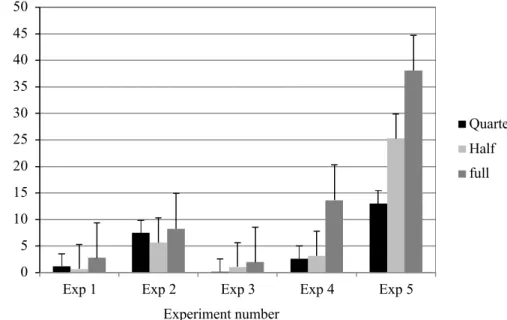
Microspores were extracted and purified in quarter, half, or full-strength B5-13 medium prior to culture in NLN medium. The microspore embryogenic response varied with the strength of the extraction media. Full-strength B5 gave a higher embryogenic response compared to the lower strengths, although there was extreme variability between the experiments in terms of overall embryo yields (Figure 1). Very little research has been conducted on the extraction medium, making this a unique finding.
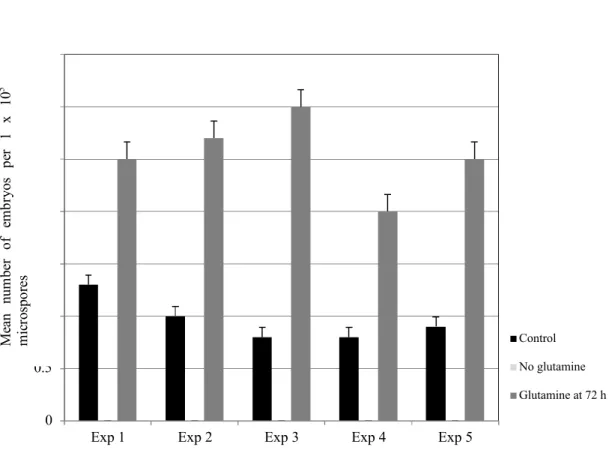
Microspores were cultured in NLN medium with or without glutamine. For some of the cultures initially without glutamine, glutamine was added after 72 h. Results show that glutamine is essential for microspore embryogenesis as no embryos resulted from the treatments without glutamine (Figure 2). In all experiments, there was a significant difference between the cultures which had glutamine from the start of culture and those cultures which had glutamine added after 72 h (Figure 2). More embryos resulted when the microspores were temporarily starved of glutamine, although embryos were still produced from treatments with glutamine in the media from initial culture. This is similar to B. rapa L. (Ferrie 2003), but in contrast to Nicotiana tabacum L. and N. rustica L. (Kyo and Harada 1985, 1986) where embryos were only produced from cultures starved of glutamine.
Further experiments involved a combination of the “best” treatments (i.e. density of 10,000 microspores/mL, full-strength B5, NLN with 12.5% sucrose and 12.5% PEG with glutamine added at 72 h, 24°C culture temperature). Although the combination of all beneficial treatments did show a significant difference in the embryogenic
frequency when compared to the control, this was not a large increase and therefore further experimentation is required (data not shown).
It has been shown in some species that bud size can be correlated to the developmental stage of the microspore (Kernan and Ferrie 2006). This allows for a quick and easy method of selecting the microspores that would be most embryogenic. Although embryos were produced at all three bud sizes, the larger bud size (2.1 mm – 3.0 mm) is not beneficial for microspore embryogenesis (Table 3). The smaller bud sizes correlated to the early – late uninucleate stage, whereas the larger bud size (2.1 – 3.0 mm) correlated to the binucleate to trinucleate stage of development (Figure 3). Further experiments will focus on the smaller bud sizes.
Like most tissue culture systems, genotype plays a major role in embryogenic response. There have been numerous studies in Brassica species evaluating microspore embryogenic response of different genotypes (Ferrie et al. 1995; Kuginuki et al. 1999; Barro and Marti 1999; Lionneton et al. 2001). Preliminary microspore studies evaluated six camelina genotypes (data not shown). Genotype 933 was the most consistent and responsive line in these studies and therefore was selected for studies on methodology development. Further studies will evaluate different camelina genotypes to the developed protocol.
Embryos (Figure 4 a) and calli developed after 28 days, but only the embryos were counted and plated on to solid media for further development (Figure 4 b). Calli were predominant in the initial cultures with the high sucrose concentrations, but embryos were predominant in the cultures with sucrose and PEG combined. Utilizing the standard Brassica regeneration protocol (full-strength B5, 2% sucrose and 0.8% agar) there was poor response, with approximately 1% of the embryos converted to plantlets (Figure 4 c; data not shown). Despite the low frequency of embryo to plantlet conversion, there was a high survival rate of plantlets transferred from in vitro to in vivo. Up to 70% of plantlets appeared to spontaneously double, as evidenced by the production of fertile flowers, such that the use of colchicine or other doubling agents was not required (data not shown). A total of 123 DH camelina plants with seed have been produced to date (Figure 4 d).
Although a highly efficient doubled haploidy protocol was not obtained for Camelina sativa, we have shown that it is feasible to produce microspore-derived embryos and regenerate these to doubled haploid plants. Further research is continuing and will focus on evaluating factors influencing microspore embryogenesis and plant regeneration. These factors will be genotype, donor plant growing conditions, media composition, and culture conditions. A doubled haploid protocol will enhance basic research and breeding of Camelina sativa.
References
Barro F, Marti A (1999) Response of different genotypes of Brassica carinata to microspore culture. Plant Breed. 118:79-81
Buchsenschutz-Nothdurft A, Schuster A, Friedt W (1998) Breeding for modified fatty acid composition via experimental mutagenesis in Camelina sativa (L.) Crtz. Industrial Crops and Products 7:291-295
Chu CC (1978) The N6 medium and its applications to anther culture of cereal crops. In: Proc. Sym. Plant Tissue Culture. Science Press, Beijing, pp 45-50
Conn KL, Tewari JP, Dihiya JS (1988) Resistance to Alternaria brassicae and phytoalexin-elicitation in rapeseed and other crucifers. Plant Science 56:21-25
Fan Z, Armstrong KC, Keller WA (1988) Development of microspores in vivo and in vitro in Brassica napus L. Protoplasma 147:191-199
Ferrie AMR (2003) Microspore culture of Brassica species. In: Maluszynski M, Kasha KJ, Forster BP, Szarejko I (eds). Doubled Haploid Production in Crop Plants, Kluwer Academic Publishers, Dordrecht, pp 205-215
Ferrie AMR, Epp DJ, Keller WA (1995) Evaluation of Brassica rapa L. genotypes for microspore culture response and identification of a highly embryogenic line. Plant Cell Rep. 14:580-584
Ferrie AMR, Keller WA (2007) Optimization of methods for using polyethylene glycol as a non-permeating osmoticum for the induction of microspore embryogenesis in the Brassicaceae. In Vitro Cellular and Developmental Biology - Plant 43:348-355
Ferrie AMR, Mollers C (2011) Haploids and doubled haploids in Brassica spp. for genetic and genomic research. Plant Cell, Tissue and Organ Culture 104:375-386
Gamborg OL, Miller RA, Ojima K (1968) Nutrient requirements of suspension cultures of soybean root cells. Experimental Cell Research 50:151-158
Gugel RK, Falk KC (2006) Agronomic and seed quality evaluation of Camelina sativa in western Canada. Canadian Journal of Plant Science 86:1047-1058
Hansen LN (1998) Intertribal somatic hybridization between rapid cycling Brassica oleracea L. and Camelina
sativa (L.) Crantz. Euphytica 104:173-179
Jiang J, Zhao X, Tian W, Li T, Wang Y (2009) Intertribal somatic hybrids between Brassica napus and Camelina
Kernan Z, Ferrie AMR (2006) Microspore embryogenesis and the development of a double haploidy protocol for cow cockle (Saponaria vaccaria). Plant Cell Reports 25:274-280
Kuginuki Y, Miyajima T, Masuda H, Hida K, Hirai M (1999) Highly regenerative cultivars in microspore culture in
Brassica oleracea L. var. capitata. Breed. Sci. 49:251-256
Kuhlmann U, Foroughi-Wehr B (1989) Production of doubled haploid lines in frequencies sufficient for barley breeding programs. Plant Cell Reports 8:78-81
Kuvshinov V, Kanerva A, Koivu K, Pehu E, Kuvshinova S (2002) A transformation system in Camelina sativa. WO 02/38779
Kyo M, Harada H (1985) Studies on conditions for cell division and embryogenesis in isolated pollen culture in
Nicotiana rustica. Plant Physiology 79:90-94
Kyo M, Harada H (1986) Control of the developmental pathway of tobacco pollen in vitro. Planta 168:427-432 Lichter R (1982) Induction of haploid plants from isolated pollen of Brassica napus. Z. Pflanzenphysiol 105:427-434
Lionneton E, Beuret W, Delaitre C, Ochatt S, Rancillac M (2001) Improved microspore culture and doubled haploid plant regeneration in the brown condiment mustard (Brassica juncea). Plant Cell Rep. 20:126-130
Narasimhula SB, Kirti PB, Bhatt SR, Prakash S, Chopra VL (1994) Intergeneric protoplast fusion between Brassica
carinata and Camelina sativa. Plant Cell Reports 13:657-660
Nitsch JP, Nitsch C (1969) Haploid plants from pollen grains. Science 163: 85-87
Phippen C, Ockendon DJ (1990) Genotype, plant, bud size and media factors affecting anther culture of cauliflowers (Brassica oleracea var. botrytis). Theoretical and Applied Genetics 79: 33-38
Salisbury PA (1987) Blackleg resistance in weedy crucifers. Cruciferae Newsletter 12:90
Schuster A, Friedt W (1998) Glucosinolate content and composition as parameters of quality of Camelina seed. Industrial Crops and Products 7:297-302
Sigareva MA, Earle ED (1999) Camalexin induction in intertribal somatic hybrids between Camelina sativa and rapid-cycling Brassica oleracea. Theoretical and Applied Genetics 98:164-170
Tattersall A, Millam S (1999) Establishment and in vitro regeneration studies of the potential oil crop species
Camelina sativa. Plant Cell, Tissue and Organ Culture 55:147-149
Thomas WTB, Forster BP, Gertsson B (2003) Doubled Haploids in Breeding. In: Maluszynski M, Kasha KJ, Forster BP, Szarejko I (eds). Doubled Haploid Production in Crop Plants, Kluwer Academic Publishers, Dordrecht, pp 337-349
Touraev A, Heberle-Bors E (2003) Anther and microspore culture in tobacco. In: Maluszynski M, Kasha KJ, Forster BP, Szarejko I (eds). Doubled Haploid Production in Crop Plants, Kluwer Academic Publishers, Dordrecht, pp 223-228
Vollmann J, Damboeck A, Baumgartner S, Ruckenbauer P (1997) Selection of induced mutants with improved linolenic content in camelina. Fett/Lipid 10:357-361
Tables and Figures:
Table 1: Effect of 17% sucrose or 12.5% sucrose and 12.5% PEG 4000 on microspore embryogenesis of Camelina
sativa line 933 at two culture temperatures (24°C, 28°C).
Exp 1 Exp 2 Exp 3
24°C 28°C 24°C 28°C 24°C 28°C NLN basal media
composition Embryos per 5 x 10
5microspores (plate)
17% Sucrose 0.8 a 1.0 a 0.7 a 0.4 a 2.8 a 1.0 b 12.5% Sucrose +
12.5% PEG 4000
2.0 a 1.5 a 2.6 a 0.6 a 7.5 a 8.0 a
Means followed by different letters in a column are significantly different at p = 0.05 level as determined by Duncan’s multiple range test.
Table 2: Effect of microspore density on microspore embryogenesis of Camelina sativa line 933.
Density
Microspores/mL Exp 1 Exp 2 Exp 3 Exp 4 Embryos per 1 x 10⁵microspores
10,000 1.60 a 4.40 a 4.40 a 3.20 a 25,000 0.72 b 4.72 a 3.12 a 2.40 b 50,000 0.80 b 0.72 b 0.28 b 0.56 c 75,000 0.13 c 0.26 b 0.08 b 0.05 c
100,000 0.06 c 0.06 b 0 b 0.04 c
Means followed by different letters in a column are significantly different at p = 0.05 level as determined by Duncan’s multiple range test.
Table 3: Influence of bud size on microspore embryogenesis of Camelina sativa line 933.
Bud size Exp 1 Exp 2 Exp 3 Exp 4 Exp 5 Embryos per 1 x 10⁵
< 1mm 4.5 a 2.5 a 1.6 b 0.1 b 0.1 b 1.1 – 2.0 mm 0.8 b 2.2 a 2.9 a 2.8 a 4.3 a 2.1 – 3.0 mm 0.2 b 0.1 b 0.4 b 0.4 b 0.9 b
Means followed by different letters in a column are significantly different at p = 0.05 level as determined by Duncan’s multiple range test.
Figure 1: Effect of quarter-strength, half-strength, and full-strength B5 was medium on microspore embryogenesis of Camelina sativa line 933.
0 5 10 15 20 25 30 35 40 45 50
Exp 1 Exp 2 Exp 3 Exp 4 Exp 5
Quarter Half full Experiment number M ea n nu m be r of em br yo s pe r 1 x 10 5 m ic ro sp or es
Figure 2: Effect of glutamine in the NLN culture medium on microspore embryogenesis of Camelina sativa line 933. 0 0.5 1 1.5 2 2.5 3 3.5
Exp 1 Exp 2 Exp 3 Exp 4 Exp 5
Control No glutamine Glutamine at 72 h Experiment number M ea n nu m be r of em br yo s pe r 1 x 10 5 m ic ro sp or es
Figure 3a: Microspore from 1 mm Camelina sativa line 933 bud, b: microspore from 2 mm Camelina sativa line 933 bud, c: microspore from Camelina sativa line 933 3 mm bud.
Figure 4a: Microspore-derived embryos of Camelina sativa line 933, b: Microspore-derived embryos of
Camelina sativa line 933 on regeneration medium, c: microspore-derived plantlet of Camelina sativa line
933, d: Doubled haploid Camelina sativa plant.
A
c
b
a
d
a
b
c
Figure legends:
Figure 1: Effect of quarter-strength, half-strength, and full-strength B5 was medium on microspore embryogenesis of Camelina sativa line 933.
Figure 2: Effect of glutamine in the NLN culture medium on microspore embryogenesis of Camelina sativa line 933.
Figure 3a: Microspore from 1 mm Camelina sativa line 933 bud, b: Microspore from 2 mm Camelina sativa line 933 bud, c: Microspore from Camelina sativa line 933 3 mm bud.
Figure 4a: Microspore-derived embryos of Camelina sativa line 933, b: Microspore-derived embryos of Camelina
sativa line 933 on regeneration medium, c: microspore-derived plantlet of Camelina sativa line 933, d: Doubled