Protective Efficacy against Respiratory Syncytial Virus following Murine
Neonatal Immunization with BBG2Na Vaccine: Influence of Adjuvants
and Maternal Antibodies
Claire-Anne Siegrist, He´le`ne Plotnicky-Gilquin, Marco Co´rdova, Monika Berney, Jean-Yves Bonnefoy, Thien Ngoc Nguyen, Paul-Henri Lambert,
and Ultan F. Power
World Health Organization Collaborating Center for Neonatal Vaccinology, University of Geneva, Geneva, Switzerland; Centre d’Immunologie Pierre Fabre, St. Julien en Genevois, France
Alum-adsorbed BBG2Na, a recombinant vaccine derived in part from the respiratory syn-cytial virus (RSV) subgroup A G protein, induced moderate antibody titers after 1 immu-nization in 1-week-old mice but conferred complete lung protection upon RSV challenge. The anti-BBG2Na IgG1-IgG2a neonatal isotype profile was suggestive of dominant Th2 responses compared with those in adults. Formulation of BBG2Na with a Th1-driving adjuvant effi-ciently shifted neonatal responses toward a more balanced and adultlike IgG1-IgG2a profile without compromising its protective efficacy. BBG2Na-induced protective immunity was maintained even after early life immunization in the presence of high titers of maternal an-tibodies. Under these conditions, the protective efficacy (86%–100%) reflected the high capacity of the nonglycosylated G2Na immunogen to escape inhibition by RSV-A–induced maternal antibodies. Thus, immunization with BBG2Na protected against viral challenge despite ne-onatal immunologic immaturity and the presence of maternal antibodies, two major obstacles to neonatal RSV vaccine development.
Respiratory syncytial virus (RSV), a pneumovirus of the Pa-ramyxoviridae family, is a major respiratory tract pathogen. It affects humans through repeated infectious episodes. Its clinical severity is maximal in infancy, in immunosuppressed persons, and in the elderly [1]. Worldwide, RSV affects most infants during their first winter season, leading to hospitalization of a significant (0.5%–2%) fraction [2–5]. Infant protection from RSV thus represents a major public health issue but is a chal-lenge that has not been met. Protection in early life requires the use of vaccines that can rapidly induce protective immune responses despite the relative immaturity of the immune system and the persistence of antibodies of maternal origin that can interfere with infant vaccine responses. Both issues are signif-icant obstacles to the development of an efficient RSV vaccine [6, 7]. In addition, there is fear that vaccine-induced disease enhancement at the time of RSV exposure (previously observed after immunization of seronegative infants with a formalde-hyde-inactivated viral vaccine [8, 9]) would occur.
Received 5 November 1998; revised 2 February 1999.
Animals were maintained in an accredited facility, and experiments were done in accordance with the guidelines of local authorities.
Financial support: Swiss National Research Foundation, Institut de Re-cherche Pierre Fabre, Swiss National Science Foundation (SCORE A grant to C.A.S.), and Swiss Confederation (fellowship to M.C.).
Reprints or correspondence: Dr. Claire-Anne Siegrist, WHO Center for Neonatal Vaccinology, C.M.U., 1 rue Michel Servet, 1211 Geneva 4, Swit-zerland ([email protected]).
The Journal of Infectious Diseases 1999; 179:1326–33
q 1999 by the Infectious Diseases Society of America. All rights reserved. 0022-1899/99/7906-0003$02.00
Among the vaccine strategies currently being explored, the recombinant fusion protein BBG2Na appears to be a promising RSV vaccine candidate. First, this recombinant protein con-tains an RSV (Long) G protein fragment (G2Na, aa 130–230), including a conserved subgroup A–specific protective epitope [10, 11] and a stretch of amino acid residues (aa 164–176) that are completely conserved in all known human A and B RSV isolates [12, 13]. Second, this G protein fragment is fused to the albumin-binding region (BB) of streptococcal protein G, which is capable of significantly enhancing the in vivo half-life of fusion partners and thus their exposure to the immune system [14–17]. This fusion partner also has carrier-related properties [15] and potentiates the immunogenicity of G2Na [16]. Third, BBG2Na is produced by prokaryotic expression in Escherichia
coli as a nonglycosylated protein, thereby circumventing the
limitations of the native G protein immunogenicity because of its heavy glycosylation pattern [17]. The strong immunogenicity and protective efficacy of alum (AlOH)–adsorbed BBG2Na have been demonstrated against intranasal RSV challenge in both adult BALB/c mice and cotton rats against both homol-ogous and heterolhomol-ogous RSV challenge [18]. This new RSV vaccine candidate is now being evaluated in phase I clinical studies.
To evaluate whether BBG2Na could induce protection against RSV lower respiratory tract infections in early life, we previously used a murine model of neonatal immunization to evaluate the neonatal immunogenicity of AlOH-adsorbed BBG2Na. Intraperitoneal (ip) BBG2Na immunization of <1-week-old BALB/c mice induced significant antibody responses
[19], but these antibody responses significantly differed from those in adult mice. First, IgG-specific BBG2Na responses to a single immunization at age 1 week reach antibody titers (∼3.5 log10) that remain 100-fold lower (5.5 log10) than those observed
in response to adult immunization. Second, infant mouse an-tibody responses to AlOH-BBG2Na also differ qualitatively from adult responses, being almost exclusively of the IgG1 is-otype, whereas similar levels of IgG1 and IgG2a antibodies are generated in adult mice [19]. In view of the quantitative and qualitative differences in immune responses induced by neo-natal versus adult immunization, in the present study we eval-uated whether neonatal BBG2Na immunization via various immunization routes could protect against an RSV challenge and whether adultlike, more balanced Th1-Th2 responses to BBG2Na could be achieved in neonates by changing the ad-juvant formulation. We also evaluated the protective efficacy of neonatal BBG2Na immunization when given in the presence of maternal antibodies to RSV-A, whether induced by maternal exposure to RSV-A or BBG2Na immunization, another critical issue for vaccine-mediated protection in early life.
Materials and Methods
Mice. Specific pathogen-free adult BALB/c inbred mice were purchased from IFFA-CREDO (L’Arbresle, France), kept under specific pathogen-free conditions at the WHO Center for Neonatal Vaccinology, and manipulated according to national and European guidelines. Breeding cages were checked daily for new births, and the day of birth was recorded as the day the litter was found. Pups were kept with mothers until weaning at age 4 weeks.
Vaccine antigen, viruses, and cells. The recombinant fusion pro-tein BBG2Na was expressed and purified in Escherichia coli as described [18, 20]. Twenty-microgram doses were used per immu-nization after resuspension either in an isotonic solution containing AdjuPhos (400 mg of aluminum dose; Superfos BioSector, Vedbaek, Denmark) or in a formulation containing the CRL8941 adjuvant in squalene (TiterMax; gift of CytRx, Norcross, GA) according to the manufacturer’s instructions. RSV subgroup A (RSV-A) Long strain (ATCC VR-26; American Type Culture Collection, Rock-ville, MD) propagation in HEp-2 cells (ECACC 86030501; Euro-pean Collection of Animal Cell Cultures, Salisbury, UK), along with the production of viral and control cell ELISA antigens were undertaken as described [20].
Immunization and challenge procedures. Litters of 6–8 mice were immunized by the routes and at the ages indicated in the figure legends. Mice were bled at regular intervals to determine BBG2Na- and RSV-A–specific serum antibody titers. When indi-cated, a booster immunization was given 3 weeks later. For ma-ternal immunization, 2 doses of BBG2Na (20 mg) or 3 doses of AlOH-adsorbed RSV-A (Long strain) were given ip at 3-week in-tervals prior to mating. Offspring were challenged with TCID50
RSV-A by intranasal instillation after being anesthetized with 2.5 mL/kg of a 4/1 mixture (vol/vol) of ketamine (Imalgene 500; Rhoˆne Me´rieux, Lyon, France) and xylazine (Rompun 2%; Bayer, Pu-teaux, France). Mice were sacrificed 5 days after challenge, coin-cident with previously characterized peak RSV lung titers [21].
Quantification of vaccine- and RSV-specific antibodies. BBG2Na- and RSV-A–specific IgG and subclass antibodies were determined by ELISA. In brief, flat-bottomed wells of microtiter plates (MaxiSorp; Nunc, Roskilde, Denmark) were coated over-night at 47C with 50 mL of a 4 mg/mL solution of BBG2Na in PBS or at 377C and low humidity with 50 mL of RSV-A or HEp-2 cell protein preparations previously calibrated according to their reac-tivity with relevant reference sera. After a wash with PBS-0.05% Tween 20 and blocking with 4% milk solids, serial dilution of sera were added and incubated for 2 h at room temperature. The rel-evant isotype-specific peroxidase-conjugated goat or rabbit anti-mouse (Zymed Laboratories, South San Francisco) was added for 2 h at 377C prior to incubation with substrate. Optical density results were expressed as antibody titers by reference to a titered reference serum representing a pool of sera from immunized adult mice. As the virus stocks contained cellular antigen, anti–RSV-A–specific antibody titers of mice infected with RSV-A were cal-culated by subtracting anti–HEp-2 optical density values from those of anti–RSV-A.
Animal sample preparation and virus titration. Animals were anesthetized as described above and exsanguinated by cardiac puncture. Lung removal, lung homogenate preparation, and virus titration in the homogenates were done as previously described [18]. The limit of detection for lung tissues was log101.45 TCID50/
g lung, except where insufficient lung homogenate was available. When no virus was detected, actual detection limits were used for statistical analyses. Thus, standard deviations10 were occasionally
recorded for lung titers of some virus-free animal groups. Lungs were considered protected when virus titers were reduced by>2 log10relative to control mice.
Statistical analysis. Unless otherwise indicated, significance analyses of antibody levels from various groups of mice were done by Wilcoxon rank test. For statistical analyses of viral titers, we used t or Kolmogorov-Smirnov (for low sample numbers) tests and x2
tests (Statigraphic software program; Manugistics, Rockville, MD).P1.05was considered insignificant.
Results
Protective efficacy of neonatal immunization with BBG2Na.
To assess whether BBG2Na immunization could induce pro-tective immune responses in the first week of life, BALB/c pups were immunized at age 1 week with a single dose of BBG2Na (20 mg) adsorbed to aluminum phosphate (AlPO4), the adjuvant
formulation selected for clinical trials. Immunization was done either ip or intramuscularly (im), routes likely to be adopted in humans. Age-matched control pups were given PBS ip. Mice were bled 4 weeks after immunization to determine BBG2Na-and RSV-A–specific antibody titers. Significant IgG antibody responses were elicited by a single neonatal immunization in 22 mice (figure 1A); no vaccine-specific antibodies were detected in 1 mouse. This mouse was considered inefficiently immunized and excluded from further analyses. Under the conditions de-scribed, vaccine-specific and RSV-A–specific IgG antibody re-sponses were similar regardless of immunization route. All PBS-injected controls remained seronegative (figure 1A). However,
Figure 1. Immunogenicity and protective efficacy of neonatal BBG2Na immunization. Mice were immunized intraperitoneally (ip) or intramuscularly (im) at age 1 week with 20 mg of BBG2Na resus-pended in AlPO4. Age-matched control pups received PBS ip. A,
BBG2Na- and RSV-A–specific antibodies were measured by ELISA 4 weeks after immunization and expressed as antibody titers by reference to titered reference serum. B, Mice were sacrificed 5 days after intra-nasal RSV-A challenge for virus titration in lung homogenates as de-scribed in Materials and Methods. Results are expressed as log10
TCID50/g lung tissue.
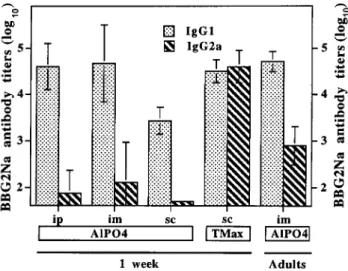
Figure 2. Isotype distribution of antibodies after neonatal BBG2Na immunization. Mice were immunized at age 1 week or as adults with 20 mg of BBG2Na resuspended in AlPO4and given intraperitoneally
(ip), intramuscularly (im), or subcutaneously (sc) or with the same dose of BBG2Na resuspended in TiterMax (TMax). IgG1 and IgG2a BBG2Na-specific antibodies were measured by ELISA 4 weeks after immunization and expressed as antibody titers by reference to titered reference serum.
as previously observed in mice immunized ip with AlOH-BBG2Na, BBG2Na antibody responses remained significantly lower than those elicited in 28 adult mice whose antibody titers were already 10-fold higher (4.985 0.33log10) 2 weeks after ip
immunization.
Immune and control litters were simultaneously challenged intranasally 4 weeks after immunization (i.e., at age 5 weeks). All animals remained asymptomatic and were sacrificed 5 days later to measure RSV-A lung titers. High lung virus titers were measured in all PBS control pups (figure 1B). In contrast, lung protection was observed in all 20 pups immunized ip or im with BBG2Na; 19 of 20 pups were virus-free (the remaining pup was positive for virus at the limit of detection of the assay).
No difference in protective efficacy was observed with ip or im immunization.
Influence of adjuvant formulation on immunogenicity and pro-tective efficacy of neonatal BBG2Na immunization. We did comparative analyses of the IgG1 and IgG2a subclass distri-bution of vaccine-specific antibodies (selected as indirect mark-ers of Th1-Th2 response type) 4 weeks after immunization. After neonatal AlPO4-BBG2Na immunization, vaccine
anti-bodies were almost exclusively among the IgG1 and only rarely (4/23 weakly positive mice) among the IgG2a isotypes (figure 2). This was not significantly influenced by the immunization route and contrasted with the presence of IgG2a antibodies in all 28 mice immunized as adults (figure 2).
We thus asked whether a change of adjuvant formulation (selecting a product known to induce strong Th1 responses in either adult or young mice [22] in contrast to aluminum salts, which preferentially support Th2 responses both in mice and humans [23]) would affect immunogenicity and protective ef-ficacy of neonatal BBG2Na immunization. We immunized 1-week-old pups with BBG2Na resuspended in TiterMax, an ad-juvant formulation composed of block copolymers in a water-in-oil emulsion, prior to subcutaneous (sc) immunization. Control pups were given AlPO4-BBG2Na sc. Following sc
AlPO4-BBG2Na immunization, vaccine antibodies were again
exclusively of the IgG1 isotype (figure 2). In contrast, in pups immunized in the presence of TiterMax, BBG2Na-specific an-tibodies were similarly distributed among the IgG1 and IgG2a isotypes, suggesting successful induction of balanced Th1-Th2 responses (figure 2).
Figure 3. Influence of adjuvant on immunogenicity and protective efficacy of neonatal BBG2Na immunization. Mice were immunized subcutaneously (sc) at age 1 week with 20 mg of BBG2Na resuspended in AlPO4or in TiterMax (Tmax) as indicated. A, Age-matched control
pups received PBS sc; BBG2Na- and RSV-A–specific antibodies were measured by ELISA 4 weeks after immunization and expressed as antibody titers by reference to titered reference serum. B, Mice were sacrificed 5 days after intranasal RSV-A challenge, and virus titers in lung homogenates were determined as described in Materials and Methods. Results are expressed as log10TCID50/g lung tissue.
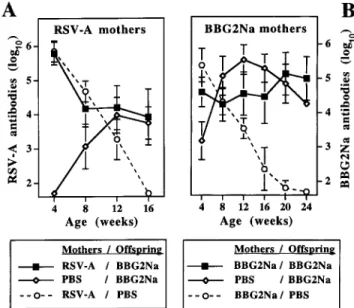
Figure 4. Influence of maternal antibodies on immune responses to BBG2Na. Pups born to RSV-A– or BBG2Na-immunized mothers (A and B, respectively) were immunized intramuscularly at age 1 week with AlPO4-BBG2Na and boosted 4 weeks later; controls received PBS.
Age-matched pups of control seronegative mothers were immunized as controls. Mice were bled monthly for determination of RSV-A (A) and BBG2Na (B) antibodies by ELISA. Results (representative of 2–4 lit-ters) are expressed as antibody titers by reference to titered reference serum.
To assess whether this change of immunogenicity would af-fect responses to intranasal RSV challenge, litters immunized sc with BBG2Na-AlOH (2 litters) or BBG2Na-TiterMax (2 litters) and PBS-immunized controls were challenged simulta-neously 4 weeks after immunization. All mice remained asymp-tomatic. In correlation with induction of vaccine-specific and RSV-A–specific antibodies (figure 3A), high lung virus titers were measured in all seronegative nonimmune control pups (figure 3B). In contrast, lung protection was again observed in pups immunized with BBG2Na, regardless of the adjuvant for-mulation used for neonatal immunization: all 28 challenged pups were protected, and 27 of 28 remained virus-free.
Influence of maternal antibodies on protective efficacy of
neo-natal BBG2Na immunization. To assess whether high levels of RSV-A antibodies of maternal origin would influence BBG2Na vaccine–induced protection, BALB/c female mice were immunized either 3 times with RSV-A or twice with BBG2Na prior to mating to induce high levels (5–6 log10) of
RSV-A antibodies. Pups born to immune or control nonim-mune mothers were immunized im with AlPO4-BBG2Na at age
1 week and boosted 3 weeks later, following a protocol pre-viously shown to induce long-lasting vaccine responses in pups of nonimmune mothers (not shown). Control pups born to immune mothers received only PBS to allow evaluation of the kinetics of maternal antibody decline. All mice were bled at regular intervals for determination of RSV-A–BBG2Na antibodies.
In pups of RSV-A–immunized mothers (figure 4A), RSV-A antibodies of maternal origin were initially very high (5.5–6.0 log10). As expected, they steadily declined over 16 weeks in
nonimmunized control pups. In contrast, in pups of RSV-A–immunized mothers that were immunized with BBG2Na in early life, RSV-A antibodies initially declined over 8 weeks but remained elevated when they reached the antibody titer (∼4 log10) that corresponded to normal antibody responses induced
in pups of nonimmune mothers (figure 4A). Similar patterns were observed in experiments with pups of BBG2Na-immu-nized mothers (figure 4B). Vaccine antibodies of maternal origin
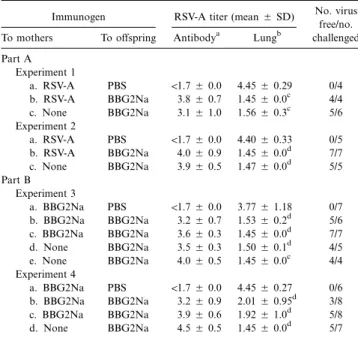
Table 1. Influence of maternal antibodies on protective efficacy of neonatal BBG2Na immunization.
Immunogen RSV-A titer (mean5 SD) No. virus free/no. challenged To mothers To offspring Antibodya Lungb
Part A Experiment 1 a. RSV-A PBS !1.75 0.0 4.455 0.29 0/4 b. RSV-A BBG2Na 3.85 0.7 1.455 0.0c 4/4 c. None BBG2Na 3.15 1.0 1.565 0.3c 5/6 Experiment 2 a. RSV-A PBS !1.75 0.0 4.405 0.33 0/5 b. RSV-A BBG2Na 4.05 0.9 1.455 0.0d 7/7 c. None BBG2Na 3.95 0.5 1.475 0.0d 5/5 Part B Experiment 3 a. BBG2Na PBS !1.75 0.0 3.775 1.18 0/7 b. BBG2Na BBG2Na 3.25 0.7 1.535 0.2d 5/6 c. BBG2Na BBG2Na 3.65 0.3 1.455 0.0d 7/7 d. None BBG2Na 3.55 0.3 1.505 0.1d 4/5 e. None BBG2Na 4.05 0.5 1.455 0.0c 4/4 Experiment 4 a. BBG2Na PBS !1.75 0.0 4.455 0.27 0/6 b. BBG2Na BBG2Na 3.25 0.9 2.015 0.95d 3/8 c. BBG2Na BBG2Na 3.95 0.6 1.925 1.0d 5/8 d. None BBG2Na 4.55 0.5 1.455 0.0d 5/7 NOTE. Offspring of immune and control mothers, previously injected at age 1 week with BBG2Na or PBS and boosted 3 weeks later, were bled for deter-mination of RSV-A antibody titers. Litters were challenged through 4 independent experiments after disappearance of maternal antibodies in unimmunized control pups (116 weeks), which were challenged simultaneously. Significance was
de-termined for each litter (a–e) within each experimental group (experiments 1–4) relative to nonimmunized controls from immune mothers (litters a).
a
ELISA titer, log10. b
RSV-A titer, log10TCID50/g lung. c
(nonparametric test; Kolmogorov-Smirov test because of low sample
P!.05
numbers).
d
(t test using null hypothesis).
P!.002
slowly declined from 5.5 log10to undetectable levels in
non-immunized control pups of immune mothers; they remained at high levels in BBG2Na-immunized pups of immune mothers. Although BBG2Na antibody responses occasionally and tran-siently reached higher titers in control pups of nonimmune mothers, they stabilized at the same antibody level as that in-duced in pups of immune mothers.
To allow evaluation of the protection induced by neonatal immunization without any interference from residual antibodies of maternal origin, which can confer passive protection [19], intranasal RSV-A challenge was scheduled only after disap-pearance of maternal antibodies in nonimmunized pups of RSV-A–BBG2Na immune mothers, that is, at116–20 weeks. Challenge was done in 4 successive experiments: each included immunized and control pups of immune mothers and immu-nized pups of control mothers. For offspring of RSV-A– immunized mothers (table 1, part A), high RSV-A virus titers were present after challenge in lungs of nonimmunized pups of immune mothers, confirming that antibodies of maternal origin had fallen below protective levels. In contrast, all 22 BBG2Na-immunized pups were protected, whether immunization was done in the absence or presence of high RSV-A maternal
an-tibodies. Twenty-one (96%) of these 22 immunized pups were virus-free when tested 5 days after challenge.
In the second series of experiments, we evaluated protective efficacy in pups of BBG2Na-immune or control mothers (table 1, part B). High RSV-A virus titers were present in the lungs of 12 of 13 nonimmunized pups of BBG2Na-immune mothers. Among pups of control seronegative mothers, 16 of 16 chal-lenged pups were protected from RSV-A by BBG2Na immu-nization, while 13 (81%) of 16 were virus-free. For pups im-munized in the presence of high levels of BBG2Na maternal antibodies, 25 (86%) of 29 were protected from intranasal RSV-A challenge, while 20 (69%) of 29 were virus-free. RSV-Although the protective efficacy of BBG2Na immunization in pups of BBG2Na mothers (table 1, part B) was not significantly dif-ferent (P5 .1) from that in pups of RSV-A–exposed mothers (table 1, part A), complete protection (i.e., no detectable virus 5 days after challenge) significantly differed between groups (96% vs. 69%,P5 .02). RSV-A antibodies present immediately before viral challenge in the 4 unprotected pups born to BBG2Na-immune mothers were low (2.1 and 2.4 log10) in 2
unprotected pups but reached significant levels (3.2 and 4.8 log10) in the remaining 2 mice.
Discussion
The immaturity of the neonatal immune system and the pres-ence of high titers of antibodies of maternal origin are two major obstacles to the development of vaccine-mediated pro-tection against RSV lower respiratory tract infections [6, 7]. The immaturity of the immune system affects both innate and specific immune responses required for viral neutralization and clearance through mechanisms as yet only partly understood (reviewed in [24]). Among them, limitation of antigen-specific antibody responses is an important parameter. It affects infant responses to RSV antigens and is responsible for limited se-rologic responses of infants!6–9 months after RSV infection [7, 25] or immunization with RSV vaccine candidates [6]. Lim-itation of early life antibody responses to vaccines is also ob-served in murine models of neonatal immunization [26], which thus appear to be of interest for preclinical evaluation of vaccine antigens or formulations early in life. Accordingly, BBG2Na vaccine responses triggered in the first weeks of life were slower and 100-fold weaker than those induced in adult controls [19]. We show here that a single immunization with BBG2Na (whether ip, im, or sc) conferred complete protection against intranasal RSV challenge in mice, even when immunization was done at a stage of immune immaturity (i.e., age 1 week) con-sidered to best approximate the immune capacity of human newborns (unpublished observations). Should the characteris-tics of BBG2Na allow the induction of equally strong protective immune responses in humans, which is currently being evalu-ated by clinical testing, its capacity to induce protective immune
responses early in life would meet an important requirement for prevention of severe RSV disease in infants.
Another parameter of the immaturity of early life immune responses is recognized in murine models as the preferential polarization of neonatal vaccine responses toward the Th2 phe-notype, even in response to vaccine antigen formulations or delivery systems that induce balanced Th1-Th2 responses in adults [26–28]. This is currently thought to reflect the higher activation requirements of neonatal versus adult antigen pre-senting cells (APCs), which result in suboptimal APC–T cell interactions, rather than reflecting intrinsic limitations of ne-onatal T cells (reviewed in [24]). The bias of nene-onatal vaccine responses to ALOH-BBG2Na ip immunization [19] was also observed here by use of AlPO4-adsorbed BBG2Na, whether
administered ip, im, or sc. Of importance, however, this Th2 polarization of neonatal responses did not affect BBG2Na pro-tective efficacy, which is as strong after a single vaccine dose in early life as in adult mice [18].
Priming for preferential Th2 vaccine responses upon neonatal immunization also raises the concern of immunopotentiation of RSV disease at the time of subsequent natural viral infection. Components of the phenomenon observed in seronegative in-fants during the clinical trials of FI-RSV [8, 9] were similarly inducible in BALB/c mice and correlated with an intensified production of Th2-derived cytokines [29]. Furthermore, exper-iments that used vaccinia virus recombinant vectors [30–32] or purified protein preparations revealed that native G protein strongly induced Th2-type cytokine synthesis and lung im-munopathology, even when used with the Th1-driving QS-21 adjuvant [32]. In addition, aluminum salts (the single adjuvants currently authorized for infant immunization) further contrib-ute to a preferential Th2 polarization of vaccine responses [23]. Thus, it was important to ask whether a change in the adjuvant formulation could induce adult-like balanced Th1-Th2 re-sponses to BBG2Na in early life. A change in the adjuvant formulation of BBG2Na was sufficient to restore the balanced IgG1-IgG2a antibody responses observed in adult mice, and this change of immunogenicity did not affect the protective capacity of neonatal immunization. Thus, a Th2 polarization of responses cannot be considered as an intrinsic limitation of all G protein–derived vaccines [30–32], and BBG2Na could be used with Th1-driving adjuvants if required for safety reasons. However, parallel studies recently showed that even AlOH-ad-sorbed BBG2Na did not prime for deleterious Th2-type anti-RSV immunopathologic responses at the time of anti-RSV exposure in an adult BALB/c mouse model [33, 34]. If this immuno-potentiation model can be adapted to the neonatal period as currently evaluated, it would enable further preclinical evalu-ation of the safety of neonatal BBG2Na immunizevalu-ation.
Because of the ubiquitous nature of RSV and the frequency of reinfections in adults, RSV antibodies of maternal origin are present at birth at low, moderate, or sometimes even high titers [25]. Passively transferred antibodies can confer protection from
RSV disease both in humans [35] and in murine models of maternal immunization with BBG2Na [19]. However, the tection conferred by maternal antibodies is transient, and pro-longed protection requires associated infant immunization. Un-fortunately, maternal antibodies may interfere with neonatal vaccine responses. This inhibition of antibody responses affects infant responses to RSV antigens [6, 7], as shown in rodent models that used either live RSV-A [36, 37], F- and G-express-ing recombinant vaccinia viruses [38], or purified F and G gly-coproteins [39]. In striking contrast, even high titers of RSV-A maternal antibodies (5 log10) did not inhibit induction of
murine antibody responses to BBG2Na [19]. Accordingly, we show here that the protective capacity of neonatal BBG2Na immunization reached 100% in the presence of maternal anti-bodies induced by repeated exposure to RSV-A: 96% of pups were free of virus 5 days after challenge. We previously showed the capacity of BBG2Na immunization to induce strong an-tibody responses even in the presence of passively transferred maternal antibodies induced by intranasal RSV infection [19]. Intraperitoneal use of live RSV in alum induced antibody titers that were higher (5.5–6.0 log10) than those induced after repeat
intranasal infection and readily transferred to the offspring, thereby resulting in higher levels of maternal anti–RSV-A an-tibodies in the neonates. To our knowledge, this is the first description of vaccine-induced protection from RSV challenge observed after early life immunization in the presence of high levels of RSV-A maternal antibodies.
Pups of BBG2Na-immunized mothers raised similarly high antibody responses to BBG2Na, and protective efficacy of neo-natal BBG2Na immunization was high (86%). However, com-plete protection (no detectable virus 5 days after challenge) was observed significantly less often than in pups of RSV-A– exposed mothers (69% vs. 100%). This difference in BBG2Na neonatal protective efficacy following RSV-A or BBG2Na ma-ternal immunization is unlikely to reflect differences in induc-tion of T cell vaccine responses, since maternal antibodies were shown in parallel immunization models not to alter neonatal T cell responses to vaccines [40]. Differences in maternal an-tibody titers present in pups at the time of immunization cannot account for this difference in protective efficacy. A more at-tractive hypothesis is that the capacity of BBG2Na to largely escape inhibition by RSV-A maternal antibodies reflects an im-munogenicity of the nonglycosylated G2Na fragment that is partly different from that of the native RSV G protein. Since inhibition of infant antibody responses by maternal antibodies is epitope-specific, their influence is indeed greater when the same vaccine antigen is used in both mothers and infants [41]. We therefore suggest that binding of BBG2Na-induced mater-nal antibodies to certain specific protective epitopes of BBG2Na could inhibit the induction of infant responses to such epitopes, occasionally reducing protective efficacy. Given the interest in maternal immunization to prevent early RSV infection, analysis of the hierarchy of epitope recognition following neonatal
BBG2Na immunization of pups of control, RSV-A– or BBG2Na-immunized mothers by use of peptide-based ELISA and pepscan analyses is ongoing. Should a modification of ep-itope recognition be identified following immunization in the presence of high levels of maternal antibodies to BBG2Na, it could contribute to the identification of protective B cell epi-topes in BBG2Na.
In conclusion, this study provides a promising preclinical evaluation of the capacity of BBG2Na immunization to induce protection from RSV lower respiratory disease in early life. Its unique features allow BBG2Na to induce protective immune responses even after a single immunization given at an early stage of immune maturation, whether adsorbed to aluminum salts or given with Th1-driving adjuvant formulations. It also suggests that the distinct immunogenicity of BBG2Na could allow induction of protective vaccine responses early, even in presence of high titers of RSV-A maternal antibodies. These distinct properties make BBG2Na an interesting RSV vaccine candidate.
Acknowledgments
We thank Dominique Cyblat and Francis Derouet for excellent tech-nical assistance and the Centre de De´veloppement Pierre Fabre for providing the BBG2Na formulations.
References
1. Collins, PL, McIntosh K, Chanock RM. Respiratory syncytial virus. In: Fields BN, Knipe DM, Howley PM, eds. Fields virology. Philadelphia: Lippincott-Raven, 1996:1313–51.
2. Parrott RH, Kim HW, Arrobio JO, et al. Epidemiology of respiratory syn-cytial virus infection in Washington, DC. II. Infection and disease with respect to age, immunologic status, race and sex. Am J Epidemiol 1973;98: 289–300.
3. Martin AJ, Gardner PS, McQuillin J. Epidemiology of respiratory viral in-fection among pediatric inpatients over a six year period in northeast England. Lancet 1978; 2:1035–8.
4. Glezen WP, Paredes A, Allison JE, et al. Risk of respiratory syncytial virus infection for infants from low-income families in relationship to age, sex, ethnic group and maternal antibody level. J Pediatr 1981; 98:708–15. 5. Green M, Brayer AF, Schenkman KA, Wald ER. Duration of hospitalization
in previously well infants with respiratory syncytial virus infection. Pediatr Infect Dis J 1989; 8:601–5.
6. Belshe RB, van Voris LP, Mufson MA. Parenteral administration of live respiratory syncytial virus vaccine: results of a field trial. J Infect Dis
1982; 145:311–9.
7. Murphy BR, Alling DW, Snyder MH, et al. Effect of age and preexisting antibody on serum antibody response of infants and children to the F and G glycoproteins during respiratory syncytial virus infection. J Clin Microbiol 1986; 24:894–8.
8. Chin J, Magoffin RL, Shearer LA, Schieble JH, Lennette EH. Field evalu-ation of a respiratory syncytial virus vaccine and a trivalent parainfluenza virus vaccine in a pediatric population. Am J Epidemiol 1969; 89:449–63. 9. Kim HW, Leikin SL, Arrobio JO, Brandt CD, Chanock RM, Parrott RH. Cell-mediated immunity to RSV induced by inactivated vaccine or by infection. Pediatr Res 1976; 10:75–8.
10. A˚ kerlind-Stopner B, Utter G, Mufson MA, Orvell C, Lerner RA, Norrby
E. A subgroup-specific antigenic site in the G protein of respiratory syn-cytial virus forms a disulfide-bonded loop. J Virol 1990; 64:5143–8. 11. Trudel M, Nadon F, Seguin C, Binz H. Protection of BALB/c mice from
respiratory syncytial virus infection by immunization with a synthetic peptide derived from the G glycoprotein. Virology 1991; 185:749–57. 12. Garcia O, Martin M, Dopazo J, et al. Evolutionary pattern of human
res-piratory syncytial virus (subgroup A): cocirculating lineages and corre-lation of genetic and antigenic changes in the G glycoprotein. J Virol
1994; 68:5448–59.
13. Makrides SC, Nygren PA˚ , Andrews B, et al. Extended in vivo half-life of human soluble complement receptor type 1 fused to a serum albumin-binding receptor. J Pharmacol Exp Ther 1996; 277:534–42.
14. Sullender WM, Mufson MA, Anderson LJ, Wertz GW. Genetic diversity of the attachment protein of subgroup B respiratory syncytial viruses. J Virol
1991; 65:5425–34.
15. Sjo¨lander A, Nygren PA˚ , Sta˚hl S, et al. The serum albumin-binding region of streptococcal protein G: a bacterial fusion partner with carrier-related properties. J Immunol Methods 1997; 201:115–23.
16. Libon C, Corvaia N, Haeuw JF, et al. The serum albumin-binding region of streptococcal protein G (BB) potentiates the immunogenicity of the G130-230 RSV-A protein. Vaccine 1999; 17:406–14.
17. Wagner DK, Muelenaer P, Henderson FW, et al. Serum immunoglobulin G antibody subclass response to respiratory syncytial virus F and G gly-coproteins after first, second, and third infections. J Clin Microbiol
1989; 27:589–92.
18. Power UF, Plotnicky-Gilquin H, Huss T, et al. Induction of protective im-munity in rodents by vaccination with a prokaryotically expressed recom-binant fusion protein containing a respiratory syncytial virus G protein fragment. Virology 1997; 230:155–66.
19. Brandt C, Power UF, Plotnicky-Gilquin H, et al. Protective immunity against respiratory syncytial virus in early life after murine maternal or neonatal vaccination with the recombinant G fusion protein BBG2Na. J Infect Dis
1997; 176:884–91.
20. Murby M, Samuelsson E, Nguyen TN, et al. Hydrophobicity engineering to increase solubility and stability of a recombinant protein from respiratory syncytial virus. Eur J Biochem 1995; 230:38–44.
21. Taylor G, Stott EJ, Hughes M, Collins AP. Respiratory syncytial virus in-fection in mice. Infect Immun 1984; 43:649–55.
22. Barrios C, Brandt C, Berney M, Lambert PH, Siegrist CA. Partial correction of the TH1/TH2 imbalance in neonatal murine responses to vaccine an-tigens through selective adjuvant effects. Eur J Immunol 1996; 26:2666–70. 23. Audibert FM, Lise LD. Adjuvants: current status, clinical perspectives and
future prospects. Immunol Today 1993; 14:281–4.
24. Kovarik J, Siegrist CA. Immunity in early life. Immunol Today 1998; 19: 150–2.
25. Brandenburg AH, Groen J, van Steensel-Moll HA, et al. Respiratory syn-cytial virus specific serum antibodies in infants under six months of age: limited serological response upon infection. J Med Virol 1997; 52:97–104. 26. Barrios C, Brawand P, Berney M, Brandt C, Lambert PH, Siegrist CA. Neonatal and early life immune responses to various forms of vaccine antigens qualitatively differ from adult responses: predominance of a Th2-biased pattern which persists after adult boosting. Eur J Immunol 1996;26: 1489–96.
27. Singh RR, Hahn BH, Sercarz EE. Neonatal peptide exposure can prime T cells and upon subsequent immunization induce their immune deviation: implications for antibody versus T cell–mediated autoimmunity. J Exp Med 1996; 183:1613–21.
28. Forsthuber T, Yip HC, Lehmann PV. Induction of TH1 and TH2 immunity in neonatal mice. Science 1996; 271:1728–30.
29. Warris ME, Tsou C, Erdman DD, Zaki SR, Anderson LH. Respiratory syncytial virus infection in BALB/c mice previously immunized with for-malin-inactivated virus induces enhanced pulmonary inflammatory re-sponse with a predominant Th2-like cytokine pattern. J Virol 1996; 70: 2852–60.
30. Stott EJ, Taylor G, Ball LA, et al. Immune and histopathological responses in animals vaccinated with recombinant vaccinia viruses that express in-dividual genes of human respiratory syncytial virus. J Virol 1987; 61: 3855–61.
31. Alwan WH, Kozlowska WJ, Openshaw PJ. Distinct types of lung disease caused by functional subsets of antiviral T cells. J Exp Med 1994; 179: 81–9.
32. Hancock GE, Speelman DJ, Heers K, Bortell E, Smith J, Cosco C. Gen-eration of atypical pulmonary inflammatory responses in BALB/c mice after immunization with the native attachment (G) glycoprotein of res-piratory syncytial virus. J Virol 1996; 70:7783–91.
33. Corvaia N, Tournier P, Nguyen TN, et al. Challenge of BALB/c mice with respiratory syncytial virus does not enhance the Th2 pathway induced after immunization with a recombinant G fusion protein, BBG2Na, in aluminum hydroxide. J Infect Dis 1997; 176:560–9.
34. Plotnicky-Gilquin H, Huss T, Aubry JP, et al. Absence of immunopathology following respiratory syncytial virus (RSV) challence of BALB/c mice immunized with BBG2Na, a recombinant RSV vaccine candidate. Virol (in press).
35. Hemming VG, Prince GA, Groothuis JR, Siber GR. Hyperimmune globulins in prevention and treatment of respiratory syncytial virus infections. Clin Microbiol Rev 1995; 8:22–33.
36. Bangham CR. Passively acquired antibodies to respiratory syncytial virus impair the secondary cytotoxic T-cell response in the neonatal mouse. Immunology 1986; 59:37–41.
37. Prince GA, Horswood RL, Camargo E, Suffin SC, Chanock RM. Parenteral immunization with live respiratory syncytial virus is blocked in seropos-itive cotton rats. Infect Immun 1982; 37:1074–8.
38. Murphy BR, Olmsted RA, Collins PL, Chanock RM, Prince GA. Passive transfer of respiratory syncytial virus (RSV) antiserum suppresses the immune response to the RSV fusion (F) and large (G) glycoproteins ex-pressed by recombinant vaccinia viruses. J Virol 1988; 62:3907–10. 39. Murphy BR, Prince GA, Collins PL, Hildreth SW, Paradiso PR. Effect of
passive antibody on the immune response of cotton rats to purified F and G glycoproteins of respiratory syncytial virus (RSV). Vaccine 1991; 9: 185–9.
40. Siegrist CA, Barrios C, Martinez X, et al. Influence of maternal antibodies on vaccine responses: inhibition of antibody but not T cell responses allow successful early prime-boost strategies in mice. Eur J Immunol 1998; 28: 4138–48.
41. Englund JA, Anderson EL, Reed GF, et al. The effect of maternal antibody on the serologic response and the incidence of adverse reactions after primary immunization with acellular and whole-cell pertussis vaccines combined with diphtheria and tetanus toxoids. Pediatrics 1995; 96:580–4.