HAL Id: tel-02968152
https://tel.archives-ouvertes.fr/tel-02968152
Submitted on 15 Oct 2020
HAL is a multi-disciplinary open access archive for the deposit and dissemination of sci-entific research documents, whether they are pub-lished or not. The documents may come from teaching and research institutions in France or abroad, or from public or private research centers.
L’archive ouverte pluridisciplinaire HAL, est destinée au dépôt et à la diffusion de documents scientifiques de niveau recherche, publiés ou non, émanant des établissements d’enseignement et de recherche français ou étrangers, des laboratoires publics ou privés.
Youth Microcultures as Consumption Domains :
Managing Spatial Vulnerability
Sonja Prentovic
To cite this version:
Sonja Prentovic. Youth Microcultures as Consumption Domains : Managing Spatial Vulnerability. Sociology. Université de Lyon, 2020. English. �NNT : 2020LYSE2024�. �tel-02968152�
N° d’ordre NNT : 2020LYSE2024
THESE de DOCTORAT DE L’UNIVERSITÉ DE LYON
Opérée au sein de
L’UNIVERSITÉ LUMIÈRE LYON 2
École Doctorale
:ED 486 Sciences Économique et de Gestion
Discipline : Sciences de gestion
Soutenue publiquement le 7 juillet 2020, par :
Sonja PRENTOVIC
Youth Microcultures as Consumption
Domains :
Managing Spatial Vulnerability.
Devant le jury composé de :
Laure AMBROISE, Professeure des universités, Université Lumière Lyon 2, Présidente Amina BEJI-BECHEUR, Professeure, Université Paris-Est, Rapporteure
Eric REMY, Professeur des universités, Université Paul Sabatier Toulouse, Rapporteur Ronald Paul HILL, Professeur des universités, American University, Examinateur
Nil OZÇAGLAR-TOULOUSE, Professeure des universités, Université Rennes 2, Examinateur Isabelle PRIM-ALLAZ, Professeure des universités, Université Lumière Lyon 2, Directrice de thèse Anthony GALLUZO, Maître de conférences, université Jean Monnet Saint-Etienne, Co-Directeur de thèse
Contrat de diffusion
Ce document est diffusé sous le contrat Creative Commons « Paternité – pas d’utilisation commerciale - pas de modification » : vous êtes libre de le reproduire, de le distribuer et de le communiquer au public à condition d’en mentionner le nom de l’auteur et de ne pas le modifier, le transformer, l’adapter ni l’utiliser à des fins commerciales.
Université Lumière Lyon 2
École Doctorale : ED 486 Sciences Économique et de Gestion
Youth Microcultures as
Consumption Domains:
Managing Spatial Vulnerability
Sonja PRENTOVIC
Sciences de gestion
Sous la direction de : Isabelle PRIM-ALLAZ, Professeur des universités,
Université Lumière Lyon 2 et Anthony GALLUZZO, Maître de conférences,
Université Jean Monnet Saint Etienne
Présentée et soutenue publiquement le 7 juillet 2020 Composition du jury :Amina BEJI-BECHEUR, Professeure des universités, Université Paris Est Marne-la-vallée, Rapporteure
Eric REMY, Professeur des universités, Université Toulouse III - Paul Sabatier, Rapporteur Nil ÖZÇAĞLAR-TOULOUSE, Professeur des universités, Université de Lille, Suffragante
Laure AMBROISE, Professeur des universités, Université Lumière Lyon 2, Suffragante Ronald Paul HILL, Professeur des universités, American University, Washington, Examinateur externe
i
L'Université n'entend donner aucune approbation ni improbation aux opinions émises dans les thèses ; ces opinions doivent être considérées comme propre à leurs auteurs.
ii
“For me, this space of radical openness is a margin – a profound edge. Locating oneself there is difficult yet necessary. It is not a ‘safe’ place. One is always at risk. One needs a community of resistance.” (Hooks 1989, 19)
iii
Acknowledgments
My path to completion of this dissertation has surely been atypical and spiral. Plenty of choices to ponder on, surprising chances, unexpected meetings, and recurring undesired events, all contributed to the duration of my long thesis journey towards its ending. There were two crucial, challenging elements of my work. First, the research itself, especially data collection, conducted within the French context which culturally and socially differs from the practises in my own native country, presented me with an extremely challenging and demanding task in terms of flexibility, deep thoughts and introspection. However, the entire process was personally rewarding at the same time. Second, dealing with the replacement of my supervisor has been a stressful, critical, yet transformative moment to reorient my research enterprise. During this very challenging and long period I have had an honour to meet incredible persons, exchange with and learn from them. Much gratitude for the completion of my dissertation is owed to these persons who supported and challenged my work during all this time.
It is my genuine pleasure to express my deep sense of thanks and gratitude to my supervisors Professor Isabelle Prim-Allaz and Professor Anthony Galluzzo who accepted to supervise my dissertation in progress. I am ever so much thankful for their kindness and understanding of my specific situation and for their advices during our collaboration. My special acknowledgements go to Isabelle Prim-Allaz whose remarks, views, and information exchange, all accompanied with her selfless encouragement helped me hone my academic writing skills and become more self-confident in myplace in the academic world.
I owe my deepest gratitude to my external examiner and mentor Professor Ronald Paul Hill for his continuous support, motivation, kindness, understanding and encouragements. I cannot thank him enough for his guidance, advice, comments, and suggestions and would like to express my special appreciation for challenging me as it helped me think more independently in the time of research and writing of this dissertation.
I am tremendously fortunateto thank my committee members, professors Eric Rémy, Amina Béji-Bécheur, Nil Özçağlar-Toulouse and Laure Ambroise. First, I am privileged to thank Professor Eric Rémy and Professor Amina Béji-Bécheur for accepting to write the reports on my dissertation and, again, to whom I am thankful for their participation in the committee. My very special thanks go to Professor Nil Özçağlar-Toulouse who welcomed me to participate in seminar held in the University in Lille 2 and whose kindness, feedback and advice were much
iv
appreciated and helped me shape my research. Thanks to this opportunity I was fortunate to meet her colleagues and engage in scholar discussions which I greatly benefited from. I am thankful for her acceptance to participate in the committee.
I owe my acknowledgements to Professor Laure Ambroise for accepting to participate in the committee. Also, I am privileged to benefit from her knowledge and inspiring experiences shared during our marketing group sessions in the COACTIS research centre.
I would like to thank to COACTIS research centre for itsimmense support over the past years, especially in the very delicate and difficult time of the replacement of my supervisor. Our seminars and informal discussions as well as nurtured atmosphere of solidarity and encouragement is very much appreciated. My appreciation also extends to my colleagues, great doctoral students (or doctors so far) with whom I spent time in the research centre these past years, including: Sanata, Jennifer, Sabina, Damien, Andrey, Sakal, Mehdi, Mohamed, Julie, and Tinhinane.
During my work on dissertation I participated in different seminars and conferences where I met many inspiring researchers and doctoral students. Our discussions increased my understanding of my research subject, study context, and helped me in certain stages of my work. Among many, I would like to mention the two of them. I am extremely thankful to Handan Vicdan, Associate professor in marketing, for her precious comments about my first interpretation ideas based on spatial influences on consumer behaviour and to Nguyen Nhat Nguyen, Lecturer in marketing, for our exchanges on my informants, study context and youth subcultures.
A study context that was proposed to me at the beginning of my dissertation was very challenging to me due to my foreign origin and a lack of knowledge of the phenomenon of French banlieue or more precisely quartiers prioritaires. Beside my personal engagement in reaching information about these spaces and improving my understanding and data collection, certain persons helped me in this enterprise with their advices and visions. It is my pleasure to express deep thanks to Flora Blahay, a clinical psychologist who, thanks to her experiences as a manager of a social centre in Lyon agglomeration for several years and years-long work with adolescents, helped me understand typical behaviours of adolescents from quartiers
prioritaires, a role of socio-educational institutions, and dominant consumption restrictions and life struggles these young populations generally have.
Also, it is my privilege to thank Sylvia Faure, Professor of sociology in University of Lyon 2 for our very inspiring discussions on ethnographic studies in quartiers prioritaires, the concept
v
of vulnerability, influences of social space (especially its materiality) on consumptive and cultural practices of adolescents from deprived neighbourhoods, and youth subcultures, thus enriching my views and my interpretation.
This research would not be possible without participation of many adolescents, youth coordinators and professors to whom I am extremely grateful for accepting me, collaborating, devoting their time, and showing confidence. In respect of the anonymity of individuals and institutions I will not name the persons, but my special thanks go to two youth coordinators from the social centre included in my research, and one extraordinary and inspiring sports professor from a secondary school. These were precious persons in helping me to develop contacts with adolescent populations.
Despite our separation in the middle of my dissertation, I am grateful to Professor Wided Batat for a chance she gave me to start this very enriching and challenging doctoral research. Finally, my appreciation extends to my closest friends and cousins, both in Serbia and France, who were a support over all these years. Some contributed more directly to my work. I own my enormous thanks to Laure to have helped me in transcribing the interviews with much rigour, and to Brankica and Aleksandra to have proof edited my English text.
My deepest and genuine thanks go to Ludovic who was my moral support, encouraged me and discussed on my research during these seven years. This doctoral research would not be accomplished without his love, kindness, and patience in this very long research adventure. My last but not the least thanks go to my parents for all their support, especially during this life and professional journey, and for developing my curiosity about other cultures and teaching me values of solidarity and care for others. I am especially grateful to my mother who nurtured and encouraged my curiosity, and research spirit from my very early age.
vi
Table of Contents
Acknowledgments ... iii
Table of Contents ...vi
Table of Tables ... x
Table of Figures ...xi
General Introduction ... 1
PART ONE: THEORETICAL GROUNDING ... 8
Introduction to Part One ... 9
Chapter 1: Marginalized spaces and consumer vulnerability ... 10
Section 1: Marginalized spaces: spaces of social inequalities, alternatives, and consumer agency .. 11
Subsection 1: Marginalized spaces: meanings and spatial perspectives... 12
Subsection 2: Marginalized spaces and consumer agency ... 25
Section 2: Consumer vulnerability and consumer coping strategies ... 35
Subsection 1: The concept of consumer vulnerability ... 36
Subsection 2: Managing consumer vulnerability ... 61
Conclusion of the chapter ... 66
Chapter 2: French urban policy neighbourhoods and youth cultural practices ... 68
Section 1: Urban policy neighbourhoods: spaces of low-income consumers ... 69
Subsection 1: The history and the meaning of French urban policy neighbourhoods ... 71
Subsection 2: Deprived neighbourhoods and constraining macro factors ... 73
Subsection 3: Urban policy neighbourhoods: intertwined constraining and protecting spatial dynamics ... 79
Section 2: Youth from urban policy neighbourhoods: intertwined spatial and cultural perspectives 89 Subsection 1: Definition of jeunes des cités ... 90
Subsection 2: From struggling life to subcultures ... 92
Conclusion of the chapter ... 104
Conclusion of Part One ... 105
PART TWO: RESEARCH EPISTEMOLOGY AND METHODOLOGY... 106
Introduction to Part Two ... 107
Chapter 3: Epistemological position ... 108
Section 1: Interpretivist paradigm and its application in marketing and consumer research ... 109
Section 2: Main philosophical assumptions in interpretivist paradigm ... 112
vii
Chapter 4: Qualitative research strategy and applied methodology ... 118
Section 1: Ethnographic research strategy and data collection methods ... 119
Subsection 1: Ethnographic approach to qualitative research ... 119
Subsection 2: Multi-sited ethnography as research strategy ... 122
Subsection 3: Data collections methods ... 128
Section 2: Data collection process ... 140
Phase 1: Exploration phase ... 143
Phase 2: Exploration and data collection ... 144
Phase 3: Fieldwork consolidation and data collection ... 153
Phase 4: Residual data collection ... 164
Phase 5: Post-fieldwork practices ... 165
Conclusion of the chapter ... 169
Chapter 5: Methods of data analysis and interpretation ... 170
Section 1: Ethnographic data interpretation ... 170
Section 2: Ethnographic data analysis: coding process and categorisation ... 173
Subsection 1: Process of coding ... 174
Subsection 2: Process of coding of our ethnographic data ... 176
Section 3: Criteria of validity ... 182
Conclusion of the chapter ... 187
Conclusion of Part Two ... 188
PART THREE: RESULTS AND INTERPRETATION ... 189
Introduction to Part Three ... 190
Chapter 6: Spatial vulnerability and its impacts on young consumers’ lives and practices ... 192
Section 1: Spaces of consumers’ multiple disadvantages and structural constraints ... 193
Subsection 1: Economic restrictions of low-income population ... 196
Subsection 2: Social inequalities and spatial stigmatization ... 201
Section 2: Neighbourhoods’ built environment and materiality ... 207
Subsection 1: Built environments ... 207
Subsection 2: Local services and places used for youth practices ... 218
Section 3: Local social issues and consumers’ practices ... 225
Subsection 1: Local institutional support to access services ... 226
Subsection 2: Consumers’ limited life opportunities ... 230
Subsection 3: Youth passivity and delinquency ... 232
Subsection 4: Local social norms and consumptive practices ... 234
Subsection 5: Consumers’ feelings of discrimination and difference ... 241
viii
Conclusion of the chapter ... 244
Chapter 7: Microcultures: young consumers’ collective strategies to deal with spatial vulnerability . 247 Section 1: Youth microcultures: definition and main characteristics ... 248
Section 2: Young consumers’ utopian ethos for collective practices ... 255
Section 3: Youth microcultures: collective strategies in managing spatial constraints and consumption restrictions ... 264
Subsection 1: Collective cultural practices to challenge limited consumption opportunities ... 271
Subsection 2: Collective creative resistance to limited consumption and life opportunities ... 277
Subsection 3: Collective creative resistance to local youth social isolation and spatial stigma .. 300
Conclusion of the chapter ... 311
Chapter 8: Emancipating spaces for youth transformative practices ... 312
Section 1: Emancipating spaces: alternative consumption and creative resistance ... 313
Subsection 1: Social centre as an emancipating space ... 315
Subsection 2: Hip-hop dance related institutions as an emancipating space ... 323
Section 2: Institutional support and transformative character of youth collective cultural practices ... 340
Subsection 1: Collective creative resistance ... 341
Subsection 2: Consumption experiences and access to cultural institutions ... 349
Conclusion of the chapter ... 355
Conclusion of Part Three ... 357
Chapter 9: Discussion and general conclusion ... 359
Section 1: Discussion on main results ... 359
Section 2: Theoretical contributions ... 372
Section 3: Local institutions and policy recommendations ... 374
How to assure long-term access to cultural services and cultural institutions? ... 375
How to make “access to cultural institutions and their experiences” become a part of adolescents’ consumption experiences? ... 376
Section 4: Limits and future research ... 381
References ... 383
Glossary ... 399
Résumé étendu ... 401
Appendices ... 415
Appendix 1: French sociology of culture and cultural practices ... 415
Appendix 2: Interview example ... 417
Appendix 3: Socio-demographic, educational and economic characteristics of the peripheral neighbourhood... 457
ix
Appendix 4: Socio-demographic, educational and economic characteristics of the remote
neighbourhood... 458 Appendix 5: Creativity-oriented youth microcultures ... 459 Appendix 6: Solidarity-oriented youth microcultures ... 469
x
Table of Tables
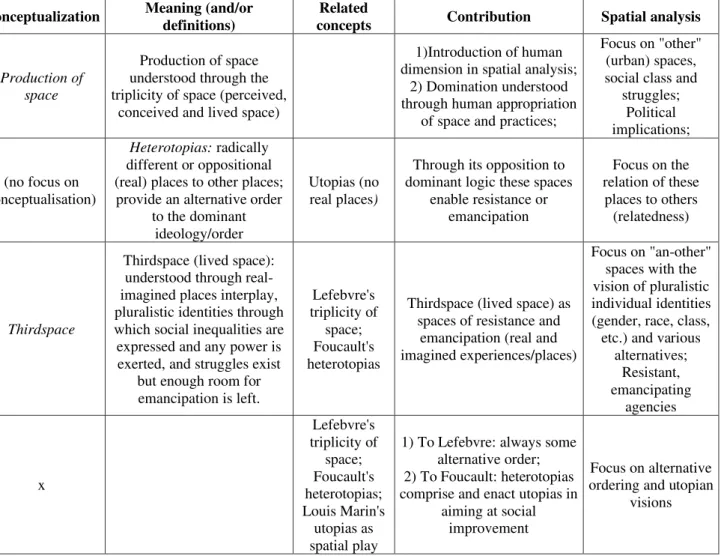
Table 1: Leading authors, concepts, and their research orientations in spatial analysis of social life ... 24
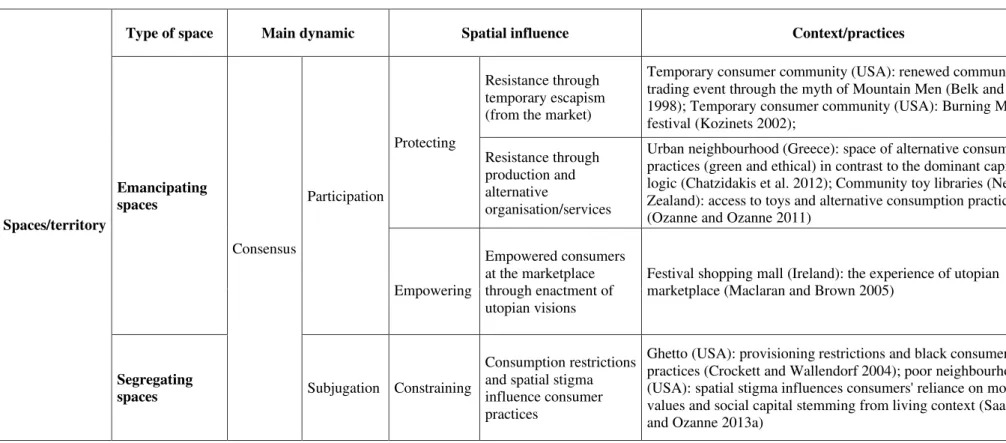
Table 2: Summary on spatial analysis of emancipating/segregating spaces and related consumer practices ... 34
Table 3:Theoretical approaches to consumer vulnerability and related concepts ... 59
Table 4: Theoretical approaches to consumer vulnerability and related concepts (continued) ... 60
Table 5: Subcultures versus microcultures concepts in anthropology ... 101
Table 6: Philosophical assumptions of positivist and interpretivist paradigms ... 115
Table 7: Our research and its relations to interpretivist paradigm ... 116
Table 8: Single sited versus multi-sited ethnography (adapted from Kjeldgaard, Csaba, and Ger 2006) ... 127
Table 9: Applied data collection methods in our research ... 137
Table 10: Phases of the fieldwork practices evolution (May 2016 to May 2019) ... 142
Table 11: Field issues in peripheral neighbourhoods in Phase 2... 147
Table 12: Field issues in remote neighbourhood in Phase 2 ... 151
Table 13: Field issues in remote neighbourhood in Phase 2 (continued) ... 152
Table 14: Field issues in peripheral neighbourhood in Phase 3 ... 157
Table 15: Field issues in remote neighbourhood in Phase 3 ... 166
Table 16: Field issues in remote neighbourhood in Phase 3 (continued) ... 167
Table 17: Field issues in Phase 4 ... 168
Table 18: Field issues in Phase 5 ... 168
Table 19: Classification of two neighbourhoods according to official criteria (ONPV 2017) ... 197
Table 20: Small groups cultural practices of young consumers from urban policy neighbourhoods as youth microcultures ... 251
Table 21: Creativity-oriented youth microcultures ... 253
Table 22: Solidarity-oriented youth microcultures ... 254
Table 23: Main utopian ethos and youth microcultures ... 257
Table 24: Resources-controls interplay of youth microcultures (adapted from Hill and Sharma 2020) ... 268
Table 25: Resources-controls interplay of youth microcultures (adapted from Hill and Sharma 2020) (continued) ... 269
Table 26: Youth collective coping strategies ... 270
xi
Table of Figures
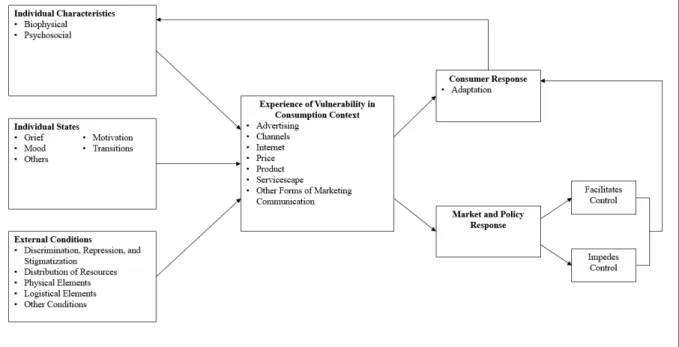
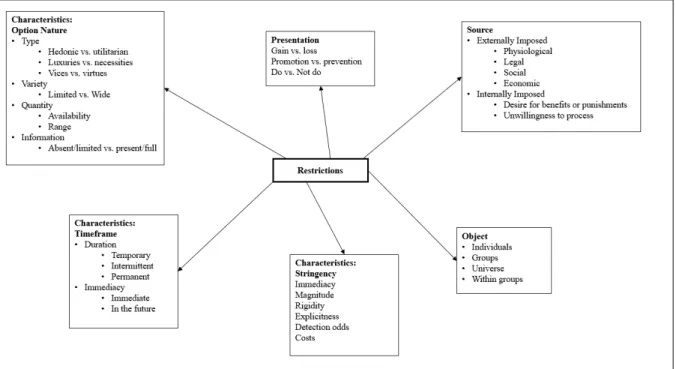
Figure 1: The concept of consumer vulnerability proposed by Baker, Gentry, and Rittenburg (2005) . 44 Figure 2: Types of consumption choice restrictions ... 49 Figure 3: Consumption restrictions in the basis of impoverished consumer practices ... 50 Figure 4: The transformative process model of consumer vulnerability and resilience by Baker and Mason (2012) ... 53 Figure 5: Theoretical interpretation model of our ethnographic data ... 183 Figure 6: Constraining macro forces, consumption restrictions and adolescents’ coping strategies ... 206 Figure 7: Material deprivation of the neighbourhoods ... 218 Figure 8: Built environment and materiality influences on consumption restrictions and youth coping strategies (improved Figure 6) ... 224 Figure 9: Socio-spatial issues, consumption restrictions and young consumers’ strategies (improved Figures 6 and 8) ... 245 Figure 10: Youth microcultures for collective coping with spatial vulnerability of urban policy
neighbourhoods ... 246 Figure 11: Spatial constraining-protecting interplay and its influence on young consumers’ shared utopian ethos ... 263 Figure 12: Collective resources-control and institutional support in youth collective coping strategies ... 310 Figure 13: Model of transformative consumer role of microcultures empowered by institutional
1
General Introduction
“In [cités], urban life is reduced to its simplest form. Shops are rare. The few shopping malls and supermarkets are poorly supplied. Places of entertainment and meetings are non-existent. Often, for a whole suburb, a bar or two compete with the only youth club. The buildings are deteriorated before being completed: broken lifts, destroyed mailboxes, devastated entrances. Transport is insufficient. The suburb is far away, damaged, isolated, and abandoned. Boredom is the first reality.”1(Dubet and
Lapeyronnie 1992, 8)
"There is no a self-produced "culture of poverty", as defined by Oscar Lewis, but rather strategies of social integration or adaptation related to the consumer society. […] They have their "feet" in economic insecurity and their "heads" in the cultural universe of the middle classes. Which does not mean they are middle class. They are neither in terms of professional status nor in terms of behaviour. "2(Avenel
2010, 57)
These quotations from French urban sociologists’ studies portray a material scarcity (a lack of services) and a spatial concentration of low-income populations in quartiers prioritaires located in the suburbs. French context reveals constant efforts made by these consumers to find their place within a middle-class consumer society. Globally, low-income consumers experience diverse struggles and challenges to meet their different, in many cases, basic needs and to participate in consumer societies. Consumer research scholarship recognizes low-income consumers’ consumption inadequacy as a result of inaccessibility of goods/services or limited choices (Hill 2002a; Martin and Hill 2012). These consumers also have limited social or cultural experiences (Hamilton 2009) and some may be in the extreme situation of social isolation (Hill and Stephens 1997). All this depends on consumers’ individual resources, social relations, but also on availability of goods/services that they can physically access. The latter is very important for low-income consumers since they rely on services near to their homes due to limited mobility (e.g. no cars, lower quality of public transport connection) (Fol 2010). This is especially challenging for consumers who live in economically and geographically marginalized spaces (in urban context). How do consumers from deprived neighbourhoods deal with limited services in these neighbourhoods and other consumption restrictions (Botti et al. 2008)?
1 Our translation. 2 Our translation.
2
Consumer researcher scholars have shown an interest in consumers’ practices in marginalized spaces – i.e. spaces of different ideologies to the mainstream consumption, alternative practices and spatial organization, practices specific to certain territories and/or filled with socio-spatial inequalities. An adoption of spatial perspective in relation to any kind of domination or power is helpful for consumer researchers who try to understand spatial (territorial) influences on consumers’ collective and individual practices (Castilhos, Dolbec, and Veresiu 2017; Castilhos and Dolbec 2018). Alternative consumers’ practices in marginalized spaces are different, above all, depending on whether marginalization is chosen – i.e. individual/collective emancipation from dominant market logic (Belk and Costa 1998; Kozinets 2002; Chatzidakis, Maclaran, and Bradshaw 2012), or externally imposed. The former example is characterized by emancipating spaces or spaces dedicated to those who have certain cultural and economic resources permeating them to undertake collective practices, while the latter refers to segregating spaces and consequently spatially conditioned and reproduced consumer practices (Castilhos and Dolbec 2018).
Alternative practices of consumers from segregating and economically marginalized spaces result from experienced socio-spatial inequalities and diverse spatial and structural constraints (Castilhos, Dolbec, and Veresiu 2017; Saatcioglu and Corus 2016; Crockett and Wallendorf 2004). In these spaces, low-income populations struggle with disadvantages. Spatial inequalities are multiple and systemic which result in different consumers’ experiences of spatial vulnerability they are coping with (Saatcioglu and Corus 2016). Low-income consumers face limited or no access to certain services due to multiple consumption restrictions (e.g. limited financial resources, limited availability or variety of products and services) (Hill and Stephens 1997; Botti et al. 2008). Regardless of sources and situations of experienced vulnerability, consumers make efforts to establish control over their consumption restrictions (Hill and Sharma 2020) by adopting coping, often very creative and innovative strategies (Hamilton and Catterall 2005). In dealing with vulnerabilities and attempting to alleviate their market and social exclusion (Saatcioglu and Ozanne 2013a; 2013b; Saatcioglu and Corus 2016) low-income consumers look for a social support of family, friends and other consumers who experience the same constraints (Lee, Ozanne, and Hill 1999; Hutton 2016), and are dependent on public policy and business actions (Baker, Gentry, and Rittenburg 2005; Baker and Mason 2012) or on some structural control (Hill and Sharma 2020). Finally, Saatcioglu and Corus (2016) acknowledge that researchers, interested in spatial and structural constraints that affect
3
consumers’ vulnerability and their individual and collective agency3, may benefit from critical
spatial theory. Indeed, creative consumer resistance in marginalized spaces need not to be only temporary, escapism-related and dedicated to consumers with higher economic and cultural resources, but may exist within places or local structures within marginalized spaces providing ideological support, alternative consumption and creative resistance (Foucault and Miskowiec 1986; Soja 1996) to experienced constraints and restrictions. From such spatial perspective, both spatial constraints and consumers’ individual or collective, pluralistic, creative agencies come to the fore when they search for more emancipation from these constraints by adopting consumption alternatives.
Research context. Returning to the above quotations about French context of deprived
neighbourhoods in the suburban spaces (fr. quartiers prioritaires de la politique de la ville) at the beginning of this introduction we recognize these spaces as those of low-income populations that have faced increasing unemployment (ONPV 2017) and cannot afford to live somewhere else (Avenel 2016). Consumers from these neighbourhoods live in social and material deprivation affecting their daily and consumption practices. First, they have dominantly local or “autochthon” social capital (Cortéséro 2012) so their social support stems from these socially homogenous spaces.
Second, deteriorated social housing buildings and poor quality of public space (Vieillard-Baron 2001) are coupled with the lack of business and shops (Dikeç 2007) in these spaces thus not satisfying the needs of consumers. Many of deprived suburban neighbourhoods are far from or do not have well public transportation connection to various services situated in other urban spaces. In such contexts of lower quality and variety of services for local population, boredom is something that shapes free time of the local population (see quote of Dubet and Lapeyronnie (1992), page 1). There are limited variety of sports facilities and cultural institutions for children and adolescents’ leisure practices in these suburban neighbourhoods (ONPV 2019). Consequently, in these spaces of scarce materiality and rising poverty, local population dominantly depends on services offered by local public institutions (e.g. leisure practices are organized by social centres) (Avenel 2016). Despite great government efforts to understand
3 The concept of human agency is very complex and has been discussed in both philosophy and sociology. It has
found its application in recent consumer research studies. Without an intention to enter into deep philosophical discussions on agency (i.e. causes, independency, intentionality of actions and other determinants), we adopt general philosophical understanding of agency as a capacity of an individual or group of individuals to act (to perform their actions). This action is always situated in the environment that, from sociological perspective, represents any social structures (e.g. social class, ethnicity, gender) so that agency and structures are interrelated. In our research, as we will discuss further in the text, it is space that constrains and/or empowers consumer agency.
4
how local population access (physically and financially) existing services and facilities, little is known about their needs and consumption practices (Mordret and Maresca 2009).
Younger populations form French suburban deprived neighbourhoods have been in the focus of policy regulations, researchers (especially urban sociologists) and media attention. They have suffered from stigma, stemming from media discourse which often associate them to urban riots, violence, and delinquency (Kokoreff 2003; Wacquant 2008; Avenel 2010). French urban sociologists have studied these young people and their spatial practices and life struggles (Kokoreff 1993; Marlière 2005; Dubet 2008). Despite their stigmatized and homogenous image behind the omnipresent term jeunes des banlieue (suburban youth), French sociologists have demonstrated that these adolescents do not represent a special social category since their life trajectories are very heterogenous (Aquatias 1997). Also, in contrast to Chicago school on urban youth delinquency (starting from 1920s) and cultural studies perspectives of subcultures of lower class youth (in 1960s and 1970s), there is no such subculture among French young populations from deprived neighbourhoods (Dubet and Lapeyronnie 1992; Dubet 2008). At the same time, the studies of the French sociology of culture and Ministry of culture revealed diverse cultural practices of French people (Donnat 1994) identifying changes among children and adolescents’ cultural practices (Octobre 2008). Few research has been done about cultural practices of adolescents from quartiers prioritaires from purely creative or consumptive perspective. Their cultural practices are analysed either in relation to the urban culture (Bazin 1995; Faure and Garcia 2005) or as practices of spatial appropriation (Kokoreff 1993; Lepoutre 1997; Marlière 2005).
The experience of spatial constraints and consumption restrictions by young populations from French suburban quartiers prioritaires may and do impede their opportunities of social and market inclusion (Avenel 2010; Saatcioglu and Ozanne 2013b). In French society access to culture services or cultural institutions and experiences is understood as one of the tools to alleviate social exclusion (Gorge, Özçağlar-Toulouse, and Toussaint 2015). In French quartiers
prioritaires, the lack of access to cultural institutions and limited cultural experiences offered to the local young populations are alleviated by youth-oriented cultural projects created through the collaboration between local socio-educative institutions (e.g. social centres), town halls and diverse artists or cultural coordinators from cultural institutions outside these neighbourhoods and within the scope of the interventions of urban policy (fr. Politique de la ville) (Faure and Garcia 2005; Heyraud 2016). Yet, many young people try to spend their free time outside these neighbourhoods to avoid boredom (Kokoreff 1993).
5
Being aware of diverse structural and spatial constraints and multiple consumption restrictions that young consumers, who live in these French suburban neighbourhoods, are imposed to, we are interested in their microcultures or small group (collective) cultural practices based on the support of local socio-educational institutions. Despite their limited financial resources to assure their desired leisure practices, we understand these adolescents as consumers. Yet, their cultural practices (including consumption) reflect alternative access to cultural and consumption experiences that these low-income consumers lack (Hamilton 2009). Alternative meaning of consumption and alternative access result from limited access to services and intermediary role of services and support offered by local public institutions (Avenel 2016). Consequently, to reach the meaning of microcultures of young consumers from deprived French suburban neighbourhoods, we focus in our research on the intersection of these consumers’ collective practices and spatial influences (Arnould, Price, and Moisio 2006).
Research problem. As a result of this brief portrayal of our theoretical grounding and research
context, we hereby introduce our research problem as:
What is the meaning of young consumers’ microcultures originating from the deprived neighbourhoods in managing spatial vulnerability?
In our research “microcultures” refer to adolescents’ shared experiences (Fine 1979) within small-groups’ cultural practices done in or supported by local socio-educational institutions. “Spatial vulnerability” (Saatcioglu and Corus 2016) relates to adolescents’ lack of power to control multiple consumption restrictions, spatial constraints, and, thus, their dependence on local services. Since adolescents’ collective cultural practices reflect their challenge of spatial vulnerability, their meanings are shaped by spatial constraining, protecting and empowering dynamics. To reveal these dynamics, we ask the following questions:
Question 1: How do young consumers that participate in microcultures manage spatial
vulnerability through their relationships with local services?
Question 2: How do local socio-educational institutions empower the transformative role
of youth microcultures?
Aiming to reach spatial dynamics and consumers’ views of the experiences of spatial vulnerability and their collective practices, we opted for an ethnographic study that we conducted in two deprived French suburban neighbourhoods. This methodological approach should enable us to grasp specificities of social spaces (e.g. practices, norms, materiality) and to meet adolescents directly at the places of their collective practices.
6
We conclude this introduction with the presentation of the structure of our dissertation which is organized in three parts related to theoretical grounding, research methodology and data interpretation.
In the first part, we present our theoretical background that guided our critical spatial understanding of young consumers’ cultural practices. This part comprises two chapters. The
first chapter opens with critical spatial theory that helps our understanding of socio-spatial constraints, inequalities, and consumers practices of resistance in marginalized spaces. A special attention is paid to the concept of consumer vulnerability and consumers’ coping strategies in dealing with socio-spatial constraints. In the second chapter we present a review of dominantly French sociology scholarship on social factors that shape French urban policy neighbourhoods (fr. quartiers prioritaires4) as economically marginalized and deprived urban
spaces facing rising poverty, urban segregation, social and market exclusion, and spatial stigma. Also, we provide a brief review of the sociological and anthropological literature in relation to the concepts of youth subcultures and microcultures, and to date French sociological research on youth and their cultural practices.
The second part of our dissertation comprises three chapters in which we explain our epistemological position and applied methods of data collection and analysis. In the third
chapter we open with main philosophical assumptions of interpretive paradigm in consumer research and how they resonate with our research. In the fourth chapter we present main characteristics of an ethnographic study (i.e. multi-sited ethnography) and its methods of data collection that we apply in our research. Due to the sensitivity of our research context (quartiers
prioritaires as segregating spaces) and their consumers as well as fieldwork challenges, we provide a more detailed description of our process of data collection and fieldwork evolution. In the fifth chapter we clarify our data analysis and interpretation introducing our process of coding and criteria of validity that we relied on during our research.
In the third part of our dissertation we present our results and their interpretation in three chapters. The sixth chapter opens with constraining dynamics of deprived neighbourhoods demonstrating broader structural (social) and local (spatial) factors that causes spatial vulnerability. In the seventh chapter much focus is made on collective aspect of consumers’ practices through the portrayal of the youth microcultures as collective coping strategies and their collectively developed resources and established control over spatial vulnerability. This part concludes with the eight chapter which emphasizes empowering spatial dynamics on
7
microcultures and general youth cultural practices which result from local institutional support further fostering adolescents’ creative resistance and alternative consumption.
In the ninth chapter we discuss our results, consider our theoretical contributions and recommendations, and close with a comprehension of the limits of our research and potential future research.
8
PART ONE: THEORETICAL
GROUNDING
9
Introduction to Part One
Urban spaces characterized by urban segregation, spatial and economic marginalization, and increased social exclusion affect consumers’ lives and practices. These consumers face a limited access to services due to the limited economic resources but also to the lack of variety or inexistent services in these urban spaces. Also, diverse spatial constraints are accumulated resulting in spatial vulnerability for low-income and immigrant-origin consumers. Yet, they are very resourceful, and, despite a widespread image of passivity, they apply different individual or collective strategies to manage spatial vulnerability and provide much social and market inclusion.
In the first chapter we provide a literature review on critical spatial theory of marginalized spaces to point to spatial constraints and socio-spatial inequalities, and how humans (consumers) are or attempt to be active agents in such spaces. In so doing, we rely on philosophy, sociology, and marketing and consumer research scholarship. Since constraining spatial dynamics (within public, market or segregating spaces) affect consumers’ agencies and their vulnerability, here we introduce the concept of consumer vulnerability and its different conceptualizations and approaches as well as strategies that consumers apply to deal with it. In the second chapter we present the French urban policy neighbourhoods (fr. quartiers
prioritaires) as deprived urban neighbourhoods and provide an insight into their brief history, local populations’ socio-economic conditions, and urban segregation and spatial constraints that affect consumers lives and practices relevant for our research. Focusing on suburban young consumers, we present up to date French scholarship which explains their life struggles or cultural practices from dominantly spatial perspectives. However, culturalist and interactionists perspectives (i.e. concepts of subcultures and microcultures) have much to offer in understanding suburban youth.
10
Chapter 1: Marginalized spaces
and consumer vulnerability
Marketing and consumer research scholarship has been interested in how consumers experience service spaces and how affluent consumers spatially escape the impact of the mainstream market dynamics (Kozinets 2002). For low-income, geographically, and economically marginalized or social and market excluded consumers, a consumption is a field of inequalities and it represents their lack of control. Also, social space (e.g. residential, public or marketplace) are spaces where social and spatial inequalities of consumers come to the fore (Saatcioglu and Corus 2016).
Social scientists acknowledge that a process of globalisation, as well as its diverse social and spatial consequences, have introduced a spatial turn in scientific research aiming to reach more
contextual and spatial knowledge of social phenomena (Warf and Arias 2009). From spatial perspective much focus is given to human agency:
“space is a social construction relevant to the understanding of the different histories of human subjects and to the production of cultural phenomena.” (Warf and Arias 2009, 1)
In the contemporary globalized but highly unequal world a spatial perspective of social actions is rewarding for scholars “because where things happen is critical to knowing how and why
they happen” (Warf and Arias 2009, 1).
Contemporary social scientists have advocated for critical spatial approach in order to understand socially, economically or geographically (spatially) marginalized spaces (Lefebvre 1974; Harvey 1988; Soja 1989; 1996) regardless of whether these spaces are marginalized or oppressed due to their demarcation by physical borders (and cultural) leading to socio-spatial inequalities (Lefebvre 1974; Harvey 1988) or spaces of any difference (Foucault and Miskowiec 1986). This critical spatial approach privileges an understanding of a human agency
– i.e. in how individuals or consumers appropriate and construct spaces relying on its
materiality, symbolism and social relations for their daily practices, and how they creatively resist domination that enables the alternative practices against or within the established social order (Foucault and Miskowiec 1986; Soja 1996).
11
Consumer research scholars have analysed spaces with constraining or emancipating dynamics to consumer agency (practices) (Belk and Costa 1998; Kozinets 2002; Crockett and Wallendorf 2004; Chatzidakis, Maclaran, and Bradshaw 2012; Saatcioglu and Ozanne 2013a).
Deprived and segregated urban spaces have gained the interest of urban sociologists, critical geographers and consumer researcher scholars. Such urban spaces inhabited by low-income and often by immigrant populations reflect spatial inequalities, multiple deprivation (material and social) and marketplace exclusion (Richardson and Le Grand 2002; Saatcioglu and Ozanne 2013b). Consequently, deprived urban spaces may or do cause a spatial vulnerability that consumers try to deal with or to challenge (Saatcioglu and Corus 2016). Systemic and permanent spatial vulnerabilities affect these consumers’ lives making them dependent on the external, social or institutional support (Baker, Gentry, and Rittenburg 2005; Shultz and Holbrook 2009; Baker and Mason 2012; Baker, Labarge, and Baker 2015; Hill and Sharma 2020). To deal with spatial inequalities and vulnerabilities consumers attempt to undertake control over their consumptive lives by adopting different strategies (Hill and Stephens 1997; Baker 2006; Visconti 2016). Finally, despite spatial constraints, inequalities and vulnerabilities consumers show their resourcefulness and creativity in daily lives and consumption practices. The chapter is organised in two sections. The first section opens with an understanding of marginalized spaces through critical spatial theory and its application in marketing and consumer research scholarship which reveals daily and consumptive practices which consequently reflect spatial dynamics on consumer agency. In the second section we introduce the concept of consumer vulnerability, as an ethical concern for marketers and policy makers, and coping strategies as consumers’ responses to it.
Section
1:
Marginalized
spaces:
spaces
of
social
inequalities,
alternatives, and consumer agency
“It is to encourage you to think differently about the meanings and significance of space and those related concepts that compose and comprise the inherent spatiality of human life: place, location, locality, landscape, environment, home, city, region, territory, and geography. In encouraging you to think differently, I am not suggesting that you discard your old and familiar ways of thinking about space and spatiality, but rather that you question them in new ways that are aimed at opening up and
12
expanding the scope and critical sensibility of your already established spatial or geographical imaginations. Mobilizing this objective is a belief that the spatial dimension of our lives has never been of greater practical and political relevance than it is today.” (Soja 1996, 1)
In the above quoted text, Soja (1996), as a human geographer, advocates openly an integration of a human dimension in the critical understanding of space. That is, the space or the environment should be understood through human agency or practices that shape and are shaped by it. In the context of globalisation and global consumer practices researchers may be interested in their local varieties. Also, increasing social, economic, political, and environmental changes and disruptions bring out multiple socio-spatial inequalities that need to be comprised in contemporary research. Marginalized spaces are diverse but usually characterized by domination and oppression, yet filled with alternatives, creative resistance and possibility to emancipate response to dominant social ordering (Lefebvre 1974; Foucault and Miskowiec 1986; Hooks 1989; Soja 1996; Hetherington 1997).
In this section we present a literature review on marginalized spaces from critical spatial perspective – spaces of inequalities, yet those of differences and creativity. We provide an insight into marketing and consumer research on consumer agency-spatial dynamics interplay inspired by spatial perspective too.
Subsection 1: Marginalized spaces: meanings and
spatial perspectives
In this subsection we aim to present the meaning of marginalized space, the importance of spatial turn that influence marketing and consumer research among other scientific disciplines, and the most important critical spatial theorists that partially guided our literature review in this research.
How to understand space? How space is defined and the research approach to it articulated is
important for critical spatial perspective. Yet, an attempt to explain briefly and precisely the term space (and parallel term place) is challenging and often pointless. In the above quoted text of Soja (1996) the complexity of the concept of space is in relationship to other concepts such as place, territory, region, and many others. In the same vein, the geographer David Harvey (1988, 13) calls for a flexible understanding of space which “becomes whatever we make of it
13
behaviour and market dynamics emphasize different terms and meanings ascribed to spatial constructs (Saatcioglu and Corus 2016; Castilhos, Dolbec, and Veresiu 2017).
How to understand marginalized spaces?
Scholars from different disciplines have used different terms such as marginalized or marginal spaces or places at the margins. However, one element is important - a play between centre-periphery. Marginalized spaces are “counter-hegemonic spaces that exist apart from ‘central’
spaces that are seen to represent the social order” (Hetherington 1997, 21). Whenever spaces
are characterized as being at the margins, they are associated with the issue of power (e.g. as in the works of Henri Lefebvre, Michel Foucault and Edward Soja) since “power is ontologically
embedded in the center-periphery relation” (Soja 1996, 31). In that centre-periphery relation a
certain domination is exercised on marginalized or spaces at the peripheries and their populations:
• Economic domination combined with geographic marginalization where a peripheral position may reflect geographical (spatial) position due to a social process stemming from the differences in social relations of production (social class) and capitalist logic or urban planning (Lefebvre 1968; 1974); or
• Cultural domination- marginalization interplay: marginalized spaces are those where position is at the social periphery because “they have been placed on the periphery of
cultural systems of space in which places are ranked relative to each other” (Shields
1991, 3).
Marginalized spaces – as urban spaces in Lefebvre’s works - reflect socio-spatial inequalities since modern urban planning and the organisation of everyday life are subjected to (neo)capitalist logic, especially consumption, enabling its existence and establishing social relations of production. In Lefebvre’s analysis marginalized spaces are socially produced “where the dominant relations of production are reproduced” (Soja 1989, 91–92). Thus, he underlines two important elements of critical spatial analysis of marginalized spaces: (1) domination and (2) appropriation of space. To understand domination, Lefebvre proposes to analyse the oppositional concept of appropriation of space. Dominated space is “usually closed,
14
appropriation”5 (Lefebvre 1974, 191). The process of appropriation of space by its inhabitants
enables researchers to understand human practices:
“The appropriation itself involves time and times, a pace and paces, symbols and a practice.”6
(Lefebvre 1974, 411)
Domination over marginalized populations is not explained only through the materiality of the physical space, but through lived space and spatial practices in relation to how space has been conceived (imagined and created) by those who had the power (Lefebvre 1974).
The power relations and domination towards marginalized spaces result in the diverse forms of human practices and resistance (Lefebvre 1974; Foucault and Miskowiec 1986; Hetherington 1997). Spaces that are dominated produce the ideas of resistance or transgression to any form of power through daily and consumptive practices, and the appropriation of space: to capitalism that affects lives in urban spaces (Lefebvre 1974), to a mainstream consumption practices and markets (Kozinets 2002; Chatzidakis, Maclaran, and Bradshaw 2012) or to the mundane reality of marginalized spaces (Hetherington 1997). Scholars interested in human agency or practices within these spaces of domination and whose populations are at the periphery (of social, cultural, and market systems) try to critically approach the understanding of space focusing on human dimension (Soja 1996; Saatcioglu and Ozanne 2013b; Saatcioglu and Corus 2016). Approaching marginalized spaces through critical human geography or sociology of space brings out the relation of these spaces to the issues such as “social change, modernism and
postmodernism, consumption, power, inequality and political and cultural resistance”
(Hetherington 1997, vii).
Spatial turn in social science and humanities
“We must be insistently aware of how space can be made to hide consequences from us, how relations of power and discipline are inscribed into the apparently innocent spatiality of social life, how human geographies become filled with politics and ideology.” (Soja 1989, 6).
An interest in space and its influence on human lives and vice versa is not something new neither for scholars nor for practitioners. One such example is embodied in the spatial approach to urban social issues (e.g. social class, gender, race, poverty, immigrant population) of sociologist and geographers from Chicago school in 1920s who tried to understand social issues from the field (space itself) (Warf and Arias 2009; Coulon 2012).
5 Our translation. 6 Our translation.
15
What is different in the social science and humanities is a position of spatial analysis in academic research that promises a contextual and pluralistic understanding of space and their inhabitants (Warf and Arias 2009). Such a position of spatial analysis calls for, what Soja (1989) emphasizes in the above quoted text, a need for researchers/practitioners to understand social forces hidden within the organisation of space and the human practices within it. The reason for such understanding of space may be found in the process of globalisation and neocapitalism that have brought out much social inequalities, especially in urban contexts and its marginalized spaces that are exposed to segregation, discrimination, poverty, and other societal ills. (Lefebvre 1968; 1974; Harvey 1988).
Critical spatial analysis of social lives from philosophical (Henri Lefebvre on production of social space) or geographical perspective (David Harvey on territorial injustice) owes much to a Marxist philosophy and its focus on materiality of social lives (Lefebvre 1974; Soja 1989). Indeed, Henri Lefebvre was the first to rely on Marxian philosophy of materiality as the principal element of production of human thought and action, as well as, on the active role of individuals in its production (Soja 1989)7. However, reaching critical understanding of space
needs special focus on lived space of inhabitants in order to avoid reproduction of reductionist vision of space (e.g. as scientific and policy visions of space) (Lefebvre 1974). Lefebvre’s approach to marginalized space and domination is strongly oriented towards social class or collective struggles (Lefebvre 1974). His position towards space has been flexible enabling him to introduce more open critical spatial analysis:
“Lefebvre chose his Marxism as a modernist, always ‘taking sides’ with the periphery and the
peripheralized; but he practiced his Marxism as a postmodernist, departing from the tight constrains of the either/or to explore, as a consciously political strategy, the combinatorial openness of the both/and also…” (Soja 1996, 32)
Based on Lefebvre’s work, critical spatial scholars from 1980s have “embrace[d] various
aspects of human subjectivity, everyday life, and the multiple dimensions of identity that are central to any coherent understanding of social life” (Warf and Arias 2009, 4). That is, there
has been a shift in research focus from a more collective (class struggles) towards more individual and resistant agency. In the same vein Edward Soja (1989, 1996) advocates an open, flexible, pluralistic vision of social spaces.
7 Lefebvre (1974) acknowledged the importance of a philosophical (mental) approach to understanding of space.
However, a philosophy of space, the way it existed needed a relationship with lived space to be consonant with Marxist philosophy (Cova 2014).
16
Marginalized spaces: socially produced and spaces of
emancipation
Two scholars that have shaped the discussion on power, marginalized spaces and human practices are: French philosopher and social theorist Henri Lefebvre with “Production of Space’ and human geographer Edward Soja with “Thirdspace”8. Their thoughts about space and human
agency or practices have started influencing consumer research scholars, especially in the past decade. Indeed, consumers live, have their experiences, and navigate diverse spaces where interactions between spatial dynamics and their practices take place. Also, the spatial contexts and their influences may be discerned through consumers’ practices. Spatial approach developed by Henri Lefebvre and Edward Soja says much about this – i.e. what human agency or practices reflect about the space and vice versa.
Henri Lefebvre (1974) in his book ‘Production of Space’ (fr.“La Production de l’espace”) acknowledged the importance of purely scientific (mental) capacities of space, and embraced a more human, logical, practical approach to social life embedded in a given space. He goes beyond the mental (logical) and physical (materialist) perspective of space, understanding social space as a social product that is useful as a tool of reflection and action, along with production and control or domination which inhibits those who live in it (Lefebvre 1974). Social space - a space of inhabitants (expressed through the use value of space), social relations and symbolic meanings, and daily practices - contrasts and intertwines with the abstract space – a space that can be measured and shaped by those in power positions such as corporations or town planners (expressed through exchange value).
To critically understand space Lefebvre (1974) has proposed triplicity of social space: (1) spatial practice (perceived space), (2) representations of spaces (conceived space), and (3) space of representations (lived space). Spatial practice refers to
“production and reproduction, specified places and spatial ensembles specific to each social formation, which ensures continuity in a relative cohesion” involving "a certain competence and a certain
performance.”9 (Lefebvre 1974, 42)
That is, spatial practice is helpful in deciphering the space. This spatial practice reflects perceived space which comprises everyday reality and urban reality in relation to places of
8We are aware of the need to relate Edwards Soja’s theoretical discussions on Thirdspace to Michel Foucault’s
concept of heterotopias and resistance. However, we intentionally present the main ideas of that concept in the next part of this subsection relating it to resistance and utopias.
17
work, family life and leisure (e.g. everyday life of social housing in the suburban neighbourhoods in France) (Lefebvre 1974).
Further, representations of space are spaces conceived by scientists, urban planners, architects, etc. reflecting relations of productions and representing the knowledge, codes or simply dominant space (Lefebvre 1974). These representations are those that reflect the knowledge and competences (abstract space), but always in relation to objects and people which may lead to incoherence (Lefebvre 1974).
Finally, the space of representations is what Lefebvre (1974) defined as lived space revealing the underground aspect of social life and art expressed “through various images and symbols”10
representing the space of inhabitants or users but also of artists, philosophers, etc. (Lefebvre 1974, 49). This is a dominated space used “to modify or to appropriate the imagination”11
combining physical space and symbolic usage of its objects (Lefebvre 1974, 49). Further, it is lived, usually not coherent or not in cohesion, highly imaginary and filled with symbols that represent a space that is lived in, which is the emotional centre for inhabitants, and is the space of daily performance representing a concrete, subjective space (Lefebvre 1974). While representations of space tend to homogenize space and delete differences, the space of representations, aims to avoid it (Lefebvre 1974). In sum, social space is a concept that creates an understanding of individual and collective social actions in a given space, but also in reaching broader knowledge about the society (Lefebvre 1974).
The ideas of Lefebvre have been enriched, extended through the work of critical human geographer Edward Soja (1989, 1996). Both scholars acknowledge transdisciplinarity – the importance of simultaneous historical, sociological and spatial perspectives – in the broader understanding of social space (Soja 1996). Also, in his book ‘Thirdspace’ Soja (1996) relies on Lefebvre’s triplicity of space – perceived, conceived and lived, naming them: Firstspace, Secondspace and Thirdspace. Where does he differ from Lefebvre’s social space? According to Soja (1996) Lefebvre:
• relies largely on ‘Other’ spaces (dominated and at the periphery) but in his discussion he is more open and flexible in understanding social space;
• is primarily concerned with urban spaces through discussions on centre-periphery issue, and as a critic of everyday life due to planned urbanisation for the sake of capitalism,
10 Our translation. 11 Our translation.
18
social relations of production, critics of consumer society, and a need and a struggle for the right to the city of lower social classes.
In contrast to such position of Lefebvre, Soja’s concept of Thridspace has introduced “an-Other” perspective of the understanding of space through the interplay of real (material) and imagined spaces, enabling “creative recombination and extension” (Soja 1996, 5) of materiality (real world expressed through Firstspace) and representations of space (imagined space through Secondspace) gathered in real-and-imagined places (Soja 1996).
Firstspace corresponds to Lefebvre’s spatial practice (perceived space) reflecting
“material and materialized “physical” spatiality that is directly comprehended in empirically measurable configurations: in the absolute and relative locations of things and activities, sites and situations; in patterns of distribution, designs, and the differentiation of a multitude of materialized phenomena across spaces and places; in the concrete and mappable geographies of our lifeworlds, ranging from the emotional and behavioural space “bubbles’’ which invisibly surround our bodies to the complex spatial organization of social practices that shape our “action spaces” in households, buildings, neighborhoods, villages, cities, regions, nations, states, the world economy, and global geopolitics.” (Soja 1996, 74–75)
Soja (1996) indicates the explanation of the Firstspace in two ways: either through description of physical appearance or through spatial analysis related to “exogenous social, psychological,
and biophysical processes” (Soja 1996, 75).
Secondspace is seen as a reaction to Firstspace’s objectivity, but their boundaries are
overlapping (Soja 1996). “In its purest form, Secondspace is entirely ideational, made up
projections into the empirical world from conceived or imagined geographies” (Soja 1996, 78–
79), but it is still related to the material reality which is understood indirectly through thoughts.
“In so empowering the mind, explanation becomes more reflexive, subjective, introspective, philosophical, and individualized.” (Soja 1996, 78–79)
In relation to Lefebvre’s lived space Soja (1996) proposes Thirdspace through which he introduces more directly expressed resistant and emancipating practices. His conceptualisation of Thirdspace embraces Foucault’s (1986) perspective of “spaces of otherness” through discussions on real and imagined spaces (i.e. contexts and representational discourses). These two elements enable the understanding of Thirdspace as
“… additionally guided by some form of potentially emancipatory praxis the translation of knowledge into action in a conscious – and consciously spatial- effort to improve the world in some significant way.” (Soja 1996, 22)
19
That praxis of Thirdspace (real-and-imagined places) corresponds to
“the search for practical solutions to the problems of race, class, gender, and other, often closely associated, forms of human inequality and oppression, especially those that are arising from, or being aggravated by, the dramatic changes that have become associated with global economic and political restructuring and the related postmodernization of urban life and society.” (Soja 1996, 22)
Soja draws his explanation of Thirdspace form Lefebvre’s thoughts which he sees as:
“a knowable and unknowable, real and imagined lifeworld of experiences, emotions, events, and political choices that is existentially shaped by the generative and problematic interplay between centres and peripheries, the abstract and concrete, the impassioned spaces of the conceptual and the lived, marked out materially and metaphorically in spatial praxis, the transformation of (spatial) knowledge into (spatial) action in a field of unevenly developed (spatial) power.” (Soja 1996, 31)
Lived space or Thirdspace is characterized by politics, ideology, representing ‘symbolic’ and dominated spaces (those of the peripheries or the margins) that relate to the issues such as capitalism or racism embedded in the social relations of production, domination, or subjection and at the same time are “the chosen spaces for struggle, liberation, emancipation” (Soja 1996, 68). Indeed, domination and oppression are intertwined with resistance and emancipatory practices:
“Combining the real and the imagined, things and thought on equal terms, or at least not privileging me over the other a priori, these lived spaces of representation are thus the terrain for the generation of “counterspaces” spaces of resistance to the dominant order arising precisely from their subordinate, peripheral or marginalized positioning. With its foregrounding of relations of dominance, subordination, and resistance; its subliminal mystery and limited knowability; its radical openness and teeming imagery, this third space of Lefebvre closely approximates what I am defining as Thirdspace.” (Soja 1996, 67–68).
Soja is best known for his concept of Thirdspace , in an attempt to recognize with which he aimed at grasping “what is actually a constantly shifting and changing milieu of ideas, events,
appearances, and meanings” (Soja 1996, 2), and thus calling for a different, radical and flexible
understanding of space and human lives. Indeed, he advocates more flexible and open vision enabling various alternatives to appear in dealing with theory and practice of space and social lives (Soja 1996):
“It is a space where issues of race, class, and gender can be addressed simultaneously without privileging one over the other; where one can be Marxist and post-Marxist, materialist and idealist, structuralist and humanist, disciplined and transdisciplinary at the same time.” (Soja 1996, 5)