HAL Id: tel-02604521
https://hal.inrae.fr/tel-02604521
Submitted on 16 May 2020
HAL is a multi-disciplinary open access archive for the deposit and dissemination of sci-entific research documents, whether they are pub-lished or not. The documents may come from teaching and research institutions in France or abroad, or from public or private research centers.
L’archive ouverte pluridisciplinaire HAL, est destinée au dépôt et à la diffusion de documents scientifiques de niveau recherche, publiés ou non, émanant des établissements d’enseignement et de recherche français ou étrangers, des laboratoires publics ou privés.
Onsite treatment of urban organic waste using home
composting systems
B. Adhikari
To cite this version:
B. Adhikari. Onsite treatment of urban organic waste using home composting systems. Environmental Sciences. Docteur Chimie, Université de Rennes 1, 2012. English. �tel-02604521�
Onsite treatment of urban organic waste using home composting systems
Bijaya K. Adhikari
Department of Bioresource Engineering McGill University, Montreal
August 2011
A thesis to McGill University in partial fulfilment of the requirements of the degree of doctor of philosophy
Abstract
On-site treatment (home and community composting) of organic waste (OW) reduces cost and environmental issues as opposed to centralized facilities and landfilling. By 2025, such on-site practices could reduce costs and greenhouse gas emissions (GGE) by 50 and 40 %, respectively, as compared to maintaining landfilling practices and saving land. However, the shift of MSW management systems from landfill disposal to resource recovery requires technological input, population participation and compost quality assurance. The composting process and quality of composted product depends on the initial compost mixture formulation, design type and management practices of home composting systems (HC).
A projet was therefore conducted both in the laboratory and in the field, to establish the home composter design criteria and compost formula which favours the best organic waste decomposition.
The results indicated that home composter design is important: perforations must be concentrated at the top and bottom to provide an aeration level equivalent to that of the ground pile. Such home composters can reach thermophilic temperatures when fed at least 10 kg (week)-1 of organic waste with a dry matter content over 15 % (half yard trimmings and half food waste). The compost produced generally offers acceptable levels of polycyclic aromatic hydrocarbons (PAHs) and heavy metals, but redients must be careful in applying the righ amount of garden herbicides. The total GGE from home composters were found to be equivalent to that of centralized composting facilities but to eliminate the need to spend energy equivalent to 50 kg CO2-eq (tonne wet waste)-1 for handling and processing.
Résumé
Le traitement des matières résiduelles organiques (MRO) sur place (centres communautaires de compostage et composteurs maison) est une approche qui réduit les coûts de manipulation et de procédé associés aux centres régionaux de compostage et à l‟enfouissement. D‟ici 2025 et comparativement à l‟enfouissement, cette approche pourrait diminuer les coûts de traitement et les émissions de gaz à effet de serre (GES) de 50 et 40 %, respectivement. D‟autre part, la diversion et le recyclage des MRO exigent des connaissances techniques et la participation des gens pour assurer la qualité sanitaire du produit, qui dépend du mélange initial, et de la conception du composteur maison ainsi que de sa gestion. Un projet fut donc réalisé en laboratoire et sur le terrain, dans le but de déterminer les critères de conception des composteurs maison et la formulation du mélange initial qui favorisent la décomposition et la stabilisation des MRO traitées. Les résultats ont démontré que la conception du composteur maison est importante, surtout en ce qui concerne l‟emplacement des ouvertures qui, quand concentrées dans le haut et le bas, favorisent l‟aération par convection. Cette configuration d‟ouvertures fait en sorte que le composteur peut conduire à des température thermophile, tout comme les amas au sol, s‟il est chargé de plus de 10 kg (semaine)-1
de MRO d‟une cécité de plus de 15 % (moitié résidus de jardin et résidus de table). Le compost produit par résident est généralement propre, avec de faibles teneurs en hydrocarbures aromatique polycyclique (HAP) et en métaux lourds, à conditions d‟appliquer les herbicides jardins en quantités raisonnables. Comparativement au centre régionaux de compostage, les composteurs maison générent la même quantité de gaz à effet de serre (GES) mais font économiser 50 kg de CO2-équ. (tonne de matière résiduelles
Acknowledgements
First of all, I would like to express my deepest gratitude to my supervisors Prof. Dr. Suzelle Barrington, Department of Bioresource Engineering, McGill University, Canada and Dr. Anne Trémier, Unit GERE, Cemagref, Rennes, France, for their excellent guidance and encouragement for successful completion of this project. Their pragmatic and innovative spirit of dealing is greatly appreciated. I am proud and honoured to be their student.
I would like to extend my sincere thanks to Dr. José Martinez, Director of Research, Cemagref, Rennes, France for providing access to his laboratory and his valuable and intellectual guidance throughout the study period. My deepest gratitude goes to Ms. Mylène Launay, Dr. Annie Resse, Dr. Amaury de-Guardia, Ms. Marie-Noëlle Maudet, Ms. Céline Druilhe, Mr. Jean-Claude Benoist and Mr. Eric le-Saos of Unit GERE, Cemagref, Rennes, France for their valuable input and cooperation from planning to experimental phase of this project. I would like to thank all my colleagues of Cemagref, Rennes, France for their direct or indirect involvement in this project and good company while staying in France.
My deepest gratitude goes to all the staffs and graduate student community within the Department of Bioresource Engineering, McGill University, Canada for their cooperation, valuable suggestions and good company during my study period. I thank my friend Mr. Ajay Singh for his help during field work in Montreal West Island. I would like to thank my comprehensive examination committee members Dr. Joann Whalen, Dr. Grant Clark, Dr. Philippe Seguin for their valuable suggestions.
The cooperation from municipality of Montréal West Island especially Mr. Ronald Patenaude of Dorval Municipality are highly appreciated. I also acknowledge Montréal West Island homeowners who participated in this study.
My father Mr. Lank Bahadur Adhikari, my mother Mrs. Shobha Devi Adhikari and my mother-in-law Mrs. Bhawani Luitel provided support and courage through out the study period. I thank my wife Anju Adhikari and my son Bibek Adhikari for their patience, encouragement and support for completion of this study.
Authorship and manuscript
This thesis is written in manuscript – based format. The contributions of authors are: 1) first author conducted experimental work, analysed data and wrote the manuscripts, 2) second author supervised, advised on the experimental design and methods of analysis, provided technical information, and revised the content of the manuscripts, 3) third author supervised, advised on the experimental design and methods of analysis, provided technical information, and revised the content of the manuscripts, 4) fourth author provided technical information and revised the content of the manuscripts.
The authorship of the papers is as follows:
First paper (CHAPTER 3): Adhikari BK, Trémier A, Martinez J and Barrington S. This paper is published in the Journal of “Waste Management & Research, 28(11): 1039-1053, 2010”.
Second paper (CHAPTER 4): Adhikari BK, Trémier A, Barrington S and
Martinez J. This paper is submitted for publication to the Journal of “International Journal of Environmental Technology and Management (IJETM)”.
Third paper (CHAPTER 5): Adhikari BK, Trémier A, Barrington S and
Martinez J. This paper is submitted for publication to the Journal of “International Journal of Environmental Technology and Management (IJETM)”.
Fourth paper (CHAPTER 6): Adhikari BK, Trémier A and Barrington S. This
paper is submitted for publication to the Journal of “Environmental Technology”.
Fifth paper (CHAPTER 7): Adhikari BK, Trémier A, Barrington S and
Martinez J. This paper will be submitted for publication to the Journal of “Environmental Management”.
Table of contents
Abstract i
Résumé ii
Acknowledgements iii
Authorship and manuscript v
Table of contents vii
List of tables xiii
List of figures xiv
Annex xvii Chapter 1 General introduction 1 1.1 Problem statement 1 1.2 Hypothesis 2 1.3 Objectives 3 1.4 Scope 3 1.5 Layout of thesis 4 1.6 References 5 Chapter 2 Literature review 8
2.1 Urbanization and waste production 8
2.2 Waste management legislations in Canada and EU 9 2.3 Municipal solid waste (MSW) management and evolution of technology 11
2.3.1 Landfilling 11
2.3.2 Alternative organic waste management technologies besides
2.3.3 Home and community composting 13
2.4 Factors influencing composting process 14
2.4.1 Moisture 15 2.4.2 pH 16 2.4.3 C/N ratio 16 2.4.4 Aeration 17 2.4.5 Temperature 18 2.5 Compost quality 18 2.6 Conclusion 20 2.7 Abbreviations 21 2.8 References 22
Connecting statement to chapter 3 35
Chapter 3
Home and community composting for on-site
treatment of urban organic waste: perspective for Europe and Canada 36
Abstract 36
3.1 Introduction 37
3.2 The European and Canadian UOW generation and management 39
3.2.1 MSW and UOW generation 39
3.2.2 European and Canadian UOW management practices 40 3.3 Comparison of on-site UOW composting scenarios diverting
MSW from landfills 43
3.3.1 Estimated growth in MSW and UOW production 43
3.3.2 Scenarios for UOW treatment strategies 45
3.3.4 Environmental assumptions 46 3.4 Comparison of the results for the different scenarios 47 3.4.1 Economic implications of various scenarios from 2009 to 2025 47 3.4.2 GHG (CO2, N2O and CH4) emissions under the various scenarios
for 2025 48
3.4.3 Land used for UOW landfilling from 2006 to 2025 49 3.5 Proposed CCC and HC in Paris, France and Toronto, Canada 50
3.6 Conclusion and recommendation 51
3.7 Acknowledgement 51
3.8 Abbreviations 52
3.9 references 53
Connecting statement to chapter 4 75
Chapter 4
Home composting of organic waste: effect of home composter design 76
Abstract 76
4.1 Introduction 77
4.2 Material and methods 78
4.2.1 Experimental composters and substrate 78
4.2.2 Experimental procedure 79
4.2.3 Analytical procedure 80
4.2.4 Statistical procedure 81
4.3 Results and discussion 82
4.3.1 Initial physico-chemical characteristics of the experimental materials 82
4.3.2 Temperature regime 83
4.3.4 Compost odour emission 86 4.3.5 Pathogens/parasites and trace element levels 87
4.4 Conclusion and recommendations 88
4.5 Acknowledgements 89
4.6 Abbreviations 90
4.7 References 91
Connecting statement to chapter 5 108
Chapter 5
Home composting of organic waste: effect of management practices 109
Abstract 109
5.1 Introduction 110
5.2 Material and methods 111
5.2.1 Experimental composters, management practices
and organic waste 111
5.2.2 Experimental procedure 112
5.2.3 Analytical procedure 113
5.2.4 Statistical procedure 115
5.3 Results and discussion 115
5.3.1 Initial physico-chemical characteristics of compost mixture 115
5.3.2 Temperature regime 116
5.3.3 Evolution of compost characteristics 118
5.3.4 Odour effects 121
5.3.5 Parasites/pathogens, PAH and trace elements 121
5.4 Conclusion and recommendations 122
5.6 Abbreviations 124
5.7 References 125
Connecting statement to chapter 6 145
Chapter 6
Montreal West Island home compost characteristics 146
Abstract 146
6.1 Introduction 147
6.2 Material and methods 149
6.2.1 Experimental home composters and their treated waste 149
6.2.2 Methodology 149
6.2.3 Analytical procedure 150
6.2.4 Statistical procedure 151
6.3 Results and discussion 152
6.3.1 Waste composition and mass input 152
6.3.2 Home composter management and temperature profile 153
6.3.3 Compost DM and OM 156
6.3.4 Compost nutrients 157
6.3.5 Compost trace metals and pathogens 158
6.4 Conclusion and recommendations 159
6.5 Acknowledgements 160
6.6 Abbreviations 161
6.7 References 162
Connecting statement to chapter 7 177
Chapter 7
Abstract 178
7.1 Introduction 179
7.2 Material and methods 180
7.2.1 Composting systems and input organic waste 180
7.2.2 Experimental procedure 181
7.2.3 Computation of losses and gaseous emissions 182
7.2.4 Analytical procedure 184
7.2.5 Statistical procedure 185
7.3 Results and discussion 185
7.3.1 Organic waste characteristics and compost
temperature regime 185
7.3.2 Emissions in CO2, N2O and CH4 186
7.3.3 Evolution of compost characteristics as compared to
gas generation 188
7.3.4 Greenhouse gas emissions over time 190
7.4 Conclusion and recommendations 191
7.5 Acknowledgements 192 7.6 Abbreviations 193 7.7 References 194 Chapter 8 General conclusion 208 8.1 General conclusion 208 8.2 Contributions to knowledge 210
8.3 Future research direction 211
List of tables Chapter 3
Table 3.1 Legislation to divert MSW from landfill in some EU countries
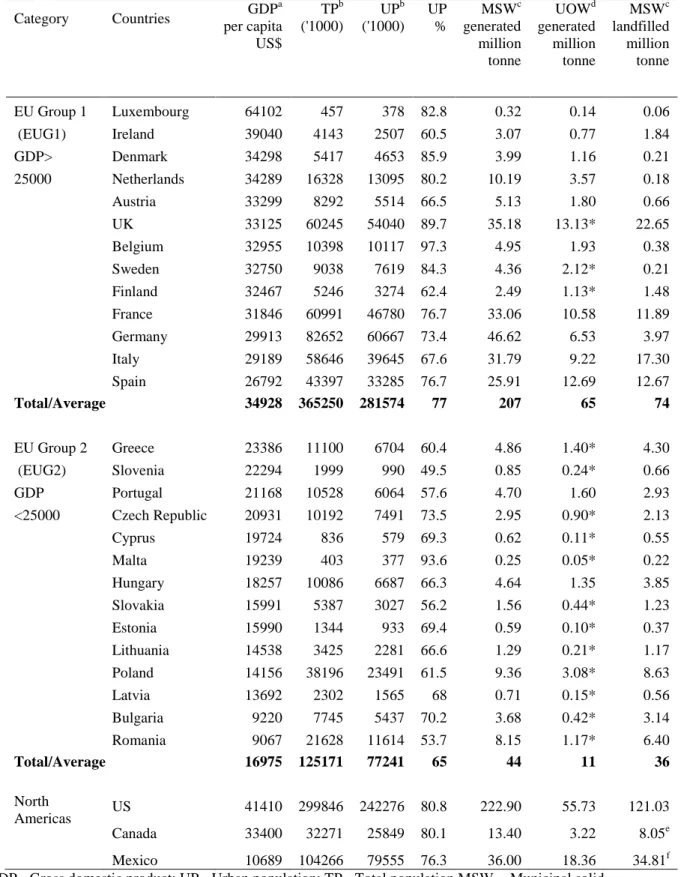
and provinces of Canada in 2006 62 Table 3.2 Countries categorized based on the GDP per capita (US$) in 2005 63 Table 3.3 Composition of MSW in some of the EU countries &
North Americas in 2005 64
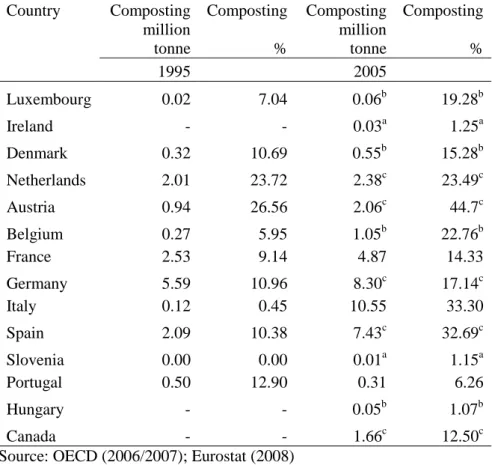
Table 3.4 Composting of UOW in some of the EU countries & Canada 65 Table 3.5 Municipal Solid Waste (MSW) composting facilities in some of the
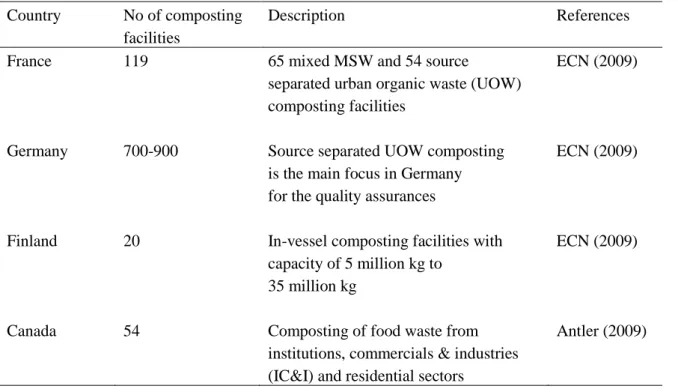
EU countries and Canada 66
Table 3.6 Various scenarios of Urban Organic Waste (UOW)
treatment strategies 67
Table 3.7 Cost of various composting strategies versus landfilling for UOW 68 Table 3.8 Proposed community and home composting in Paris, France
and Toronto, Canada 69
Chapter 4
Table 4.1 Composition of experimental organic waste 97
Table 4.2 Initial experimental compost characteristics 98
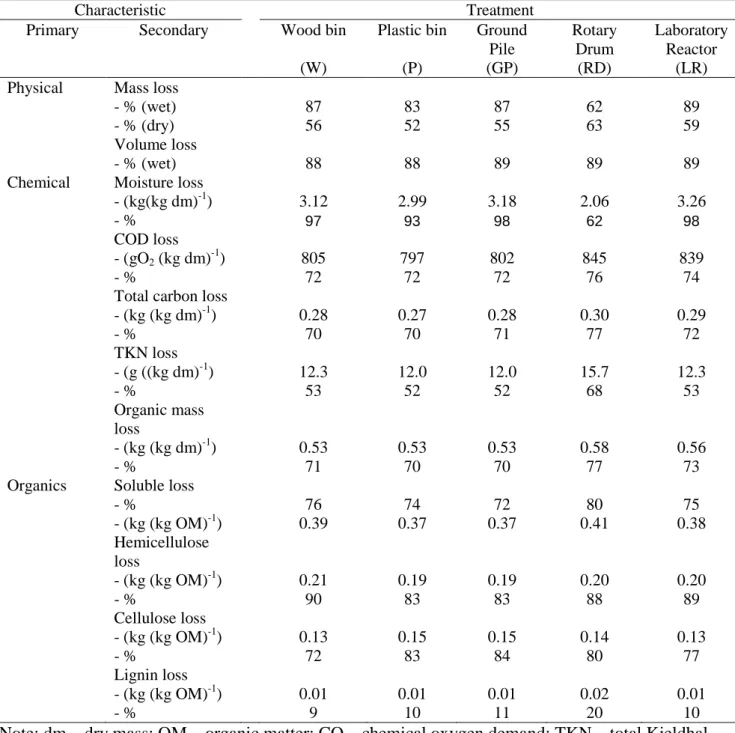
Table 4.3 Compost substrate losses after 150 days 99
Table 4.4 Pathogens and parasites levels after 150 days of composting 100 Table 4.5 Polycyclic aromatic hydrocarbons (PAH) at 150 days for the
Wood bin compost 101
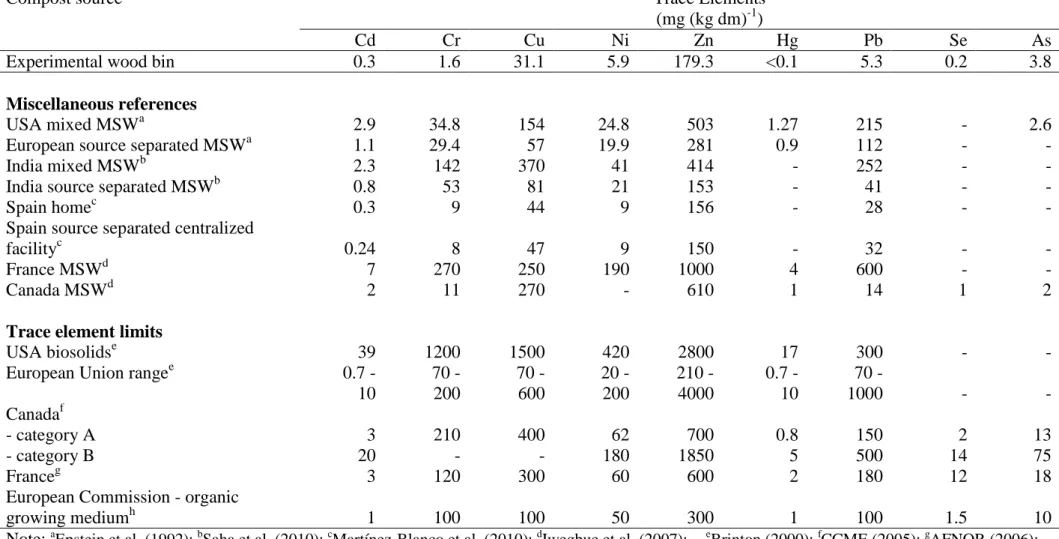
Table 4.6 Trace elements at 150 days for the Wood bin (W) compost 102 Chapter 5
Table 5.1 Composition of the experimental waste for batch and weekly
Table 5.2 Characteristics of the fresh experimental compost formula 131 Table 5.3 Loss of components in compost after 150 days of maturity 133 Table 5.4 Pathogens and parasites in mature compost of 150 days 135 Table 5.5 Polycyclic hydrocarbons (PAH) and trace elements for
150 day Wood bin compost 136
Chapter 6
Table 6.1 Food waste characteristics reported from various world sources 166 Table 6.2 Description of experimental home composters 167 Table 6.3 Components of the organic waste added in the composters 168 Table 6.4 Concentration of trace metals in the compost obtained
from five home composters and regulatory limits in Canada
and EU countries 169
Table 6.5 Levels of organisms in the compost of the five home composters 170 Chapter 7
Table 7.1 Evolution of compost characteristics during the 150 day
experiment 199
Table 7.2 Total gas emission (GE) for the four home composters 200
List of figures Chapter 3
Figure 3.1 Correlation of percentage urban population (%UP) with per capita gross
domestic product (GDP) according to UNPD (2007) and UNSD (2008) for (a) Europe; and (b) The Americas. (c) correlation of per capita urban organic
waste (UOW) and municipal solid waste (MSW) production with per capita
gross domestic production (GDP) 70
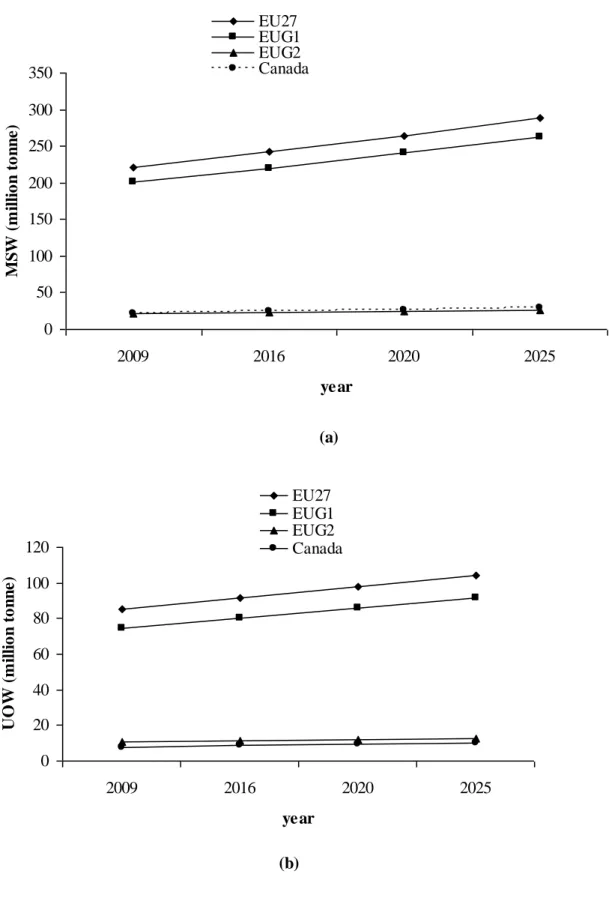
annual basis 71 Figure 3.3 Cost of UOW handling and treatment in consideration
of various scenarios 72
Figure 3.4 Computed Greenhouse Gases (CH4, CO2 & N2O)
emissions from UOW treatment in consideration of
various scenarios 73
Figure 3.5 Computed landfill area required for UOW landfilling
in consideration of various scenarios 74 Chapter 4
Figure 4.1 Home composting systems tested for their performance 103 Figure 4.2 Temperature regime of the four home composting systems (HC) and the
laboratory reactors, compared to daily ambient temperatures 104 Figure 4.3 Evolution of the compost characteristics for the
home composting systems (HC) and laboratory reactor 105 Figure 4.4 Evolution of the organic fractions for all treatments
during 150 d of composting 106
Figure 4.5 Compost odour characteristics for the home composting systems and the laboratory composter assessed by directly smelling 107 Chapter 5
Figure 5.1 Home composters used to test the management practice combinations 137 Figure 5.2 Temperature regimes for all HC and management
practices measured in the centre of the compost mass 138 Figure 5.3 Wood bin evolution of compost characteristics as influenced by
management practice combination 139
management practices 140 Figure 5.5 Plastic bin evolution of the compost characteristics as influenced by
management practices 141
Figure 5.6 Evolution of the compost characteristics as influenced by management
practices for the ground pile 142
Figure 5.7 Evolution of the TKN and organic fractions for all
management practice combinations 143 Figure 5.8 Evolution of compost odour characteristics as
influenced by management practice combinations 144 Chapter 6
Figure 6.1 Experimental home composters showing the three layer of compost sampled at the end of the 20 week monitoring period 171 Figure 6.2 Weekly and cumulative organic waste added to the
home composters by the individual homeowners
over 20 weeks of composting 172
Figure 6.3 For the 20 week experimental period, compost temperature profile for the five home composters (compost mass centre)
as compared to the average (n=5) weekly ambient temperature 173 Figure 6.4 For home composter A, autocorrelation function (ACF)
and partial autocorrelation function (PACF) 174 Figure 6.5 Compost characteristics by layer (top, middle and bottom)
for the five home composters after 20 weeks of continuous feeding 175 Figure 6.6 Compost characteristics by layer (top, middle and bottom)
Chapter 7
Figure 7.1 Experimental home composting systems 201
Figure 7.2 Temperature regime at the centre of compost mass 202 Figure 7.3 Typical trend of gas concentrations obtained in the closed chamber
placed over the compost materials 203 Figure 7.4 Measured emissions of CO2 and N2O from all four experimental
home composting systems 204
Figure 7.5 Loss of organic matter (OM) over time for the compost
of all four home composting systems 205 Figure 7.6 Loss of total (TC) (a) and total nitrogen (TN) (b) 206 Figure 7.7 Greenhouse gas emission (GGE) from the compost
of all four home composting systems 207 Annex-1: Certificate of Ethical Acceptability
Chapter 1 General introduction
1.1 Problem statement
The organic fraction of municipal solid waste (MSW) is the most active in terms of producing greenhouse gases and contaminated leachate (Rasapoor et al., 2009; Turan et al., 2009; Vehlow et al., 2007; Pokhrel and Viraraghavan, 2005; Bou-Zeid and El-Fadel 2004; Zacarias-Farah and Geyer-Allely, 2003; Shin et al., 2001; Legg, 1990) while also representing a major fraction of the MSW mainstream, especially with the recycling of metals, paper, glass and plastics. Over the past decade, the growth of MSW along with its urban organic waste (UOW) fraction has added further environmental and economic pressure to urban centers (Adhikari et al., 2009; Kollikkathara et al., 2009). In industrialized countries such as the European Union and Canada, landfilling is still the most common practice for the disposal of MSW along with its organic fraction because of its relatively low cost (Environment Canada, 2009; Hazra and Goel, 2009; Messineo and Panno, 2008). The landfilled organic wastes emit greenhouse gases which are costly to recover, generate leachate requiring treatment and remove land which otherwise could be used for crop production (Adhikari et al., 2009; Machado et al., 2009; Wagner and Arnold, 2008; Official Journal, 2000). Furthermore, social pressures are such that adequate landfill sites are now much harder to introduce.
In the European Union (EU), waste management is regulated by directives (Vehlow et al., 2007) with emphasis on waste management hierarchy (Hansen et al., 2002). The EU Landfill Directive (1999) has targeted a landfill diversion goal of 65 % for all biodegradable wastes by 2016. Similarly in Canada, in 1989, the Canadian
Council of Ministers of the Environment (CCME) adopted a national goal of 50 % landfill diversion for all MSW by 2000 (Wagner and Arnold, 2008).
To achieve the goal of organic waste diversion, the recovered waste needs to be treated and utilized. The commonly practiced technologies for treating this waste are anaerobic digestion, composting in centralized facilities, incineration and mechanical biological treatment (Kelleher, 2007). However, these technologies are expensive, both in initial investment and in operating costs (Nas and Bayram, 2008). Centralized composting facilities are not only expensive but can created odour nuisances generate from truck dumping, temporary storage and initial composting operations (US EPA, 1999). Source separated organic waste increases collection and transportation costs because of its separate handling which then adds fuel emissions. The onsite treatment of UOW using home systems or community composting centres can resolve these issues by substantially reducing if not eliminating collection and transporting costs. However, the composted product must be safe and of good quality to provide an opportunity for people to play a role in continuing this cycle. Safe compost can be used as a valuable nutrient source for soils while diverting waste from the MSW stream (US EPA, 2005).
1.2 Hypothesis
In this context, the following hypotheses were set to test in this project:
(i) onsite treatment of OW reduces environmental and economic pressure on the MSW management systems and saves land from landfilling;
(ii) the composting process depends on the home composter design type and management practices of home composting systems (HC);
(iv) HC type affects the greenhouse gas emissions (GGE) during the composting processes.
1.3 Objective
In order to test the above hypotheses, the main objective of this project is to study the composting process associated with urban organic waste (UOW) using home composting systems (HC). The scientific objectives pursued by the project were:
(i) to investigate of economical and environmental advantages of onsite treatment of UOW by community or individual households composters;
(ii) to compare the performance of four different types of common home composting systems (HC);
(iii) to investigate the impact of management practices on HC on compost temperature regime and final characteristics;
(iv) to validate laboratory results with compost quality actually produced in the backyard, and to further examine the influence of home composter design and management on compost quality; and
(v) to compare greenhouse gas emissions (GGE) for four common HC used in Canada and France.
1.4 Scope
The environmental and economic aspects of home and community composting of organic waste (OW) were examined and compared with centralized composting facilities and landfilling based on the available information. The commonly used home composting systems in France and Canada were studied for their process
characteristics, quality and greenhouse gas emission (GGE) with the food waste and yard trimmings of Rennes France. The study was further validated with resident managed home composting systems in the West Island of Montreal, Canada.
1.5 Layout of thesis
Chapter 2 presents a general literature review covering the topics of urbanization and waste production, impact on the environment, home composting and factors to be taken into consideration for the composting process. Chapter 3 is a paper presenting the home and community composting of organic waste: perspective for Europe and Canada. Chapter 4 is a paper discussing effects of home composting systems on compost characteristics. Chapter 5 describes the effect of home composter management practices on compost characteristics. Chapter 6 is a study of the home composting systems operated by residents of Montreal‟s West Island, Canada. Chapter 7 is a paper pertaining greenhouse gas emissions from home composting systems. Chapter 8 is the general conclusion. Chapter 9 is pertaining to the references cited in the thesis. Tables and figures are depicted in sequence at the end of each chapter. The acknowledgement, abbreviations and literature cited within a chapter are presented at the end of each chapter.
1.6 References
Adhikari BK, Barrington SF and Martinez J (2009) Urban food waste generation: challenges and opportunities. International Journal of Environment and Waste Management 3(1/2): 4-21.
Bou-Zeid M and El-Fadel M (2004) Parametric sensitivity analysis of leachate transport simulations at landfills. Waste Management 24: 681-689.
Environment Canada (2009) National inventory report: Greenhouse gas sources and sinks in Canada 1990 – 2007, National Inventory Report. Cat. No.: En81-4/2007E.
Hansen W, Christopher M and Verbuecheln M (2002) EU waste policy and
challenges for regional and local authorities. Background paper for the seminar on household waste management “capacity building on European Community‟s Environmental Policy”. Ecologic, Institute for International and European Environmental Policy.
Hazra T and Goel S (2009) Solid waste management in Kolkata, India: Practices and challenges. Waste Management 29(1): 470-478.
Kelleher M (2007) Anaerobic digestion outlook for MSW streams. BioCycle 48(8): 51.
Kollikkathara N, Feng H and Stern E (2009) A purview of waste management evolution: special emphasis on USA. Waste Management 29: 974-985. Landfill Dirctive (1999) Council directive 1999/31/EC of 26 April 1999 on the
landfill of waste. Official Journal of the European Communities, I. 182/1, Office for official publications of the European Communities, 2, rue Mercier, L – 2985 Luxembourg.
Legg BJ (1990) Farm & food waste: Utilization without pollution. Agricultural and food processing wastes. Proceedings of the sixth international symposium on agricultural and food processing wastes. 17-18 December 1990, pp. xi-xxi. ASAE publication 05-90.
Machado SL, Carvalho MF, Gourc JP, Vilar OM and do Nascimento JCF (2009) Methane generation in tropical landfills: simplified methods and field results. Waste Management 29(1): 153-161.
Messineo A and Panno D (2008) Municipal waste management in Sicily: Practices and challenges. Waste Management 28: 1201- 1208.
Nas SS and Bayram A (2008) Municipal solid waste characteristics and
management in Gumushane, Turkey. Waste Management 28(12): 2435- 2442.
Official Journal (2000) Directive 2000/76/EC of the European Parliament and of the Council of 4 December 2000 on the incineration of waste. L 332/91, 28.12.2000.
Pokhrel D and Viraraghavan T (2005) Municipal solid waste management in Nepal: practices and challenges. Waste Management 25: 555–562.
Rasapoor M, Nasrabadi T, Kamali M and Hoveidi H (2009) The effects of aeration rate on generated compost quality, using aerated static pile method. Waste Management 29(2): 570-573.
Shin HS, Han SK, Song YC and Lee CY (2001) Performance of UASB reactor treating leachate from acidogenic fermenter in two-phase anaerobic digestion of food waste. PII: S0043-1354(01)00041-0.
Turan NG, Coruh S, Akdemir A and Ergun ON (2009) Municipal solid waste management strategies in Turkey. Waste Management 29(1): 465-469.
USEPA (2005) Tribal composting nourishes land and tradition. United States
Environmental Protection agency. Tribal Waste Journal, Issue 4, EPA530-N-05-001.
USEPA (1999) Waste wise update. United States Environmental Protection
Agency, solid waste and emergency response (5306W), EPA530-N-99-007: www.epa.gov/wastewise Accessed 16 October 2008.
Vehlow J, Bergfeldt B and Visser R (2007) European union waste management strategy and the importance of biogenic waste. J Mater Cycles Waste Manag 9:130-139.
Wagner T and Arnold P (2008) A new model for solid waste management: an analysis of the Nova Scotia MSW strategy. Journal of Cleaner Production 16: 410-421.
Zacarias-Farah A and Geyer-Allely E (2003) Household consumption patterns in OECD countries: trends and figures. Journal of Cleaner Production 11: 819-827.
Chapter 2 Literature review
2.1 Urbanization and waste production
From 2005 to 2010, the average annual rate of change of world urban and rural population was reported to be 1.92% and 0.45% respectively. The urban population is expected to reach 6.3 billion in 2050 from 3.2 billion in 2009, whereas, the rural population is expected to decrease from 3.41 billion in 2009 to 2.86 billion in 2050 (UN, 2010). In Europe, the urban population is expected to increase to 84.3% in 2050 from 72.1% in 2009. Similarly, in Northern America countries (Bermuda, Canada, Greenland, Saint Pierre and Miquelon, United States of America), the urban population is expected to reach 90.1% in 2050 from 81.9% in 2009 (UN, 2010). In Asia, the urban population will grow from 41.7% in 2009 to 64.7% in 2050 (UN, 2010). This growing urbanization and related economic activities produces higher amount of municipal solid waste (MSW) along with organic waste (OW) that further adds environmental and economic pressure to the urban centres (Parrot et al., 2009; Troschinetz and Mihelcic, 2009; Adhikari et al., 2009a, 2006; Guermoud et al., 2008; Wagner and Arnold, 2008; Vehlow et al., 2007; Düring and Gӓ th, 2002; Harjula et al., 2001; Ahmed and Jamwal, 2000; Abu Qdais et al., 1997; Hong et al., 1996). The OW represents 20 to 80% of MSW mainstream depending on the economic situation of the urban centres (Papadopoulos et al., 2009; Adhikari et al., 2006; OECD, 2006-2007; EEA and ETC-WMF, 2002). In 2005, the European Union member states (EU27) generated 251 million tonnes of MSW including about a 31% organic waste component (Eurostat, 2008; OECD 2006-2007), and OW is expected to reach 105 million tonnes in 2025 which is about a 35% increase over 20 years (2005
to 2025) (Adhikari et al., 2010). Similarly, in North America (United States of America, Canada and Mexico), MSW production was reported to be 272.3 million tonnes, including 77.31 million tonnes of OW (OECD, 2006-2007). In Canada, OW is expected to increase by 25% between 2009 and 2025 (Adhikari et al., 2010).
The management of growing amounts of MSW along with the OW fraction is a challenge for urban centres, which are already under economic and environmental pressure. The European Union (EU) and Canada promulgated legislation with an emphasis on reduction, reuse, recycle, recovery and landfill as last option. The proper management of OW requires implementation of provisions and the principles of environmental policy and legislation to achieve the goal of sustainability (EC, 2006). Therefore, European and American countries have introduced a hierarchy concept for waste management practices such as reduction, reuse, recycle with landfilling as the last option (Machado et al., 2009; Sakai et al., 1996) and emphasis on resource recovery from the waste (Otegbeye et al., 2009). In this context, EU and Canada have set a target to divert their waste from landfills (Dunne et al., 2008; Burnley, 2007) by promulgation and implementation of waste management legislations and regulations. Many municipalities and waste collection and processing companies are looking at alternate solutions (Diaz, 2008) for diversion of OW from landfilling because of strict legislation, decreasing capacity of existing landfills, and more difficulty finding new ones (US EPA, 1993).
2.2 Waste management legislations in Canada and EU
The waste management legislations emphasize the diversion of MSW from landfilling, and resource recovery. In 1989, the Canadian Council of Ministers of the Environment (CCME) adopted a national goal of 50% landfill diversion of MSW by
2000 with priority on reduction, reuse, recycling and recovery (Wagner and Arnold, 2008; Sawell et al., 1996). The environmental Guidelines specified the source separation and composting of OW fraction (food waste, yard trimmings) of MSW for reduction of landfill emissions of methane (CH4) and leachate (CSC, 2003; EG 317-7,
2003). Under the framework of the CCME guidelines, the Canadian provinces issued legislation for diversion and recovery of resources. For example, in 1989, the Quebec government adopted an integrated solid waste management policy with 50% diversion goal by year 2000; however only 10.8% reduction was achieved (QR MMP, 2008). New Brunswick achieved 40% diversion in 2000 where the target was set of 50% diversion (NBELG, 2001). Under the framework of Environmental Actof 1994-95 and ban on landfilling of compostable organics in 1998, Nova Scotia became only the province to achieve the 50% diversion goal set by CCME in 2000 (NS EAL, 2004; NS DOE, 2000).
In Europe, the promulgation and implementation of waste framework directive 75/442/EEC changed the concept of end-of-pipe solutions of waste management with general advice on waste management and disposal (Vehlow et al., 2007; Pawelczyk, 2005). Currently, the EU waste management policy is based on the hierarchy of waste prevention, reuse, recycle and landfilling as the last option (Eurostat, 2011; Pawelczyk, 2005; Zacarias-Farah and Geyer-Allely, 2003; Hansen et al., 2002). Currently, waste management in the EU is regulated by directives that are issued by the European Council and the European parliament and have to be adopted by all member states (Vehlow et al., 2007). The important directive for MSW disposal is the Landfill Directive (1999). The Article 5 of Landfill Directive 1999/31/EC sets the strategies of landfill diversion of biodegradable waste fraction of MSW mainstream by specifying 25%, 50% and 65% diversion from landfill by 2006, 2009 and 2016
respectively from the 1995 level. The Commission Decision 2000/738/EC and Directive 2006/12/EC make it mandatory for the EU member states to implement Landfill Directive 1999/31/EC, monitoring and reporting (Official Journal, 2000; Official Journal, 2006). Western European countries successfully implemented the concept of diversion and resource recovery from waste, whereas Canada lags far behind likely due to lack of enforcement of legislations and availability of land for landfilling (Wagner and Arnold, 2008).
2.3 Municipal solid waste (MSW) management and evolution of technology During the early growth of urban centres, problems associated with MSW generation and management became prominent and often could be associated with disease outbreaks (Vehlow et al., 2007). The first European public MSW dumping site was introduced by the Greeks in 500 BC. With the course of time, the health and environmental issues associated with waste management became better understood and the concept of recycling and sanitary landfilling emerged (Vehlow et al., 2007). The landfilling of UOW along with the MSW mainstream remains attractive considering its low cost and the minimum implication of producers (El-Fadel et al., 2003).
2.3.1 Landfilling
Landfill disposal of MSW is a common practice worldwide (Kollikkathara et al., 2009). The UOW that goes to landfill sites not only pollutes the land and water but also contributes to global warming by producing methane (CH4), becoming a
political priority in the environmental field (Kollikkathara et al., 2009; Marmo, 2008; Baumert et al., 2005; Borjesson and Svenssen, 1997). At any landfill site, 45 to 58% of the UOW on a dry weight basis (dwb) is transformed into CH4 (Solid Waste
Landfill Guidance, 1999). In Canada, 5.5 million tons organic waste were landfilled in 1992 and contributed to global warming process by producing CH4 (Sawell et al.,
1996). In 1997, the US landfills are said to contribute 37% of the anthropogenic CH4,
representing the largest fraction of all the anthropogenic sources (US EPA, 2003). In Europe, an estimated 30% of anthropogenic CH4 emissions are from landfill sites
(EEA, 2001). In 2007, some EU member states such as Malta, Greece and the Czech Republic were still landfilling more than 80 % of their MSW (EEA, 2009) and in Canada, only Nova Scotia was successfully diverting more than 40 % of its MSW (Wagner and Arnold, 2008), a level which stood at 60 % in 2000 because of a smaller population and slower economic growth. In 2009, among all Canadian provinces, Nova Scotia was diverting the highest rate from landfills because of the enforcement of waste management legislations.
2.3.2 Alternative organic waste management technologies besides landfilling Several alternatives methods can be used to treat urban organic waste (UOW): anaerobic digestion with biogas production, composting through centralized facilities, incineration and mechanical biological treatment (Kelleher, 2007). Amongst these, composting is considered one of the best practices for treating UOW (Pokhrel and Viraraghavan, 2005), because it can be easily implemented, and its final product is stable and dry, offering organic matter (OM) usable as soil amendment (Wolkowski, 2003; Bari and Koenig, 2001; Hamelers, 1992).
However, this technology is not new, with patents for the mechanization of composting starting to appear in Europe as early as 1932 when the first full scale composting plant was established in the Netherlands by a non-profit company, N.V. Vuilafvoer Mactschapij (VAM) (Hughes, 1980). The principle was expanded and large scale centralized composting plants appeared during the 1970s and 1980s
(Slater and Frederickson, 2001) to treat the entire MSW stream by first of all, mechanically separating the organic fraction and then proceeding with its composting. Known as mechanical and biological treatment plants (MBT), these facilities produced poor quality compost and 18 of them were closed in Germany by 1985 (Slater and Frederickson, 2001). At present, source separated organic waste is preferred for composting to assure the quality of the finished product. For example, in Germany, source separation and composting of the organic fraction of MSW is mandatory in many municipalities and at present, 700 to 900 such composting facilities are in operation (ECN, 2009). In France, amongst 119 composting facilities treating MSW, 54 are using source separated UOW as feedstock, and in Canada, 54 facilities compost source separated food waste generated from residences, industries, businesses and institutions (ECN, 2009; Antler, 2009). However, the capital and variable costs of these facilities are high, and collection and transportation add further economic and environmental burden to the municipalities, because the OW must be collected separately (Nas and Bayram, 2008; US EPA, 1999). Therefore, the concept of onsite treatment of UOW has emerged, using home and community composting systems to treat a significant amount of UOW with little if any collection and transportation cost (Mitaftsi and Smith, 2006).
2.3.3 Home and community composting
The effective management of UOW offers major potential benefits (Shaw and Maynard, 2008). Home composting of UOW provides an opportunity for people to play a role in contributing to recycling by returning valuable nutrients to the soil and diverting waste from its main stream (US EPA, 2005). From 2003 to 2006, a first study was conducted by Smith and Jasim (2009) to evaluate the potential of home composting bins in diverting OW. The study demonstrated that 20 % of all household
OW was recycled within the suburban area of West London, where residents have access to gardens. This concept could apply to large Canadian cities such as Toronto, where residents living in single unit homes represent 70 % of the population (Government of Ontario, 2008) and can recycle their OW fraction using home composting, while the other 30 % living in multi-unit apartments can treat their waste at community composting centre (CCC). With the implementation of onsite UOW composting, environmental and economic issues faced by urban centres could be mostly mitigated with trace amounts of greenhouse gas emissions from home composting bins (Colón et al., 2010; Smith and Jasim, 2009; Otten, 2001). If HC can divert a substantial amount of UOW, the final product needs to be demonstrated as safe in terms of composting process, environmental issues and quality of composted product. Nevertheless, the composting process depends on various factors that influence compost quality and environmental issues.
2.4 Factors influencing composting process
Composting is a natural aerobic process of biological stabilization of organic waste that achieves both weight and volume reduction and provides the nutrients required for plant growth (Banegas et al., 2007; Kanat et al., 2006; Pokhrel and Viraraghavan, 2005; Barrington et al., 2002; US EPA, 1998; Sakai et al., 1996; US EPA, 1994; US EPA, 1993). Composting generates considerable heat, CO2 and water
vapour into the air while organic matter (OM) is converted into a potentially reusable soil amendment (Renkow et al., 1996; Pace et al., 1995; Biddestone and Gray, 1985; Haug, 1980; Picci et al., 1978). The microbial activity is mainly affected by moisture and oxygen; the aerobic composting process is given as (Wiley and Pierce, 1955):
CpHqOrNs . aH2O (organic matter) + bO2 (oxygen consumed) = CtHuOvNw . cH2O
(compost) + dH2O (water evap.) + eH2O (water prod.) + CO2 (carbon dioxide prod.).
Depending on the type of HC and the management practices, composting can also generate volatile organic compounds (VOC such as ethylbenzene, tetrachloroethane, 1,1,1-trichloroethane, and toluene), ammonia (NH3), carbon
monoxide (CO), nitric oxide (NO), N2O and CH4 (Colón et al., 2010;
Martínez-Blanco et al., 2010; IPCC, 2006; Barton and Atwater, 2002). However, levels of CH4
and N2O emissions from home composting systems (HC) depend on the method and
management used (Bogner et al., 2008; EPIC, 2002; Beck-Friis et al., 2000). Various factors affect the composting processes and determine the level of biological activities. The main factors are moisture, pH, initial recipe C/N ratio, oxygen and temperature (de Guardia et al., 2008; Berthe et al., 2007; Meunchang et al., 2005; Pace et al., 1995; Zucconi and de Bertoldi, 1986).
2.4.1 Moisture
The moisture content of the initial compost mixture is an important factor influencing the composting process (Epstein, 1997; Diaz et al., 1993; Haug, 1993). The initial moisture of the composting substrate depends on the type and structural strength of the OW to be composted (Diaz et al., 1993). Depending on the type of composting material, the moisture content varies from 50 to 85% (Day and Shaw, 2001; Haug, 1993; Zucconi and de Bertoldi, 1986). According to Pace et al. (1995), the composting mixtures should be maintained within a range of 40% to 65% moisture and preferably 50- 60%, (Day and Shaw, 2001; Hughes, 1980). Adhikari et al. (2009b) successfully composted organic waste with initial moisture of 80%. According to Haug (1980), composting was possible for mixtures of vegetable trimmings at initial maximum moisture contents as high as 85% when using straw as
bulking agent, and 76% when using paper. A moisture level below 45% is considered rate limiting and under 20%, no biological processes are possible (Day and Shaw, 2001; Bilitewski et al., 1994).
2.4.2 pH
For active microbial growth during composting, a neutral to slightly alkaline pH range is required. Organic substrates offer a wide range of pH levels ranging from 3 to 11 and this pH must be neutralized (Day and Shaw, 2001; Zucconi and de Bertoldi, 1986). The pH of initial compost mixture varying from 5 to 6.5 can be composted (Day and Shaw, 2001; Haug, 1993) due to the natural buffering capacity of the composting material (Willson, 1993). Generally, the pH level drops below 5 at the beginning of the composting process because of the acids formed by the acid-forming bacteria, which initialize the process by breaking down complex carbonaceous materials (Hughes, 1980). The later break down of proteins and liberation of ammonia account for the subsequent rise in pH (Bilitewski et al., 1994; Zucconi and de Bertoldi, 1986). According to Pace et al. (1995), the preferred range of pH is 6.5 to 8.0. The finished compost may have pH above 7, between 7 and 8.5 (Day and Shaw, 2001; Hughes, 1980).
2.4.3 C/N ratio
The decomposition of OM depends on the carbon to nitrogen ratio (C/N) of the material. During the process of decomposition carbon declines due to the release of carbon as CO2, while nitrogen remains within the system, hence as composting
process continues , the C/N ratio becomes lower (Hughes, 1980). The C/N ratio ensures the necessary nutrients for the synthesis of cellular components of microorganisms (Day and Shaw, 2001). For an active aerobic metabolism, a C/N ratio of 15 to 30 is suggested (Pace et al.,1995; Haug, 1993; US EPA, 1993; Zucconi and
de Bertoldi, 1986). The lower C/N ratio produces excess ammonia and unpleasant odour while the high C/N ratio limits the N for microbial growth and lowers the composting process rate (Day and Shaw, 2001; Pace at al., 1995). The C/N ratio of composted product should not be above 20 or it becomes N deficient in the soil while lower C/N ratio facilitates the N loss by volatilization from the soil and can have a toxic effect on plants (Bilitewski et al., 1994).
2.4.4 Aeration
One of the main parameter to control in the composting process is aeration. If the aeration rate is insufficient, oxygen will decrease and lack of oxygen during composting results in anaerobic conditions; on the other hand if the aeration rate is too high, the compost pile cools and lower the composting rate (Rasapoor et al., 2009; Barrington et al., 2002; Fernandes et al., 1994; Finstein et al., 1992). Aeration can be assured by implementing three types of techniques: natural, passive and active. Among these three methods, natural aeration is the cheapest and simplest, as it requires no installations. It consists of ensuring enough compost pile surface area to allow for the proper exchange of oxygen by diffusion. Passive aeration requires the installation of ducts under the compost plies to enhance the convective forces created by the temperature differences between the composting materials and the ambient air (Sartaj et al., 1997). Active aeration is the most expensive system, as it requires the installation of ducts under the compost piles and fans pushing air into these ducts and through the compost piles (Haug, 1993). Oxygen demand is very high during the initial decomposition stage, because of the rapidly expanding microbial population and the high rate of biochemical activity. After this initial high level of activity that generally lasts one to two weeks, oxygen demand decreases (Zucconi and de Bertoldi, 1986).
The previous studies have suggested aeration rates for OW composting. Nickolas and Young (2002) proposed 0.06 to 0.4 L (min)-1 (kg of waste)-1. Another study conducted by Rasapoor et al. (2009) suggested starting at a rate of 0.6 L (min)-1 (kg of waste)-1 during first 2 months of the process and continuing at a rate of 0.4 L (min)-1 (kg of waste)-1 until the end of composting process. The natural aeration provided from the holes at the bottom and top of composting bin produces better results for home composting of OW (Karnchanawong and Suriyanon, 2011).
2.4.5 Temperature
Temperature is generally a good indicator of the biological activity (Epstein, 1997). Home composting of OW takes place within three temperature ranges known as psychrophilic ( 0 to 20°C), mesophilic (20 to 40°C) and thermophilic (over 45°C) (Smith and Jasim, 2009). Although mesophilic temperatures allow effective composting, experts suggest maintaining thermophilic for few days, because they destroy pathogens, weed seeds and fly larvae (Pace et al., 1995). Thermophilic temperatures above 45°C should be reached within a few days (Adhikari et al., 2009b). Temperatures above 60-65°C may kill microorganisms that are more sensitive and the decomposition process may be slowed. Nevertheless, a continuing high temperature of 55-60°C, lasting beyond 5 to 6 weeks, indicates an abnormally prolonged decomposition and a delayed transition to the stabilization stage (Zucconi and de Bertoldi, 1986).
2.5 Compost quality
Composting is a widely used technique for solid waste treatment (Petiot and de Guardia, 2004). The quality of compost depends on initial mixture and process management during the composting treatment (Tremier et al., 2005). Composting is
the most important system of material recycling; as for every process of material recycling, the economic efficiency of the process is strongly dependent on the quality of the final product (Marchettini et al., 2007). Compost quality in relation to intended end-use is a frequently discussed issue and compost maturity is a critical factor affecting compost quality for specific agronomic objectives (CEPA, 2002). Immature and poorly stabilized composts creates handling, storage and marketing problems such as producing odour and developing toxic compoundsduring storage (CCQC 2001). The use of immature compost for soil growth media may have negative impacts on plant growth due to reduced oxygen. The terms compost maturity and stability are often used interchangeably. There is no one universally accepted and applied method to evaluate the stability and maturity of compost (CCQC, 2001).
Compost quality evaluation is essential for regulatory compliance and compost marketing. Regulatory compliance parameters include biological (Escherichia coli, salmonella), heavy metal concentrations, nutrients, soluble salts, and horticultural characteristics such as water holding capacity (Coker, 2007). The effective and environmental safe utilization of compost products depends on the production of good quality compost, especially, compost that is mature and sufficiently low in metals, pathogens and content of polycyclic aromatic hydrocarbons (PAHs). The quality of compost can be improved by early source separation, perhaps requiring separation to occur before or at curbside collection (Hargreaves et al., 2008). Source separation and home composting are considered to produce safe and stable composted products, however limited information is available about the quality of the compost obtained from home composting of organic waste.
2.6 Conclusion
Landfilling is the commonly used practice for the disposal of OW. Presently, stringent legislations in both EU and Canada forced municipalities to divert OW from landfilling. The diverted OW needs to be treated and recycled with minimal environmental and economic impacts. In this context, home and community composting can be considered one of the viable options for treatment and recycling of OW. There is limited information available on the cost and environmental impacts of home and community composting compared to centralized facilities and landfilling. For successful implementation of onsite treatment of OW, some of the issues such as compost mixtures formulation, process characteristics, quality of composted product and emissions of odour, greenhouse gases (CO2, CH4 and N2O) need to be further
addressed. Therefore, this research aimed to address these issues to provide technological tools for policy makers, implementers and urban residents for successful implementation of onsite treatment of OW. The following chapter 3 deals with environmental and cost examinations of home and community composting compared to centralized composting facilities and landfilling.
2.7 Abbreviations
CCC – community composting centres
CCME – Canadian Council of Ministers of the Environment
CH4 – methane
C/N – carbon to nitrogen ratio
CO – carbon monooxide
CO2 – carbon dioxide
EU – European Union
FW – food waste
HC – home composting systems
MBT – mechanical and biological treatment plants MSW – municipal solid waste
NH3 - ammonia
NO – nitric oxide
N2O – nitrous oxide
OECD – centralized composting facility
OM – organic matter
OW – organic waste UOW – urban organic waste US – United States
US EPA – United States Environmental Protection Agency VOC – volatile organic compounds
2.8 References
Abu Qdais HA, Hamoda MF and Newham J (1997) Analysis of residential solid
waste at generation sites. Waste Management & Research 15: 395- 406.
Adhikari BK, Tremier A, Martinez J and Barrington SF (2010) Home and community composting for onsite treatment of urban organic waste: perspective in the EU and Canada. Waste Management & Research 28(11): 1039 – 1053.
Adhikari BK, Barrington SF and Martinez J (2009a) Urban food waste generation: challenges and opportunities. Int. J. Environment and Waste Management 3(1/2): 4-21.
Adhikari BK, Barrington S, Martineze J and King S (2009b) Effectiveness of three bulking agents for food waste composting. Waste Management 29: 197-203. Adhikari BK, Barrington S and Martineze J (2006) Predicted growth of world urban
food waste and methane production. Waste Management & Research 24: 421-433.
Ahmed and Jamwal (2000) Garbage: your problem. Down to Earth 31: 30-45. Antler S (2009) Compost grows stronger. The Compost Council of Canada:
www.compost.org/compostinggrowsstronger.html Accessed 3 June 2009. Banegas V, Moreno JL, Moreno JI, Garcia C, Leon G and Hernandez T (2007)
Composting anaerobic and aerobic sewage sludges using two proportions of sawdust. Waste Management 27: 1317-1327.
Bari QH and Koenig A (2001) Effect of air recirculation and reuse on composting of organic solid waste. Resources, Conservation and Recycling 33: 93-111. Barrington S, Choiniere D, Trigui M and Knight W (2002) Compost airflow
resistance. Biosystems Engineering 81(4): 433-441.
nitrogen in wastewater and solid waste. Journal of Environmental Engineering 128(2): 137-150.
Baumert KA, Herzog T and Pershing J (2005) Navigating the Numbers: Green House Gas Data and international climate policy. World Resources Institute, Washington, D.C., USA.
Beck-Friis B, Pell M, Sonesson U, Jönsson H and Kirchmann H (2000) Formation and emission of N2O and CH4 from compost heaps of organic household waste. Environmental Monitoring and Assessment 62(3): 317-331.
Berthe L, Druilhe C, Massiani C, Tremier A and de Guardia A (2007) Coupling a respirometer and a pycnometer, to study the biodegradability of solid organic wastes during composting. Biosystems Engineering 97: 75-88.
Biddestone AJ and Gray KR (1985) Composting. In: Moo-Young M (ed.):
Comprehensive Biotechnology, vol. 4. Pergamon Press, Oxford, pp. 1059. Bilitewski B, Hardtle G and Marek K (1994) Waste Management. Springer-Verlag
Berlin Heidelberg, Germany, pp. 1-7, 202-209.
Bogner J (USA), Pipatti R (Finland), Hashimoto S (Japan), Diaz C (Cuba),
Mareckova K (Slovakia), Diaz L (USA), Kjeldsen P (Denmark), Monni S (Finland), Faaij A (The Netherlands), Gao Q (China), Zhang T (China), Ahmed MA (Sudan), Sutamihardja RTM (Indonesia) and Gregory R (UK) (2008) Mitigation of global greenhouse gas emissions from waste: conclusions and strategies from the Intergovernmental Panel on Climate Change (IPCC) Fourth Assessment Report. Working Group III (Mitigation). Waste Management & Research 26: 11–32.
a landfill and their regulation by methane oxidation. Waste Management & Research 15: 33 – 54.
Burnley SJ (2007) A review of municipal solid waste composition in the United Kingdom. Waste Management 27: 1274-1285.
CCQC (2001) Compost maturity index. California Compost Quality Council, Nevada City, CA, USA.
CEPA (2002) Compost maturity and nitrogen release characteristics in central coast vegetable production. California Environmental Protection Agency, Integrated Waste Management Board, USA. Publication#442-02-015.
Coker C (2007) Compost data tracking and analysis. BioCycle 48(7): 26.
Colón J, Martínez-Blanco J, Gabarrell X, Artola A, Sánchez A, Rieradevall J and Font X (2010) Environmental assessment of home composting. Resources, Conservation and Recycling 54: 893–904.
CSC (2003) Environmental Guidelines 318-7, solid waste measurement and management, Correctional Service Canada.
Day M and Shaw K (2001) Compost utilization in horticultural cropping systems. In: Stoffella PJ and Kahn BA (eds.): CRS press, USA, eBook ISBN: 978-1-4200-2622-1.
www.crcnetbase.com/doi/pdfp/us/10.1201/9781420026221.ch2 Accessed 8 July 2011.
de Guardia A, Petiot C and Rogeau D (2008) Influence of aeration rate and
biodegradability fractionation on composting kinetics. Waste Management 28: 73-84.
Diaz LF (2008) The search for solutions to maximize waste diversion from landfills. Waste Management 28: 775.
Diaz LF, Savage GM, Eggerth LL and Golueke CG (1993) Composting and
Recycling , Municipal Solid Waste. Lewis Publishers, Boca Raton, USA. pp. 121 – 173.
Dunne L, Convery FJ and Gallagher L (2008) An investigation into waste charges in Ireland, with emphasis on public acceptability. Waste Management 28: 2826-2834.
Düring R-A and Gӓ th S (2002) Utilization of municipal organic wastes in agriculture:
where do we stand, where will we go? J. Plant Nutr. Soil Sci 165: 544-556. EC (2006) European Parliament and Council Directive 2006/12/EC of 5 April 2006
on Waste.
ECN (2009) Country report, The European Compost Network, ECN/ORBIT e.V.,
Postbox 22 29, D-99403 Weimar, Germany.
www.compostnetwork.info/index.php?id=36 Accessed 3 June 2009. EEA (2009) Diverting waste from landfill, effectiveness of waste-management
policies in the European Union, European Environmental Agency, EEA Report NO. 7/2009, ISSN 17259177, Konges, Nytorv 6, 1050 Copenhagen K, Denmark.
EEA (2001) Climate change, European Environmental Agency:
www.eea.europa.eu/themes/climate Accessed 18 February 2009.
EEA and ETC-WMF (2002) Biodegradable municipal waste management in Europe. European Environmental Agency (EEA) and European Topic Center on Waste and Material Flows (ETC-WMF), Report Number 15/2001, Copenhagen, Denmark.
solid waste measurement and management.
El-Fadel M, Bou-Zeid E and Chahine W (2003) Landfill evolution and treatability assessment of high-strengh leachate from MSW with high organic and moisture content. Intern. J. Environ. Studies 60(6): 603–615.
EPIC (2002) Opportunities for Reducing greenhouse Gas Emissions through
Residential Waste Management. the Environment and Plastics Industry Council (EPIC), a council of the Canadian Plastics Industry Association. 5925 Airport Road, Suite 500, Mississauga, Ontario.
Epstein E (1997) The science of composting. CRS Press LLC, Boca Raton, Florida, USA. pp. 19 - 50.
Eurostat (2011) Generation and treatment of municipal waste – issue number 31/2011. http://epp.eurostat.ec.europa.eu/portal/page/portal/eurostat/home Accessed 19 July 2011.
Eurostat (2007) Environmental expenditure statistics, general government and
specialised producers data collection handbook, Cat.NO.KS-RA-07-012-EN-N.
Fernandes L, Zhan W, Patni NK and Jui PY (1994) Temperature distribution and variation in passively aerated static compost piles. Transactions of the ASAE 48: 257-263.
Finstein MS and Hogan JA (1992) Integration of composting process microbiology facility structure and decision making in science and Engineering of composting, design, environmental microbiological and utilization aspects. In: Hoitink HAJ and Keener HM (eds): Proceedings of an international composting research symposium, 27-29 March 1992. Columbus, OH, USA.
targets, municipal bench marks, Waste Diversion Ontario, April 30, 2004. Guermoud N, Ouadjnia F, Abdelmalek F, Taleb F and addou A (2008) Municipal
solid waste in Mostaganem city (Western Africa). Waste Management 29(2): 896-902.
Hamelers HVM (1992) A theoretical model of composting kinetics, Science and engineering of composting, Design, environmental, microbiological and utilization aspects. In: Hoitink HAJ and Keener HM (eds): proceedings of an international composting research symposium, 27-29 March 1992. Columbus, OH, USA.
Hansen W, Christopher M and Verbuecheln M (2002) EU waste policy and
challenges for regional and local authorities. Background paper for the seminar on household waste management “capacity building on European Community‟s Environmental Policy”. Ecologic, Institute for International and European Environmental Policy.
Hargreaves JC, Adl MS and Warman PR (2008) A review of the use of composted municipal solid waste in agriculture. Agriculture, Ecosystems and Environment 123: 1-14.
Harjula H, De Tilly S and Stutz J (2001) Waste trends and outlook. Waste: Chapter 20. OECD Environmental Directorate.
Haug RT (1993) The practical handbook of compost engineering, Lewis Publishers. A CRC press company, Boca Raton, Florida, USA, pp. 205 – 259.
Haug RT (1980) Compost engineering, Principles and practice, ANN ARBOR
SCIENCE PUBLISHERS, INC. 230 Collingwood, P.O. Box 1425, Ann Arbor, Michigan 48106, USA, pp. 1, 89, 185, 274-275, 347.
health protection zone for sanitary landfill in Fu Shan City. Waste Management & Research 14: 505 – 510.
Hughes EG (1980) The composting of municipal wastes. In: Bewick MWM (ed): Handbook of organic waste conversion. Chapter 4, Published by Van Nostrand Reinhold Company, 135 West 50th Street, New York, N.Y. 10020, USA, pp. 108-134.
IPCC (2006) IPCC guidelines for national greenhouse gas inventories, Volume 5 Waste. Intergovernmental Panel on Climate Change. www.ipcc-nggip.iges.or.jp/public/2006gl/vol5.html Accessed 18 May 2011.
Karnchanawong S and Suriyanon N (2011) Household organic waste composting using bins with different types of passive aeration, Resources, Conservation and Recycling 55: 548–553.
Kelleher M (2007) Anaerobic digestion outlook for MSW streams. BioCycle 48(8):
51. Kollikkathara N, Feng H and Stern E (2009) A purview of waste management evolution: special emphasis on USA. Waste Management 29: 974-985.
Kanat G, Demir A, Ozkaya B and Bilgili MS (2006) Addressing the operational problems in a composting and recycling plant. Waste Management 26: 1384-1391.
Landfill Dirctive (1999) Council directive 1999/31/EC of 26 April 1999 on the landfill of waste. Official Journal of the European Communities, I. 182/1, Office for official publications of the European Communities, 2, rue Mercier, L – 2985 Luxembourg.
Methane generation in tropical landfills: simplified methods and field results. Waste Management 29(1): 153-161.
Marchettini N, Ridolfi R and Rustici M (2007) An environmental analysis for
comparing waste management options and strategies. Waste Management 27: 562-571.
Marmo L (2008) EU strategies and policies on soil and waste management to offset greenhouse gas emissions. Waste Management 28: 685-689.
Martínez-Blanco J, Colón J, Gabarrell X, Font X, Sánchez A, Artola A and
Rieradevall J (2010) The use of life cycle assessment for the comparison of biowaste composting at home and full scale. Waste Management 30: 983–994. Meunchang S, Panichsakpatana S and Weaver RW (2005) C0-composting of filter
cake and bagasse; by-products from a sugar mill. Bioresource Technology 96: 437-442.
Mitaftsi O and Smith SR (2006) Quantifying household waste diversion from landfill disposal by home composting and kerbside collection. Final report, Centre for environmental control and waste management, department of civil and environmental engineering, Imperial College, London UK.
Nas SS and Bayram A (2008) Municipal solid waste characteristics and
management in Gumushane, Turkey. Waste Management 28(12): 2435- 2442.
NB ELG (2001) Waste Reduction division & an action plan for New Brunswick. New Brunswick Environment and Local Government: www.gnb.ca/elg-egl Accessed 18 February 2009.
Nickolas J and Young HK (2002) Material and energy balances in a large scale aerobic bioconversion cell. Waste Management and Research 20: 234-242.