Heterogeneous
Enantioselective Hydrogenation over Cinchona Alkaloid Modified Platinum:
Mechanistic
Insights into a Complex Reaction
THOMAS
BU¨ RGI
†AND
ALFONS BAIKER*
Department of Chemistry and Applied Biosciences, Swiss Federal Institute of Technology, ETH-Ho¨nggerberg, CH-8093 Zu¨rich, Switzerland
ABSTRACT
Modification of a metal surface by a strongly adsorbed chiral organic molecule has proven to be an interesting strategy for heterogeneous chiral catalysis. Platinum chirally modified by cinchona alkaloids, successfully applied for the enantioselective hydrogenation of R-ketoesters, is probably the most prominent catalyst based on this concept. Despite considerable research efforts toward understanding of this complex catalytic system, the pro-posed mechanistic models are still debated. Here we discuss how enantiodifferentiation can be induced on a catalytically active surface and validate the models proposed for the platinum-cinchona system in the light of the existing molecular knowledge.
Introduction
The demand for optically active compounds in high enantiopurity has witnessed an explosion over the past decades, mainly driven by the awareness that application of the wrong enantiomer of a chiral product can have fatal consequences. Among the various methods applied in the production of chiral compounds,1asymmetric catalysis is
unique in the sense that with a small amount of an optically active catalyst a large quantity of a chiral compound can be produced.2This aspect has been termed
“chirality multiplication”. In the past decades, homoge-neous enantioselective catalysis has seen phenomenal progress, as reflected by the Nobel prizes in 2001 awarded to Sharpless, Noyori, and Knowles.3-5 Many transition
metal complexes with chiral ligands have been developed for various catalytic reactions important in the synthesis of optically pure compounds in the fine chemicals and pharmaceutical sectors. Heterogeneous enantioselective catalysis, that is, chiral catalysis at surfaces, is still lagging behind as concerns performance, mechanistic insight, and
* To whom correspondence should be addressed. E-mail: baiker@ chem.ethz.ch. Fax: +41 1 632 11 63.
†Present address: Institut de Chimie, Universite´ de Neuchaˆtel, Av.
de Bellevaux 51, CH-2007 Neuchaˆtel, Switzerland. Thomas Bu¨rgi (1965) has made his habilitation thesis in the group of A. Baiker at
ETH. Since 2003, he has been Assistant Professor for Physical Chemistry at the University of Neuchaˆtel, Switzerland. He is working in the fields of in situ spectroscopy of solid-liquid interfaces, heterogeneous catalysis, and sensors. Alfons Baiker (1945) is professor of chemistry at the Department of Chemistry and Applied Biosciences of the Swiss Federal Institute of Technology (ETH). His research interests are centered around catalyst design, mechanism and kinetics of catalytic surface processes, asymmetric hydrogenation, selective oxidation and environmental catalysis, in situ spectroscopy, and the application of supercritical fluids in catalysis.
scope of reaction. Successful applications with synthetic potential are confined to a narrow range of asymmetric CdO and CdC hydrogenations.6 Nevertheless,
heteroge-neous catalysis offers inherent practical advantages con-nected with separation, reuse, and stability of the catalyst and affords the opportunity for continuous process opera-tion.7 These technical advantages explain why research
in heterogeneous asymmetric catalysis has gained con-siderable momentum in the past decade.
Various strategies have been applied in the develop-ment of heterogeneous chiral catalysts,8,9 including the immobilization of successful homogeneous chiral transi-tion metal complexes on a suitable support, imprinting of chiral templates, modification of active metals by an adsorbed chiral modifier, or the use of intrinsically chiral solids. Among these strategies, only the immobilization of homogeneous transition metal complexes and the chiral modification of metals show synthetic potential.10 Par-ticularly striking is the progress made in the chiral modification of supported metal catalysts,11 among which platinum modified with cinchona alkaloids applied in the enantioselective hydrogenation of R-functionalized ke-tones and nickel modified with tartaric acid used in the asymmetric reduction of β-ketoesters are the most promi-nent examples.12 Although the platinum-cinchona system has been successfully applied in the enantioselective hydrogenation of a variety of R-functionalized ketones, including R-ketoesters and R-ketoacids, R-ketoamides, R-diketones, R-keto acetals, R-ketoethers, trifluoromethyl ketones, ketopantolactone, and pyrrolidine-2,3,5-triones, most knowledge has been collected using the enantiose-lective hydrogenation of methyl or ethyl pyruvate, origi-nally reported by Orito in 1979. The knowledge gathered since then on this catalytic system has been covered in various reviews.6,12-15 Some important characteristic fea-tures of the platinum-cinchona system are summarized in Figure 1. The most striking characteristics are as follows: (i) the enantioselectivity is completely lost when the basic nitrogen at the quinuclidine moiety of the cinchona alkaloid is blocked by alkylation,16 and (ii) the presence of the cinchona alkaloid results in significant rate acceleration, that is, the rate of the enantioselective hydrogenation is greatly enhanced compared to that of the racemic hydrogenation.17
The progress made in the mechanistic understanding of the platinum-cinchona system is the focus of this article. In the first part, we discuss briefly the principal possibilities how enantioselective catalysis can occur on a chirally modified metal surface. The second part is devoted to a critical analysis of the proposed mechanistic models for the enantioselective hydrogenation on plati-num-cinchona systems.
thermore, R- and S-NEA adsorption is the same on the chiral single-crystal surface Pt(643). From cyclic voltam-metry, Attard concluded that adsorption of dihydrocin-chonidine is structure-insensitive, since adsorption was very similar on various Pt single-crystal surfaces.19More
importantly, a selective poisoning of sites of one handed-ness cannot explain the often-observed rate acceleration induced by the modifier. A selective poisoning diminishes the number of active sites and thus leads to an apparent rate deceleration with respect to the unmodified reaction. The interaction of a chiral molecule with a (nonchiral) flat metal surface could in principle lead to a reconstruc-tion of the metal surface and the generareconstruc-tion of chiral sites with preferential handedness (Figure 2c). This was dem-onstrated by scanning tunneling microscopy (STM) for adsorption of 2,5,8,11,14,17-hexa(tert-butyl)decacyclene (HtBDC, C60H66) on Cu(110).21The driving force for such
a process is the larger adsorption energy of the molecule on the reconstructed surface with respect to adsorption on the nonreconstructed surface, which overcompensates the energy for reconstruction. A net driving force is there-fore only expected for large molecules with big adsorption energy. For cinchona alkaloids, such an adsorption-induced reconstruction has not been observed yet.
A somewhat similar idea was put forward by Raval and co-workers for the enantioselective hydrogenation of
β-ketoesters over tartaric acid modified Ni catalysts.22
Upon adsorption of a molecule, the surface metal atoms are slightly displaced from their equilibrium position in the absence of the adsorbate. In contrast to the recon-struction discussed above, the metal atoms are not removed from the lattice but are only slightly displaced. Raval and co-workers showed by calculations that adsorp-tion of bitartrate displaces the neighboring Ni surface atoms, which leads to a “chiral footprint”. This chiral ensemble of metal atoms may be the active catalytic site, combining catalytic activity and enantiodifferentiation. An important issue in this context is how much the surface atoms are displaced from the nonchiral unperturbed FIGURE 1. Heterogeneous enantioselective hydrogenation of R-ketoesters over cinchona alkaloid modified Pt. In the absence of the modifier,
a racemic mixture of the R-hydroxyester is formed. Addition of cinchonidine (cinchonine) modifier leads to enantiomeric excess in favor of the (R)-R-hydroxyester ((S)-R-hydroxyester). Blocking of the quinuclidine N leads to complete loss of enantiodifferentiation.
Chiral
Recognition on a Metal Surface
It needs the combination of two basic functions that asymmetric catalysis can occur on a metal surface, namely, activity and stereochemical control. The nature of the active sites on chirally modified catalysts is the subject of ongoing debates and investigations. Principal possibilities on how chiral recognition and enantioselec-tive catalysis can be induced are shown schematically in Figure 2. One possibility emerges from the fact that metal catalyst particles are not perfectly symmetric structures (Figure 2a). They contain defects such as kinks, some of which may be chiral. Such intrinsically chiral sites can be created deliberately by cutting a metal single crystal along certain high Miller index planes. Gellman and co-workers demonstrated that adsorption of chiral molecules is enantiospecific on such surfaces.18 Attard found that
intrinsically chiral Pt single-crystal surfaces exhibit enan-tioselectivity in the electrooxidation of D- and L-glucose.19 In both examples mentioned above, the enantiospecificity of the metal surface is attributed to chiral kink sites. In a real catalyst sample containing supported metal particles, such sites may also exist. However, in the absence of additional chiral information, the amount of left- and right-handed kink sites (or other chiral structures) is equal. Hence such catalysts are racemic and do not yield enantiomeric excess.
A chiral modifier may however interact differently with chiral metal sites of opposite handedness (Figure 2b). As a consequence one enantiomer of the site can be selec-tively poisoned, leaving the other enantiomer preferen-tially exposed and accessible for the reactant. If this chiral site is catalytically active, enantiomeric excess can be induced. For the Pt-cinchona alkaloid system this is improbable based on several observations. Cinchonidine, which is the most efficient chiral modifier for platinum catalysts, and similar molecules are found to adsorb rather indiscriminately on Pt. For example, 1-(1-naphthyl)-ethylamine (NEA), a precursor of an efficient modifier, adsorbs indiscriminately at step and surface sites.20
structure. The “footprint” can change from almost non-chiral, in the case that the displacement of the surface atoms is small, leaving a rather symmetric arrangement of surface atoms, to “very chiral” in the case of strong displacements from the symmetric arrangement. It is likely that such “chiral footprints” are also generated through adsorption of cinchona alkaloids on Pt, which could lead to enantioselection. To explain the observed rate accelera-tion in the Pt-cinchona alkaloid system, the chiral site (“chiral footprint”) should also accelerate the reaction with respect to the nonreconstructed surface, which seems unlikely. Furthermore, the loss in enantioselectivity when blocking the quinuclidine N of the modifier would indicate that the quinuclidine N is involved in the formation of the “chiral footprint”. However, in situ infrared23,24 and
Raman spectroscopies25of cinchonidine adsorption, as
well as near edge X-ray absorption fine structure spec-troscopy (NEXAFS), of 10,11-dihydrocinchonidine on Pt-(111) in ultrahigh vacuum26indicate that the modifier is
anchored via the quinoline ring. Thus in the light of currently available experimental findings a “chiral
foot-print” mechanism seems improbable for the Pt-cinchona alkaloid system.
Another mechanism is based on a supramolecular chirality. The chiral modifier forms long-range ordered patterns on the metal surface, in such a way that the symmetry planes of the underlying metal surface are destroyed (Figure 2d). Raval and co-workers initially proposed that such a supramolecular chirality is respon-sible for enantiodifferentiation in the Ni-tartaric acid system. The proposal was based on STM experiments, which revealed ordered overlayers of tartaric acid on Cu-(110).27A similar mechanism was proposed for the
Pt-cinchona alkaloid system, albeit without experimental evidence.28An ordered adlayer of the alkaloid leaves chiral
assemblies of surface Pt atoms exposed, which are cata-lytically active. Adsorption of the prochiral reactant on the two enantiofaces is unequal, which is assumed to be the origin of enantiodifferentiation. Such a “template model” is improbable for the Pt-cinchona alkaloid system due to the following reasons: Ordered overlayers of cinchona alkaloids or related compounds have not been found on FIGURE 2. Principal possibilities for chiral induction on metal surfaces: (a) intrinsically chiral metal surfaces, kink sites on a high Miller index
single-crystal surface;18(b) selective adsorption of a chiral molecule on chiral sites of one handedness (blocking) on a racemic surface of a
metal particle; (c) creation of chiral sites on nonchiral terraces through adsorption induced reconstruction21(the example shows STM images
of adsorbed 2,5,8,11,14,17-hexa(tert-butyl)decacyclene (HtBDC, C60H66) on Cu(110) (top), which results in the creation of chiral kink sites (bottom);
even without reconstruction the adsorption of a chiral molecule may lead to a “chiral footprint”);22(d) supramolecular chirality on nonchiral
terraces by self-assembly of chiral molecules (the example shows adsorbed tartaric acid on Cu(110);27the adsorption pattern destroys all
symmetry planes of the underlying metal surface; such adsorption patterns may leave shaped assemblies of surface atoms free (template));28
importantly they showed that with cinchonidine the complex, which would lead to the R-alcohol upon hydro-genation from the surface side, is more stable than its counterpart, whereas with cinchonine the pro-S complex was found to be more stable. The model calculations, despite the numerous assumptions and although neither catalyst surface nor solvent were explicitly considered, made a correct prediction of the absolute configuration of the major enantiomer. Figure 3 shows the essence of the initially proposed model.
Validation of Model Assumptions
The 1:1 interaction model described above involves the quinuclidine N of the modifier, which is plausible in view of the observation that blocking of this function leads to a complete loss of enantiodifferentiation.16Other
assump-tions were less obvious at the time the model was proposed. These involve the adsorption mode and con-formation of modifier and reactant. In this section, we will discuss what has been learned concerning these assump-tions during the last years.
An important assumption concerns the conformation and adsorption mode of the cinchona alkaloid on the Pt catalyst surface. A refined conformational analysis using ab initio and density functional theory (DFT) reaction field calculations combined with NMR spectroscopy revealed that the population of the most stable conformer “open 3”, assumed in the original model, depends on the polarity of the solvent.34Highest relative abundance of conformer
“open 3” was observed in solvents that are apolar, whereas the population of the “closed” conformer was enhanced in polar solvents. This solvent-dependent conformational behavior is certainly an important factor for explaining the higher enantioselectivity achieved in apolar solvents. Further support for this contention comes from the fact that a synthetic cinchona derivative (R-isocinchonine) with fixed “open” conformation provides similar enanti-oselectivity to S-ethyl lactate as cinchonine itself.35
In the original model, the modifier was assumed to adsorb via the quinoline part with the latter being oriented parallel to the surface. The adsorption of 10,11-dihy-drocinchonidine on Pt(111) under ultrahigh vacuum conditions was investigated by near-edge X-ray absorption fine structure spectroscopy (NEXAFS).26At room
temper-ature, a mean angle of about zero was found between the quinoline plane and the surface, whereas at 323 K, the quinoline ring was more tilted away from the surface, forming a mean angle of about 60°. Quinoline itself was investigated by the group of Lambert and was also found to adsorb preferentially flat on Pt(111) at room temper-ature.36The studies just discussed reveal a tendency of
the modifier to adsorb flat. However, the experiments were performed in a “clean” environment far from reaction conditions. Furthermore, due to the relatively broad transitions observed in NEXAFS only a mean orientation of the molecules could be determined.
Vibrational spectroscopy is usually less limited by overlapping bands and can be applied at or close to Pt by LEED studies.29 Similar to the Ni-tartaric acid
system, cinchonidine may form ordered overlayers on Cu-(111).30 On the latter surface, the lateral potential for adsorbates is usually smaller than for Ni(111) or Pt(111). Indeed no ordered overlayers of tartaric acid and cinchona alkaloids were found on Ni and Pt surfaces, respectively. Furthermore, the template model does not explain the rate acceleration due to the modification of the metal surface. Finally, very small Pt particles with 2 nm diameter were successfully used for the enantioselective hydrogenation of methyl pyruvate.31 Such particles are too small to accommodate extended long-range ordered adsorbate layers of molecules of the size of cinchona alkaloids.
Finally, an interaction between the adsorbed modifier and the reactant (Figure 2e) could be at the origin of enantiodifferentiation. This scenario has been widely accepted for the platinum-cinchona system and will be examined in detail in the following.
Proposed
Model for Ethyl Pyruvate
Hydrogenation
In 1994, Baiker and co-workers proposed a 1:1 interaction model based on quantum chemical calculations and the existing experimental knowledge to rationalize enantio-differentiation in the heterogeneous enantioselective hy-drogenation of ethyl pyruvate over cinchonidine-modified Pt.32 The theoretical model assumed that enantiodiffer-entiation can be traced to the different stability of the diastereomeric complexes formed between cinchonidine anchored to the Pt catalyst surface and ethyl pyruvate adsorbed in its two enantiofacial forms (via re- and si-faces), leading to S- and R-ethyl lactate, respectively, upon hydrogenation. A structurally similar model was proposed by Wells and co-workers, albeit with unrealistically high-energy differences between the pro-R and pro-S activated complexes.33 According to these models the chiral cin-chonidine modifier adopts an “open” conformation, that is, a conformation where the basic quinuclidine nitrogen atom points away from the aromatic quinoline ring. Cinchonidine is anchored on the Pt catalyst surface via the quinoline moiety. In protic solvents (e.g., acetic acid), the protonated quinuclidine group interacts with the keto carbonyl oxygen of the adsorbed reactant molecule through a N-H‚‚‚O hydrogen bond. In aprotic solvents (e.g., toluene), where the quinuclidine is not protonated, a N‚ ‚‚H-O hydrogen bond involving a half-hydrogenated state of the reactant was envisaged. This intermolecular inter-action combined with steric repulsion exerted by the anchoring group causes the preferential adsorption of the reactant on one enantioface (re- or si-face), and the product alcohol derived thereof is formed in excess. Note that the keto group was assumed to adsorb parallel to the Pt surface during hydrogenation. Support for this idea was provided by molecular mechanics and quantum chemical calculations modeling the modifier-reactant interaction assuming that the platinum surface only imposes some geometrical constrains. These calculations revealed first of all that the proposed interactions are feasible. More
reaction conditions. The adsorption of cinchonidine was investigated by several groups using different techniques. Already the first report using attenuated total reflection (ATR) infrared spectroscopy to study cinchonidine ad-sorption on a Pt/Al2O3model catalyst in the presence of
CH2Cl2solvent and hydrogen revealed that several
differ-ently adsorbed modifier species coexist on the Pt surface under hydrogenation conditions.37Later a detailed
analy-sis of the spectra based on comparison with model compounds such as quinoline and pyridine and ab initio calculations were presented.23 The orientation of the
quinoline moiety with respect to the surface was deter-mined from the orientation of the dynamic dipole mo-ment associated with several vibrations of the molecule. This analysis lead to the following picture (Figure 4): At low concentrations, an adsorption mode prevails where the quinoline ring is oriented preferentially but not completely flat with respect to the surface. In this mode, cinchonidine is strongly attached to the Pt surface via the quinoline π-system. As the free Pt surface gets more
FIGURE 3. Original 1:1 interaction model proposed for the heterogeneous enantioselective hydrogenation of R-ketoesters over
cinchonidine-modified Pt.32The reactant interacts with the adsorbed modifier through a hydrogen bond. This interaction leads to an energetic preference
for adsorption on one enantioface of the reactant.
FIGURE 4. ATR-IR spectra (left) of cinchonidine on Pt/Al2O3
measured in situ while flowing solutions of the modifier at different concentrations in hydrogen-saturated dichloromethane over the sample. The spectrum strongly changes with increasing coverage. Negative bands are due to solvent decomposition products that are displaced from the surface by cinchonidine.23The right panel shows
plane oriented normal or tilted with respect to the surface. At high coverage, a minority species with a free carbonyl group was identified and assigned to an η1-trans
config-uration.42 Hydrogen coadsorption was found to have a
significant influence on the alkyl pyruvate adsorption by lowering the tilting angle of the adsorbed species43and
suppressing surface polymerization of the adsorbed ene-diolate species.44Recent in situ ATR infrared measurement
on an alumina-supported platinum catalyst corroborated the existence of the adsorption modes previously found on single-crystal surfaces.45
The interaction between cinchonidine-modified Pt and ketopantolactone substrate under hydrogenation condi-tions has been studied by modulation excitation ATR infrared spectroscopy.46The spectra showed characteristic
bands associated with hydrogen-bonded N-H+and Cd O groups thus indicating a hydrogen bond interaction between the quinuclidine nitrogen of the cinchonidine modifier and the oxygen of the R-carbonyl group of ethyl pyruvate. The bands were not observed for N-methyl cinchonidine, where the quinuclidine N is blocked (Figure 1). Shifted carbonyl vibrations were also observed by in situ ATR measurements of an alumina-supported plati-num catalyst.45 These in situ measurements strongly
support the crucial role of the hydrogen bonding in the formation of the diastereomeric adducts between ad-sorbed modifier and R-ketoester, as implied in the original model.
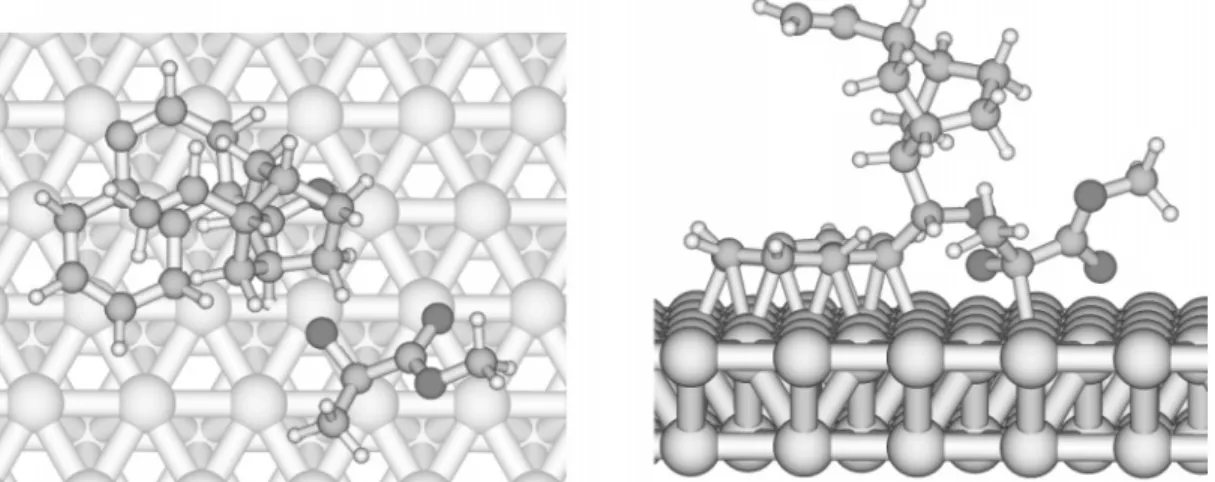
Figure 5 provides a three-dimensional view on the interaction between the adsorbed cinchonidine and meth-yl pyruvate as it emerged from DFT calculations on a platinum cluster model.39It illustrates the crucial role of
the three-dimensional structure of the modifier for enan-tiodifferentiation. Besides the main attractive interaction through hydrogen bonding, repulsive interactions are likely also necessary for enantiodifferentiation.47
Origin of Rate Acceleration
A comprehensive model for the enantioselective hydro-genation of ethyl pyruvate should not only rationalize enantiodifferentiation but also provide a feasible explana-FIGURE 5. Model of the interaction between cinchonidine adsorbed on Pt and methyl pyruvate based on density functional theory (DFT)
calculations.39
restricted, two additional adsorption modes are observed, where the quinoline part is tilted with respect to the surface. In one, the hydrogen in R-position to the quino-line N is abstracted, and the modifier is relatively strongly attached to the surface via a Pt-C bond. The abundance of this species depends on the coverage of hydrogen on the surface. Finally a species was observed that is weakly adsorbed via a quinoline N atom lone-pair bonding. Of course, the question remains, which of the observed species is responsible for enantiodifferentiation. The fact that enantioselectivity is observed already at very low modifier concentration supports the strongly anchored flat adsorption mode. More evidence should be provided by spectroscopic measurements and simultaneous determi-nation of enantiomeric excess under different conditions. However, such information is challenging to obtain and still missing. The group of Zaera reported a study of cinchonidine adsorption on Pt using external reflection infrared spectroscopy.24,38 The conclusions drawn from this analysis are in agreement with the ones derived from the ATR experiments discussed above.24,38
Surface-enhanced Raman spectroscopy studies also lead to similar findings.25
The quite numerous spectroscopic data on the cin-chonidine system supports the model assumption that the modifier is anchored via the quinoline moiety oriented preferentially parallel to the surface. This seems to be the most stable adsorption mode of the modifier under vacuum, in the presence of solvent, and under hydroge-nation conditions. Recently the adsorption of cinchoni-dine on Pt was also studied theoretically by DFT methods. The Pt surface was modeled by a Pt cluster. These calculations confirmed the strong interaction between Pt surface and the quinoline π-system.39
As concerns the adsorption mode of the alkyl pyruvate reactant (methyl or ethyl pyruvate), ultrahigh vacuum studies on platinum single-crystal surfaces using X-ray and UV photoelectron spectroscopies (XPS and UPS),40 NEXAFS,41 and reflection/absorption infrared spectros-copy (RAIRS)42 revealed that the alkyl pyruvate mainly adsorbs via lone pair-metal interaction of both carbonyl groups, that is, in cis conformation with the molecular
tion for the observed rate enhancement. Generally, there are several possibilities how thermodynamic and kinetic factors can affect enantioselectivity and reaction rate, as schematically shown in Figure 6. In the previously dis-cussed model, it was assumed that thermodynamics, that is, the stability of the adsorbed diastereomeric modifier-reactant adduct, controls enantioselectivity. Although, the model calculations showed excellent agreement with the experimental stereochemical outcome of the reaction, the model does not account for the rate acceleration of the enantioselective compared to the racemic reaction. For this purpose, kinetic factors, that is, preexponential factors and activation energies, have to be accounted for. The kinetic studies available so far indicate that the enanti-oselective hydrogenation can be described within the frame of a two-step, two-cycle scheme, as depicted in Figure 6.17Unfortunately, the absolute quantities of the
relevant kinetic parameters are still unknown, but a general consideration is possible. It is clear that the number of active sites accessible for the R-ketoester and hydrogen on a platinum surface decreases upon adsorp-tion of a chiral modifier (e.g., cinchonidine). Assuming that the activation entropy is similar for the nonmodified and modified site, we may conclude that the preexponential factor is considerably smaller for the enantioselective reaction on the modified sites. Hence, the rate acceleration
of the enantioselective reaction has to originate from a lowering of the activation barrier. This has been demon-strated by a combined theoretical and experimental study where the relation between the electronic structure of substituted acetophenones in the racemic and enantiose-lective hydrogenation has been investigated.48A
correla-tion between the keto carbonyl orbital energy and the hydrogenation rate was found, which rationalizes the effect of the substituent on the hydrogenation rate. The uncovered relationship between the keto carbonyl orbital energy and the hydrogenation rate provides a rational explanation for the observed rate acceleration. It could be shown that within the previously proposed 1:1 interac-tion model the more stabilized diastereomeric complex also undergoes a larger stabilization of the keto carbonyl orbitals, leading to the proposal that both thermodynamic and kinetic effects direct the reactivity toward the forma-tion of the same enantiomer, as shown in Figure 6c. Interestingly, the activation of carbonyl compounds by hydrogen bonding is emerging as a tool in other asym-metric catalytic reactions.49
Other Proposed Models
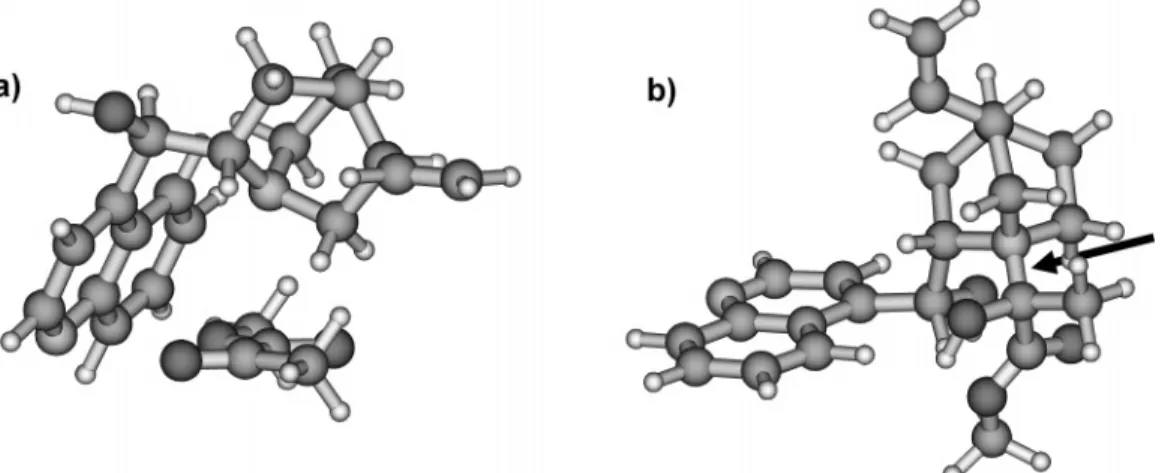
Besides the 1:1 hydrogen bond model discussed in detail in this article, two distinctly different alternative models have been proposed (Figure 7). Margitfalvi and co-workers proposed a model that assumes that a supramolecular complex is stereoselectively reduced on the platinum surface.50The R-ketoester and cinchona alkaloid form a
complex in which one side of the reactant is shielded by the cinchona alkaloid (shielding model), leaving the other side open for hydrogenation. A prerequisite of this model is that the cinchona alkaloid does complex in its “closed” conformation with the quinuclidine nitrogen pointing toward the aromatic quinoline ring. However, investiga-tions with cinchona alkaloids bearing a rigid “open 3” conformation provide similar enantiodifferentiation as parent cinchona alkaloids,35 indicating that the closed
conformation does not play an important role in enan-tiodifferentiation. Furthermore, the rate enhancement of the enantioselective reaction cannot be explained with this model, as discussed in detail elsewhere.13
Another model implying nucleophilic catalysis involv-ing the nitrogen of the chiral modifier and the ketone carbonyl has been proposed by Augustine and co-workers.51This nucleophilic addition scenario was recently
studied by Vayner et al. using a variety of computational techniques.52 They proposed that the key interaction
between cinchonidine and pyruvate is a strong covalent bond joining the amine of cinchonidine to the pyruvate ketone carbonyl group (arrow in Figure 7). The zwitteri-onic adduct formed between cinchonidine and the ketone is adsorbed on the platinum through the quinoline ring and is subsequently reduced with inversion. However, at this time, the theoretical model clearly stands in contrast to some experimental observation and raises several unanswered questions. First of all, it has recently been shown that enantiodifferentiation is also observed with a FIGURE 6. Thermodynamic (stability of diastereomeric complexes)
and kinetic factors (activation energy) affecting enantiodiscrimination (top panel). Three different cases can be distinguished for two diastereomeric complexes with different energy that would lead to (R)- and (S)-product, respectively: (a) ES) ER; (b)ES< ER; (c)ES>
ER. The initial state (left) represents diastereomeric complexes. The
final state (right) represents product after release from the chiral site. The bottom panel shows the two-cycle mechanistic scheme.17
Racemic hydrogenation on unmodified Pt proceeds with rateku,
whereas on chirally modified Pt, the reaction proceeds with rate km.
References
(1) Sheldon, R. A.Chirotechnology; Marcel Dekker: New York, 1993. (2) Jacobsen, E. N.; Pfaltz, A.; Yamamoto, H.Comprehensive
Asym-metric Catalysis; Springer: Berlin, 1999; Vols. 1-3.
(3) Noyori, R. Asymmetric catalysis: Science and opportunities.Adv. Synth. Catal.2003,345, 15-32.
(4) Knowles, W. S. Asymmetric hydrogenations.Adv. Synth. Catal.
2003,345, 3-13.
(5) Becker, H.; Sharpless, K. B. InAsymmetric Oxidation Reactions: A Practical Approach in Chemistry; Katsui, T., Ed.; Oxford University Press: New York, 2001.
(6) Studer, M.; Blaser, H. U.; Exner, C. Enantioselective hydrogenation using heterogeneous modified catalysts: An update.Adv. Synth. Catal.2003,345, 45-65.
(7) Ku¨ nzle, N.; Hess, R.; Mallat, T.; Baiker, A. Continuous enantiose-lective hydrogenation of activated ketones.J. Catal.1999,186, 239-241.
(8) Bein, T. Asymmetric catalysis on solids.Curr. Opin. Solid State Mater. Sci.1999,4, 85-96.
(9) Murzin, D. Y.; Maki-Arvela, P.; Salmi, T. Mechanisms of asym-metric heterogeneous catalysis.Kinet. Catal.2003,44, 323-333. (10) Baiker, A. Chiral catalysis on solids.Curr. Opin. Solid State Mater.
Sci.1998,3, 86-93.
(11) Tai, A.; Harada, T. InTailored Metal Catalysts; Iwasawa, Y., Ed.; D. Reidel: Dordrecht, The Netherlands, 1986; p 265.
(12) Baiker, A. Progress in asymmetric heterogeneous catalysis: Design of novel chirally modified platinum metal catalysts.J. Mol. Catal. A: Chem.1997,115, 473-493.
(13) Baiker, A. Transition state analogues - a guide for the rational design of enantioselective heterogeneous hydrogenation cata-lysts.J. Mol. Catal. A: Chem.2000,163, 205-220.
(14) vonArx, M.; Mallat, T.; Baiker, A. Asymmetric hydrogenation of activated ketones on platinum: relevant and spectator species. Top. Catal.2002,19, 75-87.
(15) Wells, P. B.; Wilkinson, A. G. Platinum group metals as hetero-geneous enantioselective catalysts.Top. Catal.1998,5, 39-50. (16) Blaser, H. U.; Jalett, H. P.; Monti, D. M.; Baiker, A.; Wehrli, J. T. Enantioselective hydrogenation of ethyl pyruvate: effect of catalyst and modifier structure.Stud. Surf. Sci. Catal.1991,67, 147-155.
(17) Garland, M.; Blaser, H. U. A heterogeneous ligand-accelerated reaction - enantioselective hydrogenation of ethyl pyruvate by cinchona modified Pt/Al2O3catalysts.J. Am. Chem. Soc.1990,
112, 7048-7050.
(18) Horvath, J. D.; Gellman, A. J. Enantiospecific desorption ofR -and S-propylene oxide from a chiral Cu(643) surface. J. Am. Chem. Soc.2001,123, 7953-7954.
(19) Attard, G. A. Electrochemical studies of enantioselectivity at chiral metal surfaces.J. Phys. Chem. B2001,105, 3158-3167. (20) Stephenson, M. J.; Lambert, R. M. Adsorption and stability of (R
)-(+)- and (S)-(-)-1-(1-naphthyl) ethylamine on a series of platinum single-crystal surfaces: Implications for heterogeneous chiral hydrogenation.J. Chem. Phys. B2001,105, 12832-12838. (21) Schunack, M.; Petersen, L.; Kuhnle, A.; Laegsgaard, E.;
Steens-gard, I.; Johannsen, I.; Besenbacher, F. Anchoring of organic molecules to a metal surface: HtBDC on Cu(110).Phys. Rev. Lett.
2001,86, 456-459.
FIGURE 7. The left panel shows the shielding model proposed by Margitfalvi. One enantioface of the reactant is shielded by the modifier in
closed conformation.50The right panel shows the model proposed by Augustine and co-workers51and refined by Vayner and co-workers:52
A zwitterionic adduct is formed by nucleophilic addition (arrow). This adduct is reduced with inversion on the Pt surface.
structurally related diol, which possess no basic nitrogen and thus no possibility to form zwitterionic intermedi-ates.53 Formation of the zwitterionic adduct in acetic acid, in which the highest ee’s are observed, is rather doubtful since the quinuclidine nitrogen will be protonated. For some cyclic ketones for which high ee’s have been achieved, such as ketopantolactone, the formation of a zwitterionic adduct is sterically ruled out. Furthermore, there is no experimental evidence available so far that the hydrogenolysis of the zwitterionic adduct occurs over platinum under the mild conditions of enantioselective hydrogenation. Even if it would occur it seems likely that it is not selectively cleaving the C-N bond. Experimental work clarifying the above questions may help to finally assess the importance of this alternative model.
Concluding
Remarks
Although considerable progress has been made toward molecular level knowledge of the platinum-cinchona system a complete understanding is still out of reach. The fact that reactant and chiral modifier exist on the surface in different adsorption modes depending on surface coverage and composition of the adsorbed layer compli-cates the assessment of a particular adsorption geometry and thus structure of the transition state. As a result of this, we have to envision that the macroscopic stereo-chemical outcome of surface-catalyzed asymmetric reac-tions may reflect the superposition of several competing reaction pathways. This uncertainty has led to consider-able debate as concerns the mechanism of this complex catalytic system. Nevertheless, the agreement between the 1:1 model and the experimental results is striking, lending some hope that we finally may reach a level of mechanistic understanding, which will greatly aid in the design of efficient asymmetric catalysts based on this concept.
A.B. thanks present and former co-workers listed in the refer-ences for their experimental and intellectual contributions. The work has been supported over the years by the Swiss National Science Foundation. T.B. acknowledges the Swiss National Science Foundation for awarding a F¨orderungsprofessur.
(22) Humblot, V.; Haq, S.; Muryn, C.; Hofer, W. A.; Raval, R. From local adsorption stress to chiral surfaces: (R,R)-Tartaric acid on Ni-(110).J. Am. Chem. Soc.2002,124, 503-510.
(23) Ferri, D.; Bu¨ rgi, T. An in situ attenuated total reflection infrared study of a chiral catalytic solid-liquid interface: Cinchonidine adsorption on Pt.J. Am. Chem. Soc.2001,123, 12074-12084. (24) Kubota, J.; Zaera, F. Adsorption geometry of modifiers as key in
imparting chirality to platinum catalysts.J. Am. Chem. Soc.2001, 123, 11115-11116.
(25) LeBlanc, R. J.; Chu, W.; Williams, C. T. Surface Raman charac-terization of cinchonidine-modified platinum in ethanol: effects of liquid-phase concentration and coadsorbed hydrogen.J. Mol. Catal. A: Chem.2004,212, 277-289.
(26) Evans, T.; Woodhead, A. P.; Gutierrez-Soza, A.; Thornton, G.; Hall, T. J.; Davis, A. A.; Young, N. A.; Wells, P. B.; Oldman, R. J.; Plashkevych, O.; Vahtras, O.; Agren, H.; Carravetta, V. Orientation of 10,11-dihydrocinchonidine on Pt(111).Surf. Sci.1999, 436, L691-L696.
(27) Lorenzo, M. O.; Baddeley, C. J.; Muryn, C.; Raval, R. Extended surface chirality from supramolecular assemblies of adsorbed chiral molecules.Nature2000,404, 376-379.
(28) Ibbotson, A.; Wells, P. B. Enantioselective hydrogenation.Chem.
Br.1992, 1004-1005.
(29) Carley, A. F.; Rajumon, M. K.; Roberts, M. W.; Wells, P. B. XPS and LEED studies of 10,11-dihydrocinchonidine adsorption at Pt-(111). Implications for the role of cinchona alkaloids in enanti-oselective hydrogenation.J. Chem. Soc., Faraday Trans.1995, 91, 2167-2172.
(30) Xu, Q.-M.; Wang, D.; Han, M.-J.; Wan, L.-J.; Bai, C.-l. Direct STM investigation of cinchona alkaloid adsorption on Cu(111).
Lang-muir2004,20, 3006-3010.
(31) Zuo, X.; Liu, H.; Guo, D.; Yang, X. Enantioselective hydrogenation of pyruvates over polymer-stabilized and supported platinum nanoclusters.Tetrahedron1999,55, 7787-7804.
(32) Schwalm, O.; Minder, B.; Weber, J.; Baiker, A. Enantioselective hydrogenation of R-ketoesters over Pt/alumina modified with cinchonidine: theoretical investigation of the substrate-modifier interaction.Catal. Lett.1994,23, 271-279.
(33) Simons, K. E.; Meheux, P. A.; Griffiths, S. P.; Sutherland, I. M.; Johnston, P.; Wells, P. B.; Carley, A. F.; Rajumon, M. K.; Roberts, M. W.; Ibbotson, A. A model for the enantioselective hydrogena-tion of pyruvate catalysed by alkaloid-modified platinum.Recl. Trav. Chim. Pays-Bas1994,113, 465-474.
(34) Bu¨ rgi, T.; Baiker, A. Conformational behavior of cinchonidine in different solvents: A combined NMR and ab initio investigation. J. Am. Chem. Soc.1998,120, 12920-12926.
(35) Bartok, M.; Felfoldi, K.; Torok, B.; Bartok, T. A new cinchona-modified platinum catalyst for the enantioselective hydrogenation of pyruvate: the structure of the 1:1 alkaloid-reactant complex. J. Chem. Soc., Chem. Commun.1998,23, 2605-2606. (36) Bonello, J. M.; Lambert, R. M. The structure and reactivity of
quinoline overlayers and the adsorption geometry of lepidine on Pt{111}: model molecules for chiral modifiers in enantioselective hydrogenation.Surf. Sci.2002,498, 212-228.
(37) Ferri, D.; Bu¨ rgi, T.; Baiker, A. Chiral modification of platinum catalysts by cinchonidine adsorption studied by in situ ATR-IR spectroscopy.J. Chem. Soc., Chem. Commun.2001, 1172-1173. (38) Ma, Z.; Lee, I.; Kubota, J.; Zaera, F. In situ characterization of the adsorption of cinchona chiral modifiers on platinum surfaces.J. Mol. Catal. A: Chem.2004,216, 199-207.
(39) Vargas, A.; Bu¨ rgi, T.; Baiker, A. Adsorption of cinchonidine on Pt: a DFT insight in the mechanism of enantioselective hydro-genation.J.Catal. 2004, 226, 69-82.
(40) Bu¨ rgi, T.; Atamny, F.; Schlo¨ gl, R.; Baiker, A. Adsorption of ethyl pyruvate on Pt(111) studied by XPS and UPS. J.Phys.Chem.B
2000,104, 5953-5960.
(41) Bonello, J. M.; Sykes, E. C. H.; Lindsay, R.; Williams, F. J.; Santra, A. K.; Lambert, R. M. Fundamental aspects of enantioselective heterogeneous catalysis: a NEXAFS study of methyl pyruvate and (S)-(-)-1-(1-naphthyl) ethylamine on Pt(111). Surf.Sci. 2001, 482, 207-214.
(42) Castonguay, M.; Roy, J.-R.; Rochefort, A.; McBreen, P. H. Orienta-tion and conformation of methyl pyruvate on Ni(111). J.Am. Chem.Soc. 2000, 122, 518-524.
(43) Bu¨ rgi, T.; Atamny, F.; Knop-Gericke, A.; Ha¨vecker, M.; Schedel-Niedrig, T.; Schlo¨ gl, R.; Baiker, A. Adsorption mode of ethyl pyruvate on platinum: An in situ XANES study. Catal.Lett. 2000, 66, 109-112.
(44) Bonello, J. M.; Lambert, R. M.; Ku¨ nzle, N.; Baiker, A. Platinum-catalyzed enantioselective hydrogenation of R-ketoesters: An unprecedented surface reaction of methyl pyruvate. J.Am.Chem. Soc. 2000, 122, 9864-9865.
(45) Schneider, M. S.; Urakawa, A.; Grunwaldt, J. D.; Bu¨ rgi, T.; Baiker, A. Identification of catalyst surface species during asymmetric platinum-catalyzed hydrogenation in a “supercritical” solvent. J. Chem.Soc.,Chem.Commun. 2004, 744-745.
(46) Bonalumi, N.; Bu¨ rgi, T.; Baiker, A. Interaction between ketopan-tolactone and chirally modified Pt investigated by ATR IR con-centration modulation spectroscopy. J.Am.Chem.Soc. 2003, 125, 13342-13343.
(47) Vargas, A.; Bu¨ rgi, T.; Baiker, A. Model of reactant-modifier interaction in enantioselective hydrogenation of ethyl pyruvate on platinum-cinchona catalysts: Extension to synthetic chiral modifiers.J.Catal. 2001, 197, 378-384.
(48) Vargas, A.; Bu¨ rgi, T.; von Arx, M.; Hess, R.; Baiker, A. Relation between electronic structure of R-substituted ketones and their reactivity in racemic and enantioselective platinum-catalyzed hydrogenation.J.Catal. 2002, 209, 489-500.
(49) Pihko, P. M. Activation of carbonyl compounds by double hydrogen bonding: An emerging tool in asymmetric catalysis. Angew.Chem,Int.Ed. 2004, 43, 2062-2064.
(50) Margitfalvi, J. L.; Hegedu¨ s, M.; Tfirst, E. Enantio-differentiation over heterogeneous catalysts. The shielding effect model. Stud. Surf.Sci.Catal. 1996, 101, 241-250.
(51) Augustine, R. L.; Tanielyan, S. K.; Doyle, L. K. Enantioselective heterogeneous catalysis. 1. A working model for the catalyst-modifier-substrate interactions in chiral pyruvate hydrogenations. Tetrahedron: Asymmetry 1993, 4, 1803-1827.
(52) Vayner, G.; Houk, K. N.; Sun, Y. K. Origins of enantioselectivity in reductions of ketones on cinchona alkaloid modified platinum.
J.Am.Chem.Soc. 2004, 126, 199-203.
(53) Marinas, A.; Mallat, T.; Baiker, A. 1-Naphthyl-1,2-ethanediol as a new chiral modifier of platinum in the enantioselective hydroge-nation of activated ketones. J.Catal. 2004, 221, 666-669.