ENVIRONMENTAL BIOTECHNOLOGY
Benzoate-driven dehalogenation of chlorinated ethenes
in microbial cultures from a contaminated aquifer
Michael Bunge&Jutta Kleikemper&Ciro Miniaci&Laurence Duc&Margje G. Muusse&Gerd Hause& Josef Zeyer
Received: 16 April 2007 / Revised: 22 June 2007 / Accepted: 24 June 2007 / Published online: 1 September 2007
# Springer-Verlag 2007
Abstract Microbial dehalogenation of tetrachloroethene (PCE) and cis-dichloroethene (cis-DCE) was studied in cultures from a continuous stirred tank reactor initially inoculated with aquifer material from a PCE-contaminated site. Cultures amended with hydrogen and acetate readily dechlorinated PCE and cis-DCE; however, this transforma-tion was incomplete and resulted in the accumulatransforma-tion of chlorinated intermediates and only small amounts of ethene within 60 days of incubation. Conversely, micro-bial PCE and cis-DCE dechlorination in cultures with benzoate and acetate resulted in the complete transforma-tion to ethene within 30 days. Community fingerprinting by denaturing gradient gel electrophoresis (DGGE) revealed
the predominance of phylotypes closely affiliated with Desulfitobacterium, Dehalococcoides, and Syntrophus species. The Dehalococcoides culture VZ, obtained from small whitish colonies in cis-DCE dechlorinating agarose cultures, revealed an irregular cell diameter between 200 and 500 nm, and a spherical or biconcave disk-shaped mor-phology. These organisms were identified as responsible for the dechlorination of cis-DCE to ethene in the PCE-dechlorinating consortia, operating together with the Desulfitobacterium as PCE-to-cis-DCE dehalogenating bacterium and with a Syntrophus species as potential hydrogen-producing partner in cultures with benzoate. Keywords Reductive dechlorination . PCE . Benzoate . Dehalococcoides . Desulfitobacterium . Syntrophus
Introduction
The lower chlorinated ethenes, cis-dichloroethene (cis-DCE) and vinyl chloride (VC), can be aerobically degraded as the sole carbon source (Coleman et al.2002a,b), whereas the more highly chlorinated ethenes, tetrachloroethene (PCE) and trichloroethene (TCE), are resistant to break-down under aerobic conditions. In anaerobic aquifers, reductive dechlorination is the key biological reaction for the in situ transformation of chlorinated compounds, leading to sequential removal of the halogen substituents. In a process known as dehalorespiration, bacteria are able to couple energy conservation and growth to the reduction of halogenated compounds (e.g., chlorinated ethenes) that serve as electron acceptors for anaerobic respiration. Reductive PCE dechlorination has been documented at contaminated sites, in laboratory cultures, and at engineered field sites where stimulated natural attenuation by
micro-Electronic supplementary material The online version of this article (doi:10.1007/s00253-007-1097-3) contains supplementary material, which is available to authorized users.
M. Bunge (*)
:
J. Kleikemper:
C. Miniaci:
L. Duc:
M. G. Muusse:
J. ZeyerSoil Biology, Institute of Biogeochemistry and Pollutant Dynamics, Swiss Federal Institute of Technology (ETH) Zurich, Zurich, Switzerland
e-mail: [email protected]
G. Hause
Biocenter, Martin Luther University of Halle-Wittenberg, Halle (Saale), Germany
Present address: M. Bunge
Institute of Microbiology, University of Innsbruck, Technikerstrasse 25, 6020 Innsbruck, Austria Present address: J. Kleikemper BMG Engineering AG, Schlieren, Switzerland
organisms has been used for in situ remediation (Major et al. 2002; Lendvay et al.2003; Löffler et al.2003).
An ideal remediation strategy for groundwater contam-inated with chlorcontam-inated ethenes would convert the pollu-tants to an environmentally harmless compound, such as ethene, and would also prevent the accumulation of partially degraded chloroethenes, which are often more toxic than the parent compounds. Most identified organ-isms, however, are only able to perform partial PCE dechlorination (Löffler et al.2003) challenging the use of microbial reductive dechlorination as a meaningful remedi-ation mechanism. Only one group of organisms that is phylogenetically related to the genus Dehalococcoides has been shown to completely dehalogenate chloroethenes to ethene (Maymo-Gatell et al.1997; Cupples et al.2003; He et al.2003; He et al.2005; Sung et al.2006). Hence, recent research has focused on reductive dechlorination by Deha-lococcoides and relatives, also attracted by the versatility of these bacteria for other organohalogen compounds (Adrian et al. 2000; Bunge et al. 2003; Fennell et al. 2004). Moreover, results of a comprehensive 16S rDNA-based survey suggested that the presence of Dehalococcoides is a prerequisite for the complete dechlorination of chloroethenes to ethene at contaminated sites (Hendrickson et al.2002).
Past reports ascribe the dehalogenation of chlorinated ethenes to the activity of individual dechlorinating pop-ulations. On the other hand, the potential interactions between dechlorinators, either mutualistic or competing, are not sufficiently understood. So far, only one strain, Dehalococcoides ethenogenes strain 195, is known to perform complete dechlorination of PCE to ethene (Maymo-Gatell et al. 1997), all other isolates are only capable of completely reducing TCE, cis-DCE, and vinyl chloride (Cupples et al. 2003; He et al. 2003; He et al. 2005; Sung et al. 2006). Therefore, it is unclear to which extent these bacteria are solely responsible for the full sequential PCE dehalogenation to ethene or whether they rather interact with other dechlorinating organisms that perform the initial steps of the reaction.
Because molecular hydrogen is the only known electron donor directly used by Dehalococcoides strains, complete transformation of chlorinated ethenes relies on hydrogen delivery. Dehalorespiring organisms have a high affinity for the hydrogen produced by organic matter degradation in anaerobic environments and at low hydrogen concentra-tions they may outcompete bacteria that use other electron acceptors including methanogens and acetogenic bacteria (Fennell and Gossett 1998; Yang and McCarty 1998; Löffler et al.1999). Accordingly, hydrogenotrophic deha-lorespiring bacteria may belong to the preferred syntrophic partners of microorganisms that anaerobically oxidize organic compounds, which require a low hydrogen partial pressure for energy conservation (Schink1997). Benzoate
is an important intermediate in the anaerobic degradation of aromatic compounds and its anaerobic oxidation is ender-gonic under standard conditions. Hence, this reaction must be coupled to another process to decrease the hydrogen concentration and make it thermodynamically feasible. Although the effectiveness of benzoate as a bulk electron donor for the conversion of chloroethenes has been demonstrated at field sites and in laboratory cultures (Scholz-Muramatsu et al. 1990; Beeman et al. 1994; Yang and McCarty1998; Yang and McCarty2000), the microbes involved in benzoate oxidation have not yet been identified. We study the conversion of PCE in enrichment cultures from a continuous stirred tank reactor initially inoculated with aquifer material from a PCE-contaminated groundwa-ter site in Victoria, TX (Yang et al. 2005). In the Victoria aquifer and in laboratory cultures with material from this site, complete reductive dechlorination of PCE to ethene could be achieved by the addition of benzoate (Beeman et al. 1994; Yang and McCarty 1998; Yang et al. 2005). Contrary to the idea that a single dechlorinating organism mediates the entire dechlorination process, recent results have indicated that bacteria similar to Desulfitobacterium and Dehalococcoides species have been implicated in the overall conversion of PCE (Yang et al.2005). We currently do not know whether the two organisms compete for the same chlorinated electron acceptors (e.g., PCE) or if the complete conversion of PCE to ethene rather depends on the sequential activity of both bacteria. The objective of our current study is to assess potential interactions of dechlori-nating bacteria and to better understand their association with nondechlorinating organisms in the consortium.
Materials and methods
Cultivation of PCE- and cis-DCE dechlorinating communities
A set of 60-ml serum bottles sealed with butyl rubber stoppers (Bellco Glass, Vineland, NJ) and aluminum crimps was purged with N2/CO2, autoclaved, and filled with anaerobic medium that was prepared as previously described (Ballerstedt et al.2004). For the first transfer after cultiva-tion in a continuous stirred tank reactor (Yang et al.2005), material was transferred into batch cultures (10% v/v), which were used for the investigation of the dechlorination kinetics of PCE and cis-DCE over a time of 62 days. The bottles (30 ml culture volume) were amended with 2.5 mM acetate and either hydrogen (10% in the headspace), acetate (2.5 mM) or benzoate (2.5 mM). Finally, PCE (>99.5% purity, Fluka, Buchs, Switzerland) or cis-DCE (approximate-ly 97% purity, Fluka) was added from undiluted solutions. For each experiment, duplicate cultures were established
and incubated without shaking in the dark at 25°C during which they were periodically analyzed for dehalogenation of PCE. The dehalogenating cultures were maintained through consecutive transfers (10% v/v) into sterile mineral salts medium and routinely fed with 250 to 500μM PCE or cis-DCE, 2.5 mM benzoate, and 2.5 mM acetate. In agarose shake dilutions, 1% (w/v) agar (Difco) was added to the medium. For the preparation of agarose shakes from cis-DCE dechlorinating enrichment cultures, the mineral medium was amended with 0.33% (w/v) low-gelling point agarose (SeaPlaque agarose, Biozym). The transfer of single colonies was done in an anaerobic glove box (MBraun, Garching, Germany) using 1-ml single-use syringes and needles (0.6×80 mm, Braun, Melsungen, Germany). Analysis of chlorinated ethenes and ethene
For analytical standard preparation, liquid PCE (>99.5%, Fluka), TCE (>99.5%, Fluka), and cis-DCE (approximately 97%, Fluka) were used. Vinyl chloride gas mix (1,000 ppm in N2) was obtained from Alltech Associates (Deerfield, IL), and ethene (>99.7%) was from PanGas (Dagmersellen, Switzerland). PCE, TCE, cis-DCE, vinyl chloride, and ethene were analyzed in 250- μl samples using a Fisons HRGC Mega 2 Series gas chromatograph (Fisons, Milan, Italy) equipped with a flame ionization detector connected to a GS-Q fused silica capillary column (length, 30 m; inside diameter, 0.53 mm; Agilent Technologies, Basel, Switzerland). The injector and detector temperature was 250°C. The oven temperature program was as follows: 45° C for 2 min, increased to 180°C at a rate of 20 K/min, and maintained at 180°C for 7 min. The compounds were identified by matching the retention times with those of the external standards. The amounts of the compounds in liquid were calculated by using published Henry’s law constants (Gossett1987).
Nested PCR detection of dehalogenating bacteria and syntrophic species
DNA was extracted from the enrichment cultures using a protocol adopted from Kuske et al. (1998). The initial PCR was performed with bacterial 16S rDNA primers fD1 and rP2 (Weisburg et al. 1991). The purified amplicons (QIAquick PCR purification kit, Qiagen) were used as the templates (1μl) for the second PCR reaction with each of the species- or genus-specific primer sets listed in Table S1 of the Electronic supplementary material.
Cloning and sequencing
Amplicons were purified as described above and cloned into the pGEM-T Easy Vector (Promega, Madison, WI)
according to the manufacturer’s instructions. Plasmids containing cloned fragments were isolated with the Wizard Plus SV Minipreps DNA Purification system (Promega), and sequencing was performed by Microsynth (Balgach, Switzerland) using vector-specific and the respective primers listed in Table S1of the Electronic supplementary material. Closest relatives were identified using Fasta at EMBL-EBI http://www.ebi.ac.uk/fasta33/nucleotide.html) and the RDPII Sequence Match tool http://rdp.cme.msu. edu/).
DNA fingerprinting
For denaturing gradient gel electrophoresis (DGGE), 16S rRNA gene fragments were amplified from genomic DNA using the primers F-968-GC and R-1401 (Nübel et al.1996). Electrophoresis and gel documentation followed the methods as described previously (Bürgmann et al. 2005). Reamplified PCR products from DNA of selected bands were purified, cloned, and sequenced as indicated above.
Fluorescence in situ hybridization
Culture aliquots (1 ml) were centrifuged at 10,000×g for 30 min, washed with 500μl of 1x PBS, and fixed in 2% (w/v) paraformaldehyde freshly prepared from 16% (w/v) stock solutions (Electron Microscopy Sciences, Hatfield, PA) in 1x PBS at 4°C for 14 h. Fluorescently labeled oligonucleotide probes (Microsynth, Balgach, Switzer-land) were applied on each well at a final concentration of 5 ng μl−1. For the detection of Desulfitobacterium, the probes and conditions as reported by Yang et al. (2005) were used. Hybridization and washing steps were per-formed as described by Zarda et al. (1997). Analysis was conducted with an Axioplan fluorescence microscope (Carl Zeiss, Oberkochen, Germany) equipped with a Hamamatsu C5810 CCD camera (Hamamatsu Photonics, Solothurn, Switzerland).
CARD FISH
Catalyzed reporter deposition (CARD) fluorescence in situ hybridization (FISH) was essentially performed as described by Pernthaler et al. (2004). Cells that were permeabilized with lysozyme (10 mg ml−1) and achromo-peptidase (80 U ml−1) revealed highest signal intensities for target cells of the HRP-labeled probes EUB338 and Dhe1259t (biomers.net, Ulm, Germany), and, compared to total DAPI-stained bacteria, maximum detection rates in mixed cultures containing Dehalococcoides. Optimal hybridization stringency was evaluated using variable formamide concentrations with a pure culture of
Dehalo-coccoides ethenogenes 195 (Maymo-Gatell et al. 1997), a culture with Dehalococcoides sp. strain VS (Cupples et al. 2003), and a mixed culture containing Dehalococcoides (this study) that were hybridized with HRP-labeled probes specific for Dehalococcoides species, Dhe1259t and Dhe1259c (Yang and Zeyer2003), and the general bacterial probe EUB338 (Amann et al.1990). A concentration of 40% (v/v) formamide in the hybridization buffer was optimal for achieving strong signals and discriminating between probes Dhe1259t and Dhe1259c.
Electron microscopy
Formvar-coated copper grids were incubated on a drop (5μl) of a bacterial suspension for 1 min. The grids were washed three times with a drop of deionized water and negatively stained for 1 min using 4% (w/v) phosphotungs-tic acid. Electron micrographs were taken at 80 kV on a Zeiss EM 900 electron microscope equipped with the Variospeed SSCCD camera SM-1k-120 (TRS, Dünzelbach, Germany).
Results
Microbial transformation of PCE and cis-DCE
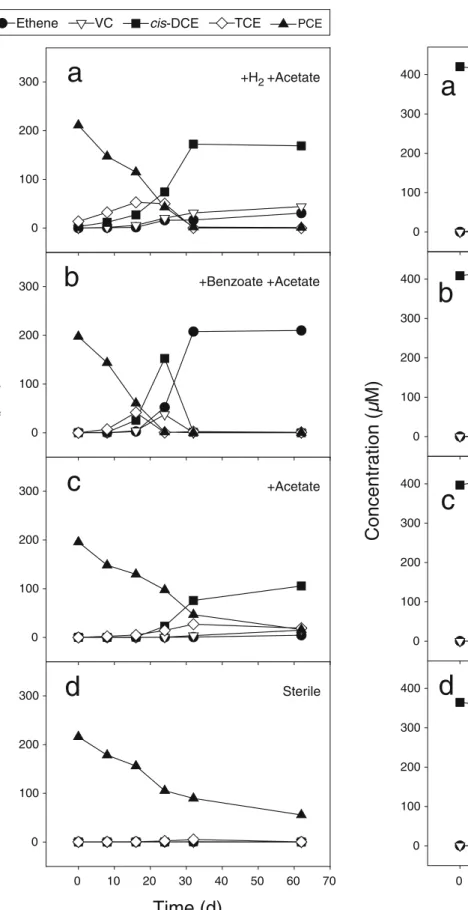
Two culture sets prepared with either PCE or cis-DCE were grown in the presence of different electron donors and carbon sources: (1) hydrogen and acetate, (2) benzoate and acetate or (3) acetate only (Figs.1a–c and2a–c). In cultures amended with hydrogen and acetate, PCE dechlorination readily occurred (Fig. 1a). However, the rapid initial PCE conversion to TCE was followed by an accumulation of cis-DCE and vinyl chloride, and only about 15% of the PCE was completely dechlorinated to ethene within 62 days. In contrast, an approximate lag time of 10 days was noted before the first PCE dechlorination product, TCE, was detected in the culture set containing benzoate and acetate (Fig.1b). The dechlorination process then started immediately with the transient accumulation of the intermediates cis-DCE and vinyl chloride. PCE transformation was complete after 32 days.
The dechlorination time course was similar in the culture set containing cis-DCE. In the cultures grown with benzoate, cis-DCE was converted to ethene with a transient accumulation of vinyl chloride between days 8 and 24. This vinyl chloride was subsequently completely converted to ethene within 8 days (Fig. 2b). In hydrogen-amended cultures, cis-DCE transformation occurred without a time-lag; however, the process thereafter proceeded more slowly than in the benzoate-containing cultures (Fig. 2a). After
62 days, vinyl chloride accumulated, and only small amounts of ethene were detected.
Separation of dechlorination activities in serial dilutions To ascertain whether the complete conversion to ethene was mediated by the successive activity of different dechlorinat-ing populations, we initially investigated the cultures by conventional microbiological techniques. Complete PCE dechlorination to ethene occurred in serial dilutions up to 10−3, whereas PCE dechlorination to cis-DCE was also found in higher dilutions, up to 10−6(see Table S2 of the Electronic supplementary material). In all cultures where vinyl chloride accumulated transiently, this product was later converted to ethene. Likewise, TCE was always a temporary product and eventually converted to either cis-DCE or ethene.
Cultures diluted from 1:10 to 1:10−3completely dehalo-genated cis-DCE to ethene, reflecting a number of cis-DCE dechlorinating bacteria similar to serial dilutions of cultures spiked with PCE (Table S2of the Electronic supplementary material). Like in the PCE-dechlorinating cultures, vinyl chloride was only detected as a transient dehalogenation product in actively dechlorinating cultures.
Stimulation of reductive dechlorination by filtered supernatant
To investigate the effect of filtered supernatant on the different dechlorinating populations, all cultures of serial dilutions that had not converted PCE or cis-DCE to ethene after 160 days received a second inoculation with 0.45μm filtrate from the original undiluted culture. The addition of filtered material failed to stimulate PCE dechlorination. In contrast, in 12 of the 13 cultures that had formed cis-DCE before the second inoculation, complete dechlorination to ethene was stimulated by the addition of the filtered material (Table S2 of the Electronic supplementary mate-rial). This dechlorination activity was observed regardless whether the cis-DCE originated from the initial spike or was biogenically formed during partial PCE dechlorination. PCR detection of bacteria potentially involved
in the dechlorination process
To identify potential dechlorinators in the enrichment cultures, specific nested PCR primers were designed to target bacteria that dehalogenate a variety of compounds (see Table S1 of the Electronic supplementary material). Amplicons of the anticipated size were obtained from all batch cultures and positive controls in the Dehalococcoides-specific nested PCR. Sequencing of the amplified prod-ucts revealed sequences identical to each other and to
Concentration (
µ
M)
a
b
c
d
Ethene VC cis-DCE +Benzoate +Acetate +Acetate Sterile 0 100 200 300 400 +H2 +Acetate 0 100 200 300 400 0 100 200 300 400 0 100 200 300 400Time (d)
0 10 20 30 40 50 60 70Fig. 2 Time course of the reductive dechlorination of cis-DCE in cultures grown with hydrogen and acetate (a), benzoate and acetate (b) or acetate (c). d Presents the time course in cultures incubated with autoclaved inoculum. Values are means for duplicate cultures
a
b
c
d
0 100 200 300Ethene VC cis-DCE TCE PCE
0 100 200 300 0 100 200 300
Time (d)
0 10 20 30 40 50 60 70 0 100 200 300 +H2 +Acetate +Benzoate +Acetate +Acetate SterileConcentr
ation (
µ
M)
Fig. 1 Dechlorination products of PCE in cultures amended with hydrogen and acetate (a), benzoate and acetate (b) or acetate (c). The inoculum originated from a PCE-dechlorinating chemostat culture (Yang et al.2005). No dechlorination products were detected in sterile controls (d). Values shown are means for two parallel cultures
Dehalococcoides sp. strain VS. Samples from all cultures, except the sterile inoculum and negative controls, also yielded PCR products with the Desulfitobacterium-specific primers. The sequences exhibited 100% identity with Desulfitobacterium hafniense 16S rDNA sequences. PCR for all other investigated dechlorinating species was negative. In all enrichment cultures, PCR conducted with Syntrophus-specific primers yielded amplicons of the expected size. The recovered sequences exhibited 99% identity with Syntrophus gentianae (Wallrabenstein et al. 1995).
Microbial community composition
Characterization of the PCE-dechlorinating community grown in the presence of benzoate and acetate by denaturing gradient gel electrophoresis (DGGE) showed only a few bands per lane indicating cultures with minimal complexity (Fig.3). DNA sequences from the most intense bands were closely affiliated (>99% identity) with phylo-types representing bacteria of the genera Desulfitobacterium (band 3), Syntrophus (band 4), and Dehalococcoides (band 5). Fingerprinting of 16S rDNA fragments was similar in the other PCE-dechlorinating cultures but some additional bands were detected. The sequences representing bands 1, 2, and 6 were similar to those of known isolates with the highest similarities to Clostridium glycolicum RD-1 (AJ29RD-1746), Sedimentibacter sp., clone C7 (AY766466), and a Desulfovibrio species (AY548774) (Fig.3).
Enrichment of dechlorinating bacteria
As shown by FISH, up to 28% of the bacteria stained by DAPI in PCE-dechlorinating cultures represented Desulfitobacterium cells, which were subsequently obtained
from single colonies in agar shake dilution series, and identified by FISH. In experiments with spiked PCE, the cultures produced cis-DCE as end product indicating that this bacterium was responsible for the initial attack on tetrachloroethene. Cultures spiked with cis-DCE did not show any dechlorination within 12 weeks of incubation.
Conventional FISH provided insufficient signals for the detection and quantification of Dehalococcoides in cultures older than 3 weeks, probably due to the low ribosomal content after extended incubation time and the small cell size of these bacteria (Zinder and Dworkin 2006). To overcome difficulties in detecting and quantifying such small bacteria under the microscope, we adapted and applied a sensitive CARD FISH protocol for the analysis of Dehalococcoides (Pernthaler et al. 2004). In cultures older than 3 months, CARD FISH permitted detection rates up to five times higher than the conventional FISH technique.
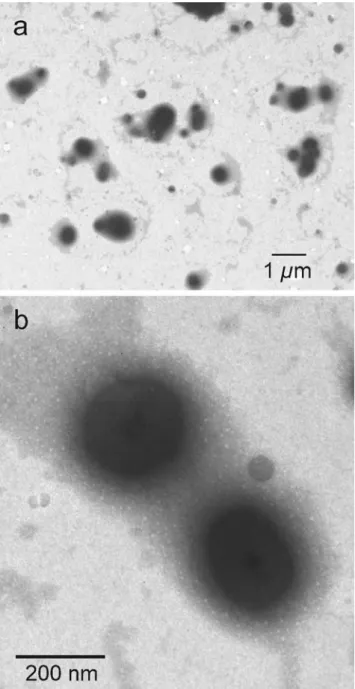
Using the horseradish peroxidase-labeled probe Dhe1259t for CARD FISH, samples of each transfer were monitored for the abundance of Dehalococcoides cells. Continued cultivation with cis-DCE, benzoate, and acetate enriched the culture for Dehalococcoides cells and resulted in a relative cell number of about 54% in the fifth transfer. Thereafter, cultures were grown in a dilution series prepared with solid medium (0.3% (w/v) Seaplaque low-gelling point agarose) containing cis-DCE, hydrogen, and acetate. Dechlorination products of cis-DCE in the culture headspace were first detected after 2 months of incubation. PCE was not anymore dechlorinated by these cultures (test period=24 weeks). In the following transfers of single colonies in liquid cultures, Dehalococcoides cells were detected in all active cultures that converted cis-DCE to ethene; however, microscopic examination revealed the presence of several other morphotypes including short vibroid cells and long rod-shaped bacteria in most of these cultures. Monitored by CARD FISH analysis, we were able to obtain a microscopically homogenous culture from following cis-DCE dechlorinating liquid cultures that were generated from small whitish colonies in preceding agarose shake dilution series. The identified Dehalococcoides culture was designated strain VZ (stands for Victoria-Zurich). Under our cultivation conditions, the bacteria mainly grew in aggregates of cells with irregular size with a diameter between 200 and 500 nm (Fig. 4a). Electron microscopy indicated a spherical or biconcave disk-shaped morphology of the cells (Fig.4b).
Discussion
Serial dilutions of the cultures amended separately with either PCE or cis-DCE allowed us to show that the
Fig. 3 DGGE analysis of 16S rDNA fragments from a culture set with PCE and grown with either hydrogen and acetate (lane 2), acetate (lane 3) or benzoate and acetate (lane 4). Lane 1, marker 1 Kb Plus DNA Ladder (Invitrogen); lane 5, control incubation with auto-claved inoculum. The numbers within the gel refer to bands mentioned in the text
sequential PCE dechlorination was carried out by two populations with different cell numbers and substrate specificity. Although the PCE-dehalogenating strain was present in higher dilutions, resulting in the formation of cis-DCE as the dechlorination end product, the activity of another population was required for complete dehalogena-tion to ethene. Furthermore, our results indicate that the reaction proceeds through cis-DCE as an interspecies intermediate and thus precludes the possibility that both populations compete for the same chlorinated substrates, i.e., PCE and cis-DCE.
The involvement of two dechlorinating populations is further supported by selective stimulation of the cis-DCE dechlorinating bacteria with filtered inoculum. Reductive dechlorination to ethene was only observed in those cultures where cis-DCE was present, which either originat-ed from the initial spike (in the cis-DCE amendoriginat-ed cultures) or was biogenically formed during partial PCE dechlorina-tion. Our results may suggest selective stimulation of the cis-DCE dechlorinators by key trace components that are provided in the filtered supernatant in accordance with the findings of Maymo-Gatell et al. (1997). On the other hand, the cells of the known Dehalococcoides species are small, e.g., for strain 195 with a diameter of 400 to 500 nm and a height of 100 to 200 nm (Zinder and Dworkin 2006). Although passing of Dehalococcoides cells through 0.22 μm or 0.45 μm filters has not yet been reported, we observed a higher cell size variability of Dehalococcoides sp. strain VZ in our cultures, with a diameter of 200 to 500 nm. Therefore, it is possible that the stimulating effect of filtered supernatant for the dechlorination of cis-DCE to ethene in previously inactive cultures was caused by the passing of additional Dehalococcoides cells through 0.45 μm filters rather than by stimulation through nutrient factors in the supernatant. If a filter-assisted cultiva-tion strategy would be also useful for other strains of Dehalococcoides, this method may offer a simple and easily implementable selective enrichment technique for laboratory cultures and intrinsic Dehalococcoides bacteria at field sites. Of the substrates tested, we observed the highest dechlorination rates in batch cultures amended with benzoate, whereas cultivation with hydrogen, which is the ultimate electron donor for complete PCE dehalogenation, was less effective. According to the DGGE patterns, hydrogen and acetate promoted growth of a wider range of bacteria, phylogenetically similar to organisms with acetogenic and sulfate-reducing capabilities (Kuesel et al.
Fig. 4 Electron micrographs of Dehalococcoides sp. strain VZ (a, b). Image of a cell aggregate, the cell size varied between 200 and 500 nm (a). The central regions of higher contrast might indicate a biconcave shape of the cells (b)
Desulfitobacterium Dehalococcoides
Interspecies Hydrogen Transfer
H2
cis-DCE
PCE TCE VC ETH
Benzoate
cis-DCE
H2
Syntrophus
Fig. 5 Proposed interaction scheme of organisms mediating the sequential reductive dechlorination of PCE. Cultivation with benzoate and PCE favors the growth of a Syntrophus sp. that oxidizes benzoate and provides hydrogen to the dechlorinators. Acetate may support partial dechlorination of PCE. cis-DCE is the interspecies intermediate in the reductive conversion of PCE to ethene and has to be channeled to the Dehalococcoides organism
2001; Kaksonen et al.2004). Thus, our findings support the assumption that catabolic intermediate substrates (such as benzoate) that generate a slow and steady release of hydrogen at a limited concentration may provide a competitive advantage to dehalorespiring bacteria resulting in sustained dechlorination and selective enrichment of dechlorinating bacteria.
The complete in situ reductive dehalogenation of chlorinated ethenes was demonstrated in the aquifer at the Victoria site using benzoate as the electron donor (Beeman et al.1994). PCE-dechlorinating laboratory cultures from the same site, which were the basis for our current study, have been also fed with benzoate (Yang and McCarty 1998; Yang et al. 2005); however, the benzoate-oxidizing microorganisms have not been identified. The interaction of benzoate oxidizers with dehalogenating bacteria was first discovered in the classic example of the reductive 3-chlorobenzoate-dechlorinating consortium comprising Desulfomonile tiedjei (Dolfing and Tiedje1986). Bacteria of the genus Syntrophus can obtain energy from the anaerobic oxidation of benzoate and other organic acids in syntrophic association with hydrogen-using microorgan-isms (Wallrabenstein et al.1995). Syntrophus-like organ-isms were detected at organohalogen-contaminated sites where reductive dechlorination was observed (Dojka et al. 1998) and in chlorophenol-dehalogenating laboratory cultures (Becker et al.2001). Becker et al. (2005) clearly demonstrated that Syntrophus is involved in the anaerobic degradation of 3-chlorobenzoate and 2-chlorophenol. In this study, we show that Syntrophus is part of a stable, defined PCE-dechlorinating consortium with Desulfitobacterium and a Dehalococcoides species as dehalogenating partners. Benzoate has been converted to hydrogen, acetate, and CO2. The complete transformation of PCE and cis-DCE appeared to be dependent on hydrogen because acetate alone did not support the complete reduction of the spiked chlorinated ethenes.
Previous work suggested that the successive attack by different dechlorinating bacteria mediated the complete PCE reduction in the Victoria aquifer (Beeman et al.1994). In support of this idea, in a PCE-dechlorinating chemostat derived from that aquifer, Yang et al. (2005) showed that both Dehalococcoides and Desulfitobacterium are present in the PCE to ethene dechlorinating cultures. Desulfitobacteria produce TCE or cis-DCE from tetrachloroethene (Löffler et al.2003). The interaction of these versatile bacteria, which catalyze the initial steps of PCE dechlorination with Dehalococcoides spp. for sequential PCE dechlorination has not yet been demonstrated. Based on our data, we propose a metabolic network as illustrated in Fig.5.
The 16S rDNA sequence of the identified Dehalococcoides was identical to the sequence of Dehalococcoides sp. strain VS that had been enriched from the same contaminated site.
Recent work, however, shows that the comparison of 16S rRNA is of limited value for Dehalococcoides classification (Duhamel et al. 2004; Sung et al. 2006), and it remains unclear whether both strains have identical properties (substrate specificity and inventory of dehalogenase genes or other genome characteristics).
In fact, not all Dehalococcoides strains are able to convert chlorinated ethenes (Adrian et al.2000). Our results indicate that also in case of Dehalococcoides strains that are able to transform chlorinated ethenes, the presence and activity of syntrophic organisms or other dehalogenating bacteria involved in the early dechlorination steps is equally important for the overall process. Therefore, our findings further challenge PCR detection of Dehalococcoides, regard-less whether it is based on 16S rRNA/DNA or functional genes, as a sole tool for evaluating the potential for complete PCE dechlorination. Likewise, previous efforts have focused on the identification of the dechlorinating bacteria while syntrophic associations between dehalogenating and non-dehalogenating bacteria have been rarely studied. In particular, the role of Syntrophus–Desulfitobacterium– Dehalococcoides interactions for complete dehalogenation of chlorinated solvents has not been recognized so far.
It remains unknown whether Syntrophus is involved in the turnover of chlorinated solvents in aquifer ecosystems or in the reductive transformation of other organohalogen compounds where in situ reactions occur via benzoate or other slowly hydrogen-releasing compounds. If this is the case, the results may help to stimulate the conversion of persistent halogenated compounds in the environment and may offer guidance for the implementation and adjustment of bioremediation strategies.
Acknowledgments We thank Ivonne Nijenhuis for providing a pure culture of Dehalococcoides ethenogenes 195, the Alfred Spormann group for providing a culture containing strain VS, and the group of Rudi Amann, with special thanks to Jörg Wulf, for introducing us to the CARD FISH method.
References
Adrian L, Szewzyk U, Wecke J, Görisch H (2000) Bacterial dehalorespiration with chlorinated benzenes. Nature 408:580– 583
Amann RI, Binder BJ, Olson RJ, Chisholm SW, Devereux R, Stahl DA (1990) Combination of 16S rRNA-targeted oligonucleotide probes with flow cytometry for analyzing mixed microbial populations. Appl Environ Microbiol 56:1919–1925
Ballerstedt H, Hantke J, Bunge M, Werner B, Gerritse J, Andreesen J, Lechner U (2004) Properties of a trichlorodibenzo-p-dioxin-dechlorinating mixed culture with a Dehalococcoides as putative dechlorinating species. FEMS Microbiol Ecol 47:223–234 Becker JG, Berardesco G, Rittmann BE, Stahl DA (2001)
Succes-sional changes in an evolving anaerobic chlorophenol-degrading community used to infer relationships between population
structure and system-level processes. Appl Environ Microbiol 67:5705–5714
Becker JG, Berardesco G, Rittmann BE, Stahl DA (2005) The role of syntrophic associations in sustaining anaerobic mineralization of chlorinated organic compounds. Environ Health Perspect 113:310–316
Beeman RE, Howell JE, Shoemaker SH, Salazar EA, Buttram JR (1994) A field evaluation of in situ microbial reductive dehalogenation by the biotransformation of chlorinated ethenes. In: Hinchee RE, Leeson A, Semprini L, Ong SK (eds) Bioremediation of chlorinated and polycyclic aromatic hydrocar-bon compounds. Lewis Publishers, Boca Raton, FL, pp 14–27 Brosius J, Dull TJ, Sleeter DD, Noller HF (1981) Gene organization
and primary structure of a ribosomal RNA operon from Escherichia coli. J Mol Biol 148:107–127
Bunge M, Adrian L, Kraus A, Opel M, Lorenz WG, Andreesen JR, Görisch H, Lechner U (2003) Reductive dehalogenation of chlorinated dioxins by an anaerobic bacterium. Nature 421:357–360
Bürgmann H, Meier S, Bunge M, Widmer F, Zeyer J (2005) Effects of model root exudates on structure and activity of a soil diazotroph community. Environ Microbiol 7:1711–1724
Coleman NV, Mattes TE, Gossett JM, Spain JC (2002a) Biodegrada-tion of cis-dichloroethene as the sole carbon source by a beta-proteobacterium. Appl Environ Microbiol 68:2726–2730 Coleman NV, Mattes TE, Gossett JM, Spain JC (2002b) Phylogenetic
and kinetic diversity of aerobic vinyl chloride-assimilating bacteria from contaminated sites. Appl Environ Microbiol 68:6162–6171
Cupples AM, Spormann AM, McCarty PL (2003) Growth of a Dehalococcoides-like microorganism on vinyl chloride and cis-dichloroethene as electron acceptors as determined by competi-tive PCR. Appl Environ Microbiol 69:953–959
Dojka MA, Hugenholtz P, Haack SK, Pace NR (1998) Microbial diversity in a hydrocarbon-and chlorinated-solvent-contaminated aquifer undergoing intrinsic bioremediation. Appl Environ Microbiol 64:3869–3877
Dolfing J, Tiedje J (1986) Hydrogen cycling in a three-tiered food web growing on the methanogenic conversion of 3-chlorobenzoate. FEMS Microbiol Ecol 38:293–298
Duhamel M, Mo K, Edwards EA (2004) Characterization of a highly enriched Dehalococcoides-containing culture that grows on vinyl chloride and trichloroethene. Appl Environ Microbiol 70:5538–5545 Fennell D, Gossett J (1998) Modeling the production of and competition for hydrogen in a dechlorinating culture. Environ Sci Technol 32:2450–2460
Fennell DE, Nijenhuis I, Wilson SF, Zinder SH, Häggblom MM (2004) Dehalococcoides ethenogenes strain 195 reductively dechlorinates diverse chlorinated aromatic pollutants. Environ Sci Technol 38:2075–2081
Gossett J (1987) Measurement of Henry’s law constants for C1 and C2 chlorinated hydrocarbons. Environ Sci Technol 21:202–208 He J, Ritalahti K, Yang K, Koenigsberg S, Löffler F (2003)
Detoxification of vinyl chloride to ethene coupled to growth of an anaerobic bacterium. Nature 424:62–65
He J, Sung Y, Krajmalnik-Brown R, Ritalahti KM, Löffler FE (2005) Isolation and characterization of Dehalococcoides sp. strain FL2, a trichloroethene (TCE)- and 1,2-dichloroethene-respiring anaer-obe. Environ Microbiol 7:1442–1450
Hendrickson ER, Payne JA, Young RM, Starr MG, Perry MP, Fahnestock S, Ellis DE, Ebersole RC (2002) Molecular analysis of Dehalococcoides 16S ribosomal DNA from chloroethene-contaminated sites throughout North America and Europe. Appl Environ Microbiol 68:485–495
Kaksonen AH, Plumb JJ, Robertson WJ, Franzmann PD, Gibson JAE, Puhakka JA (2004) Culturable diversity and community
fatty acid profiling of sulfate-reducing fluidized-bed reactors treating acidic, metal-containing wastewater. Geomicrobiol J 21:469–480
Kuesel K, Karnholz A, Trinkwalter T, Devereux R, Acker G, Drake HL (2001) Physiological ecology of Clostridium glycolicum RD-1, an aerotolerant acetogen isolated from sea grass roots. Appl Environ Microbiol 67:4734–4741
Kuske CR, Banton KL, Adorada DL, Stark PC, Hill KK, Jackson PJ (1998) Small-scale DNA sample preparation method for field PCR detection of microbial cells and spores in soil. Appl Environ Microbiol 64:2463–2472
Lendvay J, Löffler F, Dollhopf M, Aiello M, Daniels G, Fathepure B, Gebhard M, Heine R, Helton R, Shi J, Krajmalnik-Brown R, Major C, Barcelona M, Petrovskis E, Hickey R, Tiedje J, Adriaens P (2003) Bioreactive barriers: A comparison of bioaugmentation and biostimulation for chlorinated solvent remediation. Environ Sci Technol 37:1422–1431
Löffler FE, Tiedje JM, Sanford RA (1999) Fraction of electrons consumed in electron acceptor reduction and hydrogen thresholds as indicators of halorespiratory physiology. Appl Environ Microbiol 65:4049–4056
Löffler FE, Sun Q, Li J, Tiedje JM (2000) 16S rRNA gene-based detection of tetrachloroethene-dechlorinating Desulfuromonas and Dehalococcoides species. Appl Environ Microbiol 66:1369–1374 Löffler FE, Cole JR, Ritalahti KM, Tiedje JM (2003) Diversity of dechlorinating bacteria. In: Häggblom MM, Bossert ID (eds) Dehalogenation: microbial processes and environmental applica-tions. Kluwer, Boston, pp 53–87
Ludwig W, Strunk O, Westram R, Richter L, Meier H, Yadhukumar, Buchner A, Lai T, Steppi S, Jobb G, Forster W, Brettske I, Gerber S, Ginhart AW, Gross O, Grumann S, Hermann S, Jost R, Konig A, Liss T, Lussmann R, May M, Nonhoff B, Reichel B, Strehlow R, Stamatakis A, Stuckmann N, Vilbig A, Lenke M, Ludwig T, Bode A, Schleifer KH (2004) ARB: a software environment for sequence data. Nucleic Acids Res 32:1363–1371 Major DW, McMaster ML, Cox EE, Edwards EA, Dworatzek SM, Hendrickson ER, Starr MG, Payne JA, Buonamici LW (2002) Field demonstration of successful bioaugmentation to achieve dechlorination of tetrachloroethene to ethene. Environ Sci Technol 36:5106–5116
Maymo-Gatell X, Chien Y, Gossett JM, Zinder SH (1997) Isolation of a bacterium that reductively dechlorinates tetrachloroethene to ethene. Science 276:1568–1571
Nübel U, Engelen B, Felske A, Snaidr J, Wieshuber A, Amann RI, Ludwig W, Backhaus H (1996) Sequence heterogeneities of genes encoding 16S rRNAs in Paenibacillus polymyxa detected by temperature gradient gel electrophoresis. J Bacteriol 178:5636–5643
Pernthaler A, Pernthaler J, Amann R (2004) Sensitive multi-color fluorescence in situ hybridization for the identification of environmental microorganisms. In: Kowalchuk G, de Bruijn F, Head I, Akkermans A, van Elsas J (eds) Molecular microbial ecology manual, 2nd edn. Kluwer, Dordrecht, pp 711–725 Schink B (1997) Energetics of syntrophic cooperation in
methano-genic degradation. Microbiol Mol Biol Rev 61:262–280 Scholz-Muramatsu H, Szewzyk R, Szewzyk U, Gaiser S (1990)
Tetrachloroethylene as electron acceptor for the anaerobic degradation of benzoate. FEMS Microbiol Lett 66:81–86 Sung Y, Ritalahti KM, Apkarian RP, Löffler FE (2006) Quantitative
PCR confirms purity of strain GT, a novel trichloroethene-to-ethene-respiring Dehalococcoides isolate. Appl Environ Microbiol 72:1980–1987
Wallrabenstein C, Gorny N, Springer N, Ludwig W, Schink B (1995) Pure culture of Syntrophus buswellii, definition of its phyloge-netic status, and description of Syntrophus gentianae sp. nov. Syst Appl Microbiol 18:62–66
Weisburg WG, Barns SM, Pelletier DA, Lane DJ (1991) 16S ribosomal DNA amplification for phylogenetic study. J Bacteriol 173:697–703
Yang Y, McCarty P (1998) Competition for hydrogen within a chlorinated solvent dehalogenating anaerobic mixed culture. Environ Sci Technol 32:3591–3597
Yang Y, McCarty P (2000) Biologically enhanced dissolution of tetrachloroethene DNAPL. Environ Sci Technol 34:2979–2984 Yang Y, Zeyer J (2003) Specific detection of Dehalococcoides
species by fluorescence in situ hybridization with 16S rRNA-targeted oligonucleotide probes. Appl Environ Microbiol 69:2879–2883
Yang Y, Pesaro M, Sigler W, Zeyer J (2005) Identification of microorganisms involved in reductive dehalogenation of chlori-nated ethenes in an anaerobic microbial community. Water Res 39:3954–3966
Zarda B, Hahn D, Chatzinotas A, Schönhuber W, Neef A, Amann RI, Zeyer J (1997) Analysis of bacterial community structure in bulk soil by in situ hybridization. Arch Microbiol 168:185– 192
Zinder SH, Dworkin M (2006) Morphological and physiological diversity. In: Dworkin M, Falkow S, Rosenberg E, Schleifer KH, Stackebrandt E (eds) The prokaryotes. A handbook on the biology of bacteria, 3rd edn. Springer, New York, pp 185–220