THE DYNAMICS OF CIRCULAR MIGRATION IN SOUTHERN EUROPE
by
Rafael Maran6n-Abreu
B.Sc., MS. 2007 Telecommunication Engineering, University of Malaga
Submitted to the System Design and Management Program
ARCHI
S
in Partial Fulfillment of Requirements for the Degrees of ASMaster of Science in Engineering & Management OF rECHNOLy
at the
Massachusetts Institute of Technology
MAR 08 2012
May 2011
LIBRARIES
@ 2011 Massachusetts Institute of Technology. All rights reserved
Signature of Author
K System Design and Management Program
May 18, 2011
Certified by Dr. Ricardo Valerdi Research Associate, Lean Advancement Initiative
Thesis Supervisor
Patrick Hale Director, System Design and Management Fellow Program
Dedicated to
THE DYNAMICS OF CIRCULAR MIGRATION IN SOUTHERN EUROPE
by
Rafael Maran6n-Abreu
Submitted to the System Design & Management Program and the Engineering Systems Division on May 18, 2010 in Partial Fulfillment of Requirements for the Degrees of Master of
Science in Engineering & Management
ABSTRACT
During economic crises, governments establish policies that facilitate the creation of jobs, goods and services that make their economies more resilient. Often this requires innovative social programs that match global migratory trends to local labor demand. The implementation of such programs requires a significant degree of innovation that requires models that can capture the complexity involved. To explore this phenomenon, we provide a multi-disciplinary view of
innovative social programs that shed light on the dynamic characteristics of the political, social, technological and economic aspects of circular migration.
Our focus is a case study of the European Union-funded circular migration program to support the strawberry harvest in the province of Huelva in Spain. Covering the time period of 2002-2011, this thesis provides a system dynamics model to represent the key elements that led to the success of circular migration from the standpoint of economic and labor supply management. The
model helps explain the essential factors that make the program robust not only under recent economic crisis conditions but also under policy constraints. Based on a qualitative analytical approach, the model demonstrates how adaptive policies can enable macroeconomic equilibrium in environments where circular migration can be implemented. We also show that circular
migration is not an impediment to economic recovery; in fact, it helps stabilize the labor supply in times of high uncertainty.
Thesis Supervisor: Ricardo Valerdi
ACKNOWLEDGMENTS
This work has been enriched through discussion with several colleagues and experts in the areas of sociology, system dynamics, economics and geography. Special mention goes to my thesis advisor, Ricardo Valerdi, for his good advice and mentoring during my time at MIT. Very special mention goes to my research colleague Estrella Gualda, Professor of Sociology at University of Huelva.
I want to also thank the Harvard Migration and Immigrant Incorporation Workshop participants
for their useful feedback. I am very grateful to Mary C. Waters, M.E. Zukerman Professor of Sociology at Harvard University, for leading this workshop and inviting our research team to discuss our findings on circular migration.
Special thanks to Juan Luis Perez Molins, (Foundation of Foreign Workers in Huelva - FUTEH) for his valuable feedback during the modeling process, and Manuel Garcia (FUTEH) and Juan Mill6n (Mayor of the City of Cartaya and Chairman of the Committee of Municipalities with circular migration in the province of Huelva) for facilitating data collection and support for this research. Thanks also goes to the participants at the research seminar organized by the MIT System
Dynamics group at the Sloan School of Management for very valuable feedback regarding the model presented in this thesis. I offer particular thanks to PJ Lamberson, Senior Lecturer at MIT Sloan and my first system dynamics teacher.
Thanks to SDM Pulse for the early publication of the first steps in this research, and especially to
Jack Grace for his valuable feedback.
This research has been supported by the Regional Ministry of Economy, Innovation and Science in
TABLE OF CONTENT ABSTRACT 5 TABLE OF CONTENT 7 LIST OF FIGURES 9 LIST OF TABLES 10 ABREVIATIONS 11 1 INTRODUCTION 12
1.1 Theoretical Concepts Related to Immigration 13
1.2 Circular migration programs as social innovation 16
1.3 Modeling the dynamics of migrations flows 18
1.4 Goal and objectives of the thesis 23
1.5 Organization of the thesis 24
2 CASE STUDY: HUELVA 25
2.1 Agriculture labor shortfall 25
2.2 Changing patterns of recruitment and dynamics of the migration system 26
2.2.1 Phase 1: Replacement of Spanish men by African men 28
2.2.2 Phase 2: Replacement of Moroccan men by Eastern European women 28
2.2.3 Phase 3: Replacement of Eastern European women by African women 30
2.3 Social conflicts in an economic crisis context 31
2.4 Selection process, mobility and integration 33
2.5 Chapter Summary 37
3 METHODOLOGY 40
4 RESULTS AND ANALYSIS 46
4.1 Stakeholders 49
4.2 Variables in the system dynamics model 51
4.3 Model structure 53
4.4 Simulation results from the circular migration system dynamics model 62
4.4.1 Scenario A: Base Case 64
4.4.3 Scenario C: Government Policies 71
4.4.4 Scenario D: Circular migration management policies 75
4.5 Summary of the four simulated scenarios 78
4.6 Model limitations 83
4.7 Chapter summary 84
5 DISCUSSION 85
6 CONCLUSIONS AND FUTURE RESEARCH 91
6.1 Conclusions 91 6.2 Future Work 93 BIBLIOGRAPHY 95 APPENDIX 102 Model 102 Model documentation 102
LIST OF FIGURES
Figure 1: Top Rem ittances-Sending Countries ... 15
Figure 2: Top M igration Countries... 15
Figure 3: Top M igration Corridors 2010 ... 16
Figure 4: M ap of Spain and the province of Huelva ... 18
Figure 5: Economic growth rate in Spain in the province of Huelva during the last decade... 20
Figure 6: Number of temporary 'contracts in origin ... 21
Figure 7: Unem ploym ent rate in Huelva ... 22
Figure 8: Tim e Line of im m igration in Huelva... 25
Figure 9: Andalusia region in south Spain and Portugal ... 26
Figure 10: Strawberries must be picked 'just in time' which requires precise labor coordination 27 Figure 11: Three phases of the management of the search for a labor force... 28
Figure 12: Harvesting by men from Morocco in 2001 and by women from Poland in 2004... 32
Figure 13: Selection process in origin by women from Morocco and women from Senegal. ... 32
Figure 14: Selection in M arrakesh, M orocco... 35
Figure 15: Trip Tangier-Tarifa-Alm onte ... 35
Figure 16: Languages course, cooking courses and follow up on the farm... 36
Figure 17: M odel-building process ... 42
Figure 18: System dynamics model help to understand potential improvement of policies ... 45
Figure 19: Harvesting and labor supply constitute the basic structure for the model... 47
Figure 20: Unintended consequences of reducing the number of foreign work permit... 49
Figure 21: M odel structure ... 54
Figure 22: Effect of the crisis on planting ... 59
Figure 23: Model structure and feedback processes ... 60
Figure 24: Behavior for the base case (Scenario A)... 66
Figure 25: GDP factor in the province of Huelva ... 67
Figure 26: System response under economics constraints (2002-2011) ... 70
Figure 27: Effects of change in GDP on labor shortfall and other sectors flows (Scenario B)... 71
Figure 28: System response under government policies constraints... 73
Figure 29: Unemployed workers under government policy constraint ... 74
Figure 30: Crop and complaints under government policies constraints... 74
Figure 31: Effects of change in GDP on labor shortfall and other sectors flows (Scenario C)... 75
Figure 32: System behavior under Circular migration management correction policies... 77
Figure 33: Farmers decided not reduce planting... 77
Figure 35: Local Unemployed Workers for scenarios A, B, C and D (simulation for 150 Months).. 81
Figure 36: Guest agricultural workers and planting level for A, B, C and D (150 months)... 82
Figure 37: Scenario A, B, C and D for complete simulations (150 Months) ... 83
LIST OF TABLES Table 1: Benefits of a circular migration program ... 29
Table 2: Foreign workersin Spain by country of origin ... 30
Table 3: Selection process for circular migration workers in Morocco... 34
Table 4: Value stream of the labor migration management in Huelva ... 37
Table 5: Chronology of Im m igration in Huelva ... 38
Table 6: Stakeholder descriptions... 50
Table 7: Key Stake holders Benefits of circular migration Programs ... 51
Table 8: Variables used in circular migration system dynamics model ... 52
Table 9: Main agriculture season in the province of Huelva ... 56
Table 10: Description of sim ulation scenarios... 63
Table 11: Base case param eters ... 64
Table 12: Inflow and outflow relationships in the stocks (leveles) ... 65
Table 13: Variable that shocks the system in scenario B... 67
Table 14: Unemployed in the Province of Huelva ... 68
Table 15: Num ber of guest workers ... 68
Table 16: Variable that shocks the system in scenario C... 71
Table 17: Variable that shocks the system in scenario D ... 76
ABREVIATIONS
ANAPEC L'Agence Nationale de Promotion de l'Emploi et des Competences
CLD Causal Loop Diagram
COMI Comisi6n Onubense de Municipios con inmigraci6n
EU European Union
FUTEH Fundaci6n para Trabajadores Extranjeros en Huelva
1 INTRODUCTION1
Countries and regions react differently to economic turbulence. Typically, citizens propose immediate and sometimes drastic solutions to government. Social pressure is sometimes effective in driving decision makers to execute emergency policies that absorb the impact of the crisis and stimulate the economy in the short term. In Spain, during the crisis in 2008, one of the implemented policies was the promotion of the Sustainable Economy Law [Economic strategy of Spain, 2009] through the Plan E (Spanish Plan for Economic Stimulus and Employment)2. A second reaction was the reinforcement of social dialogue between industry, labor unions, employment offices and regional governments at a national [Abellen, 2008] and regional level [Gualda, 2009]. That dialogue focused mainly on encouraging businesses to hire local unemployed workers. A third reaction was to suddenly stop issuing guest worker visas for labor-intensive jobs such as fruit harvesting. This policy was intended to help the local economy in the short term. But, as we will demonstrate in this thesis, the result was much more complex.
In order to meet the demands of labor-intensive jobs such as those in agriculture, it is sometimes necessary to use undocumented workers. There are two reasons for this: the lower wages associated with such jobs and the lack of interest of local Spanish workers in taking on blue-collar jobs with low social status. In a proactive attempt to not utilize undocumented workers, the
European Union has emphasized immigration policies to combat illegal immigration by
establishing a voluntary return policy for seasonal workers by creating circular migration and co-development policies [EU Immigration Policy, 2008].
1 Part of this thesis is the result of a multidisciplinary, strong and very fruitful collaboration between the University of
Huelva and MIT. Our research team was constituted by Estrella Gualda, Professor of Sociology at University of Huelva; Ricardo Valerdi, Research Associate at MIT and me. Not only because universities of Spain and the United States aim efforts to solve migration problems that affect both countries, but also because it is infrequent that two fields of study such as sociology and engineering work together to better understand human behavior. This collaboration with Estrella and Ricardo has been formalized in a paper for a journal that we wrote together in fall
2010, which is under review at the time of the publication of this thesis [Maranon, Gualda, Valerdi 2011].
2 Spain's equivalent to the "New Deal", a plan developed by U.S. President Franklin D. Roosevelt devised in response to The Great Depression in the 1930s.
Such policies introduce other economic effects that mediate the interaction between labor
forecasting and social programs. These multi-dimensional interactions quickly approach a level of complexity that requires more disciplined modeling and rigorous analysis to be fully understood. Our objective is to shed light on such a scenario and provide a mechanism for understanding its effectfver time so that policy makers can avoid pitfalls by making more informed decisions about circular migration policies.
1.1 Theoretical Concepts Related to Immigration
The notion of migration has been an important global phenomenon for generations. The physical movement of humans from one geographic region to another - both voluntarily and involuntarily
- has played an important role in the identity of countries and cultures, economic trends, civil
wars, world wars, spread of disease, and the development of technological innovation.
The specific connection between migration and economics has been highlighted by scholars across a variety of disciplines. Some have tried to identify the factors driving international migratory flows and the settlement of immigrants in different societies [Portes, 1985, 1995; Massey, 1993; Blanco, 1999; Arango, 2000; Sole, 2002; Pena, 2003]. Some of the more popular orientations concerning migrations in the social and human sciences are based on a neo-classical growth model [Todaro, 1976; Borjas, 1990], and human capital theories [Shultz, 1981; Becker,
1983]. These focus on long-run macro-level effects aimed at maximizing economic value. Other
investigators have focused on social and institutional factors, the importance of power, and phenomena and processes such as migratory chains, social capital and social networks [Piore,
1979; Gordon, 1995; Portes, 1995, 2006; Massey, 1997, Mendoza, 2000].
Approaches based on neoclassical and human capital theories are insufficient for understanding the micro-level complexities of migratory flows and processes of integration in receiving
societies. In particular, they fail to address the fact that the decisions to migrate and settle are strongly motivated by personal, family and social contexts not influenced directly by markets or
by supply and demand. These types of decisions are also strongly affected by migratory policies, 13
especially the regulation of borders and policies for the integration of immigrants [Portes, 1995; Mendoza, 2000].
Some authors stress not only the role of the governments and states in the design of migratory policies, but also the role of employers and their organizations in influencing the process
worker recruitment in achieving a stable work supply, reducing costs and even promoting future investment to remain competitive in a global economy [Sassen, 1988; Gordon, 1995; Mendoza, 2000; Blanes, 2004]. This complementary approach to exploring the micro-level complexities of circular migration exposes important issues that explain the success and failure of circular migration programs. We do not suggest that the macroeconomic theories are incorrect; instead we suggest that they do not account for important microeconomic foundations that are the cornerstone of successful circular migration policies.
Spain is a particularly interesting country to study because of its geographic proximity to Africa and the paradox that exists between the need to hire more local workers at higher wages in the presence of a labor supply of migrant workers willing to work for lower wages.
The last 20 years have been a transformational period in Spain from a region of emigrants leaving for other countries in search of higher wages to one in which immigrants make up 14 percent of the population-- 6.9 million foreigners were registered in 2010 [INE, 2010; World Bank, 2010].
Top Remittance-Sending Countries, 2009 US$ billions United States Saudi Arabia Switzerland Russian Federation Germany Italy Spain Luxembourg Kuwait Netherlands 48.3 26.0 19.6 18.6 15.9 13.0 12.6 E 10.6 9.9
8.1 Sources: Development Prospects Group, World Bank
Figure 1: Top Remittances-Sending Countries [World Bank, 20091
Top Immigration Countries , 2010
number of Immigrants, millions
United States Russian Federation 1 Germany 10. Saudi Arabia 7.3 Canada 7.2 United Kingdom 7.0 Spain 6.9 France 6.7 Australia 5.5 India 5.4 42.8 .3 8
Sources: Development Prospects Group, World Bank Figure 2: Top Migration Countries [World Bank, 2010]
The driving forces behind this change have been higher standards of education, greater employment aspirations among young people, and rapid economic growth in the construction and service industries, prompted by Spain's entry into the European Union in 1986.
In Andalusia, a region in southern Spain, growth in the agricultural sector raised concerns about a labor shortfall. To address this problem, the local government adopted a circular migration program which has been cited by other countries as an exemplar due to its resounding success in
terms of labor supply management. Measuring this success, however, becomes an interesting activity resulting in a variety of outcomes based on points of view. This issue, along with the challenge of modeling such phenomena, will be explored in the remainder of the thesis.
1.2 Circular migration programs as social innovation
Circular migration is defined as a form of migration that is managed in a way that allows some degree of legal mobility between two countries [AENEAS, 2007]. Some refer to it as the fluid movement of people between countries that are dependent on seasonal conditions and
performed only during part of the year [UN Migrant Workers Convention, 2010]. This alone is not an innovative concept, but what introduces social innovation is the ability to control the supply of migration to match seasonal demand in industries like agriculture. Even though the Spain-Morocco migration corridor (0.7 million migrants in 2011 [lINE, 2011]) is not on the list of those having the most traffic, as illustrated in Figure 3, it is unique in the innovative way in which flows have been managed in response to labor requirements.
Top Migration Corridors, 2010
number of migrants, millions
Mexico-United States& 11.6 Russian Federation-Ukraine' 3.7 Ukraine-Russian Federation' 3.6 Bangladesh-india' 3.3 Turkey-Germany' 2.7 Kazakhstan-Russian Federation- 2.6 Russian Federation-Kazakhstanv 2.2
China-Hong Kong SAR, China' 2.2 India-United Arab Emirates' 2.2 China-United Statesa 1.7
Figure 3: Top Migration Corridors 2010 [World Bank]
This particular way of hiring temporary workers for the strawberry harvest in Spain is analogous to concepts of just-in-time logistics [Hirano, 2006]. Regulating the supply of workers so that they arrive at the precise moment the strawberries are ready to be picked requires the type of
extensive forecasting common to the management of technical systems but less so in social systems.
The act of regulating a social system has its share of logistical difficulties as well as economic, social and political ones. For example, all of the processes of issuing employment contracts and immigration visas must be flawlessly orchestrated to respond to uncertainties in related
processes. Climate can be one of the most significant sources of variation in this process: while unseasonable frost may accelerate the need for workers in strawberry harvesting, it may delay their travel plans. The result is a complex system rich with interesting questions and
opportunities for understanding the dynamics between social agents (politicians, entrepreneurs, etc.), countries (Spain and Morocco) and individual actors (employers and guest workers).
Our particular case study is focused on the strawberry harvest in the province of Huelva in Spain. Huelva is located east of Portugal and west of the Spanish city of Seville (see Figure 4). Its closest neighbor to the south is Morocco which is in the northwestern region of Africa (about 3 hours by car to Algeciras plus 35 minutes by ferry to Tangier). A group of municipalities of Huelva have a strong agricultural specialty, the intensive agricultural production of strawberries and citrus fruit. This province is the leading producer of strawberries and citrus fruit in Spain [MAPA, 2008] and a leading global producer [FAO, 2010]. This area and its labor needs have created a major flow of immigrants since the 1990s. Understanding the dynamics of such seasonal migration requires an approach that captures the multiple interactions representing cause and effect relationships. Such an approach is described below.
Figure 4: Map of Spain. The province of Huelva is highlighted in red
1.3 Modeling the dynamics of migrations flows
To analyze the implications of abrupt changes in this legal migration flow during periods of high unemployment and economic crisis, this thesis provides a model that helps to characterize the dynamics of labor supply management in the agriculture sector in Huelva.
It has been difficult to sustain the circular migration program in Huelva during economic crisis. However, all stakeholders agree that this labor management system benefits the community. It is able to contain illegal migration; sustain the growth of the agriculture sector while the local labor force shifts to other sectors and strengthen international relationships. Concurrently, the system has contributed to the development of other nations through remittances and knowledge transfer.
One important clarification needs to be made at this point: in this thesis, the implementation of circular migration programs in the province Huelva is considered a success story in terms of efficient labor supply management. There is a more complex discussion concerning the success of
these circular migration programs in terms of social or governmental policies3. However, in this research we do not approach these other aspects. Here, we focus on the regional benefits of using a management tool to provide a just-in-time labor supply independent of the local labor market.
Prior to an explanation of the reference modes4 of key economic variables that motivates this research, it is important to state the purpose of the system dynamics model:
Purpose of the model: This model will help policy makers better understand the complexity involved in implementing circular migration programs in their regions or countries. The simulation of the model will also illustrate how economic forces and over-aggressive policies can disrupt the normal and desirable state of affairs. Finally, analysis of the simulations will give governments wanting to initiate circular migration programs important insights into the ways that stakeholders' mental models can be augmented by a broader systemic perspective and help governments avoid unintended consequences of their policies.
Limitations of the model: This model will not be built to predict the future of labor
shortfall in the agriculture sector in the province of Huelva. However, the model will be calibrated with real data to create approximate scenarios and provide better insights. We must always keep in mind the often quoted modelers' axiom that "Essentially, all models are
wrong, but some are useful" [Box, 2002]. With this caveat in mind, we will build a system
dynamics model that will help stakeholders in the circular migrations programs better understand the different behaviors generated by a complex labor management system operating under economic and government policy constraints.
3 Some stakeholders think that circular migration programs provide better conditions for guest workers who decide
to participate in the harvesting in an organized way. They compare the present situation, in which housing, travel, health services and a legal contract are provided with the situation in the late 90's when the high rate of illegal immigration created serious problems for immigrants and the local population. Other stakeholders, however, think that much more should be done to improve migrant living conditions and social integration when managing population flows.
4 Reference modes are time series graphs of important system variables that are behaving problematically or in a
One stimulus to developing a modeling methodology to investigate labor migration in the last decade in the province of Huelva was an article published in The New York Times on May 15, 2010 with the headline "Spain's Jobless Find It Hard to Go Back to the Farm". Before this date, our research focused basically on the study of labor migration in Huelva based on stakeholder's analysis. However, the headline provided an important clue that research into this issue called for a new methodology that could model changes over time. A counterintuitive consequence of previous policies was to suggest a new way to explain the functioning of the labor system in Spain, and specifically in the province of Huelva.
This new methodology drove us to reconsider the reference modes of key economic and labor factors in the search for the right way to approach our research question. Figure 5 shows a
reference mode of the economic growth in the province of Huelva. After 2002, the economy in Huelva grew rapidly for nearly 5 years creating new opportunities for the construction and service sectors. Many of the traditional local agricultural workers had, therefore, already experienced working in other sectors part time between harvest seasons.
Economic Growth Rate in Spain
(Province of Huelva)
5 2- S1-O 0 -1 &.0 -____---_________ i -2 0 U -4 --- --5 2002 2003 2004 2005 2006 2007 2008 2009 2010 YearIn fact, after 2002 a considerable part of the working population in the province shifted completely from agriculture to construction and the service sector. Better wages and the displacement of occupational aspirations to other industries led workers to leave agricultural jobs.
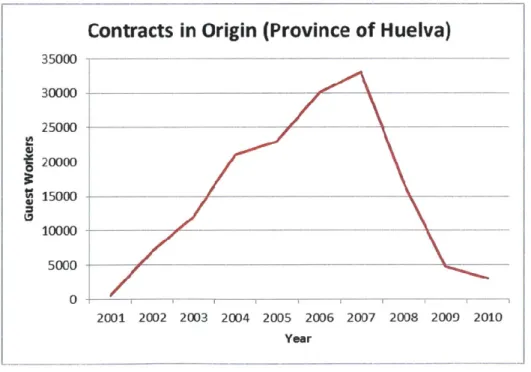
An agricultural labor shortfall ensued, leading employers to explore sources of labor from other countries. As we can see in Figure 6, the number of contracts with foreign workers under the circular migration program began to grow exponentially mirroring the speed at which the economy grew and local unemployment declined (Figure 7).
However, following 2007, the financial crisis affecting Spain was particularly acute given its dependence on a previously flourishing construction sector as economic recession and growing unemployment began to take their toll. In the province of Huelva, Spain's largest economic crisis in 30 years drove unemployment to 30%. In response, the government changed labor migration polices to facilitate a return to farms for the local unemployed. Figure 6 shows the consequent collapse in the number of contracts with foreign workers.
Contracts
in
Origin (Province of Huelva)
35000 30000 25000 S20000 15000 10000 5000 0 2001 2002 2003 2004 2005 2006 2007 2008 2009 2010 Year
Figure 6: Number of temporary 'contracts in origin'
Unemployment Rate (Province of Huelva)
30% M 25% 20% E a 15% E C 10% 5% no 2002 2003 2004 2005 2006 2007 2008 2009 2010 YearFigure 7: Unemployment rate in Huelva [INE]
The collapse of the authorizations for guest workers alarmed the circular migration program managers and local administrations. They worried that social pressure and overreaction by central government could endanger the sustainability of a program designed to support the economy of the province in times of economic stress. This dilemma leads us to the problem statement of this thesis, the dynamics hypothesis and the research question for this
multidisciplinary research:
Problem Statement: Circular migration programs are designed to restrict illegal
immigration and provide flexibility in labor supply management. However, during the last economic crisis, society and central government put at risk the sustainability of a
particular implementation of a circular migration program in Southern Europe. They incorrectly thought that circular migration could be an impediment to economic recovery.
With the reference modes described above (Figure 5-7) that represent the behavior of the economy and also the policies implemented to control the situation, and using the appropriate
methodology we will explore the following hypothesis:
Hypothesis: As the number of contracts available to foreign workers for agricultural
harvesting is drastically reduced, the total number of unemployed workers increases over time.
This hypothesis will allow us to explore the benefits of maintaining a labor migration program under conditions of economic stress. To this end, this thesis focuses on the following research question:
Research Question: What elements were driving the management of circular migration
policy in the province of Huelva before and during economic crisis?
To address the aforementioned question, further issues will be analyzed, including:
" Why the circular migration program in Huelva can serve as a modelfor economic
change in the context of labor supply management; and
e What policies will allow the immigrant population to respond instantaneously to
economic growth, recession and transition.
The analysis will explore conditions in the years 2002-2011, a time that provides ample variation in economic and migratory trends to demonstrate the dynamics of circular migration.
1.4 Goal and objectives of the thesis
The goal of this thesis is to characterize circular migration by
" Identifying the key factors in a circular migration program;
e Illustrating a case study of circular migration in Southern Europe;
e Analyzing the conditions that make circular migration successful during an economic crisis
in terms of consistency of labor supply; and
1.5 Organization of the thesis
Chapter 1 introduces the material that motivated this research effort along with the research question, dynamics hypothesis, goals and objectives.
Chapter 2 illustrates a case study in labor migration management in South Europe. It discusses in detail the concept of circular migration. An overview of the different stages during the last 20 years of the history and purpose of the idea is detailed. Different policies and social conflicts are also discussed, in order to describe the advantages and disadvantages of those programs in different contexts.
Chapter 3 explains the methodology used in this thesis. The modeling approach is designed and justified in detail in order to provide a good understanding of the dynamic nature of circular
migration.
Chapter 4 provides the result and analysis of this research. A system dynamics model is used to describe the key factors and causality involved in this particular labor management program. Stakeholders are described, variables selected and causality among the main factors is mapped. Finally, in this chapter, four scenarios are simulated and analyzed in order to test the robustness of the model under economic constraints and extreme policies.
Chapter 5 discusses the results of the analysis. We review in depth the implications of the policies, the boundaries of the research and the importance of understanding the system as a whole.
Chapter 6 summarizes the answers to the research question and includes recommendations for future research.
2 CASE STUDY: HUELVA
To understand the dynamics of decision making in immigration labor management in the province of Huelva we will describe its different phases. Figure 8 illustrates several periods with important events highlighted:
1980- 1985 Local Workers
1986- 1997 Spanish workers from other provinces
1997-2000 2000- 2004 2004 -2008 2008-2011 Moroccan Men Eastern European Moroccan Women Local Workers
Women
Poland becomes part of the EU 2004
Figure 8: Time Line of immigration in Huelva
Every single event challenged the system, forcing it to respond with innovations from the farmers followed by government regulations and by local administration policies. To better understand the nature of those changes we have to consider the role of the government as the main driver of
interventions. In addition, international agreements made the participation of specific countries possible. The shift in the gender of workers was led by farmers who found, in the circular migration selection process, a way to apply specific criteria that we will explain later in this chapter. Finally, the economic crisis drove one more change in the type of labor that created social conflict capable of threatening the sustainability of circular migration programs.
2.1 Agriculture labor shortfall
Until the late 1990s, local workers and Spanish migrants who moved from other municipalities of Huelva, Cadiz, Seville, Cordoba, Extremadura and even Portugal [Mdrquez, 2009] represented the majority of the strawberry and citrus fruit cultivation labor in Huelva. (See Figure 9 for the
location of the region.) However, the overall development of the Spanish economy, specifically new opportunities in the construction and services industries; the decline of social status of agricultural work; the increase of the educational level of young people and the displacement of occupational aspirations to other industries contributed to the growing need for foreign laborers in the strawberry and citrus fruit fields.
I
ANDALUSIA
Figure 9: Andalusia region in south Spain and Portugal
2.2 Changing patterns of recruitment and dynamics of the migration system
The need for foreign workers to harvest strawberries in response to the attrition of local workers led entrepreneurs to innovate socially and economically in searching for and selecting laborers. As experimentation with contract workers began to gain momentum, the substitution of labor in the region led to significant changes in the sociological composition of the agricultural workforce. This transition has undergone various phases: from Spanish nationals to Moroccan men, from
Moroccan men to Eastern European women, and from Eastern European women to African women. All three phases occurred within a period of approximately 20-30 years. Currently, we
are entering a fourth phase in which ex-patriots are returning to Spain in search of employment. Over time, one factor has remained constant: the instrumental need of employers to provide workers for an increasingly growing local agricultural industry. This need is driven by the abandonment of agricultural jobs by Spanish nationals, the entry of Poland into the European Union, difficulties with the arrival of Romanian workers, and an insufficient supply of Bulgarian workers. The perennial need for workers to process an extremely perishable product such as
strawberries drives the recruitment of just-in-time labor to respond to variability in the climate [Hirano, 2006]. In Figure 10 we can see images of the strawberry field, and women processing the fruit. This part of the process requires intensive coordination in order to deliver the fruit to the market on time.
Figure 10: Strawberries must be picked 'just in tirne' which requires precise labor coordination Photos: Mercedes Gordo
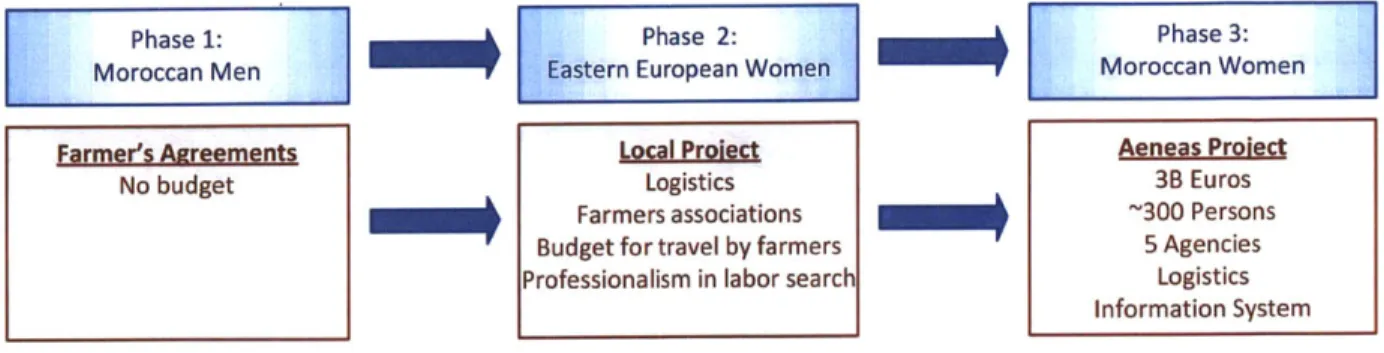
Strawberry farmers in Huelva have implemented the process of circular migration as a social innovation according to specific guidelines for the movement of people. The main objective is to assure certainty and planning, key in this time-sensitive business environment [Gordon, 1995; Mendoza, 2000]. The three phases illustrated in Figure 11 show how the experience of Huelva in labor migration management started with innovations from farmers followed by innovations
from local programs that increased the resources. This will be described further in the next sections:
Phase 1: Phase 2: Phase 3:
Moroccan Men Eastern European Women Moroccan Women
Farmer's Aereements Local Proiect Aeneas Proiect
No budget Logistics 3B Euros
Farmers associations ~300 Persons
Budget for travel by farmers 5 Agencies Professionalism in labor search Logistics
Information System
Figure 11: Three phases of the management of the search for a labor force
2.2.1 Phase 1: Replacement of Spanish men by African men
The departure of Spanish workers from agriculture created an important gap to be filled by other capable laborers. However, as Spanish workers were abandoning the fields the number of
Moroccan and Algerian migrants for the agricultural season began to grow. In the late 1990s, the local press became aware of what entrepreneurs needed to complete a successful agricultural season. The majority of migrant workers were men; migrant women were not yet available;
2.2.2 Phase 2: Replacement of Moroccan men by Eastern European women
Different socio-political and cultural circumstances (international politics, new politics
of immigration, Moroccan immigrant sit-ins, complaints of employers that laborers abandoned the fields before completing the harvest, etc.) began to encourage the hiring of women, who from the beginning were thought to be more controllable workers because of family connections
in their countries of origin [Gualda, 2009]. Women were also preferred because of their superior skills, such as being tidier than men, not fouling fields, quarrelling less among themselves and drinking less alcohol, thus making themselves available for hard work that begins very early in the morning. Also, most of these women have children at home, making them more likely to return.
The farmers must also provide housing to workers that come from abroad. The majority of them decided to take only women, because it would be inappropriate to house people of different genders but belonging to different families in the same quarters [Gualda, 2008, 2009]. These factors highlight the importance for employers, in the context of agriculture, to find employees with flexible schedules and controllable traits [Shih, 2002]. Temporary 'contracts in
origin' became one answer to the necessities of circular migration. Such a temporary contract
provided the opportunity to work for a period of a few months with the possibility of returning the following year if a person returned legally. Employers' perceptions are that, in general terms, women are easier employees to manage. In a sense, Abdullah [2005] stressed the importance of the ideal worker to be 'docile, and disciplined'.
The recruitment of women began in 2000 during the first major wave of women guest workers from Poland. The 'contracts in origin' provided a temporary screening mechanism and eventually permits for foreign workers. Local advocates of this policy [AENEAS, 2008; Millen, 2009] argued that this type of contract was the solution to the labor demands of local entrepreneurs, for several reasons as we see in Table 1:
Table 1: Benefits of a circular migration program
Benefit Decipto
Legal Framework It regulated workers by providing a signed contract following a selection process in the
country of origin.
Return Guaranties The contracts had a fixed term which matched the season and employer needs,
requiring the worker to return home at its expiration.
Just one selection process Workers who fulfilled the terms of the contract could be hired in subsequent seasons
without going through the selection process.
Eligibility for resident and In accordance with the law, after the fourth return they could be eligible for resident
work permit and work permits in Spain.
Travel paid by employees The employer is required to pay the workers' travel to Spain (with the employees
paying to return).
Housing provided by The employer is required to provide a house with minimum living conditions. All of this
employer is implemented by the "Huelva Agreement for Agriculture".
These benefits drove an increase in the number of Eastern European women working in the agriculture sector in Huelva. For example, during the 2007-08 season there was a need for approximately 60,000 workers; temporary contracts in origin provided 37,480 people (62%).
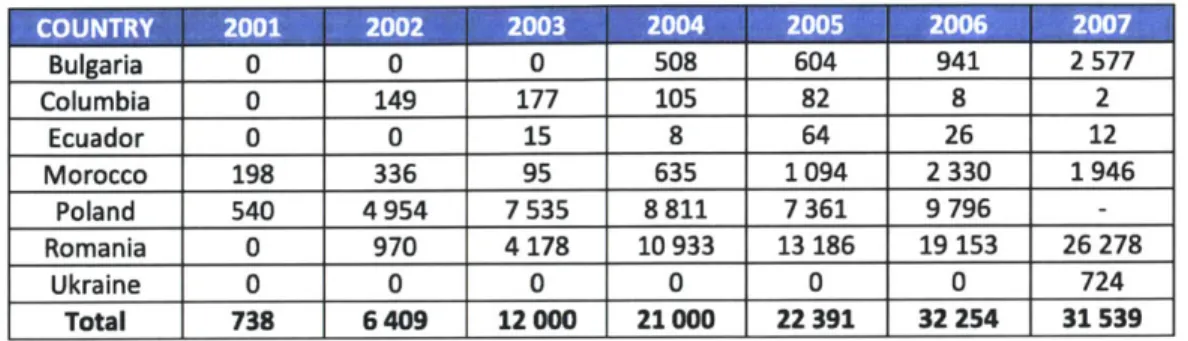
Polish women also replaced Moroccan men. Similar situations happened with women from other countries such as Romania, Bulgaria and the Ukraine who also substituted Moroccan men. Table 2 illustrates the diverse countries from which workers participated in this labor migration program.
Table 2: Foreign workers in Spain by country of origin [Bago, 20071
COUNTRY 2001 2002 2003 2004 2005 2006 2007 Bulgaria 0 0 0 508 604 941 2 577 Columbia 0 149 177 105 82 8 2 Ecuador 0 0 15 8 64 26 12 Morocco 198 336 95 635 1094 2330 1946 Poland 540 4954 7535 8811 7361 9796 -Romania 0 970 4 178 10933 13 186 19 153 26 278 Ukraine 0 0 0 0 0 0 724 Total 738 6409 12000 21000 22391 32254 31539
Polish and Romanian women were contracted because Poland and Romania's entry in the
European Union eliminated the need for much of the bureaucratic requirements for international contracts. Poland and Romania, now European Union members, no longer needed to participate in guest worker programs. This facilitated a more constant influx of female workers into the Spanish agricultural industry.
2.2.3 Phase 3: Replacement of Eastern European women by African women
The orientation towards Morocco in the contracts in origin is largely due to the difficulties of finding Polish and Romanian workers in 2005-2006, and the continuing cases of infidelity with local workers. Furthermore, Bulgaria's inability to provide sufficient workers also contributed to the viability of Moroccan labor once again. In this context, an international agreement was signed between Morocco and Spain in 2005 for the recruitment of workers for the strawberry harvest in Huelva. The new Aeneas Project-Cartaya-Kenitra promoted the new recruitment of guest women workers [Gordo, 2009; Moreno, 2009].
The first group of guest women worked in Huelva during the 2005-2006 season. The following year (2006-2007) some 5,000 guest women worked in agriculture in Huelva. In the 2007-2008 season there were around 16,000, and in 2008-2009 the number grew to 10,400. In November 2010, the recruitment level dropped to 5,500 guest women for the 2011 season [Millen, 2010b]. While in other agricultural industries in Spain the contracts have been made predominantly with males, Huelva employers seem to have gravitated towards women, regardless of their country of origin. Whether it is women's perceived greater docility [Abdullah, 2005; Moreno, 2009], their better skills and work attitudes, the desirability of keeping persons of the same gender in accommodations provided by employers on farms or other less humanitarian reasons suggested in public discourse (See Lewycka's famous book: Two Caravans, 2008), trends clearly point towards the feminization of agricultural work in the context of contracts made with foreign workers recruited in their own countries. However, in the presence of economic crises
(post-2008), there was a shift away from such policies and a decline in this type of hiring in order to
promote local employment as shown in Figure 6.
2.3 Social conflicts in an economic crisis context
At the end of the 2007-08 season we can see the first signs of economic crisis as Spanish people shift toward (re)incorporation into the agriculture industry (Abellen, 2008; Milldn, 2009).
Unemployment continued to grow in the province of Huelva, local workers responded, saying, for example:
"many families...want[ed] to return to work in strawberry and citrus fruit cultivation" (Spanish
woman, focus group in Lepe, 2009).
"I already work where it is needed: in the field, looking after an elder, or whatever, my husband, he has almost finished the unemployment subsidy and found nothing ... with three small children that we have" (Spanish women, focus group in Palos de la Frontera, 2009).
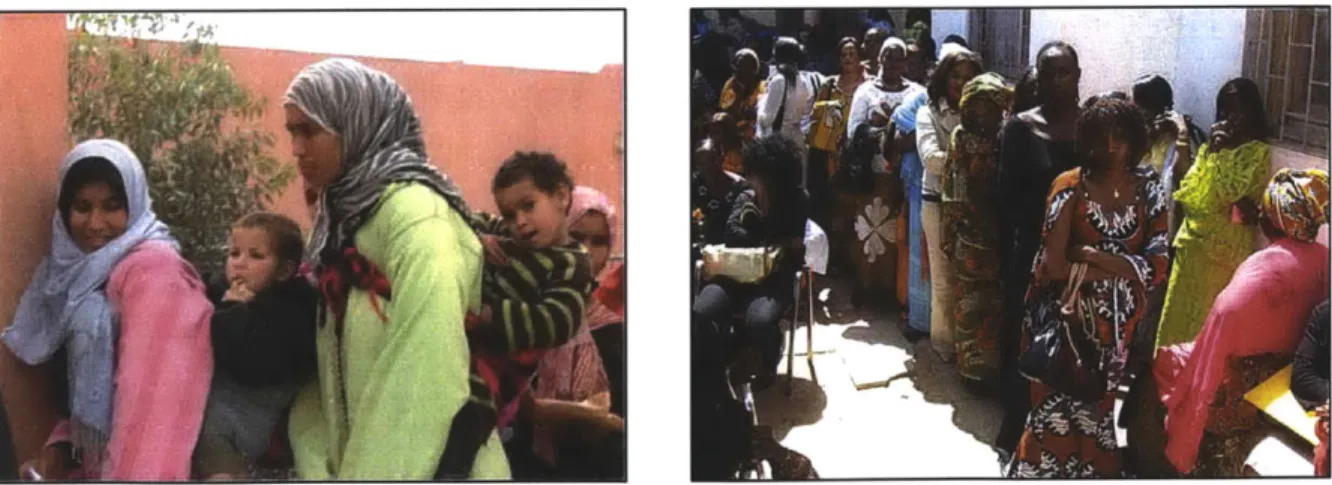
Such comments represent a significant change from previous seasons when the unemployment rate of the local population was not very high. Given the risk that strawberries could remain uncollected, worker substitution and changes in gender and ethnic segmentation are purely instrumental strategies to reduce costs, avoid conflicts at work, and provide employers the opportunity to gain stability in a moment when labor would be critical for the harvest. The crisis shows that, beyond socio-cultural discourse, the priority is the harvest, regardless of who is going to collect, provided that this continues to be profitable to employers. Figure 12 and Figure 13 show clearly the changing patterns of recruitment based on ethnic-gender stratification and replacement:
Figure 12: Harvesting by men from Morocco in 2001 (left) and by women from Poland in 2004 (right) Photo: Huelva Informaci6n (left) Mercedes Gordo (right)
Figure 13: Selection process in origin by women from Morocco (2006) and womnen from Senegal (2008). Photo: Mercedes Gordo (left) FUTEH (rght)
During the economic crisis, it was observed that employers did not independently decide who to hire; intervening policies at the local and international level played a significant role. Spanish workers could return to the strawberry fields, if the economic crisis persisted. However, many entrepreneurs, having experience of the Spanish abandonment of the fields, thought it was
inefficient to rehire Spanish workers. This has led to the innovation of creating contracts in origin and even of reserving a quota of contracts in Morocco in case the demand for labor increases
[Huelva Informaci6n, 2010]. In fact, for many, the return of Spanish workers to the agricultural industry is regarded as temporary. They expected to reactivate contracts with seasonal workers as soon as the economy recovers.
2.4 Selection process, mobility and integration
The selection process for workers in circular migration programs differs from one country to another. In this case study we have focused in the recruiting process for workers in Morocco because it is one of the more sophisticated. Morocco's National Agency for the Promotion of Employment and Skills (ANAPEC) pre-selects candidate to be hired in origin by Huelva farmers.
ANAPEC coordinates with the Foundation of Foreign Workers in Huelva (FUTEH) and the Spanish
visa department in Morocco.
The quality of this program and its relevance for the European Union relies on the strong relationship between the two governmental agencies for labor. Huelva was the first destination for Moroccan guest workers under a circular migration program. The experience in this pilot
project led the government of Morocco to think of those programs as tools for development as remittances play an important role in the Moroccan economy.
ANAPEC has been exploring for the last few years new circular migration partnerships with other
countries such as France, Portugal and United States. In addition, new sectors are being considered by ANAPEC such as hotel catering, service and health (specifically the jobs in these sectors that have been less desirable to local workers during economic growth). Table 3 shows ANAPEC's vision for circular migrations programs. Conditions and resources are also reflected in the table:
Table 3: Selection process for circular migration workers in Morocco [ANAPEC Rabat, 2010] Business Sector Agriculture Hotel catering, Services Health Destination country Spain France United States Portugal
Job Offer Conditions Contract Duration: 3 Months (Spanish standard contract) Trial period: 15 days
Salary : 37 euros/worked day
6.5 hours/day
Accommodation on the employer Weekly leave: 1 day
Transportation costs from the place of residence in Morocco to the place of work on the employer Medical coverage
Profile Of Recruited Workers
18 to 45 years
Feminine gender From rural origin Children in the origin
During the stay in Spain they will have to live in the farms
Female Workers' Selection Process
16 regions
61 provinces and police headquarters
264 inspection centers
38 agencies participating in the operation
5 selection sites: Mohammedia, Fbs, Marrakech, Agadir and Dakhla 150 Employment counselors mobilized for the operation
Accompanying And Follow-Up In Morocco
Organization of awareness and integration sessions during the selection process
Support the penetration of banking services (opening dual bank accounts in Morocco and Spain) Support in administrative procedures (passport, visa, medical certificate ... ) seeks to assist workers in Spain through an intercultural system of mediation and promote vocational and linguistic training as a key element for integration.
Support And Follow-Up In Spain
Employment regulatory framework in Spain (Unions and work inspection) Visits and follow-up reunions in-situ (both official and by the Anapec)
Social follow-up by 25 social mediators (recruited by the Cartaya Municipality within the AENEAS program framework) and 75 NGO members; Follow-up and provision of medical care
Organization of courses and workshops: Spanish language, internet, intercultural exchange, family planning, violence prevention, hygiene, community life, security at work, etc.
Management and follow-up on claims
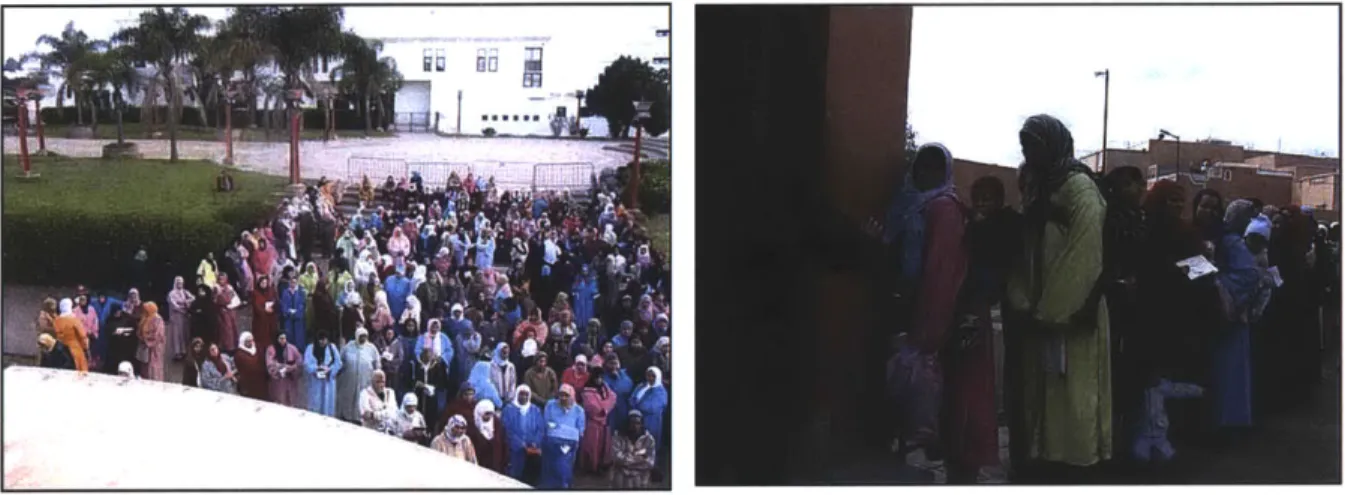
Figure 14 shows part of the selection process in Marrakesh. Figure 15 shows the mobility part of the process in which guest workers are provided with ground and sea transportation to their final destinations on Huelva farms.
Figure 14: Selection in Marrakesh, Morocco. Photo: ANAPEC (left) Mercedes Gordo (right)
Figure 15: Trip Tangier-Tarifa-Almonte. Source ANAPEC. Photo: Mercedes Gordo (left) ANAPEC (right)
FUTEH coordinates action among all stakeholders from the circular migration management
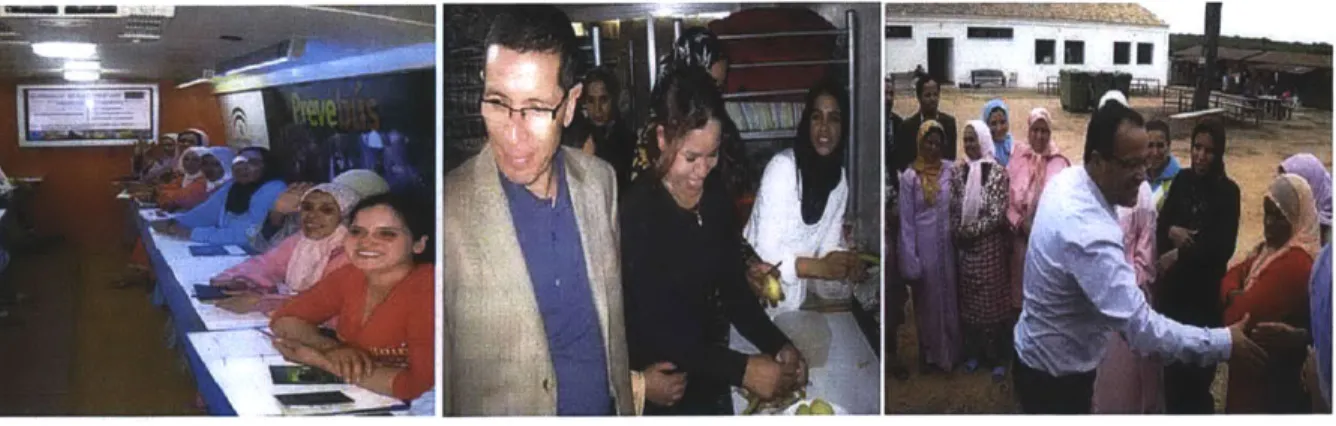
program office. Once guest workers arrive at their destinations, farmers provide them with housing. This process is supervised by FUTEH and ANAPEC. Social workers make sure that workers received proper accommodation and social and professional integration. Figure 16 shows
Figure 16: (left to right) languages course, cooking courses and follow up on the farm. Photo: ANAPEC
As part of the case study, we also collected information about the process from the viewpoint of
FUTEH (Table 4). One of the most important parts of this process is the legal immigration
paperwork for which FUTEH collaborates closely with the Spanish consulate in Tangier. The processes for a large number of guest workers must be completed in a short period of time (because calls for workers depend on weather conditions, this mobilization is executed in days). Also the logistics for housing and travel must be synchronized with preceding processes. Other parts of the process introduce complexity into the systems.
For the purpose of our model we will include only the basic required functions to analyze the behavior of a high demand for workers in specific periods of time. We also look at the impact of these logistic and international relationships after the number of guest workers required is seriously reduced due to economic crisis.
Table 4: Value streamn of the labor migration management in Huelva [FUIEH, 20101
Stages in the process
Hiring process Travel to Spain Housing Healthcare Languages courses Return New season Employment offer Employment offer
Validation offer by immigration dept.
Sending the offer to Spanish Embassy in Morocco
Communication of the offer to employment office in Morocco
First time workers management process Employment office in Morocco
Pre-selection of candidates Convocation selection process Final selection Signature of Contracts Visa process and travel arrangement
Repetitive workers management process Employment office origin
Reception of contracts Convocation signature process Signature
Visa process and travel arrangement Travel
Reception of workers in Tarifa
Agreement with port authority to facilitate process Buses organized to move workers to the farms
Intercultural mediators are present during all phases of the process to facilitate understanding
2.5 Chapter Summary
As stated before, this chapter illustrates a case study of circular migration in the province of Huelva in Southern Spain. Relevant material based on interviews, secondary sources and
discussion within the MIT-Huelva research group was reviewed in this chapter. The development of the Spanish economy following the decline of the social status of agricultural work and other factors contributed to the growing need for foreign laborers in the strawberry fields. This led entrepreneurs to innovate socially and economically to create a process to identify and select laborers in other countries.
Initially, the progressive entry of Moroccan and Algerian migrants for the agricultural season replaced Spanish men with African men. The recruitment of women began in 2000 during the first major wave of Eastern European guest worker women; Moroccan men were replaced by Eastern European women. After Poland became a member of the European Union, African women began to replace Eastern European women. However, social conflicts began when economic crisis caused unemployment to increase in Huelva. At that time, intervention by the government forced yet another replacement: Spanish workers for African women. The crisis shows that the employers' priority is the harvest and its continued profitability regardless of who does the work.
Finally, this case study emphasizes the importance of the selection process, mobility and integration of guest workers. The quality of this program and its relevance for the European Union relies on a strong relationship between the two labor governmental agencies, ANAPEC and
FUTEH, and their capability to manage complexity.
Table 5 summarizes chronologically some of the key factors involved in the process5: Table 5: Chronology of Immigration in Huelva
Period Labortype Market Need/Policy Conflicts
1986-1997 National
immigration
Andalusian provinces have different agricultural seasonality: When the grape and olive harvests finish in
Cordoba the strawberry season begins in Huelva. Workers need to move in order to avoid seasonal unemployment.
The large number of workers that move their families in order to participate in harvests across Andalusia overload local public services such as a school and clinics. The most important problem is housing; in addition to the cost of maintaining two houses, workers faced many conflicts in term of rentals.
1997-1999 First Because of problems in the previous The farmers' search for foreign labor
experience period the government decided to generates many problems among the local
with provide special unemployment population. For first time, people in small
Moroccan benefits for agricultural workers to Spanish towns need to learn how to live with
immigration avoid internal migration. That forced other visiting foreign laborers. Many of the
farmers to explore other labor conflicts arise between tenants and owners.
markets, first in Morocco. Several incidents create security concerns
among local populations that perceive the
immigrants as a threat.
s This table does not contain every country participating in the circular migration program with Huelva at every stage. (In Table 2 we can see the dominant migration flows by country.). It does illustrate the more relevant stages and sending countries over the last few decades of migration in the province of Huelva.
As production increases and local workers become even less available, African workers arrive in greater numbers. An alarmed public feared an avalanche of immigrants trying to cross the border illegally.
1999-2001 Moroccan As African workers illegally came to The social situation become more
illegal Spain in higher numbers, the Spanish complicated; the number of illegal workers
immigration government acted to regularize the grew out of control and the government
increase immigration. introduced a large-scale regularization of
immigration.
Social conflicts created a strong need to initiate contract in origin programs.
2001-2004 Eastern With the creation of circular During this period of time, significant conflicts
Europe migration programs, foreign workers were reduced. Illegal immigration decreased.
immigration were hired in their countries of Farmers were able to increase production
origin. This stopped the "call effect" year after year due to a guaranteed labor
This circular migration program force.
stimulated the hiring of women from Eastern Europe.
2004-2008 Women from Because Poland (and later Romania) During this period of time the circular
Morocco becomes part of the European migration program provides an excellent
Union, their citizens can work framework for farmers, society, foreign
throughout Europe. However, they migrants and governments.
stop coming to the harvest. Farmers However, at the end of this period the impact
decided to implement the circular of the financial crisis on Spain destabilizes the
migration program with Morocco circular migration program.
again. This time they only hire women due to the success of the Eastern Europe experience.
2008-2011 Local workers Responding to complaints that the A new social problem is generated as local
circular migration program is hurting workers want to come back to the farms, but
Spanish workers, the government foreign workers are preferred by farmers who
decides to pursue two policies: one experienced the Spanish abandonment of
encourages farmers to hire local farm work in favor of construction in more
workers; the other is to reduce the prosperous times. Farmers have also become
number of work permits for used to the foreign labor force and do not
foreigners. want to jeopardize it. New conflicts arise
between locals and foreigners competing for agricultural jobs.
3 METHODOLOGY
In growing economies, labor migration plays an important role. However, an increase in the number of foreign workers can have severe social consequences if a recession occurs. For that reason, some countries have implemented circular migration programs as a temporary solution to control migration flows depending on the labor shortfall.
However, a well-designed circular migration program requires more than a logistical supply-and-demand approach. A more holistic approach that considers the social, political and economic
implications of such programs could be more successful. In this thesis, we discuss the multi-dimensional dynamics of a particular implementation of circular migration in Southern Europe. The case of Huelva in Spain represents a success story in social innovation from the point of view
of foreign labor supply management but it did not come about by accident. We explain how a well-designed strategy over time can make the system respond favorably in a period of economic crisis.
In order to characterize the complexity of labor migration flow in southern Europe we used system dynamics6 [System Dynamics Society, 2010] to understand the structural foundations and related variables. Created by Forrester (1957), system dynamics has its roots in control system theory but has been applied to complex problems in social science, economics, politics and business management. The objective of system dynamics is to provide a mechanism for modeling and simulation to explain the dynamics of specific phenomena and then use that explanation to develop interventions that can improve outcomes7.
System dynamics plays an important role in helping decision makers avoid suboptimal decisions, often referred to as policy resistance8 [Sterman, 2000]. The concept is simple: When you
6 " System dynamics is a computer-aided approach to policy analysis and design. It applies to dynamic problems arising in complex social, managerial, economic or ecological systems -- literally any dynamic systems characterized
by interdependence, mutual interaction, information feedback and circular causality" [System Dynamics Society,
2010].
In this thesis, we do not develop interventions since the case study in Huelva itself contains correction policies.
8 The tendency for interventions to be defeated by the system's response to the intervention itself [Sterman, 2000].
introduce a disturbance into a natural system, it may initially be able to cope with stresses and shocks. However, over time the system may react to the disturbance - or exhibit policy resistance - which may seem counterintuitive because of the time delays associated with the reaction.
Much of the art of system dynamics modeling is discovering and representing the feedback processes, which, along with stock-and-flow structures, causal-loop diagrams, time delays, and nonlinearities determine the dynamics of a system [Forrester, 1968; Saeed, 1982; Sterman, 2000]. The use of system dynamics helps overcome the limitations in people's intuition about complex problems and their often logically incomplete mental models according to Forrester. The resulting insights are intended to help scientists, policymakers, the media and the public at large better understand complex multi-cause and multi-effect relationships. This is accomplished through the use of building blocks that are mapped creating the model structure [Forrester,
1969; Meadows, 2004]
The process of building models in system dynamics allow decision makers to better understand the problem and identify possible side effects that could result from their decisions. One of the reasons side effects are underestimated is the relativity effect9 [Ariely, 2008] in which we look at the things immediately around us in relation to others to make decisions, instead of extrapolating the long-run consequences of circumstances on things over time. Another reason is how previous assumptions can fill logical gaps in an otherwise rational choice, as in the behavioral model of the "business man"10 [Simon, 1957].
To this end, we followed the following model-building process illustrated in Figure 17 and detailed below [Sterman, 2000]:
9 "We not only tend to compare things with one another but also tend to focus on comparing things that are easily
comparable - and avoid things that cannot be compared easily." [Ariely, 2008]
10 "The "flavor" of various models of rational choice arise primarily from the specific kind of assumptions that are
introduced as the "give"' or constraints within which rational adaptation can take place. Some of the constraints are set alternative to choice, relationships that determine pay-off and preference-ordering among pay-offs." [Simon,
1. Problem Statement: Formulated the problem statement and dynamic hypothesis and
included drawings from reference modes of each variable identified as critical in order to describe the behavior of the system. A time horizon should also be defined.
2. Mapping: Stocks, flows and variables are mapped establishing causality among them.
3. Analysis: Once causal loop diagrams are mapped and analyzed, the nature of the loops
generating reinforcing or balancing behavior can be identified. Beside a qualitative analysis, some equations are written to facilitate the simulation.
4. Testing: In this part of the process, the data is introduced in the exogenous variables and stocks are initialized.
5. Policies: Following the simulation, the model was validated and compared with the results
of the reference modes in the first step. In this step we have the opportunity to
implement some recommendations from stakeholders that could make the system work more effectively.
Problem Statement
* Stakeholder Analysis
* Reference Modes
Policy Dynamic Hvoothesis
* 'What if...' Scenarios e Mental Models
" Sensitivity Analysis Mapping
" Recommendations * Behavior Mapping
yest AnalysisT
" Exogenous Variables
" Model Equilibrium eBehavior Analysis
Le Reference Modes eEquations Formulation Comparison 1 Parameters Estimation


![Figure 7: Unemployment rate in Huelva [INE]](https://thumb-eu.123doks.com/thumbv2/123doknet/14755035.582070/22.918.208.740.110.512/figure-unemployment-rate-in-huelva-ine.webp)