CASE REPORT ABOUT THREE PATIENTS AFFECTED BY AUTOSOMAL DOMINANT POLYCYSTIC KIDNEY DISEASE WHO STARTED PERITONEAL DIALYSIS AFTER NEPHRECTOMY
AND SIMULTANEOUS PERITONEAL CATHETER IMPLANTATION
Description de 3 cas de patients polykystiques ayant debuté la dialyse péritonéale en post-operatoire d’une
néphrectomie avec mise en place simultanée du catheter de dialyse péritonéale
Lise Lelandais1, Caroline Roubiou2, Cécile Courivaud2, Guillaume Guichard3, Johann Barkatz3, Catherine Bresson-Vautrin2
1Département de Néphrologie, Centre Hospitalier de Dieppe, Avenue Pasteur, 76200, Dieppe, France, 2Département de néphrologie, CHU Besançon, 3 Boulevard A. Fleming, 25030, Besançon, France, 3Département d’urologie, Centre Hospitalo-universitaire de Besançon, 3 Bo A. Fleming, 25030, Besançon, France
Le
B
ulletin de la
D
ialyse à
D
omicile
journal officiel du Registr e de D ialyse Péritonéale de Langue Française RDPLF www .rdplf.or g Résumé
L’initiation de la dialyse péritonéale (DP) pour les patients polykystiques peut s’avérer compliquée lorsqu’une néphrectomie est nécessaire pour préparer la greffe rénale. Nous présentons ici l’étude rétrospective de 3 patients adultes suivis dans le service de néphrologie de Besançon sur la période 2017-2018 pour une insuffisance rénale chronique stade 5 en rapport avec une polykystose rénale autosomique dominante (PKAD) et ayant débuté la DP en post-opératoire d’une néphrectomie avec mise en place simultanée d’un cathéter de DP.
Sur les 3 patients, tous ont pu débuter la DP dans le 1er mois post-opératoire, sans avoir recours à l’hémodialyse. Le délai moyen entre la néphrectomie et l’initiation de la DP était de 8,7 jours. La DP était débutée en DPCA avec de petits volumes (1,5 litre), puis la DPA était initiée à petits volumes ; le délai moyen entre la néphrectomie et la mise en place d’un programme de DPA « standard » s’élevait en moyenne à 24,3 jours. Aucune complication majeure n’était rapportée, notamment pas de fuite de liquide de DP. A long terme, la survie de la technique était bonne puisqu’une patiente est sortie de la technique par le biais de la greffe, les 2 autres patients sont encore en DP. Les critères d’adéquation étaient satisfaisants pour les 3 patients. Pour conclure, cette série de 3 cas donne des résultats très encourageants quant à l’initiation de la DP en post-opératoire d’une néphrectomie avec pose simultanée de cathéter de DP chez les patients polykystiques.
Abstract
Peritoneal dialysis (PD) initiation can be difficult in patients developing end stage renal disease (ESRD) due to autosomal dominant polycystic kidney disease (ADPKD) when these patients need nephrectomy to prepare kidney transplantation. Here we describe the cases of 3 adult patients followed in the nephrology ward of Besançon in 2017 and 2018 for ESRD due to ADPKD and who began peritoneal dialysis in the post-operative period following nephrectomy with simultaneous peritoneal catheter implantation. The data were collected retrospectively.
Among the three patients included, all began PD during the first month after being operated on, without requiring hemodialysis. Mean delay between nephrectomy and PD start was 8.7 days. The renal-replacement therapy was begun following a continuous ambulatory PD (CAPD) technique with small volumes (1.5L), then was carried on with automated PD (APD) technique with small volumes. The mean delay between nephrectomy and the establishment of a standard APD program was 24.3 days. No major complications were reported at the establishment of PD, particularly there were no dialysate leaks. On a long term view, technical survival was good since 2 patients are still treated by PD whereas one patient has been transplanted. Adequacy criteria were satisfactory.
To conclude, our group of 3 patients shows very interesting results about PD start in the post-operative period after nephrectomy with simultaneous PD catheter implantation in polycystic patients.
Mots clés : dialyse péritonéale, néphrectomie, polykystose
rénale autosomique dominante Keywords : autosomal dominant polycystic kidney disease, nephrectomy, peritoneal dialysis Note : le texte original en version Française est disponible à la même adresse url : https://doi.org/10.25796/bdd.v2i1.19123
journal officiel du Registr e de D ialyse Péritonéale de Langue Française RDPLF www .rdplf.or g Data collection
For each patient the data were collected retrospectively using Axigate, Ideomed, PatientOnline Client software. They concerned:
- General patient data: age, sex, weight, height, BMI, creatinine and GFR estimated according to CKD-EPI (eGFR) the day before nephrectomy, diuresis before nephrectomy (in the previous 3 months), type of kidney transplantation planned (cadaveric donor / living donor), professional situation.
- Nephrectomy surgery: Indication, side, date of nephrectomy, surgical technique, size / weight of the removed kidney, mention by the surgeon of a peritoneal gap, side for implantation of PD catheter, surgical complications of nephrectomy.
- The evolution in the first month post-nephrectomy: creatinine / eGFR at D2, D7 and D14 postoperative (if dialysis not started), postoperative diuresis (between D1 and D5), residual diuresis 1 month after surgery, time between nephrectomy and initiation of PD , biological assessment the day of PD start (serum levels of urea, sodium, potassium, bicarbonate), events / complications that influenced the initiation of peritoneal dialysis, total time in hospital.
- PD initiation modalities: dialysis company, type of home dialysis machine, technique of PD : automated peritoneal dialysis (APD) or continuous ambulatory peritoneal dialysis (CAPD), chronology of the different PD prescription schedules used (infused volumes, stasis time, number of cycles, type of solution, for APD schedules : infusion rate, drainage rate, use of «fluctuating volume» mode), occurrence of complications at DP start. - Long-term PD evolution: adequacy criteria regarding biological follow-up at 1 month and 6 months after DP start (urea KT / V, weekly creatinine clearance, residual kidney function (RKF), residual diuresis, mean daily PD ultrafiltration (UF), hypertension, clinical signs of salt and water retention, BCM data, biological parameters (hemoglobin level, serum levels of potassium, bicarbonate, calcium, phosphate, albumin), significant events in PD (peritonitis, others ...), if PD stopped: PD dropout date and reason for dropout, duration of PD survival.
Data Statistical analysis
Statistical analysis was performed using the Excel software.
INTRODUCTION
The management of patients with Polycystic kidney disease (PKD) who have progressed to end stage renal disease (ESRD) raises several specific issues. Nephrectomy is often required for these patients, either to prepare kidney transplantation, or following cystic complications (abdominal pain, digestive discomfort, intra-cystic hemorrhage or cystic infection). This nephrectomy results in a loss of kidney function that often triggers a hasty dialysis start. In the cases of patients who choose peritoneal dialysis (PD) as a renal replacement therapy, several questions arise: When to implant the peritoneal dialysis catheter regarding nephrectomy? When to start peritoneal dialysis in the nephrectomy postoperative period without exposing the patient to further complications? Can transient hemodialysis be avoided in the nephrectomy postoperative period? There are a few pediatric cases of peritoneal dialysis start after nephrectomy and simultaneous implantation of the peritoneal dialysis catheter (1, 2). However, these are pediatric patients, for which nephrectomy, usually bilateral, is indicated because of proteinuria resistant to medical treatment or uncontrolled hypertension. This therapeutic sequence has not been described for adult polycystic patients. To our knowledge, there is currently no data in the literature on the feasibility, in this type of patient, of nephrectomy with simultaneous implantation of a peritoneal dialysis catheter and postoperative PD start, without going through a transitional period of hemodialysis.
We present here the cases of 3 adult patients with PKD who started peritoneal dialysis in the postoperative period of a nephrectomy with simultaneous PD catheter implantation.
MATERIAL AND METHODS
Patients
The inclusion criteria for our cases series are: - patients over 18,
- presenting end-stage renal disease due to autosomal dominant polycystic kidney disease,
- followed in the nephrology department of Besançon over the period 2017-2018,
- having chosen peritoneal dialysis as a dialysis technique,
- who underwent nephrectomy whereas they were not on dialysis yet, with simultaneous implantation of the PD catheter.
RESULTS
Patient Description (Table I) :
Three patients have been included in this cases report, 2 female and 1 male, mean age 53.3 years. They were rather young patients, still with professional activity. They had all reached ESRD. Mean creatinine before nephrectomy was 5,47 mg/dl, corresponding to a mean eGFR of 10 ml / min.
Nephrectomy (Table II) :
For the 3 patients, the main nephrectomy indication was the preparation for kidney transplantation, to clear the iliac fossa to implant the renal transplant. For patient 2, nephrectomy was also indicated because of significant abdominal pain with digestive discomfort. For patient
3, an episode of intra-cystic hemorrhage motivated nephrectomy too. In all cases, the surgery was open and used a subcostal approach. Nephrectomy was on the right side for all patients and the PD catheter was implanted homolaterally for 2 patients, contralaterally for one patient. Indeed, there was no surgical hurdle to graft a kidney homolaterally to PD catheter. In each case, the same urologist was involved in nephrectomy and implantation of the PD catheter. The operative report did not mention peritoneal gap in any of the 3 patients. There was only one minor surgical complication, namely a lymphocele in patient 1.
Evolution in the first month after nephrectomy (Table
III) journal officiel du Registr e de D ialyse Péritonéale de Langue Française RDPLF www .rdplf.or g
Table I : Patients description
M : male ; F : female ; CD : cadaveric donor; LD : living donor ; ND : not documented
Table II :. Characteristics of surgical procedures ND : not documented.
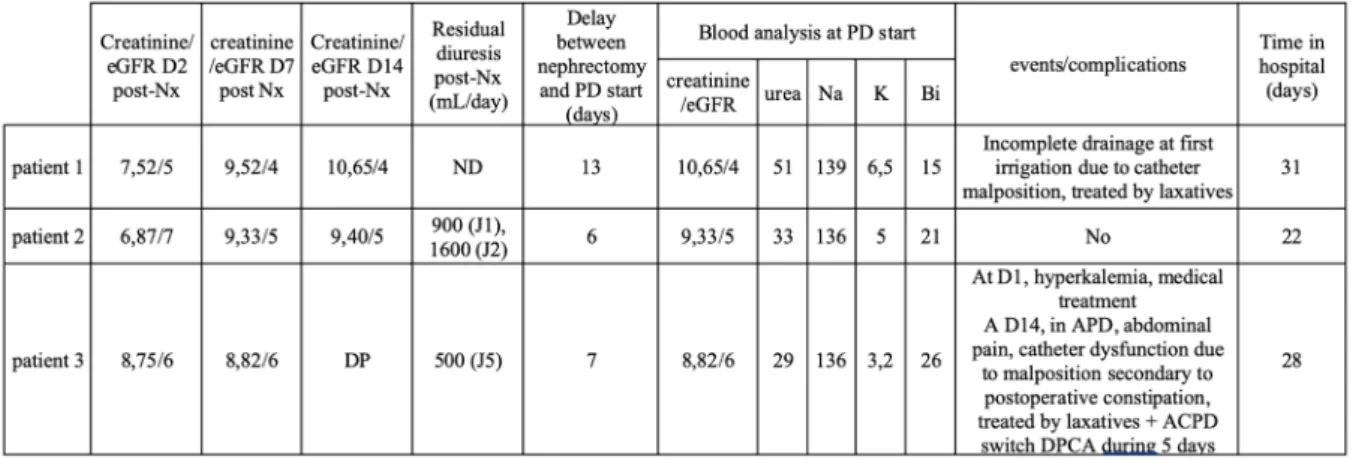
Table III : Evolution during postoperative first month.
Nx : nephrectomy. Na : serum sodium level, K : serum potassium level ; Bi : serum bicarbonate level. Creatinine levels are expressed in mg/dl, eGFR is expressed in ml/min, serum levels of urea, sodium, potassium and bicarbonate are expressed in mmol/L
journal officiel du Registr e de D ialyse Péritonéale de Langue Française RDPLF www .rdplf.or g
In the immediate postoperative follow-up, patient 3 had a hyperkalemia, resolved with medical treatment without needing hemodialysis. For 2 patients, postoperative oliguria (900cc diuresis at day 1 for patient 2, 500cc at day 5 for patient 3) were noted, but no episode of pulmonary oedema. Subsequently, the 3 patients recovered a satisfactory diuresis and all had a residual diuresis greater than 1L / day one month after nephrectomy. The mean time between nephrectomy and initiation of PD was 8.7 days (minimum 6 days, maximum 13 days). The average hospital stay was 27 days (minimum 22 days, maximum 31 days).
Modalities of PD initiation (Table IV)
All patients initiated PD with device from the Fresenius laboratory. Two patients had a Sleep Safe home dialysis machine, 1 had a Harmony machine.
In all cases, the PD was started after Redon’s drain removal.
The first day was an «in out washing» with an 1L isotonic glucose solution that was infused and then drained immediately. This enables the physicians to test the catheter and to make sure there was no obvious leak. After this first test, CAPD was initiated with infusion of small volumes (1.5L). This stage of CAPD lasted between 2 to 5 days. Patient PD training was performed during this stage in hospitalization. Then CAPD was switched to APD, with initial programs requiring small volumes of 1.5L. For training purposes, the APD was started during day time. Then, the volumes were increased to 2L, and APD was performed by the patients autonomously at night. The average time between nephrectomy and the implementation of a «standard» APD program, in terms of number of cycles and volumes, was 24.3 days (minimum 23 days, maximum 31 days).
Table IV : PD initiation strategy.
Nx : nephrectomy. Iso : isotonic 1,36% glucose solution ; Ico : icodextrin solution ; CAPD : continuous ambulatory peritoneal dialysis ; APD : automated peritoneal dialysis.
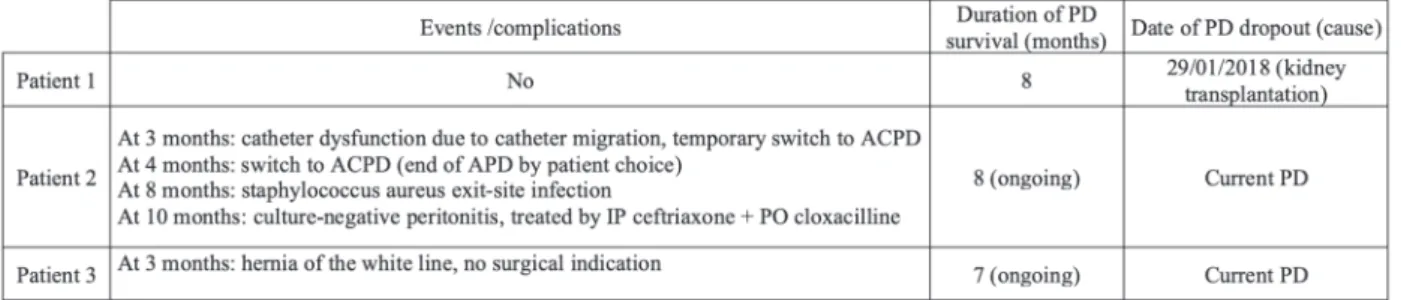
Table V : Long term peritoneal dialysis (PD) evolution IP : intra-peritoneal ; PO : per os.
There were no dialysate leaks. Main difficulties encountered were catheter dysfunctions related to malposition favored by postoperative constipation (2 out of 3 patients). They were basically resolved with laxatives. In patient 1, this resulted in a one-day delay in the initiation of CAPD. For patient 3, whereas patient had started APD, after 14 days post nephrectomy he had to be temporary switched to CAPD to allow catheter repositioning and he resumed CAPD 5 days later. Only one patient, patient 3, showed significant abdominal pain that delayed the initiation of APD by a few days.
Long-term evolution (Tables V and VI)
The PD survival was good for all patients, since patient 1, after 8 months on PD, has been transplanted, the others 2 patients are still on PD. The adequacy criteria were satisfactory for all patients, showing a good quality of dialysis in terms of clearance of small molecules (urea KT / V > 1.7, total weekly creatinine clearance > 50L) and good control of salt and water retention.
Patient 2 showed infectious complications, namely an exit site infection by staphylococcus aureus and culture negative peritonitis, but this was not a hurdle to go on PD. She also preferred switching to CAPD after a few months. Patient 3 presented a small hernia of the white line 3 months after nephrectomy, without surgical indication or obstacle to the continuation of PD.
DISCUSSION
We can conclude, from this series of 3 cases, that it is possible to propose to PKD patients with ESRD who are planned for PD, a nephrectomy with simultaneous
implantation of PD catheter. PD can be started in the first postoperative month without requiring hemodialysis, even transiently.
We noted no major surgical complications, either regarding nephrectomy or regarding the implantation of the catheter. There was only a minor surgical complication, namely a lymphocele, in one patient. No complications were observed during the setting in PD (dialysate leaks, early infections). This is probably related to the small number of reported cases. Other teams observed, in children who underwent bilateral nephrectomy with simultaneous implantation of PD catheter, dialysate leak requiring transient discontinuation of PD and temporary use of hemodialysis (2).
Besides, we can observe a hernia on patient 3 which occurred three months after surgery, but the delay of occurrence was about several months which allows to assume there is no link between this event and the specificity of the initial conditions of PD start. Finally, the therapeutic sequence studied here does not seem particularly likely to cause complications, both at the surgical level and during the course of PD.
Regarding the detailed prescription schedules used at the PD initiation, there were significant variations between patients. The causal factors of these variations are both related to the patients themselves (variable postoperative pain, occurrence of lymphocele in one patient, frequent constipation in the postoperative period, triggering catheter dysfunction, variable speed of PD learning and acceptance) and caregivers (for both patients 2 and 3, experience of previous case(s)).
journal officiel du Registr e de D ialyse Péritonéale de Langue Française RDPLF www .rdplf.or g
Table VI : Adequacy criteria at 1 month 1 (M1) and 6 months after PD start.
RKF : residual kidney function; UF PD : Ultrafiltration by PD ; OH : hydratation status according to BCM ; ND : not documented, PO : periphe-ral oedema ; Hb : hemoglobin concentration ; K : serum potassium level ; Bi ; serum bicarbonate level ; Ca : serum calcium level ; Ph : serum phosphate level ; Albu : albuminemia. All serum levels (potassium, bicarbonate, calcium, phosphate) are expressed in mmol/L, hemoglobinemia is expressed in g/dL and albuminemia is expressed in g/L.
There are several interests to the proposed therapeutic sequence, which could be summarized by: nephrectomy and simultaneous implantation of PD catheter, early PD initiation (within 15 days postoperatively). First, the patient undergoes only one general anesthesia. It does not need transient hemodialysis, which avoid use of a central venous access; the patient is therefore not exposed to the potential complications of such a procedure (infection, thrombosis). On the other hand, the patient is treated immediately by the dialysis technique he has chosen. Finally, the access time to transplantation is shortened, since only one month after surgery, in the absence of complications, the temporary contraindication to kidney transplantation can be lifted. Waiting for the patient to require dialysis before performing nephrectomy may delay access to kidney transplantation for PKD patients. In the management of PKD patients oriented towards PD and requiring nephrectomy, several other attitudes can be considered. Firstly, implantation of PD catheter can be done before or after nephrectomy. One drawback is the requirement of 2 general anesthesia for the patient in a short time. If catheter implantation is performed before nephrectomy, patients are still exposed to the difficulties of initiating PD after abdominal surgery, so the same precautions must be used than for our 3 patients (small volumes, early surveillance in hospital). If the catheter is placed after nephrectomy (generally with a delay of 1 month), patients need a transient hemodialysis period with all the aforementioned drawbacks related to the use of a central venous access.
Then, in case of PKD patients requiring nephrectomy to be transplanted, some teams advocate for performing simultaneously nephrectomy and kidney transplantation (3). However, it is considered mainly for live donor transplants because it is easier to perform such surgery in a programmed way rather than in the relative emergency of a cadaveric donor graft. Moreover, performing a kidney transplantation and a polycystic kidney nephrectomy at the same time is controversial because some authors report higher rates of complications, particularly regarding hemorrhage and urological complications (4), and a negative impact on the survival of the renal graft. Indeed, some authors report that this technique is associated with a significantly higher rate of vascular thrombosis on the graft (5).
Another approach recently developed is the use of embolization of the renal arteries of the polycystic kidney (6). This avoids the heaviness and potential complications of nephrectomy surgery. Embolization has no impact
on the initiation and practical implementation of PD. One major drawback of this technique is the inconstant efficacy, in particular it may not reduce enough the size of the polycystic kidneys if they have cysts with thickened walls (7). Moreover, the decrease of the kidney size after procedure takes time, and this increases the temporary contraindication to kidney transplantation (about 5.6 months according to the data of the literature (7) versus 1 month for nephrectomy). Therefore, patients see their waiting time for transplantation significantly lengthened.
CONCLUSION
To conclude, this series of 3 cases gives very encouraging results for initiation of postoperative PD after nephrectomy with simultaneous catheter implantation in PKD patients. This practice is not widespread nowadays. Therefore, it seems important regarding these first results, to allow more patients to benefit from this therapeutic sequence. This will also provide more data to improve the practice of initiating PD under such conditions.
Conflicts of interest
The authors declare that they have no conflict of interest.
REFERENCES
[1] Martinez Urrutia MJ, Olivares Arnal P, Lopez Pereira P, Lobato Romera R, Alonso Melgar A, Jaureguizar Monereo E. Bilateral laparoscopic nephrectomy with simultaneous peritoneal di-alysis catheter implantation. Pediatr Transplant 2007;11(2):132-3.
[2] Gundeti MS, Taghizaedh A, Mushtaq I.
Bi-lateral synchronous posterior prone retroper-itoneoscopic nephrectomy with simultaneous peritoneal dialysis: a new management for end-stage renal disease in children. BJU Int 2007;99(4):904-6.
[3] Neeff HP, Pisarski P, Tittelbach-Helmrich D, Karajanev K, Neumann HP, Hopt UT, et al. One hundred consecutive kidney transplanta-tions with simultaneous ipsilateral nephrecto-my in patients with autosomal dominant poly-cystic kidney disease. Nephrol Dial Transplant 2013;28(2):466-71.
[4] Tyson MD, Wisenbaugh ES, Andrews PE,
Cas-tle EP, Humphreys MR. Simultaneous kidney transplantation and bilateral native
nephrec-journal officiel du Registr e de D ialyse Péritonéale de Langue Française RDPLF www .rdplf.or g
journal officiel du Registr e de D ialyse Péritonéale de Langue Française RDPLF www .rdplf.or g
tomy for polycystic kidney disease. J Urol 2013;190(6):2170-4.
[5] Grodstein EI, Baggett N, Wayne S, Leverson
G, D’Alessandro AM, Fernandez LA, et al. An Evaluation of the Safety and Efficacy of Simultaneous Bilateral Nephrectomy and Re-nal Transplantation for Polycystic Kidney Dis-ease: A 20-Year Experience. Transplantation 2017;101(11):2774-9.
[6] Suwabe T, Ubara Y, Mise K, Ueno T, Sumida
K, Yamanouchi M, et al. Suitability of Patients with Autosomal Dominant Polycystic Kidney Disease for Renal Transcatheter Arterial Embo-lization. J Am Soc Nephrol 2016;27(7):2177-87.
[7] Petitpierre F, Cornelis F, Couzi L, Lasserre AS, Tricaud E, Le Bras Y, et al. Embolization of renal arteries before transplantation in pa-tients with polycystic kidney disease: a single institution long-term experience. Eur Radiol 2015;25(11):3263-71.
Open Access This article is licensed under a Creative
Com-mons Attribution 4.0 International
License, which permits use, sharing, adaptation, distribution and reproduction in any medium or
format, as long as you give appropriate credit to the original author(s) and the source, provide a link to the Creative Commons license, and indicate if changes were made. The images or other third party material in this
article are included in the article’s Creative Commons li-cense, unless indicated otherwise in a credit line to the material. If material is not included in the article’s Creative Commons license and your intended use is not permitted by statutory regulation or exceeds the permitted use, you will need to obtain permission directly from the
copyright holder. To view a copy of this license, visit http:// creativecommons.org/licenses/by/4.0/.