HAL Id: hal-01402989
https://hal.sorbonne-universite.fr/hal-01402989
Submitted on 25 Nov 2016
HAL is a multi-disciplinary open access
archive for the deposit and dissemination of
sci-entific research documents, whether they are
pub-lished or not. The documents may come from
teaching and research institutions in France or
abroad, or from public or private research centers.
L’archive ouverte pluridisciplinaire HAL, est
destinée au dépôt et à la diffusion de documents
scientifiques de niveau recherche, publiés ou non,
émanant des établissements d’enseignement et de
recherche français ou étrangers, des laboratoires
publics ou privés.
Vertex-centred Method to Detect Communities in
Evolving Networks
Maël Canu, Marie-Jeanne Lesot, Adrien Revault d’Allonnes
To cite this version:
Maël Canu, Marie-Jeanne Lesot, Adrien Revault d’Allonnes. Vertex-centred Method to Detect
Com-munities in Evolving Networks. Fifth International Workshop on Complex Networks and their
Appli-cations (COMPLEX NETWORKS 2016), Nov 2016, Milan, Italy. pp.275-286. �hal-01402989�
Communities in Evolving Networks
Ma¨el Canu, Marie-Jeanne Lesot and Adrien Revault d’AllonnesAbstract Finding communities in evolving networks is a difficult task and raises issues different from the classic static detection case. We introduce an approach based on the recent vertex-centred paradigm. The proposed algorithm, named Dyn-LOCNeSs, detects communities by scanning and evaluating each vertex neighbour-hood by means of a preference measure, using these preferences to handle commu-nity changes. We also introduce a new vertex neighbourhood preference measure, CWCN, more efficient than current existing ones in the considered context. Exper-imental results show the relevance of this measure and the ability of the proposed approach to detect classical community evolution patterns such as grow-shrink and merge-split.
1 Introduction
A main task in computational network analysis is community detection, that consists in identifying denser subnetworks related to a specific role (eg. common interests in social networks, groups of interacting proteins in biological networks...) Though there is no universal definition for community, many have been proposed: intuitively, a community is a group of entities whose members have more relations between them than with the rest of the network. Many definitions and methods exist and keep being proposed [9, 3].
Most community detection methods to date were designed to process static net-works (see Section 2), however complex netnet-works change over time and require methods able to take into account their dynamic (also referred to as temporal or
Ma¨el CANU e-mail: [email protected] · Marie-Jeanne Lesot e-mail: [email protected] Sorbonne Universit´es, UPMC Univ Paris 06, UMR 7606, LIP6, F-75005, Paris, France CNRS, UMR 7606, LIP6, F-75005, Paris, France
Adrien Revault d’Allonnes e-mail: [email protected] Universit´e Paris 8, EA 4383, LIASD, F-93526, Saint-Denis, France
evolutionary) dimension. It has been proved that straightforward use of static com-munity detection algorithms at each time step (re-computation) is not relevant, in particular the output partition is not stable [1].
In this paper, we propose two contributions: first, an event-based detection algo-rithm relying on a vertex-centred process allowing a fast computation and a de-centralised implementation, as well as a preference measure, Community-based Weighted Common Neighbours (CWCN) used in the vertex-centred process and more efficient than existing measures in the considered context.
The rest of this paper is organised as follows. Section 2 presents related works about static and dynamic community detection methods. Section 3 describes the principles of the proposed method DynLOCNeSs, and introduces the vertex neigh-borhood measure CWCN. Experimental results to assess the ability of the method to capture simple network dynamics are provided in Section 4.
2 Related Works
We first present here static and dynamic community detection methods relevant to this paper. Other classic methods are reviewed in [9, 27, 3]. Then, we review an approach more related to the proposed method: the vertex-centred paradigm. Static Paradigms Numerous static community detection approaches exist in the literature. They can be generic graph partitioning algorithms or take into account typical characteristics of the type of network they are designed for, such as power-law degree and small world effect in the case of social networks.
The main community detection method family is criterion optimisation. A global or local criterion measuring the quality of a graph partition into communities, such as the well-known modularity [9], is optimised through several iterations of an al-gorithm loop until convergence. Many existing criteria yield good quality partition (compared to a ground truth for example), but suffer from different drawbacks such as being subject to local extremum or resolution limit [10]. This kind of method is also known to be time-consuming [9].
More recently, label propagation methods [24, 13, 27] offer a decentralised alter-native. They rely on propagation of a node identifier (so-called “label”) from each vertex to every other in the network. However, despite being fast and suitable for detection in a decentralised environment, they have been found not to be stable as well [18, 25]. Moreover, they make massive use of propagation and can overflood the network with unnecessary traffic, especially in a decentralised environment. Dynamic Paradigms The changeover from the static to the dynamic case is not easy. In particular, it depends on hypothesis about the graph evolution model. The most widespread considers a dynamic graph as a collection of static graphs, dis-cretising the dynamic aspect with one graph instance per time step. Naive static detection on each time step, named static re-computation, has quickly been found to be unstable [1], especially when using optimisation methods, because the
identi-fied community structure varies too much, unrelatedly to the community evolution. For example, a good modularity value can be achieved on several very different community partitions of the same graph. To address this issue, concepts like tem-poral smoothnessintroduced by Chakrabarti for evolutionary clustering were inte-grated [6].
But even more than in the static case, taking into account the nature of the con-sidered networks and the dynamics they are subject to is essential to design efficient methods [19]. In this context, decentralised methods adaptation to process the dy-namic case have been found to offer good performance, in terms of partition quality as well as computational efficiency, also offering the advantage to be easily imple-mented in parallel frameworks, as it is the case for label propagation [18, 7]. It is also very popular for applications in specific environments such as small decentralised mobile networks such as Pocket Switched Networks (PSN), for which community detection helps to improve network discovery and information routing [15, 21]. Vertex-centred Methods Finally, vertex-centred approaches have gained popular-ity as a promising new communpopular-ity detection method family. They rely on the prin-ciple that some vertices in the network are “leaders” or “seeds” and the rest are followers [26]. Communities are formed by gathering followers around leaders, like in the Top-Leaders approach [23]. Although this method is more related to k-means clustering (re-allocating the leaders) than to a true leader-follower design, the in-troduced idea of expanding communities around leaders considering the potential preferenceof a follower vertex (resp. a group of follower vertices) to join a leader vertex has been exploited by numerous algorithms. YASCA [16] greedily expands communities around seeds and gather communities using ensemble clustering. LI-COD[28] starts with a careful selection of leaders before computing ranked com-munity membership for each follower, then adjusting preferences and memberships using strategies borrowed from social choice theories until stabilisation. EMc and PGDc[17] locally expand around seed via EM or Projected Gradient Descent al-gorithm, using conductance to delimit communities. Canu et al. [4] consider each vertex as a potential leader and build preference dependencies allowing to form communities. True leaders are the core of the dependencies were the rest can be considered as followers.
Vertex-centred methods have also attracted attention to develop new dynamic community detection algorithms: for instance Evo-Leaders, an adaptation of Top-Leaders [11], mux-LICOD, an adaptation of LICOD for multiplex networks en-abling use on evolving networks [14], OLEM/OLTM [22] that locally optimises modularity and the original approach of [29] based on weighted-edge graphs, using weight update rules to cope with the dynamicity together with a fitness function to ensure partition quality.
We can also cite agent-based approaches like iLCD consider each vertex as an agent and apply dynamic evolution rules to simulate the community formation, yielding a community structure [5].
The major drawback with these algorithms is that they loose one of the initial benefits of the leader-based approach, i.e. lightness and flexibility. Built on top of
Top-Leaders, Evo-Leaders [11] adds a costly split-merge of community at each time step. mux-LICOD [14] uses degree centrality and shortest path calculation to com-pare leaders and followers. Shortest path computation can be costly if used for each vertex to each potential leader. It also relies on an aggregation phase repeated until stabilisation, though experiments do not reveal whether the stabilisation is fast or not. Finally, Zakrzewska et al.’s method [29] relies on a fitness function and a set of ad-hoc update rules and pruning over updates. It is hard to know however how efficient this policy is, as the experiments proposed by the authors are limited to a comparison with re-computation of the static counterpart. While faster than static re-computation (which is generally expected for specifically dynamic-addressed al-gorithms), the proposed F-score comparison with the set of static re-computed in-stances is not meaningful, as static re-computation has been proved to give unstable results [1].
3 Proposed Approach
This section describes the proposed approach, after defining the considered dynam-icity model. We sketch the principles of the proposed method and describe in details the algorithm, which requires a vertex neighbourhood preference measure. We dis-cuss such preference measures and introduce a new one, CWCN.
3.1 Principles
In the following, G = (V, E) denotes an undirected graph, Γ (v) for v ∈ V , the set of v’s neighbours and dvthe degree of v. C denotes the set of detected communities
and C(v) the community of v. S ⊂ V is the leader set, of all vertices being a leader for at least one other vertex. Each leader s ∈ S has a set of followers F(s) ⊂ V . Alternatively, a follower f has a set of preferred leaders, denoted L( f ) ⊂ V . Pref-erence measures between two vertices are denoted here using a prefPref-erence function σ : V × V → R+.
Dynamicity We call time step ti, i ∈ N a date corresponding to a given state of the
graph G. The next time step ti+1occurs when at least an edge changes (appears or
disappears).The vertex event are treated as consequences of the edge moves: a vertex addition is captured as a new edge connecting a formerly isolated vertex. A vertex removal is captured in the same way, as the deletion of the last edge connecting this vertex to the rest of the graph. This constant vertex set model is widely used [12].
We denote Gi= (V, Ei) the state of G and Cithe state of communities at time ti,
eg. G0is the initial graph at t0. Note that the time interval |ti−ti−1| is not necessarily
3.2 Proposed Algorithm: DynLOCNeSs
We propose DynLOCNeSs (Dynamic Locating of Overlapping Communities in Nework Structures), a vertex-centred approach to detect communities in dynamic graphs, more precisely a leader-based approach using a vertex neighbourhood pref-erence measure. The idea is to change from a batch to an event-based detection and modification process, and to perform the detection with as little as possible re-computation. Each vertex must determine whether it should change its leader. If so, it may also change community.
The proposed method takes as input an initial graph, G0, along with initial
com-munity structure C0and leader set S0, and only deals with the detection over time.
These initial states can be computed using any leader-based method (see Section 2). The implementation presented here uses an approach in which each vertex v ∈ V is considered as a potential leader and evaluates its neighbourhood, like iLCD [5] or Canu et al. [4]. It has the advandage of not pre-selecting a set of leaders, thus not suffering from the bad seed selection issue.
The main part of the algorithm is the vertex update procedure described in Al-gorithm 1). It is run when an edge (dis)appears, which is the only event considered here. The algorithm also relies on a times-step related vertex marking, which is used to identify whether the leaders or community must be re-computed. The marking is explained first, and then the vertex update procedure.
Marking A vertex is marked to signify it has changed community, and is meant to be seen only by the vertex neighbours. The marks made at tiare visible at time ti+1.
Vertices having a marked vertex in their leader set will reconsider their community membership. This marking is the way to accelerate changes propagation through the graph, because a community change for a vertex increases the probability of one of its neighbours to change community too.
Vertex Update Procedure This procedure is run for a vertex v only if a change occured in its neighbourhood, the only possibility that may lead to a community change for v. In this case, at time ti, each vertex v locally computes all the
pref-erences between itself and its neighbours, ie. all the σ (v, v0) for all v0∈ Γ (v). Be-cause of the neighbourhood change, a leader could have disappeared or a new one appeared. If the new preferences values imply an actual change in L(v), the commu-nity of v is also re-evaluated. If that results in C(v) changing, then v marks itself as previously stated.
Flexibility and Local Computation. The proposed algorithm only uses local com-putations from each vertex, thus keeping the vertex-centred methods flexibility ad-vantage. This allows an easy decentralised implementation in Pregel-like frame-works (see [20]): the vertex program is simple to write and few informations are susceptible to be shared between parallel processes.
Algorithm 1 Vertex Update Procedure for time step ti
Require: v∈ V , a vertex
Γi(v), its neighbours at time ti
Ensure:
Ci(v), updated community for v
1: if Γi(v) 6= Γi−1(v) then
2: recompute v’s preferred leaders : L(v) ← arg maxu∈Γi(v)σ (v, u)
3: if L(v) changes or any u ∈ L(v) is marked then 4: Ci(v) ← most frequent community among L(v)
5: if Ci(v) 6= Ci−1(v) then
6: mark each v for time ti
7: end if 8: end if 9: end if
3.3 Preference Measures
The proposed method relies on a vertex neighbourhood preference measure σ : V × V → R+, evaluating at which point a vertex v ∈ V is close to a given neighbour
u∈ Γ (v). It must reflect a closeness or attraction dynamics at work in the graph. For example, in a social network, σ (v, u) must account for the friendship level of v towards u. Such closeness often relies on the quantity of common neighbours between u and v. The measures presented below make use of these quantities.
We review here three measures as presented in [8] (Section 2.2), and pro-pose a new propro-posed measure Community-based Weighted Common Neighbours (CWCN), taking into account known information community. Section 4 presents results of the algorithm implementing each of these measures. The mathematical expression is given for each measure for any u, v ∈ V .
Jaccardcoefficient of neighbours is an adaptation of the well-known Jaccard In-dexfor neighbour vertices in a graph, and compares the number of common neigh-bours to the total number of neighneigh-bours of both u and v. It is defined as follows:
σJac(u, v) =
|Γ (u) ∩ Γ (v)|
|Γ (u) ∪ Γ (v)| (1)
Adamic-Adaris an adaptation of the eponymous measure used for web search and link prediction. It sums the number of common neighbours between u and v, using a logarithmic function that gives more importance to “rarer” features, here to less connected neighbours. It is defined as follows:
σAA(u, v) =
∑
w∈Γ (u)∩Γ (v)1
log(|Γ (w)|) (2)
The Preferential Attachment measure is based on the eponymous concept pop-ularised by Barab´asi and Albert [2]: the tendency of entities having many
connec-tions to attract more new connecconnec-tions than weakly connected ones. It multiplies the neighbourhood sizes of u and v, meaning that preference hugely depends on vertex degree. Using this measure results in large agglomerations of vertices around hubs. It is defined as follows:
σPA(u, v) = |Γ (u)| × |Γ (v)| (3)
The proposed measure Community-based Weighted Common Neighbours, is a common neighbour measure weighted by the degree of the vertex being com-pared. While similar to the common neighbours |Γ (u) ∩Γ (v)|, the degree weighting scheme “attracts” a vertex much more toward high degree leaders and thus higher density areas in the graph, related to communities. This follows Barab´asi & Albert’s preferential attachment principle [2] but is less strong that the preferential attach-ment measure described above. It is given by:
σCWCN(u, v) = |Γ (u) ∩ Γ (v)| × dv (4)
4 Experiments
This section presents several experiments supporting the validity of the proposed method. It compares the effectiveness of various preference measures presented Sec-tion 3.3. The goal of these experiments is to prove the ability of DynLOCNeSs (to-gether with an appropriate preference measure) to capture the dynamics of evolution of the network, and as such is done on small interpretable graphes, with experiments similar to [12]. The experiments on big graphs (data mining) are left to future works.
4.1 Protocol
Datasets. We use artificial benchmark graphs to assess the properties and valid-ity of the proposed algorithm. They are obtained using the generator proposed by Granell et al. [12]. It keeps the vertex set constant and uses two community evo-lution patterns: grow-shrink where some communities grow (gain vertices) while others shrink (lose vertices), and merge/split where merge and splits occur between communities. It can generate an evolving graph of controlled size and density af-ter one or both pataf-terns, together with the ground truth community structure. We specify for each experiment the benchmark parameters used to generate the graphs. Evaluation Criteria. We use the same criteria for partition comparison as in [12]: the classical information entropy-based measures Normalised Variation of Infor-mation(NVI) and Normalised Mutual Information (NMI), both bounded between [0, 1]. However, opposite to the NVI, a NMI value of 1 indicates that the two parti-tions contain the same information (identical) whereas 0 indicates that the partiparti-tions
0 0.1 0.2 0.3 0.4 0.5 0.6 0.7 0.8 0.9 1 0 10 20 30 40 50 60 70 80 90 100 NVI Time step Adamic−Adar Jaccard Preferential Attachment CWCN
(a) NVI (to be minimised)
0 0.1 0.2 0.3 0.4 0.5 0.6 0.7 0.8 0.9 1 0 10 20 30 40 50 60 70 80 90 100 NMI Time step
(b) NMI (to be maximised)
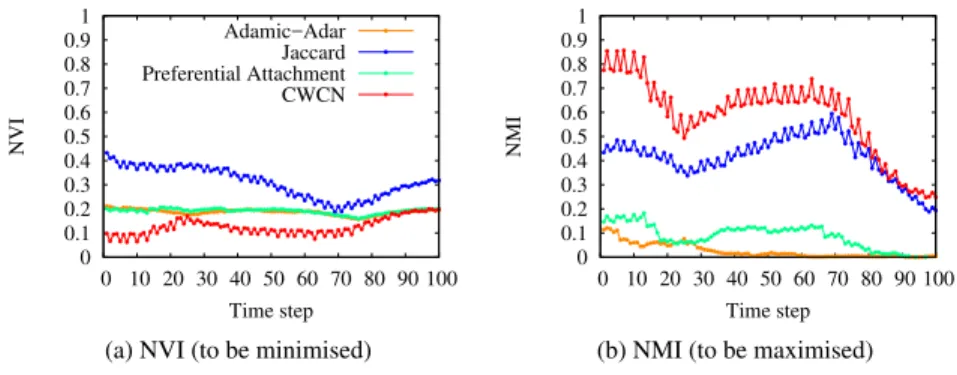
Fig. 1 Comparison for the grow-shrink pattern on 100 time steps
are totally dissimilar. A good community structure partition thus minimises the NVI and maximises the NMI. See the mathematical expressions in [12].
We choose not to use the proposed windowed variant [12] as it does not bring significant benefit and it is difficult to interpret. As a matter of fact it requires to carefully select the time window value, leading to significantly impact the relative performance of two methods if improperly done.
4.2 Preference Measure Comparison
The first experiment is performed in order to compare the effect of the different preference measures exposed in Section 3.3. We use here the classic planted bissec-tion model [7, 12]. In this model, the graph is divided into two communities and the algorithm has to correctly classify each vertex as belonging to one or the other.
The proposed algorithm is tested for each preference measure on two evolution patterns : grow-shrink and merge-split. For each pattern, 10 instances of a graph of 64 vertices are generated, with intra-community density of 0.5 and inter-community density of 0.05, for 100 time steps. These parameters are those used in [12]. The ground truth, shown on Fig. 2a and 4a, is thus made of 2 communities of 32 vertices each at t0.
Results for the Grow-Shrink pattern are presented on Figures 1 and 2 (the mea-sures not shown on Figure 4 produce only one community at each time step, there-fore the colormap is all black) are the mean of NVI and NMI runs over the 10 graphs, and a colormap visualisation where each pixel color represents the community as-signment of a vertex (id on the y axis) at a given time step (on the x axis). We can see that DynLOCNeSs with σCWCNglobally detects the grow-shrink bissection pattern,
except that a third community (orange) is identified. This community in fact re-places the black one at the beginning and the white one at the end: the method takes
0 10 20 30 40 50 60 0 20 40 60 80 100 Vertex ID Time step
(a) Ground truth
0 10 20 30 40 50 60 0 20 40 60 80 100 Vertex ID Time step (b) With σCWCN 0 10 20 30 40 50 60 0 20 40 60 80 100 Vertex ID Time step (c) With σJac
Fig. 2 (Colors online) Comparative visualisation of the community repartition between σJacand
σCWCN evaluated on the grow-shrink process.
0 0.1 0.2 0.3 0.4 0.5 0.6 0.7 0.8 0.9 1 0 10 20 30 40 50 60 70 80 90 100 NVI Time step Adamic−Adar Jaccard Preferential Attachment CWCN
(a) NVI (to be minimised)
0 0.1 0.2 0.3 0.4 0.5 0.6 0.7 0.8 0.9 1 0 10 20 30 40 50 60 70 80 90 100 NMI Time step
(b) NMI (to be maximised)
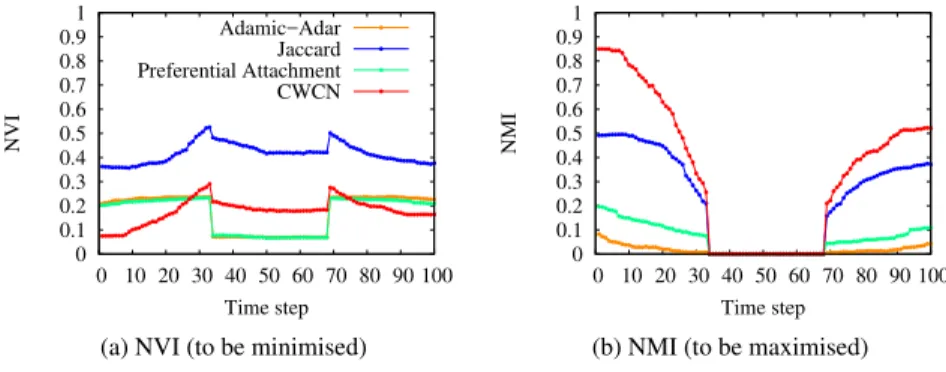
Fig. 3 Comparison for the merge-split pattern on 100 time steps
the grow-shrink evolution as a transfer between two communities via a third one, impacting NVI and NMI values. However, the clearly visible grow-shrink triangle shapes indicate that the evolution pattern has correctly been identified.
This is less obvious for the method with σJac. It detects 14 communities and
even if the triangle shape can be guessed there is a lot of noise and community misassignment.
The other two cases, σAAand σPA, are not pictured because they assign every
vertex to a single community, resulting in an entire black colormap.
The merge-split process is presented in Figures 3 (criteria) and 4 (visualisation). Again, the measures not shown on Figure 4 produce only one community at each time step, therefore the colormap is all black.
Merge-Split is less successfully detected. We notice that σCWCNfinds two
com-munities where σJac finds ten, but the abrupt merge is not correctly identified,
al-though the CWCN variant yields less noise than Jaccard one.
Let aside the merge, the CWCN variant nonetheless achieves better NMI and NVI than the other methods. The perfect NVI for σAAand σPAduring the merge
0 10 20 30 40 50 60 0 20 40 60 80 100 Vertex ID Time step
(a) Ground truth
0 10 20 30 40 50 60 0 20 40 60 80 100 Vertex ID Time step (b) With σCWCN 0 10 20 30 40 50 60 0 20 40 60 80 100 Vertex ID Time step (c) With σJac
Fig. 4 (Colors online) Comparative visualisation of the community repartition between σJacand
σCWCNevaluated on the merge-split process.
0 100 200 300 400 500 600 700 800 900 1000 400 800 1200 1600 2000 Duration (seconds)
Size of the graph DynLOCNeSs w/ CWCN
iLCD
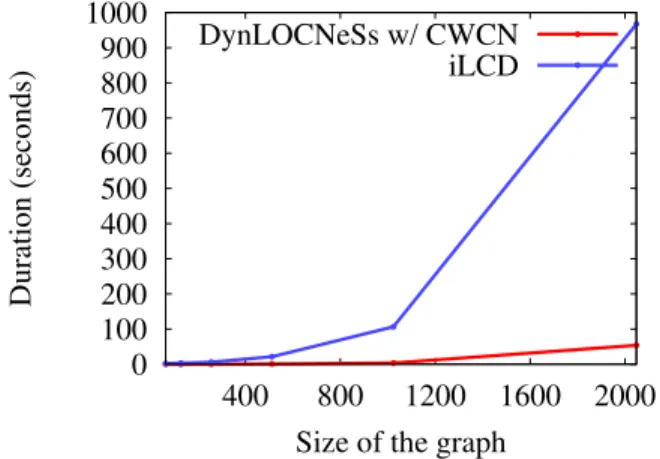
Fig. 5 Speed of execution as a function of the graph size
can be explained by the fact that both methods only detect one community at any time step. This is prejudiced when two communities exist, but it is correct during the merge. It is a side effect related to the chosen planted bissection, but inherently denotes a poor quality of detection for these two criteria.
Execution Time Because the input and output of dynamic community detection algorithms depend on the dynamicity model used, it is difficult to compare to them. For example, iLCD input is event-based (edge addition or deletion) and its output is a chronological sequence of community states. A state change can happen any time an edge is removed. The consequence is that, if launched on a time step sequence similar to those used to test the proposed algorithm, the community structure can vary several times during a same time step. Any heuristic to gather all the changes made during a time step would inevitably erase information and introduce a bias.
Another example, the multi-step adaptation of Louvain algorithm [1] takes a se-quence of time steps into account, but outputs a unique community structure at the
end of the process and it is not possible to track the evolution of this structure during the detection process.
A more neutral comparison axis is the execution time, presented below, chosen to illustrate the performance of the proposed method : six graphs, of 64, 128, 256, 512, 1024 and 2048 vertices respectively, were generated with the same density as in the previous experiments: 0.05 intra-community and 0.5 inter-community, over 10 time steps. For example, the 1024 had roughly 375,000 edges to process over the 10 time steps.
We measure the mean time, over 5 runs, taken by DynLOCNeSs and by iLCD to process each graph. The platform used is a Intel Core i7-2600K CPU @ 3.40GHz Workstation with 16GB RAM.
Results are presented on Figure 5. We can see that iLCD processing time is sky-rocketing before the method we propose, which is a significant advantage to process either large graphs or large number of time steps.
5 Conclusion and Future Works
We propose a new dynamic community detection method, named DynLOCNeSs that consists in a vertex-centred approach to re-compute only a small local frac-tion of vertex neighbourhood. The algorithm relies on a vertex neighbourhood pref-erence measure. We introduced a novel one, CWCN. Experiments on benchmark graphs show that CWCN yields better results than the other measures and that the overall method is well able to detect common patterns in community evolution such as grow-shrink and merge-split.
We are considering additionnal work on the community evolution patterns to better capture the dynamics and improve the quality of DynLOCNeSs pattern iden-tification. We are also working on experiments to assess the performance of the method on large graphs (up to millions of vertices).
References
1. Aynaud, T., Guillaume, J.L.: Static community detection algorithms for evolving networks. In: Proc. of the 8th Intl. WiOpt Symposium, pp. 513–519 (2010)
2. Barab´asi, A.L., Albert, R.: Emergence of Scaling in Random Networks. Science 286(5439), 509–512 (1999)
3. Bedi, P., Sharma, C.: Community detection in social networks. WIREs Data Mining Knowl. Discov. 6(3), 115–135 (2016)
4. Canu, M., Detyniecki, M., Lesot, M.J., Revault d’Allonnes, A.: Fast community structure local uncovering by independent vertex-centred process. In: Proc. of the 2015 IEEE/ACM Intl. Conf. on Advances in Social Networks Analysis and Mining, pp. 823–830. ACM (2015) 5. Cazabet, R., Amblard, F.: Simulate to Detect: A Multi-agent System for Community Detec-tion. In: Proc. of the 2011 IEEE/WIC/ACM Web Intelligence and Intelligent Agent Technol-ogy, vol. 2, pp. 402–408 (2011)
6. Chakrabarti, D., Kumar, R., Tomkins, A.: Evolutionary Clustering. In: Proc. of the 12th ACM SIGKDD Intl. Conf. on Knowl. Discov. and Data Mining, KDD ’06, pp. 554–560. (2006) 7. Clementi, A., Di Ianni, M., Gambosi, G., Natale, E., Silvestri, R.: Distributed community
detection in dynamic graphs. Theoretical Computer Science (2014)
8. Cohen, S., Kimelfeld, B., Koutrika, G.: A Survey on Proximity Measures for Social Networks. In: Search Computing, LNCS 7538, 191–206. Springer Berlin Heidelberg (2012)
9. Fortunato, S.: Community detection in graphs. Phys. Rep. pp. 75–174 (2009)
10. Fortunato, S., Barth´elemy, M.: Resolution limit in community detection. Proc. of the Natl. Acad. of Sci. 104(1), 36–41 (2007)
11. Gao, W., Luo, W., Bu, C.: Evolutionary community discovery in dynamic networks based on leader nodes. In: 2016 Intl. Conf. on Big Data and Smart Computing, pp. 53–60 (2016) 12. Granell, C., Darst, R.K., Arenas, A., Fortunato, S., G´omez, S.: Benchmark model to assess
community structure in evolving networks. Phys. Rev. E 92(1), 012,805 (2015)
13. Gregory, S.: Finding overlapping communities in networks by label propagation. New Journal of Physics 12, 1–26. IOP (2010) Other identifier: 2001289
14. Hmimida, M., Kanawati, R.: Community detection in multiplex networks: A seed-centric ap-proach. Networks and Heterogeneous Media 10(1), 71–85. AIMS (2015)
15. Hui, P., Yoneki, E., Chan, S.Y., Crowcroft, J.: Distributed Community Detection in Delay Tol-erant Networks. In: Proc. of the 2007 ACM/IEEE Intl. Workshop on Mobility in the Evolving Internet Architecture, MobiArch ’07, p. 7. (2007)
16. Kanawati, R.: YASCA: an ensemble-based approach for community detection in complex networks. In: Computing and Combinatorics, pp. 657–666. Springer (2014)
17. van Laarhoven, T., Marchiori, E.: Local community detection by seed expansion: from con-ductance to weighted kernel 1-mean optimization. (submitted) (2016). ArXiv: 1601.05775 18. Leung, I.X.Y., Hui, P., Li`o, P., Crowcroft, J.: Towards real-time community detection in large
networks. Phys. Rev. E 79(6), 066,107 (2009)
19. Lin, Y.R., Chi, Y., Zhu, S., Sundaram, H., Tseng, B.L.: Facetnet: a framework for analyzing communities and their evolutions in dynamic networks. In: Proc. of the 17th Intl. Conf. on World Wide Web, pp. 685–694. (2008)
20. McCune, R.R., Weninger, T., Madey, G.: Thinking Like a Vertex: A Survey of Vertex-Centric Frameworks for Large-Scale Distributed Graph Processing. ACM Comput. Surv. 48(2), 25:1– 25:39 (2015)
21. Orlinski, M., Filer, N.: The rise and fall of spatio-temporal clusters in mobile ad hoc networks. Ad Hoc Networks 11(5), 1641–1654 (2013)
22. Pan, G., Zhang, W., Wu, Z., Li, S.: Online Community Detection for Large Complex Net-works. PLoS ONE 9(7), e102,799 (2014)
23. Rabbany, R., Chen, J., Zaane, O.R.: Top leaders community detection approach in information networks. In: Proc. of the KDD’10 Workshop on Social Network mining and Analysis. (2010) 24. Raghavan, U.N., Albert, R., Kumara, S.: Near linear time algorithm to detect community
struc-tures in large-scale networks. Phys. Rev. E 76(3), 036,106 (2007)
25. Rezaei, A., Far, S.M., Soleymani, M.: Near Linear-Time Community Detection in Networks with Hardly Detectable Community Structure. In: Proc. of the 2015 IEEE/ACM Intl. Conf. on Advances in Social Networks Analysis and Mining, pp. 65–72. ACM (2015)
26. Riedy, J., Bader, D.A., Jiang, K., Pande, P., Sharma, R.: Detecting communities from given seeds in social networks. Technical Report, Georgia Institute of Technology, Georgia Institute of Technology (2011)
27. Xie, J., Kelley, S., Szymanski, B.K.: Overlapping Community Detection in Networks: The State-of-the-art and Comparative Study. ACM Comput. Surv. 45(4), 43 (2013)
28. Yakoubi, Z., Kanawati, R.: LICOD: A Leader-driven algorithm for community detection in complex networks. Vietnam J. Comput. Sci. 1(4), 241–256 (2014)
29. Zakrzewska, A., Bader, D.A.: A Dynamic Algorithm for Local Community Detection in Graphs. In: Proc. of the 2015 IEEE/ACM Intl. Conf. on Advances in Social Networks Analysis and Mining, pp. 559–564. ACM (2015)