Applying Lean Enterprise Principles to Optimize Delivery of Customer Service
ByHannah Elizabeth McClellan
B.S. in Systems Engineering, University of Virginia, 2001
Submitted to the MIT Sloan School of Management and the Engineering Systems Division in Partial Fulfillment of the Requirements for the Degrees of
Master of Business Administration AND
Master of Science in Engineering Systems
In conjunction with the Leaders for Manufacturing Program at the
MASSACHUTU-TS INS1TITUTE OF TECHNOLOGY
JUN 2 5 2008
LIBRARIES
Massachusetts Institute of Technology June 2008
© 2008 Massachusetts Institute of Technology. All rights reserved
Signature of Author
Department of Engineering Systems Division & MIT Sloan School of Management
" - May 9, 2008
Certified by
Professor of Aeronautics
Debo*l J. Nightirgale, TlIsis Supervisor & Astronautics and Engineering Systems Division
Certified by .
Stephen Graves, Thesis Supervisor Abraham Siegel Professor of Management, MIT Sloan School of Management Accepted by
Richard Larson, Professor of Engineering Systems Division Chair, Engineering Systems Division Education Committee
1^ n A,
Accepted by .
Debbie Berechman Executive Director of MBA Program, MIT Sloan School of Management
Applying Lean Enterprise Principles to Optimize Delivery of Customer Service
ByHannah Elizabeth McClellan
Submitted to the MIT Sloan School of Management and the
Engineering Systems Division on May 9, 2008 in Partial Fulfillment of the Requirements for the Degrees of Master of Business Administration and
Master of Science in Engineering Systems
ABSTRACT
Many companies have realized significant value through the application of lean principles to manufacturing and supply chain operations. Dell Inc. in particular garnered international fame for its ability to manufacture and deliver computers using a lean, direct-to-customer approach that provided a tremendous competitive advantage. The Author suggests that these same lean principles can be applied to improve a firm's service and support operations, while
acknowledging some important nuances of applying lean in a customer service environment. The Author calls to light a key differentiator between lean manufacturing and lean customer service. Specifically, while customers use relatively consistent value systems to assess
manufacturing operations, different customer segments typically value customer service in very different ways. Thus, lean customer service must begin by thoroughly characterizing the value expectations and contributions of each customer segment. After characterizing these value systems, a firm must design a support channel architecture aligned with the value exchange system of the entire customer population. After designing a lean channel architecture, lean principles may be tactically applied to optimize performance within individual channels. This research project focused on improving customer service operations at Dell by using lean principles to: 1. Establish a data-driven, strategic architecture for Dell's consumer support division and 2. Identify operational improvement opportunities to drive the tactical execution of that strategy. The project began with a benchmarking study of customer service strategies at companies such as Best Buy, Apple, Fed-Ex, Amazon.com, GM, and Comcast. The Author then proposes a "Lean Support Channel Architecture" using on-line and retail service channels to offload demand from the call centers, effectively eliminating waste from call centers. Finally, the Author examines how lean principles can be tactically applied to a retail service channel to enable the cost-effective delivery of retail support in line with the support channel architecture proposed.
Thesis Supervisor: Deborah Nightingale
Title: Professor of Aeronautics & Astronautics and Engineering Systems Division Thesis Supervisor: Stephen Graves
Acknowledgments
Dad. You always told me that hard work pays off. And as I stand on the brink of graduating from MIT, the sense that all my hard work has paid off truly is a wonderfully rewarding feeling. I cannot thank you enough for all the sacrifices you made to give me the opportunities that led to this milestone. Thank you for always loving me, encouraging, me, and believing in me.
Mom. You are my best friend. Your love and support is always with me, and that has done more to get me where I am than you will ever know. You are my first phone call, my last prayer,
and my hero.
Christopher. Were it not for your open mind and gentle guidance, I would never have given myself the chance to discover the experience of a lifetime that is LFM. Thank you for seeing
what I could not.
Kirsten Pine. I knew I liked you the moment I met you on my first day at Dell. You made Austin a home for me, and the memories I have of the time I spent with you bring a bright smile to my face. Thank you for becoming such a wonderful friend in such a short period of time. Tom Wala. You were an outstanding manager, mentor, and friend. You made my six months at Dell a priceless learning experience. You also made it a lot of fun, and for that I am equally grateful. I only hope that one day I can return the favor.
Dick Hunter, Jennifer Felch, and Steve Cook. Thank you for your time, your wise advice, and your generous commitment to the LFM program. I admire your accomplishments and hope to
give back to future LFM students in the same spirit you gave to me.
Stephen Graves and Deborah Nightingale. Thank you for your insight, contributions, and support. I feel blessed to have studied under professors of your caliber and to have worked with you to develop this thesis.
LFM Class of 2008. I am humbled to be one of your classmates. You are quite possibly the most remarkable group of people I have ever been part of. You have encouraged and supported me more than you know through your integrity, talent, and generosity. You are also incredibly funny, and I treasure every laugh we have shared these past two years. I want to be more like you.
Don Rosenfield, Jan Klein, and the LFM Staff. You make this program and these years very difficult to let go of. If I could do it all again, I would, not in an attempt to do it differently, or better, but simply to enjoy it all over again. I am so lucky to have something that makes saying goodbye so hard.
Table of Contents
Acknowledgments ... 5 Table of Contents ... 7 Table of Figures ... 9 Table of Tables... 11 1. INTRODUCTION ... 13 1.1. Project B ackground ... 131.2. Statem ent of Problem ... .. 14
1.3. T hesis O verview ... 15
2. DELL AND THE CONSUMER SERVICES DIVISION... ... 17
2.1. D ell Inc... ... ... 17
2.2. D ell Consum er Services... 17
2.3. R ecent C hallenges... 18
3. BENCIMARKING INITIATIVE ... 21
3.1. Rationale, Selection Criteria, and Population Overview ... ... 21
3.2. Benchmarking Research Methodologies ... ... 22
3.3. Sum m ary of Findings... 23
4. DELL CUSTOMER PROFILES AND PREFERENCES... ... 25
4.1. Dell Consumer Services Customer Profiles... ... 25
4.2. Dell Consumer Services Responsibilities ... 26
4.3. Dell Consumer Services Customer Preferences ... ... 28
5. OVERVIEW OF LEAN OPERATIONS ... 35
5.1. Lean Fundam entals ... 35
5.2. Expected Benefits of Lean Operations ... 37
5.3. Tactical and Strategic Aspects of Lean... 39
6. STRATEGIC APPLICATION OF LEAN IN A SERVICE ENVIRONMENT... 41
6.1. Defining & Delivering Value in Dell Consumer Services... 41
6.2. Interpreting Results of Value Delivery Gap Analysis ... . 45
6.3. Strategic Recommendations for Dell Consumer Services ... . 48
7. TACTICAL APPLICATION OF LEAN TO RETAIL SERVICE CHANNEL ... 51
7.1. Favorable Climate for the Retail Service Channel ... ... 51
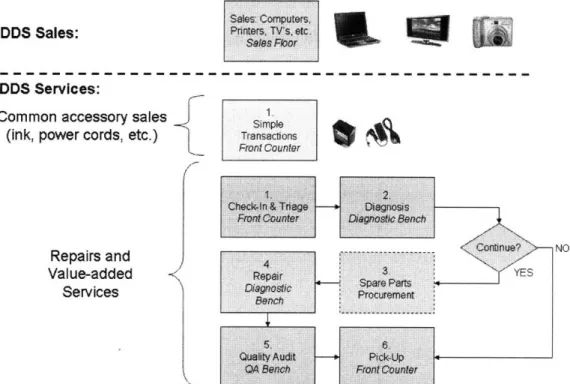
7.2. Overview of the Dell Direct Store's Retail Service Center ... 52
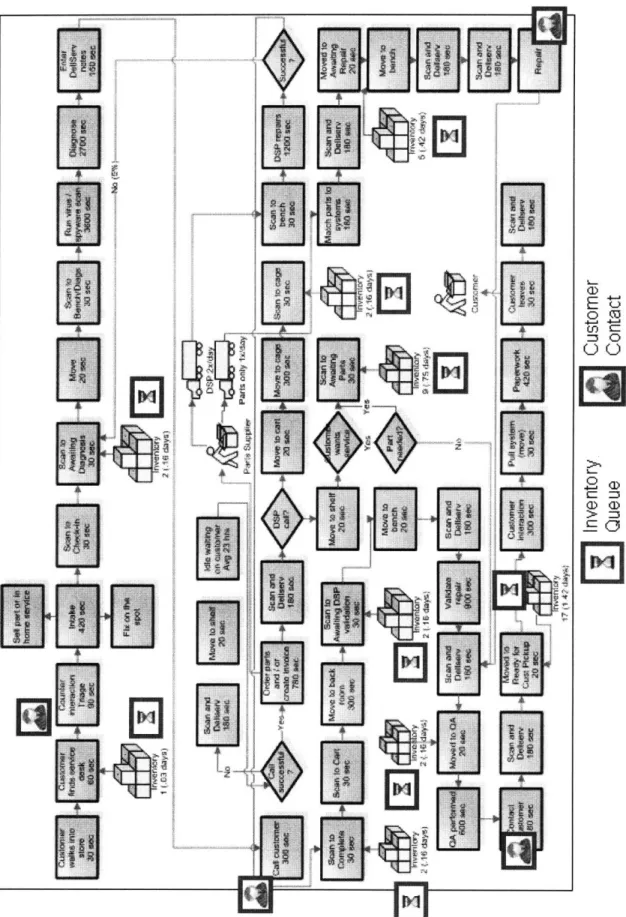
7.3. Value Stream Mapping the Retail Service Channel ... ... 53
7.4. Eliminating Waste in the Retail Service Channel ... 56
7.6. Sum m ary Rem arks... 64
8. CONCLUSION ... 67
8.1. K ey Project Learnings... ... 67
8.2. Recom m endations ... 68
8.3. Closing Rem arks ... 71
Table of Figures
Figure 1: American Customer Satisfaction Index Scores for Personal Computers ... 14
Figure 2: Channel Preferences M atrix ... ... 30
Figure 3: Channel Offerings M atrix ... ... 33
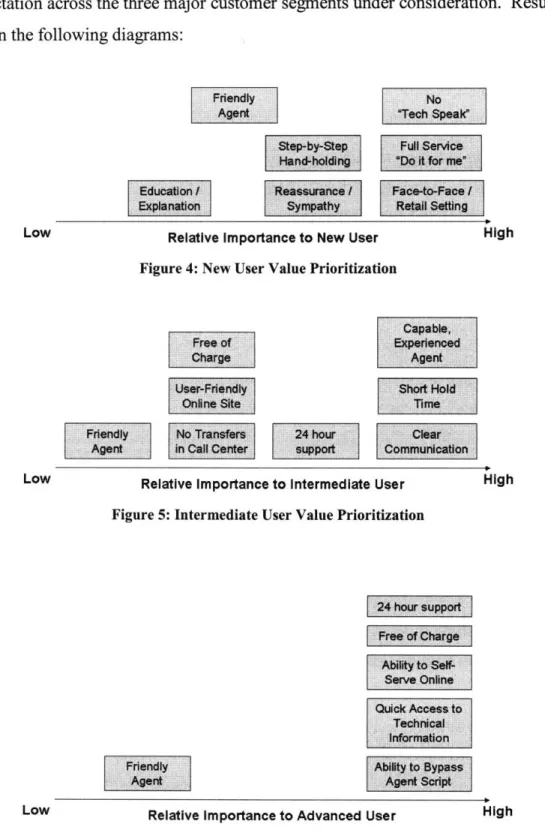
Figure 4: New User Value Prioritization ... 43
Figure 5: Intermediate User Value Prioritization... 43
Figure 6: Advanced User Value Prioritization... 43
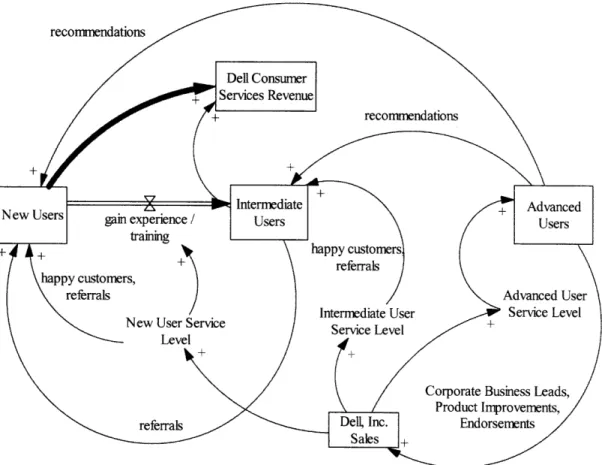
Figure 7: Dell Consumer Value Exchange System Dynamics ... 46
Figure 8: High-Level View of Ideal Dell Direct Store Retail Operations ... 52
Figure 9: Value Stream Map of Initial Design for Dell Direct Store Service Center Operations, M ay 2007 ... 54
Figure 10: Original Retail Service Center Staffing Model ... ... 56
Figure 11: Optimized Retail Service Center Staffing Model... ... 57
Figure 12: Weekly Average Turn-Around Time for Retail System Repairs ... 63
Figure 13: Weekly Retail Service Revenue Streams ... ... 63
Table of Tables
Table 1: Benchmarking Study Population ... 22
Table 2: Service Channel Comparison: Appeal and Cost... ... 32
Table 3: New / Beginner User Value Exchange ... ... 42
Table 4: Intermediate User Value Exchange ... ... ... 42
1.
INTRODUCTION
1.1.
Project Background
The motivation for this research project stems from the broad strokes of criticism recently directed towards Dell customer service offerings, most notably in 2006. This dissatisfaction among Dell customers was a consequence of several cost-reduction actions taken by the firm in
2006, which included':
* Stricter adherence to warranty boundaries * Reducing warranty periods
* Off-shoring and outsourcing call center operations
These actions, among others, caused customer service ratings, as measured by customer
feedback surveys, to decline significantly from 2006 to 2007, thereby eroding Dell's image and reputation among consumers. The troubling result was illustrated on multiple fronts, including: * Falling in the American Customer Satisfaction Index rankings2 (Figure 1 below)
* Criticism of Dell's customer service on public blogs
* A decrease in performance across Dell's internal customer experience metrics
1 "Interview: Dick Hunter, VP Customer Experience at Dell". Service Untitled. 15 May 2007. <serviceuntitled.com>
2 "2007 Scores by Industry: Personal Computers". American Customer Satisfaction Index. 15 Feb. 2008.
<http://www.theacsi.org/index.php?option=comcontent&task-view&id= 149&Itemid= 157&c=Dell+Inc.&i=Person al+Computers>
American Customer Satisfaction Index
Figure 1: American Customer Satisfaction Index Scores for Personal Computers
At the same time customer service ratings were declining, competitors were getting closer and closer to matching Dell's industry-leading low prices. This unsettling business climate quickly got the attention of senior leadership at Dell who immediately called for a company-wide effort to "turn the customer experience around", placing a particularly strong emphasis on service and support operations. Initial improvement efforts were primarily focused on the call centers, as the majority of customer complaints stemmed from frustrating experiences with call center support. Early initiatives involved hiring additional agents with more advanced training and better communication skills. This proved to be a good short term solution with some initial benefits. Although customer service ratings leveled off after about nine months, Dell was confident it could do even better.
1.2. Statement of
Problem
When it became clear that these incremental improvements were not sufficient to meet customer expectations, Dell began searching for other innovative options to boost service and support performance. It is no secret that Dell's manufacturing success was built upon a foundation of lean operations. Thus, in an effort to extend best practices across the entire value chain, the question Dell posed for this research project was: How can lean principles be applied to
improve the delivery of customer service?
85 0 75. 70. 65 -- Apple Inc. -A- HP -*- Dell Inc. Year
1.3. Thesis Overview
This thesis provides a response to the problem stated above based on a six-month research project conducted at Dell's global headquarters in Round Rock, TX. Following is an overview
of the paper's organization outlining the main topics addressed in each chapter.
Chapter 1: This chapter provides the historical context for the project, setting the stage for the discussions that follow. The project's rationale and objectives are presented, including a formal statement of the problem to be solved.
Chapter 2: This chapter provides a detailed overview of Dell, Inc. and the Dell Consumer Services division that sponsored this project. It concludes with a discussion of the recent challenges facing Dell Consumer Services that ultimately led to this research project. Chapter 3: This chapter is dedicated to the benchmarking initiative conducted as part of the project research. A detailed review of the benchmarking methodology is presented, including which companies were studied, why they were selected, and how data was collected. The chapter concludes with a summary of the benchmarking data and key lessons learned.
Chapter 4: This chapter first outlines the main customers and responsibilities of Dell Consumer Services. We present a discussion of the various research approaches used to investigate the preferences and values of key customer segments. Finally, the Author synthesizes the customer preferences research findings into an original matrix framework and explains an important
implication of the results relative to Dell Consumer Services.
Chapter 5: This chapter presents a basic introduction to the theory and principles of lean. Fundamental tenets of lean are presented, followed by a discussion of the major benefits lean companies enjoy. The Author briefly explores how common advantages enjoyed by lean manufacturers could translate into a services environment.
Chapter 6: This chapter explores the strategic application of lean to the Dell Consumer Services environment. Customer value exchange systems are explored, followed by an assessment of the relative priority of customer value expectations. The Author presents strategic recommendations
for Dell Consumer Services' support channel architecture based on lean value delivery.
Chapter 7: This chapter explores the tactical application of lean enterprise principles to the retail service channel using Dell's pilot retail store and service center as a case study. As part of the
case study, the Author documents a value stream map, identifies improvement opportunities, and proposes lean process changes. Performance improvement highlights are discussed.
Chapter 8: This chapter summarizes the key lessons learned from this project, and proposes a set of recommendations for addressing the most significant opportunities for improvement.
2. DELL AND THE CONSUMER SERVICES DIVISION
2.1.
Dell
Inc.
Founded in 1984, Dell, Inc. has grown into a Fortune 500 company and one of the most recognized brands in the world3. Dell sells a comprehensive array of products and services including laptops, servers, IT services, and third party flat screen televisions. Perhaps Dell's most distinctive feature is its "Direct Business Model", wherein it sells fully customized products directly to customers. This strategy revolutionized the PC business by enabling customers to order customized computer systems directly from the manufacturer at a price point well below competitor offerings. In 2007, Dell generated annual revenues of $60 billion and sold more than 39 million computer systems4. Dell's primary competitors include Hewlett Packard, Apple,
Lenovo (formerly IBM), and Sony.
2.2. Dell Consumer Services
Dell segments customers into two primary business groups: Consumer and Business. The Consumer division caters to customers purchasing products and services primarily for home and personal use, while the Business division includes all business, government, and education accounts. Within the Consumer division sits the Dell Consumer Services functional group. This group is responsible for the delivery of all service and support to consumer customers, including order management, technical support, and general customer care. Historically, Dell Consumer Services supported customers primarily through call centers located both domestically and internationally. Support was also available through the internet via Dell's support website (support.dell.com), but until very recently, the site has been positioned as more of a knowledge base than an interactive tool to guide customers in resolving issues.
Dell Consumer Services uses customer feedback surveys to monitor its performance, collecting a variety of information from customers following their support experiences. Though the surveys
3 "The Harris Poll, #71". HarrisInteractive. 17 July 2007. <www.harrisinteractive.com> 4 Dell, Michael. "Fiscal 2007 in Review". About Dell: Financials.
include numerous questions that measure multiple aspects of the customer's experience, Dell Consumer Services has increasingly focused on two principle axes: customer satisfaction and issue resolution. The customer satisfaction, or "CSAT" metric measures how satisfied customers were with their call center experience, while the "issue resolution" metric measures whether or not the agent resolved the customer's issue adequately. Both metrics capture critical insight
about the performance of the agents and the call center operations in general. Taken together, they provide a good indication of Dell Consumer Services' performance at a high level.
2.3.
Recent Challenges
Ironically, one can derive a great deal of insight into the challenges facing Dell Consumer Services simply by examining the name of the group itself. As a "services" organization, the group is tasked with solving a broad range of open-ended issues, many involving technical troubleshooting. Moreover, the group is tasked with serving "consumers", which means many of
its customers have very limited knowledge of or experience with computers. Finally, the brand "Dell" immediately signals the absence of any face-to-face interaction with customers, which adds a final degree of complexity to an already difficult mission of servicing consumer customers. Effectively, Customers expect Dell to provide an experience similar to a retail channel via its phone support channel.
In 2006, initial efforts to strengthen Consumer Services performance in Dell's call centers aimed to improve both the CSAT and Issue Resolution Rate metrics outlined in the previous section. After hiring additional call center agents with stronger technical and communication skills, Dell saw a marked improvement in performance scores measured through customer feedback surveys. In May 2007, former VP of Customer Experience Dick Hunter described the situation as follows: "Over the last six months, our numbers have been going up. They went down very significantly until September of last year. At that point, we started turning things around. We're reaching levels that are similar to where we were 3 years ago"'
5 "Interview: Dick Hunter, VP Customer Experience at Dell". Service Untitled. 15 May 2007.
As competitors continued to erode Dell's historic price advantage, customer service became a factor of increasing importance in purchasing decisions. Thus, Dell's executive leadership team was anxious to improve the company's public image with respect to customer service. The
Consumer Services Division launched a myriad of projects and initiatives in 2007 to jumpstart performance in call centers and on-line chat sessions. For example, agents were offered
additional training in English language skills, customer management tactics, and Microsoft software. Call centers experimented with new routing systems and upgraded agent desktop tools. Dell Consumer Services also worked with the product development division to expand the array of automatic repair tools preinstalled on new Dell systems. Additionally, Dell Consumer Services leadership began to contemplate how lean manufacturing theory might apply in this environment, which provided the genesis of this thesis research project6. The author used a benchmarking study, on-site research, and lean theory to triangulate towards a set of
recommendations for Dell Consumer Services. The next three chapters present a detailed discussion of each respective tactic.
6 Lee, Louise. "Dell: Facing Up to Past Mistakes". Businessweek 19 June, 2006. <http://www.businessweek.com/magazine/content/06_25/b3989045.htm>
3. BENCHMARKING INITIATIVE
3.1.
Rationale, Selection Criteria, and Population Overview
As a first step, the Author elected to study the service and support operations of other
organizations in an effort to ascertain best practices. The goal of this exercise was to understand the strategic design and tactical operations of successful customer service organizations.
Delivering customer support is a common business activity that certainly transcends corporate and industry boundaries. Thus, direct competitors as well as tangential businesses were
considered when selecting a study population for the benchmarking initiative. The Author was chiefly interested in companies for whom post-transaction service and support plays a significant role in delivering an excellent customer experience. This selection criterion invites a variety of businesses, from those providing products with subsequent service requirements, to companies in
the services industry for whom every customer interaction is essentially a service provision. It is important to note that the Author was not only interested in the call center management practices of other companies, but also, if not more so, in the fundamental strategies of leading customer service providers, regardless of their industry or service channel offerings. Access to key
representatives within a company served as a secondary selection criterion. In an effort to obtain the most accurate, candid, and comprehensive information possible, the Author gave priority to
companies wherein access to internal resources was available.
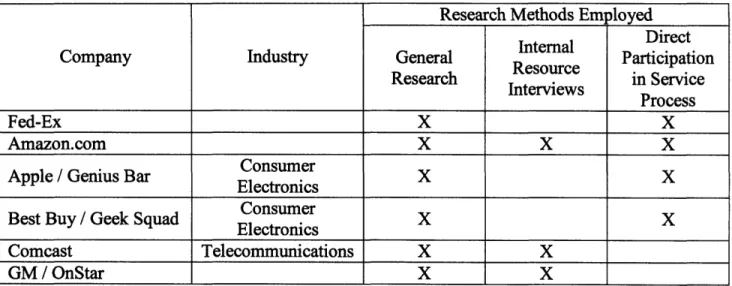
The final benchmarking population consisted of six companies spanning a broad range of industries and products. Each company was chosen based on the strong reputation of its
customer service, as well as the Author's access to internal resources. The following table outlines the study population, including the methods employed to access company data and interact with internal resources where possible.
Research Methods Employed Direct Internal
Company Industry General Resource Participation
Research in Service Interviews Process Fed-Ex X X Amazon.com X X X Consumer
Apple / Genius Bar Electronics X X
Consumer
Best Buy / Geek Squad E
Electronics
onics X XComcast Telecommunications X X
GM / OnStar X X
Table 1: Benchmarking Study Population
3.2. Benchmarking Research Methodologies
As shown in Table 1 above, the Author used a variety of methods to gather information about the service operations of companies in the study population. General research of public sources was conducted to obtain a baseline idea of the customer support services offered by each company. To supplement this baseline research, the Author also conducted active tests of the customer support systems and processes at several companies. Finally, personal interviews were
conducted at companies where a direct point of contact was accessible and willing to engage in such discussions.
Specifically, Apple's Genius Bar and Best Buy's Geek Squad were both tested first-hand by submitting a laptop for repair and documenting the customer service experience throughout the service cycle. Similarly, the Author mailed a package via Fed-Ex and purchased a backpack from Amazon.com in order to actively test the package tracking and order management services offered by each company. Perhaps the most valuable source of benchmarking data came from personal interviews conducted with current or former employees of several companies. A former call center manager from Comcast agreed to a personal interview, which provided valuable insight into both the strategic and tactical operations of Comcast customer support to cable,
telephone, and internet subscribers7. Additionally, by leveraging MIT's Leaders for
Manufacturing network, the Author formed a benchmarking alliance group with representatives from Amazon.com, GM OnStar, and MIT faculty to collaborate on common challenges and share best practices in customer support operations8. The group met weekly via teleconference and engaged in candid discussion of topics including channel distribution (online, call center, etc.), performance metrics, employee management, and current challenges.
3.3. Summary of
Findings
The benchmarking initiative provided valuable insight into the strategies and practices of leading customer support providers. While the exercise yielded a number of interesting observations, several lessons in particular stood out relative to Dell Consumer Services operations.
First, companies in the study population employ a greater variety of channels to deliver service and support to customers, relative to Dell. In addition to call centers and support web sites, these companies took more advantage of retail stores, cellular phone text messaging, and dispatching service directly to the customer's home as appropriate.
Second, companies in the study population distributed service delivery more evenly across the available support channels. While Dell shouldered the majority of customers' service requests though call centers, Amazon, Fed-Ex, and others shift a greater proportion of service delivery to their alternate channel offerings.
Third, Apple and Best Buy have successfully established retail and in-home customer support functions and positioned them as standalone, branded services. Customers view Best Buy's Geek Squad and Apple's Genius Bar as independent, value-adding services. These companies use distinctive uniforms, creative storefronts, and other marketing tactics to build a unique service experience that differentiates their service offerings from that of the competition.
7 Rowello, Rob. Personal Interview. 9 April 2007.
8 Membership Included: D. Hunter & T. Wala (Dell), T. Weiland & K. Carter (Amazon.com), M. Peterson (GM
Finally, assimilating these observations yields the principal best practice discovered through the benchmarking study:
Leading service providers predetermine the best channel for delivering specific types of support to specific customer segments, and use that information to proactively direct customers to the most effective channel for resolving a particular issue. For example, at Fed-Ex and Amazon.com, the majority of customer support requests involve
feeding customers basic information (e.g. shipping status, estimated delivery dates, address details, etc.) as opposed to solving complex technical problems. As a result, these companies deliver the majority of customer support through their respective websites. After all, the internet is far and away the fastest, cheapest, and most convenient channel for delivering that kind of
support. Both companies also use proactive e-mail and text messaging to notify customers of delays, changes, and general status updates. This strategy "pushes" valuable information to customers at a very low cost to prevent customers from "pulling" information at a much higher cost by contacting call centers.
At the other end of the spectrum, customers at Apple and Best Buy need help resolving issues of much greater technical complexity. Thus, Apple and Best Buy (via the Genius Bar and Geek
Squad services respectively) give customers the option of walking into a store, placing a laptop down on the counter, and talking to an agent about how to fix the problem. Acknowledging that it is very difficult to deliver technical support over the phone or internet to certain customer segments, these companies have chosen to offer customers a retail support channel as well. In the case of Geek Squad, agents will even visit a customer's home. Even though Apple and Best Buy charge a premium for these service channels, it is clear that many of their customers prefer, appreciate, and are willing to pay for this option.
The key lesson learned through this benchmarking exercise is that no single support channel serves as a silver bullet for providing customer service. Best-in-class companies deliver top tier customer service by determining what their customers value in a service experience, and then designing the appropriate service channel architecture to deliver that value.
4. DELL CUSTOMER PROFILES AND PREFERENCES
The benchmarking study illustrated that no single support channel is universally optimal for delivering customer service to all customers across all issues. Web-based support is certainly ideal for Amazon.com, while call center and retail store channels are essential for Best Buy. Thus, the best channel for delivering customer support is actually a function of two factors: 1. The customer profile
2. The issue at hand
That is to say, for any given customer and issue pair, there will be an ideal service channel to resolve the issue. In order to guide Dell Consumer Services in architecting the optimal support channel structure, the Author first developed a better understanding of Dell Consumer's
customer profiles and preferences.
4.1.
Dell Consumer Services
Customer
Profiles
Dell offers a wide variety of product lines appealing to an equally wide variety of customers. So who are Dell Consumer's customers? According to resources within Dell Consumer Marketing, Consumer customers include everyone from brand new users who have never touched a
computer keyboard before, to high school and college students with a sound familiarity of computers and software applications, to experienced computer gamers and programmers seeking the absolute best in performance and innovation.
New and inexperienced users have very little knowledge about computers. Thus, their ability to describe a technical problem is extremely limited. Similarly, their ability to follow an agent's directions towards resolving a technical problem is very limited as well. Common vocabulary words such as "double click", "window", or even "monitor" may be unfamiliar to these
customers. On the other hand, advanced users such as programmers, avid computer gamers, and IT professionals also fall under the "consumer" umbrella. These customers typically have a thorough technical understanding of their systems. With advanced training and extensive experience, many may even be more technically savvy than customer service agents employed by Dell or its competitors. This diverse customer base poses an interesting challenge to Dell
Consumer Services as it attempts to meet the service and support needs of such radically different customer segments.
4.2.
Dell Consumer Services Responsibilities
Dell Consumer Services is responsible for supporting customers following the initial order placement and continuing throughout the remainder of the customer experience. As a result, the Consumer Services organization fields a wide variety of customer requests. Generally speaking, Dell Consumer Services provides three types of customer support: order management, technical support, and value-added services.
Order management requests (also called customer care internally), almost always occur before the customer receives the order, and are very similar to the services provided at Amazon.com
and Fed-Ex. Resolving these issues is typically a matter of retrieving information from a database or other informational system, and relaying that information back to the customer.
Generally, resolving order management service requests does not involve "solving a problem" per-se, but rather "relaying information. Thus, the ability of agents to quickly access Customer information is critical to driving a good Customer experience. Typical examples of order management requests from Dell Consumer customers include:
* "When will I receive my laptop?"
* "Can I change the shipping address for my order?" * "I want to add a carrying case to my order."
Technical support service requests are generally the most challenging issues to resolve. Agents must work with the customer to understand the issue, diagnose the root cause of the issue, determine a solution, and execute the solution. Depending on the customer's computer literacy and emotional state, this process can be relatively simple or incredibly complex. Unlike most order management issues, technical support issues present a problem that must be solved. This ads a layer of complexity, and often technicality, that makes resolving technical support issues significantly more difficult than answering order management requests. Technical support issues may be caused by a corrupt software application, a faulty hardware component, user error, or any combination of the above. Resolving technical support issues may involve coaching a customer through the appropriate resolution steps, dispatching a new part to the customer, dispatching a
service technician to the customer's home, or even replacing the customer's entire system. Resolving technical support issues is very expensive, as it may take a lengthy telephone
conversation with a call center agent, to accurately diagnose and fix the issue. Dispatching spare parts, replacement systems and service technicians further increases the cost of providing
technical support. Additionally, most of the systems are still under warranty, so Dell does not collect revenues for the services provided. It is also important to note that technical support issues are sometimes accompanied by emotional customers who may feel frustrated,
disappointed, scared, angry, or all of the above, about the technical issues that they are
experiencing. The fear of losing data or the inconvenience of being without a computer creates an emotionally charged customer and often further complicates the resolution process. Typical examples of technical support requests from Dell Consumer customers include:
* "Every time I open my internet browser, my system crashes." * "My laptop is plugged in, but it is still running off the battery." * "My computer will turn on, but all I see is a blue screen."
A final category of support provided by Dell Consumer Services is commonly referred to as "value-added services". This is a offering for Dell Consumer Services, available primarily in conjunction with the Dell On Call9 premium service package. Customers may elect to purchase
the Dell on Call service package at the point of sale. Alternatively, the Dell on Call service package comes standard with the purchase of any system from Dell's top of the line XPS product
line. Value-added service offerings represent Dell's goal to become a customer's trusted advisor for any and all computing related products and activities. For example, Dell on Call agents can meet with customers in their home to install new systems, set up home networks, back-up data, provided one-on-one training, and much more. These services are termed "value-added" for two reasons. First, in addition to ensuring customers are satisfied with their current Dell products, Dell on Call agents add value by helping customers expand their use of technology and discover new ways to benefit from other Dell products and services. Second, unlike standard warranty services, these offerings are not complimentary. Thus, they add value directly to Dell's bottom line by generating revenue that helps to off-set the high cost of providing warranty services that
9 Dell on Call Product Offering Summary.
meet the needs and expectations of Dell Consumer customers. Dell on Call is designed to increase Dell's share of the added services market. Recent studies suggest that the
value-added services market in the United States is a multi-billion dollar space, of which Dell currently owns a relatively small share, compared to the hardware market. Dominant players include Geek Squad and Fire Dog, with the balance comprised of local computer repair and advisory
companies.
4.3. Dell Consumer Services
Customer
Preferences
In order to improve the performance of Dell Consumer Services, it is critical to thoroughly understand the preferences of the organization's end users - the customers. This is no easy task
with such a wide variety of customers and services. The Author took several approaches to gain a sense of what customers value in a services organization, and compared that to the current operations of Dell Consumer Services. As described in Chapter Three, the benchmarking initiative provided valuable insight into customer behavior at other organizations. This allowed the Author to observe how customers respond to various service offerings and strategies, specifically online self-service interfaces and fee-based retail store support. The Author also observed calls firsthand at Dell's call centers to gain insight into the voice of Dell's customers. Direct customer input and feedback were obtained through Dell's "Idea Storm", a public web forum where customers have the ability to submit ideas for new features, products and services' .
Finally, a thorough review of published literature as well as internal market surveys obtained from Dell's Marketing department provided quantitative and qualitative information about what customers expect and value in computer-related services. Interestingly, while Dell had been working hard to improve performance in the call centers, this research generated strong data suggesting customers actually prefer alternate support channels in many cases.
As personal computers continue to penetrate the consumer market, it is reasonable to hypothesize that many customers would prefer to get computer-related service and support through a retail
channel or directly in their homes, even if there was a fee involved. This premise is empirically reinforced by the overwhelming success of service offerings such as Geek Squad and Firedog, where customers pay hearty premiums for face-to-face support in Best Buy and Circuit City
stores, or directly in their homes. During a recent visit to the Geek Squad counter, the Author observed several customers with Dell laptops waiting in line. This implies that some of Dell's customers would prefer to pay for service through a 3 rd party retail channel rather than work
through Dell's phone or internet support channels.
While there is a proven demand for retail and in-home service among Dell's customers, there is an equally strong demand for effective self-service options through the internet. According to a senior executive in Dell's Consumer Services organization, many call center contacts come from customers who attempted to resolve their issue online at Dell's website before calling the call center"1 . This clearly indicates that a meaningful proportion of Dell's customers have a willingness and preference to resolve issues online instead of enlisting the help of an agent. Unfortunately, some customers have difficulty finding relevant information on Dell's support website, as the nature of the content uses technical language and terminology that may be difficult to understand for customers with modest technical experience.
As stated at the beginning of this chapter, the best channel for delivering customer support is a function of both who the customer is, and what the issue is. Using the customer preferences research described above, the Author developed the following matrix illustrating which support channel different customer segments prefer for various issues.
Customer's Preferred Channel
0
I-. 1d (0u C (.) InNew User (Windows I Office) Intermediate Advanced i Ganer
Customer's Technical Competency
Figure 2: Channel Preferences Matrix
The x-axis represents a customer's level of technical competency. This axis ranges from new users purchasing their first computer, to intermediate users with a working knowledge of the Windows operating system and Microsoft Office software, to advanced programmers and
"gamers" with in depth knowledge of computer hardware, software, and networking. The y-axis represents the complexity and technicality of the customer's issue. This axis begins with
straightforward order status updates, includes the broad array of technical support issues, and ends with value-added service offerings such as home installations and training. The key message illustrated in this matrix is that the best channel for delivering support to one customer may be very different for another customer, depending on the customer's level of technical competency and the issue at hand.
In the case of new users at the far left, on-line order management support may not be an option at all, as these first time buyers often do not have access to a computer until their new system arrives. Thus, new users typically prefer to work with call center agents for simpler issues, and almost always prefer retail or in-home support as issues become more technically complex. Moving to the center of the customer axis, intermediate users express a greater preference for using online support channels to resolve order management and basic technical support issues. These customers are typically familiar with and comfortable using other online service
interfaces, such as Fed-Ex, Amazon.com, or airline websites. Thus, they prefer the speed and convenience of resolving issues online, and choose to do so for issues within their technical
"comfort zone". As issue complexity increases beyond that technical comfort zone, intermediate users express a greater preference for the call center support channel where experienced agents can help resolve the issue. Intermediate users continue to express some interest in retail or in-home support, though to a lesser extent than novice users. For an intermediate user with average technical competency, the real value of a retail support channel is driven more by convenience than a need for extra help beyond a call center agent's reach. At the far right of the customer axis, advanced users and gamers express a virtually universal preference for the online support channel. These users hold extensive knowledge about their systems and the computing industry in general. They may become frustrated by the systematic line of questioning call center agents are required to follow, and much prefer to diagnose their own issue using online content and community forums where they can collaborate with other experts. As one IT Professional customer stated, "When I encounter a problem, I research the issue (Google) and trouble-shoot the problem. I make it a practice to not call Tech Support until I have exhausted all of my trouble shooting resources. It is very frustrating to always have to start at the beginning...and do all of the same tests again according to their script."12 Advanced users occasionally need the support
of a call center agent to order specific replacement parts after trouble-shooting their own system, or to request technical specifications about systems they are working with. While these
customers are obviously not prime targets for training or installations, they may procure other lines of value-added services, such as custom modifications to Dell products or advice on integrating Dell products into home theater systems. Thus, they express a minor preference for call center, retail, and in-home services towards the highest end of the issue complexity axis. Building on this model of customer preferences, it is also interesting to note the relative
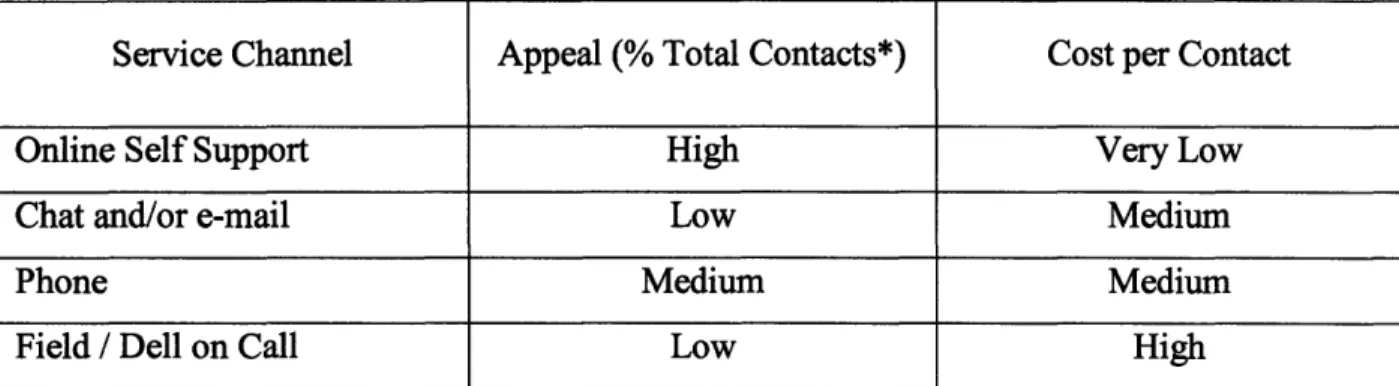
importance of each channel to Dell as a business. The following table outlines the relative cost per contact of each channel, as well as its relative customer appeal based on the annual number of contacts received.
Service Channel Appeal (% Total Contacts*) Cost per Contact
Online Self Support High Very Low
Chat and/or e-mail Low Medium
Phone Medium Medium
Field / Dell on Call Low High
*Note: "Total Contacts" includes issues that were resolved automatically (i.e. "on the box") without proactive
customer contact. For the purpose of this research project, only customer initiated contacts were considered.
Table 2: Service Channel Comparison: Appeal and Cost
The first key observation from Table 2 is how quickly the cost per contact increases with the level of agent assistance provided. We see a significant increase in cost between online unassisted self-support (i.e. no agent interaction) and live phone support. Obviously Dell as a business would like to drive as many contacts as possible to the unassisted web channels in order to minimize costs. The second key observation is that many of Dell's support contacts originate on the web. We say these contacts "originate" on the web, because some customers are unable to resolve their issue online and thus roll over to assisted channels with higher, and in these cases redundant, costs. Though some warranty repairs require dispatching technicians to a customer's home, the daunting cost/contact cost of supporting customers in the field can be partially offset by the revenues from Dell on Call sales. In fact, given the current market size for value added services, expanding Dell on Call offerings could potentially offer a strong counterbalance to the costs of warranty support across all channels. Another positive note is that according to the Channel Preference Matrix in Figure 2, many customers want to use the web to resolve their issues, provided the user interface creates a customer-friendly experience. Thus, if Dell can effectively structure its online support pages to deliver a more effective customer experience, contacts to the more costly assisted channels should decrease markedly.
Having characterized what Dell consumer customers prefer, it is valuable to use the same matrix format to characterize Dell's actual service offerings at the time of the project. Under the existing strategy in 2007, Dell essentially put as much support information on the website as possible, in hopes that customers could self-serve on-line instead of dialing into the call center.
Dell also aimed to drive additional revenues by offering the Dell on Call premium service package, giving customers the option of paying for better service, including in-home support
when necessary. Dell did not differentiate between users of various experience levels. That is, based on the information available at the time of a customer contact, neither the agents nor the online web support systems had advanced knowledge of the customer's technical experience. Thus, Dell's approach was to offer both phone and e-support to everyone and hope that
customers would self-direct themselves to the most appropriate channel, or better yet, purchase the Dell on Call premium package. This strategy is illustrated in Figure 3 below, with the stripes representing the dual-offering of call center and online support.
Channel Offering -Summer 2007
tt
0
0fi J 91
New User Intermediate Advanced I (Windows I Omce) Garner
Customer's Technical Competency
Figure 3: Channel Offerings Matrix
In summary, while there are certainly opportunities to improve Dell's call centers, the
Customer's Preferred Channel Matrix (Figure 2) shows that even the best call center in the world will not make every customer happy. Moreover, aggressive attempts to cater to every customer with call centers will only flood phone lines with customers who would prefer to get support through a different channel, thereby increasing hold times and frustrating customers who actually
do prefer to use the call center for support. The customer channel preference research presented
here suggests that substantial segments of Dell Consumer customers prefer online, retail, or in-home service channels over call centers. This observation significantly changes the main
can deliver optimal customer service, the organization must ask how to architect a multi-channel support system that can deliver optimal customer service.
5. OVERVIEW OF LEAN OPERATIONS
The following overview of lean operations is based primarily on the research and publications of James Womack and Daniel Jones, leading experts on the theory and practice of lean. Additional content and perspectives were also drawn from the author's own academic and professional experience.
At its core, lean is a methodology that aligns goals, objectives, and resources across an entire organization in an effort to deliver maximum value to customers as efficiently as possible. In their book Lean Thinking, James Womack and Daniel Jones state that the philosophy "provides a way to specify value, line up value-creating activities in the best sequence, conduct these
activities without interruption whenever someone requests them, and perform them more and more effectively."13 Lean is most often associated with the manufacturing arm of a company,
primarily in the automobile industry, having gained early respect and recognition as a key component of the renowned Toyota Production System. Today, however, managers in virtually all industries and functions are applying lean theory, principles, practices, and tools to extract more value out of their operations. This chapter provides a general overview of the goals and objectives of lean to establish a common conceptual model for the lean operations philosophy, as it will be used extensively throughout the analysis and recommendations presented in this thesis.
5.1.
Lean Fundamentals
The lean approach to management and operations is founded upon a concise set of key tenets. Each of the key tenets represents a fundamental principle of the lean philosophy, and each is equally important to the successful application of lean to any operation. Following is a brief discussion of each key tenet.
Focus on Value to the Customer - Lean evaluates every part of an operation from the customer's perspective in order to differentiate between value-added and non-value-added activity. Any process step that does not add value to a product or service is classified as non-value-added, or waste. Lean managers strive to eliminate waste from operations in order to increase the
added yield of a given process. The ultimate objective of lean is to maximize value for the customer. Lean theory asserts that enterprise value will follow from making customer value delivery a first priority. Womack and Jones agree, claiming, "Lean thinking therefore must start with a conscious attempt to precisely define value...through dialogue with specific customers."14
Continuous Flow - In addition to minimizing waste, lean strives to achieve a smooth, seamless flow of product and processes. Often referred to as "Just In Time", continuous flow is
commonly described as having the right part at the right place in the right quantity at the right time. Proponents of continuous flow (also called single piece flow) claim that it reveals
additional waste reserves previously hidden by excess inventory and safety stock. In their book, Womack and Jones maintain that "Getting value to flow faster always exposes hidden muda in the value stream. The harder you pull, the more impediments to flow are revealed so they can be removed."' 5
Simplicity - Lean companies are not fueled by complex processes and procedures, but rather by operating with an elegant simplicity that can be embraced at all levels of the organization. Lean process engineers strive to minimize waste and achieve continuous flow using features such as built-in error detection and visual cues, rather than "over-solving" a problem by designing a
complex technical solution.
System-level Thinking - Lean encourages a company to take a holistic view of its enterprise in order to truly understand the end-to-end value chain of the firm's operations. To that end, lean process engineering requires a company to understand every link in the value chain, from its
suppliers' suppliers to its customers' customer, before embarking on any process improvement efforts to specific links in the value chain. Companies beginning their lean journeys will often eliminate waste from one segment in the value chain, only to have it resurface at an earlier or later stage. Thus, understanding the entire value chain enables companies to manage the upstream and downstream effects of any lean process changes they implement. According to Womack and Jones, "Reengineers often stop at the boundaries of the firm paying their fees, whereas major breakthroughs come from looking at the whole value stream."' 6
14 Womack & Jones, 19.
15 Womack & Jones, 25.
Continuous Improvement - A final tenet of lean philosophy is the relentless pursuit of
"perfection through endless steps"'7. Integrating the principles and practices embodied in the
four tenets described above, lean companies make a continuous effort to eliminate waste from every link in their value chains, driving continuous improvement at both a micro and macro level. Thus, while it is important to perfect specific activities within the value chain, it is equally important, if not more so, to invest resources into perfecting the macro-level organization of the value stream. Womack and Jones term this macro level approach the "radical path to
perfection", as opposed to the "incremental path" of improving specific activities.
5.2. Expected Benefits of Lean Operations
While the core objective of lean is to deliver value to customers, the obvious rationale for such efforts is to deliver value to the firm. Companies derive numerous benefits from implementing lean operations such as cost savings, increased revenues, and improved employee morale. This section provides an overview of the main benefits companies have enjoyed by applying lean principles to their manufacturing operations, as well as how those benefits could potentially translate in a services environment.
Elimination ofNon- Value Added Activities - Perhaps the most popular benefit of lean is the elimination of non-value added activities. By carefully studying the end-to-end value chain of an operation, lean engineers can increase the efficiency of a process by removing waste from the system. Common examples of waste reduction include designing new workstation layouts that make tools more accessible, and streamlining processes by eliminating redundant activities. It is important to note that eliminating waste is not always a cost-saving exercise to reduce the size of the workforce, but rather a revenue generating exercise to increase the efficiency of the
workforce. Research and benchmarking suggests that converting a traditional operation to a lean enterprise can double labor productivity, while also reducing inventories by 90 percent.'8
Translated into a services environment, examples of waste reduction might include eliminating transfers in a call center, or reducing hold times.
17 Womack & Jones, 91. 18 Womack & Jones, 27.
Reduced Cycle Times - By eliminating waste from a system, lean enables companies to
significantly decrease cycle times. In fact, Womack and Jones believe that the most immediate and apparent benefit of applying lean thinking is a dramatic reduction (90% or more) in cycle times.19 Ideally, lean processes only include those steps that are required to deliver value to the customer. Thus, lean processes are naturally shorter and faster than their competitors. For example, Dell applied lean principles in its factories and achieved industry leading cycle times
for building custom computers. Shorter cycle times give companies the speed to bring products to market more quickly, and the flexibility to respond to demand changes more effectively. In a
services environment, reducing cycle times would mean, quite simply, resolving customers' issues faster.
Quality Improvements - Because lean principles stress the importance of "Quality at the Source",
an inevitable boost in quality and control flows from any successful lean process improvement. Lean stresses the importance of building quality in at every step of a process, versus "reviewing quality in" by conducting formal inspections at the end of a process. Simplifying product flows and shortening process cycles also reduces the potential for error, thereby increasing quality. Moreover, because lean encourages the use of visual performance indicators throughout a workspace, employees often develop a stronger sense of personal accountability for their work. This newfound sense of pride and ownership in turn drives incremental quality improvements across the value chain. Research suggests that errors, scrap, and on-the-job injuries are typically cut in half following a successful lean transformation of a company.20 In a services environment,
lean could improve quality by ensuring issues are resolved the first time a customer contacts Dell. Lean also encourages feedback loops, which could potentially provide feedback to product developers to help improve the quality of future products.
Realized Employee Potential - Lean encourages managers to empower workers to continuously look for opportunities to improve their specific link of the value chain. Without a doubt, front line workers understand the intricacies of their products and workflows better than anyone in the company. They have extensive visibility into process pitfalls, and are thus well positioned to conceive simple, yet high-impact, improvements. Lean extracts this untapped value reserve by
19 Womack & Jones, 24.
20
encouraging front line workers to think beyond rote tasks and instead propose innovative ways to improve a process, workspace, or product. The results can be surprisingly rewarding for all stakeholders. Additionally, asking workers to provide input and recommendations into their job roles promotes a sense of respect between managers and employees that in turn boosts morale throughout the organization. In a services environment, lean could extract unrealized employee potential in numerous ways, such as giving agents the opportunity to propose enhancements to their desktop tools, telephone infrastructure, and customer management systems.
Better Customer Experience - As a result of the many internal benefits outlined above, external customers benefit as well. After all, cost reductions, quick cycle times, and better quality
combine to deliver a better customer experience in addition to benefiting the company internally. Dell redefined the customer experience with its direct model of selling, building, and delivering computers. Unlike operations on the manufacturing floor, customer service operations involve direct communication and interaction with the customer, making each service contact a critical input into the customer experience. Ideally, lean customer service would provide a customized, timely, and quality resolution to a customer's issue, thereby maintaining the same positive customer experience that was delivered during the sales, manufacturing, and delivery stages of the value chain.
5.3. Tactical and Strategic Aspects of Lean
The original question posed for this thesis project was, "How can lean principles be applied to improve the delivery of customer service?" To effectively answer this question, it is important to differentiate between two critical aspects of building a lean enterprise. The first, and most
common, aspect involves the tactical application of lean methodologies to improve operational performance. Within Dell Consumer Services, tactical lean improvements might involve streamlining the scripts used by call center agents, or reducing the number of mouse clicks required to reach a desired page on Dell's support web site. Tactical lean improvements work within the current enterprise architecture to enhance performance of specific elements of the system. Thus, while tactical applications of lean improve the local performance of a particular module, they do not actually change the architecture of the system itself. Conversely, the second
aspect of building a lean enterprise has to do with the strategic application of lean to the
concept of enterprise architecting is gaining publicity in industry and academia. An enterprise architecture can be described as, "the fundamental organization of a system embodied in its components, their relationships to each other and to the environment and principles guiding its design and evolution."21 An alternate perspective proposes that an enterprise architecture
"relates organizational mission, goals, and objectives to work processes and to the technical or IT infrastructure required to execute them."22 In addition to exploring tactical applications of lean
for a specific component, organizations must also evaluate their enterprise architectures from a strategic lean perspective. In other words, an organization must determine whether the
fundamental architecture of its enterprise is positioned to deliver maximum stakeholder value. When designing, or redesigning, an organization, architecting the enterprise is a critically
important task. Enterprise architecting, as a verb, can be defined as, "Applying holistic thinking to design, evaluate, and select a preferred structure for a future state enterprise to realize its value proposition and desired behaviors."23 In the case of Dell Consumer Services, the strategic
application of lean enterprise architecting involves a high level evaluation of the current support channel offerings and their adequacy for meeting consumer customer needs.
At the start of this project, Dell Consumer Services was primarily concerned with identifying and executing tactical lean process improvements in the call centers. Early stage efforts to make tactical lean process improvements in the e-support channel (support.dell.com) were beginning to gain momentum as well. These efforts were beneficial to an extent, but a larger strategic question remained unaddressed. Specifically, no one was questioning the fundamental architecture of the support channels offered to Dell Consumer customers. In order to fully realize the numerous benefits of lean described in the previous section, one must take a holistic approach to applying lean principles both tactically and strategically to an organization.
Chapters Six and Seven illustrate this point using a formal case study of the application of lean enterprise architecting principles to the Dell Consumer Services organization.
21 IEEE P1471
22
Nightingale, Deborah & Donna Rhodes. "Fundamental Concepts for Architecting". February 2008.
2 3
6. STRATEGIC APPLICATION OF LEAN IN A SERVICE ENVIRONMENT
Before launching aggressive tactical lean initiatives within Dell's call centers, it is important to step back and examine the adequacy of Dell's underlying support channel architecture in meeting Consumer customer needs. Without taking this system level approach, companies run the risk of optimizing a sub-optimal process, which can lead to a false perception of "local" success without ultimately delivering system-wide value. This chapter explores the challenges of architecting a lean enterprise within a services environment, and presents strategic
recommendations for building a lean enterprise at Dell Consumer Services.
6.1.
Defining & Delivering Value in Dell Consumer Services
Virtually all customers use a common system for valuing the performance of Dell's manufacturing division. Simply stated, customers want Dell's factory to build a quality computer, deliver it quickly, and minimize cost. Thus, new users, college students, and IT professionals alike all agree to a common set of values on the manufacturing floor: speed (cycle time), quality and cost. However, as discussed in Chapter Four, Dell Consumer customers define the ideal customer service experience in many different ways. This is a direct result of the fact that different customer segments use vastly different value systems to appraise the performance of service and support. In order to evaluate Dell Consumer Service's support channel
architecture from a lean perspective, it is imperative to first establish a clear definition of value for each key segment of Dell Consumer customers. As Womack and Jones put it, "Specifying value accurately is the critical first step in lean thinking. Providing the wrong good or service the right way is muda."24 To be financially stable, however, the optimal channel architecture must account for the two-way value exchange between customers and the enterprise. Thus, the
following tables summarize both the general value expectations of key customer segments, as well as their respective value contributions to the enterprise. These assessments are based upon extensive reviews of direct customer input submitted to Dell's "IdeaStorm" website
(dellideastorm.com), as well as on customer feedback surveys administered following call center or web support contacts.
24
Value / Service Expectation Customer Segment Value Contribution
* Full-service New / Beginner Users $$$
* Face-to-face, high-touch Driven by need, thus
* Education willing to pay for higher
* Reassurance service level
* "Hand-holding" * Enroll in training course
* Clear Communication * Repeat business,
* No "tech speak" referrals
Table 3: New / Beginner User Value Exchange
Value / Service Expectation Customer Segment Value Contribution
* Quick access to agent Intermediate users $
* Capable agent * Willing to pay for
*
Clear communication convenience of higher
* Short hold times service level at times
SNo transfers Repeat business,
* Free of charge referrals
* User-friendly on-line content
* 24 hour support
Table 4: Intermediate User Value Exchange
Value / Service Expectation Customer Segment Value Contribution
* Quick access to Advanced users $
information * Provide knowledge to
* Ability to self-serve community forums
* Ability to bypass agent * Feedback to R&D
scripts & engage in * Leads to commercial
highly technical business accounts
dialogue
* 24 hr support
* Free of charge