T
T
H
H
È
È
S
S
E
E
En vue de l'obtention du
D
D
O
O
C
C
T
T
O
O
R
R
A
A
T
T
D
D
E
E
L
L
’
’
U
U
N
N
I
I
V
V
E
E
R
R
S
S
I
I
T
T
É
É
D
D
E
E
T
T
O
O
U
U
L
L
O
O
U
U
S
S
E
E
Délivré par l’Institut National Polytechnique de ToulouseDiscipline ou spécialité : Génie des Procédés
Présentée et soutenue par Amit SHARMA
Le 20/07/2009 TITRE
Catalytic Reaction Engineering using Ionic liquids: Hydroformylation of 1-Octene
JURY
Prof. Raghunath V. Chaudhari Rapporteur
Prof. Claude De Bellefon Rapporteur
Prof. Michel Prevost Membre
Dr. François Malbosc Membre
Dr. Carine Julcour Membre
Prof. Henri Delmas Directeur de thèse
Ecole doctorale : Mécanique Energétique Génie Civil Procédés (MEGeP) Unité de recherche : Laboratoire de Génie Chimique (LGC)
Directeur(s) de Thèse : Prof. Henri DELMAS
ACKNOWLEGEMENT
Firstly i would like to express by gratefulness and thanks to Professor Henri DELMAS, who gave me the opportunity to join his group under the project of CEFIPRA, and directed me with his valuable guidance through my thesis work. I take this opportunity to express my gratitude and obeisance to Mdm. Carine JULCOUR-LEBIGUE, her naturally gifted power to understand and ability to simplify the most perplexing problems has made a permanent mark in me. Without her support and open mind for new concepts, without the freedom to explore new ideas, and eventually without the patience she had with me, this work would not have been as fruitful as it was.
I would like to acknowledge Prof. R.V. Chaudhari and Prof. Claude de Bellefon for accepting to be the Rapporteur of my thesis and. Prof. Michel Prevost and Dr. François Malbosc to be a part of the jury member. I’m grateful for their valuable suggestions on the thesis work.
During my PhD research project, I have also worked for a short span at the “National Chemical Laboratory”, Pune, India. I owe my special thanks to Dr. R.M. Deshpande and Dr. A.A. kelkar for giving me the opportunity to work in their group at the High Pressure Lab., NCL. It was a pleasure working in NCL under their supportive guidance and very friendly research group.
I also would like to express my gratitude towards all the faculty and staff members of LGC for their invaluable help. Special thanks to Jean-Louis LABAT, Ignace COGHE, Lahcen FARHI, Jean-Louis NADALIN, Alec MAUNOURY and Lucien POLLINI for their great expertise in the Autoclave reactor set-up and troubleshooting and also for their friendship.
I wish to thank Christine REY ROUCH for her great help in conducting experiments with TGA, Martine AURIOL for helping me with Gas-chromatography, Marie Line DE SOLAN and Serge MOUYSSET for conducting SEM and ICP analysis
and Marie-Line PERN for helping me with the viscosity experiments. I also owe my gratitude to Marie MORERE for her help in the operation of Head space Gas Chromatography. Also thanks to Luce Bernard for her help and cooperation during the HSGC experiments.
I also express my special thanks to my colleagues Frederic, Carmen, Cathy, Isa, Rana, Harold, Joaquim, Elham, Marianne, Gaelle, Hicham, Abdullai for their kindness and a very nice time during my whole PhD tenure. I want to acknowledge your geneorisity for having such a wonderful time in Europe. I always look forward to spending time with you.
I cannot complete this acknowledgement without mention of my beloved family members Mumma, papa, Bhaiya and Richa who have put in their efforts and prayers for me to attain success in life. I am falling short of words to express my feelings towards them. Their blessings and encouragement were beyond comparison.
Words are forgotten….. Memories are remembered……..
i
Contents
Introduction
1CHAPTER 1: Bibliography
1.1 Introduction 4 1.2 Catalysis 71.3 Hydroformylation reaction and industrial applications 12
1.3.1 Cobalt-based catalyst 14 1.3.1.1 Exxon process 14 1.3.1.2 Shell process 15 1.3.1.3 BASF process 15 1.3.2 Rhodium-based processes 15 1.3.2.1 UCC process 16 1.3.2.2 Ruhrchemie/Rhône-Poulenc process 17 1.4 Novel developments and research areas in hydroformylation 18
1.4.1 Supercritical carbon dioxide (scCO2) 19
1.4.2 New solvents for biphasic catalysis 20
1.4.3 Interfacial catalysis 21
1.4.4 Supported Liquid Phase Catalysis (SLPC) 22
1.5 Ionic Liquids 24
1.5.1 History 24
1.5.2 Properties of Ionic Liquids 26
ii
1.5.4 Ionic Liquids for transition-metal catalysis 29 1.6 Literature survey on hydroformylation in ILs 30
1.6.1 Solubility of syngas in Ionic Liquids 30
1.6.2 Solubility of reactants and products in Ionic Liquids 36 1.6.3 Hydroformylation reaction using Ionic Liquids 41
1.6.3.1 Monophasic systems 41
1.6.3.2 Biphasic approach 43
1.6.3.3 Alternative reaction systems 51
1.7 Objectives and organization of the thesis 55
CHAPTER 2: Physicochemical properties of the reaction system
2.1 Introduction: hydroformylation of 1-octene in [Bmim][PF6] /decanebiphasic system 57
2.2 Physical properties of [Bmim][PF6] 58
2.2.1 Purity 59
2.2.2 Physical properties 60
2.3 Diffusivity of H2 and CO in [Bmim][PF6] 61
2.4 H2 and CO solubility in [Bmim][PF6] 63
2.4.1 Measurement technique 63
2.4.2 Henry’s constants 66
2.4.3 Comparison with literature data 69
2.5 Solubility and partition coefficient of 1-octene and n-nonanal in [Bmim][PF6] 72
2.5.1 Measurement techniques 73
2.5.2 Solubility results 82
2.5.3 Partition coefficients of 1-octene and n-nonanal ([Bmim][PF6] / decane
system) 83
2.5.4 Comparison with literature data 84
iii
CHAPTER 3: Gas-liquid mass transfer in (biphasic) ionic liquid
systems
3.1 Introduction 86
3.2 Measurement of gas-liquid mass transfer coefficients 89
3.2.1 Reactor set-up 89
3.2.2 Measurement technique 90
3.3 Gas-liquid mass transfer coefficients of H2 and CO in [Bmim][PF6] 91 3.3.1 Critical stirrer speed and gas induction 91
3.3.2 Experimental values of kLa 93
3.3.3 Gas-liquid mass transfer correlations 95
3.4 Gas-liquid mass transfer coefficients of H2 and CO in [Bmim][PF6]/decane
emulsions 101
3.5 Conclusions 104
CHAPTER 4: Biphasic hydroformylation of 1-octene using ionic liquid
4.1 Introduction 105
4.2 Experimental Procedure 106
4.2.1 Materials 106
4.2.2 Reaction procedure 107
4.2.3 Analytical method 108 4.2.4 Ballast pressure measurement 109 4.2.5 Reaction characteristics: reaction rate, TurnOver Frequency, yield and selectivity 109
4.3 Kinetic study in chemical regime 112
4.3.1 Verification of chemical regime: theoretical considerations and effect of
stirrer speed 112
4.3.2 Typical concentration-time profiles 115
4.3.3 Range of operating conditions 116
iv
4.3.5 Effect of the initial concentration of 1-octene 119 4.3.6 Effect of H2 and CO partial pressures 122
4.3.7 Effect of temperature 127
4.3.8 Ligand effect (sulfoxantphos vs. TPPTS) 129
4.4 Modelling of initial reaction rates 131
4.4.1 Investigated models 131
4.4.2 Optimization strategy 132
4.4.3 Final optimization results 134
4.5 Modelling of concentration-time profiles 137
4.5.1 Predictions for main hydroformylation reaction 137 4.5.2 Predictions when accounting for isomerisation 139
4.6 Recycling of catalyst 143
4.7 Reaction rate in mass transfer limiting regime 144
4.8 Effect of ultrasounds on reaction rate 149
4.9 Conclusion 154
CHAPTER 5: Hydroformylation of 1-octene using supported ionic
liquid phase catalyst
5.1 Introduction 156
5.2 Experimental 158
5.2.1 Materials 158
5.2.2 Preparation and characterization of supported ionic liquid phase catalyst 158
5.2.2.1 Preparation of SILP catalyst 159
5.2.2.2 Characterization of the catalyst 160
5.2.3 Experimental set-up and procedure 166
5.2.3.1 Reactor set-up 166
5.2.3.2 Reaction procedure 167
5.2.3.3 Analytical method 168
v
5.3.1 Catalyst loading 172
5.3.2 Initial concentration of 1-octene 174
5.3.3 H2 and CO pressures 176
5.3.4 Temperature 180
5.4 Recycle study 182
5.5 Conclusion 183
Conclusion and Perspectives
185Nomenclature
190References
194- 1 -
Introduction
Chemical innovation is highly expected to reach the goals of sustainable development in the chemistry domain, not only to preserve resources, but also to improve processes in the chemical industry. Innovation may involve process intensification which is an important way to achieve safer, smaller and cleaner plants, mostly through novel design of equipment. In parallel to these efforts concerning reactor efficiency – micro and mini-reactors are on continuous improvement – another innovation way is to play on chemicals, using less hazardous or more renewable reagents and solvents, and overall, achieving less dissemination of chemicals in atmosphere and in liquid effluents or solid disposals.
Solvent loss in atmosphere is one of the most important environmental issues of chemical industry. Among the new classes of chemical solvents, ionic liquids are certainly the most attractive, leading to a tremendously growing number of scientific papers from 15 years. The main advantage of these ionic liquids is their extremely low vapour pressure resulting in absolutely negligible loss in atmosphere. In addition the flexibility of changing either their cationic or ionic part opens a very wide spectrum of physicochemical properties and especially solvent adequateness for a given reaction medium.
- 2 -
Among the many potential applications of ionic liquids as new solvents, the reaction engineering group of LGC (Laboratoire de Génie Chimique de Toulouse) has special interest in multiphase homogeneous catalysis and more precisely in hydroformylation. The successful hydroformylation of propylene by rhodium catalyst in aqueous phase, using TPPTS as a water soluble ligand, usually referred as aqueous phase catalysis, APC, cannot be extended to higher olefins due to their very limited solubility in aqueous phase. Several attempts have to be noticed: use of co-solvents to increase olefin concentration in the aqueous catalytic phase without loosing catalyst in the organic phase, use of binding ligands to fix the catalyst at the aqueous – organic interface, use of hydrophilic porous solid to support a thin film of aqueous catalytic phase (Supported Aqueous Phase Catalysis, SAPC). Most of these research efforts have been achieved through long term collaboration with the homogeneous catalysis division of NCL Pune (India). It was then decided to jointly explore the possible use of ionic liquids as solvents for biphasic hydroformylation reaction through a joint IFCPAR (Indo-French Centre for the Promotion of Advanced Research) project.
The Homogeneous catalysis division of NCL has developed expertise on synthesis of novel metal complex catalysts and ligands, high pressure catalyst testing, kinetic modelling, isolation and characterisation of catalytic intermediates, biphasic catalysis. Its contribution has then mainly focused on:
- Synthesis of various Ionic Liquids ([Bmim][BF4], [BuPy][BF4], [BuPy][Lactate] and [Bmim][Lactate]) using new a procedure for halide free ILs based on ion exchange resins.
- Synthesis of different ligands (TPPTS, sulfoxantphos).
- Investigation of role of IL in oxo synthesis: screening of catalyst complex and IL. Role of ionic liquids as co-solvents in aqueous biphasic hydroformylation.
- Development of biphasic IL and supported IL catalysis – organic media for hydroformylation (of octene/decene).
- Kinetics of hydroformylation of 1-octene in NAIL solvent (using Rh/sulfoxantphos complex dissolved in [BuPy][BF4]). Catalyst recycle studies. Comparison of the different catalytic systems.
- 3 -
The French partner at LGC-Toulouse has mainly dealt with engineering aspects for a given reaction system yet selected in previous works: hydroformylation of 1-octene with rhodium complex and TPPTS as a water soluble and, more importantly here, soluble in ionic liquid and not in organic phase. Only one Ionic Liquid will be used, [Bmim][PF6], as it was one of the most popular when starting the project.
This manuscript only presents the results of LGC part, including the experiments using supported ionic liquid catalyst made in Pune during a summer visit.
It will detail successively the following items:
¾ Literature review on hydroformylation and on IL, with special focus on biphasic IL – organic media for hydroformylation.
¾ Evaluation of physical properties of ILs (density, viscosity and surface tension). ¾ Investigation of gas-liquid equilibria in IL (and organic phase) for the two
gaseous reagents H2 and CO.
¾ Investigation of liquid-liquid equilibria in biphasic IL – organic media, with the development of a specific analytic technique.
¾ Determination of gas-liquid mass transfer coefficients in both IL and biphasic IL –organic media. Effect of organic to ionic phase hold-up ratio. Experimental and theoretical study.
¾ Kinetic study of hydroformylation of 1-octene in biphasic IL – organic media. Modelling of initial kinetics and of complete reaction. Recycle study. Models coupling reaction and mass transfer kinetics.
¾
Kinetic study of hydroformylation with supported ionic liquid catalyst. Comparison of stability, activity and selectivity of both catalytic systems.1
Bibliography
- 4 -
Chapter 1
1.1 Introduction
Solvents have become an integral part of our daily life. A large number of
manufacturing and processing industries – viz pulp and paper,chemical, mining, food,
automotive – make use of highly volatile organic solvents. In addition to chemical
reactions they are indeed employed in a variety of unit operations including extraction,
recrystallisation and dissolution of solids to recover the desired product or remove impurities.
The role of organic solvents in chemical industries is mainly to homogenize the reacting mixture, to speed up the reaction through improved mixing and to reduce the effect of reaction exothermicity. Mostly used solvents have significant vapour pressure at room temperature which is released to atmosphere. Therefore they contribute strongly to the waste stream as a major source of VOC (volatile organic compounds) emission in the chemical industry and related economic sectors. Despite abundant safety precautions,
- 5 -
they inevitablycontaminate our air, land, and water because they are difficultto recycle
and/or to contain. The main environmental issue concerning VOC is their ability to form
low-level ozone and smog through free radical air oxidation processes. Moreover they can directly provoke adverse health effects. Thus the search for alternative solutions continues to be a major challenge of green chemistry.
Researchers are therefore focusing on reducing solvent use through the
development of solvent-free processesand more efficient recycling protocols. However,
these approacheshave limitations, necessitating a pollution prevention approachand the
search for environmentally benign solvent alternatives. As for the implementation of
solvent alternatives, industry will increasingly choose solvents on the basis of
environmental demands in the future. However,the full potential of alternative solvents
will only be reached if researchers exploit the advantageous properties of such
alternativesbeyond their intrinsic environmental concerns.
Since last decade, ionic liquids have received worldwide academic and industrial attention as substitutes for organic solvents in catalysis. Beyond their very low vapour pressure, attractive features of ionic liquids for catalysis include: their versatility, their capacity to dissolve a wide range of inorganic and some organic materials, their ability to act both as catalyst and solvent, their tendency to suppress conventional solvation and solvolysis phenomena, resulting in increased reaction rates and better selectivity (reduction of side reactions). Their potential to reduce pollution in industrial processes has led to investigation of ionic liquids as alternative reaction media for a variety of applications that conventionally use organic solvents.
More particularly in the domain of catalysis, the quest for cleaner solutions to carry out reactions remains a real preoccupation of scientists and engineers. Using ionic liquids as a substitute for conventional solvents for catalytic processes opens up a new
way for green catalysis. Among homogeneous catalytic reactions, hydroformylation is
extensively studied one as being one of the most industrially relevant processes employing a homogeneous catalyst. Since the pioneering work of Chauvin et al. (1995), many research papers have thus focused on the use of ionic liquids in hydroformylation.
- 6 -
In this chapter, an overview of homogeneous catalysis will be first presented. The first paragraph will focus on catalytic hydroformylation reaction that has been especially studied as a model reaction to explore catalyst heterogenization concepts. Novel developments on this particular reaction will be presented and discussed.
Finally a detailed literature survey on hydroformylation using ionic liquids as catalyst solvent will be given.
- 7 -
1.2 Catalysis
Catalysts are the workhorses of chemical transformations in the industry. Roughly 85-90% of the products of chemical industry are made in catalytic processes [Chorkendorff and Niemantsverdriet, 2003]. Catalysts are indispensable in:
• Production of transportation fuels in oil refineries all over the world. • Production of bulk and fine chemicals.
• Many types of environmental remediation, from vehicle emissions control systems to industrial effluent and municipal waste treatment.
The term ‘Catalysis’ was coined by Berzelius in 1836, when he had noticed that there are substances which increase the rate of a reaction, without themselves being consumed. He believed that the function of such a substance was to loosen the bonds which hold the atoms in the reacting molecules together. Thus he coined the term catalysis (Greek kata = wholly and lein = to loosen). Many years later in 1895, Nobel Laureate Friedrich Wilhelm Ostwald came up with the definition: A catalyst is a substance that changes the rate of a chemical reaction without changing the equilibrium of the reaction. A catalyst offers an energetically favourable alternative mechanism to the non-catalytic reaction, thus enabling processes to be carried out under industrially feasible conditions of pressure and temperature.
Research into catalysis is a major field in applied science and involves many areas of chemistry, notably in the discipline of organometallic chemistry, surface science, solid – state chemistry, biochemistry, chemical reaction engineering and materials science. Catalysis is relevant to many aspects of environmental science, e.g. the catalytic converter in automobiles and the dynamics of the ozone hole. Catalytic reactions are preferred in environmentally friendly green chemistry due to the reduced amount of waste generated, as opposed to stoichiometric non-catalytic reactions in which more side products are formed. Also the production of most industrially important chemicals involves catalysis [Parshall, 1980]. Catalysis is broadly classified into three categories
- 8 -
depending on the number of phases involved and the physical nature of the catalyst employed [Parshall, 1980; Masters, 1981]:
1. Homogeneous catalysis, for which the reactants, products and catalyst are present in the same phase. More precisely, it includes catalysts that
• are molecularly dispersed “ in the same phase” or between two suitable phases, • are unequivocally characterized chemically and spectroscopically and can be
synthesized and manufactured in a simple and reproducible manner,
• can be tailor-made for special purposes according to known and acknowledged principles and based upon rational design, and
• permit unequivocal reaction kinetics related to each reactant catalyst molecule, in general each metal ion [Cornils and Herrmann, 2005(a)].
2. Heterogeneous catalysis that involves the use of a catalyst in a different phase from the reactants. Typical examples involve a solid catalyst, e.g. transition metal grafted on an inert solid, with the reactants as either liquids or gases.
3. Biocatalysis or enzymatic catalysis, which can be distinguished from previous ones by the use of “natural” catalysts, such as protein enzymes. It mainly involves biological and related reactions. The catalyst and the reagents are in a homogeneous phase, but the mechanism of enzymatic catalysis is similar to that of heterogeneous catalysis.
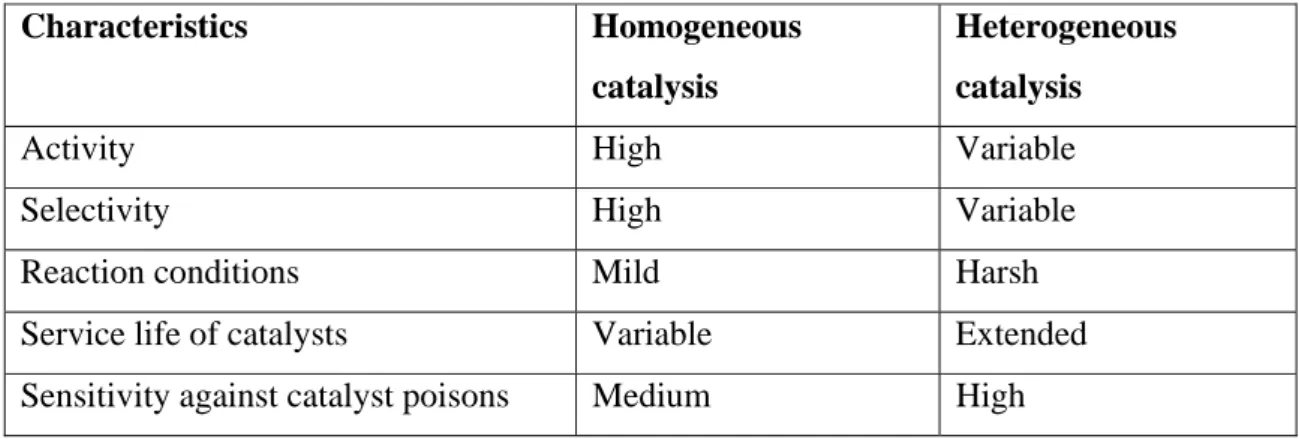
Table 1.1 summarizes the advantages and drawbacks of both homogeneous and heterogeneous catalysis.
Characteristics Homogeneous catalysis
Heterogeneous catalysis
Activity High Variable
Selectivity High Variable
Reaction conditions Mild Harsh
Service life of catalysts Variable Extended
- 9 -
Diffusion / mass transfer problems Low Important
Catalyst recycling Expensive Not necessary
Variability of electronic and steric properties of catalysts
Possible Not possible
Mechanistic understanding Plausible Extremely complex
Table 1.1 Homogeneous versus heterogeneous catalysis [Cornils and Herrmann, 2005(a)].
Homogeneous catalysis using transition metal complexes is an area of research that has grown enormously in recent years. Many amazing discoveries have been reported by researchers both in industry and in academia [Wasserscheid, 2008(a)]. Reactions that were thought to be well understood and optimized have now been revolutionized with completely new catalysts and unprecedented product selectivities. The progress of homogeneous catalysis is also significant in the area of fine chemicals. A list of important industrial applications of homogeneous catalysis is given below in Table 1.2.
10
No. Industrial Process Catalyst Used Company Reference
1 Oxidation of ethylene to acetaldehyde PdCl2/CuCl2
Wacker-Werke
Jira, 1969
2 Oxidation of p-xylene to terephthalic
acid/ester
Co/Mn-salts Du Pont Partenheimer, 1995
3 Polymerization of ethylene to HDPE/LDPE Ni-complex Shell Lutz, 1986
4 Hydrocyanation of butadiene to adipic acid Ni-complex Du Pont Ludecke et al., 1976
5 Asymmetric hydrogenation of acetamido
cinnamic acid (3-methoxy-4-acetoxy derivative) (l-dopa process)
[Rh(diene) (solvent)]+ /DIPAMP Monsanto Knowles, 1983
NaCo(CO)4 BASF BASF AG, 1977
HCo(CO)3PBu3 Shell Johnson, 1985
HRh(CO)(PPh3)3 Union Carbide Anonym., 1977
6 Hydroformylation of propene to butyraldehyde [Rh(COD)Cl]2/ TPPTS Ruhrchemie- Rhône-Poulenc Cornils et al., 1995
7 Hydroformylation of higher olefins to oxo
alcohols
HCo(CO)3PBu3 Shell Greene et al., 1967
HRh(CO)(PPh3)3 Hoffmann-
La Roche
Fitton et al.,1978
8 Hydroformylation of diacetoxy butene to 1-
methyl-4-acetoxy butanal (Vitamin A
11
Rh/ iodide Monsanto Roth et al., 1971
Co2(CO)8 BASF Hohenshutz et al., 1966
9 Carbonylation of methanol to acetic acid
Ir/iodide BP chemicals Watson, 1998
Rh/MeI Halcon Coover and Hart, 1982
10 Carbonylation of methyl acetate to acetic
anhydride
Rh/MeI Eastman Chem.
Agreda et al., 1992
11 Carbonylation of ethylene to propionic acid Ni(OCOC2H5)2 BASF Hohenschutz et al., 1973
12 Carbonylation of acetylene to acrylic acid Ni-salts / carbonyls BASF Blumenberg, 1984
13 Carbonylation of benzyl chloride to phenyl
acetic acid
Co2(CO)8 Montedison Casssar, 1985; Parshall
and Nugent, 1988 14 Carbonylation of 1-(4-isobutylphenyl) ethanol to ibuprofen PdCl2(PPh3)2/HCl Hoechst Celanese Elango et al., 1990
15 Oxidative carbonylation of methanol to
dimethyl carbonate
PdCl2-CuCl2 Assoreni Ugo et al., 1980
16 Hydroformylation of ethylene oxide to 2-
hydroxy propanal
Co2(CO)8 Shell Powell et al., 1999
17 Dimerization of light olefins (DIMERSOL process,
DIFASOL liquid-liquid biphasic process with IL)
Ni co-activated with an alkyl aluminium compound
Axens (IFP) Chauvin et al., 1997
18 Production of linear alpha olefins via ethene
oligomerization and olefin metathesis (SHOP Process)
(C6H5)2P(CH2)2COONi Shell Bolzinger, 1984
The main aim of the thesis is to investigate engineering aspects of hydroformylation reaction in detail. Hence the next paragraph will exclusively deal with this reaction.
1.3 Hydroformylation reaction and industrial applications
The hydroformylation reaction (or oxo synthesis) is a reaction where aldehydes are formed out of olefins, carbon monoxide and hydrogen. The reaction is exclusively catalyzed by a homogenous catalyst, usually a rhodium or cobalt based complex. An overview of the reaction is given in Scheme 1.1.
Scheme 1.1 Hydroformylation reaction.
The hydroformylation reaction was discovered in 1938 by Otto Roelen in the Ruhrchemie laboratories at Oberhausen (Germany) [Roelen, 1938 and 1943]. Since that day, hydroformylation has become a widely studied and interesting reaction for both academic and industrial researchers. The interest of such a reaction resides in the formation from an olefin of a new carbon-carbon bond with the introduction of a carbonyl function, which can be easily hydrogenated to alcohol or oxidized to carboxylic acid. Esterification of the alcohols with phthalic anhydride produces dialkyl phthalate plasticizers that are primarily used for polyvinyl chloride plastics - the largest single end use. Detergents and surfactants make up the next largest category, followed by solvents, lubricants and chemical intermediates.
The most important industrial application of hydroformylation is the manufacture of n-butyraldehyde from propylene and syngas. The major uses of butyraldehyde are in the production of 2-ethylhexanol and butanols, by a sequence involving an aldol condensation reaction followed by hydrogenation of the aldol product. The world production levels of 2-ethylhexanol and normal and iso-butanols combined are
presently about 2.5 million and 4.5 million tons per year respectively [Tudor and Ashley,
2007].
CHO
R-CH2-CH2-CHO + R-CH-CH3
R-CH=CH2
Olefin Linear (n) aldehyde Branched (iso) aldehyde
Catalyst
13
Table 1.3 outlines the capacities of industrial processes for C4 oxo products excluding 2-ethylhexanol (2-EH).
Process Metal catalyst × 1000 tons/year Overall %
Union Carbide Rh 3040 46 BASF Rh 900 14 Celanese Rh 890 13 Mitsubishi Rh 680 10 Eastman Rh 610 9 Leuna/Neftekhim Co 425 7 Shell Co 75 1
Table 1.3 Capacities of industrial hydroformylation processes for C4 products (excluding
2-EH) [Cornils and Herrmann, 2004].
Based on the continuous research and development on this reaction and its application to various industries, different hydroformylation processes have been developed, that can be divided into three main generations [Frohning and Kohlpaintner, 2000]. The first generation processes were phosphine-free and were mainly based on cobalt catalysts, as initially rhodium catalyzed reaction seemed too slow. With the application and development of phosphine based ligands, rhodium catalysts could be efficiently used in small concentrations and mild conditions. The thermal stability of the catalyst was also increased and the recycling could be performed by distillation with moderate rhodium losses. This led in the mid-seventies to the second generation of processes which started to replace the cobalt systems for propene and butene hydroformylation. The last breakthrough occurred with the development of two-phase aqueous systems - with water soluble rhodium complex in a separated phase from reactant and product - which makes easier (and less costly) catalyst separation. However, the process is limited to the shorter chain alkenes that have some appreciable water solubility. Alkenes higher than 1-pentene are not soluble enough in water.
Some of the important industrial processes using the above mentioned technologies are being discussed below.
14
1.3.1 Cobalt-based catalyst
The discovery of hydroformylation of alkenes by Roelen occurred in fact accidentally, while he was studying the Fischer-Tropsch reaction with a heterogeneous cobalt catalyst in the late thirties. That’s why cobalt processes were first developed. They are still mostly used in the production of medium to long chain olefins, whereas rhodium catalysts only dominate the hydroformylation of propene [Beller et al., 1995].
The classical oxo process using cobalt catalyst in solution operates at very high pressure (200 to 450 bar) and at a temperature from 140 to 180°C. The active catalyst is
in the form of hydridotetracarbonyl cobalt HCo(CO)4. High pressure of CO is required to
ensure catalyst stability during hydroformylation. Typically the catalyst has to be decomposed before the reaction product can be recovered; therefore the process involves cumbersome and costly catalyst recycle.
Most of industrial cobalt based processes are pretty similar, the main difference between them concerns the separation of products and catalyst.
1.3.1.1 Exxon process
The Exxon process (previously called Kuhlmann process) is designed to convert
higher alkenes. The HCo(CO)4 catalyst reacts with syngas in the reactor under normal
hydroformylation conditions. The recycling of the catalyst involves two main steps: the recovery of sodium tetracarbonylcobaltate and its regenerative conversion into cobalt tetracarbonyl hydride. After the reactor, the product mixture is treated with aqueous alkali
to convert HCo(CO)4 to water-soluble NaCo(CO)4, which is extracted as aqueous
solution from the organic product phase. Then the catalyst is regenerated by addition of
H2SO4. The elegance of this process is that the cobalt catalyst is not decomposed by
oxidation but it is left in the system as tetracarbonylcobaltate [Van Leeuwen, 2004]. In
propylene hydroformylation, the process results in about 80 wt% of butyraldehydes, with ratio of linear/branched product (n/i ratio) from 3 to 4 [Weissermel and Arpe, 1993].
15
1.3.1.2 Shell process
In the Shell process higher olefins are converted using a phosphine modified cobalt catalyst, which provides catalyst complex with higher stability and thus the process can be operated at lower pressure (25-100 bar). In this process the product mixture is distilled, the organic products leave the distillation column at the top and the catalyst is recovered at the bottom. Before re-entering the reactor the catalyst recycle is upgraded with catalyst and phosphine ligand. The drawback is that the process requires a larger reactor volume as the activity of the ligand modified catalyst is low (5 times lower
than HCo(CO)4) [Van Leeuwen, 2004]. Although higher n/i ratios are obtained (equal to
about 9), the selectivity to aldehydes is lower as hydrogenation side and secondary reactions occur to a greater extent giving both alkanes and alcohols [Weissermel and Arpe, 1993].
1.3.1.3 BASF process
The BASF hydroformylation process of propene or higher olefins occurs under
high pressure. The catalyst is in the form of HCo(CO)4. This catalyst is separated from
the liquid product by addition of oxygen and formic or acetic acid, leading to an aqueous solution which contains the cobalt mainly as formate or acetate. The organic products are withdrawn in a phase separator and the cobalt solution is concentrated afterwards and sent to the carbonyl generator. The cobalt losses are compensated. The best selectivity to linear aldehydes is claimed for low temperatures [Frohning et al., 2002].
1.3.2 Rhodium-based processes
By the year 1970, the second generation processes using rhodium as the metal catalyst began to replace to some extent the high pressure Co-catalyzed hydroformylation processes. The ‘Low Pressure Oxo’ process (LP Oxo process) was developed and then
licensed to the oxo industry in 1971 through a tri party collaboration [Tudor and Ashley,
2007]. The principal collaborators were:
• Johnson Matthey & Co. Ltd. (now Johnson Matthey PLC),
• The Power-Gas corporation Ltd. (a former name of Davy Process Technology Ltd., now a subsidiary of Johnson Matthey PLC) and,
16
• Union Carbide Corporation (now a subsidiary of The Dow Chemical Company).
The LP Oxo process has dominated the hydroformylation of propene since 1970 as it offers mild reaction conditions, high efficiency with much economic advantages over the established cobalt-catalyzed processes [Beller et al., 1995]. Rhodium catalysts are more expensive than cobalt catalysts but have higher activity towards linear olefins and so the LPO process was promoted by several companies (Celanese, BASF, Union Carbide, and Mitsubishi). Today about two-thirds of the world’s butyraldehyde is now produced in LP Oxo plants. Separation of butyraldehyde from the reaction mixture was again the key challenge for the design and process engineers. Initially the introduction of gas recycle technology enabled a simple process scheme with overall good catalytic activity: the reaction products were stripped from the catalyst solution by the gas flow, and then condensed to separate them from the gas/vapour effluent before recycling to the reactor. Later on the concept of liquid recycle principle, where the reaction products were separated from catalyst solution outside the oxo reactor using a sequence of vapour flashing and vaporisation using a suitable external heat source, provided the plant operators to optimize reaction conditions and production capacity with more flexibility. However with long chain olefins, solutions are still to be found. For aldehydes beyond
C7/C8, the separation by distillation becomes commercially unattractive due to their high
boiling point and the thermal strain results in the degradation and loss of catalyst. A far more elegant solution is the two-phase system, such as the aqueous biphasic process, where the catalyst and products are in two different immiscible phases. The main advantage of this process is that the products and catalyst can be separated easily due to the immiscibility of aqueous and organic phases. However the limited solubility of higher alkenes in aqueous solution limits again its application to short-chain reactant.
The most important industrial processes using rhodium as a metal catalyst are discussed below.
1.3.2.1 UCC process
The Union Carbide Corporation (UCC) commercially applies the LPO (Low Pressure Oxo) process for the hydroformylation of propene in a liquid-recycle process. The
17
reaction takes place in a stainless steel reactor where the gas and propene are introduced via a feed line and a gas-recycle. The catalyst is dissolved in high-boiling aldehyde condensation products. The liquid product stream out of the reactor consists of dissolved gas, aldehydes, rhodium-phosphine catalyst complex, free phosphine ligand and the higher-boiling aldehyde condensation products. In order to split all this complex mixture the product stream enters a separator and a flash evaporator, where the major part of inerts and unconverted reactants is separated overhead. The flashed-off gases are compressed and returned to the reactor, whereas the liquid stream is heated and is fed to two distillation columns in series. The vaporous aldehydes are later condensed and sent to the upgrading section.
At the bottom the catalyst solution is separated and recycled in the reactor. The whole UCC process is well described by Beller et al. (1995). The processes operated by Celanese and Mitsubishi for butyraldehyde production resemble to the LPO process introduced by UCC.
1.3.2.2 Ruhrchemie/Rhône-Poulenc process
Following the laboratory results on several biphasic catalytic reactions (hydroformylation, hydrocyanation and diene conversion) based on the idea of E. Kuntz [Kuntz, 1976 and 1987] and patented by Rhône-Poulenc, a 100 000 tons/year capacity butyraldehyde plant (now increased to 300 000 tons/year capacity) was build in Oberhausen in 1984 based on this technology.
It was the joint work of the Ruhrchemie AG (now part of Celanese AG) and Rhône-Poulenc which gave the name Ruhrchemie/Rhône-Rhône-Poulenc (RCH/RP) process, an aqueous biphasic hydroformylation process. The RCH/RP unit is essentially a continuous stirred tank reactor, surmounted by a phase separator and followed by a stripping column. Propylene with syngas is fed into the reactor containing the aqueous catalyst solution
(rhodium/tri-sulfonated triphenylphosphine). After the reaction the crude aldehyde
product passes into a decanter, where it is degassed and separated into the aqueous catalyst solution and the organic aldehyde phase. The heat of the aqueous phase is then used to produce steam in a heat exchanger. After separation the organic phase is passed through a stripping column, where the unreacted olefin is separated and sent back to the
18
reactor. The product mixture is then distilled into n- and iso- butyraldehyde (linear/branched). While the n/i ratio was about 8 for the UCC, it is equal to almost 19 for the RCH/RP process [Blaser et al., 2000].
The produced steam from the reactor is used in the reboiler of the distillation unit, which is a big advantage. However the system is limited by the solubility of organic substrates in aqueous phase. Long chain alkenes (higher than butene) cannot be hydroformylated economically by the RCH/RP process because of their low solubility in water [Horvath et al., 1989].
1.4. Novel developments and research areas in hydroformylation
In this section some of the new scientific researches on catalytic hydroformylation reactions are described which might be of importance for future applications.
Currently researchers are trying to find novel techniques which lead to more sustainable processes with pollution prevention, waste minimization and cleaner production. Although cleaner technology varies among different industries, replacement of organic solvents by alternative reaction media is one among the most focused problems for the industry. The research areas in hydroformylation reaction are mainly concerned with:
a. Realization of new biphasic systems applicable for higher olefins. b. Good product selectivity.
c. Easy product / catalyst separation. d. Stability of catalyst.
Researchers are working on the development of different reaction media,
preferably non organic solvents, e.g. supercritical CO2, fluorous solvents, non aqueous
ionic liquids, in order to improve reaction rates and selectivity for the hydroformylation of higher olefins.
As it has been underlined in the previous sections, the key point concerns the recovery of the catalyst. The rhodium and cobalt catalysts are very expensive, so it is very important to retain the catalyst for long periods of use. The current processes can recover the catalyst, but several separation units (mostly distillation) are needed which have limitations and are energy consuming. That is why most of the industrial hydroformylation processes are concentrated on propene as starting material. More
19
extensive research needs to be carried out for the development of new catalysts, ligands and solvents and/or new kind of processes to have better and easier catalyst recovery for higher olefins. They are thus the privileged targets of the new technologies discussed below.
1.4.1 Supercritical carbon dioxide (scCO2)
Supercritical fluids, especially supercritical carbon dioxide (scCO2; Tc= 31°C, Pc=
73.75 bar, dc=0.468 g/ml), are receiving considerable interest as alternative reaction
media [Jessop et al., 1999].
Advantages of using scCO2 as solvent in homogeneous catalysis are: it is inert to
most reactions, non-toxic, cheap, non-flammable and it is readily available. More importantly it has “gas like” properties that may provide advantages compared to conventional solvents. It is highly miscible with reactant gases, there is no liquid/gas phase boundary, it has a high compressibility, very low viscosity, and thus high diffusivity. Several homogeneously catalyzed reactions have been performed in supercritical fluids. The low solubility of the catalyst can complicate this approach. Furthermore, the high investment and operating costs caused by the relatively high pressures required for supercritical fluids is a serious disadvantage when it comes to commercial application of low-cost aldehydes.
Rathke et al. were the first to perform a hydroformylation reaction in scCO2
[Bourque et al., 1999 and 2000; Arya et al., 2000]. They studied the hydroformylation of
propene using Co2(CO)8 as the catalyst. They found that the selectivity toward the linear
aldehyde is slightly higher (88%) compared to that found in benzene (83%). The catalyst – product separation was also studied. By changing the pressure and temperature after the reaction they created a phase separation from which the aldehydes could be collected as a colorless liquid.
Although the scCO2 approach is very elegant, one should keep in mind that it is a
relatively expensive method. Furthermore, the low solubility of potentially interesting
20
1.4.2 New solvents for biphasic catalysis
Perfluorocarbon solvents
The Fluorous Biphasic Catalysis (FBC) is another new concept of immobilizing
catalyst in a different phase, which shows similarities with scCO2 approach. The system
is based on the immiscibility of fluorinated compounds with organic solvents, which is due to the polar C-F bond. It should be emphasized that the miscibility of the solvents is in fact temperature dependent. At room temperature the two phases are well separated, but at higher temperatures the fluorous biphasic system can become a homogeneous one-phase system. This allows one to combine a homogeneous reaction at higher temperatures with catalyst/product separations at lower temperatures.
Huang et al. (2004) investigated the fluorous biphasic hydroformylation of 1-octene and the phase behaviour of perfluoromethylcyclohexane (PFMCH)/ 1-octene/ nonanal system. They observed that the behaviour of 1-octene was more complex than if a single phase existed throughout the reaction because of the immisibility of nonanal and PFMCH. Further the same group [Perperi et al., 2004] developed a novel continuous homogeneous catalytic system that enables catalyst separation and recycling in a fluorous biphasic system using pressurised gases. A conversion of 70% and a n/i aldehyde ratio of around 12 were observed.
Up to a certain degree, the properties of fluorous solvents can be calculated and thus tuned, especially when observing the strong electron withdrawing effects of
“insulating” groups between the fluorous pony tails and the basic molecule. To solubilise
rhodium complexes in the fluorous phase, special fluorinated ligands have to be designed [Horvath et al., 1998; Alvey et al., 2000 and Jiao et al., 2002].
So far, no industrial application of Fluorous Biphasic Catalysis is reported because of very high cost of fluorous solvents and special fluorinated ligands.
Non Aqueous Ionic Liquids
As far as biphasic catalysis system is concerned, Non Aqueous Ionic Liquids or more shortly ionic liquids are now considered as potential alternatives for multiphase reactions.
21
Various ionic liquid biphasic catalytic systems have been employed to circumvent problems arising from the aqueous biphasic catalytic systems. The first paper to report on rhodium-catalyzed hydroformylation in a room temperature ionic liquid was published by Chauvin [Chauvin et al., 1995] and nearly all subsequent research activity has focused on this metal. Although promising results from biphasic aqueous catalysis with cobalt have been reported [Beller and Krauter, 1999], this metal, which is still extensively used in industrial hydroformylation, is practically absent in biphasic ionic liquid catalysis.
Today intense research activities have focused on ionic liquids as alternative solvents in transition metal-catalyzed reactions and it is clear that whatever “ionic liquids” are, there has been an explosion of interest in them. In sections 1.5 and 1.6, ionic liquids are addressed in detail with a review of the developments in room temperature ionic liquids (RTILs) as alternative solvents for homogeneous/biphasic hydroformylation.
1.4.3 Interfacial catalysis
Chaudhari et al. (1995) came up with a new approach for enhancement of interfacial catalysis in a biphasic system using a ‘promoter ligand’. This increases the local concentration of the active rhodium complex at the interface. The authors
investigated the biphasic hydroformylation of 1-octene using a [Rh (COD)Cl]2 / TPPTS
catalyst system and a water insoluble ligand (PPh3). The PPh3 ligand dissolved in the
organic phase has a strong affinity for the metal complex soluble in the aqueous phase, resulting in an enhancement of the interfacial concentration of the catalytic species. They
observed a dramatic increase in the TOF (by a factor of 10-50) in the presence of PPh3 as
promoter ligand. They cross-checked the phenomenon by recycling the aqueous catalytic
phase with fresh organic phase in absence of PPh3 and found a lower rate comparable to
that of biphasic reaction without addition of PPh3. Test reactions were also performed in
homogeneous methanol phase with and without PPh3 resulting in almost equal TOFs. All
those confirmed that the enhancement of the reaction rate was due to interfacial phenomenon.
Monflier et al. (1995) proposed the use of chemically modified cyclodextrins to improve the mass transfer between the organic and aqueous phases. They studied the
22
increase in TOF by a factor of 2 upon addition of β-cyclodextrin. Chemically modified
β-cyclodextrins - being soluble in both the organic and aqueous phase - proved to be
more efficient, leading to an increase in the activity by a factor of 14. However addition of the modified cyclodextrins resulted in a decrease in the selectivity and the system was found unsuitable for hydroformylation of internal alkenes.
Another possible way to improve the solubility of organic substrates in the aqueous phase is the use of surface-active reagents that can form micelles or vesicular structures. Fell
[Fell and Pagadogianakis, 1991] and Hanson [Ding et al., 1994(a), 1994(b), 1995 and
Hanson et al., 1998] first described the use of compounds (ligands) with amphiphilic character to form solubilizing aggregates and enhance the solubility of the substrates. Schreuder Goedheijt et al. (2000) reported an accelerated biphasic hydroformylation of 1-octene by vesicle formation of amphiphilic diphosphines. They observed a 14-fold increase in the TOF as compared to the ligands that do not form aggregates and no
decrease in the activity upon catalyst recycling. Van Vyve and Renken (1999) also
described hydroformylation of higher olefins (C6, C8, C10, C12, C16) in reverse micellar
systems and found high reaction rates with good selectivity for the desired aldehydes.
1.4.4 Supported Liquid Phase Catalysis (SLPC)
Supported Aqueous Phase Catalysis (SAPC)
Davis and Hanson [Arhancet et al., 1989] came up with a new concept of immobilizing homogeneous catalysts on a solid support known as Supported Aqueous Phase Catalysis (SAPC), so that to overcome the possible limitation of biphasic catalysis (poor activity and/or significant catalyst loss). The conception is in adsorbing on the hydrophilic solid surface a thin film of water containing the catalyst precursor and hydrophilic ligands (Figure 1.1), which allows the catalytic reaction to take place at the water - organic interface very efficiently.
23
Figure 1.1 Schematic representation of the concept of SAPC.
Although many authors have reported several reactions employing SAPC [Cornils and Herrmann, 2005(b)], hydroformylation using rhodium complexes is one of the most studied reaction. Delmas and co-workers have worked extensively on hydroformylation of 1-octene using supported aqueous phase catalyst [Jáuregui-Haza et al., 2001 & 2003; Benaissa et al., 2003]. Jáuregui-Haza et al. (2001) studied the influence of hydration and surface characteristics of five silica supports for the hydroformylation of 1-octene using [Rh2(μ-StBu)2(CO)2(TPPTS)2] as catalyst. They observed that the size of the support pores and the water content are the determining factors contributing to SAPC. Depending on the size of pores SAPC could take place either at the surface of the pores or at the external surface of the particle when the pores are fully filled.
Later on the authors studied the kinetics of 1-octene hydroformylation with the SAPC system [Jáuregui-Haza et al., 2003]. They proposed a kinetic model, considering each cluster of supported aqueous phase catalyst as a microreactor and the reaction taking place at the aqueous / organic interface. Studying the effect of various reaction parameters they found the rate to be first-order with respect to catalyst concentration and partial order with respect to partial pressure of hydrogen. The rate showed a substrate-inhibition when partial pressure of carbon monoxide and 1-octene concentration were increased.
With the reports of the high efficiency of SAPC, the concept was further expanded to other hydrophilic liquids such as glycerol and ethylene glycol [Wan and Davis, 1994].
24
Same concept has been applied with ionic liquids as it will be discussed in section 1.6.3.3.
1.5 Ionic Liquids
Non Aqueous Ionic Liquid Solvents are ionic compounds that are liquid at room temperature or liquid at the operating reaction temperature.
The research groups led by Chauvin and Seddon have conducted pioneering research in this area.
Progress in the use of ionic liquids for catalysis has been detailed in several extensive reviews, including: [Holbrey and Seddon, 1999]; [Welton, 1999]; [Wasserscheid and Keim, 2000]; [Sheldon, 2001]; [Gordon, 2001]; [Dupont et al., 2002]; [Olivier-Bourbigou and Magna, 2002]; [Zhao et al,. 2002]; [Wilkes, 2004]; [Chowdhury, 2007]; [Lin et al., 2007]; [Haumann et Riisager, 2008]. A brief outline of the history, properties and applications of such fascinating and vibrant field is presented below.
1.5.1 History
The story of ionic liquids is generally regarded as beginning with the first report of the preparation of ethylammonium nitrate (mp. 12°C) by Walden [Walden, 1914]. Modern ionic liquid research started in the late 1940s with the study of low melting eutectic mixtures of N-alkylpyridinium halides with aluminum chloride or aluminum bromide for the use as low temperature, highly conductive electrolytes in batteries [Wier and Hurley, 1948; Gale et al., 1978]. However, the reducible nature of the N-alkylpyridinium cation led to a search for more stable cations. Wilkes and coworkers [Wilkes et al., 1982; Boon et al., 1986] reported the first example of ionic liquids based on dialkylimidazolium chloroaluminates in the early 1980s. These ionic liquids exhibit interesting chemical properties, such as superacidity. They are also excellent non-volatile catalysts for Friedel-Crafts alkylation and acylation reactions. Unfortunately, the chloroaluminate anions react with water with formation of hydrogen chloride, making these ionic liquids unstable in water and air [Wasserscheid and Welton, 2003].
25
This has led to the search for water-stable anions, resulting in the discovery of tetrafluoroborate, hexafluorophosphate, nitrate, sulfate and acetate ionic liquids in 1992 [Wilkes and Zaworotko, 1992]. Since then, water-stable ionic liquids have been at the centre of interest as novel environmentally benign solvents for various applications. The range of available anions and cations has expanded tremendously and new ionic liquids are continuously found. It is estimated that there are approximately one trillion (1018) accessible room temperature ionic liquids [Holbrey and Seddon, 1999]. Most common cations (with different functional groups R, which are usually alkyl chains) and anions are shown in Figure 1.2. In addition, abbreviations used for ionic liquids in the following paragraphs are given in Annex 1.
Figure 1.2 Most common cations and anions of Ionic Liquids [Ionic Liquids Database Merck].
26 1.5.2 Properties of Ionic Liquids
The most important physical property of ionic liquids is that their vapour pressure is negligibly small at room temperature [Earle et al., 2006]. As a result, ionic liquids are odorless. They do not evaporate, even when exposed to vacuum, and most of them do not combust, even when exposed to an open flame. The fact that ionic liquids are non-volatile and non-flammable makes them safer and more environmentally benign solvents than the traditional volatile organic solvents [Earle and Seddon, 2000]. Other properties of ionic liquids are inherent to salts in the liquid state and include wide liquid temperature range allowing excellent kinetic control in reactions, good thermal stability, high ionic conductivity and wide electrochemical window resulting in high electrochemical stability of ionic liquids against oxidation or reduction reactions [Buzzeo et al., 2004]. Furthermore, ionic liquids are good solvents for both organic and inorganic materials, polar and non-polar, which makes them suitable for catalysis [Olivier-Bourbigou and Magna, 2002; Welton, 2004]. It is possible to tune the physical and chemical properties of ionic liquids by varying the nature of the anions and cations. In this way, ionic liquids can be made task-specific. Table 1.4 gives a compilation of some physico-chemical properties of ionic liquids with their beneficial impacts on catalysis.
Properties of Ionic Liquids Benefits for catalysis Very Low vapour pressure
Non-flammable
Environmentally advantageous over traditional organic solvents.
Easy to handle.
Possibility of separation of reaction products by distillation.
Low melting point
Reasonable thermal stability
Large working liquid range of temperature.
High heat conductivity (higher than water)
Facilitates the management of large reactors.
Permits a very rapid removal of the heat of the reaction. Good ionic conductivity
Wide electrochemical window
Can be combined with electrochemical processes. Can be combined with microwave irradiation.
27
May be nonprotic May be used with organometallic compounds. May be protic May be used as both acidic catalyst and solvent. Adjustable coordination
properties
Ionic liquids have the potential to be polar yet weakly coordinating toward transition metal complexes; they may enhance reaction rates involving cationic
electrophilic intermediates.
Can exhibit Lewis acidity May act as both co-catalyst and solvent. Adjustable miscibility with
organic compounds (may be hydrophobic or hydrophilic)
Unique ability to dissolve polar substances in a non aqueous environment.
Good solvent for multiphase catalysis.
May provide a solution to product separation from catalyst/solvent.
High affinity for ionic intermediates
Ionic metal-catalysts can be immobilized without modification.
Complementary properties with scCO2
scCO2 can be used for product extractions and/or in combination with ionic liquids.
Table 1.4 Physico-chemical properties of ionic liquids and their beneficial impacts on catalysis [Cornils and Herrmann, 2005(b)].
1.5.3 Applications of Ionic Liquids
During the last decade, ionic liquids were also found to be suitable solvents for chemical reactions, because they combine excellent thermal and chemical stabilities with good and tunable solubilities and catalytic properties [Olivier-Bourbigou and Magna, 2002; Welton, 2004].
Earlier, ionic liquids were developed by electrochemists for use as low temperature water-free electrolytes [Wasserscheid and Welton, 2003]. Compared to conventional mixed electrolyte systems, ionic liquid electrolytes have similar electrochemical windows and ionic conductivities, but are safer and possess lower toxicity and flammability [Hagiwara and Ito, 2000]. Ionic liquid electrolytes can be applied in various electrochemical devices, such as battery systems [Lee et al., 2005;
28
Sakaebe and Matsumoto, 2003], solar cells [Kuang et al., 2006] and electrochemical capacitors [McEwen et al., 1999; Ue et al., 2003; Sato et al., 2004].
Ionic liquids have been used as solvents for nucleophilic [D’Anna et al., 2005; Chiappe and Pieraccini, 2005] and electrophilic [Chiappe and Pieraccini, 2005; Ross and Xiao, 2002] reactions, including acidic catalyzed reactions, and reactions catalyzed by transition metal complexes [Wasserscheid and Keim, 2000; Dyson, 2002]. Ionic liquids are also good media for bio-catalyzed reactions [Sheldon et al., 2002; Jain et al., 2005]. Especially the use of ionic liquids as solvents for transition metal catalysis is at the centre of interest. Transition metal catalysts dissolve well in the ionic liquid, while many organic reactants and products have a very low solubility in ionic liquids. This gives rise to the possibility of a biphasic reaction procedure [Chauvin et al., 1995].
Examples of transition metal catalyzed reactions in ionic liquids are hydrogenations, hydroformylations, oxidations, Heck coupling reactions, dimerization and oligomerization reactions. It was demonstrated that the use of an ionic liquid often leads to higher reactivities and/or selectivities [Wasserscheid and Welton, 2003; Sheldon et al., 2002].
Furthermore, ionic liquids can be used for separation and purification purposes [Brennecke and Maginn, 2001]. Ionic liquids are able to selectively extract a specific compound out of a gas mixture or a liquid mixture [Brennecke and Maginn, 2001; Anthony et al., 2004]. An example of a gas extraction is the removal of carbon dioxide and hydrogen sulfide from sour natural gas using ionic liquids [Anthony et al., 2004]. Examples of liquid extractions include the removal of organics from aqueous waste streams and the separation of aromatics from alkanes [Huddleston et al., 1998; Zhao et al., 2005]. Recently, ionic liquids were applied in supported liquid membranes for separation purposes [Fortunato et al., 2004; Matsumoto et al., 2005].
Other applications of ionic liquids include the usage as cleaning solvents, lubricants, heat-transfer fluids and storage media, for which they are suitable because of their solubility behaviour, their high thermal stability, their large liquid temperature range and their wetting behaviour [Brennecke and Maginn, 2001].
29
Considerable progress towards commercialization of ionic liquids has recently been made. More types of ionic liquids become available from multiple vendors (Merck [Ionic Liquids Database Merck], Degussa, Cytec Industries and Solvionic). Due to the expanding supply, prices of ionic liquids are decreasing (economies of scale) [Merck]. At the same time, more ionic liquids are demanded, because new industrial applications are found. Ionic liquids were for the first time commercially used in the BASIL® process from BASF in 2002. The BASIL (Biphasic Acid Scavenging using Ionic Liquids) process uses N-methylimidazole to remove the acid that is formed in the production of alkoxyphenylphosphine, while at the same time producing an ionic liquid [BASF, BASIL Process]. Another commercial application is the storage of arsine, boron trifluoride and phosphine in ionic liquids (GASGUARD® Sub-Atmospheric Systems), developed by Air Products. Finally, various ionic liquid processes are available for licensing, after the first one, the French Petroleum Institute’s Difasol® process for the dimerization of small olefins [Chauvin et al., 1997].
1.5.4 Ionic Liquids for transition-metal catalysis
Transition metals and their complexes are often good catalysts. Many transition metal complexes dissolve readily in ionic liquids, which enable their use as solvents for transition metal catalysis. The key accomplishments made by ionic liquid media in transition metal catalysis can be listed as:
• Immobilization of charged cationic transition metal catalyst in IL phase without need for special ligands [Olivier-Bourbigou and Magna, 2002].
• High selectivity (100%), including stereo-isomers [Wasserscheid et al., 2002]. • Enhanced activity and enhanced catalyst stability with IL because of stabilized
polar transition state [Zhao et al., 2005].
• Reduced loss of expensive metal catalyst: [Bmim][BF4] increases the rate of the Pd-catalyzed Suzuki reaction by several orders of magnitude, and also extends life of Pd [Mathews et al., 2001].
• Acylation and alkylation reactions to derivatize sugars and complex carbohydrates [Moens and Khan, 2000].
30
• Diels-Alder cyclisations [Zulficar and Kitazume, 2000], Heck coupling reactions between aromatic halides and olefins [Kaufmann et al., 1996], hydrogenation of olefins (Rh, Ru, Co catalysts), hydrodimerization of dienes, hydroformylation (of C8 olefins to C9 alcohols for use in manufacturing of plasticizers) [e.g., Chauvin et al., 1996; Pagni, 2003].
• Pd-catalyzed Trost-Tsuji alkylation in [Bmim][Cl]/methylcyclohexane [de Bellefon et al., 1999].
1.6 Literature survey on hydroformylation in ILs
Hydroformylation is one of the most important examples of the industrial application of homogeneous catalysis. With the industry placing more emphasis on speciality chemicals, researchers are interested in applying this versatile reaction to more sophisticated chemistry and are focusing on new approaches to overcome the limitations faced by hydroformylation in commercial scenario. One of the challenges faced by homogeneous catalysis is, as discussed before, separating the solvent and the catalyst from the products and recycling the catalyst.
Ionic liquids offer new opportunities for the development of a biphasic approach. They are found to be good solvents for a broad spectrum of inorganic, organic and polymeric materials and are immiscible with numerous organic solvents too. Thus, their application as non-aqueous polar alternatives in biphasic reactions with organic substrates is possible.
The main consideration in liquid – liquid catalysis is that one liquid should able to dissolve well the catalyst and to have a partial solubility with the substrates and low solubility with the reaction products. As ionic liquids give the possibility to tune their solubility, acidity and coordination properties by varying the nature of anions and cations, they may provide a solution to many limitations faced by aqueous biphasic catalysis. The next paragraphs illustrate the solubility properties of such media for both gaseous and liquid reactants (products) involved in hydroformylation.
31 1.6.1 Solubility of syngas in Ionic Liquids
The solubility of gaseous hydroformylation substrates (CO and H2) in ionic liquids has been the subject of many papers.
As a part of their work on ionic liquid-phase asymmetric hydrogenation of (Z)-α-acetamido cinnamic acid, Dupont and coworkers determined the hydrogen solubility in 1-n-butyl-3-methyl imidazolium ionic liquids ([Bmim][PF6] and [Bmim][BF4]) at room temperature, using the pressure-drop technique in closed vessel [Berger et al., 2001]. They reported a Henry’s constant almost four times higher in [Bmim][PF6] than in [Bmim][BF4]. They found that both the conversion and the enantioselectivity of the reaction increased with the solubility of hydrogen, whether by changing the operating pressure or the nature of the IL.
In 2002 Anthony et al. measured the solubility of nine different gases in [Bmim][PF6] (carbon dioxide, ethylene, ethane, methane, argon, oxygen, carbon monoxide, hydrogen, and nitrogen) at three different temperatures: 10, 25, 50°C. Their measurements were made using a gravimetric microbalance, but the solubility of low molecular weight gases, hydrogen, carbon monoxide and nitrogen, was found below the detection limit of the apparatus. In 2005 they completed their data base with two more solutes (benzene vapor and nitrous oxide) and five more ionic liquids ([Bmim][BF4], [Bmim][TF2N], [MeBu3N][TF2N], [MeBuPyrr][Tf2N] and [iBu3MeP][TOS]). They observed that the molecules with large dipole moments (e.g. H2O) or quadrupole moments (e.g. CO2 and N2O), as well as those with the opportunity for specific interactions (e.g. hydrogen bonding) have the highest solubility in ionic liquids, whereas the solubility of the other nonpolar gases correlate well with their polarizability. However, carbon monoxide solubility did not follow this trend, indicating that dipole and quadrupole moments and polarizability cannot fully describe the solubility of the gases in ILs. They also concluded that the nature of the anion plays the most significant role in the gas solubility.
The group of Laurenczy used high pressure (1H or 13C) NMR spectroscopy to determine syngas solubility in ILs at room temperature [Dyson et al., 2003; Ohlin et al., 2004]. Dyson et al. measured the solubility of hydrogen in 11 ionic liquids and found that the dissolved hydrogen concentration (expressed in mol/L) is significantly lower in ionic
32
liquids than in organic solvents (around 3.5 times), but in the same range as in water. Contrary to Berger et al., they reported similar values for Henry’s constants of H2 in [Bmim][PF6] and [Bmim][BF4] and didn’t found any significant influence on benzene hydrogenation TurnOver Frequency (TOF) when varying the nature of the IL. Ohlin et al. determined the solubility of carbon monoxide in 37 ionic liquids. They found the solubility of CO to be similar to or higher than that of H2 for the ionic liquids reported in the previous work. The solubility of CO was found more dependent upon the nature of the ionic liquid than that of H2, likely due to the presence of a dipole moment, and higher polarizability. In case of 1-butyl-3-methylimidazolium cation, they observed that the solubility of CO increases according to the following classification of anions: [BF4]
< [PF6]- < [SbF6]- < [CF3CO2]- < [Tf2N]- which corresponds to an increase in the size of the anion, and a decrease in π* interactions. For the case of [Tf2N]- based ionic liquids, the solubility increases with the chain length of the alkyl substituent in the pyridinium and imidazolium cation. When studying the hydroformylation of 5-hexen-2-one, they couldn’t correlate TOF results with CO solubility.
The evolution of syngas solubility as a function of temperature was reported by Kumelan et al. (2005 and 2006) and Jacquemin et al. (2006). Kumelan et al. determined gas solubility over a large temperature range and for pressures up to about 9 MPa using volumetric measurements on a thermostated high-pressure cylindrical view cell. They gave values of Henry’s constant in [Bmim][PF6] for carbon monoxide from 293 to 373 K [Kumelan et al., 2005] and hydrogen from 313 to 373 K [Kumelan et al., 2006]. The H2 solubility was found to increase with increase in temperature, whereas no significant temperature dependence was observed for CO solubility. Conversely Jacquemin et al. observed a maximum for H2 solubility in [Bmim][PF6] around 310 K, and a slightly decreasing trend for CO solubility when increasing temperature. They operated near atmospheric pressure, using an isochoric saturation method. From the variation of Henry’s constants with temperature, they calculated thermodynamic properties of solvation and found that the enthalpy and entropy of solution do not vary significantly for carbon monoxide, in the same manner as for carbon dioxide, methane, oxygen, nitrogen, argon, which probably pointed out similar molecular mechanisms. These gases exhibited negative enthalpies of solvation corresponding to an exothermic phenomenon, the
![Table 1.4 Physico-chemical properties of ionic liquids and their beneficial impacts on catalysis [Cornils and Herrmann, 2005(b)]](https://thumb-eu.123doks.com/thumbv2/123doknet/3721410.111140/42.892.119.770.151.667/physico-chemical-properties-liquids-beneficial-catalysis-cornils-herrmann.webp)