Development of a Chinese version WHO Self-Assessment Tool
for Evaluating Health Promotion in Hospital
Health promotion in Hospital and China Hospital Management
par
Fengqiong Zhou
Département d'administration de la santé Faculté de Médecine
Mémoire présenté à la Faculté de Médecine en vue de l’obtention du grade de maîtrise
en Administration des services de santé option Analyse et évaluation du système de santé
Février 2009 © Fengqiong Zhou, 2009
Université de Montréal Faculté des études supérieures
Ce mémoire intitulé :
Development of a WHO Self-Assessment Tool (Chinese Version) for Evaluating Health Promotion in Hospital
Health promotion in Hospital and China Hospital Management
présenté par : Fengqiong Zhou
a été évalué par un jury composé des personnes suivantes : François Champagne président-rapporteur Lambert Farand Directeur de recherché Michèle Rivard Membre du jury
Résumé
Afin de développer un instrument de la version chinoise d`OMS outil d'auto-évaluation de la promotion de la santé dans l'hôpital(OMSOAEPSH), un processus complexe de traduction a été nécessaire. De plus, de tester la fiabilité et la validité, un enquête a été menée à la fois en Chine et au Canada (Montréal), cette recherche a été le premier fois d`adopter un contre-culture de l`approche complétée qui comprend : cet origine outil en anglais d`OMSOAEPSH proposé par l’OMS a été traduit et adapté en Chinois; la traduction de l’édition source de l’OMSAÉPSH en chinois, puis sa retraduction en anglais par une autre personne afin de tester la pertinence de la ` traduction culturelle`, ensuite trois professionnels de la santé qui connaissent bien l’anglais ont commenté la qualité de la traduction. Une méthode d’échantillonnage non aléatoire a été utilisée. Huit professionnels chinois qui travaillent au sein d’organisations de santé à Montréal ont d’abord été interviewés pour finaliser une épreuve pilote. Ensuite, une enquête formelle a été effectuée dans 3 capitales provinciales en Chine (Shanghai, Kunming et Hefei) au cours de l’été 2008. Au total, quarante gestionnaires issus de vingt-deux hôpitaux de ces trois villes ont participé à la recherche. Deuxièmement, pour fournir un première description de la situation actuelle de la chine de la promotion de la santé en utilisant cette outil chinoise, ces trois villes ont les différents niveaux de développement économique et de culture différente mais ils sont tous profondément influencé par la médecine traditionnelle chinoise. Le modèle de gestion des hôpitaux chinois, l’influence et le rôle de la Médecine Traditionnelle Chinoise (MTC) pour développer la promotion de la santé en Chine ont fait l’objet d’une discussion approfondie dans cette thèse. Tous les répondants ont été volontaires pour participer à la première enquête et la reprise de l`enquête après trois – sept jours. La fiabilité des analyses de cohérence interne par Alpha de Cronbach, inter-évaluateurs fiabilité par analyses de corrélation, Test-retest fiabilité par Paire Sample T-test, la validité des essais par le biais de l`analyse factorielle et Pearson Bivariate Correlations analyse. NPAR test a été utilisé d`analyser la promotion de la santé entre les différentes villes et de comparer leurs différents niveaux entre les différent hôpitaux de grade.
Résultats : Seul un item sur quarante (le mot <contenter>) a été jugé unanimement comme ayant un sens différent par rapport à la version originale. Le coefficient alpha de Cronbach’s était 0.938 pour l'ensemble des items et de 0.896 pour l`ensemble des domaines. Cette total de Cronbach Appha de l` coefficient pourrait être affecté par le nombre d`indicateurs. L'alpha de Cronbach’s de la norme 1 à norme 5 était : 0.79, 0.82, 0.81, 0.79 et 0.76. L’analyse du modèle ‘Split-half’ de 0.1 à 1, indiquant qu'il n'y avait aucune différence significative entre les valeurs de l'essai initial et l'essai de répétition de chaque article (pré et post test). Ceci montre que l'outil (version chinoise) est fiable. L’analyse factorielle confirme la validité d`OMSOAEPSH chinoise en général, mais sa validité a besoin de nouvelles recherches théoriques et empiriques. Les données qualitatives montrent que tous les participants pensent que cet outil d'auto-évaluation est avantageux en théorie mais, en pratique, seulement 17 des 35 répondants [chefs d’hôpitaux] entendent utiliser cet instrument dans leur milieu de travail, 15 des 35 gestionnaires d'hôpital l'ont refusé, et 3 employés ne sont pas sûr de l'utiliser. Le score moyen de promotion de la santé, du plus élevé au moins élevé était: norme 5 : 28.95 (72.4% du score plein), norme 4 : 35.7 (71.4%) ; norme 3 : 21.34 (71.1%) ; norme 2 : 28.85 (68.1%) ; norme 1 : 28.17 (62.6%). Le score mayen d`évaluation pour les différents hôpitaux de Grade III à Grade I était :
154.19 + 7.34 (n=21), 158.67 + 10.7 (n=9), 144.82 + 14.54 (n=11). Le résultat d’analyse de variance a montré qu'il n'y avait aucune différence significative entre les valeurs de différents Grades hôpitaux. Cette thèse a souligné les valeurs caractéristiques du système de soins chinois, notamment que la prévention de la maladie est primauté, le service centré sur le patient- sens. La MTC, combinée avec la médecine occidentale, ainsi que le rôle de l'hôpital, doivent permettre la promotion de la santé dans les communautés environnantes ; ce sont les stratégies pour développer la promotion de la santé, même si la Chine présente un certain nombre de conditions difficiles à ce développement. Cette recherche crée une base pour de futures recherches sur une promotion de la santé efficace dans les hôpitaux chinois.
Mots-clés : promotion de la santé, hôpital, Chine, instrument, auto-évaluation, traduction, fiabilité et validité, culture et valeurs.
Abstract
The first purpose of this research is to develop a Chinese version (WHO self-assessment tool for Health Promotion in Hospital(WHOSATHPH), and test its reliability and validity through a pilot test in Canada (Montréal) and spot field investigation in China, this research was the first time to adopt completely cross-culture approach which includes:translated the source English edition tool into Chinese, then back translated it into English. 8 Chinese health professionals who have worked both in China and Montreal were investigated to complete the pilot test. Then 3 health professionals whose work language is English (1 Native American, 1 evaluation professor, the author of WHOSATHPH) commented the back-translation quality. The spot field investigation was performed in three Chinese capital cities, Shanghai, Hefei and Kunming from 5 June to 30 August 2008. Non-probability sample was used to survey 40 hospital leaders who are from 22 China hospitals, and 3 health management researchers (include 1 government officer). The second purpose of this research is to provide a primary description of China current HPH development by using this Chinese version WHOSATHPH, and to discuss China current hospital service evaluating principle and management model, and analysis the value and culture of TCM and its role and influence to China HPH development. Three capital cities(Shanghai, Kunming, and Hefei) which stand for different economic development level and different culture context feature but all deep influenced by TCM were investigated. 22 hospitals and 35 hospital leaders were given interview while they answered the questionnaire. All the respondents were vonluntary to take part in the first survey and the repeat survey after 3-7 days if they would like to. Reliability analysis include internal consistency(Cronbach Alpha),inter-rater relibility(Correlation analysis),Test-retest reliability( Paire-Sample T-test), Validity Test through factor analysis and Pearson Bivariate Correlations analysis. NPAR test was used to analyize the different cities and different grade hospitals comparison. Result: Only 1 word <satisfy>) was marked different meaning comparing with the back translation English version with original version by all of them. Reliability measures utilized Cronbach's Alpha, the general coefficient of the Chinese version WHOSATHPH was 0.938, Cronbach's alpha for the domains was 0.896. The Cronbach`s alpha for
five standards from one to five were: 0.793, 0.819, 0.807, 0.785, 0.755. 8 groups data were used for Inner-raters analysis, result shows that Shanghai respondents had comment consistency but Hefei and Kunming respondents didn't show inner raters assessed consistency. Pair T-Test for 40 items between pre and post test, the signification p was from 0.1-1 which indicates not statistic significant difference. Factor analysis shows this tool has the general theory construct validity, but the domain construct validity has not show the contruct validity. The results showed that Chinese version WHOSATHPH has high internal consistency but the high Cronbach`s Alpha might concern to the number of items. All the respondents thought WHOSATHPH was valuable in theory research, 15 respondents refused to use this instrument in their work, only 17 respondents accepted it, 3 respondents were not sure to use. The rejective reasons were: no government finance budget support, no demand from the government, difficult to follow. The acceptive reasons were: help to improve the work quality, help to guide HPH development. This research result shows that the Chinese version has reliability and general construct validity, but its validity needs the further conceptual and empirical research to prove. ① For five standards from the highest to lowest: standard5 (continuity and cooperation) 28.95(72.4% of full score), standard4 (healthy workplace) 35.71(71.4%), standard3 (patient information and prevention) 21.34 (71.1%), standard2 (patients assessment) 23.85 (68.1%), standard1 (management and policy) 28.17(only 62.6% of full score). These results show China hospitals has better HPH development level, their means are all over 60% of full score,②The mean of the total score for different grade hospital were: Grade III (n=21)154.19 + 7.34, Grade II(n=9) 158.67 + 10.7, Grade I (n=11) 144.82 + 14.54. Variance analysis result shows that there was no statistic significant difference between different grade hospitals. However, the last conclusion need further research with large ramdom sample size investigation. This thesis discussed the quality and weakness of China health care system and its successive strategies to develop HPH in very poor finance support, huge population, and difficult social condition and polluted environment. Disease prevention first, patient-center, combined the TCM with west medicine are regarded as the successive strategies for China HPH development. This research created a foundation for future HPH research. Key words: Health promotion, hospital, Self-Assessment, Instrument, China, Translation, Reliability and Validity, Culture and Value
Purpose:
1 Develop a Chinese Version of WHO Self-Assessment Tool for Health Promotion in Hospital
and test the reliability and validity of the new self-assessment tool.
2. The second goal of this research is to provide a primary description and analysis of the
current China HPH situation through the investigation results of this Chinese version
WHOSATHPH, discuss China current hospital management model and evaluation stands ,
analysis the value and culture of TCM and its role and influence to China HPH development.
The abbreviation list in this thesis
NO Full Name Abbreviation
1 The Australian Council on Healthcare Standards ACHS 2 The Canadian Council on Health Services Accreditation CCHSA 3 European Foundation for Quality Management EFQM
4 Health Promotion HP
5 Health Promotion Hospital HPH
6 The Health Quality Service HQS
7 the International Organization for Standardization ISO 8 the Joint Commission on Accreditation of Health Care Organizations JCAHO
9 Joint Commission International JCI
10 Life Expectancy LE
12 Ministry of Health Republic People China MHRPC
13 Organization Economic for Cooperation and Development OECD
14 Traditional Chinese Medicine TCM
15 Total Quality Management TQM
Table of contents
Page
Résumé iii Abstract iv Purpose v Abbreviation v Acknowledgements vi No.context
1 1 Conception 22 The Hospital’s Role in Improving Health 3
2.1 The important signification of HPH 3
2.2 HPH meets the need of health promotion developing for 21 century Hospital 4 2.3 HPH principles offset the defects of current hospital evaluation system 6 2.4 HPH strategy helps to build up more effective performed health care system 10 2.5 HPH improves the cooperation between different professions and department in
hospital 13
3 The development of WHO SATHPH 14
3.1 WHO HPH theory development 14
3.2 WHO HPH project development and prctice 14
3.3 WHO HPH evaluation instrument 16
Europe 16
Canada 21
The development of China HPH 21
4 The challenges and chances to develop HPH 27
Methodology
The purpose of this Research and the research method and total procedure 32
1 Translation 34
2. Evaluate the Equivalence of Tranlation 37
3.1 Chinese Vision WHOSATHPH Pilot Test 39
3.2 Spot Field Investigation in China Hospitals 46
4 Supplementary documents and data 47
5 Data Management 48
6 Statitic Analysis Methodology 49
Analysis and Results
1 The result for equivalence of back translation of WHOSATHPH 53 2 The pilot test result for Chinese Version WHOSATHPH 51 3 Spot field investigation results for China hospitals 54
3.1 General statistic description 54
3.2 The general statistic information of Chinese Vision WHOSATHPH 56
3.3 Scoring Of The Chinese WHOSATHPH 58
4 Validity and Reliability Analysis 64
4.1 Reliability 66 4.1.1 Internal consistency 67 4.1.2 Inter-rater reliability 69 4.2 Test-Retest Reliability 75 4.3 Validity Analysis 78
Discuss
1 The Reliability and Validity of the WHOSATHPH (Chinese Version) 84
1.1 Chinese version WHOSATHPH has high reliability 84
1.2 Chinese version has general content validity (Factor Analysis) 85 2 Features of the Development Method for WHOSATHPH (Chinese Version) 87 2.1 This research adopt a completely standard cross-culture instrument development
process 87
2.2 This research was supported greatly by local university hospital management
researchers and hospital leaders 81
3
China Hoapital Management Model 88
3.1
3.2
The evaluation standard system for China hospitals 89 3.3
The rough analysis for health promotion developing level of China hospital 94 4 The value and culture of TCM and its role and influence to China HPH
development 96 4.1
Health promotion value and philosophy in TCM culture 96
4.2 TCM Hospital Development in China 99
4.3 The role and influence of TCM to China HPH development 100
4.4 TCM and HPH hospital development in China 101
5 The success and defect of China hospital management model 103
6 Limitations and Biases of this Research 100
7 The future research direction 101
Conclusion
103The Pictures of Spot Field Investigation in China Hospitals
107Reference
118List of Tables
Name of table Page
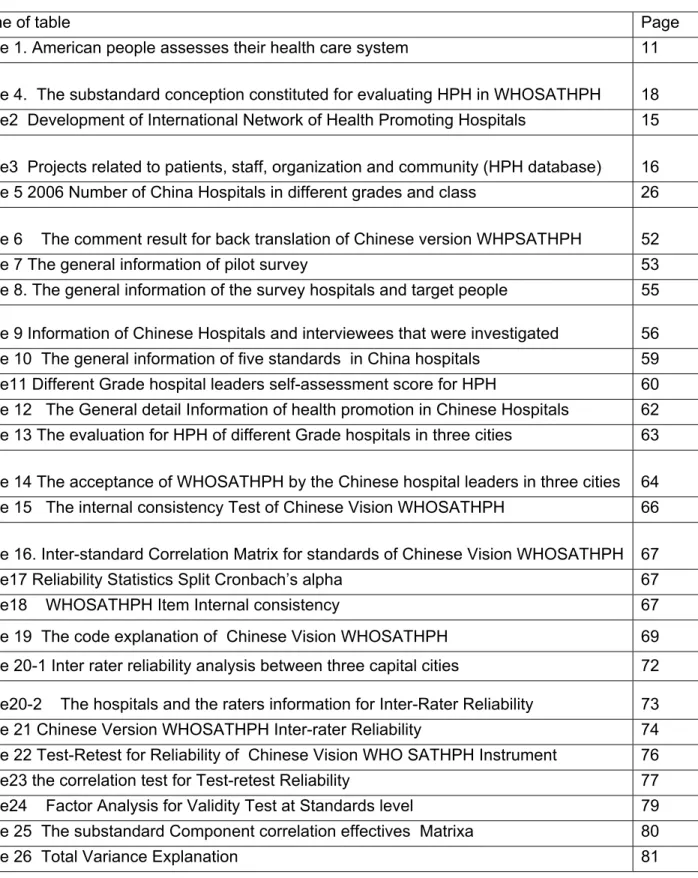
Table 1. American people assesses their health care system 11 Table 4. The substandard conception constituted for evaluating HPH in WHOSATHPH 18 Table2 Development of International Network of Health Promoting Hospitals 15 Table3 Projects related to patients, staff, organization and community (HPH database) 16 Table 5 2006 Number of China Hospitals in different grades and class 26 Table 6 The comment result for back translation of Chinese version WHPSATHPH 52
Table 7 The general information of pilot survey 53
Table 8. The general information of the survey hospitals and target people 55 Table 9 Information of Chinese Hospitals and interviewees that were investigated 56 Table 10 The general information of five standards in China hospitals 59 Table11 Different Grade hospital leaders self-assessment score for HPH 60 Table 12 The General detail Information of health promotion in Chinese Hospitals 62 Table 13 The evaluation for HPH of different Grade hospitals in three cities 63 Table 14 The acceptance of WHOSATHPH by the Chinese hospital leaders in three cities 64 Table 15 The internal consistency Test of Chinese Vision WHOSATHPH 66 Table 16. Inter-standard Correlation Matrix for standards of Chinese Vision WHOSATHPH 67 Table17 Reliability Statistics Split Cronbach’s alpha 67
Table18 WHOSATHPH Item Internal consistency 67
Table 19 The code explanation of Chinese Vision WHOSATHPH 69 Table 20-1 Inter rater reliability analysis between three capital cities 72 Table20-2 The hospitals and the raters information for Inter-Rater Reliability 73 Table 21 Chinese Version WHOSATHPH Inter-rater Reliability 74 Table 22 Test-Retest for Reliability of Chinese Vision WHO SATHPH Instrument 76 Table23 the correlation test for Test-retest Reliability 77 Table24 Factor Analysis for Validity Test at Standards level 79 Table 25 The substandard Component correlation effectives Matrixa 80
List of Figure
Name of figure Page
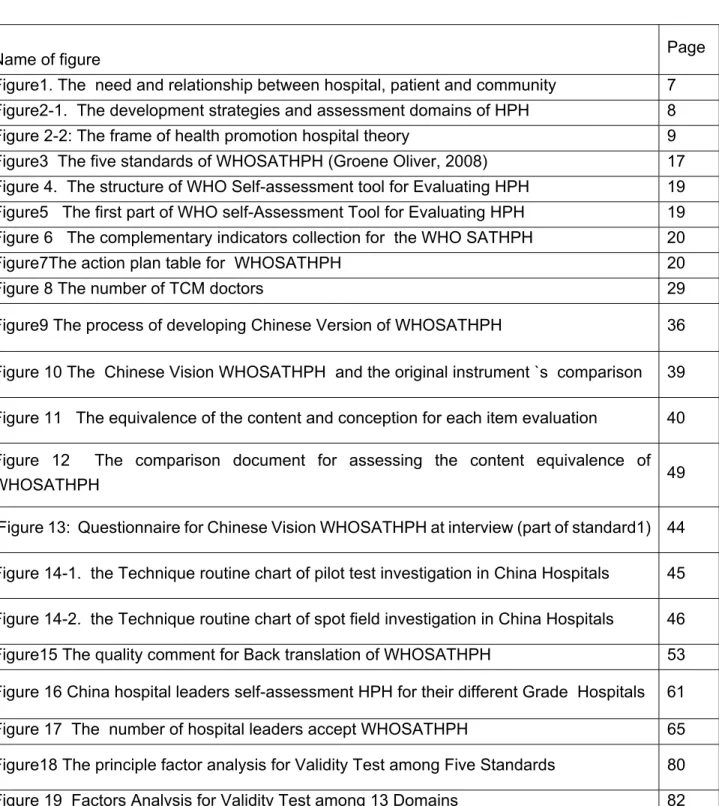
Figure1. The need and relationship between hospital, patient and community 7 Figure2-1. The development strategies and assessment domains of HPH 8 Figure 2-2: The frame of health promotion hospital theory 9 Figure3 The five standards of WHOSATHPH (Groene Oliver, 2008) 17 Figure 4. The structure of WHO Self-assessment tool for Evaluating HPH 19 Figure5 The first part of WHO self-Assessment Tool for Evaluating HPH 19 Figure 6 The complementary indicators collection for the WHO SATHPH 20
Figure7The action plan table for WHOSATHPH 20
Figure 8 The number of TCM doctors 29
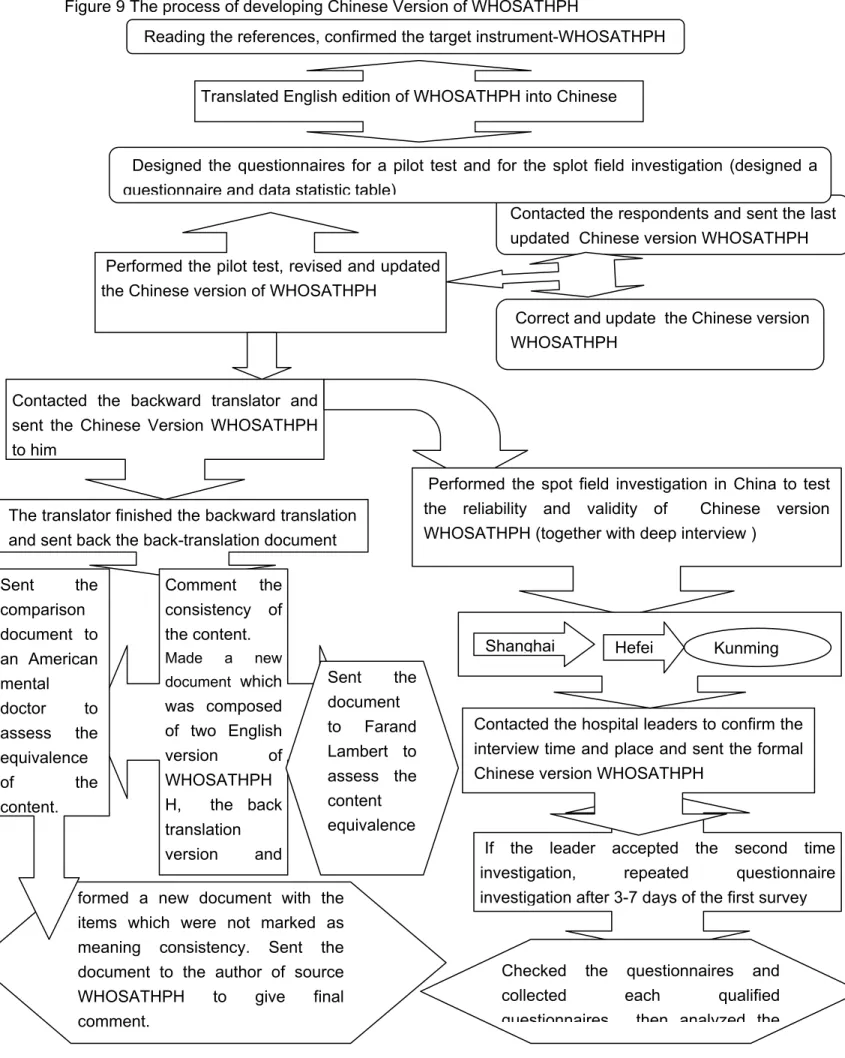
Figure9 The process of developing Chinese Version of WHOSATHPH 36 Figure 10 The Chinese Vision WHOSATHPH and the original instrument `s comparison 39 Figure 11 The equivalence of the content and conception for each item evaluation 40 Figure 12 The comparison document for assessing the content equivalence of
WHOSATHPH 49
Figure 13: Questionnaire for Chinese Vision WHOSATHPH at interview (part of standard1) 44 Figure 14-1. the Technique routine chart of pilot test investigation in China Hospitals 45 Figure 14-2. the Technique routine chart of spot field investigation in China Hospitals 46 Figure15 The quality comment for Back translation of WHOSATHPH 53 Figure 16 China hospital leaders self-assessment HPH for their different Grade Hospitals 61 Figure 17 The number of hospital leaders accept WHOSATHPH 65 Figure18 The principle factor analysis for Validity Test among Five Standards 80 Figure 19 Factors Analysis for Validity Test among 13 Domains 82
Acknowledgements
I am very grateful to every participant, who responded promptly in evaluating the self
assessment tool and providing valuable suggestions at the end of the interview and
investigation phases of the research.
I particularly appreciate my supervisor Farand Lambert Ph.D, who gave detailed and very
constructive comments to all my research work.
I particularly appreciate Professor Fu Hua who not only helped me greatly to finish all
interviews and investigations in the Shanghai Hospitals, but also supported my residence in
Shanghai.
I appreciated Li Jian, Ph.D, who took charge of the whole back-translation work and offered
successful translation versions of the work.
Thanks to my friend Tim Kavi who gave comments on the quality of back translation work.
Also thanks to Professor Groene who provided invaluable research assistance in the latter
stages of my research work.
I should also thank my friends, Professor Wan Conghua, professor Ma Ying, and professor
Zhou Lei, who helped me gather data at the hospitals in China.
I also would like to thank all of the hospital managers who joined in the investigation and
finished filling out the instrument. In particular, I am extremely grateful to Ms. Qi Jing who
helped to correct the first translation work and Madam Nicole Roberge who helped to correct
the formulation of this thesis.
1.
Conceptions
Health is a state of complete physical, mental and social well-being and not merely the absence of disease or infirmity (WHO, 1946). This definition has never changed since its publication in 1948 and has been accepted gradually by people of the world.
Health promotion is the process whereby people can increase the control over and improvement of their own health (Ottawa Charter for Health Promotion, 1986). In 2005, the WHO Bangkok Chapter defined Health Promotion as a core function of public health that ‘contributes to the work of tackling communicable and non-communicable diseases and other threats to health’, and, ‘Health promotion is the process of enabling people to increase control over their health and its determinants, and thereby improve their health’(WHO, Bangkok Chapter,2005). Furthermore, the Bangkok Chapter proposed that health promotion should also mean mental and spiritual well-being, as it too is a human right that also includes a positive concept of health and quality of life.
Hospital is a very important health institution to provide treatment by specialized staff and equipment, and often but not always provides for longer-term patient stays`( Wikipedia, http://en.wikipedia.org/wiki/Hospital). Toward the end of the 19th century, because of the discovery of anaesthesia, the hospital’s functions were revolutionized by the improvement in sanitation and treatment. In large cities, hospitals have become huge medical centers that are well equipped. Such hospital not only treat diseases, but also offer education and training, program to medical staffs, performs vital research, makes reference to identified pathogenic mechanisms and treatment, and helps patients with convalescent and social problems (The Columbia Electronic Encyclopedia, 2007). As an institution for diagnosing and treating the sick or injured, hospitals are classified into public (government-owned) and private (profit-making or not-for-profit), or they are named as general hospital, accepting all types of medical or surgical cases, or special hospitals which limit services to a single type of patient or illness, e.g. mental hospitals ( Britannica Concise Encyclopedia, 2008)
Health Promotion in Hospital (HPH) is a concept for hospital development which builds upon the health promotion concept in WHO Ottawa-Charter. The health care services in HPH include five major action areas which include: 1) health promotions in hospital settings; 2) health promoting workplaces; 3) the provision of health related services, training, education and research; 4) the hospital as an advocate and change agent for health promotion in its community/environment; and, 5) the healthy hospital organization (Jürgen M. Pelikan et al, 2001). Oliver Groene thought HPH means that hospitals should: a) provide high quality comprehensive medical and nursing services; b) develop a corporate identity that embraces the aims of health
promotion; c) develop a health promoting organizational structure and culture, (including active, participatory roles for patients and all staff), and, d) develop itself into a health promoting physical environment that actively cooperates with its community service (Oliver Groene, 2006). In 2004, Groene developed a Self-assessment Tool for evaluating HPH based on the conception of HPH in the Budapest Declaration, and then revised the tool in 2006.
The authoritative and widely quoted principles for HPH are in the Vienna Recommendations (WHO Vienna Recommendations, 1997). The recommendations proposed six principal standards of HPH which are accepted diffusely as follows: 1) to promote human dignity, equity, and solidarity through the development of professional ethics and the acknowledgement of different needs, values, and cultures between different population groups; 2) to be oriented towards quality improvement and well being of patients and their relatives as well as staff by protecting the environment and becoming learning organizations; 3) to focus on health with a holistic approach but not only on curative services; 4) to provide health services that focus on patients and their relatives to facilitate the healing process and contribute to the empowerment of patients; 5) to use resources efficiently and cost-effectively, allocating resources based on health improvement; 6) to develop close links with other health care institutions and communities.
2.
The Hospital’s Role in Improving Health
2.1 The important signification of developing HPH
First of all, hospitals play a central role in the health care system (Martin McKee and Judith Healy, 2002, WHO Vienna Recommendations, 1997). Hospital services can potentially contribute to regional population health significantly (McKee 1999). Danzon found that ineffective hospital service systems will reduce positive health effects or even have negative impacts on regional health (Marc Danzon 2002). Since 1986, the WHO Ottawa Charter proposed that the goal of health promotion meant that all people could achieve their fullest health potential, and that hospital services and functionality must extend itself to include underserved groups. That is, hospitals have to play an increasing important role in the utilization of social and personal resources to reduce the differences in current health status, and to ensure equal opportunities for people to use health resources. Hospitals therefore cannot isolate themselves in narrow traditional domains that focus only on medical and surgical services and ancillary services such as laboratories and medical equipment services, etc.
Secondly, hospital expenditures are the main part of total health investment in most countries. In most European countries, health care expenditure is at 10% of GNP (Gross National Product) and hospitals consume between 40-70% of national health care expenditures (Jürgen M. Pelikan, 2005). 50% of western European countries and more than 70% of the countries of the former Soviet Union put main part of expenditures in healthcare on hospitals (Marc Danzon 2002).
China’s hospital expenditures are always over 60% of total health expenditure since 1949, and in 2002, hospital expenditures were at least 67.68% of total health expenditure (Du Lexun, 2007). Data from Canadian Institution Health Information (CIHI) shows that hospital expenditures had been always over 30% of total health expenditures in Quebec and in Canada before (CIHI, 2005). In 2008, Canada's health expenditure reached $171.9 billion about 10.7% of Gross Domestic Product (GDP), with total hospital expenditures at $48.1 billion, accounting for 28% total health expenditures. This is the largest proportion of these costs, though hospital expenditures are declining. However, if one adds in the physician expenditure (21%) and drugs expenditure (10%) which is inherent with hospital service, the expenditures should be over 66% of total health expenditures (CIHI,2008). In 2007, the Unite States (U.S) health investment is 15.2% of GDP, and hospital expenditures were 30.8% of total national health capital, and if one added 21.2% of physician clinic service and 10.1% of prescription drugs, the expenditures were 62.1% of total healthcare cost (The Henry J. Kaiser Family Foundation, 2007).
Thirdly, hospitals usually produce, accumulate, and disseminate a great deal of health knowledge that impacts the local people, influences local health structures, and can even impact professional practices elsewhere. In some cities, the hospital is the largest employer, for example, 30 000 hospitals in Europe employ 3% of the total workforce (Jürgen M. Pelikan, 2005). Furthermore, hospitals are the crowded areas where a large number of people visit or stay on a daily basis. In some countries, every year, up to 20% of the population has contacted the hospitals as patients, plus plenty of visitors. Hospitals can reach and do outreach to a huge percentage of the nearby population. In addition, a hospital is a special place which mixes a mass of patients and staffs. Furthermore, hospitals could impact the patients and/or their relative’s behavior more effectively than any other institution. Patients are more easily influenced when they are sick and staying in the hospital, especially, they tend to most accept the health advices from their responding health professionals when they are ill. Zöllner .et al (2003) also found out that the relationship between providers and patients in health care implies that decisions made by the users and their providers affects health care processes and outcomes (H. Zöllner, G. Stoddart and C. Selby Smith,2003).
Fourthly, hospitals can become potentially hazardous workplaces. In one hand, people who work in hospitals always have the potential risks to expose in various toxic, infectious, chemical, or physical agents. On the other hand, people have to work under high stress related to the features of the work and the responsibilities involved. Hospitals consume a wide range of goods and produce high amounts of waste and hazardous substances. However, that also means hospitals can develop the strategies to greatly reduce their waste and environmental pollution in general. As consumers of large amounts of products, they can favor healthy products and environmental safety.
2.2. HPH principles offset the defects of current hospital evaluation system
Since the onset of the 21st century, an aging society and the changing spectrum of disease which threatens lives and habitats have caused emerging needs in health care. Since these needs are changing and growing rapidly, and the economic problems spreads worldwide, governments must finance healthcare budgets more effectively. Particularly, as the world becomes more interdependent, rapid changes (sometimes highs and lows) occur in many national economies, especially developing countries, and in particular, in most OECD countries. scientific knowledge in the health sciences fast progressing cause the unmatched government health expenditures with the economic development level. ). A crisis looms in terms of limited health resources and healthcare financial investments conflicting with the unlimited growing needs of health service provision, and the public’s low endurance on high healthcare costs but high expectations on hospital service quality and contingent quality improvement. As a result, the healthcare system has experienced unprecedented immense pressure to fend off multiple crises such as the finance crisis, knowledge crisis, value crisis, management crisis, and ethical crisis (Contandriopoulos A.-P. et al. 2000).
How to define good quality of service for hospitals, how to implement the good quality of service, and how to evaluate what quality of hospital services are necessary and proper to be adopted to gain the consent of patients, professionals, heath providers, financiers? Both the health care proformance effect and public health policy need to be crucial considerations.
During the past few decades, well known quality control and management theories developed from industry and business management theory have been adopted by the health care system and hospital management to improve the quality of hospital services. For instance, the International Organization for Standardization (ISO), Total Quality Management (TQM), and principles from the European Foundation for Quality Management (EFQM) have been adopted. Moreover, additional professional tools and strategies have been applied widely in hospitals with great success. For example, the United States has two most famous evaluation organizations all over the world, the Joint Commission on Accreditation of Health Care Organizations (JCAHO) and Joint Commission International (JCI). This evaluation tools have performed importance influence to improve the hospital management level and ensure the medical service safety and quality. However, their inherent defects also cause the more and more expensive health service and cause the hospitals become a big financial burden to most industry developed counties. Because the health organization tends to seek for more and more advanced health technique, and the traditional evaluation hosptial system encourages the health professional pay more attention on improving the health science and knoweldge. However, patient`s interests is just to remove disease and free their suffering of illness.
As it was showed in figure1 the yellow shape and the blue shape, patients`interests and needs are not completely identical with the health professional desiration to their service even though they share the most common parts(see figure 1 the pink color part). Moreover, the possible service avaiable level which the health organization can offer for patients usually is higher than the affordable ability of the social comprehensive economical conditions. Patients` real needs to medical service may be different and lower than health professional interest to develop health service(see figure 1).
Figure1 The needs and the relationship between patient, hospital and community
Note:
Yellow shape means patient`s needs to health service;
Blue shape means hospital`s interest to improve the health service
The bright green box means the reality social comprehensive conditions which are avaiable for support health promotion development.
The white part of the box means the possible degree that a community can support health promotion but waste its potential health resourse and does not reach its optimal level.
The pink color means the unrealized common interest and demand to the medical service both for the health provider andfor the patients
The dark green color means the realized common interest and benefit for the health organization, the patient and the society demands and available resource.
In figure1, the sharp horn means the interest’s direction , the yellow color shap means patient`s needs and interest to medical service. And the blue shape is the interest and self-cognition of medical professionals to their service. The traditional hospital evaluation standard system usually over emphasizes the role and influence that the health professionals act on health promotion. Therefore, it encourages the health professionals to pursue more and more higher level medical service quality as possible as they can, even this level medical service might not acttract the patients’ interest and beyond the society finance affordable. The traditional hospital manage theory model and evaluation standard and core value do not consider much the different needs of Patient`s
need to health
Social affordability for health
The possible developmment degree of health care service
The level of patient`s needs to health service
Health professional`s interests
Ineffective part or resource waste part
the health service quality between the health professionals interest, the patients’ needs and the economic developing level and finance affordable ability of a community. So this kind of hospital evaluation system model is spontaneous to stimulate the health expenditure increasing as the medical science and technique progress and population aging.
However, HPH theory philosophy and value are very different with the traditional hospital evlauation system. HPH thinks that the hospital should not only focus on improve medical service quality in hospital during the process of treatment, but also focus on patients outside the hospital to prevent disease and health promotion by means of its influence to the public and the community and through the cooperation with the relational health organization and community organization. HPH emphasizes the common responsibilty of health promotion that sharing with the patients, community , it jumps out from the limitation of theory frame of the traditional hospital evaluation standard that focus on the medical serivce within hospital. For example, Tannahill A. thought that health promotion was a multifactorial process that operated on individualsand communities by means of education, prevention, and protection
measures( Tannahill, 1985). Vive Speller et all thought that health promotion methods may include diverse activities refer to raising campaigns, provision of health informationand advice, influencing social policy, lobbying for change,professional training, and community development that often incombination in complex interventions( Vive Speller, Alyson Learmonth, DHarrison, 1997). Dr, M. Bensber( Bensber M. 2000) constructed a model of HPH strategy to evaluate and develop HPH (see figure 2-1 ).
Figure2-1. The development strategies and assessment domains of HPH(Bensber M., 2000)
Bensber developed a complementarily measure for health promotion in medical practice. From his theory model of HPH, Bensber displayed the special strategies in clinic practice that were different with traditional hospital management evlauation standard. Even though Groene thought these strategies were major concetptual differences with those theories that focused on health promotion actions( Groene Oliver, 2006). In Bensber’s theory model, the health service of HPH
not only refers to individual health service but also to population health care(see the first line of figure 2-1). It meant the HPH should not only serve to patients in treatment procedure in hospital, but also extend its service before and after patients stay in hospital. This is the first different core value between the HPH theory and any other traditional hospital management theory. The traditioanal standard system for evaluating hospital service only considers of individual health service happened in hospital (medical treatment service). The second different core value between HPH theory and tranditional hospital assessment theory is HPH focus on population health promotion, that means hospital should take charge of disease prevention and public health promotion arround its community. For this reason, HPH has to provide some strategyies refer to health education and empower patient`s right to improve patients’ ability to health self-protection and health maintain. The trditional hospital evaluation model only emphasizes the responsibility of health professionals’ role and influence to improve patient`s health but ignore the public and patients role and influence.
These two core principles of HPH theory, the individual health service serving area and the population serving area should be coherent together, they can not separate with each other. During the HPH practice, these two strategies ought to supplement and encourage each other which can achieve more effective health performance. Groene developed HPH evaluated standard model based on Besber M theory model. Besber M. defined the individual service as the disease`s diagnosis, risk assessmen, evaluation of patient`s immunization, providing health information though education course or/and through pamphlets or /and paper materials or/and others electronic materials (These methods are also used to population health eudcation service ways). Groene thought HPH has to improve patients’ health and their ability of self-protection since the admission step, it should be from the first line the clinic perception to the third line, the patient`s perspectives. He proposed the detailed strategies and principles to develop HPH ( see in figure 2-2). The goal of these actives is to improve the individual healthy knoweldge and the patients’ ability of self-health protection.
From figure 2-2, at individual medical serivce level, these strategies of developing HPH should be melt in every treatment process in a health promoting hospital(see the first line, the procedure of patient treamtent in a hospital). Moreover, patient should have the proper optional right to their treament methods that are maken by their doctors(see the second line patients`perspective), patients` right should be respected by the health professionals.
Although the theory and principle of HPH and traditional hospital evaluation system share some common value and principle in the service of quality mangement, for example,the medical treatment service( at the first line), protect the patients’ saftey( and the second line), develop reasonable organization and straucture for the hospital (at the third line), however, they hold the different value, different principle and different strategies on how to perform the medical quality management. Besides the hopsital role, HPH more emphasizes the patient and community `s role and responsibility in health promotoion, and the traditional hospital management theory and evaluation standard system only focus on hospital itself and on health professionals duty(Groene Oliver,2004).
The HPH principle for the population viewpoint of means the community role on health promotion, namely to shape well social health culture and to develop a healthy marketing through large size participants action. Because HPH theory thinks that hospital cooperates with community can make health service more easiliy access and help improve the health service euqility, therefore, HPH stresses the cooperation with others organziations to offer continue health servcie for patients. Furthermore, HPH emphasizes the reasonalbe technic development which matches the local economic development levelm, namely, the hopsital expenditure should match the local finance budget affordable condition. HPH should offer the proper medical service which meet the local heath resource collocation by means of the regulatory measures that can exploit the health resource optimally. These different value and philosophy between HPH and traidtional hospital management theory indicate that hospital is not an isolated organization any more in 21 century, hospital is one core part in a health system net that can influence total health promotion
developing level, hospital has to be reorganize and restructured to adapt to the health promotion need in new century.
Another important principles of HPH is disease prevention first. In this view, hospitals should take charge of maintenance and improvement of health by means of protection or development of positive health interventions. Groene Oliver thought that hospitals can target of performance prevention or treatment with reference to a specific diseases, moreover, hospital can offer care service to meet patient`s specific needs, as long as these procedures are applied in an empowering manner (Oliver Groene & Mila Garcia-Barbero, 2005).
HPH theory thinks that disease prevention is more important than diagnostic and curative services for health promotion. Rootman defined the concept of HPH as something that should perform a role of enabling individuals and communities to take on more power over the personal, socioeconomic, and environmental factors that affect people’s health and to enhance participation through involving all concerned factors at all stages of the process (Rootman et al, 2001). In order to improve hospital adaptation to current society demanding in a rapidly changing internal and external environments, WHO advocated the strategies of HPH to improve the quality of health service through health education, impowering patients’ rights, self help movements, health at work, hospital hygiene, the ecological movement etc strategies that for personal and organizational development, quality management, project management, etc. These strategies aim to perfect hospital structures and organization,to improve the processes and outputs of service (see figure 4), to control long term costs and help to provide better quality healthcare service.
2.3 HPH strategy helps to build up a more effective performing healthcare system
Even the current most famous hospital evaluation standards systems have been adopted all over the world for several decades, for example, JCI, ACHS, CCHSA, HAS, HQS, JCAHO , no of them can provide an universal strategy to well resolve the more and more arduous challenges that the health and hospital managers have to faced and will have to face. For example, the inequality of health service access, the restricted health resource vis-a-vis people`s unlimited needs for health service, the unconfined possibility of developping medical science and technique vis-a-vis the conditioned finance budget, the two pair of conflictions will forever exist among the patient`s needs for health service, and the desiration of the health specialists questing for the further high level profession , as well as the demand of society comprehensive development.
Although there few strict designed case-control research to prove the effect of health promotion between HPH and Non-HPH, to prove the effectiveness that the principles and strategies of HPH can improve the performance of the region health care system, however, there are many rough evidence cases to support the effectiveness and influence of HPH strategies and principles for a
country or region. For example, Canada and the US. Canada is the first country who proposed the health promotion conception and one of the important member countries who practiced health promotion movement. Although Canada doesn`t have the international hospital evaluation system as US, Canada health care system perform more effective than US.
JCI is the best known of a large number of active healthcare accreditation groups in the USA, and is even known as a worldwide public authority to evaluate hospital service quality. In United States (U.S), a hospital should meet JCAHO accreditation so that it can meet the “Medicare Conditions of Participation" which is a requirement for Federal Medicare reimbursement. However, even though the U.S health expenditure is 15.2% of GDP, $2.26 trillion, the U.S invests 62.1% capital on hospital and its supporting services, even the health expenditures per capita is the highest of the world for years, reached to $7,439 in 2008, nevertheless, American people still don`t have the longest life expectancy in the world, ( an American`s life expectancy (LE) male/ female is 75m/80f lower than its neighbor Canada, whose LE is 78m/83f). Also, the mortality rate of children under 5 years of age is more than 2 per 1000 lives comparing with its neighbor Canada(6/1000 lives), the US is 8 per 1000 live births (WHO health statistic, 2008). For these core health indicators, US is also higher than many others OECD (Organization Economic for Cooperation and Development) countries, for example, Canada, Australia and some Europe countries(OECD, 2004). Moreover, Canada’s health expenditures is less than U.S, Canada is $4,867 per person and the health expenditure is only 10.6% of GDP. Furthermore, the U.S has 15.3% of the population and 45.7 million people without health insurance, but Canada’s health insurance cover 100%.
As it has been discussed above related the typical case of Unite State and Canada, although most of these standardization and evaluation organizations have been widely implemented in most central medical units, these traditional evaluation standard system don`t help those countries build up more effective performance health care system. Moreover, these evaluation standards systems have a common noticeable lack of patient orientation and clinical outcomes effects in their implementation. Also, none of them is universally accepted by health professionals all around the world (WHO Oliver Groene, 2006). In 2000 the world health system performance report, WHO ranked the U.S. health care system first in expenditure, but 37th in overall performance and 72nd by overall level of health (WHO health performance report, 2000). Karen Davis (2008) pointed out most people have found the United States’ health system performs relatively poorly, particularly poorly in terms of providing care equitably, safely, efficiently, or in a patient-centered manner. A survey of 1026 Adults by the Harvard School of Public Health and Harris Interactive in March 2008 showed that only 45% Americans thought the US has the best health care system(see table 1).
U.S. is...
Better Worse Same DK/Ref
Canada 40% 30% 4% 26%
France 31% 14% 3% 53%
Great Britain 37% 17% 6% 40%
Source: Debating Health: Election 2008, Harvard School of Public Health/Harris Interactive. March 5-8, 2008
http://www.hsph.harvard.edu/news/press-releases/2008-releases/republicans-democrats-disagree-us-hea lth-care-system.html.
Even though Canada and US has very similar political system, similar social and natural environment and the same industry economic develop level, nevertheless, as the initiator of modern HP movement and one of the leadership of modern HPH, Canada develops a quite higher effective health care system performance than US, though US has more famous traditioal international quality evaluation standard system than Canada. Besides Canada successive experiences, some Asian countries and cities have the same successive practice experiences to implement the quite higher performing effect for health care system development through carrying out the value and principle of HPH.
For example, Japan, Korean, Singapore, Taiwan, Hong Kong, etc, these Asian countries or cities have the similiar level of economy development and the similar political system and social management system with western developed countries (North American and Europe),however, they all implement more higher effect of health care system in health promotion, even though they also all adopt western medicine education system and they have the similar hospital management system. The ultimate difference between these Asian counties and cities with western countries is they hold very different value and culture to develop health promotion of their health care system. Influenced by the culture and core value of TCM(Traditional Chinese Medicine), these Asian counties and cities all retain the same culture and value of health promotion in developping their health system. TCM advocates the same value and principles of health promotion with modern health promotion theory for several thousands years, for instance, disease prevention first, self health promotion and protection, the important role of nutrition, lifestyle and environment to health promotion and protection, etc.
For instance, Japan. Japan is one of the Asian countries influenced deeply by TCM culture and value for long history. Japan has performed its national hygieniceducation as one of its mordern health promotion policy in 1950s(HirobumiIto, 1986, Huang Yawen, 1994). Since the end of the 1970s, health promotion has become a nationalpolicy and law as the spectrum of disease changing and the aging population growing in Japan. In order to control rapidly growing health expenditures and to improve public health level as well, the Japanese government regulated that
at least 5% of health insurance expenditures must be used for disease preventiveactivities, the health promotionaction includes not only medical care but also regular healthchecks in Japan. As a result, as the aging population growing around the world in 21 century, when all the developed western countries (North American and Europe countries) have to face the more and more higher health expenditure, have to struggle for the long waiting time to health serivce access, have to figure out the strategies of reducing the high proportion of GDP on health expenditure while improving high quality health service, Japan health care system stands out by its high performance effects. although Japanese health expenditure per capital is only 2474, far lower than most OECD countries, the Japanese have the most long life expectancy in the world, their LE reached 79/86(M/F) in 2005 (WHO Health Report, 2008). In 2000, WHO ranked Japan as the first country of 191 countries in the world for its goal attainments of health promotion and ranked 10th in the world for its overall health performance effectiveness (WHO health report, 2000).
Another case is China. Comparing with some high developed country, such as US, Canada, etc, as an undeveloped country, China has obtained a remarkable achievement in health promotion. For instance, U.S spend $6697 per capita on health and 16% of GDP in health care in 2005, got 78 years old of LE, nevertheless, China only cost 342$ per capita and 4.7% GDP in health but got 73yrs (Female 75yrs, male 72yrs,WHO 2006) . Moreover, China has 1.3 huge population and Chinese people live in more complex and more difficult social and political environment and more worse nutral envorinment than American people.
As an extremely undeveloped and needy country during 50s-60s, China had improved its citizen health level very successfully. The life expectance of Chinese from 39 yrs old(in 1949) increased to 57 years old( in 1957) but the total health expenditure was always lower than 1.08% of total government expenditure and the health expenditure per capital less than 1$( MHRPC statitic report, 1997). The core strategies which Chinese government used is health promotion strategies in China health system. From 1950 to 1979, Ministry of Health Republic People China(MHRPC) depended on TCM to offer low price primary health care service that over 97% Chinese people can access to handle with the poverty health resource in very difficult economic and social condition, and Chinese people’s life expectance reached male/ female 66.4/69.3 years in 1981(MHRPC statistic report, 2007).
However, when China economy has big developed in 90s, even though Chinese become richer more than before and the health expenditure was increasing faster more than before, the genearl hospital service environment and equiments have improved greatly than before, the hospital medical quality service were worse than before, and Chinese people health indicators were not obviously improving for over 20 years from 1980 to 2000, even some core health promotion indicators were withdraw obviously because China gave up its HPH management model and
policy by so-called `health care system reform` which drove the hospitals to go for profit health service marketing and to seek for the economic efficiecy. The business marketing culture and value, profited-direction value and principle are replaced of the past public, universeral and low service price value in China health care system. Because of the profite driving in hospital management culture, TCM culture and value becomes more and more weaker, the western medecine service value become the unique main stream value in China health care reform. The professional-center medecine model replaces the patients-center value to earn more profit to develop more high level quality hospital service. The past principle and value of patients-center and public accessed principle were distroyed completely because of Chinese government withdrawed responsibility from health care system supporting, from their finance investment on health system support. All the Chinese hospitals’ leaders have to struggle for earning money directly from patients. In 2000, the Chinese Life Expectance was male/female 69.6/73.3 even per caonpita total on health expenditure increased to 183$( WHO statistic report, 2006).
Since 2003. China adjusted its health reform policy, health promotion developing policy is emphasized in China health care system, the primary health service is enforced little by little, the community hospitals are developping quickly in recent several years, the health promotion and health education become the national health promotion policy and health promotion movement become more and more popular and are encouraged in most cities in China. Chinese health indicators improved quite faster than most countries before since 2003. More remarkable achievement, China government invests in health expenditure is lower than most countries, especially far lower than all developed western countries. From 2000 to 2006, even China per capita total expenditure on health increased from 183 to 342( ppp int $), Chinese people Life expectance improved from male/female 69.6/73.3 years to 72/75 years(WHO statistic data,2006)
2. 4 HPH improves the cooperation between different professions and
departments in hospital.
Kaja Pôlliste et al compared the implementation of health-promotion and quality-related activities between HPH and Non-HPH in Estonian, they investigated 54 hospitals top managers, their study result showed that the rate of patients` satisfaction and the rate of staff job satisfaction of HPH were higher than Non-HPH, the result had difference statistic signification. They thought that HPH had much better cooperation with other organization and better implementation of various guidelines (Kaja Pôllist et al, 2007).
Cooperation among different hospitals or among hospital with other organizations, or among different departments, is one of the important value and principle of HPH. A HPH ought to develop close co-operative relationships in different hospital departments, in different wards, in
different professional groups and in different hierarchy professionals to improve the quality of services more efficiently. Moreover, the strategies that HPH adopts should be comprehensive and easily to understand, should base on current quality management system of hospital. For example, the principles of the EFQM model or the TQM models, etc. (Jürgen M. Pelikan, Karl Krajic et al, 2001). Furthermore, because hospitals play a pivotal role in improving health, as a research and teaching institutions, hospitals produce, accumulate, and disseminate a great deal of knowledge that impacts on the local health level and structures. Cooperation with other institutions and professionals can help to achieve the highest possible coordination of care. Therefore, the strategies to improve quality for HPH would be successive and compatible and the influence of HPH on regional health will be widely. Pelikan pointed out that the organizations adopt HPH will become "healthy“ and learning organizations that act strategically in their environments (Jürgen M. Pelikan, Karl Krajic et al, 2001). In a word, as a core set of organizational principles in health system, the theory of HPH provides a comprehensive strategy to develop health care system more effectively, so that the hospital itself can become a healthy and effective institution that thrive in a complex and dynamic environment. Many researches showed that HPH could play an important role for health care development in developing countries and Europe (Jurgen M. Peliken et al, 1998).
3.
The development of WHOSATHPH
3.1 The development of WHO HPH theory
Since the 1986 Ottawa Charter gave the definition of Health Promotion, the HPH concept was proposed also at the same time. Many people thought the role of the health sector must move increasingly towards health promotion. This changed the role of the hospital. As such hospitals moved beyond their responsibilities for providing clinical and curative services, the hospitals changed their focus from the organization within itself to refocus on the total needs of patients as whole and healthy individuals(Groene Oliver, 2004).
Then in 1991 the first Business Meeting of the International Network of HPH in Budapest published the Budapest Declaration. It was the first publication for Health Promoting Hospitals that adopted a comprehensive theory for guiding HPH development. The Budapest Declaration included two parts, the content and purpose of HPH development, and its 17 criteria to fulfill the concept of HPH. After that, in 1997, the Vienna Recommendations was issued. Vienna Recommendations further developed HPH theory based on the Budapest Declaration which defined six fundamental principles and four general strategies for HPH implementation.
From 1993 to 1997, twenty hospitals in eleven European countries participated in the European pilot project (WHO, 2005). Since then, an international Network of Health Promoting Hospitals has built up. Up to now, it has steadily expanded to 25 Member States, with 36 national or regional networks and more than 700 partner hospitals taking part in the HPH project (WHO, 2005). The model of HPH in Europe is some hospitals invested together in a benchmarking project to develop into more HP organizations, then the members from patients, staff, and communities took part in HP initiatives (Jürgen M. Pelikan, 2005). HPH principles are regarded as voluntary activities in Europe which focus on patient’s education. Many discussions showed that HPH could play an important role for health care development in developing countries and Europe (Jurgen M. Peliken et al, 1998).
WHO initiated some effective activities to reduce smoking rates, to stop smoking in public places, to control alcohol, to reduce obesity, to build up healthy cities, etc (see table 2).
Table2 Development of International Network of Health Promoting Hospitals
Year Developmental stage
Number of countries Number of networks Number of hospitals
1989–1996 Project Health & Hospital, 1 NA 1 Hospital Rudol, phsstiftung, Vienna
1993–1997 European Pilot Project of HPH 11 NA 20
1998
Development of national and regional networks
14 19 210
under the umbrella of the International Network of Health Promoting Hospitals
1999 16 29 280
2000 19 29 508
2001 22 29 540
2002 22 32 627
2003 24 34 693
Till to the end of 2008, sixteen international annual conferences had been held. The themes that were discussed in these conferences included migrant-friendly hospitals, mental health promotion, health promotion in primary health care, general practice and community pharmacy.
3.3 WHO HPH evaluation instruments
Europe WHO Self-Assessment Tool for Health Promotion in Hospital (WHOSATHPH)
In 2001, Rootman et al developed 18 core strategies to build up holistic, inter-sectored, equitable, sustainable and multi-strategy value systems in hospital medical services( Rootman et al, 2001). In 2004, Oliver Groene et al (2004) published a self-assessment tool for pilot implementation based on the standards for health promotion in hospital HPH. 34 hospitals in nine European countries took part in a pre-test evaluation, after that Groene updated and published it in 2006 named WHO Self-assessment tool for health promotion in hospital(WHOSATHPH). Today, this instrument has been translated into Chinese (Taiwan), Estonian, German, French, Italian, Slovak and Spanish (Oliver Gröene, 2008). In 2003, Oliver Groene, Svend Juul Jorgensen and Mila Garcia-Barbero developed an International Working Group. WHOSATHPH is a production of WHO European Health Promoting Hospitals Project. See table 3
Table3 Projects related to patients, staff, organization and community (HPH database)
Projects Issue addressed Num
ber Projects Issue addressed Number Patient- Patient satisfaction 127 Staff-orie
nted Staff satisfaction 16
oriented Psychosocial aspects 84 (270 overall) Inter-professional communication 79 (314 overall)
Nutrition 75 Working environment 74
Diabetes 62 Psychosocial stress 65
Tobacco 59 Other 60
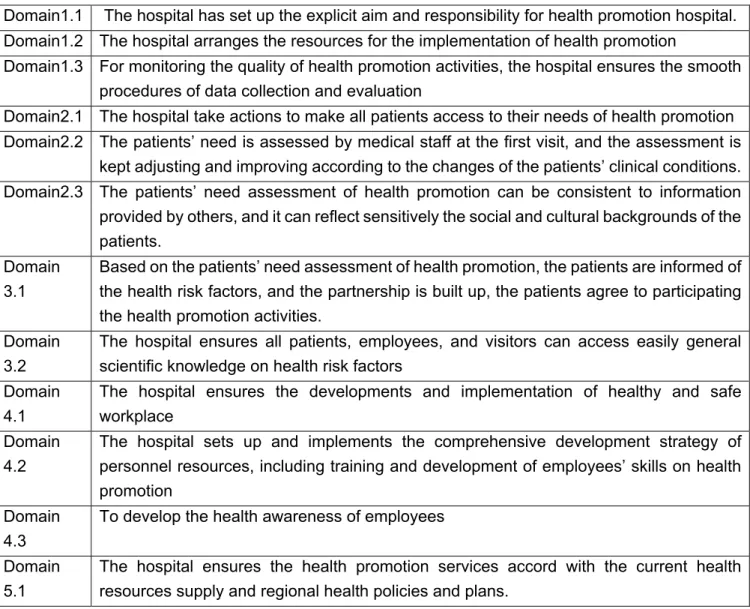
This Self-Assessment Tool for HPH was developed in cooperation with international quality organizations and the members of the International Network of Health Promoting Hospitals (Oliver Groene, WHO, 2004). WHOSATHPH includes 40 items which refers to five standards: management policy, patient assessment, patient information and intervention, promoting a healthy workplace, and continuity and cooperation. Each standard has its own set of
sub-standards ((Oliver Groene, WHO 2007). The total standard conception Of WHOSATHPH was showed in figure3.
The first standard of WHOSATHPH is health management policy. As such, health management policy was defined as policy that evaluates promotion as an integral part of the organization's quality management system. A policy for health promotion should be implemented as part of the overall organization’s quality improvement system to improve health outcomes, and should be the foundational framework to organize the activities concerning health promotion for patients the their relatives and for the hospital staffs. The second standard is patient assessment which ensures the health professionals respect the patients’s right, this standard systematically assesses the needs of health promotion activities, evaluates the quality of the medical service offered to patients, such as the service of treatment and prognosis and patients health education and psychology caring.
Figure3 The five standards of WHOSATHPH (Groene Oliver, 2008)
The third standard refers to patient information and intervention. It aim to evaluate the quantity and quality of information that are provided for patients by the hospital. For example, the significant knoweldge concerning of disease, in each patient pathways, the information of health condition and health promotion interventions should be available for every patient. And the content of information covers the communication, the coordination between patient and professionals, the continu treatment and care, the patients` right and safety, etc. Moreover, the hospital should empower patients to take part in self health promotion activities and to facilitate the integration of health promotion activities for patients. The fourth standard is to develop a
healthy workplace which means the hospital should develop a healthy and safe workplaces, moreover, the hospital should offer the health promotional activities for its staffs. The fifth standard is the collaboration and continuity that the hospitals cooperate with other health services to optimize the integration of health promotion activities in each patient pathways (see figure 3).
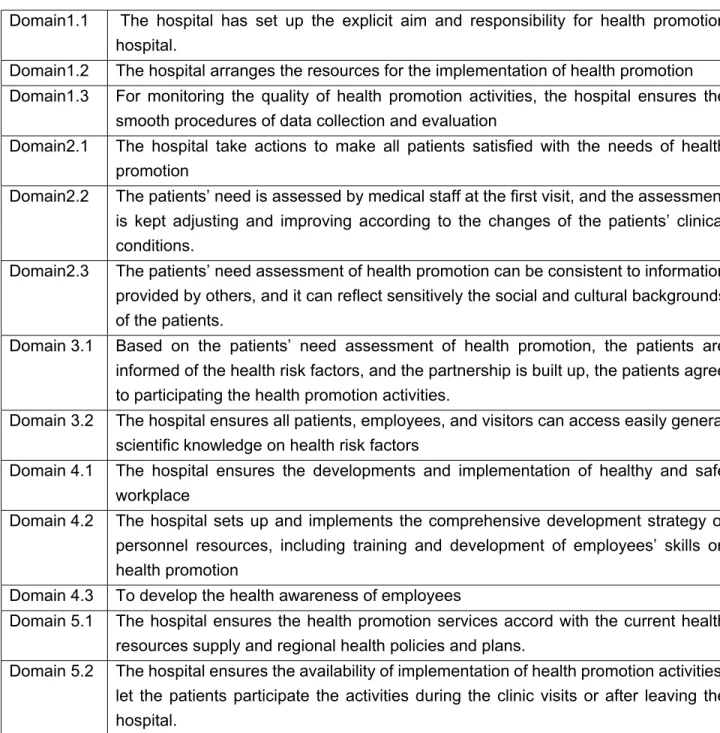
To achieve HPH goal effectively, the hospital should perform health promotion value and culture, develop different strategies in every organized level, from the leadership recruitment or the staff maintenance. Therefore, the hospital has to build up a culture and value system of health promotion and set up its organization structure and management to ensure the health promotion be well development. The detailed standard items of WHOSATHPH see table 4.
Table 4. The substandard conception constituted for evaluating HPH in WHOSATHPH
Domain1.1 The hospital has set up the explicit aim and responsibility for health promotion hospital. Domain1.2 The hospital arranges the resources for the implementation of health promotion
Domain1.3 For monitoring the quality of health promotion activities, the hospital ensures the smooth procedures of data collection and evaluation
Domain2.1 The hospital take actions to make all patients access to their needs of health promotion Domain2.2 The patients’ need is assessed by medical staff at the first visit, and the assessment is
kept adjusting and improving according to the changes of the patients’ clinical conditions. Domain2.3 The patients’ need assessment of health promotion can be consistent to information
provided by others, and it can reflect sensitively the social and cultural backgrounds of the patients.
Domain 3.1
Based on the patients’ need assessment of health promotion, the patients are informed of the health risk factors, and the partnership is built up, the patients agree to participating the health promotion activities.
Domain 3.2
The hospital ensures all patients, employees, and visitors can access easily general scientific knowledge on health risk factors
Domain 4.1
The hospital ensures the developments and implementation of healthy and safe workplace
Domain 4.2
The hospital sets up and implements the comprehensive development strategy of personnel resources, including training and development of employees’ skills on health promotion
Domain 4.3
To develop the health awareness of employees
Domain 5.1
The hospital ensures the health promotion services accord with the current health resources supply and regional health policies and plans.
Domain 5.2
The hospital ensures the availability of implementation of health promotion activities; let the patients participate the activities during the clinic visits or after leaving the hospital.
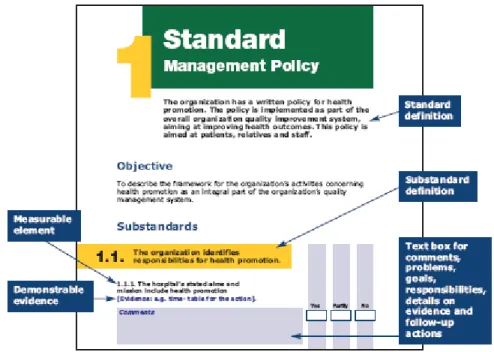
WHOSATHPH combined with two parts, the first part explains the purpose, the second part is the measured scale and indicators. The five standards has a set of sub-standards and the measured scale tool adopted three degree options for each item, they are “yes”, “partly”, or “no”. All positive answers should offer with correlative documents as proofs, for example, any kind of medical record or note, etc( See figure 4)
Figure 4. The structure of WHO Self-assessment tool for Evaluating HPH
This scale designed could help the hospital managers or researchers to collect quantity data and qualitative information, which will give more valuable information to improve the future
performance effect for HPH development. Furthermore, WHOSATHPH also give the form for the project leaders to record their responsibility of performing Health promotion activity (see figure5).
Figure5 The first part of WHO self-Assessment Tool for Evaluating
HPH
The complementary indicators and its additional self-development indicators that for developing local health promotion hospital indicators (see figure6 and figure7)
In addition, WHOSATHPH also created a form of action plan to execute the HPH standards (see figure7)
Oliver Groene et al constructed the WHOSATHPH and tested its reliability and validity through 8 counties and 38 hospitals. They adept a convenient sample ways to assess the reliability and validity. They assessed self-reported compliance with the health promotion standards of European hospitals and analyzed the proportion with the worst (floor) and with the best (ceiling) scores. They analysed the internal consistency through an overall compliance score basing on the self-assessment reports. The ways they assessed the validity of the tool was self-reported compliance with hospital characteristics, for instance, accreditation status, being member of the WHO HPH network, to ask each hospitals rating of the measurable elements in terms of comprehension, applicability and importance. Their results of the reliability of each standard domain ranged from 0.77 to 0.88 (Oliver Groene, 2008). Mean of the overall compliance score was 71.8 (SD 25.0) (with a possible range from 0 to 136). Ceiling and floor effects for standard 4 and 5 only 10.5% and 15.8%, respectively. Chronbach’s alpha for the five scales ranged from 0.77 to 0.88. In their research, the overall compliance score of the sampling hospitals that were accredited or were the member of the WHO network was significantly associated with a higher score than non accredited hospitals or non member of WHO HPH network (score 86.9 vs 64.2, p=0.012 and 79.3 vs 51.9, p=0.003, respectively).