Case Study
Compensation and Livelihood
Restoration at Nam Theun 2 Hydropower
Project
Case Study
Compensation and Livelihood
Restauration at Nam Theun 2
Hydropower Project
Table of Contents
1 Introduction ... 14
2 Case Study Scope ... 23
3 Resettlement Policy Framework ... 24
3.1 Involuntary Resettlement in Lao PDR ... 24
3.2 Donor Resettlement Policy ... 25
3.3 Compensation ... 26
3.4 Integrated Resource Development Plans for the Affected Population ... 27
3.5 Indigenous People/Ethnic Minorities ... 27
3.6 National Policy ... 28
3.6.1 National Policy on Sustainable Hydropower ... 28
3.6.2 Compensation and Resettlement in Development Projects ... 28
3.6.3 Key Differences in Lao PDR Law and World Bank Policies ... 31
3.7 Legal Framework of NT2 Compensation Policy and Entitlements ... 31
3.7.1 The Constitution (August 14, 1991) ... 32
3.7.2 The Land Law (October 21, 2003) ... 32
3.7.3 Land Titling Legislation ... 32
3.7.4 The Road Law (April 3, 1999) ... 33
3.7.5 Nam Theun 2 Resettlement Policy ... 33
3.7.6 Resettlement Committee Regulations ... 33
3.7.7 ADB and World Bank Operational Procedures ... 34
3.7.8 The Concession Agreement ... 35
3.7.9 General Principals of Compensation and Livelihood Restoration ... 35
4 Brief Introduction to the Nam Theun 2 Hydropower Project ... 38
4.1 Background of the Project ... 39
4.2 Project Design and Operation ... 40
4.3 Financing and Project Developers ... 44
4.4 The Role of the WB and ADB in Supporting NT2 ... 46
4.5 General Role and Benefits of NT2 in Lao PDR ... 47
4.5.1 Nam Theun 2 Revenue Management Arrangements ... 48
4.5.2 Initial Resource Usage Charges... 49
4.5.3 The Public Expenditure ... 49
4.6 NT 2 Social and Environmental Impacts and Monitoring and Evaluation ... 50
4.6.1 Reservoir Area on the Nakai Plateau ... 50
4.6.2 Nam Theun Watershed ... 54
4.6.4 The Nam Theun Basin ... 60
4.6.5 Other Project Lands ... 61
5 Implementation of Upstream Mitigation ... 62
5.1 Implementation of Resettlement ... 62
5.1.1 Government Structure for Compensation and Mitigation ... 62
5.1.2 NTPC’s Resettlement Office ... 64
5.2 Organisations Related to Resettlement and Compensation ... 65
5.2.1 Grievance Committee ... 65
5.2.2 Provincial Authorities ... 65
5.2.3 Lao Women’s Union ... 65
5.2.4 Consultants and Contractors ... 66
5.2.5 NGO Involvement ... 66
5.3 Resettlement Process ... 66
5.3.1 Resettlement Stage 1: Consultation and Planning ... 68
5.3.2 Resettlement Stage 2: Physical Relocation ... 70
5.3.3 Resettlement Stage 3: Livelihood Development ... 74
5.4 Compensation in the Nakai Reservoir Area ... 74
5.5 Building New Livelihoods for the Resettled Nakai Communities ... 75
5.5.1 Pillar 1: Agriculture and Livestock ... 76
5.5.2 Pillar 2: Community Forestry ... 81
5.5.3 Pillar 3: Reservoir Fisheries ... 85
5.5.4 Pillar 4: Off-farm Income ... 88
5.6 Household Income and Consumption ... 90
5.7 Education and Health ... 94
5.7.1 Education ... 94
5.7.2 Health ... 96
5.8 Community views ... 99
5.9 Capacities and Interests of the First and Second Generation of Resettled Families 102 5.10 The Handover Process ... 103
6 Implementation of Downstream Mitigation... 105
6.1 Nam Theun Downstream ... 106
6.2 Xe Bang Fai Downstream ... 107
6.2.1 Mid-Term Review ... 107
6.2.2 Livelihood Improvement and Restoration ... 108
6.2.3 Village Restoration Fund ... 112
6.2.5 Water Supply, Sanitation, and Hygiene ... 115
6.2.6 Water Quality ... 117
6.2.7 Riverbank Gardens ... 118
6.2.8 Handover of the Downstream Programme to the Government ... 118
7 Monitoring and Evaluation ... 120
8 Conclusion ... 122
9 Lessons learned... 124
10 Recommendations ... 128
11 Bibliography ... 130
12 Appendix ... 144
Appendix 1: Project Timeline... 144
Appendix 2: Summary of the NT2 Resettlement Package ... 146
Appendix 3: Monitoring and Oversight at NT2 ... 147
MRC-GIZ Cooperation Programme Background ... 149
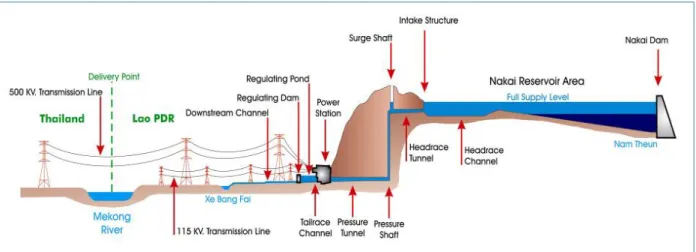
LIST OF FIGURES Figure 1: Nam Theun 2 Hydroelectric Schematic Diagram (NTPC 2005 a chp:2 p.3) ...43
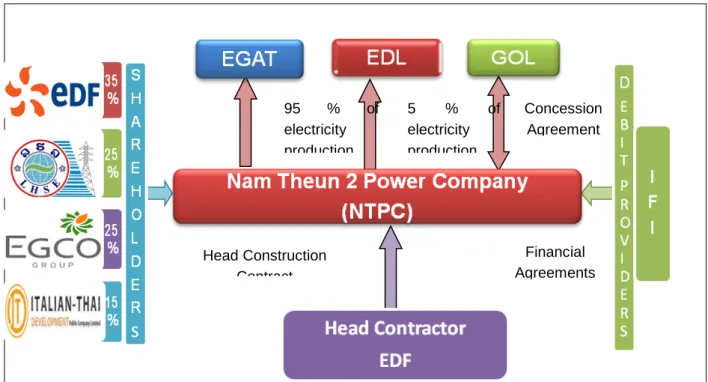
Figure 2: Nam Theun 2 Dam Contractual Structure ...46
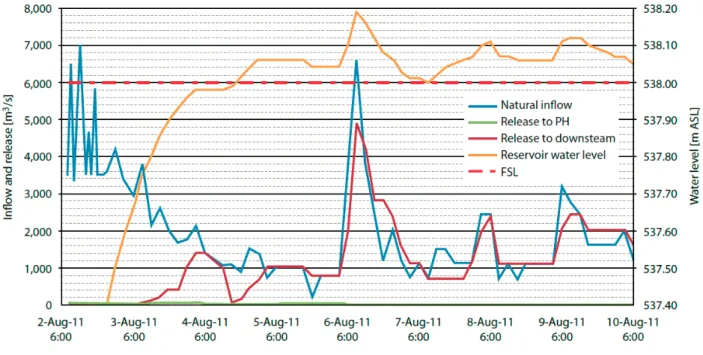
Figure 3: Nakai Dam Water Release Management August 2011 ...56
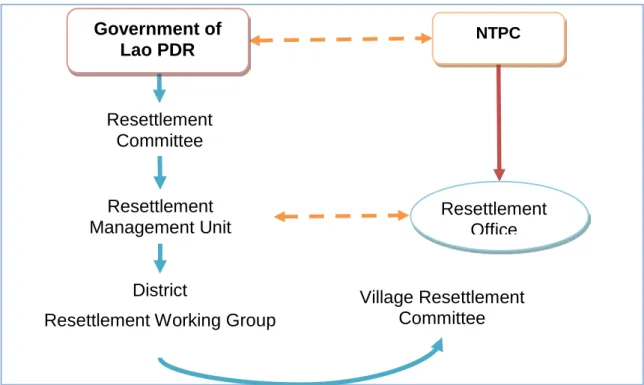
Figure 4: Institutional Arrangements for Resettlement ...65
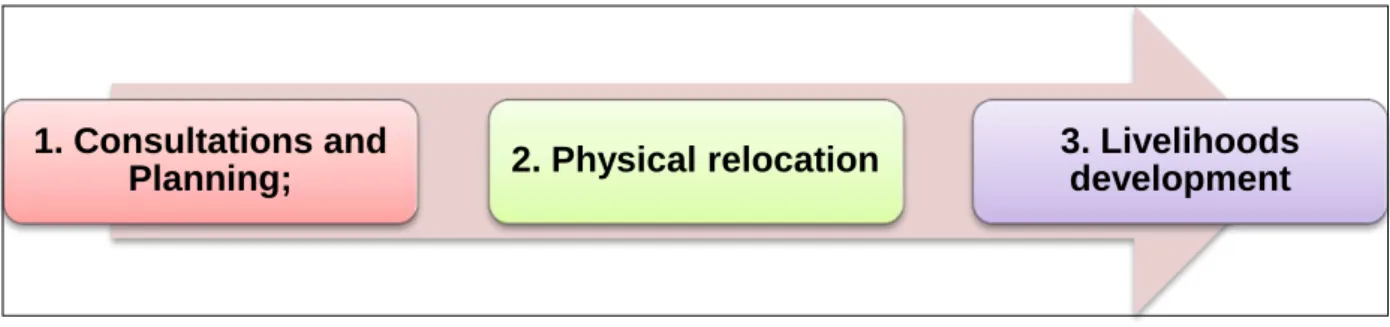
Figure 5: NT 2 Resettlement Processes ...67
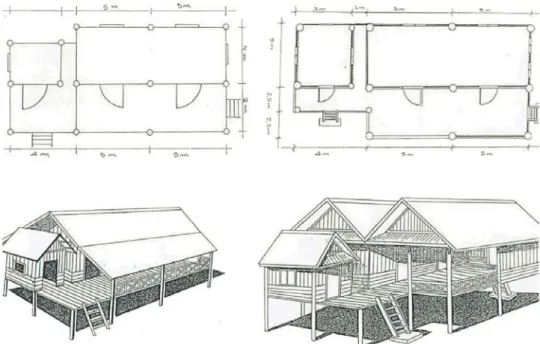
Figure 6: House Designs Following Consultations in 1998 (NTPC 2005 b chp:11 p.4) ...69
Figure 7: New Ban Khonkene’s Village Layout and Agricultural Areas ...73
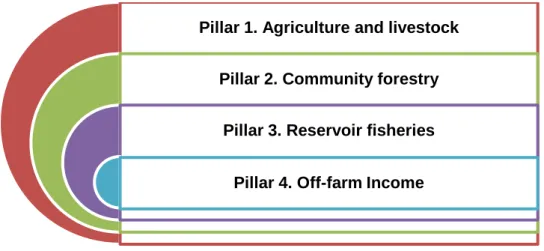
Figure 8: Pillars of the Livelihood Programme ...76
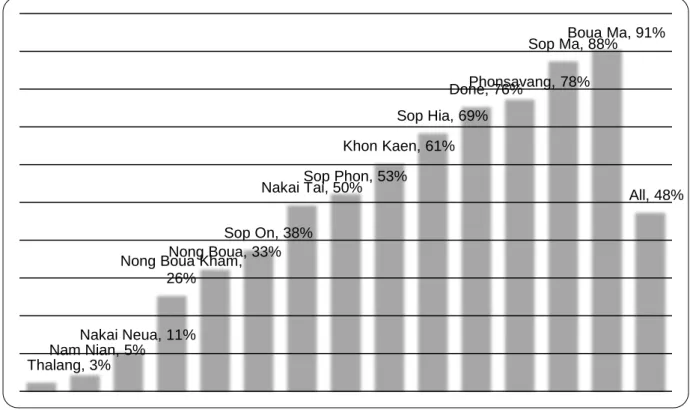
Figure 9: Percentage of 0.66 ha Plots under Rice Cultivation, 2010 ...77
Figure 10: Average Upland Rice Production Yield, Wet Season Harvest, 2009 ...79
Figure 11: Percentage of Resettled Households Owning Livestock ...80
Figure 12: Percentage of Households Collecting Forest Products, 2006-2009 ...82
Figure 13: Total Monthly Fish Catch and Daily Fish Catch by Resettled Households, November 2008- January 2011 ...87
Figure 14: Percentage of Households with Off-farm Income Sources ...89
Figure 15: Composition of Household Incomes prior to Resettlement (1998 Baseline) ...91
Figure 16: Median Total Incomes, Excluding Transfers and Wages from NTPC, 2009 ...92
Figure 19: Per Capita Consumption among the Resettled Community in Comparison to the Rural Poverty Line - 2011 ...94
Figure 20: Percentage of Children Enrolled in School ...96
Figure 21: Percentage of Children Underweight ...97
Figure 22: Prevalence of Roundworm Infestation in the Resettled Populations, 2001-2010 ...98
Figure 23: How is your life now compared to your life before the NT2 resettlement process? . 100 LIST OF TABLES Table 1: Project Cycle ...30
Table 2: Direct Benefits from NT2 ...47
Table 3: Income Distribution for Nakai Plateau Households According to Income Tiers,1998 ...90
Table 4: Education and Literacy Levels on the Nakai Plateau ...95
Table 5: Access to Education among Resettled Children Compared to National Averages 2010-2011 ...96
LIST OF MAPS Map 1: Lao PDR in the Mekong Region ...13
Map 2: Existing and Planned Hydropower Projects in Lao PDR ...22
Map 3: Nam Theun 2 Dam Construction Site ...41
Map 4: Project Zones - ...53
Map 5: Resettlement Areas Determined in Consultation with Affected Villagers ...70
LIST OF PHOTOS
Photo 1: Official NT2 Inauguration Ceremony, December 9, 2010 ...40
Photo 2: The Nakai Dam with Spillways on the Nam Theun at Keng None ...41
Photo 3: Headrace Channel with the Location of the Water Flow Intake of the Headrace Tunnel. ...42
Photo 4: The Nam Theun 2 Power Station, Viewed from the Tailrace Channel. ...43
Photo 5: View of the 27 km Man-made Channel Flowing Down from the Powerhouse/Regulating Dam to the Xe Bang Fai ...44
Photo 6: Confluence of Project’s Water Channel and the Xe Bang Fai. ...44
Photo 7: Pre-relocation Community Consultations. Photo: NTPC, 2005 ...69
Photo 8: Infrastructure of the Resettled Village Provided by the Project ...73
Photo 9: Resettled Farmers’ Agricultural Production on the 0.66 ha...78
Photo 10: Promotion of Livestock and Aquaculture ...81
Photo 11: Domestic Production of NTFPs ...83
Photo 12: A Village Forestry Association Visit ...85
Photo 13: Fishing in the Reservoir ...87
Photo 14: Off-farm Training Activities ...90
Photo 15: The Health Centre at Ban Navang ...99
Photo 16: Livelihood Restoration Programme Downstream of the Nakai Dam, Khamkeut District ... 106
Photo 17: Fingerling Production Workshop Supported by the Project ... 111
Photo 18: VIRF Activities in the Villages... 113
Photo 19: Dry Season Fishing in the Xe Bang Fai, 2012 ... 114
Photo 20: Boreholes Constructed by the Project in the Downstream Areas of the Xe Bang Fai ... 116
Abbreviations and Acronyms
ADB Asian Development Bank
AFD Agence Française du Développement
AEPF9 9th Asia-Europe People’s Forum
APs Affected Peoples
BOOT Build-Own-Operate-Transfer
CA Concession Agreement
CEMMP Company’s Environmental Management and Monitoring Plan
COD Commercial Operations Date
DAFO DRWG
District Agriculture and Forestry Office District Resettlement Working Group
EDL Electricité du Laos
EDL-Gen Electricité du Laos- Generation Public Company
EDF Electricité de France
EDFI Electricité de France International
EGAT Electricity Generating Authority of Thailand
EGCO The Electricity Generating Public Company Limited
EIB European Investment Bank
EMO Environmental Management Office (NTPC) EMU Environmental Management Unit (GoL)
GDP Gross Domestic Product
GIZ Deutsche Gesellschaft für Internationale Zusammenarbeit
GNI Gross National Income
GoL Government of Lao PDR
IAG International Advisory Group IFIs International Financial Institutions ISH Initiative for Sustainable Hydropower
IUCN International Union for the Conservation of Nature ITD Italian-Thai Development Public Company Limited
LDC Least Developed Countries
LHSE Lao Holding State Enterprise
LEnS Lao Environment and Social Project
LMB Lower Mekong Basin
LPRP Lao People’s Revolutionary Party MAF
MCM
Ministry of Agriculture and Forestry Million Cubic Metres
MDG Millennium Development Goals
MEM Ministry of Energy and Mining
MOF Ministry of Finance
MOU Memorandum of Understanding
MPI Ministry of Planning and Investment
MRC Mekong River Commission
MW Megawatt
NBCA National Biodiversity Conservation Area NGPES National Growth Poverty Eradication Strategy
NSEDP National Socio-Economic Development Plan NT2 Nam Theun 2 Hydroelectric Project
NTFP Non-timber Forest Products
NTPC Nam Theun 2 Power Company Limited
NTEC Nam Theun 2 Electricity Consortium PAPs
PAV
Project Affected Persons Project Affected Village
PDA Project Development Agreement
PDR (Lao) People’s Democratic Republic
PPA Power Purchase Agreement
PLUP Participatory Land Use Planning
POE International Environmental and Social Panel of Experts PROPARCO Promotion et Participation pour la Coopération économique PRSO Poverty Reduction Support Operation
RFA Reservoir Fisheries Association
RIP Resettlement Implementation Process
RMA Revenue Management Arrangements
RMC Reservoir Management Committee
RMU RO
Resettlement Management Unit Resettlement Office
SEMFOP Social and Environment Framework and First Operational Plan
SHD Sustainable Hydropower Development
STEA Science Technology and Environment Agency VFA Village Forestry Association
VFG Village Fisheries Group
VIRF Village Restoration Funds
WMPA Watershed Management and Protection Authority
WB World Bank
WBG World Bank Group
WCD World Commission on Dams
XBF Xe Bang Fai
CURRENCY EQUIVALENTS
(Exchange Rate Effective: June 7, 2010) Currency Unit
US$1.00 Lao Kip (LAK)
Acknowledgement
This case study report was completed with considerable assistance from various organizations and institutions. Moreover, we were able to attend seminars and consult other reference material and data that was made available by GIZ. Additionally other professional staff from the World Bank and the Nam Theun 2 Power Company provided valuable information, comments and amendments of earlier draft versions. We would also like to mention the local authorities and all the communities and organizations that are a part of the Resettlement and Development Programme of the Nam Theun River Basin, who provided further useful insights and guidance.
Hereafter we would like to thank Dr. Thomas Petermann, Dr. Philipp Magiera, Dr Susanne Schmeier, Klaus Sattler and Ms. Martina Furler from the MRC-GIZ Cooperation Programme for financing this case study and providing thematic support through the Network for Sustainable Hydropower Development Workshop.
Furthermore we would like to express our gratitude to the personnel of the Nam Theun 2 Power Company, especially to Mr. Ruedi Lüthi, Director of the Social and Environmental Division, Mr. Olay Phommavong, Regional Communications Officer and Mrs. Keooula Souliyadeth, Deputy Director of Nam Theun 2 Resettlement Management Unit. Additionally our appreciation goes out to Mr. Sibounheung Phandanouvong from the World Bank and to Dr. Daovong Phonekeo, Director General of the Department of Energy Policy and Planning of the Ministry of Energy and Mines for authorizing to carry out this case study, as well as for their kind collaboration and the provision of important documents.
Lastly we would also like to thank the authorities of Khammouane province for giving us the opportunity to interview them and for providing valuable suggestions.
Map 1: Lao PDR in the Mekong Region Source: Mekong River Commission (MRC, 2011 a p.2)
1
INTRODUCTION
Lao People’s Democratic Republic (Lao PDR) is a relatively small, developing country that is sparsely populated and does not have direct access to the sea. It is located in South-East Asia and has a total land area of 236 800 km2. The country shares borders with Cambodia, China, Myanmar, Thailand, and Viet Nam, which places it in the centre of the dynamic Mekong region [see Map 1]. Since the establishment of the Lao PDR in 1975, the country has been governed by the Lao People’s Revolutionary Party. Administratively, the country is divided into 17 zones, which includes one capital city (nakhon luang) known as Vientiane or Vieng Chan and 16 provinces1(khoueng).
In 2012, the total population was estimated to be 6.4 million out of which around 65 % lived in rural areas. The population density of that Myanmar or Cambodia2 is almost two and a half times higher than that of the Lao PDR where there are only 27 inhabitants/km², and this also makes it considerably lower than those of Thailand, Viet Nam and China3 However, Lao PDR’s population growth does surpass those of its neighbouring countries (1.5 % between 2000/10) (FAOSTAT website 2013). The per capita income reached US$1,1304in 2011 (World Bank website 2013) and it was ranked 138 out of 186 countries with 0.543 on the Human Development Index in 2012 (UNDP 2013 p.154).
It has a tropical climate which is influenced by the South East Asian monsoon. Furthermore around 80 % of the country is composed of hills and mountains, while 52 %5 is forested and this leaves only 4 % of the land suitable for cultivation (Times Reporters 12 January 2011, Barney and Canby 2011 p.14, FAO 2011 p.3).
The Lao PDR is a country with extensive natural resources and over half (54 %)6 of its wealth is in the form of natural assets7 namely water and hydropower potential, agricultural land, forests and minerals (including copper, gold, gemstones and gypsum) (World Bank 2010 p.10).
1
According to the Instruction no. 01/PM (11/3/2000) the provinces are the strategic units, the districts are the planning and fiscal units and the villages are the implementation units. The whole country has 143 districts and 8666 villages (2010/11).
2
Density: Myanmar: 72 inhabitants/km² and Cambodia: 80 habitants/km²
3
Density: Thailand :136 inhabitants/km² ; Vietnam : 271 inhabitants/km² and China : 144 inhabitants/km²
4
Lower-middle-income economies are those with average incomes of U$1,006 to US$3,975. Using the Atlas method, Lao PDR’s GNI per capita was US$1,130 in 2011.
5
About 12.5 million hectares in 2011.Forest coverage in Lao PDR was around 70 % in 1940, covering 17 million hectares. This figure dropped to 54 % in 1973, 47 % in 1982 and 41 % in 2001. Therefore the government has set a target to return the country's forest coverage to 65 % by 2015 and 70 % by 2020.
6
Hydro-electric (18.0 percentage points) ; Agricultural land (16.0 percentage points); Forest and Protection Areas (11.0 percentage points) and Minerals (9.0 percentage points).
7
Overall, Lao PDR’s total wealth has been estimated to be around US$10,000 per capita, one of the highest levels in the low-income country group.
The Mekong River8 is the country’s main river and 90 % of the land area is located in the Mekong river basin and this contributes to 35 % of the Mekong’s total flow (473 km³) (WREA 2008 a p.47, WREA 2008 b, MRC 2011 a). This means that most of the rivers in the country are Mekong tributaries and these amount to about 39 main tributaries. There are eleven main rivers that have a catchment area in excess of 5,000 km² 9(WEPA web site 2012 ). The total renewable water resources are therefore an estimated 333.55 km3/year, which annually amounts to more than 55,000 m³ per capita. However given this situation little of the national available water supply has been developed. In 2011 the total dam capacity was estimated at 7.8 km3 or 2.8 % of the annual surface water supply (Frenken 2012 p.300, WEPA 2012 a p.82,WEPA 2012 b p.56). The mountainous landscape favours important rainfall, with an annual average of 1 834 mm which ranges from 1 300 mm in the northern valleys to over 3 700 mm at higher elevations in the south. About 75 % of the rainfall occurs during the rainy season which runs roughly from the middle of April to the middle of October (FAO web site 2013).
Rivers and rainfall which are the basic ingredients of hydropower development are in plentiful supply, and the mountainous landscape10 offers a natural means of generating the hydraulic momentum that can be transformed into electricity. This abundance of hydropower resources and its central location in a rapidly growing region provide Lao PDR with a strategic advantage due to the fact that power markets in the region are becoming more closely integrated. The country’s great potential for hydropower development has theoretically been estimated at 26,50011 megawatts (MW), excluding the Mekong mainstream. Out of this about 18,000 MW are technically exploitable. Around 15% of the country's hydropower potential has been developed over the past 40 years (ADB 2004, GMS 2004,DEB web site 2013). Small scale hydropower projects below 15 MW have not been included in this estimate, which would potentially be about another 2,000 MW. In Lao PDR hydropower projects with capacity bellow 15 MW are classified as small-scale and where large dams are defined as having an installed capacity of more than 50 MW or inundating more than 10,000 ha of land at their full capacity. This applies to hydropower projects that were constructed after 1990 (GOL 2005, MEM 2011 p.9).
Indeed, the Government of Lao PDR (GoL) aims to develop the country’s hydropower potential by building several new small to big-sized hydropower stations in the context of increasing power demand from its neighbours12. This is coupled with the opening of the country’s economy for outside investment in 1986 and the rise of regional banks and
8
Ranking 21st in length at 4,880 km (Gupta and Liew 2007) and 8th in terms of annual discharge (flow), at about 14,500 m³/s (Meade 1996; MRC 2005). It has a catchment area of 795,000 km² that lies within six countries (China, Myanmar, Lao PDR, Thailand, Cambodia and Viet Nam). The Mekong basin has been commonly divided into upper and lower basins, and the upper Mekong basin known as Lancang Jiang is located in China.
9
1. Nam Ou; 2. Nam Khan; 3.Nam Suang; 4.Nam Ngum; 5.Nam Nhiep; 6.Nam San, 7.Nam Theun - Kading; 8.Nam Xe Bang Fai; 9.Xe Bang Hiang; 10.Xe Done; 11. Xe Kong
10
Some 80 % of the country’s area is composed of hills and mountains with the highest point being Phu Bia at 2820 m above sea level.
11
Source : Department of Energy Business (DEB), Ministry of Energy and Mines, May 2013 [http://poweringprogress.org]
12
investors in Asia (Smits 2011). Before 2006, the country only had nine hydropower dams, with a capacity of 680 MW. Currently, it has 18 hydropower plants in operation (including small and big sized) producing 2,800 MW [see Map 2] and 17 under construction13 for a further 3,000 MW14, which includes 1,850 MW from the Xayaboury dam in the Lower Mekong Basin. Another 25 plants are at the planning stage (6,500 MW)15, while 35 more are undergoing feasibility studies16 with a total production capacity of 10,600 MW (Chandara 03 April 2013 p.3, EDL 2011, Ministry of Energy and Mines 2011, Mekong Institute 2012, MEM 2012, MEM 2012 August, MEM 2013 March). If all the planned projects are completed, the Lao PDR would be able to produce 70% of the basin’s energy (93,800 GWh) with equal contributions from mainstream and tributary dams (MRC 2009, MRC 2011 a p.81). Cambodia would produce 20%, largely from the Sambor Dam on the Mekong mainstream, whilst Viet Nam would produce 9% and Thailand 0.4% (MRC, 2011 a p.85). Map 2 shows the total installed capacity of both existing and planned projects on the Mekong mainstream and tributaries for all four lower Mekong countries.
Moreover, becoming the “battery of Southeast Asia” or “Southeast Asia’s Kuwait” through the exploitation of its hydropower potential has been GoL’s long term dream (Leechuefoung 2006, Imhof 2007, Lawrence 2008, Christopher G 2012) and there is also the challenge to fulfil its strategic plan which has projected that by 2015, 80 % and by 2020, 90% of households in the whole country must have electricity usage. To date the figures are that 78% of the Lao population has access to electricity (EDL 2010 a, EDL 2011) and many are optimistic that Lao PDR will become “the battery of Southeast Asia”:
“Hydro-power resource is probably the only economic activity where Laos has a comparative advantage over other countries in the region”(ADB 1999),
“The vast hydro-power potential of our country should be exploited to the maximum. We can foresee there will be limited adverse impacts on the environment and communities,” said the Vice Minister of Industry and Commerce, Dr. Nam Viyaket (Vientiane Times, 11 April 2005).
“There are many potential benefits for Lao PDR from hydro-power particularly from direct links with southern China, Thailand, Malaysia and indirect links with Singapore and Indonesia. These offer classic gains from sharing and dealing in a wider market. Electricity could be the key for Lao PDR to become a high growth country” (Porter and Situmeang 2005).
The GoL’s primary benefit from the export of electricity includes the revenue that is generated by: (i) profit tax: 15 percent of net profit, (ii) royalties: 5-15 percent of gross revenue and (iii) dividends: equal to the net profit after depreciation, tax and other payments. The Lao PDR is one of the poorest countries in the region and so these revenues may then be used to promptly reach the goals of the Seventh Five-Year National Socio Economic
13
Concession Agreement (CA) stage.
14
This does not include the biggest project to date (about US$3.7 billion) in Hongsa district, Xayaboury province which is larger than the US$1.3 billion 1,075 MW NT2. It is the first lignite-fired power plant which involves the construction of a 1,800 MW capacity (3 units of 600 MW each), and is scheduled for completion at the end of 2015. Roughly 2,000 people (400 families) will have to be relocated.
15
Project Development Agreement (PDA) stage.
16
Development Plan (NSEDP)17 from (2011-2015), the Millennium Development Goals (MDGs) and the National Growth Poverty Eradication Strategy (NGPES)18 which is central to the national development agenda. The NGPES encapsulates the essence of Lao PDR’s approach towards achieving the goal set in 1996 by the 6th Party Congress, namely to exit from the ranks of Least Developed Countries (LDCs) by 2020 (GoL 2004, GoL 2008, GoL October, 2010 ). According to the national poverty line19, there was a significant decline in the incidence of poverty, as it fell from 46 % of the population in 1992/93 to 20 % in 2009/10. In 2008 34% of the population were living below the international poverty line of $1.25 per day and as many as 66% of the population were living on less than $2 per day. (Epprecht, Minot et al. 2008, Chen and Martin 2008 August, Engvall, Nina et al. 2009, Bartlett 2012, World Bank 2012 b).
Traditionally, the Lao economy remains predominantly driven by agriculture much of it subsistence, and this is dominated by rice cultivation in the lowland areas (accounting for 65 % of the total cultivated area). In 2011, the agricultural sector accounted for 31 % of the total of GDP (compared to 35 % for the industrial sector and 34 % for the service sector), although agriculture continues to employ about 4.5 million people (783.000 households)(MAF 2012). Today, the economy is projected to benefit from the country’s extensive natural resources by starting to transform this natural wealth into other forms of capital (World Bank 2010 pp.9-10).
NGPES identified the power sector as one of the potential drivers of growth. The
sector serves two national priorities. Firstly, it promotes economic and social
advancement by providing a reliable, affordable, and sustainable domestic source of
electricity. Secondly, it mobilizes foreign exchange and budgetary revenues to
finance poverty reduction as well as environmental and social programs. Moreover,
the 7
thNSEDP strongly emphasizes the utilization of natural resources as a key
driver for economic growth and poverty eradication. According to the first session of
the 7
thLegislature of the National Assembly and 9
thCongress of the Lao People’s
Revolutionary Party (LPRP)
20, the government will also facilitate investments in
hydropower plants from 2011 to 2015 (Times Reporters January 14, 2013, Vaenkeo March
16, 2011, Xayasomroth March 21, 2011, Times Reporters June 24, 2011, MPI 2011).
17
Currently, it is the 7th NSEDP which was adopted by the National Assembly in June, 2011 and became operative in October, 2011.
18
Under the aegis of the Poverty Reduction Strategy Paper (PRSP), the government developed a NGPES in 2003/04. The NGPES defined various targets with 44 related indicators to be monitored over time, including on poverty reduction, agricultural growth, health, education, and governance. So the NGPES has the dual objectives of enhancing growth and development and reducing poverty. The NGPES defines economic growth, socio-cultural development and environmental preservation as the three pillars of Lao PDR’s development policy.
19
The poverty headcount is based on the National Poverty Line, which is defined as consumption of less than 2,000 Kcal a day. Under the new plan, the rate of essential per capita income will be increased to 253,000 kip (35 $) per person/month for people in rural areas and to 284,000 kip (40 $) in urban areas (Phongkhao, Somsack 18 April 2013 p.1)
20
The first congress was held in March, 1955, in the revolutionary stronghold of Huaphan province. It was attended by more than 20 delegates representing more than 300 Party members nationwide. The 9th congress was held in March 2011, and was attended by 576 delegates representing more than 191,700 Party members.
The Lao PDR is a member of the Mekong River Commission (MRC), which seeks to develop and adopt an integrated approach to river basin management in the sub-region. It has been working with other countries in the Greater Mekong sub-region in developing an integrated power market. It has also been a key participant in the development of bilateral power trade, signing memoranda of understanding (MOU) with Thailand (for 7,000 MW), Vietnam (for 5,000 MW) and with Cambodia (for 1,500 MW) to export hydroelectric power until 2020 (DEB web site 2013).With the recent commissioning of Nam Theun 2 and given the projects currently in the pipeline, the annual net government revenues from hydropower exports could grow twenty-fold from relatively little today (US$17 million) to approximately US$350 million by the year 2020 (and could exceed $700 million by 2025) (World Bank 2010 p.65). In one of the recent developments the government expects to earn US$3.9 billion from the Xayaboury dam throughout the 29-year concession period, including US$1.897 billion in royalties and US$637 million in taxes (Times Reporters 5 March 2013 p.B1).
Actually, the contribution of hydroelectric power was about 0.5 percentage points of real GDP growth (7.4 %) between 2005/09 and is projected to be 3 percentage points of GDP growth (7.7 %) between 2010/14. As with GDP shares electricity is projected to surpass mining in terms of its contribution to government revenues by 2015. Four percent of GDP will come from hydropower and only 1.2 percent from mining by 2024 (Davading 2010, ICMM 2010). According to a key ADB report, hydropower output jumped by 29% to 13.8 billion kilowatt hours from 2012 to 2013. New hydropower projects commissioned in 2012 increased national output by more than 650 MW, or an increase of 12% in terms of power generation in 2013. It should be noted that 70% of all hydropower which is generated is then exported, mainly to Thailand (Times Reporter April 10, 2013 pp.1&3, ADB 2013).
Existing and projected dams in Lao PDR and in the world are the subject of extensive debate regarding their impact on the environment, notably the changes in the ecology of the rivers (Duganp, Barlow et al. 2010), as well as their carbon footprint (Chanudet, Desclox et al. 2011). Socio-economic impacts are also likely to be important, which amongst others include resettlement, flooded agricultural land and declining fishing activities. (Mccully 2001, Savoie 2003, Scudder 2005, Heggelund 2006, WCD 2008, Barney 2009, Hirsch 2011, Bhatia, Cestti et al. eds, 2008, Molle, Foran et al. eds, 2009). According to a World Bank "Laos Development Report 2010":
"…the 42 planned dams for which data are currently available, the total inundated area is estimated to be 3,086 square km. Two hundred and ninety-three villages will be directly affected, including a total of around 100,000 people who currently live on the land that is to be inundated. An estimated additional 49,000 people live within one hour’s walk of a current or planned reservoir. This is based on information for 42 projects in different stages of implementation, though as many as 90 hydropower projects are being planned in total (of which 46 are still in the feasibility study phase). Moreover, several dams are being considered in the mainstream Mekong River, and these will have major environmental effects both locally and across national boundaries"(World Bank, 2010 p.31).
However, the Government’s plans are ambitious in light of various constraints and in particular the fact that the hydropower sector may be developed faster than the Government’s ability to scale up its capacity to manage it effectively. The dual challenge it faces is not only “how to do the right projects” but “how to do the projects right” for sustainable hydropower development and how to meet and participate in the Rio+20 issues on “Trade and Green Economy”. Hydropower export in Lao PDR is referred to as a “selected
green sector with trade potentials’’ to build a green growth strategy to develop the economy in a sustainable manner, use energy efficiently and to develop renewable energy.
Moreover, the sustainable energy production was one of the main topics discussed by delegates at the 9th Asia-Europe People’s Forum (AEPF9)21 (ASEMINFOBOARD November, 2012). Discussions were enthusiastic and mostly emphasized the positives of hydropower and the benefits that it can bring to Lao PDR. Several Lao attendees offered their opinions on this matter by highlighting the potential of hydropower development when it comes to improving people's livelihoods as well as socio-economic development in the region and the world. The GoL says it always gives priority to social as well as environmental issues to ensure that hydropower projects are beneficial for local communities and highlighted:
“… the Nam Theun 2 dam, which has become one of the world's best models of sustainable hydropower development. The project has been held up as a model of environmental and social responsibility, enabling local people to lead better lives. The Nam Theun 2 dam not only helps to improve livelihoods in the area but also contributes to sustained economic growth, which will help Lao PDR in its endeavours to graduate from least developed country status by 2020” (Times Reporters October 18, 2012 pp.1&3).
Recently, Lao PDR hosted the 19th meeting of the MRC Council from January 14 to 17, 2013 in Luangprabang province to discuss issues particularly regarding sustainable development in the Mekong basin. This annual meeting is a requirement according to the 1995 Agreement (Times Reporters January 14, 2013 p.3, MRC 1995). It was stated that the MRC will continue to support Lao PDR’s bid to develop hydropower on the Mekong mainstream as long as the projects are sustainable, and according to a top MRC official:
“MRC is a framework and it supports sustainable development. In that context, if hydropower on the mainstream fits into that framework, then obviously the member countries are in support of it,” said MRC CEO Hans Guttman22 (Times Reporters January 18, 2013 p.1).
Moreover, a high-profile team comprising 14 senior Lao government officials deemed to be ‘policy makers’ on dam development have just ended a week-long study tour in Tasmania, Australia, where they learnt more about the sustainable development of hydroelectric dams from the island state. The trip, which was financed by the World Bank and AusAID ended on May 5, 2013., This has strengthened the government’s commitment to strive for the sustainable development of hydroelectric dams. The Lao PDR has enormous untapped potential as it seeks to become ‘the Battery of Asia’ in this area (Vaenkeo May 16, 2013 p.11).
The GoL has made substantial progress on the ground and at a policy level with regard to sustainable and environmentally friendly development. As the Minister of the Environment and Natural Resources, Mr. Nourin Sinbandhit, highlighted in a workshop, the advances
21
This was prior to and in conjunction with the 9th Asia-Europe Meeting (ASEM9). The Asia-Europe People’s Forum (AEPF9) held its 9th biennial People’s Forum on October 16-19, 2012 under the title
"People’s Solidarity against Poverty and for Sustainable Development: Challenging Unjust and
Unequal Development, Building States of Citizens for Citizens".
22
which were made in perpetuating sustainable hydroelectric development ran from 2007-2010. This policy designed a platform for the future development of hydroelectric power projects.
“This is extremely important for Lao PDR, particularly when it seeks to develop mega hydroelectric projects,” He further added that about 40 to 50 hydroelectric projects were expected to be operational by the end of 2025 (Vaenkeo and Cascaro May 20, 2013 p.3).
Furthermore Ms Keiko Miwa the World Bank’s Country Manager for Lao PDR highlighted in a speech that:
"The establishment of environmental and social legal frameworks through the Lao Environmental and Social Project (LEnS) is significant, but the key is putting these frameworks into practice"(Vaenkeo and Cascaro May 20, 2013 p.3).
On May 22, 2013 Government energy officials met with hydropower experts from around the world to discuss ways to advance sustainable hydropower. It was known as the International Hydropower Association’s (IHA) World Congress on Advancing Sustainable Hydropower which took place in Kuching, Sarawak, Malaysia from May 21–24, 201323. Mr.Viraphonh Viravong24 made the following comment according to a media release from the Lao Ministry of Energy and Mines:
“We are here to learn how to achieve sustainability in hydropower development based on international standards and practices”. He further expressed the GoL’s commitment to move ahead with the sustainable development of its vast hydropower resources. “The Lao government is responsible for developing the country for the well being of our people. We must develop our resources in a practicable way using international standards and the best, most sustainable methods available to us” (Times Reporter May 23, 2013 p.1.)
The IHA’s Executive Director Richard Taylor said the IHA’s biennial congress is considered the world’s most important gathering of hydropower decision makers.
“IHA25 is a network of more than 100 member organizations and partners working to advance sustainable hydropower (Times Reporters May 23, 2013 p.1).
A senior energy official remarked that although it is a poor country, Lao PDR will try its best to meet international hydropower sustainability standards. Furthermore the Deputy Minister of Energy and Mines Mr. Viraphonh Viravong commented during an IHA World Congress debate on whether hydropower sustainability standards kept poor countries like Lao PDR from developing their economies that:
"Most people don’t want to live in the past; they want better lives for themselves and their children. A government has a duty to bring about that change to the best of its ability and as rapidly as it can" (Times Reporters June 4, 2013 p.B2).
23More detail on [http://ihacongress.org/congress/] 24
Deputy Minister of Energy and Mines.
25
IHA has developed the Hydropower Sustainability Assessment Protocol to guide and score economic, environmental and social aspects of sustainability during the early stages, preparation, implementation and operation of hydropower projects.
A senior environmental specialist with the Inter- American Development Bank, Mr Emmanuel Boulet, noted that:
"
The Green Economy movement of the UN Conference on Sustainable Development (Rio+20) held the view that “welfare” is more important than “growth”. “What ultimately matters is welfare and not output,” “Even so, hydropower can contribute to “green growth.” (Times Reporters June 4, 2013 p.B2)Another panellist, the energy developer Arun Sen, who is Lanco International’s CEO said:
"
Infrastructure builders understand that development has long-term impacts. Hydropower, more than thermal energy, poses a unique challenge because it takes years for the impacts of current decisions to be seen clearly. That doesn’t mean hydro development should be paused" (Times Reporters June 4 2013 p.B2). President of the Third World Centre for Water Management, Ms. Cecilia Tortajada acknowledged that:"
Hydropower was now being viewed as clean energy, whereas in the past it was seen as a problematic form of energy production"(Times Reporters June 4, 2013 p.B2). Consultant Joerg Hartmann added: "Hydropower projects often generate conflict, especially when it comes to balancing local, national and international priorities. However, measures of sustainability do already exist (Times Reporters June 4, 2013 p.B2).Recently, the International Finance Corporation (IFC), a private arm of the World Bank has been helping the GoL to revise the Water Law in order to back water management and hydropower development in the country so as to ensure equitable future management of water resources. According to the IFC, it has held several public consultations with the government, where stakeholders from the government, civil society and international organizations have been able to give their feedback on the draft law (Times Reporter 11 June 2013 p.3). While on the one hand hydropower boosts economic growth, on the other it also increases competition among water users.
2
CASE STUDY SCOPE
The MRC has established the Initiative for Sustainable Hydropower (ISH) with the aim of seeking to embed sustainable hydropower considerations into the regulatory frameworks and planning systems of member countries and into project level planning, design, implementation and operational activities. The ISH 2011-2015 Strategy emphasizes this requirement as well as the need to take into account the wider development implications in order to meet the region’s growing demand for water and energy through sustainable hydropower. Therefore, the approach towards "sustainable hydropower development" should aim to balance social, economic and environmental aspects for all parts of society and at all stages of planning, construction and operation of hydropower projects.
Within this context, the MRC-GIZ cooperation program component "support to sustainable hydropower development in the Mekong Basin" has a human resources development element that will support efforts to strengthen capacities for a sound understanding and appreciation of socio-economic issues and ecological complexities as the basis for sustainable hydropower development (SHD). Its goals are threefold:
(i) Increase awareness regarding SHD at all levels of decision making; (ii) Enhance knowledge and skills at academic and research institutions, and
(iii) Provide professional training for planners and managers to cope with the challenges of SHD.
Accordingly, GIZ aims to support academic and research institutions in the LMB countries Cambodia, Lao PDR, Thailand and Viet Nam to develop a knowledge and learning network in the Mekong region (SHD-Network Mekong) to enhance their capacities and to share experience on good practices from the region. The good practices will be enriched by reference guidelines, assessment tools of good management practices on dams and hydropower development worldwide, for example the Hydropower Sustainability Assessment Protocol of the International Hydropower Association and the UNEP Dams and Development Program (an international follow-up program of the World Commission on Dams).
The SHD requires an integrated and multidisciplinary approach. Many topics are interrelated and may overlap in the analysis and description of good practices. In order to demonstrate the good practices and lessons learned of hydropower development in Lao PDR, we have selected the Nam Theun 2 (NT2) hydroelectric power project for our case study.
Preparation of the $1.45 billion NT2 in Lao PDR represented an important milestone. It is perceived as a model dam project but at the same time NT2 is one of the most criticized hydropower projects in the context of a development panacea for a cash-strapped government, developers, investors, international development partners and other stakeholders. It is for this reason that NT2 is a very important case to review and to learn about their practices in the whole project process through from the planning, construction and operation phases. Particular focus is on the project’s environmental and socio-economic development plans for the directly and indirectly affected populations including those both upstream and downstream.
Our case study focuses on two sub-topics which are related to the following social aspects: (i) Compensation and mitigation, and
3
RESETTLEMENT POLICY FRAMEWORK
This case study particularly examines the GoL’s laws, decrees and guidelines, as well as the international policies of organisations such as the World Bank and ADB.
3.1
Involuntary Resettlement in Lao PDR
While involuntary resettlement is not new to the Lao people - centuries of changing fortunes have seen villages and groups of villages relocate to survive - what is relatively new is the need for people to relocate in order to make way for development of projects considered to be in the national interest, such as hydropower schemes (Goudineau 1997 ed).
Beginning in 1975, the GoL began moving ethnic minorities out of mountainous and remote areas, due to security concerns. In the early 90s, the GoL began to express its concerns about the shifting cultivation practice in the mountainous areas especially in the Northern and Eastern parts of the country. The result was that hundreds of thousands of families from various upland areas were resettled. The concentration of these scattered communities, as well as their cultural and livelihood integration with the ethnic people of the lowlands has long been a goal of the central government. Moving scattered remote upland communities into more accessible areas facilitates easier and cheaper provision of essential development services such as health care, sanitation, education, roads, irrigation and electricity.(Government of Lao PDR 1998, Baird and Shoemaker 2005).
Most of the recent and ongoing resettlement projects resulting from natural resource development are concerned with hydropower and mining projects. Many of these projects have to contribute to the development of the local areas, through the building of new infrastructure and the provision of public services. This has already been the case with the Nam Theun Hydroelectric Project, Nam Theun Hinboun and Nam Ngum 2 amongst others. However, resettlement has always affected the social systems, livelihoods and cultures of indigenous ethnic communities. In most resettlement cases people have had to provide everything by themselves. In many cases no compensation is paid for resettlement nor is adequate infrastructure such as housing, electricity, clean water and food security provided. Therefore resettlement often results in increased levels of poverty due to economic pressures and the need to purchase more expensive land. A number of programmes and policies currently in place are seeking to deal, directly or indirectly with this resettlement issue.
In 1975, the Lao People’s Revolutionary Party (LPRP) abolished the 1947 Constitution and all previous legislation. The majority of the existing legislation, especially in the forestry sector, has been issued under the framework of the Constitution of 1991. The current legal system can be described as a hybrid of a civil code and common law system, driven recently more by the need to adopt a large body of legislation, rather than by the capacity to implement the legislation (NTPC 2005 d chp:5)26.
26
Chapter 5: Policy and Legal Framework and Entitlements is in Volume 4: Project Lands: Resettlement Plans (in the Social Development Plan).
The National Assembly27, first elected in 1992 under five-year terms, has been an active legislative branch by passing nearly 50 comprehensive laws, each requiring issuance of implementing legislation by the Prime Minister, ministries and local authorities by way of decrees and regulations. Despite this growing base as a civil law structure, the legal system remains at an early stage, difficult to interpret, implement or enforce, especially in the natural resources sector (NTPC 2005 d chp:5).
We will review some of the key legislation relevant to our case study, especially the national policy on sustainable hydropower, resettlement and compensation.
3.2
Donor Resettlement Policy
In the past the commitment on the part of investors to look after those people that have been resettled involuntary due to hydropower projects depended very much on the agreement that was negotiated between them and GoL in the CA. Different investors have varying operational policies and so for example those of Chinese investors are not the same as those of ADB and WB. In the case of the latter all CAs have to respect and adhere to their policies regarding involuntary resettlement with development projects.
The World Bank’s operational policy specifies that “displaced persons should be assisted in their efforts to improve their livelihoods and standards of living or at least to restore them, in real terms, to pre-displacement levels or to levels prevailing prior to the beginning of project implementation, whichever is higher”. The two major strengths of this policy when dealing with involuntary resettlement are as follows:
• “Involuntary resettlement should be avoided where feasible, or minimized, exploring all viable alternative project designs.”
• “Resettlement activities should be conceived and executed as sustainable development programs, providing sufficient investment resources to enable the persons displaced by the project to share in the project’s benefits”(Scudder 2005 p.122).
The World Bank’s OP/BP 4.12 (2002) aims to avoid involuntary resettlement to the extent where this is feasible, or to minimize and mitigate its adverse social and economic impacts. It promotes participation of displaced people in resettlement planning and implementation, and its key economic objective is to assist displaced persons in their efforts to improve or at least restore their incomes and standards of living after displacement. The policy describes compensation and other resettlement measures so as to achieve its objectives and requires that borrowers prepare adequate resettlement planning instruments prior to World Bank appraisal of proposed projects (M-IWRM 2010 p.6).
An additional objective of the IFC’s performance standard 5 on Land Acquisition and Involuntary Resettlement is that resettlement programs should result in the “improvement of living conditions among displaced persons through the provision of adequate housing with security of tenure at resettlement sites” (MRC-GIZ 2012 p.90).
27
The NA has the authority to initiate, review and pass laws as well as approve state budgets and socio-economic development plans, which have included annual timber harvest quotas. (Constitution, Ch. 4).
The ADB policy on involuntary resettlement (1995) outlines the main issues of relocation, compensation and rehabilitation, drawing on the experiences of many donors in implementing and evaluating resettlement programs. The policy emphasizes avoidance of resettlement wherever feasible and minimization of resettlement when it is unavoidable. It prescribes that all losses of assets, livelihood and income should be compensated for in full, specifying that an absence of formal legal title to land and access to resources should not be a bar to full compensation (NORPLAN and EcoLao 2004).
3.3
Compensation
The development of a particular hydropower project may have direct or indirect impacts (both negative and positive) on the indigenous population. These impacts can occur during different project phases and zones including the planning, construction, operation phases as well as in upstream and downstream areas respectively. It could be for example the construction phase which induces involuntary resettlement and the affected persons may lose their houses, land, crops, animals or economic activities which are the source of their basic income. Moreover, the downstream population can be impacted when the dam is in operation either through soil erosion, the inundation of homes as well as cultivated land; or a reduction of fishing activities and the loss of a source of protein amongst others. In such cases compensation may come in the form of cash, the provision of land for land, or also food.
Unfortunately however according to the World Commissions on Dams (WCD) there are an estimated 40 to 80 million people throughout the world who have been resettled as a result of dams but, ”have rarely had their livelihoods restored” (WCD 2000 p 129).
Compensation policies and guidelines emphasize the need for in-kind compensation rather than cash compensation for people displaced by large-scale infrastructure projects such as dams and hydropower facilities. In theory, cash compensation at replacement cost allows displaced persons to restore incomes and living standards. However in practice, several obstacles have delayed conversion of cash into replacement assets. Most evidently, the actual amount of compensation may be insufficient to cover the costs. Additionally the timing of compensation can also reduce the likelihood of incomes being restored. Cash may not be convertible into productive assets if markets or opportunities are few. Moreover, local practices may encourage the use of compensation cash to pay debts or for social reciprocities, rather than for purchasing replacement assets (MRC-GIZ 2012 p.92).
An example of the lack of attention paid to resettlement by the project authorities is the recurrence of cases where the number of people to be resettled is underestimated and also the magnitude of this underestimate. In a global comparative survey of 50 dams – induced resettlement in 50 cases, with the statistical assistance of John Gay, the estimates of the numbers of resettled people before and after physical removal during the project’s different stages including its identification and approval were only made available in 20 cases. The initial estimate in nine of the cases (73,638 people) turned out to be only 52 % of the later number (140,541). In 12 cases (one of which was among the previous nine cases) the number of people to be resettled which was estimated at the time of project’s approval (271,604) was actually only 55 % of the total amount which were counted, in two cases (495,590) during its implementation, and in ten cases once they had been removed. In only two of the 20 cases the final total was actually less than the earlier estimate. This also was
the situation in three other cases out of all of the 50 dams that were surveyed which involved a relatively small number of people to be resettled (120 to 5000) (Scudder 2005 p.68).
3.4
Integrated Resource Development Plans for the Affected
Population
The resettlement program normally includes the provision of infrastructure and services to ensure the long-term sustainability of displaced and host communities. This is according to the World Bank’s Operational Policy on Involuntary Resettlement which specifies that “in new resettlement sites or host communities, infrastructure and services are provided as necessary to improve, restore, or maintain accessibility and levels of service for the displaced persons and host communities. Alternative or similar resources are provided to compensate for the loss of access to community resources (such as fishing areas, grazing areas, fuel, or fodder)”(MRC-GIZ 2012 p.91).
The resettlement process requires a combination or a better balance between compensation and development activities. Moreover, the restoration of living standards require more development activities as legitimate project costs, and the balance between physical resettlement, compensation, and development activities should be continued, such as for example the NT2 Social and Resettlement Program.
The compensation in cash and in kind is of course essential for dealing with such tangible physical assets such as houses and household structures, fields and land for other crops as well as communal property resources. These include wild foods and medicinal plants, building materials, as well as grazing and fishing areas (Scudder 2005 p.130). At the same time consideration should be given to the fair access to economic opportunities such as fishing areas, cereal crops and trees, as well as non-economic assets including public buildings and communal forest areas.
3.5
Indigenous People/Ethnic Minorities
The ADB’s policy on indigenous peoples (1998) aims to ensure that indigenous peoples, in the context of Lao PDR called “ethnic minorities”, have opportunities to participate in and benefit equally from development. It draws up strategies and approaches that are designed to avoid negatively affecting ethnic minorities in its operations, and to provide adequate and appropriate compensation when a negative impact is unavoidable. Open and transparent consultations are an integral part of this process (NORPLAN and EcoLao 2004).
In the World Bank’s OD 4.20 on Indigenous People (1997) transparent and meaningful consultations with directly affected ethnic minorities are required to be undertaken prior to the initiation of detailed project preparation. If ethnic minorities are considered vulnerable groups and are likely to be adversely affected by a project, the borrower is required to prepare indigenous peoples/ethnic minority development plans to mitigate adverse impacts and to promote tailoring of benefits based on the preferences of the people concerned (NORPLAN and EcoLao 2004).
3.6
National Policy
3.6.1
National Policy on Sustainable Hydropower
The formulation of the national policy on sustainable hydropower (NPSH) originates from the World Bank’s objective to translate the lessons learned from the Nam Theun 2 project into components of national policies that can promote and guide sustainable hydropower development in Lao PDR. The policy implies a close linkage between government agencies and private investors in hydropower development. It formally fosters the role of hydropower to generate government revenue, promote economic growth and to alleviate poverty. It is founded on economic, social and ecological principles of sustainability.
The NPSH highlights the need for the disclosure of information regarding project reports, assessments, mitigation plans and monitoring reports. Moreover to include environmental assessment as an integral part of hydropower development and to recognize the rights of project affected people. It also advocates a project’s compliance to existing policy frameworks so as to ensure sustainable hydropower development. Furthermore it proposes the creation of an Environment Protection Fund (EPF) to tap into a certain portion from hydropower revenue. (STEA, 2005)
The NPSH lacks the institutional framework for the division of tasks/responsibilities, potential joint collaboration and the necessary coordination between different relevant government agencies. For instance, in respect to project affected people, the policy is unclear regarding exactly who is responsible for defining a resettlement plan, and then afterwards approving or monitoring it. Surprisingly, NPSH is formulated and supposed to be implemented by STEA through the Lao Environment and Social (LEnS) project which is funded by the World Bank and not by the Ministry of Energy and Mines and so because of this the Ministry is not regarded as a key actor in hydropower (Suhardiman, De Silva et al. 2011).
The National Water Resources Profile reflects the rationale and reasoning behind the formulation of the draft National Water Resources Policy (NWRP) - August 2010 version. The draft NWRP was formulated to address the existing policy gaps in the Prime Minister’s Decree on the Implementation of Land, Water and Water Resources (2001), which was promulgated to implement the Law on Water and Water Resources (1996) (Government of Lao PDR 2008). A new Ministry of Natural Resources and Environment (MoNRE) was established by the National Assembly of Lao PDR in June 2011. This is a merger of the existing institutions of WREA with parts of the National Land Management Authority (NLMA), the Geology Department, as well as the Protection and Conservation Divisions of the Department of Forestry. It is responsible for water, the environment, geology and some aspects of forestry (MoNRE 2011). However, the new Ministry was not yet operational by the time the fieldwork was conducted and challenges had already arisen because the division of rights and responsibilities among the different departments had not been clarified (LIWG 2011).
3.6.2
Compensation and Resettlement in Development Projects
Decree on the Compensation and Resettlement of People Affected by Development Projects (STEA, 2005)
Decree N°192/PM defines the principles, rules, and measures to mitigate adverse social impacts and to compensate for damages that result from the involuntary acquisition or repossession of land and fixed or moveable assets. This includes a change in land use, a
restriction of the community’s access to the natural resources affecting community livelihoods and income sources (Article 1) (Gouvernment of Lao PDR 2005).
The decree consists of 19 articles and article 3 provides the specific definitions of compensation and resettlement related to this decree such as project affected people, project owner and vulnerable groups. Part III and article 6 clearly determine the “compensation principles”.
The decree obliges project owners to address adverse social impacts (Article 4) but does not clarify on the procedures/rules to monitor and evaluate the conduct of the project owners’ so as to determine whether the measures that were taken met the defined obligations. According to Article 4:
“In collaboration with the concerned local government authorities and organisations, the project owners have the responsibility to carry out necessary surveys and field inventory of impacts measured by types and degree, and determine entitlement to mitigation measures including compensation for affected assets. Project owners must provide appropriate funding to assist, support and relocate the affected people. Additionally they should implement income rehabilitation measures and prepare a necessary plan in an efficient and timely manner which has been approved by the concerned agencies so as to ensure the improvement of their socio-economic situation" (page 5).
However it remains unclear exactly who and by what means the project owners’ conduct will eventually be monitored and evaluated.
The decree states that “project owners shall make concerted efforts for an effective public dissemination of information about the objectives of the project and the compensation package that is part of the resettlement process. This should be done through the mass media such as newspapers, radio, TV or public meetings and by other means to inform local authorities at the provincial district as well as village level, organizations of project affected people and the wider public (Article 12; 13)”.
It brings to light the legal foundation for wider public involvement in hydropower decision making processes. Furthermore, the decree includes grievance redress mechanisms and the establishment of a grievance redress committee to address complaints and grievances pertaining to land acquisition, compensation and resettlement due to the project (Article 13). Considered from the perspective of public participation, the formation of the grievance redress committee could be viewed as a potential entry point to promote wider public participation and as a channel for public opinion to reach project management.
The decree obliges project owners to prepare an Initial Social Assessment (ISA), a Land and Assets Acquisition Assessment; a Social Impact Assessment (SIA); a Land Acquisition and Compensation Report; a Resettlement Plan; as well as an Ethnic Minority Development Plan, and then submit them to the government agency (STEA) for approval (article 15). It does not elaborate on the process of approval in terms of criteria/guideline for the approval, regular monitoring, and inspection of activities that have been conducted. In addition, the decree’s definition of those eligible for compensation does not include a community who lives downstream of the reservoir/dam in terms of the potential project impacts on a downstream area.
In summary, the decree gives the project owners all the responsibility regarding compensation and resettlement issues, without exercising sufficient control by monitoring and evaluating a project owner’s conduct at a project level.
Regulations for Implementing Decree 192/PM on the Compensation and Resettlement of People Affected by Development Projects (GoL, November 2005).
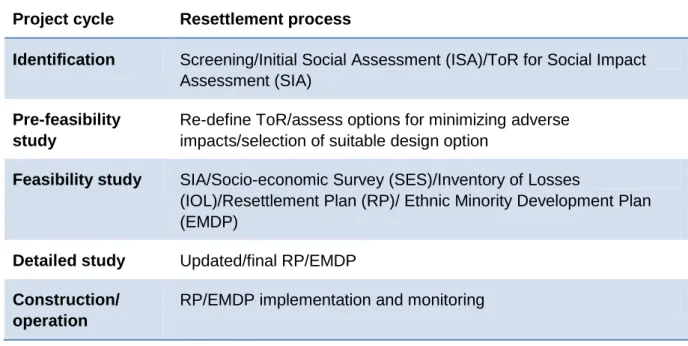
In line with the Decree on Compensation and Resettlement of People Affected by Development Projects the regulations link resettlement procedures with the project cycle (Article 3).
Table 1: Project Cycle
Project cycle Resettlement process
Identification Screening/Initial Social Assessment (ISA)/ToR for Social Impact Assessment (SIA)
Pre-feasibility study
Re-define ToR/assess options for minimizing adverse impacts/selection of suitable design option
Feasibility study SIA/Socio-economic Survey (SES)/Inventory of Losses
(IOL)/Resettlement Plan (RP)/ Ethnic Minority Development Plan (EMDP)
Detailed study Updated/final RP/EMDP
Construction/ operation
RP/EMDP implementation and monitoring
Source: (Suhardiman, De Silva et al. 2011 p.26)
The regulations outline the procedure for resettlement and compensation and what the project’s owners have to do so as to ensure that they comply at each stage of the project’s development (from identification to construction and operation). As stated in the regulations:
“To implement each step of the project’s cycle and resettlement process, the project owner will properly and strictly comply with the provisions determined in the Technical Guidelines on Compensation and Resettlement28” (page 3) (STEA 2005). This gives the project owner the central role in the formulation and implementation of a resettlement plan. It highlights how the government perceives the project owner as the decision maker in a hydropower project. In giving the project owner the full responsibility to handle the overall resettlement process it brings to light the potential conflict of interest that
28
The guidelines also provide direction in conducting social assessments in projects with indirect impacts on the population within or beyond the project’s boundaries. They explain in detail the processes and procedures that are necessary for the collection of data, surveys and the preparation of various documents in accordance with the provisions of Decree 192 on Resettlement and Compensation. They also cover all phases of the project stages from identification to implementation as well as the post-implementation evaluation of resettlement activities conducted by development projects. The current compensation and resettlement guidelines or regulations provide provisions that relate to large infrastructure development projects such as roads, mining and plantation concessions as well as hydropower dams.
might occur in identifying any potential negative impacts, formulating a mitigation/resettlement plan, implementing it and then monitoring the plan’s implementation. Given the fact that project owner is interested in establishing the hydropower dam, there is a tendency to downplay the potential negative impacts right from the start. Similarly, given the project owner’s pursuit of economic gain from the planned project, there is a tendency to try and minimize the cost of the resettlement plan. Additionally as the project owner’s main concern is to generate power rather than to sustain the existing livelihoods of the affected people there is a tendency to overlook the operational impacts on existing ecosystems. Other issues include the extent to which project owners include public participation, information disclosure and consultation into shaping the overall resettlement process. The regulations highlight the potential role of local authorities in encouraging a more transparent and deliberative decision making through participation and to spur a community into taking an active role in the planning and implementation of resettlement.
3.6.3
Key Differences in Lao PDR Law and World Bank Policies
Promulgation of GoL’s compensation and resettlement Decree 192/PM represents a significant improvement in the rights of citizens when their livelihoods, possessions and communities are affected by development projects. Both the compensation and resettlement decree and the World Bank policy on involuntary resettlement entitle the Project Affected Persons (PAPs) to compensation for affected land and non-land assets at replacement cost. However, the actual definition of severely affected PAPs varies between the World Bank (OP 4.12) who considers it to be at 10% and the decree 192/PM (Article 8) which considers it to be at 20% of income generating assets affected. However in accordance with the decree 192/PM (Article 6) all PAPs are entitled to economic rehabilitation assistance to ensure that they are not worse off due to the development project and which also means that it is in line with World Bank policy. The 10% definition of severely affected will be adopted as part of the M-IWRMP’s29 resettlement policy.
Both the compensation and resettlement decree (192/PM) and World Bank policies entitle non-titled PAPs to compensation for affected assets at replacement cost and other assistance, so that they are not made worse off due to the development project. However Decree 192/PM goes beyond WB’s policy as it includes providing PAPs living in rural or remote areas, or PAPs in urban areas who do not have proof of land-use rights and who have no other land in other places, compensation for the loss of land-use rights at replacement cost, in addition to compensation for their other assets and other assistance. Should PAPs be found to be non titled and be required to relocate, the development project will ensure that they are provided replacement land at no cost to the PAPs, or cash sufficient to purchase replacement land (M-IWRM 2010 p.6)
3.7
Legal Framework of NT2 Compensation Policy and
Entitlements
The NTPC and the GoL have developed compensation and livelihood restoration and improvement guidelines in the NT2 “Resettlement Policy” and the “Concession Agreement”.
29