Characterization of a Fe/Y[subscript 2]O[subscript 3]
metal/oxide interface using neutron and x-ray scattering
The MIT Faculty has made this article openly available.
Please share
how this access benefits you. Your story matters.
Citation
Watkins, E. B., A. Kashinath, P. Wang, J. K. Baldwin, J. Majewski,
and M. J. Demkowicz. “Characterization of a Fe/Y[subscript
2]O[subscript 3] Metal/oxide Interface Using Neutron and x-Ray
Scattering.” Appl. Phys. Lett. 105, no. 4 (July 28, 2014): 041601. ©
2014 AIP Publishing LLC
As Published
http://dx.doi.org/10.1063/1.4891432
Publisher
American Institute of Physics (AIP)
Version
Final published version
Citable link
http://hdl.handle.net/1721.1/94509
Terms of Use
Article is made available in accordance with the publisher's
policy and may be subject to US copyright law. Please refer to the
publisher's site for terms of use.
Characterization of a Fe/Y2O3 metal/oxide interface using neutron and x-ray scattering
E. B. Watkins, A. Kashinath, P. Wang, J. K. Baldwin, J. Majewski, and M. J. DemkowiczCitation: Applied Physics Letters 105, 041601 (2014); doi: 10.1063/1.4891432
View online: http://dx.doi.org/10.1063/1.4891432
View Table of Contents: http://scitation.aip.org/content/aip/journal/apl/105/4?ver=pdfcov
Characterization of a Fe/Y
2O
3metal/oxide interface using neutron and x-ray
scattering
E. B. Watkins,1,a)A. Kashinath,2,3,a)P. Wang,1,4J. K. Baldwin,5J. Majewski,1,b) and M. J. Demkowicz2,b)
1
Lujan Neutron Scattering Center, Los Alamos National Laboratory, Los Alamos, New Mexico 87545, USA
2
Department of Materials Science and Engineering, Massachusetts Institute of Technology, Cambridge, Massachusetts 02139, USA
3
Computational Modeling Technology, Aramco Research Center—Boston, Cambridge, Massachusetts 02139, USA
4
Intel Corporation, Hillsboro, Oregon, 97006, USA
5
Center for Integrated Nanotechnologies, Los Alamos National Laboratory, Los Alamos, New Mexico 87545, USA
(Received 29 May 2014; accepted 15 July 2014; published online 28 July 2014)
The structure of metal/oxide interfaces is important to the radiation resistance of oxide dispersion-strengthened steels. We find evidence of gradual variations in stoichiometry and magnetization across a Fe/Y2O3metal/oxide heterophase interface using neutron and x-ray reflectometry. These
findings suggest that the Fe/Y2O3interface is a transitional zone approximately !64 A˚-thick
con-taining mixtures or compounds of Fe, Y, and O. Our results illustrate the complex chemical and magnetic nature of Fe/oxide interfaces and demonstrate the utility of combined neutron and x-ray techniques as tools for characterizing them.VC 2014 AIP Publishing LLC.
[http://dx.doi.org/10.1063/1.4891432]
Nanoscale Y-Ti-O oxide precipitates are thought to play a major role in the radiation resistance of oxide dispersion-strengthened (ODS) steels.1 In particular, the interfaces between these particles and the ferritic matrix are presumed to be excellent sinks for impurities created during nuclear reactions, such as helium (He2þ).2Improved models of the structure of these interfaces would be helpful in understand-ing and, eventually, improvunderstand-ing the radiation resistance of ODS steels. However, due to the mixed ionic/covalent/ metallic bonding present at metal/oxide interfaces, their structure is generally much more complex and difficult to investigate than that of metal/metal3 or even oxide/oxide4 interfaces. Moreover, according to Gibbs’ phase rule, equi-librium phases absent from phase diagrams of bulk materials may, nevertheless, be found at metal/oxide interfaces, given the number of chemical species that meet there.5,6
We present an experimental investigation of the local structure of a Fe/Y2O3 metal/oxide heterophase interface
using a combination of neutron (NR) and x-ray (XR) reflec-tometry as well as x-ray diffraction (XRD). This interface involves only three elements and its oxide component has a well-defined stoichiometry. Fe/Y2O3 is therefore easier to
investigate than the more complex Fe/Y-Ti-O interfaces found in ODS steels1,2and can serve as a useful model sys-tem for understanding the influence of interfacial bonding on local interface structure. Our investigation reveals gradual variations in stoichiometry and magnetization across a! 64 A˚-thick transition zone at this interface, demonstrat-ing that its structure differs markedly from the neighbordemonstrat-ing bulk phases.
Complementary NR and XR techniques may be used to study the structure of thin films as a function of depth with near A˚ -level resolution.7NR is sensitive to density, chemical composition, and magnetization. XR is also sensitive to den-sity and composition, but with different scattering contrast than NR (electronicvs. nuclear), and is almost insensitive to magnetic structure. Unlike analytical transmission electron microscopy (TEM)8 or atom probe tomography (APT),9 which are also capable of A˚ -level characterization of inter-face composition, NR and XR are non-destructive and do not suffer from artifacts that may arise from the proximity of free surfaces or sample preparation. However, they require flat samples of relatively large surface area (!50–500 mm2) and high-perfection, i.e., uniform layer thickness, density, and composition as well as low surface roughness.
We use room temperature RF magnetron sputtering to grow high-qualitya-Fe and Y2O3films on Si (100) substrates
with a 1lm-thick SiO2 surface oxide. For Fe deposition,
using 2 mTorr, 400 watt DC, and 30 SCCM of Ar flow results in a growth rate of 0.37 nm/s. To grow Y2O3, we use a Y2O3
target at a process pressure of 5 mTorr, RF power of 200 watt, and an Ar flow of 30 SCCM, yielding a deposition rate of 0.012 nm/s. The base pressure of the deposition cham-ber is <5.0# 10$8Torr. Two samples are synthesized: A nominally 40 nm-thick layer of monolithic Y2O3 and a
bilayer of Fe and Y2O3, each layer being nominally 20 nm
thick with the Fe layer adjacent to the SiO2surface. The latter
sample contains one Fe/Y2O3interface.
We perform NR measurements using the Surface Profile Analysis Reflectometer (SPEAR) at the Lujan Neutron Scattering Center at Los Alamos National Laboratory.10The neutron beam is obtained from a spallation source and mod-erated by liquid H2. In the experiment, neutrons impinge on
a sample at a small angle,h, and the ratio of elastically scat-tered to incident neutrons is measured. This ratio is defined
a)
E. B. Watkins and A. Kashinath contributed equally to this work.
b)
Authors to whom correspondence should be addressed. Electronic mail: [email protected] and [email protected]
0003-6951/2014/105(4)/041601/4/$30.00 105, 041601-1 VC2014 AIP Publishing LLC
as the reflectivity,R, and measured as a function of the mo-mentum transfer vector, Qz, where Qz¼ 4psin (h)/k. In a
time-of-flight (ToF) instrument such as SPEAR, neutron mo-mentum—and therefore wavelength,k—may be determined by measuring the angle of scattered neutrons and the time it takes the neutrons to travel the length of the instrument. Neutron wavelengths at SPEAR range from 4.5 to 16 A˚ . To cover the range 0.001< Qz< 0.25 A˚$1, measurements are
performed at three different incident angles:h ¼ !0.5, !1.0, !2.6 degrees. XR and XRD are performed using a h–2h Rigaku Ultima III x-ray diffractometer with Goebel mirror and a set of footprint limiting slits and in Bragg-Brentano ge-ometry, respectively. We used a 2 kW linear x-ray source with Cu Ka radiation (k ¼ 1.5418 A˚) and a curved graphite
monochromator.
Analysis of specular NR data provides information on the coherent nuclear scattering length density (n-SLD) and the magnetic component of the scattering length density (m-SLD)11as a function of depth normal to the sample sur-face. The n-SLD depth profile is uniquely determined by the composition and density of the sample and m-SLD by the magnetic properties of the film. Because the SPEAR neutron beam is not polarized, reflectivities for spin-up and spin-down polarizations in magnetic films are added inco-herently to simulate the measured reflectivity curve. This procedure assumes that magnetic domains are larger than the coherency of the neutron beam (!lm). XR provides in-formation on the x-ray scattering length densities (x-SLD), which are generally complex to account for x-ray absorption.
The Y2O3monolayer and Fe/Y2O3bilayer are
approxi-mated by layered slab models parameterized by layer thick-ness, n-SLD, m-SLD (in the case of Fe), x-SLD, and interface roughness. The models consist of oxide and metal layers sandwiched between a super-phase (air) and a sub-phase (SiO2). We use tabulated bound coherent scattering
length (BCSL) values12 for Si, Y, O, and Fe in the model. Given a trial SLD profile, the Abeles matrix method13 as implemented in Motofit14 and the Parratt formalism employed in locally developed fitting programs15are used to calculate the corresponding reflectivity curves. The model is then refined to optimize thev2
goodness of fit16between the calculated and measured reflectivity curves by changing the parameters describing each layer. To avoid
over-parameterization, structural models employing the minimum number of layers to yield satisfactory fits are used.15
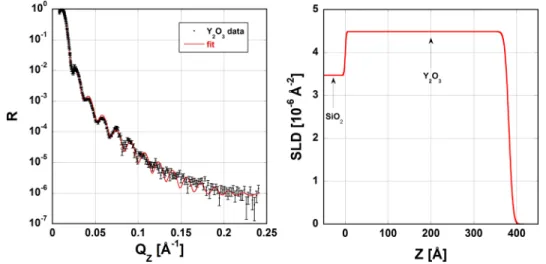
NR curves for the Y2O3 monolayer are shown in Fig.
1(left) and the model parameters for the best-fit SLD profile, plotted in Fig. 1(right), are given in TableI. There is good agreement between the measured and calculated NR corre-sponding to the fitted n-SLD profile. The fitted SLD is con-stant throughout the depth of the layer, consistent with stoichiometric Y2O3 of uniform density. The increased
roughness of the Y2O3free surface compared to the interface
with the SiO2substrate is likely due to the columnar
micro-structure of the Y2O3, which has lower overall thickness near
column boundaries than in column centers due to grain boundary grooving at the surface. This result confirms that the Y2O3 depositions, NR measurements, and reflectivity
modeling methods are reliable.
NR curves for the Fe/Y2O3bilayer are shown in Fig. 2
(left), and the model parameters for the best-fit SLD profile, plotted in Fig. 2(right), are given in Table II. Agreement between the NR measurement and calculated reflectivity from the best-fit SLD profile is very good. The NR data may only be fitted if neutron scattering due to spontaneous mag-netization of the Fe layer is taken into account. The com-bined (nuclear and magnetic) SLD profiles obtained from the NR fit are shown in Fig. 2(right). The red and blue solid curves represent the SLD profiles obtained for incoming neutrons in spin-up and spin-down states, respectively. In the first case, the m-SLD of 5.3# 10$6A˚$2 is added to the n-SLD while in the second case it is subtracted. Reflectivities for spin-up and spin-down neutron polariza-tions as well as their equally weighted average are shown in Fig.2(left). The XR fit is shown in Fig.3, and the associated model parameters are presented in TableIII.
FIG. 1. (left) NR data (circles) from the Y2O3monolayer and fitted
reflec-tivity (solid red line). Error bars in the data show the statistical uncertainty of the measurement. (right) n-SLD profile from which the NR fit is obtained. The interface with the SiO2 substrate is at
z¼ 0.
TABLE I. Model parameters used to fit NR data for Y2O3 on a SiO2
substrate.
Layer Thickness n-SLD Roughness (A˚ ) (10$6A˚$2) (A˚ )
SiO2 … 3.47
a
2
Y2O3 382.16 2 4.48 7.6
aparameters constrained to the theoretical values.
Aside from the Fe/Y2O3interface, both the n-SLD and
m-SLD distributions in Fig.2(right) as well as the x-SLD in Fig. 3 (right) match the expected values for Fe and fully dense, stoichiometric Y2O3. However, n-SLDs and x-SLDs
immediately adjacent to the Fe/Y2O3interface deviate
mark-edly from those of Y2O3 and Fe. Adjacent to the 155.4 A˚
-thick Fe layer (measured from the SiO2interface), there is a
22.8 A˚ non-magnetic layer, labeled X. This region is espe-cially visible in the spin-down (blue) SLD curve. Layer X is followed by a region 41 A˚ thick labeled (Y2O3)Awith SLDs
just below that of fully dense, stoichiometric Y2O3.
The lower than bulk Y2O3 SLD of the (Y2O3)A layer
cannot be explained by Fe substitution of the Y sites because BCSL values of the elements at this interface increase as O< Y < Fe.12
Furthermore, because of the high formation
energies of antisite defects in Y2O3,
17
it is not likely that the SLD is due to Y substitution on O sites. The SLD of (Y2O3)Alayer may be explained by Y or O vacancies or by
lowered density compared to the bulk material, possibly due to porosity. For example, the difference in n-SLD between (Y2O3)A and Y2O3 may be accounted for by a! 15%
decrease in the density of this layer or similar deficiency of the number of either Y or O atoms. Layer X has an n-SLD close to that of Fe, but is not magnetic. Meanwhile, its x-SLD is close to that of Y2O3. One possible interpretation of
these results is to identify layer X as consisting of Fe2O3,
with n-SLD of 7.2# 10$6A˚$2and x-SLD of 4.1# 10$5A˚$2. Fe2O3 exhibits several phases with different magnetic
properties.18
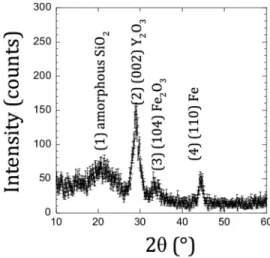
Fig.4shows the XRD 2h region from 10& to 60&. Using
the Powder Diffraction Inorganic Crystal Structure Databases,19four crystallographic reflections may be identi-fied. Peak (1) corresponds to amorphous SiO2, (2) is the
(002) peak of Y2O3, and (4) the (110) peak of Fe. These
peaks are consistent with the epitaxial texture in the Fe/Y2O3
bilayer.11 This well-defined epitaxial relation suggests that the Fe/Y2O3interface is initially atomically sharp upon
dep-osition and subsequently reacts to form the wide, transitional zone described here.
Peak (3) in Fig. 4 may be indexed as a (104) x-ray reflection from Fe2O3, in agreement with the inference made
from NR and XR data. However, several more complex sce-narios may also be consistent with the marked composition
FIG. 2. (left) NR data (circles) from the Fe/Y2O3bilayer, fitted total
reflec-tivity (solid green line), and fitted par-tial reflectivities for up and spin-down beam polarizations (dashed red and blue lines, respectively). Error bars in the data show the statistical uncer-tainty of the measurement. (right) n-SLD profile from which the NR fit is obtained. The SLD of the Fe layer has different m-SLD contributions for the spin-up and spin-down components of the beam (red and blue lines, respec-tively). The interface with the SiO2
substrate is atz¼ 0.
TABLE II. Model parameters used to fit NR data for Fe/Y2O3 on a SiO2
substrate. The m-SLD of 5.3# 10$6A˚$2was only applied to the Fe layer.15
Layer Thickness n-SLD Roughness (A˚ ) (10$6A˚$2) (A˚ ) SiO2 … 3.47a 26 0.5 Fe 155.46 2 8.02a 8.86 0.5b X 22.86 2 8.026 0.2 8.86 0.5b (Y2O3)A 41.06 2 3.706 0.2 8.86 0.5 b Y2O3 129.76 2 4.40a 8.86 0.5b a
parameters constrained to the theoretical values.
b
parameters constrained to be equal.
FIG. 3. (left) XR data (circles) from the Fe/Y2O3bilayer and fitted
reflec-tivity (solid red line). Error bars in the data show the statistical uncertainty of the measurement. (right) x-SLD profile from which the XR fit is obtained. The interface with the SiO2 substrate is at
z¼ 0.
changes occurring at the Fe/Y2O3interface, including
rough-ening, mixing, or formation of ternary compounds. The Y-Fe-O system exhibits at least three such compounds:20 Y3Fe5O12, YFeO3, and YFe2O4. Distinctive interfacial
phases or “complexions” may also form.6 Differences in stoichiometry at metal/oxide interfaces may be driven by bulk thermodynamics20 as well as by the local interfacial environment.6
Our study reveals a 63.8 A˚ -thick (41 A˚ þ 22.8 A˚) region at the Fe/Y2O3 interface that differs from Y2O3 and Fe in
composition, density, and magnetization. By contrast, previ-ous NR investigations did not reveal such differences in impurity-free metal/metal heterophase interfaces.21 Changes in structure and stoichiometry such as those observed here may also be expected at interfaces between Y-Ti-O oxide particles and the ferritic matrix in ODS steels. Such changes may play a role in explaining the local enhancement of Ti, Cr, or V at these interfaces.22Given that interfacial regions with altered stoichiometry, density, and magnetization may be as thick as!64 A˚, oxide particles with diameters below !10 nm in ODS steels may be expected to exhibit markedly different structure and properties from bulk Y-Ti-O.
Our work demonstrates the utility of combining NR, XR, and XRD for investigating buried metal/oxide interfa-ces, similar to those found in ODS steels. NR investigations of Fe/Y-Ti-O metal/oxide interfaces with compositions
closer to those in ODS steels may be performed in the future, provided that high-perfection samples of sufficiently large area may be synthesized. By combining NR with TEM and APT characterization, a more complete understanding of metal/oxide interfaces may be obtained.
This work was supported by the Laboratory Directed Research and Development (LDRD) program at Los Alamos National Laboratory under Project No. 20130118DR, under DOE Contract No. DE-AC52-06NA25396. This work also benefited from the use of the Lujan Neutron Scattering Center at LANSCE, funded by the DOE Office of Basic Energy Sciences and Los Alamos National Laboratory under DOE Contract No. DE-AC52-06NA25396. We are grateful to O. Anderoglu, B. P. Uberuaga, S. Yadav, M. Fitzsimmons, and S. Choudhury for helpful discussions and L. Daemen and D. Williams for assistance with x-ray measurements.
1
M. J. Demkowicz, P. Bellon, and B. D. Wirth, MRS Bull.35(12), 992 (2010).
2G. R. Odette and D. T. Hoelzer,JOM
62(9), 84 (2010); G. R. Odette, M. J. Alinger, and B. D. Wirth,Annu. Rev. Mater. Res.38(1), 471 (2008); P. Erhart,J. Appl. Phys.111(11), 113502 (2012).
3M. J. Demkowicz, J. Wang, and R. G. Hoagland, in
Dislocations in Solids, edited by J. P. Hirth (Elsevier, Amsterdam, 2008), Vol. 14, p. 141; A. Kashinath, A. Misra, and M. J. Demkowicz, Phys. Rev. Lett. 110(8), 086101 (2013).
4M. J. Zhuo, B. P. Uberuaga, L. Yan, E. G. Fu, R. M. Dickerson, Y. Q.
Wang, A. Misra, M. Nastasi, and Q. X. Jia, J. Nucl. Mater.429, 177 (2012).
5
F. Ernst,Mater. Sci. Eng., R14(3), 97 (1995).
6P. R. Cantwell, M. Tang, S. J. Dillon, J. Luo, G. S. Rohrer, and M. P.
Harmer,Acta Mater.62, 1 (2014).
7
H. Zabel,Appl. Phys. A58(3), 159 (1994).
8
C. Colliex, L. Bocher, F. de la Pena, A. Gloter, K. March, and M. Walls,
JOM62(12), 53 (2010).
9G. Schmitz, C. Ene, H. Galinski, R. Schlesiger, and P. Stender, JOM
62(12), 58 (2010).
10
M. Dubey, M. S. Jablin, P. Wang, M. Mocko, and J. Majewski,Eur. Phys. J. Plus126(11), 11110 (2011).
11In
Modern Techniques for Characterizing Magnetic Materials, edited by Yimei Zhu (Springer US, 2005), pp. 107.
12
V. F. Sears,Neutron News3(3), 26 (1992).
13O. S. Heavens,
Optical Properties of Thin Solid Films (Dover Publications, New York, 1991), p. 7; F. Abeles,J. Phys. Radium11(7), 307 (1950).
14
A. Nelson,J. Appl. Crystallogr.39, 273 (2006).
15See supplementary material at http://dx.doi.org/10.1063/1.4891432for a
description of how the magnetic component of the SLD was fitted as well as of how the number of layers in the model was selected.
16
C. B. Markwardt, Astron. Soc. P 411, 251 (2009); K. Pearson, Philos. Mag.50(302), 157 (1900).
17J. X. Zheng, G. Ceder, T. Maxisch, W. K. Chim, and W. K. Choi,Phys.
Rev. B73(10), 104101 (2006).
18
R. S. Tebble and D. J. Craik, Magnetic Materials (Wiley-Interscience, 1969).
19G. J. Mccarthy, A. D. Mighell, C. R. Hubbard, and M. C. Nichols, Acta
Crystallogr. A40, C442 (1984).
20
K. Kitayama, M. Sakaguchi, Y. Takahara, H. Endo, and H. Ueki,J. Solid State Chem. 177(6), 1933 (2004); V. Raghavan, Phase Diagrams of Ternary Iron Alloys (ASM International, 1987); K. T. Jacob and G. Rajitha,Solid State Ionics224, 32 (2012).
21
M. Zhernenkov, M. S. Jablin, A. Misra, M. Nastasi, Y.-Q. Wang, M. J. Demkowicz, J. K. Baldwin, and J. Majewski,Appl. Phys. Lett.98, 241913 (2011); A. Kashinath, P. Wang, J. Majewski, J. K. Baldwin, Y. Q. Wang, and M. J. Demkowicz,J. Appl. Phys.114(4), 043505 (2013).
22
E. A. Marquis,Appl. Phys. Lett.93(18), 181904 (2008). TABLE III. Model parameters used to fit XR data for Fe/Y2O3on a SiO2
substrate.
Layer Thickness x-SLD Roughness (A˚ ) (10$6A˚$2) (A˚ ) SiO2 … 18.0 a 2b Fe 153.86 2 56.5a 8.8b X 22.86 2 37.06 0.2c 8.8b (Y2O3)A 41.06 2 35.06 0.2c 8.8b Y2O3 129.16 2 37.1 a 8.8b
aparameters allowed to vary65% from their theoretical values. bparameters fixed to the values obtained from NR fits (TableII). cparameters allowed to vary610% from their theoretical values.
FIG. 4. XRD data from the Fe/Y2O3bilayer on SiO2substrate. Error bars
represent the statistical uncertainty of the measurement.