Risk Management
and Animal Care in
Disasters
Increasing the Resilience
of the Livestock Sector
Alejandra Díaz, Sacha Trelles and Juan Carlos Murillo
Costa Rican
Experience
Risk Management
and Animal Care in
Disasters
Increasing the Resilience
of the Livestock Sector
Díaz, Alejandra
Risk Management and Animal Care During Disasters: Increasing the Resilience of the Livestock Sector: the Costa Rican Experience / Alejandra Díaz, Sacha Trelles, Juan Carlos Murillo -- San Jose: C.R.: IICA, 2016.
92 p.; 15.24 cm x 22.86 cm ISBN: 978-92-9248-614-3 Published also in Spanish
1. Animal health 2. Animal welfare 3. Natural disasters 4. Disaster prevention 5. Veterinary services 6. Risk
Management 7. Costa Rica I. Trelles, Sacha II. Murillo, Juan Carlos III. IICA IV. Title
AGRIS DEWEY
L70 636.089
San José, Costa Rica 2016
Inter-American Institute for Cooperation on Agriculture (IICA), 2016
Risk Management and Animal Care in Disasters: Increasing the Resilience of the Livestock Sector: the Costa Rican Experienceby IICA is licensed under a Creative Commons
Attribution-ShareAlike 3.0 IGO (CC-BY-SA 3.0 IGO) (http://creativecommons.org/licenses/by-sa/3.0/igo/)
Based on a work at www.iica.int
IICA encourages the fair use of this document. Proper citation is requested. This publication is also available in electronic (PDF) format
from the Institute’s Web site: http://www.iica.int Translation: Leslie Simmons
Photography: SENASA, World Animal Protection and IICA Layout: Gabriela Wattson
Cover design: Gabriela Wattson Printed: Masterlitho
Contents
Foreword 5 Prologue 7 Acknowledgements 9 1. Introduction 112. Conceptual Framework and Context 15
2.1 The Concept of Risk and Its Management 15
2.2 The Concept of Disaster 17
2.3 Disaster Risk Management 21
2.4 Impact of Disasters 23
3. Importance of the Livestock Sector 27
3.1 Economic Importance 27
3.2 Importance Food Security 29
3.3 Importance as Livelihood 30
3.4 Impact of Disasters on the Livestock Sector 32
4. The Costa Rican Experience 39
4.1 Country Context 39
4.2 Official Veterinary Service 45
4.3 Governance of Disaster Risk Management
in the Country 46
4.4 Animal Risk Management in Disasters 53
4.5 Mechanisms for Animal Care in Disasters 54
4.6 Benchmarks or Relevant Events during the
History of the Experience 72
4.7 Benchmarks in the History of Costa Rica’s Experience in Risk Management and Animal
Care in Disasters 74
5. Lessons Learned and Improvement Opportunities 77
5.1 Lessons Learned 77
Foreword
Costa Rica’s Ministry of Agriculture and Livestock, through the National Animal Health Service (SENASA, Spanish acronym), has achieved important improvements in animal health, animal welfare and public health, tackling diverse challenges to the livestock sector in sustainability and climate change, emergency or disaster response, food security, productivity and competitiveness. Achieving objectives of this nature calls for concerted efforts by national public and private institutions, as well as the support of international agencies.
Given its location in Central America, Costa Rica is highly vulnerable to disasters. These tend to be felt more forcefully in rural areas, and cause considerable damage and loss to farming and livestock production systems. The January 2009 earthquake that decimated the town of Cinchona, in the province of Alajuela, caused fatalities and left communities devastated in its wake. Losses in the agricultural sector totaled USD 10,996,647, USD 2 million of which were in the livestock sector, with almost half a million production animals affected. On the other hand, impacts of drought triggered by phenomena such as El Niño include decreased availability of fodder, greater mortality of cattle, lower rates of productivity and higher prices for inputs.
In response, SENASA, in coordination with the National Commission for Risk Prevention and Emergency Response (CNE, Spanish acronym), the private sector and academia, and with the support of World Animal Protection, previously known as the World Society for the Protection of Animals (WSPA), has been implementing actions to strengthen institutions, build capacity in disaster risk management, and promote prevention with the aim of reducing health risks through prompt care of animals in affected zones. Regulations established in 2013 on emergency devices set out in the General Law on SENASA therefore included a sinking fund for health emergency response, and provisions on contracting procedures in emergency situations. These regulations define the mechanisms necessary for re-establishing animal health and veterinary public health in epidemic or non-epidemic health emergencies.
Over the years, the foundations have been laid for a national response system to epidemic or non-epidemic health emergencies of natural and man-made origin. The mechanisms established have been shown to be effective while also pointing to opportunities for improvement. The proof lies in SENASA’s capacity to respond
to a health emergency and its swift and appropriate action in affected areas. This was demonstrated in the recent health emergency triggered by El Niño, which brought droughts in some regions and intense rains in others.
Its experience in disaster risk management has enabled SENASA to perform health risk management more efficiently, making it a unique case in the Central American region and fairly rare in Latin America. Given the innovative quality of its modus operandi, which includes financing mechanisms and contributions to building and strengthening the resilience of Costa Rica’s livestock sector, World Animal Protection and the Inter-American Institute for Cooperation on Agriculture (IICA) consider this a valuable experience worth sharing and bringing to international attention.
We wish to express our gratitude to CNE, the School of Veterinary Medicine at the National University of Costa Rica, Asociación de Agricultores y Ganaderos de Sarapiquí (AGRIGASA), World Animal Protection, the private sector and all the organizations that have taken part in this experience, for their efforts and dedication in the tasks undertaken.
Our thanks also to IICA for its work in systematizing this experience. All of the stakeholders have learned a great deal from the methodology of analysis, synthe-sis and interpretation that this institution employed. We hope the lessons and improvement opportunities generated by this work will allow us to continue making steady progress towards better risk management and a more resilient livestock sector.
6
Bernardo Jaén
Director
Prologue
Given current environmental challenges and the role agriculture plays in people’s wellbeing, the fight against poverty and inequality, and the attainment of food security, IICA has assumed the task of systematizing Costa Rica’s experience in
risk management and animal care during disasters as part of its efforts aimed at the
development of sustainable and resilient agriculture.
In these new conditions, farmers must now deal with a heightened incidence of catastrophic climate events such as drought, flooding, frost, altered rainfall patterns, hurricanes, landslides, pests and emerging and re-emerging diseases. All of these jeopardize productivity and food security, making it necessary to manage risk from a broader perspective that truly serves as an instrument to reduce vulnerability and increase the sector’s resilience.
Climate change poses new hazards while exacerbating those that already exist. Unfortunately, smaller countries, and even large ones, are not fully prepared to cope with excess rain, rising temperatures, new knowledge related to pests and diseases, and other consequences of climate change. The 14 million small producers in Latin America and the Caribbean are particularly vulnerable to these phenomena, since they have fewer technological and economic resources to deal with them (IICA, 2014). Moreover, it has been verified that the repeated impact of smaller-sized emergencies irrevocably erodes the economies and future of small producers in the countries of the region.
Addressing these challenges calls for modern integrating frameworks and instruments, special financing mechanisms, transformations of stakeholders’ capacities, generation and use of new technical knowledge, and the development of new leadership under a new paradigm of risk management. Several of these elements are already in place in Costa Rica, where the veterinary service endeavors to manage health risks in the best way possible by providing prompt care to animals affected by an emergency or disaster.
The aim of this document is to share the knowledge generated and lessons learned by the different stakeholders, as guidance for other countries also seeking to reduce disaster risk and increase the resilience of the livestock sector.
We are deeply grateful to the authors of this publication. Their capacities and experiences have contributed to a critical and thoughtful approach in assessing the case of Costa Rica. A pathway to learning is thus opened: the data has been systematized and analyzed, and lessons garnered for further development, but also as input for similar processes.
8
Muhammad Ibrahim
Associate Director of Technical Cooperation
Miguel Ángel Arvelo
Representative of the IICA Office in Costa Rica
Acknowledgements
The systematization of Costa Rican experience in risk management and animal care in
disasters has been possible thanks to the
contributions of its protagonists. Through the analysis of their experiences and creative practices in different spaces of reflection (workshop, forum, interviews, etc.), the authors were able to recover the knowledge acquired in order to make conceptual and technological advances in understanding of the theme, and to help enrich similar initiatives in other countries and regions. We wish to express our appreciation to all
of the participants in this systematization process, and especially: Luis Molina and Federico Chaverri, SENASA Sandra Saborío, CNE Gerardo Huertas and Eugenia Morales, World Animal Protection
1. Introduction
The world population, and especially those who depend on agriculture, is increasingly exposed to adverse phenomenon such as drought, flooding, hurricanes, landslides, earthquakes and epidemic outbreaks of geological, meteorological, hydrological, biological or man-made origin that can turn into authentic disasters.
Such emergencies can spring up suddenly or surface slowly. They may be an isolated event or unleash additional events, or a combination of both. They can produce death and injury, harm health and property, destroy livelihoods, deteriorate services, produce social and economic upheaval and cause serious
environmental damage.
Every year millions of people who depend on livestock production, particularly in rural areas, are confronted with these emergencies. They not only endanger
food production at local or national scale; the problem can reach regional and global proportion. What is at stake, therefore, is the planet’s food and nutritional security.
The livestock sector sustains almost one billion of the world’s most impoverished inhabitants, and is likely to continue doing so in the coming decades. As livelihood of the poorest population, it is vital. Livestock make up an integral part of agricultural systems, raising productivity and providing a continuous stream of food and income for homes (FAO, 2009).
In the rural zones of most countries, the ties between people and their animals are extremely important. Animals are a source of food, labor or transport. Seventy percent of the planet’s poor, the group most vulnerable to disaster, owns livestock (Campbell and Knowles, 2011). Livestock assets are therefore valuable, and their loss usually places producers at greater risk, especially those engaged in family farming
Disasters, particularly floods, generally wreak havoc, jeopardizing the economy, animal health, human health and food security. However, much of the damage and loss caused by these events could have been avoided or at least ameliorated through suitable risk management, applying mechanisms that would have reduced the vulnerability of the most fragile sectors.
Costa Rica is exposed to countless hazards due to its location and geological structure. Because it receives so much precipitation, most emergencies are associated with heavy rainfall, flooding and landslides. Occurring alongside are scenarios of extreme dryness, as in the North Pacific region where rain scarcity tends to be more frequent, extend over larger areas and reach greater magnitudes. There are also earthquakes and a latent threat of volcanic eruptions, such as those of the Turrialba Volcano currently taking place.
Over the course of the 20th century, Costa Rica experienced 22 quakes and 11
volcanic events, the most recent being the eruption of the Irazu Volcano between 1963 and 1965, and Arenal Volcano in 1968 (CNE, 2010). During the 2005-2011 period, total losses recorded from the impact of hydrometeorological and geotectonic phenomenon amounted to 1,130,390,000 dollars in constant 2011 dollars. The year with greatest economic consequences from natural phenomenon was 2009, when losses reached 447.35 millions of dollars (1.77% of GDP). The major cause for these numbers was the earthquake in Cinchona, province of Alajuela, which left losses of 419.37 million dollars, 92.43% in the rural area (387.63 million dollars) (MIDEPLAN-MAG, 2013).
Given the country’s conditions of vulnerability and their repercussions on the livestock sector, SENASA has deployed actions for animal management in emergencies from the perspective of disaster risk management. These entailed improving prevention and response capacities, training field staff in impact analysis and animal needs after a disaster, setting up an emergency fund, preparing emergency plans for the livestock sector and developing operational protocols, among other aspects. To achieve its ends SENASA has established cooperation ties with CNE and other national institutions, following global trends closely.
Effects on Cattle.
A departure from traditional health risk management, this type of action allows for more effective protection of animal health, public health and animal welfare, all an essential part of the institution’s mission. It also helps reduce disaster risk and strengthen the resilience of the livestock sector.
Through the systematization of Costa Rica’s experience, supported by numerous spaces of reflection and analysis, a series of innovative practices has been identified. In the last analysis, they are the collective creation of the stakeholders themselves. Our goal here is to share these with a wider audience so that they can serve as example for similar initiatives in other countries and regions.
This publication outlines the conceptual framework for the Costa Rican experience, dedicates a section to recalling the importance of the livestock sector in world economies, describes Costa Rica’s experience in risk management and animal care during disasters, and concludes with lessons learned and improvement opportunities.
2. Conceptual Framework
2.1. The Concept of Risk
Surely humankind has perceived risk ever since the use of reason was obtained, explaining it on the basis of religious conception at the dawn of history, or in the different social and political forms adopted by society over the course of time. In a broad sense, the word “risk” alludes to the likelihood of one or several hazards occurring, with the possibility of harmful effects. At stake can be the health of individuals, animals and plants; property; way of life (livelihood); the environment: finances and even the development of a people.
In the realm of health, risk designates the probability of an incident taking place that is harmful to the health of people or animals, and the likely magnitude of its biological and economic consequences (OIE, 2014). Risk management in this case includes the identification, selection and application of measures for lowering the level of risk.
Regarding disasters, risk refers to the possible losses a disaster would cause in terms of lives, health conditions, livelihoods and goods and services, and what could occur in a particular community or society in a specific period of time in the future (UNISDR, 2009). In this case, the emphasis is on probable impacts, not the likelihood of an event taking place. There is also recognition that disaster risk is constructed socially through a process inserted in the dynamics of development. Reducing both risks and possible damage and loss are common practices in risk management. The focus has been evolving, however, and now increasingly centers on causes and prevention. The change is largely due to a new awareness of man’s key role as inducer of risk and interested party who should have sufficient capacity to react quickly and effectively to an extreme event.
For UNISDR (2009), risk management covers risk assessment and analysis for the purpose of executing strategies and specific actions to control, reduce and transfer risk. This is a generalized practice through which organizations approach investment risks and operational risks, interruption of business, breakdowns in production, environmental damage, social impacts and damages caused by fires and natural threats. Along with agriculture, where production is directly or indirectly affected by meteorological and extreme climate episodes, sectors that depend on supply of water and energy likewise cannot afford to ignore the issue of risk management.
In general, the paradigms upholding different interpretations of risk management now stress prevention and focus on causes more than consequences. Risk is considered a process constructed in a dynamic and multi-causal way, wherein causes and consequences interact spatially and temporally. An isolated or sectoral analysis of dangers or threats has lost relevance.
Now that world health is being confronted with new diseases and the reappearance of those once believed eradicated, intersectoral and multidisciplinary work is
Risk Management
The systematic approach and practice of managing uncertainty to minimize potential harm and loss. (UNISDR, 2009).
the preference in risk management. Individual health is determined both by the people and animals around us, and the environment in which we develop. Recognition of this convergence demands a change from the traditional approach to public health, animal health and disease control. Achieving comprehensive health requires sustained actions for improved quality of life, human as well as that of domesticated species and the ecosystems of which we form part (Díaz, Medina and Trelles, 2010).
In this line of thinking, ensuring animal health and welfare and veterinary public health in disaster situations should lead veterinary services to broaden their vision of risk management They must also take preventive measures and strengthen their response capacity to attend animals—whether production or companions—in a possible emergency.
Society now faces global hazards and catastrophic events that overpower relief capacity from conventional or sectoral spheres. Health and disaster risks are part of these, along with financial, technological and all of the other types of risk to which they are closely related. In a context of sustainable development, the response to them thus calls for a comprehensive but also holistic approach.
2.2. The Concept of Disaster
As with risk, the concept of disaster has also evolved over time and no longer refers so much to an event itself, such as an earthquake or flood, but also encompasses the social and economic consequences unleashed. Hence, for a disaster to be declared as such, losses and damages must be of such magnitude that the normal functioning of society is interrupted.
UNISDR (2009) defines “disaster” as a serious interruption of the normal functioning of a community or society due to an event that has caused so many deaths and material, economic and environmental losses that the affected community or society does not have the necessary capacity to deal with the situation with its own resources. A “crisis” or “emergency” is defined as a threatening situation demanding that urgent measures be taken. With effective response to an emergency, an event can be prevented from reaching the proportions of a disaster. It should be pointed out that the terms “disaster management” and “emergency management” are usually used interchangeably. Lavell (2014) states that while risk is a latent condition, disaster is relevant and real, and represents the materialization of the degree of risk to which a society is exposed. Disaster risk is the convergence in a given space and time of conditions of vulnerability and exposure to a concrete physical event or a synchronous
or staggered array of events. While poverty is not equivalent to exposure and vulnerability, it does feed into these in a certain way. Disaster risk is connected with unsustainable forms of development, such as environmental degradation (UNISDR, 2009).
Disaster is thus configured as the result of a combination of factors: exposure to a hazard–which can be natural, geological, biological, hydrometeorological or technological–, conditions of vulnerability, and the impossibility of addressing the consequences of the phenomenon that has occurred.
For the purposes of this publication and to achieve a more comprehensive vision of risk management, the aim is to analyze both emergencies and disasters from a health standpoint. In this sense, both disasters and emergencies can be classified as epidemic or non-epidemic. The latter can be natural, anthropic or technological in origin, while the former refers to outbreaks of emerging or reemerging disease in humans or animals, whether accidental or intentional (bioterrorism).
With respect to epidemic emergencies or disasters, it is important to point out that these have risen to international scales in recent decades, many in light of the close relation that exists between public health, animal health and the environment. Box 1 shows main changes in the world contributing to an upsurge of diseases.
Box 1 The Planet Is Changing.
We are in a new era of infectious disease: diseases that were assumed eradicated re-surface, and unknown diseases arise all of a sudden. There are planetary changes that are contributing to this phenomenon. The primary ones are indicated below.
• Growth of world population and urbanization
Both facilitate the spread and appearance of diseases, since people and animals are living in ever closer proximity to one another.
As human populations increasingly share space with one another and with domestic and wild animals, there is ever-greater risk of diseases crossing over from one species to another.
• Climate change
With the environment’s modification, the agent-host-environment relation is also changing and new pathways are being created for the appearance and spread of diseases.
• Livestock production
This refers here to both rustic and intensive production:
- Rustic, artisanal or backyard production, which applies little or no technology, lacks infrastructure, and given the absence of good practices of animal raising, furthers the appearance and spread of diseases.
- Intensive livestock production, which modifies production systems to supply an ever-growing human population that demands more and more animal protein, can also place public and animal health at risk if the necessary biosafety measures are not applied.
• The rise in trade of agricultural products
The commercialization of agricultural products is increasing daily thanks to trade liberalization and globalization, but also to advances in transportation and new trade mechanisms and instruments.
Any error in production, processing, transport or any other link in the food chain can affect food innocuousness and therefore consumers, even though they may be far away from the product’s place of origin
• Greater mobilization of people and pests
The increased movement of people also increases risks to human and animal health, as a local problem can easily become a global problem.
Not only humans travel. Non-human travelers, such as pests, can also be transported inadvertently. These pests could be vectors of disease or species that do not exist in the country where they arrive, and which alter the ecosystems where they install themselves.
• Cultural customs and practices
If not handled or controlled adequately, some cultural customs or practices can create conditions furthering the appearance and spread of diseases. This is the case of cockfighting, hunting and raising wild birds, and live animal markets, among others.
Epidemic emergencies or disasters can be associated with a non-epidemic emergency or disaster. A non-epidemic disaster can create ideal conditions for the outbreak and spread of diseases new to the environment. They may also increase the incidence of existing diseases, given the fragility of the survivors and conditions furthering the spread of pathogens, the rise in vectors, and other aspects resulting from the event. This can make the damages to society even greater.
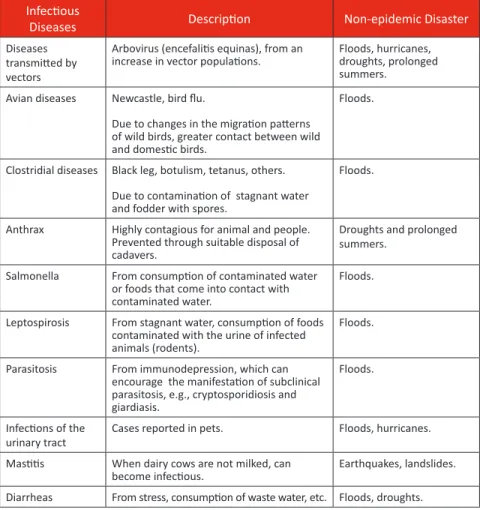
Table 1 shows some diseases in animals that can present in the frame of non-epidemic emergencies or disasters.
Infectious
Diseases Description Non-epidemic Disaster
Diseases transmitted by vectors
Arbovirus (encefalitis equinas), from an
increase in vector populations. Floods, hurricanes, droughts, prolonged summers.
Avian diseases Newcastle, bird flu.
Due to changes in the migration patterns of wild birds, greater contact between wild and domestic birds.
Floods.
Clostridial diseases Black leg, botulism, tetanus, others. Due to contamination of stagnant water and fodder with spores.
Floods.
Anthrax Highly contagious for animal and people. Prevented through suitable disposal of cadavers.
Droughts and prolonged summers.
Salmonella From consumption of contaminated water or foods that come into contact with contaminated water.
Floods. Leptospirosis From stagnant water, consumption of foods
contaminated with the urine of infected animals (rodents).
Floods. Parasitosis From immunodepression, which can
encourage the manifestation of subclinical parasitosis, e.g., cryptosporidiosis and giardiasis.
Floods.
Infections of the
urinary tract Cases reported in pets. Floods, hurricanes. Mastitis When dairy cows are not milked, can
become infectious. Earthquakes, landslides.
Diarrheas From stress, consumption of waste water, etc. Floods, droughts. Table 1. Some Diseases Associated with Non-epidemic
Emergencies or Disasters
Non-infectious
Diseases Description Non-epidemic Disaster
Traumatic injuries Blows and fractures. Floods, landslides, earthquakes, volcanic eruptions, hurricanes. Pneumonia From aspirating water, ash, irritant gases,
etc. Floods, eruptions.
Hypothermia and
hyperthermia Difficulty maintaining body temperature in extreme situations. Floods, hurricanes, prolonged summers, high temperatures.
Toxicosis Consumption of toxic plants or other toxic or harmful substances in periods when fodder is scarce. Can also produce ruminal impaction.
Droughts, prolonged summers.
The information above shows the importance of comprehensively managing health risks, regardless of whether the threat is epidemic or non-epidemic. It also reveals that institutions with public and veterinary competence must improve their capacities to prevent and deal with disasters, and in this way better contribute to the integration of disaster reduction in development plans.
2.3. Disaster Risk Management
Disaster risk management is an extension of the concept of risk management that specifically addresses the risk of disasters and aims to minimize losses and damages stemming from the occurrence of these events. Reducing vulnerability and increasing resilience are two key aspects when dealing with disaster risk management.
According to UNISDR (2009), disaster risk management seeks to avoid, lessen or transfer the adverse effects of the threats through different activities of prevention, mitigation and preparation. Management activities that cover and aim to correct or reduce pre-existing disaster risk refer to “corrective management of disaster risk,” while activities that cover and seek to prevent the increase or appearance of new disaster risks allude to “prospective management of disaster risks.”
Application of the United Nations International Strategy for Disaster Reduction (UNISDR) in the Hyogo Framework for Action 2005-2015: Increasing the
Resil-ience of Nations and Communities to Disasters sought to establish a culture of
prevention as integral part of disaster risk management, although it is recognized that much of the resources nations have available for these actions has instead been geared to addressing consequences.
As indicated by UNISDR (2015), without effective disaster risk management, sustainable development is not possible. Many disasters cause economic losses, leave societies broken by the death of family members and oblige residents to migrate far away from socio-environmental hazards or to look for new livelihoods. The impacts are accumulable, and frequent recurrence of adverse events erodes resilience, or the ability to resist or overcome a new disaster. The
Disaster Risk Management
“The systematic process of using administrative directives, organizations, skills and operational skills and capacities to implement strategies, policies and improved coping capacities in order to lessen the adverse impacts of hazards, natural threats and the possibility of disaster.“ (UNISDR, 2009)
Resilience
“The ability of a system, community or society exposed to hazards to resist, absorb, accommodate to and recover from the effects of a hazard in a timely and efficient manner, including through the preservation and restoration of its essential basic structures and functions.” (UNISDR, 2009)
capacity of families, cities and countries to attain greater wellbeing is therefore diminished (UNISDR and CEPREDENAC, 2014).
Clearly emergency response cannot be limited to saving human lives; it must also
protect and reinforce the livelihoods of the affected populations. Not only does
this foster their immediate recuperation, but their long-term ability to resist and recover and reduce their vulnerability can also be enhanced, along with lowering the possibility of new disasters arising. (LEGS, 2014)
The Third U.N. World Conference on Disaster Risk Reduction in Sendai, Japan, concluded on March 18. Representatives of 187 Member States agreed to a new framework for action and financing, the Sendai Framework for Disaster Risk
Reduction (2015-2030), successor to the Hyogo Framework and which seeks
substantial reduction of risks and losses caused by disasters, as well as loss of lives, livelihoods and health of people, businesses, communities and countries. One of the Sendai Framework priorities (the third), “Investing in disaster risk reduction
for resilience,” recommends that local and national governments “strengthen
the protection of livelihoods and productive assets, including livestock, working animals, tools and seeds.”
For its part, World Animal Protection (2014) has stated that if animal welfare holds a key place in disaster risk management it is possible to significantly reduce the community’s suffering, accelerate its recovery, and lower subsequent dependence on humanitarian relief.
Disaster risk reduction therefore concerns multiple sectors: without joint work, the results of individual efforts will be meager. In addition, resilience capacity must be strengthened beforehand in order to reduce risk.
2.4. Impact of Disasters
The economic, social and environmental losses associated with disasters undeniably affect country development.
Although improvement of disaster management has contributed enormously to lowering mortality, economic losses are reaching between 250 and 350 million U.S. dollars a year. Measured in terms of “years of human life” lost, disasters represent a setback for development comparable to that caused by diseases such as tuberculosis. Every year around 42 million human life-years are lost in disasters reported internationally. These losses are concentrated disproportionately in low- and middle-income nations (UNISDR, 2015).
At global level, average annual losses anticipated from earthquakes, tsunamis, tropical cyclones and river flooding are currently estimated at 314 million U.S. dollars in construction alone. This figure would be even higher were other hazards included, such as drought, and other sectors such as agriculture (UNISDR, 2015).
UNISDR and the Coordination Center for the Prevention of Natural Disasters in Central America (CEPREDENAC, Spanish acronym) (2014) state that according to the EM-DAT CRED1 database, from 1970 to 2011, 69.7% of the disasters taking place in Central America were unleashed by extreme hydrometeorological events, including floods (55%), storms and hurricanes (33%), drought (10%) and extreme temperatures (2%). Another 21% was triggered by geophysical hazards such as earthquakes (54.5%), volcanic eruptions (24.6%), and seismic tremors (20.9%), and 9.3% by biological hazards (epidemics and infestations).
According to the Economic Commission for Latin America and the Caribbean (ECLAC), total estimated damage after assessing 32 disasters occurring in Central America (which represent a third of all events recorded in EM-DAT) rose to US$ 68,932,000 and losses worth US$ 14,979,000.
Particularly alarming is the rising trend in mortality and economic losses associated with recurring, localized, small-scale disasters. These risks, called “extensive,” are closely linked with causal factors such as inequity, environmental degradation, deficient planning and management of urban development, and weak governance. They constitute a central concern for low-income households and small businesses that depend on public infrastructure and on the local governments that administer it (UNISDR, 2015).
In effect, damages to goods and economic and human losses from low-intensity, recurrence phenomena are more significant than from those of high-intensity and low-recurrence (intensive risk). But the losses caused by intensive disasters are usually assessed, recorded and attract international attention, unlike the cost of extensive risk. Its consequences tend to be underestimated, as is the causality of the processes that build risk (UNISDR and CEPREDENAC, 2014). Those who assume losses from extensive risk are the people themselves, normally the poor, so disasters only make poverty worse.
24 | Risk Management and Animal Care in Disasters
1. This database is operated by the Center for Research on the Epidemiology of Disasters (CRED) at Université Catholique de Lovain.
By failing to estimate damages caused by extensive disasters (low intensity and high frequency), the true impact of disasters is distorted. The recurrence of adverse, low- or moderate-intensity events, often localized, has a debilitating effect and makes it more difficult to recover from high-intensity phenomena. Therein lies the importance of building or strengthening resilience beforehand. In the rural and agricultural sphere, more than 85% of losses and damages result from hydrometeorological events. As indicated earlier, Central America is witness. Tropical depression 12-E (the twelfth tropical depression that developed during the 2011 hurricane season in the Pacific) left Central American agriculture, livestock and fishing losses amounting to US$ 406 million, or 67.6% of total loss in productive sectors (agriculture, industry, commerce and tourism) (UNISDR and CEPREDENAC, 2014).
Climate change and climate variability, the presence of non-routine phenomena of unpredictable magnitude, new slow-maturing processes (especially sea level rise and deglaciation) and changes in climate averages or norms portend even higher costs if risk management and adaptation fail to move forward (Lavell, 2014).
The situation becomes more complex given that non-epidemic disasters create conditions for greater incidence of disease in both humans and animals. This can lead to epidemic emergencies whose consequences are not generally included in total estimates of the effects of disasters (their repercussions on the livestock sector are analyzed in section 3.4).
Hence, sustainable development can only be attained by investing in disaster risk reduction. An annual global investment of US$ 6 million in suitable strategies for disaster risk reduction would generate total benefits worth US$ 360 million in terms of risk reduction2 (UNISDR, 2015).
3. Importance of the Livestock Sector
3.1. Economic Importance
Worldwide, the global livestock sector has made extensive gains in recent decades. Demand for animal-sourced products in the fastest growing countries, as well as technological innovations in this area, have boosted livestock production. Livestock represents 40% of the global value of agricultural production and is the mainstay of livelihoods and food security for almost one billion people. Driven by the rise in incomes and supported by technological and structural changes, this is one of the fastest growing sectors of the agricultural economy. Livestock products also make up an expanding proportion of agricultural exports. While most are consumed in the country where they were produced and not traded internationally, these products nevertheless represent an important export category. (FAO, 2009)
World livestock populations have increased in recent decades. Between 1980 and 2010, the number of chickens rose 272%, from 7.21 to 19.6 billion, with a 305% increase in those slaughtered, from 18.43 to 56.2 million. Ruminant populations also grew during the same period. World population of small ruminates went from 1.56 to 1.99 billion head (28% increase), while the number of those slaughtered rose 74%, from 540 to 939 million. Trends were similar for bovine populations, although with lower increases than for poultry (FAO, 2013a).
Raising livestock also contributed importantly to the economic wellbeing of poor families in the rural zones of many developing countries of Latin America and the Caribbean (LAC), making trends in production and consumption of livestock products a crucial indicator of growth and development of rural communities and improvements in the economic wellbeing of families in developing countries. Meat and dairy production has grown rapidly in this region, but poultry production leads, almost doubling from 2001 to 2011 and higher than in the rest of the world. While its expansion may not have been quite as spectacular, beef, pork and dairy production nevertheless rose by a third during the same period, a rate likewise higher than the world average (ECLAC, FAO, IICA, 2013).
In Central America, bovine livestock constitute one of the most economically important agricultural sectors, representing 1.3% of regional GDP and around 20% of agricultural GDP. This clearly makes it the most important agricultural sector, followed by banana, sugar cane, poultry and coffee (FAO, 2014). In this region, the sector (bovine, pork and poultry) includes some 475,000 ranching properties, along with another 1,500,000 farms where there are also backyard fowl. (RUTA, 2012)
The economic bonanza from raising livestock plays a fundamental role in the economic wellbeing of poor families in rural zones of LAC countries and offers great potential for family farming. It is a source of food, revenue, draught animals and manure that can be used as fertilizer or fuel. Families can improve their economic and social status in good years, and buffer the setbacks brought by bad ones. (ECLAC et al., 2013)
The livestock sector is large and expanding rapidly in different developing countries, thanks to the rise in incomes, population and urbanization. The possibilities of the upward demand for livestock products are considerable, and signify challenges in using resources efficiently, managing health risks for both animals and humans, reducing poverty and ensuring food security (FAO, 2009).
3.2. Importance for Food Security
This sector is vital to food security, not just for small rural producers who directly depend on livestock to obtain food, income and services, but also for urban consumers enjoying the benefit of foods derived from quality animals at accessible prices. Livestock play an important role in the four main dimensions of food security: availability, access, stability and utilization (FAO, 2009). In large part, and increasingly so, animal-sourced products meet the daily nutritional needs of the population.
Worldwide, livestock contribute 15% of total food energy and 25% of dietary protein. Animal-sourced products provide essential micronutrients that cannot be obtained easily from plant foods (FAO, 2009).
In the Latin American and Caribbean countries, these products contribute considerably more of per person daily caloric intake (622 kcal/capita/day) compared to all developing countries (178 kcal/capita/day) and in the world (501 kcal/capita/day). Rapid growth has been recorded in per capita poultry and dairy consumption in many LAC countries. Milk is the animal product that contributes
most to the daily caloric intake of consumers in this region (185 kcal/capita/ day), a figure three times higher than that of developing countries (FAO 2013b). Per capita consumption of beef has begun to rise in LAC, although at a slower rate than for pork, poultry and dairy products. It is fairly predictable that rapid growth of livestock production in LAC nations will improve living conditions for many of the region’s rural families in the future (ECLAC et al., 2013).
Expansion of the livestock sector provides numerous economic benefits by generating employment and economic growth, along with the nutritional benefits and contribution to food security. However, it should not be forgotten that this growth poses challenges for small farmers, including health risks.
3.3. Importance as Livelihood
Livestock provide a livelihood for a large percent of rural women, men and children living in poverty. Beyond the direct role in generating food and income, livestock are a valuable asset as a storehouse of wealth, guarantee to obtain loans, and safety net during times of crisis. Livestock are also essential for agricultural production systems, consuming waste from crop and food production, helping control insects and weeds, producing manure to fertilize and renovate fields, and providing draught power to plough and transport (FAO, 2009).
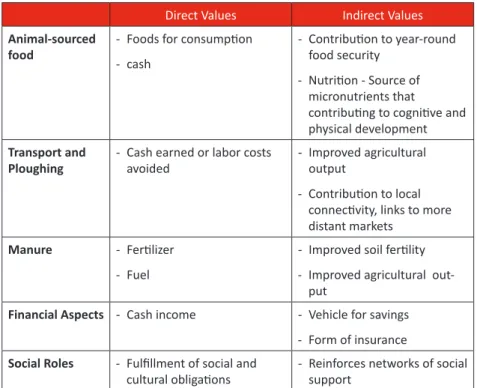
Campbell and Knowles (2011) indicate that in high-income nations livestock have a direct economic importance deriving from the benefits of production and sale of foods (meat, eggs, milk, etc.). Animals have multiple uses in low-income nations, with direct and indirect values as shown in Table 2.
Table 2. Direct and Indirect Values of Livestock in Low-Income Countries
Direct Values Indirect Values
Animal-sourced
food - Foods for consumption- cash - Contribution to year-round food security - Nutrition - Source of
micronutrients that
contributing to cognitive and physical development Transport and
Ploughing - Cash earned or labor costs avoided - Improved agricultural output - Contribution to local
connectivity, links to more distant markets
Manure - Fertilizer - Fuel
- Improved soil fertility - Improved agricultural
out-put
Financial Aspects - Cash income - Vehicle for savings - Form of insurance Social Roles - Fulfillment of social and
cultural obligations - Reinforces networks of social support Source: Campbell and Knowles (2011)
Practically 80% of the world’s undernourished lives in rural zones, and most subsist on agriculture, livestock included. In some countries the most impoverished rural households raise livestock more frequently than the wealthiest, even though the average number of head per household is fairly small. Many small farmers who make their living from livestock do not participate in commercial markets. In general, they depend on family labor to carry out the basic activities of livestock production, such as herding (FAO, 2009, 2013c).
Livestock are therefore vital to family agriculture. They are an integral part of the production system, provide food and income, and can be used as a resource to work the farm or even as means of transportation.
Rural women look after livestock as often as men do, albeit the number of animals tends to be less and they often own poultry and small ruminants, not large-sized animals (FAO, 2009). Roles in care and attention to production animals fall to different members of the nuclear family. In Latin America’s rural zones, adult males look after the cattle, older children and adolescents care for sheep, goats and pigs, and women are in charge of raising poultry.
It should be borne in mind that family farming is one of the productive activities with the greatest productive, commercial and socioeconomic limitations. The quantity and quality of productive resources are deficient, and incentive mechanisms to obtain land and water are scarce. In Latin America and the Caribbean, holdings in the family agriculture sector are estimated at approximately 17 million units, bringing together a population of around 60 million people. Of all productive units, the proportion represented by family farming is calculated to be over 75% in almost all of the Latin American countries, and up to 90% in some. This predominance in the region’s total productive units does not hold for the extent of farmland in the hands of this sector (ECLAC et al. 2013). Nonetheless, family agriculture plays an important role in basic food supply in the region’s countries (ECLAC et al. 2013).
According to FAO (2009), the number of poor whose subsistence depends on livestock is not known with certainty, but is most often cited at an estimated 987 million (Livestock in Development, 1999) or approximately 70% of the 1.4 million people living in extreme poverty worldwide.
Given the importance of the sector, loss of livestock in an emergency or disaster (epidemic or non-epidemic) could cause dire economic harm, as well as food insecurity. Such circumstances could also condemn the poor population to chronic, long-term poverty.
3.4. Impact of Disasters on the Livestock Sector
Despite this sector’s contribution to the economy and food and nutritional security, and role as livelihood, the economic repercussion of non-epidemic disasters on the livestock sector has tended to be underestimated. This is because attention usually focuses on disasters and emergencies of an epidemic type. However, a non-epidemic emergency or disaster can affect a large quantity of animals and even cause death. It all depends on the nature of the event and the characteristics of the communities damaged. An eruption of volcanic ash, for example, contaminates pasture and reduces the amount of fodder available. It
may also cause toxicosis if the animals consume contaminated fodder or material other than fodder. Many animals can starve to death. Volcanic acid rain has similar effects. In addition, animals can develop pneumonia when exposed to volcanic material (from inhaling ash, for example), which can be fatal.
Floods have all types of effects. Moisture or the concentration of contaminated gases fosters diseases such as leptospirosis, or many animals may drown. During times of drought, cases of anthracnose and other infectious diseases can break out, or diarrhea may become more prevalent.
Moreover, as sources of water become less available, domestic and wild animals may be obliged to drink from the same source, which does not occur under nor-mal climatological conditions. With such contact, the former may acquire in-fectious agents from the latter, fostering the appearance of emerging diseases that can be passed from wild to domestic biological cycles. If zoonotic agents are involved, public health could be at risk.
In 2011 Campbell and Knowles made a bibliographical review of economic repercussions when animals are lost in a natural disaster, and showed that livestock have countless functions in low-income economies. In these countries,
they have both a direct value and a multiplicity of indirect values (for farming and for food, savings and cultural value). However, the authors point out that when disaster strikes, assessment of losses generally focuses on direct values, rarely incorporating the indirect values that can be more difficult to observe yet are often more significant than direct financial losses.
The study concludes by noting that commonly, neither the real value of livestock nor the indirect economic consequences of disasters are fully understood. The authors hope that pointing out the need to identify all of the values related to livestock in low-income economies and including them as direct and indirect impacts of disasters, will support future investigations in this area.
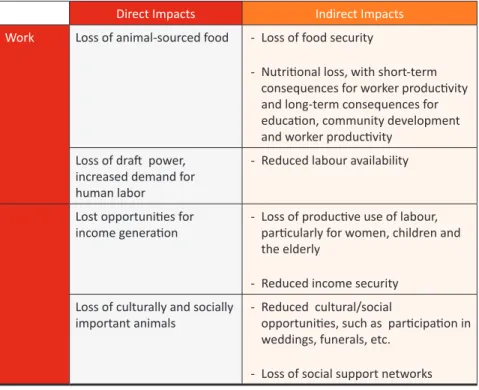
Table 3 presents a summary of direct and indirect impacts arising from the loss of livestock in a disaster, according to Campbell and Knowles (2011).
Table 3. Direct and Indirect Impacts from Loss of Livestock in Disasters
Direct Impacts Indirect Impacts
Work Loss of animal-sourced food - Loss of food security
- Nutritional loss, with short-term consequences for worker productivity and long-term consequences for education, community development and worker productivity
Loss of draft power, increased demand for human labor
- Reduced labour availability Lost opportunities for
income generation - Loss of productive use of labour, particularly for women, children and the elderly
- Reduced income security Loss of culturally and socially
important animals - Reduced cultural/social opportunities, such as participation in weddings, funerals, etc.
- Loss of social support networks
Capital Reduced availability of draft power leading to increased demand for machinery and fuel
- Dependence on borrowed assets or borrowing to finance their use. - Increased dependence on external
inputs, such as fossil fuels Loss of savings and
investments - Loss of investments income from animals - Inability to cover sudden expenses,
such as medical bills, and school fees. - Herd sizes may become unviable
leading to relocation, loss of social status and poverty
Loss of livestock as an input for industries related to animal-sourced food
- Reduced income or substitutionfrom dairies, markets, abattois, butchers, retailers and restaurants
Land Loss of draft power - Reduced agricultural productivity, with the consequent reduction of food security
- Reduced crop residues leading to reduced livestock productivity and increased demands on other feed sources, such as communal grazing areas
- Increased demands on these areas can lead to degradation of natural resources
Loss of manure - Reduced agricultural productivity - Increased demand for chemical
fer-tilizers, wich may be expensive or unavailable
- Increased demand for alternative fuels, such as firewood, which can lead to degradation of forest and woodlands.
36 | Risk Management and Animal Care in Disasters
Disasters also cause decapitalization, which compromises future production and jeopardizes farmers’ standing as loan recipients when they are unable to meet financial obligations.
In light of this panorama, investing in disaster risk reduction is the best way to deal with any adverse phenomenon. But what are the benefits derived from incorporating risk reduction? To answer that question, the returns on those measures need to be quantified.
Given the paucity of information about benefits from risk reduction measures in the livestock sector, Economists at Large and World Animal Protection decided to make a cost-benefit analysis of interventions in three communities (Box 2). These investigations revealed the true value of including animals in risk management processes, from prevention to the response phase. Bearing in mind that the value of livestock is far more than monetary in rural areas, as discussed earlier, it becomes even more important that these processes include animals.
Box 2. Case Study: Livestock in Disasters The economics of losing livestock in a natural disaster.
Lessons from World Animal Protection The Work of World Animal Protection
World Animal Protection’s Disaster Management Program has been responding to the needs of animals in disaster since 1964. The organization has conducted 141 interventions in 43 countries since 2000, interventions that have directly contributed to the welfare of 1,249,134 animals, and indirectly to many more. Given the scarcity of information on the benefits of incorporating disaster risk reduction measures in the livestock sector, Economists at Large and World Animal Protection decided to make a cost-benefit analysis of the work the latter had carried out in three communities affected by adverse phenomenon: Mwingi in Kenya, Assam in India and Chihuahua, in Mexico.
Cost-benefit Analysis of the Intervention in Mwingi, Kenya
In 2011, World Animal Protection carried out an intervention in Mwingi, Kenya, in response to the prolonged drought affecting that district. According to the analysis made by Economists at Large, over a one year time period, the Mwingi intervention generated $2.74 of benefits in the form of avoided losses for every $1 spent. If the time period is extended to 3 years, the cost-benefit ratio increases to $6.69 in benefits for every $1 spent. This analysis takes into consideration a 50% survival rate. Other factors considered for the analysis are the duration over which income is attributed to the intervention and the discount rate. This last is based on the financing rates available to the rural community.
Source: Economists at Large (2013).
Cost-benefit Analysis of the Intervention in Assam, India
The second analysis corresponds to World Animal Protection’s relief operation to help the communities of Assam, India, affected by flooding in 2012. The report by Economists at Large estimated that livestock production worth US$ 4.7 million was recovered thanks to the intervention. Given that the cost of the intervention was just $49,000, it is clear that very high yields were obtained at a very low cost. It is important to underscore that net benefit and cost-benefit ratio calculations depend on the percentage of livestock value actually attributable to the response, which is uncertain. If a survival rate of 100% is attributed to the intervention, an estimated US$ 96 of benefits were obtained from every US$ 1 in costs. At a survival rate of 50%, the same percentage used in the Mwingi analysis, the result of the cost-benefit analysis is US$ 48 of benefits for each USD 1 spent.
Source: Economists at Large (2014)
Cost-benefit Analysis of the Intervention in Chihuahua, Mexico
In 2012, World Animal Protection began helping livestock producers in the municipality of Aldama, in Chihuahua, to improve their ability to resist disaster and recover afterwards (resilience) by protecting their livelihood, among other aspects. The intervention was in response to extensive drought resulting from climate change. The report by Economists at Large (2015) analyzed work during 2012 in this zone, where livestock constitutes the main livelihood. In the municipalities where World Animal Protection made its evaluation, it was determined that over 12,500 head of cattle had died and more than 3000 were in danger. The cost-benefit analysis in this case was difficult as other external factors were identified, such as the way land was managed and the price of beef in the United States. Nevertheless, it was possible to calculate a benefit of USD 7 to USD 14 for every USD 1 invested, based on an estimate of avoided losses. The range reflects the fact that market price had fallen by half due to the drought.
38 | Risk Management and Animal Care in Disasters
Costa Rica’s experience in disaster risk reduction took place within the conceptual and global framework discussed earlier. SENASA’s work, also within that framework, is not limited to animal rescue and care in a disaster. Employing a much broader vision, it also aims to strengthen the resilience of the livestock sector through prevention and risk reduction efforts.
Care given to animals in a non-epidemic emergency or disaster acquires a preventive nature at the epidemic level. In effect, ensuring that animals have adequate care and shelter, potable water, feed and basic conditions during a disaster, is actually managing a new or potential risk arising from the conditions that generated the non-epidemic event.
Given the vital role of veterinary services in disaster management, the World Organization for Animal Health (OIE), a global reference organization of animal health, has formed the ad hoc Group on Natural Disaster Risk Reduction and Management in relation to Animal Health and Welfare and Veterinary Public Health. In January 2015, the ad hoc group began preparing guidelines in this frame. These would reflect the need for veterinary services to implement disaster management and risk reduction measures with the objective of protecting animal health, animal welfare and veterinary public health in such situations.
Currently the OIE has standards and guidelines in place for animal care in epidemic emergencies or disasters, but they are still needed specifically for animal care in disasters. This also holds for the OIE Tool for the Evaluation of Performance of Veterinary Services (PVS Tool).
4. The Experience of Costa Rica
4.1. Country Context
4.1.1 Geographical Location and Population
Costa Rica is situated in the southern part of Central America, extends 51,100 km2 and its capital is the city of San Jose. The country’s total population is 4,301,712 (INEC, 2011), of which 73.85% live in the urban areas of the main cities (San Jose, Heredia, Alajuela and Cartago).
4.1.2. Importance of the Agriculture and Livestock Sector
In 2013, the agriculture and livestock sector contributed 9.4% of GDP and provided employment for 12% of the working population (State of the Nation Report, 2014). According to the 6th National Agriculture and Livestock Census
of 2014, there are 93,017 farm holdings, representing 47.1% of national territory, with an average size of 25.9 ha.
Of these farming properties, 28.5%, or 26,489, are mostly dedicated to producing cattle, and the rest to coffee (24.3%), fruit (12.3%), basic grains (8.4%), vegetables (4.9%), and the remainder (21.7%) to sugar cane, natural forest, palm oil, pasture and other activities.
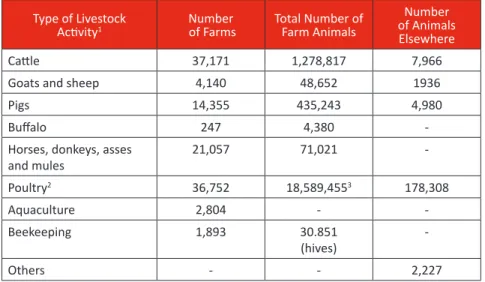
Concerning land tenure, 91.2% of the holdings are under some type of self-ownership. In terms of use, 43.4% of this farmland corresponds to pasture, 30.6% to forest, 15.7% to permanent crops and the rest to tilled and other land. Women’s share of participation as farm producers is 15.6% at the national level. Table 4 below presents a summary of livestock activities in Costa Rica.
Table 4. Livestock Data for Costa Rica
Type of Livestock
Activity1 of FarmsNumber Total Number of Farm Animals
Number of Animals Elsewhere
Cattle 37,171 1,278,817 7,966
Goats and sheep 4,140 48,652 1936
Pigs 14,355 435,243 4,980
Buffalo 247 4,380
-Horses, donkeys, asses
and mules 21,057 71,021 -Poultry2 36,752 18,589,4553 178,308 Aquaculture 2,804 - -Beekeeping 1,893 30.851 (hives) -Others - - 2,227 Source: INEC (2015).
1 A farm can have one or more livestock activities, so may be included in several activities. 2 Includes hens, pullets, roosters, chicks, and laying hens; does not include other types of poultry. 3 Includes farm and backyard animals.
Cattle herds are comprised 42.1% of beef cattle, mainly in the province of Guanacaste where drought is most frequent, most extensive and of greatest magnitude. Dual-purpose and dairy cattle represent 32.0% and 25.6%, respectively.
Meat and other livestock products form an integral part of the Costa Rican diet. Twenty-three kilograms of chicken are consumed per capita annually (SEPSA, 2014), more than beef and pork, respectively at 15.5 kg/year (CORFOGA, 2015) and 12.2 kg/year (SEPSA, 2014). In addition, 200 kg of dairy products are consumed per person every year (Cámara Nacional de Leche 2013).
Costa Rica is a net exporter of agri-food products. As shown in Figure 2, below, primary exports in the livestock and fish category are dairy products, fish and fish fillets, and meat products.
Figure 1. Costa Rica: Percent Distribution of Cattle According to Purpose, 2014
Source: INEC (2015).
Beef production Dual purpose Milk production 42.1%
32% 25.6%
Figure 2. Composition of the Value of Exports in the Livestock and Fishery Sector, 2014
Source: PROCOMER (2015)
4.1.3. Health Situation of Costa Rica
Because it is free of exotic diseases such as foot and mouth disease, Costa Rica’s health status ensures its competitiveness in livestock production, public health protection and commercialization of animal-sourced products. The country makes every effort to maintain and upgrade that status. Declared free of classical swine fever in 2009, it obtained the health status of “controlled risk” for bovine spongiform encephalopathy in 2013, and is currently requesting recognition for “negligible risk” status, which would permit increased trade of cattle products in the international market. As for brucellosis, Costa Rica is attempting to lower the prevalence of this disease and obtain the health status of “free zone”.
Intersectoral efforts are also made to tackle diseases with zoonotic potential in the best way possible. This year (2015), the World Veterinary Association and OIE awarded Costa Rica a prize for implementing a comprehensive awareness campaign to prevent equine encephalitis, under the aegis of the
Dairy Fish and fish fillets Meat 44%
31% 23%
2%
Others
National Animal Health Service (SENASA) and Association of Veterinarians. The campaign focused on the province of Guanacaste (the region frequently affected by drought).
4.1.4. Climate Conditions and Climate Vulnerability
Costa Rica is exposed to hazards associated with both geographical location and geological structure. It is a tropical country crossed by mountains, with a large number of active volcanos and strong tectonic activity. Most emergencies are related to the elevated precipitation (flooding and landslides), which are worsened by regional effects. Earthquakes and volcanic eruptions are also a latent threat. Over the course of the 20th century, Costa Rica was affected by 22
quakes and 11 volcanic events, the most important being the eruptions of the Irazu Volcano between 1963 and 1965, and Arenal Volcano in 1968 (CNE, 2010). One of the events having greatest economic impact in recent years was the 2009 “Cinchona earthquake,” when losses reached US$ 419,370,000. Of this amount, 92.43% (US$ 387,630,000) occurred in the rural area (MIDEPLAN - MAG, 2013).
With respect to natural hydrometeorological events, El Niño and La Niña play a decisive role in the nation’s agricultural production. These events have to do with the ENSO phenomenon (El Niño/Southern Oscillation), which is related to climate disruptions in many parts of the world, as well as alterations in different terrestrial and marine ecosystems. In its oceanic component, contrasting phenomenon related to surface temperatures of the tropical Pacific Ocean give rise to two events, depending on the temperatures: El Niño, due to warm anomalies, and La Niña, caused by cold anomalies (IMN, 2014). This is manifested as higher temperatures, drought, rainfall and flooding, with varying effects on the different regions of the country.
From 2005 to 2011, total losses from the impacts of hydrometeorological and geotectonic events reached US$ 1,130,390,000, as recorded in the 16 emergency plans issued during those years. Fifteen of these were in response to climate events and account for 62.9% of the losses. Of total damages, 64.32% was reported in zones considered urban and 20.21% in rural areas. Concerning the distribution of losses, the agriculture and livestock sector took third place (US$ 128,250,000), after road infrastructure (US$ 383,790,000) and the electrical system (US$ 308,620,000). The year with greatest economic impact from natural phenomenon was 2009, at 1.77% of GDP and 30.42% of capital spending. The greatest economic impact from climate-related phenomenon was observed in 2007 and 2010 with losses equivalent to 0.87% of GDP in both cases, although they amounted to 26.07% of capital expenditure in 2007, and 17.17% in 2010 (MIDEPLAN-MAG, 2013).
Along with these large-magnitude events is a long list of daily “low intensity” incidents, entailing more gradual, permanent damages suffered by the population, especially urban. By the end of a period, these add up to higher magnitudes than some of the rapid onset, larger-scale events. In these cases, vulnerability acquires a chronic nature inherent to the social situation of part of the population. In a development context where current risks are not adequately taken into account, increasingly frequent floods, quakes, landslides, volcanic eruptions and problems related to technological factors make up a long chain of disasters in the country’s history, with unequal and differentiating impact on the wellbeing of the Costa Rican population. (CNE, 2010).
4.2. Official Veterinary Service
Since the 1970s, Costa Rica has had an official Veterinary Service which has been evolving and adapting to the needs of animal health and veterinary public health. The National Animal Health Service (SENASA, Spanish acronym) created in the 2006 National General Animal Health Service Act Nº 8495, is a body of minimal deconcentration with operational legal personality under the Ministry of Agriculture. This law laid the foundations for a modern veterinary service operating in accordance with international standards and complying with guidelines issued by the World Organisation for Animal Health (OIE), the benchmark global agency in this area. OIE’s mandate is to improve animal health, veterinary public health and animal welfare throughout the planet. SENASA’s area of competence is animal health and welfare, and veterinary and environmental public health. It works in a chain approach through the stages of production, transformation, distribution and commercialization of animal-sourced products, in adherence to development plans and policies in the agri-food sector.
The livestock sector is a strategic activity for the country from both an economic and social standpoint: it is the dominant activity in rural zones and an important source of employment. It is thus one of the productive areas most affected by emergencies. Indeed, emergencies impact directly on animals, damage the livestock infrastructure and elevate the risk of disease. This in turn can be harmful to the country’s health status, weaken food security and leave farmers without their livelihood.
Animal health is a public good, and as such no effort should be spared in taking care of it.
SENASA administers plans, and directs and takes measures all over the country in relation to services, programs and campaigns for the prevention, control and eradication of animal diseases. It oversees and ensures the health of domestic animals and aquatic, wild or other types of species, as well as the innocuousness of products, byproducts and derivatives for human and animal consumption. The abovementioned law establishes legal bases for the declaration of emergencies, integration of an ad hoc emergency commission that acts as advisory and consultation body in each national or regional emergency, authorization of these autonomous entities to assign budget lines and other resources deemed necessary to assist SENASA when a national or regional emergency is declared, and allocation of a sinking fund exclusively for emergency response.
SENASA’s emergency response activities were thus designed to be carried out recognizing the possible health, economic, environmental and social repercussions that many animal diseases, especially zoonotic, can have on the country.
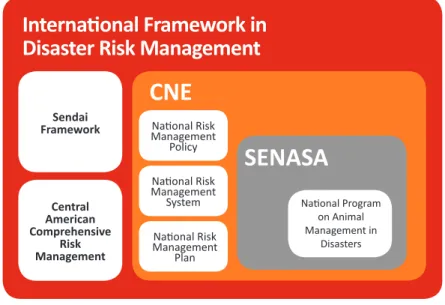
In this frame, in 2009 SENASA created the National Program on Animal
Management in Disasters, and from that moment on has worked to reinforce
its capacities of preventing and addressing disasters that affect the animal population, public health and the national economy, taking into account principles of governance for disaster risk management.
4.3. Governance of Disaster Risk Management
a. National Commission on Risk Prevention and Emergency Response
The National Commission on Risk Prevention and Emergency Response (CNE, Spanish acronym) was created through the Emergencies Act Nº 4374 of 1969, with the eruptions of the Irazu Volcano (1963-1965) and Arenal Volcano (1968) as background. In addition to creating CNE, this law gave the Executive Power authority to declare a state of emergency anywhere in national territory, and created the National Emergency Fund. During the following years, CNE gradually became recognized as the entity in charge of emergency preparedness in the country. In 1999, a reform to the Emergencies Act through Law Nº 7914 entrusted the institution with responsibilities for prevention (CNE, 2014). Later on, Law Nº 8488 was published in 2006 as a reform of Law Nº 7914, making
CNE the governing body in risk prevention and preparedness in response to emergency situations.