
HAL Id: tel-03051734
https://tel.archives-ouvertes.fr/tel-03051734
Submitted on 10 Dec 2020
HAL is a multi-disciplinary open access archive for the deposit and dissemination of sci-entific research documents, whether they are pub-lished or not. The documents may come from
L’archive ouverte pluridisciplinaire HAL, est destinée au dépôt et à la diffusion de documents scientifiques de niveau recherche, publiés ou non, émanant des établissements d’enseignement et de
Mohamed Emine Laarouchi
To cite this version:
Mohamed Emine Laarouchi. A safety approach for CPS-IoT. Networking and Internet Architecture [cs.NI]. Institut Polytechnique de Paris, 2020. English. �NNT : 2020IPPAS010�. �tel-03051734�
NNT
:2020IPP
AS010
Th`ese de doctorat de l’Institut Polytechnique de Parispr´epar´ee `a T´el´ecom Sud-Paris ´Ecole doctorale n◦626 de l’Institut Polytechnique de Paris (ED IP Paris)
Sp´ecialit´e de doctorat : R´eseaux, information et communications
Th`ese pr´esent´ee et soutenue `a Paris, le 10/11/2020, par
M
OHAMEDE
MINELAAROUCHI
Composition du Jury :
Guy Pujolle
Professeur, Universit´e Sorbonne Pr´esident
Luigi Liquori
HDR, INRIA Rapporteur
Aomar Osmani
HDR, LIP Paris 13 Rapporteur
Michael Mendler
Professeur, Universit´e de Bamberg Rapporteur
Amel Mammar
Professeur, T´el´ecom Sud-Paris Examinatrice
Andreia Cathelin
HDR, ST Microelectronics Examinatrice
Hakima Chaouchi
HDR, T´el´ecom Sud-Paris Directrice de th`ese
Daniela Cancila
PhD, CEA Co-directrice de th`ese
Sebti Mouelhi
R´esum´e : Depuis plusieurs ann´ees, nous assistons `a une convergence entre les syst`emes cyber-physiques (CPS) et l’Internet des Objets (IoT). Les CPS int`egrent les syst`emes embarqu´es avec leur environnement physique et humain en assurant une communication entre diff´erents capteurs et actionneurs. L’IoT vise le r´eseau et les protocoles de communication entre les objets connect´es. Cette convergence offre des pers-pectives d’applications diverses allant des v´ehicules connect´es aux r´eseaux ´electriques intelligents ainsi qu’aux usines du futur.
Le but de cette th`ese est d’assurer et garantir la sˆuret´e de fonctionnement des syst`emes CPS-IoT. Pour ceci, nous avons consid´er´e un cas d’´etude sp´ecifique tout au long de la th`ese qui est les drones.
Dans un premier temps, on s’est focalis´e sur les diff´erentes m´ethodes d’analyse de sˆuret´e de fonction-nement qui sont d´ej`a existantes. Ces m´ethodes ont fait leurs preuves pour la conception et la r´ealisation des syst`emes embarqu´es. Tout au long de ce pro-cess, on a essay´e de r´epondre `a la question suivante: est-ce que ces m´ethodes existantes sont ad´equates pour r´ealiser les analyses de sˆuret´e de fonctionne-ment n´ecessaires pour les CPS-IoT ? On a conclu
la n´ecessit´e de nouvelles approches pour analyser la sˆuret´e de fonctionnement des syst`emes CPS-IoT du fait de la complexit´e significative de ces syst`emes. Dans un second temps, on a propos´e une m´ethodologie pour l’analyse pr´edictive de la r´esilience des CPS-IoT. La r´esilience est d´efinie comme ´etant la capacit´e d’un syst`eme `a tol´erer les pannes, `a conti-nuer `a fournir le service demand´e tout en consid´erant les diff´erentes contraintes internes et externes au syst`eme. On a diff´erenci´e deux types diff´erents de r´esilience qui sont la r´esilience endog`ene et exog`ene. La r´esilience endog`ene est la capacit´e inh´erente du syst`eme `a d´etecter et `a traiter les d´efauts internes et les attaques malveillantes. La r´esilience exog`ene est la capacit´e permanente du syst`eme `a maintenir un fonctionnement sˆur dans son environnement ambiant. La derni`ere partie de notre travail a consist´e `a inves-tiguer l’impact de l’intelligence artificielle sur la sˆuret´e de fonctionnement des CPS-IoT. Plus sp´ecifiquement, on s’est int´eress´e `a comment serait-il possible d’uti-liser l’intelligence artificielle pour accroˆıtre la sˆuret´e des drones lors de la phase de planification de che-min. Les r´esultats obtenus ont ´et´e compar´es avec les algorithmes de planification existants.
Title : A safety approach for CPS-IoT
Keywords : Cyber-Physical Systems, Internet of Things, safety, security Abstract : For several years now, we have been
wit-nessing a convergence between cyber-physical sys-tems (CPS) and the Internet of Things (IoT). CPS in-tegrate embedded systems with their physical envi-ronment and human by ensuring communication bet-ween different sensors and actuators. The IoT targets the network and communication protocols between connected objects. This convergence offers applica-tion opportunities a variety of vehicles connected to the smart grid as well as the factories of the future. The purpose of this thesis is to ensure and guarantee the operational safety of CPS-IoT systems. For this, we have considered a specific case study throughout the thesis which is the drones.
Initially, we focused on the different methods of analy-sis of operating safety that already exist. These me-thods have made it possible to their proofs for the design and implementation of embedded systems. All throughout this process, we have tried to answer the following question: is it that these existing methods are adequate for performing safety analyses neces-sary for the CPS-IoT? It was concluded that there was
a need to new approaches to analyse the operational safety of systems CPS-IoT due to the significant com-plexity of these systems.
In a second step, a methodology for predictive ana-lysis of the resilience of CPS-IoT. Resilience is defi-ned as the ability to a system to tolerate failures, to continue to provide the requested service while consi-dering the different internal and external constraints of the system. We have differentiated two different types of resilience which are endogenous resilience and exogenous. Endogenous resilience is the sys-tem’s inherent ability to detect and treat internal de-fects and malicious attacks. Exogenous resilience is the system’s permanent ability to maintain safe ope-ration in its ambient environment.
The last part of our work consisted in investigating the impact of artificial intelligence on the operatio-nal safety of CPS-IoT. More specifically, attention was paid to how artificial intelligence could be used to in-crease the safety of drones during the path planning phase. The results obtained were compared with exis-ting planning algorithms.
Au cours de la derni`ere d´ecennie, nous avons assist´e `a un d´eploiement croissant des Syst`emes Cyber-Physiques (CPS) dans diff´erentes disciplines. Les syst`emes cyber-physiques sont des int´egrations de calcul avec des processus cyber-physiques. Les ordi-nateurs et les r´eseaux embarqu´es surveillent et contrˆolent les processus physiques,
g´en´eralement par des boucles de r´etroaction o`u les processus affectent les calculs
et vice versa [1].
Les applications ´emergentes des syst`emes cyber-physiques sont destin´ees `a fonc-tionner dans une forme distribu´ee sur une plateforme qui combine le calcul `a haute performance avec de grandes cat´egories de capteurs fournissant une ´enorme quan-tit´e de donn´ees. La Commission Europ´eenne promeut le terme ACPS pour d´esigner
ces derniers syst`emes, o`u A signifie autonome, adaptable ou artificiel selon la
car-act´eristique abord´ee [2]. Malgr´e cette tendance les questions de s´ecurit´e restent un d´efi important. Un probl`eme majeur est de combiner la pr´esence du syst`eme dans son environnement physique et sa caract´erisation y compris la conception du logiciel int´egr´e.
L’origine des syst`emes cyber-physiques remonte aux syst`emes embarqu´es. Les syst`emes embarqu´es remontent aux ann´ees 1960 avec l’invention des circuits int´egr´es [3]. A partir de ce moment, les syst`emes embarqu´es ont ´et´e fortement associ´es `a des applications critiques telles que l’avionique et l’industrie automobile. Les syst`emes embarqu´es ont toujours ´et´e tenus `a des standards de fiabilit´e et de pr´edictibilit´e plus exigeants que l’informatique `a usage g´en´eral. La fiabilit´e est d´efinie dans la norme ISO 8402 [4] comme la capacit´e d’un ´el´ement `a effectuer une fonction
donn´ee, dans des conditions environnementales et op´erationnelles et pour une
certaine p´eriode de temps. De plus, les utilisateurs ont constat´e un niveau de
s´ecurit´e accru grˆace `a l’int´egration des syst`emes embarqu´es dans leur vie quotidi-enne. Par cons´equent, lors du passage des syst`emes embarqu´es vers les syst`emes cyber-physiques, l’attente de fiabilit´e et d’efficacit´e ne fait qu’augmenter. En effet, sans am´elioration de fiabilit´e et de pr´evisibilit´e, les CPS n’atteindront pas leur plein potentiel et ne seront pas d´eploy´es dans des applications critiques.
Probl`
eme de recherche
Dans cette th`ese, on aborde le probl`eme de la s´ecurit´e des syst`emes cyber-physiques (autonomes) et on se focalise sur la mani`ere d’inclure la s´ecurit´e d`es les premi`eres ´etapes de la conception du syst`eme. La probl´ematique de recherche est ensuite d´eclin´ee en quatre grandes cat´egories, qui constituent ´egalement notre mode op´eratoire.
Tout d’abord, on ´etudie les approches de sˆuret´e de fonctionnement
tradition-nellement utilis´ees pour les syst`emes embarqu´es, ensuite on analyse si ces approches conviennent aux syst`emes cyberphysiques et on identifie leurs limites -si elles existent. Ce probl`eme de recherche vise ´egalement `a d´eterminer s’il ex-iste des paradigmes ´emergents qui sont plus adapt´es `a la s´ecurit´e des syst`emes cyber-physiques.
Deuxi`emement, on identifie les facteurs cl´es pour traiter la sˆuret´e de
fonction-nement des syst`emes cyber-physiques.
Troisi`emement, on propose une approche bas´ee sur les contrats afin de traiter
la sˆuret´e de fonctionnement des syst`emes cyber-physiques.
Enfin, on consid`ere la tendance croissante qui int`egre l’intelligence artificielle
dans les syst`emes cyber-physiques. On ´evalue son impact sur la sˆuret´e de
fonction-nement. Etant donn´e l’ampleur du sujet de recherche, on se limite aux syst`emes de navigations des syst`emes cyber-physiques autonomes.
Contributions
La premi`ere contribution de cette th`ese porte sur les principales techniques d’analyse
de la sˆuret´e de fonctionnement des syst`emes embarqu´es et examine si elles sont
adapt´ees lorsqu’elles sont appliqu´ees aux syst`emes cyber-physiques. Bien que notre analyse ne soit pas exhaustive, on converge vers la conclusion que de nouveaux paradigmes devraient ˆetre introduits. Parmi ceux-ci, la notion de r´esilience
sem-ble plus appropri´ee lorsqu’on consid`ere la sˆuret´e de fonctionnement des syst`emes
cyber-physiques. Cette premi`ere contribution a ´et´e publi´ee dans l’Ada User Jour-nal [5].
Dans la deuxi`eme contribution, on ´etudie les facteurs cl´es de la sˆuret´e de
fonc-tionnement qui doivent ˆetre pris en compte lors des analyses de sˆuret´e des syst`emes
cyber-physiques. On converge ind´ependamment vers les r´esultats fournis dans [6],
o`u l’auteur pr´esente une nouvelle fa¸con d’aborder la sˆuret´e de fonctionnement de
syst`emes aussi complexes que les syst`emes cyber-physiques. En consid´erant les drones comme cas d’´etude et en se concentrant sur les applications civiles de ces syst`emes, on distingue trois facteurs principaux qui sont: le drone (le CPS), le(s) op´erateur(s) humain(s) et l’environnement dans lequel le syst`eme est utilis´e. Ces facteurs cl´es sont fortement li´es et leur connexion doit ˆetre prise en consid´eration
lors de l’analyse de sˆuret´e des syst`emes cyber-physiques. Les r´esultats de cette
con-tribution ont ´et´e publi´es dans la conf´erence Digital Avionics Systems Conference (DASC) [7].
La troisi`eme et principale contribution de cette th`ese est la proposition d’une m´ethodologie (bas´ee sur les contrats) pour l’analyse de la r´esilience des syst`emes cyber-physiques autonomes. La r´esilience d’un syst`eme est d´efinie comme ´etant sa capacit´e `a r´esister aux perturbations externes de son environnement et `a continuer `a fournir le comportement attendu. En abordant la r´esilience des syst`emes cyber-physiques, on identifie deux types diff´erents qui sont: endog`ene et exog`ene. La r´esilience endog`ene se traduit par la capacit´e du syst`eme `a traiter les d´efaillances internes et `a r´esister aux cyber-attaques. La r´esilience exog`ene repose sur la ca-pacit´e du syst`eme `a fonctionner en toute s´ecurit´e dans son environnement ambiant. La m´ethodologie propos´ee est la suivante; on commence par d´efinir des contrats afin de pr´eciser le comportement souhait´e du syst`eme. Ensuite, on repr´esente
le syst`eme sous forme d’un r´eseau d’automates temporis´es et on utilise l’outil UPPAAL pour v´erifier les contrats sp´ecifi´es et valider la r´esilience endog`ene du syst`eme. En parall`ele, la r´esilience exog`ene est valid´ee en utilisant l’outil CAT (Contract Analysis Tool) pour v´erifier les contrats sur des mod`eles 3D. Les r´esultats de cette contribution ont ´et´e publi´es dans le journal IEEE Access [8].
La quatri`eme contribution de cette th`ese aborde le probl`eme de la sˆuret´e de
fonctionnement et de l’int´egration de l’Intelligence Artificielle (IA) dans la naviga-tion autonome des syst`emes cyber-physiques autonomes. Plus en d´etail, on intro-duit les algorithmes g´en´etiques dans la planification de chemins pour l’usage des drones dans un milieu urbain. Pour ´evaluer les r´esultats obtenus, on sp´ecifie une base de r´ef´erence mesurable bas´ee sur l’algorithme bien connu A*. Nos r´esultats
montrent que les algorithmes g´en´etiques am´eliorent la sˆuret´e de syst`eme par
rap-port `a l’algorithme A*. Ces r´esultats ont ´et´e r´ecemment publi´es dans la Interna-tional Conference on Cyber-Physical Systems (ICCPS) [9].
Structure de la th`
ese
Ce manuscrit de th`ese est structur´e comme suit. Chapitre 1 ”Syst`emes
cyber-physiques et sˆuret´e de fonctionnement” pr´esente les concepts impliqu´es dans cette
th`ese. On commence par la d´efinition bien connue des syst`emes cyber-physiques, leurs principales caract´eristiques et leurs applications. Ensuite, on pr´esente l’´etat
de l’art sur l’´evolution des concepts de sˆuret´e de fonctionnement. On montre les
limites des analyses de sˆuret´e de fonctionnement traditionnelles pour les syst`emes
embarqu´es et on identifie les facteurs cl´es de sˆuret´e pertinents pour l’analyse
de sˆuret´e des syst`emes cyber-physiques. Parmi ceux-ci, on souligne plus tard
l’importance du concept de la r´esilience. Ensuite, on donne quelques notions et d´efinitions de base sur les approches bas´ees sur les contrats (CBD) et les r´eseaux d’automates temporis´es. Ces d´efinitions sont essentielles pour appr´ehender les chapitres suivants du manuscrit.
Chapitre 2 ”Une nouvelle m´ethodologie pour l’analyse de la r´esilience des syst`emes cyber-physiques autonomes” pr´esente une m´ethodologie bas´ee sur les ap-proches par contrats pour l’analyse de la r´esilience des syst`emes cyber-physiques autonomes. Deux types de r´esilience sont d´etaill´es : endog`ene et exog`ene.
Cha-cune est analys´ee s´epar´ement. Une section est consacr´ee au retour d’exp´erience sur les travaux de d´eveloppement et de r´ealisation des diff´erents mod`eles. Le cas d’´etude est l’application civile des drones dans des situations d’urgence m´edicale.
Chapitre 3 ”Sˆuret´e et navigation autonome” pr´esente une ´etude de l’impact de
l’intelligence artificielle et des algorithmes g´en´etiques dans la sˆuret´e de
fonction-nement des syst`emes cyber-physiques autonomes. Le cas d’´etude pr´esent´e est la navigation des drones dans un milieu urbain avec une forte densit´e d’obstacles.
On termine le manuscrit par une conclusion g´en´erale et des perspectives des travaux de th`ese.
Chapter 1 Cyber-Physical Systems and Safety 17
1.1 Introduction . . . 19
1.2 Cyber-Physical Systems . . . 19
1.2.1 Definition of a system . . . 19
1.2.2 Definition of a Cyber-Physical System . . . 20
1.2.3 Autonomous Cyber-Physical Systems . . . 21
1.2.4 CPS features . . . 22
1.2.5 CPS applications . . . 27
1.3 Safety . . . 34
1.3.1 History and background . . . 34
1.3.2 Definition . . . 36
1.3.3 Limits of existing safety approaches for CPS . . . 40
1.3.4 Resilience . . . 41
1.4 Formalization of CPS . . . 43
1.4.1 Representation of cyber-physical systems . . . 44
1.4.2 Verification of cyber-physical systems . . . 45
1.5 Key factors for CPS safety . . . 48
1.5.1 Drones as a use case . . . 48
1.5.2 Key factors for drone safety . . . 49
1.5.3 Autonomy levels and safety . . . 53
1.5.4 Integrating manned and unmanned CPS . . . 54
1.6 Basic notions and definitions . . . 57
1.6.1 Contract-Based Design . . . 57
1.6.2 Networks of timed automata . . . 59
1.7 Conclusion . . . 62
Chapter 2 A new methodology for analysis of resilience in ACPS 63 2.1 Introduction . . . 64
2.2 Use case: Drone rescue system . . . 64
2.2.1 Use Case Scenario . . . 66
2.3 Related work . . . 66
2.4 Proposed methodology . . . 69
2.5 Component-based architecture . . . 70
2.5.1 Implementation feasibility . . . 73
2.6 Analysis of endogenous resilience . . . 74
2.7 Analysis of exogenous resilience . . . 77
2.7.1 Why 3D modeling ? . . . 78
2.7.2 Use cases . . . 78
2.8 Tool implementation and feedback . . . 84
2.8.1 Endogenous resilience: UPPAAL . . . 85
2.8.2 Exogenous resilience: CAT . . . 87
2.9 Conclusion . . . 93
Chapter 3 Safety and autonomous navigation for ACPS 94 3.1 Introduction . . . 95 3.2 Autonomous navigation . . . 95 3.3 Problem description . . . 97 3.4 Method . . . 98 3.4.1 Cost function . . . 98 3.4.2 Environment representation . . . 100 3.4.3 Background . . . 103 3.4.4 Problem resolution . . . 104 3.5 Results . . . 108 3.5.1 Baseline . . . 108
3.5.2 Computational results . . . 108
3.6 Implementation and Feedback . . . 112
3.6.1 Implementation . . . 112
3.6.2 Feedback . . . 113
3.7 Conclusion . . . 113
1.1 Autonomy Levels for Unmanned Systems (ALFUS) . . . 24
1.2 Smart manufacturing (Image: blog.integral-system.fr) . . . 29
1.3 Autonomous car (Image: shutterstock.com) . . . 30
1.4 Unmanned Aerial Vehicle (UAV) (Image: futura-sciences.com) . . . 33
1.5 Dependability tree (adapted from [10] and [11] ) . . . 38
1.6 Fault-error-failure relation . . . 39
1.7 Flight safety factors for UAS . . . 50
2.1 Drone/GCS crash exploration scenario . . . 65
2.2 Diagram of the proposed methodology . . . 68
2.3 The software component architecture of the drone rescue system . . 71
2.4 Concrete architecture and dependencies of Navigation Controller . . 72
2.5 Path planning illustration . . . 79
2.6 Longitudinal speed control. Figure extracted from [12] . . . 82
2.7 Platoon obstacle handling . . . 83
2.8 UPPAAL model of the drone’s job: flight . . . 85
2.9 UPPAAL model of the GCS’s job: control . . . 86
2.10 Contract Analysis Tool (CAT) interface in Blender . . . 89
2.11 Blender 3D model of the drone rescue system . . . 90
2.12 Tail-merging in platoon already in circulation . . . 92
2.13 Blender 3D model of the vehicular platooning system . . . 93
3.2 Obstacle representation . . . 102
3.3 Flowchart of our approach . . . 105
3.4 Optimal solution provided by both A* and HGA for first configuration110
3.5 Solution provided by HGA for second configuration . . . 111
In the last decade, we have witnessed an increasing deployment of Cyber-Physical Systems (CPS) in different disciplines. Cyber-Physical Systems are integrations of computation with physical processes. Embedded computers and networks monitor and control the physical processes, usually with feedback loops where physical processes affect computations and vice versa [1].
The emerging applications of cyber-physical systems are destined to run in a distributed form on a platform that combines high performance computing with broad classes of sensors providing a big amount of data. The broad majority of these new applications can be classified as “distributed sense and control systems” that go substantially beyond the “compute” or “communicate” functions, tradi-tionally associated with information technology [1]. These applications have the potential to influence how we deal with a large range of problems today. For example, security and safety including surveillance, energy management and dis-tribution, efficient and reliable transportation. Actually, CPS applications cover autonomous functionalities and include artificial intelligence [13]. The European commission promotes the term ACPS to refer to these latter systems, where A stands for autonomous, adaptive or artificial with respect to the tackled feature [2]. Despite this trend, safety issues remain a thorny challenge. One major problem is to combine the system’s presence in the physical surroundings and its characteri-zation, including the embedded software design.
The origin of cyber-physical systems goes back to embedded systems. Em-bedded systems date back to the 1960s with the invention of integrated circuits
have always been held to a higher reliability and predictability standards than general-purpose computing. Reliability is defined in ISO 8402 [4] as the ability of an item to perform a required function, under given environmental and operational conditions and for a stated period of time. Customers have witnessed an increased safety level with the integration of embedded systems in their daily life. For exam-ple, since anti-lock braking system (ABS) have been integrated in cars, the number of accidents caused by locked up wheels during braking has drastically decreased. Consequently, in the transition from embedded systems to CPS, the expectation of reliability and efficiency will only increase. In fact, without improved reliability and predictability, CPS will not reach their full potential and will not be deployed in critical applications such as traffic control and automotive safety.
Research Problem
In this thesis, I address the research problem of safety for (autonomous) cyber-physical systems and I focus on how to include safety since the early stages of system design. The addressed research problem is further declined into four main categories, which constitute also our modus operandi.
Firstly, I investigate if the safety approaches traditionally used for embedded systems can be suitable for CPS and I identify their limits - if any. This research problem equally addresses if there are emerging paradigms which are more suitable for CPS safety.
Secondly, I identify which are the key factors to deal with CPS safety.
Thirdly, I ask ourselves which are the approaches, techniques and tools that better meet CPS safety.
And finally, I consider the increasing trend, which integrates artificial Intelli-gence into CPS. I evaluate its impact on safety. Given the extensively research subject, I limit the study to autonomous navigation systems.
Contributions
The first contribution of this thesis addresses the main techniques for safety analy-sis of embedded systems and investigates if they are suitable when they are applied to CPS. Although my analysis is not exhaustive, I converge towards the conclusion that new paradigms should be introduced. Among them, the notion of resilience seems more appropriate when considering CPS safety. This first contribution has been published in Ada User Journal [5].
In the second contribution, I investigate the safety and reliability key factors that need to be taken into account during the safety analysis of cyber-physical systems. I independently converge towards the results provided in [6], where the author introduce a new way of tackling safety of systems as complex as CPS (Safety I, Safety II and Safety III).
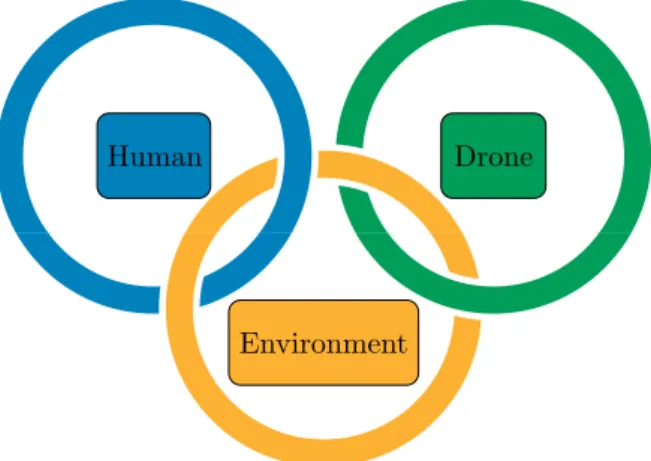
To this end, I consider drones as a use case and I focus on the civilian applica-tions of these systems. I distinguish three main key factors: the drone (the CPS), the human operator(s) and the environment in which is the system is operated. These key factors are strongly linked and their connection must be taken into consideration during the safety analysis of CPS. This contribution results were published on the Digital Avionics Systems Conference (DASC) [7].
The third and main contribution of this thesis is the proposal of a (contract-based) methodology for analysis of resilience in CPS. A system’s resilience is de-fined as its capacity to withstand external disturbances from its environment and to continue to provide the required outcomes. When addressing CPS resilience, I identify two different types which are: endogenous and exogenous. Endogenous resilience is reflected in the system’s capability of processing internal faults and resisting to cyber-attacks. Exogenous resilience relies on the system’s ability to safely operate in its ambient environment. I start by defining contracts in order to specify the wished behaviour of the system. Then, I represent the system as a network of timed automata and I use the tool UPPAAL to verify the specified contracts and validate the endogenous resilience of the system. In parallel, ex-ogenous resilience is validated using CAT (Contract Analysis Tool) to verify the contracts over 3D models. This contribution results were published in IEEE Access Journal [8, 14].
More in detail, I introduce genetic algorithms to select the path navigation under safety constraints. To evaluate the obtained results, I specify a measurable baseline based on the well-know A* algorithm. My result shows that genetic algorithms improve the safety with respect to the baseline. This results has been recently published in the International Conference on Cyber-Physical Systems (ICCPS) [9].
Structure of the Thesis
This thesis manuscript is structured as follows.
Chapter 1 ”Cyber-Physical Systems and Safety” introduces the concepts in-volved in this thesis. I start by the well-know definition of CPS, its main features and their applications. Then, I introduce the state of the art over the evolution of safety concepts. I show the limits of the traditional safety analysis for embedded systems and I identify the safety key factors relevant to the safety analysis of CPS. Among these later, I highlight the importance of resilience. Afterwards, I provide some basic notions and definitions about Contract-Based Design (CBD) and net-works of timed automata. These definitions are essential in order to apprehend the following chapters of the manuscript.
Chapter 2 ”A new methodology for analysis of resilience in ACPS” introduce the promoted contract-based methodology for the analysis of resilience in CPS. Two types of resilience are detailed: endogenous and exogenous. Each one is ana-lyzed separately. A section is dedicated to the feedback of the tool implementation and the model realization. The studied use case is drone civilian application in urgent medicine situations.
Chapter 3 ”Safety and autonomous navigation” investigates the impact of arti-ficial intelligence and genetic algorithms in the safety of autonomous cyber-physical systems. The studied use case is drone navigation in urban environment.
Chapter
1
Cyber-Physical Systems and Safety
Contents
1.1 Introduction . . . 19
1.2 Cyber-Physical Systems . . . 19
1.2.1 Definition of a system . . . 19
1.2.2 Definition of a Cyber-Physical System . . . 20
1.2.3 Autonomous Cyber-Physical Systems . . . 21
1.2.4 CPS features . . . 22
1.2.5 CPS applications . . . 27
1.3 Safety . . . 34
1.3.1 History and background . . . 34
1.3.2 Definition . . . 36
1.3.3 Limits of existing safety approaches for CPS . . . 40
1.3.4 Resilience . . . 41
1.4 Formalization of CPS . . . 43
1.4.1 Representation of cyber-physical systems . . . 44
1.4.2 Verification of cyber-physical systems . . . 45
1.5 Key factors for CPS safety . . . 48
1.5.2 Key factors for drone safety . . . 49
1.5.3 Autonomy levels and safety . . . 53
1.5.4 Integrating manned and unmanned CPS . . . 54
1.5.5 Communication technologies reliability . . . 56
1.6 Basic notions and definitions . . . 57
1.6.1 Contract-Based Design . . . 57
1.6.2 Networks of timed automata . . . 59
1.1
Introduction
In this chapter, I introduce the definitions and fundamentals related to cyber-physical systems and safety. I also introduce the state of the art of existing method-ologies involved in safety analysis. This fundamentals understanding is necessary for comprehending the contributions presented later on in this manuscript.
Thus, in this chapter, I start by defining what is a cyber-physical system. After outlining the main features of these systems as well as their applications, I address the discipline of safety engineering. I give a brief history and background of safety, then I discuss the different processes for system safety analysis. I also identify key factors for CPS safety by considering drones as a use case. Finally, I provide some basic notions and definitions about Contract-Based Design and networks of timed automata which are essential to understand the rest of the manuscript.
1.2
Cyber-Physical Systems
1.2.1
Definition of a system
Oxford dictionary defines a system as “a set of things working together as parts of a mechanism or an interconnecting network; a complex whole”.
The International Council on System Engineering (INCOSE) proposes another definition: “A system is a construct of different elements that together produce results not obtainable by the elements alone.”
In [15], the author defines a system as “any group of interacting, interrelated, or interdependent parts that form a complex and unified whole that has a specific purpose.”
The common point between all the definitions above is that all systems are associations of elements (components) in interaction in order to bring out new functionalities. It can be concluded that interactions are the very essence of sys-tems. As a consequence, new properties appear, beyond those specific to the simple components.
1.2.2
Definition of a Cyber-Physical System
The original definition dates back from 2006 when a group of academics from the United States realized that embedded systems were evolving into systems where physical aspects played a fundamental role. The emergence of new and complex systems such as smart electricity grids and autonomous vehicles has been a source of interest for researchers. These systems are characterized by their distributed aspect where both physical and software sub-systems are connected in order to provide a particular service. The interaction between the intelligence provided by distributed processors that were interconnected with networks of growing com-plexity AND the physical world has become necessary to be taken into account. Deliverable “Characteristics, capabilities, potential applications of Cyber-Physical Systems: a preliminary analysis” [16] gives a well-summarized overview on how the term ”cyber-physical system” has arised. The first definition proposed back in 2006 by the group of academics is the following: “The integration of physical systems and processes with networked computing has led to the emergence of a new generation of engineered systems: Cyber-Physical Systems (CPS). Such sys-tems use computations and communication deeply embedded in and interacting with physical processes to add new capabilities to physical systems. These CPS range from minuscule (pace makers) to large-scale (the national power-grid).”
The same deliverable [16] proposes a simple and yet general definition of cyber-physical systems: “A CPS consists of computation, communication and control components tightly combined with physical processes of different nature, e.g., me-chanical, electrical, and chemical.” The authors consider that a simpler definition would be more effective to convey to the public and to the policy makers what CPS are all about.
Edward A. Lee in [17] defines cyber-physical systems as “an integration of com-putation with physical processes. Embedded computers and networks monitor and control the physical processes, usually with feedback loops where physical processes affect computations and vice versa.” The cyber part includes all the software, the code and the executed algorithms. As an intellectual challenge, CPS is about the intersection, not the union, of the physical and the cyber. It is not sufficient to sep-arately understand the physical components and the computational components.
Instead, it is essential to understand their interaction [17].
Lately, a new concept known as Internet of Things (IoT) have emerged and have been commonly associated with CPS. This concept emerged primarily from a networking and information technology perspective. “The term Internet of Things is used as an umbrella keyword for covering various aspects related to the extension of the Internet and the Web into the physical realm, by means of the widespread deployment of spatially distributed devices with embedded identification, sensing
and/or actuating capabilities” [18]. In [19], the authors provide a comparison
be-tween these two concepts by highlighting the similarities as well as the differences. Broadly, a CPS corresponds to a system integrating electronics and software, sensors and actuators and equipped with communication capabilities. A CPS interacts with its environment in which in takes data, processes it and, through a feedback loop, controls or influences the process in which it is associated. Through its communication capabilities, a CPS can act in collaboration with other systems and/or exchange data with remote systems. The communication can be either wired or wireless. A CPS is characterized by a high degree of complexity that is partly intrinsic and mainly due to interconnection and dynamic interactions with other systems.
1.2.3
Autonomous Cyber-Physical Systems
During these last years, a trend towards integrating Artificial Intelligence (AI) with CPS has been noticed. AI is the simulation of human intelligence processes by computing systems. These processes include the acquisition of information, its processing and reaching conclusions based on the processing carried out. Re-markable success has been achieved by AI and machine learning algorithms in solving complex tasks previously thought to require human intellect. The thrust to achieve trustworthy autonomous systems, which can attain goals independently in the presence of significant uncertainties and for long periods of time without any human intervention, has always been enticing. Significant progress has been made in the domains of both software and hardware in order to meet these objectives. This emergence has led to a concerted effort to utilize AI in embedded software for CPS applications giving place to what is called Autonomous Cyber-Physical
Systems (ACPS) [20].
In 2014, the Cyber-Physical European Roadmap and Strategy (CyPhERS) [16, 21] pointed out AI as a distinctive characteristic of ACPS . In 2018, the Plat-form4CPS [22] European project introduced a list of recommendations together with the main scientific topics and business opportunity for ACPS markets [23]. Among the main topics, the project highlights the importance of ACPS (espe-cially those including AI) and their impact on the incoming period with respect to several aspects and disciplines.
The design and development of ACPS requires the convergence of the cyber side (computing and networking) with the physical side (sensing and actuating) and AI. This convergence is extremely challenging especially when it comes to decision making under uncertainty. In an autonomous system, uncertainties can arise from the operating environment, adversarial attacks, or within the system itself.
ACPS technologies are expected to bring large-scale improvements through new products and services across a myriad of applications ranging from healthcare to logistics through manufacturing, transport and more. The technical founda-tions and assumpfounda-tions on which traditional safety engineering principles are based worked well for human-in-the-loop systems where the human was in control, but are inadequate for ACPS, where autonomy and AI are progressively more active in this control loop. Incremental improvements in traditional safety engineer-ing approaches over time have not converged to a suitable solution to engineer ACPS, having increased levels of autonomy and adaptation. In addition to phys-ical integrity, safety in ACPS is tightly related to ethphys-ical and legal issues such as trustworthiness, responsibility, liability and privacy. This aspect becomes more pronounced in the cases where the ACPS fails to accomplish its mission or if there is an accident. Determining the responsible of the incident becomes a challenging task.
1.2.4
CPS features
As I exposed earlier, a CPS corresponds to a system integrating electronics and software, sensors and actuators and equipped with communication capabilities. In
this section, I highlight the main distinctive aspects of CPS which are autonomy levels, uncertainty, networking and complexity. Is is important to mention that this list is not exhaustive. The goal of this section is to expose the most relevant features of CPS in order to comprehend what makes them so particular compared to other systems.
1.2.4.1 Autonomy levels
The first feature is the autonomy levels. CPS are typically designed to act more or less independently of humans, even if they may be triggered by human inputs, including shared control. Shared control is used when the CPS performs a complex function that can be divided into several sub-functions. Each sub-function is assigned to a particular operator that can be either human or automated. A great example of this concept is an airplane with remote control systems. The remote control system manages certain functions of the plane in order to let the human operator (the pilot) to make decisions such as direction and altitude. The remote control system is essential to keep the plane flying, without it the pilot would need plenty of adjustments. Shared control has also its challenges: it is crucial to clarify who is in control at any time to make sure that unintended control does not take place. Traditionally, systems are designed to be totally controlled by human operators. The tasks performed by the system are well defined, so the system’s behavior is delimited in a certain perimeter.
In [24] and [25], the authors associate robots autonomy with Human-Robot Interaction (HRI) concept. They introduce a correlation between the level of HRI and the autonomy level of the robot. As showed in figure 1.1, the Autonomy Levels of Unmanned Systems (ALFUS) is illustrated on a scale from zero to ten; zero being associated to a system fully controlled by a human operator and ten being associated to a fully-autonomous system.
Recent cyber-physical systems are endowed with different levels of autonomy. For simplification reasons, only three levels of autonomy are considered in this the-sis; fully human-controlled, semi-autonomous and fully-autonomous CPS. Semi-autonomous systems are controlled by human operators, but not completely. Cer-tain tasks, mainly the critical ones, are usually performed by the human operator
Figure 1.1: Autonomy Levels for Unmanned Systems (ALFUS) (figure from [25]) while less critical tasks are performed autonomously. One example illustrating semi-autonomous systems is the civil airplanes used nowadays. Critical tasks such as take-off or landing are performed by the pilot while cruise control is performed autonomously. For semi-autonomous cyber-physical systems, the human operator (the pilot in this case) always have the priority. He can intervene at any moment to stop the autonomous task and take over the control of the system.
Fully-autonomous systems are totally selfsustaining. All tasks (critical and not critical) are performed autonomously. The human operator only plays the role of a supervisor and can intervene when he considers that something is wrong. One example of the fully-autonomous cyber-physical systems is the autonomous vehicle. Fully autonomous vehicles are designed to be totally stand-alone. The driver only indicates the destination location and supervises the autonomous car driving itself. The autonomy feature complicates the safety analysis of such systems, because their behavior tend to be unpredictable and non-deterministic.
1.2.4.2 Uncertainty
The second important feature of CPS is the uncertainty. Uncertainty is intrinsic in CPS due to novel interactions of embedded systems, networking equipment and human operators. Uncertainty is a term that has been used in various fields such as philosophy, physics, statistics and engineering to describe a state of having limited knowledge where it is impossible to exactly tell the existing state, a future outcome or more than one possible outcome [26]. Various uncertainty models have been proposed in the literature from different perspectives for various domains. The authors of [27] review uncertainty from an ethics perspective claiming that “Un-certainties challenge the central claim of science: that all problems are presumed to be solvable by research”. From this perspective, uncertainties are classified as objective uncertainty and subjective uncertainty, both of which are further clas-sified into subcategories to support decision-making. In healthcare, uncertainty has often been defined as “the inability to determine the meaning of illness-related events” [28].
Uncertainty is progressively receiving attention in recent years in both system and software engineering, especially for CPS, which are required to be more and more context aware [29–31]. Moreover, CPS inherently involves tight interactions between various engineering disciplines, information technology, and computer sci-ence. In [32], the authors confirm that uncertainty is unpreventable in the behavior of a cyber-physical system given its close interaction with its physical environment. Predicting the exact behavior of the physical environment of a CPS is not viable, and a common practice is to make assumptions about the physical environment during the design and testing phases of the CPS. The correct behavior of a CPS is only guaranteed when such assumptions prove to be true. Given the complexity of problems being solved by CPS in critical domains, these systems must function safely even when experiencing uncertainty in their physical environment to avert any harm.
To understand what uncertainty is in the context of software engineering, a conceptual model, named as U-Model [33], has been proposed to define uncer-tainty. The authors of this model expressed facing several challenges when they addressed uncertainty both on the understanding and the quantifying levels. Due
to the interdisciplinary nature of CPS, it is quite difficult to precisely understand uncertainties. It is mainly because uncertainties not only exist in software, but also in hardware, communications, humans and the interaction among them. Compre-hending uncertainty requires a wide range of knowledge across different disciplines and also requires the knowledge of various components of CPS, their interactions and the overall functionalities of CPS as a whole.
1.2.4.3 Networking
The third feature of CPS is networking. CPS are often complex and composed of several components continuously exchanging data. These components use dif-ferent networks to communicate and some components may even be cloud-based. Networking feature is strongly related to security. A number of security-related aspects such as intrusion detection and prevention, privacy, anonymity, and so on need to be handled in CPS [34]. Handling these aspects is specially challenging in the context of CPS. For example, a distributed attack may not exploit the weak-nesses of the separate components of the system, while combined together, may have catastrophic consequences. The problem of defining secure control and the challenges in securing CPS are further outlined in [35]. The authors outline the manner in which the developments from the fields of information security, sensor network security and control theory can be utilized to ensure survivability of CPS. In [36], the authors further discussed the possible threats and their consequences. Compared with traditional IT security, security in CPS poses different challenges, since installing new software patches is not straightforward due to the time-critical and heterogeneous nature of operation of CPS. Most CPS are designed to operate in dynamic environments with many variables. Few works actually took advan-tage of the CPS environments in order to make them more secure. In [37], the authors discussed a method to generate secret keys in smart homes. In CPS, the unpredictable and erratic nature of physical environments present a rich source of randomness. By leveraging it, the secret key generation algorithm can be made smarter and can be used to make secure wireless communications. This example illustrates how it is possible to take advantage of the randomness aspect of the physical environment of CPS in order to provide more secure communication.
1.2.4.4 Complexity
As well described in [38], complexity for CPS is highly multifaceted, arising from the CPS itself, its environment and its design process. The authors discuss CPS complexity by identifying four different facets which are:
• The environment in which the CPS is operating
• The software components of the CPS, where software-defined behaviors lead to very large state-spaces. This means that the system behavior tend to get unpredictable and not understandable due to the number of states in which the system can be.
• The physical components of the CPS (such as sensors and actuators), where an important source of complexity arises from side effects (e.g. friction-induced thermal effects between surfaces in contact) [39].
• Interactions between the cyber and physical components. Combining cyber and physical components enables the system to perform hard tasks and of-fers unprecedented possibilities for executing a wide range of missions. On the other hand, such systems are characterized by and increasingly complex behaviors including a multitude of possible faults and failure modes.
1.2.5
CPS applications
“The potential of CPS to change every aspect of life is enormous , concepts such as autonomous cars, robotic surgery, intelligent buildings, smart electric grid, smart manufacturing, and implanted medical devices are just some of the practical ex-amples that have already emerged [40]”. CPS are enabling a new generation of “smart systems” and the economic impact could be huge. The innovative tech-nologies emerging from the combination of the cyber and physical worlds could provide an engine for multiple domains. In this section, I detail a non-exhaustive list of CPS key application areas.
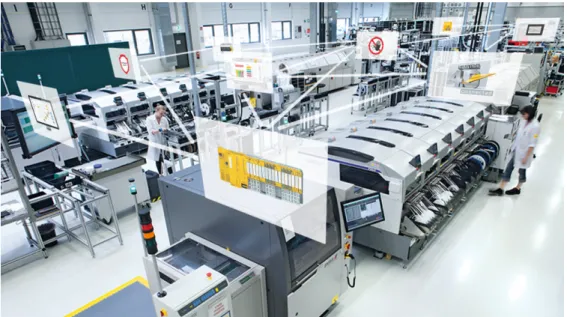
1.2.5.1 Smart manufacturing
Manufacturing constitutes a broad domain, encompassing many levels and pro-cesses, from low level material shaping processes via production machines and cells, to operations management and virtual factory planning, sometimes also en-compassing logistics [41]. Today, the manufacturing industry is aiming to improve competitiveness through the convergence with Information and Communication Technologies (ICT). Combining CPS capabilities with ICT may lead to the 4th in-dustrial revolution, frequently noted as Industry 4.0 [42]. According to the Federal Ministry of Education and Research of Germany: “Industry is on the threshold of the fourth industrial revolution. Driven by the Internet,the real and virtual worlds are growing closer and closer together to form the Internet of Things. Industrial production of the future will be characterized by the strong individualization of products under the conditions of highly flexible (large series)production,the exten-sive integration of customers and business partners in business and value-added processes,and the linking of production and high-quality services leading to so-called hybrid products [42]”.
Smart manufacturing refers to the use of embedded software and hardware technologies to optimize productivity in the manufacture of goods or delivery of services [43]. The National Institute of Standards and Technology (NIST), which is an agency of the U.S Department of Commerce, defines smart-manufacturing as “fully-integrated and collaborative manufacturing systems that respond in real time to meet the changing demands and conditions in the factory, supply network, and customer needs [44].”
The main drivers for smart manufacturing are: • Improving products quality
• Improving safety by reducing accidents caused by human errors • Improving industry’s competitiveness
Manufacturing is strongly characterized by and influenced by CPS technolo-gies. As such manufacturing already provides a domain featuring advanced CPS technologies with automation provided by industrial robots, mixed continuous and
Figure 1.2: Smart manufacturing (Image: blog.integral-system.fr)
discrete control, and hierarchical distributed control systems [41]. The strong po-tential for growth in relation to CPS is clearly indicated by research and innovation roadmaps such as the Factory of the future roadmap [45], and studies on potentially disruptive technologies [46]. In the latter study on potentially disruptive technolo-gies and their potential impact on business, many of the key covered technolotechnolo-gies relate closely to manufacturing including Internet of Things, Cloud Technology, Advanced Robotics, 3D printing and advanced materials.
1.2.5.2 Transportation and mobility
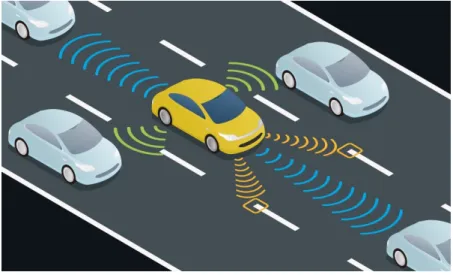
CPS in the transportation industry are strongly related to our daily life and play an important in society. The transportation domain includes various sectors: au-tomotive, aerospace and railway. Each sector is a manifestation of a CPS, and includes both vehicles and infrastructural components. In this section, we will focus on the automotive sector and more specifically the autonomous vehicle.
Automated driving is seen as one of the key technologies and major technolog-ical advancements influencing and shaping the future mobility of people.
The main drivers for higher levels of automated driving are [47, 48]: • Improving safety by reducing accidents caused by human errors.
• Contributing to the optimization of the traffic flow by increasing transport system efficiency and reducing time in congested traffic.
• Reducing fuel consumption and CO2 emissions.
• Improving user’s comfort by enabling his freedom for other activities when automated driving is enabled.
• Ensuring mobility for all, including elderly, impaired and non-confident users. Several forecasts predict a limited availability for automated driving functions in 2020 (with different levels of autonomy as discussed in Section 1.2.4.1) and a wide availability by 2040 including high and full automation. Today’s Advanced Driver Assistance System (ADAS) like Automatic Cruise Control (ACC), Lane Departure Warning (LDW), or Pedestrian Detection (PD) will form the backbone of tomorrow’s mobility. In this regard, the Deserve European Project [49], between 2012 and 2015, designed and developed a Tool Platform for embedded ADAS. This platform provided an environment for ADAS design, development, pre-validation and pre-certification of software and hardware modules to be integrated in ADAS applications.
Figure 1.3: Autonomous car (Image: shutterstock.com)
Vehicles are designed to communicate with each other as well as with the in-frastructure. Vehicle-to-Vehicle (V2V) communication allows vehicles to exchange
relevant information like local traffic data (e.g. nearby accidents) and about their driving intention. Vehicle-to-Infrastructure (V2I) communication will be used to optimize the road network usage and thereby helps to reduce environmental pol-lution.
Safety-critical applications in cooperative vehicular networks require authen-tication of nodes and messages. Yet, privacy of individual vehicles and drivers must be maintained. Pseudonymity can satisfy both security and privacy re-quirements. In survey [50], the authors detail the challenges and requirements for such pseudonym mechanisms, propose an abstract pseudonym lifecycle, and give an extensive overview and categorization of the state of the art in this re-search area. In [51], the authors present SEROSA, a service-oriented security and privacy-preserving architecture for vehicular communication. By synthesizing existing vehicular communication standards and web services, the proposed archi-tecture provides comprehensive identity and service management while ensuring interoperability with existing service providers.
The role allocation between human drivers and automated driving systems is specified by six levels of driving autonomy: no automation, driver assistance, partial automation, conditional automation, high automation and full automation. The option to switch to “automated driving mode” will give drivers more free-dom in terms of individual mobility. With the market introduction of highly au-tomated vehicles by 2020-2025, drivers will be able to manage their driving times better [47]. At the same time, an automatically controlled vehicle will be even safer thanks to the increased interaction with itself and its environment. Futhermore, the energy management and driving characteristics of the vehicle will be optimized enabling more energy-efficient driving. Highly automated road transport will have a significant impact on our mobility behavior, road safety and traffic efficiency.
An autonomous vehicle will need to be able to carry out tasks such as:
• Understanding complex and dynamic unknown environments and avoiding obstacles that can be either static or mobile.
• Understand road signs and enforce traffic regulations such as speed limit and blocked roads.
• Communicating and exchanging data with road infrastructure and with other vehicles.
• Execute commands in real time.
1.2.5.3 Unmanned Aerial Vehicle
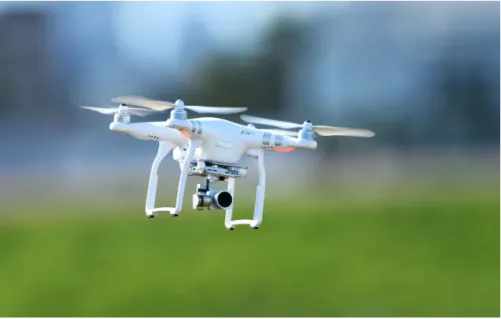
Unmanned Aerial Vehicles (UAV) are getting increasingly used for different
appli-cations. In the near future, millions of unmanned aircrafts are expected to be
rapidly deployed in diverse sectors of our daily life performing wide-range activi-ties from delivering a package to surveillance and reconnaissance or environmental monitoring [52]. In [53], the author discusses a market analysis for commercial UAV, stating that consumer drone shipments will hit 29 million with a Compound Annual Growth Rate (CAGR) of 31.3% by 2021 and enterprise drone shipments will reach 805,000 in 2021 with a CAGR of 51% [53].
In 2013, Amazon founder Jeff Bezos predicted that drone delivery would be a reality within five years. The billionaire entrepreneur had been right but had prob-ably not anticipated the fact that the first company to offer this new service would be one of its direct competitors: Google. No later than April 2019, Google’s sub-sidiary dedicated to UAV delivery, Wing, has obtained the status of “air carrier” by the Federal Aviation Administration (FAA), the American government agency responsible for civil aviation regulations. In concrete terms, this new status, cov-eted by other companies such as Uber or UPS, allows Google to bill customers for UAV delivery. A first. “This is an important step forward in testing and safely integrating drone into our economy”, said Elaine Chao, U.S Secretary of State for Transportation [54]. The FAA has already granted temporary authorizations to several UAV delivery companies for demonstration or short distance delivery. On the other hand, this is the first time that the American regulator has granted a company specializing in UAV the same status as charter companies or air cargo carriers.
Moreover, the ample availability of affordable drones is leading to large amounts of drones being sold for civilian uses, especially when drones are being equipped with high quality cameras and many other sensors which make them adaptable to a variable set of civilian applications [7].
Figure 1.4: Unmanned Aerial Vehicle (UAV) (Image: futura-sciences.com) For example, drones were a key tool to help Paris firemen fighting the fire that spread in Notre-Dame church on 15 April 2019. The goal of using drones in similar situations is to better orient fire hoses according to the different sources of fire. Drones allowed the establishment of a flame strategy with a view of the sky offered by an aerial vehicle that is more flexible and economical than a helicopter. The French Ministry of the Interior’s air force drones, as well as those of the French Ministry of Culture ,were deployed. The Paris Fire Brigade does not (yet) have its own fleet of remotely operated drones, although they are very useful for operating at such high sites. The Chinese manufacturer DJI confirmed that it was two of their drone, Mavic Pro, that had come into action under the guidance of trained pilots. The drones are equipped with a 4K camera and a thermal camera that produce a double view in order to locate from the sky the still hot spots after the fire is extinguished. In theory, any flight over Paris is prohibited and even technically impossible because of the geo-fencing system that uses the GPS of the quadricopters to block take-offs from and to no-fly zones. However, the manufacturer can unblock these banned flight zones at the request of the authorities as it seems to have been the case of Notre-Dame fire [55].
• Understanding complex and dynamic unknown environments and avoiding obstacles that can be either static (such as buildings) or mobile (such as people or other unmanned aircraft).
• Understanding where the aircraft is exactly positioned within such environ-ments.
• Ensuring failure containment including the sensors failure (wrong data or data loss), weak signal or total loss of communication. This also include the failure of the hardware components of the drone. This failure containment can be resolved using the redundancy of the sensors and the validation of the data provided by the sensors (data validation).
• Executing commands in real time.
• Embedding sufficient power to maintain movement, to implement the con-trols, and to operate sensors and data-feeds, for the duration of the flight. • Ensuring sufficient physical robustness to withstand threatening events, such
as wind-shear, lightening and turbulence.
1.3
Safety
1.3.1
History and background
The need for safety has always been a part of the human life. One of the ear-liest written references to safety is from the Code of Hammurabi, around 1750 BCE. His code stated that if a house was built and then fell due to poor con-struction, resulting in the death of the owner, then the builder himself would be put to death. Afterwards, different notions of safety have succeeded each other notably in the maritime domain. Some of the first maritime safety regulations, came about around 1255 in Venice, stating that a ship’s draught could not be exceeded and must be verified by visual inspection before release. Around 1834, Lloyd’s Register of British and Foreign Shipping was created, institutionalizing the concept of safety and risk analysis. In response to the sinking of the Titanic, the
International Convention for the Safety of Life at Sea treaty was passed in 1914, stipulating that the number of lifeboats and other safety equipment must be com-mensurate with the number of passengers on board the ship. The German safety certification company, TUV Rheinland, was founded in 1872, providing technical safety certification services. In 1877, the U.S. Commonwealth of Massachusetts passed a law to safeguard machinery and also created employers liability laws. Underwriters Laboratory was founded in Illinois, United States, in 1894, creating one of the most recognized product testing, certification, and standard bodies in the world [56].
Around the 1920s, private companies started to create formalized safety pro-grams. The early 1930s was the beginning of the implementation of accident pre-vention programs across the United States. By the end of the decade, the Amer-ican National Standards Institute had published hundreds of industrial manuals. It was in the 1930s that the first collection of statistical information on engines and aircraft accidents has been conducted in the air transport sector. Between 1939 and 1942, the very first quantified objectives given by Canadian Infantry
Brigade were evaluating rates of failure up to 10−5/h for aircraft and 10−7/h for
their structures. Later in the 1940s, reliability techniques began to develop. One of the earliest concept definition for system safety (looking at safety from a system perspective) first appeared at the Fourteenth Annual Meeting of the Institute of
Aeronautical Sciences in New York City in January 1946.
In the 1950s, the concept of maintenance [57] appeared. The first-ever human reliability studies have been carried out for the new nuclear power plants. At the same time, collecting data on electronic reliability was getting increasing attention. From 1960 onwards, the aeronautics and space industries carried out analyses of components failures. The US Department of Defense (DoD) promoted the first real requirements for Operational Safety following accidents on missiles. In 1961, Bell Laboratories used the new concept of cause tree on the Minuteman missile project [58].
In 1962, the French Academy of Sciences welcomed the word “reliability” in its terminology.
From 1970, the first studies on software reliability [59] have been carried and most of them were in the nuclear field. Then, gradually, safety techniques widely
spread and were extended to more and more areas: chemicals, railways, automo-biles, and all types of major industrial sectors.
To conclude this brief summary of safety’s history and background, it is relevant to say that nowadays the safety of property and people has never been more important, phenomenon increased by media and ecological pressure around major accidents. Moreover, from a marketing point of view, ensuring the safety of a product is essential in order to promote it and a simple accident may endanger the whole process. For example, the Air France Concorde went from a 27-year record of zero crashes to a single crash in July 2000, killing 100 passengers and 9 crew members, becoming one of the worst aircraft-type safety records (due to its low flights frequency). Another example is the crash that occurred at March 2018, where a Tesla model X crashed into a roadside and caught fire resulting in the death of the driver. Autopilot was engaged at the time of the accident. The company later published a report stating that the driver had recieved several visual and audible warnings in the drive and the driver’s hands were not detected on the wheel for six seconds prior to the collision. This accident rose several questions about self-driving cars and caused the company to temporarily suspend all self-driving tests in North America [60].
1.3.2
Definition
Safety analysis is a generic term for study of the system, identification of
dan-gerous aspects of the system, and their correction. Its purpose is to maintain the proper functioning of a system, a product or one of its components, in the time, throughout its life cycle. Safety study has become fundamental for critical sys-tems, where a malfunction can create a significant human or financial losses. It also applies to software, where again a malfunction can cause financial or social risks.
The safety norms CENELEC 50126 [61] introduces safety as part of RAMS, which is a combination of Reliability, Availability, Maintainability and Safety. More in general, RAMS contributes to what is called dependability [10,62]. The dependability of a system is its ability to deliver a service that can be justifiably trusted. This definition stresses the need for justification of trust. Addressing
dependability in a structured and comprehensive manner is achieved on the basis of the dependability tree [62].
Dependability is an integrating concept that encompasses many attributes. I capitalize on the work done in [62] which included the following list of attributes:
• availability: readiness for correct service. • reliability: continuity of correct service.
• safety: absence of catastrophic consequences on the user(s) and the envi-ronment.
• integrity: absence of improper system alternations.
• maintainability: ability to undergo modifications and repairs.
• confidentiality: ability to keep information secret from unauthorized users. In [11], the authors investigated the dependability of the Internet of Things (IoT). They considered the list defined above and added two new attributes re-lated to dependability which are scalability and privacy. Scalability is defined as the ability of the system to be extended by further components while privacy is defined as the ability of someone to (i) assess his personal privacy risks, (ii) take appropriate action to protect his privacy, and (iii) to be assured that it is enforced beyond his immediate control sphere [63].
I consider the previous list of dependability attributes and I extend it by adding security as showed in figure 1.5. Security is a highly significant feature for depend-ability when addressing cyber-physical systems. As discussed in section 1.2.4.3, networking is an important feature for CPS. CPS are composed of several com-ponent continuously exchanging data. Therefore any security compromise of the CPS can have severe consequences. Moreover, cyber-physical systems suffer from specific vulnerabilities which do not affect classical control systems, and for which appropriate detection and identification techniques need to be developed. For instance, the reliance on communication networks and standard communication protocols to transmit measurements and control packets increases the possibil-ity of intentional and worst case attacks against physical plants. On the other
hand, information security methods, such as authentication, access control, and message integrity, appear inadequate for a satisfactory protection of CPS. Indeed, these security methods do not exploit the compatibility of the measurements with the underlying physical process or the control mechanism, and they are therefore ineffective against insider attacks targeting the physical dynamics [50].
Dependability Attributes Availability Reliability Safety Confidentiality Integrity Maintaintability Scalability Privacy Security Threats Faults Errors Failures Means Fault Prevention Fault Tolerance Fault Removal Fault Forecasting Figure 1.5: Dependability tree (adapted from [10] and [11] )
The main objective of dependability is to reduce as much as possible system failures and to ensure that its attributes are effective. In other words, dependabil-ity ensures that the system delivers to the maximum the services that are normally provided, without deviating from their respective objectives. However, it is pos-sible that errors could disrupt the proper functioning of the system and cause its failure. A system may fail either because it does not comply with the specification, or because the specification did not adequately describe its function. The threats to dependability are threefold: faults, errors and failures.
In any computing system, the root cause of a malfunction is called fault. A fault is active if it produces an error; otherwise it is dormant. According to [62], it is possible to classify faults that may affect the system during its life cycle
according to eight basic viewpoints which are:
• conception phase: development faults or operational faults. • system boundaries: internal or external faults.
• phenomenological cause: natural or human-made faults. • dimension: hardware of software faults.
• objective: malicious or non-malicious faults. • intent: deliberate or non deliberate faults. • capability: accidental or incompetence faults. • persistance: permanent or transient faults.
An error is the part of the system state that may cause a subsequent failure. Depending on the nature of the system, an error may be detected and corrected before it manifests as a failure. If a fault is activated and no measures are taken to correct the subsequent error, the system may deviate from its specified and intended behavior. This lead to what is called failure. A failure is an event that occurs when the delivered services deviate from correct and expected service. The relation between, fault, error and failure is illustrated in figure 1.6.
Fault Error Failure
activation propagation
Figure 1.6: Fault-error-failure relation
The way today’s dependable systems are designed is mainly motivated by four different techniques [64]:
• Fault prevention: to prevent the occurrence or introduction of faults, in-cluding different techniques from system engineering and good practices from design both hardware and software.
• Fault tolerance: to avoid service failures in the presence of faults using different techniques such as redundancy, error detection, etc.
• Fault removal: to reduce the number of severity of faults mainly using validation and verification techniques.
• Fault forecasting: to estimate the present number, the future incidence, and the likely consequences of faults. This includes risk analysis methods.
1.3.3
Limits of existing safety approaches for CPS
Integration of physical processes and computing is not new. The term “embedded system” has been used for quite some time to describe engineered systems that combine physical processes with computing. An embedded system is a computa-tional system embedded in physical system. Any cyber-physical system contains and embedded system. The main distinction is that the term embedded system re-flects a primary focus on the computational component. The CPS view emphasizes the importance of taking into account the physical context of the computational system which is often necessary to design, test and verify the functionality that is being developed [65].
Historically, embedded systems (especially critical ones) have been based on (variations of) the V-Schema. A V-Schema includes the following phases: re-quirement, design, development (or implementation), integration and validation. The V-Schema has been introduced by the safety standard IEC 61508 [66] to deal with software and system dependability. This standard constitutes an umbrella for safety-related domain standards, such as nuclear [67–69], railway [61, 70, 71] and more recently automotive [72] application domains.
Among the main methodologies that have had a crescendo in their success in the scientific and industrial community for the safety analysis of embedded systems, I recall the following ones:
• Correction-by-construction was first introduced to address correction for code [73], and then extended to system’s components [74]. At system level, correction by construction means a design of system’s components such that it is possible to automatically generate a code, which is correct with respect to
![Figure 1.1: Autonomy Levels for Unmanned Systems (ALFUS) (figure from [25]) while less critical tasks are performed autonomously](https://thumb-eu.123doks.com/thumbv2/123doknet/14589473.729974/25.892.147.748.136.527/figure-autonomy-levels-unmanned-systems-critical-performed-autonomously.webp)

![Figure 2.6: Longitudinal speed control. Figure extracted from [12]](https://thumb-eu.123doks.com/thumbv2/123doknet/14589473.729974/83.892.208.690.439.742/figure-longitudinal-speed-control-figure-extracted.webp)

