© The Author 2013. Published by Oxford University Press. All rights reserved. For permissions, please e-mail: [email protected].
Effect of magnesium therapy on nocturnal leg
cramps: a systematic review of randomized
controlled trials with meta-analysis using
simulations
Paul Sebo
a,*
, Bernard Cerutti
band Dagmar M Haller
a,c,da
Primary Care Unit and
bUnit of Research and Development in Medical Education, Faculty of Medicine, University
of Geneva,
cDepartment of Community, Primary Care and Emergency Medicine and
dDepartment of Pediatrics,
Geneva University Hospitals, Geneva, Switzerland.
*Correspondence to Paul Sebo, Primary Care Unit, Faculty of medicine, University of Geneva, 97–99 rue de Genève, 1226 Thônex, Geneva, Switzerland; E-mail: [email protected]
Abstract
Background and objective. Nocturnal leg cramps (NLC) are common in primary care and may
cause severe pain and sleep disturbance. We systematically reviewed the effectiveness of
mag-nesium in treating NLC and the side-effect profile of magmag-nesium compared to placebo.
Methods. We searched Medline, Embase, Cochrane Library,
ClinicalTrials.gov
, the International
Standard Randomised Controlled Trial Number and the International Clinical Trials Registry
Platform registries until August 2012. All randomized controlled trials (RCTs) comparing
mag-nesium therapy for NLC in adults with any other comparator were eligible. Two investigators
independently selected, extracted data from and rated the risk of bias of relevant studies. To
compensate for the heterogeneity in outcome measures, simulations were used to summarize
the data.
Results. Seven RCTs were included in the review (
n = 361), all comparing magnesium to
pla-cebo. Three of these trials included only pregnant women. The difference in the median number
of leg cramps per week between the placebo and the intervention groups was 0.345
(tile 2.5%: −0.133, quan(tile 97.5%: 0.875). This difference was 0.807 (quan(tile 2.5%: 0.015,
quan-tile 97.5%: 1.207) in the three studies involving only pregnant women and 0.362 (quanquan-tile 2.5%:
−0.386, quantile 97.5%: 1.148) in the others. Overall gastrointestinal side effects were slightly
more common with magnesium therapy than with placebo. The strength of this evidence was
weak, mainly due to small study sizes and short follow-up.
Conclusions. Magnesium therapy does not appear to be effective in the treatment of NLC in the
general population, but may have a small effect in pregnant women. Further research using
bet-ter designed RCTs is necessary.
Key words: Magnesium, nocturnal leg cramps, primary care, systematic review.
Introduction
Nocturnal leg cramps (NLC) are defined as painful involuntary contractions of the lower limbs occurring during prolonged periods of rest, typically during the night (1). They may cause severe pain and sleep disturbance, and are particularly common
among older adults, though they can occur in all decades of life (1–3). They are frequently unreported to physicians (2,4,5). In a general population survey carried out in the UK (n = 233), the overall prevalence of NLC was 37%, but the disorder was more
Review
doi:10.1093/fampra/cmt065 Advance Access publication 26 November 2013
prevalent in older subjects (>80 years old: 54%) (2). Of those who experienced NLC, 40% had cramps three or more times per week and 6% nightly. Another study performed in older US veterans (n = 515) showed that 56% suffered from NLC (6). The disorder is also common in pregnancy, experienced by up to 50% of pregnant women (1,7–9). Leg cramps occur most often during the third trimester and do not seem to be related with pregnancy complications or unfavourable foetal outcomes (9,10).
The precise cause of these cramps is unclear. Most NLC occur-ring in adults appear to be idiopathic, but potential contribut-ing factors include low levels of certain minerals, extracellular fluid volume depletion and prolonged sitting or inappropriate leg position during sedentary activity (1). Various neurologic, endocrine, metabolic, vascular, medication-related, toxic and congenital conditions can also predispose to NLC, which may then respond to specific treatment (such as a change in medica-tion for medicamedica-tion-related NLC) (1). People with these condi-tions are often excluded from therapeutic trials.
Quinine, the only treatment proven to be effective, may result in serious and/or life-threatening side effects, such as haemo-lytic–uraemic syndrome, disseminated intravascular coagulation or cardiac arrhythmias (1,3,11–13). Because of its unfavourable risk-to-benefit ratio the Food and Drug Administration recently recommended against using quinine for treating NLC (1,14,15).
Magnesium plays an important role in hundreds of metabolic reactions and in muscle function (16–18). Magnesium deficiency can result from chronic diseases (e.g.: alcoholism, malabsorp-tion), medication use (e.g.: diuretics), pregnancy and poor nutri-tion (17,19–22). Elderly people are particularly at risk, because of the combination of chronic diseases, poor nutrition, decreased absorption of magnesium and increased renal exertion (17). As magnesium deficiency leads to neuronal excitability and enhances neuromuscular transmission (1,23–25), and since its substitution has been shown to be effective in eclampsia-related seizures (17,26–29), some authors have suggested a beneficial role of magnesium in NLC.
Young et al. (3,30) carried out two systematic reviews on a variety of interventions in NLC. The only treatment, in addition to quinine, which showed a statistically significant effect was magnesium in pregnant women (but not in the general popula-tion). This conclusion rested on low-quality evidence as only one randomized controlled trial (RCT) was included in the system-atic review and only short-term outcomes were assessed (19).
Because it has a favourable side-effect profile, magnesium has become the cornerstone of treatment of leg cramps, particularly in Europe, despite this lack of evidence (1).
The present systematic review was designed to close the gap in our knowledge on the potential role of magnesium therapy in NLC. Through a critical appraisal and synthesis of relevant RCTs, including new studies undertaken since the last review, the objectives were to assess the effectiveness of this therapy,
mainly in reducing the number of NLC per week, in pregnant women and in the general adult population, and to assess the side-effect profile of magnesium compared to placebo.
Methods
Design and search strategy
We conducted a systematic review of the literature through the electronic databases Medline, Embase and Cochrane Library (from inception to the end of August 2012), using the key words ‘magne-sium and (leg or legs) and (cramp or cramps)’, without any limits. The archives of the ClinicalTrials.gov registry, the International Standard Randomised Controlled Trial Number registry and the International Clinical Trials Registry Platform of the World Health Organization were consulted to identify unpublished clinical tri-als (using the key words ‘magnesium’ and ‘cramps’) and authors contacted to obtain additional data where necessary. The reference lists of all relevant papers were also scanned and local specialists in internal medicine, neurology and nutrition were contacted for information about any other published or unpublished trial that they might be aware of. The identification of relevant studies and the extraction of the data were carried out independently by two investigators (PS, DMH) in duplicate. Doubts and disagreements were resolved by discussion and consensus.
Study eligibility
All RCTs, assessing the effect of magnesium against any other comparator on NLC in pregnant women or in the general adult population (i.e. men and/or non-pregnant women) were eligible for inclusion. No language, publication date (or completion date for unpublished studies) or setting restrictions were applied, but studies in prepubertal children were excluded. We based the definition of NLC on the diagnostic criteria of the American Academy of Sleep Medicine (see panel).
Panel: Diagnostic criteria for NLC as published by the American Academy of Sleep Medicine (2005) (1):
1. The painful sensation in the leg or foot is associated with sudden muscle hardness or tightness, indicating a strong muscle contraction.
2. The painful muscle contractions in the legs or feet occur during the sleep period, though they may arise from either wakefulness or sleep.
3. The pain is relieved by forceful stretching of the affected muscles, releasing the contraction.
4. The sleep-related leg cramps are not better explained by another current sleep disorder, medical or neurologic disor-der, medication use or substance use disorder.
Trials assessing treatments for exertion cramps, restless legs syndrome, periodic limb movements, vascular claudication,
peripheral neuropathy and dystonia, as well as trials of treat-ments for cramps not located in the legs were excluded.
Data extraction
The following data were obtained from all the retrieved studies: design (parallel or cross over), details of the population (country, setting, pregnant women or general population, mean age and range, gender, number of subjects followed up, number lost to follow-up and number having refused to participate), type and dose of magnesium as well as length of treatment, criteria for eligibility, outcome measures used to assess the effectiveness of magnesium compared to placebo and side effects.
Data quality assessment
The two reviewers independently assessed the quality of the papers using Crombie’s check list and the Cochrane collaboration standard criteria (31,32). A summary assessment was prepared for each study across the following domains: sequence genera-tion; allocation concealment; selection and attrition bias; blinding of participants and research staff; blinding of outcome assessors; sample size estimate; description of study population, design and measurements; analysis by intention to treat and assessment of statistical significance; role of funding body or industry; reporting of side effects of treatment; main study limitations. Doubts and disagreements were resolved by discussion and consensus.
Data analysis
A critical appraisal and synthesis of all relevant RCTs were per-formed. As NLC were measured in a large variety of ways (mean or median; number of days and/or nights with cramps or num-ber of cramps), outcome data could not be summarized using conventional meta-analytic methods. In addition, the differences between the studies were important regarding the study popula-tion (pregnant women or general populapopula-tion), the study design (parallel or cross-over RCTs), the type of magnesium (oral or intravenous magnesium), the dose and length of treatment.
Monte Carlo simulations were therefore used in an attempt to overcome this heterogeneity in designs, primary outcomes and methods of summarizing these outcomes. When little infor-mation was available regarding data distribution, and because the distribution of leg cramps was usually highly asymmetric, we simulated the data from a log normal distribution so that the mean or the median, and the standard deviation fitted the reported data. Details of these simulations for each study can be found in the appendix (See online supplementary Table S1).
The cycle of simulation was repeated 10 000 times, and the main outcome was difference between the median number of cramps per week in the magnesium group and the median in
the placebo group after the intervention. For each of the 10 000 simulations, the difference in the medians of each group was stored for each study, for the subset of studies dealing with pregnant women, for the subset of studies dealing with non-pregnant patients and for the entire set of patients. This allowed the estimation of 2.5%, 50% and 97.5% quantiles of the dif-ference between the intervention and the control groups. All the analyses were undertaken using TIBCO Spotfire S+® 8.2 for Windows, TIBCO Software Inc., Palo Alto, CA.
This systematic review was carried out in accordance with the Preferred Reporting Items for Systematic reviews and Meta-Analyses (PRISMA) guidelines (33). Assessment of publication bias was not performed because of the great heterogeneity and the overall small sample size of the studies included in the review.
Results
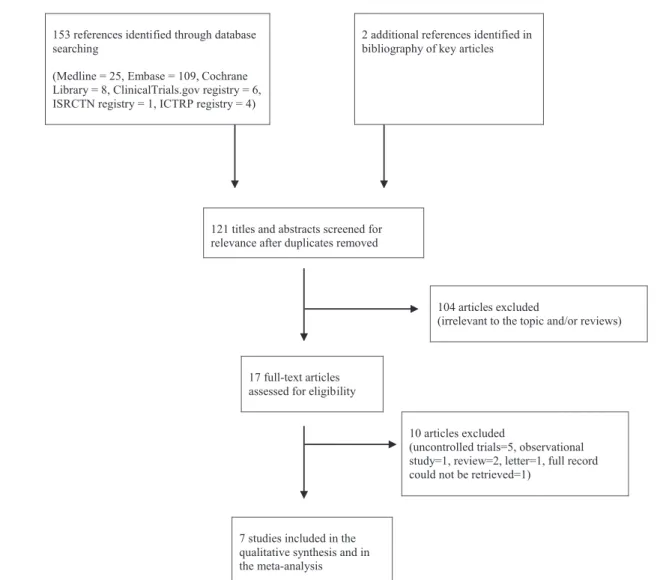
The study selection process is summarized in Figure 1. Six RCTs, involving a total of 321 patients, were retrieved through the elec-tronic databases search (9,19,24,34–36), and one additional unpublished RCT (n = 40) was identified in the archives of the
ClinicalTrials.gov registry (Table 1) (37). Table 2 presents the inclu-sion and excluinclu-sion criteria for the population involved in the trials. The study population was restricted to pregnant women in three studies, whereas in the remaining four studies the outcomes were assessed in general populations. Two studies used a cross-over design. The sample sizes for all studies were small: the highest total number of subjects followed up was 80. In comparison to the number followed up attrition was particularly high in two stud-ies [number lost to follow-up/number followed up (%) = 27/46 (59%) in Roffe’s and 7/38 (18%) in Nygaard’s trials]. The number declining to participate was not stated in four studies and was high in two studies in comparison to the number followed up (number declining participation/number followed up (%) = 47/42 (112%) in Frusso’s and 17/46 (37%) in Garrison’s trials).
Type of magnesium treatment
One trial assessed magnesium therapy in infusion (4 hours for five consecutive days), whereas the others evaluated oral magne-sium therapy, all against placebo. The type, dose and length of magnesium therapy (5 days to 6 weeks) were very different from one trial to another.
Quality of the studies
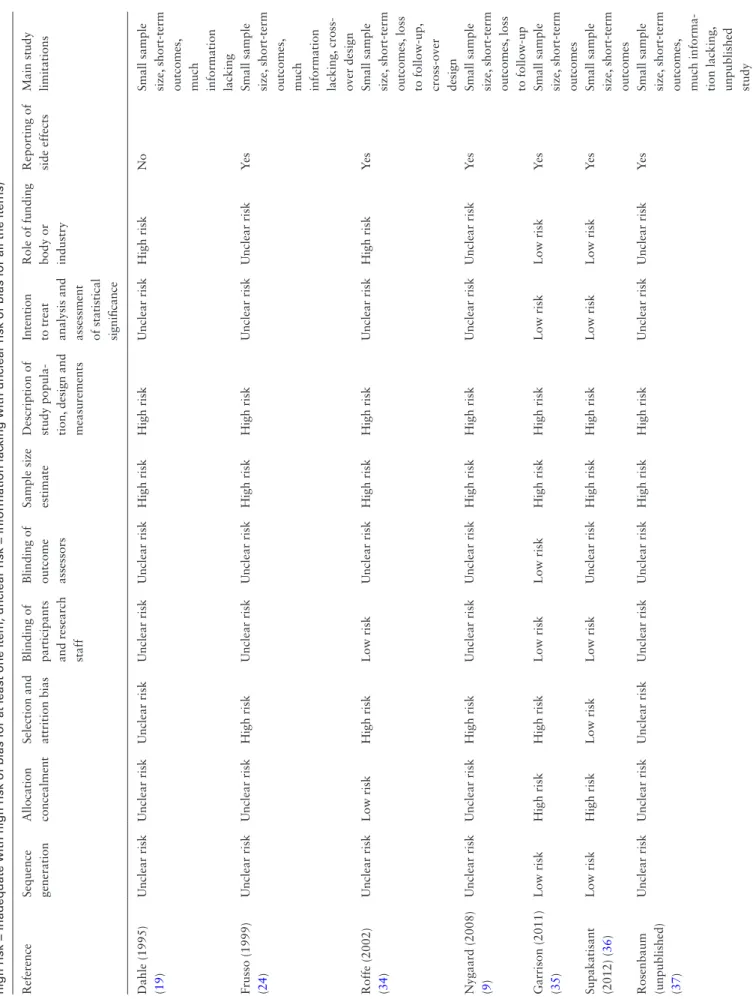
Overall, the quality of the evidence was poor with all studies pre-senting high risks of bias and lack of precision due to small sam-ple sizes (Table 3). In particular, risks of selection, allocation and attrition bias were present or suspected to some extent in all stud-ies. Many details were missing from the available reports in three
studies, including the unpublished trial, the author of which did not respond to our request for additional information (19,24,37). All the studies had only short-term follow-ups. Only the two stud-ies carried out by Garrison and by Supakatisant could be consid-ered as being at low risk of bias in terms of the role of the funding body or industry. Note that two studies used a cross-over design providing more precise comparisons and therefore requiring fewer subjects to achieve the same precision (because each individual is considered as his/her own control), but making the analyses more difficult to be interpreted because of residual effects (carry-over effects) (24,34,38). Support for the reviewers’ judgements is pre-sented in the appendix (See online supplementary Table S2).
Effect of magnesium treatment on the number or
severity of NLC
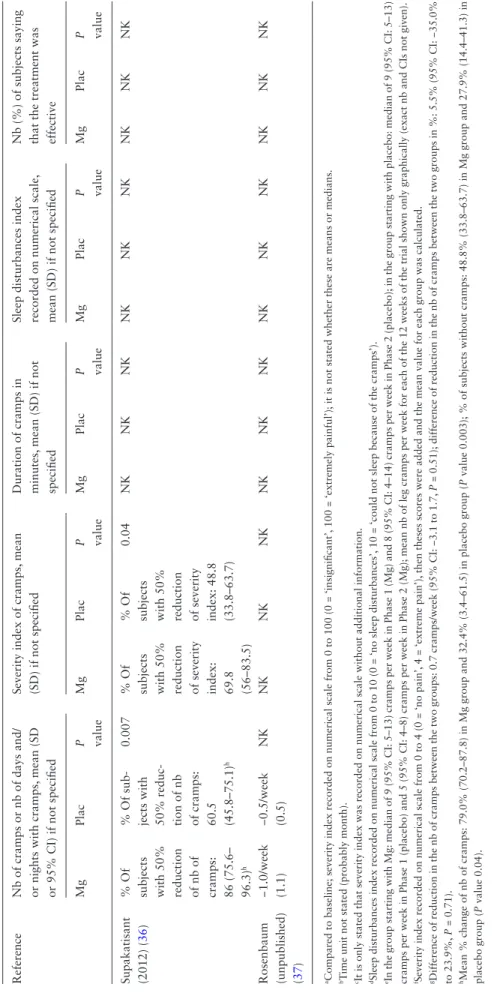
As the data presented in the four older papers were insufficient to allow calculation of effect measures with 95% confidence
interval (CI), we present summary measures for the two groups and P values (Table 4). Only two studies, both involving preg-nant women, showed a statistically significant effect of magne-sium therapy with a larger reduction in the number and severity of NLC in the intervention group compared to the placebo group (19,36). The third study in a pregnant population (n = 38) found no difference in outcomes between women receiving mag-nesium and those exposed to placebo (9).
Effect on other outcomes
Two studies reported patient self-evaluation of the effective-ness of treatment as an outcome. In both studies, the propor-tion of patients reporting that the treatment was effective was significantly higher in the group receiving magnesium (Table 4) (19,34). Only one study examined cramp-related sleep distur-bances and it found no effect of magnesium treatment on this outcome (24).
153 references identified through database searching
(Medline = 25, Embase = 109, Cochrane Library = 8, ClinicalTrials.gov registry = 6, ISRCTN registry = 1, ICTRP registry = 4)
2 additional references identified in bibliography of key articles
121 titles and abstracts screened for relevance after duplicates removed
104 articles excluded
(irrelevant to the topic and/or reviews)
17 full-text articles assessed for eligibility
10 articles excluded
(uncontrolled trials=5, observational study=1, review=2, letter=1, full record could not be retrieved=1)
7 studies included in the qualitative synthesis and in the meta-analysis
Table 1. Characteristics of RCTs of magnesium in nocturnal leg cramps (Mg = magnesium group, Plac = placebo group,
CO = cross-over design, NK = information not provided in the paper) References Study participants
with nocturnal leg cramps, and setting
Design Mean age (range or SD) Number followed up, total (women) Loss to FU, total (%a) Number refusing to participate Type and dose of magnesium per day Length of treatment and FU Outcome measures Mg Plac Dahle (1995) (19) Pregnant women referred from two prenatal care units in Sweden (n = 73) Parallel NKb 34 (34) 35 (35) 4 (6) NK Mg citrate lactate 360 mg (15 mmol) 3 weeks, FU 3 weeks Number of cramps, severity, subjective assessment Frusso (1999) (24) Patients referred by family doctors at a University- based ambulatory clinic in Argentina (n = 45) CO 62 (28–87) NKc NKc 3 (7) 47 Mg citrate 1800 mg (72 mmol) Two periods of 30 days separated by washout period of 30 days, FU after the two periods Number of cramps, severity, duration, sleep disturbances Roffe (2002) (34) Subjects recruited by advertisements in the UK (n = 73) CO Mg: 61 (11), Plac: 64 (10) 17 (11) 29 (14) 27 (59) NK Mg citrate 300 mg (12 mmol) Two periods of 6 weeks without washout period, FU after the final two periods of 4 weeks Number of cramps, severity, duration, subjective assessment Nygaard (2008) (9) Pregnant women attending a routine ultrasound examination in Norway (n = 45) Parallel Mg: 32 (4)d, Plac: 30 (3)d 21 (21) 17 (17) 7 (18) NK Mg citrate lactate 360 mg (15 mmol) 2 weeks, FU 2 weeks Number of cramps, severity Garrison (2011) (35) Patients recruited by advertisements in the offices of family doctors and in newspapers in Canada (n = 46) Parallel 69 (8) 24 (19) 22 (13) 0 17 Mg sul-phate 5 g (20 mmol), 4 hours infusion 5 days, FU 30 dayse Number of cramps, severity, duration Supakatisant (2012) (36) Pregnant women attending an ante-natal care clinic in Thailand (n = 86) Parallel Mg: 29 (6)f, Plac: 29 (5)f 41 (41) 39 (39) 6 (8) 9 Mg bis-glycinate chelate 300 mg 4 weeks, FU 4 weeks Number of cramps, severity Rosenbaum (unpublished, completed in 2009) (37) Subjects recruited by radio advertise-ments in the USA (n = 40) Parallel 67 (10) 20 (10) 20 (13) 0 NK Mg lactate 336 mg 6 weeks, FU 4 weeks Number of cramps, severity, duration, sleep disturbances FU, follow-up.
aNumber lost to FU/number followed up.
bMean length of pregnancy of the 73 included subjects who started the study: 29 weeks (range 22–36 weeks); mean age not stated. cTotal number of subjects followed up: 42; 73% women among the 45 included subjects who started the study.
dMean age of the 45 included subjects who started the study.
eIt is stated in the main text that the outcomes were also analysed after 3 months but FU data were only shown after 30 days. fMean age of the 86 included subjects who started the study.
Side effects
Table 5 lists the side effects reported in all the RCTs included in this review. The most frequent side effects in the trials using oral therapy concerned the gastrointestinal system (diarrohea, nausea, vomiting, flatulence and constipation). Injection-related side effects, but no gastrointestinal side effects, were reported in the trial using intravenous treatment (35). There was no statisti-cally significant difference in the frequency of gastrointestinal side effects (P value 0.07). The mean difference was 0.13 (95% CI: −0.51 to 0.78), in favour of the placebo group. One severe side effect was reported: a stroke 31 days following a placebo infusion (35).
Simulations
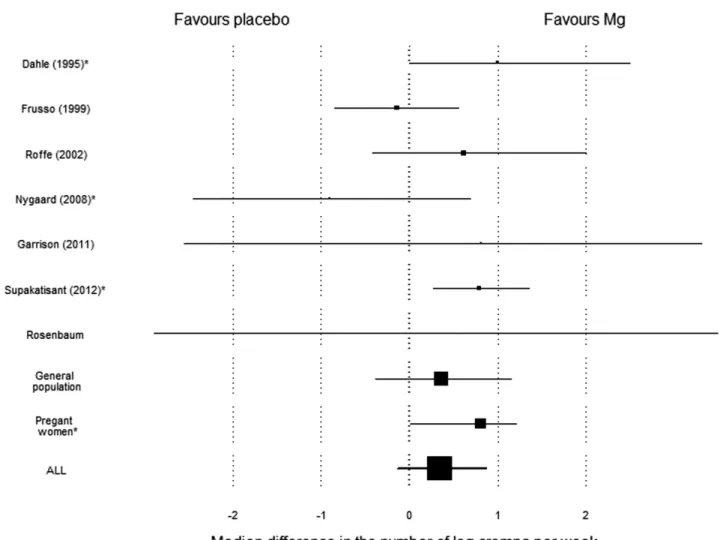
As NLC outcome measures varied considerably from one study to another, standard meta-analysis could not be used to combine the results of these small trials. Simulations were therefore used, the results of which are shown in Figure 2.
The difference between the median number of cramps per week in the magnesium group and the median in the placebo group was 0.345 (quantile 2.5%: −0.133, quantile 97.5%: 0.875). In other words, a median patient would get one cramp less every 3 weeks when magnesium is taken rather than a pla-cebo. The three studies in a pregnant population had a median difference of 0.807 (quantile 2.5%: 0.015, quantile 97.5%:
Table 2. Inclusion and exclusion criteria of RCTs of magnesium in nocturnal leg cramps
Reference Inclusion criteria Exclusion criteria
Dahle (1995) (19) Pregnant women complaining of leg cramps during pregnancy
Information not provided in the paper Frusso (1999) (24) ≥6 leg cramps in the previous month, ≥6 leg
cramps after 4-week washout period with placebo, >18 years old, normal neurologic exam in legs
Alcohol abuse, psychiatric diseases, terminal disease, type 1 diabetes mellitus, renal failure, pregnancy, arteriopathy or neuropathy in legs, hypocalcaemia, hyponatraemia, hypokalaemia, not speaking Spanish, not having a telephone, inability to stop medications containing magnesium, low compliance
Roffe (2002) (34) ≥ 2 leg cramps per week for 3 months Unstable medical conditions known to affect cramp frequency, renal failure, pregnancy, terminal illness, recent change in drug treatment for quinine, diuretics, laxatives, beta agonist Nygaard (2008) (9) Pregnant women, gestational age 18–35 weeks,
18–38 years old, ≥ 2 leg cramps per week, no disease according to health certificate, Norwegian as first language
Twin pregnancy, oedema, pre-eclampsia, magnesium supplementation beyond the trial treatment
Garrison (2011) (35) ≥ 8 leg cramps in the previous month eGFR <50 ml/minute, atrioventricular nodal heart block or heart rate <54/minute without a pacemaker, previous myocardial infarction, congestive heart failure, digoxin use, significant neurologic disease, pregnancy, Addison’s disease, chronic hepatitis, significant abnormalities of serum calcium, sodium, potassium, chloride, bicarbonate, thyroid-stimulating hormone, alanine aminotransferase or prothrombin time
Supakatisant (2012) (36) Pregnant women, gestational age 14–34 weeks, ≥2 leg cramps per week, no disease, no obstetrical complication, no treatment for leg cramps, no magnesium allergy
Multifoetal gestation, pregnancy-induced hypertension, preterm labour treated with tocolytic agent
Rosenbaum (unpublished, completed in 2009) (37)
40–85 years old, no kidney impairment, ≥2 leg cramps per week in the previous month
Enrolled in another study, history of seizure dis-order, current treatment with lithium or quinine, malabsorption or major intestinal disorders, significantly elevated magnesium level, history of significant diarrohea or drug/alcohol abuse, his-tory of allergy to magnesium, currently diagnosed with a terminal illness
Table 3.
Indicator
s of quality and risk of bias in RCTs of magnesium in nocturnal leg cramps (low risk = adequate with low risk of bias for all the items of the domain,
high risk = inadequate with high risk of bias for at least one item, unclear risk = information lac
king with unclear risk of bias for all the items)
Reference
Sequence generation Allocation concealment Selection and attrition bias Blinding of participants and research staff Blinding of outcome assessors Sample size estimate Description of study popula- tion,
design and
measurements
Intention to treat analysis and assessment of statistical significance Role of funding body or industry
Reporting of side effects Main study limitations
Dahle (1995) (19 ) Unclear risk Unclear risk Unclear risk Unclear risk Unclear risk High risk High risk Unclear risk High risk No
Small sample size,
short-term
outcomes, much information lacking
Frusso (1999) (24 ) Unclear risk Unclear risk High risk Unclear risk Unclear risk High risk High risk Unclear risk Unclear risk Ye s
Small sample size,
short-term
outcomes, much information lacking,
cross- over design Roffe (2002) (34 ) Unclear risk Low risk High risk Low risk Unclear risk High risk High risk Unclear risk High risk Ye s
Small sample size,
short-term
outcomes,
loss
to follow-up, cross-over design
Nygaard (2008) (9) Unclear risk Unclear risk High risk Unclear risk Unclear risk High risk High risk Unclear risk Unclear risk Ye s
Small sample size,
short-term outcomes, loss to follow-up Garrison (2011) (35 ) Low risk High risk High risk Low risk Low risk High risk High risk Low risk Low risk Ye s
Small sample size,
short-term outcomes Supakatisant (2012) ( 36 ) Low risk High risk Low risk Low risk Unclear risk High risk High risk Low risk Low risk Ye s
Small sample size,
short-term outcomes Rosenbaum (unpublished) (37 ) Unclear risk Unclear risk Unclear risk Unclear risk Unclear risk High risk High risk Unclear risk Unclear risk Ye s
Small sample size,
short-term
Table 4.
R
esults of RCTs of magnesium in nocturnal leg cramps (Mg = magnesium group, Plac = placebo group, nb = number
, NK = information not pro
vided in the
paper
, NoD = no dif
ference between the groups according to the paper)
Reference
Nb of cramps or nb of days and/ or nights with cramps,
mean (SD
or 95% CI) if not specified
Severity index of cramps,
mean
(SD) if not specified
Duration of cramps in minutes,
mean (SD) if not
specified
Sleep disturbances index recorded on numerical scale, mean (SD) if not specified Nb (%) of subjects saying that the treatment was effective
Mg Plac P value Mg Plac P value Mg Plac P value Mg Plac P value Mg Plac P value Dahle (1995) ( 19 )
Median nb of days and/ or nights decreased from every other day to once a week Median nb of days and/ or nights decreased from every other day to twice a week
<0.05 −40.1 a −20.4 a <0.05 NK NK NK NK NK NK 27 (79) 14 (40) <0.01 Frusso (1999) ( 24 ) 11.8 (7.6) b 11.1 (7.3) b 0.59 2.0 (1.7) c 2.1 (2) c 0.84 2.5 (0.7) 2.2 (0.7) 0.44 1.9 (2.6) d 1.5 (2.4) d 0.39 NK NK NK Roffe (2002) ( 34 ) e e 0.07 NoD NoD NK NoD NoD Idem NK NK NK 36 (78) 25 (54) 0.03 Nygaard (2008) ( 9 )
nb of days and/or nights in 2 weeks: 9.5 (5.1) nb of days and/or nights in 2 weeks: 7.7 (4.7)
0.27 13.2 (6.5) f 11.4 (8.5) f 0.46 NK NK NK NK NK NK NK NK NK Garrison (2011) ( 35 ) −2.4/week (4.4) g −1.7/week (3.3) g 0.51 NoD NoD NK NoD NoD NK NK NK NK NK NK NK
Reference Nb of cramps or nb of days and/ or nights with cramps,
mean (SD
or 95% CI) if not specified
Severity index of cramps,
mean
(SD) if not specified
Duration of cramps in minutes,
mean (SD) if not
specified
Sleep disturbances index recorded on numerical scale, mean (SD) if not specified Nb (%) of subjects saying that the treatment was effective
Mg Plac P value Mg Plac P value Mg Plac P value Mg Plac P value Mg Plac P value Supakatisant (2012) ( 36 )
% Of subjects with 50% reduction of nb of cramps: 86 (75.6– 96.3)
h
% Of sub- jects with 50% reduc- tion of nb of cramps: 60.5 (45.8–75.1)
h
0.007
% Of subjects with 50% reduction of severity index: 69.8 (56–83.5) % Of subjects with 50% reduction of severity index: 48.8 (33.8–63.7)
0.04 NK NK NK NK NK NK NK NK NK Rosenbaum (unpublished) (37 ) −1.0/week (1.1) −0.5/week (0.5) NK NK NK NK NK NK NK NK NK NK NK NK NK
aCompared to baseline; severity index recorded on numerical scale from 0 to 100 (0 = ‘insignificant’,
100 = ‘extremely painful’); it is not stated whether these are means or medians.
bT
ime unit not stated (probably month).
cIt is only stated that severity index was recorded on numerical scale without additional information. dSleep disturbances index recorded on numerical scale from 0 to 10 (0 = ‘no sleep disturbances’,
10 = ‘could not sleep because of the cramps’).
eIn the group starting with Mg: median of 9 (95% CI: 5–13) cramps per week in Phase 1 (Mg) and 8 (95% CI: 4–14) cramps per week in Phase 2 (placebo); in the group starting with placebo: median of 9 (95% CI: 5–13) cramps per week in Phase 1 (placebo) and 5 (95% CI: 4–8) cramps per week in Phase 2 (Mg); mean nb of leg cramps per week for each of the 12 weeks of the trial shown only graphically (exact nb and CIs not given). fSeverity index recorded on numerical scale from 0 to 4 (0 = ‘no pain’,
4 = ‘extreme pain’),
then theses scores were added and the mean value for each group was calculated.
gDifference of reduction in the nb of cramps between the two groups: 0.7 cramps/week (95% CI: −3.1 to 1.7,
P
=
0.51); difference of reduction in the nb of cramps between the two groups in %: 5.5% (95% CI: −35.0%
to 23.9%,
P
= 0.71).
hMean % change of nb of cramps: 79.0% (70.2–87.8) in Mg group and 32.4% (3.4–61.5) in placebo group (
P
value 0.003); % of subjects without cramps: 48.8% (33.8–63.7) in Mg group and 27.9% (14.4–41.3) in
placebo group (
P
value 0.04).
Table 4.
1.207), whereas the four others dealing with much older popu-lations showed a median difference of 0.362 (quantile 2.5%: −0.386, quantile 97.5%: 1.148).
Discussion
Magnesium is widely prescribed in Europe and across the world to treat NLC (1). Yet uncertainty remains as to whether this treatment is beneficial (1,3,30). The aim of this systematic review was to clarify whether magnesium therapy is more effi-cient than placebo in treating NLC. This critical appraisal of seven RCTs showed weak evidence in favour of the effective-ness of magnesium in pregnant women, and unclear results in general populations. Meta-analysis using simulations confirmed the absence of a statistically significant effect of magnesium on the median number of leg cramps per week in general popula-tions. A weak, but statistically significant effect was evidenced in pregnant populations. Yet the effect seemed small and the clini-cal significance of these findings is uncertain. Oral magnesium
was associated with gastrointestinal side effects and intravenous magnesium with burning at the intravenous site.
Young et al. (3,30) previously suggested that oral magnesium had different effects in pregnancy than in the general population. The treatments they investigated in their two systematic reviews included magnesium, calcium, multivitamins and mineral supple-ments, sodium chloride and vitamin E for pregnant women, and quinine, analgesics, antiepileptic drugs, magnesium, vitamin E, compression hosiery and stretching exercises in the general pop-ulation. Magnesium showed a statistically significant effect on the proportion of pregnant women reporting leg cramps, but no effect on NLC in the general population. This conclusion; how-ever, rested on low-quality evidence due to the very low number of RCTs included and serious methodological limitations.
Our systematic review confirms that magnesium substitution is potentially beneficial in pregnant women but not in general, older populations. Garrison et al. (35) argues that this may be explained by differences in oral bioavailability of magnesium, the rate of magnesium absorption falling with age and by different
Figure 2. Estimation of the median difference in the number of leg cramps per week between the placebo and the intervention group (with the quantiles 2.5%
and 97.5%) obtained by simulation. The sizes of the squares that stand for the median effects are proportional to the number of patients in the study. Studies marked with * included only pregnant women.
underlying aetiologies of NLC. Indeed, as pregnancy is a physi-ological state of low serum magnesium (36), pregnancy-related NLC is more likely to be due to magnesium depletion. Magnesium therapy could therefore be more efficient in this population.
High risk of bias and small sample sizes in all the studies included in this review limit the strength of the evidence it pro-vides. In particular, since insufficient information was avail-able in Dahle’s and Nygaard’s papers regarding blinding (see
Table 5), the results showing a potential effect of magnesium in pregnant women could be due to a placebo effect if blinding was inadequate. Follow-up periods were short, even though sub-jects treated with oral magnesium often require relatively long treatments, because absorption of dietary magnesium decreases when dosage increases (ranges from 80% absorption at a low dietary intake to 10% at a high intake) and the steady state within tissue pools of magnesium is known to occur slowly (18,39). Finally, two studies included in the review used a cross-over design. Although this may have provided more precise comparisons, using fewer subjects to achieve the same precision (each individual being considered as his/her own control), these studies carried additional risks of bias related to possible carry-over effects (38).
The rate of magnesium absorption falls with age and var-ies according to the type of magnesium preparation involved (35,40). The studies included individuals of many different ages and exposed them to a variety of different magnesium formula-tions. This may also explain why, despite biological plausibility and a general tendency of most studies to show a larger reduction in cramps in the intervention compared to the placebo groups, pooled results could not provide evidence in favour of magne-sium treatment. We can hypothesize that the lack of effectiveness partly results from the limited bioavailability of oral magnesium, mainly in elderly people. Another explanation for the negative results relates to selection bias with the inclusion of many sub-jects whose leg complaints may have been confused with disor-ders not known to be related to magnesium deficiency such as restless leg syndrome or vascular claudication, for example (1). None of the trials mentioned all these disorders in the exclusion criteria (and in one study, no exclusion criteria were stated).
As expected, oral magnesium was often associated with gas-trointestinal side effects. However, the symptoms were relatively minor and the same reactions occurred in the placebo groups, though generally less frequently. In addition, no serious and/ or life-threatening adverse reaction was reported in relation to
Table 5. Side effects reported in RCTs of magnesium in nocturnal leg cramps (nb = number, NK = information not provided in the
paper)
Reference Magnesium group Side effects (n or %) Placebo group Side effects (n or %)
Nb followed up Nb followed up
Dahle (1995)a (19) 34 Slight nausea (infrequent) 35 Slight nausea (infrequent), severe nausea (1)
Frusso (1999)a (24) NKb Diarrohea/nausea/vomiting (10.7%)
NKb Diarrohea/nausea/vomiting (10.1%)
Roffe (2002)c (34) 17 Diarrohea (14), constipation (6), nausea/indigestion/ flatulence (2), skin peeling (1)
29 Diarrohea (8), constipation (11), nausea/indigestion/ flatulence (4), bruising (1), headache (1)
Nygaard (2008)a (9) 21 Gastrointestinal side effects (nausea, flatulence, diarrohea, intestinal air) (6)
17 Gastrointestinal side effects (nausea, flatulence, diarrohea, intestinal air) (6)
Garrison (2011)a (35) 24 Asymptomatic hypotension (3), facial flushing (9), light- headedness (2), burning on the intravenous site (12) (five received normal saline solution to improve tolerability)
22 Facial flushing (7), on Day 31 post-infusions: stroke (1)
Supakatisant (2012)d (36) 41 Nausea (11), diarrohea (6) 39 Nausea (6), diarrohea (1) Rosenbaum (unpublished)a
(37)
20 0 20 0
a95% CI and/or P values not provided in the paper. bTotal nb of subjects followed up: 42.
cDiarrohea (P value 0.1); constipation (P value 0.2); nausea/indigestion/flatulence (P value 0.6). dNausea (P value 0.3); diarrohea (P value 0.1).
magnesium treatment. These data confirm that oral magnesium is safe.
Strengths and limitations of this review
To our knowledge, this is the first systematic review of RCTs in which a meta-analytical approach was used to examine the evidence in relation to magnesium therapy to treat NLC. Our review methods followed PRISMA guidelines. We searched trial registration databases in addition to publication databases, and interrogated experts in the field, thus limiting the risk of exclud-ing unpublished trials from our review.
Potential limitations relate to missing information in the papers published before 2000 and in the unpublished trial, which we were unable to complete by contacting the authors. As the trials we retrieved were not sufficiently similar in terms of study population, design, type of treatment and outcome measures, we could not use traditional meta-analytical methods to pool the results. We used simulations to overcome the problem. As most outcome distributions were not normal, we had to consider the difference of medians between the placebo and the intervention population in these simulations, rather than the difference in means. This approach leads to higher uncertainty and potential sources of bias across studies. Also, our meta-analysis did not allow a weighting proportional to the precision of the estimates, but used a more basic weighting based on the number of patients.
Implications for clinical practice and future research
The evidence that can be extracted from the current review suffers from the relatively low methodological quality of the included trials. Yet it suggests magnesium treatment is efficient in treating NLC in pregnant women, though a difference of less than two cramps per week compared to placebo, as computed in our meta-analysis, is probably not clinically significant. Although magne-sium remains the cornerstone of NLC treatment across Europe and much of the world, this review highlights the lack of evidence that this treatment is truly effective outside pregnancy. Thus, there is no support for prescribing this treatment in everyday practice.
Physiopathology, patient feedback and clinical experience all concur to suggest that more research, less affected by bias, is needed to guide clinical practice in the future. New well-designed parallel group (or cross-over group, but with appropriate wash-out periods) RCTs are urgently needed, since NLC are common and alter the quality of life of the patients suffering from this condition. They should include either pregnant women or non-pregnant adults, exclude not only other conditions mimicking cramps (in particular, restless leg syndrome, periodic limb move-ments, vascular claudication and peripheral neuropathy) but also secondary causes of NLC which are unlikely to respond to mag-nesium substitution (e.g. NLC associated with other electrolytic
abnormalities, such as hypocalcaemia or hyponatraemia). They should have sufficient power to allow a small-to-moderate real effect of magnesium therapy to be identified and have long-term follow-ups to allow time for the treatment to be efficient (>3 months). Primary care physicians in particular, who see the majority of patients presenting with this condition, should be encouraged to include patients in well-designed trials that address the limitations of previous studies and provide reliable data in favour or against the routine use of magnesium as treatment for patients suffering from NLC. The main outcome that could be assessed in these future trials could be the decrease of the mean (or median) number of NLC per week in the two groups, com-pared to baseline. These studies could also address a trade-off between a potential reduction of cramps and increase in gastro-intestinal side effects related to the magnesium therapy. It would probably be useful to compare two different doses of the drug with the placebo in order to document the smallest effective dose.
In conclusion, this systematic review shows unclear results concerning the efficacy of magnesium therapy in the treatment of NLC in general populations and weak evidence in favour of this treatment for pregnancy-related NLC. This uncertainty results from relatively low methodological qualities of the trials included in the review. Further research using better designed RCTs is nec-essary to confirm whether physicians may continue to use this treatment for their patients’ benefit. Before these trials are avail-able, the routine use of this treatment is not warranted, though magnesium therapy may be considered in pregnancy-related NLC.
Supplementary material
Supplementary material is available at Family Practice online.
Acknowledgements
We acknowledge Karen Edmond for her appreciated contribution in criti-cally revising a first draft of the manuscript.
Authors’ contributions: PS, BC and DMH had complete access to all the data in the study, have full control over the content of the article and take responsibility for the integrity of the data and the accuracy of the data analysed. PS and DMH designed and conducted the study, carried out the systematic review of the literature and wrote the manuscript except a part of the methods and results sections. BC performed the meta-analysis and the subsequent interpretation of the results and wrote a part of the methods and results section.
Declaration
Funding: The authors did not receive any funding for this systematic review. This work was carried out as part of a Master in Epidemiology at London School of Hygiene and Tropical Medicine [funded by the Swiss Academy of Medical Science, Recherches et Réalisations en Médecine Appliquée (Research and achievements in applied medicine; RRMA) fund (RRMA 2006 Profil 2; PS)].
Ethical approval: we did not seek ethical approval for this study as it mainly involved the assessment of manuscripts published in the public domain.
Conflict of interest: the authors have nothing to declare.
References
1. Monderer RS, Wu WP, Thorpy MJ. Nocturnal leg cramps. Curr Neurol
Neurosci Rep 2010; 10: 53–9.
2. Naylor JR, Young JB. A general population survey of rest cramps. Age
Ageing 1994; 23: 418–20.
3. Young G. Leg cramps. Clin Evid (Online) 2009; 2009. http://www. ncbi.nlm.nih.gov/pubmed/19445755 (accessed on 7 February 2012). 4. Abdulla AJ, Jones PW, Pearce VR. Leg cramps in the elderly:
preva-lence, drug and disease associations. Int J Clin Pract 1999; 53: 494–6. 5. Sheon RP, Goldberg VM, Moskowitz RW. Soft Tissue Rheumatic Pain:
Recognition, Management, and Prevention. Baltimore, MD: Williams
& Wilkins, 1996.
6. Oboler SK, Prochazka AV, Meyer TJ. Leg symptoms in outpatient vet-erans. West J Med 1991; 155: 256–9.
7. Hensley JG. Leg cramps and restless legs syndrome during pregnancy.
J Midwifery Womens Health 2009; 54: 211–8.
8. Salvatore CA. Leg cramp syndrome in pregnancy. Obstet Gynecol 1961; 17: 634–9.
9. Nygaard IH, Valbø A, Pethick SV, Bøhmer T. Does oral magnesium substitution relieve pregnancy-induced leg cramps? Eur J Obstet
Gynecol Reprod Biol 2008; 141: 23–6.
10. Riss P, Bartl W, Jelincic D. [Clinical aspects and treatment of calf muscle cramps during pregnancy]. Geburtshilfe Frauenheilkd 1983; 43: 329–31. 11. Katzberg HD, Khan AH, So YT. Assessment: symptomatic treatment
for muscle cramps (an evidence-based review): report of the therapeu-tics and technology assessment subcommittee of the American acad-emy of neurology. Neurology 2010; 74: 691–6.
12. Man-Son-Hing M, Wells G, Lau A. Quinine for nocturnal leg cramps: a meta-analysis including unpublished data. J Gen Intern Med 1998;
13: 600–6.
13. Man-Son-Hing M, Wells G. Meta-analysis of efficacy of quinine for treatment of nocturnal leg cramps in elderly people. BMJ 1995; 310: 13–7.
14. Safety Alerts for Human Medical Products. Qualaquin (quinine sulfate): new risk evaluation and mitigation strategy - risk of seri-ous hematological reactions. http://www.fda.gov/Safety/MedWatch/ SafetyInformation/SafetyAlertsforHumanMedicalProducts/ ucm218424.htm (accessed on 7 February 2012).
15. Safety Alerts for Human Medical Products. Quinine products. http:// www.fda.gov/Safety/MedWatch/SafetyInformation/SafetyAlertsfor HumanMedicalProducts/ucm150746.htm (accessed 7 February 2012). 16. Graber TW, Yee AS, Baker FJ. Magnesium: physiology, clinical
disor-ders, and therapy. Ann Emerg Med 1981; 10: 49–57.
17. Guerrera MP, Volpe SL, Mao JJ. Therapeutic uses of magnesium. Am
Fam Physician 2009; 80: 157–62.
18. Elin RJ. Magnesium: the fifth but forgotten electrolyte. Am J Clin
Pathol 1994; 102: 616–22.
19. Dahle LO, Berg G, Hammar M, Hurtig M, Larsson L. The effect of oral magnesium substitution on pregnancy-induced leg cramps. Am J
Obstet Gynecol 1995; 173: 175–80.
20. Dahlman T, Sjöberg HE, Bucht E. Calcium homeostasis in normal pregnancy and puerperium. A longitudinal study. Acta Obstet Gynecol
Scand 1994; 73: 393–8.
21. Flink EB. Magnesium deficiency. Etiology and clinical spectrum. Acta
Med Scand Suppl 1981; 647: 125–37.
22. Berger H. Vitamins and Minerals in Pregnancy and Lactation. Symposium, Nestlé Nutrition Workshop. Joint Symposium Nestlé-Hoffmann-La Roche [held in Innsbruck, Austria, 22–24 September 1986]. Vevey: Nestlé Nutrition Institute, 1988.
23. Butler JV, Mulkerrin EC, O’Keeffe ST. Nocturnal leg cramps in older people. Postgrad Med J 2002; 78: 596–8.
24. Frusso R, Zárate M, Augustovski F, Rubinstein A. Magnesium for the treatment of nocturnal leg cramps: a crossover randomized trial. J
Fam Pract 1999; 48: 868–71.
25. Wacker WE, Parisi AF. Magnesium metabolism. N Engl J Med 1968;
278: 658–63.
26. Duley L, Henderson-Smart DJ, Chou D. Magnesium sulphate ver-sus phenytoin for eclampsia. Cochrane Database Syst Rev 2010: CD000128.
27. Duley L, Gülmezoglu AM, Chou D. Magnesium sulphate versus lytic cocktail for eclampsia. Cochrane Database Syst Rev 2010: CD002960. 28. Duley L, Gülmezoglu AM, Henderson-Smart DJ, Chou D. Magnesium sulphate and other anticonvulsants for women with pre-eclampsia.
Cochrane Database Syst Rev 2010: CD000025.
29. Witlin AG, Sibai BM. Magnesium sulfate therapy in preeclampsia and eclampsia. Obstet Gynecol 1998; 92: 883–9.
30. Young GL, Jewell D. Interventions for leg cramps in pregnancy.
Cochrane Database Syst Rev 2002: CD000121.
31. Crombie IK. The Pocket Guide to Critical Appraisal: A Handbook for
Health Care Professionals. London: BMJ, 1996.
32. Higgins JPT, Green S (editors). Cochrane Handbook for Systematic
Reviews of Interventions Version 5.1.0 [updated March 2011]. The
Cochrane Collaboration, 2011. http://www.cochrane-handbook.org
(accessed on 30 September 2012).
33. Moher D, Liberati A, Tetzlaff J, Altman DG; PRISMA Group. Preferred reporting items for systematic reviews and meta-analyses: the PRISMA statement. BMJ 2009; 339: b2535.
34. Roffe C, Sills S, Crome P, Jones P. Randomised, cross-over, placebo controlled trial of magnesium citrate in the treatment of chronic per-sistent leg cramps. Med Sci Monit 2002; 8: CR326–30.
35. Garrison SR, Birmingham CL, Koehler BE, McCollom RA, Khan KM. The effect of magnesium infusion on rest cramps: randomized con-trolled trial. J Gerontol A Biol Sci Med Sci 2011; 66: 661–6. 36. Supakatisant C, Phupong V. Oral magnesium for relief in
preg-nancy-induced leg cramps: a randomised controlled trial.
Matern Child Nutr 2012 August 22 [Epub ahead of print]
doi:10.1111/j.1740-8709.2012.00440.x.
37. Rosenbaum L. Beneficial Effects of Magnesium Supplementation On Idiopathic Muscle Cramps - Full Text View - ClinicalTrials.gov. http:// clinicaltrials.gov/show/NCT00963638 (accessed on 7 February 2012). 38. Sterne JAC, Kirkwood BR. Essential Medical Statistics. Malden, MA:
Blackwell Science, 2003.
39. Graham LA, Caesar JJ, Burgen AS. Gastrointestinal absorption and excretion of Mg 28 in man. Metabolism 1960; 9: 646–59.
40. Firoz M, Graber M. Bioavailability of US commercial magnesium preparations. Magnes Res 2001; 14: 257–62.