HAL Id: hal-01950315
https://hal.archives-ouvertes.fr/hal-01950315
Submitted on 8 Mar 2019HAL is a multi-disciplinary open access archive for the deposit and dissemination of sci-entific research documents, whether they are pub-lished or not. The documents may come from teaching and research institutions in France or abroad, or from public or private research centers.
L’archive ouverte pluridisciplinaire HAL, est destinée au dépôt et à la diffusion de documents scientifiques de niveau recherche, publiés ou non, émanant des établissements d’enseignement et de recherche français ou étrangers, des laboratoires publics ou privés.
analysis of indium
Élise Rotureau, Pepita Pla-Vilanova, Josep Galceran, Encarna Companys,
Jose Paulo Pinheiro
To cite this version:
Élise Rotureau, Pepita Pla-Vilanova, Josep Galceran, Encarna Companys, Jose Paulo Pinheiro. To-wards improving the electroanalytical speciation analysis of indium. Analytica Chimica Acta, Elsevier Masson, 2019, 1052, pp.57-64. �10.1016/j.aca.2018.11.061�. �hal-01950315�
1
Towards improving the electroanalytical
2
speciation analysis of indium
3
4
Elise Rotureau*
,1,2, Pepita Pla-Vilanova
3, Josep Galceran
3, Encarna Companys
3,
5
José Paulo Pinheiro
1,26
7
1 CNRS, LIEC (Laboratoire Interdisciplinaire des Environnements Continentaux), UMR7360,
8
Vandoeuvre-lès-Nancy F54501, France. 9
2 Université de Lorraine, LIEC, UMR7360, Vandoeuvre-lès-Nancy F54501, France.
10
3 Departament de Química, Universitat de Lleida and AGROTECNIO, Rovira Roure 191,
11
25198 Lleida, Catalonia, Spain 12
13
Keywords: indium, free metal, AGNES, SCP, electroanalytical techniques, speciation
14 15 16 17 18
ABSTRACT
19
The geochemical fate of indium in natural waters is still poorly understood, while recent 20
studies have pointed out a growing input of this trivalent element in the environment as a 21
result of its utilisation in the manufacturing of high-technology products. Reliable and easy-22
handling analytical tools for indium speciation analysis is, then, required. In this work, we 23
report the possibility of measuring the total and free indium concentrations in solution using 24
two complementary electroanalytical techniques, SCP (Stripping chronopotentiometry) and 25
AGNES (Absence of Gradients and Nernstian Equilibrium Stripping) implemented with the 26
TMF/RDE (Thin Mercury Film/Rotating Disk Electrode). Nanomolar limits of detection, i.e. 27
0.5 nM for SCP and 0.1 nM for AGNES, were obtained for both techniques in the 28
experimental conditions used in this work and can be further improved enduring longer 29
experiment times. We also verified that AGNES was able (i) to provide robust speciation data 30
with the known In-oxalate systems and (ii) to elaborate indium binding isotherms in presence 31
of humic acids extending over 4 decades of free indium concentrations. 32
The development of electroanalytical techniques for indium speciation opens up new routes 33
for using indium as a potential tracer for biogeochemical processes of trivalent elements in 34
aquifers, e.g. metal binding to colloidal phases, adsorption onto (bio)surfaces, etc. 35
1. Introduction
36
In the context of extensive expansion of low-carbon energy technologies, indium has been 37
classified by the EU commission as a near-critical metal regarding the risk of supply chain 38
bottlenecks [1]. The principal industrial application of indium worldwide is for producing 39
indium oxide (In2O3) and indium tin oxide (ITO) to make electrically conducting transparent
40
thin films, mainly used for liquid crystal displays and photovoltaic cells. The world’s indium 41
production has increased tenfold since the nineties [2]. Indium is almost exclusively obtained 42
as a by-product in zinc smelters operating using sphalerite (a zinc sulphide ore mineral). 43
Besides, the potential of indium recyclability is relatively limited [3]. It is now recognized that 44
the steadily increased use of indium for technology applications is leading to a significant 45
anthropogenic input in the biogeochemical cycle of indium [4]. While measured total amounts 46
of indium in freshwaters are usually low e.g. ranging from 1 to 15 pM in Japanese rivers [5], 47
more abundant concentrations are found in (i) groundwaters, with reported values of 81 nM 48
and 0.18 µM in Canada [6] and in a polluted site in Taiwan [7], respectively, (ii) acid mine 49
drainage waters, where the amount may reach up to 0.25 µM [8] (iii), soils with measured 50
average values of 0.15 µmol kg-1 [9] and (iv) sediments, with measured values ranging from 51
0.13 to 0.87 µmol kg-1 [10]. 52
In recent years, there is a growing interest in the environmental fate [6,9] and toxicity [11–13] 53
of indium, but they remain mostly unknown [4]. The aqueous geochemistry of indium is very 54
close to other trivalent ions such as gallium and scandium, elements that are all heavily 55
influenced by hydrolysis reactions [14]. In aqueous solution, indium acts as a hard acid which 56
preferentially interacts with ligands containing oxygen donor atoms, e.g. hydroxides, 57
carboxylate and phenolate groups. As for other metal cations, the fate of indium will likely be 58
controlled by its interaction with natural organic matter (NOM) and/or with the mineral 59
surfaces, mostly clays or iron hydro-oxides [15]. Since the understanding of metal speciation is 60
considered as a key issue for evaluating the adverse effects of metallic contamination in natural 61
ecosystems and especially in aquifers, and there are growing demands for on-site indium 62
detection, robust and versatile techniques for laboratory set-up need to be urgently developed. 63
To date, analytical determinations of indium in the environment are commonly performed using 64
inductively coupled spectroscopy and atomic absorption spectroscopy preceded usually by a 65
pre-concentration step [4]. Therefore, current efforts are made to conceive new techniques 66
trying to minimize handling steps before the measurement of free or total indium concentrations 67
in aqueous samples. Among them, ion selective electrodes have been successfully designed 68
with organic solid-contact indium sensors reaching the detection threshold of 0.1 µM [16,17]. 69
Electroanalytical sensors offer great opportunities to quantify the total indium amount at 70
micromolar concentrations levels, using ex-situ plated antimony film [18–20] or bismuth film 71
[21] electrodes. Another study reported the analytical performance of the adsorptive stripping 72
electrochemical techniques (AdSV) in terms of linear ranges of calibration and limits of 73
detection [22]. Because AdSV requires the addition of a complexing agent, further speciation 74
analyses are more involved. Very recently, the technique Absence of Gradients and Nernstian 75
Equilibrium Stripping (AGNES), commonly used for free ions quantification of trace metal 76
elements [23–25], has been extended to indium analysis with a sensitivity below nanomolar 77
concentrations [26]. This equilibrium technique provides new perspectives for acquiring 78
thermodynamic information pertaining to indium binding properties with molecular or colloidal 79
ligands. As detailed in this pioneering work, the methodology using mercury drop electrodes 80
still necessitates some improvements regarding the measurement reproducibility and the rather 81
long acquisition times which can exceed 30 min [26]. 82
In this work, we report the possibility of measuring the total and the free indium concentrations 83
using two complementary electroanalytical techniques. The first one is Stripping 84
chronopotentiometry (SCP) [27] which is used to quantify the total indium amount in the 85
samples, after a preliminary acidification step. SCP is a stripping technique, thus presenting a 86
very low detection limit, typically on the nanomolar level, and furthermore is not affected by 87
the adsorption of organic ligands at the surface of the working electrode [28]. The second 88
technique exploited in this work, AGNES [29] is employed for the direct determination of the 89
free metal concentration, thus providing an estimation of the stability constants of the 90
complexed metal species in solution. 91
This study explores the analytical indium sensing performance and robustness of these two 92
techniques using a thin film mercury electrode (TMFE) deposited on a rotating disk electrode 93
(RDE). The results demonstrate the added advantages of these two techniques e.g. their easy 94
handling, high sensitivity (sub-nanomolar detection limits), good reproducibility and ability to 95
perform indium speciation studies. 96
97
2. Material and methods
98
2.1.Reagents and solutions 99
All solutions were prepared with ultra-pure water (18.2 MΩ cm, Elga labwater). In(III) and 100
Hg(II) solutions were obtained from dilution of a 1000 mg L-1 certified standard solution 101
(Fluka). The ionic strength is set with sodium perchlorate (NaClO4) (Fluka, >>98%),
102
perchlorate acid (HClO4) (Fluka) or sodium hydroxide (NaOH) (Merck suprapur) solutions
103
were used to adjust the pH. Nitrogen (>99.999% pure) for the electrochemical experiments was 104
purchased from Air Liquide. Ammonium acetate (NH4Ac), ammonium thiocyanide (NH4SCN)
105
and hydrochloric acid (HCl) (all p.a. from Merck) were used to prepare the solution for the 106
cleaning of the working electrode and re-dissolution of the mercury film. Oxalate solution was 107
obtained from solid sodium oxalate (Na2C2O4.2H2O) from (Fluka, >99.5% pure). The humic
108
substances were extracted following the IHSS procedure for soil organic matter [30] from peat 109
in the Mogi river region of Ribeirão Preto, São Paulo State, Brazil. The elemental analysis 110
yielded C: 51.3%; H: 4.2% and N: 3.8% with an ash content of 0.6%, while potentiometric 111
titrations showed carboxylic and phenolic groups of 3.2 and 3.0 mol kg-1 respectively, well 112
within the usual values for a peat humic acid [31]. 113
2.2.Apparatus 114
An Ecochemie Autolab type III potentiostat controlled by GPES 4.9 software (Ecochemie, The 115
Netherlands) was used in conjunction with a Metrohm 663VA stand. Dri-ref-5 electrode from 116
WPI (Sarasota, FL, U.S.A.) and a glassy carbon electrode were used as reference and counter 117
electrode, respectively. The working electrode was a thin mercury film (TMF) plated onto a 118
rotating glassy carbon disk of 2 mm diameter (Metrohm) as detailed in section 2.3. The 119
preparation of the rotating disk/thin mercury film electrode (TMF/RDE) was repeated daily for 120
each set of experiments. A 827 pH lab (Metrohm) was used as pH-meter for this study. 121
122
2.3.Working electrode preparation 123
The first step consists in polishing the electrode surface using alumina (Metrohm) slurry for 1 124
min, followed by a thorough washing with ultrapure water, then sonicating the electrode in 125
ultrapure water during 1 min. 126
The second step consists in an electrochemical pre-treatment of 50 successive cyclic 127
voltammograms between -0.8 and +0.8 V at 0.1 V s-1 in NH4Ac 1 M /HCl 0.5 M solution [32].
128
The third step is the electrodeposition of the thin Hg film. So, the glassy carbon was immersed 129
in a Hg(II) solution 0.12 to 0.24 mM (pH 1.9) and deposited using a potential of -1.3 V for a 130
period of time ranging from 240 s to 420 s using a rotation rate of 1000 or 1500 rpm. The 131
different conditions produce electrodes of different thicknesses, thus after each working day, 132
the charge associated with the deposited Hg was determined to assess the state of the mercury 133
film. This was carried out by electronic integration of the linear sweep stripping peak of Hg 134
with a scan rate v = 0.005 V s-1 in 5 mM of ammonium thiocyanide (pH 3.4) using a stripping 135 range from -0.15 V to +0.4 V [25]. 136 137 2.4.Experimental protocol 138
In the laboratory set-up, a disposable polystyrene cell is placed in a double-walled container 139
connected to a refrigerated-heating circulator and the temperature of the solution is set to 25°C. 140
The solution is initially purged using nitrogen for 15 min and afterwards a nitrogen blanket is 141
always maintained above the sample solution. 142
SCP experimental parameters are as follows: (i) the deposition step is carried out at the specified 143
deposition potential Ed in the limiting current region for a set time, td (between 45 and 180 s)
144
using a rotation rate of 1000 rpm (ii) a stripping current, Is of 3 µA, under non-rotating
145
conditions, is applied until the potential reaches a value well past the reoxidation transition 146
plateau. 147
AGNES measurements were performed following the hereafter detailed protocol. The metal 148
deposition step at the Hg electrode was achieved by applying a potential 𝐸d fixed for a suitable
149
deposition time (td) using a rotation rate of 1000 rpm. The magnitude of the potential 𝐸d is
150
chosen in order to accumulate a sufficient amount of indium to be safely quantified, while 151
establishing a situation without concentration gradients in the solution at the vicinity of the 152
electrode surface and Nernstian equilibrium (more details in the section 3 of the supplementary 153
material) within a reasonable time. The gain (or preconcentration factor) Y is the ratio between 154
the concentrations of reduced and oxidised metal at equilibrium. The charge (Q) of the stripping 155
stage (in the variant called AGNES-SCP [33]) was taken as response function. It has been 156
shown that the measured stripping charge is proportional to the free metal concentration, which 157
for indium reads: 158
𝑄 = 𝑌 𝜂Q [In3+]
(1)
where [In3+] is the free indium concentration and Q is a proportionality factor that (due to
160
Faraday’s law) can be computed from the mercury volume VHg, as
161
𝜂Q = 3 𝐹 𝑉Hg
(2)
162
where F is the Faraday constant. 163
The experimental protocol for calibration measurements, for both SCP and AGNES, consists 164
of preparing a solution made up from 20 mL of 100 mM NaClO4, 60 µL of 1M HClO4 to fix
165
the pH at 2.5, so as ca. 97.4% of indium is in free from, according to Visual MinteQ [34] using 166
Biryuk’s constants [35]. Then several additions of indium stock solution 10 µM and 100 µM 167
are achieved to construct the calibration plots. 168
The determination of free indium in presence of oxalate was carried out for a total indium 169
concentration of 0.6 µM at pH 3 with various sodium oxalate concentrations i.e. 10, 20, 40 and 170
100 µM and at pH 4 with sodium oxalate concentration of 10, 20 and 40 µM. 171
172
2.5.Quantification of free indium in humic acids suspensions by using AGNES 173
Batch suspensions of 5 mg L-1 purified humic acids stabilized in 100 mM NaClO4 electrolyte
174
were prepared. Indium concentration was fixed at values in the concentration range of 0.1 µM 175
to 2.5 µM. Then, the pH was fixed at 3.75 by addition of HClO4 and the solutions were
176
equilibrated at least 24 h prior to the measurements. Before the determination of the free indium 177
concentration, a calibration plot was performed using the AGNES parameters previously 178
mentioned. The batches were disposed in the electrochemical cell and AGNES measurement 179
was repeated three times to determine the free indium concentration. 180
3. Results and Discussion
181
3.1 Total metal determination 182
The determination of the total concentration of indium by electrochemistry in natural samples 183
needs a previous acidification step to pH values equal or below 2.5 in order to destroy 184
complexes with organic matter or particles and to prevent the formation of indium hydroxides. 185
This is best achieved using HClO4, due to the absence of indium perchlorate complexes, which
186
is not the case with nitrate, sulphate [36] or chlorate [14]. 187
As mentioned in the introduction, environmental concentrations of indium in natural waters 188
vary from extremely low values in surface waters (picomolar) to relatively high (sub-189
micromolar) values in polluted groundwater. In soils and sediments, the content per kg lies in 190
a relatively large interval with an average value close to 150 nmol kg-1. Thus, the target 191
detection limit should be as low as possible to account for the surface waters concentrations, 192
while being able at the same time to reach the relatively high concentration values to measure 193
sediment and soil extracts. 194
The detection linearity range obtained with a unique time deposition of 45 s is very large for 195
indium element when using mercury electrodes. As observed in Figure S1 of the supplementary 196
material (section 1), the linearity domain reaches upper concentrations of 30 µM. This high 197
value stems from the extraordinary amalgamation of indium in mercury (up to 57% (w/w)), 198
which is the highest of all metals [37]. 199
Regarding the detection limit, the electroanalytical stripping techniques have the potential to 200
reach extremely low values due to the pre-concentration in the deposition step. Observing the 201
equations for SCP (section 2 in supplementary material), SCP key parameters are stripping 202
current (Is) and deposition time (td) in Eq. (S2.3) and electrode area (A) and thickness of the
203
diffusion layer () in Eq. (S2.4). 204
The detection limit in SCP is conditioned by the presence of dissolved oxygen, since it can 205
reoxidise chemically the amalgamated metal. For the TMF/RDE case, this problem may be 206
minimized using relatively large oxidising currents (Is), thus competing with the chemical
207
oxidation induced by the dissolved oxygen in solution. Our previous experience with 208
performing SCP in TMF/RDE’s showed that Is larger than 10 A tends to increase the noise in
the signal, so that a trade-off combination of an Is on the order of 2-5 A coupled with a
210
reasonable nitrogen purge (usually 15 to 20 minutes) followed by blanketing the system with 211
nitrogen provides the best results in terms of detection limit. Applying values of Is lower than
212
1 A demands longer purging times driving the method unsuitable for field conditions. 213
Regarding the electrode area, the commercial electrodes are normally circular with diameters 214
spanning over 2 and 5 mm. This size is constrained by the three electrodes cell configuration 215
used in voltammetry that demands a counter electrode (significantly) larger than the working 216
electrode. Also increasing the electrode area might increase the instrumental noise meaning that 217
the detection limit gain may be marginal. 218
The third parameter is the thickness of the diffusion layer () which is dependent on cell 219
geometry and hydrodynamic conditions. In the case of the RDE, increasing the rotation speed 220
will provide better detection limits, however this might impact negatively on the stability of the 221
mercury film. We have observed that the RDE rotation speed should not exceed 1500 rpm to 222
obtain durable electrodes. 223
So, for the parameters discussed above, several constrains define their values leaving only the 224
deposition time (td) as a relatively free parameter to obtain better detection limits for total
225
indium determination in acidic media. 226
Figure 1 shows the calibration plots obtained for deposition times 45, 90 and 180 s with 227
TMF/RDE using a rotation speed of 1000 rpm and Ed=-0.7000V, at pH 2.3 in 100 mM NaClO4.
228
The calculated detection limits from the standard deviation of residuals (LOD=3sy/m with sy
229
the standard deviation of the blank response and m the slope of the calibration curve) of the 230
calibration curve for the different deposition times are 21 nM for 45 s, 13 nM for 90 s and 0.5 231
nM for 180 s. According to Eq. (S2.3) of the supplementary material, whenever the oxygen 232
current is negligible in front of Is, the signal is the product of the deposition time and limiting
233
current, which depends directly on the (total) metal concentration in solution (for a solution 234
with no complexation). Since the LOD is computed using the standard deviation of residuals 235
and the slope of the calibration plot, it can be reasoned that if the signal is good enough, the 236
standard deviation of residuals will be reasonably constant, hence the LOD will be inversely 237
proportional to the slope of the calibration plot. This hypothesis seems to be well confirmed by 238
the results presented in Figure 1, where a fourfold increase in deposition time (45 s to 180 s) 239
produced a fourfold decrease in LOD (2 to 0.5 nM). Following this correlation, a LOD of 0.1 240
nMwould require a fivefold increase in deposition time from 180 s to 900 s (15 min). 241
242
Figure 1: SCP calibrations for deposition times of 45 s (blue), 90 s (orange) and 180 s (red), obtained
243
at Ed=-0.7000V with the TMF/RDE rotation speed 1000 rpm, in 100 mM NaClO4 medium, pH 2.3. 244
Inset: SCP curves for indium concentration of 3 and 5 nM for the deposition time of 180 s showing the
245
signal to noise ratio.
247
The inset of Figure 1 depicts two SCP curves for 3 and 5 nM indium giving some insight on the 248
signal to noise ratio. We point out that the signal is the area under the peak and not the peak 249
height. 250
251
3.2 Free metal determination
252
According to Tehrani et al [26], the free In3+ quantification can be performed using AGNES in 253
a hanging drop mercury electrode (HMDE) which provides a good detection limit. However, 254
they reported repeatability problems and a relatively long analysis time, typically 800 s. To 255
overcome these limitations, we replaced the working HMDE by the TMF/RDE, exhibiting a 256
larger surface to volume ratio, thereby potentially reducing the measurement time [38]. 257
From a theoretical point of view, the detection limit for a free metal ion using AGNES depends 258
on the gain (i.e. the deposition potential, Eq. (S3.1) of the section 3 of the supplementary 259
material), implying that it effectively depends on the amount of time we are willing to wait until 260
reaching equilibrium. Reasonability constrains these deposition times to less than one hour (a 261
few experimental points per day), and practicality to times up to 10 minutes. 262
With this in mind, we tested AGNES with our TMF/RDE system by carrying out calibration 263
plots for indium in NaClO4 medium at pH 2.5, initially using deposition potentials roughly in
264
the mid-point of the ancillary Scanning Stripping Chronopotentiometry wave [39] and 265
sufficiently long deposition times to reach equilibrium. 266
A total of 51 calibrations plots were carried out at 10 mM, 30 mM and 100 mM NaClO4 ionic
267
strength. Repeatability of the calibrations was tested involving three different operators and 268
three voltammetry stands. 269
Table S1 of section 4 in the supplementary material shows that the detection limits (LOD) 270
determined using the standard deviation of residuals of the calibration plot range from a 271
minimum of 0.7 nM to a maximum 9.5 nMfree indium, depending both on the gain used and 272
the noise of the baseline. 273
The results obtained are repeatable and, during the experimental work, we only discarded one 274
working day, thus demonstrating the robustness of this method. The detection limit obtained in 275
experimental conditions is very satisfactory. 276
The advantage of AGNES is that, by using more negative deposition potentials, the gain (Y) 277
increases, and in turn, the detection limits decreases, provided that a sufficiently long deposition 278
time is applied to guarantee equilibrium. 279
Following Tehrani et al [26], the gain (Ycalib, associated to the applied potential Ecalib) is not
280
computed from any ancillary polarographic experiment, but, rather, from the calibration (based 281
on Eq. (3)), once the proportionality factor Q is determined from the mercury volume using
282
Eq. (2). 283
Figure 2 shows the calibration plots obtained in 100 mM NaClO4 at pH 2.6 for different
284
deposition potentials ranging from -0.5850 V to -0.5950 V, where it can be observed that the 285
slope increases significantly corresponding to the calculated gains from 20500 to 58500. 286
287
Figure 2: AGNES calibrations at pH 2.6 in 100 mM NaClO4 medium using different Ed: -0.5850
288
V, td=180 s (red dot), -0.5875 V, td=210 s (green triangle), Ecalib= -0.5900 V, td=240 s (orange
289
square), Ecalib=-0.5925 V, td=330 s (blue diamond) and Ecalib=-0.5950 V, td=390 s (purple
290
triangle). Free indium concentration has been computed by Visual MinteQ [34] using Biryuk 291
constant values [35]. The calculated gain (Y) for each calibration plot is reported. 292
293
In order to reach better detection limits, larger gains than the calibrated ones might be necessary. 294
This can be safely done as long as the measurement corresponds to the same calibration interval 295
for Q and one checks that the equilibrium condition is attained for the pair (deposition 296
potential)/(deposition time). Deposition potentials (Ej) for new gains (Yj) can be computed
297
taking into account Nernst equation, given the expected linearity of the logarithm of the gain 298
with the deposition potential: 299
ln( 𝑌𝑗/𝑌calib) = − ( 3𝐹
𝑅𝑇(𝐸𝑗− 𝐸calib))
(3)
To confirm that the equilibrium condition is attained, we performed a series of trajectories 301
which consist in measuring the accumulated charge in the electrode upon the increase of the 302
deposition times for given deposition potentials. Figure 3 shows the different trajectories 303
obtained for 30 nM indium solution in 100 mM NaClO4 at pH 2.6 obtained for several
304
deposition potentials indicated in the figure caption. As depicted in Figure 3A, all trajectories 305
asymptotically tend towards plateau values for sufficiently large deposition time, evidencing 306
that the equilibrium state is reached after a suitable accumulation stage. The results clearly show 307
that, for more negative deposition potentials, the equilibrium time is longer and the charge (or 308
gain) is higher. 309
Figure 3: Experimental trajectories (A) obtained for deposition potentials of 0.5850 V (red dot),
-310
0.5875 V (blue diamond), -0.5900 V (green triangle), -0.5925 V (orange square), -0.5950 V (purple
311
triangle) and -0.6000 V (light blue circle) for 30 nM indium concentration in 100 mM NaClO4, pH 2.6 312
and for a rotation speed of 1000 rpm, and normalized trajectories (B) by the calculated gain (Y) as a
313
function of the deposition time over Y.
314 315
Figure 3B reports the trajectories normalized by the gain as determined from the calibration 316
plots constructed for each deposition potential. This so-obtained master curve allows an 317
estimation of the empirical relationship between the equilibrium deposition time and the gain. 318
Thus, we obtain td=5×10⁻³Y (s). The proportionality factor is significantly smaller than the value
of 10 obtained by Tehrani et al [26] using the HMDE, meaning that for a certain gain, the 320
TMF/RDE will reach equilibrium 2000 times faster than the HMDE. 321
As shown in Figure 4, we validate the Nernstian behaviour of the electrochemical system by 322
plotting the linear dependence of ln(Yj/Ycalib) vs. Ej-Ecalib (Eq. (3)), according to the
323
experimentally determined couple (Ecalib; Ycalib).
324 325
326 327
Figure 4: Dependence of Ln(Yj/Ycalib) according to Eq. (S3.4) for a solution of 30 nM indium in 100 328
mM NaClO4 at pH 2.6, with rotation speed 1000 rpm. Different deposition potentials were
329
employed (blue circle) -0.5825 V, -0.5850 V, -0.5875 V, -0.5900 V, -0.5925 V, -0.5950 V and 330 (red diamond) -0.5750 V, -0.5775 V, -0.5800 V, -0.5825 V, -0.5850 V, -0.5875 V, -0.5900 V 331 and -0.5950 V. 332 333
This Nernstian behaviour is the key to one of the most striking AGNES feature which allows 334
probing a very large range of detection limits, as depicted in Figure 3. The establishment of a 335
calibration at a certain concentration range (for instance from 10 to 300 nM of indium) provides 336
the initial couple (Ecalib; Ycalib). Then, it is possible to target a relevant gain (Yj) using Eq. 3
337
derived from Nernst relationship, by applying the calculated Ej. This is particularly helpful in
338
the construction of indium binding isotherms over a wide range of metal coverage of the 339
reactive sites. We will address this feature in detail in the following section for the speciation 340
of indium in presence of complexing ligands. 341
342
3.3 The hydrolysis of indium 343
As for most trivalent metal ions, indium speciation in an aqueous solution is heavily influenced 344
by hydrolysis reactions. AGNES calibration is performed in acidic condition to warrant the 345
predominance of the free form. Although it is expected that no complex species can interfere in 346
the determination of free indium with AGNES, upon pH increase, electrochemically active 347
species In(OH)2+ can help in reaching equilibrium faster [40]. 348
349
Figure 5: pH dependence of the percentage of free indium in 100 mM NaClO4 experimentally 350
determined by the AGNES technique and compared to the thermodynamic speciation of indium
351
according to the stability constants in [14,35]. The total concentration of indium is 50 µM, Ed=-0.5800V 352
and td=120 s. Error bars are estimated from the relative uncertainties over three AGNES measurements. 353
354
So, we compared the experimental AGNES results with the thermodynamic speciation 355
according to Biryuk et al [35] and the NIST 46.6 database in the pH range of 2.5 to 5.5. Figure 356
5 shows a slightly better agreement between the percentages of free ions as determined by 357
AGNES with those computed by Visual MinteQ using the following values of hydrolysis of 358
In3+ logK
1=-3.54, logK2=-7.82 and logK3=-12.98 from Biryuk et al [35] at infinite dilution. As
359
expected from its principles, AGNES is measuring the free indium concentration without any 360
special interference from a possible electroactive In(OH)2+. Indeed, when we reach the 361
equilibrium by the end of the deposition stage of AGNES, In3+ is in equilibrium with In0, and 362
In3+ is in equilibrium with In(OH)2+ (like in the bulk, if we have absence of gradients in the 363
concentrations profiles), so In(OH)2+ should also be in equilibrium with In0. The only impact 364
expected from In(OH)2+ being more electroactive than In3+ is a contribution from In(OH)2+ to
365
the (transient) accumulation flux, so that the approach to the equilibrium should be faster, but 366
the finally accumulated amount is not influenced by other complexes. 367
368 369
3.4 Speciation of indium with oxalate and humic acids 370
After establishing that the species measured by AGNES is indeed the free In3+, it is fundamental 371
to evaluate its performance in speciation studies. 372
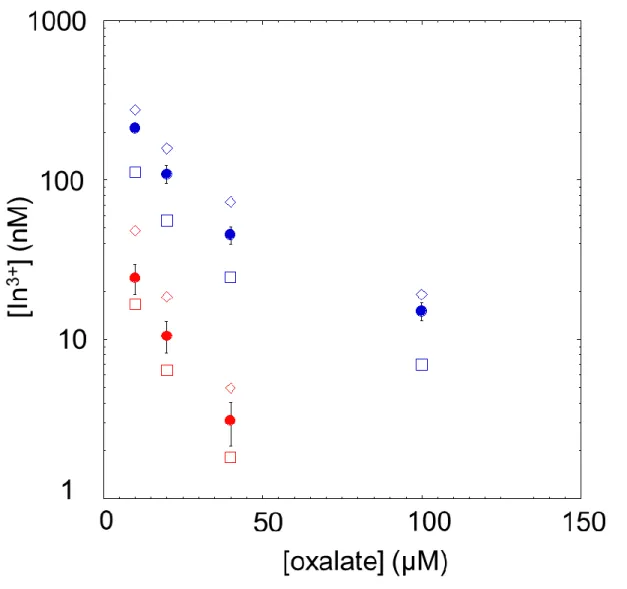
Figure 6 shows that the results obtained in this study for In-oxalate binding are in reasonable 373
agreement with previously published results, since they lie halfway between the ones reported 374
by Pingarron et al [41] and the ones reported by Vasca et al [42]. In a previous work using 375
AGNES in the HMDE Tehrani et al [26] using somewhat different experimental conditions 376
observed values closer to the ones reported by Vasca et al [42]. We must warn that, because of 377
a typing error, the total concentration of indium of 100 mol L-1 was unduly reported as 5 mol 378
L-1 in the caption of figure 6 in [26]. 379
We estimated the errors for our AGNES measurements using the 95% confidence interval 380
obtained from the standard deviation of the 4 measurements multiplied by Student factor for 381
binomial distributions (t95,3=3.182). As expected, the errors are larger for the smaller values
382
obtained at pH 4, since they are closer to the detection limit. 383
384
Figure 6: Free indium concentrations measured by AGNES in presence of increasing
385
concentrations of oxalate in 100 mM NaClO4 at pH 3 (blue circle) and pH 4 (red circle). Total
386
indium concentration is 0.1 µM. The rotation speed is 1000 rpm. Computed values using Visual 387
MinteQ with the stability constants determined by Pingarron et al [41] (open diamond) and 388
Vasca et al [42] (open square), and using the Biryuk et al [35] constants for the indium 389
hydroxides complexes. 390
391
One of our main interests in developing these methodologies is the ability to perform indium 392
speciation directly in environmental samples. Since the interaction of indium with natural 393
organic matter (NOM) is expected to be one of the key parameters, about which there is no 394
information in the literature, we decided to test AGNES in presence of a well-characterised 395
humic sample [31], as a representative colloidal phase in freshwaters. 396
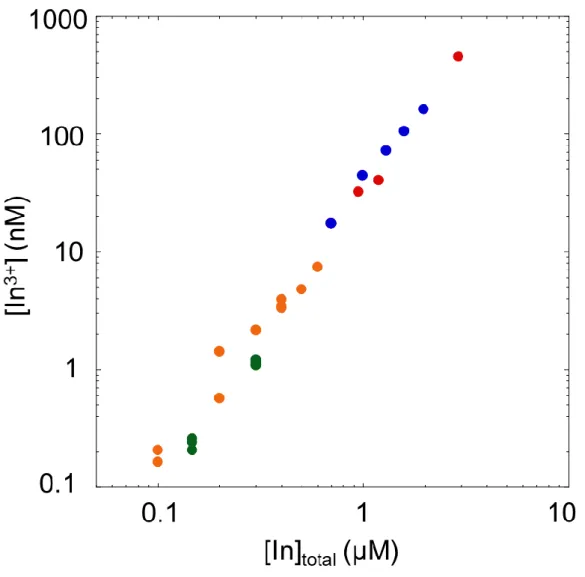
Figure 7 depicts an indium titration of 5 mg L-1 of humic acid substance, at pH 3.75, 100 mM 397
NaClO4, i.e., the free indium evolution as a function of the total indium concentration added.
The orange and green points at very low indiumconcentration were obtained using the strategy 399
of changing the deposition potential and computing the new gain using Eq. (3.3). In this 400
particular case the calibration linked Ecalib = 0.5800V with Ycalib = 1.6×10⁴, and the new gain
401
for the experiment in presence of humic acids at Ed = 0.6300V was Y = 3.3×10⁶. In this way,
402
four decades of free indium concentrations are probed by the AGNES technique with 403
reasonable equilibrium times (less than 10 min). Thus, this methodology opens the way to the 404
elaboration of indium binding isotherms over a wide range of metal coverage to humic acid 405
particles. Moreover, we observe a reasonable repeatability amongst the different measurement 406
(replicates) demonstrating the ability of AGNES to provide robust speciation data. 407
408
Figure 7: Free indium concentrations measured by AGNES in several suspensions of humic acids (5
409
mg L-1) containing known total indium concentrations, at pH 3.75 and ionic strength of 100 mM NaClO 4. 410
The rotation speed is 1000 rpm. Each colour corresponds to replicates. Error bars estimated from the
411
relative uncertainties over three AGNES measurements, are smaller than points.
412 413 414
Conclusions
415
In this work we investigated the ability of two electroanalytical techniques to measure low 416
concentration of total (SCP) and free indium (AGNES). For the total concentration, at pH <2.3, 417
we obtained an excellent detection limit of 0.5 nM for 180 s deposition time. 418
For the free metal determination using AGNES, we demonstrated the enormous saving in 419
experimental time when using the TMF/RDE instead of the HMDE and confirmed the excellent 420
performance of these electrodes in speciation studies, especially when determining extremely 421
low free indium concentrations (down to 10-10 M). We also verified that AGNES was able to
422
provide robust speciation data in experiments in presence of humic matter. 423
Due to the absence of trivalent cation complexation data with humic matter, it is our intention 424
to pursue these studies with experiments at different pH values and different ionic strengths, 425
followed by adequate complexation modelling, especially at higher pH values where the 426
influence of indium hydrolysis will be noticeable. Such investigations will open new 427
perspectives for using indium as a powerful tracer of geochemical processes of trivalent 428
elements in terrestrial waters. 429
430
Acknowledgements
431
This work has been supported by the French National Research Agency through the national 432
program “Investissements d’avenir” with the reference ANR-10-LABX-21-01 / LABEX 433
RESSOURCES21. We thank the contribution of Jérémy Gloux, Paco Iglesias and Mirella 434
Dammous from University of Lorraine in the preliminary experimental work. Funding from the 435
Spanish Ministry of Economy, Industry and Competitiveness MINECO, project CTM2016-436
78798 (EC, PPV, JG) is acknowledged. PPV thanks Generalitat de Catalunya for a doctoral FI-437 AGAUR fellowship. 438 439 Supplementary material 440
Section 1: Linearity range for In3+ in SCP with TMF/RDE.
441
Section 2: Stripping Chronopotentiometry (SCP) at the TMF/RDE. 442
Section 3: Fundamentals of AGNES. 443
Section 4: Calibration plots obtained with AGNES. 444 445 AUTHOR INFORMATION 446 Corresponding Author 447 *Email: [email protected] 448 449 References 450
[1] European Commission, Critical Metals in the Path towards the Decarbonisation of the EU 451
Energy Sector: Assessing Rare Metals as Supply-Chain Bottlenecks in Low-Carbon 452
Energy Technologies, (2013). https://ec.europa.eu/jrc/en/publication/eur-scientific-and-453
technical-research-reports/critical-metals-path-towards-decarbonisation-eu-energy-454
sector-assessing-rare-metals-supply. 455
[2] U.S. Geological Survey, 2017, Mineral commodity summaries 2017, (2017). 456
https://doi.org/10.3133/70180197. 457
[3] L. Ciacci, B.K. Reck, N.T. Nassar, T.E. Graedel, Lost by Design, Environ. Sci. Technol. 458
49 (2015) 9443–9451. doi:10.1021/es505515z. 459
[4] S.J.O. White, H.F. Hemond, The Anthrobiogeochemical Cycle of Indium: A Review of 460
the Natural and Anthropogenic Cycling of Indium in the Environment, Crit. Rev. Environ. 461
Sci. Technol. 42 (2012) 155–186. doi:10.1080/10643389.2010.498755. 462
[5] Y. Nozaki, D. Lerche, D.S. Alibo, M. Tsutsumi, Dissolved indium and rare earth elements 463
in three Japanese rivers and Tokyo Bay: Evidence for anthropogenic Gd and In, Geochim. 464
Cosmochim. Acta. 64 (2000) 3975–3982. doi:10.1016/S0016-7037(00)00472-5. 465
[6] A. Tessier, C. Gobeil, L. Laforte, Reaction rates, depositional history and sources of 466
indium in sediments from Appalachian and Canadian Shield lakes, Geochim. Cosmochim. 467
Acta. 137 (2014) 48–63. doi:10.1016/j.gca.2014.03.042. 468
[7] H.-W. Chen, Gallium, Indium, and Arsenic Pollution of Groundwater from a 469
Semiconductor Manufacturing Area of Taiwan, Bull. Environ. Contam. Toxicol. 77 470
(2006) 289–296. doi:10.1007/s00128-006-1062-3. 471
[8] S.J.O. White, F.A. Hussain, H.F. Hemond, S.A. Sacco, J.P. Shine, R.L. Runkel, K. 472
Walton-Day, B.A. Kimball, The precipitation of indium at elevated pH in a stream 473
influenced by acid mine drainage, Sci. Total Environ. 574 (2017) 1484–1491. 474
doi:10.1016/j.scitotenv.2016.08.136. 475
[9] A. Ladenberger, A. Demetriades, C. Reimann, M. Birke, M. Sadeghi, J. Uhlback, M. 476
Andersson, E. Jonsson, GEMAS: Indium in agricultural and grazing land soil of Europe - 477
Its source and geochemical distribution patterns, J. Geochem. Explor. 154 (2015) 61–80. 478
doi:10.1016/j.gexplo.2014.11.020. 479
[10] K. Folens, G. Du Laing, Dispersion and solubility of In, Tl, Ta and Nb in the aquatic 480
environment and intertidal sediments of the Scheldt estuary (Flanders, Belgium), 481
Chemosphere. 183 (2017) 401–409. doi:10.1016/j.chemosphere.2017.05.076. 482
[11] N.R. Brun, V. Christen, G. Furrer, K. Fent, Indium and Indium Tin Oxide Induce 483
Endoplasmic Reticulum Stress and Oxidative Stress in Zebrafish (Danio rerio), Environ. 484
Sci. Technol. 48 (2014) 11679–11687. doi:10.1021/es5034876. 485
[12] C. Zeng, A. Gonzalez-Alvarez, E. Orenstein, J.A. Field, F. Shadman, R. Sierra-Alvarez, 486
Ecotoxicity assessment of ionic As(III), As(V), In(III) and Ga(III) species potentially 487
released from novel III-V semiconductor materials, Ecotoxicol. Environ. Saf. 140 (2017) 488
30–36. doi:10.1016/j.ecoenv.2017.02.029. 489
[13] C.I. Olivares, J.A. Field, M. Simonich, R.L. Tanguay, R. Sierra-Alvarez, Arsenic (III, V), 490
indium (III), and gallium (III) toxicity to zebrafish embryos using a high-throughput multi-491
endpoint in vivo developmental and behavioral assay, Chemosphere. 148 (2016) 361–368. 492
doi:10.1016/j.chemosphere.2016.01.050. 493
[14] S.A. Wood, I.M. Samson, The aqueous geochemistry of gallium, germanium, indium and 494
scandium, Ore Geol. Rev. 28 (2006) 57–102. doi:10.1016/j.oregeorev.2003.06.002. 495
[15] A. Tessier, C. Gobeil, L. Laforte, Reaction rates, depositional history and sources of 496
indium in sediments from Appalachian and Canadian Shield lakes, Geochim. Cosmochim. 497
Acta. 137 (2014) 48–63. doi:10.1016/j.gca.2014.03.042. 498
[16] V.K. Gupta, A.J. Hamdan, M.K. Pal, Comparative study on 2-amino-1,4-naphthoquinone 499
derived ligands as indium (III) selective PVC-based sensors, Talanta. 82 (2010) 44–50. 500
doi:10.1016/j.talanta.2010.03.055. 501
[17] M.N. Abbas, H.S. Amer, A Solid-Contact Indium(III) Sensor based on a Thiosulfinate 502
Ionophore Derived from Omeprazole, Bull. Korean Chem. Soc. 34 (2013) 1153–1159. 503
doi:10.5012/bkcs.2013.34.4.1153. 504
[18] C. Pérez-Ràfols, N. Serrano, J.M. Díaz-Cruz, C. Ariño, M. Esteban, Simultaneous 505
determination of Tl(I) and In(III) using a voltammetric sensor array, Sens. Actuators B 506
Chem. 245 (2017) 18–24. doi:10.1016/j.snb.2017.01.089. 507
[19] J. Zhang, Y. Shan, J. Ma, L. Xie, X. Du, Simultaneous Determination of Indium and 508
Thallium Ions by Anodic Stripping Voltammetry Using Antimony Film Electrode, Sens. 509
Lett. 7 (2009) 605–608. doi:10.1166/sl.2009.1117. 510
[20] H. Sopha, L. Baldrianova, E. Tesarova, S.B. Hocevar, I. Svancara, B. Ogorevc, K. Vytras, 511
Insights into the simultaneous chronopotentiometric stripping measurement of 512
indium(III), thallium(I) and zinc(II) in acidic medium at the in situ prepared antimony film 513
carbon paste electrode, Electrochimica Acta. 55 (2010) 7929–7933.
514
doi:10.1016/j.electacta.2009.12.089. 515
[21] I. Geca, M. Korolczuk, Sensitive Anodic Stripping Voltammetric Determination of 516
Indium(III) Traces Following Double Deposition and Stripping Steps, J. Electrochem. 517
Soc. 164 (2017) H183–H187. doi:10.1149/2.0581704jes. 518
[22] K.C. Honeychurch, Recent Developments in the Stripping Voltammetric Determination 519
of Indium, World J. Anal. Chem. World J. Anal. Chem. 1 (2013) 8–13. doi:10.12691/wjac-520
1-1-2. 521
[23] J. Galceran, E. Companys, J. Puy, J. Cecilia, J.L. Garces, AGNES: a new electroanalytical 522
technique for measuring free metal ion concentration, J. Electroanal. Chem. 566 (2004) 523
95–109. doi:10.1016/j.jelechem.2003.11.017. 524
[24] R.F. Domingos, C. Huidobro, E. Companys, J. Galceran, J. Puy, J.P. Pinheiro, Comparison 525
of AGNES (absence of gradients and Nernstian equilibrium stripping) and SSCP (scanned 526
stripping chronopotentiometry) for trace metal speciation analysis, J. Electroanal. Chem. 527
617 (2008) 141–148. doi:10.1016/j.jelechem.2008.02.002. 528
[25] L.S. Rocha, E. Companys, J. Galceran, H.M. Carapuça, J.P. Pinheiro, Evaluation of thin 529
mercury film rotating disk electrode to perform absence of gradients and Nernstian 530
equilibrium stripping (AGNES) measurements, Talanta. 80 (2010) 1881–1887. 531
doi:10.1016/j.talanta.2009.10.038. 532
[26] M.H. Tehrani, E. Companys, A. Dago, J. Puy, J. Galceran, Free indium concentration 533
determined with AGNES, Sci. Total Environ. 612 (2018) 269–275.
534
doi:10.1016/j.scitotenv.2017.08.200. 535
[27] N. Serrano, J.M. Díaz‐Cruz, C. Ariño, M. Esteban, Stripping Chronopotentiometry in 536
Environmental Analysis, Electroanalysis. 19 (2007) 2039–2049.
537
doi:10.1002/elan.200703956. 538
[28] R.M. Town, H.P. van Leeuwen, Effects of adsorption in stripping chronopotentiometric 539
metal speciation analysis, J. Electroanal. Chem. 523 (2002) 1–15. doi:10.1016/S0022-540
0728(02)00747-7. 541
[29] E. Companys, J. Galceran, J.P. Pinheiro, J. Puy, P. Salaün, A review on electrochemical 542
methods for trace metal speciation in environmental media, Curr. Opin. Electrochem. 3 543
(2017) 144–162. doi:10.1016/j.coelec.2017.09.007. 544
[30] E.M. Thurman, R.L. Malcolm, Preparative isolation of aquatic humic substances, Environ. 545
Sci. Technol. 15 (1981) 463–466. doi:10.1021/es00086a012. 546
[31] W.G. Botero, M. Pineau, N. Janot, R.F. Domingos, J. Mariano, L.S. Rocha, J.E. 547
Groenenberg, M.F. Benedetti, J.P. Pinheiro, Isolation and purification treatments change 548
the metal-binding properties of humic acids: effect of HF/HCl treatment, Environ. Chem. 549
14 (2018) 417–424. doi:10.1071/EN17129. 550
[32] S.C.C. Monterroso, H.M. Carapuca, J.E.J. Simao, A.C. Duarte, Optimisation of mercury 551
film deposition on glassy carbon electrodes: evaluation of the combined effects of pH, 552
thiocyanate ion and deposition potential, Anal. Chim. Acta. 503 (2004) 203–212. 553
doi:10.1016/j.aca.2003.10.034. 554
[33] C. Parat, L. Authier, D. Aguilar, E. Companys, J. Puy, J. Galceran, M. Potin-Gautier, 555
Direct determination of free metal concentration by implementing stripping 556
chronopotentiometry as the second stage of AGNES, Analyst. 136 (2011) 4337–4343. 557
doi:10.1039/C1AN15481H. 558
[34] J.P. Gustafsson, Visual MINTEQ version 3.0. KTH, Department of Land and Water 559
Resources Engineering, Stockolm, Sweden, 2009. Available at http://vminteq.lwr.kth.se/, 560
(n.d.). 561
[35] E.A. Biryuk, V.A. Nazarenko, R.V. Ravitskaya, Spectrophotometric determination of the 562
hydrolysis constants of indium ions, Russian Journal of Inorganic Chemistry. 14 (1969) 563
503–506. 564
[36] W.W. Rudolph, D. Fischer, M.R. Tomney, C.C. Pye, Indium(III) hydration in aqueous 565
solutions of perchlorate, nitrate and sulfate. Raman and infrared spectroscopic studies and 566
ab-initio molecular orbital calculations of indium(III)–water clusters, Phys. Chem. Chem. 567
Phys. 6 (2004) 5145–5155. doi:10.1039/B407419J. 568
[37] F. Vydra, K. Štulík, E. Juláková, Electrochemical stripping analysis., E. Horwood, 569
Chichester, 1976. 570
[38] C. Huidobro, E. Companys, J. Puy, J. Galceran, J.P. Pinheiro, The use of microelectrodes 571
with AGNES, J. Electroanal. Chem. 606 (2007) 134–140.
572
doi:10.1016/j.jelechem.2007.06.001. 573
[39] E. Rotureau, Analysis of metal speciation dynamics in clay minerals dispersion by 574
stripping chronopotentiometry techniques, Colloids Surf. Physicochem. Eng. Asp. 441 575
(2014) 291–297. doi:10.1016/j.colsurfa.2013.09.006. 576
[40] R.R. Nazmutdinov, T.T. Zinkicheva, G.A. Tsirlina, Z.V. Kuz’minova, Why does the 577
hydrolysis of In(III) aquacomplexes make them electrochemically more active?, 578
Electrochimica Acta. 50 (2005) 4888–4896. doi:10.1016/j.electacta.2005.02.091. 579
[41] J.M. Pingarron, R. Gallego-Andreu, P. Sanchez-Batanero, Potentiometric determination 580
of stability constants of complexes formed by Indium(III) and different chelating agents, 581
Bull. Soc. Chim. Fr. 3–4 (1984) 115–122. 582
[42] E. Vasca, D. Ferri, C. Manfredi, L. Torello, C. Fontanella, T. Caruso, S. Orrù, Complex 583
formation equilibria in the binary Zn2+–oxalate and In3+–oxalate systems, Dalton Trans. 584
0 (2003) 2698–2703. doi:10.1039/B303202G. 585