Nephrol Dial Transplant ( 1997) 12: 570–573
Nephrology
Dialysis
Transplantation
Preliminary Report
Three consecutive day collection of dialysate and urine to identify
non-compliance in CAPD patients
A. Fischer, A. Bock and F. P. Brunner
Division of Nephrology, Department of Internal Medicine, Kantonsspital, University of Basle, Basle, Switzerland
Abstract dialytic dose (as assessed by urea and creatinine kinet-Background. Compliance with dialysis prescription is ics) and clinical outcome has been a subject of contro-an importcontro-ant determincontro-ant of adequacy of CAPD. versy, with some authors [1–3] showing a positive Several reports have suggested that non-compliance correlation between dialytic dose and clinical outcome, may be detected by a high creatinine excretion ratio and others [4,5] questioning this relationship. Recent (CrEx ratio=measured creatinine excretion in a 24-h data from the CANUSA study [6] seem to confirm collection of urine and dialysate/predicted creatinine that estimates of adequacy correlate with survival of excretion) and that it occurs in a substantial proportion CAPD patients.
of patients. However the validity of this screening One important determinant of the actual dialytic method to identify non-compliant patients has been dose is each individual patient’s compliance with dia-questioned, mostly because of the interindividual vari- lysis prescription. Several reports suggested that non-ation of creatinine excretion in a CAPD populnon-ation. compliance occurs in a substantial proportion of Methods. Whenever possible we performed a 3-day patients [7–9], who can be identified by comparing the collection of dialysate and urine in all patients on our measured creatinine excretion over a 24-h period CAPD programme, and calculated the daily CrEx (mCrEx) to the predicted creatinine excretion based ratio. Non-compliance was defined as a progressive on the formulae of Cockroft and Gault (pCrEx) [13 ]. and greater than 7.5% decrease of the CrEx ratio A non-compliant patient performing chronically fewer associated with a more than 7.5% decrease of serum exchanges than prescribed will reach a steady state creatinine during the test. with a high serum creatinine. On the test day, when Results. Among 19 patients only one (5%) fullfilled compliance is guaranteed by supervised collection of both criteria for non-compliance and the subsequent urine and dialysate, there will be a wash-out of accumu-interview revealed that he was truly non-compliant. lated creatinine, resulting in an unusually high mCrEx The other patient admitting non-compliance had a and thus an abnormally high creatinine excretion ratio significant decrease of CrEx ratio but showed only a (CrEx ratio=mCrEx/pCrEx) [7]. However, the valid-slight decrease of serum creatinine.
ity of this CrEx ratio in predicting non-compliance has Conclusions. Our preliminary results suggest that this
been questioned by Blake et al. [10], who reported 3-day collection test, unlike previous procedures,
iden-that some of their patients with a high CrEx ratio tifies non-compliance with a good specificity. However, continued to excrete a constant daily amount of creati-it may not be senscreati-itive enough to detect a low level of
nine over a 4 consecutive day period, which strongly non-compliance and has the disadvantage of being
argues against the wash-out phenomenon being the quite cumbersome. It may require further refinements
explanation for an elevated CrEx ratio. Furthermore to be clinically useful.
a theoretical analysis by Tsamaloukas [11] showed that, based on first-order pharmacokinetics and on the Key words: CAPD; creatinine excretion; compliance
wide distribution of creatinine production in a CAPD patient population, the CrEx ratio with a cut-off value of 1.24 was neither a sensitive nor a specific marker of non-compliance.
Introduction
We reasoned that the determination of CrEx during 3 consecutive days and analysing its variation in the Adequacy of CAPD has received a great deal of
individual patient, rather than the single measurement attention in recent years. The relationship between
method used so far, would allow a more precise identification of non-compliant patients. This study
Correspondence and offprint requests to: Professor Felix P. Brunner,
was thus undertaken to assess the use of this approach
Division of Nephrology, Kantonsspital, Petersgraben 4, CH-4031
Basel, Switzerland. in detecting non-compliance.
Three-day collection test to identify non-compliance in CAPD patients 571 Table 1. Clinical characteristics
Patients and methods
Patients (male/female) 19 (12/7 )
During a 9-month period and whenever technically feasible
Age ( years) 61±13 ( 32–76)
we performed a 3-day urine and dialysate collection in stable Weight ( kg) 67±11 ( 48–88) patients who had been on CAPD for at least 3 months. On Height (cm) 167±9 (150–183) day 1 the patients came to the hospital and a sample of Primary renal disease
blood was drawn and analysed for concentration of urea Glomerulonephritis 4 Polycystic kidney disease 3
and creatinine. Patients were instructed to perform their
Hypertensive nephrosclerosis 2
exchanges as prescribed and to collect the outflowing
dialys-Chronic interstitial nephritis 4
ate as well as their urine. On the morning of days 2 and 3
Diabetic nephropathy 2
one of the investigators collected dialysate and urine of the
Other 4
last 24-h at the patient’s home. On day 4 the patients came
Months on CAPD 15±9 ( 4–40)
again to the centre, bringing the last 24-h collection, and
Daily regimen
another sample of blood was drawn. Creatinine concentra- 4×2 l 17 tions were simultaneously measured in all samples of blood, 4×2.5 l 1 dialysate, and urine using an enzymatic method on the 3×1.5 l+1×2 l 1
Creatinine and urea kinetics
central hospital laboratory autoanalyser ( Hitachi
multichan-Residual renal Cr clearance (ml/min) 3.1±3.2 ( 0–12.5 )
nel, sensitivity 10 mmol/l ). Glucose interference with this
Weekly Cr clearance ( 1/week/1.73 m2 ) 67±17 ( 45–122)
method is negligible. Urea concentrations were determined
Weekly Kt/V 2.18±0.42 (1.48–3.27)
by the same autoanalyser method.
Normalized PCR (g/kg per day) 1.16±0.37 (0.59–2.05)
Measured creatinine excretion was calculated by adding the measured creatinine content in urine and dialysate to an
Data are given as mean±SD and (range).
estimate of extrarenal creatinine degradation, according to the formula of Mitch and Walser [12]. Predicted creatinine
excretion was calculated using the formulae of Cockroft and on day 1 was 1.13±0.15 and five (26%) had a CrEx
Gault [13]. Weekly Kt/V was calculated from the urea ratio above the suggested cut-off for non-compliance generation over the 3-day period, using the Watson formulae of 1.24 [8]. In three patients (DA, MG, SE) there was [ 14] to estimate V. Weekly creatinine clearance was calculated a more than 7.5% decrease in the CrEx ratio but only as the sum of peritoneal clearance and of 60% of residual
one ( DA) showed a simultaneous decrease of serum
renal creatinine clearance [15 ]. Normalized protein catabolic
creatinine exceeding 7.5%. This patient admitted
non-rate (nPCR) was calculated according to the formula of
compliance and the test result was the first clue to an
Bergstro¨m et al. [ 16 ] and normalized to g/kg standard
underlying depression which had to be treated
weight ( V/0.58).
thereafter.
We estimated that a patient omitting one exchange every
other day (one of 8 exchanges) would have approximately a The two other patients (MG, SE) with a significant
12.5% reduction of peritoneal clearance. Given that periton- decrease of CrEx ratio had a small decrease of plasma
eal creatinine excretion on average represents 60% of total creatinine during the study period (3.2 and 3.9%). The creatinine excretion (data not shown) the resulting decrease first of them had an initial CrEx ratio of 1.28 and in total clearance would be approximately 7.5%. If one admitted occasional non-compliance related to excess-assumes that a new steady-state is reached after the 3-day
ive alcohol intake. The second patient reliably denied
collection (in reality it would take a bit longer) the expected
any CAPD exchange omission and had above average
reduction of serum creatinine should be in the same
propor-net ultrafiltration on day 1 which explained the higher
tion, that is 7.5% for this level of non-compliance. Similarly
initial CrEx ratio of 0.93.
the amount of creatinine excreted on the first day of
guaran-All other 16 patients denied non-compliance. Among
teed compliance would exceed the baseline value by some
7.5%. We thus defined non-compliance as a progressive and these the initial CrEx ratio was greater than 1.24 in
greater than 7.5% reduction of CrEx ratio during the 3 days three (19%). The measured creatinine excretion of
of the study, associated with a more than 7.5% decrease of those three patients remained fairly constant and there serum creatinine. was no significant decrease of the serum creatinine. Standard descriptive statistical methods (mean, standard Interestingly the only patient who was initially sus-deviation) were used.
pected by the CAPD nurses to be non-compliant ( FT ), belonged to this high CrEx ratio group with a remark-ably constant amount of creatinine excretion over the
Results
3 days.
One patient (JM) had a 7.6% decrease in serum Nineteen of the 29 patients of our CAPD programme creatinine, but his measured creatinine excretion profile were included in the study. Reasons for non-inclusion was not suggestive of non-compliance and his CAPD were intercurrent illness or transplantation in four, treatment was tightly supervised by his wife, who could lack of collaboration or willingness to participate in hardly be suspected of non-compliance!
four, and distance from the study centre in two. Table 1 summarizes the clinical characteristics of the
Discussion
19 patients studied.
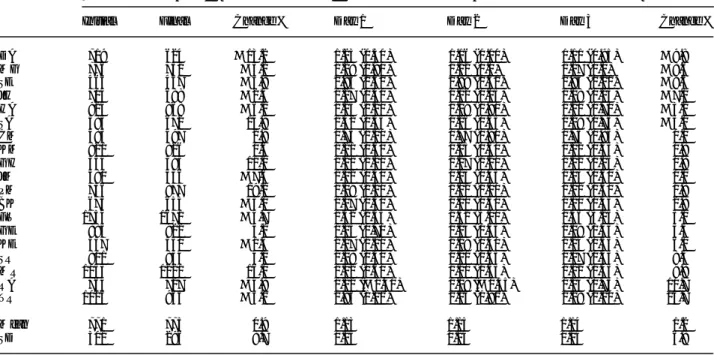
Table 2 shows the daily CrEx ratio, as well as the
serum creatinine concentration at the beginning and Among the 19 patients studied, three (16%) had a progressive and greater than 7.5% decrease of the CrEx at the end of the 3-day period. The mean CrEx ratio
A. Fischer et al. 572
Table 2. Three-day collection test
Patient Serum creatinine ( mmol/l ) Creatinine excretion ratio (net ultrafiltration litres per day)
Initial Final Change % Day 1 Day 2 Day 3 Change %
DA 719 624 −13.2 1.23 (0.30 ) 1.16 ( 1.10) 1.11 ( 0.95) −9.8 MG 776 751 −3.2 1.28 (0.90 ) 1.22 ( 0.0) 1.17 ( 0.0) −8.6 SE 465 447 −3.9 0.93 (2.50 ) 0.89 ( 1.40) 0.85 ( 1.10) −8.6 JH 704 688 −2.3 1.27 (0.40 ) 1.12 ( 0.05) 1.18 ( 0.25) −7.1 HA 924 868 −6.1 1.25 (1.20 ) 1.29 ( 1.90) 1.21 ( 0.70) −3.2 SA 585 672 14.9 1.32 (0.55 ) 1.26 ( 0.55) 1.28 ( 0.75) −3.0 CM 483 497 2.9 0.75 ( 1.00 ) 0.77 ( 0.90) 0.75 ( 0.85) 0.0 KM 821 826 0.6 1.21 (0.60 ) 1.25 ( 0.60) 1.22 ( 0.55) 0.8 GH 354 393 11.0 1.21 ( 1.10 ) 1.27 ( 1.20) 1.22 ( 1.15) 0.8 JM 580 536 −7.6 1.02 (0.50 ) 1.13 ( 0.45) 1.03 ( 0.60) 1.0 PM 736 877 19.2 1.09 (1.10 ) 1.02 ( 1.00) 1.11 ( 1.50) 1.8 BK 675 655 −3.0 1.07 ( 0.50 ) 1.10 ( 0.30) 1.10 ( 0.45) 2.8 FT 1754 1671 −4.7 1.32 ( 2.55 ) 1.32 ( 3.00) 1.36 ( 3.25) 3.0 GE 885 922 4.2 1.15 ( 0.70 ) 1.24 ( 1.55) 1.19 ( 1.45) 3.5 KE 557 550 −1.3 1.17 ( 1.10 ) 1.19 ( 0.40) 1.24 ( 0.55) 6.0 SR 801 834 4.1 1.08 (0.50 ) 1.21 ( 1.65) 1.17 ( 1.45) 8.3 MR 1053 1221 16.0 1.02 (0.60 ) 1.10 ( 1.55) 1.12 ( 1.45) 9.8 RA 764 727 −4.8 1.12 (−0.40) 1.19 (−0.35) 1.24 ( 0.75) 10.7 TR 1016 964 −5.1 0.95 (1.10 ) 1.05 ( 1.90) 1.08 ( 2.10) 13.7 Mean 771 775 0.9 1.13 1.15 1.14 1.2 SD 301 296 8.7 0.15 0.14 0.14 6.8
Serum creatinine change (%)=(final serum Cr−initial serum Cr)×100/initial serum Cr.
Creatinine excretion ratio change (%)=(CrEx ratio day 3/CrEx ratio day 1)×100/CrEx ratio day 1.
ratio between days 1 and 3. Of these only one had a CrEx ratio to be greater than 1.24 in 40% of their patients. However, as demonstrated theoretically by simultaneous more than 7.5% decrease of the serum
creatinine during the test period. Interestingly this Tsamaloukas [11 ], this test is neither sensitive nor specific to identify non-compliance mostly because of patient had an initial CrEx ratio of 1.23, and would
therefore not have been considered non-compliant the wide distribution of creatinine production in a CAPD population. The experimental data of Blake using the cut-off value of 1.24 suggested by Warren
et al. [8 ]. The one patient fulfilling both criteria of et al. [10] strengthen this opinion by showing that the measured creatinine excretion remained fairly constant non-compliance was truly non-compliant (omission of
1 or 2 exchanges a day) as the subsequent interview over a 4 day period in 7 patients with a high CrEx ratio, indicating that in most cases the high value for revealed. Another patient with a significant CrEx ratio
decrease admitted to a low degree of non-compliance this ratio was not due to the wash-out of creatinine accumulated because of non-compliance, but to con-(approximately one exchange omitted every other day).
Her serum creatinine decreased only about 3% during stitutive high creatinine production. Moreover in that study the only patient who admitted non-compliance the test days, despite an initial CrEx ratio of 1.28. The
third patient with decreasing CrEx ratio had also a had a CrEx ratio of 1.09. These investigators were the first who tried to distinguish between non-compliance slight decrease in serum creatinine, but convincingly
denied non-compliance. and high creatinine production as the cause for the increased CrEx ratio by collecting dialysate and urine Compliance with the dialysis prescription is difficult
to investigate, because there is no gold standard for over successive days. We used a similar approach to screen our patients for non-compliance. With this validating different screening methods. By comparing
measured to predicted creatinine excretion, non- method each patient serves as his own control and rather than the absolute value for the CrEx ratio it is compliance was strongly suspected in a substantial
proportion of patients [7–9 ]. Keen et al. [7] suggested the variation of this ratio in the individual patient that defines non-compliance.
that overall compliance with prescribed exchanges was
only 78%. Warren and Brandes [8 ] defined non- In a non-compliant patient the CrEx ratio is expected to decrease progressively during the test because of the compliance as a CrEx ratio greater than 1.24 and
reported that 26% of their 64 patients were non- wash-out of extra creatinine accumulated during the period of non-compliance. What cut-off value of CrEx compliant. Applying the same cut-off value of 1.24
Nolph et al. [9] concluded that 11.5% of their 121 ratio decrease between day 1 and day 3 should be used to suggest non-compliance? Burkhart et al. [17] have patients were non-compliant. They observed a decrease
in serum albumin in patients with a CrEx ratio greater shown in six stable CAPD patients that after a 3-day period during which one of four exchanges per day than 1.24 which was interpreted as inadequate dialysis
Three-day collection test to identify non-compliance in CAPD patients 573 2. Teehan BP, Schleifer CR, Brown JM et al. Urea kinetic analysis
11.5% during the first day when the usual four
and clinical outcome on CAPD. a five year longitudinal study.
exchanges were performed again. Goel et al. [18 ]
Adv Perit Dial 1990; 6: 181–185
observed a 6% increase in the CrEx ratio when a fifth 3. Brandes JC, Piering WF, Beres JA et al. Clinical outcome of exchange (resulting in a 26% increase in drain volume) continuous ambulatory peritoneal dialysis predicted by urea and
creatinine kinetics. J Am Soc Nephrol 1992; 2: 1430–1435
was added to the usual four exchanges regimen in nine
4. Blake PG, Sombolos K, Abraham G et al. Lack of correlation
CAPD patients. As expected the observed increase
between urea kinetic indices and clinical outcomes in CAPD
correlated inversely with the residual renal creatinine patients. Kidney Int 1991; 39: 700–706
clearance. We chose somewhat arbitrarily a cut-off of 5. Harty J, Boulton H, Heelis N et al. Limitations of kinetic models
7.5% decrease of CrEx ratio between days 1 and 3 to as predictors of nutritional and dialysis adequacy in continuous ambulatory peritoneal dialysis patients. Am J Nephrol 1993; 13:
suggest non-compliance and we requested the CrEx
454: 463
ratio of day 2 to be below the CrEx of day 1 and
6. Canada–USA (CANUSA) Peritoneal Study Group. Adequacy
above the one of day 3. One may argue that a variation of dialysis and nutrition in continuous peritoneal dialysis: associ-of this magnitude may occur just by chance, given the ation with clinical outcomes. J Am Soc Nephrol. 1996; 7: 198–207 7. Keen M, Lipps B, Gotch F. The measured creatinine generation
intraindividual variations of the CrEx ratio even in
rate in CAPD patients suggests only 78% of prescribed dialysis
compliant patients ( Table 2 and Lo et al. [19 ]). This
is delivered. In: Khanna R, Nolph KD, Prowant BF,
is the reason we chose to require additionally a more
Twardowski ZJ, Oreopoulos DG, eds. Advances in Peritoneal
than 7.5% decrease in serum creatinine to define non- Dialysis. Peritoneal Publications Inc., Toronto, 1993; 73–75 compliance. This should increase the specificity of the 8. Warren PJ, Brandes JC. Compliance with the peritoneal dialysis
prescription is poor. J Am Soc Nephrol 1994; 4: 1627–1629
test but is likely to decrease its sensitivity. Given the
9. Nolph KD, Twardovski ZJ, Khanna R et al. Predicted and
delicate situation created by erroneously suspecting
measured daily creatinine production in CAPD: identifying
non-non-compliance, it seems preferable to favour compliance. Peril Dial Int 1995; 15: 22–25
specificity. 10. Blake PG, Spanner E, McMurray S et al. Comparison of In summary, in our small group of 19 CAPD patients measured and predicted creatinine excretion is an unreliable indicator of compliance in PD patients. Perit Dial Int 1996;
two (11%) were found to be non-compliant. The true
16: 147–153
non-compliance rate in a typical Swiss CAPD
popula-11. Tsamaloukas AH. Can an excess of estimated over predicted
tion may be somewhat higher because several non- creatinine generation be a discriminating test for noncompliance collaborative patients could not be studied. One of the in continuous ambulatory peritoneal dialysis? J Am Soc Nephrol two non-compliant patients was correctly identified by 1995; 6: 1519–1520
12. Mitch WE, Walser M. A proposed mechanism for reduced
our screening test, while the other had some
character-creatinine excretion in severe chronic renal failure. Nephron
istics suggestive of non-compliance but failed to fulfil
1978; 21: 248–254
all criteria. Thus, unlike the 1-day CrEx method, this 13. Cockroft DW, Gault MH. Prediction of creatinine clearance 3-day collection test seems to detect non-compliance from serum creatinine. Nephron 1976; 16: 31–41
with a good specificity, which is rather important in 14. Watson PE, Watson ID, Batt RD et al. Total body water volumes for adult males and females estimated from simple
such a delicate area as compliance testing. It may,
anthropometric measurements. Am J Clin Nutr 1980; 33: 27–39
however, not be sensitive enough to detect a low level
15. Diaz-Buxo JA. Chronic peritoneal dialysis prescription. In:
of non-compliance and has the disadvantage of being Daugirdas JT, Ing TS ed. Handbook of Dialysis, 2nd edn, Little, quite cumbersome. Confirmation of these preliminary Brown, Boston, 1994; 310–327
16. Bergstro¨m J, Fu¨rst P, Alvestrand A, Lindholm B. Protein and
results will require further study. Other complementary
energy intake, nitrogen balance and nitrogen losses in patients
approaches to identify non-compliance should be
treated with continuous ambulatory peritoneal dialysis. Kidney
developed, for example book-keeping of all CAPD
Int 1993; 44: 1048–1057
bags used in comparison to the number prescribed. 17. Burkart JM, Bleyer AJ, Jordan JR et al. The ratios of measured
to predicted creatinine production ( MCrP/PCrP) do increase Acknowledgements. The autors acknowledge the important contribu- with periods of noncompliance (Abstract). Perit Dial Int 1995; tions of the CAPD nurses Roselyne Klotz and Doris Bolliger. 15 [ Suppl 1 ]: S37
18. Goel S, Nolph KD, Moore HL et al. A prospective study of the effect of noncompliance on small solute removal in continuous ambulatory peritoneal dialysis. ASAIO Jl 1995; 41: M452–M456
References
19. Lo WK, Prowant BF, Camboa SB et al. How reproducible is daily creatinine recovery in chronic peritoneal dialysis? Perit 1. Keshaviah PR, Nolph KD, Prowant B et al. Defining adequacy
of CAPD with urea kinetics. Adv Perit Dial 1990; 6: 173–177 Dial Int 1994; 14: 286–288
Received for publication: 3.7.96 Accepted in revised form: 1.11.96