Dynamic Incentives for Pro-Social Cities:
An Application to Affordable Housing
by
Kara Luo
B.S. Electrical Engineering and Computer Science B.S. Mathematics
Massachusetts Institute of Technology, 2020
SUBMITTED TO THE DEPARTMENT OF ELECTRICAL ENGINEERING AND COMPUTER SCIENCE IN PARTIAL FULFILLMENT OF THE REQUIREMENTS FOR THE
DEGREE OF
MASTER OF ENGINEERING IN ELECTRICAL ENGINEERING AND COMPUTER SCIENCE
AT THE
MASSACHUSETTS INSTITUTE OF TECHNOLOGY
SEPTEMBER 2020
c
2020 Kara F. Luo. All rights reserved.
The author hereby grants to MIT permission to reproduce and to distribute publicly paper and electronic copies of this thesis document in whole or in part in any medium now known or
hereafter created.
Signature of Author:
Department of Electrical Engineering and Computer Science August 14, 2020
Certified by:
Kent Larson Principal Research Scientist
Dynamic Incentives for Pro-Social Cities: An Application to Affordable Housing
by
Kara Luo
Submitted to the Department of Electrical Engineering and Computer Science on August 14, 2020 in Partial Fulfillment of the Requirements for the Degree of Master of Engineering in
Electrical Engineering and Computer Science
ABSTRACT
With more than half of the world’s population living in cities, there is increased emphasis on de-veloping sustainable and resilient urban areas with pro-social characteristics. In particular, the issue of housing affordability has attracted the attention of many urban decision-makers, as hous-ing plays an important role in urban resilience and social equity, and the rishous-ing houshous-ing prices in cities has created persistent social and economic pressure. A variety of incentive programs have been established across the U.S. to encourage private developers to produce greater amounts of affordable housing units. However, these programs are not frequently updated to reflect the chang-ing demands of the city and have had varychang-ing levels of success in terms of producchang-ing affordable housing units. In this paper, I review the existing affordable housing programs, determine the crucial factors that would make such programs effective, and I propose a dynamic incentive model that incorporates these crucial factors, and more importantly, dynamically adjusts to reflect the conditions of the city. The proposed dynamic incentive model could facilitate the development of mixed-income residencies with affordable housing units targeting various income levels in the context of the dynamically shifting needs and circumstances of an urban community.
Thesis Supervisor: Kent Larson Title: Principal Research Scientist
ACKNOWLEDGMENTS
Thank you to all that supported me on the journey to produce this thesis.
To my advisor, Kent, thank you for your support and guidance in taking on this project. To Mireia, Luis, Ryan, Arnaud, and Markus, thank you for your patience, insights, and expertise. To
all the City Science members who I have gotten to know mostly through Zoom meetings, I am grateful for your passion in finding ways to understand and improve the world we live in, and for
your companionship throughout this process.
To my family and my friends, thank you for never failing to put smile on my face. To my parents especially, your love and support made this all possible, I am inspired by you every day.
Contents
CHAPTER I. THE IMPORTANCE OF PRO-SOCIAL CITIES 9
The Growing Importance of Cities . . . 9
The Characteristics of Pro-Social Cities . . . 11
CHAPTER II. ZONING REGULATIONS AND ITS EFFECTS 14 An Introduction to Zoning . . . 14
The Unintended Effects of Zoning Regulations . . . 17
CHAPTER III. THE HOUSING AFFORDABILITY PROBLEM 20 The Growing Costs of Housing and How Zoning Plays a Role . . . 20
Housing Affordability is a Social Equity Problem . . . 21
CHAPTER IV. DEVELOPMENTAL INCENTIVES AND ITS APPLICATION TO AFFORD-ABLE HOUSING 25 Current Efforts to Incentivize Affordable Housing . . . 25
Case Studies . . . 30
A Summary: the Different Types of Incentives . . . 40
CHAPTER V. PROPOSING A DYNAMIC INCENTIVE MODEL FOR AFFORDABLE HOUS-ING 41 Project Goals and an Overview of the Dynamic Incentive Model . . . 41
Dynamic Response to Demand and Supply . . . 42
Ensuring Effectiveness of Housing Requirements . . . 42
Ensuring Financial Feasibility of Affordable Housing Incentives . . . 44
A Bonus Multiplier to Encode Local Conditions . . . 46
CHAPTER VI. SIMULATING THE DYNAMIC INCENTIVE MODEL 51 Assumptions . . . 51
Implementation . . . 53
Results . . . 55
CHAPTER VII. APPLYING THE DYNAMIC INCENTIVE SYSTEM IN THE REAL WORLD 58 A Discussion of the Demand and Supply of Affordable Housing . . . 58
A Discussion of the Maximum Allowable Zoning Bonus . . . 58
A Discussion of Developer Behavior and Decision-Making Processes . . . 59
Generalizing the Incentive Model to Constructing Other Community Amenities . . . 62
CHAPTER VIII. CONCLUSION AND FUTURE DIRECTIONS 65 Conclusion . . . 65
Future Directions . . . 66
List of Figures
1 Urban and rural populations of United States of America from year 1950 to 2050 (pro-jected). Source: United Nations, Department of Economic and Social Affairs, Population Division (2018). World Urbanization Prospects: The 2018 Revision. [45] . . . 9
2 Distribution of trips by passenger household income level: all trips, bus trips and rail trips. Source: U.S. Department of Transportation, Federal Highway Administration, and Federal Transit Administration. [2002], ‘14. the importance of public transportation’, Status of the Nation’s Highways, Bridges, and Transit: Conditions Performance. [46] . . 12
3 General zoning code of the Boston Proper area. Source: Boston Planning & Development Agency [2020], ‘Zoning maps: Map 1 Boston Proper’. [5] . . . 14
4 The 3-inch binder on the bottom is what the LA city planning code looks like now. The one in the middle is what it was in 2002. And the small spiral-bound book on the top is what it looked like in 1966. Source: Duran, L. [2017], ‘Worried about over-development in LA? it has to do with zoning’, Take Two. [14] . . . 16
5 Urban densities have generally declined over the past 200 years in cities around the world. Source: Brittlebank, W. [2014], ‘Addressing climate change through planned city extensions’, Climate Action. [6] . . . 18
6 Supply of new U.S. housing from years 1968-2017. Source: Khater, S., Kiefer, L., Atreya, A. and Yanamandra, V. [2018], ‘The major challenge of inadequate U.S. housing supply’, Freddie Mac. [25] . . . 21
7 Renters with the lowest incomes are most likely to pay too much for housing. Share of renter households paying over 30 percent of their income for rent and utilities. Source: Center on Budget and Policy Priorities [2018], ‘Renters with the lowest incomes are most likely to pay too much for housing’. [8] . . . 22
8 Washington D.C. broken down by concentration of wealth. Source: Rigsby, E. A. [2016], ‘Understanding exclusionary zoning and its impact on concentrated poverty’, The Century Foundation. [36] . . . 23
9 The cities’ overarching goals of addressing urban sprawl, segregation, and congestion guides the development of the dynamic incentive model. Source: Brittlebank, W. [2014], ‘Addressing climate change through planned city extensions’, ClimateAction. [6] . . . 26
10 Inclusionary housing policies across the U.S.. Source: Affordable Housing Ordinance: Proposed Enhancements[2014], Technical report, City of Chicago. [1] . . . 28
11 Diverse funding sources for Boston’s affordable housing development (2014-2017). Source: Boston Planning & Development Agency [2019], ‘Boston housing toolkit: Affordable housing & displacement intervention city policies and strategies’, BPDA IDP Update Edition. [4] . . . 29
12 A map of New York City illustrating the Inclusionary Housing Designated Area and the R10 Program areas. Source: Department of City Planning City of New York and NYC Department of Housing Preservation & Development [2015], ‘New York City mandatory inclusionary housing: Promoting economically diverse neighborhoods’. [12] . . . 32
13 The Beverly is a 100% affordable building with 239 income-restricted apartments. Source: Boston Planning & Development Agency [2019], ‘Boston housing toolkit: Affordable housing & displacement intervention city policies and strategies’, BPDA IDP Update Edition. [4]. . . 34
14 125 Amory Street Development in Jamaica Plane is subsidized through higher densities and rents from market-rate housing. Source: Boston Planning & Development Agency [2019], ‘Boston housing toolkit: Affordable housing & displacement intervention city policies and strategies’, BPDA IDP Update Edition. [4]. . . 35
15 $4.3 million in AHOF collections secured the affordability of 58 studio units in Uptown and Edgewater in partnership with FLATS LLC. Source: Affordable Housing Ordinance: Proposed Enhancements [2014], Technical report, City of Chicago. [1] . . . 36
16 $2.3 million in AHOF assistance helped Veterans New Beginnings create 54 housing units and on-site services for veterans at risk of homelessness in Auburn Gresham. Source: Affordable Housing Ordinance: Proposed Enhancements [2014], Technical report, City of Chicago. [1] . . . 37
17 Denver Inclusionary Housing Ordinance unit production from years 2001-2015. Source: Denver Inclusionary Housing Ordinance[2015], Denver Office of Economic Development. [11] . . . 38
18 Base height and incentive height of the 38th and Blake area. Source: Denver Inclusionary Housing Ordinance[2015], Technical report, Denver Office of Economic Development. [11] 39
19 To encourage the completion of a development, the funding must be balanced with the costs. Source: Boston Planning & Development Agency [2019], ‘Boston housing toolkit: Affordable housing & displacement intervention city policies and strategies’, BPDA IDP Update Edition. [4] . . . 45
20 Urban performances indicators used in CityScope: density, diversity, proximity, mobility energy per person, social well-being (walkability, access to parks, etc.), and innovation potential (probability of creative collisions). Source: Alonso, L., Zhang, Y. R., Grignard, A., Noyman, A., Sakai, Y., Elkatsha, M., Doorley, R. and Larson, K. [2018], ‘Cityscope: A data-driven interactive simulation tool for urban design. use case volpe’, Unifying Themes in Complex Systems IX Springer Proceedings in Complexity p. 253–261. [2] . . 49
23 The effect of developer size and individual site characteristics, expressed as Kendall’s Tau Indices. Source: Kaiser, E. J. and Weiss, S. F. [1969], Decision agent models of the residential development process - a review of recent research, in ‘Traffic quarterly’, Eno Foundation for Transportation, Westport, Conn. [24] . . . 60
24 A ground level cafe in Paris exemplifies the design concept of incorporating retail spaces and other amenities into the ground level of buildings. Source: Grant, B. [2014], ‘De-signing at ground level’, The Urbanist. [19] . . . 62
CHAPTER I. THE IMPORTANCE OF PRO-SOCIAL CITIES
The Growing Importance of Cities
Cities play an important role in many people’s lives as places where they live and/or work. A
recent United Nations study found that more than half of the world’s population lives in urban
areas today, and this proportion is expected to increase to 68% by 2050 [44]. Projections from
this study also show that “urbanization, the gradual shift in residence of the human population
from rural to urban areas, combined with the overall growth of the world’s population could add
another 2.5 billion people to urban areas by 2050” [44]. As densely populated areas that encourage
chance encounters and serendipity, cities also act as centers for innovation, with the five metro
areas — Boston, San Francisco, San Jose, Seattle, and San Diego accounting for more than 90% of
Figure 1 illustrates the trend of urban and rural populations in the United States, projecting that
people living in urban areas will increase from around 270 million in 2018 to around 330 million
by 2050 [45]. This rapid development and growth of urban areas poses a significant challenge for
urban planners and decision-makers. It is projected that in the next few decades urban areas would
account for 80% of the global CO2 emissions and 75% of all global energy use [26]. This growing
urban population expects assurance of quality of life, basic services, public safety, police and fire
protection, recreational opportunities for young and old, and places to live and work [33]. Yet the
vast majority of the cities are not prepared for the demands of a rapidly growing population.
Cities, being densely-populated areas, are also places where stresses accumulate or where sudden
shocks may occur that result in social breakdown, physical collapse or economic deprivation [9].
A few examples of these stresses or shocks may be natural disasters, climate change, flooding, or
public health crises [33]. Therefore, when considering the design of urban spaces it is important
to emphasize the city’s ability to address issues related to urbanization and associated social,
environmental, and economic concerns in a holistic manner, and to prioritize the concept of city
resilience, which is described as the “capacity of cities to function, so that the people living and
working in cities – particularly the poor and vulnerable – survive and thrive no matter what stresses
or shocks they encounter” [9].
To promote city resilience, urban spaces must proactively anticipate and mitigate problems that
are associated with the increasing population, including lack of physical and social infrastructure,
lack of environmental and regulatory requirements, segregation, lack of diversity, and sprawl [40].
Cities must recognize the need for “on-going, smart planning, 5-, 10-, 20- year plans that will
yield development” [33]. In particular, cities should seek ways to build cost-efficient, resilient
infrastructure that could improve urban experiences, manage the complexity of urban living, and
address problems ranging from pollution, overcrowding and urban sprawl to inadequate housing
The Characteristics of Pro-Social Cities
To plan for a successful city, there needs to be some initial definitions for what makes a city
success-ful. While the concept of a successful city varies depending on the cultural and historical context of
local communities, there are some general and widely-accepted ideas for what makes a city healthy
and vibrant. Researchers and urban planners have generally identified several characteristics that
are crucial to the making of a successful city. This paper will collectively refer to these
charac-teristics as pro-social, and these pro-social characcharac-teristics are presented and described in further
detail below:
• Everyone’s basic needs are met. Individuals and households should have access to basic
physiological necessities like food, water, sanitation, and shelter. Basic needs should also
include those that go beyond the aforementioned basic physiological needs. In particular,
there should be a level of well-being and quality of life that would allow for individuals and
households to prepare for and handle unforeseen circumstances [9]. It is especially important
for a city to have the infrastructure necessary to provide an adequate amount of essential
services for everyone, including the poor and the vulnerable.
• There is diversity in livelihoods and employments within the city. A diverse set of
livelihoods and skill sets in a population allows community members to respond to changing
conditions and crises while maintaining their well-being [9]. In particular, the livelihood
opportunities should be long-term and secure to help citizens survive a time of crisis. For a
city to support a desired level of diversity, the city needs the infrastructure to support access
to finance, skills training, and business support as well as social welfare to enable community
members to pursue a range of options to secure the critical assets necessary to meet their
be within walking or bicycling distance of mass transit options, retail stores, and amenities
such as hospitals and supermarkets. Trees and green spaces should be preserved, sidewalks
should provide safety and encourage walking and associated physical fitness, and workplaces
and homes should be in closer proximity to reduce stress, traffic jams, and air pollution linked
to long single-occupant automobile commutes [7]. The public transit system should be robust,
as it has very tangible effects on people’s lives, and it factors into broader economic and
so-cial considerations as increased mobility can promote equity, reduce sprawl, expand business
opportunities, and create a strong sense of community by acting as a nexus between social
activities [46]. Figure 2 illustrates how the availability of public transportation is particularly
important to people with lower incomes, as public transit may be the only option for basic
mobility - over 90% of public assistance recipients do not own a car and must rely on public
transportation to access essential resources [46].
Figure 2: Distribution of trips by passenger household income level: all trips, bus trips and rail trips. Source: U.S. Department of Transportation, Federal Highway Administration, and Federal Transit Administration. [2002], ‘14. the importance of public transportation’, Status of the Nation’s Highways, Bridges, and Transit: Conditions Performance. [46]
• Social equity and social mobility are promoted. Jane Jacobs stated in The Death and
Life of Great American Cities that “[c]ities have the capability of providing something for
everybody, only because, and only when, they are created by everybody” [22]. A city should
promote equitable distribution of public goods and services, and promote procedural equity
by encouraging meaningful participation and engagement in decision-making processes across
Underlying these social characteristics is one common denominator - housing. Housing
pro-vides shelter, safety, and stability. Housing affects the health and happiness of the resident, the
diversity of a community, and the equity of a society. In the following sections, I will dive deeper
into the issue of housing in cities, starting with a discussion of how many cities are planned and
CHAPTER II. ZONING REGULATIONS AND ITS EFFECTS
An Introduction to Zoning
One of the most effective tools cities use to guide and control the development of their physical
urban infrastructure is zoning regulations. Zoning regulations determine the type of use for a
parcel of land, they regulate land and structure characteristics like lot size, density, maximum
building breadth, and maximum building height, zoning regulations may also designate acceptable
configurations of structures within zones [34, 35]. Figure 3 gives an example of the general zoning
code of the Boston Proper area, where the map indicates the different types of development areas
as well as the different types of land uses [5].
Figure 3: General zoning code of the Boston Proper area. Source: Boston Planning & Develop-ment Agency [2020], ‘Zoning maps: Map 1 Boston Proper’. [5]
and industrial activities from residential areas [34]. When urban areas first started to develop at
an exponential rate in the early 20th century, certain areas became unlivable as dense populations
led to housing shortages, and contradicting land uses competed for basic resources like sunlight and
fresh air [34].
Even today, some U.S. cities do not use zoning regulations. Rather, these cities rely on unrestrained
capitalism to shape the urban landscape. Sociologist Robert Bullard describes how a lack of zoning
in Houston has led to the placement of landfills and incinerators in neighborhoods, and how black
neighborhoods were particularly affected by this lack of zoning regulation.
Well, what I discovered, from the ’30s up until 1978, that five out of five of the
city-owned landfills were in black neighborhoods. Six out of the eight of the city-city-owned
incinerators were in black neighborhoods, and three out of four of the privately owned
landfills were in black neighborhoods, even though blacks only made up 25 percent
of the population during that period of time. And this is in a city that — it’s the
fourth largest city and a city that doesn’t have zoning. So somebody was making these
decisions. And what we found is that it was not random. Everybody produces garbage,
but everybody doesn’t have to live next to the landfill.
- Robert Bullard, Sociologist [37]
While a city without zoning allows for more unrestrained housing development and keeps housing
prices lower as supply more closely meets demand, zoning helps create order, preserves historic
neighborhoods and natural areas, and separates incompatible land uses. The separation of land
uses enforced by zoning regulations does not just preserve and enhance quality of life for those
living in cities, it also preserves property values, achieves operational efficiency in the structure
and arrangement of the city, expels incompatible activities, sets limitations on building sizes and
Since modern U.S. zoning regulations were first introduced by New York in the early 20th century,
zoning regulations have evolved and expanded. Figure 4 compares the city planning code used by
Los Angeles in years 1966, 2002, and today, showing the evolution of an ever-growing set of zoning
regulations [14].
Figure 4: The 3-inch binder on the bottom is what the LA city planning code looks like now. The one in the middle is what it was in 2002. And the small spiral-bound book on the top is what it looked like in 1966. Source: Duran, L. [2017], ‘Worried about over-development in LA? it has to do with zoning’, Take Two. [14]
Since a zoning law or regulation is considered to be legally justified as long as it is considered to be
serving the public welfare [34], and this determination of “beneficial to the public welfare” depends
greatly on local values and conditions, each city’s zoning regulations is uniquely tailored to their
needs and city visions. This lack of uniformity in zoning regulations between cities makes any
discussion of zoning regulations an elaborate one. Further, the zoning regulations of each city have
also become increasingly complex due to the increased scarcity of land, changes in technology, and
a shifting urban landscape. The pervasiveness of zoning regulations and the increased complexity of
laws [35].
The Unintended Effects of Zoning Regulations
While zoning was traditionally used as a means to separate incompatible land uses and to minimize
health issues and environmental hazards, today some of these key issues have shifted and the role
of zoning has become to maintain the well-being of society [34]. When zoning regulations become
outdated or are lacking in spatially informed, big-picture thinking, they could result in sprawl,
car-dependency and social segregation [21, 35].
One of the major issues that zoning has caused is sprawl. Sprawl is generally characterized by
“low-density development beyond the edge of service and employment, which separates where people live
from where they shop, work, recreate, and educate” [27]. Figure 5 illustrates the increase in sprawl
and the consequential decline in urban densities over the past 200 years in major cities around the
Figure 5: Urban densities have generally declined over the past 200 years in cities around the world. Source: Brittlebank, W. [2014], ‘Addressing climate change through planned city exten-sions’, Climate Action. [6]
The systematic, spatial separation of the different aspects of a person’s life caused by zoning
regu-lations may result in sterile, sometimes dysfunctional central business districts and neighborhoods,
and may increase the difficulty of meeting social objectives like affordable housing and childcare
[31].
This isolated spatial configuration also increases people’s reliance upon new transportation
infras-tructure, since employment opportunities are generally still concentrated in urban centers, whereas
residencies and entertainment have spread out beyond the edge of the urban center [34]. The
auto-mobile has become the most viable means of transportation between home and work, especially for
those who live in areas that do not have extensive public transit. This dependence on cars in turn
forces long trips to work, increases routine travel, and results in the need for more parking lots to
land [27, 34].
Zoning regulations have also aggravated and sustained segregation issues in communities. Studies
have shown that areas with low-density zoning regulations were less likely to have Black residents
than those without such regulations [39]. These low-density zoning areas also experienced 5% slower
housing growth from 1980 to 1990, the share of multifamily housing decreased by 0.6 percentage
points, and the share of African-Americans decreased by 0.8 points [39].
One way that zoning regulations lead to persistent segregation is through the regulation of housing
markets. In particular, a practice called fiscal zoning refers to the use of zoning regulations by
urban planners to attract property owners with high tax-to-service ratios [35]. The practice of
fiscal zoning may be used to exclude certain classes of potential residents such as the low-income
households or racial minorities [35]. Developers may also take advantage of zoning policies to
distinguish their mass-produced products by selling “exclusivity” to prospective home buyers, and
thereby spatially segregating a city into the “haves” and the “have-nots” [27].
In the next chapter, I will discuss the issue of housing affordability and how it relates to social
CHAPTER III. THE HOUSING AFFORDABILITY PROBLEM
It is hard to argue that housing is not a fundamental human need. Decent, affordable
housing should be a basic right for everybody in this country. The reason is simple:
without stable shelter, everything else falls apart.
- Matthew Desmond [13]
The Growing Costs of Housing and How Zoning Plays a Role
Housing is a key issue to consider in delivering healthy and vibrant communities as housing provides
shelter, safety, and stability for its residents. The availability and accessibility of housing plays
an important role in social equity and other pro-social characteristics of city. In particular, the
pricing and spatial distribution of housing factor into the diversity, walkability, sustainability, and
equitability of a community [2]. In a pro-social community, housing should be “easily available,
high-quality, economic, ecological, aesthetically designed and comfortable” to promote quality of
life and help fulfill the health and social agendas of the community [28].
Unfortunately, in many cities there has been a growing issue of housing affordability. As increased
land prices and limited housing supplies have been pushing housing prices and rent upwards in
many cities, policy-makers, housing advocates, and academics have been bringing attention to this
issue [4, 42].
Patterns in housing costs indicate that high-cost areas generally have either very attractive local
amenities (great weather or good schools) or strong labor markets, and thus have higher demands
[16]. However, while increased demand of housing is a factor that contributes to higher housing
costs, studies have shown that homes are expensive in high-cost areas primarily because of a lack
of supply exacerbated by government regulation [16, 42]. Zoning restrictions often raise the cost of
housing by placing artificial limits on the new developments and constructions. Even when
high-cost areas have plenty of land, government regulations limit the supply of housing, and thus raise
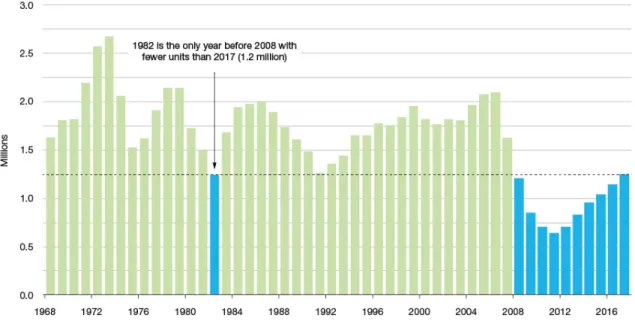
Figure 6 illustrates how the supply of new housing in the U.S. is low compared to historical
lev-els. This lack of housing supply consequently leads to problems of affordability and have created
persistent social and economic pressure [28].
Figure 6: Supply of new U.S. housing from years 1968-2017. Source: Khater, S., Kiefer, L., Atreya, A. and Yanamandra, V. [2018], ‘The major challenge of inadequate U.S. housing supply’, Freddie Mac. [25]
Housing Affordability is a Social Equity Problem
While inflated housing prices affects everyone, the magnitude of the effect and the type of effect it
has differ across socioeconomic groups.
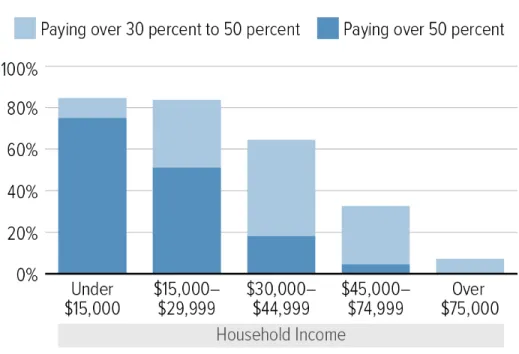
When considering how different income groups are affected by housing affordability issues, it
be-comes clear that lower-income individuals and households are disproportionately burdened by
hous-ing costs. Figure 7 illustrates how it is much more common for lower-income groups to spend more
Figure 7: Renters with the lowest incomes are most likely to pay too much for housing. Share of renter households paying over 30 percent of their income for rent and utilities. Source: Center on Budget and Policy Priorities [2018], ‘Renters with the lowest incomes are most likely to pay too much for housing’. [8]
Lower-income groups are not just burdened with having to spend a higher proportion of their
income on housing, the housing supply that targets lower-income groups also tends to be clustered
in low-cost areas that are less connected to other public amenities. Research on the different housing
needs of various income levels has found that the low-income group expresses a primary need for
better locations and access to public amenities, while the medium and high-income groups look
primarily for better architectural quality [18].
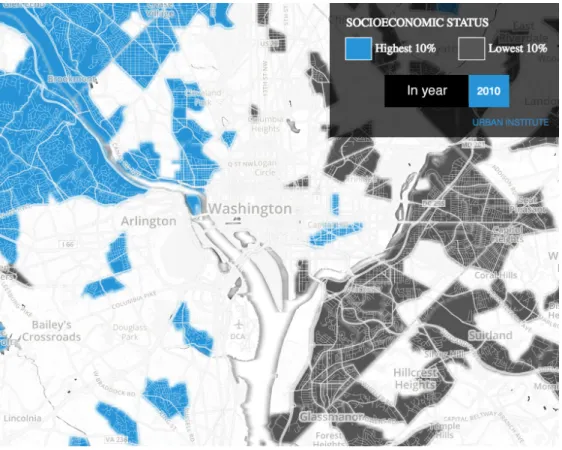
Having clusters of housing that are generally high-cost or low-cost segregates the community.
Of-tentimes only high-income members of the community can afford to live in high-cost areas and enjoy
the prime location and easy access associated with the higher price tag; whereas lower-income
mem-bers are pushed to lower-cost areas, and “everyone knows where they don’t belong” in a city [27].
Figure 8: Washington D.C. broken down by concentration of wealth. Source: Rigsby, E. A. [2016], ‘Understanding exclusionary zoning and its impact on concentrated poverty’, The Century Foundation. [36]
Segregation in housing results in the loss of a sense of community and a consequent feeling of
isolation, and it allows for discrimination along racial and economic lines rooted in geographical
segregation [27]. In the long-term, a lack of affordable housing supply also reduces social mobility.
Heather Schwartz of the Century Foundation explains how integrated housing could have long-term
benefits and promote social mobility:
Housing and education traditionally have been considered the primary instruments of
in-Zoning regulations may perpetuate the segregation in housing, as research has shown that
low-density zoning regulations lead to higher housing prices in high-cost areas, and limits the
oppor-tunities of those with low to modest incomes to move into the high-cost areas [39]. However, this
is not to say that zoning regulations should be abolished. As introduced in the previous section,
zoning regulations play an important role in achieving the health and social goals of an urban area
[34]. Rather, zoning regulations should be adjusted and built upon to reflect the need for
mixed-income residencies. With more liberal zoning regulations, it is possible to increase the prospects
for desegregation and promote the development of mixed-used and mixed-income housings [39].
Bullard describes the issue of segregation in housing and emphasizes the need for programs to assist
in the development of mixed-income housing:
We are becoming more and more separate and apart by income. And affluent people
feel more comfortable living with affluent people. And, oftentimes, poor people don’t
have a choice but live around poor people. And housing choices oftentimes will dictate
where people live. And the fact is that Houston and most major cities in this country
have a housing affordability issue. And if you have to drive to qualify, which means
drive long distances to qualify for housing in terms of ownership, that means that the
housing that’s available, people have to settle for less. And more and more people are
settling in those areas where they can afford. That means that you’re having more and
more concentrated areas with people of color, as well as poor people. Now, that’s not
the best way to create healthy, livable, sustainable, resilient cities, but that’s what we
get when we let market forces drive it, as opposed to trying to assist and support a sane
program of creating more [...] mixed income housing and mixed use.
- Robert Bullard, Sociologist [37].
The next section discusses the some of the efforts cities have made to incentivize the development
CHAPTER IV. DEVELOPMENTAL INCENTIVES AND ITS
APPLICA-TION TO AFFORDABLE HOUSING
To ensure that the market can produce homes that meet the diverse needs of the growing
US population, the public, private, and nonprofit sectors must address constraints on the
development process [...] And for the millions of families and individuals who struggle
to find housing that fits their budget, public efforts will be necessary to close the gap
between what they can afford and the cost of producing decent housing.
- Chris Herbert, managing director of the Joint Center for Housing Studies [23].
Current Efforts to Incentivize Affordable Housing
Note that in many jurisdictions, the term “affordable housing” refers to people below a certain
income level, and consequently does not typically focus on helping to make housing affordable to
young professionals, families with young children, the workforce in the community (such a police
and health care workers), or the elderly. in this paper, affordable housing refers to any housing
unit that may be offered at below market-rate, and may target a number of income groups including
moderate incomes. The inclusion of moderate income groups in the discussion of affordable housing
is important, as zoning regulations have limited the supply of housing units for the mid-level
markets. The high land costs and development limitations have made it unprofitable for developers
to build for the middle market, and as such developers are more willing to develop new residencies
intended for the higher end of the market, leaving the supply of smaller, more affordable residencies
limited and their costs high [23].
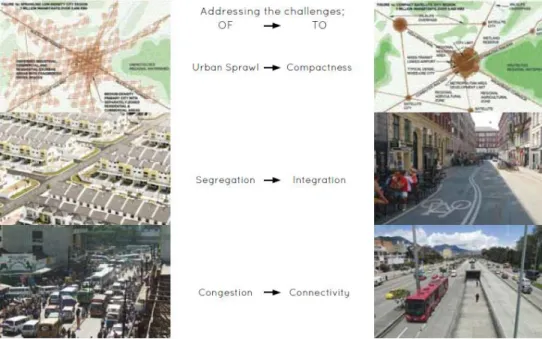
In an effort to enhance the robustness and efficiency of its zoning regulations, to increase the supply
Figure 9: The cities’ overarching goals of addressing urban sprawl, segregation, and congestion guides the development of the dynamic incentive model. Source: Brittlebank, W. [2014], ‘Address-ing climate change through planned city extensions’, ClimateAction. [6]
One tool that cities in the U.S. have developed is incentive zoning policies. Incentive zoning
entails incorporating incentives into zoning regulations, such as increased allowable density or
increased footage area ratio (FAR) on the property. (Note: The FAR is determined by dividing the
total or gross floor area of the building by the gross area of the lot, and describes the total amount
of usable floor area that a building has in relation to the total area of the lot on which the building
stands). Under an incentive zoning method, developers may provide amenities and designs desired
by the city in exchange for zoning bonuses that could be used to develop more units and to increase
the expected revenue of the development project [10].
The benefits of incentive zoning are three-fold:
1. The city is able to ensure that land is allocated such that there is space within the community
for a wide variety of housing options to serve a broad range of racial and socioeconomic groups
[15]
3. Incentive zoning could be tailored to encourage the creation of certain amenities and land use
designs that a city wishes to promote [31].
Incentive zoning began as an experimental technique that uses zoning to improve community design,
but it has since became a fairly common tool for meeting a range of planning objectives [31]. It is
estimated that at least one-half of all cities and towns that have zoning ordinances include bonus
provisions in one form or another [31].
Figure 10 details the various incentive zoning programs used by different cities in the U.S. to
Figure 10: Inclusionary housing policies across the U.S.. Source: Affordable Housing Ordinance: Proposed Enhancements[2014], Technical report, City of Chicago. [1]
When incentive zoning programs are used to promote affordable housing development, the programs
typically either require the developers to “make a certain percentage of the units within their
market-rate residential developments available at prices or rents that are affordable to specified
income groups, or offer incentives that encourage them to do so” [42].
Incentive zoning is a particularly attractive tool for the development of affordable housing as it
requires little to no public subsidy [31]. Compared to other programs where affordable housing
units are funded through tax credits and public funds (whether the funds are from Federal, State,
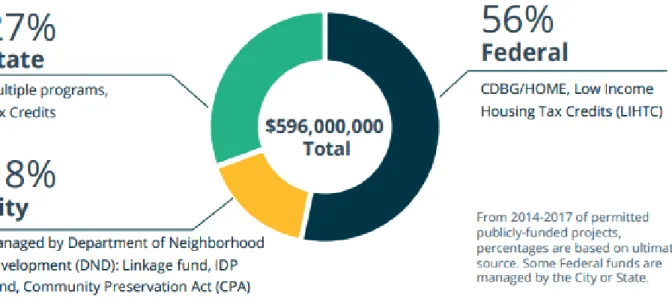
or City levels, as shown in Figure 11), incentive zoning produces affordable housing units in a way
that essentially feels “free” to city governments [4, 41].
Figure 11: Diverse funding sources for Boston’s affordable housing development (2014-2017). Source: Boston Planning & Development Agency [2019], ‘Boston housing toolkit: Affordable hous-ing & displacement intervention city policies and strategies’, BPDA IDP Update Edition. [4]
While the affordable housing units may place additional an workload on the developer and increase
construction costs, the zoning incentives are offered to increase the profitability of the project, and
act as a bridge between what is good for the developer and what is beneficial to the community in
upward mobility [12].
Case Studies
New York
New York City is one of the “most expensive cities” with inflated housing prices due to investments
from external sources, and geographic or political restrictions that limit developable land area [12].
In these high-cost communities, low- and moderate- income households have experienced rising costs
over time and have been pushed to shift to less expensive areas in more distant neighborhoods or
communities. As a result, the city has placed significant efforts in providing affordable housing
throughout the city [12]. Some of these affordable housing programs were built on city-controlled
land and supported through City, State, and Federal funding; however, New York City controls
relatively little land on which affordable housing developments could be built, and funding for
affordable housing has been in decline [12]. As a result, New York City has introduced a wide
range of programs, including incentive zoning programs to expand affordable housing supplies and
mixed-income residencies [12, 31].
There are two major programs in New York City used to promote mixed-income residential projects
in New York City. The first is the “R10” incentive zoning program that was introduced in 1987,
the second is the “Inclusionary Housing Designated areas (IHDA)” program that expanded on the
Inclusionary Housing program in 2005 [12].
The “R10” program applies to R10 or equivalent zones, which are the city’s highest-density
res-idential distracts, since “there [was] a high correlation between the location of R10 districts and
the traditionally mixed-income areas experiencing a shift away from economic heterogeneity” [12].
The R10 program was a voluntary program that provided zoning incentives in exchange for
lower-income housing in neighborhoods where market-rate residential developments were occurring, and
it was intended to test the feasibility and effectiveness of incentive zoning programs [12]. Under the
R10 program, designated areas have an FAR bonus of 20% to developments that provide housing
3.5 square feet of bonus floor area for every square foot of affordable housing provided [12].
The IHDA program applies to Inclusionary Housing designated areas, which have been established
in the Bronx, Brooklyn, Manhattan and Queens. Developers could take advantage of up to 33%
FAR bonus if they designate at least 20% of the residential floor area to be permanently affordable
at or below 80 percent of Area Median Income [12]. The affordable units could be provided on-site,
or within a half-mile of the market-rate units that are being developed [12].
Figure 12: A map of New York City illustrating the Inclusionary Housing Designated Area and the R10 Program areas. Source: Department of City Planning City of New York and NYC Department of Housing Preservation & Development [2015], ‘New York City mandatory inclusionary housing: Promoting economically diverse neighborhoods’. [12]
The R10 program has produced over 3,200 affordable units, and the IHDA program has produced
over 5,300 affordable units [12]. An analysis by the Department of City Planning of affordable
housing and total housing production through July 2013 in Inclusionary Housing designated areas
found that the incentive zoning programs “contributed to achieving its stated objective of
promot-ing neighborhood economic diversity”, but there is still a need for greater efforts to promote the
construction of housing at below-market levels and reach a wider range of income levels [12].
Boston
Boston’s program to incentivize affordable housing units is called the Inclusionary Development
Policy (IDP) and was introduced in the year 2000 [4]. The IDP bridges the housing affordability
gap by leveraging private developers to expand the supply of affordable housing that target various
income groups. In particular, the IDP applies to all development projects that are 10 units or
larger and require zoning relief, and there are three options to fulfill the policy’s requirements [4]:
1. On-site affordable units (typically 13% of a development’s units).
2. Financial contribution to a citywide affordable housing fund to help fund the development of
affordable units. These funds are used by the City of Boston Department of Neighborhood
Development to fund the creation of affordable/income restricted housing across Boston.
3. Off-site affordable units in a nearby project.
Since the creation of the IDP, the program has been involved in the creation of 2,599 units of
stable housing affordable to moderate- and middle-income families, and developers have contributed
$137.1 million to the affordable housing fund, which has been combined with other affordable
125 Amory Street development, shown in Figure 14, is an example of Boston Housing Authority
using non-profit partners to help refurbish and preserve existing, affordable senior housing and
build new income-restricted housing; the project is subsidized through higher densities and rents
from market-rate housing [4].
Figure 13: The Beverly is a 100% affordable building with 239 income-restricted apartments. Source: Boston Planning & Development Agency [2019], ‘Boston housing toolkit: Affordable hous-ing & displacement intervention city policies and strategies’, BPDA IDP Update Edition. [4].
Figure 14: 125 Amory Street Development in Jamaica Plane is subsidized through higher densi-ties and rents from market-rate housing. Source: Boston Planning & Development Agency [2019], ‘Boston housing toolkit: Affordable housing & displacement intervention city policies and strate-gies’, BPDA IDP Update Edition. [4].
Chicago
One of Chicago’s strongest tools to create affordable housing supply is called the Affordable
Re-quirements Ordinance (ARO), which was established in 2003 and expanded in 2007 [1]. The ARO
applies to any “new or rehabilitated housing developments with 10 or more units that involve a
zoning increase or downtown Planned Development designation, City-owned land, or City financial
assistance” [1]. Under the ARO, there are several options for the developers to satisfy the affordable
housing requirement [1]:
• Developments under the ARO program should set aside 10% of total units as affordable to
low- to moderate-income families.
Affordable Housing Opportunity Fund (AHOF).
The ARO works in conjunction with the Downtown Density Bonus which provides density bonuses
to real estate projects in downtown districts in exchange for on-site afforable units or an in-lieu
fee paid to the AHOF [1]. The ARO, working with the Downtown Density Program, has led to
the development of nearly 1,800 affordable housing units targeting very-low and moderate-income
households, including 189 units on-site of new, market-rate housing developments and 1,600 units
financed, in part, by in-lieu funds [1].
Affordable housing units are secured through AHOF collections in Uptown and Edgewater, which is
shown in Figure 15 [1]. Veterans New Beginnings was able to use $2.3 million in AHOF assistance
create 54 housing units and on-site services for veterans at risk of homelessness in Auburn Gresham,
as shown in Figure 16 [1].
Figure 15: $4.3 million in AHOF collections secured the affordability of 58 studio units in Uptown and Edgewater in partnership with FLATS LLC. Source: Affordable Housing Ordinance: Proposed Enhancements [2014], Technical report, City of Chicago. [1]
Figure 16: $2.3 million in AHOF assistance helped Veterans New Beginnings create 54 housing units and on-site services for veterans at risk of homelessness in Auburn Gresham. Source: Af-fordable Housing Ordinance: Proposed Enhancements [2014], Technical report, City of Chicago. [1]
Denver
From 2001 until 2016, Denver had Inclusionary Housing Ordinance (IHO) to facilitate home
own-ership opportunities for individuals and households earning between 50% and 90% AMI [11]. The
IHO applied to for-sale projects over 30 units to allocate at least 10% units to target incomes at
80% AMI or lower [11]. In exchange for compliance to the affordable housing requirements, the
de-velopers were provided with financial incentives along with parking reductions and density bonuses
[11].
The implementation of the IHO makes it such that affordable housing production under the IHO
is dependent on the overall housing market conditions in Denver. As shown in Figure 17, most of
the 1,116 units produced under IHO were built in the early years of its implementation, and were
Figure 17: Denver Inclusionary Housing Ordinance unit production from years 2001-2015. Source: Denver Inclusionary Housing Ordinance[2015], Denver Office of Economic Development. [11]
As the Denver housing market slowed in the mid-2000s, the number of affordable housing units
produced each year under IHO decreased as well. Projects that chose the in-lieu cash option
provided a total of $7,647,921 cash instead of 115 affordable housing units [11].
In 2018, the Denver City Council adopted the 38th and Blake Incentive Overlay pilot project
which applies to the area around 38th and Blake and intends to encourage mixed-income housing
opportunities through the allowance of greater development height. Figure 18 is a map of 38th and
Figure 18: Base height and incentive height of the 38th and Blake area. Source: Denver In-clusionary Housing Ordinance[2015], Technical report, Denver Office of Economic Development. [11]
It should be noted that the base height and incentive height seem relatively arbitrary as in an effort
to increase community buy-in, base heights are determined using the height generally described by
previous plans in the area, and the incentive heights are based off the overall vision for the area
development [11].
Under the 38th and Blake pilot program, developers who would like to take advantage of the
increased height allowances have two options [11]:
height, and have produced 36 affordable units (an average of 5% affordable units) [11].
A Summary: the Different Types of Incentives
Incentive zoning offers many possibilities to encourage the development of affordable housing units.
There are various incentives that could be offered on the City, State, or Federal level. Some of
these incentives may be financial, such as tax credits for the developers. Other incentives may be
zoning based. These zoning-based incentives may include:
• Increased unit density allowances
• Increased FAR allowances
• Increased height restrictions
Some incentives are less tangible, and include offers that could ease the development process or
indirectly increase the value of the completed property. These incentives may include [30]:
• Reduced set back requirements
• Reduced parking requirements
• Modified use restrictions to allow for higher value mixed-uses
• Developing public transit or other publicly accessible amenities near the residential
develop-ment
• Helping the developer acquire funding or attract investment
In the next chapter, I will utilize the findings from the case studies to propose a dynamic incentive
CHAPTER V. PROPOSING A DYNAMIC INCENTIVE MODEL FOR
AFFORDABLE HOUSING
Project Goals and an Overview of the Dynamic Incentive Model
The goal of this project is to propose a dynamic incentive model that could be used to build an
affordable, mixed-income, racially and ethnically integrated housing community to help create a
more robust and pro-social urban environment.
In particular, the incentive model proposes affordable housing requirements coupled with
corre-sponding incentives to increase the supply of affordable housing units while keeping the residential
development projects financially feasible for the developers. Compared to traditional systems of
centralised planning, the dynamic incentive model should meet the following goals:
• Simplify the development review and approval process.
• Introduce flexibility and adaptability into the zoning and development process such that
housing development could meet and anticipate the needs of a changing city.
• Promote social equity and integration in housing development decisions.
With these goals in mind, previous research and case studies may guide the specific design choices
of the dynamic incentive system:
• The model is dynamic. That is, it adjusts to the current demands of the urban environment
and the current supply of affordable housing units.
af-• The incentives provided take the form of zoning bonuses such as increased FAR allowances
or density bonuses, and should help maintain the financial feasibility of the development
project.
These design choices are further explained and justified below.
Dynamic Response to Demand and Supply
Zoning is a pervasive tool used in cities and communities across the U.S., however, the pace at
which zoning regulations are updated or renewed often cannot keep pace with the rate of change
in urban infrastructure and urban populations [43]. An effective incentive model to promote the
development of affordable housing units must build upon the foundation of existing regulations,
but introduce dynamic elements to address the needs of the developers, residents, communities,
and landscapes.
In particular, the “dynamics” of the incentive model is introduced by taking into consideration:
• The current supply of affordable housing targeting various income levels.
• The demand for affordable housing targeting various income levels.
• The number of affordable units targeting each income level required in the development
project.
• The zoning incentive offered in exchange for fulfillment of affordable housing requirement.
• Local conditions and values.
Ensuring Effectiveness of Housing Requirements
The goal of the dynamic incentive model is to propose appropriate requirements and incentives
affordable housing such that it matched the demand. As such the affordable housing requirements
are mandatory, on-site, and flexible.
Mandatory On-Site Units
A review of existing affordable housing programs and case studies show that some cities choose
to have voluntary affordable housing requirements. While a voluntary affordable housing program
provides a mechanism to create affordable housing on private sites, it does not guarantee that
affordable housing will be included in new developments in a wide range of neighborhood
con-ditions, and thus cannot not sufficiently promote economically diverse neighborhoods; thus, it is
recommended that affordable housing requirements be mandatory [12, 42].
There are also different options for the specifics of implementing the affordable housing
require-ments. New York City’s Inclusive Housing Program lists a few options [12]:
• Direct on-site construction of residential units that are designated and protected in accordance
with the city’s program.
• Off-site construction of affordable housing units, which may be required to be located within
a specified distance.
• Payment of a in-lieu fee to an affordable housing program.
In this proposed dynamic incentive model, the affordable housing requirements would refer
exclu-sively to the construction of new affordable units on-site, as this type of requirement facilitates the
mixed-class and mixed-race residential projects that mitigate segregation [42].
Flexible
While the affordable housing requirements will be mandatory, the developers are offered a list of
choices and alternatives to meet this requirement [32]. Specifically, housing requirements targeting
different income levels are proposed, and each target income level would be associated with a
different proportion of housing units that would be required to be set aside to satisfy the affordable
housing mandate. The specific target income groups and proportion of units required to be set
aside are dynamically determined for each development project based on the demand-supply gap
of the city and the characteristics of the development site.
For example, the developer may be offered to choose from two options:
1. Set aside 20% units to target income levels at 90% area median income.
2. Set aside 10% units to target income levels at 60% area median income.
The flexibility would allow developers make a selection that aligns with their interests, while still
fulfilling the mandatory requirement for affordable housing to benefit the community.
Ensuring Financial Feasibility of Affordable Housing Incentives
The main argument against affordable housing requirements is that such policy “[penalizes]
home-builders with more costs and mandates, deters the creation of more housing, and raises the overall
cost of market-rate homes”, and is often cited by builders and developers who are the primary
opponents of affordable housing requirements [41].
To address these concerns and to promote the number of affordable housing units built through
affordable housing requirements, incentives should be provided to offset the construction costs of
Offering Additional Units to Offset Construction Cost
Figure 19: To encourage the completion of a development, the funding must be balanced with the costs. Source: Boston Planning & Development Agency [2019], ‘Boston housing toolkit: Affordable housing & displacement intervention city policies and strategies’, BPDA IDP Update Edition. [4]
Figure 19 illustrates the need to balance construction costs of the development through incentives
and funding measures to ensure the financial feasibility of the project [4]. The proposed dynamic
incentive model uses zoning bonuses like increased FAR and density bonuses as this type of incentive
offers several benefits:
• Zoning incentives effectively ensure financial feasibility. Studies on the financial
feasibility of offering bonus units in exchange for the construction of affordable housing units
have shown that the developer could receive a more profitable return on their investment
under a housing density bonus program than they could expect from a normal project, even
when some of the units are provided at below market price [15]. The key factors that allow
zoning bonuses to yield a high rate of return are: a) the bonus units cost less to construct
than the original units; and (b) the bonus units are able to generate revenue [15].
• More relaxed zoning regulations help increase the housing supply in general, and
contribute to the desegregation of a community. Research has found that a
pro-density land-use policy was associated with accelerated desegregation from 1990 to 2000 [39].
Additionally, zoning bonuses help a city produce new housing to accommodate growth while
ensuring an increase of housing supply within neighborhoods that is affordable to households
at a range of income levels [12]. This type of housing development pattern helps maintain
and encourage greater economic diversity within neighborhoods [12].
• Zoning Incentives may dynamically adjust and update zoning regulations that
may otherwise remain static. A 1994 survey which contained data on density zoning in
that year and how it related to previous years revealed that “from 1988 to 1994, only 6% of
jurisdictions increased allowable density by 10% or more, and 7% decreased it by 10% or more.
During 1994–2003, the respective percentages were both 8%. Meanwhile, the share reporting
identical regulations in both years was very high—80% from 1988 to 1994 and 75% from 1994
to 2003” [39]. This high level of stability indicates a lack of response to the changing needs
of the city. Zoning bonuses allow for a dynamic adjustment of the city’s landscape to reflect
the changing needs and demands of the city.
A Bonus Multiplier to Encode Local Conditions
Each city and neighborhood has its unique set of conditions - the population, the industry, the
political and social priorities, the culture, values, and history. When considering a dynamic model
to incentivize for the development of affordable housing, the solution must be tailored to address
the needs of the specific city and neighborhood.
Beyond the basic model that determines the number of bonus units needed to allow the development
project to be financially feasible, a bonus multiplier is introduced to encode the local conditions
and help fine-tune the dynamic incentive model to each city or neighborhood that may choose to
use it. Note that the multiplier need not be restricted to be greater or equal to 1, the multiplier
While there are numerous local conditions that could be considered, I have listed a few conditions
that may be helpful to take into consideration below:
Urgency of Housing
The Urgency of Housing bonus multiplier is introduced to scale the proposed zoning bonus such
that housing units targeting a specific income group would be incentivized at a higher rate if there
is a severe lack of supply when compared to its demand.
For example, the equation below would offer a bonus multiplier ranging from 1 − 2 (assuming
demand is greater than supply) depending on the urgency in demand for affordable units targeting
a specific income group.
Multiplier = 1 + # units demanded − # units supplied # units demanded
State of the Housing Market
Studies have show that the financial feasibility of housing developments depend on market
con-ditions [12, 15]. Perhaps unsurprisingly, it is easiest to achieve financial feasibility under strong
market conditions [12]. While general zoning incentives to allow for additional revenue from bonus
units could broadly support the financial feasibility of new developments, in weaker market
condi-tions increased zoning incentives may be necessary and should be combined with other incentives
like lessened parking requirements. In cities where there is additional funding available to aid the
financial feasibility of affordable housing requirements, the availability and accessibility of such
funds should be taken into account when determining the zoning incentives as well [12].
and bonuses.
Input from Local Planning
Even within a city, different neighborhoods may have different conditions, values, and history [31].
As such, urban decision-making must be a localized process with input from various members of
the community and urban planners [27]. The community’s evaluation on which locations would
benefit the most from an increase of affordable housing units should factor into determining how
much of a density bonus is allotted for the developer.
However, the input from local residents should be balanced with objective metrics evaluating the
pro-social characteristics of the proposed development plan to prevent “not in my back yard”
sen-timents (or commonly referred to as NIMBYism) from hindering the integration of the community.
The Location of the Proposed Development
As housing developments are part of a greater urban landscape, the importance of affordable housing
units depends greatly on the interconnectedness of the residential location with job opportunity
sites and other publicly accessible amenities.
Measures of the walkability of a certain location or its proximity to public transit systems are
widely available. For example, Walk Score is a company that provides large-scale, public access
to a walkability index, transit accessibility index, and bike score index for various addresses in the
U.S.; the scores assign a numerical score to evaluate the “walkability of any address based on the
distance to nearby places and pedestrian friendliness”, “how well a location is served by public
transit based on the distance and type of nearby transit lines”, and “whether an area is good for
biking based on bike lanes and trails, hills, road connectivity, and destinations”, correspondingly
[47]. Using these indices, the zoning incentives may be scaled to be greater in areas that are better
Desirable Pro-Social Characteristics the Affordable Housing Units Would Enhance
While connectivity is an important characteristic of desirable housing, there are various urban
performance indicators that could aid in the measuring of pro-social characteristics. For example,
the MIT City Science group has developed CityScope, “a data-driven platform that simulates the
impacts of interventions on urban ecosystems prior to detail-design and execution” [2].
Figure 20: Urban performances indicators used in CityScope: density, diversity, proximity, mobil-ity energy per person, social well-being (walkabilmobil-ity, access to parks, etc.), and innovation potential (probability of creative collisions). Source: Alonso, L., Zhang, Y. R., Grignard, A., Noyman, A., Sakai, Y., Elkatsha, M., Doorley, R. and Larson, K. [2018], ‘Cityscope: A data-driven interactive simulation tool for urban design. use case volpe’, Unifying Themes in Complex Systems IX Springer Proceedings in Complexity p. 253–261. [2]
CityScope utilizes a variety of urban measurements that span issues like density, diversity, proximity,
mobility, energy per person, social well-being, and innovation potential [2]. The dynamic incentive
model could incorporate these measures in the bonus multiplier such that developments that are
able to improve the urban measures the most (or bring the measures closest to the desired values)
in Python, and the dynamic incentive model is used to propose combinations of affordable housing
CHAPTER VI. SIMULATING THE DYNAMIC INCENTIVE MODEL
Assumptions
Several simplifying assumptions are made to allow for the simulation of the implemented dynamic
incentive model. Table 1 lists the assumptions made to allow for a computational simulation of a
Table 1: Assumptions made in the simulation of the dynamic incentive model.
Urban context Simulation Assumptions
Urban population
A population is generated and randomly distributed between eight different income groups. The income groups are divided like so:
1. 10000 - 29999 2. 30000 - 44999 3. 45000 - 59999 4. 60000 - 99999 5. 100000 - 124999 6. 125000 - 149999 7. 150000 - 199999 8. 200000 - 500000 Housing demand
Demand for housing is separated into the aforementioned income groups as well. The demand for housing targeting each income group is calculated as the number of people in that income group.
City infrastructure
The simulated city is populated with a predetermined number of residential buildings. The residential buildings each have a certain number of housing units targeting each income group; the number of housing units targeting each income group is known for each individual building. Further, it is assumed that the existing buildings are considered financially feasible, and could be used to estimate construction costs and expected revenue.
Zoning regulations
The current FAR and density for each simulated building is known. The max-imum allowable FAR and density are also known. Assume that none of the buildings are at the maximum FAR or maximum density requirement.
Housing supply
Supply for housing is separated into the aforementioned income groups. The overall supply for housing targeting each income group is calculated by summing the number of such units in each residential building. The simulations are set up such that the overall supply of affordable units (defined as targeting income groups 1-3 in this simulation) is below the demand for affordable units, as is often the reality.
Construction costs
Construction costs are the same for all units, regardless of the income group the unit targets. This is to ensure the quality and size of affordable units match market rate units.
Developer behavior Developers would accept a requirement-bonus combination as long as the com-bination gives them at least as much expected revenue as the original plan.
Implementation
The simulation models the interaction between the characteristics of the development projects and
the developers. In particular, the simulated city is populated with ten development projects. Each
development project is associated with a set of proposed residential units for various income groups.
This information is used to estimate construction costs and expected revenue for financial feasibility
calculations.
The simulation iterates through each development project sequentially, proposing affordable
hous-ing requirements and zonhous-ing incentives for each development project, havhous-ing the developer choose
a requirement-incentive combinations, and updating the development project and overall city
in-frastructure information according to the developer’s choice before moving on to repeat the process
for the next development project. Such a sequential process ensures that updates from one
de-velopment project are accounted for when determining the demand-supply gap before proposing
affordable housing requirements for the next development. That is, the simulation dynamically
adjusts to updates in the city’s infrastructure.
The simulation process is described in further detail below:
1. Determine the demand-supply gap. The overall city demand-supply gap is calculated
for each income group separately. For each income group,
demand-supply gap =
#people in income group in city − #units targeting income group in city
2. Determine if there is a need for affordable housing requirement. For a development,
an affordable housing requirement is proposed if:

![Figure 3: General zoning code of the Boston Proper area. Source: Boston Planning & Develop- Develop-ment Agency [2020], ‘Zoning maps: Map 1 Boston Proper’](https://thumb-eu.123doks.com/thumbv2/123doknet/14754112.581637/14.918.117.803.500.929/figure-general-boston-proper-source-planning-develop-develop.webp)