1
Population genomic analysis of elongated skulls reveals extensive female-biased immigration in Early Medieval Bavaria
SI Appendix
Krishna R. Veeramaha, Andreas Rottb,1, Melanie Großc,1, Lucy van Dorpd, Saioa Lópeze,
Karola Kirsanowc, Christian Sellc, Jens Blöcherc, Daniel Wegmannf,g, Vivian Linkf,g, Zuzana
Hofmanováf,g, Joris Petersb,h, Bernd Trautmannb, Anja Gairhosi, Jochen Haberstrohj, Bernd
Päffgenk, Garrett Hellenthald, Brigitte Haas-Gebhardi, Michaela Harbeckb,2, 3, and Joachim
Burgerc,2,3
1,2
These authors contributed equally to this work
3
Corresponding authors ([email protected];
a
Department of Ecology and Evolution, Stony Brook University, Stony Brook, New York, 11794-5245, USA.
b
SNSB, State Collection for Anthropology and Palaeoanatomy, 80333 Munich, Germany
c
Palaeogenetics Group, Institute of Organismic and Molecular Evolution (iOME), Johannes Gutenberg University Mainz, 55099 Mainz, Germany.
d
UCL Genetics Institute, Department of Genetics, Evolution and Environment, University College London, London WC1E 6BT, UK.
e
Cancer Institute, University College London, London WC1E 6DD, UK.
f
Department of Biology, University of Fribourg, 1700 Fribourg, Switzerland.
g
Swiss Institute of Bioinformatics, 1700 Fribourg, Switzerland.
h
ArchaeoBioCenter and Institute for Palaeoanatomy, Domestication Research and the History of Veterinary Medicine, Ludwig-Maximilian University, 80539 Munich, Germany
i
Bavarian State Archaeological Collection, 80538 Munich, Germany
j
Bavarian State Department of Monuments and Sites, 80539 Munich, Germany
k
Institute of Prehistoric and Protohistoric Archaeology, Ludwig-Maximilian University, 80799 Munich, Germany
This PDF file includes:
Supplementary Text Figures S1 to S53 Tables S1 to S39
2 SI Appendix
SI1. Archaeological and Morphological information ... 3
SI2. Sample preparation and sequencing ... 9
SI3. Description and implementation of the 5 Mb capture assay ... 12
SI4. Read processing ... 16
SI5. SNP and genotype call ... 16
SI6. Modern Reference Datasets ... 17
SI7. Functional Variants ... 18
SI8. Analysis of uniparental markers ... 25
SI9. Principal component analysis ... 27
SI10. Model-based clustering analysis ... 27
SI11. Population Assignment Analysis (PAA) ... 29
SI12. Outlier analysis ... 30
SI13. Private East Asian Haplotypes ... 30
SI14. FIS and FST analysis ... 31
SI15. Inference based on the variation in allele frequency spectra ... 32
SI16. Comparing patterns of allele and haplotype sharing between ancient and modern samples ... 35
SI Appendix references ... 40
SI Appendix figures ... 50
3 SI Appendix
SI1. Archaeological and Morphological information
Early Medieval graves from Bavaria
Brigitte Haas-Gebhard, Bernd Trautmann, Michaela Harbeck, Andreas Rott
For the epoch of the late 5th/early 6th century, grave goods are the almost exclusive source material available for archaeological research due to the fact that hardly any contemporary settlements have so far been identified. During this time period the dead were placed on their backs with their arms alongside the body and with their heads generally positioned to the West. They were interred in burial groups, which are understood to represent the cemeteries
of small social units. From the mid-6th century onwards these cemeteries then merged into
large necropoles which can comprise more than 1000 inhumation burials. A large percentage of the dead were buried with a sex-specific assemblage; in the case of males this consisted of weapons, in the case of females it was jewelry. It is thought that burying the dead was accompanied by an elaborate laying-out ceremony and other burial rites, which demonstrated the social position of the dead and therefore also cemented that of their family (1). It was quite common to re-open the graves after inhumation and to remove the precious grave goods. By using methods of combination statistics, the large quantity of archaeological finds available for this time period allows for a reliable reconstruction of the sequence of many groups of grave goods. Combined with absolute dateable material such as coins, it enables absolute dating to a time-frame of 30-40 years (2). Dates estimated this way are shown in Table S1. Dendrochronological data is not yet available for this time period in most parts of central Europe. Due to the shape of the calibration curve, the data collected from radiocarbon
analyses is also only of limited suitability for exact dating (3; see Table S1).
In the scholarly tradition of the 19th century, the alleged ethnic origin of the wearer of a certain type of jewelry was determined on the basis of specific embellishments on the so-called bow-brooch, a highly ornamented garment fastener usually made of gilded silver and in function similar to a modern-day safety pin (e.g. 4). This approach is now highly criticized due to the fact that these brooches apparently were not personal property of the wearer and the
distribution types of Early Medieval jewelry have still not been fully identified (5). At best,
the archaeological-antiquarian analysis of a grave goods assemblage can tell us in which cultural context the organizers of the funeral - in most cases probably the closest relatives – placed the deceased at the time of their death. Nevertheless, “cultural labels” were assigned to the bow-brooches, that were part of the study in order to be able to recognize any evolving patterns (see Table S1).
All individuals from Bavarian sites (36 individuals in total) were re-examined in an anthropological survey including the determination of sex and age-at-death as explained in Grupe et al. (6), as well as paleopathological features with a special focus on re-evaluation of artificial skull deformation (Table S1; 6).
4
Before the project described here, a total of 30 skulls from Bavaria were reported as artificially modified, of which 21 were potentially available for DNA analysis. However, before the analysis of the genetic data started, all of the 36 examined skulls underwent an analysis for modification. For the detailed procedure see Trautmann et al. (7). To differentiate artificially deformed from non-deformed skulls, the criteria described in the studies of Clark et al. (8), Ginzburg & Žirov (9) in Molnár et al. (10) and O´Brien & Stanley (11) were used. These studies allow determining the level as well as the kind of deformation by means of skull measurements. In addition, a morphological examination was carried out to assess and classify the exterior shape of the skulls according to the descriptions in Cocilovo et al. (12). Skulls were classified as artificially deformed when at least two of the metrical studies or one of the metrical and the morphological examination revealed positive results (7). Skulls exhibiting a suspicious exterior shape and with no positive result from any of the metric analyses were classified as “intermediate”. Undeformed skulls neither yielded positive results from metric analyses nor do they exhibit a suspicious exterior shape. From the 21 available crania previously classified as deformed, only nine could be confirmed as artificially modified (Table S1) while five skulls were categorized as “intermediate”, and seven have now to be considered as not modified in any way (marked as “not deformed” in Table S1). In addition to individuals with potentially deformed skulls, contemporary individuals without skull deformation were also included in the morphological re-examination.
Radiocarbon dating was carried out for all individuals with deformed skulls and many of the individuals from the site of Altheim (see below). The results of these analyses (Table S1) support the archaeological dating of these women to around 500 AD. An example of the grave goods of women with artificially deformed skulls is shown in Fig. S1.
The 36 individuals from Bavaria were buried in six different graveyards:
Comprising more than 1,400 graves containing 1,520 individuals (13), Altenerding-Klettham (AED) is one of the biggest Early Medieval burial places in Bavaria. Its use begins in the
middle of the 5th century AD and lasts until the end of the 7th century AD (14) and it is located
near today’s Munich in the middle of the former Roman province Raetia II (see Fig. 1B). Three individuals exhibiting an artificially deformed skull (graves 125, 513 and 1108), and seven individuals without an artificially deformed skull were included in genetic analyses. Another such necropole was excavated at Straubing-Bajuwarenstraße (STR) which is located at the river Danube directly at the border of the former Roman province Raetia II. This burial
place comprised 819 graves dating from the mid-5th to the mid-7th century AD (15). 17
individuals, three of which (graves 228, 328, and 535) exhibited an artificially deformed skull, of this burial place were included in the presented analyses. Altheim-Andreasweg (Alh; see Fig. 1B) includes 404 inhumations dating from the first half of the 5th century AD to the second half of the 7th century AD. Radiocarbon dating suggests that this burial place could already have been in use since Roman times (16). The site was included in the present study because the occurrence of individuals with artificially deformed crania was also reported here (16). Yet, none of the individuals in question proved to have an artificially deformed skull (7). 4 individuals were included in the present study.
5
In addition to these large burial places, several smaller burial groups, in which the presence of individuals with artificially deformed skulls were reported, were also included in the current study. All of these are located in the vicinity of Regensburg, which is situated at the river Danube directly at the border of the former Roman province Raetia II (see Fig. 1B).
Barbing-Irlmauth (BIM) is a small burial group of 29 inhumation graves dating to the first half of the 6th century AD (17). Two individuals, one with an artificially deformed skull (grave 33) and one without artificial skull deformation (grave 37) were included in the analyses. Due to the fact that this burial site was excavated in the 1930s, some inconsistencies regarding the archeological finds appeared: while grave inventory 33, without any doubt the equipment of a male, does not seem to match with the female with an artificially deformed skull, the artificially deformed skull might well be attributed to the female inventory of grave 31.
Burgweinting Nordwest II (NW) is one of three contemporary 5th century AD burial places
that were oriented alongside a former Roman road connecting Regensburg to the south of the Roman province Raetia II. The burial site Nordwest II comprised 15 graves, some of which were equipped with rich grave goods. Among the 15 burials of Nordwest II one burial of a woman with an artificially deformed skull was recovered (grave 10254, NW 54; 18, 19). Additionally, the woman of grave 10255 was also included in this study.
Another individual with an artificially deformed skull stems from Alteglofsheim (AEH). This skeleton represents one of the very rare singular graves known from this time-period. Yet, it remains possible that further graves in its vicinity are still to be found (20).
In summary, all other individuals with artificially deformed skulls from Bavaria were found on regular, Early Medieval cemeteries.
None of the graves showed peculiarities in burial practice. There are no signs of any special treatments during the burial ceremony or regarding the duration of the laying-out. A secondary re-opening of the graves seems to have happened to two graves from Straubing-Bajuwarenstraße (15). It seems plausible that during this re-opening grave goods were removed at least from grave 228, while removal of grave goods cannot be excluded for grave 328 (7).
Sarmatian samples
Melanie Groß
Two Early Sarmatian individuals from Russian Pokrovka, Southern Ural (Fig. 1B), were chosen to complement the internal reference data set. They have previously been described in Unterländer et al. (21).
Burials were excavated from kurgans located within the territory of Russia’s Orenburg Region (22). Both samples (PR_4, PR_10) were assigned to Pokrovka cemetry 02 that is divided in two groups, situated above the Khobda River near Pokrovka Village (23) and
graves are dated to 4th-2nd century BC. Most of the burials were individual graves with clay
vessels (22).
Sample PR_4 was morphologically classified as a male adult, 30-40 years old, buried with some sheep bones, bronze arrowheads, one leather quiver, one iron dagger, one iron sword and one iron knife. The burial of the male individual PR_10 was found next to a
1.5-2-year-6
old child, buried with sheep bones, glass beads under the child’s chin, one iron knife, one iron fragment and sherds hand.
Late Roman grave from Bavaria
Jochen Haberstroh, Bernd Trautmann, Andreas Rott
As there is no final analysis published or available yet, the preliminary findings regarding the site of Freiham-Nord (FN) and especially the individual from grave 1335 shall be briefly presented here:
In the course of archeological investigations previous to construction works in the newly developed Munich district “Freiham-Nord”, a previously unknown Late Roman cemetery containing inhumation graves was discovered in autumn 2014. In total, 20 graves could be recovered. They were orientated in different directions with the majority (13 individuals) lying on an east-west axis with the head to the east. The majority of the graves contained sex-specific grave goods typical of Southern Bavaria. Necropoles of this type in Southern Bavaria
can be found as of the mid-3rd century AD and were typically in use until the first half of the
5th century AD. Not unusual for such cemeteries in the area surrounding Munich, the find
material also contains elements of non-Roman origin. Grave goods originating in the so-called
Barbaricum (brooches, ceramics) were already present at the onset of this type of Late Roman
cemeteries.
Individuals were already sampled for subsequent population genetic analyses during excavation work. One individual was selected for analysis in the present study. With regard to
the historical developments of the settlement in the 4th and 5th century AD, the selected burial
had to be classified as “local”, i.e. “Roman” in the present setting.
Grave 1335 in the eastern half of the cemetery was chosen. It contained the burial of a senile (aged 60+) man, who was buried in east-west direction on his back with his arms crossed over his pelvis. The grave cavity was very well differentiated from the surrounding gravel. It was 0.9 m wide and with 2.40 m exceptionally long. The man was probably buried on a wooden board (“Totenbrett”) and there were no signs of burial offerings in the drawn in head section of the grave cavity. Meat offerings of chicken and pork were deposited at four positions next to the shoulders and the feet of the man.
Close to his left thigh a pierced bronze sheet and a thin iron ring could be found, as well as a big iron knife with a bronze plate pommel on the right of his right knee. A crossbow brooch of type 1 according to Keller/Pröttel could be recovered at the man’s right ankle (Fig. S2). Finally, a soapstone bowl with antique traces of repair and a small bowl of the form Alzey 2/Chenet 320 a (Fig. S2), which probably resembles an imitation, could be recovered from the foot section of the grave cavity that was also slightly drawn in. Bowls comparable to the small one described here were found in Late Roman graves from Potzham, county of Munich, and Gilching, county of Starnberg near Munich. The crack in the bottom of the soapstone bowl was repaired using a riveted bronze clamp while the bowl’s rim was fixed with an iron metal sheet. This allowed for further use of the bowl, with some limitations. The bronze crossbow brooch (Pröttel type 1) that was probably deposited in the foot section of the grave cavity together with an associated coat, is crucial for the dating of the burial. Similarly, cast pieces could be recovered from sites at Passau, Eining or Burghöfe where they were probably
7
manufactured. It is among the oldest types of crossbow brooches, whose wearers were very often identified to be executives in the Late Roman military. Dating around 300 AD, grave 1335 is among the oldest inhumation burials of the small cemetery at Freiham.
Viminacium-Više Grobalja
Andreas Rott
The burial place of Viminacium-Više Grobalja (VIM) is located in today’s Serbia and is referred to as a Medieval Gepidian cemetery dating to around the middle of the 6th century AD. Of 103 skeletons excavated there, 46 could be identified as adult men, 27 as adult women, and 16 as children (24). In contrast to the Bavarian sites mentioned above, about one third of the individuals exhibited artificially deformed skulls. Here, both men and women of all ages could be diagnosed with this phenomenon (24). From this burial place, the individual from grave 2022, a subadult individual with artificially deformed skull (24), was included as a reference sample in the genetic analysis.
Kerch
Bernd Päffgen, Andreas Rott
A find which is especially interesting and important to the context of our samples, is that of an artificially deformed skull from antique Pantikapaion, today’s Kerch in Crimea. As very few details about the find’s history of discovery have been published so far, we will briefly describe it here:
The skull was discovered around 1900 in a burial chamber at Pantikapaion’s Mithridates hill and reached the Collection of the Romano-Germanic Museum in Cologne on ways that are best described as adventurous.
Pantikapaion (Greek: Παντικάπαιον; Latin: Panticapaeum) is recognized as a Greek-Milesian colony that was established in the 6th century BC at the western shores of the Cimmerian Bosporus. Later, Pantikapaion gained importance as capital of the Bosporan Kingdom. In its golden period the city reached from the port at the road coming from Kerch, which connects the Black Sea to the Sea of Azov, up to the Acropolis on the Mithridates hill (25).
In Late Antique times the city’s importance ceased and the settlement structure changed. Under King Rheskuporis VI. (reign: 314/15-341/42) Pantikapaion’s mintage came to an end;
yet, in his regency the city became newly fortified. Around the middle of the 4th century AD
Gothic Tetraxits established their rule (26) before it was overtaken by the Huns in the seventies of the same century (27, 28). After they had destroyed the city to an unclear extent, the Huns and their allies were probably also aware of its strategically important location. In 534 Emperor Justinian I. conquered Pantikapaion, which was still important, and integrated it into the Byzantine area of authority. The city was also renamed “Bosporus” (Procop, De Aedif. III, 7; Bell. Pers. I, 12; bell. Goth. IV, 5). After roughly one generation the Byzantine rule ended in 576 when Angai, a prince of the Utigurs, conquered the city.
It is assumed that more than 2,000 graves were uncovered at and around the Mithridates hill and in the district of Glinisce. Yet, no exact inventories of the finds were passed on. Only exceptional finds were recognized, such as the “Kerch vases” which today are very
well-8
known in the community of antiquarians (29, 30), and the terracotta which were discovered there (31–33). Burial chambers that were described as catacomb graves were mainly laid out at the northern side of the Mithridates hill. Some of these graves were situated within the city boundaries of the Classic Epoch. The burial chambers were laid out during the Bosporan Kingdom and were used until Late Antique times. Some burial chambers that were painted or otherwise decorated were published by Rostovtsev (34).
Around 1900 (the exact time is unknown) a burial chamber containing several inhumation burials was discovered and attracted attention due to the find of a diadem with multi-colored stones. It was manufactured from three golden plates and its superelevated front plate resembles the form of two eagle heads. The diadem that is decorated with more than 250 individually set almandines and green glass (resembling the eyes of the eagle heads) can be dated to around 400 AD or into the first half of the 5th century AD (35–39). Such golden diadems with precious stone inlays are typically found in female burials of the Hunnic elite
(36, 39–44). According to Anke (45) the custom of wearing such diadems in the 4th/5th
century AD may be seen as a stimulus from the Sarmatian cultural sphere.
The diadem and an artificially deformed skull from the same burial chamber which was not the skull of the diadem’s wearer reached the Museum’s collection via detours. Both are still held there today. It remains without doubt that both the diadem and the skull were discovered within the same burial chamber around 1900. From today’s perspective it is very unfortunate that only the exceptional finds, diadem and artificially deformed skull, were paid attention to while the remaining grave inventory including several skeletons was not even properly documented.
In 2009 Dr. Anja Staskiewicz re-examined the skull from Kerch (Fig. S3) at the State Collection for Anthropology and Palaeoanatomy. The results of this re-examination are briefly summarized here:
As obvious in Fig. S3, the calvarium of the skull (labeled 43,95) is mounted to a wire rack that is attached to the occiput. A mandible is attached to the skull with a wire on both sides and is labeled “[belonging] to 43,95”. Yet, doubts remain whether the mandible originally belonged to the skull. Due to missing mandibular condyles it was impossible to test how well these fit into the respective jaw sockets. Nevertheless the mandible seems less robust and masculine than the skull. It is furthermore conspicuous that 11 teeth are present in the mandible and most probably no tooth was intravitally lost, while not a single tooth was present in the maxilla and at least seven of these were intravitally lost.
Almost all features relevant for sex estimation of the calvarium point to a male individual due to their extreme robusticity (relevant criteria for sex estimation were taken from Herrmann et al. (46)). Additionally, age at death was roughly estimated by the degree of ossification of cranial sutures (relevant criteria were also taken from Herrmann et al. (46)). Under normal conditions the degree of ossification indicates a higher, possibly (late) mature age of ca. 50 to 60 years. Such an age-at-death would also be in accordance with the many intravital maxillary tooth losses.
For the genetic analyses presented here, a petrous bone from the calvarium was sampled. Radiocarbon dating from a piece of the same petrous bone yielded an age of 256 – 401 cal AD (1709 ± 23 years).
9 SI2. Sample preparation and sequencing
Melanie Groß, Andreas Rott, Joachim Burger
Ancient DNA work on the skeletal samples from southern Bavaria, Germany, was carried out in dedicated facilities of the Palaeogenetics Group at Johannes Gutenberg-University Mainz. Decontamination and first steps of sample preparation (drilling and milling) were performed as described in Scheu et al. (47). For contamination monitoring and decontamination efficiency of used devices blank controls during milling (47) and all further steps were processed. A PCR on a mitochondrial fragment was performed on milling and extraction controls. In order to find the most suitable samples for nuclear target enrichment and whole genome sequencing, all sampled petrous bones were tested for high complexity and endogenous DNA content as described below (Table S2).
DNA extraction
Extraction was performed according to Scheu et al. (47) and Hofmanová et al. (48) with slight modifications: 6.7 ml of EDTA (0.5M, pH8; Ambion/Applied Biosystems, Life technologies, Darmstadt, Germany), N-laurylsarcosine (250µl, 0.5%; Merck Millipore, Darmstadt, Germany) and proteinase K (30µl, 18U/µl; Roche, Mannheim, Germany) were added to bone powder in a lysis step. This solution was incubated on rocking shakers at 37℃ for 72-120 hours. The DNA was isolated via phenol/chloroform/isoamyl alcohol (25:24:1, Roth, Karlsruhe, Germany), then desalted by stepwise washes with HPLC-water (10-12 ml) and concentrated to approximately 300µl using Amicon Ultra-15 Centrifugal Filter Units (Merck Millipore, Darmstadt, Germany).
For STR_288, STR_355 and AED_1108 two extractions were performed from one tooth and one petrous bone respectively.
PCRs on mitochondrial DNA fragment were performed for all extracts to monitor extraction success and cleanness of blank controls.
Library Preparation
All libraries were prepared based on Kircher et al. (49) and as described in Hofmanová et al. (48). Two libraries of AED_432 and STR_300 were treated with USER-Enzyme and pooled with 4 non-treated libraries for target enrichment respectively (Table S3).
Index-Primer P7 and IS7 were used for library PCR with AmpliTaq Gold® DNA Polymerase (Applied Biosystems) in at least three PCR parallels and 10-12 cycles for screening libraries and 10-16 cycles for libraries prepared for target enrichment. A second round of PCR was performed with Herculase II Fusion DNA Polymerase (Agilent) and enabled us:
I.) to add individual P5 -index on short end of library molecules for MiSeq sequencing II.) to increase molecule numbers for further target enrichment.
The cycle number was adjusted to the concentration of each library as measured by Qubit® Fluorometric quantitation (dsDNA HS assay, Invitrogen) and the Agilent 2100 Bioanalyzer System (HS, Agilent Technologies) following the manufacturer's protocols.
10
Sample selection
For 63 samples in total, quantity and quality of molecules of libraries prepared from each DNA extract were determined using a quantitative real-time PCR and shallow shotgun
sequencing. Only DNA extracts with at least more than 108 molecules per µl of library
product and endogenous content > 30% were selected for subsequent nuclear target enrichment and whole genome shotgun sequencing (Table S2; Fig. S4).
All individuals with skull deformation and two Sarmatian samples were included in this study regardless of their screening results because these were of special interest.
A Quantitative real-time PCR
Quantitative real-time PCR was performed on each library fill-in product with KAPA Sybr Fast Universal Mastermix (PeqLab, VWR International) on a Step One PlusTM Real-Time PCR system (Applied Biosystems, Thermo Fisher Scientific) with primer pair IS7/IS8 as described in Hofmanová et al. (48).
As an additional monitoring step, molecule numbers for most of the libraries prepared for capture enrichment were gauged with quantitative real-time PCR.
B MiSeq screening
Endogenous content was estimated by calculating the percentage of aligned reads against all reads after quality filtering.
Among the selected samples, eleven show an endogenous content of above 30% and 23 samples above 50% endogenous molecules. Four samples (STR_241, STR_266, STR_360, STR_491) were selected despite an endogenous DNA content below 30% (28.58%, 27.66%, 20.93%, 15.63%) due to their high molecule number per µl of library fill-in product determined by qPCR. Two Sarmatian samples PR_4 and PR_10 were included in this study as internal references although they do not meet previously set quality criteria. The biological sex of the samples was determined using the method described in Skoglund et al. (50). Even in cases with low read numbers, results are consistent with morphologically classified sex. Post-mortem damage patterns were determined for all samples with the software package MapDamage 2.0 (51). For all ancient samples a typical increase of C/T deamination at the 5’-end of reads could be observed. Due to relatively good biomolecular preservation of Bavarian samples, deamination rates range from 0.13 to 0.35.
The bioinformatic pipeline for analyzing the data is described in SI4. C blank controls
Extraction and library blank controls were treated as samples separately and transformed into libraries. All blank controls were measured on a high sensitivity chip with the Agilent Bioanalyzer. If a low concentration could be measured, either a qPCR and / or a MiSeq sequencing was performed. For shallow sequencing on MiSeq, complete blank controls were
11
Molecules in fill-in product of library blank control ranging from 1.32x10⁵ to 6.86x10⁵,
represent low estimates of contamination between 0.004 to 1.25% per library (0.0003613 ng - 0.0025056 ng).
While evaluating the MiSeq screening results, between 2 and 10 unique molecules were counted that could be aligned against hg19 reference genome. For one extraction control (B_Ex_4) 3,687 aligned reads were detected.
Mitochondrial Capture Enrichment
All samples that were screened showed a DNA preservation that was good enough for enrichment of whole mitochondrial DNA. Sample DNA from at least two independent libraries (Table S2, S3) was pooled for every sample to achieve 20.13 ng to 277.40 ng of starting amount per sample. Whole mitochondrial genome capture was carried out using the custom designed SureSelectXT in solution target enrichment kit (Agilent) based on Gnirke et al. (52) according to the modified protocol described in Hofmanová et al. (48) without lowering the washing temperature. Samples were double-captured and PCR-amplified in three parallels. An individual P5-index was added to every sample after the second enrichment. Purification of the capture products between different steps was carried out using MSB® Spin PCRapace (Invitek, Stratec Molecular, Berlin, Germany).
Mitochondrial DNA of samples ALH_1, ALH_10, and FN_2 was retrieved from shotgun sequencing runs of these samples (Table S7).
Nuclear capture enrichment
Samples were pooled together from at least 4 libraries to achieve a DNA starting quantity of approximately 1 µg per sample per reaction and in order to maintain complexity (Table S4). Each library pool was concentrated using a vacuum centrifuge (SpeedVac) and subsequently diluted in 5.4 µl UV-HPLC-H2O. Double captures were carried out following the MYbaits protocol v2. Incubation for the first round of enrichment was set to 36 h, followed by a clean-up of the captured products and 7 - 10 cycles of PCR. Adapter sequences were blocked on the reverse strand only with a custom blocking oligo-mix around the varying index sequence including 1 μg/μl Human Cot-1 DNA and 1 μg/μl Salmon Sperm DNA. Incubation in the second capture cycle was set to 24 h, followed by purification of the products and 12 - 14 cycles of PCR in which also an individual P5-index was added to every sample. Purification of capture products was performed using MinElute™ PCR Purification Kit (Qiagen, Hilden, Germany) and PCR products were purified using MSB® Spin PCRapace (Invitek, Stratec Molecular, Berlin, Germany), both following the manufacturer’s instructions. Enriched libraries were quantified with Qubit and visualized on Agilent Bioanalyzer HS chip to exclude dimer peaks and overamplification.
Sequencing
A Screening
MiSeq screening of library products was carried out on Illumina's MiSeq with 50 bp read length and single-end runs. All double-indexed libraries were diluted and pooled in equimolar
12
proportions on several lanes respectively, resulting in 300k to 1.3 million raw reads per sample.
B Enrichment
Sequencing of enriched mitochondrial DNA was carried out on an Illumina MiSeq machine (150 bp, single end) at StarSeq, Johannes Gutenberg-University Mainz, Germany. Samples were pooled together in equal quantity.
Enriched nuclear DNA of samples AED_1119, ALH_1, ALH_3, ALH_10, FN_2, PR_4, STR_316, and VIM_2 was carried out on an Illumina HiSeq 2500 platform at the Institute for Molecular Genetics, Johannes Gutenberg-University Mainz, Germany, using the rapid mode (100 bp, paired end; see Table S4). The other samples were also sequenced on an Illumina HiSeq 2500 platform at the same institute (100 bp, paired end). Four samples each were pooled together in equal quantity and subsequently sequenced on one lane per pool. Possible dimer peaks in prepared sequencing pools were eliminated while cleaning with AMPure SPRI beads.
C Shotgun
Next generation shotgun sequencing was carried out on an Illumina HiSeq 2500 platform at the Institute of Genetics, Johannes Gutenberg-University Mainz, Germany. To achieve this, two libraries each were pooled together for samples ALH_1, ALH_10, and six libraries for FN_2 and directly sequenced (100 bp, paired end) on one, one, and two lanes, respectively. Additionally, samples NW_54, KER_1, STR_220, STR_300, STR_310, STR_355, STR_486, and VIM_2 were also shotgun sequenced on Illumina HiSeq 2500 (100 bp, single end). Four to seven libraries were pooled for every sample, the samples were pooled together and finally sequenced on two lanes. See Tables S3 and S4 for detailed information on pooling and sequencing strategy.
Average coverage calculation of hg19 for all samples is calculated including mitochondrial genome and refers to 3.75-35.81% coverage of whole genome for capture and 17.95-85.47% coverage for shotgun data.
See Table S6 for detailed sequencing results.
SI3. Description and implementation of the 5 Mb capture assay
Christian Sell, Melanie Groß, Karola Kirsanow, Joachim Burger, Krishna Veeramah
In order to apply population genetic methods that make inferences from the allele frequency spectrum (53, 54) it is desirable to analyze specific regions of the genome that are considered putatively neutral (i.e. where patterns of genetic variation are not skewed due to the impact of mutations under natural selection either within or linked to the region of interest) across multiple individuals. Due to generally disparate conservation status of ancient DNA resulting in low coverage fragments of the genome, the intersection of such regions with high coverage could be comparatively small when performing shotgun sequencing. Therefore we designed an ~5 Mb capture approach to enrich samples of interest for multiple genomic regions to
13
create a reliable and comparable data resource for further usage of population genetic methods. The bait library were designed by Palaeogenetic Group at the Institute of
Organismic and Molecular Evolution of Johannes-Gutenberg University in Mainz and by the Veeramah Lab at Stony Brook University in cooperation with MYcroarray (USA).
Implementation of 5 Mb capture assay was carried out at post-PCR Laboratories of Palaeogenetic Group in Mainz and described in Groß (PhD dissertation; work in progress) and Sell (55).
Identifying the regions
Gronau et al. (56) previously identified 37,574 1 kb “neutral” regions on chromosomes 1 to 22. These were chosen such that they encompass regions that are syntenic with chimp (syntenic net track) and were subject to the following filters:
a) Recent segmental duplications (UCSC segmental dups track)
b)Recent transposable elements (RepeatMasker with elements with < 20% divergence from
consensus)
c)Exons of protein coding genes, UTRs and 1000 bp flanking region (RefSeq, ENSEMBLE,
UCSC)
d)Noncoding RNA and 1000 bp flanking region (RNA Genes track)
e)Conserved noncoding elements (phastCons elements and 100 bp flanking)
These loci were lifted over from hg18 to hg19, with four regions being lost due to the changes in the genome assembly. The liftover regions were then used as an additional inclusion mask within the program NRE (57). We then identified all regions identified by NRE that also overlapped 100% with the hg19 Gronau 1 kb regions. There is some redundancy between the filters of NRE and the original Gronau et al. filter (Known Genes, SegDups, EST, CNVs etc). Thus utilizing NRE provides an extra layer of stringency in identifying putatively neutral regions while accounting for the change in reference builds. We then applied the following extra filters to remove individual 1 kb loci:
a)Background selection (58) value < 0.85 (any more stringent than this and we start losing a
lot more loci).
b)Recombination rate < 0.01 and > 10 cm/Mb
c) > 0.01 cM from genes
d) Extreme fastCons and simple repeats scores overlap (these were already low from the
filtering by Gronau et al., but a few slipped through from hg18-hg19)
Finally we ensured that all loci were at least 50 kb from each other. After the filtering there were 4,687 1 kb loci. These were supplemented with 429 500 bp loci using similar but slightly more stringent criteria. With a background selection value of 0.95 and a distance of at least 0.5 cM between each of the regions and towards genes. In addition we have identified a
14
small set (n=26) of X-linked loci, which may be useful to look at sex differences in demographic history. These were found using NRE and are all separated by at least 500 kb and are not in the pseudoautosomal region.
Identifying possible probe specificity/mapping issues
We chose loci based on criteria that excludes regions containing repeats similar to the known consensus sequence (20% divergent). However, there may be still some issues with sequence similarity across the chromosome because of the recent replication of divergent repeats that could affect how well aDNA fragments hybridize to the designed probes or map to the reference genomes, especially if they contain substantial polymorphism or sequence errors. To explore this further we performed the following multi-alignment experiment using BLAST for each 1 kb loci.
a) Extract 100 bp sequences every 20 bp sliding along the entire length of the 1 kb region. b) BLAST each 100 bp sequence against hg19.
c)For each 100 bp sequence determine the alignment score for its true genomic position and,
if one is found, the alignment score for the next best match.
d) For each 100 bp sequence with at least one alternative alignment, extract 100 bp sequences 1-19 basepairs up and downstream (so we narrow down the precise problem regions after the coarser sliding window search in set a).
e) BLAST each 100 bp sequence against hg19
f) For each 100 bp sequence determine the alignment score for its true genomic position and, if found, the alignment score for the next best match.
We also repeated this analysis using 50 bp sequences with 10 bp sliding windows to reflect shorter aDNA fragments. Thus we should obtain almost all 100 bp and 50 bp windows where there are potential multiple alignments with hg19 such that they may cause problems in probe specificity or read mapping. Table S4 shows how many loci contain at least one 100 bp or 50 bp sequence that can align to an alternative region along the hg19 genome, as well as the total number of base pairs across all regions where these matches were identified. For 100 bp sequences there was no match that was as good as the true position, while for the 50 bp windows, there were 101 1 kb loci and a total 15,292 bp (0.3% of the total target sequence) where there was a match with another region of hg19. Further breakdowns are given in Table S5. For 100 bp sequences the probability of finding a match outside the target region with at least 90% of the alignment score of the true position is very low (only 35 1 kb loci with at least one alternative match, and 0.13% of the total target sequence). Unsurprisingly there is more alternative matching for 50 bp windows, though it still only encompasses ~1.2% of the total target sequence. To give some perspective on the values in the table below, with 90%, 80%, and 70% alignment scores the alternative region contains approximately 5, 10, 15 differences from the original 100 bp sequence and 3, 6 and 10 differences from the original 50 bp sequence, though the exact relationship changes due to the introduction of gaps and
15
appropriate gap penalties. Based on the figures below, probe specificity and mismapping should not be a major issue, though, depending on the aDNA fragment size distribution, there may be some small (~1-5%) amount of sequence across the total of ~5 Mb where we may expect poorer coverage after bioinformatics processing. From our BLAST results we have identified these regions such that we can account for them in any downstream analysis
In addition, to explore how actual fastq reads might be affected during aligning by BWA, we performed the following experiment.
For each region, 100 fastq reads were generated by randomly picking a range between 40-180 bp starting from anywhere in the region. To ensure the fastq reads aligned with BWA, a random base quality between 40-60 Phred-scaled quality score was assigned to each base. The reads were aligned using BWA default parameters and filtering for a mapping quality of 25 (bwa places multiple hits randomly and assigns a mapping quality of 0). Only 352 reads of 468,700 could not be aligned.
The divergence of the regions was checked further by adding up mismatches, deletions and insertion divergence from repeatmasker and only 50 regions were found that overlapped a repeat with a divergence less than 20% with more than 500 bp. From the 352 not aligning sequences 216 could be assigned to those regions.
Finally, mrna databases were also checked against all regions. 317 regions overlap with the mrna and EST database.
Phenotypic Markers
486 phenotypic informative markers were added to the capture assay. These SNPs were selected on the basis of association with aspects of the visible (e.g. pigmentation, morphology) or metabolic (e.g. lactase and alcohol digestion, diabetes risk) phenotype, or their association with certain medical conditions (e.g. non-infectious and inflammatory diseases), in modern humans. Many of the SNPs are also hypothesized to have been under relatively recent selection. Each SNP Position was extended for 60 bp on each side to achieve 120bp long sequence regions to enable further enrichment.
Bait design
In total 4,915,000 bases (0.16% of the whole genome) are covered by 80 bp long RNA-baits. Overlapping regions were combined into continous sequences. For neutral regions and prolonged SNP positions a 5x tiling was applied. Under the assumption of recommended hybridization temperature and conditions from MYbait user manual in silico designed bait sequences were blasted against the human genome and melting temperatures were calculated. This allows multiple matching sequences to be marked according to six bins of Tm: 40-60°C, 60-62.5°C, 62.5-65°C, 65-67.5°C, 67.5-70°C and > 70°C. Various stringency filters could be chosen for bait design. In the present work, only baits were selected according to the strictest guidelines.
16
A. No blast hit with a Tm above 60°C
B. ≤ 2 hits at 62.5 – 65°C or 10 hits in the same Bait interval and at least one neighbor candidate being rejected
C. ≤ 2 hits at 65 - 67.5°C and 10 hits at 62.5 – 65°C and two neighbor candidates on at least one side being rejected
D. ≤ 1 hit at or above 70°C and no more than 1 hit at 65 -67.5°C and 2 hits at 62.5 – 65°C and two neighbor candidates on at least on side being rejected
Some baits for functional markers were chosen with less stringency to increase the amount of baits covering the loci. In order to achieve better hybridization conditions of the bait sequences, the region of critical marker positions was expanded to 300 bp and less stringent filter criteria was applied (≤ 10 hits at 62.5 – 65°C or 10 hits and not surrounded by two candidates being rejected). If it could not be guaranteed under these relaxed filter criteria that all 5 baits covering SNP positions those bait sequences closest to original positions were selected to enable a possible by-catch.
SI4. Read processing
Christian Sell, Melanie Groß, Andreas Rott, Joachim Burger
All sequence reads were processed as described previously in Hofmanová et al. (48) and Broushaki et al. (59), with the addition that reads that could not be merged prior to the alignment using ea-utils (60) were aligned using bwa aln and bwa sampe. All paired-end reads gained from bwa sampe were filtered for proper pairs.
For further population genetic analysis, bam files of whole genome sequencing and nuclear capture enrichment were merged together and processed as one.
See Table S6 for read counts and coverage information of the nuclear captures and shotguns and Table S7 for the mitochondrial captures.
SI5. SNP and genotype call
Krishna Veeramah
Genotype calling
Genotype calling was performed for each of the 41 ancient individuals using the likelihood model described in Hofmanová et al. (48) but using weibull distribution to model post-mortem damage as described in Botigue et al. (61).
We took advantage of the high endogenous content of our ancient samples by determining allele-presence (i.e. haploid) calls at specific SNP positions identified in the POPRES and HellBus reference datasets (see SI6). These calls take advantage of “off-target” reads that overlap known SNPs. Note that these allele-presence calls will usually only be determined by a single overlapping read, and there will also be very little overlap amongst ancient samples (i.e. each ancient individual will have its own random distribution of off target reads); thus
17
between ancient sample comparisons cannot be made using these calls, only comparisons between an ancient samples and modern reference samples can be made.
In addition, because of the high-coverage obtained, we determined full diploid genotypes for the entirety of our 5 Mb capture region across all samples. Mean coverage at these regions ranged from 13x to 148x, with a mean 73x across the 41 samples (Fig S5). Excluding the two samples with lowest coverage (STR_328 = 16x, PR_4 = 13x), we were able to obtain reasonably consistent titv ratio at heterozygous and homozygous non-reference sites for all samples (mean 1.99) when we filtered out (in this case by making them homozygous reference) sites with a variant quality score (62) of <30 (Fig S6). Not including this filter led to some samples with excessive post-mortem damage (such as STR_502) and/or lower coverage also demonstrating excess titv ratios (suggesting post-mortem damage was excessive) and behaving abnormally in subsequent analyses.
SI6. Modern Reference Datasets
We assembled a variety of reference datasets for comparison to our 41 ancient samples.
Imputed POPRES and SGDP
The Michigan Imputation Server (63) was used to impute additional SNPs from the original 197,108 SNPs in 1,385 European individuals analyzed in Novembre et al. (64) that form part of the POPRES project (65). After accounting for potential strand flips there were 165,443 usable SNPs that could be orientated with human reference genome build 37. Phasing was performed using Eagle2 (66) using the worldwide sample set from 1000 Genomes Phase 3 (67) as the reference panel. Following imputation, biallelic SNPs were filtered to be >=5% minor allele frequency with a r2 imputation of value of >= 0.9, resulting in a final imputed SNP set of 2,113,389 SNPs. These SNPs were then extracted from 279 publically available whole genomes from the Simon Genome Diversity Panel (68) and merged using PLINK (69). This modern reference dataset was merged with the allele presence calls for the 41 ancient genomes generated here as well as seven previously published 5-7th century low to medium coverage genomes from Britain (70). As these genomes were UDG treated, allele presence calls did not model post-mortem damage. Instead the first and last five bp of each read were removed before applying the standard GATK likelihood model (62).
Imputed HellBus, 1000 Genomes and SGDP
The same imputation procedure was carried out on 512,368 SNPs in 1,582 European and Asian individuals from Hellenthal et al. (71) (hence forth known as the HellBus dataset). Following imputation, biallelic SNPs were filtered to be >=5% minor allele frequency with a r2 imputation of value of >=0.9, resulting in a final imputed SNP set of 4,883,514 SNPs. These SNPs were then extracted from 279 publically available whole genomes from the Simon Genome Diversity Panel (68) as well as 504 East Asian genomes from the 1000 Genomes project (67) and merged with the HellBus dataset using PLINK (69). This modern reference dataset was merged with the allele presence calls for the 41 ancient genomes as well as the seven 5-7th century British genomes (70).
18 1000 Genomes, SGDP, Turkish, and GoNL
142,834 biallelic variants were found within the 5 Mb neutral region that were segregating amongst 1000 Genomes samples from the 15 Eurasian populations (European, South Asian, East Asian). Phased haplotypes at these variants were extracted and used as a reference panel for phasing these sites and specific alleles (i.e. we condition our other data on 1000 Genomes variants) for the 41 ancient samples, 264 Eurasian SGDP, 16 Turkish and 100 Dutch GoNL genomes.
The high coverage (32-48x) Turkish genomes were originally mapped to gr38 (72). Therefore, Liftover was used to identify the 5 Mb regions in this new build, fastq files overlapping these regions with 1,000 bp padding either side were extracted using bedtools bamtofastq, reads were remapped to gr37 using bwa (73), realigned using GATK Indelrealigner and multisample calling performed using GATK Unified Genotyper (62). BAM files containing reads overlapping our 5 Mb region for 250 Dutch trios was kindly provided the GoNL consortium (74). The 100 Dutch parental samples with the highest coverage (17-26x) were used for multisample calling performed using GATK Unified Genotyper (62).
Phasing was performed at both a whole genome level using Eagle2 (66) and for individual 1 kb loci using PHASE (75) under default parameters, with 1000 Genomes phasing used to supervise the phasing of other genomes.
GoNL AFS
In order to construct a robust allele frequency spectrum AFS) from our medium to high coverage Dutch genomes (for which we do not care about haplotype phase), single-sample called vcf files for all 750 GoNL individuals (250 trios) for the 5 Mb regions were grouped into trios, phased by transmission using GATK (62) and then for each site the most likely allele from each parent (the highest homozygous genotype likelihood) in a trio combined to create an AFS across the 5 Mb region for 250 pseudo-diploid individuals.
SI7. Functional Variants
Andreas Rott, Jens Blöcher, Melanie Groß, Michaela Harbeck, Karola Kirsanow, Joachim Burger
419 single nucleotide polymorphisms (SNPs) included in the capture described in SI3 were called for all individuals as described in SI5 and genotypes were assessed (67 capture positions located on the X and Y chromosomes were excluded from these analyses).
The Bavarian individuals were each assigned to one of the following two groups:
1. The “non-deformed” group, which also includes three individuals of morphological
intermediate status but not STR_300, STR_502, and STR_310, which showed substantial or complete non-central European ancestry. STR_491 was also excluded from this group as it is a sibling of STR_355 (see also SI15).
19
2. The “deformed” group with all individuals displaying unquestionable skull
deformation.
Markers associated with pigmentation phenotype
All markers except for rs12821296 (KITLG) of the HIrisplex complex (76) were investigated. Only genotypes with QUAL ≥ 30 were submitted to the HIrisplex online tool (https://hirisplex.erasmusmc.nl/) in order to assess individual iris and hair color phenotypes. Furthermore, several markers affecting skin pigmentation were assessed and skin color was reconstructed according to the 7-SNP approach described by Spichenok et al. (77): Individuals homozygous for the derived allele of at least two loci out of rs12913832, rs1545397, rs16891982, rs1426654, rs885479, or rs12203592 were classified as “non-dark”, while individuals homozygous for the ancestral allele at rs6119471 were classified as “non-white”.
Using the HIrisplex eye and hair color assignment scheme (Table S8), the “deformed” group appears different from the “non-deformed” group (Table S9; Fig. S7A, B). These differences are less pronounced when male individuals are compared to female individuals. Regarding eye color, observed differences are significant for the groups “deformed” vs. “non-deformed” (Fisher Exact Test; p = 0.0026). Although there are far more blonde individuals in the “non-deformed” group, the difference is not statistically significant. If only HERC2 (rs12913832) is considered, there is also a significant difference (Fisher Exact Test; p = 0.0052) between the frequencies of the derived allele (depigmentation) in the deformed group (55.6%; 95% CI: 0.326-0.785) and the non-deformed group (89.1%; 95% CI: 0.801-0.981). Again there is no significance when females are compared to males.
Most individuals’ skin tone was classified as “non-dark” (Table S10). The falling along spectrum from depigmented to partially depigmented skin color predicted for the Bavarian individuals therefore falls within the typical modern range for central Europeans. Individuals AED_1108, AED_1135, KER_1, STR_328, STR_486, and VIM_2, are all heterozygous at most of the loci affecting skin color and might therefore have had a relatively darker skin tone than the Bavarian individuals homozygous for the derived allele at all positions. All of the Bavarian individuals carry at least one copy of the C11-haplotype of SLC24A5 carrying the derived allele at rs1426654 (A111T), which is almost fixed in all European populations (78; Table S11). Previous analyses indicate that this allele is the largest single contributor to depigmentation differences observed in modern Europeans relative to modern Africans (79, 80). Only individuals AED_1108, PR_10, and VIM_2 were heterozygous at some positions (see Table S11), which is consistent with these individuals each carrying one copy of C11 and C9, C3, and C7, respectively. The C9, C3, and C7 haplotypes are not observed in modern European HapMap populations and have distribution peaks in Central/East Asia today (78). We additionally assessed a 3-SNP SLC24A5 haplotype as described and identified in Giardina
et al. (81) (Table S11). Consistent with the 16-SNP method, AED_1108, PR_10, and VIM_2
show patterns that today are absent in Europe but appear in Asia with frequencies of 13.9% (AED_1108) and 23.5% (PR_10, VIM_2).
The derived allele of an additional SNP (rs1800414) in the OCA2-HERC2 region, which causes light skin color via a missense mutation and is restricted to East Asian populations
20
(82), did not appear in any of the samples investigated.
Two individuals (AED_92, ALH_3) are heterozygous for the derived allele of EDAR rs3827760 (Table S10). This allele has a frequency of 87.3% in East Asia and 1.1% in Europe (EUR; Ensembl GRCh37 release 88, last retrieved on 23 May 2017), and is associated with incisor shape and hair morphology (83, 84).
OCA2-HERC2 haplotypes were determined following the 13-SNP approach by Eiberg et al.
(85) and via determination of the 3 “blue-eye haplotypes” (BEH) defined by Donnelly et al. (82). Results (Table S12) for the OCA2-HERC2 haplotypes were consistent with eye color prediction of HIrisplex; all individuals predicted as having the highest probability for blue eyes in HIrisplex are most probably homozygous for a blue-eye haplotype according to both methods (according to the Donnelly-method, they are either homozygous for only BEH2 or for all BEH). Individuals that were assigned brown-eyed by HIrisplex at least carried one brown-eye haplotype. Interestingly, five individuals (AED_1135, AEH_I, STR_300, STR_328, VIM_2) can be excluded from the blue-eyed haplotypes identified by Eiberg et al. (85), but could not be conclusively assigned to one of the 6 commonly observed brown-eyed haplotypes.
The derived allele of an additional SNP (rs1800414) in the OCA2-HERC2 region which causes light skin color via a missense mutation and is restricted to East Asian populations (82), did not appear in any of the samples investigated.
Markers associated with metabolic phenotype
Xenobiotic metabolism
All individuals were genotyped at 8 SNPs in the NAT2 region, which is associated with xenobiotic metabolism through acetylation speed (slow/ intermediate/ rapid). Acetylation phenotypes are associated with the risk of developing certain cancers and the efficacy of drug metabolism (86). It has been hypothesized that the NAT2 region might have been under recent selection as a consequence of altered human exposure to toxins and carcinogens in the course of transition to agriculture (87).
The Bavarian individuals’ most probable acetylation phenotypes were determined using the online tool nat2pred (http://nat2pred.rit.albany.edu; 88), which infers the phenotype from 6 SNPs within the NAT2 region (Table S13). The acetylation phenotypes inferred using the online tool were consistent with phenotype determinations made using a single SNP (rs1495741) that correlates with a 7-SNP NAT2 haplotype (89). In accordance with previous
observations, the ancient Bavarian population and its different subgroups show a higher
proportion of the slow acetylation phenotypes (i.e. slow and intermediate phenotypes), which is similar to the pattern observed in modern central Europeans and typical for agriculturalists in general (Fig. S8; Table S13; Table S14; 87, 89, 90). Differences between the deformed and the non-deformed group are not significant (Fisher Exact test; p > 0.05). However, there is a significant difference between the male and female group (Fisher Exact test; p = 0.03). The observation of relatively high frequencies of intermediate acetylation phenotypes could be the result of balancing selection acting on heterozygotes: as both homozygous slow and homozygous fast acetylators are at higher risk of developing certain cancers, being heterozygous might be advantageous over any homozygous state at this locus (86, 91).
21
(92–94). Modern populations display a great deal of phenotypic variability related to cytochrome enzyme activity, which may be related to past selection (e.g. 93, 95, 96). We determined the haplotypes of several cytochrome genes in order to characterize the Bavarian individuals.
Results of the genotyping of cytochrome P450 enzyme 2C19 (CYP2C19) are shown in Table S15. Phenotypes were assigned according to the nomenclature of ‘The Human Cytochrome P450 (CYP) Allele Nomenclature Database’ (http://www.cypalleles.ki.se/) as far as possible. This locus is of modern medical relevance because the ultra-rapid metabolizer allele (CYP2C19*17) is associated with certain serious drug complications, and the various deficiency alleles have been associated with poor drug response (see 97). As with NAT2, different CYP2C19 phenotypes are associated with different cancer risks. The majority of the Bavarian individuals (75%, 95% CI: 0.609-0.891) appear to be homozygous for the wild-type allele (CYP2C19*1, extensive metabolizers) with minor frequencies of heterozygous
CYP2C19*17 carriers (intermediate and indeterminate metabolizers), which is the pattern
observed in a pan-ethnic sample of modern populations (see 97). The Asian-specific deficiency allele CYP2C19*3 (93, 97) could not be detected within the sample. Differences in phenotype frequencies (Table S16) among the different groups of individuals (Fig. S9) were not significant (Fisher Exact test, p > 0.05). However, high-confidence phenotypes could not be determined for all of the ancient individuals, and there is a huge complexity of possible allele combinations with allele *17 (see 97), which could not always be properly assessed for the ancient samples. Therefore, statistical testing between modern and ancient samples was not conducted.
Like CYP2C19, CYP2D6 is a gene in the cytochrome family having important implications for drug efficacy in modern populations. DNA preservation did not allow determining
CYP2D6 alleles for every individual of the sample (Table S17). In 14 Bavarian individuals
that could be genotyped, eight displayed a haplotype combination associated with normal enzymatic function (i.e. a combination of haplotypes *1, and *2), five with intermediate function (i.e. a combination of *1 or *2 with haplotype *4), and one with slow function (i.e. one haplotype with decreased function [*10] together with one haplotype with no function [*4]) (94).
Ancient Bavarian haplotype frequencies were 44.8% (95% CI: 0.267-0.629) for CYP2D6*1 (95% CI: 0.267-0.629), 31.0% for CYP2D6*2 (95% CI: 0.142-0.478), 20.7% for CYP2D6*4 (95% CI: 0.059-0.354), and 3.4% for CYP2D6*10 (95% CI: 0-0.101). This pattern is similar to the allele frequency spectrum of modern Germans/ Europeans (94). It was not possible to assess differences in haplotype and/or phenotype frequencies between ancient Bavarian sub-groups because too few individuals could be genotyped.
Frequencies of the deficiency alleles of CYP3A4 and CYP3A5 vary with geographical latitude (98). Although the products of both genes are of modern clinical significance because of their importance in drug metabolism, it has been suggested that their modern patterns of variation were shaped by their roles in sodium reabsorption (CYP3A5) and vitamin D metabolism (CYP3A4). It is hypothesized that the advantage in salt and water retention conferred by the ancestral allele CYP3A5*1 decreases with distance from the equator, while the risk of pre-eclampsia associated with the same allele increases, creating a selection pressure favoring the derived nonexpressor allele CYP3A5*3 at high latitudes (98). In the case of CYP3A4,
22
selection probably acted against the high-expressor allele CYP3A4*1B as it potentially increases the risk for rickets through its involvement in vitamin D homeostasis (95). The derived alleles CYP3A5*3 and CYP3A4*1 appear linked in the four most common haplotypes in modern Europeans, which together account for >80% of all haplotypes (95). Consistent with these modern observations, CYP3A5*3 accounts for 86.1% (95% CI: 0.781-0.941) of alleles present in the ancient Bavarian sample (Table S18), while the ancestral allele
CYP3A5*1 only appears at 13.9% (95% CI: 0.059-0.219) with only one individual (ALH_2)
homozygous for this variant. Of the 14 Bavarian individuals which could be genotyped for
CYP3A4, 13 appear homozygous for allele CYP3A4*1, while only one individual (AED_204)
is heterozygous at this locus (Table S18).
The ABCB1 or multidrug resistance (MDR1) gene plays an important role in xenobiotic elimination. In Asian and European populations, haplotypes carrying derived alleles at three positions (rs1128503, rs2032582, and rs1045642) are hypothesized to be selected and make up 37% and 41% of all haplotypes found in these populations, respectively (99, 100). 23 of the Bavarian individuals exhibit genotypes consistent with each of them carrying at least one copy of this 3-SNP haplotype (Table S18). 18 individuals have at least one copy of ancestral allele at all three positions, which may represent haplotype ABCB1*1, the second most abundant allele among Asians and Europeans (haplotype frequency of 15% in both populations; 99). Precise haplotype determinations and haplotype frequency estimations for this locus are not possible with the SNP coverage in the current unphased dataset.
Similar to CYP3A5, the angiotensinogen gene (AGT) also contributes to hypertension risk in humans (101, 102). One particular mutation in the gene’s promoter region (A-6G) is assumed to play an important role in reduction of hypertension risk in most populations outside Africa (101). We examined all individuals at 9 positions in the AGT region (Table S19) in order to determine the presence/ absence of four risk alleles (A-6, C4072, C6309, G12775) and possibly extrapolate haplotypes (102). 27 individuals carry at least one copy of the possibly protective haplotypes H2 or H4 (102), 16 of these are either homozygous for one of the protective haplotypes or potentially carry both.
Alcohol metabolism
We genotyped all samples at ADH1Bb and ADH1Ba (rs1229984 and rs3811801) and ALDH2 (rs671). These genes encode enzymes that are crucial in the metabolism of alcohol into acetaldehyde and acetaldehyde into acetate. Generally, derived alleles at these loci are suspected to be under recent positive selection in East Asians but virtually absent in other regions of the world (103–105). At ALDH2 all individuals appear homozygous for the ancestral allele (Table S20). In the case of ADH1Ba and ADH1Bb most of the individuals were also homozygous for the ancestral allele. The only exceptions are seen in NW_54 who is heterozygous at ADH1Bb, and VIM_2 who appears heterozygous at ADH1Ba. These genotypes indicate that all of the ancient Baiuvarians exhibited the ancestral phenotype common in modern Europeans (e.g. 103, 105).
Lactase persistence
We typed individuals at rs4988235 (LCTa/MCM6 13910C>T) and rs182549 (LCTb -22018A>G) in order to assess their ability to digest lactose during adulthood (lactase
23
persistence) (106). The genotypes are presented in Table S20, the allele frequencies are shown in Table S21 and Fig. S7C. Lactase persistence status could not be assessed for AED_106 and AED_432 as both LCT SNPs could not be determined for these individuals. All other individuals belonging to the non-deformed group except for AED_1135, ALH_2, ALH_3, NW_255, STR_360, and STR_393 (15/21 total non-deformed individuals where LCT SNPs could be determined) are lactase persistent. Among the individuals with artificially deformed skulls, AED_513, AED_1108, and STR_328 appear non-persistent, while all other females with artificially deformed skulls are lactase persistent. Among the reference samples, PR_10 and KER_1 are non-persistent, while PR_4, FN_2, and VIM_2 are lactase persistent. As for modern samples (e.g. 107), LCT SNPs are in high LD in the ancient sample as well. The only exception is ALH_1 (Table S20).
The -13910C>T allele frequency difference between the deformed and non-deformed groups is close to significance (p = 0.0501, Fisher Exact Test, Table S22). Compared to modern European populations from the 1000 Genomes Project, the non-deformed group is significantly different from the Central European (CEU) and the Tuscany (TSI) population while the deformed group is significantly different from all European populations except Iberians (IBS) and Europeans in total (EUR) (Table S22). This indicates that the non-deformed group falls into the allelic spectrum of north/ central European populations while the deformed group falls into the spectrum of Southern European populations. We also observed a significant difference in allele frequency between males and females (p = 0.0125; Fisher Exact test; Table S22). Compared to the modern 1000 Genomes populations, males only differ significantly from IBS and TSI, while females differ significantly from all populations except IBS (Table S22).
Metabolic Syndrome – associated markers
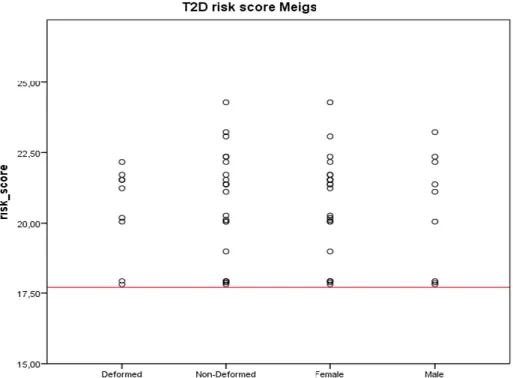
It has been hypothesized that susceptibility to a number of diseases, including the various facets of metabolic syndrome (MetS) (e.g. obesity, hypertension, type 2 diabetes, dyslipidaemia), have varied in recent human evolutionary history, and that this variability stems from gene-environment interaction (e.g. 108). Here we used modern type 2 diabetes genetic risk scores to compare ancient Bavarian variability at MetS-associated loci to that observed in modern Europeans (the average modern genotype is modeled here by the score representing “normal risk”) .We determined individual risk scores using scoring metrics developed by Meigs et al. (109), Cornelis et al. (110), and Hivert et al. (111), and by assessing the TCF7L2 haplotype of each individual following the definition of Helgason et al. (112). Of the 34 SNPs taken into account by Hivert et al. (111), only 33 SNPs could maximally be assessed per individual as rs4747969 (CDC123) was not part of the Nuclear Capture assay. All of these risk scores are not independent of each other as there is a certain degree of overlap between markers used for each of them.
Genetic risk scores (GRS) were calculated by summing up the numbers of risk alleles per individual. Missing SNPs were accounted for by calculating a standardized GRS following Cornelis et al. (110): count GRS = [total number of risk alleles/number of alleles present] × number of maximum alleles per model. This standardization was only applied to individuals with at least half of the loci present per score model. Standardized ancient Bavarian genetic risk scores according to the Meigs et al. model (109) ranged from 14.78 to 27.31 (Table S23),