HAL Id: hal-00552545
https://hal.archives-ouvertes.fr/hal-00552545
Submitted on 6 Jan 2011
HAL is a multi-disciplinary open access
archive for the deposit and dissemination of sci-entific research documents, whether they are pub-lished or not. The documents may come from teaching and research institutions in France or abroad, or from public or private research centers.
L’archive ouverte pluridisciplinaire HAL, est destinée au dépôt et à la diffusion de documents scientifiques de niveau recherche, publiés ou non, émanant des établissements d’enseignement et de recherche français ou étrangers, des laboratoires publics ou privés.
Guillaume Bouguen, Xavier Roblin, Arnaud Bourreille, Laura Feier, Jérôme
Filippi, Stéphane Nancey, Jean-François Bretagne, Bernard Flourie, Xavier
Hebuterne, Marc-André Bigard, et al.
To cite this version:
Guillaume Bouguen, Xavier Roblin, Arnaud Bourreille, Laura Feier, Jérôme Filippi, et al.. INFLIX-IMAB FOR REFRACTORY ULCERATIVE PROCTITIS. Alimentary Pharmacology and Therapeu-tics, Wiley, 2010, 31 (11), pp.1178. �10.1111/j.1365-2036.2010.04293.x�. �hal-00552545�
For Peer Review
INFLIXIMAB FOR REFRACTORY ULCERATIVE PROCTITIS
Journal: Alimentary Pharmacology & Therapeutics Manuscript ID: APT-0084-2010.R1
Manuscript Type: Original Scientific Paper Date Submitted by the
Author: 04-Mar-2010 Complete List of Authors: Bouguen, Guillaume
Roblin, Xavier; gastroenterology Bourreille, Arnaud
Stancu, Laura; University Hospital of Nancy, Inserm, U724, and Department of Hepato-Gastroenterology
Filippi, Jerome nancey, stephane
BRETAGNE, Jean-François; Hôpital Pontchaillou, Service des Maladies de l'Appareil Digestif
Flourie, Bernard; Hopital Lyon Sud, Hepato-Gastroenterology Hebuterne, Xavier; Hôpital de l'Archet
BIGARD, Marc-André; UNIVERSITY HOSPITAL BRABOIS, Gastroenterology
Siproudhis, Laurent; CHRU PONTCHAILLOU, GASTROENTEROLOGY UNIT
Peyrin-Biroulet, Laurent; University Hospital of Nancy, Hepato-gastroenterology
Keywords:
Ulcerative colitis < Disease-based, Inflammatory bowel disease < Disease-based, Biologics (IBD) < Topics, Immunosuppression < Topics
For Peer Review
INFLIXIMAB FOR REFRACTORY ULCERATIVE PROCTITIS
Guillaume Bouguen1, Xavier Roblin3, Arnaud Bourreille4, Laura Feier2, Jérôme Filippi5, Stéphane Nancey6, Jean-François Bretagne1, Bernard Flourié6, Xavier Hébuterne5, Marc-Andre Bigard2, Laurent Siproudhis1, Laurent Peyrin-Biroulet2
1
Inserm 991, Department of Hepato-Gastroenterology, University Hospital of Rennes, Pontchaillou;
2
Inserm, U954 and Department of Hepato-Gastroenterology, University Hospital of Nancy, Vandoeuvre-les-Nancy;
3
Department of Hepato-Gastroenterology, University Hospital of Saint-Etienne;
4
Department of Hepato-Gastroenterology, University Hospital of Nantes;
5
Department of Hepato-Gastroenterology, University Hospital of Nice;
6
Department of Hepato-Gastroenterology, University Hospital of Lyon, France.
Correspondence to:
Prof. Laurent Peyrin-Biroulet, MD, PhD
Inserm U954, and Department of Hepato-Gastroenterology, University Hospital of Nancy, Allée du Morvan,
54511 Vandœuvre-lès-Nancy, FRANCE
Phone: + 33 3 83 15 36 31/ Fax: + 33 3 83 15 36 33
Email address: [email protected]
Short title: Infliximab for ulcerative proctitis 3 4 5 6 7 8 9 10 11 12 13 14 15 16 17 18 19 20 21 22 23 24 25 26 27 28 29 30 31 32 33 34 35 36 37 38 39 40 41 42 43 44 45 46 47 48 49 50 51 52 53 54 55 56 57 58 59 60
For Peer Review
Key words: ulcerative proctitis, refractory ulcerative colitis, infliximabCompeting interest: G.B., XR, AB, JF, BF, LF, XH, SN, JFB, MAB, LS declare no conflict of interest. L.PB. has received consulting fees from Abbott Laboratories and UCB Pharma; lecture fees from Centocor for speaking at further medical education events; and grant support from UCB Pharma.
Sources of support: none 3 4 5 6 7 8 9 10 11 12 13 14 15 16 17 18 19 20 21 22 23 24 25 26 27 28 29 30 31 32 33 34 35 36 37 38 39 40 41 42 43 44 45 46 47 48 49 50 51 52 53 54 55 56 57 58 59 60
For Peer Review
SUMMARY
Background: Efficacy of infliximab in treating ulcerative proctitis is unknown.
Aim: To evaluate clinical, biological and endoscopic efficacy of infliximab therapy in
refractory proctitis.
Methods: The charts of 420 patients treated with infliximab for ulcerative colitis were
reviewed. Thirteen patients were treated with infliximab for refractory ulcerative proctitis in six referral centers between 2005 and 2009.
Results: Following infliximab therapy induction, 9/13 patients (69%) had a complete
response (defined as absence of diarrhea and blood), 2/13 (15%) had a partial response and 2/13 (15%) were primary non-responders. The median follow-up was 17 months (range, 3-48). Among the 11 patients with clinical response after infliximab induction therapy, 9 (82%) patients maintained response at last news. Disappearance of rectal disorders was observed in all 9 patients who maintained clinical response at last news. Following infliximab induction therapy, the mean CRP level fell from 12.8 mg/L to 4.7 mg/L. Endoscopic evaluation was performed before and after infliximab in 7 patients, showing an improvement in mucosal lesions in 4 patients, persistent mild endoscopic activity in 2 patients, and no improvement in one patient. One patient underwent proctocolectomy.
Conclusion: Infliximab therapy seems to be effective in inducing and maintaining clinical response in refractory ulcerative proctitis.
3 4 5 6 7 8 9 10 11 12 13 14 15 16 17 18 19 20 21 22 23 24 25 26 27 28 29 30 31 32 33 34 35 36 37 38 39 40 41 42 43 44 45 46 47 48 49 50 51 52 53 54 55 56 57 58 59 60
For Peer Review
INTRODUCTION
In population-based studies, ulcerative colitis was confined to the rectum at the time of diagnosis in 22% to 59% of patients.1-6 The 2-yr, 5-yr and 10-yr cumulative rate of relapse after the first diagnosis was respectively of 42%, 57% and 84% for all patients with ulcerative proctitis (UP) at diagnosis.7-9 UP may result in distressing symptoms, including stool frequency, tenesmus, urgency and bleeding.8, 10 Despite the significant benefits of rectally administered aminosalicylates and corticosteroids,10, 11 some patients with UP and good observance fail to improve and require additional medical therapy.
The management of UP refractory to standard medications remains a challenge in clinical practice, as few data are evidence-based.10 Several medications have been tested to treat refractory UP. In randomized controlled trials, antibiotics,12-15 cyclosporine enemas16 and oral methotrexate17 were not significantly effective to induce and maintain long-term clinical response and remission. Azathioprine18, 19 and tacrolimus20 were more effective than 5-aminosalicylate/mycophenolate mofetil and placebo, respectively, to induce short-term clinical response in refractory ulcerative colitis, but were associated with a higher incidence of adverse events. Intramuscular methotrexate21 and rectal tacrolimus ointment22,23
have been assessed in small open labeled studies, with encouraging results that need to be confirmed in large prospective studies. There is a lack of sufficient data or fair results for alternative and miscellaneous treatment including nicotine, heparin, short-chain fatty acid or probiotics.24-27 Although an invasive procedure, appendicectomy has recently shown promising results.28 Overall, these results remain difficult to interpret due to small sample size and the lack of well-designed published studies supporting their efficacy for refractory UP.
Infliximab (Remicade; Centocor, Malvern, PA), a tumor necrosis factor antagonist, has changed the way of treating inflammatory bowel diseases refractory to standard medications. Two large placebo-controlled, randomized trials, namely ACT 1 and ACT 2, demonstrated 3 4 5 6 7 8 9 10 11 12 13 14 15 16 17 18 19 20 21 22 23 24 25 26 27 28 29 30 31 32 33 34 35 36 37 38 39 40 41 42 43 44 45 46 47 48 49 50 51 52 53 54 55 56 57 58 59 60
For Peer Review
that infliximab is effective to induce and maintain clinical response in ulcerative colitis.29 However, patients with UP were excluded from both studies. In a retrospective study of 121 patients treated for ulcerative colitis with infliximab, only 3 patients had UP but were not specifically studied.30 In a prospective pilot study evaluating the efficacy of local tacrolimus for UP, tacrolimus was prescribed for infliximab failure in 4 out of 8 patients.23 Recently, topical administration of infliximab was found to be effective in one patient with chronic refractory proctitis.31
Importantly, patients with UP showing an aggressive disease course, with frequently relapsing proctitis and refractory disease to conventional treatment, are more prone to show proximal extension at a later date,7-9 and are colectomized to a higher extent.2, 8 Because some data suggest that early aggressive treatment of UP may prevent or delay proximal extension, there is an urgent need to better evaluate the efficacy of potent therapies such as infliximab in treating these patients.32
The aim of this study was therefore to evaluate the long-term outcome of refractory UP treated with infliximab therapy in a retrospective multicenter study.
METHODS
Study population
All hospital records of adult (age > 18 yr) patients treated with infliximab for ulcerative colitis at 6 tertiary referral centers in France (University Hospitals of Rennes, Nancy, Saint-Etienne, Nantes, Lyon, and Nice) between January 2005 and September 2009 were reviewed. A centralized diagnostic index was first used to identify all patients with diagnosis of ulcerative colitis. The database of these patients with ulcerative colitis was then compared to the pharmacy records of all patients treated with infliximab at these six hospitals. All adult patients with documented proctitis refractory to standard medication at first infliximab 3 4 5 6 7 8 9 10 11 12 13 14 15 16 17 18 19 20 21 22 23 24 25 26 27 28 29 30 31 32 33 34 35 36 37 38 39 40 41 42 43 44 45 46 47 48 49 50 51 52 53 54 55 56 57 58 59 60
For Peer Review
infusion and an established diagnosis of ulcerative colitis based on clinical, radiological, endoscopic and/or histological evidence were included. Proctitis was defined according to the Montreal classifcation.33
Infliximab was administered initially at a dose of 5 mg/kg as a 2-h i.v. infusion. Following infliximab induction therapy, which consisted of 3 infusions at weeks 0, 2, and 6, the patients received various infliximab regimens, depending on the preferences of each treating physician. Maintenance treatment was individually tailored by treating physicians. Scheduled maintenance treatment was defined as if infliximab was intentionally planned every 8 weeks.30, 34, 35 All concomitant medications were recorded, and medication was included in the analysis only if total drug exposure was superior to 3 months after first infliximab infusion. All adverse events occurring during or after the first infliximab infusion and until last news were collected. Acute infusion reactions were defined as any adverse event that occurred during or within one hour after the infusion of infliximab.30, 34, 35
All endoscopic and clinical reports mentioning the evolution of UP after first infliximab infusion were reviewed.
Short-term and long-term clinical responses were evaluated as previously described.30, 34, 35 The “short-term response” was defined as the result of induction therapy with infliximab and “long-term response” was defined as clinical efficacy at the maximal follow-up. Both short- and long-term clinical responses were defined as complete in the absence of diarrhea and blood and if a steroid-sparing effect was noted, and partial if there was marked clinical improvement but still persistent rectal blood loss.30, 36 To assess rectal disorders, we also recorded the presence of stool urgency, incontinence, tenesmus and rectal pain at first infliximab infusion and during the follow-up. Rectal disorders were considered as “present” if one of these items was reported, while rectal disorders were defined as “absent” if none was recorded. 3 4 5 6 7 8 9 10 11 12 13 14 15 16 17 18 19 20 21 22 23 24 25 26 27 28 29 30 31 32 33 34 35 36 37 38 39 40 41 42 43 44 45 46 47 48 49 50 51 52 53 54 55 56 57 58 59 60
For Peer Review
To assess endoscopic activity of proctitis, three levels of activity were defined: (1) normal, (2) mild with erythema, friability erosion and lack of spontaneous bleeding, and (3) severe with ulceration and spontaneous bleeding.29
Statistical analysis
Owing to small sample size, statistical analysis was limited to descriptive statistics. Quantitative variables were described as mean ± standard deviation (SD) and categorical variables were presented as counts and percent of the cohort.
RESULTS
Baseline characteristics of the patients
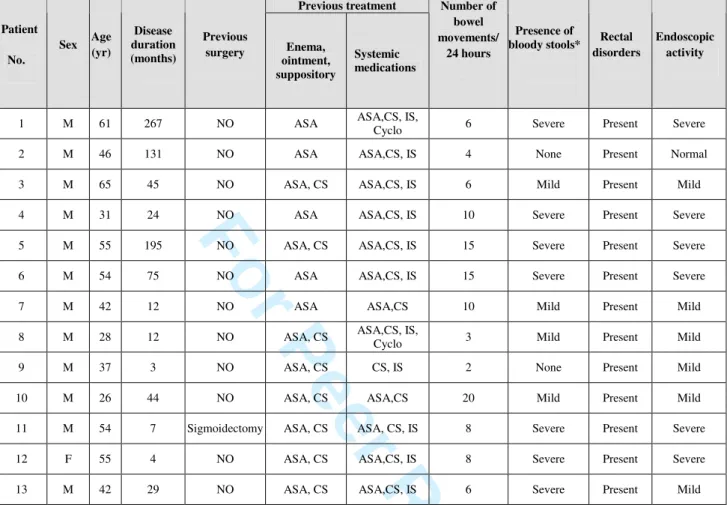
A total of 420 patients were treated with infliximab for ulcerative colitis at the six referral centers between January 2005 and September 2009. A total of 13 patients were treated with infliximab for refractory UP. The baseline characteristics at first infliximab infusion are indicated in Table 1. The mean age of our population was 47 years (SD=12.7; range, 27-66) and the mean duration of UP was 5.4 years (SD=6.9; range 0.2-22.2). Except for patient 2 who had a corticodependent disease, all patients had active UP with diarrhea and/or bloody stools. All patients also had rectal disorders at time of first infliximab infusion.
Only one patient was an active smoker at baseline. One patient had extra-intestinal rheumatologic disease. One patient had prior intestinal surgery that was not related to ulcerative colitis and consistied in a sigmoidectomy for diverticular disease performed 10 years before the diagnosis of ulcerative colitis.
Of the 13 patients, 11 (85 %) had been treated with immunosuppressants (thiopurine, methotrexate) before starting infliximab. Two patients had prior exposure to intravenous corticosteroid therapy, and two patients had received cyclosporine before infliximab 3 4 5 6 7 8 9 10 11 12 13 14 15 16 17 18 19 20 21 22 23 24 25 26 27 28 29 30 31 32 33 34 35 36 37 38 39 40 41 42 43 44 45 46 47 48 49 50 51 52 53 54 55 56 57 58 59 60
For Peer Review
initiation. All patients had received prior rectal 5-amisalicylate and prior oral corticosteroid therapy.
Infliximab therapy and concomitant medications
Infliximab was prescribed for UP refractory to both rectal 5-aminosalicylate and oral corticosteroid therapy in all 13 patients, and UP was also refractory to immunosuppressants in 11 patients.
All patients received induction therapy with 3 infliximab infusions at weeks 0, 2 and 6. Four out of 13 patients (15%) received only infliximab induction therapy, while the 9 remaining patients (85%) had scheduled infliximab treatment. In these patients, the mean number of infliximab infusions after induction therapy was 7 (S.D. =8.6; range, 1-25).
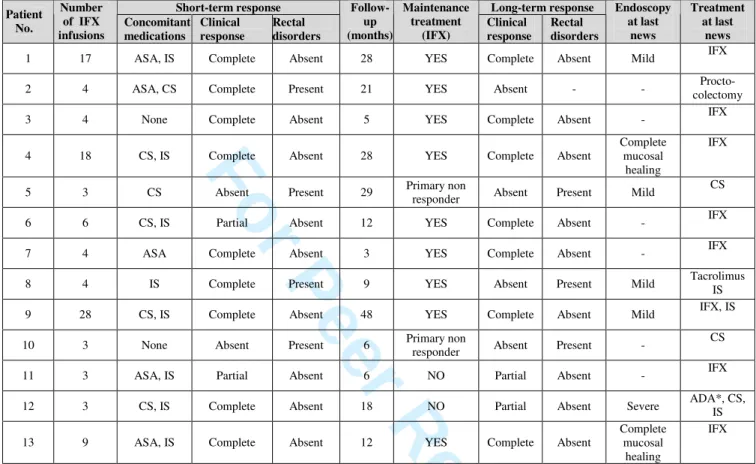
Concomitant medications at infliximab therapy initiation are summarized in Table 2. A total of 8 patients were treated with concomitant immunosuppressants and 6 patients had concomitant corticosteroid therapy.
Short-term clinical and biological efficacy (Table 2)
Short-term efficacy could be assessed for all 13 patients. Two out of 13 patients (15%) were judged as primary non-responders. One primary non-responder had no concomitant treatment, while the other one was receiving concomitant oral corticosteroid at the time of infliximab initiation. A total of 11 out of 13 (85%) patients experienced clinical improvement after treatment with infliximab: complete clinical response was observed for 9 out of the 11 patients (82%) and a partial response for two subjects (18%). All subjects (n=8) with concomitant immunosuppressant had a clinical response, which was judged as complete in 6 out of the 8 patients. Rectal disorders were improved in 9 out of the 11 primary responders (82%). 3 4 5 6 7 8 9 10 11 12 13 14 15 16 17 18 19 20 21 22 23 24 25 26 27 28 29 30 31 32 33 34 35 36 37 38 39 40 41 42 43 44 45 46 47 48 49 50 51 52 53 54 55 56 57 58 59 60
For Peer Review
Following infliximab induction therapy, the mean C-reactive protein (CRP) level fell from 12.8 mg (S.D. =15.1; range, 1-55) to 4.7 mg (S.D. =4.1; range 0.6-12; data available at baseline and after induction therapy in 10 of 13 patients).
Long-term outcome: clinical, biological and endoscopic responses
Information regarding long-term follow-up was available for all patients (n=13). After a median follow-up of 17 months (SD 13 months; range 3-48), the evaluation of clinical activity at last news revealed a partial (n=2) or complete (n=7) clinical response in 9 of the 11 primary responders (82%). Of note, rectal disorders disappeared in all 9 patients.
The 4 remaining patients had symptomatic disease at last news, including the 2 patients who were considered as primary non-responders. Both of these patients (Patients 5 and 10) were being treated with oral corticosteroid at last news. Two patients (Patients 2 and 8) who were considered as primary responders lost response to infliximab over time and were secondary non-responders: one patient treated with scheduled infliximab therapy without concomitant immunosuppressant had a disease extension to left-sided colitis after discontinuation of corticosteroid therapy and finally underwent proctocolectomy (Patient 2). The other one (Patient 8) had complete short-term clinical response with disappearance of diarrhea and blood in stools, but as patient 2 had a persistent rectal disorder after infliximab induction therapy. This patient had an early relapse after infliximab induction therapy and did not experience any clinical improvement despite infliximab optimization by dose escalation at the fourth infusion. Treatment was changed to oral tacrolimus and methotrexate without any response on clinical disease activity or rectal disorder.
Among the 8 patients who were primary responders and had concomitant immunosuppressant at baseline, 7 patients had maintained their clinical response without any rectal disorder at last news. 3 4 5 6 7 8 9 10 11 12 13 14 15 16 17 18 19 20 21 22 23 24 25 26 27 28 29 30 31 32 33 34 35 36 37 38 39 40 41 42 43 44 45 46 47 48 49 50 51 52 53 54 55 56 57 58 59 60
For Peer Review
During follow-up, infliximab optimization was necessary in 3 patients. Two patients (patients 1 and 9) had a complete clinical response at last news, whereas the third one (Patient 8) had not experienced any improvement in clinical symptoms despite dose escalation and was considered a secondary non-responder.
At last news, the CRP level was available for 7 patients. When including all 7 subjects in the analysis, the mean CRP level was 14.4 mg/L (S.D. = 22.2; range 0.5-59). Excluding primary non-responders did not influence this result, with a mean CRP level of 14.1 mg/L (S.D. =25.2; range 0.5-59). When excluding both primary and secondary non-responders, the mean CRP level was only 2.9 mg/L (S.D. =2; range 0.5-5).
All patients had endoscopic evaluation at baseline. During follow-up, 7 patients also had endoscopic evaluation of the rectum after infliximab initiation. This showed an improvement in mucosal lesions in 4 patients (complete mucosal healing in 2 patients and mild endoscopic activity in 2 patients), stable endoscopic lesions with persistent mild endoscopic disease in two patients, and persistent severe rectal disease in one patient, as defined above. Interestingly, endoscopic response was generally associated with clinical response: the two patients with complete mucosal healing at last news who had severe (patient 4) and mild (patient 13) lesions at infliximab initiation were in clinical response at last news, whereas patient 12 with severe mucosal lesions persisting after infliximab induction therapy was a secondary non-responder to infliximab therapy. The 4 remaining patients had mild endoscopic activity at last news: patients 1 and 9, who respectively had severe and mild endoscopic lesions at time of infliximab initiation, had a complete clinical response at last news. Hence, there was a discrepancy between endoscopic and clinical response in only two patients: patients 5 and 8, who respectively had severe or mild endoscopic lesions at baseline, were primary and secondary non-responders at last news despite mild endoscopic activity after infliximab therapy initiation.
3 4 5 6 7 8 9 10 11 12 13 14 15 16 17 18 19 20 21 22 23 24 25 26 27 28 29 30 31 32 33 34 35 36 37 38 39 40 41 42 43 44 45 46 47 48 49 50 51 52 53 54 55 56 57 58 59 60
For Peer Review
Adverse events
Infliximab infusions were generally well tolerated. None of the 13 patients had any acute infusion reaction. Only two patients experienced adverse events. One developed psoriasiform lesions leading to infliximab discontinuation. The other developed several infections, with
left-sided diverticulitis and bursitis of the knee. He was treated with concomitant immunosuppressant and oral steroid therapy. Both infections had a favorable outcome after administration of broad-spectrum antibiotics, so infliximab therapy could be continued. No opportunistic, tuberculosis infections, malignancies or lymphoma were observed throughout the follow-up period.
DISCUSSION
This study shows for the first time that infliximab treatment may be effective for both induction and maintenance of clinical response in refractory UP.
Two randomized trials, namely ACT 1 and ACT 2, demonstrated the efficacy of infliximab in ulcerative colitis, but UP were excluded from both studies29, whereas the monocenter retrospective study from Leuven did not specifically report the outcome of 3 patients with UP treated with infliximab.30
Following infliximab induction therapy, 11 out of 13 (85%) patients experienced clinical improvement after treatment with infliximab, with 9 of the 11 (82%) also experiencing improvement in rectal disorders. Long-term outcome showed a complete clinical response for half of the patients with refractory UP. These results are in line with previous reports showing a clinical response in patients with pancolitis or left-sided colitis treated with infliximab at short term in about 63-69.4% of patients and at long term in 38.8-43% of patients.29, 30 Of note, 9 of the 11 primary responders maintained a complete response at maximal follow-up, 3 4 5 6 7 8 9 10 11 12 13 14 15 16 17 18 19 20 21 22 23 24 25 26 27 28 29 30 31 32 33 34 35 36 37 38 39 40 41 42 43 44 45 46 47 48 49 50 51 52 53 54 55 56 57 58 59 60
For Peer Review
as judged by disease activity and the absence of rectal disorders. This finding is also consistent with that obtained in a large monocenter retrospective study evaluating infliximab in left-sided and pancolitis, and showing that 68% of patients with initial response to infliximab had sustained clinical response during follow-up.30 Because infliximab efficacy for UP was broadly similar to that reported for left-sided colitis and extensive colitis, our results
suggest that UP may be included in large international clinical trials evaluating the efficacy of
anti-TNF agents in ulcerative colitis.
Interestingly, clinical response was accompanied by a decrease in CRP levels and an improvement in endoscopic lesions of the rectum. The drop in CRP levels is a known factor associated with clinical response in ulcerative colitis.30 Mucosal lesions were improved in 4 of
the 7 patients with endoscopic assessment after infliximab initiation, thus confirming the efficacy of infliximab therapy in this indication.
Meucci et al. reported that 14% of patients with UP presented one or more features consistent with a refractory disease, indicating that, in some patients with UP, the disease course is not as mild as generally assumed.8 This aggressive course was associated with an increased risk of proximal disease extension and finally colectomy.2, 8 In our series, only one patient relapsed after infliximab induction: he progressed to pancolitis and finally underwent proctocolectomy. Of note, the safety profile of infliximab was consistent with previous experience with this drug in UC.29, 30, 34 Overall, these results indicate that infliximab may be effective in treating refractory UP.
We were not able to look for predictors of response to infliximab due to small sample size. Despite this limitation, patients with concomitant immunosuppressant administration seemed to have higher rates of clinical response and a longer duration of response to infliximab. Another limitation is the lack of control arm. However, the rates of response to placebo in patients with severe and resistant ulcerative colitis in randomized control trials are low, 3 4 5 6 7 8 9 10 11 12 13 14 15 16 17 18 19 20 21 22 23 24 25 26 27 28 29 30 31 32 33 34 35 36 37 38 39 40 41 42 43 44 45 46 47 48 49 50 51 52 53 54 55 56 57 58 59 60
For Peer Review
ranging from 10 to 33% at short term and from 6.6 to 14% in the long term.20, 29 In addition, only patients who had active disease despite treatment with conventional therapy, including local aminosalicylate and corticosteroid therapy, were included in the study.
Importantly, the median follow-up was 17 months. A long-term follow-up is required to assess the sustained efficacy of medical treatment in refractory UP, which is known to relapse frequently, and because refractory disease is more prone to having a complicated outcome.8, 9,
14
Furthermore, this was a multicenter study. Infliximab therapy is rarely used to treat UP in clinical practice. By screening a total of 420 patients treated with anti-TNF therapy for ulcerative colitis at 6 referral centers in France, we were able to identify and analyze the data of 13 patients. Finally, because of the retrospective study design and the inherent bias in interpreting clinical response on medical records, we decided to assess clinical response not only by using the judgment of the treating physician but also by recording the presence or not of objective Mayo criteria such as diarrhea and blood in the stools.30, 36 In addition, the absence of rectal disorders was defined as the absence of all predefined items, namely stool urgency, incontinence, tenesmus and rectal pain.
Collectively, our findings indicate that infliximab may be effective and safe in inducing and maintaining a clinical response in patients with refractory UP. It is unlikely that a randomized controlled trial will ever be carried out to evaluate the efficacy of infliximab in refractory UP.
However, because of the retrospective study design of our study and small sample size,
infliximab efficacy in treating ulcerative proctitis needs to be confirmed in larger prospective
studies. Pending these results, infliximab should be used only in patients with disease
refractory to all available medications. The optimal drug regimen as well as the optimal
duration of treatment remain to be determined.
3 4 5 6 7 8 9 10 11 12 13 14 15 16 17 18 19 20 21 22 23 24 25 26 27 28 29 30 31 32 33 34 35 36 37 38 39 40 41 42 43 44 45 46 47 48 49 50 51 52 53 54 55 56 57 58 59 60
For Peer Review
Table 1: Baseline characteristics of 13 patients with refractory ulcerative proctitis.
Previous treatment Patient No. Sex Age (yr) Disease duration (months) Previous surgery Enema, ointment, suppository Systemic medications Number of bowel movements/ 24 hours Presence of
bloody stools* Rectal
disorders
Endoscopic activity
1 M 61 267 NO ASA ASA,CS, IS, Cyclo 6 Severe Present Severe 2 M 46 131 NO ASA ASA,CS, IS 4 None Present Normal 3 M 65 45 NO ASA, CS ASA,CS, IS 6 Mild Present Mild 4 M 31 24 NO ASA ASA,CS, IS 10 Severe Present Severe 5 M 55 195 NO ASA, CS ASA,CS, IS 15 Severe Present Severe 6 M 54 75 NO ASA ASA,CS, IS 15 Severe Present Severe 7 M 42 12 NO ASA ASA,CS 10 Mild Present Mild 8 M 28 12 NO ASA, CS ASA,CS, IS,
Cyclo 3 Mild Present Mild 9 M 37 3 NO ASA, CS CS, IS 2 None Present Mild 10 M 26 44 NO ASA, CS ASA,CS 20 Mild Present Mild 11 M 54 7 Sigmoidectomy ASA, CS ASA, CS, IS 8 Severe Present Severe 12 F 55 4 NO ASA, CS ASA,CS, IS 8 Severe Present Severe 13 M 42 29 NO ASA, CS ASA,CS, IS 6 Severe Present Mild M, Male; F, female; yr, years ; IFX, infliximab; ASA, aminosalicylate; IS, immunosuppressant (azathioprine, 6 mercaptopurine, methotrexate); CS, corticosteroid; Cyclo, cyclosporine
*As judged by their physician.
3 4 5 6 7 8 9 10 11 12 13 14 15 16 17 18 19 20 21 22 23 24 25 26 27 28 29 30 31 32 33 34 35 36 37 38 39 40 41 42 43 44 45 46 47 48 49 50 51 52 53 54 55 56 57 58 59 60
For Peer Review
Table 2: Short-term and long-term responses to infliximab in the 13 patients with refractory ulcerative proctitis.
Short-term response Long-term response
Patient No. Number of IFX infusions Concomitant medications Clinical response Rectal disorders Follow-up (months) Maintenance treatment (IFX) Clinical response Rectal disorders Endoscopy at last news Treatment at last news
1 17 ASA, IS Complete Absent 28 YES Complete Absent Mild IFX 2 4 ASA, CS Complete Present 21 YES Absent - - colectomy Procto-3 4 None Complete Absent 5 YES Complete Absent - IFX 4 18 CS, IS Complete Absent 28 YES Complete Absent
Complete mucosal
healing
IFX 5 3 CS Absent Present 29 Primary non
responder Absent Present Mild
CS 6 6 CS, IS Partial Absent 12 YES Complete Absent - IFX 7 4 ASA Complete Absent 3 YES Complete Absent - IFX 8 4 IS Complete Present 9 YES Absent Present Mild Tacrolimus IS 9 28 CS, IS Complete Absent 48 YES Complete Absent Mild IFX, IS 10 3 None Absent Present 6 Primary non
responder Absent Present -
CS 11 3 ASA, IS Partial Absent 6 NO Partial Absent - IFX 12 3 CS, IS Complete Absent 18 NO Partial Absent Severe ADA*, CS, IS 13 9 ASA, IS Complete Absent 12 YES Complete Absent
Complete mucosal
healing
IFX IFX, infliximab; ASA, aminosalicylate; IS, immunosuppressant (azathioprine, 6 mercaptopurine, methotrexate); ADA, adalimumab
*Switch from infliximab to adalimumab due to patient preference.
3 4 5 6 7 8 9 10 11 12 13 14 15 16 17 18 19 20 21 22 23 24 25 26 27 28 29 30 31 32 33 34 35 36 37 38 39 40 41 42 43 44 45 46 47 48 49 50 51 52 53 54 55 56 57 58 59 60
For Peer Review
References
1. Bjornsson S, Johannsson JH, Oddsson E. Inflammatory bowel disease in Iceland, 1980-89. A retrospective nationwide epidemiologic study. Scand J Gastroenterol 1998;33:71-7.
2. Solberg IC, Lygren I, Jahnsen J, et al. Clinical course during the first 10 years of ulcerative colitis: results from a population-based inception cohort (IBSEN Study). Scand J Gastroenterol 2009;44:431-40.
3. Gower-Rousseau C, Salomez JL, Dupas JL, et al. Incidence of inflammatory bowel disease in northern France (1988-1990). Gut 1994;35:1433-8.
4. Henriksen M, Jahnsen J, Lygren I, et al. Ulcerative colitis and clinical course: results of a 5-year population-based follow-up study (the IBSEN study). Inflamm Bowel Dis 2006;12:543-50.
5. Moum B, Vatn MH, Ekbom A, et al. Incidence of ulcerative colitis and indeterminate colitis in four counties of southeastern Norway, 1990-93. A prospective population-based study. The Inflammatory Bowel South-Eastern Norway (IBSEN) Study Group of Gastroenterologists. Scand J Gastroenterol 1996;31:362-6.
6. Pagenault M, Tron I, Alexandre JL, et al. [Incidence of inflammatory bowel diseases in Bretagne (1994-1995). ABERMAD. Association Bertonne d'Etude et de Recherche des Maladies de l'Appareil Digesif]. Gastroenterol Clin Biol 1997;21:483-90.
7. Ayres RC, Gillen CD, Walmsley RS, et al. Progression of ulcerative proctosigmoiditis: incidence and factors influencing progression. Eur J Gastroenterol Hepatol 1996;8:555-8.
8. Meucci G, Vecchi M, Astegiano M, et al. The natural history of ulcerative proctitis: a multicenter, retrospective study. Gruppo di Studio per le Malattie Infiammatorie Intestinali (GSMII). Am J Gastroenterol 2000;95:469-73.
9. Stewenius J, Adnerhill I, Ekelund GR, et al. Risk of relapse in new cases of ulcerative colitis and indeterminate colitis. Dis Colon Rectum 1996;39:1019-25.
10. Regueiro M, Loftus EV, Jr., Steinhart AH, et al. Clinical guidelines for the medical management of left-sided ulcerative colitis and ulcerative proctitis: summary statement. Inflamm Bowel Dis 2006;12:972-8.
11. Travis SPL, Stange EF, Lemann M, et al. European evidence-based Consensus on themanagement of ulcerative colitis: Current management. Journal of Crohn's and Colitis 2008;2:24-62. 3 4 5 6 7 8 9 10 11 12 13 14 15 16 17 18 19 20 21 22 23 24 25 26 27 28 29 30 31 32 33 34 35 36 37 38 39 40 41 42 43 44 45 46 47 48 49 50 51 52 53 54 55 56 57 58 59 60
For Peer Review
12. Chapman RW, Selby WS, Jewell DP. Controlled trial of intravenous metronidazole as an adjunct to corticosteroids in severe ulcerative colitis. Gut 1986;27:1210-2.
13. Regueiro M, Loftus EV, Jr., Steinhart AH, et al. Medical management of left-sided ulcerative colitis and ulcerative proctitis: critical evaluation of therapeutic trials. Inflamm Bowel Dis 2006;12:979-94.
14. Turunen U, Farkkila, Valtonen V. Long-term treatment of ulcerative colitis with ciprofloxacin. Gastroenterology 1999;117:282-3.
15. Turunen UM, Farkkila MA, Hakala K, et al. Long-term treatment of ulcerative colitis with ciprofloxacin: a prospective, double-blind, placebo-controlled study. Gastroenterology 1998;115:1072-8.
16. Sandborn WJ, Tremaine WJ, Schroeder KW, et al. A placebo-controlled trial of cyclosporin enemas for midly to moderately active left-sided ulcerative colitis. Gastroenterology 1994;106:1429-35.
17. Oren R, Arber N, Odes S, et al. Methotrexate in chronic active ulcerative colitis: a double-blind, randomized, Israeli multicenter trial. Gastroenterology 1996;110:1416-21.
18. Ardizzone S, Maconi G, Russo A, et al. Randomised controlled trial of azathioprine and 5-aminosalicylic acid for treatment of steroid dependent ulcerative colitis. Gut 2006;55:47-53.
19. Orth T, Peters M, Schlaak JF, et al. Mycophenolate mofetil versus azathioprine in patients with chronic active ulcerative colitis: a 12-month pilot study. Am J Gastroenterol 2000;95:1201-7.
20. Ogata H, Matsui T, Nakamura M, et al. A randomised dose finding study of oral tacrolimus (FK506) therapy in refractory ulcerative colitis. Gut 2006;55:1255-62. 21. Paoluzi OA, Pica R, Marcheggiano A, et al. Azathioprine or methotrexate in the
treatment of patients with steroid-dependent or steroid-resistant ulcerative colitis: results of an open-label study on efficacy and tolerability in inducing and maintaining remission. Aliment Pharmacol Ther 2002;16:1751-9.
22. van Dieren JM, van Bodegraven AA, Kuipers EJ, et al. Local application of tacrolimus in distal colitis: feasible and safe. Inflamm Bowel Dis 2009;15:193-8.
23. Lawrance IC, Copeland TS. Rectal tacrolimus in the treatment of resistant ulcerative proctitis. Aliment Pharmacol Ther 2008;28:1214-20.
3 4 5 6 7 8 9 10 11 12 13 14 15 16 17 18 19 20 21 22 23 24 25 26 27 28 29 30 31 32 33 34 35 36 37 38 39 40 41 42 43 44 45 46 47 48 49 50 51 52 53 54 55 56 57 58 59 60
For Peer Review
24. Bibiloni R, Fedorak RN, Tannock GW, et al. VSL#3 probiotic-mixture induces remission in patients with active ulcerative colitis. Am J Gastroenterol 2005;100:1539-46.
25. Bloom S, Kiilerich S, Lassen MR, et al. Low molecular weight heparin (tinzaparin) vs. placebo in the treatment of mild to moderately active ulcerative colitis. Aliment Pharmacol Ther 2004;19:871-8.
26. Furrie E, Macfarlane S, Kennedy A, et al. Synbiotic therapy (Bifidobacterium longum/Synergy 1) initiates resolution of inflammation in patients with active ulcerative colitis: a randomised controlled pilot trial. Gut 2005;54:242-9.
27. Thomas GA, Rhodes J, Ragunath K, et al. Transdermal nicotine compared with oral prednisolone therapy for active ulcerative colitis. Eur J Gastroenterol Hepatol 1996;8:769-76.
28. Bolin TD, Wong S, Crouch R, et al. Appendicectomy as a therapy for ulcerative proctitis. Am J Gastroenterol 2009;104:2476-82.
29. Rutgeerts P, Sandborn WJ, Feagan BG, et al. Infliximab for induction and maintenance therapy for ulcerative colitis. N Engl J Med 2005;353:2462-76.
30. Ferrante M, Vermeire S, Fidder H, et al. Long-term outcome after infliximab for refractory ulcerative colitis. Journal of Crohn's and Colitis 2008;2:219-225.
31. Molnar T, Farkas K, Nagy F, et al. Topically administered infliximab can work in ulcerative proctitis despite the ineffectiveness of intravenous induction therapy. Am J Gastroenterol 2009;104:1857-8.
32. Pica R, Paoluzi OA, Iacopini F, et al. Oral mesalazine (5-ASA) treatment may protect against proximal extension of mucosal inflammation in ulcerative proctitis. Inflamm Bowel Dis 2004;10:731-6.
33. Satsangi J, Silverberg MS, Vermeire S, et al. The Montreal classification of inflammatory bowel disease: controversies, consensus, and implications. Gut 2006;55:749-53.
34. Colombel JF, Ricart E, Loftus EV, Jr., et al. Management of Crohn's disease of the ileoanal pouch with infliximab. Am J Gastroenterol 2003;98:2239-44.
35. Schnitzler F, Fidder H, Ferrante M, et al. Long-term outcome of treatment with infliximab in 614 patients with Crohn's disease: results from a single-centre cohort. gut 2009;58:492-500.
36. Ferrante M, Vermeire S, Katsanos KH, et al. Predictors of early response to infliximab 3 4 5 6 7 8 9 10 11 12 13 14 15 16 17 18 19 20 21 22 23 24 25 26 27 28 29 30 31 32 33 34 35 36 37 38 39 40 41 42 43 44 45 46 47 48 49 50 51 52 53 54 55 56 57 58 59 60