Ministry of Higher Education and Scientific Research
Djillali Liabes University of Sidi Bel Abbes
Faculty of Letters, Languages and Arts
Department of English Language
Dissertation Submitted to the department of Foreign Languages Department of English in partial fulfillment of the degree of magister in Business English
Thesis Submitted to the Department of English in Candidacy for the Degree of “Doctorat” in British Civilisation
Submitted by: Supervised by: Mrs. Amira Natalia MIR/MEFTAH Prof. Fewzia BEDJAOUI Board of Examiners:
President: Dr BENAISSI Fawzia Prof. DLU Sidi Bel Abbes Supervisor: Dr BEDJAOUI Fewzia Prof. DLU Sidi Bel Abbes Examiner: Dr OUAHMICHE Ghania Prof. Oran University Examiner: Dr. LABED Zohra MC-A ENS of Oran
Examiner: Dr SEMMOUD Abdelatif MC-A University of Tlemcen Examiner: Dr MOUHADJER Nourreddine MC-A University of Tlemcen
New Perceptions of Britishness:
A Socio-Cultural Study of Multi-Cultural English
“This royal throne of kings, this sceptred isle,
This earth of majesty, this seat of Mars, This other Eden, demi-paradise, This fortress built by Nature for herself Against infection and the hand of war, This happy breed of men, this little world,
This precious stone set in the silver sea, Which serves it in the office of a wall
Or as a moat defensive to a house, Against the envy of less happier lands,
This blessed plot,
this earth, this realm, this England.”
MOHAMmED ADeM
meftah
(2011-2016)
Acknowledgements
First of all « لله ركشلا و لله دمحلا »
I would like to express my sincere gratitude to my supervisor Prof. Fewzia BEDJAOUI for her continuous support, extreme patience during these past years. Her motivation, immense knowledge and guidance helped me all the time during the period of researching and writing this thesis. I could not have imagined having a better advisor and mentor for such an intellectual enterprise.
Besides, I would like to thank the board of examiners: Prof. Fawzia BENAISSI from DLU Sidi Bel Abbes, and all the examiners Prof Ghania OUAHMICHE from the University of Oran 2, Dr. Zohra LABED from ENS Oran, Dr Abdelatif SEMOUD and Dr Nourreddine MOUHADJER from the University of Tlemcen for having devoted their precious time to read and evaluate my work.
Finally, I express my warm thanks to the participants who contributed to the practical part of this thesis.
reat Britain is regarded as one of the most multicultural countries and societies in the world because of the mosaic diversity of its people and the welcoming spirit typically British. Such a great flora and fauna of earthbound grasps the attention of many experts as Kumar, Kramsch, and Crowther. For this matter, the purpose of this analytical descriptive work is to capture the “real” image of the UK either inside or outside the nation and to discover the secret of that “charming” culture and figure out the British perception of beauty through native and immigrant eyes. For that, 14 natives and 45 immigrants were included through the spread of two different surveys in 2018 via online Google forms. The findings of natives were fruitful and voiced these traditions and customs. They confirmed the cultural specificities as being basically regional and showed the deep difference from one area to another. British people describe themselves with the same manner of uniqueness and pride. They tie Britishness to the tea parties, popular sports like cricket, rugby and singing in the streets. Immigrants feel being different in the UK, with their individuality but not categorized by their culture or religion in an “open-minded” society where they can freely practice their religions, and keep their traditions as long as they respect otherness. There are numerous cultures in the UK going from Asians to Middle Easterners. The UK was, is and always will be a “very compassionate” nation for multiculturalism and a “welcoming” destination for many people, as there are laws protecting them from discrimination toward tolerance, linguistic and cultural integration once accepted legally to settle in U.K or following legal entries and settlements.
Key words: Britishness, UK, multiculturalism, immigrant, natives, British culture
A.D: Anno Domini, after Chris B.C: Before Chris
BA: British Airlines
BBC: British Broadcasting Corporation BR: British Rail
CUKC: Citizen of United Kingdom Colonies ENG: England
GB: Great Britain
GBP: Great British Pounds
ITN: Independent Television News ITV: Independent Television MP: Member of Parliament NIR: Northern Ireland PM: Prime Minister
RP: Received Pronunciation (an upper class British accent, sometimes called the
Queen’s English/ BBC English/ Oxford English)
SCT: Scotland
TFL: Transport for London UK: United Kingdom
UKIP: UK Independence Party USA: United States of America WAL: Wales
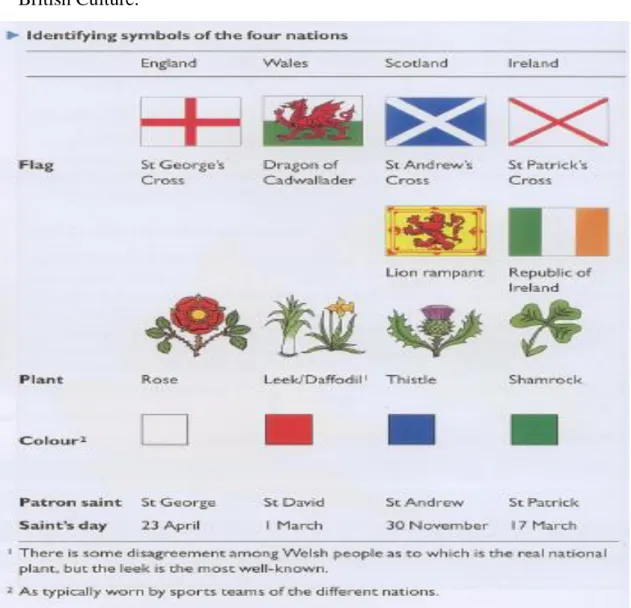
Figure 3.1 Geography of the UK………... Figure 3.2 The population Settlement per Town………... Figure 3.4 Flag.……..………... Figure 3.4 The Parliament ………...……...………... Figure 4.1 Ethnic Group of usually Resident Population... Figure 4.2 Online Survey for Natives………...….. Figure 4.2.1 Online Survey for Natives………..…..… Figure 4.2.2 Online Survey for Immigrants and Foreigners…….…….
113 116 139 157 165 173 174 175
List of Tables
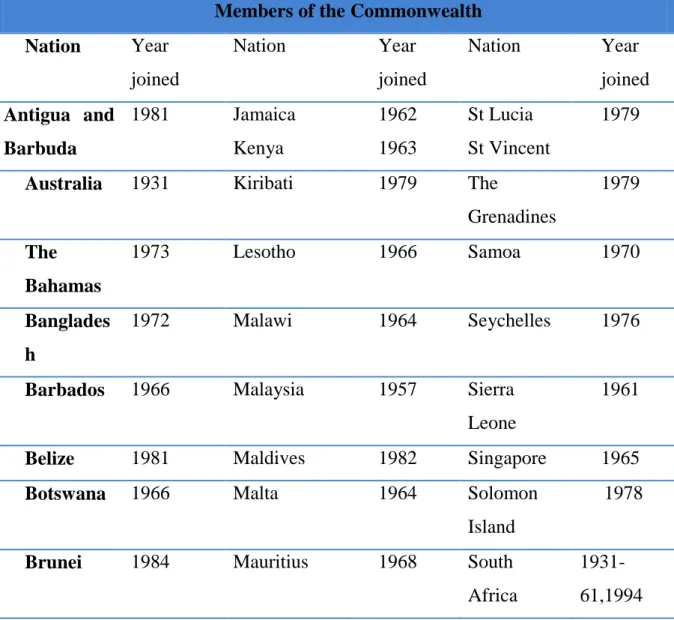
Table 1.1 Members of the Commonwealth ……….…..…… Table 1.2 British Nationality Act 1948………...……. Table 4.1 Overview about the Survey………
34 38 172
Dedications……… Acknowledgments………..………... Abstract………... List of Abbreviations and Acronyms………...……….………….. List of Tables...………... List of Figures………..………..…...… Table of Contents………..………...………... General Introduction……….... I II III VI V IV VII 1
Chapter One: An Overview of British Immigration
1.1 Introduction... 13
1.2. British Historical Background... 1.2.1 The Royal Succession in England... 15 16 1.2.2. English Cultural Background…... 27
1.3. Historical Background of Immigration in Britain... 30
1.3.1. Early Immigration Waves to the British Isles... 31
1.3.2. Chronological Shadow from 1914 until 1945... 34
1.3.3. Chronological Shadow from 1945 until 1948... 34
1.3.4. Chronological Headlines after 1950... 1.3.4.1. Events of the Notting Hill Riots... … 36 38 1.4. Commonwealth Immigrants Act 1962... 38
1.4.1. Commonwealth Nations... 39
1.4.2. Commonwealth Immigration... 43
1.5. Case of Irish Immigrants... 44
1.6. Conservative Party Exclusion Policy... 46
1.7. Enoch Powell’s Role Play in the Process of the British Immigration... 47
1.7.1. Enoch Powell’s Life... … 47
1.7.2. Enoch Powell’s Political Career... 49
1.7.3. Enoch Powell’s “Rivers of Blood” Speech... 49
1.8. Powell’s Criticism of the Race Relations Bill... 50
1.8.1. Enoch Powell’s “Rivers of Blood” Speech Comments... 1.8.2. Reasons for Powell Dismissal from the Conservative Party………. 52 53 1.9. Emergence of Powellism in Britain... 53
1.10. Immigration Act of 1971... 54
1.10.1. Reasons of Immigration Act... 55
1.10.2. Immigration Act of Contents...………... 56
1.10.3. Partiality and Immigration Legislation... 57
1.10.4. Opponents of the Immigration Appeal Act of 1969... 58
1.10.5. Criticisms of the Controversies within the Bill... 59
1.10.6. British Immigration Policy... 61
1.10.7. 1970s Tough Policy... 61
1.10.8. 1980 Immigration Trends... 62
1.11. Current Situation in the UK... … 65
Chapter Two: Theoretical Debate
2.1. Introduction…………... 70
2.2. Overview about the Concept of Britishness... 71
2.3. Britishness vs. Englishness... 77
2.4. Great Britain and United Kingdom Notion... 78
2.5. Multiculturalism and Citizenship... 79
2.6. Cultural Identity as a Mirror of Britishness... 80
2.7. Definition of Culture……….………..………….... 81
2.7.1. Perception of Cultural Identity... 83
2.7.2. Cultural Identity and Language... 85
2.7.3. Hybrid Identity... 86
2.7.4. Nature, Culture, Language... 88
2.7.5. Insiders/ Outsiders... 89
2.7.6. Cultural Encoding... 91
2.8. Ethnic, Transnational, National and Diaspora Identity: ... 92
2.8.1. Ethnic Identity... 92
2.8.2. Transnational Identity... 94
2.8.3. National Identity... 97
2.8.4. Diaspora Identity... 98
2.9. Post-Colonialism and Identity... 101
2.9.1. Post-Colonialism... 101
2.9.2. Post-Colonial Theory... 103
2.10. National Identity and Belonging... 104
2.11. Nationalism and Citizenship... 105
2.11.1. The Problem behind Nationality and Citizenship... 105
2.12. Multi-faith Society and Belonging: ... 108
2.13. Cultural Stereotype... 113
2.14. Culture Authenticity... 114
2.15. Cross Cultural, Intercultural, Multicultural... 114
2.16. Politics of Recognition... 115
2.17. Conclusion... 117
Chapter Three: Aspects of Britishness 3.1. Introduction ... 119
3.2. Aspects of Britishness... 119
3.3. Geography ... 120
3.4. The Country and its People ... 120
3.4.1. Geographically Speaking ... 120
3.4.2. Politically Speaking ... 121
3.5. The Growth of the Nation ... 123
3.5.1. The Building of the Empire ... 123
3.5.2. The Empire of Trade... 123
3.5.3. The Growth of the Empire ... 124
3.5.4. Climate ... 124
3.6. The Most Attractive Place and Monuments in the UK ... 126
3.6.1. Tower Bridge ... 126
3.6.6. Parks ... 128
3.6.7. Castles ... 129
3.6.8. Churches and Cathedrals ... 130
3.3.7. National Symbols ... 131
3.7.1. Some Historical and Poetic Names ... 131
3.7.2. The Union Jack ... 132
3.7.3. The Royal Family ... 133
3.7.4. British Names ... 135
3.7.5. The Coldstream Guards ... 138
3.7.6. Money ... 138
3.8. Cultural Habits and Behaviours ... 139
3.8.1. Folks, Music and Songs: ... 139
3.8.2. Transport ... 140
3.8.3. Sport ... 142
3.8.3.1. Football British Style ... 143
3.8.3.2. Rugby ... 144
3.8.4. English Food ... 145
3.8.5. Clothes and Shopping ... 146
3.8.6. All the Year Round ... 146
3.8.7. Night Out ... 147
3.9. Different Ethnic Groups ... 148
3.9.1. The Four Nations ... 148
3.9.2. Standard of Living ... 150
3.10. Values and Attitudes ... 151
3.10.1. Who are the English? ... 151
3.10.2. Personnality ... 151
3.11. Language ... 160
3.11.1. Pronunciation ...…... 161
3.11.2. Vocabulary ... 164
3.12. Achievements ... 165
3.12.1. The Style of Politics ... 165
3.12.2. British Constitutions ... 166
3.12.3. BBC... 168
3.12.4. News Papers ... 169
3.13. Conclusion ... 170
Chapter Four: Results and Interpretations about Britishness 4.1. Introduction... 173
4.2. Ethnicity... 173
4.3. The Conception of National Identity inside Multicultural Britain……...……. 179
4.4. Integration and Assimilation... 4.5 Data Analysis……… 181 183 4.5.1. Online Survey... 183
4.5.2. Online Survey for Natives... 183
4.5.3. Online Survey for Foreigners and Immigrants in the UK... 185
4.6. Results of the Online Survey for Natives the UK... 186
4.7. Results of the Online Survey for Foreigners and Immigrants Living in the UK…... ………..………... 199
4.9. Conclusion... 220
General Conclusion………...………... 221
Bibliography……….……….…... 227
Appendices ……….………... 239
Appendix One. Timeline of British History... 239
Appendix Two Kings and Queens of England and Great Britain... 245
Appendix Three Newspapers……….………... 247
Appendix Four Natives Survey……….………...…… 249
Appendix Five immigrants Survey……….….. 253 Appendix Six Results of Natives Survey………...………... Appendix Seven Results of Immigrants and Foreigners Survey……… Glossary………
255 263 287
The United Kingdom (UK) is known as the heart of dreams, the sound of happiness, the beauty of nature, and a particular place for freedom, scientific advance, and justice. It is considered as the great world of passions. It has always been an attraction through the “beautiful” British culture and British people connected with the world. At least, such an image was portrayed by English romantic poets as Coleridge and Wordsworth (Romanticism from 1750-1850). In view of that, dealing with such a point is worth by underlining this phenomenon and perception that dominated worldwide as a fact and a reflection of influence. The island is situated in the North-western coast of Europe. Moreover, The UK encompasses four nation states, namely England, Scotland, and Wales (which together form Great Britain) and Northern Ireland. Since many centuries, it becomes among the most advanced countries in the world, with considerable economic, cultural, military, scientific and political waves. Besides, it has been the homeland of the Industrial Revolutions (1760-1840) and the source of many inventions by holding one of the most prestigious universities in the world. The capital is London with many major cities as Birmingham, Liverpool, and Manchester in England, Belfast and Londonderry in Northern Ireland, Edinburgh and Glasgow in Scotland, as well as Swansea and Cardiff in Wales.
Upon time, with the spread of the British culture through colonialism and imperialism a new term reflecting the British culture was born: “Britishness”. In fact, such an expression was not built in one day but it is the fruit of several historical events and hard efforts done by the UK signifying the British culture including all the UK social, historical and traditional aspects. This research gives a priority to highlight the main concepts and theoretical background as far as the major terms related to Britishness with cultural insights and clarifications that capture the terms related to our study with a “deep” analysis to some extent.
At the same time it is important to shutter the thought that culture is a notion with a packed array of meanings and different significations where its connotations have deviated over ages. The word “culture” utterly originated from Greek and Roman Antics in which its early meaning was “cultivation”. Later; it
ominds and behaviours and inside societies and civilisations.
Britishness is rich in its meaning while reflecting the diversity of nations; for that matter, its definition paved the way through a long dispute about its sense via different phases of progress to the last version of meaning. That passage was not a simple one; such descriptions are not born at once. In fact, Britishness has a fundamental role in representing the British people. In this work, an endeavor has been made to point out the “full” range of implications related to Britishness by using different representations in various settings. Britishness includes both internal and external factors, involving all the historical associations to the UK or British civilisations as colonialism and immigration. This status quo is somehow purely a British phenomenon.
Basically, Britishness originated from the word “British” connected to Great Britain wholly or anything linked to such issues as habit, look, customs, tradition and life style. This features the land known by its cultural richness and its diversity of nature with the various population and festooned its different dialects with these stunning accents beside mentalities resumed as Britishness.
The whole British history is well known in the world and British “identity” is considered as beautifully unique in its buildings and social patterns in comparison to otherness. Undoubtedly, this great civilisation was constructed from many centuries and its long successive list of kings, as in addition to its superficies as a large kingdom with its four distinct nations, namely English, Welsh, Scottish, and Irish. Each one is branded with different dialects, typical customs, particular traditions and cultures. The UK location was a source of attraction for many invaders as well as the Romans (43–84 A.D.), Anglo Saxons (450 A.D.), Vikings (780 A.D.) and finally Normans (in 1066 A.D.). Each one of English, Welsh, Scottish and Irish cultures embellishes the UK with that “superb” particularity and the “gorgeousness” that force the attention of any foreign interest.
Generally speaking, multiculturalism emphasizes the existence of many cultures on the land-living at the same activities, but also the common respect and recognition of these entire prevailing cultures. Living all together peacefully in the UK protected with the complete right from any discrimination (Race Relations Acts 1965, 1968, 1976 and 2000) or setting apart is what makes this country so different, attractive and welcoming. Then, citizenship is an expression that highpoints the fact of being a citizen in any country regarded by the state as a member and part of that kingdom with all citizenship rights over the UK.
This thesis tries to undergo a “deep” investigation on the new face of Britishness in nowadays British society. Moreover, it attempts to define the different perceptions of this concept by the different nations: England, Wales, Scotland and Northern Ireland by integrating at the same time various ethnic groups as Pakistanis, Indians, Bangladeshis, Black Caribbeans, Black Africans and others. Particularly, all these different cultural patterns are coexisting in a diverse modern multicultural society.
Britishness is that term which is related to the different aspects of the British civilisation including their culture. Recently many researchers as Jonathan Crowther (2005) have dealt with that attractive concept focusing on the charismatic and fascinating diversity inside the land. The topic under study becomes an interest for many experts at the international level while it becomes a source of curiosity and interest at the worldwide academic works. How Britishness affected the world and how it is on the British ground inside multiculturalism that grown lately became rather problematic.
This research basically underlines British behaviour and culture and how foreigners living in the UK find it and interact with. Long debates have been controversial about how Britishness, multiculturalism, British attitude and Culture are perceived and seen by foreigners in the UK. The purpose of this study is to explore the facets of Britishness which can be categorised as follows: Common
Britishness (as shared by British people in general), a Typical Britishness (English,
Britishness in itself is a box of stereotypes that foreigners can have when thinking about British people. For instance, among the believed stereotypes is that British people are snobbish and cold, but a British man will use another word, he will say instead that: “we are just reserved”. This simple example gives the opportunity to discover the real differences between the notion of Britishness and British stereotypes. But on the contrary British people are becoming more open-minded due to globalisation and immigration. Consequently, when they are concerned with other cultures, they are eager to know different cultures. As a matter of fact, there is an emergence of ethnic restaurants that propose exotic dishes for British costumers. We may mention also that there are more and more language schools which promote learning foreign languages as Hindi or Standard Arabic beside German or French.
As far as the issue of Britishness is exposed, our research is centred upon the main following questions:
1. In case there are new socio-cultural aspects of Britishness, how do they differ
from the previous ones?
2. Does the new face of Britishness reflect the socio-cultural aspects of Great
Britain as one nation or does it reflect these aspects depending on every British nation separately?
3. How is Britishness perceived inside and outside Great Britain?
For that purpose the following hypotheses have been formulated:
1. British people themselves seem to pave the way to a new definition of
Britishness. This fact is reflected in the appearance of new habits and traditions. Yet, this question was meant for a larger analysis, in order to determine some of the most important socio-cultural changes.
2. It seems that the new face of Britishness reflects the socio-cultural aspects of
both Great Britain as one nation and every British nation independently, i.e. though every nation may individually conceptualise Britishness, it may always refer to a common national Britishness. Each nation among the UK Scotland, Wales, Ireland or Britain sees itself as different and Britishness meaning varies according to their
different national languages and local cultures inside the kingdom.
3. The perception of Britishness inside Great Britain would be defined by its
inhabitants while outside its territory it might be considered more as a stereotype rather than concrete and objective aspects of daily life.
The present work is a socio-cultural study about the British culture that is to say, Britishness which aims at analysing the shift of the concept itself from the past till contemporary UK, to be more specific from 1940 to the 21st Century. A huge importance is given to the “deviation” of the British culture and society at the local as far as the international level with the contact of foreigners and immigrants within the United Kingdom. The researcher evolution seeks to portray within evolution the British culture and mirrors British society with its beliefs, perceptions, and evolutions across time by both natives and foreigners.
This research mostly relies on an explorative descriptive analysis, following basically a chronological interval (from Post-War Great Britain to the Beginning of the Twenty-First Century), and will expose it as coherently and as objectively as possible. Besides, it aims at highlighting the native’s explanation about their own culture. Moreover, it accentuates the foreigner and immigrant perception, attitude, integration and how they are treated inside the British society which seems worth for the researcher to examine. The purpose of this work is to capture the “real” image of the British nature either inside or outside the nation and to discover the feature of that “attractive” culture. By using the Harvard style as a methodology of data collection.
The emergence of Britishness with its shades of meaning and its implication in everyone daily activity indicates that the British culture is becoming an important issue. The present study may contribute to “deepen” the meaning of the British culture. In addition, the obtained findings from this study may help interested people to be aware of the reality of that culture “much deeply”. Moreover, this research work hopefully tries to provide worthy data and underline the new faces of Britishness. It explores the British culture authenticity, multiculturalism, and the foreigner’s experiences there in the UK via an online survey. Dealing with this
horizons; it can be useful and helpful mainly for foreigners such as Algerian students learning the English language or even for non-native teachers who do not know well the United Kingdom and its rich civilisation.
For instance, such a study is “original”, as there are not a lot of researches that compare how natives and foreigners/immigrants perceive Britishness. Such a comparative study has not been done before in the Algerian academic context in Cultural Studies. Furthermore, this work can be “very rich” and important in the field of English language teaching and learning and can bring insights and knowledge about the British culture and civilisation. It also may be a source of inspiration for English students inside the Algerian Faculty and the English Department. The curiosity to examine and go deeper into any culture is worth interesting, mainly for English language studies in the academic context. Of course, this work may be the ground for future researches involved in Britishness issue as larger researches must be undertaken.
Behind this research there is a personal motivation related directly to the complexity of cultural identity, since the researcher has grown up in a multicultural family. My father is an Algerian Muslim while my mother is a Ukrainian Orthodox, this is why celebrating El Aid El Adha and Chrismas is something absolutely common in our family. My parents have raised us to respect and be tolerant with people no matter there origins, beliefs , customs. Consequently, this thematic is very close to me.
The choice of the sample of any study is the most significant element because it influences hugely the perspective of any investigation. For that reason, the researcher chooses meticulously and objectively the represented population with that specific attention of achieving relevant and valid data regarding those two groups which were randomly included in this work.
The current research was conducted in 2018 from January until April and consisted of two different samples. The first group includes 14 natives from the United Kingdom with the goal to talk about the British culture from its own source and in order to get worthy information about it from its origins. To learn a culture from its people seems the first step to do. In fact, it is essential to ask for any culture
from its waterfall roots and earth of nation to obtain any relevant data because no one can describe it better than natives. The second group comprises 44 immigrants and foreigners living in the United Kingdom who originate from different nations and cultures, namely Indians, Pakistanis, Chinese and Arabs. The purpose of this survey is to examine how foreigners’ eyes describe and see the cultural matters of integration, assimilation and interculturality in the UK, and to portray their own experiences directly from the British culture and society. In this vein, the researcher thought that it is important to share the experience of immigrants and foreigners for a long stay in the target country and their life there with the full meaning of discovery and integration inside the British society.
For the sake to fulfil the scope of this exploration an adequate research methodology and tools are applied to answer the research questions mentioned overhead. This study focuses mainly on a descriptive analytical study in addition to a quantitative data. Two distinct research tools were used. Firstly, an online survey is spread via Facebook polls and messenger with natives. Secondly, another online survey is addressed to foreigners and immigrants living in U.K.
The procedures of data analysis and the interpretation of the gathered information from each instrument are processed. It, further, spots light on the main expected results. To attain conclusions and achieve the purposes of this work, a process of data analysis is to be undertaken. Furthermore, the data will be analysed through collecting, mailing, chatting, extracting passages, organizing, summarising and synthesising. Such an effort was made in order to assert the meaning of Britishness even when every person brings his/her personal perception, understanding and viewpoint on that concept either native or immigrants relying on own experience, knowledge, and background. A case study is a suitable manner to reflect the complexity and large perspectives and truths about the British culture. For that reason a survey is suitable for such a research. All the way; this work draws a causal effect of Britishness and tries to recognize the reasons behind the current situation of the UK, and its impact on immigrants and foreigners.
them have not an “acute” perception, i.e. both sides may have the feeling of frustration and victimisation, but for different reasons. White native British can talk about a decline of Britishness, or even about an invasion, while non-native British can talk about a frustration and victimisation caused by the actual international situation. In other words, they might be more focused on the difficulties of the present days in terms of racism, integration or even Islamophobia. All these views are investigated to a certain extent.
The strong feeling of frustration is noticed among both natives and ethnic minorities since each one tries hard to preserve its cultural heritage. At this level of the study Britishness can be defined according to the ethnic background including natives (who are not technically and historically natives since the real natives are Celts ,i.e. Welsh, Scottish and Irish) where everything is connected to the term ethnic, i.e. religious beliefs, traditions, habit, attitudes, values…), social status, geographical position, etc.
The survey is done through the creation of URL Address linked to an automatic system via Facebook and email with Google form. Moreover, it compromises various questions which emphasise respondents’ views toward the acceptance or possibility of acceptance of Britishness. A questionnaire is a tool of data collection which is supposed to give the researcher the advantage to collect a large amount of diverse data within a short period of time and with less energy mainly online surveys. Two rubrics are administrated: the first one includes five questions, mainly devoted to generating data regarding British culture by natives and their practices from the part of beliefs, traditions and behaviours and how they react toward British new cultural diversity inside the UK. The second rubric contains nine questions addressed to immigrants and foreigners in the UK; more consideration is paid to the appropriateness of integration, assimilation, cultural shocks, discrimination, and racism. Beside, such issues are regarded: its impact on them or on the UK and how they perceive it; either as a source of contribution or prevention from any danger about their stay there, their jobs, their social life as well as their religions. It is primordial noting that questions in each rubric are purely open-ended questions without being limited to the possible answers or parameters;
in open-ended questions the researcher gives participants the opportunity to answer in any manner that makes them comfortable rather than asking them to choose among one or more possibilities. Then they are anticipated to justify or explain their choices.
The native online survey is designed and spread through professional and social networks namely LinkedIn, Academia, Facebook and Twitter for the goal of achieving the most possible participation and British contribution. It took a lot of effort and time devoted to the process. After all, 14 white natives from the UK participated and expressed their opinions about their own culture at first, then their attitude towards multiculturalism in the UK. Natives are asked about their traditions, customs, the authenticity of the UK, the UK through time, whether it changed or not, multiculturalism and the authenticity of their culture.
Regarding the immigrants survey, it was spread into 44 different Facebook pages and 40 groups linked to Britain also 60 private messages and chat through Facebook, LinkedIn, and academia to gain the possible feedback from them. Around 44 immigrants and foreigners living in the UK for more than 4 years participated in the online survey. Foreigners and immigrants were asked firstly about Britishness aspects and what they notice about food, traditions, people’s behaviour at the first instance. Then in the second instance they were requested to express their positions inside that multicultural environment and whether it affects their home culture as well as if they faced any sort of misunderstanding, discrimination or racism. Immigrants were collaborative and largely shared their British experience with full description and more details that in fact were very useful to accomplish the scope of the research.
It goes without saying that as in any investigation, the researcher faced several hindrances among them the hardness to convince white British participants who were reluctant to respond. At the beginning we were expecting to have a high number of informants. Nevertheless, the obtained results were helpful and reliable. The participation was modest despite of the instilled efforts and devoted time by sending more than 60 requests. This may be related to the British nature known
British do not trust strangers “easily”. Yet, the immigrants’ participation was more “satisfactory”. In Algeria, the references and previous studies regarding Britishness are very few which pushed the researcher to make double efforts to submit “an expanded” review of Literature.
The bright side of Great Britain attracts new comers in which they see a paradise and the perfect land. In spite of all the efforts made by Great Britain for immigrants’ integration, there are still many negative aspects from this diverse society. The UK is like other countries not too perfect, but has negative aspects such as the increase of nationalism, racism and the stigmatisation of ethnic minorities’. That phenomenon is not isolated or connected only to the UK but it touches the whole world with the increase of extreme right parties everywhere in Europe and the USA. These aspects are developed later in this study. Contemporary Great Britain is reversed from being purely British to new internal rising communities that started to claim their own rights inside this diversity. When we analyse the state reforms which encouraged the process of immigration to some extent like integration and finally assimilation we may say that not all British people are in favour of such a welcoming policy, because the feeling of nationalism is very strong among some British nationalist inhabitants.
In addition to that when we look back at the recent events related to the “Brexit” we may conclude that nowadays British perspectives have changed from the view of collective gatherings to a more individual and self-governed objective, i.e. leaving the European Union the UK has definitely shown its “independence” to some extent.
To carry out this case study, the present work is divided into four interrelated chapters. The first chapter reviews the literature on immigration in the UK and provides the theoretical background for the issue under investigation. It seeks to pull a “clearer” report of the phenomenon as it is related to the culture of the society to that British environment. A “deeper” focus on the history of immigration which has largely affected the UK and this is important to mention because it has a huge influence on the British perspectives for many centuries.
description of the main concepts linked to Britishness and Cultural Studies. Any analysis or explanation is given in order to bring a better understanding of the topic for the reader. The second part refers to terminology associated to Cultural Studies which tries to clarify the distinction between key terms which may seem close in the meaning but that reveal slight differences far from any confusion between them. These concepts are worth for any Cultural Studies with larger details of clarification and attention.
The third chapter is confined to presenting the different aspects of Britishness from different sides, namely the British spirit that is to say; everything which symbolises the United Kingdom. Such an issue is regarded: to draw different traditions and customs, such as foods, hobbies, sports, building, dressing, language and what British like and do not like overall. This chapter reflects Britishness directly and it stresses the full range of details and clarifications for the reader to undertake a cultural trip across time and places.
The fourth chapter is concerned with the analysis and interpretation of data obtained from surveys that included both natives and immigrants. Furthermore, this chapter seeks to answer the research questions by either confirming or infirming the research hypotheses and then concludes with the research results. After collecting data from different sources through the use of a set of research instruments data were analysed. The discussion and analysis of each points are dealt in this section with the extraction of native’s quotes and immigrants about the British culture.
The conclusion is open as the concept of Britishness seems not static but linked to multiculturalism, and fluid. It opens new paths of research connected to the theme, of this humble doctoral research.
CHAPTER ONE
1.1. Introduction…….…..……….…..………...………..…….………...………13 1.2. British Historical Background ... 15
1.2.1. The Royal Succession in England…………...…….…….……… 16 1.2.2. English Cultural Background………...27 1.3. Historical Background of Immigration in Britain ... 30
1.3.1. Early Immigration Waves to the British Isles ... 31 1.3.2. Chronological Shadow from 1914 until 1945 ... 34 1.3.3. Chronological Shadow from 1945 until 1948 ... 34 1.3.4. Chronological Headlines after 1950s ... 36 1.3.4.1. The Events of the Notting Hill Riots ... 38 1.4. Commonwealth Immigrants Act 1962 ... 38 1.4.1. Commonwealth Nations ... 39 1.4.2. Commonwealth Immigration ... 42 1.5. The Case of Irish Immigrants ... 44 1.6. Conservative Party Exclusion Policy ... 46 1.7. Enoch Powell’s Role in the Process of British Immigration ... 47 1.7.1. Enoch Powell’s Life ... 47 1.7.2. Enoch Powell’s Political Career ... 49 1.7.3. Enoch Powell’s Rivers of Blood Speech ... 49 1.8. Powell’s Criticism of the Race Relations Bill ... 50 1.8.1. Enoch Powell’s “Rivers of Blood”Speech Comments……….………...52 1.8.2. Reasons for Powell Dismissal from the Conservative Party………..53 1.9. Emergence of Powellism in Britain ... 53 1.10. Immigration Act of 1971, Great Britain Newcomers to U.K ... 54 1.10.1. Reasons of Immigration Act ... 55 1.10.2. Immigration Act Contents ... 56 1.10.3. Partiality and Immigration Legislation ... 57 1.10.4. Opponents of the Immigration Appeal Act of 1969 ... 58 1.10.5. Criticisms of the Controversies within the Bill ... 59 1.10.6. British Immigration Policy... 60 1.10.7. The 1970s Tough Policy ... 61 1.10.8. 1980 Immigration Trends... 62 1.11. Current Situation in the UK ... 65 1.12. Conclusion ... 67
1.1. Introduction
From the beginning, the United Kingdom has always been a welcoming nation. It has been regarded as a land of wealth, which offers an uncountable number of opportunities. In fact, British politics from the 1940s is one of the reasons behind the coming groups of previous immigrants who made of the kingdom their first destination where some were attracted by the beauty of the countryside and the fascinating culture of living and the polite people of that country. That island has always been a source of attraction for foreigners, mainly workers, and still among their best choice as they labeled it the land of dreams, the land of freedom, and the land of equality and respect of humanity regardless the race and colour or religion.
Back to history years ago and by traveling through time we can flashback that the United Kingdom witnessed several successive invasions. This phenomenon goes back to the first Celtic settlement followed by the Roman Conquest from 55 B.C., Angles, Saxons and Jutes in the mid-fifth century, and the Vikings in the eighth century to finally end up with the Normans in the symbolic year of 1066; That period marked a turning point and unforgettable page in the history of the British Islands. The historical events and their spirit still prevailing up to now where all of these primary invaders had an enormous impact on all the aspects of everyday British life: political, linguistic, economic, but most of all social and cultural which are the target fields aimed in this research. This can be noticed in the buildings or churches but also the dialects and many other cultural aspects as in literature or arts.
In the British history, immigration is spotted on many years ago and watchfully associated with its former colonies. Previous colonizers were cheered to arrive in the kingdom predominantly at the intervals of labour shortage, as they represented a cheap low-skilled working force. They had a special dealing; their access to the country was not limited at any point. What is more, they over and over again approved citizenship straightforward at their time of entrance. It was up to 1960s that the UK changed its open minded strategies toward immigrants derived from ex-colonies to some restrictions. As soon as the immigrants began to slow
down, labour requests and needs dropped however; the quantity of immigrants did not, they were regarded as a troublesome for the nation, or somewhat for the government, and violent urban unrests emerged.
In the meantime 1939, in less than half an era, Great Britain has lifted from being altogether a white social order to a multi-racial kingdom by means of noticeable Asian and black groups. The British regime presented many legal stepladders to deal with newcomers as well as other possible immigrants. Nevertheless, in harmony with current canons some of those ladders were politically unfitting and intolerable. Mostly, the 1960s and initial 1970s brought about the decisive changes of the UK past immigration strategies, beginning with the noteworthy 1962 Commonwealth Immigrants Act, and finishing with the
Immigration Act in 1971. This study also put an emphasis on this exact interval, yet
contextualized in the far-reaching and more wide-ranging broad understanding of historical insights and new involvement attained since 1971.
This section will deal with immigration in the United Kingdom back to the historical journey of the land, the presentation of events chronology and the headline of British politics toward these crowds. Also, how British people reacted during each stage of that process with a clear explanation and deep awareness of the importance of that new diversity, that authenticity, and the particularity of that British nation.
All that is not possible without spotting the light on one of the major historical cultural heritages which is the historical corner of British immigration. Various questions were raised: how the integration of those foreigners might draw and capture their experience that they were facing inside all these events; how such a situation might be handled and how they are regarded both in their host country and their homeland.
The researcher believes that such a part is very worth to mention in this work about Britishness because one of its major aspects is multiculturalism and internationalism inside the UK. Such fact has not only proceeded to the changes in the British view toward foreigners, but also opened the British eye about many plans. The term Britishness shifted to another connotation of having a purely white trait of the British nation. Furthermore, it is important to mention the fact that it is not only linked to being born in the UK also it could be acquired through time. This is what has been marked by British immigration experiences from a long time that just drew that deviation and rapid meaning shift of the concept itself. All these aspects will be dealt with some “full” details and consideration in the following sections.
1.2. British Historical Background
Throughout all of its long and deep history Britain has been a multi-ethnic state, composed of English, Welsh, Scots, Irish and British cultures which has had to coexist with separate national identities. Historically, England and Wales were united administratively, politically, and legally by 1543. The crowns of England and Scotland were united in 1603. But, the two countries remained separate political entities until the 1707 Act of Union, which formed the Kingdom of Great Britain with a single legislature. From 1801, when Great Britain and Ireland were united, until the formal establishment of the Irish Free State in 1922, the kingdom was officially designated the United Kingdom of Great Britain and northern Ireland. At present the UK comprises England, Scotland, Wales and North Ireland. The capital and largest city is London. (See Appendix One)
The very first stages of the existence of people on the British Isles are frequently described as prehistoric and referred to as an unwritten history of Britain. Also their presence was unclear without any historical clarifications. The geographical position of the land was both a blessing and a problem: on the one hand the insular position which protected the country from invasions; and on the other, the lowland facing the continent always invited invasions. The location or geography of the kingdom is very interesting and makes that land being open to
many risks of wars and colonialism besides pirates of sea danger including Vikings.
(Guryeva yu.F, 2006 & Pismennaya.O.A, 2004).
Basically, Celtic descendants are to be considered as the native inhabitants of the British Isles. Nevertheless, it is the English i.e. the Anglo Saxons who have been able to impose their predominance over the other three nations (Wales, Scotland and Ireland). The English predominance is a fact though English people historically are considered as invaders; they knew how to become the leaders of Britain. The English controlled the most sensitive positions of the state and any source of power political, economic or social that developed their interest on behalf of other minorities. (Guryeva yu.F, 2006 & Pismennaya.O.A, 2004).
As mentioned above, the United Kingdom is a country made up of four distinct nations England, Wales, Scotland and Northern Ireland. The process of unification was a long succession of settlements, invasions, battles and wars. It is worth mentioning that these four components do not have the same ethnic origins (an idea that will be more deeply developed further in this study) while England has German origins the three latter have Celtic roots. It is that diversity which made up the United Kingdom after all. The UK always has been a royal system with the successive list of kings and queens.
1.2.1. The Royal Succession in England
The United Kingdom was ruled by numerous Kings and Queens for many centuries two thousand years ago while the Celts were still living in tribes the Romans were the most powerful people in the world. Roman society was divided into the class of slaves and the class of slave-owners. With the help of the army the slave-owners put down the uprisings of the exploited. The army also helped the slave-owners to protect their riches against foreign enemies and to wage endless wars in order to conquer new lands and to seize more slaves. The Romans conquered all the countries around the Mediterranean Sea. In 55 B. C. a Roman army of 10,000 men with Julius Caesar at the head crossed the Channel and invaded Britain. The Celts saw their ships approaching and rushed to attack the invaders in the sea as they were landing. Their hair and moustaches were dyed red and their
chariots and on foot and the well-armed invincible Romans under one of the great-est general of that time had to retreat to Gaul (France). (Guryeva yu.F, 2006&
Pismennaya.O.A, 2004).
In the next year, 54 B. C., Caesar again came to Britain, this time with larger forces (25,000 men). The Celts fought bravely for their independence but they were not strong enough, in spite of their courage, to drive the Romans off. The Romans, who had better arms and armour and were much better trained, defeated the Celts in several battles. Some of the chiefs submitted and promised to pay tribute to Rome. But the promised tribute was not paid. Nearly a hundred years later, in 43 A. D. a Roman army invaded Britain and conquered the South-East. The Celts fought fiercely against the Romans who never managed to become masters of the whole island. They were unable to conquer the Scottish Highlands. From time to time the Picts and the Scots from the North managed to raid the Roman part of the island, burn their villages, and drive off their cattle and sheep. (Guryeva yu.F,
2006 & Pismennaya.O.A, 2004).
To defend their province the Romans stationed their legions in Britain. Straight roads were built so that the legions might march quickly, whenever they were needed, to any part of the country. These roads were made so well that they lasted a long time and still exist today. Bridges of stone were constructed wherever a road crossed a river. Besides, to guard the province against the Picts and Scots who lived in the hills of Scotland, a high "Hadrian's Wall" with forts was built in the North. The civilized Romans were city dwellers, and as soon as they had conquered Britain they began to build towns, splendid villas, public baths as in Rome itself. Every Roman town had a drainage system and a good supply of pure water. Great tracts of forests were cleared, swamps were drained, and cornfields took their place. But together with a high civilization the Romans brought exploitation and slavery to the British Isles. Rich Romans had villas in the country with large estates, which were worked by slaves. Prisoners of war were sent to the slave-market in the Roman Empire. The Romans made the free Celts clean forests, drain swamps, build roads, bridges and walls for defense. The noble Celts adopted the mode of life of their conquerors. They lived in rich houses and spoke Latin, the
language of the Romans. But the rank-and-file Celts went on living in their tiny huts, they spoke their native Celtic tongue and they didn't understand the language of their rulers. (Guryeva yu.F, 2006 & Pismennaya.O.A, 2004).
The Romans remained in Britain for about four centuries and during that time Britain was a Roman province, governed by Roman governors and protected by Roman legions. In the 4lh century the uninterrupted struggle of the exploited against the slave-owners greatly weakened the Roman Empire. Slavery became an obstacle to technical progress. Early in the 5th century the Roman legions were recalled from Britain to defend the central provinces of the Roman Empire from the attacks of the barbarian Germanic tribes. They never returned to Britain. The fall of the Western Roman Empire meant the end of the slave-owning system in Western Europe. In the 5th century Britain was invaded by Angles (a people from northern Germany, many of whom settled in the north and east of England), Saxons (a group of north Germanic people who conquered most of Britain) and Jutes (a Germanic people originated in Jutland in Denmark, they occupied Kent in about AD 450). Many native Britons fled to Wales, Scotland, Cornwall and Ireland. By the 7th century England consisted of seven kingdoms which competed for supremacy. The strong kingdoms controlled their weaker neighbours. In the 7th century
Northumbria was the strongest but Mercia then became dominant under King Offa
(757-796). Offa was the first to call himself "King of the English". Later, in the 9th century, Wessex became dominant under King Alfred the Great (871-899). Saxon Kings were supported by warrior nobles; there were free peasants and also some slaves, many of whom were originally Britons. (Guryeva yu.F,2006&
Pismennaya.O.A, 2004).
The Vikings, seafarers from Scandinavia, attacked northern Europe in the 8th century. Danish Vikings reached Britain in 789 and began their control over a large territory. But in 878 King Alfred defeated them at the Battle of Edington, he established a strong army, built fortified towns (burghs), built up a fleet of ships, and began reviving learning. He captured London and was accepted as King everywhere except the Dane law (eastern England, where the Danes lived). Alfred's
military achievements were, his real greatness lay not in war, but in the arts of peace: he started a court school to educate the nobility in reading and writing English, he insisted that the clergy should learn Latin properly as this was the language of the Church, he invited craftsmen and scholars to his court, he translated the medieval books on history and philosophy thus giving the English their first literature. The 'Anglo-Saxon Chronicle', a yearly account of events, was probably begun during his reign.
The country was ruled by the Anglo-Saxons until 1013 when they finally surrendered to the King of Denmark. When the Danish royal line died out in 1042, the Anglo-Saxon line returned: Edward (1042-1066) became king. He was known as
―The Confessor‖, because of his piety. He had no children and when he died in
1066, three men claimed the throne, one of them being William, Duke of Normandy. (Guryeva yu.F, 2006 & Pismennaya.O.A, 2004).
In the 11th century the Normans, a mixed Scandinavian and French people, living in the North of France, began to attack the coasts of England from Normandy. The English king who died in 1066 had no children and William, the Duke of Normandy, being related to the dead king, cherished the hope that he would succeed to the English throne. So he began preparation for a war to fight for the Crown. The Normans outnumbered the Anglo-Saxon forces and were greatly superior in quality. The hastily gathered troops of free peasants who fought on foot made up the main body of the Anglo-Saxon army. Not all the footmen were properly armed; many were armed with pitchforks and axes. The Normans were well armed, wore armour and there were no fire-arms at that time. They used a skillful combination of heavy armoured cavalry and arches. They built many big sailing-boats to carry the army across the Channel. So, the Normans landed in the south of England, suppressed the resistance of Anglo-Saxons and won the victory. The battle between the Normans and the Anglo-Saxons took place on the 14th of October 1066 at a little village called Hastings. The English king Harold was struck in the eye by one of the enemies' arrows and killed. William, Duke of Normandy, was crowned king of England and called William the Conqueror. (Guryeva yu.F,
The invaders burnt houses and killed people. They took away lands and houses, money and cattle from the English and gave them to the Normans. The free English peasants fought fiercely for their freedom against the invaders. Rebellions against Norman rule rose again and again. In five years the subjugation of the country was completed. All the uprisings were put down and the rebels were punished severely. The invaders spoke French, and it was the language of the upper classes and the government. English was the language of the lower classes. William the Conqueror ruled England for 21 years. The name Plantagenet comes from
planta genista (Latin for broom plant), the emblem of Henry's father, Geoffrey of
Anjou. Henry fought in France and Wales and changed the legal system. Before the law reforms of Henry II, a person's innocence or guilt was often tested by means of a fight with his accuser. (Guryeva yu.F, 2006 & Pismennaya.O.A, 2004).
Richard I (1189-1199), known as ―The Lionheart‖, spent most of his time
on crusade (crusades :a series of military expeditions undertaken between the 11th and 15th centuries by Christian European powers; the original aim was to recapture Palestine, known as the Holy Land, from Muslim Turks). Richard's brother, King
John (1199-1216), made enemies among the barons (baron in the Middle Ages: a
landowning nobleman) and the clergy. He imposed on them heavy taxes; in 1215 the barons made him sign the Magna Carta, a document establishing their rights and protecting the nobles from taxation. According to the document, the king was only to levy taxes within certain limits on certain occasions, for instance, when his eldest son became a knight. It allowed no freeman to be imprisoned, deprived of his property, outlawed or exiled, except by the law of the land. Merchants received permission to travel freely and do business. The king promised never to sell, refuse or delay right and justice to any of his subjects. Briefly, it stated that the king was not above the law, that he only ruled by the will of the people, and that if he broke his part of the contract, and then the people had the right to overthrow the king.
(Guryeva yu.F, 2006 & Pismennaya.O.A, 2004).
John's son, Henry III (1216-1272), angered the barons by giving financial and political aid to his foreign friends and relatives; their conflict led to civil war
known as a parliament (the word Parliament comes from the French word
―parler‖, which means 'to speak'). A number of knights and representatives of
certain towns were invited to attend. Soon Parliament insisted on being consulted on all taxes.
Henry III's son Edward I (1272-1307) made many legal reforms and was called 'the Law Giver'. Guryeva yu.F, 2006 & Pismennaya.O.A, 2004).
Edward II (1307-1327) was weak and easily influenced, and the barons did
not trust him. In 1327 he was deposed by his wife, Isabelle of France, and died the same year, probably murdered. Guryeva yu.F, 2006 & Pismennaya.O.A, 2004).
Edward's son, Edward III (1327-1377), took control from his mother in 1330, and in spite of constant war, he restored royal prestige. Guryeva yu.F, 2006 &
Pismennaya.O.A, 2004).
Richard II (1377-1399) was Edward's young grandson (as his son, known as the ―Black Prince‖because of his black armour, died in battle). As he was too
young to rule, his uncle ruled on behalf of the monarch till 1385. Richard was considered obstinate and irresponsible both by his barons and by Parliament; he gradually banished or executed his opponents, but was forced by his uncle's son Henry and his supporters to abdicate (give up the throne) and died in 1400 (he is thought to have been murdered). Henry Bolingbroke became Henry IV
(1399-1413); his reign was turbulent, and there were several rebellions in support of other
claimants to the throne. After his death his son Henry V (1413-1422) spent most of his reign in war in France where he extended English territory (Guryeva yu.F, 2006
& Pismennaya.O.A, 2004).
Since 1066 English kings had been involved in quarrels and wars over land they held in France. England also tried to increase its control over Scotland, Wales and Ireland which led to conflict and rebellion. The 100 Years War was in fact a series of wars between England and France which lasted from 1337 to 1453. In 1328 Charles IV of France died without a male heir. The English king, Edward III, whose mother was Isabelle of France, laid claim to the throne and war broke out in 1337. The war ended in 1453 and England lost all its French land except Calais. The Wars of the Roses is the name given to the struggle for power between the two
factions of the royal family - the houses of York and Lancaster. They are named after the emblems of the two rivals: the white rose of York and the red rose of Lancaster. (Guryeva yu.F, 2006 & Pismennaya.O.A, 2004).
Bitter rivalries developed during the reign of the Lancastrian Henry VI
(1422-1471), He could not control his nobles and lost most of the land that Henry V
had gained in France. Fighting broke out in 1455, Richard of York led the Yorkists but was killed in 1460. In 1461 his son Edward defeated Henry and was crowned
Edward IV (1461-1483), although Henry was briefly reinstalled between 1469 and
1471.
Edward IV ruled well, enforcing law and order, improving trade and
making alliances with Brittany, Burgundy and Scotland. When he died, doubt was cast on the legitimacy of his young heir, Edward, who was never crowned. The boy's uncle Richard of Glouchester took the throne as Richard III (1483-1485). Edward and his brother (known as the Princes in the Tower) disappeared, presumed murdered.
In 1485 Henry Tudor, a Lancastrian, defeated Richard at the Battle of Bosworth and became Henry VII. The result was a new royal house the Tudors. Henry VII seized the throne and England was to enter a new period of history. (Guryeva yu.F, 2006& Pismennaya.O.A, 2004).
Henry Tudor, heir to the Lancastrian line, became Henry VII (1485-1509) ―The War of the Roses‖: the first of the Tudor kings. To secure his hold on the
throne and ensure the succession, he married Edward IV's daughter Elizabeth of York. Henry involved himself in the day-to-day details of government, radically improved royal revenues by promoting trade and imposing new taxes. Henry avoided foreign wars, and made peace treaties with Spain, France, and Scotland. He married his eldest son Arthur to Catherine of Aragon, a Spanish princess, and his daughter Margaret to James IV of Scotland. When Arthur died Catherine married his brother Henry, later Henry VIII (1509-1547). (Guryeva yu.F,2006&
Pismennaya.O.A, 2004).
Boleyn. Royal marriages could sometimes be ended for political reasons, but only with the Pope's consent. However, the Pope refused to grant the divorce.
To get what he wanted Henry decided to take control of the Church in England. He married Anne in 1533 and their daughter Elizabeth was born later that year. In 1534 Parliament passed the Act which declared Henry the Supreme Head of the English Church. Henry VIII had six wives: Catherine of Aragon, Anne Boleyn, Jane Seymour, Anne of Cleves, Catherine Howard and Catherine Parr. His reign was marked by foreign wars and by religious upheaval. Guryeva yu.F,2006 &
Pismennaya.O.A, 2004).
The Pope excommunicated Henry (expelled him from the Roman Catholic
Church) for heresy (a belief contrary to the accepted teaching of the church).
Meanwhile in mainland Europe reformers known as Protestants were rejecting many of the teachings of the Roman Catholic Church. However, although Henry denied the Pope's authority, he did not accept Protestant doctrines. Between 1536 and 1539 Henry closed all the convents and monasteries on the pretext that they were corrupt or not economically viable. Most of them were sold and many were destroyed. This is known as the dissolution of the monasteries.
Edward VI (1547-1553), Henry's son by Jane Seymour, became king when
he was nine years old. He was too small to be able to rule, and his relatives performed this function instead of him. In a few years he died, and Mary Tudor seized power. Guryeva yu.F, 2006 & Pismennaya.O.A, 2004).
Mary Tudor (1553-1558) immediately reinstalled Catholicism and to ensure
her position she married Philip II of Spain. Mary fought Protestants - those who refused to accept Catholicism were burnt as heretics. Mary Tudor died childless, and was succeeded by her 25-year-old half-sister Elizabeth. Guryeva yu.F, 2006 &
Pismennaya.O.A, 2004).
Elizabeth I (1558-1603) pursued successful policies at home and abroad.
She improved the economy of the country; she dealt with social problems caused by unemployment. The arts flourished in England during Elizabeth's reign with the work of such people as the writers William Shakespeare (1564-1616) and