People’s Democratic Republic of Algeria
Ministry of Higher Education and Scientific Research Mentouri University- Constantine
Faculty of Letters and Foreign Languages Department of English
THIRD-YEAR STUDENTS’ DIFFICULTIES IN
TRANSLATING
COMPUTING TERMS FROM ENGLISH INTO ARABIC
Dissertation Submitted in Partial Fulfillment of the Requirements for the Master Degree in Applied Language Studies
By: Meriem SOUALMIA Supervised by: Dr. Elkhiar ATAMNA
Dedication
This thesis is dedicated to my wonderful parents, who have raised me to be the person I am today. You have been with me every step of the way, Thank you for all the unconditional
love, guidance, and support that you have always given me, helping me to succeed. Thank you for everything. I love you!
To my sisters Souhaila and Mouna, To my brothers Noureddine and Mohamed,
To my precious grand mother THELJA, To all my family and dearest friends.
ACKNOLEDGEMENTS
I am heartily thankful to my supervisor: Dr. ATAMNA Elkhiar, whose encouragement, guidance and support from the initial to the final level enabled me to carry out this research. It is a pleasure to show him my deepest gratitude.
I wish to thank also those who helped me, without them, I could not have completed this project, Dr. LABBED and Dr. BEGHOUL who provided me with important references helped me to conduct this research, and a special thank to Dr.KAOUECHE for the help he provided me.
I am indebted to my many of my colleagues to support me, AZEROUEL Djihad, BENCHAABANE Nassima, for offering me their help and valuable references.
ABSTRACT
The present study seeks to investigate third year English language learners’ difficulties in translating scientific terms and to draw attention to the role of adopting the appropriate method that may produce high quality translation using purely Arabic vocabulary.
The data was gathered by means of a research tool in the form of a written translation test. The analysis of the data confirms that students’ mistakes are due to their ignorance of appropriate methods they to be used to translate scientific terms and to their unfamiliarity with the computer sciences peculiar language.
As a result, some pedagogical implications have been provided as a starting point towards resolving this problem and helping the students cope with scientific terminology in the process of translation.
List of Tables
Table 1: English vs. Arabic ...33
Table 2: Translation of the First Term Homepage ...37
Table 3: Translation of the Second Term website...38
Table 4: Translation of the Term connection speeds ...39
Table 5: Translation of the Term kilobits...41
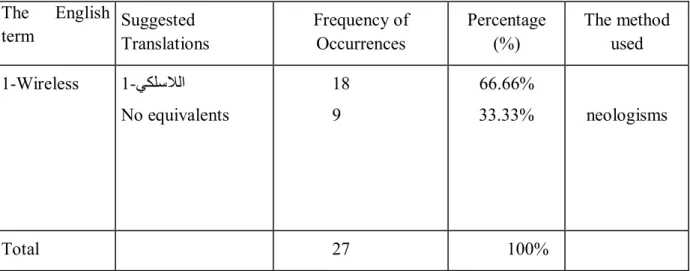
Table 6: Translation of the Term wireless...42
Table 7: Translation of the Term Internet ...42
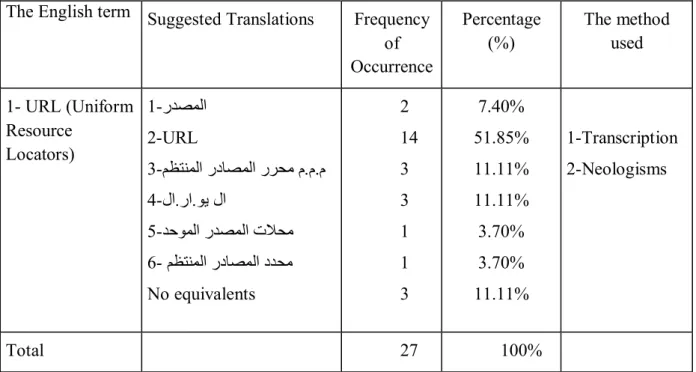
Table 8: Translation of the Term URL (Uniform Resource Locators) ...43
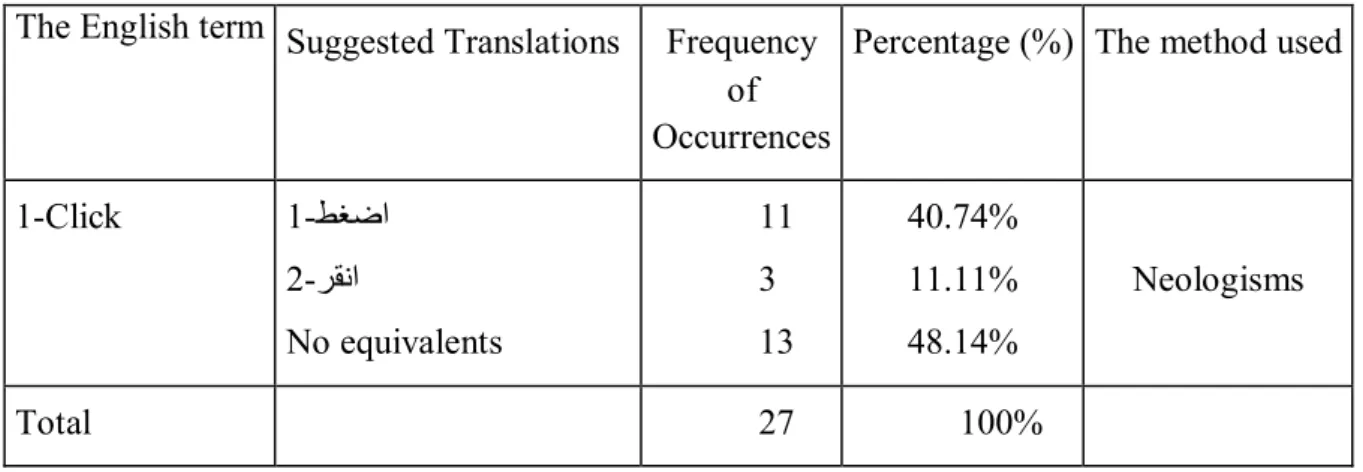
Table 9: Translation of the Term Click ...45
Table 10: Translation of the Term Outlook Express ...46
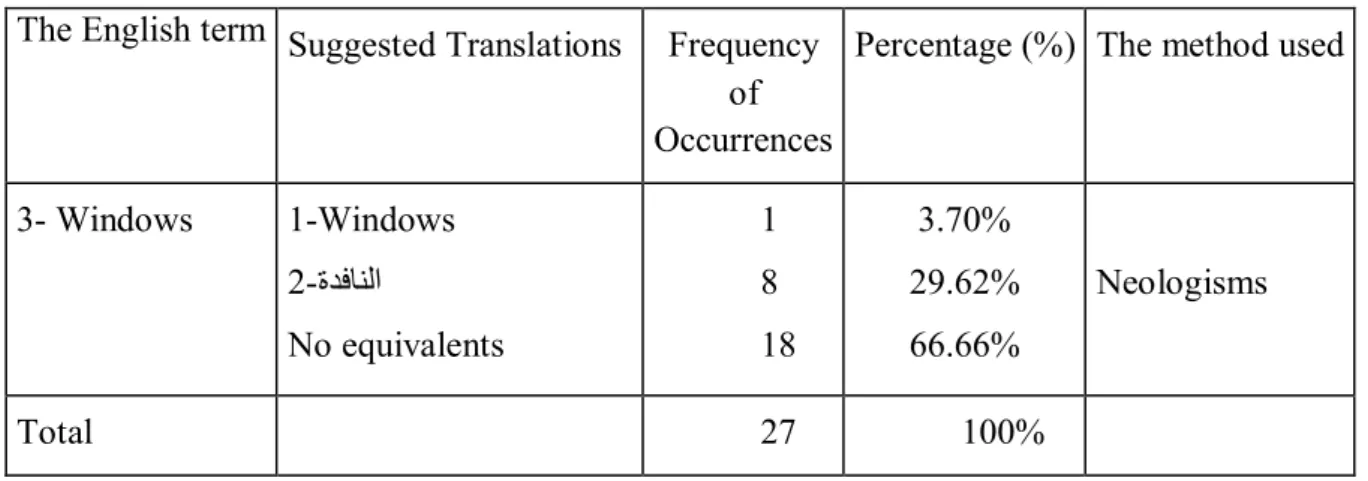
Table 11: Translation of the Term Windows ...47
Table 12: Translation of the Term Desktop ...47
Table 13: Translation of the Term Toolbar...48
Table 14: Translation of the Term Email Account ...49
Table 15: Translation of the Term Screen name box...51
Table 16: Translation of the Term Signed in...52
Table 17: Translation of the Term Auto sign in option...53
Table 18: Translation of the Term Messenger ...54
Table 19: Translation of the Term Yahoo Chat ...55
Table 20: Translation of the Term Emailed ...57
Table 21: Translation of the Term Blog ...58
Table 22: Translation of the Term Scan...59
Table 23: Translation of the Term Install ...60
Table 24: Translation of the Term Antivirus ...61
Table 25: Translation of the Term Updated...62
Table 26: Translation of the Term Computer...63
Table 27: Methods used in Translating the Computing Terms ...65
Table 28: Translation of the Term install...67
Table of Contents
General Introduction...8
Aim of the Study ...8
Research Questions ...8
Hypothesis...9
Structure of the Study...9
Research Tools ...9
Participants...9
CHAPTER ONE: Translation and Scientific Translation ...11
Introduction...11
Part One: Translation...12
1.1. Definition of Translation...12
1.2. Types of Translation ...13
1.3. Translation Strategies ...14
1.3.1. Direct Translation Techniques ...14
1.3.1.1. Borrowing...15
1.3.1.2. Calque ...15
1.3.1.3. Literal Translation...15
1.3.2. Oblique Translation Techniques...16
1.3.2.1. Transposition ...16
1.3.2.2. Modulation ...16
1.3.2.3. Equivalence ...17
1.3.2.4. Adaptation ...17
1.3.2.5. Compensation ...18
Part Two: Scientific Translation and Terminology...19
2.1 Scientific Register...19
2.1.1. Definition of Science ...19
2.1.2 Definition of terminology ...20
2.1.2.1. Scientific Terminology...20
2.2. Definition of Scientific Translation ...21
2.2.1. The Aim of Scientific Translation ...21
2.2.2. Requirements of Scientific Translator ...22
2.3. Terminology in Translation...24
2.3.1 Cross-Cultural Recognized Terms...24
2.3.2. Cultural Specific Terms ...25
2.4. Misconceptions in Scientific Translation...25
2.5. Strategies of Translating English Technical Terms into Arabic ...26
2.5.1. Transcription...26 2.5.2. Naturalization ...28 2.5.3. Coinage ...29 2.5.3.1. Derivation...29 2.5.3.2 Revival ...30 2.5.4 Neologisms...31
2.6. Arabic Language and Challenges for Translating English Computer Terms ...32
Conclusion ...34
Chapter Two: Data collection, Analysis, and Results ...35
Introduction...35
2.1. The Choice of Population ...35
2.2. The Corpus...35
2.3. Description of the Test...35
2.4. Administration of the Test ...36
2.5. Analysis Procedure ...36
2.6. The Analysis of the Results...37
2.6.1. Analysis of the participants’ Translations...37
· Sentence one...37 · Sentence two...39 · Sentence three...41 · Sentence four...43 · Sentence five ...44 · Sentence six...49 · Sentence Seven...50 · Sentence Eight ...52 · Sentence Nine...53 · Sentence Ten ...54 · Sentence Eleven...56
· Sentence Twelve...58
· Sentence Thirteen ...58
· Sentence Fourteen...59
· Sentence Fifteen ...62
2.7. The Analysis of the Methods Used in Translating the Computing Terms ...63
2.8. Inexact Rendering...66 2.8.1. Under Translation ...66 2.8.2. Over Translation ...67 2.8.3. Mistranslation ...67 Conclusion ...69 3.1. Pedagogical Recommendations...70 General Conclusion ...71 Bibliography...72 Appendix...76 The Test ...76
General Introduction
Scientific translation is not like other translations, it goes beyond just rendering words from one language into another. It is rather considered a tool that helps people around the world develop and progress in the field of science. Thus a translator needs to ensure an accurate delivery of information and shows faithfulness and commitment to the source and the target language, so that the translated information can be used easily and help in developing other countries.
One of the main problems that translation trainees may face is how to deal with translating scientific terms from English into Arabic, and in choosing the best method to achieve a high quality translation of those terms which may enrich the Arabic language. Aim of the Study
The present research attempts to highlight the common mistakes, if any, 3rd year students at the English Language Department University of Constantine make when attempting to translate scientific terms from English into Arabic. To highlight the method they most often use in translating such terms, and whether this method is the source of the difficulties they face and whether it is reliable enough to ensure good results and serve Arabic language.
Research Questions
In attempting to investigate the translation problems encountered in translating English scientific terms into Arabic by 3rd year learners of English, it is necessary to answer the following questions:
1- What are the terminological obstacles students face in translating the scientific terms from English into Arabic?
3- Is this method responsible for the mistakes they commit? Hypothesis
In an attempt to answer the questions raised by this study, it is hypothesized that the difficulties students face when translating scientific terms, may be accounted for by their ignorance of the importance of adopting the appropriate method that ensures a high quality translation.
Structure of the Study
The present study consists of two main chapters, a theoretical and a practical one. Chapter one is divided into two parts, the first part attempts to highlight the main aspects concerning translation in general and the second part is devoted to tackle scientific translation and terminology. It also deals with the methods used in translating scientific terms and ends with a brief account of computer sciences in the Arab world.
Chapter two is devoted to the description, interpretation and analysis of the data collected and ends up with some pedagogical recommendations that may be considered as a solution for the terminological problems in translating scientific texts.
Research Tools
In order to test the hypothesis and get the required information, the data will be collected through the use of a test.
The test is composed of one exercise in which third year English students will be asked to translate fifteen sentences from English into Arabic.
Participants
Third year English language students at Mentouri University Constantine will be the chosen population sample to conduct this study. Thirty students will be chosen randomly from
the total population of students enrolled for the academic year 2009/2010. The choice of third year students is motivated by the fact that they have been studying translation for two years now and, hence, are supposed to have a good mastery of translation from English into Arabic.
CHAPTER ONE: Translation and Scientific Translation Introduction
The following chapter is divided into two parts; the first part will be mainly to discuss the different perspectives and conceptions concerning translation and its types, and the second part will be devoted to talk about scientific translation and scientific terminology. The first part starts with a literature review of the different definitions of the translation concept introduced by many theoreticians, and a brief discussion of translation types and strategies will be mentioned. Whereas the second part will shed light on scientific translation, with particular emphasis on science and terminology; stating their definition and characteristics. As well as, it will discuss scientific translation and its major problems in coining new terms into Arabic. Scientific register is so vast and is commonly used in a large number of branches; therefore this part will be concerned only terms of computer sciences. Moreover, since the Arabic language is concerned, a brief comparison of linguistic differences will be made between Arabic and English language.
Part One: Translation
1.1. Definition of Translation
Defining translation has always been a problematic issue in the sense that one finds more than one definition, each one reflects a different perspective and a theoretical basis in which scholars seek the same goal namely, equivalence. In common practice, one can usually identify two different senses of translation. One aims at transferring ideas and messages via rewording or paraphrasing, as an in everyday life when a layman tries to explain or express ideas in a different way by using different words only even if within the same language. The other sees translation as an act of transferring messages from a source language into a target language, be it oral or written, for the sake of establishing equivalence to get the appropriate meaning (Yowell & Lataiwish, 2000).
Some scholars’ definitions of translation focus on the approach of preserving the original or source text effect; to others (Nida and Taber, 1969/1982) translation consists of reformulating the message of the source text into the closest equivalent of the target language. They gave priority to meaning preservation as much as possible then focusing on the style.
For others (Catford, 1965), translation is to substitute a piece of writing in one language by its corresponding piece of writing in another language. As for Ghazzala (1995), translation is any process that results in transferring the meaning from one language into another. For him the main goal is to deliver meaning of the source language by using the equivalents available in the target language.
Hatim and Munday (2004) define translation from two different perspectives. First as a process, translation is an act of taking a text from one language and transforming it into another. In this sense, Hatim and Munday focus on the part of the translator. Second as a product, translation focuses on the results achieved by the translator, the concrete product of translation.
1.2. Types of Translation
At this level, translation will be looked at from the viewpoint of classification of types and methods. According to Hatim and Munday (2004), Jacobson in his seminal paper (1959/2000) distinguishes between three main types of written translation: Intra-lingual translation, inter-lingual translation, and inter-semiotic translation.
Intra-lingual translation is the translation of textual materials within the same language and may include rewording or paraphrasing. Inter-lingual translation is to translate textual materials from one language into another. It is also referred to as the proper translation. Whereas inter-semiotic translation is the translation or the interpretation of the verbal signs by non verbal signs as translating ideas or emotions into a painting or in symphony of music.
In addition, each theorist looks at these types of translation differently and classifies them in different ways. For Ghazzala (1995), for example, literal versus free translation is a sufficient classification. According to him, all the available typologies can be squeezed into these two types. All in all, the available typologies may include the following (Ghazzala 1995: 5)
1. Semantic versus communicative translation. 2. Formal versus dynamic translation.
3. Non-pragmatic versus pragmatic translation. 4. Non-creative versus creative translation.
Even though, Ghazzala (1995) discussed only the literal and free translation, he started by literal translation which, according to him, is of two types:
1. Word-for-word translation; 2. Direct translation.
extreme fidelity to the wording of the source text and forces the translator to set the exact equivalents. On the other hand, the second type, direct translation, considers the grammar and the linguistic differences.
Many theoreticians, including Ghazzala (1995), claimed that this type could be a very dangerous method because it may destroy the meaning. In this sense, Chukovsky said that “its adoption frequently leads to a complete distortion of the meaning of the original” (1984:6). Lefevere (1975) argued that this method has severe limitations.
On the other hand, free translation is to translate under no limitation, translate freely; it is also referred to as sense-for-sense translation. In free translation, the translator focuses on producing a natural readable target text. It is more target text oriented than literal translation; free translation does not take much consideration to preserve the source text wording. Catford (1965:25) suggested that free translations should be unbounded. 1.3. Translation Strategies
Strategies are sets of procedures that are used to translate; each one has a scale of facility that may be more helpful than the other. Bosco (1997) classified translation techniques or strategies into two types, direct and oblique.
1.3.1. Direct Translation Techniques
Direct translation techniques are used when there are conceptual elements that can be transposed into the target language. Bosco (1997) classified those techniques as follows
1. Borrowing 2. Calque
1.3.1.1. Borrowing
Bosco (1997) defines borrowing as the attempt to take words from one language and put them in another language alphabet. These words are naturalized to suit the grammar and the pronunciation of the target language. Eventually these words become part of the lexicon system of the target language as in Arabic language. For example
1. Computerﺮﺗﻮﯿﺒﻤﻛ 2. Microwaveﻒﯾوﺮﻜﯿﻤﻟا
Also the English language has borrowed numerous words from different languages. For example,
1. Résumé and café passé from French
2. Kindergarten and hamburger from German 1.3.1.2. Calque
Calque or loan translation is the literal translation. It is to translate a phrase borrowed from another language literary, preserving the source language structure and the manner of expression which may not be familiar to the target language. For example, champions’
league, week-end and cool are new borrowed expression used in French and Arabic.
1.3.1.3. Literal Translation
Literal translation is to translate from the source language into the target language and to preserve the same effect and wording of the source text, only the language is changed. In literal translation, changes which may affect the source text structures are not allowed. This method usually works with languages from the same family as the following example shows.
1.3.2. Oblique Translation Techniques
As for oblique, Bosco (1997) claimed that these techniques are used when the translator cannot translate elements from the source language without adjusting or changing the meaning, the grammatical and stylistic elements of the target language. Oblique translation includes: 1. Transposition 2. Modulation 3. Reformulation or equivalence 4. Adaptation 5. Compensation 1.3.2.1. Transposition
Transposition is to involve changes at the parts speech order when translating, especially at the grammatical level. Zakhir (2008) said that this type is used frequently, because of the wide range of possibilities it offers for translators. Also, it is seen as a solution for untranslatability. For example:
1. A red car →ءاﺮﻤﺣةرﺎﯿﺳ; A beautiful girl → 'ﺔﻠﯿﻤﺟ ةﺎﺘﻓ'. 2. Blue ball → boule bleue in French.
1.3.2.2. Modulation
Modulation is a type of translation where the translator adds changes to the grammatical and semantic structure of the source language to suit the target language without affecting the meaning, because it has to convey the same idea of the source text, and yet it should not carry awkwardness to the reader of the target text. According to Zakhir (2008), Vinay and Darbelnet(1977) distinguished between two major types of modulation, recorded
Recorded modulation is usually used in bilingual dictionaries. Thus, it is a ready type to use.The elements translated by standard modulation are fixed, it is obligatory to keep them as they are. For example:
1. It is easy to understand
→
ﻢﮭﻓا نأ ﻞﮭﺴﻟا ﻦﻣIt does not suit the Arabic language, and stylistically inappropriate to translate it as, ﻢﮭﻓا ﻻأ ﺐﻌﺼﻟا ﻦﻣ
Free modulation is considered to be more practical, because it has many possibilities to change the expression of the source language to suit the target language, for instance, translators can change the negative form into the positive form. For example
1. It is difficult
→
Ce n’est pas facile 1.3.2.3. EquivalenceThis technique requires the translator to be creative, especially in the case of translating idioms, proverbs, or slogans of advertising. This process allows the translator to reduce or expand the number of words, but not to drop crucial information. It is also used to make implicit expressions in the source language explicit in the target language. For example: 1.Give the devil his due →ﮫﻘﺣ ﻖﺣ يذ ﻞﻛ ﻂﻋا
2. A hungry man is an angry man→ اﺮﻔﻛ نﻮﻜﯾ نأ ﺮﻘﻔﻟا دﺎﻛ 1.3.2.4. Adaptation
In this type, the translator attempts to make textual materials that are specific to a given language culturally appropriate to another language. As Bosco (1997:2) said “It is a shift in cultural environment”. For example:
1.3.2.5. Compensation
Compensation is a strategy used to replace items that cannot be translated from the source text by others in the target text, that is, to express the meaning using different items not available in the source text but have the same sense.
Louise M. Haywood from the University of Cambridge claims (cited in Bosco, 1997:P.10)
We have to remember that translation is not just a movement between two languages but also between two cultures. Cultural transposition is present in all translation as degrees of free textual adaptation departing from maximally literal translation, and involves replacing items whose roots are in the source language culture with elements that are indigenous to the target language. The translator exercises a degree of choice in his or her use of indigenous features, and, as a consequence, successful translation may depend on the translator's command of cultural assumptions in each language in which he or she works.
Finally, each one of the above procedures has its own characteristics, advantages and disadvantages, thus translators are free to use any one if they see its efficiency in translating a given text. Moreover, it is allowed to use more than one strategy in one text. However, according to Zakhir (2008), these procedures should not be used haphazardly; the translator has to state the reason behind choosing a certain strategy. Also the cultural gaps between languages should be taken into consideration when adopting any of these procedures in translation.
Part Two: Scientific Translation and Terminology 2.1 Scientific Register
2.1.1. Definition of Science
Many definitions have been given to the word science. Cambridge Advanced Learner’s Dictionary defines science as:
1. (Knowledge obtained from), the systematic study of the structure and behaviour of the physical world, especially by observing, measuring and experimenting, and the development of the theories to describe the results of these activities. 2. A particular subject that is studied using scientific methods.
In addition, The Academic Press Dictionary of Science and Technology gives the following definition: Science is:
1. The systematic observation of natural events and conditions in order to discover facts about them and to formulate laws and principles based on these facts. 2. The organized body of knowledge that is derived from such observations and
that can be verified or tested by further investigation.
3. Any specific branch of this general body of knowledge, such as biology, physics, geology, or astronomy.
Also, Miguel & Ramirez (2007:2) define science as “A way of exploring and explaining the natural world using a process designed to reduce the chance of being misled.”
Following the same sense, science is defined by the Chambers Dictionary as “knowledge ascertained by observation and experiment, critically tested, systematised and brought under general principles” (Chambers 1993).
Generally speaking, science is a word that refers to the organized approach of attaining knowledge, using a scientific method that helps to organize thought, procedures and
then come into clear, faithful and reliable results, free of subjectivity and personal involvements.
2.1.2 Definition of terminology
Webster’s new world college dictionary defines Terminology as follows:
1. the terms or system of terms used in a specific science, art, etc.; nomenclature lexicographer's terminology
2. the systematic study of terms”
On the other hand, Cambridge Advanced Learner’s Dictionary defines terminology as: “Special words or expressions used in relation to a particular subject or activity”. Terminology is viewed as a structured set of concepts and their labels in a particular subject field, it can be considered the infrastructure of specialized knowledge. Technical writing and scientific papers are thus impossible without properly using terminological resources. Scientifically speaking, it is concerned with the study and use of the systems of symbols and linguistic signs employed for human communication in specialized areas of knowledge and activities. Terminology refers to all specific terms and expressions used in a specific register as the terms:
endocrine system, cells, and hormones which are specific terms generally used in scientific
texts. Poem and Prose, however, refer mainly to literary texts. 2.1.2.1. Scientific Terminology
Scientific terms are not simple words; they are special and complex ones. Scientific terms are the most significant feature in science, they discriminate it from other registers (literary).
These terms make scientific texts incomprehensible for lay people; they are directed to experts of the science. Thus scientists use them to dignify their written works, in that William Zinasser (1976) explained that each jargon has its own list of terms which lay people would not understand easily. He (1976:15) wrote “Every profession has its growing arsenal of jargon to
fire at the lay man and hurls him back from its walls.” Furthermore, Ilyas (1989:109) claimed that scientific terminology varies from the regular and literary words since ‘they do not accumulate emotional associations and implications’.
2.2. Definition of Scientific Translation
Scientific translation is mainly about translating terms in the fields of science and technology of all kinds, medicine, physics, chemistry, mathematics, computer sciences...etc from one language into another (Ghazzala 1995).
Scientific translations do not involve literary texts; they only deal with texts from the world of electronics, medicine, law, economics, engineering, chemistry, computer science, automotive engineering, geology, etc. The number of technical fields is infinitely large, and terminology is expanding and changing daily.
The scientific translation is considered as one of the most important issues, as the world develops, new technology appears, and along with them emerge new terms to which finding an equivalent may pose a problem. As Nida (1964) said in this point; it is not easy at all to translate scientific terms that emerged in western developed countries languages into a language of third world countries which are still having financial and social problems.
2.2.1. The Aim of Scientific Translation
Byrne (2006) claims that, scientific translation primary goal is to deliver scientific information; it aims at presenting well expressed information, that may be used easily,
properly and effectively. He referred to scientific translation as a communicative service,
which offers new information for new audience, since scientific translation is regarded as communicative service; it certainly involves three main people, which are the author, the translator and the reader. He added also, that it is much more than just rendering source text language and style. Its main concern is to ensure delivering information accurately and correctly, in that it insures that the reader may use this information easily.
2.2.2. Requirements of Scientific Translator
Scientific translators are not like other ordinary translators. There are certain qualifications that they should have in order to accomplish a good translation of scientific texts as well as to deliver the exact information. This is because scientific translation is not just to transfer ideas or information, but rather to transfer technology and new invention that may help other countries. According to the biomedical writer Bethany Thivierge (2002:188) “The work of scientific translators is to achieve one primary goal: to write information in a clear, concise, and accurate manner”. He claimed that there are nine requirements that a scientific translator should observe:
1. Work appropriate for the intended audience.
2. Respect for choices made by the author.
3. Respect for references.
4. Understanding of sciences.
5. Understanding of languages.
6. Constructive questions.
7. Work suitable for publication.
8. Familiarity with current practices.
9. Timely exchange of work.
Following the same sense, Al-Hasnawi (2010) also discriminated six characteristics -taken from the London Institute of Linguistics- that the scientific translator should have:
1. Broad knowledge of the subject-matter of the text to be translated;
2. A well-developed imagination that enables the translator to visualize the equipment or process being described;
4. A sense of discrimination, to be able to choose the most suitable equivalent term from the literature of the field or from dictionaries;
5. The ability to use one's own language with clarity, conciseness and precision 6. Practical experience in translating from related fields.
Byrne (ibid) also claimed that scientific translator is communicating via the translated texts, in that he should look further than the source text only to get more information from different sources, to ensure an effective target text which serves the communicative purpose. Consequently, the translator becomes according to Göpferich (1993) and Amman & Vermeer (1990:27) “the intercultural or cross-cultural scientific writer”. Byrne(2006:17) goes further and claimed
… The need for translators to conduct research so as to understand not just the text but also the subject while at the same time ensuring, by means of revisions and corrections, that the text conforms to target language norms and target audience expectations.
2.2.3. English-Arabic Scientific Translation
Translation of science from English into Arabic poses huge linguistic obstacles. One of these obstacles, yet a significant one, runs as follows: Translation of scientific terms is considered by Al-Hassnawi (2010) as a real intellectual challenge. It requires skills, intelligence, and mastery of both English and Arabic.
Arabic suffers a serious shortage of vocabulary that covers the fields of technology and science; therefore, translators should consider this problem before anything else. Moreover, Esmail Seiny (1985) mentioned that Krollman(1978) stated that terminology is responsible for 40% to 60% of the technical translator’s errors, and it takes up to 50% of his
precious time to set the appropriate terms. Beeston (1970: 115) explained the importance of having new terminology for the scientific field as:
The need for a large new vocabulary dealing with technological and scientific matters is, however, the least interesting feature of the new lexical development; more fascinating, though more elusive, is the evolution of new words for intellectual concepts.
Thus, scientific translation has become a crucial step towards the acquisition of new technologies and spread of technology all over the world, hence, the coinage of new scientific vocabulary is seriously required to enrich the Arabic language.
2.3. Terminology in Translation
It is undeniable that terminology has a significant role in scientific translations, and it is a crucial feature in scientific texts. Byrne (2006:03) argued that “Terminology is, perhaps, the most immediately noticeable aspect of a technical text and indeed it gives the text the “fuel” it needs to convey the information”. Following the same sense, Yowell and .Lataiwish (2000) pointed out that terminology is considered to have a very crucial part in English-Arabic translation. Nowadays, the Arab world witnesses an important process of transferring new founded western terms. This process aims at finding an equivalent for the source language terms in the target language. In this sense, there are two types of technical terms.
2.3.1 Cross-Cultural Recognized Terms
Cross-cultural recognized terms are known as universal terms, i.e., these terms do not belong to a specific culture. These are terms that are of scientific or technical nature just like national organizations which are not restricted to a specific culture or language. The cross-cultural recognized terms do not impose serious translation problems. The equivalents for this
type are easily achieved since the cultural gap between source language and target language is smaller, no difficulties will arise. For example:
1. The security council→ﻦﻣﻷا ﺲﻠﺠﻣ 2. Spaceship→ﺔﯿﺋﺎﻀﻓ ﺔﺒﻛﺮﻣ
3. AIDS→ﺔﺒﺴﺘﻜﻤﻟا ﺔﻋﺎﻨﻤﻟا ﺺﻘﻧ ضﺮﻣ 2.3.2. Cultural Specific Terms
This type includes terms that are specific and related only to one language, i.e., the grammar terms, for example and cultural specific terms which pose critical problems in the translation process. Thus, it is not easy to find their equivalents. For example, the plural ‘ren’ in English grammar means more than one, while ﻊﻤﺠﻟا in Arabic grammar means more than two.
2.4. Misconceptions in Scientific Translation
Yowell and Lataiwish (2000) claimed that terminology could be one of the most serious obstacles that may face translators of scientific texts, especially, if the target language is Arabic. For that, some purists demand forcefully that the translators, before attempting to coin new terms, should look for old Arabic archaisms that may be set as an appropriate equivalents for the new foreigner terms. However, only if such an equivalent is not found then the translator is allowed to invent a new item. Yowell and Lataiwish (ibid.126) discussed two misconceptions related to scientific translation. The first one is mainly concerned with the linguistic nature of the scientific term and the second is related to the nature of the language itself.
They argue first, the ineffectiveness of processing the search of old Arabic terms and classify it with modern concepts, to be exact equivalents for new foreign terms. They claim also, that it is worthless to waste time and energy looking for old Arabic terms. Besides any old Arabic archaisms can be modernized and given a new concept since the relation between the term and the referent is basically arbitrary.
Second, they discuss the view that sees language as a product and not a dynamic process. This misconception relates to the nature of language and aims that the translator must not attempt to invent or coin new terms before looking thoroughly for vocabulary of the language. This view sees language as “a reservoir of words” that has ready equivalents for each new foreign term. Yet, this process is not always possible, since vocabulary is an open ended
component of language.The only aspect that should be necessarily considered by the translator is the coinage of new terms that correspond to the phonological and morphological rules of the target language. Yowell and Lataiwish (ibid.126) added: “The condition for a successful term is that it is accepted by the user of the language and thus it gradually becomes established.”
2.5. Strategies of Translating English Technical Terms into Arabic
Dealing with terminology requires specific skills in the form of some strategies that are likely to be fruitful and serve the target language. In this respect, numerous options are available for translators to translate scientific terms into Arabic. On the other hand, several Arabic agencies have devoted themselves officially or unofficially to produce new set of terminology for Arabic that may facilitate the translation process when it comes to introduce new terms from the source language.
There are several methods of translating scientific terms into Arabic; each method differs from the other in the use and the results it produces. Those techniques will be discussed and “ordered from the poorest to the best” according to Ghazzala’s (1995:163) point of view.
2.5.1. Transcription
Transcription or Arabization is one of the strategies widely used to translate scientific terms by introducing minor phonetic and morphological changes to the foreign term. It
consists of writing the English scientific terms using the Arabic alphabet with no alteration to their pronunciation in the source language. Take the following examples:
1. Microwave→ ﻒﯾوﺮﻜﯿﻣ, 2. Mega bite → ﺖﯾﺎﺑﺎﺠﯿﻣ 3. Tetra bite→ ﺖﯾﺎﺑاﺮﺘﯿﺗ
The problem with transcription is that it does not give the meaning of the word in Arabic, besides the transcribed terms are not pure Arabic ones; they are just borrowed and shaped in Arabic letters. Using transcription neither serves the Arabic language nor enriches its vocabulary. In fact, it is just an offence to the Arabic language, because it implies that Arab translators are unable to invent new pure Arabic terms and prefer the easy way to translate scientific terms, thus, neglecting the significant statue of the Arabic language.
Following this line of thought, Ghazzala (1995) argued that this method should be avoided except in the case where translators could not find equivalent for the term in Arabic language. For example:
1. Sandwich→ﺶﺘﯾوﺪﻧﺎﺳ
Yet, if the terms have equivalent in Arabic, translators have to use them instead of transcription, for example:
1. Computer→ﺐﺳﺎﺣ 2. Virus→ﺔﻣﻮﺛﺮﺟ
This method will be considered as a critical problem opposed to translators, if they use it for ordinary terms that have equivalents in Arabic as shown by the word ‘email’ usually
2.5.2. Naturalization
According to Ghazzala (1995), naturalization is the attempt to adopt the English terms to the morphology of Arabic word structure and can be seen as evolution of the transcription method.
This method consists of adding new affixes to the foreign terms leaving their roots unchanged. The added affixes are to adjust the terms into the Arabic morphology as is the case of verbs, nouns, gender, adjectives and adverbs:
1. Technology →ﺎﯿﺟﻮﻟﻮﻨﻜﺗ a. Technologiste (n) →ﺔﯿﺟﻮﻟﻮﻨﻜﺗ. ﺔﯿﺟﻮﻟﻮﻨﻜﺗ b. Technological (adj.) → ﻲﺟﻮﻟﻮﻨﻜﺗ 2. Oxide→ﺪﯿﺴﻛوا a. Oxidised (adj.) → ﺪﺴﻛﺆﻣ b. Oxidizer (n) → ﺪﺴﻛﺆﻣ 3. Biology→ﺎﯿﺟﻮﻟﻮﯿﺑ a. Biologist (n) →ﻲﺟﻮﻟﻮﯿﺑ b. Biological (adj.) →ﻲﺟﻮﻟﻮﯿﺑ
Naturalization is considered by Ghazzala (1995) better than transcription, although it is still not convenient. Thus it is not pure Arabic, the basic or the roots of terms remain English even if they are naturalized.
This method does not consider meaning; the lay reader, for example, would not know the meaning of the word ﺪﺴﻛﺆﻣ. To avoid this type of problem, Ghazzala (1995) supported another method that, in his opinion, would fulfill the appropriate translation of scientific terms and he simply suggested to translate, i.e., taking the scientific English terms and transfer them by using pure Arabic vocabulary. For example:
2. Biology→ ءﺎﯿﺣﻷا ﻢﻠﻋ
According to Baker (1987) transcription and naturalization have not received acceptance from the language purists because they threaten the identity of Arabic. Thus, translators are likely to come across a situation where they need to be more creative by following certain methods that may ensure the high quality and smoothness of translating scientific terms. In an attempt to get over this obstacle, Ghazzala (1995) suggested that coinage is the best method for translating scientific terms. As for Baker (1987); coining new terms is the only way that ensures the creation of new specialized glossaries for the Arabic language.
2.5.3. Coinage
This method aims at presenting new terms in the Arabic language via three main processes.
2.5.3.1. Derivation
Baker (1987) said that the Arabic language is usually referred to as the language of derivation. She explained that the Arabic language word root system is built up on three fundamental consonant roots; each one holds a given meaning. The roots are used for the production of nominal and verbal forms by adding prefixes, suffixes, infixes and vowels. For example:
1. Data→ تﺎﯿﻄﻌﻣ from ﻰﻄﻋأ to give 2. Generator→ ﺪﻟﻮﻣ from ﺪﻟﻮﯾ to generate. 3. Factory→ ﻊﻨﺼﻣ from ﻊﻨﺻ to manufacture 4. Studio→ ﻢﺳﺮﻣ from ﻢﺳﺮﯾ . to paint
According to Ghazzala (1995) derivation is based on measurements; it aims at using certain measures found in the Arabic language to derive new terms. The most used ones are
1.ﻞﻌﻔﻣ a. Laboratory→ﺮﺒﺨﻣ b. Anchorage→ﻲﺳﺮﻣ 2.ﺔﻠﻌﻔﻣ a. Grease box→ﺔﻤﺤﺸﻣ b. Butchery→ةرﺰﺠﻣ 3.ﺔﻟﺎﻌﻔﻣ a. Refrigerator→ﺔﺟﻼﺛ b. Mixer→ﮫﻃﻼﺧ 4لﺎﻌﻔﻣ a. Drill→بﺎﻘﺜﻣ b. Iron→ةاﻮﻜﻣ
Baker (1987) supported this method and claimed that it makes understanding of the meaning of terms easier for the readers since they are inherited from the root, which is already familiar, used to derive that term. In other words, the derived terms are not new to the vocabulary, they already exist but in different forms. Furthermore, it is favoured by academics since it does not affect the identity of the Arabic language and the derivation process is based on pure Arabic vocabulary roots.
On the other hand, Ghazzala (1995) argued that derivation is still a restricted way because it cannot be applied to all the terms as some of them would not accept measures. 2.5.3.2 Revival
Revival attempts to put back into use old Arabic words that were used but fade away with the time and assigns them new meanings. Baker (1987) said that this method uses Arabic lexicon instead of trying to introduce new concepts that may take time to be adopted. For example:
1. Train→ رﺎﻄﻗ originally used to mean a line of camels 2. Car→ةرﺎﯿﺳ originally used to mean the night travellers 3. Environment→ﺔﺌﯿﺑ originally used to mean domicile
4. Newspaper→ةﺪﯾﺮﺟ originally used to mean the small palm stick was used to write on
Revival has proved its efficiency, however, it is still not easy to look for old Arabic words; it consumes time and effort and cannot be applied to cover all new introduced terms in the field of science. Using this method is not always successful because some of the attempts to revive archaic words did not suit modern Arabic vocabulary; they were “a subject of much ridicule” (Baker, 1987:186).
2.5.4 Neologisms
Neologisms aim at introducing new terms and concepts into the Arabic language by translating the meaning. This method according to Baker (1987) enjoys much acceptance. For example: 1. Computer programming→ﺮﺗﻮﯿﺒﻤﻜﻟا ﺔﺠﻣﺮﺑ 2. Software→تﺎﯿﺠﻣﺮﺑ 3. Hardware→ةﺰﮭﺟأ 4. Phonetics→تاﻮﺻﻷا ﻢﻠﻋ 5. word processing→تﺎﻤﻠﻜﻟا ﺔﺠﻟﺎﻌﻣ 6. Psychoanalysis→ﻲﺴﻔﻨﻟا ﻞﯿﻠﺤﺘﻟا
Finally, there have been great efforts to bring new technical terms into Arabic, by any means available, yet these methods should not threaten the Arabic identity. Translators should consider the linguistic differences between English and Arabic, for that they need to coin terms that are linguistically suitable to Arabic.
2.6.
Arabic Language and Challenges for Translating English Computer TermsWhen computer products are developed in western countries and distributed in Arabic speaking countries, they carry with them new terms that may have no equivalents in Arabic; therefore, linguistic issues concerning language development must be considered.
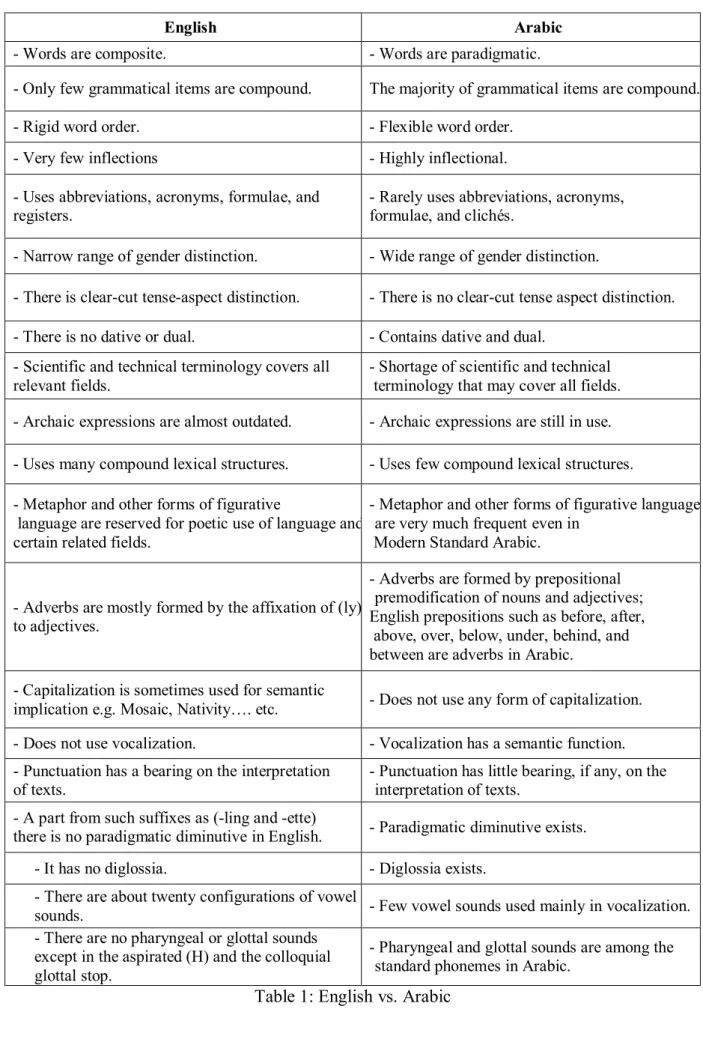
When new computer software develops, many technical terms have been introduced into Arabic through transliteration or coining. This phenomenon makes it challenging to find standards for technical terms commonly used in English. Over time, as more and more technical content is translated into Arabic, this challenge will decrease. Translation involving computer terminology is considered a huge challenge for the Arabs. For instance, “calculate” and “calculator” are ambiguous as are “compute” and “computer.” While it is not easy to express computing terms in Arabic, the translator needs to use pure Arabic terms that can accurately express the exact meanings of the source language terms. Basic linguistic differences between English and Arabic can make translation challenging in technical and scientific work. Basically, Arabic is a language that has developed primarily through literature, religious texts, and poetry. Very little modern scientific or technical writing has originated in Arabic, creating a shortage of equivalent terminology. The following table highlights some of the inherent differences in language structure that the linguist must overcome when translating scientific or technical content from English into Arabic. Al-Hassnawi (2010:P.6) sets linguistic differences that exist between English and Arabic as illustrated bellow:
English Arabic
- Words are composite. - Words are paradigmatic.
- Only few grammatical items are compound. The majority of grammatical items are compound. - Rigid word order. - Flexible word order.
- Very few inflections - Highly inflectional. - Uses abbreviations, acronyms, formulae, and
registers.
- Rarely uses abbreviations, acronyms, formulae, and clichés.
- Narrow range of gender distinction. - Wide range of gender distinction.
- There is clear-cut tense-aspect distinction. - There is no clear-cut tense aspect distinction. - There is no dative or dual. - Contains dative and dual.
- Scientific and technical terminology covers all relevant fields.
- Shortage of scientific and technical terminology that may cover all fields. - Archaic expressions are almost outdated. - Archaic expressions are still in use. - Uses many compound lexical structures. - Uses few compound lexical structures. - Metaphor and other forms of figurative
language are reserved for poetic use of language and certain related fields.
- Metaphor and other forms of figurative language are very much frequent even in
Modern Standard Arabic.
- Adverbs are mostly formed by the affixation of (ly) to adjectives.
- Adverbs are formed by prepositional premodification of nouns and adjectives; English prepositions such as before, after, above, over, below, under, behind, and between are adverbs in Arabic.
- Capitalization is sometimes used for semantic
implication e.g. Mosaic, Nativity…. etc. - Does not use any form of capitalization. - Does not use vocalization. - Vocalization has a semantic function. - Punctuation has a bearing on the interpretation
of texts.
- Punctuation has little bearing, if any, on the interpretation of texts.
- A part from such suffixes as (-ling and -ette)
there is no paradigmatic diminutive in English. - Paradigmatic diminutive exists. - It has no diglossia. - Diglossia exists.
- There are about twenty configurations of vowel
sounds. - Few vowel sounds used mainly in vocalization. - There are no pharyngeal or glottal sounds
except in the aspirated (H) and the colloquial glottal stop.
- Pharyngeal and glottal sounds are among the standard phonemes in Arabic.
The above table shows that the differences that exist between Arabic and English play a significant role in scientific translation. Both of the languages belong to different language families. As for English language it belongs to Germanic languages while Arabic language belongs to Semitic, ultimately this leads to plenty of differences concerning vocabulary and grammar, and most of the language features. Al-Hassnawi deduced from this comparison, that Arabic language suffers a serious shortage of technical and scientific terminology, and it is in a great need of introducing terms that serve Arabic vocabulary, while English language is considered by AL-Hassnawi a highly sophisticated technological language.
Conclusion
The aim of this chapter was to review some aspects concerning translation and scientific translation. It presented first the numerous translation strategies that are involved in translation process. Second it attempted to discuss the several issues concerning scientific translation, which yielded that translating scientific and technical terms is not a simple task for the translator, and he should bear in mind that, scientific translation is not just about translating information, but rather ensure that this information can be used easily by the reader. For that, this chapter showed how terminology is considered to be a serious obstacle in translation scientific terms from English language into Arabic; the translator should acquire a mastery of the two languages and a wide background knowledge, which may help in choosing the appropriate translation technique in order to ensure the accurate rendering of the English terms.
Chapter Two: Data collection, Analysis, and Results
Introduction
The main concern of this chapter is to confirm or refute the hypothesis underlying this study which hypothesises that the difficulties students face when translating scientific texts may be accounted for by their ignorance of the importance of adopting the appropriate method that ensures a high quality translation. This is attempted through the analysis of the data generated by the research tool.
2.1. The Choice of Population
The participants in this study were third year students of English (L.M.D. 2009-2010) at the Department of English, Faculty of letters and Languages. The choice of this population was motivated by the fact that the participants have been studying English for three years and; therefore, are likely to have a fairly good command of English. They are also supposed to have no problems in translating scientific terms from English into Arabic because the course they follow includes two teaching units, ESP and translation. About 30 students have been chosen randomly from the total population to take part in this study.
2.2. The Corpus
The corpus that was taken into consideration in this study was in written form, which was collected from (30) students written translation production of the test.
2.3. Description of the Test
The research tool used in this study is test. The aim is to uncover the students’ translation deficiencies as far as computer terms are concerned and to highlight the terminological problems they encounter in translating English computer terms into Arabic.
The test is in the form of a translation exercise which consists of fifteen short simple sentences taken from different texts from “Computer Basis for Idiots” (Joe Kraynak.2003).
least one computer term. The reason behind choosing sentences rather than a text is to avoid all others areas of difficulty which may arise as a result of a text textuality and to ensure a great amount of terms from different fields of the computer.
2.4. Administration of the Test
The test was administrated to the informants by their teacher. In order not to influence them, the researcher chose not to inform the informants of the aim of the test. The test was done as homework because the teacher is aware of the students’ translation competence and has concluded that if it were taken in class, probably no one could manage to translate the computer terms embedded in each sentence.
2.5. Analysis Procedure
The outcomes of this research will help examine the students’ translation of computer terms to see the terminological problems they encounter when translating an English source text into an Arabic target text. The following procedures were used in order to analyze the mistakes and problems the students faced during translation:
·
The identification of the translation mistakes made by the students was based on the method they preferred to use.·
The total number of the terms to be translated was about twenty-five (25) terms. The mistranslated terms will be classified in tabular formats each of which shows the rate of the mistake in the form of percentages, number of its occurrences, method used to translate it, and a suggested translation.·
The suggested translation will be the standard on the basis of which the informants’ mistakes are evaluated.·
The translation deviations will be classified in tables according to the translation method used by the informants.2.6. The Analysis of the Results
2.6.1. Analysis of the participants’ Translations
All the students responded to the test except three who did not hand back their work, which means that only 27 samples were analyzed. However, not all of them translated all the sentences. The following tables illustrate the students’ translations, their frequency of occurrence, and the number of the students who participated in the translation. The translations differ from one student to another, but sometimes similar ones are found. The tables also indicate that the respondents’ answers, when referred to in the present study, are reported without any modification, alteration or correction.
· Sentence one:“Home page is the first page retrieved when accessing a Web site.”
Not all the participants translated the first sentence. Among the 27 participants, two did not attempt to translate it. The sentence contains two computer terms, each one has been translated using more than one method, which leads to more than one suggested translation. The tables below give more details.
1. Term one: Homepage The English
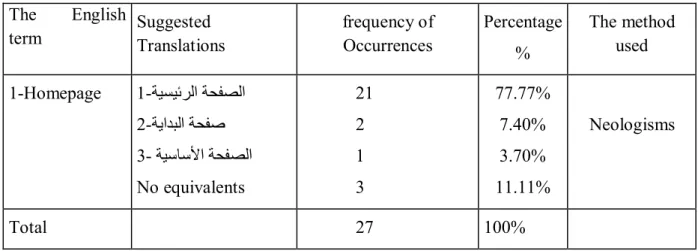
term SuggestedTranslations frequency ofOccurrences Percentage % The method used 1-Homepage 1-ﺔﯿﺴﯿﺋﺮﻟا ﺔﺤﻔﺼﻟا 2-ﺔﯾاﺪﺒﻟا ﺔﺤﻔﺻ 3- ﺔﯿﺳﺎﺳﻷا ﺔﺤﻔﺼﻟا No equivalents 21 2 1 3 77.77% 7.40% 3.70% 11.11% Neologisms Total 27 100%
Table 2: Translation of the First Term Homepage
From the above table, it seems that most of the participants have no problem in translating the term “Homepage” using only Arabic vocabulary. As it is shown in the above
table, there are three suggested translations. The first one occurred 21 times with 77.77% of the total percentage, the second occurred only twice (2), with a percentage of 7.40%, whereas, the third one occurred only once with a percentage of 3.70%. However, three participants did not translate it. The analysis of these translations reveals that most of the participants used neologisms in order to render the term into Arabic; therefore, they succeeded to use pure Arabic terms rather than transcription. The first suggestion "ﺔﯿﺴﯿﺋﺮﻟا ﺔﺤﻔﺼﻟاseems to be the closest correct equivalent for “Homepage”.
2. Term Two: Website The English
term SuggestedTranslations Frequency ofOccurrences Percentage %
The method used
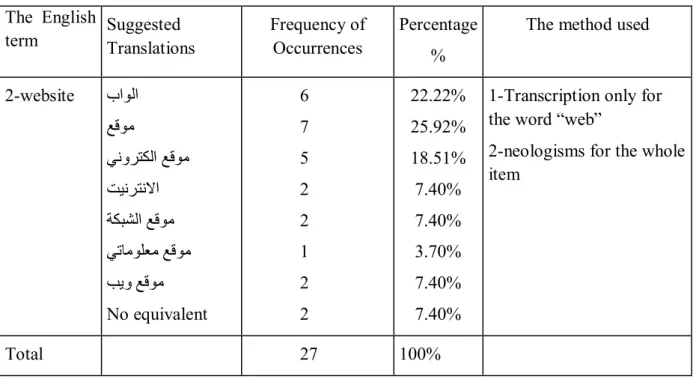
2-website باﻮﻟا ﻊﻗﻮﻣ ﻲﻧوﺮﺘﻜﻟا ﻊﻗﻮﻣ ﺖﯿﻧﺮﺘﻧﻻا ﺔﻜﺒﺸﻟا ﻊﻗﻮﻣ ﻲﺗﺎﻣﻮﻠﻌﻣ ﻊﻗﻮﻣ ﻮﻣ ﺐﯾو ﻊﻗ No equivalent 6 7 5 2 2 1 2 2 22.22% 25.92% 18.51% 7.40% 7.40% 3.70% 7.40% 7.40%
1-Transcription only for the word “web”
2-neologisms for the whole item
Total 27 100%
Table 3: Translation of the Second Term website
The above table shows that the majority of the participants translated the term “website” using different methods. The terms consists of two items “web” and “site”, each was translated with the available equivalent found in Arabic. The analysis reveals seven suggestions. Some of the participants treated the term ‘website’ as if composed of two separate items; others translated it according to the transcription method using only one word as “باﻮﻟا which has no specific Arabic meaning. This type of translation occurred six (6) times
with a percentage of 22.22%. The term ‘ﻊﻗﻮﻣ’ was also used separately. Although it does not convey the meaning of the term as a whole in English, it is the closest equivalent for the word “site”. The two items have been translated as a whole only two time as ﺐﯾو ﻊﻗﻮﻣ. The other suggestions ﻲﻧوﺮﺘﻜﻟا ﻊﻗﻮﻣis not suitable because the termﻲﻧوﺮﺘﻜﻟا was not in the source text, the same thing for the word ﺖﯿﻧﺮﺘﻧﻻا. As forﺔﻜﺒﺸﻟا ﻊﻗﻮﻣ and ﻲﺗﺎﻣﻮﻠﻌﻣ ﻊﻗﻮﻣ, they can be considered as appropriate since they were translated using pure Arabic items, a method which favours the use of neologisms.
· Sentence two:“Connection speeds are measured in kilobits per second.”
All of the participants translated the second sentence. This sentence contains two computing terms; “connection speeds” and “kilobits”.
3. Term One: Connection speeds The English term Suggested
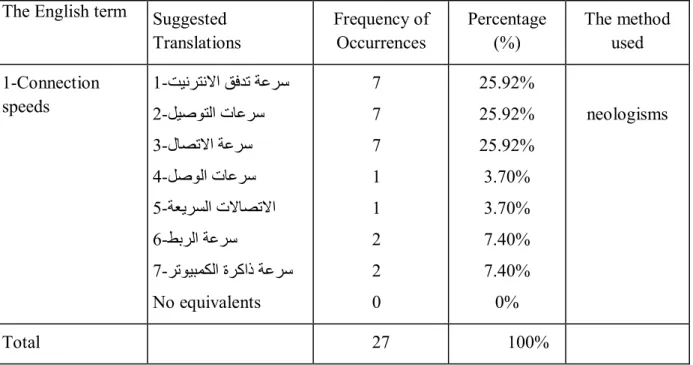
Translations Frequency of Occurrences Percentage (%) The method used 1-Connection speeds 1-ﺖﯿﻧﺮﺘﻧﻻا ﻖﻓﺪﺗ ﺔﻋﺮﺳ 2-ﻞﯿﺻﻮﺘﻟا تﺎﻋﺮﺳ 3-لﺎﺼﺗﻻا ﺔﻋﺮﺳ 4-ﻞﺻﻮﻟا تﺎﻋﺮﺳ 5-ﺔﻌﯾﺮﺴﻟا تﻻﺎﺼﺗﻻا 6-ﻂﺑﺮﻟا ﺔﻋﺮﺳ 7-ﺮﺗﻮﯿﺒﻤﻜﻟا ةﺮﻛاذ ﺔﻋﺮﺳ No equivalents 7 7 7 1 1 2 2 0 25.92% 25.92% 25.92% 3.70% 3.70% 7.40% 7.40% 0% neologisms Total 27 100%
Table 4: Translation of the Term connection speeds
As it is shown in the above table most of the students used the method neologisms to translate “connection speeds”. It was translated using pure Arabic words. The results of the
percentage 25.92%, the fourth and the fifth have a percentage of 3.70%, the sixth and the seventh occurred with percentage of 7.40%.
The term consists of two items “connection” and “speed”, the latter was given the same equivalent by all the participants "ﺔﻋﺮﺳ" or "تﺎﻋﺮﺳ" ” in plural. However, most of the suggestions were emphasised the term “connection”. The first suggestion “ﺖﯿﻧﺮﺘﻧﻻا ﻖﻓﺪﺗ ﺔﻋﺮﺳ” cannot be considered as an equivalent since it does not include the translation of “connection”. This suggestion is a translation of terms that did not exist in the source language which are “ﺖﯿﻧﺮﺘﻧﻻا ﻖﻓﺪﺗ”; hence it carries the implied meaning or idea of “connection speeds” which was about internet connection. The second one “ﻞﯿﺻﻮﺘﻟا تﺎﻋﺮﺳ” also cannot be considered as a closest equivalent for “connection speeds”, because the term “ﻞﯿﺻﻮﺘﻟا” carries the meaning of the word “to deliver” or “delivering”. The third one “لﺎﺼﺗﻻا ﺔﻋﺮ ” also refersﺳ to another meaning which is “speed communication” which is not acceptable as a translation for “connection speeds”, the same thing applies to the fifth suggestion “ﺔﻌﯾﺮﺴﻟا تﻻﺎﺼﺗﻻا”. The term “ﺔﻌﯾﺮﺴﻟا” is an adjective whereas in the source text it is a plural noun, whereas, the term “تﻻﺎﺼﺗﻻا” refers to the meaning of the word “calls” in English language. The fourth suggestion “ﻞﺻﻮﻟا تﺎﻋﺮﺳ” and the sixth suggestion “ﻂﺑﺮﻟا ﺔﻋﺮﺳ” could be acceptable because the terms “ﻞﺻﻮﻟا” and “ﻂﺑﺮ ” have the meaning of “to connect”. The last suggestion “ ﺔﻋﺮﺳﻟا ﺮﺗﻮﯿﺒﻤﻜﻟا ةﺮﻛاذ” cannot be accepted as an equivalent for “connection speeds” because it is a translation for another term which did not occur in the source text “computer memory speed”.
4. Term Two: Kilobits The English
term SuggestedTranslations Frequency ofOccurrences Percentage(%) The methodused 2-Kilobits 1-ﺖﯾﺎﺑﻮﻠﯿﻛ No equivalents 27 0 100% 0% Transcription Total 27 100%
Table 5: Translation of the Term kilobits
As it is shown in the above table, all the participants translated the term “kilobits” using one method which is transcription. This type of translation introduces no meaning for the word; it was rewritten in Arabic alphabet. Therefore, it yields one suggestion only. This may be due to the fact that it does not yet have an equivalent in Arabic vocabulary, and indeed the research for “kilobits” equivalent in Arabic revealed no available items which can be used as equivalent in Arabic language and which may carry an approximate meaning. However the term “kilobits” is a unit of measurement for computer memory, it consists of two items “kilo” and “bit”. The word “bit” means a unit of information in a computer that must be either 0 or 1.
· Sentence three: “Many businesses that offer wireless internet connectivity advertise as hotspots.”
70.37% of the participants translated the third sentence. This sentence contains two computer terms; “wireless” and “internet”. These terms have been analyzed in the participants’ translations as the tables illustrate.
5. Term One: Wireless The English
term SuggestedTranslations Frequency ofOccurrences Percentage(%) The methodused 1-Wireless 1-ﻲﻜﻠﺳﻼﻟا No equivalents 18 9 66.66% 33.33% neologisms Total 27 100%
Table 6: Translation of the Term wireless
As the above table shows the term “wireless” was translated 18 times with a percentage of 66.66 %, which is clear that more than half of the students attempted to translate it, while the rest 33.33% did not translate at all. The method used was neologism, i.e., using pure Arabic vocabulary. The term “wireless” consists also of two items “wire” and “less”, this was taken into consideration while translating the term, thus, in Arabic one can discriminate between two items “ﻲﻜﻠﺳ” which is equivalent to “wire” and “ﻻ” as an equivalent for “less” which is the only accepted translation.
6. Term Two: Internet The English
term SuggestedTranslations Frequency ofOccurrences Percentage(%) The methodused 2-Internet 1-ﺖﯿﻧﺮﺘﻧﻻا No equivalents 19 8 70.37% 29.62% transcription Total 27 100%
From the above table one can see that 70.37% of the participants attempted to translate the term “internet” and all of them used the transcription method. This is the only satisfactory translation so far; the participants failed to provide an adequate equivalent for this term which should be in pure Arabic vocabulary and carries its meaning in the source language. The term “internet” is defined as a large system of connected computers around the world; it is a worldwide network of connected computers. Therefore one can translated it as ﺔﯿﺑﻮﺳﺎﺤﻟا ﺔﻜﺒﺸﻟا. This translation is an acceptable one since it carries the meaning of the term.
· Sentence four: “Web pages addresses are formally called URL (Uniform resource
locators).”
The fourth sentence had the highest rate of participation, with a percentage of 96.29%. The sentence contains one computer term “URL (Uniform Resources Locators)”, the analysis of the given translations of this term is illustrated in the table below.
7. Term: URL (Uniform Resources Locators)
The English term Suggested Translations Frequency of Occurrence Percentage (%) The method used 1- URL (Uniform Resource Locators) 1-رﺪﺼﻤﻟا 2-URL 3-ﻢﻈﺘﻨﻤﻟا ردﺎﺼﻤﻟا رﺮﺤﻣ م.م.م 4-لا.را.ﻮﯾ لا 5-ﺪﺣﻮﻤﻟا رﺪﺼﻤﻟا تﻼﺤﻣ 6- ﻢﻈﺘﻨﻤﻟا ردﺎﺼﻤﻟا دﺪﺤﻣ No equivalents 2 14 3 3 1 1 3 7.40% 51.85% 11.11% 11.11% 3.70% 3.70% 11.11% 1-Transcription 2-Neologisms Total 27 100%
As it is shown in the above table, the term was translated by 24 participants from the total number. They provided six suggestions and they used two methods; transcription and neologism. The term consists of four items; an abbreviation and three words. The first suggestion has a ratio of 7.40%, the second 51.85%, the third and the fourth 11.11%, and finally the fifth and the sixth 3.70%.
To starting with, the first suggestion “رﺪﺼﻤﻟا” can be considered as an equivalent for the first suggested term since it is a translation of only one item. The second one “URL” used by the majority with a total percentage of 51.85% shows that more than half of the students failed to translate it appropriately, in fact, it cannot be considered as a translation at all because the term is still in English and the participants used it in Arabic. The third suggestion “ﻢﻈﺘﻨﻤﻟا ردﺎﺼﻤﻟا رﺮﺤﻣ م.م.م” can be accepted as an adequate translation, no item was missing from the suggested translations and only Arabic vocabulary was used. However, it is not an exact equivalent for the English expression. The same thing applies to the sixth suggestion, “ﻢﻈﺘﻨﻤﻟا ردﺎﺼﻤﻟا دﺪﺤﻣ”, the intended meaning in both suggestions is not achieved. Also, the fourth suggestion “لا.را.ﻮﯾ لا” is considered as inappropriate translation because it still has the source language pronunciation and it does not denote any meaning in Arabic. However, the translation of the fifth suggestion, “ﺪﺣﻮﻤﻟا رﺪﺼﻤﻟا تﻼﺤﻣ”, could be the nearest equivalent; it carries the meaning of the source language term.
· Sentence five
: “
Click the outlook express icon on the windows desktop or in the quick launch toolbar.”Less than half of the participants attempted to translate the fifth sentence, with a percentage of 40.74%, the lowest participation so far. Compared to other sentences, This one includes the highest number of computer terms; it contains five terms that will be analyzed in the following tables.
8. Term One: Click
The English term Suggested Translations Frequency of Occurrences
Percentage (%) The method used
1-Click 1-ﻂﻐﺿا 2-ﺮﻘﻧا No equivalents 11 3 13 40.74% 11.11% 48.14% Neologisms Total 27 100%
Table 9: Translation of the Term Click
The above table shows that the term ‘Click’ was translated by 14 participants who provided two different translations using the same method, “neologism”. The term was translated using only pure Arabic words. 40.74% of the total participants translated the term as “ﻂﻐﺿا”, however, 11.11% translate it as “ﺮﻘﻧا”. The rest of the participants with a percentage of 48.14% did not translate it at all. Of the total number of the suggested translations only one could be the nearest equivalent for the term “click”. As for the first one “ﻂﻐﺿا”, it carries the meaning of “press” in English; it is to push something firmly using the fingers, whereas? “ﺮﻘﻧا” is just to press something very briefly. Therefore, the second suggestion seems to be the nearest equivalent to the term “click”.
9. Term Two: Outlook Express
The English term Suggested Translations Frequency of Occurrences
Percentage (%) The method used
2-Outlook express 1-ﻊﯾﺮﺴﻟا outlook 2-ﻊﯾﺮﺴﻟا ﻞﻘﻨﻟا مﺎﻈﻧ ﻊﻠﻄﻣ 3-كﻮﻟﻮﺗﻻا 4-ةﺮﺒﻌﻤﻟا No equivalents 1 1 1 1 23 3.70% 3.70% 3.70% 3.70% 85.18% 1-neologisms 2-Transcription Total 27 100%
Table 10: Translation of the Term Outlook Express
It seems evident from the above table that only four (4) participants attempted to translate the term “Outlook Express”. Each one provided a different equivalent for the term. The participants used two methods; transcription and neologisms. The first suggestion “ﻊﯾﺮﺴﻟا” is not suitable to be accepted as a translation, the participants translated only one item “ﻊﯾﺮﺴﻟا” and kept the second item “Outlook” in English as it is. The second translation is “ ﻞﻘﻨﻟا مﺎﻈﻧ ﻊﻠﻄﻣ ﻊﯾﺮﺴﻟا”. Here the participants tried to provide pure Arabic translations for the term. However, their suggestions were not successful because they do not carry the meaning of the English expression. The same thing applies to the fourth suggestion “ةﺮﺒﻌﻤﻟا”. This is a pure mistranslation of the term because the participants understood the term as expressing an idea. The third suggestion “كﻮﻟﻮﺗﻻا” is a mere transcription of the term; it does not carry any sense in Arabic at all. The term “Outlook Express” is used for free online mail; it is primarily a name of a company that offers a free emailing via the net. Therefore, it cannot be given an equivalent in Arabic language. The reason behind giving it to be translated is to test the participants’ ability and awareness of the internet terminology.
10. Term Three: Windows
The English term Suggested Translations Frequency of Occurrences
Percentage (%) The method used
3- Windows 1-Windows 2-ةﺪﻓﺎﻨﻟا No equivalents 1 8 18 3.70% 29.62% 66.66% Neologisms Total 27 100%
Table 11: Translation of the Term Windows
Most of the participants (66.66%) made no translation attempt for the term “Windows” and those who translated it (29.62%) had no problems in finding the exact equivalent using one method which is neologism. The suggested translation is “ةﺪﻓﺎﻨﻟا”. This suggestion is successful as it uses a pure Arabic term and which is the closest equivalent for “windows”. 11. Term Four: Desktop
The English term Suggested Translations Frequency of Occurrences
Percentage (%) The method used
4- Desktop 1-ﺐﺘﻜﻤﻟا ﺢﻄﺳ 2-ةءاﺮﻘﻟا ﺐﺘﻜﻣ No equivalents 3 1 23 11.11% 3.70% 85.18% Neologisms Total 27 100%
Table 12: Translation of the Term Desktop
As it is shown in the above table, the majority of the participants (85.18%) failed to give an equivalent for the term “desktop”, while the rest provided two suggested translation. To put differently, three (3) participants were able to grasp the meaning of the English