RESEARCH OUTPUTS / RÉSULTATS DE RECHERCHE
Author(s) - Auteur(s) :
Publication date - Date de publication :
Permanent link - Permalien :
Rights / License - Licence de droit d’auteur :
Dépôt Institutionnel - Portail de la Recherche
researchportal.unamur.be
University of Namur
Analytical Grid Report to EC
Gianni, Robert; Goujon, Philippe
Publication date: 2014
Document Version
Publisher's PDF, also known as Version of record
Link to publication
Citation for pulished version (HARVARD):
Gianni, R & Goujon, P 2014, Analytical Grid Report to EC: WP2 Current Theory and Practice task 2.3 Construction of an analytical grid. Commission of European Communities. <http://www.great-projet.eu>
General rights
Copyright and moral rights for the publications made accessible in the public portal are retained by the authors and/or other copyright owners and it is a condition of accessing publications that users recognise and abide by the legal requirements associated with these rights. • Users may download and print one copy of any publication from the public portal for the purpose of private study or research. • You may not further distribute the material or use it for any profit-making activity or commercial gain
• You may freely distribute the URL identifying the publication in the public portal ?
Take down policy
If you believe that this document breaches copyright please contact us providing details, and we will remove access to the work immediately and investigate your claim.
Governance of Responsible Innovation
GREAT – 321480
Analytical Grid Report to EC
Deliverable D.2.3
Workpackage No. WP2 Workpackage Title Current Theory and Practice
Task No. 2.3 Task Title Construction of an analytical grid Start Date: 01.05.2013 Revision Date: 30.01.2014
Authors Robert Gianni, Philippe Goujon
Contributors
Status (F: final; D: draft; RD: revised draft) F
Distribution PU
T a b l e o f C o n t e n t s
1. Introduction ... 62. Critical assessment of Responsible Innovation in Research ... 9
2.1. Innovation ... 10
2.1.1. Current understanding and limits of innovation ... 14
2.2. Responsibility ... 24
2.2.1. Accountability or Responsibility? ... 30
2.3. Responsible Innovation ... 34
2.3.1. The problem of definitions ... 37
2.3.2. Three layers of analysis of RRI: Logical, Ethical and Political ... 43
3. The construction of norms ... 50
3.1. A limited approach to norms construction: SIM Presupposition ... 51
3.2. Embedding the dialectic ... 54
3.3. Theoretical Paths for Norms Construction ... 56
4. Conditions for RRI ... 59
4.1. A first condition of RRI: Participation ... 59
4.1.1. What kind of Participation? ... 64
4.1.2. How much participation? ... 66
4.1.3. Participants: Stakeholders, Agents and Actors ... 67
4.2. Reflexivity and the Cognitive framing ... 69
4.3. A third condition: ethics as a guiding principle ... 77
5. Governance Approaches and Limitations ... 79
6. Analytical Grid of Analysis: a logical translation of the theoretical landscape for the empirical investigations ... 83
6.2. Explanation of Parameters ... 83
6.2. Implementation ... 89 7. Internal Glossary ... 92 8. References ... 96
L i s t o f F i g u r e s
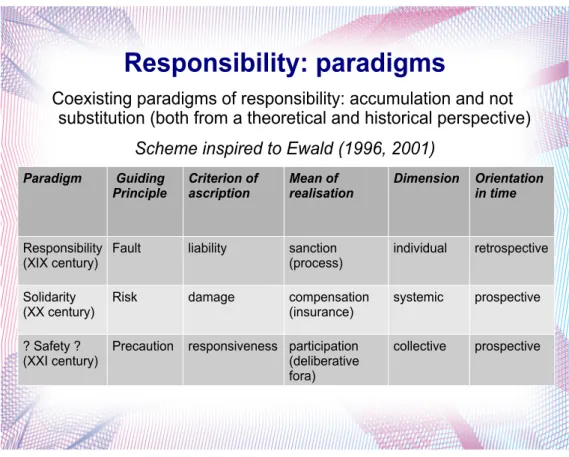
Figure 1: Responsibility : paradigms (G. Gorgoni GREAT “Kick-‐off Meeting” Brussels)
... 26
Figure 2: Constitutive dimensions of responsibility (the “Methodological Meeting” Paris) ... 28
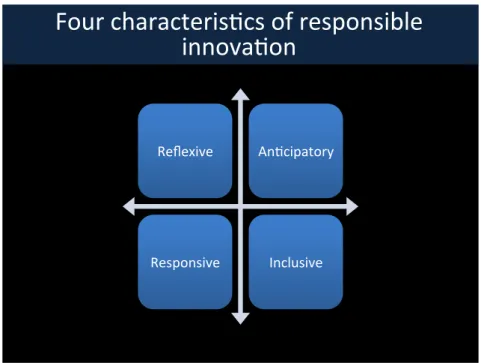
Figure 3: Characteristics of responsible innovation ... 48
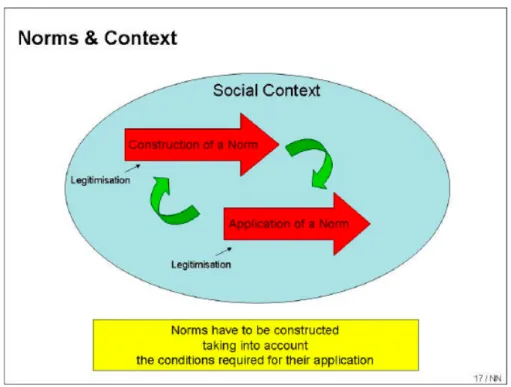
Figure 4: Norms & Context (Egais, Del. 2.1) ... 56
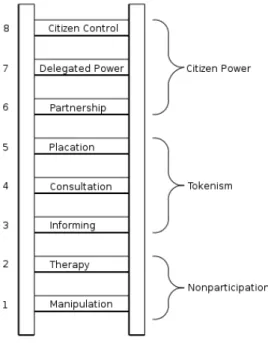
Figure 5: Levels of participation (J. Arnstein, 1969) ... 61
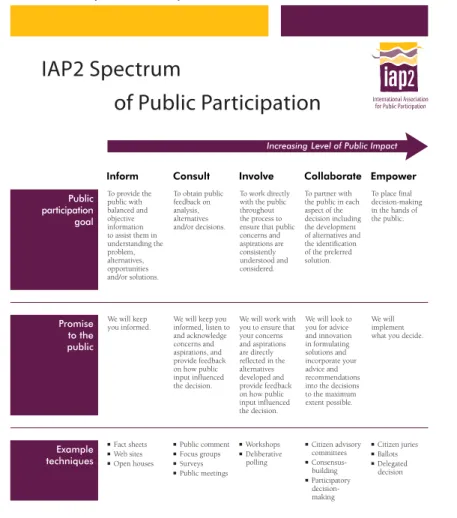
Figure 6: IAP2 Spectrum of Public Participation ... 62
Figure 7: Tools for enhancing participation ... 63
Figure 8: Participatory approaches dimensions (Fung, 2006) ... 65
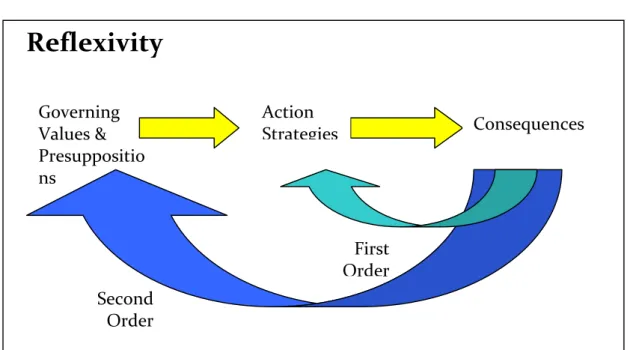
Figure 9: First and Second order Reflexivity ... 74
L i s t o f T a b l e s
Table 1. Innovation structure, Aygen Kurt & Penny Duquenoy ... 16Table 2. The structure and the operation of Innovation system ... 17
Table 3. Division of innovation structures according to institutional frame ... 17
Table 4. Layers of Innovation (Theoretical Workshop held in Paris, April 2013, analysis provided by Jack Stilgoe on innovation). ... 19
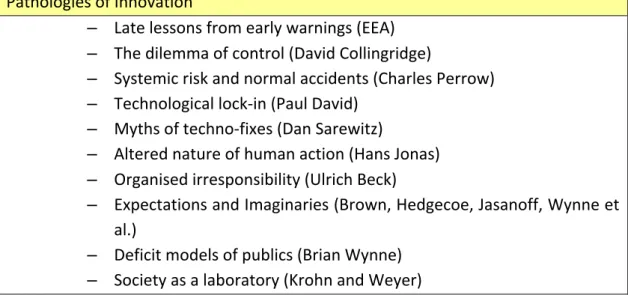
Table 5. Pathologies of Innovation ... 19
Table 6. Means of setting Innovation in motion. ... 20
Table 7: S.I.M presuppositions ... 52
Table 8: Kinds of reflexive governances ... 76
Table 9: Relation between norms and context ... 82
Table 10: Manners of participating into a development process. ... 87
Table 11: Governance typologies matrix for case studies. ... 88
Table 12: Parameters’ matrix for case studies analysis ... 88
Table 13: Analytical grid ... 89
Table 14: Making Innovation Responsible (Based on what presented by J. Stilgoe at the “Methodological Meeting” in Paris, April 2013) ... 90
Je crois qu’il existe de la raison dans l’humain, du raisonnable et du rationnel dans les univers sociaux, comme il existe des valeurs. Cette raison comme ces valeurs sont toutefois humaines. (Pestre 2013)
Structure of Deliverable
The following deliverable is focused on the scientific development of parameters through which we can propose a reference grid for the empirical analysis.
This task will be accomplished through the accomplishment of several steps.
The discussion and analysis of the theoretical background depicted in Del. 2.2 will be a first starting point. From there we should be able to provide a depiction of the justifications connected with RRI, a discussion of the epistemology behind the problem, through a set of analytical steps of defining the problem, and then a full justification for the approach, explaining why current governance approaches are limited in their relationship with RRI.
Analytically speaking, we will provide:
• an introduction depicting the actual situation with regard to Responsible Innovation in the EU.
• a definition of the problem(s) related to Responsible Innovation
• a discussion of the epistemology that cross-‐cuts the problems and that opens up the real problem
• a methodological path or justificatory explanation for our approach
• the parameters needed in order to collect empirical data and analyze research according to our frame.
The present deliverable has the aim of providing the criteria or, better to say, the parameters necessary for processing applied approaches. To accomplish such a task we will start by outlining what the problems are with regard to RRI, gaining knowledge from the previous “Theoretical Landscape”, and from our partners
understanding. From there we will try to shortly, but critically, assess the current Responsible Innovation approaches. We will accomplish this task first by considering RRI through its two sides, responsibility and innovation, and after the current understandings of RRI itself. This should put in evidence that the main shortcomings of RRI are represented by a reductive way in which norms are conceived and constructed with regard to the context. Therefore, we will have to depict how this particular matter is handled and how it could be differently managed. Consequently, we will need to analyze the decision making process in its actual frame so to show gaps and limits. From this stance we will then be able to offer parameters through an analytical grid that will help the investigation in detecting similar shortcomings and limitations in most of the EU research projects.
It goes without saying, that the critical assessment of norms construction and governance approaches stands on a precise methodological ground, one that doesn’t intend to impose a single perspective but only to depict the logical and ethical weak points of current scenarios. A normative core, a focused perspective that stands necessary for every investigation, needs to be always highlighted and justified. Throughout the entire deliverable then, we will provide, explicit or implicit, logical and ethical, justifications to our perspective. Given the length of the issue at stake perhaps some points or theoretical presupposition will be left implicit or treated briefly.
Accordingly, we need to respond to the challenges and difficulties outlined in Del. 2.2. In particular the following deliverable, namely “Analytical Grid”, will represent the definitive formalization1 based on the results of the previous “Theoretical
Landscape” that will favor the subsequent empirical investigation. The precise aim is thus to translate theoretical insights into a ‘language’ useful for further empirical inquiries, by providing a dynamic methodological analytical tool suitable for this purpose.
At the same time, in a second time, the results of the latter will feed the formal structure of the grid, confirming (or contradicting) the outcomes of the former.
1 With the term formalization we refer to the french ‘mise en forme’, that is, to give a definite form or shape to something. We believe it will be necessary in order to use the insights coming from the theoretical landscape.
1. Introduction
The EU seeks to become a genuine Innovation Union in 2020 striving for excellent science, a competitive industry and a better society without compromising either on sustainability goals or on ethically acceptable and socially desirable conditions. Europe thus needs to develop a normative and comprehensive governance framework for Responsible Research and Innovation (RRI).
However, this raises new questions regarding the relation between technical development and society that are often hard to deal with. This matter has been demonstrated by various cases in recent history, for instance, the research on genetically modified organisms (GMO), where the resulting controversies and ethical issues had a broad resonance in society and generated serious economical counter-‐ effects.
Consequently, the societal challenges accompanying this kind of research cannot any more be addressed only by the research community, but also need to include a societal perspective. As stated by David Delpy “the challenge will be to define an approach that promotes creativity and innovation in research underpinned by a commitment to its responsible development”. What appears difficult on paper shows to be even harder in practice.
What are the main problems at the basis of such a target? Undoubtedly the issues at stake are several and on different layers.
The first and most basic question regards exactly how to conceive a responsible kind of innovation? As understood in the previous deliverable, responsible innovation seems to be a paradoxical conception, given the fact that the couple appears to pertain to two different and opposite rational spheres2.
In fact, on the one hand innovation is usually intended as a flow running through technological developments, based on a strategic approach to progress, aimed at marketing or develop marketable products and processes3.
On the other hand, responsibility, although facing different ranges of understanding given the polysemy of the term, is generally conceived as an ethical matter related
2 Referring to Habermas or Parsons.
3 However, innovation encounters problems in its development as shown by the “Report on Innovation”. The level of innovation in EU is much lower when compared with other countries like the US or Japan. In this sense we will have to then develop some RRI conceptions that manages not only to ‘responsibilize’ innovation but also to help boosting its trend. If the two operations are part of one same conception as we think, it will be shown in the further pages.
to the potential consequences that may occur with innovation. This implies somehow that responsibility, and therefore ethics, tend to represent a limit to innovation. The main difficulty stands then in conceiving an innovation process that could be responsible in terms of consequences without hampering the marketization or technological development.
But this kind of problem could be immediately felt to represent only the superficial layer of deeper questions and most of all an assent on those definitions. On the contrary the supposed clash between responsibility and innovation represents only a clear signal or evidence of more complex matters. Although they appear in a different shape, the clashing terms are not new in their basic roots4, and this fact will
turn out to be a good indication in order to highlight gaps and limits.
In fact, what we understood from deliverable 2.2 is that responsible research and innovation is considered at the same time a necessary target and a paradox. But, if we could easily agree on the necessity of a responsible innovation in research for several reasons, would it be also really true that these two terms stand in opposition?
We believe that in reality, although being different, they do not stand in general as opposite, but that a reductive perspective on the question tends to places them into a clash. On the contrary the mistake lies exactly in keeping this opposition alive through different means. The current evaluation tools (e.g., risk assessment), by which responsibility is embedded more or less in research, tend to maintain this opposition either implicitly or explicitly.
As we will see in the proceeding of our analysis, this opposition leads to several effects not last the potential ineffectiveness of innovation especially in economic terms.
We believe that keeping these two fields separated is a mistake from many points of view and that it becomes quite evident at a political level.
There are three layers on which the current understanding of responsible innovation shows its limits and they all can be re-‐conducted and synthetized to their practical concretion, that is how governance models and measures act in order to manage and pursue specific issues.
Furthermore, this problem reaches a different and much more evident difficulty when it is transposed onto a political level that is always a plural one. How in fact, do we manage to conjugate or merge different normative settings given the fact that innovation involves different fields and actors? How do we conceive, in other words,
4 The counter position could be expressed in terms of science and ethics, laws and norms, nature and culture.
a collective action in terms of innovation outcomes? The current answer, as we already understood from Del. 2.2, is usually to recall a meta-‐level justification. In particular the agreement or choice is always to be found in some sort of rationalistic or a priori schemes on which to refer. Although there are several different nuances of which we will provide an analysis, the common trait of most of innovation approaches in current research, lies in this aprioristic or top-‐down understanding of normativity, an attempt that we will call reductionist and that could be intended as a mathematization of ‘life’. The risk here is represented by an instrumentalization of RRI at the expenses of ethics.
In order to demonstrate our hypothesis we will proceed showing that is exactly this reduction that makes emerge all the actual problems connected to innovation. Furthermore we will highlight the different reasons for which we have to reject this understanding and put in evidence how an ‘abstract’ failure affects the ‘practical’ dimension in political terms.
We will adopt such structure:
We should firstly highlight, following the hints and explanations of Del. 2.2, we will go into the two concepts of innovation and responsibility in order to offer an alternative understanding of them. We will then tackle the political layer, trying to show why and how a contradictory acception of RRI fails in its political management. This part will be also based on a two folded explanation; a more theoretical stance, focusing on how norms are conceived and constructed, and a more practical one, that is, what are the governance forms by which normativity and therefore responsibility is handled in innovation processes.
In order to do this we need to understand what these perspectives are, why they are all expressions of one same problem, and show the embedded contradiction in them. Once we have made clear what lies at the heart of those contradictions, we will propose our alternative conception. From there on we will then analyse how this misunderstanding affects the current governance models and consequently offer a solution, keeping in mind that is not the solution but a solution.
2. Critical assessment of Responsible Innovation in Research
As everyone can understand even at a first glance there are several aspects that need to be treated if we want to develop an analysis on Responsible Innovation. Furthermore there are different layers of understanding that lead us to the main core of the problem, the relation between norms and context(s).
From a practical point of view, the main starting problem, for everyone who wants to develop a conception of RRI, comes across together with the understanding of the fact that innovation, and therefore responsible innovation, can occur both in different fields or manners affecting a large number of contexts. Without the necessity to provide an exhaustive enumeration of possible fields (technologies, environment, medical, food) it is important to assess and keep in mind the variety of different potential applications and regulations that characterize every specific domain, and therefore the insufficiency to take into account only one of them. On the contrary this ‘normative clash’ calls in for a proposal that could be sufficiently wide in order to be valid without loosing at the same time all the different normative sets.
Also on a theoretical stance, as it has be shown in Del. 2.2, the concept of responsible innovation involves a lot of different perspectives and “sub-‐acceptions” that renders hard to develop a common understanding. To be more precise, responsible innovation is usually seen as the addition of two antithetic concepts, innovation and responsibility, as mentioned previously. If the former is generally more or less definable through a shared conception, the latter encounters a lot of different perspectives due to its recent formation, etymological richness and width range of application. (Hart, 1968; Groves, 2006; Bovens, 2006).
In order to develop an alternative conception of RRI we then need to see if, how and where we could find indications that would be useful in order to go out from a common understanding of it. We don’t need to recall all the possible options as this has been exhaustively done by Del. 2.2. We will just see if there are some indications that could lead us on the right path, the one of a logically correct, ethically good and practically effective conception of RRI.
Lets shortly set a frame of what innovation could be and how we could handle it.
2.1. Innovation
The main basic problem, as we hinted, is how to assess and prevent all the potential consequences of an innovation process, considering the enormous range of possible outcomes in different fields and from different perspectives? How, in other terms, an innovation process could be successful considering that not only its scientificity will represent the proof of it, but also that the context will judge it? If an innovation aspires to be successful it needs to consider how to ‘offer’ the result to potential beneficiaries. Besides, as we will show, an innovation cannot be reduced to its economic impact in terms of profit but has to take into account the social benefits in a broader sense. So, again, given that innovations could and potentially aims at affecting different fields and perspectives, in which way we take into account different normative settings?
Although innovation seems to be a quite recent concept, in reality only its current understanding in economical terms represents a novelty. Its origins are rooted across a long tradition where the stress has been placed on the role and acceptions of creativity5. Along with the implementation of technology in the production
process, innovation has started to become conflated to developments for profit purposes. As largely shown6, Schumpeter’s theory of economic cycles represents the common reference for all those attempts of placing innovation into its market dimension. But innovation seems to enclose a wider range of meanings coming from different periods and according understandings.
Lets briefly analyse the genealogy of innovation in order to find useful issues for our developments.
According to Benoit Godin7 there are at least six main layers from which innovation can be analysed. We could study “the words (or terms), their genesis and transformation, and the cluster of concepts involved in speaking about innovation: invention, ingenuity, imagination, creativity, etc”. We could have a look at its meanings or the “discourses held in the name of the concepts”. The latter are usually of three kinds: “innovation as a factor for change in society, innovation as progress, and innovation for its own sake”.
If we would want to go deeper in our enquiry, and this particular side closely touches our investigation, we could also analyse the norms on which innovation is based, given the fact that it often implies a sort of tension between tradition and novelty that raises conflicts and tensions. But there is also a fifth and sixth layer that should be taken into account. The former being theories and conceptual models developed
5 http://www.csiic.ca/PDF/IntellectualNo1.pdf 6 See, Del. 2.2
to explain innovation and the latter “the study of the context in which the category emerged: economic (trade), politics (the courts) and culture (expressiveness, awareness of history)”.
It goes without saying that it would be difficult to make a clear distinction between these different sides of innovation and therefore it sounds more useful to concentrate on different hints and the general main purpose of such a study: to show how innovation embeds an excess of significance that needs to be unveiled. It means how innovation carries many related meanings that are thicker than a simple profit focused one.
Until the beginning of the twentieth century innovation was a term that has been extensively used only in two main circumstances. The first reference to innovation can be found in Machiavelli’s Principe where he describes the role of innovation with regard to the people. Machiavelli describes the reluctance of ‘contexts’ to innovations and, adopting the fox metaphor, describes the management of novelty as a quality to be held by potential sovereigns.
In Bacon, the reference to innovation is even more evident although with a different meaning. Bacon, that titles his work exactly “Of Innovations (1625)”, describes the resistance of people to innovation8.
In history innovation has been always connected to novelty and therefore often overlapped with invention or compared to imitation9. But a deeper theory on innovation was produced in sociology only at the end of the nineteenth century, with Gabriel Tarde10. The French philosopher attempted to explain social changes in a broad sense and not at all limited to the market side of it. As recalled by Godin, Tarde was interested in understanding social evolution with regard to “grammar, language, religion, law, constitution, economic regime, industry and arts”.
But still in Tarde’s work as in many others’ ones, innovation is still tightly connected to invention and imitation. Whether the latter is conceived as a natural settlement process after inventions, the former one was still assigned and embedded in great personalities11 or to some better-‐developed people, nations, etc., within an
evolutionary frame.12 Also later general sociology and anthropology didn’t show much interest in innovation as such but rather on imitation as a matter of evolution. Only with the rise of technology and the consequent focus by sociology, innovation
8 Whitney (1986)
9 For the history of the term see, http://www.csiic.ca/PDF/IntellectualNo1.pdf.
10 Perhaps not a coincidence that came from a work called Les lois de l'imitation, Paris 1890. 11 In philosophy most of all we find a sort of romantic accent on the role of imagination, inspiration etc., later merged into a kind of metaphysical necessity and retrospectively described as a psychological description.
became a central topic.
Although it is true that a clear definition has not been provided by sociologists along the twentieth century, it is also true that there was a common understanding of it that appears to be interesting. W. F. Ogburn and S. C. Gilfillan were the first ones who conceived technologies as a factor of social changes or cultural ones. If, one the one hand, Ogburn focused more on the gap between material culture and the rest of it occurred with the appearance of technology, Gilfillan (1935: 6) on the other hand stresses the social aspect of every technological development. For him technology is a social process in at least three senses. The first one is the social forces or conditions that made possible the development. A second one should be detected in its cumulative aspect for which a new technology is always the result of previous modifications, adaptations and similar small or big details that made that outcome possible. Lastly, technology is a systematic process being developed in research laboratories and structures specifically aimed at furthering the process.
If we could say that maybe Gilfillan forgot to mention explicitly a fourth sense, that is the social outcomes of every technology, it is also true that this statement was probably omitted because it was considered to be obvious. As shown by Stern (1927), Mulkay (1969, 1972a, 1972b) and to some extent Chaplin (1928) most of the sociologists of that time agreed on implicitly conceiving innovations in technology with regard to their use and the consequent social impact. Moreover, to sociologists, “an innovator was not one who invents but adopts an invention for the first time”13 stressing the contextual side of every innovation.
Although, of course, there are important nuances between different thinkers, there are two main aspects that appear peculiar for our investigation.
A first one is the social impact of an innovation that is considered to provoke considered as cultural change.
A second one is the general understanding of innovation “as a process where both the production of an invention and its use are discussed rather than contrasted”14. To summarize, innovation had a wide understanding in terms of social impact and as a cause of social evolution. And of course, social evolution, as foreseen by Marx, passes also and mainly through economic progress.
Economists made a slight but crucial change in the common understanding of innovation conceiving it not simply as a contextualisation of an invention but as a commercialization.
The relationship between economics and technology intended as a novelty carrier could be seen as quite recent one. As noted by Godin, “the study of economic
13 Godin, p.30. 14 Op. cit., p. 31.
change is not a fundamental concept in economics, as culture change is in anthropology or as a social change is in sociology. Change really got into economics with the study of technology as a cause of economic growth”15.
Although Schumpeter is the one usually indicated as the main father of innovation, it is also true that most of his developments were achieved on the basis of previous work, particularly the ones of Tarde and Maclaurin. Especially this last one defined in specific terms the different stages of an innovation process from which Schumpeter gained his hints.
From both these two authors, anyway, came the push that has driven innovation through a mere economic track. Innovation shifted its attention from social and cultural development coming from different sources, towards economic profit depending on technological (initially also technical) progress at several stages of the production process. From another perspective innovation passed from being intended as an individual unpredictable talent to an organized, planned research structure.
Nowadays, for a series of reasons that go across economic developments, cultural changes and specific policies, ”the measurement of innovation concerns innovation in firms only”. Innovation in this sense goes along with a specific economic model, i. e. neo-‐liberalism, that defines its traits in a determined way. Innovation then is the symbol of an era, or historical period, that focuses on efficiency in economic terms. Paraphrasing Gramsci or Lukács, the relation between the production process model of an historical period and its social (cultural) structure are always strictly intertwined. As correctly shown by Schön, “innovation came to be seen as the instrument of growth and growth as the occasion for and the object of innovation”16.
All this historical investigation had two main aims. The first one to understand if there were some other, wider or different, understandings of innovation, and the second one to match the current developments of innovation with its original, better say theoretical, intention.
The outcome seems to be quite clear. If on the one hand is possible to detect throughout history a different and wider perspective on innovation, one that enhances the social and cultural aspects and outcomes, on the other hand, we manage to extrapolate a sort of key-‐word underlying the recent economic developments of innovation, the one of efficiency.
At this point, considering these two aspects, and taking into account how innovation
15 Op. cit., p. 32.
seems to be not efficient (in economic terms), to understand whether maybe it is exactly that cultural side and an unbalanced relation with it that contributes to this inefficiency.
2.1.1. Current understanding and limits of innovation
To speak about a general theory of innovation seems to make little sense for several reasons as suggested by Moldaschl: “The primary objective here is not to explain the drivers and logic of innovation (if such do exist), or to predict the course of technical, social and socio-‐technical change, but rather to grasp and explain the relative capability and achievement of social entities (organizations, regions, countries, persons) when dealing with drivers of change”
At the same time though, to describe and define a theory of specific innovations doesn’t seem to go further for the same reasons. An innovation per se could be embodied in so many different things that it results impossible to face them in one same way. Innovation, as we seen, is about novelty, or as a definition would sound, is about mixing different factors coming from different fields in a completely new way. Besides, the level of combination and displacement contributes to define if innovation could be considered radical (disruptive) or incremental. Accordingly to define a theory of innovation seems to be too ambitious to be correct and at the same time an analysis of all innovations appears an endless and ineffective operation. What we could do instead, is maybe to draw the lines of innovation within technological domain and connect it to the current understanding of it within RRI.
All the previous analysis shows that nowadays innovation represents the marketization of an already existing process or product17. Ironically we could say that
innovation represents itself an innovation, or at least a new understanding of it. Thus, this simple consideration paves the way to many important consequences in order to assess innovation and to propose some alternatives. A first one could be the fact that innovation, as it is commonly conceived, represents only one aspect of a larger frame. Being then considered as the only possible acception surely casts some shadows in being genuinely addressed. However, without the need to reject this market declination we could at the same time affirm the possibility of its modification or enlargement. Innovation, though it appears to be strictly connected to technological innovation, cannot be conflated to an understanding where
17 M. Moldaschl, ‘Why Innovation Theories Make no Sense’, Papers and Preprints of the
Department of Innovation Research and Sustainable Resource Management (BWL IX),
Chemnitz University of Technology No. 9/2010.
technology is a product/process that must be only profitable. If a merely profit-‐ driven innovation has shown to be potentially counterproductive is because innovation has many different direct and indirect layers that require a larger structure of development. We can’t further neither the discussion on the normative basis of economies as layers directly connected to it, nor the multiple layers on which an innovation could and should occur due to the objective of this document. It is nevertheless important to understand how most of the problems with innovation come not from the concept itself but from its reductive understanding that it also a reductive understanding of economy itself.
There are many other areas or frames where an innovation could occur and, furthermore, an innovation, for to be efficient and therefore successful, has to be conceived as a general development, not a single one. It’s not one side of the normative structure on which societies are built that can be privileged against the others, because other normativities will raise their claims against it.
Lets try to sustain our hypothesis through wider definitions and deeper depiction of what innovation is.
Although the acceptions provided in the last years on the concept of innovation, without affecting the main core of a common understanding, are more or less different just in terms of words, it is still important to briefly highlight some implications contained in those definitions. One of the most articulated is the one provided by Jeroen van den Hoven when he defines innovation as “an activity or process which may lead to previously unknown designs pertaining either to the physical world (e.g., designs of buildings and infrastructure), the conceptual world (social and legal institutions, procedures and organization) or combination of these, which – when implemented – expand the set of relevant feasible options for action, either physical or cognitive”18. This definition highlights the ‘multiverse’ nature of innovation in terms of products and areas. As correctly noted by van den Hoven, although innovations usually “concern technical artifacts or technical system, […] they are not limited to the material domain, -‐ and therefore they – allow us to do things we could not do before, or allow us to think about things we have not thought before” (Owen et al., 2013).
It appears already interesting for the level at which it is going to affect a wide range of people. If an innovation would have been something concerning only a mere material object it could have been eventually bypassed. Some material innovations
18 Owen et al., (eds.) (2013), Responsible Innovation. Managing the Responsible Emergence of Science and Innovation in Society, Chirchester, Wiley 2013.
haven’t changed our life in such a radical way to require a thicker embedment. An innovation that changes our conceptual frame on the contrary, always calls into question for an active participation by the largest number of people potentially affected. But assuming a large participation doesn’t represents a condition of legitimacy in the sense that participation has to be freed by potential ideological stances and therefore requires a level of reflexivity that can provide not only its necessity but also its sufficiency. In this sense the kind of participation that this definition implies is a thick one. If an innovation, moreover, affects our actual thinking framework then it will be exactly that frame that we will have to pass under judgment. Following these two definitions and their implications we already see the path we might need to follow. But lets not put the cart before the horses and lets try to focus on the structure of innovation.
In order to connect these definitions of innovation to a broader and deeper frame, we need to go further on analyzing the structure of innovation, to try and understand its traits, tendencies and nature.
After that, we should be able to see if there is an intrinsic mistake or it’s just an instrumental manipulation of innovation that makes it so specifically focused.
As described by Aygen Kurt & Penny Duquenoy19 there are at least four different, though interlaced, characteristics that we should keep in mind when we consider innovation:
INNOVATION STRUCTURE • Systemic character of innovation.
• Collective roles innovation actors -‐ innovation activities in organisations (e.g. firms) depend on external sources.
• Hence innovation activity occurs in a system where several different actors play a role.
• Firm is the key innovator – its survival depends on its capacity to adapt to changes in the external environment and to influence it (Freeman and Soete 1997).
Table 1. Innovation structure, Aygen Kurt & Penny Duquenoy
Innovation has a systemic character in the sense that it tends to occur on a regular base. Therefore it requires a particular attention as a constant phenomenon. It is also true that innovation affects a system composed by different actors and therefore has, and has to be seen from, mostly a pluralistic point of view. Although it
has been lately reduced to this side of its implementation, we are not sure we could agree in considering innovation in its ‘firm’ reduction. Innovation is developed in research of all kind and doesn’t have to be reduced to a firm. It is true that firms’ survival depends on their capacity to innovate but we could say that the other way round is equally true.
According to Kurt & Duquenoy, the structure of an innovation system is always based on elements, relationships and processes, but these systems could vary according to the specialization, the institutions and routines, or the mode of innovating.
INNOVATION
Structure (common) Operation (different)
Elements – institutions and organisations with a focus on firms
Specialisation – what they do Relationships – focus on inter-‐
organisational networks
Institutions and routines – how they operate
Processes – focus on interactive learning Mode of innovation – how they innovate (e.g. integrated or isolated?)
Table 2. The structure and the operation of Innovation system
For the two authors then, a further division of innovation structures, according to the institutional frame they are embedded in, could be provided, following Schoser (1999):
Directly involved with the innovation process
Indirectly involved with the innovation process
Informal institutions Informal cognitive and behavioural patterns in the innovation process
Cultural and historical factors
Formal Institutions Innovation network in a
narrow sense
Formal institutions in the background of the innovation process
This is more or less the general structure of innovations, the way they generally proceed and the frame in which they are embedded. This helps us a bit to understand innovation in its structural frame but doesn’t still tell us a lot with regards to its dynamics. We need then to understand in which way we should define our enquiry not only in a spatial mode but also in a time one.
The analysis provided by Jack Stilgoe on innovation20 makes a bit clearer what the
most common questions in this sense could be, and why there is such a strong need for framing innovation in a different way. The problem that often seems to be connected with innovation, if we would like to talk about it in ontological terms is its lack of reflexivity or, better say, its avoidance of ethical reflexivity.
Stilgoe lists the following ‘normative’ issues in order to detect if an innovation process is conducted through a reflexive attitude or, on the contrary, lacks it.
He divides innovation in three layers, namely the products of innovation, the processes that are carried out and the purposes for which are started.
The questions are the following:
What are the products, the results of innovation? How the research process is started and pursued? What are the purposes of innovation?
WHAT HOW WHY
Products
• What are the likely risks and benefits?
• How will the risks and benefits be distributed? • What other impacts can
we predict?
• How might these change in the future?
• What don’t we know about?
• What might we never
Processes
• How should research and innovation take place?
• How should standards be drawn up and applied?
• How should risks and benefits be defined and measured? • Who is in control? • Who will take
Purposes
• Why should this research be undertaken? • Who will benefit? • What are the
alternatives? • Who gets to
decide?
20 Theoretical Workshop held in Paris, April 2013. The PPT is avalaible at the following address, http://www.great-‐project.eu/.