The Production of by Means of a Medium Energy Proton Accelerator
By Peter Smith-Jones Rolf Schwarzbach and Regin Weinreich
Paul Scherrer Institute, WürenUngen and ViUigen, CH-5232 ViUigen-PSI, Switzerland
Dedicated to Professor G. Stöcklin on the occasion of his 60th birthday
(Received November 17, 1989; revised January 3, 1990)Proton induced reactions / Radionuclide production /
" F e / Thick target yield / PET radionuclide
Sununary
The possible reactions induced by a 72 MeV proton beam for the formation of '^Fe are explored. For the most plausible target material of ""Ni, both production rates and thick target yields are given for the relevant iron radionuclides produced. Various chemical aspects are explored and a feasible chemical Separation leading to the isolation of large amounts of no carrier added '^Fe is given. The overall yield and specific activity of '^Fe production by medium energy proton Irradiation of a natural nicke] target is more favorable than that of the reported Mn target.
Introduction
Proton induced reactions for the large-scale
pro-duction of positron emitting radionuclides, suitable
for PET investigations, using proton beams in the
region of 40—72 MeV, are being investigated as part
of the research and development programme at the
Paul Scherrer Institute (PSI). Since most of the lower
energy proton induced reactions have been well
docu-mented [1 — 3], and since the lower energy part of the
72 MeV beam of the Injector II cyclotron is presently
occupied in routine production purposes, the attention
was focused on the upper energy ränge available (40 —
72 MeV), with the goal of a simultaneous
bombard-ment of several targets.
Iron-52 (fj/2 8.27 h) is a useful radionuclide for
studying the biochemistry of iron based Compounds
with Potential applications in nuclear medicine (Ref
[4—5], and further references therein). Moreover ' ^ F e
can be used as parent material in a radionuclide
gener-ator for the short-lived " " M n {ti,2 21.1m) [ 6 - 7 ] .
Both ^^Fe and ^^"Mn are positron emitters and their
decay characteristics [8] make them preferable to other
iron and manganese radionuclides for quantitative
PET studies.
' On leave of absence from the National Accelerator Centre, Faure 7131, South Africa. Present address: Paul Scherrer In-stitute, Würenlingen and Villigen, CH-5232 Villigen-PSI, Switzerland.
Various production routes for ^^Fe have been
dem-onstrated and are summarized in Table 1. Despite the
different production conditions cited in the literature
and despite the questionable character of such
com-parisons at all, it seems that for a medium energy
proton cyclotron the most favorable reaction reported
is the ®^Mn(p,4n). However since the cross section for
^^Fe production is an order of magnitude higher than
that for ^^Fe [9], this reaction gives a significant ^^Fe
impurity. This ^^Fe impurity seems to be undesirable
because of its long half life and associated patient
radiation dose [10].
The proton bombardment of a nickel target to
produce ^^Fe has only been reported for proton
ener-gies above 200 MeV [ 1 1 - 1 3 ] . With respect to the
for-mation of the three radionuclides ^^Fe, ^^Fe [14, 15]
and [16], the proton energy ränge of the PSI
injector cyclotrons ( < 72 MeV) is covered by the
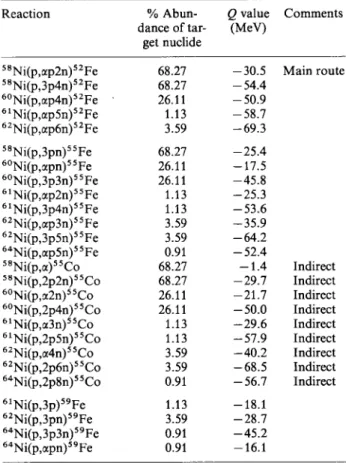
nu-clear reactions given in Table 2. Thus, these routes are
occurring in a rather complex way, and the number of
the reactions mentioned both in Table 2 and
investi-gated in more detail by physical measurements is
lim-ited [17—22] and these measurements omit even the
energy ränge under question. Moreover from the data
given, it became apparent that the ^®Ni(p,ap2n)^^Fe
reaction should reach its maximum cross section in
the 60 — 65 MeV energy region. In addition to this the
indirect formation of ^^Fe will be limited by the
17.54 h half-life of the ^^Co precursor, and in
compari-son the direct reactions leading to are thought to
be of a lower probability.
The Separation of iron from nearby transition
metals by anion or cation exchange chromatography
using quarternary ammonium or sulphonic acid
func-tional groups attached to a divinylbenzene styrene
copolymer lattice and a medium of hydrochloric acid
has been proven to be very effective [23]. In high
concentrations of hydrochloric acid both iron(III) and
gallium(III) form very stable anionic chloride
complexes which are strongly retained by both types
of resin. Other Clements in the flrst row transition
metal group show little or no absorption with cation
exchange, but with anion exchange the selective
elu-tion of nickel, manganese, cobalt and iron has been
demonstrated [24].
Table 1. Production methods for " F e Target material Nuclear reaction Energy (MeV)
Production rate (a: |i,Ci/|iAh, b: MBq/nAh, c: % of total) Reference
^Fe ' F e ®Fe a Chromium Chromium Chromium Enriched 50 um 40 um 40 |xm 40 um ""Cr(a,xn) ""Cr(a,xn) "»'Cr(a,xn) 5°Cr(a,2n) 30 30 40 40 3.3 3.8 8.2 160 0.12 0.14 0.30 5.9 0.46 0.43 0.52 ND 0.017 0.016 0.019 14 11.3 6.3 ND ND ND N D 32 33, 34 33, 34 34 Chromium 55 um •'»•Cr(a,;cn) 65 3.8 0.14 0.19 0.007 5.0 ND — — 35
Cr^Ov O.lg/cm^ "»'Cr(a,xn) 8 5 - 5 3 30 1.11 ND — — ND — — 36
Chromium 7.2 (im °"Cr(^He,xn) 23 0.7 0.03 0.002 0.00007 0.3 ND — — 37 Chromium 40 (im ""Cr(^He,xn) 30 13 0.48 0.032 0.0009 0.25 ND — — 34, 38
Chromium 250 um 35 20 0.74 0.014 0.0005 0.07 ND — — 39,40 Chromium 40 um °"Cr(^He,xn) 40 50 1.85 0.036 0.0013 0.07 ND — — 34, 38 Chromium 30 um °"'Cr(^He,xn) 45 50 1.85 - - <0.001 ND - - 41 M n O j "Mn(p,4n) 65 160 5.9 4.8 0.18 3 ND _ _ 42 Manganese 2.6g/cm^ "Mn(p,4n) 7 0 - 5 0 200 7.4 1.4 0.05 0.7 ND — — 12 Manganese "Mn(p,4n) 6 0 - 4 4 600 22 2.7 0.1 0.45 ND — — 9 Manganese 2.0g/cm^ "Mn(p,4n) 6 3 - 4 8 327 12.1 1.2 0.05 0.38 ND — — 30 Nickel 0.5 mm ""Ni(p,xn) 200-198 120 4.4 2.4 0.09 2.0 0.2 0.008 0.17 11 Nickel 6.5 mm "'"Ni(p,xn) 588-580 700 26 23 0.85 3.3 3.5 0.13 0.5 11 Nickel 8.0 mm 800-790 134 5.0 ND — — 0.7 0.03 0.52 13
Nickel 2.0 mm ""Ni(p,xn) 6 8 - 5 4 590 22 2.9 0.07 0.5 0.20 0.007 0.03 this work Nickel 1.9g/cm^ "'"Ni(p,xn) 6 3 - 4 8 491 18.1 10.1 0.37 2.0 0.24 0.008 0.05 30 Ferrocene l g "»'Fe(y,2n) 40 0.03 0.001 S-IO"" 10"' 1 ND — — 43
Iron l g ""Fe(y,2n) 90 0.10 0.004 ND — — ND — — 44
N D : Not determined.
Table 2. Q values for the production of " F e , ''Fe, " F e and " C o ( - > " F e ) by interaction of protons with nickel isotopes [45]
Reaction % Abun-dance of tar-get nuclide Q value (MeV) Comments
'®Ni(p,ap2n)"Fe 68.27 - 3 0 . 5 Main route ''Ni(p,3p4n)"Fe 68.27 - 5 4 . 4 ®''Ni(p,ap4n)"Fe ' 26.11 - 5 0 . 9 ®'Ni(p,ap5n)"Fe 1.13 - 5 8 . 7 " N i ( p , a p 6 n ) " F e 3.59 - 6 9 . 3 '®Ni(p,3pn)"Fe 68.27 - 2 5 . 4 ®°Ni(p,apn)"Fe 26.11 - 1 7 . 5 ^<'Ni(p,3p3n)"Fe 26.11 - 4 5 . 8 " N i ( p , a p 2 n ) " F e 1.13 - 2 5 . 3 <''Ni(p,3p4n)"Fe 1.13 - 5 3 . 6 " N i ( p , a p 3 n ) " F e 3.59 - 3 5 . 9 " N i ( p , 3 p 5 n ) " F e 3.59 - 6 4 . 2 '"'Ni(p,ap5n)"Fe 0.91 - 5 2 . 4 '®Ni(p,a)"Co 68.27 - 1 . 4 Indirect "'Ni(p,2p2n)"Co 68.27 - 2 9 . 7 Indirect ^''Ni(p,a2n)"Co 26.11 - 2 1 . 7 Indirect ®°Ni(p,2p4n)"Co 26.11 - 5 0 . 0 Indirect <"Ni(p,a3n)"Co 1.13 - 2 9 . 6 Indirect " N i ( p , 2 p 5 n ) " C o 1.13 - 5 7 . 9 Indirect " N i ( p , a 4 n ) " C o 3.59 - 4 0 . 2 Indirect " N i ( p , 2 p 6 n ) " C o 3.59 - 6 8 . 5 Indirect ®'^Ni(p,2p8n)"Co 0.91 - 5 6 . 7 Indirect ®'Ni(p,3p)"Fe 1.13 - 1 8 . 1 " N i ( p , 3 p n ) " F e 3.59 - 2 8 . 7 <^''Ni(p,3p3n)"Fe 0.91 - 4 5 . 2 ®''Ni(p,apn)"Fe 0.91 - 1 6 . 1
H e n c e the purpose o f this w o r k w a s to measure the production functions for ^^Fe for the energy region b e l o w 72 M e V as well as the f o r m a t i o n o f the contami-nants '^Fe a n d ^^Fe. In addition t o this it w a s o f paramount importance t o produce ^^Fe with a high specific activity (suitable for biological applications) so that a Statement about the suitability of ^^Fe prod-uced by proton Irradiation of natural nickel could be made.
E x p e r i m e n t a l
T a r g e t r y a n d i r r a d i a t i o n s
Irradiations were performed with b o t h the 72 M e V Philips Injector I cyclotron and the newer Injector II cyclotron at the PSI. Circular discs f r o m 13 m m to 30 m m in diameter were cut f r o m 0.125 m m , 0.3 m m , 1.0 m m and 2 . 0 m m metallic nickel sheets (99.98% G o o d f e l l o w Metals, Cambridge, U K ) . M o n i t o r foils of a corresponding diameter were cut from 0.13 and 0.457 m m metallic a l u m i n u m sheets (99.9% G o o d f e l l o w Metals, Cambridge, U K ) . The stacks were encased in aluminum cans 40 m m in diameter a n d u p to 10 m m thick and b o m b a r d e d at currents f r o m 1 n A to 4 0 n A for m a x i m u m periods o f up t o 20 minutes in the existing radioisotope production vault using the o f f l i n e ^^^I production beamline [25]. T h e target foils
were aligned perpendicular to the proton beam in such
a way that successive foils received only the degraded
beam Coming from the preceding foil in the Stack. The
beam was focused to a diameter of 10 — 15 mm. In the
experiments performed some 30 to 40% of the beam
passed through the 13 mm foils and 99% of the beam
was on target for the larger foils.
Several stacks of were bombarded, early
ex-periments used alternate 0.125 mm Ni and 0.13 mm
AI foils (13 mm diameter) to determine if product
recoil was significant and in later experiments only
0.5 mm AI foils at 10 MeV intervals were used to check
the Position and scattering of the proton beam. Thick
target yields used 1 mm and 2 mm thick foils (20 —
30 mm diameter) and a corresponding energy region
of 6 7 . 8 - 5 3 . 9 MeV.
Beam currents were determined by analyzing the
aluminum foils for the induced ^Be, ^^Na and ^'^Na
activities, and by using the known cross section values
[26]. Proton ranges were determined by using one of
the more recently available proton ränge energy tables
[27].
R a d i o n u c l i d i c a s s a y s
An 84 cm^ high purity germanium detector (n type) in
conjunction with a 916 MCB card (EG & G ORTEC,
Oak Ridge, Tennessee, USA) fitted in an IBM PC-AT
was used to collect the y-ray spectra. Analysis of the
spectra was performed with the G E L I G A M routine
(EG & G ORTEC, Oak Ridge, Tennessee, USA).
Cali-bration of the system in terms of both energy and
detector efficiency was performed using various
certi-fied point sources of reference date 25/6/86
(Laboratoire de Metrologie des Rayonnements
lonisants, Gif-sur-Yvette, France). Foils were assayed
at distances of 35 to 5 cm from the detector at times
ranging from EOB + 8 h to EOB + 90 d depending
on the activity induced therein. The "dead time" of
the counting system was not allowed to exceed 20%.
Iron-55 activities were determined by isolating the
iron isotopes from any other radionuclides and the
target matrix, after a decay time of 90 days, by cation
exchange chromatography. The foils were dissolved
in 10 M HCl and 1 ng of Fe(III) carrier added. The
Solution obtained was oxidized using H2O2, adjusted
to 8 M HCl and then loaded onto a 5 ml column of
AG50-X8 resin (H form, 100 - 200 mesh). The nickel
target material as well as induced cobalt and
manga-nese activities were easily eluted on loading and further
washing with 20 ml of 8 M HCl removed traces. Iron
was stripped from the column using 4.0 M HCl and
excess acid removed. The sample remaining was
dis-solved in 0.05 M HCl and was counted by means
of Liquid Scintillation Counting as a 10% aqueous
cocktail in "Instagel" (a Standard ^^Fe reference
Solu-tion was obtained from Amersham InternaSolu-tional plc,
Buckinghamshire, UK). ' ' F e was determined in the
isolated iron fraction prior to LSD counting. A known
amount of '^Fe was similarly separated from a
simu-lated target matrix and y-ray analysis showed the
Sep-aration to be quantitative.
The errors involved in the radionuclidic assays
were estimated by obtaining the sum of all the
con-tributing errors.
The energy calculations were estimated to be
within 3.4% of the energy window chosen and were
determined using the following errors; incident proton
energy (0.1%), proton ränge energy values (1.0%),
target density (1.0%) and proton straggling (1.3%).
The well known straggling of the proton energy by
interaction with materials [27] seems to be
pro-portional (for the energy ränge investigated) to the
target density (atoms/cm^) and for the degradation of
a 70 MeV beam to 60, 50 and 40 MeV in a nickel
target it was estimated to be 0.7, 1.5 and 2.3 MeV,
respectively.
The beam current determinations were estimated
to be within 10.8% of the values obtained and were
determined from the following errors: target density
(1 %), proton ränge energy values (1 %), cross-section
measurements (3.0%), Standard calibration sources
(2.6%), extrapolated detector efficiencies (1.5%),
counting geometries (0.2%), decay corrections (0.3%
for ^^Na only), gamma ray abundances (0.4%),
photopeak integrations (1%). Recoil losses were
con-sidered to be negligible.
The production yields were estimated to be within
16% of the values obtained for " F e (16% for ' ' F e
(via " C o ) , 29% for ' ' F e and 19% for '®Fe) and were
determined from the following errors: target density
(1%), proton ränge energy values (1%), cross-section
determination (10.8%), extrapolated detector
ef-ficiencies (1.5%), counting geometries (0.2%), decay
corrections (0.1%), gamma ray abundances (0.4%),
photopeak integrations (1% for '^Fe, 1% for " C o
and 5% for '^Fe) and, for " F e , LSD counting
uncer-tainty (15%).
R a d i o c h e m i s t r y
Cation exchange chromatography is an exceedingly
good tool for the Separation of iron from all
non-ferrous first row transition metals but it necessitates
the use of concentrated acids. Iron is an impurity
found in most chemical reagents and as a result of
this relatively large amounts of carrier iron can be
introduced by this technique. Anion exchange on the
other hand uses less concentrated reagents for the
removal of non-ferrous cations.
The anion exchange Separation of the first nickel
targets (25 mm x 2 mm) was performed by initially
dissolving the metal in 100 ml 7 M HNO3. The
Solu-tion obtained was evaporated down to near dryness
and 60 ml 6 M HCl were added. The cold Solution
obtained was loaded onto a 25 ml column of Dowex
1-X8 (125 mm X 15 mm, 1 0 0 - 2 0 0 mesh, prewashed
with 200 ml 0.1 M HCl and equilibrated with 6 M
Table 3. Thick target yields for '^Fe and radionuclidic contaminants
Energy window (MeV)
Production rates (A;Bq//iAh) Impurities (%) Energy window (MeV) " F e " F e " F e (via " C o ) " F e " F e " F e (via " C o ) " F e 69.1-67.6 2770 18.0 15.1 0.73 0.65 0.55 0.026 67.6-66.2 2860 15.6 14.8 0.69 0.54 0.52 0.024 66.2-64.7 2930 12.0 14.1 0.71 0.46 0.48 0.024 64.7 - 63.3 2870 13.4 14.4 0.74 0.46 0.50 0.026 63.3-61.8 2750 13.9 15.0 0.67 0.50 0.55 0.024 61.8-60.4 2620 13.3 15.0 0.65 0.51 0.57 0.024 60.4-58.9 2480 12.9 14.1 0.72 0.52 0.57 0.029 58.9-57.5 2360 11.2 14.5 0.62 0.47 0.61 0.026 57.5-56.0 2160 9.23 15.1 0.65 0.43 0.70 0.030 56.0-54.6 1820 8.83 14.6 0.85 0.48 0.81 0.047 54.6-53.1 1470 9.52 13.8 0.78 0.65 0.94 0.035 53.1-51.6 1180 10.5 13.2 0.56 0.89 1.12 0.047 51.6-50.2 980 11.1 12.6 0.45 1.13 1.29 0.046 50.2-48.7 750 10.5 11.7 0.44 1.40 1.56 0.058 48.7-47.3 376 8.59 9.67 0.37 2.28 2.57 0.099 47.3-45.8 52 6.78 7.55 0.31 13.04 14.52 0.59
HCl). Manganese, cobalt and nickel were eluted with
400 ml of 3 M HCl at a flow rate of 1.7 ml/min. Finally
" F e was eluted with 50 ml of 0.1 M HCl at a flow
rate of 1.7 ml/min. Later improvements in the targetry
reduced the target size to 1 8 x 1 8 x 1 mm which
re-duced the volume of 7 M HNO 3 required to dissolve
the target to 80 ml. The Solution obtained was then
treated as above.
Determination of active components was
per-formed using the aforementioned HPGE counting
sys-tem after appropriate waiting times. Determination
of carrier iron concentrations was performed by the
Standard thiocyanate method [28] and a Hewlett
Packard 8452A diode array spectrophotometer.
Results and discussion
P r o d u c t i o n r a t e s
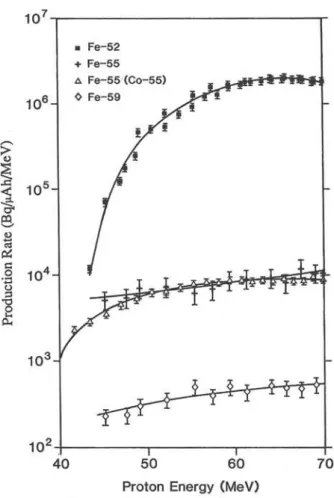
Figure 1 and Table 3 give the production rates and
thick target yields, respectively, observed in this study
for ^^Fe, ^'Fe and from a natural nickel target.
The shapes of the curves are generally as expected
considering the Q values for the numerous reactions
possible in this energy region. The agreement with the
only other data set by Steyn et al. [30] is fairly good
except for the reported levels of directly produced
^^Fe, which they report as being about twice as high
as the present work, but this could possibly be due to
their chemical Separation technique which, in practice,
results in a very poor decontamination factor for
co-balt and Vanadium.
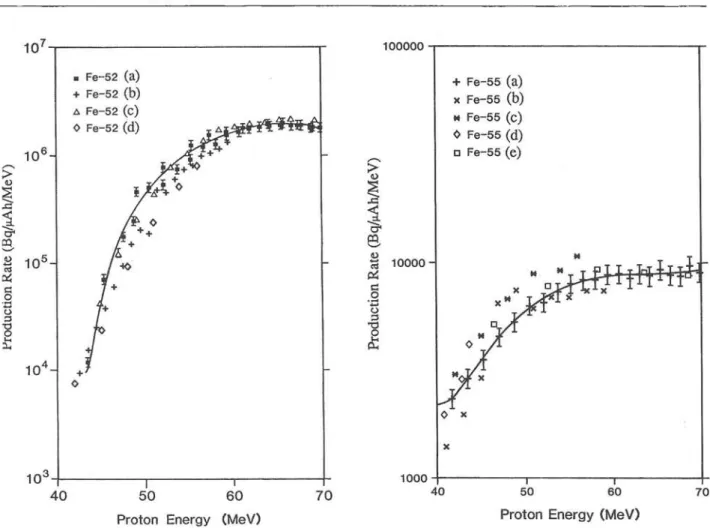
Figure 2 shows the yields of ^^Fe measured in this
study and three others. Production rates obtained
from the work of Tanaka et al. [17] and Dmitriev
[31] come from cross section measurements and thick
target yields (1 MeV window) for the reaction of 56
and 60 MeV protons with enriched These two
1 0 '
<
s
o
CSPi
c
.2
ü
3
1 0 " -10 5 _10^
• F e - 5 2 + F e - 5 5 A F e - 5 5 (Co-55) 0 F e - 5 97
r
4 0 5 060
7 0Proton Energy (MeV)
Fig. 1. Production rates for " F e , " F e and " F e from the 72 MeV proton bombardment of natural nickel. ( " F e ( " C o ) indicates indirectly produced " F e and is based on " C o measurements.)
works can be directly compared to our work because
the contribution from ®°Ni can be considered to be
negligible in comparison. Data obtained from Steyn
et al. [30] however relates to tabulated production
10 > ü < er" m i oi c
•s
i
. Fe-52 (a) + Fe-52 (b) A Fe-52 ( c ) 0 Fe-52 (d) 100000Proton Energy (MeV)
Fig. 2. Comparison of various reported production rates for '^Fe from the proton bombardment of nickel. (a)This work, (b)
Ref. 31, (c) Ref. 30, (d) Ref. 17.
I
s i PiI
o 3 1000 + F e - 5 5 (a) X Fe-55 ( b ) w Fe-55 ( c ) 0 F e - 5 5 ( d ) o Fe-5 5 (e) M M » , T X X * * 0 A * 0 X X 4 0 50 60Proton Energy (MeV)
70
Fig. 3. Comparison of various production rates for indirectly produced ' ' F e based on the reported production rates for ' ' C o . (a) This work, (b) Ref. 31, (c) Ref. 17, (d) Ref. 18, (e) Ref. 30.
agreement with Steyn et al. [30], about 10% lower at higher energies, is good considering that their in house determination of the reactions are some 10% out from those given by Grütter [26] and used in this work. The values obtained from Tanaka
et al. [17] and Dmitriev [31] however are consistently
lower. In the region 60 — 70 MeV the curve is fairly flat, but a maximum is observed at about 65 MeV.
Figure 3 shows the comparison of our data with four other data sets for the indirect production of ^^Fe via decay of ^^Co. As in the previous figure the production rates of Tanaka et al. [17] were derived from cross section measurements on as were those of Michel et al. [18] except that they used 45 MeV protons on "®'Ni. Also the data given by Dmitriev [31] is derived from thick target data (2 MeV windows) as is that of Steyn et al. [30]. In general the agreement is quite good (except for Tanaka et al. [17]) if one con-siders the effect of proton straggling for the higher energy degradation produced in the larger foil stacks. From the point of view of radioisotopic purity the best production route demonstrated for the pro-duction of " F e is the "'"Cr(^He, xn), but the low production rates (ca. 50 |xCi/nAh) would place unac-ceptable demands on beam time. The manganese tar-get and proton Irradiation has been shown to give
production rates comparable to those of a nickel target and with a similar '^Fe contamination level.
L a r g e s c a l e p r o d u c t i o n
Some 20 production runs of ^^Fe for in house PET experiments and for '^Fe/^^^Mn generator studies have resulted in a yield some 90% of the theoretical value. A y-spectrum taken from a sample of some 250 hours after production revealed only the expected decay product ^^Mn and the byproduct Esti-mation of the most expected radionuclidic impurities of " C o , 58Co and " N i were all less than 1 1 0 - ® % compared to the initial '^Fe activity.
Initially, in our routine production runs, we obtained iron levels typically in the 8 0 - 9 0 ng ränge for one batch production regardless of activity prod-uced. Further analysis revealed that the nickel target (8.8 g) contained 60—65 jig of iron and the remainder 20—25 Hg was Coming from the reagents used (all Merck Pro Analysis grade).
The only other- data for carrier iron levels were given by Steyn et al. [30] as 2170 ng for a manganese target and 120 |ig for a nickel target. These levels are clearly unacceptable for iron studies, particularly for
smaller a n i m a l s since t h e natural i r o n b a l a n c e will be perturbed (in h u m a n s the levels o f iron b o u n d t o transferrin are a r o u n d 1 mg/1 w h o l e b l o o d [28]).
A n alternative t o l o n g e r b o m b a r d m e n t times is t o u s e purer materials a n d , since recently a c o m m e r c i a l supplier ( G o o d f e l l o w ) h a s i n c l u d e d a h i g h purity nickel (stated as < 2 p p m F e b u t f o u n d to b e 1 p p m ) in their c a t a l o g u e , w e h a v e altered c u r targetry t o a c c o m m o d a t e a smaller target ( 1 8 x 1 8 x 1 m m ) . T h i s h a s resulted in reducing t h e p r o d u c t i o n rate b y a factor o f 2 b u t i r o n levels are n o w a b o u t 5 n g w i t h 3 . 4 — 3 . 6 |xg Coming f r o m t h e nickel a n d a b o u t 1.5 n g Coming f r o m the c h e m i c a l p r o c e s s i n g ( M e r c k S u p r a p u r grade re-agents). T h i s e n a b l e s ' ^ F e o f a suitable specific activity f o r p r o t e i n labelling (10 m C i / n g ) t o b e p r o d u c e d w i t h o n l y a 4 h o u r b o m b a r d m e n t .
C o n d u s i o n
T h e b o m b a r d m e n t o f a nickel target w i t h 7 2 M e V p r o t o n s h a s b e e n s h o w n t o be the best o p t i o n for ^^Fe p r o d u c t i o n regardless o f w h e t h e r it is t o b e u s e d for labelling p u r p o s e s o r i n the ^^Fe/^^^Mn g e n e r a t o r system. T h e yield o f ' ^ F e is higher t h a n f o r o t h e r reported reactions a n d t h e f o r m a t i o n o f ' ' F e is c o m -p a r a b l e t o t h a t f r o m the m a n g a n e s e target. T h e - physi-cal properties o f nickel m a k e it ideally suited t o direct w a t e r c o o l i n g a n d c o n s e q u e n t l y higher b e a m currents m a y be used. Since nickel is relative easy t o refine, it is available in a h i g h l y p u r e m e t a l l i c f o r m w h i c h m a k e s it m o r e readily suited t o the p r o d u c t i o n o f ' ^ F e w i t h a h i g h specific activity.
A c k n o w l e d g e m e n t s
T h e a u t h o r s w o u l d like t o t h a n k Mr. R . M a a g a n d Mr. J. Jegge f o r their v a l u a b l e assistance in target p r e p a r a t i o n a n d irradiation, D r . H . W . R e i s t for his a d v i c e c o n c e r n i n g p r o t o n e n e r g y d e g r a d a t i o n a n d en-ergy straggling, Mr. H . H ü g l i f o r the a n a l y s i s o f ' ' F e a n d the N a t i o n a l A c c e l e r a t o r Centre o f S o u t h A f r i c a for a l l o w i n g P. M . S m i t h - J o n e s t o t a k e leave o f ab-sence.
R e f e r e n c e s
1. Waters, S. L., Silvester, D. J.: Inorganic Cyclotron Radio-nuclides. Radiochim. Acta 3 0 , 1 6 3 - 1 7 3 (1982).
2. Qaim, S. M.: Nuclear Data Relevant to Cyclotron Produced Short-lived Medical Radioisotopes. Radiochim. Acta 30, 1 4 7 - 1 6 2 (1982).
3. Qaim, S. M.: Cyclotron Production of Generator Radio-nuclides. Radiochim. Acta 41, I I I - 1 1 7 (1987).
4. Knospe, W. H., Rayudu, G. V. S., Cardello, M., Friedman, A. M., Fordham, E. W.: Bone Morrow Scanning with '^Iron ('^Fe). Regeneration and Extension of Marrow after Abla-tive Doses of Radiotherapy. Cancer 37, 1432 (1976). 5. Chauncey, D. M., Schelbert, H. R., Halpem, S. E., Delano,
F., McKegney, M. L., Ashbum, W. L., g a g a n , P. L.: Tissue Distribution Studies with Radioactive Manganese: A Poten-tial Agent for Myocardial Imaging. J. Nucl. Med. 18,933 — 936(1977).
6. Lambrecht, R. M.: Radionuclide Generators. Radiochim. Acta 34, 9 - 24 (1983).
7. Herscheid, J. D. M., Vos, C. M., Hoekstra, A.: Manganese-52m for Direct Application: A New ' ^ F e / ' ^ ^ M n Generator Based on a Hydroxamate Resin. Int. J. Appl. Radiat. Isot. 34, 8 8 3 - 8 8 6 (1983).
8. Beene, J. R.: Nuclear Data Sheets for A = 52. Nucl. Data Sheets 25, 2 3 5 - 3 7 4 (1978).
9. Suzuki, K.: Production of " F e by the " M n ( p , 4 n ) " F e Re-action and Milking of '^""Mn from '^Fe. Radioisotopes (Tokyo) 34, 537-542(1985).
10. Robertson, J. S., Price, R. R., Budinger, T. F., Fairbanks, V. F., Pollycove, M.: M I R D Dose Estimate Report No. 11. Radiation Absorbed Doses from Iron-52, Iron-55 and Iron-59 Used to Study Ferrokinetics. J. Nucl. Med. 24, 3 3 9 - 3 4 8 (1983).
11. Sodd, V. J., Scholz, K. L., Blue, J. W.: " F e Production for Medical Use from 588-MeV-Proton Irradiation of Mn, Co, Ni and Cu Targets. Med. Phys. 1, 2 5 - 2 8 (1974).
12. Ku, T. H., Richards, P., Stang, L. G., Prach, T.: Preparation of '^Fe and its Use in a '^Fe/'^^Mn Generator. Radiology 132, 4 7 5 - 4 7 7 (1979).
13. Steinkruger, F. J., Bentley, G . E., O'Brien, H. A., Ott, M. A., Steurer, F. H., Taylor, W. A., Barnes, J. W.: Production and Recovery of Large Quantities of Radionuclides for Nu-clear Medicine Generator Systems. ACS Symposium Series 241 (F. F. Knapp and T. A. Butler, eds.) ACS, Washington DC (1984).
14. Campbell, J. L., Perujo, A., Teesdale, W. J., Millman, B. M.: Ka, Kß, and Irradiated Auger Photon Intensities in K X-ray Spectra from Atoms in the 20 < Z < 40 Region. Phys. Rev. A, 33, 2410-2417 (1986).
15. Debertin, K., Fumari, J. C., Walz, K. F.: Standard Sources for the Efficiency Calibration of Photon Detectors in the Energy Range from 5 to 40 keV. Int. J. Appl. Radiat. Isot. 36, 9 7 7 - 9 8 0 (1985).
16. Andersson, P., Ekstrom, L. P., Lyttkens, J.: Nuclear Data Sheet for A = 59. Nucl. Data Sheets 39, 6 4 1 - 7 4 0 (1983). 17. Tanaka, S., Furukawa, F., Chiba, M.: Nuclear Reactions
of Nickel with Protons up to 56 MeV. J. Inorg. Nucl. Chem. 34,2419-2426(1972).
18. Michel, R., Weigel, H., Herr, W.: Proton induced Reactions on Nickel with Energies Between 12 and 45 MeV. Z. Physik A,286, 393 - 400(1978).
19. Grant, P. M., O'Brien, H. A., Bayhurst, B. P., Gilmore, J. S., Prestwood, R. J., Whipple, R. E., Wanek, P. M.: Spallation Yields of Fe-52, Cu-67, Ga-67 and Tl-201 from Reactions of 800 MeV Protons with Ni, As, Pb, and Bi Targets. J. Lab. Comp. Radiopharm. 16, 212 (1979).
20. Sadler, M. E., Singh, P. P., Jastrzebski, J.: Interaction of 8 0 - 1 6 4 MeV Protons with Nickel Isotopes. Phys. Rev. C, 2 1 , 2 3 0 3 - 2 3 2 1 (1980).
21. Jastrzebski, J., Karwowski, H. J., Sadler, M., Singh, P. P.: Recoil Ranges of Nuclei Produced in the Interaction of 80 -164 MeV Protons with Ni. Phys. Rev. C, 22, 1443-1453 (1980).
22. Asano, T., Asano, Y., Iguchi, Y., Kudo, H., Mori, S., Nogu-chi, M., Takada, Y., Hirabayashi, H., Ikeda, H., Katoh, K., Kondo, K., Takasaki, M., Tominaka, T., Yamamoto, A.: Target Dependence of Charge Distributions in Spallation Reactions of Medium Mass Nuclei with 12 GeV Protons. Phys. Rev. C, 2 8 , 1 7 1 8 - 1 7 2 4 (1983).
23. Saito, N.: Selected Data on Ion Exchange Separations in Radioanalytical Chemistry. Pure Appl. Chem. 56, 5 2 3 - 5 3 9 (1984).
24. Kraus, K. A., Moore, G. E.: Absorption of Divalent Tran-sition Elements from Manganese to Zinc. J. Am. Chem. Soc. 75, 1460-1462(1953).
25. Weinreich, R., Reist, H. W., Maag, R., Oehniger, H.: Pro-duction of Short-Lived Positron Emitters Using a Splitted Beam of 72 MeV Protons. Nucl. Med. 2 6 , 1 9 6 - 1 9 7 (1987). 26. Grütter, A.: Excitation Functions for Radioactive Isotopes Produced by Proton Bombardment of Cu and AI in the
Energy Range of 16 to 70 MeV. Nucl. Phys. A383, 9 8 - 1 0 8 (1982).
27. Janni, J. F.: Proton Range Energy Tables, 1 keV-10 GeV. At. Data Nucl. Data Tables, 27, 3 4 1 - 5 2 9 (1982).
28. Hughes, E. R.: Human Iron Metabolism. In: Metal Ions in Biological Systems, Volume 7. Iron in Model and Natural Compounds. (H. Sigel, ed.), Marcel Dekker Inc., New York (1974).
29. Furman, N. H.: Standard Methods of Chemical Analysis. 6th ed., D. Van Nostrand Company Inc. Princeton, New Jersey (1962).
30. Steyn, G. F., Mills, S. J., Nortier, F. M., Simpson, B. R. S., Meyer, B. R.: Production of '^Fe via Proton Induced Reactions on Manganese and Nickel. 41, 3 1 5 - 3 2 6 (1990). 31. Dmitriev, P. P.: Radionuclide Yield in Reactions with
Pro-tons, Deuterons, Alpha Particles and Helium-3. Inter-national Nuclear Data Committee, IAEA Nuclear Data Section, INDC(CCP)-263/G-l-CN-|-SZ, Vienna 1986. 32. Thakur, M. L., Nunn, A. D., Waters, S. L.: Iron-52:
Improv-ing its Recovery from Cyclotron Targets. Int. J. Appl. Radiat. Isot. 22, 481 - 4 8 3 (1971).
33. Akiha, F., Aburai, T., Nozaki, T., Murakami, Y.: Yield of " F e for the Reactions of ' H e and a on Chromium. Radiochim. Acta 18,108 (1972).
34. Akiha, F., Murakami, Y.: Excitation Curves and Thick Target Yield Curves of " F e , " F e , " M n , '»»Cr, '^'Cr, " C r and "^'V for the ( C r + 'He) Reactions on Natural Chromium. Nippon Kagaku Kaishi 8 , 1 4 1 6 - 1 4 2 1 (1972).
35. Yano, Y., Anger, H. O.: Production and Chemical Process-ing of " F e for Medical Use. Int. J. Appl. Radiat. Isot. 16, 153-156(1965).
36. Cavallero, A., Cogneau, M. A., Apers, D. J.: Cross Sections and Excitation Functions of 40 to 110 MeV a-Particle
In-duced Reactions in Natural Chromium. Radiochim. Acta 24, 1 1 - 1 4 ( 1 9 7 7 ) .
37. Dahl, J. R., Tilbury, R. S.: The Use o f a Compact, Multi-particle Cyclotron for the Production of '^Fe, ®''Ga, " ' I n and ' ^ ' I for Medical Purposes. Int. J. Appl. Radiat. Isot. 23, 4 3 1 - 4 3 7 (1972).
38. Akiha, F.: Studies on Excitation Curves and Thick Target Yield Curves of " F e , " F e , " M n , ''»Cr, " C r and Formed by Bombardment of a Particles on Natural Chro-mium. Nippon Kagaku Kaishi 9 , 1 6 6 4 - 1 6 6 9 (1972). 39. Rayudu, G. V. S., Shirazi, S. P. H., Fordham, E. W.:
Com-parison of the Use of '^Fe and ' ' ' I n for Hemopoietic Mar-row Scanning. Int. J. Appl. Radiat. Isot. 24, 451—454 (1973).
40. Atcher, R. W., Friedman, A. M., Huizenga, J. R.: Pro-duction of '^Fe for use in a Radionuclide Generator System. Int. J. Nucl. Med. Biol. 7, 7 5 - 7 8 (1980).
41. Greene, M. W., Lebowitz, E., Richards, P., Hillman, M.: Production of '^Fe for Medical Use. Int. J. Appl. Radiat. Isot. 2 1 , 7 1 9 - 7 2 3 (1970).
42. Saha, G. B., Farrer, P. A.: Production of " F e by the " M n ( p , 4 n ) " F e Reaction for Medical Use. Int. J. Appl. Radiat. Isot. 22, 4 9 5 - 4 9 8 (1971).
43. Lindner, L., Kapteyn, J. C.: A Novel Way to Produce " F e . Proc. 15th Int. Ann. Meeting, Eur. Soc. of Nucl. Med., Groningen, The Netherlands (1977).
44. Lindner, L., Kapteyn, J. C.: '''Fe(y,2n)"Fe Induced Szilard-Chalmers Effect in Ferrocene and Ferricinium Picrate. Radiochim. Acta 26, 9 7 - 1 0 1 (1979).
45. Keller, K. A., Lange, J., Münzel, H.: Q Values and Exci-tation Functions for Charged Particle Induced Nuclear Re-actions. In: Landolt-Börnstein Neue Serie I/5a (K. H. Hellwege, ed.) Springer-Verlag, Berlin (1973).