AFFORDABILITY ISSUES IN PROGRAMMING
CONTINUING CARE RETIREMENT COMMUNITIES
by
Neil A.R. Prashad
Bachelor of Environmental Studies Honours Urban and Regional Planning
University of Waterloo, 1982
Submitted to the Department of Architecture in partial fulfillment of the requirements of the Degrees of
Master of Science in Architecture Studies and
Master of Science in Real Estate Development at the
Massachusetts Institute of Technology September 1987
@Neil A.R. Prashad 1987
The Author hereby grants to M.I.T.
permission to reproduce and to distribute publicly copies of this thesis document in wh e r in part.
Signature of the Author
Neil Prashad D artment of Architecture
t /August 7, 1987
Certified by
Sandra C. Howell Associate Professor of Behavioral Science in Architecture Thesis Supervisor
Accepted by
Julian Beinart Chairman Departmental Committee for Graduate Students
Accepted by
Michael Wheeler Chairman Interdepartmental Degree Program in Real Estate Development
kiASSACXHUSETTS IN CTI-1 ry
OF TECHNOLOGY' ~
SEP 2 3 18/
AFFORDABILITY ISSUES IN PROGRAMMING
CONTINUING CARE RETIREMENT COMMUNITIES
by
Neil A.R. Prashad
Submitted to the Department of Architecture in partial fulfillment of the requirements for the degrees of
Master of Science in Architecture Studies and Master of Science in Real Estate Development
ABSTRACT
Issues of affordability concern both providers and consumers of residential settings. In developing Continuing Care
Retirement Communities, (CCRCs), it is critically important that the decisions made during the early planning or
programming phase reflect a systematic understanding of affordability issues. If the programming process holds the most potential for addressing the affordability issue, then it is reasonable to assume that a thesis which analyses the project development process and outlines specific options,
can be a valid support for the developer in making facility programming decisions.
Affordability issues extend beyond the usual calculation of market capabilities relative to initial sales. They concern
appropriate estimation of the needs and expectations of potential users, and the relation of these to programming elements such as site selection, design, pricing, financing, and marketing of a CCRC.
Focusing on the programming process, this thesis examines each element in a detailed and systematic manner, grounding every assumption in a fundamental understanding of the
elderly as consumer and user. As the thesis itself is not optimally useful as a programming tool, a computerized program called the Retirement Housing Consultant System,
(RHCS), is developed to assist developers in the actual programming exercise. RHCS is a Lotus 1-2-3 model which systematically requests project-specific data inputs, and combines them into development and operating pro-formas. This thesis is not a definitive solution, or exhaustive in
its scope of affordability issues. It is an attempt to parallel the process of exploration developers go through during the initial stages of project development. As such,
it entailed venturing into a number of dark alleys, motivated primarily by naive faith and gut instincts.
Thesis Supervisor: Sandra C. Howell, PhD., M.P.H.
Title : Associate Professor of Behavioral Science
TABLE OF CONTENTS
AFFORDABILITY ISSUES IN PROGRAMMING
CONTINUING CARE RETIREMENT COMMUNITIES
ACKNOWLEDGEMENTS ...
INTRODUCTION ... ... CHAPTER 1: PROGRAMMING CCRCs ...
CHAPTER 2: UNDERSTANDING THE USER... 2.1 - Demographic Analysis ...
2.1.1 - Poupulation Growth
Characteristics... 2.1.2 - Retirement Trends and
Labor Force Participation ... 2.1.3 - Health Status and Health
Care Utilization ... 2.1.4 - Economic Status: Income,
Equity and Investments ... 2.2 - Typology of the CCRC-eligible
Market ... 2.2.1 - Wants and Needs ... 2.2.2 - CCRC Resident Profile ... 2.2.3 - Resident Affordability Concerns R 3 : SITE SELECTION FOR CCRCs ...
3.1 - Project Size ... 3.2 - Site Acreage ... V. CHAPTE 4 5 16 26 28 28 30 30 32 35 36 39 43 49 51 53 I. II. III. IV.
3 3 3 3 VI. CHAPTER 4 4 4 4 4 3 4 5 6 4 1 2 3 4 5 Regulation ... Topography ... Neighborhood Context ... Land Tenure and Potential Room for Expansion ... DEVELOPMENT ISSUES IN CCRCs ... Type of CCRC ... Facility Size ... Unit Mix ... Amenities ... Design Issues ...
4.6 - Overview of Financing Options ... 4.6.1 - Conventional Financing ...
4.6.2 - Zero Coupon Mortgages ....
4.6.3 - High-Yield Income Bonds 4.6.4 - Participating Mortgages 4.6.5 - Tax-Exempt Bonds ... 4.6.6 - FHA Insured Mortgages ....
4.7 - Summary of Financing Options ... VII. CHAPTER 5 : MARKETING AND PRICING ISSUES
IN CCRCs ...
5.1 - Marketing Concerns in Developing CCRCs 5.2 - Pricing Issues ...
5.2.1 - Endowment Fees ... 5.2.2 - Monthly Maintenance Fees VIII. CHAPTER 6 : THE RETIREMENT HOUSING CONSULTANT
SYSTEM: A TOOL FOR PROGRAMMING CCRCs ... IX. CHAPTER 7 : SUMMARY AND CONCLUSIONS ...
X. APPENDIX 1 ... . . . . XI. APPENDIX 2 ... ... ... XIII. BIBLIOGRAPHY ... . .. ... ... 54 58 60 . . . . . . : -64 67 69 73 74 77 79 83 85 87 88 89 89 93 94 97 97 106 110 112 115 112 128 148 165
ACKNOWLEDGEMENTS
Though this is the second time I have written a thesis on the subject of housing for the elderly, I realize there is so much more to know.
I am thankful to my parents for believing in me and providing
the necessary support to get me through the past two years. Many individuals have contributed to this thesis, and I am grateful for their input. In particular, I would like to
thank Sandra Howell for her advice and patience while I raced through a very hectic year; I have learned more about CCRCs from my reader, Bob Chellis, who is the "expert" in this business; Rolf Kallenbach and Juan Carlos Loveluck were not only good buddies, but provided valuable assistance with the computer model and editing; finally, Dany Comeau for being my best friend.
Thanks to the Canada Mortgage and Housing Corporation, I was able to finance a large part of my education at MIT.
INTRODUCTION
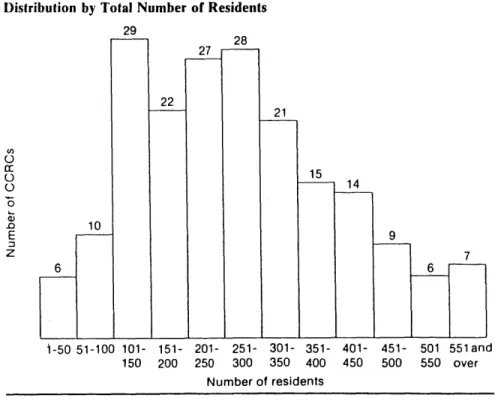
Retirement housing is a $2.5 billion industry growing at a rate of about 15% - 20% per year, and it is going to get even bigger. One estimate claims that during the rest of this decade developers and non-profit organizations will spend
over $33 billion to create some 1,800 retirement communities, housing an average of 300 residents each (Schneider, 1987).
There is a myriad of responses to the need for specialized shelter and health care facilities for an aging population, and the future is expected to hold a continued proliferation of options. Not surprising therefore is the connection
between this multitude of options, with the highly segmented over 65 age population that can no longer be considered to have homogenous "needs" and "wants" in terms of shelter and care facilities.
Differences between types of products available are
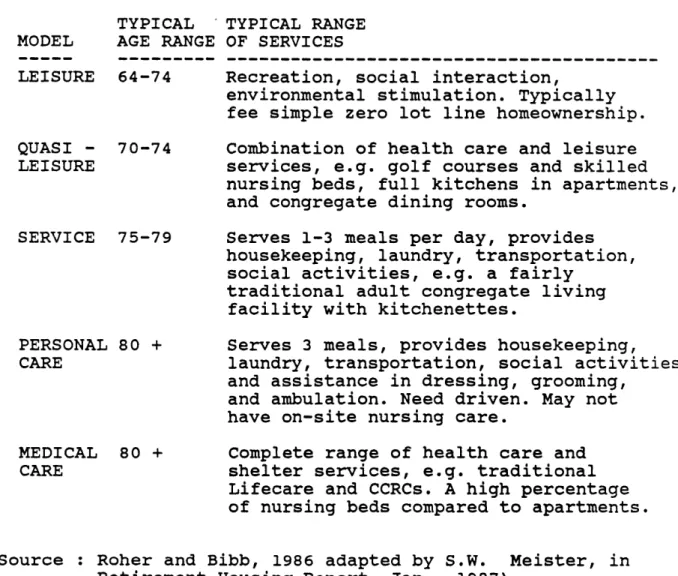
distinguished primarily by the range and level of services provided in the particular setting. As a consequence, facilities generally range from independent living
arrangements, sometimes dangerously oversimplified and referred to as "go go" settings because they cater to the younger elderly, to more supportive congregate living
situations for the "slow go" elderly, and eventually the
nursing homes for the "no go" group. The manner in which the package of available services is delivered and paid for
further blurrs an increasingly complicated marketplace, and creates confusion about names, typologies, and precise kind of care available in a particular project.
Some clarification of what is meant by Continuing Care Retirement Community or CCRC is needed. As the name implies, a CCRC offers a continuum of care which allows
elderly people the opportunity to age in place, not having to move to another location as their health status fluctuates and their health care needs change. Typically, the continuum
includes independent housing, personal or assisted living opportunities, nursing home care, as well as a broad range of supportive social and recreational services. A major dining facility is also included and residents will normally eat at least one meal per day in this group setting.
Congregate housing arrangements, sometimes called Adult Congregate Living Facilities, or ACLFs, are often confused with CCRCs. The key distinction is fact that CCRCs offer
skilled nursing care as a readily available service whereas ACLFs do not.
In 1984 there were about 275 Continuing Care Retirement
Communities in the United States housing some 90,000 elderly individuals, (average age about 80), living independently in their own apartments but with opportunities for eating
together, group recreation, and other activities that come from being part of an organized community (Winklevoss and Powell, 1984). More importantly however, the members of these communities pay an up-front lump sum and a monthly maintenance fee to secure a virtual guarantee that, whenever necessary, they can receive personal care or assistance while still living in their unit, and as their health fails even
further, also have access to a health care facility, generally a nursing home designated as a Skilled Nursing Facility, (SNF), and/or Intermediate Care Facility, (ICF). When the resident is admitted to a nursing bed, monthly
maintenance costs rise little or not at all for a pre-agreed number of days per year. Subsequently longer stays are
frequently billed at prevailing market rates for care in that nursing facility.
In CCRCs, contractual arrangements for health care are often negotiable, sometimes annually. When this unique feature of a continuum of care is packaged as a "life-long care
guarantee" for a particular price, with no pre-set limits on length of stay in a nursing facility, it is termed a
therefore, it is necessary to establish the method of payment for what package of services, and for how long, in order to differentiate types of retirement communities.
The grouping of a "continuum" of services on one site, and the assured health care component of such facilities are the primary distinguishing features of CCRC's compared to other retirement settings. CCRCs provide availability of care and varying levels of insurance against the cost of long term
care, and supplement coverage of acute health care costs paid for largely by Medicare and private insurance. What really makes them unique however, is that they provide this
insurance in combination with the independent living
arrangements that the resident can enjoy as long as his or her health allows (Winklevoss and Powell, 1984).
For the elderly individual, a CCRC offers the convenience of one-stop shopping for their current and future shelter and health care needs. In comparison to continuing to live in their own home, the fear of someday being a burden to friends
and relatives is effectively removed, as is the concern of eventually having to enter an unfamiliar nursing home with its attendant daunting financial and psychological concerns.
CCRCs evolved as an alternative for a population concerned that as they became older and more frail they wouldn't have
someone to care for them, or a way to pay for that care. Since Medicaid eligibility requires that the elderly person be spent-down to be declared financially indigent, it is generally not an attractive option. The desire of elderly persons to maintain financial dignity should contribute to the growth of the CCRC industry.
Based on their mix of housing and health care facilities, CCRCs cater to two distinct elderly populations: the 80 year olds who are more ambulatory, and those who require a more supportive health care living arrangement (Powell and
McMurtrie, 1986). This "old old" segment of the elderly population just happens to be the fastest growing segment of the over 65 population - which itself is the most rapidly increasing group of the entire population, both in real numbers and as a percentage of the whole. It is hardly surprising that a study of the CCRC industry, completed by the Pension Research Council in 1984, illustrated that more than 40% of the surveyed facilities were opened during the 1970's (Winklevoss and Powell, 1984; Powell and McMurtrie,
1986). Currently serving less than 1% of those over 65 years
old, the CCRC market in many areas is virtually untapped. Hence, it appears that the future demand for CCRCs can only
increase.
As the ultimate product for those elderly persons wishing an active alternative to living independently, CCRCs provide the
services, social opportunities and security they need. For this reason, they are the subject of this thesis. As well,
the independent living through to skilled nursing care
characteristic of CCRCs encompasses the spectrum of shelter and health care facilities, and as such, allows this study to be broadly applied to other settings.
The word "afford" is defined in Webster's New Collegiate Dictionary as "to manage to bear the cost of without serious detriment.". This interpretation is consistent with the concern of this thesis in the sense that accessibility to a product like a Continuing Care Retirement Community hinges on the client's ability to cover expenses initially, and to
continue to be able to afford it through the length of their stay in that facility. This is what the client and the
developer see as affordability.
Charges for residency, (circa 1983), averaged $35,000 per single, and $39,000 per couple as an initial entry or donor fee, and about $600 single and $850 per couple per month in carrying costs, with periodic increases as needed to cover inflation and spiralling carrying costs, (Winklevoss, Powell
1984). Current Boston area projects average much higher
entry fees, such as $150,000 for a single person.
Unfortunately, these financial requirements prohibit the
majority of persons over the age of 65 from access to many of the existing CCRCs, and new facilities are much more
expensive than old ones.
Consequently, it can be assumed that if entry fees and monthly charges were lower, CCRCs would be available to a wider income segment of the age-eligible elderly market. Consider this assumption in the context of the following
statistics:
a. The total elderly population is
approximately 28 million while those being served by CCRCs is about 125,000.
b. The potential market of age-eligible elderly, those over 80 years old are the fastest growing segment of a rapidly
increasing population of over 65 year olds. This segment accounts for about 15 million of all the elderly.
c. The income segment that is the primary target market for CCRCs are those
individuals with at least $20,000 net annual income. This income segment is 22% or
about 6 million of all the 70 - 84 year
olds.
( Sources: Rohrer and Bibb, 1986; U.S. Senate, 1987 ).
In order to deal with the problem of affordability in planning research for retirement housing must be
systematically built into the project development process
(Howell, 1982). Affordability requires widening the scope of
issues in the project development and operating context. For the developer, affordability is thought of in terms of what can be built, and how it is going to be financed, marketed, and operated within the perameters of the clients' economic
capabilities. Implicitly, affordability for the developer is tied to the notion of project development and operating
risks and how they can be mitigated, both in the short and long term.
The point at which the affordability concerns of the consumer meet the affordability concerns of the developer is pricing,
and pricing is determined in the programming process. During the programming or planning process the developer and
architect try to mesh the "needs" and "wants" of the consumers with the ability of a project to physically,
psychologically and socially meet those expectations and be financially solvent. Whether it is acknowledged or termed as such, programming is actually carried out for all projects as it functions as a representation of comprehensive
understanding of a problem and of the values which must be addressed in its solution (Agron and Moore, 1978).
For the most part, the programming process is not very systematic and hence under-emphasized; decisions are too often unilaterally taken in a context which lacks effective communication between developers, designers and consultants expert in issues relating to the elderly users.
Developers initially examine a market analysis of comparable facilities, along with age and income-eligible population characteristics in the local market area. This data is then
tempered by the regulatory constraints of what and how much can be built on the particular site. A comprehensive set of pro-formas or project financial summaries are generated after
a series of iterations incorporating: site acquisition; project financing; construction and operating cost
calculations; and potential revenue generation estimates.
This exercise actually determines what is planned, financed, marketed and built. But in an increasingly regulated and
competitive industry, where shelter and health care facilities for the elderly are rapidly changing, where distinctions between products are getting more and more blurry, and where the elderly population as a market is
better informed, more discerning and require more comprehensive analysis. There is a need for a more
systematic approach to the programming process. An approach which incorporates a wider range of issues relating to
"affordability" will ensure that the critical factors of developer and client economic concerns are addressed, and hence give the project a strengthened opportunity for initial and long term success, as well as reach a much larger market.
Understanding CCRC affordability means understanding the
range of options possible when making decisions about aspects of CCRC development or operation. The longer term
implications of each option are equally important and must be fully understood in the context of the life-cycle of the
project when trade-of fs are being made. As not every developer is knowledgeable or skilled enough at CCRC programming, supports are key ingredients for success. Generally, consultants and new data fill the gaps when in unfamiliar territory.
This gap in knowledge is the rationale for creating a
resource or tool which can aid developers in planning a CCRC. The tool is called the RETIREMENT HOUSING CONSULTANT SYSTEM,
(RHCS). RHCS systematically presents key options
specifically identified as critical in the programming process. The system defines the range of inputs to CCRC planning and these inputs are then specifically assigned to generate development and operating pro-formas for the
project. Presented as software for use in conjunction with Lotus 1-2-3, it serves as a "consultant system" because it takes the reponsibility for knowing the elements of
affordability in developing a CCRC.
This "consultant system" allows more accurate and systematic assessment of options in programming a CCRC. New information can be readily added as experience allows, therefore
contributing to its flexibility and continued utility.
Feasibility for development of an affordable CCRC boils down to one or a combination of the following contingencies:
- partial subsidies, land donations, or tax
investors, or consumers by public agencies at the local, State or Federal levels;
- acceptance of a reduced profit by the
private sector for provision of a socially necessary product; and
- the advent of long term care insurance to
defray the high risks associated with guaranteeing health care.
All of these contingencies are possible and are, in one way or another, in process at the time of this writing. In the meantime, if and when the contingencies are met, systematic programming of the CCRC development process will further assume both affordability and reasonable assured gain. It then remains up to developers and sponsors to find solutions from within the system as it is.
CAHPTER 1 :
PROGRAMMING FOR CCRCs
Facility programming is an analytical, rational and
disciplined process which seeks to represent a comprehensive understanding of a development situation and of the values that must be addressed in that project (Agron and Moore, 1978; Tusler, Schraishuhn and Meyer, 1985).
Programming is advanced thinking as a basis for doing, and, as such, is a tool to be used in determining desirable ends before becoming too preoccupied with the means. (Gelwicks,
1975; Gelwicks and Dwight, 1982). In the same sense,
programming does not focus entirely on defining a particular problem, it can also serve as a vehicle to explore the realm of the user, and to form a basic structure for a relationship between the architect and the developer (Hersberger, 1985).
In examining the total process of developing and operating a CCRC, facility programming should begin shortly after a
preliminary research phase supports a decision to commit major financial and other resources to a project. The chart below summarizes the total development process which
parallels the development of a CCRC. It should be noted that this process is not linear. Instead, many steps occur
simultaneously and in a looping, iterative manner.
PROJECT DEVELOPMENT OUTLINE
1. Organization Phase
* Establish an organization, controls, and staff;
* Develop mission and focus statements which can
begin to sketch a strategic plan;
* Project scheduling - what is to be done, by whom
and when.
2. Research Phase
* Area analysis - the state, regional, local and
neighborhood characteristics which will affect the scope and character of the project;
* Market feasibility - use of secondary data to
show potential market and its ability to pay, as well as current and future competition. Data should include population characteristics,
service need indicators, and comparables;
* Market survey - use of primary data to confirm
feasibility and determine exactly what the consumer wants, may include telephone, mail or
face to face surveys and focus groups.
3. Project Design Phase
* Operations Program - who will be served, what,
where, by whom and how;
* Planning and design directives - written
instructions which the developer gives to the architect;
* Space program for construction - a list of
spaces, Space Relationship Diagrams, unit mix by type and size, and initial schematic studies.
* Additional research, (involving primary or
programming iterations reveal such a need. 4. Financial Analysis
* Proformas - project development, operations,
sources and uses of funds, cash flow and
measures of financial return, and actuarials.
5. Environmental Impact
* Impact of project on neighborhood and environs,
usually required by local and/or State regulators.
6. Development Plan
* An action plan to implement the project, secure
financing, and obtain Certificate of Need and other building permits.
7. Marketing Program
* Formation of "Tactical Action Team" to establish promotional strategy and staff a sales office;
* Implementation of direct mail and other
advertising programs.
8. Schematic Design Phase
* Detailed space program;
* Schematic drawings;
* Cost estimating.
9. Design Development Phase
* Preliminary Drawings and specifications;
* Cost estimating.
10. Construction Document Phase
* Working drawings and specifications;
* Final estimates - let bids or negotiate contract
(Adapted from Gerontological Planning Associates,1975)
Programming occurs at different levels of depth and function within the context of a particular situation for different time frames in a project cycle. For example, the most
typically recognized program is a detailed "space program" produced by the architect to incorporate the goals of the developer and the needs of the users into detailed square
footage and accessory requirements. Other key programs are for marketing and facility management. However, these
programs are not absolute in themselves; each is a product of a comprehensive attempt at understanding the issues and
concerns in the particular situation, and each has a systematic connection to any preceeding of following programs.
Programming for retirement housing involving a health care facility is a complex, analytical and multi-disciplinary
process directed to a single end -- which is a viable method
of satisfying user needs within physical and financial feasibility and governing regulations. The most important programming exercise begins when the project is initially conceptualized. At this point, issues of affordability can be best and most logically tested because many of the key decisions and assumptions, which may later prohibit the use of potential options, have not yet been made. A program requires definition of the problem and development of integrated functional, environmental, and operational
solutions which best mesh with the developer's or non-profit sponsor's philosophy and other constraints (Agron and Moore,
1978). In developing a CCRC, there is a definable hierarchy
local regulations, standards and approval processes to
negotiate, there are community organizations and agencies at all levels which must be given consideration and
responsibility for input, and of course there may be internal hierarchies among the development team.
Defining goals is the most important process in
programming. Having to conceptualize and clearly identify goals of the venture is a critical element for
success in meeting the needs of the user, and in improving the quality of communication between developers and
architects. The clearer the definitions of the developer's goals are, the farther along architects are toward achieving
them (Gelwicks, 1975). In most instances, space plans do not
to tell how spaces interrelate or how the total living
environment should function for the users. This requires a synthesizing process where developers and architects define and understand who the users are and what they "need" and
"want" from their environment. For example, space
relationship diagrams are an excellent communications tool for the developer and architect in understanding and agreeing on the proper relationships between the functions on the site and within the building.
In this exercise, the developer needs to fully understand the functional relationships between the services and activities planned for the facility and the physical implications of
those elements. Though apparently simple, space relationship diagrams demonstrate a systematic level of forethought where developers can help to clarify key issues and avoid needless and expensive misunderstandings and changes at a later date
(Gelwicks 1975). Figure 1.1 is an example of a space
relationship diagram for a hypothetical CCRC.
*Wi nnrationf
' a'wurt
T; A
There are two rationales for making this exercise an integral part of the programming phase: First, it brings the key
decision-making parties together at an early stage in the project development cycle and establishes a precedent for
particularly those who are inexperienced at this type of development, can use this process as a mechanism to enable them to recognize that they are dealing with a complex network of social, psychological and physical interactions that comprise an elderly person's living environment. For
instance, in space planning for one New England CCRC, an auditorium was not designed for alternate non-theatre uses, nor did its location within the building allow for possible outside community use, (a potential of both social and
economic importance to management). Yet another example is
when locations of laundry facilities for residents must be based on considerations of the social attributes and physical barriers of the CCRC circulation system. Elderly people
cannot carry laundry very far, nor would they wish to cross a major formal lobby or dining area edge with such bundles
(Howell, 1987).
The two main concerns of a CCRC facility program are the Independent Living Units, (ILUs), and the Skilled Nursing
Facility, (SNF). These are very separate design and service
entities, but they must be understood in tandem for the
entire project to function as the "community" which its name implies. Unfortunately there are as yet no firm rules for decisions on space relations and considerable controversy over some. For example, there is no concensus on proximity or adjacencies of the SNF to the ILUs. During the
and long term implications for management and residents assessed.
The critical elements of a facility program are a building's physical "characteristics", and its "contents," which are supposed to functionally meet its pre-determineed service
expectation (Agron and Moore, 1978). Establishing the
parameters for building characteristics involves addressing issues like site, community and institutional regulatory and other concerns, neighborhood physical context, building
performance and adaptability, and initial and life-cycle
costs. For development of a new nursing facility, a
Certificate of Need is to be obtained, and there are health and safety codes and standards which will govern much of how the building is constructed. Similar code restrictions are not as stringent for the Independent Living Units, but design and construction guidelines do exist in a format applicable for creation of a barrier-free living environment, and are highly recommended. Zoning may be the main hurdle here as CCRCs are a new development type, and may not be recognized in local planning regulations.
Although development of health care facilities is a complex process, it should be stressed that in the final analysis, the facility remains a place where the ailing are cared for by staff. The close and highly personal inter-relationship between patient and staff makes all parties interdependent;
therefore the major measure of success in planning of a facility should be the degree to which the dignity of the patient, family members and staff have been preserved
(Tusler, Scraishuhn and Meyer, 1985). For instance, the
dining and common rooms should not have visual connections to corridors or rooms which are used for medical examinations and therapy.
A fundamental problem of facility programming is that
decisions are frequently made without the benefit of input from those who are expected to manage and operate the
facility. If a management organization is not yet identified, as is often the case, then an experienced management consultant who is familiar with geriatric facilities should be employed for input in programming.
Hence, it is critical that information for a facility program be derived from the service plan developed by those solely concerned with facility management. A service plan underpins the functional relationship between user and staff, whether the program is for an health facility, assisted care units or independent living apartments.
Given the preceeding background notions about programming, it becomes relevant to outline how issues of affordability can be incorporated in a systematic and logical manner during the planning phase of the total project development cycle. The contention here is that if a developer understands that there
is an order to follow in planning a facility, then that order is known as programming. Programming attempts to
conceptualize the key issues of user needs in terms of
physical requirements and service package expectations, and facility development and operating concerns of the
provider(s). If this rationale is accepted, it may be
further argued that the programming process holds the key to understanding affordability issues in continuing care
retirement communities. This is where the Retirement Housing Consultant System is an especially valuable tool. RHCS
capsulizes the programming stage, thereby allowing options for key questions to be considered in an easy and systematic order.
CHAPTER 2:
UNDERSTANDING THE USER
There is no disputing that America is growing older. This phenomenon is the single most significant demographic fact affecting the current and future course of the country (U.S. Senate, 1987). The proportion and real numbers of persons who are 65 years and older has grown, and will continue to grow, at a more significant rate than any other age group. As a consequence, in examining products like Continuing Care Retirement Communities that are intended for exclusive use by this particular age group, it is necessary that a thorough demographic description be undertaken. Nevertheless,
demographics should mean more than body counts.
Demographics do not usually entail analysis of financial capabilities or intentions of the population being studied. However, in this case it must since this really is the crux
of affordability issue. In programming a CCRC, it is absolutely critical that the developer and all involved understand who the elderly are, what their social and
economic characteristics are, and how they are changing in order to be able to provide a product that physically,
socially and economically meet the market.
Market analyses and similar demographically oriented studies by specialists and consultants are frequently commissioned by developers at the initial stages of project development. The primary purpose of these studies is to determine whether
there exists a market for a CCRC and how deep that market is. Market studies need to be founded on, and are intended to
supplement, understanding the "needs" and "wants" of the older people in a particular local market. In tandem, a thorough demographic analyis with conservative extrapolation and interpretation factors, combined with a focused community survey which assesses the extent and nature of interest in CCRCs, are good insurance against the probability of making bad decisions during the programming stage. Survey questions should be specific about costs of various alternatives.
The demographic data in the following summary is principally derived from a Report by the Special Committee on Aging
presented to the 100th Congress of the United States (1987). Other qualitative information on the typology of the CCRC resident is paraphrased from primary data collected through surveys by the Foundation for Aging Research (Parr, Green and Behncke, 1986), and the American Retirement Corporation
(Rohrer and Bibb, 1986). This summary is a quick overview of
the most significant findings in their study of developments in aging, and does not profess to be exhaustive or the final
word on demographics or on typologies of retirees. In specific project developments, state, regional and local demographic data would need to be collected and analysed to establish the similarities and differences from the national picture. As well, independent in-person, telephone or mailed surveys and focus group exercises supervised by qualified professionals should be commissioned to ascertain local market profiles, preferences, and intentions.
Beyond these preparations, it needs to be cautioned that the elderly, as a consumer entity, are evolving and thus their expectations and intentions are also changing. This implies that survey questions and demographic data need to adapt and be kept current or they can easily deceive. To illustrate this point, consider the differences in expectations and
intentions between your grandparents, your parents and yourself in a hypothetical CCRC environment.
2.1. DEMOGRAPHIC ANALYSIS
2.1.1. Population Growth Characteristics
The following summarizes the most salient population growth factors likely to affect the business of developing and operating Continuing Care Retirement Communities:
and over; by 1985, One in nine was at least 65 years old.
- The size of the over 65 population grew twice as fast as the rest of the population in the last two decades. The "very old" population, those over 85 years old, is expected to expand by at least seven times by the middle of the next century. This is the segment of the elderly
population which should be most interested in the security and levels of service offered by CCRCs.
- In 1985, 40% of the elderly was age 75 and over; by the year 2000, this percentage will increase to 50% (and about 15% of that percentage will over 85 years old).
- Elderly women now outnumber elderly men three to two, and this disparity is even greater at age 85 and older when there are only 40 men for every 100 women. Similarly, in CCRCs women outnumber men.
- Life expectancy for people born today is 27 years longer than those who were born in 1900. In
1985, life expectancy at birth for women was 78.4 years and for men it was 71.3 years. CCRC
operators need to keep abreast of continuing longevity trends as they will make previously assumed turnover rates less actuarially sound for future predictions.
- Over half of the elderly live in 8 States: California, New York, Florida, Pennsylvania, Texas, Illinois, Ohio, and Michigan.
Coincidentally, these states have the most CCRCs. - In 1980, for the first time ever, more elderly
lived in suburbia than downtowns.
- "Countermigration" is an emergent trend whereby some elderly who retired to the Sun Belt are returning home to be closer to friends and
family. (Questions need to be asked whether these people are older, more frail and perhaps
even more spent down, as some have suggested). If there is some credence to the notion of moving closer to friends and family, then there may be some implication for CCRC site selections in more suburban areas where adult children likely live, and where most of the elderly themselves are from
2.1.2. Retirement Trends and Labor Force Participation
- Retirement is occurring earlier and is of longer duration than ever before. In the past 80 years, the average male increased the amount of time spent in retirement to 13.8 years - from 3% in 1900 to 20% in 1980. This increase naturally coincided with the early retirement trend where some two-thirds of the elderly retired before age 65. This trend may increase the future need for more active leisure oriented CCRCs, however it is cautioned that the younger elderly may not yet be
interested in a CCRC-type of setting.
- Among the elderly, labor force participation drops rapidly with increasing age. In 1986 for
instance, 45% of the men age 62 - 64 were in the labor force, compared to 25% of those age 65
-69, and 10% of those 70 and older. Though not currently a big factor, in the future there will be significantly greater numbers of working
couples and female retirees, who will likely have better retirement incomes because of pension
plans and other investments. As such, income and equity profiles of CCRC-eligible elderly will evolve, and women will be the most impacted.
2.1.3. Health Status and Health Care Utilization
Among the many differences between a younger and older
person, health status may be the largest single determinant of an individual's need for environmental support and service requirements. This is especially true in the development of shelter and health care facilities. Fundamentals of health status and care utilization by the elderly need to be grasped in order to effectively plan, market and operate a CCRC.
- Contratry to stereotype, most older persons view their health positively. Even if they are
chronically ill, two out of three elderly describe their health as good or excellent compared to
important in marketing a medically oriented CCRC.
- Income is directly related to an older person's
perception of their health. About 25% of those with incomes above $20,000 described their health as excellent compared to only 12% of those of the same age who were of incomes less than $10,000. As the lowest income elderly are not the real target of "affordability" in this thesis, the perception of health status for those in the middle and upper-middle income category is noteworthy for marketing a CCRC.
- Some 80% of all the elderly have at least some sort of mild disability or chronic condition typically related to arthritis, hypertensive disease, heart conditions, and hearing
impairments. One out of every five elderly persons have some degree of activity limiting disability, while only a small proportion are
severely disabled. The chance of being severely limited increases with age for each group of
elderly; for example, some 60% of the oldest old, (over 85 years of age), are limited to some degree in daily activities.
- Instead of an acute condition, the possibility of
becoming hospitalized because of a chronic disease or being disabled increases significantly with
age. Severe chronic illness can prevent
individuals from functioning independently, increasing the need for long term care services which can be provided in a Continuing Care
Retirement Community. In 1985, it was estimated that 5.2 million persons 65 years or older are
expected to need special care and assistance in remaining independent. This figure is going to reach 7.2 million by 2020 and 14.4 million by 2050; increases of 38% and 177%, respectively.
- Three out of every four elderly die from heart
disease, cancer or stroke. Though heart disease has been declining over the past few years, it
still remains the major cause of death today.
- Death rates for the elderly have been improving
steadily over the past four decades, reaching an all time low in 1983, and this trend can be
expected to continue in the future. CCRC
operators must keep up with future decreases and adjust their mortality expectations accordingly.
- The elderly are the heaviest users of health
the younger population, stay twice as long, and use twice as many prescription drugs. Again, the
implications for utilization of a health facility cannot be underestimated.
As most health facilities in CCRCs are "open" to the local market as well, the following patterns of use by the elderly as a whole are important to the viability of the SNF:
- Only about 5% of the elderly are in nursing homes
at any given time; however, some 20% of all the elderly will have spent some time in a nursing home during their lifetime. Nursing home
populations are expected to continue to rise
steadily in the near and distant future; financial assistance programs like Medicaid and Medicare
assist the utilization of nursing homes. - Almost
two-thirds of all personal health care expenditures attributed to the elderly are expended by governments; this equates to about
$2,823 of $4,202 per capita spent in 1984. 20% of
all expenditures were for nursing homes, about $880 per capita in 1984.
- Direct out-of-pocket health costs for the elderly
averaged 15% of their income in 1984, an average of $1,059 per person which covered 25% of their total health care needs.
- Out-of-pocket health related expenditures by the
elderly were spent in the following manner: 42% on nursing homes; 31% on other care; 21% on
physicians; and 6% on hospitals.
- As expected, nearly 70% of Medicare expenditures
go to hospitals, and nearly the same percentage to nursing homes for Medicaid. Only 1% of all
Medicare dollars are spent on nursing homes, while 17% of Medicaid dollars are spent in hospitals.
2.1.4. Economic Status: Income, Equity and Investments
Addressing the notion of affordability is not complete
following points capsulize some of the more salient issues concerning the economic status of the CCRC-eligible elderly.
- older people have substantially less cash income
than those under 65 years old, (about 63% less if family incomes are compared and about 47% if
individual incomes are compared). Median cash
incomes for individuals over 65 was $7,476 in 1985 compared to $16,064 for those between 25 and 64 years old. However, the elderly have significant non-cash resources which, if liquified, would allow them to approximate the economic status of the under 65 age group.
- The elderly are only slightly more likely to be
poor than other adults - in 1985 for example,
12.6% of the the elderly were below the poverty level compared to 11.3% for those younger than 65 years old. While this is still a significant level of poverty, and a greater proportion of the elderly are likely to live near poverty, it is
important to note that the elderly are not drastically worse off than the rest of the population.
- Intra-cohort poverty segmentation among those over
65 illustrates that the oldest old have the lowest money incomes and more likely to be below the
poverty line. In 1985 some 19% of those over the age of 85 were below the povery level compared to
10.6% of those between 65 and 84 years old. In addition, median cash income for couples aged 85 and older was $15,111 which was less than
three-quarters of the median cash income of those
between the ages of 65 and 74 ($20,354). The
median income for single persons over the age of 85 was $6,400, about 78% of the $8,160 income for
single individuals aged 65 to 74.
- Older women have less money than older men; in
1985, the median income of elderly women was $6,166 or 57% that of elderly men ($10,800).
While women accounted for about 60% of the elderly population in 1985, they were nearly
three-quarters of the elderly poor. Reform of existing Social Security laws affecting widows, combined with currently larger workforce participation by women, will increase their median income in the
forseeable future.
benefits and asset income. In 1984, 38% of all income from all age units was from Social Security and 28% came from asset income; 16% were from
earnings and 15% from pensions.
- The elderly have greater assets than the
non-elderly since they have accumulated them over a lifetime. More than one third of their asset base is related to equity in their homes.
Although a high percentage of the elderly own
their homes mortgage-free, the cost of maintaining them has been rapidly rising over the past decade. Property taxes, utilities, and other maintenace costs account for some 35% of the elderly
homeowner's income. In the endowment model of a CCRC, home equity conversion by residents is
crucial to affordability. However, this cannot be assumed to be an automatic decision as the elderly often view their home as a hedge, against which they can borrow in a medical emergency.
- The median net worth of an elderly household, (age 65 and over), in 1984 was $60,266 compared to an average of $32,677 for all households including the elderly. It is particularly interesting to
note that the group with the highest net worth is the 55 - 64 age group which averaged $73,664, and which will be the CCRC-eligible market in the next
20 years. However, these figures include home equity and when controlled for this factor, median net worth drops to $18,790 for those age 65 and over. As well, the data is nationally based and will vary greatly in both directions depending on
the local real estate market.
- Excluding home equity, many of the elderly have few assets which are likely to be in the form of interest-earning assets at financial institutions such as savings, checking or money market
accounts.
- In terms of consumption patterns, the economic well being of the elderly is reflected in the
kinds of expenditures they make and the percentage of their total budget expended on those items. In general, the elderly consume fewer goods than the non-elderly and spend more of their budget on the essentials: shelter, utilities, food and health care expenditures for the non-elderly account for 50% while the 65 to 74 age group spend 57% and the 75 plus expend 66%. It is valuable to note that the "young old," those in the 65 to 74 age group, spend the highest percentage of their income on entertainment of all age groups, (6.6%), while the
"old old," those 75 and over, spend more on health care than all other population age groups,
(13.3%). Though not wholly unexpected, these findings reinforce the expectations developers should have in correctly targeting a CCRC.
2.2. TYPOLOGY OF THE CCRC-ELIGIBLE MARKET
Programming a CCRC should begin and end with a correlation of the facility with the "needs" and "wants" of the users. It is important that the distinction between "need" and
"want" be further unraveled in order to comprehend the basis for consumer satisfaction (Wolfe, 1987 unpublished).
Whether or not a consumer has a need for a particular product, purchase will be based on desire. When desire comes into play, the consumer then acts according to perception of value of that product -- expectations in terms of the self. The purchase of a product based solely on need is non-discretionary, while discretionary purchases
are based on desire alone, without actual need. There is a big difference in the way a consumer will approach and
measure the value of a discretionary purchase vs. a non-discretionary investment.
The distinction in these two decision-making processes is hinged on expectations of the product in the consumer's mind. Non-discretionary purchases, "needs," are judged
more in functional performance terms. on the other hand, "wants" or discretionary purchases are harder to justify and thus must satisfy a more complex set of expectations which David Wolfe, founder of the National Association of
senior Living Industries, claims are related to an
individual's "life satisfaction." An individual's "life satisfaction" is tied to his or her values, and the unique service, functional performance, social acceptance, and life-enhancing expectations of the purchase (Wolfe 1987; Golant 1985).
This concept may hold some promise in developing successful marketing strategies and activities which appeal directly
to a consumer's "life satisfaction" experiences, but it presently serves as a valuable concept to bind together the somewhat convoluted process of consumer behavior.
The preceeding summary should have outlined the characteristics of the population. This section is
intended to understand some of their "needs" and "wants." It is based on surveyed data from three reputable research
firms.
2.2.1. Wants and Needs
What people "want" is largely a function of what is actally available, and what they know about the available options.
In other words, the elderly may not be familiar with CCRCs and as a result will not consider them an option; in
consequence, market potential may depend on education and promotion. This is especially true of those retirement markets which are relatively underbuilt. However, the population as a whole is getting more and more
sophisticated in response to the proliferation of local options for retirement housing. This emergent trend in consumer awareness will make it more and more difficult for the developer to know what or how much to build, or how to price, market and operate shelter and care facilities.
The CCRC market is "need" driven but the population is not necessarily aware of the "need." The potential population for CCRCs encompasses those 80 years and older. This is the most rapidly expanding segment of the over 65
population, and thus it is easily assumed that the market is omnipresent. Not so. In fact senior industry officials have been warning overzealous developers to carefully
consider that while the CCRC package provides prepared meals, tray service, health care, associated social and
recreational amenities only a minority of the total 65 plus population currently require these services (Rohrer and
Bibb, 1986; Soldo and Manton, 1986; Branch and Jette, 1983).
fully 60% of them have no apparent current need for a
package of services that includes health care which is what
CCRCs offer (Rohrer and Bibb 1986). Of those over the age
of 75, about 80% of them have some health related problems, but individuals in this age group overwhelmingly think of themselves as being active, quite alert, and in relatively good health. This is especially true of the more wealthy
elderly (U.S. Senate 1987). The consequence is that those
responsible for marketing a CCRC must contend with a population that may physically and socially benefit from being in a CCRC, but which sees themselves as younger, healthier or preferfing to remain in their own homes, and thus willing to wait to make a decision. Still others have options like moving to a second or vacation home, or even moving to be closer to adult children. These elderly see the CCRC as a discretionary decision or last resort option that may satisfy an unwanted need, but not their desire
(Wolfe, 1987 unpublished).
Individual health status is often cited as a primary
determinant in the decision to move to a medically oriented CCRC. When they do move to a CCRC, failing health of an individual or spouse and the prospect of readily available health care for the rest of their lives are the dominant reasons. Facility location, safety and security are the factors mentioned next most often in surveys. Again, this is a conundrum for the developer. For a CCRC to operate
successfully in the short and long runs, the entrants must be predominantlyly healthy or they may over-utilize the nursing facility. Typically, the SNF depends on
actuarially determined mortality and morbidity rates, which are intended to strenghten the risk-pooling aspect where the majority of the residents are low risk, low health care users.
Some industry experts disagree with the characterization of CCRC residents as having failing health, claiming that
research indicates the residents to be healthy individuals, most of whom do not need personal assistance or extensive health care but want to make sure it is available in the
future. Either way, it is imporatant to recognize the importance of perceived and actual health status in marketing a CCRC.
2.2.2. CCRC Resident Profile
The market segment for CCRCs is decidedly narrow. Those who move into CCRCs are 82 years old on average and 66% of
the prospect pool in a market can be assumed to be between the ages of 74 and 82. The ability of CCRCs to attract individuals younger is limited because of the reasons
outlined above. Beyond 83 years old, the market contracts dramatically due to the onset of serious health problems which imply more of a need for long term care and not
independent living units. A recommendation for realistic penetration expectations and unit absorption forecasts is
to stratify the true local market into the following percentages (Rohrer and Bibb, 1986):
- 20% between ages 70 to 74; - 65% between ages 75 to 83; and
- 15% older than 83 years old.
As females have made up nearly 80% of the CCRC resident population, marketing appears to have appealed most to single females, who constitute about 64% of new entrants, compared to 23% married couples. A scant 13% are single males. These statistics may prove fallacious for future marketing of more for-profit oriented CCRCs because they are primarily based on the earlier non-profit sponsored
facilities. For instance, future marketing may need to
capture more married couples, and two female households.
Combining what we know about age stratification, sex and marital status of CCRC entrants, it can be anticipted that new entrants will have the following profile:
Age/Sex/Marital Status Percent of new entrants
Married couples, 70 - 74 ... 4.6%
Single females, 70 - 74 ... 12.9%
Single males, 70 - 74 ... 2.5%
Married couples, 75 plus ... 18.4% Single females, 75 plus ... 51.4% Single males, 75 plus ... 10.2% Subtotal 80%
(Source Rohrer and Bibb, 1986)
In the 1990's and beyond further changes to this profile can be expected, especially if considering the middle to upper-middle income market segment. For example, using figures comparable to the Metropolitan Boston area, the
following population characteristics may be prevalent in the next wave of CCRCs:
- 65% of all residents will be single, widowed or divorced women. 35% of them will be between the ages of 74 and 80 years old; 50% between 80 and 85 years old; and
15% over 85 years of age. Their net annual incomes will range from $15,500 to $35,000 and most will have between $80,000 and
$300,000 in stored equity.
- 24% of all residents will be couples. 70% will between 74 and 80 years old; 25% aged between 80 and 85; and 5% over 85 years old. Their net annual incomes will be from
$25,000 to $35,000 with equity ranging from $100,000 to $300,000.
- 8% of all residents will be two female households. These could be mother and
daughter, or sisters, but this will not be common. Predominantly, these households will be aged 80 and over, and will
approximate the single female in income and equity.
- 3% of all residents will be single males as this population continues to be healthier. They will cluster around 80 to 85 years old and be financially stable.
(Based on conversations with Sandra Howell, MIT, 1987)
These characteristics will have serious implications for developers of tomorrow's CCRCs, but they are just as
important for today's facilities which expect to still be marketable in the future. In terms of square footages, residents will demand a minimum one-bedroom of 800-950 SF and 1100-1500 SF for 2 bedrooms. Studios will no longer be as marketable and are likely to be replaced by 700 SF
one-bedroom units, if built at all. Some 20% of couples living together will have one person with only fair health, and thus will expect some in-apartment assistance or
care costs can be diversified away through third party long
term care insurance policies, then income related health
characteristics may be a moot issue for developers or operators of CCRCs.
It is also interesting to note that residents of CCRCs tend to be healthier and live longer than their non-CCRC
counterparts (Winklevoss and Powell, 1984) so profiles of existing CCRC residents may not be drastically altered over time.
2.2.3. Resident Affordability Concerns
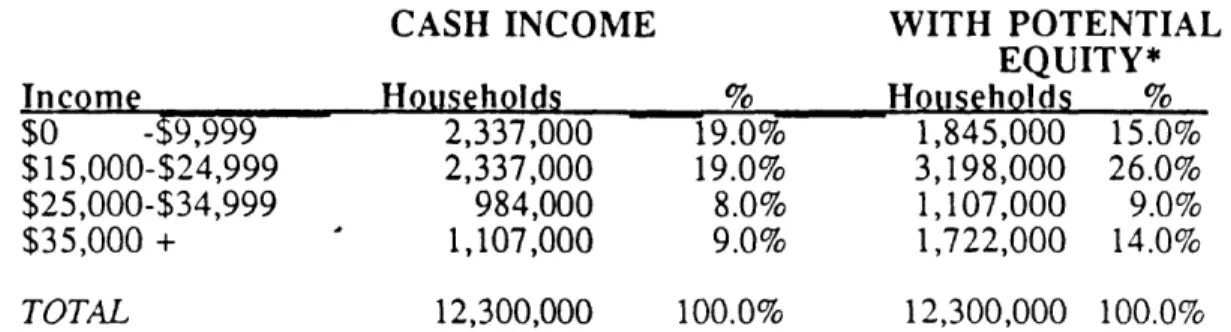
The majority of the age eligible elderly population cannot afford CCRCs. This factor further constrains the
rogrammer's assumptions about a population segment which is already impacted by age, sex, marital and health status, and perceptions of CCRCs being a discretionary product. But if affordability can be incorporated into the
programming process, then it is vital that the income and economic status of current CCRC residents be profiled and overlaid on the preceeding assumptions.
Two types of "fees" are paid by residents for the privilege of living in a CCRC: an up-front entry fee and a monthly maintenance fee. Entry fees for the previous wave of
and $39,000 for two persons. Newer facilities on the East and West Coasts have fees that average closer to $150,000 for a single person, and more than $200,000 for doubles. In general, entry fees will vary according to location and lavishness of the physical plant. They also vary according to comprehensiveness of the health care guarantees and will increase accordingly (Winklevoss and Powell 1984).
In terms of monthly maintenance fees, one person can expect to pay about $700-$1,000 per month, and two persons about $1,000-$1400 for a service package that includes one meal per day. Table 2.1, on the following page, details the after tax income requirements for meeting CCRC
monthly fees. The table assumes that the elderly
individual or couple was able to sell a home, or liquidate assets sufficient to cover the entry fees required up
front, and that retired persons can pay no more than 61% of their disposable income on CCRC monthly fees.
Based on expected monthly maintenance fees of about $900 for a single person, and $1100 for a couple, Table 2.1 indicates that the single person would need an after-tax annual income of $17,705; couples would need at least $26,557.
Table 2.1 -- AFTER-TAX INCOME REQUIREMENTS FOR CCRCs
CCRC Fee Qualifying Income
** * *** ** *** ** * ** * ** **** * ** *
$ PER SINGLE DOUBLE AFTER TAX INCOME MONTH OCCUPANCY OCCUPANCY SINGLE COUPLE
$500 $6,000 $0 $9,836 $0 $550 $6,600 $9,600 $10,820 $15,738 $600 $7,200 $10,200 $11,803 $16,721 $650 $7,800 $10,800 $12,787 $17,705 $700 $8,400 $11,400 $13,770 $18,689 $750 $9,000 $12,000 $14,754 $19,672 $800 $9,600 $12,600 $15,738 $20,656 $850 $10,200 $13,200 $16,721 $21,639 $900 $10,800 $13,800 $17,705 $22,623 $1,000 $12,000 $15,000 $19,672 $24,590 $1,050 $12,600 $15,600 $20,656 $25,574 $1,100 $13,200 $16,200 $21,639 $26,557 $1,150 $13,800 $16,800 $22,623 $27,541 $1,200 $14,400 $17,400 $23,607 $28,525 $1,250 $15,000 $18,000 $24,590 $29,508 $1,500 $18,000 $21,000 $29,508 $34,426 $1,750 $21,000 $24,000 $34,426 $39,344 $2,000 $24,000 $27,000 $39,344 $44,262