Driving Story Generation with Learnable Character Models
by
Matthew Paul Fay
B.S., Purdue University (2009)
S.M., Massachusetts Institute of Technology (2012)
Submitted to the Department of Electrical Engineering and Computer Science
in partial fulfillment of the requirements for the degree of
Doctor of Philosophy in Electrical Engineering and Computer Science
at the
MASSACHUSETTS INSTITUTE OF TECHNOLOGY
September 2014
© Massachusetts Institute of Technology 2014. All rights reserved.
Author………...
Department of Electrical Engineering and Computer Science
August 7, 2014
Certified by………..
Patrick H. Winston
Ford Professor of Artificial Intelligence and Computer Science
Thesis Supervisor
Accepted by……….
Leslie A. Kolodziejski
Chair of the Department Committee on Graduate Students
3
Driving Story Generation with Learnable Character Models
by
Matthew Paul Fay
Submitted to the Department of Electrical Engineering and Computer Science on August 7, 2014, in partial fulfillment of the
requirements for the degree of
Doctor of Philosophy in Electrical Engineering and Computer Science
Abstract
Stories are a ubiquitous part of the human experience and an essential component of human intelligence. Stories serve countless functions, working in tandem with our language facilities to enable communication, problem solving, imagination, and more. Stories are eminently cross disciplinary, fueling how people think about everything from chemical reactions to novels, social encounters to politics. If we are to develop a comprehensive computational system mirroring human intelligence, the system must be able both to understand stories and to go beyond that, using stories to empower how it thinks about the world.
On a high level, a key component of story understanding is story generation. In human thought, generation enables us to imagine, solve problems, and make decisions. Therefore, to take computational story understanding to the next level, this research makes a number of contributions centered on story generation. In particular, this thesis describes a novel story generation system capable of creating new and interesting stories by learning from a corpus of human-written stories. The design of robust learnable character models facilitated this generation system. The character models are capable of handling characters that span a number of genres including romantic comedies, fairy tales, warfare, and
Shakespearean tragedies. The work also includes methods for the automatic learning of characters traits in both an unsupervised way using topic modeling and a semi-supervised way using a new method of alignment-based trait learning.
Through my research these algorithms were tested using the Genesis system for story understanding. The results from the research illustrate how the robust methods are able to handle a variety of situations, including internally conflicted characters, characterizations that span genres, and conflicting character goals. Critically, this research demonstrates how story generation is important to story understanding.
Dissertation Supervisor: Patrick H. Winston
Professor, Electrical Engineering and Computer Science Dissertation Committee:
Boris Katz
Principal Research Scientist, MIT Computer Science and Artificial Intelligence Laboratory Nick Montfort
5
Acknowledgements
Without the support of people and organizations, this work would not have been possible. My advisor Patrick Winston was instrumental to my success. The mentorship, guidance, and education he provided shaped the course of my graduate experience. I also received valuable mentorship from my committee members, Boris Katz and Nick Montfort.
The Intelligence Advanced Research Projects Agency supported early stages of this work through the “Integrated Cognitive-Neuroscience Architectures for Understanding Sensemaking” project under IARPA-BAA-10-04. Funding and collaborations under this project helped spur ideas and development.
The Defense Advanced Research Projects Agency provided continued support through the “Narrative Networks” project under DARPA-BAA-12-03. This support enabled significant progress on this work.
Collaborations and discussion with colleagues was essential. Work and discussions with Gabriel Zaccak helped lay the foundations for my research. Additionally discussions with members of the Genesis group were extraordinarily valuable. They include Mark Finlayson, Adam Kraft, Eren Sila Sayan, Susan Song, Robert McIntyre, and Dylan Holmes.
Finally, I would not have been able to complete this work without the support of my wife and editor, Emily Fay.
6
Table of Contents
List of Figures ... 9
Chapter 1 – Vision ... 11
Story Generation in Intelligence ... 11
Characters in Stories ... 11
Intent ... 12
Applications ... 12
Samples of Results ... 13
Chapter Summaries ... 15
Chapter 2 – Stories in Human Intelligence ... 15
Chapter 3 – Related Work in Story Generation... 15
Chapter 4 – The Genesis Story Understanding System... 15
Chapter 5 – Character Modeling ... 15
Chapter 6 – Learning Character Traits ... 16
Chapter 7 – Generating Stories based on Past Experiences ... 16
Chapter 8 – Contributions ... 16
Appendix A – Evaluating Story Understanding ... 16
Appendix B – Algorithms ... 16
Appendix C – Collection of Generated Stories ... 16
Chapter 2 – Stories in Human Intelligence ... 18
Importance of Language ... 18
What is a story? ... 18
Human Story Understanding ... 20
Imagination and Story Composition ... 21
Artificial Intelligence ... 21
Summary ... 21
Chapter 3 – Related Work in Story Generation ... 23
Novel Writer (1973) ... 23 Tale-Spin (1977) ... 24 Author (1981) ... 25 Universe (1983) ... 25 Minstrel (1993) ... 26 Mexica (1999) ... 27 Virtual Storyteller (2003) ... 27 Façade (2003) ... 28 Fabulist (2004) ... 28 Curveship (2011) ... 29 Other Works ... 29 Summary ... 29
Chapter 4 – The Genesis Story Understanding System ... 31
7
Modular Integration through the Wired-Box Paradigm ... 31
Semantic Language Processing ... 33
English Knowledge ... 34
Genesis Innerese: The Inner Language of Genesis ... 34
Representational Knowledge ... 35
Common Sense Knowledge ... 37
Reflective Knowledge ... 39 Elaboration Graph ... 40 Story Summarization ... 41 Story Comparison ... 41 Leveraging Genesis ... 43 Summary ... 43
Chapter 5 – Character Modeling ... 45
What are characters? ... 45
Expanding the Genesis Corpus ... 45
Characters are sources of action ... 46
Comparing Characters with Event Vector Angles ... 46
Comparing Characters on the Plot Level... 48
Comparison of Methods ... 51
Character Traits inform Character Actions ... 53
Mental Modeling ... 54
Summary ... 56
Chapter 6 – Learning Character Traits ... 58
Learning traits in an Unsupervised Way ... 58
Topic Modeling ... 58
Learning Character Traits via Topic Modeling ... 60
Examples from Topic Modeling for Trait Learning ... 63
Strengths and Weaknesses of using Topic Modeling to Learn Traits ... 64
Learning traits in a Supervised Way ... 64
Alignment-Based Trait Learning ... 65
Example of Alignment-Based Miss Trait Learning ... 65
Summary ... 67
Chapter 7 – Generating Stories based on Past Experiences ... 69
Learn from the Library ... 69
Set the Stage ... 69
Simulate the Characters ... 70
Plot Weaving ... 72
Plot Weaving Algorithm and Implementation ... 73
Sample of Weaving ... 78
Fill the Gaps ... 78
Results ... 80
8
Cross-Genre Characterization ... 80
Conflicting Goals between Characters ... 81
Taking Story Understanding to the Next Level ... 82
Summary ... 85
Chapter 8 – Contributions ... 87
References ... 90
Appendix A – Evaluating Story Understanding ... 96
What is Amazon’s Mechanical Turk? ... 96
Creating the tools for Story Evaluation ... 96
User Interface ... 96
Reusability ... 97
Creating and Running the Experiment ... 98
Results ... 98
Appendix B: Algorithms ... 103
B.1 Plot Weaving Binding Search ... 103
B.2 Plot Weaving Scorer ... 104
B.3 Plot Weaving Finalization ... 104
Appendix C: Collection of Generated Stories ... 106
C.1. Greinia and Astalir ... 106
C.2. Hansel without Gretel ... 107
C.4. Little Green Riding Hood ... 109
C.5. Lost Love ... 110
C.6. Oedipus Much ... 111
C.7. Pacifist Heroine ... 112
C.8. Regicides ... 113
C.9. War for Western Europe ... 114
9
List of Figures
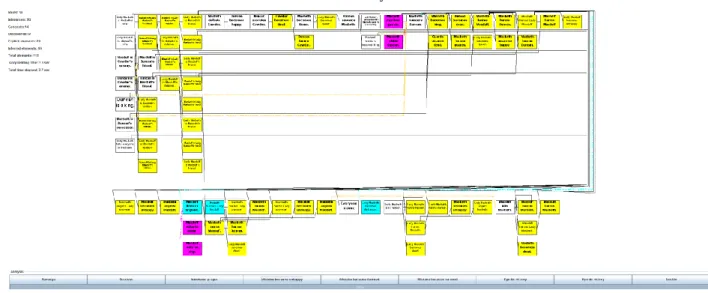
Figure 1 - Similarity Matrix of Character Comparisons ... 13
Figure 2 - Sample Generated Story ... 14
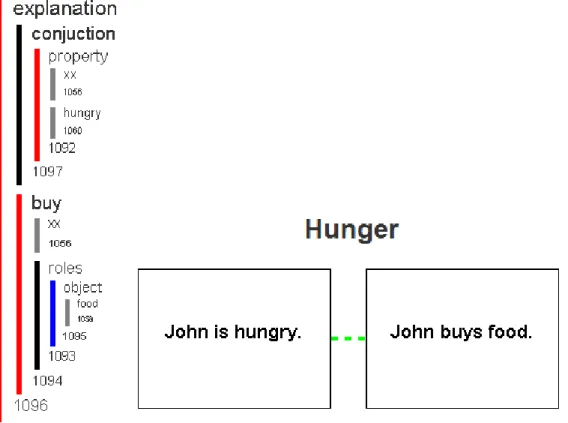
Figure 3 - Example of Story Generation fueling Understanding ... 15
Figure 4 – Wired box connections between modules in Genesis ... 32
Figure 5 – START’s triples for the sentence “Mary liked her little brother very much” . 33 Figure 6 – The building blocks of Genesis’s Innerese ... 35
Figure 7 - Representational Knowledge in Genesis ... 36
Figure 8 – Genesis’s Innerese frames for representational knowledge ... 37
Figure 9 - Predictive rules in Genesis ... 38
Figure 10 - Explanative rules in Genesis ... 39
Figure 11 - The Genesis Elaboration Graph ... 40
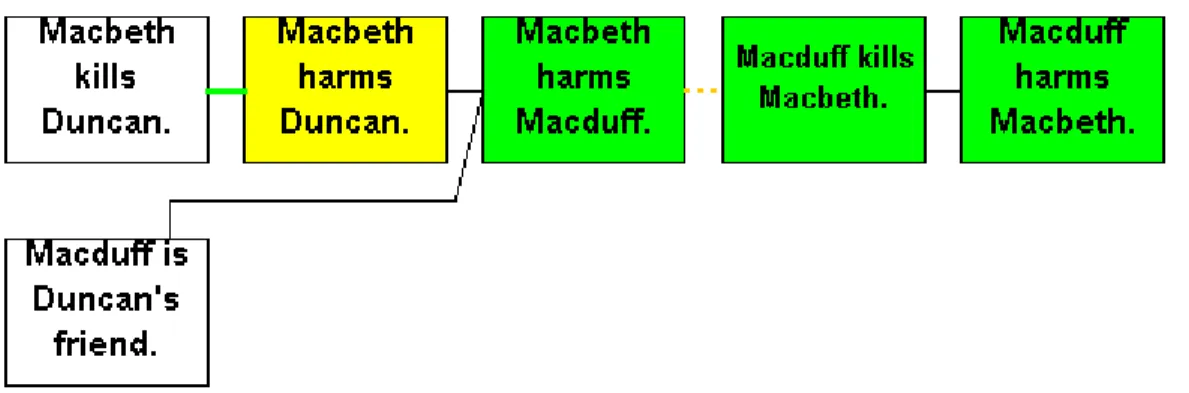
Figure 12 - An example of a revenge plot unit in Genesis from Macbeth ... 41
Figure 13 – Analyzing a story from two perspectives with Genesis ... 42
Figure 14 - Alignment of stories within Genesis ... 43
Figure 15 - Event Vectors for Character Comparison ... 47
Figure 16 - Comparing character via event vectors ... 48
Figure 17 - A partial match tree constructed during story alignment ... 49
Figure 18 - Comparing a corpus of characters via alignment ... 50
Figure 19 - Comparing a pair of characters via alignment ... 51
Figure 20 - Alignment Comparison Advantage ... 52
Figure 21 - Event Vector Comparison Advantage ... 52
Figure 22 – Pre-defined Character traits within Genesis ... 54
Figure 23 - Cascading character mental models ... 55
Figure 24 - Visual explanation of topic modeling ... 59
Figure 25 - Topic modeling on scientific documents ... 60
Figure 26 – Modeling character traits with topic modeling ... 61
Figure 27 - Event Vectors used for topic modeling ... 62
Figure 28 - Learning character traits using topic modeling ... 63
Figure 29 - Learning vicious ambition from positive examples ... 66
Figure 30 - Learning vicious ambition from a negative example ... 67
Figure 31 - A simple staging for generating Lion King from Hamlet ... 70
Figure 32 - Aligning characters to find potential plot elements ... 71
Figure 33 - Characters’ plots before plot weaving ... 73
Figure 34 - Plot Weaving Binding Search ... 75
Figure 35 - Plot Weaving Score Example... 76
Figure 36 - Characters' plots after plot weaving ... 78
Figure 37 - Gap filling a story after weaving ... 79
Figure 38 – Generated story with conflicting character traits ... 80
Figure 39 - Generated story with cross-genre characterization ... 81
Figure 40 - Generated story with conflicting goals between characters ... 82
10
Figure 42 - Hansel with and without Gretel ... 84
Figure 43 - Hansel without Gretel in Genesis ... 85
Figure 44 - Web application for conducting surveys about Genesis stories ... 97
Figure 45 - High level analysis of Mechanical Turk survey ... 99
11 “All the world’s a stage,
and all the men and women merely players” - William Shakespeare
Chapter 1 – Vision
A long sought goal of artificial intelligence has been successfully capturing the essence of human intelligence. Since its inception as a field, AI has made many steps towards
developing machines with the intellectual capabilities of people. However, despite great strides in areas such as chess, computer vision, and data analysis, we are still nowhere near creating systems able to think as humans do nor even to carry on human-like conversations able to pass the Turing test (Turing, 1950). A key missing ingredient is the capacity to understand stories.
Therefore, I have focused my research efforts on improving the state of the art in computational story understanding. I am interested in how humans not only understand stories but also how they create stories that are understood by others. I am interested in how the combined capability of both understanding and creating stories plays a fundamental role in learning, problem solving, and more.
Story Generation in Intelligence
If we are to make progress in making artificial intelligences behave on par with humans, we need to consider how we can advance computational story understanding (Winston, 2011). Specifically, I target the human ability to generate stories because story generation plays a vital role in intelligence, fueling our ability to imagine, solve problems, and make decisions. When people are faced with choosing a course of action, they are able to imagine possible outcomes of each action, in a sense telling themselves a story of what would happen. Feelings such as surprise are often triggered when reality conflicts with our imagined story. I discuss the relationship between story generation and human thought in more detail in Chapter 2.
In addition to being useful on its own, story generation also empowers story
understanding. When trying to understand a story, people can ask and answer questions such as “What would have happened if…?” For example, in the story of Hansel and Gretel, we know that Gretel rescues her brother from being eaten by the witch. However, we can easily imagine what might have befallen Hansel if Gretel had been unsuccessful or even removed from the tale entirely. This ability to reimagine variations on existing stories bolsters our ability to understand them. In the case of Hansel and Gretel, imagining the story without Gretel serves to emphasize Gretel’s heroism.
This example also illustrates the importance of characters to stories. I posit that if we are to develop comprehensive models of story understanding, we need to develop robust character models.
Characters in Stories
Characters in stories are ubiquitous. They are the focal points around which the events of a story’s plot unfold. When people read or hear stories, they automatically interpret the actions
12
of characters and predict both what the character may do next and what may happen to the character as the story unfolds.
A story is composed both of the events that occur and the entities that are affected by or cause the events. Events require entities to exist, but entities can exist independent of events. Entities themselves can be almost anything: people, animals, plants, books, inanimate objects, animate objects, and the weather. Characters are a subcategory of entities composed of entities capable of acting with intent. Some theorists argue that a narrative requires characters, whereas others accept narratives consisting solely of non-character entities (Abbott, 2008; Bal, 1997) When considering how humans use stories to understand the world, we can consider even inanimate things such as chemical compounds to be characters with intent when understanding stories about chemistry. For example, an acid acts with intent to react with a base.
Because characters are so important to stories, a large piece of this work will be the development of robust character models that can be learned by reading a corpus of existing stories. These models are flexible, making them useful both for the generation and analysis of stories.
Intent
In the rest of this document I build upon these ideas. First, I discuss the importance of stories to human intelligence and review the current state of computational story understanding and composition. Then, I describe my advancements in creating learnable character models that can improve a system’s ability to understand stories on the level of characters. These models can be used to enable automatically learning character traits from a corpus of stories. These character models and learned traits fuel story generation. A key component of the story generation process is a plot weaving algorithm capable of rapidly searching a combinatorial space in order to weave the plots of individual characters together successfully. Finally, I discuss how these models and methods are capable of handling a variety of situations and how story generation can improve the state of the art in story understanding.
Applications
In this thesis I focus primarily on story understanding and story generation as they relate to human and machine intelligence. However, the techniques are not bound to a specific domain and could be used in a number of related fields.
In the world of game design, procedurally generated gameplay aspects are becoming increasingly popular (Hendrikx & Meijer, 2013). For example, in Minecraft, the players can explore an entirely new, randomly generated world every time they play. The world is vast but nearly entirely lacks plot. Story generation could help to push procedural generation of game content in a new direction, enabling games to dynamically create new stories, goals, and characters for players to interact with.
In the domain of interactive drama, systems such as Façade drive a unique narrative experience by allowing a user to interact with characters over the course of an unfolding drama (Mateas & Stern, 2003). Façade allows the user to influence the outcome of a story by modeling
13
character interactions and having a higher level drama management system. My work in learning character models from experience could help to enable such systems to learn from other stories in order to construct a wider variety of possible narratives.
In the field cognitive science, a current area of interest is how humans think about stories (Dodell-Feder, Koster-Hale, Bedny, & Saxe, 2011). Recent work has shown that people’s brain activity noticeably varies when someone reads a coherent story versus an incoherent one. A sophisticated story generation system could generate stories with specific attributes such as level of coherence, sophistication of word choice, etc. These tailored stories could then be used to test exactly how the brain responds to specific changes between stories.
This small set of examples illustrates how my techniques and story generation in general can be a valuable in not only artificial intelligence but also many other disciplines.
Samples of Results
In this section I provide a number of sample results that demonstrate my system’s capabilities.
The development of the character models has enabled new ways for the story understanding system to understand stories. One example of this is the ability to compare characters from across stories, even stories from different genres. Figure 1 shows an example of a similarity matrix that can be automatically generated using the techniques I’ve developed. These character models are discussed in more detail in Chapter 5.
Figure 1 - Similarity Matrix of Character Comparisons
Using my character models, a large number of characters can be compared easily. Similarity matrices such as the one shown here can be generated automatically after the system reads one or more stories by doing pairwise comparisons between all the characters in a collection.
14
In an effort to make character models learnable, I investigated the concept of traits and characterizations. Chapter 6 presents methods for learning such information directly from a corpus of stories. Examples of learned traits include the concept of Vicious Ambition, a trait that embodies the idea of a character who wants to gain power through murder.
An important part of the story generation process is being able to simulate characters based on learned experience. These character simulations serve to drive the plot of the story forward. For example, in simulating a character such as Scar from The Lion King, the system may decide that Scar kills Mufasa so that Scar can become king. The characters’ simulations are combined with an algorithm called plot weaving, which allows characters’ plot threads to be tied together into a single consistent story.
The story generation process can create a vast number of new stories even from a small corpus of stories. An example of a generated story is shown in Figure 2. This story was
generated by combining information learned from across a number of stories and genres such as a story of The American Civil War and the genre Shakespearean tragedies.
Figure 2 - Sample Generated Story
Using the story generation techniques I’ve developed, stories can be generated by learning from a preexisting corpus. This figure shows an example of a generated story that combines knowledge learned from across stories and genres such as a telling of The American Civil War and Shakespearean tragedies.
In addition to generating stories for purely creative purposes, stories can also be created in order to better understand an existing story. For example, in the original story of Hansel & Gretel, Gretel saves herself and her brother by killing the witch. The system can now imagine an alternative telling of the story without the character of Gretel. In this case Hansel dies at the hands of the witch. This reimagining of the story reinforces the idea of Gretel as the heroine in the original tale. I discuss the details of my story generation process in Chapter 7.
15
Figure 3 - Example of Story Generation fueling Understanding
Story generation can serve as a powerful tool for improving story understanding. This figure shows an existing rendition of Hansel & Gretel on the left and a generated story that is similar except that the character of Gretel has been removed. The generation improves understanding of the original story by highlighting Gretel’s role as the heroine.
Chapter Summaries
Chapter 2 – Stories in Human Intelligence
The chapter reviews highlights from the literature on the study of human intelligence. I discuss work from anthropology, linguistics, psychology, and artificial intelligence to illustrate the importance of stories to intelligence.
Chapter 3 – Related Work in Story Generation
This chapter contains a literature review of work in computational story generation. The goal of this chapter is to highlight trends, successes, and failures of previous approaches to story generation. The purpose of this review is both to find key aspects of story generation system that could be useful in improving story understanding and to find areas where improved artificial intelligence and story understanding can be used to bring new ideas to the field of story generation.
Chapter 4 – The Genesis Story Understanding System
In this chapter, I describe the Genesis system for story understanding. The Genesis system represents over a decade of work by a large group of researchers with the goal of modeling how humans understand and interpret stories.
Chapter 5 – Character Modeling
I discuss the capabilities of the novel character modeling techniques that I implemented into the Genesis system. These models enable Genesis to achieve an array of new abilities in understanding individual characters and how characters are related to one another through traits.
16
This improved level of character understanding enables new methods of analysis and comparison. Additionally, these models set the stage for trait learning and plot generation.
Chapter 6 – Learning Character Traits
This chapter contains a core contribution of my work, analogical trait learning. The work draws on techniques from story understanding, artificial intelligence, machine learning, and natural language processing. The result of this work allows for the automatic unsupervised learning of characters, traits, and themes from a corpus of stories. This work is scalable, allowing ever larger corpuses to be analyzed.
Chapter 7 – Generating Stories based on Past Experiences
I describe the development of my story generation system, which is capable of combining the Genesis story understanding system and my character modeling techniques to create a
powerful yet adaptive story generation system. This includes the creation of the plot weaving algorithm, which represents a core contribution of my work. This work leverages the character models and learning techniques that I’ve developed. Additionally, I present and discuss results of my work.
Chapter 8 – Contributions
I review the major contributions of my work and discuss future directions.
Appendix A – Evaluating Story Understanding
I describe a tool that I created in order to enable evaluations of story information. The tool enables deployment of surveys to Amazon’s Mechanical Turk to get human participants to answer questions. These surveys can be used to evaluate how humans respond to both generated and human-written stories. The appendix includes data from a pilot study.
Appendix B – Algorithms
I include descriptions of the components of the plot weaving algorithm in the form of pseudo-code. This will allow others to build from this work more easily.
Appendix C – Collection of Generated Stories
I include a collection of stories that were generated using the systems and algorithms that I developed.
18
Chapter 2 – Stories in Human Intelligence
If we are to develop a comprehensive artificial intelligence capable of human level thought, we need to understand the powerful story understanding capabilities that humans have. In this chapter I discuss why story understanding, and more specifically story generation are important parts of human intelligence. Naturally this will be a brief summarization, as the challenge of understanding human intelligence is an entire field unto itself. The works I discuss are limited to key/core concepts that inform how I approach the problem of creating a system capable of modeling, understanding, and generating stories. I reviewed several of these concepts in a different context in my earlier work on story comparison and alignment (Fay, 2012a). This chapter builds upon my earlier project by focusing on the importance of generation in human imagination, which fueled my decision to create a computational story generation system as a means to improve computational story understanding in particular and artificial intelligence in general.
Importance of Language
Language is an extremely versatile tool that helps fuel high level cognition. People use language in a vast number of ways from communication to abstract thought, archiving
knowledge, learning chemistry, and writing books. Some suggest that language plays a key role in enabling human intelligence (Tattersall, 2008; Winston, 2011).
Language has a number of important aspects. Language is expressive, enabling limitless ideas from even a small selection of words. Additionally, human language is productive,
meaning that even language with a small set of phonemes can be used to create novel words and sentences (Trask, 2003). On a similar note, Noam Chomsky, has theorized that it is not language and symbolic reasoning alone that enable our intellectual prowess. Humans seem to be unique in our ability to combine two ideas to form a novel one, potentially ad infinitum. This closely mirrors the linguistic “merge” operation. This ability enables us to combine knowledge in incredibly important ways. For example, applied to mathematics, it allows us to combine that 3+1 is 4, which is one greater than 3, and 5+1 is 6, which is 1 greater than 5, into the general statement x+1 is 1 greater than x. This knowledge can then be applied to any value, e.g., we know that if x is 7 then x+1 is 8 (Chomsky, 2010; Winston, 2011). These capabilities likely fuel our ability to generate new stories by combining pieces of old ones.
According to Roger Schank, language seems to be integral to our ability to think in general. He suggests that language enables our ability to index, retrieve, and process information. To Schank, the core of intelligent behavior is the ability to recall relevant
information that will help an individual make sense of the current situation. Beyond language itself, however, stories are a form of knowledge and it is stories that enable people to operate in the world (Schank, 1990).
What is a story?
Before proceeding, it is important to establish critical terminology that I use throughout the course of this thesis. Defining a seemingly straightforward term such as story is by no means
19
trivial. Even within the fields of literature and narrative theory there is no clear cut agreed upon definition. (Forster, 1962; Prince, 2003). To make thing even more complicated, the colloquial use of the term story is often interchangeable with narrative. However, to understand the scope of this research it is necessary to distinguish between them. In general, narrative is a particular representation of events, typically having two major components: the story (or fabula), and the narrative discourse (Abbott, 2008). The story is the content of the narrative, essentially it is a chronological collection of one or more events. This is distinct from the narrative discourse that is the way in which those events are represented, ordered, told, stylized, and expressed. (Abbott, 2008; Prince, 2003) For my work in particular, I focus on computational systems able to
understand and create the content of the narrative. The discourse is incredibly important and difficult task on its own. While parallel work in the Genesis group has worked to approach problems in discourse, it is outside the scope of my own research (Sayan, 2014).
There is also a secondary use of story in this work, specifically in phrases such as story understanding and the story level. These phrases in particular, refer to the ability of humans or machines to derive meaning from beyond a surface level interpretation. This inevitably includes the human ability to draw upon past experience and knowledge to draw conclusions about events that are not present in the language alone. For example, if “Mary kissed John” and then “John smiled” we may infer that “John smiled because Mary kissed John” or perhaps “John likes Mary”.
A similarly complex term is the word plot. Most definitions of plot are similar to the content definition of story. Meaning that plot is the events of the story (Abbott, 2008). However, for clarity it is worth noting that sometimes plot is given a slightly different meaning aligning it with the causality of events and in some cases even how the events are represented (Abbott, 2008; Prince, 2003). For my work I will stick with the more common definition of plot being an ordered collection of events.
Another important consideration is where stories come from. While events occur around us every day, they do not immediately become a story. For a story to exist, an author must come up with a selection and representation of those events to tell. This creation of the representation distinguishes the reality from the story. Choosing events to include in a story is not a simple task either even when retelling what happened over the course of a day, as the author must decide what constitutes an event and which events are worth mentioning. Once the author makes this decision, the events that the author chose form the story while how these events are told forms the discourse. This concept is important to understanding human intelligence, as putting information into the context of story and narrative seems to enable us to understand it more deeply. As filmmaker Brian De Palm puts it, “People don’t see the world before their eyes until it’s put in a narrative mode.” (Abbott, 2008)
Similarly another idea about storytelling and narrative from narrative theory is the idea that there should have a point, or else the narrative elicits the question of “So what’s the point?” (Polanyi, 1979). Many of the stories that people recall and tell themselves are to help them communicate and idea or to make sense of a situation (Schank, 1990). Therefore, a story understanding system should be able to come up with narratives that have a point or serve a
20
particular purpose. For my work in enabling story generation this goal takes on the form of being able to answer “What if?” questions such as “What if Gretel was removed from the story of Hansel and Gretel?”
Human Story Understanding
Many researchers believe that story understanding is at the heart of human intelligence. Patrick Winston suggests the bold idea of The Strong Story Hypothesis. The hypothesis states that the ability to understand and manipulate stories is the distinguishing mental feature that separates humans from other primates. A similar and connected idea is The Directed Perception
Hypothesis, which states that knowledge, understanding, and reasoning stem from our symbolic
reasoning system’s ability to control our perceptive apparatuses. These can be used on both real and imagined perceptions, in order to answer questions about the world (Winston, 2011).
There is evidence from brain studies that supports these bold ideas about stories. In neuroscience, there has been many studies investigating how humans respond to stories that encode various cultural elements, causal connections, and emotional appeals. Rebecca Saxe’s work has identified various brain regions consistent between participants which respond to story stimuli. Of particular interest for relating this to general human intelligence is how human brain response varies in response to story and non-story stimulus. Specifically, some recent work has shown that certain areas of the brain respond strongly to a set of sentences that from a coherent story, whereas those areas do not respond when the sentences are unconnected or form an incoherent story (Dodell-Feder et al., 2011).
Clinical investigations conducted by Kay Young and Jeffrey Saver suggest that many brain dysfunctions may be more accurately described as dysnarrativia. Dysnarrativia has been an area of interest to a number of neurologists and psychologists alike, but in Young and Saver’s work they demonstrate how specific deficiencies in a person’s ability to tell stories seem to be linked to specific areas of the brain. The wide array of dysfunctions caused by damage across a variety of areas of the brain suggests that the ability to understand and tell stories is a
complicated process involving many of the brain’s capabilities (Young & Saver, 2001).
A number of other efforts have approached questions about the involvement of stories in human intelligence from across disciplines. In instructional design, Jonassen and Hernandez-Serrano research methods for analyzing, organizing, and presenting stories in order to enable better learning and problem solving (Jonassen & Hernandez-Serrano, 2002). Their efforts demonstrate the importance of stories and storytelling to learning. Dedre Gentner has demonstrated how analogy and similarity differ and how these differences affect people’s understanding of the world (Gentner & Markman, 1997). Her early work laid the foundation for a powerful system called the Structure Mapping Engine (Falkenhainer, Forbus, & Gentner, 1989). Their work demonstrates the power for similarity and analogy to fuel human
understanding. Later work by Finlayson and Winston has highlighted a similar importance of analogy in the story domain where analogy is important to efficient and intelligent information and story recall (Finlayson & Winston, 2006).
21
These ideas on the importance of stories and analogies align with Roger Schank’s work in understanding human intelligence. In Tell Me A Story, Schank goes as far as to say that “Storytelling and understanding are functionally the same thing”. Much of Schank’s ideas focus on the idea that stories are the format of memory. Seen in this light, choosing an action or making any other decision becomes recalling the most relevant stories and following a script. One way that Schank says that humans differ from other somewhat intelligent animals is that while many animals can imitate or copy a scripted story, only humans can create them (Schank, 1990).
Imagination and Story Composition
While typically thought of as a conscious process, creativity, especially in the sense of story composition, seems to the strongly connected to problem solving apparatuses of human intelligence. Specifically, imagination, a key ingredient for creative tasks, is extraordinarily important for day to day reasoning. In a number of works, George L. S. Shackle identifies how imagination fuels decision making (Shackle, 1964). To Shackle, decisions are not made based purely on knowledge about the state of the world and real experience, but also from imagined experiences. In this context, imagined experiences are specifically grounded in previous knowledge and experience. These imagined experiences are essentially stories constructed in order to answer questions like “What would happen if I did X?” and “What will happen in an hour?” In order to answer these sorts of questions the brain must employ the same tools used to construct works of fiction, simply applied to real world stimuli (Augier & Kreiner, 2000).
Artificial Intelligence
My research goals are to make step toward more comprehensive artificial intelligence system. Based on this brief overview of the importance of stories to human intelligence, my research focus is story understanding. My work builds upon Genesis, an existing story understanding system, which I discuss in detail in Chapter 4. Two important parts of my contributions are teaching Genesis to learn from past experience and to incorporate story generation into the story understanding process. Schank identified the importance of past
experience; a large part of what makes humans intelligent is our ability to learn from experience and to recall that experience when appropriate. As such, my work in story generation builds on the ability of the system to learn from past experience. As discussed, integrating story generation into the story understanding process is important because imagination plays a key role in human decision making.
Summary
In this chapter, I have discussed how stories play an integral part in human intelligence. Additionally I have identified that learning, recall, and imagination all play important roles in human intelligence and need to be considered by anyone working on improving the state of artificial intelligence. In the next chapter, I review the literature in the related field of creative computing, specifically looking at the history of tools for story generation.
23
Chapter 3 – Related Work in Story Generation
Over the course of my thesis research I have been working to take computational story understanding to the next level. An important facet of this work is the incorporation of
imagination through story generation. Methods for computational story generation have been of interest to researchers in the field since at least the 1970s with the development of two of the earliest story generation systems: Klein’s novel writer and Meehan’s Tale-Spin (Gervás, 2009).
In this chapter I discuss the history of systems for creative story composition. Most importantly I highlight some of the strengths and weaknesses of various approaches. I explain how each system approaches computational creativity and provide a brief summary of each system’s key features. As character modeling is a key component of this thesis, I also
demonstrate how character modeling has been used in story generation in the past. In doing so, I set the stage for how I use character modeling and story generation to improve on state of the art computational story understanding.
From a high level, nearly all story generation systems so far fall into one of the three informal groups: author models, story models, and world models (Bailey, 1999). The author models attempt to emulate the strategies of human authors. The story models rely on structural story representations such as rule grammars. The world models attempt to set up a world and simulate forward from that point. My approach would primarily fall in the world modeling category stemming from its focus character modeling and simulation. However, I also draw from the other two categories. Using the Genesis system as a base allows me to use its
already-available rich story rule, analysis, and comparison features, which mirrors some of the capabilities of author and story models of generation.
Novel Writer (1973)
The earliest known story generation system was created in 1973 by Sheldon Klein (Klein, Aeschlimann, & Balsiger, 1973). Novel Writer, as it was called, produced murder mystery stories intended to be used as the basis for weekend social parties. Klein’s approach was to use a
probabilistic story grammar combined with a simple linguistic model and rigid domain. Specifically, Novel Writer’s input is a detailed stochastic rule set, an initial scene description, and a simple language dictionary and grammar. The scene description is used to initialize the semantic network that tracks the story elements. The rule set is used to generate plot events probabilistically. Event and other sorts of story information are represented as changes to the underlying semantic network. Finally, the language dictionary and grammar are used to generate English sentences for story output. The bulk of the story generation for Novel Writer takes place in the form of world simulation. The simulator uses the probabilistic rules to propagate new events forward in time based on the current world state and the set of rules available.
24
Novel Writer set a good baseline for computational composition methods as it included many important basic components. It was the first system to include character and language models that work in tandem.
Tale-Spin (1977)
Tale-Spin was story generation system by James Meehan that produced interesting stories in a very different manner than Novel Writer (Meehan, 1977). While Novel Writer is restricted to the domain of social parties, Tale-Spin is restricted only by the knowledge base that it is
provided. Tale-Spin’s primary technique is a goal and problem solving oriented approach to creative story generation. Tale-Spin incorporates a number of interesting information types, including physical space, relationships, and basic personalities.
In order to generate a story, a user inputs a number of characters and objects and then gives these characters specific goals that they want to achieve. Tale-Spin then proceeds with generation by determining what course of action the characters would want to take in order to achieve their goals. Tale-Spin relies on a large database of rules and goals in order to model the world and the outcomes of character actions. Using backward chaining, Tale-Spin decomposes goals into simpler goals where possible and attempts to find chains of actions that will lead characters to the appropriate goal.
Additional constraints of the backward chaining planner include elements of personality, physical space, and relationships. These are expressed in terms of a large set of hard-coded rules that influence what actions characters will want to take, will not take, and things out of the characters’ control, such as falling into a river. The methods and routines used by Tale-Spin for rule based generation closely parallel of number of methods in Genesis for story analysis such as rules for understanding the outcomes of actions.
Meehan acknowledges that while ideally you want your story generator to create good works, it’s often the bad results that are the most interesting. One such example is this ending of a Tale-Spin story “Gravity drowned.” (Wardrip-Fruin, 2006)This is an example of a sentence you’d never expect a human to produce, which demonstrates that there must be a dichotomy between a person’s and the system’s understanding of the world. In this case the system modeled gravity as an actor in the story, but gravity had no friends nor legs and so couldn’t escape
drowning.
As Wardrip-Fruin notes in his discussion of that story, the errors are often the most interesting because they give insight into how the system works. In Tale-Spin’s case, the system carries out a great deal of complex processing during its reasoning process, but this often doesn’t come through in its stories because the thought process doesn’t make it into the finished story. This suggests that future story generation systems could benefit from the ability to explain the choices they make, especially when anomalies are encountered. This would allow a more transparent look at how the system works and allows a user to understand why errors are made which can suggest how the system can be improved. While my system does not have the capability to explain its choices, future work to use Genesis’s story analysis tools in a self-reflexive way in order to identify why events happen.
25
Author (1981)
The Author story generation system was created by Natalie Dehn in 1981. The system was the first to have a strong focus on authorial goals (Dehn, 1981). In order to compose its stories, Author proceeds through an iterative process that continually works on improving the plot to fulfill the goals of the author while also occasionally modifying the author’s goals by reflecting upon the state of the in-progress story. Additionally, the system contains a mechanism for reminder, which allows for the author to be periodically reminded of previous goals to see if they have become more relevant again in light of the direction the story has been constructed. For example, originally an author may expect a character, John, to have a violent conflict near the end of the story. However, as the story progresses, the author changes its mind because John meets Mary and the story is seeming more like a love story. Next the character Kyle is
introduced as Mary’s former boyfriend. At this point while the system is reminding the author of previous goals, the violent conflict seems relevant again because John might be heading for a fight with Kyle.
Similar to Tale-Spin, one of the important components of Author is a planning
mechanism, except in this case the planning is used to fulfill authorial goals instead of character goals. However, Author also introduces some interesting concepts. First, Author is among the first creative systems to introduce the idea of reflection into the generative process. The system frequently reflects back on the generated story in order to update author’s goals. Thus the author’s goals are flexible, allowing the goals to change depending on the way the story is progressing. Related to this, the system uses what Dehn calls conceptual reformulation. In conceptual reformulation, Author takes a high level goal, such as demonstrating that main character is shy, and reformulates it into a number of lower level sub-goals. As examples, the high level goal of a kernel episode (e.g., Shy person needs a job and becomes employed as a sales person, but can’t face the everyday challenges.) can be split into a sequence of sub goal episodes (e.g., Anecdotes demonstrating shyness, main character gets hired in sales, and main character gets fired).
The design decisions behind Author seem to be driven by Dehn’s take on the creative process. As stated by Gervás, the creative process should capture both deliberateness and serendipity (Gervás, 2009). From this core concept, Dehn came up with the important idea of reflection in story generation, illustrated by the strategy to fulfill your goal while simultaneously trying to find a better goal. The concept of reflection is of critical importance to my work
because of its relation to story understanding. The Genesis story understanding system uses reflection to understand stories from a higher level. Additionally, I demonstrate in chapter 7 how story generation itself can be a means for improving a story understanding system’s ability to understand an existing story.
Universe (1983)
Universe creates universes of characters for telling stories. Created by Michael
Lebowitz, the aim of the system was to generate a series of episodes akin to a soap opera from the same collection of characters. The main goal was a focus on consistency and coherence by
26
improved modeling of characters using interpersonal relationships and character traits (Lebowitz, 1984).
In constructing Universe, one of Lebowitz’s goals was dealing with the problem of showing and not telling. For example, if an author’s intent for an episode is for two characters to break up but remain friends, then the system must set up a story where this characterization plays out naturally rather than being told explicitly. In order to achieve this, Lebowitz focused not on planning and simulated actions of a few characters, but instead on techniques for creating casts of consistent and coherent characters. One import aspect of Lebowitz’s character model is the explicit inclusion of a relationships as a key aspect of a character. Most of the story content that Universe generates is specifically targeted to demonstrate and modify the relationships between the characters in a never-ending story.
For generating plot, Universe uses a provided library of plot fragments. These plot fragments are similar to the plot units found in Genesis (Lehnert, 1981; Winston, 2011), and in Lebowitz’s case they serve to represent authorial goals. These plot fragments provide plot elements that are used to fill in character activity. Interestingly, Lebowitz includes some
techniques in Universe for the spontaneous generation of new plot fragments. This would occur by mix and matching elements from existing plot fragments. I believe idea of mixing elements to create new ones is an important example not just of a method of generation but also as a step towards how a system can learn to generate, which is important to my research in enabling a system to learn how to generate plot from reading a corpus of stories.
Minstrel (1993)
Minstrel was a story generation system created in 1993 by SR Turner (Turner, 1993). The system is able to tell stories about the knights of Camelot. The generation methodology of
Minstrel is very similar to Dehn’s Author. Minstrel begins the generation process with high level author goals and then tries either to solve via planning these goals or to break them down into one or more lower level goals. One point of distinction however, is Minstrel’s aim to tell stories that encode specific morals.
Minstrel has the interesting capability to query, search, and modify story memory using a process of imaginative recall. Essentially, the system has a number of search and transformative functions that match and modify events in order to create new situations and tell a coherent story. These transform-recall-adapt methods (TRAMs) allow Minstrel to modify sentences to alter their meaning in specific ways. For example, “John slew a dragon” can be matched with “Someone slew something with a sword” which in turn allows for the creation of “John slew the dragon with the sword” (Tearse, Mawhorter, Mateas, & Wardrip-Fruin, 2012). Turner claims that this ability to discover and apply these transformations to a story is an important aspect of
computational creativity.
Matching and modification methods like Minstrel’s TRAMs are important because they both make it easier for the system to recall and identify relevant story fragments but also because they allow such fragments to be modified to fit new situations. Similar types of problem are solved within Genesis through the use of previously developed semantic matching functions
27
(Fay, 2012a; Winston, 2012b). Additionally, in my work similar techniques are used to aid the plot generator in creation of novel plot elements.
Mexica (1999)
Mexica was developed by Rafael Pérez y Pérez in 1999 and took a number of important steps forward in story generation. On a high level, Mexica generates stories by switching
iteratively between two distinct modes of operation: engagement and reflection (Pérez y Pérez & Sharples, 2001). During engagement mode, Mexica expands the current story state by generating plot elements based on a set of constraints, a set of possible actions, and the current story state. In reflection mode, Mexica evaluates the story so far on factors such as novelty and coherence and then can modify the story via modification or backtracking if it needs improvement in an area. Mexica currently tells stories based on Mexican folklore, but could be extended with additional rules, actions, and stories to tell stories in other domains.
The reflective stage in particular sets Mexica apart from previous generation systems because it incorporates both in depth introspective analysis of the constructed story and successfully incorporates a library of previous stories for the first time. During its analysis, Mexica compares the current story to other similar stories in order to ensure that the new story is neither too similar nor too different from previous tales. The incorporation of a set of previously known stories makes Mexica have commonalities with my own research. However, while Mexica’s library is for the purpose of evaluation, my own work leverages a library of stories for the purposes of learning and generation.
On an interesting side note, Mexica also is one of the first systems to attempt to tell generated stories using visual media. Using a secondary program Mexica is able to create illustrated versions of its stories in the style of Mayan artwork (Pérez y Pérez, Morales, & Rodríguez, 2012). This advancement demonstrates that story generation can extend beyond simply text which is important in working toward a high level goal of human intelligence which combines both visual and linguistic information. It would be an interesting extension to my own work to branch into this sort of visual intelligence.
Virtual Storyteller (2003)
Virtual Storyteller is an interactive narrative and story generation system created by Theune et al in 2003 (Theune, Faas, Heylen, & Nijholt, 2003). Virtual Storyteller does multi-agent simulation in order to generate stories. In order to try to incorporate parameters of what may make a good story, Virtual Storyteller tries to make sure its stories are well structured, containing a beginning, a climax, and an ending.
Additionally, the system tries to strike a balance between having purely character-based simulation and having scripted plot lines. In order to accomplish this task, Theune et al. take an interesting approach: they introduce non-character agents with knowledge on narrative theory. For example, a director agent has knowledge related to how a plot should flow and uses this to constrain the actions that other character agents may take. Similarly, a narrator agent has knowledge for how a story should be told to a user, translating it from internal representations into a specific ordering of events.
28
The approach taken by Virtual Storyteller is interesting because of the independence and variety of agents which construct the story. My approach taken in creating and simulating characters is somewhat similar to this idea in Virtual Storyteller. However, the big difference is that Virtual Storyteller seeks to have agents that construct a story whereas my work has agents that are simulated within a story.
As future work, an interesting approach would be to see if multiple levels of agents could be used in conjunction to produce more interesting stories. For example, combining the character agents existing within a story with agents that exist around the story. Such a combination could combine many of the positives of world simulation and author simulation.
Façade (2003)
Façade is a game that explores interactive drama. It was created in 2003 by Michael Mateas and Andrew Stern. In Façade, the player interacts with two married characters by walking around in their three dimensional virtual apartment and communicating with them by typing English statements for the player character to say. The player’s actions affect the unfolding events that take place over the course of the story, including determining how all the characters’ emotions and relationships end up (Mateas & Stern, 2003).
Internally Façade incorporates characters that interact with each other and the user over the course of the drama. Façade uses A Behavioral Language (ABL), to define parallel,
sequential, and joint behaviors of the characters and the user. Behaviors defined by ABL are similar to goals with certain conditions or actions needing to be met for success. When a behavior fails due to its conditions, Façade can attempt to find alternative behaviors in order to carry out the higher level goals.
While Façade is more of an interactive narrative than narrative generation system, it is worth describing here because it succeeds in modeling characters and making those characters’ actions believable in the context of a story in which the user has control over the flow of the plot. Despite the different domain, the idea of simulating character behavior is an important
commonality between my research and the work done for Façade. Additionally, the plot
weaving algorithm that I develop shares some characteristics with the drama management ideas from Façade. This suggests potential future work in exploring how my models could be
extended from the domain of story generation into other areas such as interactive narrative.
Fabulist (2004)
Fabulist is a narrative planning system for doing story generation created by Mark Riedl in 2004. In developing Fabulist, Riedl wanted to enable story generation with little prior
knowledge built into the system from a design standpoint. This would potentially allow Fabulist to generate stories of types that were not anticipated by the system’s creator. Fabulist achieves story generation by applying search-based planning algorithms to the domain of story
understanding with the goals of plot coherence and character believability (Riedl & Director-Young, 2004).
29
Fabulist is an interesting approach to story generation because the research itself is grounded in artificial intelligence methodologies. Specifically, much of the work is grounded in planning algorithms which are useful for developing control systems. It demonstrates how heavily rule based system can be used to create interesting stories using cross-disciplinary algorithms. The work itself however, works quiet differently from my own area of research because while both incorporate a rule based system, Fabulist uses this for the planning whereas Genesis uses this for learning and story analysis. The methods in Fabulist could potentially be adapted to enable Genesis’s rule based story analysis tools to be leveraged more directly in the story generation process.
Curveship (2011)
Curveship, developed by Nick Montfort in 2007, tackles computational creativity in story telling from a very different angle from the previously discussed story generation systems. In particular, while most of the previously discussed systems focus on generating the plot, Curveship attempts to tell stories in many different styles without changing the plot. For example, a single story could be told from different perspectives, with different levels of
attention to detail, and a wide number of different methodologies. Curveship has been developed with interactive narrative and storytelling in mind and thus provides methods for doing
progressive world simulation that can take user input during the course of a story to direct how the story unfolds and is told (Montfort, 2011).
Additionally, through a collaboration between Pérez y Pérez and Montfort, Mexica and Curveship have been adapted to work together through a system called Slant. Slant uses a combination of techniques including a story whiteboard concept to allow various story
generation and storytelling systems to work together to produce interesting narrative better than any of the individual components (Montfort, Pérez y Pérez, Harrel, & Campana, 2013). This collaborative work is valuable because it suggests a means by which future iterations of work done by myself, the Genesis group, and others could be improved via integration. Such integration of individual systems mitigates weaknesses, combines strengths, and adds value.
Other Works
There have been a number of other efforts in the domain of story generation. The ones discussed in the chapter represent both an overview of the history of the field as well as an illustration of those projects that have been most influential on my own work. Other
developments in the areas of plot generation and simulation for interested parties include Tailor (Smith & Witten, 1991), The Oz Project (Bates, 1992), DEFACTO (Sgouros, 1999),
MAKEBELIEVE (Liu & Singh, 2002), and America’s Army: Soldiers (Nieborg, 2004).
Summary
In this chapter, I’ve given an overview of the field of computational story generation. Specifically, I’ve highlighted works that have made important contributions and that helped shape my own research. In the next chapter, I discuss the Genesis system for story
31
Chapter 4 – The Genesis Story Understanding System
A major contribution of my research is pushing the capabilities of computational story understanding forward. My work builds upon the existing Genesis system for story
understanding. Genesis represents a state of the art platform for conducting research in artificial intelligence with a focus on language, vision, and, of course, stories.
In this chapter I detail the workings of the Genesis system and demonstrate the most important capabilities of its functionality. Additionally, I illustrate areas for improvement that I have been targeting with work in character modeling, learning, and story generation.
Genesis, an overview
The Genesis system (hereafter, Genesis) reflects the accumulation of many years of work by a large body of researchers. The project is in active development in the Computer Science and Artificial Intelligence Laboratory at MIT. The explicit goal is to provide a comprehensive story understanding artificial intelligence with a strong focus on modeling how humans think.
The focus on human intelligence means that Genesis has benefited from the experience of people interested in story analysis, cognitive science, visual understanding, language, and more. The wide spread of research topics has enabled frequent collaborations with other groups to explore new territory.
Currently, Genesis is able to read stories written in English that can be parsed through the START Natural Language Processor (Katz, 1997). Once parsed, Genesis is able to use
background knowledge to expand on the understanding beyond the information provided
explicitly in the text. Finally, Genesis provides an array of analysis tools such as the elaboration graph for understanding aspects of the story and how it compares to previously read stories (Winston, 2011).
Modular Integration through the Wired-Box Paradigm
At the core of Genesis’s implementation is the Wired-Box design paradigm (Winston, 2011). The paradigm draws from the idea of computational propagators created by Gerald Sussman. In the propagator model, valued cells are updated via propagation connections. These propagators represent constraints and relations on the values of these cells. As more information is supplied to a propagator network the cell value ranges are continually updated to incorporate the information where applicable (Radul & Sussman, 2009). A key feature of propagators is that the connections are bidirectional, which allows information to be used both in a top down and bottom up fashion.
Genesis contains a loose implementation of the propagator ideology. Within Genesis, there are a large number of independent modules, known as boxes. These boxes can be
connected via any number of bidirectional connections, or wires, across which information can be transmitted as input and output from the boxes. Each box can listen for relevant information to come through on its wires and act on it accordingly. In practice, this communication style
32
bears resemblance to the popular “Observer/Observable pattern” programming style (Johnson, Helm, Vlissides, & Gamma, 1995).
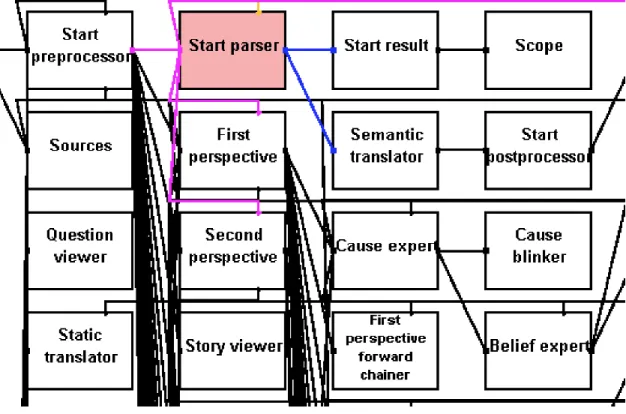
Figure 4 – Wired box connections between modules in Genesis
Genesis consists of a large number of independent modules that interact via the wired box paradigm. Each box is a single module that can have its inputs and outputs wired to any number of other boxes. The modules each serve different purposes and work together to enable Genesis’s story understanding capabilities. This figure shows a snap shot of an interactive view of Genesis’s internal connections. The pink box currently in focus has color-coded wires indicating the flow of information. Blue wires are outputs and pink wires are inputs.
This wired-box paradigm underlying Genesis grants a number of advantages to the research. First, from a development standpoint, boxes do not need to know about the source nor implementation of connected boxes. This means boxes can be seamlessly updated or even replaced without having to rewrite any of the connections. Additionally, it is easy for new researchers to use and augment Genesis because it lowers the amount of knowledge necessary to begin working on the system. Secondly, from a design standpoint, that the overall model
matches some human functionality in terms of its modality and bi-directionality. Finally, the infrastructure supporting the wired-box paradigm is abstracted to allow it to function seamlessly regardless of the physical locations of any particular boxes. Boxes can span many processes on one or more physical machines across any number of locations and wires behave identically regardless as to whether they remain within a single process or are connecting boxes across a network.
33
Semantic Language Processing
Genesis has been designed to be capable of both reading and storing its knowledge bank in natural English because language is an incredibly important part of human intelligence. In order to facilitate this, Genesis has been integrated with a number of different language processors including the Stanford parser (Cooper, 2009) and an in house language system
(Bender, 2001). Currently, Genesis’s primary language provider is the START Natural Language Processor (Katz, 1997; Winston, 2012b).
The START natural language processor is a powerful semantic parser and question answering system. START is available on the web and can answer English questions with natural language responses. It does this by parsing input questions into an inner representation, using that representation to search its data sources for relevant information and then returning the result to the user (Katz, Borchardt, & Felshin, 2006).
START has a number of advantages that make it a good choice for the needs of the Genesis research project. First it provides a two-way transformation route. This means that Genesis can use START for both parsing and generating English sentences. Second, rather than simply creating a most probable parse tree like most language packages, START creates a semantic network that more directly conveys the meaning of sentences. START also attempts to track agents between sentences, which can help deal with problems such as pronoun ambiguity. Finally, START is provided as a web service which means it does not require a complex API or source libraries to access its functionality (Katz, 1997).
After parsing a sentence, START returns its semantic parse as a set of inter-related triples. For example the primary semantic information parsed from the sentence “Mary liked her little brother very much” would be output in triples shown in Figure 5.
Figure 5 – START’s triples for the sentence “Mary liked her little brother very much”
START is a powerful semantic parser for the English language. When parsing sentences, START is capable of drawing in information from a variety of sources such as Omnibase (Katz, Felshin, Yuret, & Ibrahim, 2002) and IMPACT (Katz et al., 2006). Using this information and its sophisticated internal methods, it can extract both the important syntax and semantics of the sentence. The output of START’s parsing comes in the form of triples like those seen in this figure. These triples can also be used by START in a reversed process to generate English sentences. This figure shows the triples produced from the sentence “Mary liked her little brother very much”.