Psychological Adjustment to Lung Transplantation
Dissertation zur Erlangung der Doktorwürde
An der Philosophischen Fakultät der Universität Freiburg (CH)
M.Sc. Annina Julia Seiler Ermatingen, TG
Mai 2015
Erstgutachterin: Prof. Dr. phil. Chantal Martin-Sölch Zweitgutachter: Prof. Dr. med. Walter Weder
Dedicated to the lung transplant patients
Hope is the thing with feathers Hope is the thing with feathers
That perches in the soul, And sings the tune without the words,
And never stops at all, And sweetest in the gale is heard;
And sore must be the storm That could abash the little bird
That kept so many warm. I've heard it in the chillest land,
And on the strangest sea; Yet, never, in extremity,
It asked a crumb of me. Emily Dickinson, 1861
Acknowledgments
I would like to convey my sincerest gratitude to all people who, in some way, have contributed to the progress of the work contained herein, both directly and via support and inspiration. This thesis would not have been possible without the support and efforts of many others.
First of all, I would like to express my sincere appreciation to Professor Chantal Martin-Sölch for her supervision, advice and guidance throughout. Her scientific excitement inspired me in the most important moments of making right decisions and had significantly contributed to this thesis.
This thesis is the culmination of an excellent working relationship with my two supervisors – Professor Josef Jenewein and Professor Richard Klaghofer – to whom I owe a special dept. Both Josef and Richard provided unreserved support during my PhD and generously paved the way for my development as a research scientist. Their tremendous scientific knowledge, academic perfectionism, perseverance, and highly-efficient working style made me truly enriched and privileged to have them as mentors.
Special thanks go also to Professor Walter Weder for giving me the opportunity to attend a lung transplantation, which was an impressive experience that gave me a fascinating inside into transplant medicine.
It also gives me great pleasure to acknowledge the valuable suggestions and constructive criticism of my co-authors: Christian Benden, Ilhan Inci, Macé Schuurmans, Angela Brucher, Katja Komossa, Maria Ture, Natalie Drabe, Lutz Götzmann, Annette Boehler, and Stefan Büchi.
I am indebted to all my friends and family for their endless support, understanding, encouragement and love; in particular Yves, Thierry and Luc.
Finally, I would like to thank the patients who committed their time and energy to assist us in our research, without whom this work would not have been possible.
The research for this thesis was financially supported by the Olga Mayenfisch Foundation, the Hartmann-Müller Foundation for Medical Research and the Lunge Zürich.
Abstract
Lung transplantation (LTx) is an effective treatment for end-stage lung failure. Despite great advances in transplant medicine over the last few decades, LTx does not result in complete recovery of health, as transplant recipients continue to be confronted by various health problems that must be psychologically processed and overcome. Many suffer from frequent emotional distress and psychological disorders that can negatively influence their ability to cope with their new organ, negatively impacting both their adherence to immunosuppressive therapy and health-related quality of life (HRQoL). Therefore, it is both clinically and scientifically relevant to assess the postoperative HRQoL and mental health of LTx recipients to identify those at risk for poor post-transplant outcomes and to improve patients’ symptom experience.
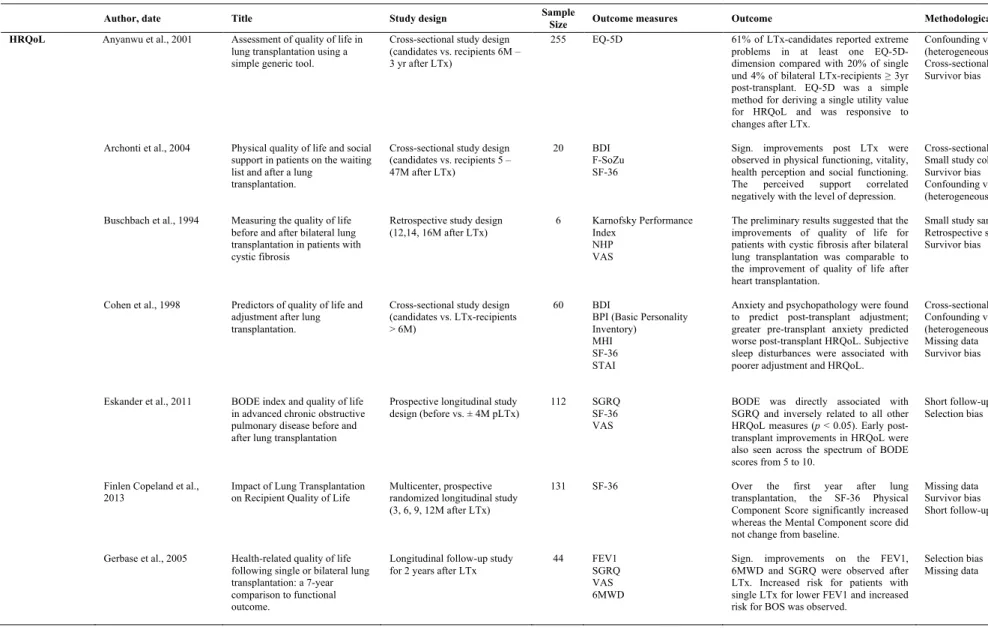
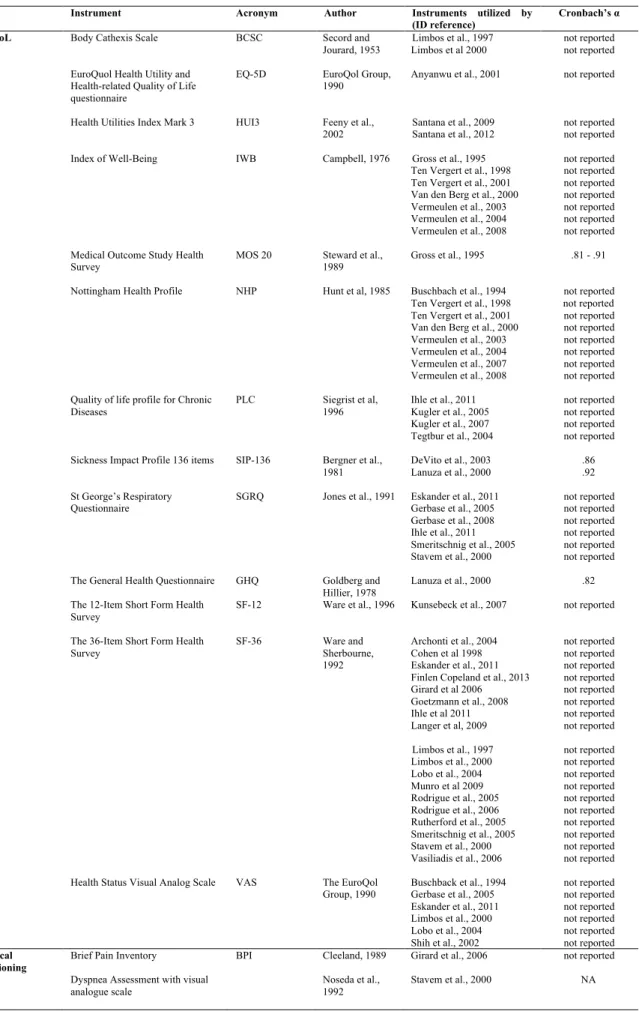
This manuscript consists of three studies that review psychological adjustment to lung transplantation in terms of HRQoL and psychosocial outcomes via three different approaches. Study 1 is a systematic review of the literature to compile and interpret the evidence on measures to assess HRQoL and psychological outcomes following LTx, summarizing psychological outcomes in studies published between 1994 and 2013. Of 371 articles, 63 studies were selected for final review. Considerable heterogeneity was found in methodology, operational concepts and applied outcome measures in the existing literature on HRQoL and psychological outcomes after LTx. Nevertheless, eligible studies generally point to significant improvements in both mental health and HRQoL post-transplant. A huge opportunity for future research lies in the development of guidelines to aid in the selection of outcome measures to assess psychological outcomes of lung transplant recipients.
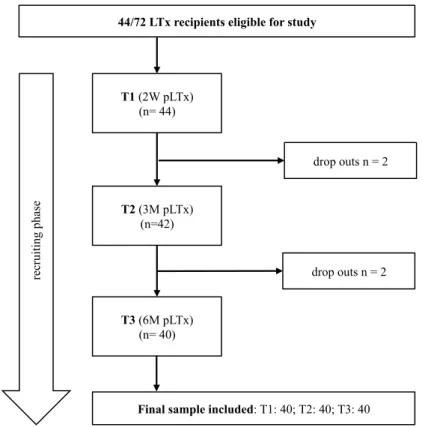
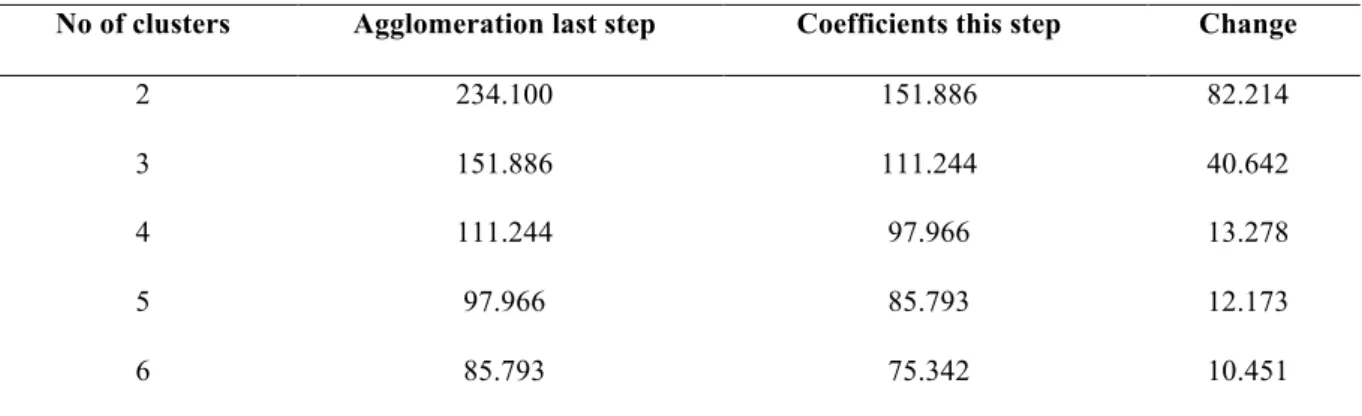
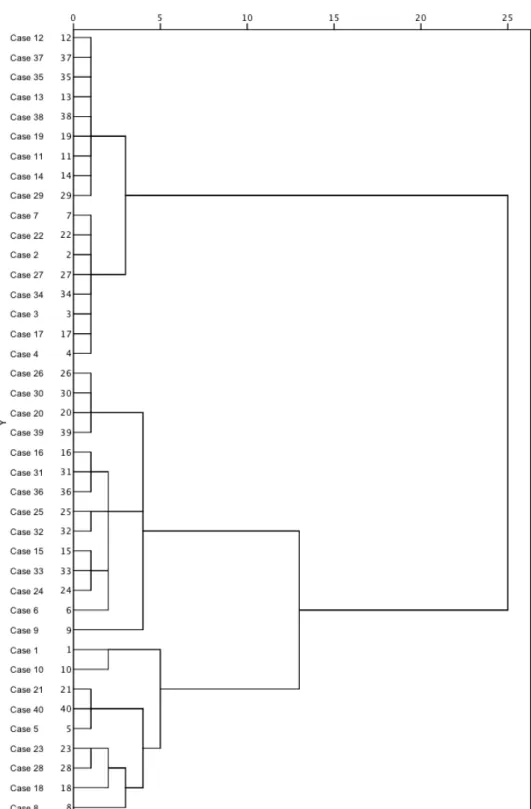
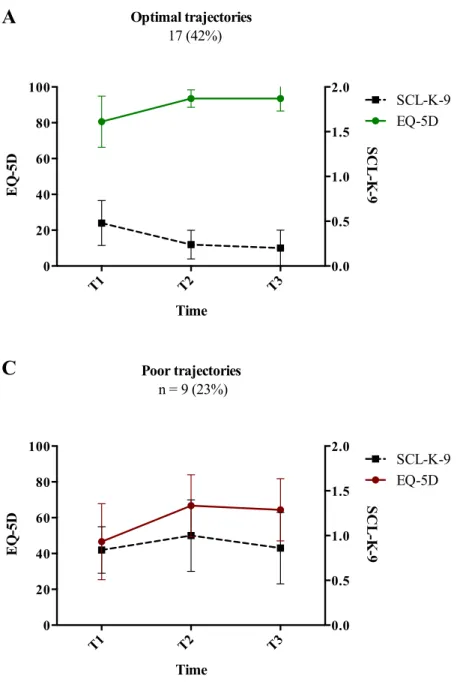
The second study investigated the psychosocial outcome trajectories of 40 lung transplant recipients related to psychological distress and HRQoL over their first six months post-transplant. Three distinctive clusters were identified: (1) patients with optimal postoperative trajectories (35%); (2) patients with good postoperative trajectories (42%); and (3) patients with poor postoperative trajectories (23%). The last group tended to be older, to suffer from more severe disease, to have more co-morbid conditions, and to have had a prolonged ICU and/or hospital stay. Disease severity, length of stay, and HRQoL two weeks post-transplant were strong predictors of psychological distress and impaired HRQoL at six months of follow-up. The results underscore the psychosocial needs of patients with poor post-transplant trajectories.
The third study qualitatively analyzed patient experiences with transplantation and their adjustment to normal life within the first six months post-transplant. ‘Physical benefits’, ‘fear of rejection’, ‘gratitude towards the donor’, and ‘side effects’ were the most frequently named themes with respect to the transplantation process, new lungs, donor and medication regimen. Most themes remained unchanged over time. While comments about ‘intensive care unit delirium’ and ‘worries regarding donated organ quality’ diminished significantly over time, mentions of ‘restrictions in everyday life’ increased significantly. Gender comparison revealed only marginal differences in the response categories. Improvements in physical function during the early postoperative phase may be limited by the onset of clinical complications, fear of rejection and infections, medication side effects, and restrictions in everyday life.
Generally, studies on HRQoL and psychological outcomes after lung transplantation have been limited by lost to follow-up, cross-sectional designs, small sample sizes and, great variability in the use of validated and non-validated outcome measures, such that
comparisons between different studies are difficult. One area of future research is the development of consensus guidelines to aid in the selection of outcome measures to assess HRQoL and psychological outcomes among LTx patients. In addition, longitudinal studies, including pre- vs. post-transplant assessment with adequately-sized samples are needed to further investigate outcome profiles and identify additional outcome predictors in these patients.
Zusammenfassung
Die Lungentransplantation ist eine effektive Therapiemethode für Patienten mit fortgeschrittenen Lungenerkrankungen im Endstadium. Trotz den unbestreitbaren medizinischen Fortschritten, die in den letzten Jahren stattgefunden haben, führt eine Lungentransplantation nicht zu einer vollständigen gesundheitlichen Genesung. Lungentransplantierte Patienten bleiben weiterhin mit verschiedenen gesundheitlichen Problemen konfrontiert, die sie psychisch verarbeiten und bewältigen müssen. Viele lungentransplantierte Patienten leiden unter anhaltendem emotionalen Distress oder sogar an psychischen Störungen, die den Umgang mit dem neuen Organ erschweren und die Therapieadhärenz für die notwendigen immunsupressiven Medikamente und die Lebensqualität beeinträchtigen können. Es ist deshalb von klinischer und wissenschaftlicher Relevanz, die Lebensqualität und psychische Gesundheit von lungentransplantierten Patienten zu untersuchen, um Patienten mit schlechten post-operativen Verläufen rechtzeitig identifizieren und die psychischen Beschwerden behandeln zu können.
Dieses Manuskript umfasst drei Studien, welche die psychische Verarbeitung einer Lungentransplantation im Sinne von Lebensqualität und psychosozialen Aspekten anhand von drei unterschiedlichen Ansätzen untersuchen. Die erste Studie umfasst einen systematischen Review, welcher die verwendeten psychometrischen Instrumente zur Untersuchung der gesundheitsbezogenen Lebensqualität und der psychischen Gesundheit nach einer Lungentransplantation bewertet. Der Artikel fasst Studien zusammen, die zwischen 1995 und 2013 veröffentlich wurden. Von 371 Artikeln wurden 63 Studien in die Übersichtsarbeit eingeschlossen. In der vorhandenen Literatur über Lebensqualität und psychische Gesundheit nach einer Lungentransplantation wurde eine beträchtliche
Heterogenität in der Methodik, operationalen Konzepten und angewendeten psychometrischen Instrumenten gefunden. Die eingeschlossenen Studien weisen jedoch einheitlich auf eine signifikante Verbesserung der psychischen Gesundheit und der Lebensqualität nach einer Lungentransplantation hin. Ein künftiger Forschungsbereich liegt in der Entwicklung von Richtlinien hinsichtlich der Auswahl von psychometrischen Testinstrumenten zur Beurteilung der psychologischen Outcomes nach einer Lungen Transplantation.
Die zweite Studie untersuchte bei 40 lungentransplantierten Patienten postoperative Verläufe hinsichtlich psychischen Distress und Lebensqualität während den ersten sechs Monaten nach der Transplantation. Es konnten drei unterschiedliche Clustertypen identifiziert werden: Patienten mit 1) ausserordentlich guten postoperativen Verläufen (35%), 2) guten postoperativen Verläufen (42%) und 3) schlechten postoperativen Verläufen (23%). Patienten mit schlechten postoperativen Verläufen waren typischerweise älter, schwerer erkrankt, litten unter mehr Komorbiditäten und wiesen eine längere Hospitalisation sowohl auf der Intensivstation als auch auf der Normalstation auf. Der Schweregrad der Erkrankung, die Länge der Hospitalisation und die gesundheitsbezogenen Lebensqualität zwei Wochen nach der Transplantation waren wichtige Prädiktoren für psychischen Distress und Lebensqualität 6 Monaten nach der Transplantation. Unsere Resultate unterstreichen den psychosozialen Behandlungsbedarf von Patienten mit schlechten postoperativen Verläufen.
Die dritte Studie untersuchte mittels einer qualitativen Datenanalyse die subjektive Wahrnehmung einer Lungentransplantation und die Rückkehr in den Alltag innert der ersten sechs Monate nach der Transplantation. ‚Verbesserung der körperlichen Belastbarkeit’, ‚Angst vor Abstossung’, ‚Dankbarkeit dem Spender gegenüber’, und ‚Nebenwirkungen’ waren die häufigsten genannten Themen hinsichtlich der Transplantation, der neuen Lunge,
dem Spender und der Medikamente. Die meisten Themen blieben über die Zeit unverändert. Während Aussagen bezüglich Delirium auf der Intensivstation und Sorgen bezüglich Qualität des neuen Organs über die Zeit abnahmen, nahmen Äusserungen hinsichtlich Einschränkungen im Alltag über die Zeit signifikant zu. Geschlechtsvergleichende Analysen zeigten nur marginale Unterschiede in Bezug auf die Antwortkategorien. Die Verbesserung des körperlichen Wohlbefindens nach einer Lungentransplantation kann durch das Auftreten von medizinischen Komplikationen, Angst vor Abstossung und Infektionen, Nebenwirkungen der Medikamente und Einschränkungen im Alltag beeinträchtigt sein.
Bisherige Studien zur Untersuchung der Lebensqualität und psychischen Gesundheit von lungentransplantierten Patienten sind häufig durch methodische Schwächen wie lost to follow-up, Querschnittstudiendesigns, kleine Stichprobengrössen und eine hohe Variabilität der verwendeten Testinstrumente, die den Vergleich zwischen den Studien erschwert, limitiert. Künftige Studien sollten auf die Entwicklung von Richtlinien, die eine Auswahl von Testinstrumenten zur Erfassung der Lebensqualität und psychischen Gesundheit nach einer Lungentransplantation vereinfachen, fokussieren. Zudem sind weitere Längsschnittstudien mit prä- versus postoperativen Untersuchungen und genügend grossen Stichproben notwendig, um postoperative Verläufe und Verlaufsprädiktoren zuverlässig identifizieren zu können.
Table of contents
Acknowledgments ... I! Abstract ... I! Zusammenfassung ... IV! List of abbreviation ... XII!
1 Introduction ... 1!
2 Theoretical framework ... 2!
2.1 History of lung transplantation ... 3!
2.2 Lung transplantation in Switzerland ... 4!
2.2.1 Facts and figures of lung transplantation ... 4!
2.2.2 Organ procurement for lung transplantation ... 5!
2.2.3 Ethical aspects of lung transplantation ... 5!
2.2.4 Transplantation act ... 7!
2.2.5 Swiss organ allocation system ... 8!
2.2.6 The Swiss Transplant Cohort Study ... 8!
2.3 Referral for lung transplantation ... 9!
2.3.1 Absolute and relative contraindications ... 10!
2.3.2 Chronic obstructive pulmonary disease ... 11!
2.3.3 Interstitial lung disease ... 12!
2.3.4 Cystic fibrosis ... 12!
2.4 Diathesis-stress model as an explanation for the development of distress in lung transplant recipients ... 13!
2.5 The waiting period for lung transplantation ... 14!
2.5.1 Mental health of lung transplant candidates ... 14!
2.5.2 The lived experience of waiting ... 16!
2.6.1 Helath-related quality of life of lung transplant recipients ... 17!
2.6.2 Mental health of lung transplant recipients ... 19!
2.6.3 Adherence to medication regimen in lung transplant recipients ... 19!
2.7 Long-term outcomes after lung transplantation ... 21!
2.8 Mental processing of lung transplantation ... 22!
2.8.1 Theoretical concepts ... 22!
2.8.2 Empirical findings ... 24!
2.9 Rationale ... 25!
3 Empirical work ... 26!
3.1 Aims and hypotheses ... 26!
3.1.1 A systematic review of health-related quality of life and psychological outcomes following lung transplantation ... 26!
3.1.2 Psychological distress and quality of life in lung transplant patients. A six months observational study ... 27!
3.1.3 Early postoperative adjustment to lung transplantation. A longitudinal qualitative study ... 28!
4 Empirical work 1: A systematic review of health-related quality of life and psychological outcomes following lung transplantation ... 29
4.1 Abstract ... 30!
4.2 Introduction ... 31!
4.3 Methods ... 32!
4.3.1 Search strategy ... 33!
4.3.2 Eligibility criteria ... 33!
4.3.3 Data selection and extraction ... 34!
4.4 Results ... 34!
4.4.2 Outcome measures ... 36!
4.4.3 HRQoL and psychological outcomes after LTx ... 36!
4.4.4 Physical functioning after LTx ... 39!
4.4.5 Mental health of LTx-recipients ... 41!
4.4.6 Social functioning after lung transplantation ... 42!
4.4.7 Psychometric properties of articles included ... 42!
4.4.8 Major limitations of eligible studies ... 42!
4.5 Discussion ... 56! 4.5.1 Principal findings ... 56! 4.5.2 HRQoL ... 57! 4.5.3 Physical functioning ... 58! 4.5.4 Mental health ... 59! 4.5.5 Psychosocial health ... 60!
4.5.6 Strengths and limitations of this review ... 60!
4.5.7 Implications for practice and future research ... 61!
5 Empirical work 2: Psychological distress and quality of life in lung transplant recipients. A six months observational study ... 63!
5.1 Abstract ... 64!
5.2 Background ... 65!
5.3 Methods ... 67!
5.3.1 Participants ... 67!
5.3.2 Design and Procedures ... 68!
5.3.3 Measures ... 68!
5.3.4 Statistical analysis ... 70!
5.4 Results ... 72!
5.4.1 Demographic characteristics ... 72!
5.4.2 Cluster analysis ... 72!
5.4.4 Predictor analyses for psychological distress and HRQoL six months
post-transplant ... 75!
5.5 Discussion ... 79!
5.5.1 Study strengths and limitations ... 83!
5.5.2 Conclusions ... 83!
6 Empirical work 3: Early postoperative adjustment to lung transplantation. A longitudinal qualitative study ... 85!
6.1 Abstract ... 86! 6.2 Introduction ... 87! 6.3 Methods ... 89! 6.3.1 Patients ... 89! 6.3.2 Procedures ... 89! 6.3.3 Data collection ... 90! 6.3.4 Data analysis ... 90! 6.4 Results ... 92! 6.4.1 Sample characteristics ... 92! 6.4.2 Qualitative data ... 93! 6.4.3 Quantitative analysis ... 107! 6.5 Discussion ... 107!
6.5.1 The transplantation process ... 110!
6.5.2 New lungs ... 112!
6.5.3 Donor ... 112!
6.5.4 Medication regimen ... 113!
6.5.5 Study limitations and strengths ... 114!
6.5.6 Conclusions and implications for clinical practice ... 115!
7 General discussion ... 117!
7.2 Discussion of the results ... 119! 7.3 Limitations ... 123! 7.4 Future research ... 125! 7.5 Conclusion ... 126! References ... 129! Index of Tables ... 141! Index of Figures ... 142! Curriculum vitae ... 143! Eidesstattliche Erklärung ... 145!
List of abbreviation
BDI Beck Depression Inventory
BOS Bronchiolitis Obliterans Syndrome
BODE-index Body-mass index, obstruction, dyspnea,
exercise capacity index in chronic obstructive pulmonary disease
CF Cystic fibrosis
CLAD Chronic lung allograft dysfunction
COPD Chronic obstructive pulmonary disease
DBD Donation after brain death
DCD Donation after circulatory determination of
death
ECMO Extracorporeal membrane oxygenation
EQ-5D The EuroQoL five dimensions
Health-Related Quality of Life questionnaire
FVC Forced vital capacity
FEV1 Forced expiratory volume in one second
F-SoZu Short Form Social Support Questionnaire
HADS Hospital Anxiety Depression Scale
HRQoL Health-related quality of life
ILD Interstitial lung disease
IPF Interstitial pulmonary fibrosis
ISHLT International Society for Heart and Lung
Transplantation
LOS Length of hospital stay
LTx Lung transplantation
pLTx Post lung transplantation
NHP Nottingham Health Profile
PRISMA Preferred Reporting Items for Systematic
Reviews and Meta-Analyses
SCL-K-9 Symptom Checklist short version-9
SF-36 Short Form Health Survey
SOAS Swiss Organ Allocation System
1 Introduction
Lung transplantation (LTx) has become an established therapeutic option to extend survival, reduce disability and improve health-related quality of life (HRQoL) in selected patients with end-stage pulmonary diseases of different etiologies (Dierich et al., 2013). Although survival rates among adult lung transplant recipients have increased remarkably over the years, due to enhanced surgical techniques and postoperative care, long-term rates are still inferior to those achieved with other solid organ transplants (Krueger, Berutto, & Aubert, 2011). Acute and chronic allograft rejection and infections involving a transplanted graft that is in direct contact with open air constitute the main postoperative challenges (Inci, Schuurmans, Boehler, & Weder, 2013).
Traditionally, the main outcome of interest with any lung transplant procedure has been patient survival. With improved survival rates, however, post-transplant health-related quality of life (HRQoL) has become an important component of any evaluation of benefits (Anyanwu, McGuire, Rogers, & Murday, 2001). Furthermore, lung transplant recipients represent a heterogeneous group, and therefore do not necessarily experience the same survival benefits or exhibit the same post-transplant trajectories. Moreover, throughout the transplant process, lung transplant patients undergo complex physical and psychological changes that can cause a range of psychosocial issues that affect physical function, mental health, social roles and relationships, as well as adherence to medication (Rosenberger, Dew, DiMartini, DeVito Dabbs, & Yusen, 2012).
Psychological aspects of transplantation have been investigated and documented extensively, commonly addressing HRQoL, mental health, social functioning and symptom experiences. Results from previous research generally demonstrate considerably improved HRQoL and psychological function in lung transplant recipients relative to their
pre-transplant period (Kugler et al., 2005; Limbos, Joyce, Chan, & Kesten, 2000; Santana, Feeny, Jackson, Weinkauf, & Lien, 2009). However, numerous methodological problems limit the reliability and generalizability of findings in the literature and affect the ability to draw well-supported conclusions regarding the effect of lung transplantation on HRQoL. These limitations include the use of small cohorts, retrospective data collection, cross-sectional study designs, survivor bias, and the heterogeneous use of psychometric instruments to assess psychological outcomes after LTx (Finlen Copeland, Vock, Pieper, Mark, & Palmer, 2013). Prospective studies with large enough samples are few in the field of lung transplantation, and data obtained in larger studies often included cohorts with different organ transplants that potentially obscure results among lung transplant recipients.
To address these limitations, this thesis contributes the existing literature by presenting 1) a systematic review of the application of psychometric instruments to assess health-related quality of life and psychological outcomes following lung transplantation; 2) a six-month observational study investigating psychological distress and quality of life; and 3) a qualitative analysis exploring patients’ experience with their transplant and adjustment to normal life over the first six months post-transplant.
2 Theoretical framework
This chapter first summarizes the most important cornerstones in the development of transplant medicine. Secondly, medical and ethical issues relating to lung transplantation are outlined; and thirdly, the most important psychosocial consequences of lung transplantation are highlighted.
2.1 History of lung transplantation
The first contribution to organ transplant history was made by Vladimir Petrovich Demikhov (1916 – 1998), a Russian scientist who, by means of animal experiments in the 1930s through 1950s, demonstrated that transplantation procedures were technically feasible (Blumenstock & Lewis, 1993). The next major breakthrough was made by James Hardy at the University of Mississippi in 1963. He performed the first human lung transplant; however, his patient survived for only 18 days after transplantation, rapidly succumbing to renal failure (Hardy, Webb, Dalton, & Walker, 1963). Over the following twenty years, multiple further attempts at lung transplantation failed due to infection, acute rejection and the excessive toxicity of inadequately immunosuppressive drugs (Lynch & Ross, 2006). In 1972, however, a new immunosuppressant drug called cyclosporine was developed and found to be a promising means to attenuate allograft rejection (Borel, Feurer, Magnee, & Stahelin, 1977). Subsequently, in 1983, the Toronto Lung Transplant Group performed the first successful long-term single lung transplant in a patient with pulmonary fibrosis. Twenty-six months after transplantation, the patient was reported to be in good health, leading a normal life and working regularly. That patient eventually died of renal failure seven years after transplantation. This successful case report demonstrated that unilateral lung transplantation was possible in selected patients with end-stage lung disease (Toronto Lung Transplant Group, 1986).
In summary, over the past sixty years, remarkable advances have been made in the field of transplant medicine. What started in the early twentieth century as animal experiments has progressed to effective high-tech clinical practice (De Perrot et al., 2004). Today, lung transplantation is regarded worldwide as a mainstay of therapy for many patients with life-threatening pulmonary disease (Banner, Polak, & Yacoub, 2003).
2.2 Lung transplantation in Switzerland
2.2.1 Facts and figures of lung transplantationTo date, more than 47’000 adult lung transplants have been reported worldwide to the Registry of the International Society for Heart and Lung Transplantation (ISHLT) (Yusen et al., 2014). Meanwhile, in Switzerland since 1992, more than 700 lung transplants have been performed (Swisstransplant, 2015a). In Switzerland, there are two transplant centers, which perform lung transplantation. One is located at the University Hospital of Zurich, the other one at the University Hospital of Lausanne. Overall patient survival has progressively improved, such that today, one-, three-, and five-year survival rates of 87%, 75% and 69%, respectively, have been achieved at the University Hospital of Zurich, rates comparable to those achieved at high-volume programs internationally (Inci et al., 2013). One of the key challenges in lung transplantation is the limited availability of donor organs for lung transplantation. Switzerland has one of the lowest post mortem donation rates among European countries, and as a consequences, many patients die while awaiting organ transplant (Immer, 2015). Background data on the lung transplant-related characteristics of Swiss patients are presented for the year 2014 in Table 1.
Table 1. Key data regarding lung transplantation in Switzerland
Lung transplant-related characteristics [d]
Number of patients on lung waiting-list 122
Number of lung transplanted patients 56
Average time on waiting-list 465
Deceased patients on waiting-list 6.6%
Nr. of imported lungs organs 8
Note: Data provided by the 2014 Annual Report of the Swiss National Foundation for Organ Donation and
2.2.2 Organ procurement for lung transplantation
In Switzerland, most organs donated for lung transplantation are retrieved from primary or secondary brain-dead donors with sustained circulation (heart-beating donors). Donation after brain death (DBD) is possible when cerebral functions are totally and irreversibly abolished due to some lesion or injury affecting the brain (Spaight, Weiss, Keel, & Immer, 2013). Furthermore, since 2011, organ donation after circulatory determination of death (DCD or non-heart-beating donors) is being increasingly accepted in Switzerland to partly compensate for the general shortage of organs suitable for transplantation
.
In Switzerland, the procuring of organs from DCD donors is strictly regulated and only permitted, if cardiocirculatory arrest occurs within 60 minutes after cessation of life-sustaining treatment, followed by brain death diagnosis after 10 minutes of documented circulatory arrest. However, organ procurement from DCD donors is a demanding procedure and only performed in highly specialized centers, so that the number of DCD donors remains relatively low. The diagnosis of death in view of organ donation is strictly regulated by the Swiss Academy of Medical Sciences (SAMS) and governed by the Swiss Transplantation Law (Immer, 2015).2.2.3 Ethical aspects of lung transplantation
Over the past few decades, technological accomplishments in the understanding of immunologic responses to foreign tissues, the technology of organ preservation, immune suppression and surgical procedures, have opened up further possibilities for organ transplantation, resulting in an ever-increasing need for transplantable organs (Mahoney, 2001). However, rapid developments in transplant medicine have raised many ethical, moral and policy concerns. Among the many questions raised have been whether the criterion of ‘brain death’ is an ethically-acceptable definition of death; how best to procure more organs; how to fairly distribute limited resources; where to set medical limits; what kind of medical
conditions should be treated and which should not, despite the medical possibilities; and whether all transplants should be covered by public funds (Shelton & Balint, 2001).
Today, the shortage of available organs and the distribution of limited sources constitute the main ethical problems for cadaveric organ transplantation, causing heated discussions over what measures ought to be taken to increase the available supply (Quante & Wiedebusch, 2006). Explanations for the organ shortage can be divided into two categories: the complexity of the medical system and individuals’ willingness for organ donation. Results from previous studies demonstrated that countries with established organ donor centers that outreach to larger population groups perform a greater number of transplants (Horton & Horton, 1991; Matesanz & Dominguez-Gil, 2007). However, willingness to donate also depends on individual attitudes, social structures, cultural practices and religious beliefs (McGlade & Pierscionek, 2013). It has been suggested that unusually high fear and anxiety concerning one’s own death can deter people from behaviors that confront them with their own mortality (Lester, 2005). Furthermore, there is evidence that serious doubts about the criteria used to determine death dissuade people from becoming organ donors (DuBois & Anderson, 2006). Moreover, the concept of brain death, which constitutes the legal definition of death, has been frequently misunderstood in the population. This misconception holds people back from considering organ donation (Anker & Feeley, 2010; Siminoff, Mercer, & Arnold, 2003).
In summary, doubts associated with organ transplantation based on misinformation, misunderstandings, and mistrust can decrease organ donation rates (Dubois, 2010). Despite major public campaigns among medical personnel and the general public, the supply of organs for transplantation remains far short of demand. Consequently, in Switzerland, a nationwide intense debate about possible incentives to encourage individuals to donate has been ignited. Different solutions have been discussed. Among them is to treat individuals
willing to donate preferentially when it comes to receiving a transplant; to offer gifts when someone fills out a donor card; and providing monetary reimbursement in cases of living donation. To date, none of the named possibilities have come into force (BAG, 2015). Further improving knowledge regarding organ donation, the methods available for registration, and the regulations that govern the process of organ donation could help to remove significant barriers and encourage more individuals to donate their organs (McGlade & Pierscionek, 2013).
2.2.4 Transplantation act
In Switzerland, organ transplantation is bound by medical-ethical guidelines, which determine under which conditions organ, tissues and cells can be used for transplantation. These guidelines have been established to prevent the improper handling of organs in the context of human transplantation medicine, and to protect human dignity, privacy and health. The most important regulations stated in the Federal Council Decree 2007 are the following (The Federal Assembly of the Swiss Confederation, 2014, pp. 3-18):
-
Criteria for death and determination of death: “a person is dead if the functions of his or her brain, including the brain stem, have ceased irreversibly” (by definition: brain death) (Art. 9).-
Organ transplantation is free of charge and therefore, trade involving human tissues is prohibited (Art. 6 and 7).-
Switzerland practices a soft opt-in solution: utilizing the organs of a deceased person is only allowed “if the person has consented before his or her death to their removal” or if the person’s relatives have expressed agreement (Art. 8).-
Allocation of organs is followed by principles of equality and fairness (Art. 17) in consideration of four criteria: 1) the medical urgency of transplantation; 2) the medical benefits of transplantation; 3) the waiting time; and 4) equal opportunity (in particular for individuals reliant on a graft with rare physiological characteristics (Art 18).-
Confidentiality of data: confidentiality merits protection. “The data must accordingly be treated confidentially” by assuring anonymity of the recipient to (the relatives of) the donor and of the donor to the recipient (Art 57 and 58).2.2.5 Swiss organ allocation system
In Switzerland, the allocation of organs is navigated by a web-based computer program called the Swiss Organ Allocation System (SOAS), which contains relevant data on potential recipients on the Swiss waiting list, as well as data on all available donors. By means of these provided data, the system prioritizes registered transplant candidates based on the following criteria: 1) medical urgency, 2) domicile in Switzerland, 3) medical purpose, and 4) priority (e.g. blood group), 5) waiting time (Swisstransplant, 2015a).
2.2.6 The Swiss Transplant Cohort Study
Similar to other national or international transplant registries (e.g. the Scientific Registry of Transplant Recipients (SRTR) in the US; the Heidelberg-based Collaborative Transplant Study (CTS) in Europe; the Australian and New Zealand Dialysis and Transplant (ANZDATA) registry, the Swiss Transplant Cohort Study (STCS) aims at systematically monitor transplant outcomes of solid organ transplantation (e.g. heart, lung, liver, kidney) in Switzerland to evaluate the quality, effectiveness and efficiency of transplantation. The STCS is a multi-center cohort study, which has collected prospectively data from all, transplant
centers in Switzerland since 01.05.2008. The main objectives of the STCS are the followings (STCS, 2015):
- To improve knowledge about the progress and complications following transplantation in all Swiss transplant centers and of all transplanted organs.
- To identify efficacy and side effects of the treatment.
- To study the relationship with concomitant disease, psychological and social factors. - To analyze the influence of genetic factors on the progress after transplantation. - To examine the response to treatment and the occurrence of side effects.
All transplant patients who got transplanted in Switzerland and have given their consent are considered to be eligible for inclusion. Data are collected longitudinally, before transplantation, 6 months and 12 months after transplantation and thereafter yearly. The study period is indefinite (STCS, 2015).
2.3 Referral for lung transplantation
Today, lung transplantation is accepted as a viable treatment option for selected patients with diverse end-stage pulmonary disorders, who either are not or are no longer responding to maximal medical therapy, or for whom no effective medical therapy exists. According to the most recent Registry Report of the International Society for Heart and Lung Transplantation (ISHLT) (Yusen et al., 2014), the main indications for lung transplantation between 1995 and 2013 were chronic obstructive pulmonary disease (COPD, 33%); followed by interstitial lung disease (ILD, 24%), which includes idiopathic pulmonary fibrosis (IPF); and cystic fibrosis (CF, 16%). Referral for lung transplantation assessment is warranted when patients have less than 50% two- to three-year predicted survival. As the demand for donor lungs far exceeds
the supply, the waiting time for a suitable donor organ is steadily increasing. Survival on a waiting list depends on the waiting time, the underlying diagnosis, and donor availability. Waiting times tend to be longer for small candidates and for recipients with a blood group other than AB (Orens et al., 2006).
2.3.1 Absolute and relative contraindications
Potential candidates need to be well-informed regarding the procedure and its health implications, and they must demonstrate adequate health behaviors and willingness to adhere to guidelines from healthcare professionals. To screen for contraindications, prior to active listing potential candidates are sent for complex medical and psychosocial assessments performed by a multidisciplinary team to determine whether they meet the selection criteria for lung transplantation. This screening process helps to identify factors in a person's life that could cause difficulties for them during the waiting period, during recovery, and/or postoperatively (Hook & Lederer, 2012). The psychosocial assessment screens potential candidates for mental and psychosocial health issues, their use and abuse of alcohol, and their decisional capacity, motivation for transplantation, and coping skills for dealing with chronic disease (Lanuza & McCabe, 2001). If a patient successfully meets the selection criteria, he or she is added to the transplant waiting list. Absolute and relative contraindications are listed in Figure 2. Single relative contraindications are seldom considered prohibitive. Someone with multiple relative contraindications is generally rejected for transplantation (Inci et al., 2013).
Absolute contraindications to transplant
! Malignancy in the last 2 years. In general, a 5-year disease-free interval is prudent
! Untreatable advanced dysfunction of another major organ system (e.g. heart, liver or kidney)
! Acute medical instability including, but not limited to, acute sepsis, myocardial infarction, and liver failure
! Incurable chronic extrapulmonary infection including chronic active viral hepatitis B, hepatitis C and human immunodeficiency virus
! Class II or III obesity (body mass index [BMI] ≥ 35.0 kg/m2)
! Significant chest wall/ spinal deformity
! Documented nonadherence or inability to follow through with medical therapy ! Absence of an adequate or reliable social support system
! Substance addiction (e.g. alcohol, tobacco or narcotics) that is either active or within the last 6 months Relative contraindications to transplant
! Age older than 65 years
! Class I obesity (body mass index [BMI] exceeding 30kg/m2)
! Severe or symptomatic osteoporosis
! Extensive prior chest surgery with lung resection
! Critical or unstable clinical condition (e.g. shock, mechanical ventilation or extracorporeal membrane oxygenation)
! Colonization with highly resistant or highly virulent bacterial, fungi or mycobacteria
! Other medical conditions that have not resulted in end-stage organ damage (e.g. diabetes mellitus, systemic hypertension, epilepsy, central venous obstruction, peptic ulcer disease, or gastroesophageal reflux)
Figure 1. Absolute and relative contraindications to lung transplantation adapted by Weill et al. (2015, pp. 3-4). The list is not intended to include all possible clinical scenarios but rather to highlight common areas of concern.
2.3.2 Chronic obstructive pulmonary disease
Chronic obstructive pulmonary disease (COPD) is characterized by chronically-poor airflow. Main symptoms include shortness of breath, cough, and excessive sputum production. Typically, airflow limitation is progressive. The most common cause of COPD is tobacco smoking, together with numerous other factors like air pollution and genetic determinants (Decramer, Janssens, & Miravitlles, 2012). Presently, COPD is the fourth leading cause of death worldwide, but the World Health Organization (WHO) predicts that this disease will
become the third leading cause by 2030 unless urgent action is taken to reduce underlying risk factors, in particular tobacco use (WHO, 2015). Referral for transplantation for COPD should only be considered when patients continue to deteriorate even with optimal medical and surgical therapy, including smoking cessation, maximal bronchodilator treatment, rehabilitation, long-term oxygen therapy, and endoscopic or surgical lung volume reduction (Orens et al., 2006). Compared to other end-stage lung diseases, COPD patients have a relatively good transplant prognosis (Inci et al., 2013).
2.3.3 Interstitial lung disease
Interstitial lung disease (ILD) refers to a diverse group of lung diseases that involve inflammation and fibrosis of the alveoli, distal airways and septal interstitium of the lungs. The term idiopathic pulmonary fibrosis is used to describe an interstitial lung disease for which no obvious cause can be identified (hence, idiopathic) (Raghu et al., 2011). Inhaled substances such as dust or other particles in the air, and exposure to molds, gases or fumes, but also autoimmune diseases can be responsible for some types of ILD (King, 2005). Typically, the patient suffers from progressive breathlessness, lung crackles, and a diffusely-abnormal chest radiograph (Raghu et al., 2011). Prolonged ILD may result in idiopathic pulmonary fibrosis (IPF). IPF results from scarring of lung tissue and is characterized by a progressive decline in lung function and worsening dyspnea. IPF patients have a poor prognosis and experience the highest mortality rate while on the waiting list (Christie et al., 2012).
2.3.4 Cystic fibrosis
Cystic fibrosis (CF) is a genetic disorder that primarily affects the lungs, but also the pancreas, liver, kidneys and intestine. Long-term complications include difficulties with
breathing and coughing up sputum as a consequence of frequent lung infections. Other symptoms include, among others, sinus infections, poor growth, clubbing of fingers and toes, and infertility in males (O'Sullivan & Freedman, 2009). Interestingly, cystic fibrosis is most common among residents of northern Europe, among whom the disease occurs in approximately 1 in 3’000 newborns (Walters & Mehta, 2007). As there is no cure for cystic fibrosis, lung infections are treated with antibiotics (Hofer et al., 2009). Ultimately, lung transplantation is the only treatment option that allows advanced CF patients to obtain normal respiratory health. Good post-transplant outcomes, in terms of prolonged survival and improved health-related quality of life, have been reported worldwide (Meachery et al., 2008).
2.4 Diathesis-stress model as an explanation for the development of distress
in lung transplant recipients
Current research in psychosocial transplant medicine seeks to assess the relationship between illness and distress and what variables may influence this association. Specific questions that have been addressed are what factors are associated with distress and with the individual’s ability to cope and adapt successfully with lung transplantation and whether distress has an impact on outcomes following transplantation (Dew et al., 2012; Phillips, Burker, & White, 2011).
One theoretical model that may explain the development of distress in lung transplant patients, is the diathesis-stress model (Zubin & Spring, 1977). This model assumes that specific types of psychopathology arise from a combination of vulnerability (diathesis) in the context of life stress (Monroe & Simons, 1991). The term diathesis derives from the Greek and is conceptualized as a disposition or vulnerability, including genetic, psychological, biological or situational factors (Ingram & Luxton, 2005). Stress can be defined as a
significant life event that disrupts the equilibrium of a person’s life (Lazarus & Folkman, 1984). The diathesis-stress model describes a dose-response relationship, suggesting that if the combination of the diathesis and the stress exceeds a threshold, the person is likely to develop a disorder. This model is also useful for the purpose to describe why some individuals who go through stressful live events are more vulnerable to develop a disorder than others (Ingram & Luxton, 2005). Protective factors are critical when considering the interaction of diatheses and stress because they can mitigate major stressors. Examples of protective factors include particular personal traits, a supportive peer network, and individual and social competences (Ingram & Price, 2001). Translating this model to the experience of a lung transplantation, the diathesis includes predispositional factors, such as genetic, biological, cognitive or interpersonal variables, while stress refers to the transplant evaluation, waiting period, perioperative recovery and adjustment to life as a transplant recipient.
In the following, the diathesis-stress model is used as a conceptual framework to understand patients’ response to lung transplantation and relative adaptation to life as a lung transplant recipient.
2.5 The waiting period for lung transplantation
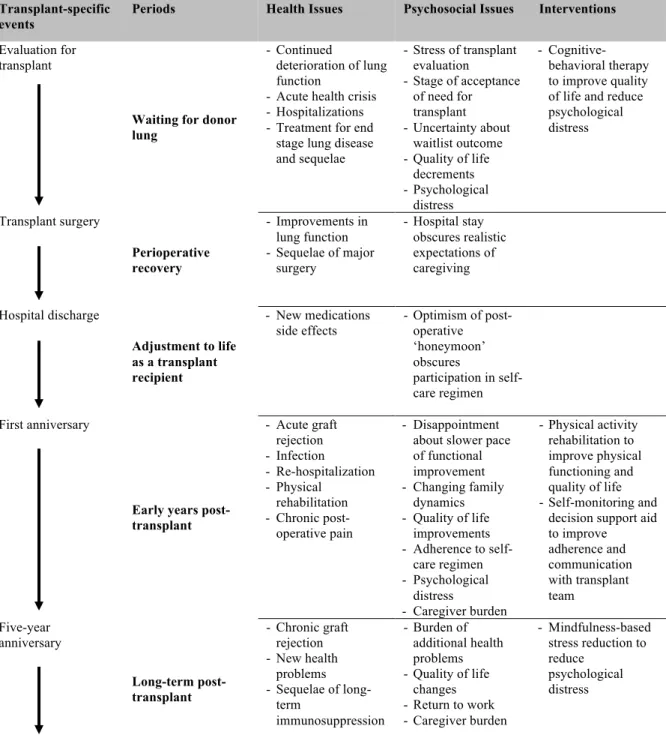
2.5.1 Mental health of lung transplant candidatesTransplant candidates and recipients are confronted with a great number of stressors throughout the process of transplant evaluation, the waiting period, the period of peri-operative recovery, and both early and long-term after transplantation (Figure 2), all of which can adversely affect global quality of life, mental health, social roles, relationships, and health maintenance behaviors (Rosenberger, Dew, DiMartini, et al., 2012). Waiting for a
transplant can be an intensely agonizing and stressful time for both patients and caregivers (Naef & Bournes, 2009; Yelle, Stevens, & Lanuza, 2013).
Transplant-specific events
Periods Health Issues Psychosocial Issues Interventions
Evaluation for transplant
Waiting for donor lung
- Continued
deterioration of lung function
- Acute health crisis - Hospitalizations - Treatment for end
stage lung disease and sequelae - Stress of transplant evaluation - Stage of acceptance of need for transplant - Uncertainty about waitlist outcome - Quality of life decrements - Psychological distress - Cognitive-behavioral therapy to improve quality of life and reduce psychological distress Transplant surgery Perioperative recovery - Improvements in lung function - Sequelae of major surgery - Hospital stay obscures realistic expectations of caregiving Hospital discharge Adjustment to life as a transplant recipient - New medications side effects - Optimism of post-operative ‘honeymoon’ obscures participation in self-care regimen First anniversary
Early years post-transplant - Acute graft rejection - Infection - Re-hospitalization - Physical rehabilitation - Chronic post-operative pain - Disappointment about slower pace of functional improvement - Changing family dynamics - Quality of life improvements - Adherence to self-care regimen - Psychological distress - Caregiver burden - Physical activity rehabilitation to improve physical functioning and quality of life - Self-monitoring and
decision support aid to improve adherence and communication with transplant team Five-year anniversary Ten-year anniversary Long-term post-transplant - Chronic graft rejection - New health problems - Sequelae of long-term immunosuppression - Burden of additional health problems - Quality of life changes - Return to work - Caregiver burden - Mindfulness-based stress reduction to reduce psychological distress
Figure 2. Examples of events and stressors that contribute to different phases of the transplantation experience as well as interventions that have demonstrated efficacy in reducing the impact of these stressors (Rosenberger, Dew, DiMartini, et al., 2012, pp. 519).
Usually, lung transplant candidates are in a highly-critical state of physical health, associated with a marked reduction in their vitality and quality of life (Chen et al., 2011). Shortness of breath, limited physical fitness, frequent hospitalizations, and oxygen dependency are the most distressing symptoms reported by end-stage respiratory patients, which in turn, can cause severe psychological distress (Lanuza et al., 2012). Stressors associated with the transplant procedure include fear of surgery, worry about changes to future life plans, financial strains, and ambivalent feelings with respect to treatment options (Rosenberger, Dew, DiMartini, et al., 2012).
Adjustment disorders with anxiety and mood disturbances and simultaneously reduced HRQoL relative to norms are common among candidates awaiting surgery, presumably due to their poor underlying medical condition, including their symptoms of dyspnea, hyperventilation and feebleness that can trigger anxiety and distress (Feltrim et al., 2008; Limbos et al., 2000). Prevalence rates for anxiety and mental disorders are high, reportedly ranging from 21% to 55% (Chen et al., 2011; Craven, 1990; Najafizadeh et al., 2009). Consequently, it is not surprisingly that lung transplant candidates often are in need of medical and psychosocial support. Fortunately, favorable results have been achieved using cognitive behavioral interventions aimed at improving coping skills, quality of life, mood symptoms and relationships with caregivers (Rodrigue, Baz, Widows, & Ehlers, 2005).
2.5.2 The lived experience of waiting
Most challenging for transplant candidates and their caregivers might be the balancing act between being in a life-threatening situation, accompanied by feelings of uncertainty and ambiguity, and the hope that their well-being will improve and suffering dissipate (Rosenberger, Dew, DiMartini, et al., 2012). Patients on a waiting list for organ transplantation describe their situation as uncomfortable, unpleasant, irritating, frustrating
and threatening: ”It’s like living with a time bomb and watching the sand in the hourglass run out” (Bunzel, Wollenek, & Grundbock, 1992). Thoughts about death became prominent as people became more ill: ”God, if I don’t get the transplant, I wonder how long I can survive?” (Flynn, Daiches, Malpus, Yonan, & Sanchez, 2013). One patient waiting for lung transplantation described being on a waiting list as living from day to day, feeling both miserable and yet hopeful, always wondering when “the phone call” is going to come, and making plans for “after the operation” (Thomsen & Jensen, 2009). Another lung transplant candidate reported that “I have no choice, but to accept that my family and I must simply put our lives on hold until after the transplant surgery” (Naef & Bournes, 2009).
2.6 The early years after lung transplant
Most patients experience a rapid change in health soon after transplantation. Because of the transplantation, patients transition quickly from life with minimal lung function and maximal restrictions to life with normal lung function, no dyspnea, and more energy (Rosenberger, Dew, DiMartini, et al., 2012). Notwithstanding, it usually takes several years for patients to fully adjust to their new life situation after their transplant (Langer, 2015).
2.6.1 Health-related quality of life of lung transplant recipients
Health-related quality of life is an important outcome measure to assess the effectiveness of lung transplantation. The World Health Organization (WHO) defines quality of life as “individuals perception of their position in life in the context of the culture and value systems in which they live and in relation to their goals, expectations, standards and concerns. It is a broad ranging concept affected in a complex way by the person’s physical health, psychological state, level of independence, social relationships, personal beliefs and their
relationship to salient features of their environment” (WHO, 1997, pp. 1). The term ‘health-related quality of life’ (HRQoL) is a multidimensional construct and reflects the health and disease-related aspects of quality of life. The concept of HRQoL incorporates domains that include physical, psychological, and social functioning (WHOQOL group, 1993). HRQoL measurement quantifies the impact of disease and treatments on daily life and well-being in a formal and standardized way (Yusen, 2009).
Within transplant medicine, a considerable number of outcome studies have demonstrated significant improvements in HRQoL following lung transplantation relative to the pre-transplant period (Gerbase, Spiliopoulos, Rochat, Archinard, & Nicod, 2005; Kunsebeck et al., 2007; Vermeulen et al., 2004). Quality of life benefits can already be observed within the first six months of a transplant and appear to remain stable for a period of three to five years (Limbos et al., 2000; Santana et al., 2009). This improvement in HRQoL after LTx are primarily related to considerably better physical function, increased vitality, fewer restrictions in social and leisure activities, more energy, and less pain and discomfort relative to pre-transplant levels (Lanuza et al., 2012; Vermeulen et al., 2003). Only few authors have investigated predictors of HRQoL outcomes after transplantation. Predictors for poor post-transplant HRQoL outcomes included a single lung transplant, older age at the time of transplantation, and recurrent infections (Kugler et al., 2005). The onset of bronchiolitis obliterans syndrome (BOS) (Santana, Feeny, Ghosh, & Lien, 2012), side effects from immunosuppressant medication (Smeritschnig et al., 2005), and pain (Girard et al., 2006) also significantly reduced post-transplant HRQoL. In contrast, results on other potential outcome predictors, including gender, psychiatric history, longer waiting times for transplantation, haven been contradictory and were supported only by single studies (Dew et al., 2012; Gerbase et al., 2005). Further research is warranted to investigate predictions of postoperative complications and reduced post-transplant HRQoL.
2.6.2 Mental health of lung transplant recipients
During the early postoperative phase, delirium is common among lung transplant candidates, mostly due to hypoxia (Hafliger, 2005). However, its prevalence and prognostic significance have not been systematically investigated. There are only few studies indicating that the occurrence of delirium in lung transplant recipients was associated with poorer pre-transplant cognitive functioning and longer hospital stays (Smith et al., 2014; Smith et al., 2015). Although lung transplant recipients report significantly better mental health than transplant candidates, anxiety, depression and adjustment disorders occur frequently in patients within the first year after transplantation with prevalence rates up to 30% (Dew et al., 2012; Kugler et al., 2013). Evidence also supports associations between pre-transplant risk factors and post-transplant mental health, including female gender, a longer wait for transplantation, and having poor caregiver support as major risk factors for the onset of anxiety and depression post-transplant (Dew et al., 2012). However, surprisingly few studies exist that investigated onset rates and risk factors for psychiatric disorders in lung transplant recipients. This is an important research gab as studies on other solid organ transplantation indicated psychiatric morbidity as a predictor for negative long-term outcomes (DiMartini et al., 2011; Rosenberger, Dew, Crone, & DiMartini, 2012). The impact of psychiatric conditions on the morbidity and mortality of lung transplant recipients remains inconclusive and further research is warranted to investigate these associations among a broader range of psychiatric predictors.
2.6.3 Adherence to medication regimen in lung transplant recipients
Non-adherence to immunosuppressive therapy is a common problem in the treatment of solid organ transplant recipients, with severe consequences for the patient’s health, including acute rejection and mortality. Adherence is defined as “the extent to which a person’s behavior –
taking medication, following a diet, and/ or executing lifestyle changes – corresponds with agreed recommendations from a health care provider” (WHO, 2003). The prevalence of non-adherence reported in the context of organ transplantation ranges widely, between 20% and 50% (Chisholm, 2002; Dew et al., 2007; Germani et al., 2011). Furthermore, pre-transplant medication non-adherence is predictive of post-transplant non-adherence with immunosuppressives (De Geest et al., 2014), and post-transplant non-adherence increases over time (Dew et al., 2007; Germani et al., 2011). However, non-adherence rates differ greatly between different organ groups. In lung transplant recipients, non-adherence to immunosuppressive therapy is comparable to that observed among heart transplant patients, and superior to what is seen among liver or kidney transplant patients (De Geest et al., 2014; Dew et al., 2008; Goetzmann et al., 2008).
The World Health Organization (WHO, 2003) proposes five interacting dimensions affecting medication adherence: 1) social/economic factors; 2) the health-care system; 3) condition-related factors; 4) therapy-related factors; and 5) patient-related factors. These five dimensions of adherence are summarized in Figure 3. In one literature review (Dew et al., 2007), non-Caucasian ethnicity, poorer social support, and poorer perceived health were the most consistently-observed determinants of non-adherence to medical regimens after solid organ transplantation. Further psychosocial variables that appear to influence immunosuppressive non-adherence in organ recipients are younger age (Bosma, Vermeulen, Verschuuren, Erasmus, & van der Bij, 2011), poor social and family support (Chisholm, 2002; Hugon et al., 2014), social isolation (Germani et al., 2011), a low internal locus of control (Burker, Evon, Galanko, & Egan, 2005), and a difficult doctor-patient relationship (Dew et al., 2007). Non-adherent transplant patients also tend to have lower perceptions about the necessity of medications, weaker beliefs that their medication will prevent rejection and greater concerns about potential harm resulting from their medication than adherers
(Kung, Koschwanez, Painter, Honeyman, & Broadbent, 2012). Given the negative consequences of non-adherence to medical regimens on clinical outcomes, the behavioral dimension of transplant patient management deserves increased attention, both in research and clinical practice. Efforts to implement adherence-enhancing interventions to encourage proper medication-taking behavior are an important component of post-transplant care (De Geest, Dobbels, Fluri, Paris, & Troosters, 2005).
Social/ economic
factors Health-care system Condition-related factors Therapy-related factors Patient-related factors
Young age Low educational level Lack of social support Unstable living conditions
High medication cost
Difficult provider-patient relationship Poor provider’s communication skills Disparity between health beliefs of the health care provider and patient Lack of positive reinforcement from the health care provider Incomprehensible patient information materials Chronic disease Symptom severity Psychiatric disorders (e.g. depression, anxiety) Mental retardation Complexity of medication regime (dose, mastery of techniques) Duration of therapy Lack of immediate benefit of therapy Actual or perceived unpleasant side effects Treatment interferes with lifestyle/ requires sign. behavioral changes Lack of knowledge about the disease Insufficient understanding why medication is needed No perceived benefits of treatment Lack of motivation Fear of possible averse effects/ dependence Frustration with health care provider Stress, anxiety, depression substance abuse
Figure 3. Five dimension of adherence to long-term therapies according to WHO (WHO, 2003, pp. 27-30).
2.7 Long-term outcomes after lung transplantation
In subsequent years following transplantation, patients tend to become more stable and secure dealing with medical and psychosocial issues and usually shift their focus towards reestablishing normalcy in everyday life. Yet, lung transplant recipients often remain chronically ill and the risk of medical complications remains (Goetzmann et al., 2010). Major long-term complications that survivors of lung transplantation develop include chronic rejection and medical complications that arise as a consequence of immunosuppressive
therapy, like renal failure, diabetes, cardiovascular complications like hypertension and atherosclerosis, osteoporosis, and malignancies like skin cancer and lympho-proliferative disorders (Yusen et al., 2014). Only few longitudinal studies have investigated long-term outcomes of HRQoL after lung transplantation. Based upon these results, it appears that, beyond 5 years after transplantation, HRQoL outcomes become less predictable. There are many lung transplant recipients who ultimately start to experience a decline across several dimensions of HRQoL, largely due to an increase in co-morbid conditions and the onset of chronic rejection reaction (Rutherford et al., 2005; Vermeulen et al., 2003). Besides, these long-term post-transplant complications are associated with an increased risk of emotional distress and reduced social function (Rutherford et al., 2005). Future investigations may address these limitations of prior research by examining determinants of post-transplant HRQoL through prospective longitudinal study designs.
2.8 Mental processing of lung transplantation
2.8.1 Theoretical conceptsDespite the potential of lung transplantation to prolong life and to improve health-related quality of life, the psychological processes associated with solid organ transplantations largely remain unknown. To date, only a few studies have been published investigating the mental processing of organ transplants. Most of these studies have relied on psychoanalytic concepts to explain what goes on psychologically in patients after they receive their new organ. Since the early nineteen seventies, which is when the first successful organ transplantations occurred, some investigators have utilized psychoanalytic methods to study the psychological implications of organ transplantation in depth, though this has primarily been among kidney transplant recipients (Lefebvre, Crombez, & LeBeuf, 1973; Muslin,
1971, 1972). In this context, organ integration refers to the mental process of experiencing the transplanted organ as part of the person’s self and not as part of the deceased donor or as a foreign object (Boothe, Boehler, & Goetzmann, 2013). In postmortem donation, as is the case in lung transplantation, the psychological processing includes not only the incorporation of an organ extracted from someone else’s body, but also the fact that the organ was donated by someone who is now deceased; in other words, for lung transplant recipients to live, someone else had to die. In this sense, lung transplantation becomes an extreme experience that raises philosophical questions regarding one’s identity of self and the meaning of life (Quintin, 2013).
In accordance with the psychoanalytic conceptualizations of organ integration proposed by Muslin (1972) and Lefebvre et al. (1973), Neukom, Corti, Boothe, Boehler, and Goetzmann (2012) introduced a psychodynamic model to describe the psychological processes that occur in lung transplant patients relative to their organ donor. This proposed model has three stages. In the first, called the foreign body stage, self-representation is consistent with donor representation, while the lung remains externalized. In this initial phase of mental processing, the recipient identifies subconsciously with the unknown donor. In the second stage, the transitional stage, the donor and the lung become transitional; i.e., both the lung and donor can be experienced simultaneously as both foreign and part of the recipient. This means that the lung is perceived to belong to both the donor and the recipient. In the final stage, which is called the stage of complete internalization, the graft becomes progressively integrated into the patient’s own body image, and thus is gradually accepted as part of the patient’s self. In contrast, the donor is moved progressively into an external position and is increasingly represented as foreign and distinct from oneself.
2.8.2 Empirical findings
To date, only a few authors have empirically examined the mental processing of lung transplant patients. For instance, Goetzmann et al. (2009) reported that 90% of 76 lung transplant patients viewed their new lungs as a part of themselves, while 66% mentioned frequently thinking about their lung donor, but fewer than 20% believed that they had adopted any of the donor’s characteristics. Complementarily, Neukom et al. (2012) examined the relationship between lung transplant recipients and their unknown deceased donors. Almost all of the study subjects expressed concern over the questions of whether and how they were connected with their donor; but only a minority (20%) admitted to having latent feelings of guilt related to the deceased donor. Furthermore, Goetzmann et al. (2009) found that poor organ integration predicted low rates of adherence to treatment and strong feelings of guilt, and that high ratings of donor identification predicted higher levels of psychological distress. In addition, patients’ worries concerning the transplant were significantly associated with patient feelings of distress (Goetzmann et al., 2010). Conversely, mental processing of the transplant was found to be favorable when the graft was perceived as part of the patient’s own body (Goetzmann et al., 2009), and when the patient managed to view the donor as external (Boothe et al., 2013).
In conclusion, the findings briefly outlined above suggest that undergoing transplantation represents a physical and psychological challenge that can essentially modulate a patient’s self-concept and body image. Although these psychological theories regarding the processing of a lung transplant are preliminary and few in numbers, they contribute to a deeper understanding of the transplant experience. Further investigation is needed, however, to confirm and elaborate on these theories. Employing qualitative methods could generate further insights into the psychological adjustments to life that occur in lung transplant recipients, and the emotional difficulties they face.
2.9 Rationale
Lung transplantation is the only available therapy for patients with end-stage pulmonary diseases of different etiologies when other alternative treatment options are no longer effective (Hofer et al., 2009). The shortage of suitable donor organs in Switzerland demands that patients are selected for lung transplantation only if they are likely to experience a survival benefit of the procedure (Hook & Lederer, 2012). However, approximately 20% of lung transplant recipients die within the first year after lung transplantation (Inci et al., 2013), indicating, that the patient evaluation and selection criteria for lung transplantation failed to identify those at high risk for severe early complications. Although the majority of patients experience considerably improved psychological well-being and quality of life after transplantation, a small proportion of patients experience no significant improvement in their health-related quality of life (Yusen, 2011). Typically, most investigators have looked at post-transplant outcomes of the entire study group and subgroup analysis for detecting patients with poor post-transplant outcomes have rarely been performed. Lastly, the lung transplant procedure is associated with complex ongoing medical and psychological challenges for patients that start prior to surgery and continue long beyond the first year of survival (Rosenberger, Dew, DiMartini, et al., 2012). In this perspective, ongoing research of long-term post-transplant outcomes after lung transplantation is both of clinical and scientific relevance to evaluate outcomes of lung transplantation, to identify those patients with poor post-transplant HRQoL-trajectories, to determine factors that are predictive for postoperative complications and to sustain and increase gains related to this procedure by providing psychosocial interventions.