DIGITAL STORY EXPLICATION AS IT RELATES TO
EMOTIONAL NEEDS AND LEARNING
by
Shaundra Bryant Daily M.S., Electrical Engineering
Florida Agricultural and Mechanical University, 2003 B.S., Electrical Engineering
Florida State University, 2001
Submitted to the Program in Media Arts and Sciences, School of Architecture and Planning
in Partial Fulfillment of the Requirements for the Degree of Master of Science in Media Arts and Sciences
at the
MASSACHUSETTS INSTITUTE OF TECHNOLOGY June 2005
© 2005 Massachusetts Institute of Technology. All Rights reserved
Signature of Author Program in Media Arts Sciences
May 6, 2005
Certified by Dr. Rosalind W. Picard
Associate Professor of Media Arts and Sciences Program in Media Arts and Sciences Thesis Supervisor
/
Dr. Andrew P. LippmanChair, Departmental Committee on Graduate Students Program in Media Arts and Sciences Accepted by
ROTCH
MASSACHUSETTS INSTITJTE OF TECHNOLOYJUN
27
2005
1
LIBRARIES
DIGITAL STORY EXPLICATION AS IT RELATES TO
EMOTIONAL NEEDS AND LEARNING
by
Shaundra Bryant Daily
Submitted to the Program in Media Arts and Sciences, School of Architecture and Planning
on May 6, 2005, in partial fulfillment of the requirements for the degree of
Master of Science in Media Arts and Sciences Abstract
Too often, efforts toward re-thinking learning environments focus solely on the cognitive aspects of education. By expanding our view to consider other aspects of adolescent development involved in education, we can begin to address the needs of the whole child. This research aims to 1) gain a better understanding of the effects of immediate emotions in middle school academic contexts and 2) create a system geared toward addressing the emotional needs of teenage girls. To support emotional self-awareness and empathy, a proactive emotional health was developed. This is a part of a long-term research plan for understanding the role that digital technology can play in helping address emotions and support learning for teenage girls. The system, G.I.R.L.S (Girls Involved in Real Life Sharing) Talk, allows users to reflect actively upon the emotions related to their situations through the construction of pictorial narratives. Users of this new system were able to gain new knowledge and understanding about themselves and others through the exploration of authentic and personal experiences. The system employs a new technology called common sense reasoning that enables it to infer affective content from the users' stories and support emotional reflection.
This system has been evaluated with seventeen subjects; one group used the G.I.R.L.S. Talk system with emotional reflection support, while the control group used the system without the support. Over three weeks, the group supported with common sense reasoning about emotion increased the variety of emotion words used in their writing; the control group showed no such increase. In both cases, the system enabled the subjects to express themselves freely in a comfortable and meaningful way.
Overall, this thesis makes three main contributions: 1) new insights into the effects of immediate emotions in academic situations for adolescents, 2) a new system for supporting teenage girls' emotional self-awareness and empathy, and 3) new insight into the value of utilizing constructionist technologies in proactive emotional health systems.
Thesis Supervisor: Rosalind W. Picard Thesis Supervisor: David P. Cavallo Title: Professor of Media Arts and Sciences Title: Research Scientist
DIGITAL STORY EXPLICATION AS IT RELATES TO
EMOTIONAL NEEDS AND LEARNING
by
Shaundra Bryant Daily
Thesis Committee:
Thesis Advisor Rosalind Picard, Sc.D.
Associate Professor of Media Arts and Sciences
MIT Media Laboratory
J~e4i~'Advisor~' David Cavallo, Ph.D.
Research Scientist MIT Media Laboratory
Thesis Reader Christine Emmons, Ph.D.
Associate Research Scientist Yale University School of Medicine
Child Study Center
Thesis Reader Jonathan Cohen, Ph.D.
President, Center for Social and Emotional Education Adjunct Professor in Psychology and Education Teachers College, Columbia University
Acknowledgements
First and foremost, may all the glory and honor be given to God for the formulation and success of this work. Without Him I have to purpose, no strength, and no vision. Many thanks are due to my husband, Julian Dante' Daily, for his patience, prayers, encouragement, and wonderful broad shoulder to cry on during stressful times. I also express appreciation to my parents, whose undying devotion has helped me believe in my purpose and myself all these years. I want to express appreciation to my Advisor, Rosalind Picard, for her support in following my passions and continual push towards timeliness and excellence; and to my other advisor, David Cavallo for helping me to continually stretch my thinking and dream big. Thanks to my readers, Dr. Jonathan Cohen, for pointing my in the right direction and willingness to support this work, as well as Dr. Christine Emmons, for her incredible analysis support, great philosophical conversations, and especially opening up her home to a stranger.
To other people who have served as a critical eye and pushed me to explore: Kevin Brooks, Barbara Barry, Aisling Keller, Elizabeth Sylvan, Natalie Rusk, Rachel Garber Burd, Anindita Basu Sempere, and Marina Bers. Many thanks to the wonderful folks of the Affective Computing group: Carson Reynolds, Ashish Kapoor, Hyungil Ahn, Akshay Mohan, and Win Burleson. And especially my office mates and pseudo-office mate, Phil Davis, Karen Liu, and Amon Millner - thanks for chatting with me, your conversations were continuously enriching. I
would be remiss to not mention my moms away from home - Robbin Chapman and Dean Staton
- and brother that I never had - Roger "Poger" Sipitakiat. All of this could not have occurred without help from folks at "Umoja Academy" for helping me to find all the "bugs" as well as the principals, counselors, teachers, librarians, and most importantly students of "Martin Luther King, Jr. Middle School" for helping me when they didn't have to. Dr. Carberry - there are no words that could suffice. To my friends who so patiently waited for that call back, I love you all
Table of Contents
ABSTRACT ... 3
TH ESIS CO M M ITTEE ... 5
ACK NO W LEDG EM ENTS... 6
LIST O F FIGURES...9
LIST O F TABLES...11
CHAPTER 1 INTRO DUCTION ... 12
1.1 PURPOSE OF THE RESEARCH... 13
1.2 THEORETICAL DEVELOPMENT OF CONSTRUCTS... 14
1.2.1 Emotions and Cognition ... 14
1.2.2 Emotional self-awareness ... 15
1.2.3 Empathy ... 16
1.3 RESEARCH QUESTIONS... 18
1.4 DEFINITION OF TERMS... 19
1.5 ORGANIZATION OF THESIS... 20
CHAPTER 2 REVIEW OF LITERATURE ... 21
2.1 INTRODUCTION ... 21
2.2 HISTORICAL UNDERPINNINGS OF SOCIAL AND EMOTIONAL LEARNING... 22
2.3 CURRENT LITERATURE ... 25
2.3.1 Emotional Learning ... 26
2.3.2 Current Technological Development... 27
CHAPTER 3 DESIGN AND IMPLEMENTATION ... 30
3.1 ORGANIZING THOUGHTS AROUND PERSONAL NARRATIVES ... 30
3.2 A STORY To THINK W ITH ... 32
3.3 CONCEPTNET: SETTING THE STAGE FOR PERSONAL REFLECTION ... 34
3.4 CONTINUING PERSONAL REFLECTION ... 37
CHAPTER 4 PLANNED METHODOLOGY... 39
4.1 STUDY 1 OVERVIEW ... 39
4.1.1 Hypotheses ... 39
4.1.2 Participants ... 40
4.1.3 Planned Procedure... 40
4.1.4 M easures ... .. 41
4.1.5 Challenges to Planned Procedure Implementation... 42
4.2 STUDY 2 OVERVIEW ... ... 43
4.2.1 Hypotheses ... 43
4.2.2 Participants ... 43
4.2.3 Procedure... 44
4.2.4 M easures ... 46
4.2.5 Adapting the Procedure ... 48
4.3 PROTECTION OF PARTICIPANTS ... 53 CHAPTER 5 RESULTS ... 54 5.1 STUDY 1 RESULTS... 54 5.2 STUDY 2 RESULTS... 58 5.2.1 Hypothesis 1 ... 58 5.2.2 Hypothesis 2 ... 59
CHAPTER 6 DISCUSSION AND CONCLUSION ... 65
6.1 STUDY I DISCUSSION... 65
6.2 STUDY 2 DISCUSSION... 66
6.2.1 Empathetic Suggestions ... 66
6.2.2 Developing Empathy... 67
6.2.3 Greater Emotional Self-awareness... 67
6.2.4 Interview Themes Surfacing ... 69
6.2.5 Learning Stories ... 69
6.3 THESIS SUMMARY ... 73
6.4 FUTURE W ORK... 75
6.5 REFLECTING AND REEVALUATING ... 76
REFERENCES ... 78 APPENDIX A APPENDIX B APPENDIX C APPENDIX D APPENDIX F APPENDIX H APPENDIX I APPENDIX J APPENDIX K APPENDIX L APPENDIX M APPENDIX 0 APPENDIX P APPENDIX R ABBREVIATED LIST OF RESEARCHED TEEN SITES...82
RECRUITMENT FLYER...83
COUHES CONSENT FORM STUDY I...84
COUHES ASSENT STUDY II...87
SCHOOL PROPOSAL ... 94
COUHES ASSENT FORM STUDY II... 100
FREQUENTLY ASKED QUESTION SHEETS ... 101
SAMPLE GROUP SCHEDULE...103
MID-WORKSHOP QUESTIONNAIRE... 104
PARENT LETTER...105
TEACHER CORRESPONDENCE ... 106
EXIT INTERVIEW EPN GROUP...109
EXIT INTERVIEW PN GROUP... 111
List of Figures
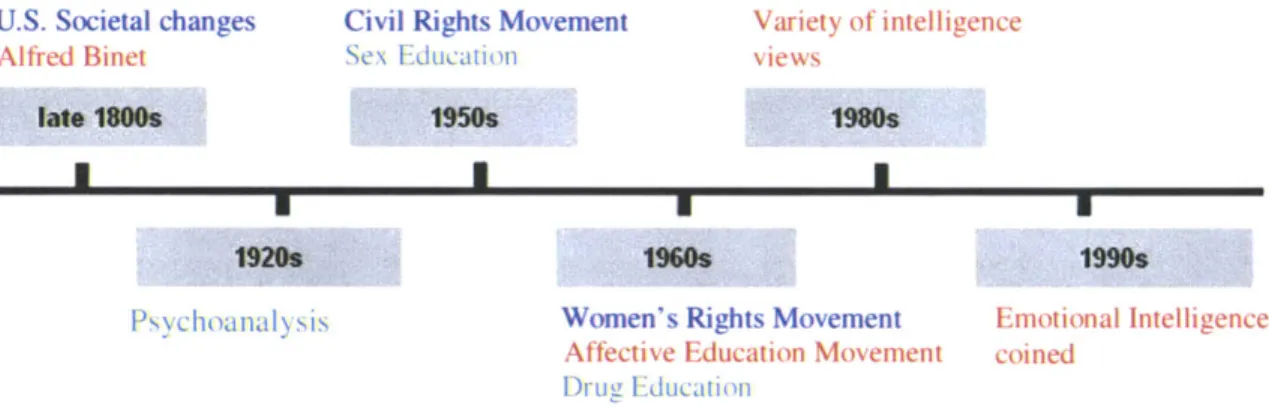
FIGURE 2-1: TIMELINE OF HISTORICAL EVENTS INFLUENCING THE
DEVELOPMENT OF SOCIAL AND EMOTIONAL LEARNING THEORIES; BLUE
REPRESENTS SOCIETAL CHANGES, RED REPRESENTS EDUCATIONAL FORCES,
GREEN REPRESENTS MENTAL HEALTH INFLUENCES. 25
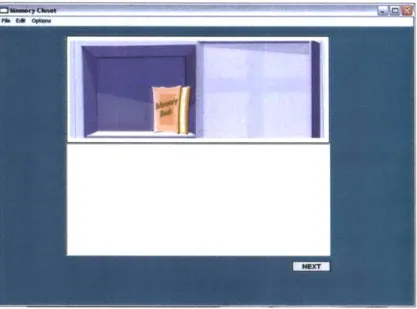
FIGURE 3-1: MEMORY CLOSET. A SAFE SPACE WHERE GIRLS CAN EXPRESS
THEMSELVES. 31
FIGURE 3-2: CHARACTER SELECTION WINDOW. HERE GIRLS CAN CAST THE
CHARACTERS FOR THEIR STORY. 32
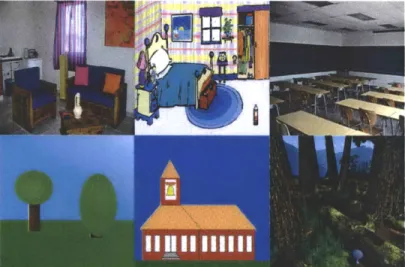
FIGURE 3-3: BACKGROUNDS THAT CAN BE SELECTED FROM SCENE DESIGN
WINDOW. 33
FIGURE 3-4: MAIN NARRATIVE CONSTRUCTION INTERFACE. 33
FIGURE 3-5: EMOTION BANK WINDOW. HERE GIRLS CAN THINK ABOUT THE
GENERAL SPACE OF THEIR EMOTIONAL REACTIONS. 37
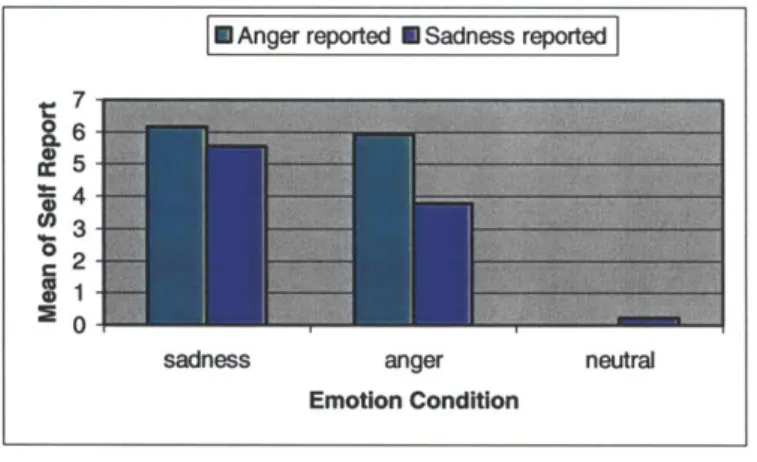
FIGURE 5-1: MEANS OF SELF-REPORTED SADNESS AND ANGER ON THE EMOTION
MANIPULATION CHECK USED AFTER WATCHING FILM CLIPS. 55
FIGURE 5-2: MEAN SELF-REPORTED SADNESS AND ANGER. EXCLUDES THE TERM
"BLUE" FOR SADNESS CONDITION. 55
FIGURE 5-3: RESULTS OF FIRST PROBLEM SOLVED BY PARTICIPANTS IN FIRST STUDY. ERROR BARS INDICATED HOW GRAPH WOULD LOOK WITH EACH OF
THE THREE CODING SCHEMES. 57
FIGURE 5-4: RESULTS OF SECOND PROBLEM SOLVED BY PARTICIPANTS. 57
FIGURE 5-5: RESULTS OF THIRD PROBLEM SOLVED BY PARTICIPANTS. 57
FIGURE 5-6: PRE-TEST AND POST-TEST RESULTS FOR PERCEIVING EMOTIONS
BRANCH OF MSCEIT:YV TM. 58
FIGURE 5-7 MEAN PRE-TEST AND POST-TEST SCORES FOR THE PERCEIVING
EMOTIONS BRANCH OF THE MSCEIT:YV TM. 59
FIGURE 5-8: PARTICIPANT PRE- AND POST-TEST SCORES ON FULL MSCEIT:YV TM 60 FIGURE 5-9: MEAN SCORES FOR MSCEIT:YV T M PRE-TEST AND POST-TEST SCORES. 60
FIGURE 5-10: DIFFERENCE BETWEEN PRE- AND POST-TEST SCORE. 60 FIGURE 5-11: MEAN RESPONSES TO LIKERT SCALE QUESTIONS ON EXIT
INTERVIEW. 61
FIGURE 5-12: MEAN PERCENT OF REPEATED EMOTION WORDS USED IN THE
STORY. CALCULATED BY COUNTING EACH OCCURRENCE OF EMOTION WORDS AND DIVIDING BY TOTAL AMOUNT OF WORDS IN STORY. ERROR
BARS INDICATE THE STANDARD DEVIATION OF THE COUNT. 64
FIGURE 5-13: MEAN PERCENT OF NON-REPEATED EMOTION WORDS USED IN THE
STORY. CALCULATED BY COUNTING EACH OCCURRENCE OF EMOTION WORDS ONCE AND DIVIDING BY TOTAL AMOUNT OF WORDS IN STORY.
ERROR BARS INDICATE THE STANDARD DEVIATION OF THE COUNT. 64
FIGURE 6-1: FIRST STORY CREATED BY RUTH (EPN GROUP). HERE SHE USES A
MORE LIST-LIKE NARRATIVE. 70
FIGURE 6-2: FOURTH STORY WRITTEN BY RUTH (EPN GROUP). IN THIS STORY SHE HAS SHIFTED FROM A LIST-LIKE NARRATIVE TO A MORE EMOTIONALLY
EXPRESSIVE FORM OF WRITING. 71
FIGURE 6-3 FIRST STORY WRITTEN BY SHEILA (PN GROUP). THIS STORY LEAD
OTHERS TO CREATE BODIES FOR THEIR STORIES, AND FIND OTHER WAYS TO
List of Tables
TABLE 3-1: SENSITIVITIES AND WORD ADDITIONS MADE TO CONCEPTNET TO MAKE IT MORE AMENABLE TO TEENAGE STORIES. WORDS IN GRAY WERE
ADDED FOR THIS THESIS. 35
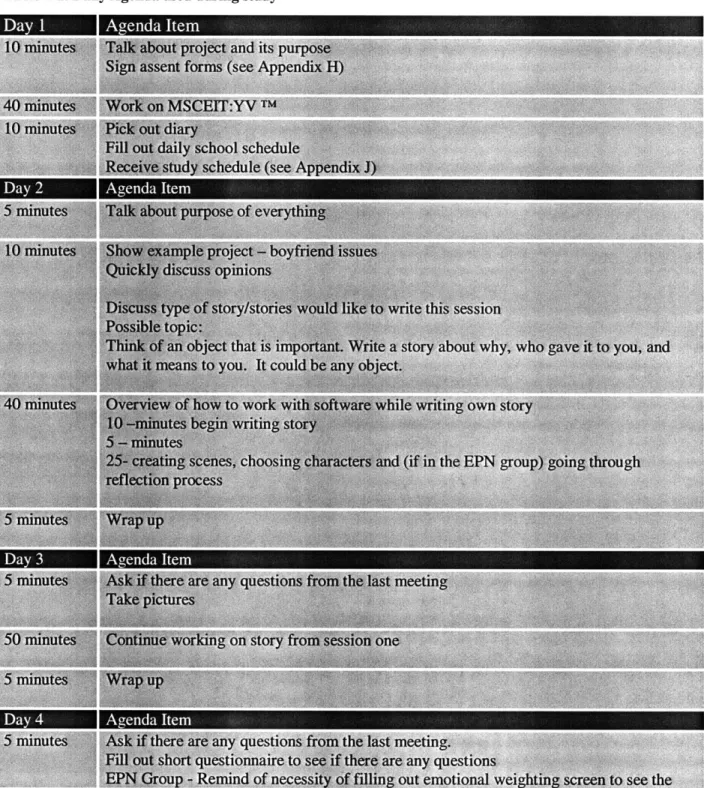
TABLE 4-1: DAILY AGENDA USED DURING STUDY 45
TABLE 4-2: MID-WORKSHOP QUESTIONNAIRE RESPONSES. THE NON-SHADED
AREAS ARE FROM THE EPN GROUP, WHILE THE GREY SHADED ANSWERS
ARE FROM THE PN GROUP (GRAMMAR AND SPELLING ERRORS AS IN
ORIGINAL) 48
TABLE 5-1: CODING SCHEME USED FOR FIRST PROBLEM ENCOUNTERED BY
Chapter
1
Introduction
"Full many a flower is born to blush unseen, /And waste its sweetness on the desert air"
-Thomas Gray, "Elegy in a Country Churchyard"
Keralyn is a vibrant nine-year-old girl who is deeply involved in her school choir and junior cheerleading team. She lives with her mother and three siblings because her father left town once he found out her mother was pregnant. He comes around every once and a while, but
is usually so turned out on drugs that Keralyn's mother won't let him near their daughter. Her mother tries hard, but trying to manage four children and a boyfriend is not easy. Keralyn is not fond of her mother's boyfriend, Jim, because he talks down to her and her younger siblings. She stands up to him as much as she can, but he frightens her. One day, while her mother is away, Jim starts screaming at Keralyn's little brother and threatens to punish him with a belt. As usual, she comes to her sibling's rescue, but this time Jim is so angry that he attacks her with the belt and beats her so badly she has bruises up and down her legs. Keralyn wears pants to school the next day to hide her bruises, but isn't able to hide them at cheerleading practice. No one notices at school that she's upset and no one has the time because of an already packed schedule. Only the other children ask at practice, but she tells them she fell. Keralyn has to take a test in school later that week, but she isn't able to focus on what she is doing.
This is not an uncommon story. It is presented to paint a vivid and real-life picture of what many children have to deal with on a daily basis. Even when circumstances are not this extreme, day after day, children are asked to perform to the best of their abilities in the midst of great difficulties in their lives outside of school, while their basic emotional needs are sometimes overlooked or ignored. Very often, efforts toward re-thinking learning environments focus solely on the cognitive aspects of education (Comer 2004). By expanding our view to consider other aspects of development involved in education, we can begin to address the needs of the whole child.
1.1 Purpose of the research
This research aims to 1) gain a better understanding of the effects of immediate emotions in middle school academic contexts and 2) develop a system geared toward addressing the emotional needs of teenage girls. A proactive emotional health system has been developed to support emotional self-awareness and empathy. This is a part of a long-term research plan for understanding the role that digital technology can play in helping address emotions and support learning for teenage girls.
Why focus on girls, especially when girls already show some abilities that are better than
boys when it comes to certain skills such as recognizing emotions? The focus on girls stems from both a personal interest as well as evidence that girls often lag behind boys in math and science, especially during adolescence. Therefore addressing the emotional needs of girls becomes important in light of the long-term vision of supporting learning.
The system I developed for this purpose, G.I.R.L.S. (Girls Involved in Real Life Sharing) Talk, was geared toward allowing users to reflect actively upon the emotions related to their situations through the construction of pictorial narratives. The idea was to help users gain new
knowledge and understanding about themselves and others through the exploration of authentic and personal experiences.
The system employed new common sense reasoning technology, which enabled it to infer affective content from the users' stories to try and support emotional reflection. It was expected that such reflection would facilitate development of new perspectives on dealing with life's events.
1.2 Theoretical Development of Constructs
1.2.1 Emotions and CognitionVery little is known about how affect influences cognitive processing in specific academic tasks; however, there are social psychological theories linking affect and cognition. How affect influences the storage and retrieval of information from long-term memory, and how affect influences the processing of information and the way one approaches a situation are two major lines of research (Linnenbrink & Pintrich 2004) Bower (1981) proposed an associative network theory suggesting that mood is associated with information stored in long-term memory. For instance, if a person is in a negative mood, she is more likely to retrieve negatively valenced information. Additionally, he proposed that a match between mood during encoding and retrieval facilitates recall.
Two models - the resource allocation model as well as affect-as-information model
-have been proposed to relate moods to differences in how information is attended to and processed. The resource allocation model suggests that being in a positive or negative mood makes it more difficult to attend to a current task because of task-irrelevant processing that clutters working memory. Schwarz's affect-as-information theory, states that a negative mood state signals that there is a problem that needs to be addressed, which in turn leads to a focus on
details, whereas a positive mood indicates everything is fine and results in heuristic processing of information. By eliciting sad and happy emotions through the recall of a life event, Schwarz
showed that sadness may support analytical problem solving (Linnenbrink & Pintrich 2004). The previous models have focused more on the role of negative affect. Isen and colleagues have demonstrated that positive affect can influence the way cognitive material is organized and have shown that this influences creativity (Isen et al. 1987). Using a variety of different techniques such as gifts, comical movies, or refreshments, positive affect state was elicited in the study participants. The emotional state had direct affect on performance on tests such as Duncker's candle task, the Remote Associates Test, and medical decision-making with hypothetical patients (Isen et al. 1987; Isen et al. 1991; Isen 2001). Subjects also better integrated the material presented to them and exhibited an ability to better organize their protocols as compared to a control group.
Unfortunately, the previous theories, and other theories in the social psychology literature, have not used tasks that are used in traditional academic contexts. Additionally, the relationship between affect and cognition in school situations is usually limited to anxiety (Linnenbrink & Pintrich 2004). Linnenbrink and Pintrich have begun to explore the relationship between emotions and learning mathematics. Their preliminary results have shown that positive affect enhances engagement in terms of effort and higher order use strategy in mathematics problem solving.
1.2.2 Emotional self-awareness
Emotional self-awareness is the ability to recognize one's own internal states. It is also referred to as meta-mood, the affective analogue of metacognition (Mayer & Stevens 1994), mindfulness (Langer 1989; Kabat-Zinn 1994), or meta-affect (DeBellis & Goldin 1997). The
awareness of emotions enables one to know strengths and limits as well as appropriate times for asking for help. Psychologist John Mayer of the University of New Hampshire finds that people attend to their emotions in three distinct ways: they are accepting, engulfed, or self-aware. He claims that an accepting person tends to be aware of her feelings but does not try to impact them. She is passive in the sense that recognition does not necessarily call for action. On the other hand, a person who tends to be overwhelmed by her emotions is referred to as engulfed. She usually avoids her emotions, and is paralyzed by them if she attempts to act. Mayer asserts that a person who is self-aware is said to be in the ideal state. She is at a healthy balance between overwhelmed and unaffected by her emotions. She is able to actively reflect and act according to her perceptions.
Not many measures of emotional self-awareness have been developed. Those that have rely either on observation, self-report, or tests of ability. The Emotional Competence Inventory
(ECI) is a rating scale based on observations and self-report measures. Self-awareness is viewed
as accurate self-assessment and self-confidence (Mayer et al. n.d.). Alternatively, the Mayer-Salovey-Caruso Emotional Intelligence Test (MSCEITTM) relies more on measures of ability rather than self-reporting. The subject must be able to define complex emotional blends and understand emotional transitions.
1.2.3 Empathy
The word "empathy" was invented by Titchener as a translation of the German word "Einfuhlung," meaning to project yourself into what you observe (Titchener 1909). Empathy, therefore, is built upon self-awareness, in that the more one is open to her own emotions, the more skilled she will be in reading feelings of others (Goleman 1995).
Based on different definitions of the empathetic process, the study of empathy has followed different paths: the cognitive approach and the affective approach. In the affective approach, four different approaches, which are not mutually exclusive, exist. In the first, the observer's feelings are "appropriate" to the person's emotional state (Stotland 1969). In the second, the "appropriate" feeling is seen as one that matches the person's emotional state (Hoffman 1984; Eisenberg & Miller 1987; Hoffman 2000). In another view, the feeling in the observer is any emotional response to another's emotion (Stotland et al. 1971). The most recent viewpoint in this affective approach is that the observer's feeling must be of concern or compassion to another's distress (Batson 1991). In the cognitive approach, empathy involves
understanding the other's feelings. Most recently, this inference of another's emotional state has
been called "mind-reading," "understanding other minds," or "theory of mind" (Baron-Cohen 2001).
Measures of empathy may address either the affective or cognitive approaches. The Chapin Social Insight Test presents hypothetical scenarios to subjects and prompts them to choose one of four responses. Another, created by Stotland (1969), relies on self-report and physiological indicators; however, many inconsistencies were found in the data. The Questionnaire Measure of Emotional Empathy (QMEE) was specifically designed to assess an individual's tendency to react strongly to another's experience (Mehrabian & Epstein 1972). More recently, Mayor-Salovey-Caruso Emotional Intelligence Test was developed to measure emotional perception, emotional facilitation, emotional understanding and emotional management. This measure of empathy relies upon a more cognitive approach such identifying emotions in faces of others and pictorial designs.
1.3 Research questions
In this study, I have sought to lay the foundation for answering a much larger research question of the role that digital technology can play in helping address emotions and support learning in the long-term for teenage girls. Although a full answer to that question is beyond the scope of the current work, two studies contributing towards this larger work are presented in this thesis.
The first study, which stems from research showing that emotions influence cognition, seeks to examine how emotions influence students directly in academic learning situations. Do negative emotional states harmfully influence performance on cognitive reasoning tasks? The hypothesis derived from this question was:
- An angry emotional state will weaken performance on a reasoning problem, while a sad emotional state will facilitate execution. A neutral emotional state will neither inhibit nor enhance performance.
Once the first study was completed, the next step was to build a system to explore the role that digital technology can play in emotional learning. The system the participants interacted with enabled them to develop stories in cartoon form and used common sense reasoning technology to analyze their text to provide empathetic emotion suggestions. These suggestions were used as a catalyst to help the girls think about the emotions related to the events they were writing about. Once the suggestions were given, the next window contained an emotional space where girls could think about how different emotions blended together and shaped their reactions. This system is discussed in further detail later in the thesis.
The second study, used to evaluate the system that was designed, consists of two main questions. Does the labeling of emotions within the context of stories enhance emotional
self-awareness? Can identifying the emotions of other actors in the story help the user to develop empathy for others? The main hypotheses derived from these questions were:
- Building a pictorial narrative, including labeling the emotions of other actors, will help users better identify the feelings of others.
- Building a pictorial narrative and exploring the emotional space supported by common sense reasoning technology will support greater emotional self-awareness than only building the pictorial narrative.
1.4 Definition of Terms
ConceptNet is a common sense knowledgebase consisting of spatial, physical, temporal, and social aspects of everyday life. It consists of a natural-language-processing toolkit supporting textual reasoning tasks over documents (Liu & Singh 2004). An adapted version is used in this thesis to sense affect in texts for the purpose of supporting emotional reflection.
Digital story explication is a part of the system that allows users to focus on the most important people, places, and things in their lives, and construct a pictorial narrative around them.
Emotional Self-Awareness is knowing one's internal states, preferences, resources and intuitions. It encompasses both the ability to recognize one's own inner signals, and the ability to notice to what degree decisions and values match.
Empathy is the ability to imagine oneself in the place of another and understand the other's feelings, desires, ideas, and actions. It is predicated on imagination, self-awareness, and other-awareness.
1.5 Organization of Thesis
Chapter 1 discusses the purpose of this thesis and presents the research questions that guided the methodology used in the study designed to evaluate the G.I.R.L.S. Talk system. Chapter 2 presents some of the historical underpinnings of social and emotional learning as well as some recent technological developments related to this area. Chapter 3 describes the design and implementation of the system. The methodologies used in both studies are included in
Chapter 4. The data collection procedures, instruments, and data analyses are also described. Chapter 5 presents the results of the data analysis. Chapter 6 contains a discussion of the analysis, a summary of the findings of the thesis, and future directions of this work. A list of references and the appendices follow the final chapter.
Chapter
2
Review of Literature
2.1 Introduction
Mental health itself is a strong motivator to address emotional needs. Teens with good emotional health may be more in control of their thoughts, feelings and behaviors. They tend to feel more positive about themselves and have good relationships. While drugs, alcohol, promiscuity, and depression are sometimes symptoms of normal teen experimentation, they may also be an indication of teens with poor emotional health (Payton et al. 2000). An extreme case of unmet emotional needs is the development of Borderline Personality Disorder that stems from the consistent invalidation of emotional experience (Linehan 1993). Other reasons for addressing emotional health include the impact of emotional health on both physical health and academic achievement.
Dr. Candace Pert impresses upon her readers the extent to which emotions can affect one's physical life. She explains that when an emotion is being experienced, neuropeptides are released allowing the brain to know what is occurring. While there are centers in the brain that are overall processors of emotions, there are cells in the immune system (blood, bones, etc.) that contain receptors for emotional signals. Consequently, the entire body experiences emotions, and holds memories of emotions in the same cells. Therefore long-term negative emotions may
harmfully affect the immune system (Pert 1999). As discussed in the previous chapter, emotions can also influence how a person approaches a problem-solving activity. Isen has shown that positive affect has an influence on creative-problem solving, while Schwarz has shown that negative affect may support analytical problem solving (Isen 2001; Schwarz 2002). Emotional needs can affect social, intellectual, physical, and other aspects of one's life. The importance for studying ways to help meet these needs becomes immediately apparent. This chapter describes some of the historical background of social and emotional learning. Following, is a review of selected current literature representing the findings in social and emotional learning programs that are relevant to this thesis as well as technological developments applicable to this area.
2.2 Historical Underpinnings of Social and Emotional Learning
Emotional learning is most often discussed in the broader context of social and emotional learning. Societal changes in the United States during the late 1800s helped to shape social and emotional learning theory and practice. Problems arising from the depression of 1873, a large influx of immigrants, industrialization, unemployment, and poverty gave rise to increasing family disorganization, delinquency, and prostitution. Generally reform was, in part, aimed at responding to these crises, and school became a focus as a possible platform for change. This reform began a child guidance movement, with a special focus on social and emotional skills believed necessary to succeed in life (Cohen 2003).
Beginning in the late 1950s, the civil rights movement underscored the belief that all children are entitled to education, believed to be the pathway to becoming an effective member of the community. The skills, knowledge, and beliefs required to be an effective citizen are directly reflected in the structure of social emotional learning programs. As with the civil rights
Throughout the rest of this document, the terms emotional skill needs (i.e. empathy, emotional self-awareness, connection) and emotional learning will be used interchangeably.
movement, the women's movement helped to influence the current practices in emotional learning in its emphasis on the importance of relationships and emotional and social experience as the foundation for human life (Cohen 2003).
Developing in parallel with these societal forces were educational influences. In the late 1800s, Dr. Alfred Binet, of France, was hired to develop a test to determine if students were severely mentally retarded; the measure he developed focused on children's linguistic, mathematical, visual-spatial, and attentional abilities. Many years later Professor Lewis M. Terman and colleagues from Stanford University translated the test into English and called it the Stanford-Binet test of intelligence. This test contributed to schools emphasizing skills, knowledge and beliefs that enhanced performance on this measure of intelligence (Becker 2003). Many psychologists at the time supported the idea that there was one thing called intelligence, which meant some possessed more of it than others, while others did not posses it at all. This notion of intelligence was carried through much of the 1900s until other researchers started exploring other views of intelligence.
Robert Sternberg's theory of intelligence claims that a healthy balance amongst analytical, creative, and practical abilities contributes to a "successful intelligence." He also notes that conventional notions of intelligence and associated tests miss important kinds of intellectual talent (Sternberg 1985). Howard Gardner developed a conceptual framework for multiple intelligences in the early 1980s (Gardner 1983). Gardner suggested that there are seven modes of intelligence: linguistic, musical, logical-mathematical, spatial, bodily-kinesthetic, interpersonal, intrapersonal, and naturalist (added later). A person's intelligence, he said, may be a blend of these modes of intelligence, rather than just one. This notion again reinforced the notion that there is not one kind of intelligence that a test can measure. Gardner's ideas of
intra-and inter- personal intelligences are subsumed into the idea of "emotional intelligence" (discussed later). Twenty years prior to emotional skills being seen as intelligence, there was a
large affective education movement
In the 1960s, the notion that emotional abilities can be cultivated in the classroom gained popular attention as part of the affective education movement, which underscored how children feel about what they are learning, about themselves, and their relationships with others. The movement promoted experiential approaches for building student self-knowledge and feeling recognition and focused specifically on self-esteem and self-image (Wood 1996). Unfortunately, affective education as a movement faded from the educational forefront in the late seventies and early eighties due to a lack of empirical research studying helpful and unhelpful efforts that constituted educational practices during this time as well as political controversy that surrounded the efforts. With the new consideration of emotional skills as intelligence in the early 1990s, this affective education movement was revived in the form of emotional learning.
Psychoanalysis has, in large part, shaped the mental health roots of social and emotional learning. In the 1920s Anna Freud, building off the work of her father, helped show that people's conscious and unrecognized emotional life shapes behavior and that discovering what we feel and think is powerful. Anna Freud promoted children's self-reflective capacities and the process of understanding. These and other traditions in psychoanalysis directly influenced sex education, which was one of the first health promotion programs starting in the 1950s. Drug education also surfaced as another prevention program in the 1960s. This ongoing production of different prevention programs created the need for more comprehensive programs. Preventative programs, combined with the educational and societal thrusts, began the social and emotional learning research and practice (Cohen 2003). Figure 2-1 illustrates these movements.
U.S. Societal changes Civil Rights Movement Variety of intelligence Alfred Binet Sex EdIcation views
late 1800 1950S 1980S
1920s 1960s 1990S
Psychoa1a\sis Women's Rights Movement Emotional Intelligence Affective Education Movement coined
Dru2 Education
Figure 2-1: Timeline of historical events influencing the development of social and emotional learning theories; blue represents societal changes, red represents educational forces, green represents mental health influences.
Although there is no one definition that can encompass social and emotional learning, researchers in this area all agree that social and emotional learning are necessary to help students become effective members of society. Newest efforts in social and emotional learning have been in the incorporation of technology into the process. As the use of computers in education becomes more prevalent, it becomes increasingly important to discover how technology can be used in all aspects of education to further support, rather than replace, the efforts of teachers. The theory and practice of incorporating technology into social and emotional learning have directly inspired and influenced the current research.
2.3 Current Literature
The current literature for this research is presented in two forms: literature related to the need for emotional learning and literature related to some of the current technology developed to enhance emotional learning.
-2.3.1 Emotional Learning
Educators and parents desire that for young people have the ability to achieve, to establish positive relationships, to adapt to the demands of growing up, to contribute to the community and to make responsible decisions. Here again we can see the societal, educational and mental health roots of social and emotional learning, as many schools have adopted programs that target "problem" areas such as risky sexual behavior, violence, school drop out, and drug use in response to these desires. Often these programs become too complex to coordinate and fail. Social and emotional learning programs, geared toward recognizing and managing emotions, establishing pro-social goals, enhancing interpersonal skills, and developing other pertinent skills, are becoming a comprehensive way to address the target areas (Payton et al. 2000)
In the development of social and emotional programs, two theoretical models become very important: theories specific to social and emotional learning, and those pertaining to behavior change and learning theories. This research will not address the latter; however, this will be an important part of future work. The theory of emotional intelligence has become extremely popular over the last ten years. Emotional Intelligence (EI), extended by Goleman, but first identified by Salovey and Mayer "is a type of social intelligence that involves the ability to monitor one's own and others' emotions, to discriminate among them, and to use the information to guide one's thinking and actions." They claim that emotionally intelligent abilities may be categorized into five domains (Salovey & Mayer 1990):
- Self-awareness: observing and recognizing one's own feelings as they occur
- Managing emotions: realizing what is behind a feeling and handling it in an appropriate way
m Motivating oneself: channeling emotions in the service of a goal and delaying
gratification
- Empathy: having sensitivity to others' feelings and concerns and taking their perspective; appreciating the differences in how people feel about things
m Handling relationships: managing emotions in others
Emotional Intelligence can be considered a skill-based part of a larger category of emotional needs. The other category of emotional needs is more experiential and, therefore, social in nature. These include the need for attention, to have one's emotional state understood and considered appropriate, to feel connected, to have companionship, and to feel secure (Klein et al.
1997).
2.3.2 Current Technological Development
Next our attention is turned towards current technological developments to support emotional learning. There are many places on the web where girls can read or write their stories such as "GrrlsStories," started by Joanna B. Pinneo. Girls are allowed to submit their stories for a chance to be featured on the site. The site manager will actually be the one who creates the material for the website. Once a story is featured, other girls can place comments on how they feel about the story. This is a powerful site in that it allows girls to share their stories. However, some ownership may be lost because the site manager makes the decision of how the story will be presented. A very important difference between this website and the proposed system is the purposeful reflection upon the emotional content of the story for reflection. There is software that encourages some amount of reflection.
Granada Learning's Just Like Series is an educational system that attempts to compel learners to think about emotions related to an event. The system includes four videos that
portray real-life stories of children who have faced adversity (Group n.d.). The topics include pressure, achievement, fear, disclosure, relationships, disruptive behavior, expectations, and bullying, but all stories show children displaying courage and compassion when faced with these issues. These activities are designed to help children begin to develop empathy for others and gain a better understanding of themselves. Although this environment encourages reflection, the stories and emotions are limited to the ones chosen by the software designers. A more
open-ended environment where children can construct their own narratives may be more beneficial. One example of this type of environment is the Digital Diary developed in the Today's Stories project. The members of the project developed a curriculum to support social, communicative, and emotional development of children 4 to 8 years old. The project consists of a wearable technology called the KidsCam, to gather information from daily activities, along with a tangible interface called the Magic Mirror to manipulate the data collected through the wearable. The child or another nearby child can activate the KidsCam, worn by each child in the activity. The purpose is to gather different perspectives of an event. These videos are then transferred wirelessly to a management system. The Magic Mirror allows children to review their video collaboratively and annotate episodes with signs and symbols that make explicit the interpretations of what they see in their experiences. These annotations can be linked to related episodes or other material supporting the pedagogical purpose (Bouras et al. 2000). This environment allows children to construct narratives and annotate some emotions; however, it was not created for the explicit purpose of exploring emotions. Examples of environments designed for the development of children are identity construction environments (ICEs), developed by Bers.
ICEs are designed to support young people in developing personal and moral values (Bers & Cassell 1999). They are meant to engage them in a learning process that integrates personal development with civic education rather than separating the two as most educational programs do. In Storytelling Agent Generation Environment (SAGE) children talk about their lives with a sage who listens and then responds with a relevant tale. They may also add to the library of stories within the sage or design their own storyteller using a visual programming language. Within this environment, they determine the conversational flow and behaviors of the
storyteller.
As shown through historical movements, learning programs, and technological developments, many have recognized the need for aiding in the development of one's emotional life. All of this previous work has influenced the design of the proposed system and its
constructs for study. The next chapter describes the design of the system that was developed as a next step in developing technologies that have the purposeful reflection on emotions in mind.
Chapter
3
Design And Implementation
This chapter discusses the system features and some of the relevant theory that motivated them. Girls Involved in Real Life Sharing (G.I.R.L.S.) Talk is an environment geared toward meeting the emotional needs of teens by giving them an opportunity to write about and reflect on their own experiences with the aid of an automated system for suggesting emotions. Two versions of the system were created in order to support the experiment described in the next chapter: the first version system combined pictorial construction with empathetic emotion suggestions, while the second system used only pictorial construction. Sections 3.1 and 3.2 describe features contained in both versions of the system. The features included only in the first version of the system are described in sections 3.3 and 3.4.
3.1 Organizing Thoughts Around Personal Narratives
The emotional importance of expressive writing has been shown by James Pennebaker and colleagues (1986) who suggested that written emotional disclosure has profound effects on both physical and psychological health. Pennebaker asserts that writing about significant life events provides an opportunity for reappraisal of thoughts related to an event. Therefore, a person may gain an increased understanding of her emotional reactions, which might result in reduced
distress (Pennebaker & Beall 1986; Pennebaker 1995). This is not to say that expressive writing works in all cases. As Figure 3-1 shows, the system offers girls the "Memory Closet," a safe space where they can write about events in their lives. This writing may be a first step toward organizing thoughts related to an event. Additionally, the system is set up so that all drafts of a user's story are saved, much like a journal that can be reviewed later. Hiemstra, in identifying the benefits of journaling, states ((2001),
Journaling in its various forms is a means for recording personal thoughts, daily experiences, and evolving insights. The process often evokes conversations with self,
another person, or even an imagined other person. Add the advantage available in most journaling formats of being able to review or reread earlier reflections and a progressive
clarification of insights is possible.
Figure 3-1: Memory Closet. A safe space where girls can express themselves.
Other researchers (Sheffield et al. 2002) have found evidence that in some contexts emotional writing activities may not be as beneficial as Pennebaker and others have found.
These findings do not directly influence this feature of the system since the focus is on the organization of thoughts rather than long-term physical health benefits.
3.2 A Story to Think With
The next features encountered in the system-the character selection window and narrative construction interface-may help girls to organize their thoughts further by focusing on the most important people, places, and things in their story and constructing a pictorial narrative around them. The pictorial narrative may serve as what constructionists call an "object to think with"(Papert 1980). By externalizing situations in their lives through expressive narratives and further by creating a pictorial narrative, girls might better internalize and organize meaning. Figure 3-2 depicts the window where girls can begin to concentrate on the important people in the story. This window places girls in the director's seat and asks them to select the characters who will star in their story. The system is designed with preset characters in order to emphasize the process of constructing the story rather than developing images of characters.
- - --
-Figure 3-2: Character Selection Window. Here girls can cast the characters for their story.
Once students have chosen the stars of their stories, they are given the chance to construct the pictorial narrative. They can choose from a small selection of backgrounds shown in Figure
3-3, but they also have the option to use a small paint program to create their own scenes. As
Figure 3-4 shows, the names of the characters chosen in the previous screen appear in a list box.
By selecting a name from the list and then selecting an emotion face, girls can choose the
expressions for main characters in the story (excluding the character representing themselves). The goal of this feature is to encourage students to think about the emotions of the other
characters in their stories and use that reflection to select an expression.
Figure 3-3: Backgrounds that can be selected from scene design window.
3.3 ConceptNet: Setting the Stage for Personal Reflection
Adele Faber and Elaine Mazlish (1980), authors of How to Talk So Kids Will Listen and
Listen So Kids Will Talk, point out that children often know how to work through problems but
do not since they are so accustomed to adults doing it for them. The authors suggest an effective technique of active listening to avoid this tendency: to understand what the child is feeling, suggest a possibility for how the event may have made them feel, and let them talk about the situation (Faber & Mazlish 1980). This technique can be repeated until the child is able to work through her feelings. The G.I.R.L.S. Talk system attempts to use this so-called active listening technique through an adapted version of ConceptNet developed at the MIT Media Laboratory (Liu & Singh 2004).
ConceptNet is a semantic network of common sense knowledge bases consisting of spatial, physical, temporal, and social aspects of everyday life. It contains 300,00 semi-structured English fragments called nodes that are connected by 1.6million edges, which are semantic relations. This ontology of twenty semantic relations includes causality (EffectOf), event hierarchy (SubeventOf), and affect (MotivationOf). Such a structure of the semantic network allows ConceptNet to be amenable to contextual reasoning such as the mood of a story, especially since there are around 34,000 assertions related to affect.
The original version of ConceptNet classifies a small subset of concepts, which are represented in semi-structured English by combining a verb (e.g., "read") with a noun phrase ("newspaper") or a prepositional phrase ("in the morning"), and placing the resultant phrase into one of six different affective categories. These six categories are based on the Ekman model of emotions, and include "happy," "sad," "anger," "fear," "disgust," and "surprise." This classification allows these concepts to be identified as especially pertinent to emotion. Thus the
affect of any unclassified concept can be assessed by finding all paths leading to each of these six affectively recognized categories (Liu et al. 2003).
After conducting a search of teen sites2 where girls can tell their stories, I noticed they
used words to express themselves other than this original six. In particular, "jealousy" and "embarrassment" were used more often in these stories 3. Additionally, to better acknowledge the state of not knowing, "confused" was added to this list. In the future, a larger set of core emotion words could be used from other models. Also, many emotions can be considered a blend of basic emotions, which could lead to a more parsimonious representation. For example, contentment can be considered persistent low-level happiness. After these core emotions are identified, weights (or sensitivities or prior probabilities) can be applied to each emotion based on how likely it is to appear in a given genre. For use in this research, these emotion sensitivities were also adjusted for teenage stories as shown in Table 3-1.
Table 3-1: Sensitivities and word additions made to ConceptNet to make it more amenable to teenage stories. Words in gray were added for this thesis.
Emotion Ground Original Sensitivity Adapted Sensitivity
Happy 0.5 0.7 Sad 1.0 0.7 Angr 0.7 0.8 Fearful 0.4 0.6 Disgusted 0.9 0.5 Surprised 0.9 0.7
2 For an abbreviated list of sites, See Appendix A
3 One might note that Clark Elliott's (1994) model of emotions includes "jealousy" and "shame," the latter of which
is similar to "embarrassment"
-For each scene, a girl can set up everything except for the character representing her in the story. To manipulate this character, she must submit the caption to ConceptNet for analysis. Once she does this, the system will try to empathetically suggest emotions that relate to this event. For example if the caption reads,
... she was beating me and as she was beating she hit my mirror and broke it and said see
what you made me do and beat me more harder. Then the next day I went to school with bruises on me and my friends were asking me what happened and I said nothing. That whole day I was walking around telling people not to touch me because it hurts-EPN Group
The system would display, "Sounds like that may have made you feel fearful or maybe angry?" At this juncture, the student can select from four buttons, which read, "Yeah that's how I felt,"
"No, I didn't feel that way," "Maybe a little of both," or "I don't know."
Why would it be important for these emotions to not only be suggested but also be
suggested in an empathetic way? In the doctor-patient relationship, the linkages between empathy and patient satisfaction, empathy and adherence to treatment, and empathy and malpractice suits are frequently cited (Frankel 1995). The more a patient feels empathized with, the more satisfied she will be with the doctor, the more likely she will comply with prescribed treatment, and the less likely she will be to consider litigious actions after an error has occurred. Similarly, the presence of someone who is perceived as caring in the classroom has been shown to be motivating in the long-term for education (Wentzel et al. 2004). Although caring, in an embodied sense, can be expressed through posture, facial expression, and tone of speech, it can
also be expressed through speech content (Bickmore & Picard 2004). Additionally, caring is most often expressed through empathy and comforting.
Although this system is not human, many people in a human-computer interaction relate as they would in a human-to-human interaction (Reeves & Nass 1996). Therefore, the system attempts to present the suggestions with an empathetic tone, much like a doctor or teacher would use.
3.4 Continuing personal reflection
To further support this first reflection on her emotions, the student is then taken to an emotional weighting screen shown in Figure 3-5. On this screen, the student can choose from the nine core emotions as well as have the option to choose her own emotion. The weighting can range from "not at all" to "a lot", and is ideally based on how much the student felt like she experienced the emotion. This reflection is important because this weighting determines how the main character (representing the student) will appear in the main narrative construction screen once the user presses, "Done."
The pictorial constructing only version of the system does not contain the emotion suggestion or weighting parts described above. This chapter has described some of the basic elements of the theory that has informed the design of the G.I.R.L.S. Talk system. The next chapter will discuss the methodology used to evaluate the system.
Chapter
4
Planned Methodology
This chapter will describe the methodologies that were planned for use in studies one and two as well as issues that surfaced during their implementation. As stated earlier, study one was designed to examine the effect of emotions on problem solving, while study two was designed to investigate how digital technology can help address the needs of empathy and emotional self-awareness.
4.1 Study 1 Overview
A 3x1 between-subjects design crossed an emotion manipulation (neutral, sadness, anger)
with problem solving. All participants were given three problems considered 6th grade level
based on the Massachusetts Curriculum Assessment System (MCAS) test. 4.1.1 Hypotheses
Evidence discussed in the first chapter suggests that emotions often persist beyond the eliciting situation and affect subsequent behavior and cognition, and that a sad emotional state facilitates analytical problem solving. Therefore, we hypothesized that emotions evoked in the first portion of the study would influence reasoning abilities on math problems in the second. We hypothesized that anger would weaken performance on a reasoning problem, while sadness
would facilitate it. Additionally, we hypothesized that a neutral emotional state would not affect performance.
4.1.2 Participants
Participants for this study were 17 girls aged 11- 14 in the sixth, seventh, or eighth grade. The mean of the ages was 11.64 with a standard deviation of 1.26. Participants' ethnicity ranged from black, to black and Puerto Rican, black and white, white, and Puerto Rican. Twelve of the participants were from an inner-city school in New Haven, Connecticut, while the other five were from a school in a suburb of Boston, Massachusetts.
Participants were recruited through principals and counselors from middle schools (grade
6-8) in the New Haven area and through the Computer Clubhouse network in the Boston area.
Appendix B shows the flyers sent to the Clubhouses. Each participant was randomly assigned to a group once her consent form (shown in Appendix C) was signed. The study took place in a computer room of a New Haven public school as well as a Computer Clubhouse in Boston. 4.1.3 Planned Procedure
This study consisted of one session lasting no longer than 30 minutes for each participant. When the session began, each participant was given a description of what she would be doing and asked to sign an assent form (see Appendix D). She was then told how to proceed in the study and given a packet that contained instructions, Lerner's emotion manipulation check, and critical thinking problems. Appendix E contains copies of the packet participants received. Once the participant was given instructions, the experimenter started one of the movie clips based on the experimental condition, each lasting about four minutes and left the room. Prior research has found that film clips and self-reflective writing provide an effective means of eliciting discrete target emotions (Lerner et al. 1998; Lerner & Keltner 2001; Lerner et al. 2004; Rottenberg et al.
in press) The anger clip (My Bodyguard) portrayed a young man getting pushed around by bullies and refusing to fight back; the sadness clip (The Champ) portrayed the death of a young boy's friend; and the neutral clip (a National Geographic special) portrayed fish at the Great Barrier Reef. To make the emotional experience more personally meaningful and intense, we asked participants in the anger and sadness conditions to describe how they would feel if they were in the situation depicted in the clip. For the neutral condition, participants were asked to describe their daily activities. Next, participants were asked to report their feelings during the video using an adapted version of Lerner's emotion manipulation check (Lerner et al. 2004). Twelve affective states were included on the form; however, only five were of interest. Terms related to sadness included "blue," "downhearted," and "sad," and words related to anger included "mad" and "angry." Responses on scales ranged from zero, meaning the participant did not experience the emotion at all, to eight, indicating the participant experienced the emotion more strongly than ever before.
Once a participant completed this emotion manipulation check, she was prompted to solve three analytical problem-solving tasks drawn from the Massachusetts Curriculum Assessment System test. The last page of the packet thanked the subject for participating, and also encouraged her to let the researcher know if she was experiencing any lingering emotions as a result of the study.
4.1.4 Measures
This study was designed as a between subjects study with three treatment variables. The first measure used was an emotion manipulation check to determine whether the desired emotion (sad, angry, neutral) was elicited. To analyze this measure, a mean was generated from the terms related to "sadness" and "anger." The mean was then found the over all the subjects in each
condition. The second measure was the three problems selected from the Massachusetts Curriculum Assessment System test. These problems were analyzed, first by coding the problems according to a correctness scheme discussed in the next chapter, and second by using descriptive statistics of the means generated from the scheme.
4.1.5 Challenges to Planned Procedure Implementation
Study 1 was conducted in two locations - a Boston Computer Clubhouse and a New
Haven public school. To avoid cross-contamination between the conditions in this study, at both locations participants were asked to wait outside the computer lab while other participants watched their video. At the Computer Clubhouse, once one group was finished viewing the clip, they moved to the other side of the computer room to complete their questionnaires. Unfortunately, the clubhouse was very near the pool tables and lounge area so the environment was very loud and distracting.
A distracting environment was also present at the New Haven school. On the first day
this study was conducted, we were able to utilize an audiovisual room. Participants waited in the computer lab while other groups filtered into the room. Once a group finished watching the video, they went into the library, sat at separate tables, and completed their questionnaires. The second day presented challenges not encountered in the first. The closet we had originally used was already occupied so we moved the video watching into the hallway, and kept the procedure of moving into the library for filling out the questionnaire packet. Unfortunately, during one of the group's viewings, a class switched rooms and the video had to be restarted. This affected two of the participants from the sad condition and may have caused the emotion elicitation effect to be less intense.