PEOPLE’S DEMOCRATIC REPUBLIC OF ALGERIA
MINISTRY OF HIGER EDUCATION AND SCIENTIFIC RESEARCH Abd Elhafid Boussouf University - Mila
Institute of Literature and Languages
Department of Foreign Languages
Branch: English
A Dissertation Submitted in Partial Fulfillment for the Requirement of the Master Degree in Didactics of Foreign Languages
Presented by: Supervisor:
1) Dhiya Eddine ABASSI Ms. Messaouda BOUDJERIDA
2) Abdelfettah GUERDOUH
Board of Examiners:
Chairman: Dr. Abderrahim Bouderbane
Supervisor:
Ms. Messaouda BOUDJERIDA
Examiner :
Dr. Azzioui Assia
EFL Learners’ Attitudes towards Integrating Multimedia
Technology to Develop Intercultural Communicative
Competence:
A Case Study of Third Year Students at Abdelhafid Boussouf
Mila University
I
Dhiya Eddine’s Dedication
In the name of Allah, most gracious, most merciful
I dedicate my dissertation to my family and my friends. A special
Feeling of gratitude to my loving parents whose words of encouragement and push for tenacity ring in my ears
My brothers and sisters
Without forgetting my only life-long friends Bilal and Nadir
II
Abdelfettah's Dedication
In the name of Allah, most gracious, most merciful
I dedicate this work to:
My dear parents whose love, support, and prays made me able to get such success and honor;
My brothers and sisters;
Fatiha, for her advice, support and unfailing help;
III
Acknowledgements
We are deeply indebted to our supervisor, Ms. Messaouda BOUDJERIDA for the accurate advice she put forward, for her unfailing encouragement, understanding, wise guidance and patience with us throughout the stages of the research.
Our deep gratitude goes to the board of examiners Dr. Abderrahim BOUDERDBANE and Dr. Assia AZZIOUI who honored us by kindly accepting to take part in the evaluation process of our dissertation. Their feedback will be greatly appreciated.
We owe a debt of gratitude to all the teachers and students at the Department of Foreign Languages. Without their generous cooperation this research would not have been possible.
IV
Abstract
The core purpose of this dissertation is to explore students‟ attitudes towards integrating multimedia technology to enhance their personal development in intercultural communicative competence. It is the case study of third-year students at the Department of Foreign Languages at Abdelhafid Boussouf Mila University. A question was raised in order to have a dependable answer to the problem statement: what do students have as attitudes towards integrating MT tools in teaching to enhance their ICC? Accordingly, the following hypothesis is provided: EFL learners would show positive attitudes towards the use of multimedia technology as a means to develop their intercultural communicative competence if they were taught using it inside the classroom and were exposed to English culture via multimedia technology outside the classroom. To achieve our objective, the research involved both quantitative and qualitative tools. The dissertation is divided into two chapters. The theoretical chapter is comprised of two sections which give an overview on different aspects about intercultural communicative competence and multimedia technology in education. The practical chapter deals with the analysis and discussion of the results of questionnaire and the interview along with a section dedicated to the pedagogical implications of the study. The questionnaire was distributed to one hundred (100) students whereas the interview was conducted with ten (10) teachers picked up according to their specialty in the field of the target culture. The findings of the study showed that the majority of the surveyed population held positive attitudes towards the great benefits that they took from using multimedia technology in studying and their total agreement on integrating it more in class. Ultimately, the positive outcomes gathered from this study elevate the need for integrating multimedia technology in class to meet students‟ demands and most importantly to ensure a better educational experience for all.
V
List of Abbreviations
EFL: English as a Foreign Language L2: Second Language
MT: Multimedia Technology
ICC: Intercultural Communicative Competence IC: Intercultural Communication
% : Percentage N: Number Q: question
VI
LIST OF TABLES
Page
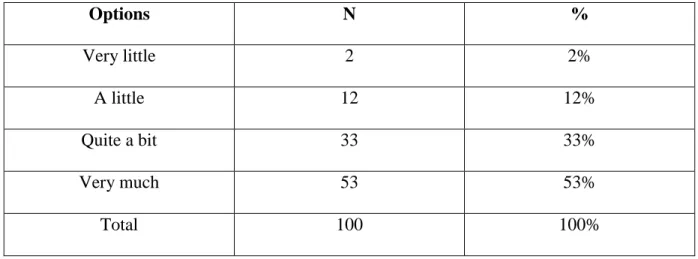
Table 1: Students‟ love for the English language………..54
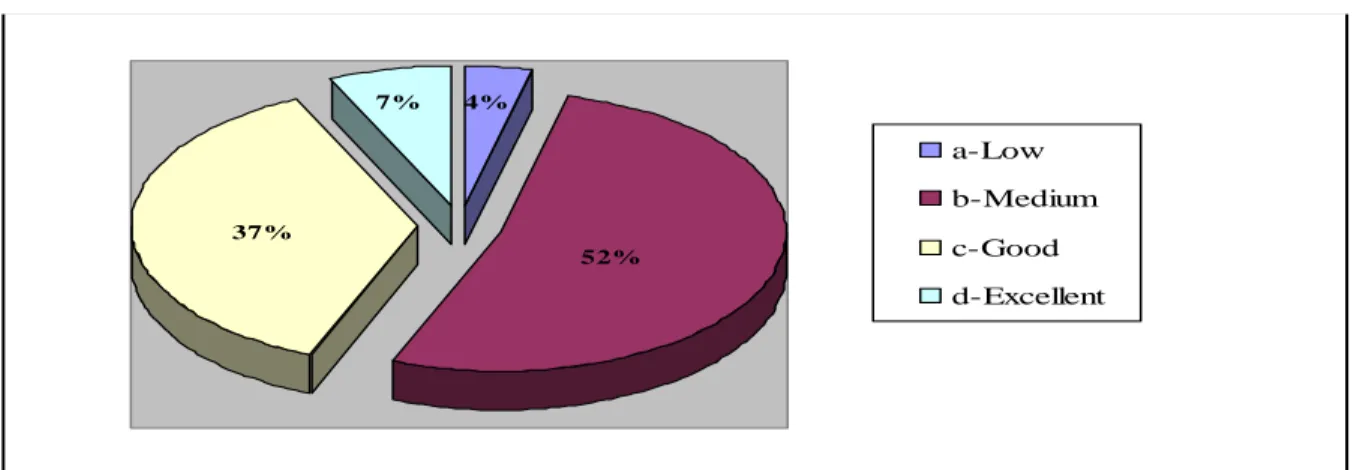
Table 2: Students‟ level in English………...55
Table 3: Time spent on MT devices………..56
Table 4: Students‟ opinion about using MT devices in developing their English language‟s culture……….57
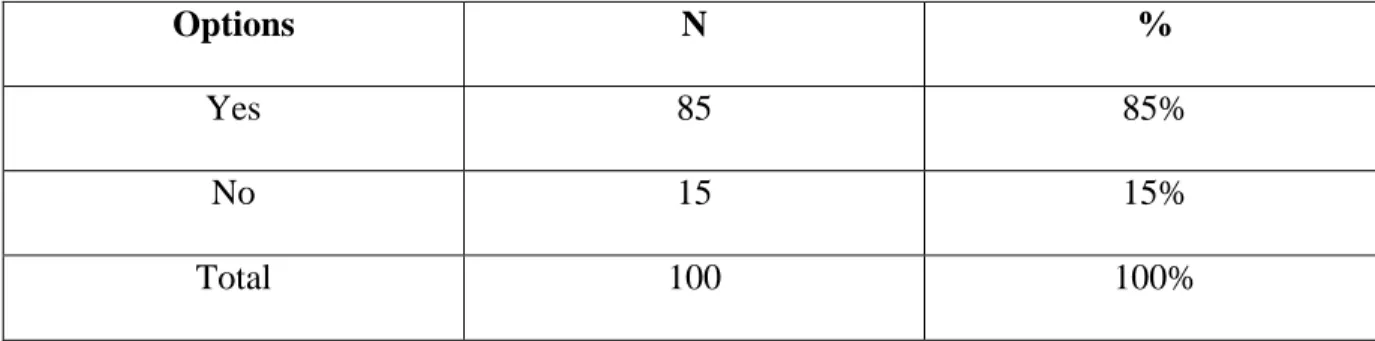
Table 5: Teachers‟ use of multimedia tools in class………..58
Table 6: Foreign languages institute emphasis on the use of MT tools……….59
Table 7: The institution‟s supply of MT devices for students………...60
Table 8: Students‟ use of media technologies in their studies………...60
Table 9: The extension of the institution‟s contribution to the students‟ personal development in ICC………63
Table 10: Students views towards communicating with foreigners and natives and learning about their cultures………...64
Table 11: Students' level in interacting and communicating with foreigners through speaking………..65
Table 12: Students' level in interacting and communicating with foreigners through writing……….66
Table 13: Reasons of students' intercultural communication difficulties………..67
Table 14: Students opinions on the importance of the different features of intercultural communicative competence………..68
Table 15: Multimedia technology tools which students utilize to enhance their ICC…………...69
Table 16: Multimedia technology platforms which students utilize to enhance their ICC……...70
Table 17: Students' views on integrating more multimedia technology tools in The classroom……….71
VII
Table 18: Problems which students face when utilizing multimedia technology tools to foster
their intercultural communication skills……….72
Table 19: Students' views towards the usefulness of multimedia technology………...74 Table 20: students' opinions on integrating multimedia technology in their institute…………...75 Table 21: Students' level of satisfaction towards utilizing multimedia technology in developing
VIII
LIST OF FIGURES
Page
Figure 1: Components of intercultural communicative competence……….14
Figure 2: Factors in intercultural communication……….20
Figure 3: The five main elements of multimedia………..31
Figure 4: Multimedia types (Text)……….32
Figure 5: Types of graphic images………33
Figure 6: Categories of digital animation ……….33
Figure 7: Categories of digital animation………..34
Figure 8: Doc player………..38
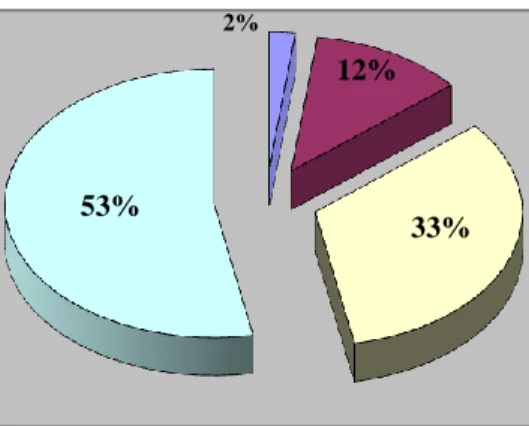
Figure 9: Students‟ love for the English language………55
Figure 10: Students‟ level in English………56
Figure 11: Time spent on MT devices………...57
Figure 12: Students‟ opinion about using MT devices in developing their English language‟s culture………..58
Figure 13: Teachers‟ use of multimedia tools in class………..59
Figure 14: Foreign languages institute‟s emphasis on the use of MT tools………..60
Figure 15: The institution‟s supply of MT devices for students………61
Figure 16: Students‟ use of media technologies in their studies………...62
Figure 17: The extension of the institution‟s contribution to the students‟ personal development in ICC………...63
IX
Figure 18: Students views towards communicating with foreigners and natives and learning
about their cultures………...64
Figure 19: Students' level in interacting and communicating with foreigners through
speaking………...65
Figure 20: Students' level in interacting and communicating with foreigners through
writing……….66
Figure 21: Reasons of students' intercultural communication difficulties………...67 Figure 22: Students opinions on the importance of the different features of intercultural
communicative competence………68
Figure 23: Multimedia technology tools which students utilize to enhance their ICC………….69 Figure 24: Multimedia technology platforms which students utilize to enhance their ICC……..71 Figure 25: Students' views on integrating more multimedia technology tools in the
classroom………....72
Figure 26: Problems which students face when utilizing multimedia technology tools to foster
their intercultural communication skills………73
Figure 27: Students' views towards the usefulness of multimedia technology……….74 Figure 28: students' opinions on integrating multimedia technology in their institute………….75 Figure 29: Students' level of satisfaction towards utilizing multimedia technology in developing
X
Table of Contents
General Introduction………..2
1. Statement of the problem………..3
2. Aim of the Research………...3
3. Research Question………...4
4. Hypothesis ………...4
5. Definition of Key Terms………...5
5.1 Intercultural Communicative Competence………...5
5.2 Multimedia Technology ……….5
5.3 Attitudes..………...5
6. Means of the Research ………...5
7. Structure of the Research ……….6
Chapter One: Theoretical Background………9
Introduction………...9
Section One: Teaching Intercultural Communicative Competence………10
1. What is Intercultural Communicative Competence?...10
2. Components of Intercultural Communicative Competence...13
3. Levels of Intercultural Communicative Competence...20
4. How to develop Intercultural Communicative Competence in EFL classrooms?...22
5. The Importance of Intercultural Communicative Competence...23
XI
7. Assessing Intercultural Communicative Competence...25
Section Two: Multimedia Technology………28
2.1 Defining Multimedia Technology………...……….28
2.2 Types of Multimedia Technology Tools………..31
2.2.1 Text………...31
2.2.2 Graphics………32
2.2.3 Animation……….33
2.2.4 Audio………34
2.2.5 Video………34
2.3 Characteristics of Multimedia Technology………..35
2.4 Multimedia Applications………..36
2.4.1 Video Teleconferencing………36
2.4.2 Multimedia Store and Forward Mail………36
2.4.3 Reference Source………..37
2.4.4 Edutainment and Infotainment……….37
2.4.4.a Edutainment………..37
2.4.4.b Infotainment………..37
2.4.5 Advertising and Purchasing………..37
2.5 Multimedia Classification……….37
2.5.1 Interactive Multimedia………..38
2.5.2 Linear VS Non-Linear Multimedia………..38
2.5.3 Hypermedia………..38
2.6 Importance of Multimedia technology……….39
XII
2.8 The Relationship between Multimedia Technology and Intercultural Communicative
Competence………40
Conclusion………45
Chapter Two: Field Work ……….49
Introduction………..49
Research Design………49
1. Aim of the research ………....49
2. The participants………..50 2.1 Students………..50 2.2 Teachers………...50 3. Research Instruments………...50 3.1 The questionnaire ………..50 3.2 The interview………..51
4. Data Analysis Method………51
5. Limitations of the study………...51
Section One: The Students’ Questionnaire………52
6. Description of the Students‟ Questionnaire………....52
6.1 Section One: General Information………..52
6.2 Section Two: Multimedia Technology………...52
6.3 Section Three: Developing Intercultural Communicative Competence...53
6.4 Section Four: EFL Learners' Attitudes Towards Using Multimedia Technology to Develop Their Intercultural Communicative Competence...53
XIII
8. Discussion of the Questionnaire Results………...77
Section Two: The Teachers’ Interview………..78
9. Description of the Teachers‟ Interview………...78
10. Analysis of the Teachers‟ Interview………...79
11. Discussion of the Interview Results………...83
12. Discussion of the Main Findings………...84
Section three: Pedagogical recommendations………85
13. Motivating students...85
14. Emphasizing intercultural communication teaching in EFL classrooms...86
15. The use of feedback...87
16. Effective use of media technology...88
16.1 Multimedia authoring tools...88
Conclusion……….90 General Conclusion ………...91 References………...94 Appendixes………..101 Le Résumé ...108 صخلم……….110
1
General Introduction………..2
1. Statement of the problem………..3
2. Aim of the Research………...3
3. Research Question………...4
4. Hypothesis ………...4
5. Definition of Key Terms………...5
5.1 Intercultural Communicative Competence………...5
5.2 Multimedia Technology ……….5
5.3 Attitudes..………...5
6. Means of the Research ………...5
2
General Introduction
Intercultural communications (IC) has recently gained a considerable amount of recognition, acknowledgement as well as huge importance both in EFL and cross-culture communication between individuals. IC reaches multiple fields and plays a significant role in each one, such as: social sciences and anthropology, cultural studies, linguistics, psychology and communication studies. Intercultural communication is also referred to as the base for international businesses. Nowadays, with the advancement of the artifacts of information and communication technology, as well as, the incredibly wide and rapid spread of the internet, more opportunities have been created for people from different parts of the world to be accustomed to other cultures and languages. It has become known to every language teacher that language and culture are two faces of the same bill; you cannot cut one without tearing the other. So, one must be aware of the target language‟s culture for a wider and better understanding of the language using some multimedia technology in the process . The use of the English language has increased dramatically in the last decades so as the need for better qualified teachers who can adapt to the new ways of teaching and get on the globalization train. It is true that many teachers use cutting edge technology but there are still some who teach using traditional methods. None of these methods are bad or outdated in any way but the students, if they adopt more advanced methods of teaching and rely on media technology instead of the traditional ways, they will reach higher levels, practice better, and reach new horizons that were once thought impossible.
As EFL learners set about learning the language, they come to realize the crucial role of intercultural communicative competence. Byram (1997) elucidates that it is the potency to interact and communicate competently and conveniently through cultural boundaries. At Abdelhafid Boussouf Mila University, English teachers are aware of the fact that this cannot be
3
fulfilled adequately without the usage of some multimedia technology tools which aid EFL learners learn the language. LI (2017) stresses that "with the development of multimedia computing and the internet, technology is becoming a vital feature of second language classrooms" (p. 6). Thus as stated by Pete and Barney (2007), "technology can enhance and complement that role" (p. 132). Yet, because the use of these tools is relatively new, this raises the question of what do EFL learner have as attitudes towards the implementation of this technology as a means to develop their intercultural communicative competence.
1. Statement of the problem :
Due to the improvements in internet and the field of information and technology, media instruments have become a predominant element in EFL and foreign language teaching and have given a huge boost, especially in developing intercultural communicative competence. Syllabus designers and teachers all over the world have recognized the importance of media technology and have already started implementing it classroom-level; however, using media gadgets is not really prioritized in Abdelhafid Boussouf Mila University classes giving less or next to no attention to students attitudes which can drastically downgrade the general outcome of the educational experience.
2. Aims of the research:
To be able to communicate and converse using the target language both efficiently and effectively learners have to develop an intercultural communicative competence. Syllabus designers and teachers in Algeria sought new ways to develop students‟ ICC using multimedia technology in an innovative way doing so by fusing media instruments in teaching. It is crucial to know how the students feel about using these technologies in their studies, how they prefer to use
4
it and what they want to use and of course to make them aware of the vital role ICC plays in learning languages. To make this exploratory study, we have selected the third year students of Abdelhafid Boussouf Mila University as a sample to be evaluated.
In the light of the previously mentioned points, the current study aims to capture the point of view of the third year students at Abdelhafid Boussouf Mila University about using multimedia technology in developing intercultural communicative competence. This study also aims to obtain a clear idea about the importance of integrating multimedia technology in teaching culture and language. The study substantiates the idea that multimedia tools can play an important role in developing learners‟ intercultural communicative competence inside and outside the classroom.
3. Research Question:
The purpose of our research is an attempt to answer the following question:
What do third-year students at Abdelhafid Boussouf Mila University have as attitudes towards integrating multimedia technology tools as a means to enhance their intercultural communicative competence?
4. Hypothesis
In the light of the prior mentioned research questions, the following hypothesis can be raised:
At Abdelhafid Boussouf Mila University, EFL learners would show positive attitudes towards the use of multimedia technology as a means to develop their intercultural communicative competence if they were taught using it inside the classroom and were exposed to English culture via multimedia technology outside the classroom.
5
5. Definition of Key Terms
5.1 Intercultural communicative competence
Intercultural communicative competence can be defined as the capability to comprehend
cultures, including one's own, and implement this perception to communicate and interact effectively with people from diverse cultural backgrounds. In a quite analogous manner, Byram (1997) elucidates that it is the potency to interact and communicate competently and conveniently through cultural boundaries.
5.2 Multimedia technology
Multimedia technology can be defined as an umbrella expression that embraces
computer-assisted applications which enable people to interact and share information. Put differently, it refers to the "combined use of several forms of audio and visual media such as text, graphics, audio, animation and video" (Banjerji & Ghosh, 2010, p. 2).
5.3 Attitudes
Attitudes can be defined as conducts which can be supported by what individuals sense and
believe in. Ajzen (2005, p. 3) defines attitudes as a "disposition to respond favorably or unfavorably to an object, person, institution, or event."
6. Means of the research
To validate the above-mentioned hypothesis, a descriptive research has been undertaken at the
Department of Foreign Langues at Abdelhafid Boussouf Mila University, involving a questionnaire conducted with a sampling of one hundred (100) third-year students who are enrolled in the Department of English, in addition to an interview designed to test the hypothesis in which ten (10) teachers were asked to answer the questions. The research methodology which will be used in the current study addresses the research instruments consisting of students' questionnaire and teachers' interview (quantitative and qualitative tools).
6
7. Structure of the research
The entire layout of the present study consists of two chapters. The first one, entitled
theoretical background, consists of two main sections. The first section explores the nature of intercultural communicative competence, presents its different components and developmental levels. It sheds light on the ways through which intercultural communicative competence can be promoted in EFL classrooms. Furthermore, it illustrates the significance of intercultural communicative competence, its major barriers and provides an assessment for its components. The second section elucidates what multimedia technology stands for, presents its diverse types and discusses how multimedia technology can possibly foster students‟ intercultural communicative competence. It also accounts for the relationship among multimedia technology and intercultural communicative competence.
The second chapter is entirely devoted to the practical side called the field work which consists of data collection and two analytic sections named the students‟ questionnaire and the teachers‟ interview, and a section dedicated to pedagogical recommendations that can help teachers and students make the most out of their multimedia use in developing intercultural communicative competence. For the tools of data collection, the students' questionnaire and the teachers' interview will be analyzed and interpreted. Finally, our work ends with some suggestions derived from the results reached and presented in the general conclusion
7
Chapter One:
Theoretical Background
Introduction………...9
Section One: Teaching Intercultural Communicative Competence 1. What is Intercultural Communicative Competence?...10
2. Components of Intercultural Communicative Competence...13
3. Levels of Intercultural Communicative Competence...20
4. How to develop Intercultural Communicative Competence in EFL classrooms?...22
5. The Importance of Intercultural Communicative Competence...23
6. Barriers of Intercultural Communicative Competence...24
7. Assessing Intercultural Communicative Competence...25
Section Two: Multimedia Technology………25
2.1 Defining Multimedia Technology………...……….28
2.2 Types of Multimedia Technology Tools………..31
2.2.1 Text………...31
2.2.2 Graphics………32
2.2.3 Animation……….33
2.2.4 Audio………34
2.2.5 Video………34
2.3 Characteristics of Multimedia Technology………..35
2.4 Multimedia Applications………..36
2.4.1 Video Teleconferencing………36
2.4.2 Multimedia Store and Forward Mail………36
8
2.4.4 Edutainment and Infotainment……….37 2.4.4.a Edutainment………..37 2.4.4.b Infotainment………..37 2.4.5 Advertising and Purchasing………..37 2.5 Multimedia Classification……….37 2.5.1 Interactive Multimedia………..38 2.5.2 Linear VS Non-Linear Multimedia………..38 2.5.3 Hypermedia………..38 2.6 Importance of Multimedia technology……….39 2.7 How Can Multimedia Develop Intercultural communicative competence………...42 2.8 The Relationship between Multimedia Technology and Intercultural Communicative
Competence………40
9
Chapter One
Theoretical Background
Introduction
Major gains and advantages can be discovered by fusing multimedia technology and teaching intercultural communication which can have a very deep impact on students‟ educational experience and teachers‟ jobs making both processes much easier and efficient. This results in very valuable outcomes in terms of enhancing and developing students‟ intercultural communicative competence. The first chapter of our research is divided into two sections. The first section deals with all that has to do with intercultural communicative competence whereas the second section will tackle the different areas of multimedia technology and its relationship with teaching and ICC through a conclusive overview.
Section one: Teaching intercultural communicative competence
Intercultural communicative competence is the capability to communicate potently across cultures. The purpose of teaching such a skill is to enable EFL learners to function and communicate appropriately when crossing cultural boundaries and interacting with foreign speakers. Indeed, this section starts by exploring the nature of intercultural communicative competence and presents its different components and levels. Then, it sheds light on the ways through which intercultural communicative competence can be promoted in EFL classrooms. Finally, it elucidates the significance of intercultural communicative competence and its major barriers; and provides an assessment for its components.
10
1.
What is intercultural communicative competence?
Intercultural communicative competence as a notion comprises profound historical roots, as "history is filled with accounts of people endeavoring to learn other languages and understand different cultures" (Samovar, Porter, & McDaniel, 2008, p. 1). It is based around the conception that members or interlocutors who come from distinct cultural backgrounds aim to communicate and interact with one another by means of intercultural communication. To put it differently, it is the capability to comprehend diverse cultures, including one's own.
The idea of intercultural communication dates back to 1959, with the publication of "silent language" by Edward Hall. This book is looked upon as the inception of modern intercultural communication as a field of study. In the beginnings of 1990's, intercultural communicative competence has increasingly gained importance due to the works of Byram and other eminent scholars. In his book, Teaching and assessing intercultural communicative competence, Byram (1997) attributes considerable significance to illustrate what competencies are demanded, how such competencies can be involved in methods and objectives teachers intend to arrive at, and how to assess intercultural communicative competence.
Substantially, intercultural communicative competence comprises stands, dexterity and awareness at the interface amidst diverse cultural domains. This covers learners' world views, values and those of a target language country (Romanowski, 2017). Thence, the manner through which intercultural communicative competence promotes is looked upon as an operation which includes "students' experiences from their own cultural backgrounds allowing them, at the same time, to reflect on their individual cultural assumptions as an integral part of further development of their skills and knowledge of the world" (Romanowski, 2017, p. 1). In the sense that students
11
acquire more knowledge about the target culture and develop their intercultural communicative competence.
According to Byram (1997), the essence of intercultural communicative competence is to enable EFL learners to interact and communicate competently and conveniently through cultural boundaries. These cultural outlines may implicate "cultural beliefs, ideologies and representations" (Cottle, 2000, p. 2). Over and above, comprehending those cultural confines which dwell amongst cultures necessitates the understanding and appreciation of the various languages, practices, conducts, beliefs and expressions which are thought of as unparalleled determining members of a given ethnicity or race. Realizing all these aspects originates from the fact that "as soon as we enter a foreign culture, we feel more or less out of place" (Mbele, 2005, p. 5).
To attain a better perception of what intercultural communicative competence stands for, various definitions of intercultural communication need to be considered. Byram and Buttjes (1991) clarify that it is the "ability of a person to behave adequately in a flexible manner when confronted with actions, attitudes and expectations representative of foreign cultures" (p. 137). Put differently, this denotes that switching from one's own cultural scope to a quite unlike, new foreign culture entails a considerable comprehension of stances and behaviors of the new culture on the part of the individual or the learner. This ability ought to be capable of being changed or adjusted in addition to being sufficient to meet the requirements of that new foreign culture.
Moreover, a quite prominent definition of intercultural communicative competence is introduced by Byram (1997). He defines intercultural communicative competence as Knowledge
12
of others; knowledge of self; skills to interpret and relate; skills to discover and\or to interact; valuing others' values, beliefs, and behaviours; and relativizing one's self (p. 34).
Therefore, in order for individuals to communicate potently whilst traversing cultural boundaries, they should possess a high cultural self/sociolinguistic awareness, openness, skills to observe, evaluate, and interact. In addition to a considerable esteem for others' cultures, principles, tenets, and conducts.
Furthermore, intercultural communicative competence entails the potency to interact and manage one's behaviour in a resilient way, using some strategies to diminish one's doubt about others via obtaining input about them and their cultures while using self-disclosure "whereby the speaker reveals some personal information to others" (Hargie, Saunders, & Dickson, 1994, p. 219).
Overall, scholars and linguists have distinct appellations for intercultural communicative competence and look at it from diverse perspectives. However, a generally agreed upon definition of intercultural communicative competence will comprise all the afore mentioned statements and various views. It is worth to mention that intercultural communicative competence is not only a skillfulness which enables individuals who belong to different cultural backgrounds to comprehend one another, but also a way through which varied cultures, conventions, ways of life can coexist and find common ground. This emerges from the fact that "there is an increasing need to deal effectively and appropriately with diversity" (Lazar et al., 2007, p. 5).
1.
13
3. 2. Components of intercultural communicative competence
Intercultural communicative competence is looked upon as an umbrella term under which dwell certain competencies and skills. For the sake of comprehending what competencies or skills are comprised within the term "intercultural communicative competence," diverse divisions and paradigms were introduced by eminent scholars and linguists. As a matter of fact, "models of intercultural communication competence tend to vary according to their main purpose" (Remland, Jones, Foeman, & Arévalo, 2015, p. 33). Scholars such as Deardorff (2009) and Kramsch (1993; 1998) introduce distinct paradigms so as to identify and assess the various components of intercultural communicative competence. However, a quite noteworthy paradigm of intercultural communicative competence is that introduced by Byram (1997) in which he underlines the presence of "five skills" which he introduces as "saviors." In truth, Byram's (1997) model is regarded as a quite adequate representation of those intercultural communication skills that learners need to promote whilst learning the language, together with assessing their intercultural communicative competence in diverse situations.
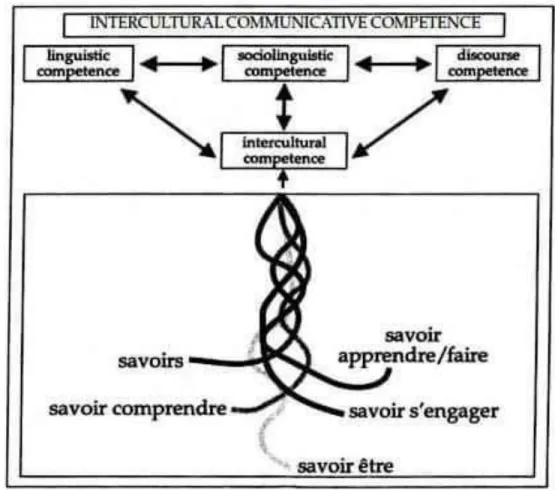
In his book, Teaching and assessing intercultural communicative competence , Byram (1997) emphasizes the existence of “five saviors” : “Savoirs, “Savoir être,” “Savoir comprendre,” “Savoir apprendre,” and “ Savoir s'engager.” In addition to the previously mentioned “saviors,” Byram (1997) attributes considerable significance to possessing linguistic, sociolinguistic, and discourse competencies (as clarified in the figure below). He "advances the idea of competence beyond communication alone and moves even closer to incorporating self-construction in the L2 and second culture" (Aveni, 2005, p. 146).
14
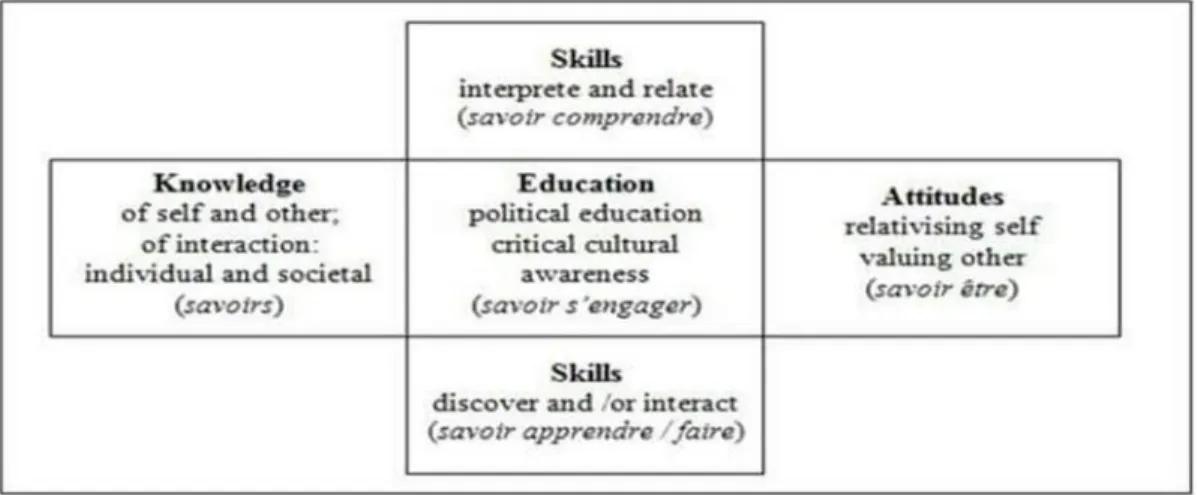
Indeed, Baker (2015) clarifies the aforementioned components in the following way: Byram's five savoirs (attitudes (savoir être), knowledge (savoirs), skills of interpreting and relating (savoir comprendre), skills of discovery and interaction (savoir apprendre/faire), critical cultural awareness/political education (savoir s'engager)) offer a detailed and systematic alternative to communicative competence in which the intercultural aspects of language learning are placed in a central role in education. (p. 274).
15
Put differently, Byram‟s (1997) paradigm encompasses five fundamental components which language learners ought to promote so as to interact across cultural boundaries competently. Those skills are stated differently as: attitudes, knowledge, skills of interpreting and relating, skills of discovery and cultural awareness. In this model, more emphasis is put on intercultural skills demanded for communicating among speakers of foreign, different cultural backgrounds.
The first component is referred to as "saviors." It basically denotes what the learners possess as understanding or familiarity with their own culture as well as others'. This involves knowing and comprehending the interaction that takes place amongst both the individual and others' culture. Byram (1997) stresses that "savoirs" is seen as the perception of "social groups and their cultures in one's own country, and similar knowledge of the processes of interaction at individual and societal levels, on the other hand" (p. 35). This necessitates a considerable conception on the part of the learner with regards to the diverse cultures which exist within the diverse social groups, together with comprehending their own.
Moreover, knowledge acquired from understanding notions and methods applied in interaction is of major significance for interaction to take place. This knowledge is, however, not automatically gained. Contrariwise, knowledge about one's own and one's interlocutor's country is always present in different degrees and is an outcome of socialization (Byram, 1997). In fact, knowing about one's own as well as others' culture and conventions is of crucial importance for intercultural communication to take place. This emerges from the truth that only "knowing one's person's cultural identity doesn't provide complete or reliable information about that person. Knowing another's cultural identity does, however, help you understand the opportunities and challenges that each individual in that culture had to deal with" (Murphy, 2013, p. 80).
16
Byram (1997) suggests that having knowledge about social groups and their different cultures which exist in an individual's own country is, ultimately, a consequence of the elementary socialization that occurs within the family as well as secondary socialization which we receive in schools. This knowledge that we take from diverse social groups can be conscious or unconscious. Knowledge about the processes of interaction, on the other hand, denotes awareness on the part of the person with regards to their social identities and how they comprehend interlocutors who belong to distinct groups. This awareness results in a successful interaction.
Other two skills which are quite related can be referred to as skills of discovery and interaction and skills of interpreting and relating. These two skills represent what Byram (1997) introduces as "savoir apprendre" and "savoir comprendre," the first of which is "savoir apprendre." As its name suggests, it stands for an individual's/learner's capability of achieving new knowledge and "building up specific knowledge as well as an understanding of the beliefs, meanings, and behaviours which are inherited in particular phenomena, whether documents or interactions" (Byram, 1997, p. 38). According to Houghton (2012), “savoir apprendre” denotes a requirement for those skills of processing and handling information which back up, on the other hand, the process of combining new knowledge with another one that is old.
Put differently, savoir apprendre can be looked upon as a learner's skillfulness of discovering a quite new culture and how that individual can interact, deal with, and construct a new knowledge that is built upon a previously held one, together with being able to "produce and operate an interpretative system with which to gain insight into hitherto unknown cultural meanings, beliefs and practices, either in a familiar or in a new language and culture" (Byram & Risager, 1999, p. 66).
17
Over and above, social interaction is of crucial significance for the skill of savoir apprendre to be enhanced. Social interaction is looked upon as a quite fundamental component of savoir apprendre that any learner ought to take into account, together with managing deficiencies and faults which occur whilst interacting with others not only for the sake of communicating with native speakers, but also to be a link among individuals of distinct origins and identities (Byram, 1997).
"Savoir comprendre," on the other hand, stands for the skills of interpreting and relating. It denotes the "ability to interpret a document or an event from another culture, to explain it and relate it to documents from one's own” (Byram, 1997, p. 52). Byram, Nichols and Stevens (2011) elucidate that there is a major need on the part of the speaker/mediator so as to find out how misunderstandings take place whilst interacting and communicating with one another. In order for intercultural speakers to deal with such problems that arise, they need to develop skills of comparing ideas, events, and documents and comprehend how they can be seen differently from diverse perspectives.
Indeed, Byram et al. (2011) attribute considerable importance to the skills of comparing, interpreting and relating, as they allow intercultural speakers to comprehend how individuals who belong to different social backgrounds may misunderstand what is said or written as they interact with one another. Furthermore, Lazar et al. (2007) clarify the need for skills of interpreting and relating in the following way:
The learners should develop abilities in order to be able to interpret and negotiate interaction terms of skills: social (types of conventions), living (routine actions required for daily life), vocational and professional (mental and physical
18
specialized actions to carry out the duties of employment) and leisure (arts, crafts, sports, hobbies) (p. 69).
Therefore, the learners have to develop specific capabilities in order to interpret and negotiate effectively the process of interacting. These capabilities encompass their everyday life such as work, routine, together with the ordinary things that they usually do or experience. These skills of interpreting and relating are of crucial significance as they allow for communication to take place and keep misunderstandings at bay.
A quite notable component of intercultural communicative competence is "savoir s'engager" which denotes critical cultural awareness on behalf of the learner. Indeed, “savoir s'engager,” that is to say cultural awareness, is of crucial significance for intercultural communicative competence. It is placed in the centre of Byram's (1997) model of intercultural communicative competence as it is the "foundation of communication and it involves the ability of standing back from ourselves and becoming aware of our cultural values, beliefs and perceptions" (Quappe & Cantatore, 2005, p. 1).
Put differently, critical cultural awareness "savoir s'engager" is looked upon as quite necessary for intercultural communication to take place. This state of being culturally aware will not be reached unless the learner possesses a profound perception of their cultural behaviours, customs and manage to competently compare these with those of a thorough foreign culture. Byram (1997) emphasizes that critical cultural awareness "savoir s'engager" is an "ability to evaluate, critically and on the basis of explicit criteria, perspectives, practices and products in one's own and other cultures and countries" (p.63). Otherwise stated, being culturally aware, necessitates, according to Byram (1997), the ability to evaluate and analyze one's own values and
19
conducts together with others' cultures values and conducts. This potency to analyze one's own and others' culture, attitudes, and values results in enhancing the efficiency of interacting and communicating on the part of the learner with a foreign culture. In addition to that, L2 learners will develop flexibility and openness towards the different cultures with which they interact.
More importantly, Isçan, Karagoz and Konyar (2017) clarify the need for critical cultural awareness in the following way:
Cultural awareness is an important concept that we need to consider when we communicate with people from different cultures. For that reason, it requires to think about what exactly the person to whom we are communicating means or to think about what other people give the meaning to what we actually express. (p. 2).
Therefore, to become culturally aware, EFL learners need to bear in mind the fact that communicating with speakers from different cultural backgrounds necessitates comprehending the ways through which they express themselves, together with reflecting upon how and what an individual says can be interpreted or misunderstood from a foreign speaker's perspective. A learner who can combine the aforementioned skills can be called an intercultural speaker, in the best sense of the word.
Intercultural attitudes "savoir être" represent the fifth component. Indeed, Byram (1997) attributes a major significance to “savoir être” in which he emphasizes that attitudes are the precondition for effective intercultural communication. The importance of “savoir être” emerges from the fact that it denotes "attitudes of curiosity and openness, of readiness to suspend disbelief and judgment with respect to others' meanings, beliefs and behaviours" (Byram, 1997, p. 34).
20
That is, the component of intercultural attitudes is designed around the idea that L2 learners ought to be receptive to beliefs, values and attitudes which come from a foreign culture, along with being willing to learn about that different culture. In addition to that, learners need to accept the fact that what they say or believe to be true is not always the case. Byram (1997) refers to this process as the capability to "decentre."
In short, Byram's (1997) model of intercultural communicative competence comprises five “savoirs” which should not be looked upon as separated; rather they are combined and intertwined, together with the several dimensions of communicative competence (Sercu et al., 2005). Intercultural communicative competence is best defined as a complex association of intercultural attitudes, skills, knowledge which are correlated by reason of critical cultural awareness. These components are better illustrated in the figure below:
Figure 2: Factors in intercultural communication (Byram, 1997, p. 34)
4. 3. Levels of intercultural communicative competence
Byram and Buttjes (1991) propose a model in which they emphasize the existence of three distinct levels that learners of a foreign culture need to go through so as to fully attain
21
intercultural communicative competence: "mono-cultural level," "intercultural level," and "Transcultural level"
The first level is referred to as "mono-cultural level." According to Byram and Buttjes (1991), in the mono-cultural level, the learner views their culture using ways of thinking which are only appropriate for their own culture. This takes place in circumstances which necessitate cross-cultural perception. In this level, learners' notions regarding a foreign culture are stereotyped, that is, having a mistaken conception concerning foreign cultures.
The second level is "intercultural level." As Byram and Buttjes (1991) clarify, in this stage, the learners develop a capability to interpret variations which exist amongst their own as well as others' foreign cultures. This capacity on the part of the learners is an outcome of being able to utilize knowledge which they possess about their own culture as well as others' countries/cultures, or even because they show interest in intercultural communication and cross-cultural diversities. This intercross-cultural knowledge which learners possess "may be of historical, sociological, psychological or economic nature (Byram & Buttjes, 1991, p. 142). Otherwise stated, the learners stand in an intermediate position which enables them to draw an analogy/distinction between cultures.
"Transcultural level" represents the third stage. In this level, the learners are capable of assessing intercultural diversities and settle intercultural problems (Byram & Buttjes, 1991). Moreover, "learners are able to evaluate intercultural differences and negotiate their meaning" (Deconinck, Humblé, Sepp, & Stengers, 2017, p. 212). Simply put, this level is characterized by potency on the part of the learners to reflect upon the varied beliefs, attitudes, values and ways of
22
life which exist in a given foreign culture; the learners reach a stage in which they can view their own culture by means of cross-cultural understanding and negotiating intercultural differences.
In short, through the aforementioned three levels or stages, EFL learners promote their ways of perceiving their own cultures and sense that variations amongst their own and foreign cultures until they reach the transcultural level in which they can fully comprehend the diverse cultural values. At this very stage, the learner can be said to "stand above both his own and the foreign culture" (Byram & Buttjes, 1991, p. 143). Put differently, the learner is able to acclimate to different sociocultural settings in the light of understanding his own culture and that of a foreign speaker.
5. 4. How to develop intercultural communicative competence in EFL classrooms?
The significance of promoting intercultural communicative competence on the part of EFL learners emerges from the fact that it provides them with intercultural knowledge, attitudes, skills and awareness necessary for them so as to interact competently and effectively whilst crossing intercultural boundaries. Indeed, much of the responsibility for enhancing intercultural communicative competence lies on the shoulders of teachers. This can be attained by means of implementing certain techniques in EFL classrooms.
Motivating EFL learners and developing intercultural communicative competence are closely related as "the vast majority of teachers will readily concede that the major problem is not ability but level of motivation" (Hargreaves, 1982, p. 171). A way to build EFL learners intrinsic motivation is to set goals and explore their concerns and curiosity. A teacher who shares their passion and zeal for learning will succeed at conveying such merits to the classroom (Valerio, 2012).
23
Utilizing up-to-date technology tools is another technique to build intercultural communicative competence in EFL classrooms. In fact, today's EFL learners are confronted with the fact that the capability to cope and interact with other cultures using technology is now an indispensable tool with which EFL learners can cross cultural boundaries (Marczak, 2013). This includes the use of texts, images, audio, videos, and interactive computer-based applications which support learners to comprehend cultural diversities and enhance their intercultural skills in the best way possible.
Building positive attitudes on the part of the Learners is of great importance. Byram (1997) elucidates that learners' attitudes is a quite remarkable feature of intercultural communicative competence that is most required for successful interaction. Indeed, it is often noticed that EFL learners display negative attitudes as they learn about a foreign culture, or come across intercultural topics (Byram & Fleming, 1998). Over and above, helping learners comprehend intercultural differences, show respect and attitudes of openness towards others' cultures should be the teachers' responsibility as they "help learners understand others and otherness as a basis for the acquisition of cultural and communicative competence" (Byram & Risager, 1999, p. 58).
6. 5. The importance of intercultural communicative competence
Intercultural communicative competence is the potency to communicate competently and conveniently through cultural boundaries (Byram, 1997). Indeed, there are remarkable reasons why this competence should be acquired and emphasized in EFL classrooms.
A quite notable reason for enhancing intercultural communicative competence is that it increases cultural awareness on the part of the learners. Byram (1997) stresses that critical cultural awareness necessitates comprehending the differences that exist amongst one's own and
24
others' cultures, together with developing flexibility and openness towards the diverse cultures with which they interact. Furthermore, intercultural communicative competence helps EFL learners acquire intercultural knowledge which denotes conception on the part of the learner with regards to the diverse cultures existing within the different social groups. Having this intercultural knowledge results in a successful communication and interaction. Moreover, developing intercultural communicative competence provides the learner with skills of interpreting and relating to which Byram (1997) attributes considerable significance. Such skills enable EFL learners to find out how misunderstandings take place whilst interacting and communicating with foreign speakers. These intercultural skills allow learners to compare ideas, events, and documents and comprehend how they can be seen differently from diverse perspectives.
7. 6. Barriers of intercultural communicative competence
Intercultural communicative competence is quite necessary for communication between cultures. However, there are certain barriers that EFL learners face when there is a cross-cultural communication which are: stereotypes, ethnocentrism, prejudice, and anxiety.
Stereotypes represent a serious barrier as they lead to "negative or positive judgment made about individuals based on any observable or believed group membership" (Jandt, 2010, p. 86). In fact, stereotypes are beliefs or preconceptions that individuals possess about one another. These preconceptions are often negative and have bad influence upon intercultural communication.
Ethnocentrism is another hindrance in the way of a successful intercultural communication. Ethnocentrism is a way of viewing other cultures based on the perception that one's own culture
25
is better than others' cultures (Coopman & Lull, 2012). This state of refusing others' beliefs, values, attitudes and ways of life hinders communication and interaction among cultures quite often.
Prejudice refers to the illogical suspicion or hatred of a given group, religion or race (Jandt, 2010). Prejudice represents an assumption made about others' cultures, beliefs and values without having sufficient knowledge, thus, it can be a stumbling stone in the way of cross-cultural communication.
Anxiety is a serious barrier. If one is anxious because they do not know what they are expected to do, they will be overwhelmed by this feeling and won't be fully present in the process of communication (Jandt, 2010). Anxiety causes EFL learners to focus their attention on that negative feeling that they make common errors while communicating. Such beliefs cause learners to avoid interactions with people who belong to a foreign cultural background; hence, they do not develop their intercultural communicative competence.
8. 7. Assessing intercultural communicative competence
Intercultural communicative competence is quite crucial as it helps EFL learners to communicate potently with foreign speakers, hence a continuous assessment should be made. This assessment covers the five components of intercultural communicative competence and aims at examining each component in isolation so as to comprehend the improvement of intercultural communicative competence on the part of EFL learners.
Assessing “saviors,” which represents intercultural knowledge, is based on asking questions with regards to information about culture history, geography, and beliefs. Such inquiries are given in the form of true or false questions, and questions and answers activities (Byram, 1997).
26
Lazar et al (2007) emphasize that three domains of knowledge are to be taken into account: the humanistic approach in terms of civilization and culture, the anthropological approach in terms of comprehending the diversity of culture, and the sociological approach which examines the sociocultural contexts of the target societies.
Assessing both “savoir comprendre” and “savoir apprendre,” which refer to intercultural skills, can be achieved through providing learners with documents or pictures, then asking them to make a comparison or analysis. By means of such techniques, EFL learners' intercultural skills can be assessed effectively. Indeed, the need for assessing intercultural skills is an outcome of the fact that such skills represent learners' capability to discuss and interact, together with interpreting and relating aspects of a foreign culture.
Assessing “savoir s'engager,” which stands for critical cultural awareness, necessitates that learners evaluate in a critical way certain aspects of their own culture along with those of a foreign one. The teacher observes this process and asks students to write reflective essays about a given aspect (Corbett, 2003). Byram (1997) elucidates that the aim of assessing critical cultural awareness is also to clarify one's own ideological perspective.
According to Byram (1997), assessing “savoir être” or attitudes is done through asking learners to choose between two representations of a given aspect related to a foreign culture and use these representations such as text, audio, video recordings as a basis to explain the other culture to a an interlocutor from their own culture. Based upon their choice, the teacher can know their interests. Moreover, learners' attitudes can be observed from their readiness, curiosity, and motivation to interact with a foreign culture.
27
In short, assessing and evaluating intercultural communicative competence is a process which should be conducted continuously. This responsibility lies on the shoulders of teachers in the first place. Indeed, this assessment is indispensable and enables the teacher to observe the improvement of intercultural communicative competence on the part of EFL learners.
To sum up, intercultural communicative competence is a quite substantial ability through which EFL learners can communicate and interact effectively with native speakers who belong to different cultural backgrounds. This section provides an overview about the concept of intercultural communicative competence, outlining its different components and levels, together with shedding light upon how it can be promoted in EFL classrooms, the remarkable reasons that make intercultural communicative competence significant, and finally barriers of intercultural communicative competence that EFL learners face while crossing cultural boundaries and learning about new cultures.
Section two: Multimedia technology
As multimedia technologies and their applications have witnessed explosive growth within the past two decades, information has become increasingly interactive and multidimensional. Traditional text-based data has been augmented and, in some cases, replaced by audiovisual content that is used to transform teaching styles, enhance business transactions, and promote cultural literacy (Syed, 2008). Researchers, students, and educators have benefited from the never-stopping development and ease of access of multimedia technology and information, and therefore, these technologies and their applications will continue to pervade, simplify, and facilitate our daily lives. As the growth in the field of media and technology keeps rising, an explosion of new methodologies and possibilities has occurred creating a profusion of new,
state-28
of-the-art, literacy combined with top-notched competence in all four skills of language proficiency.
This section deals with multimedia technology tools and devices in and out. It tries to look at MT tools in a broad and narrow view reaching multiple points that cover an overview of multimedia technology as a whole, its different types, how it is supposed to develop students intercultural communicative competence, and last but not least, the section points also at the relationship between multimedia technology and intercultural communicative competence .
2. 1 Defining multimedia technology:
It is widely considered nowadays that multimedia is the future of any teaching-learning
experience with a history goes back no too long ago, combining words and concepts together to deliver the information required in the most efficient way possible as mentioned in the book,
Multimedia technologies: concepts, methodologies, tools, and applications:
The word multimedia, originating from the Latin words “multum” and “medium,” means combination of multiple media contents. It is a technology that, even today after two decades of explosive growth, means different things to different people. It might be an artistic medium or a communication tool or a teaching and learning tool for some, while it might be a way to complete a business transaction for others. In general, multimedia includes a combination of text, audio, still images, animation, video, and interactive content. The integration of multimedia technology into the communication environment has the potential to transform an audience from passive recipients of information to active participants in a
media-29
rich learning process. The term “rich media” is synonymous for interactive multimedia (Syed, 2008, p 29).
Multimedia technology is a very broad term that cannot be defined in just one single
definition. The term multimedia is used as general in information industry. Hypermedia is its synonym term. Multimedia cannot be defined rightly. Even then some scholars of the subject tried to define it in different ways. However, there are some outstanding definitions that we can cite. According to Barker (1995, p 53) “A presentation stored in text data, audio, computer graphics, still photos, animation, moving footage (film or video)”. Moreover, Lal (2008, p 53) defines it as follows: “A medium is an intervening substance through which impressions are conveyed to senses”. Multimedia is also considered as a combination of text, graphic art, and sound, animation and video elements. The IBM dictionary of computing describes it as: “comprehensive material, presented in a combination of text, graphics, video, animation and sound. Any system that is capable of presenting multimedia is called a multimedia system.Another viewpoint on MT conveyed by The Columbia Encyclopedia book where it was characterized as an individualized computing, programming and applications that joins content, excellent sound, two and three dimensional illustrations, liveliness, pictures, and full movement video (Lagasse, 2000). Furthermore, as Vaughan states that multimedia is any mix of content, sound, activity and video conveyed by PC or other electronic or carefully controlled means. It is a woven mix of carefully controlled content, photos, realistic craftsmanship, sound, liveliness, and video components.
Newton, further, defines multimedia as the blend of various sorts of media in the correspondence of data between two clients and their PCs. The arrangement wherein the data for correspondence exists and contrasts, however it ordinarily incorporates voice correspondence,
30
sound preparing and picture handling (Newton, 1998) . Additionally, in the words of Dahmer (1993), multimedia is “something that combines the capabilities of technologies that used to be separated it can combine things like text, graphics, sounds and still or motion pictures in a smooth way to present information. Print, telecommunications, video, broadcasting and computers have merged and the result is what we now call multimedia” (46-55). Moreover, as reported by Stubley, the simultaneous use of two or more different forms of media (text, graphics, animation, sound and video) for effective information communication is referred as multimedia. Graphics and sound, digital or analog video, animations, hypermedia, interactivity, computer games, virtual reality, electronic books, CD-ROM, HDTV, telecommunications and many others have all been terms associated with the definition of multimedia at one time or another (Stubley, 1994).
Finally, as stated by Satklichov (2009), multimedia is content that uses a combination of different content forms such as text, audio, images, animations, video and interactive content. Multimedia contrasts with media that use only rudimentary computer displays such as text-only or traditional forms of printed or hand-produced material. Multimedia can be recorded and played, displayed, and interacted with or accessed by information content processing devices, such as computerized and electronic devices, but can also be part of a live performance. Multimedia devices are electronic media devices used to store and experience multimedia content. In fact, multimedia is distinguished from mixed media in fine art, for example, by including audio it has a broader scope. In the early years of multimedia, the term "rich media" was synonymous with interactive multimedia and "hypermedia" was an application of multimedia. To be more inclusive of the term, multimedia can also be seen as any presentation that combines several media such as text, animation, graphics, sound, video and streaming
31
content. Multimedia is the convergence of digital media. This means that media producers must learn how to use multimedia to create content for TV, radio, video, and the Web (Yadav, 2014).
2.2 Types of multimedia tools:
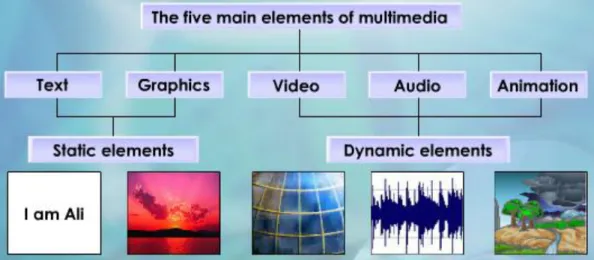
Multimedia technology has many types which can also be called elements or components; they can be divided into two distinct categories static and dynamic. Each category has different elements which can be viewed as follows:
Figure 3: The five main elements of multimedia (Kadir, 2008 )
2.2.1 Text:
The text is the basic element of multimedia. It involves the use of text types, sizes, colors and background color (Kadir, 2008). In addition, we can also say that since computers can display a variety of fonts, in innumerable colors and combinations, multiple fonts in beautiful colors and backgrounds feature in almost all the multimedia applications and the ultimate result appears far better than the printed texts (Sreekumar and Sunitha 2006, 384-385) . Although the text is a broad term, we can surely say that it is the most basic element of all multimedia
32
application informing the users directly and first-hand about the information that it desires to transmit. The below image is an example of a text:
Figure 4: Multimedia types (Text) HTML text fundamentals (n.d)
2.2.2 Graphics:
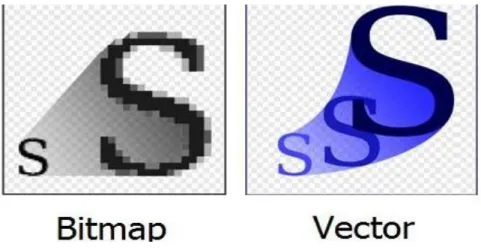
At the point when you envision designs pictures you convincingly consider "still" pictures, pictures, for example, those in a photo or drawing. There is no event in these sort of picture. Still illustrations pictures are an exceptionally significant bit of sight and sound since people are modality adjusted. As the old Chinese saying goes, "An image merits a thousand words. "Windows is likewise a sense methodology condition. Similarly as should be obvious a boundless number of photos or pictures, the kinds of static design pictures that you can remember for an interactive media application are practically limitless (Pavithra, 2018). There are two types of graphic images which are Bitmap images also known as raster images which are real-life images taken by cameras or scanners, and Vector graphic which are images drawn on the computer and they only require a small amount of memory (Kadir, 2008). These two types are very distinguishable using just the human eye and are illustrated below:
33
Figure 5: Types of graphic images ( Hoyos, 1970)
2.2.3 Animation:
In multimedia various digital animations are used for many reasons one of them is making
the learning fun, comprehensible, and more enjoyable. We can look at animations as a process of adding movement to or making a static image look like it is moving through a variety of methods (Kadir, 2008). These animations are widely used especially in primary schools, language schools, and for EFL learners where they show their true potential in transmitting the required information in a very intelligible manner; and to further enhance the experience of the user to further understand the information conveyed to them. Digital animation can be categorized into two broad areas: 2D (2 Dimension) and 3D (3 Dimension) animations as demonstrated below: