Peoples Democratic Republic of Algeria
Ministry of Higher Education and Scientific Research
University Des Frères Mentouri - Constantine
Faculty of Letters and Languages
Department of Letters and English Language
Thesis submitted to the department of Letters and English Language in candidacy for the degree of Doctorat LMD in Didactics of Foreign languages
Submitted by Supervised by
Mrs. Lamia ELMECHTA Pr. Hacène SAADI
Board of Examiners
Chairman: Pr. Samir LARABA University Des Frères Mentouri- Constantine Supervisor: Pr. Hacène SAADI University Des Frères Mentouri- Constantine Member: Pr. Abdelhak NEMOUCHI University Larbi Ben M’hidi- Oum El Bouaghi Member: Pr. Omar GHOUAR University Hadj Lakhdar- Batna
Member:Dr. El Houas AHMED SID University Des Frères Mentouri- Constantine Member: Dr. Nadir KAOULI University Hadj Lakhdar- Batna
2015-2016
The Impact of Language Aptitude, Working Memory and
Verbal Reasoning as Aspects of Linguistic Intelligence on
Language Learning Achievement
The Case of First Year Students at the Department of Letters and
English language, University Des Frères Mentouri, Constantine
I
DEDICATION
To my beloved mother and father for their never-ending love, care and support;
To my dearest husband for his constant assistance. Tank You Amar for being a source of inspiration;
To my brothers and sister;
To all my family;
To my in-laws;
II
ACKNOWLEDGEMENTS
First and foremost, I would like to express my total gratitude to my supervisor Professor Hacéne SAADI for his precious advice, intellectual guidance, encouragement, and assistance. His motivational support pushed me forward to carry out the task despite its complexity. He was the person without whom the work would never be achieved.
I owe a special gratitude to the psychologists Jennifer MICHAUD and David CAPLAN for being kind enough to respond to my constant questions and for having provided me with software containing automated working memory tasks.
A special thank goes to the students who took part in this study. Thank you all for your patience and honesty to produce serious answers.
III
ABSTRACT
The present study addresses some cognitive aspects of individual differences that influence foreign language learning. The research attempts to investigate the relationship between one type of intelligence that is referred to as linguistic intelligence and language learning achievement. Since linguistic intelligence is just a theoretical concept, we felt the need to look for a set of cognitive abilities as its constituent factors. Language aptitude, working memory, and verbal reasoning were, thus, elected to be the main factors of linguistic intelligence and the major components of the test intended for that broad ability. Three measures of the three aforementioned capacities (working memory measure, language aptitude measure, and verbal reasoning measure) were, in effect, administered to a sample of seventy subjects from a population of 300 first-year students at the department of Letters and English, University Des Frères Mentouri, Constantine. Correlations were made between the obtained scores in these measures, and factor analysis was conducted to determine the final factors of Linguistic intelligence. The results confirm the existence of three factors, albeit with a precision in the designation of the hypothesized abilities. Grammatical ability is substituted for language aptitude, while working memory and verbal reasoning remain intact. On the basis of these findings, a further correlational study was conducted between the overall Linguistic intelligence score, as with the score of its final factors, and language learning achievement score. Again, the results prove a significant relationship between the overall Linguistic intelligence and language learning achievement. As for the relationship between this latter and the final factors of Linguistic intelligence, two factors reveal a significant moderate correlation (grammatical ability and verbal reasoning), while the third factor (working memory) indicate a weak association. The study would, hence, encourage the implementation of Linguistic intelligence test as the basis for selection in learning English as a foreign language.
IV
LIST OF ABREVIATIONS
FL foreign language Gf fluid intelligence G factor general factor
Gc crystallized intelligence IQ intelligence quotient K :m spatial practical ability LSPAN listening span tasks LTM long term memory LTS long term store
MLAT Modern Language Aptitude Test OSPAN operation span tasks
PLAB Pimsleur Language Aptitude Battery RSPAN reading span tasks
SLA second language acquisition STM short term memory
STS short term store
V :ed verbal educational ability WM working memory
V
LIST OF TABLES
Table N° Title Page
Table1 Characteristics of the Experiential and Analytic Processing Systems
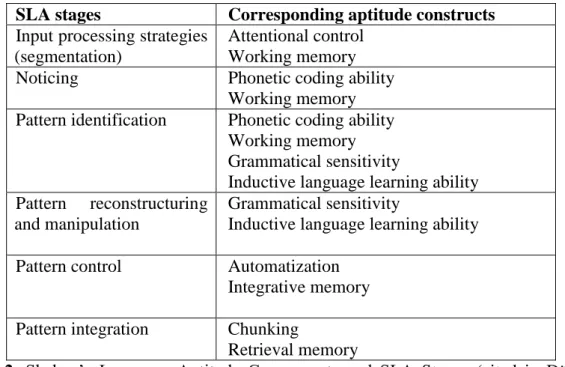
49 Table 2 Skehan’s Language Aptitude Components and SLA Stages 77
Table 3 Aptitude and Language Learning Stages 91
Table 4 Phonemic Ability Task, Correct Answers and Percentages 236 Table 5 Grammatical Sensitivity Subtest, Correct Answers and
Percentages
237 Table 6 Whole-Part Correlation of Language Aptitude Pilot Test 239 Table 7 Item-Item Correlation of Language Aptitude Pilot Test 239 Table 8 Whole-Part Correlation of Working Memory Pilot Test 241 Table 9 Item-Item Correlation of Working Memory Pilot Test 242 Table 10 Analogies Subtest, Correct Answers and Percentages 243 Table 11 Similarity Subtest, Correct Answers and Percentages 244 Table 12 Knowledge Subtest, Correct Answers and Percentages 244 Table 13 Understanding Relations, Correct Answers and Percentages 245 Table 14 Syllogisms, Correct Answers and Percentages 246 Table 15 Verbal Reasoning Pilot Test, Whole-Part Correlation 247 Table 16 Verbal Reasoning Pilot Test, Item-Item Correlation 247 Table 17 Phonemic Ability Subtest, the Participants Correct Answers +
Percentages
251
Table 18 Phonemic Ability Subtest, the Participants Answers in Task 6 252 Table 19 Grammatical Sensitivity Subtest, Correct Answers+
Percentages
255
Table 20 Inductive Language Learning Ability Subtest, Correct Answering Percentages
256
Table 21 Working Memory Capacity in RSPAN 258 Table 22 Working Memory Capacity in OSPAN 262 Table 23 Working Memory Capacity in Anagrams 265 Table 24 Working Memory Capacity in LSPAN 267 Table 25 Knowledge Subtest, Correct Answers+ Percentages 270 Table 26 Similarity Subtest, Correct Answers+ Percentages 271
VI
Table 27 Syllogisms Subtest, Correct Answers+ Percentages 272 Table 28. Understanding Relations Subtest, Correct Answers+
Percentages
273
Table 29 Analogies Subtest, Correct Answers+ Percentages 274 Table 30 Language Aptitude Whole-Part Correlation 281 Table 31 Language Aptitude Item-Item Correlation 281 Table 32 Working Memory Whole-Part Correlation 282 Table 33 Working Memory Item-Item Correlation 283 Table 34 Verbal Reasoning Whole-Part Correlation 284 Table 35 Verbal Reasoning Item-Item Correlation 284 Table 36 Language Aptitude Mean Scores 286
Table 37 Working Memory Mean Scores 286
Table 38 Verbal Reasoning Mean Scores 287 Table 39 Sex Differences in Aptitude, Working Memory, and Verbal
Reasoning
288
Table 40 The Correlation between Language Aptitude Subtests, Working Memory Subtests and Verbal Reasoning Subtests
301
Table 41 Correlation Matrix, Significance Level and Determinant 304
Table 42 KMO and Bartlett’s Test 305
Table 43 Total Variance Explained 307
Table 44 Component Matrix 310
Table 45 Rotated Component Matrix 310
Table 46 Subjects Scores Vis-À-Vis the Score 10 318 Table 47 The Correlation between Linguistic Intelligence Test and Its
Three Components
319
Table 48 The Correlation between the Three Components of Linguistic Intelligence Test
VII
LIST OF FIGURES
Figure N° Title Page
Figure 1 Diagram Illustrating Hierarchical Structure of Human Abilities 21 Figure 2 Mental Activities in Thinking 46 Figure 3 Laird And Byrne’s Three Stages of Reasoning in Mental Models
Theory
52
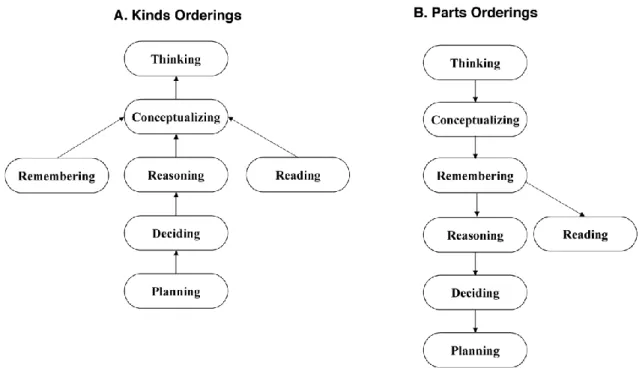
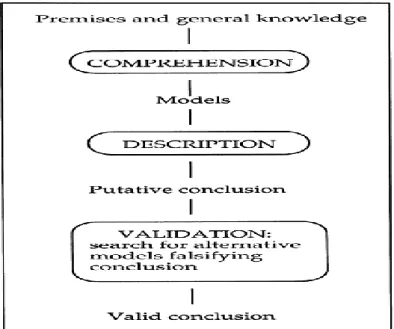
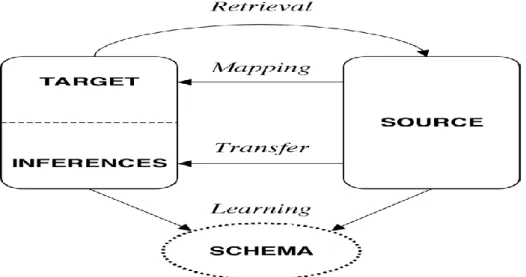
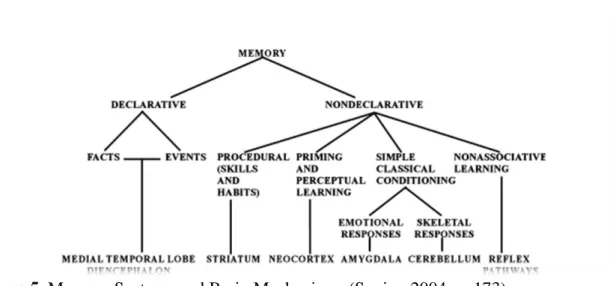
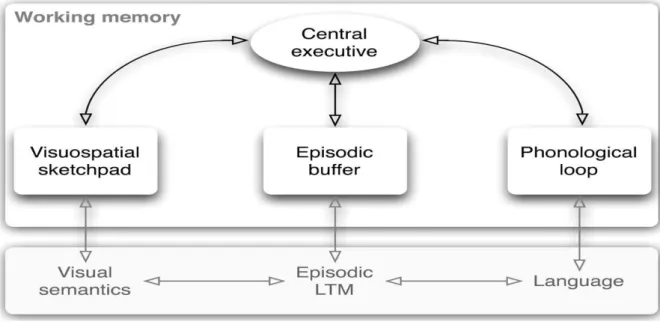
Figure 4 Major Components in Analogical Reasoning 58 Figure5 Memory Systems and Brain Mechanisms 114 Figure 6 A Stage Model Proposed By Atkinson and Shiffrin 115 Figure7 The Traditional Model of Memory By Atkinson & Shiffrin 115 Figure 8 The Initial Model of WM Proposed By Baddeley & Hitch (1974) 126 Figure 9 The Current Model of Working Memory 127 Figure 10 Distribution of Language Aptitude Scores in the Curve 277 Figure 11 Distribution of Working Memory Scores in the Curve 278 Figure 12 Distribution of Verbal Reasoning Scores in the Curve 279 Figure 13 Distribution of Linguistic Intelligence Total Scores 322 Figure 14 Distribution of Verbal Reasoning Reproduced Scores 323 Figure 15 Distribution of Working Memory Reproduced Scores 324 Figure 16 Distribution of Grammatical Ability Scores 325 Figure 17 Distribution of Language Learning Achievement Scores 327
VIII
CONTENTS
Dedication... I Acknowledgements... II Abstract... III List of abbreviations... IV List of tables... V List of figures... VIIGeneral Introduction... 1
1. Aim of the study... 2
2. Statement of the problem and hypotheses... 5
3. Research methodology... 7
4. Structure of the study... 8
Chapter One: Intelligence and Reasoning... 12
Introduction... 14
1.1. Intelligence... 14
1.1.1. Definition of intelligence... 14
1.1.2. Theories of intelligence... 17
1.1.2.1. Early views... 17
1.1.2.2. Psychometric theories of intelligence... 18
a. Spearman’s g factor theory... 18
b. Thurstone’s primary mental abilities theory... 19
c. Vernon’s factor analysis theory... 20
d. Guillford’s structure of intellect theory... 21
IX
1.1.2.3. Information processing theory... 23
1.1.2.4. Developmental theory... ... 25
1.1.2.5. Modern views... 28
a. Gardner’s Multiple Intelligences Theory... 28
1. Linguistic intelligence... 29
2. Other intelligences... 31
3. Sternberg’s Triarchic theory of intelligence... 33
1.1.3. Tests of intelligence... 36
1.1.3.1. Binet’s tests... 36
1.1.3.2. Wechsler tests... 39
1.1.3.3. Raven’s Progressive Matrices... 41
1.1.3.4. Woodcock-Johnson Tests of Cognitive Abilities... 41
1.1.4. The influence of intelligence on language learning... 41
1.2. Reasoning... 45
1.2.1. Definition of reasoning... 45
1.2.2. Theories of reasoning... 47
1.2.2.1. Information processing approach... 48
1.2.2.2. Mental models approach... 50
1.2.2.3. Rule-based model... 52
1.2.3. Types of reasoning... 53
1.2.3.1. Deductive reasoning... 53
1.2.3.2. Inductive reasoning... 56
1.2.4. Tests of reasoning... 59
1.2.5. The relationship between reasoning and intelligence... 61
X
Conclusion... 66
Chapter Two: Language Aptitude: A Literature Review………… 68
Introduction……… 69
2.1. Definition of language aptitude……….. 69
2.2. Theories of language aptitude……… 72
2.2.1. Components of language aptitude……….. 72
2.2.1.1. Carroll’s components………. 72
2.2.1.2. Pimsleur’s components………. 74
2.2.1.3. Recent views of language aptitude components……… 75
2.2.2. The nature of language aptitude……… 78
2.2.2.1. Aptitude as a general/specific ability………. 79
2.2.2.2. Aptitude as a developed/fixed ability……… 81
2.3. Language aptitude testing………. 83
2.3.1. The Modern Language Aptitude Test……… 84
2.3.2. The Pimsleur Language Aptitude Battery………. 86
2.4. Language aptitude and second language acquisition………. 88
2.4.1. The influence of language aptitude in SLA………... 89
2.4.2. Language aptitude and language pedagogy………... 92
2.5. The relationship between language aptitude and intelligence………... 94
2.6. The relationship between language aptitude and working memory….. 97
Conclusion………. 101
Chapter Three: Working Memory and Working Memory Capacity... 103
XI
3.1. Information processing and memory stages... 105
3.1.1. Models of information processing... 106
3.1.2. Memory stages... 107
3.1.2.1. Sensory register... 107
3.1.2.2. Short term store... 109
3.1.2.3. Long term store... 110
3.2. Working memory... 116
3.2.1. Definition of working memory... 117
3.2.2. Theories of working memory... 119
3.2.2.1. Models of working memory... 119
a. Baddeley and Hitch model... 119
the phonological loop... 120
the visuospatial sketchpad... 123
the central executive... 125
the episodic buffer... 126
3.2.2.2. The nature of working memory and working memory capacity... 128
3.2.2.2.1. The nature of working memory... 128
a. Working memory as a unitary ability... 128
b. Working memory as a set of abilities... 129
3.2.2.2.2. Working memory capacity... 130
a. Miller’s view... 131
b. Cowan’s view... 132
3.2.2.2.3 Levels of processing theory... 133
3.3. Tests of memory... 134
3.3.1. Short term memory span tasks... 136
XII
Assessing attention... 141
3.4. The role of working memory in higher cognitive behaviour... 142
3.4.1. Working memory and language learning... 142
3.4.2. Working memory and intelligence... 145
Conclusion... 150
Chapter Four: Foreign Language Learning/ Psychological Testing... 152
Introduction... 154
4.1. Second language acquisition... 154
4.1.1. Definition of language... 155
4.1.2. Components of language... 155
4.1.3. Definition of learning... 157
4.1.4. Learning vs. Acquisition... 158
4.1.5. Second language vs. foreign language acquisition... 159
4.1.6. Theories of second language acquisition... 160
4.1.6.1. Early psychological views... 160
4.1.6.2. Applied linguistics and SLA theories... 161
a. Structural linguistics and behavioural psychology... 161
b. Generative linguistics and cognitive psychology... 162
c. Constructivism: a multidisciplinary approach... 165
4.1.6.3. Psycholinguistic theories... 167
4.1.7. Factors influencing Second Language Acquisition... 168
4.1.8. Learning stages... 170
4.1.8.1. Preproduction stage... 171
XIII
4.1.8.3. Speech emergence stage... 172
4.1.8.4. Intermediate fluency... 172
4.2. Language learning achievement... 173
4.2.1. Definition... 173
4.2.2. Components of language achievement... 175
4.2.3. Standardized language achievement tests... 176
4.2.4. The difference between achievement measures and aptitude measures... 182
4.3. Psychological testing... 183
4.3.1. Definition of a test... 183
4.3.2. Conditions of a psychological test... 184
4.3.2.1. Reliability... 184
4.3.2.2. Validity... 187
4.3.2.3. Practicality... 189
4.3.3. Statistical procedures used in psychological tests... 189
4.3.3.1. Correlation... 190
4.3.3.2. Factor analysis... 193
Conclusion... 195
Chapter Five: Methodology and Pilot Study Analysis... 197
Introduction... 199
5.1. Methodology... 199
5.1.1. Restatement of the purpose of the study... 199
5.1.2. Research questions and hypotheses... 201
5.1.3. Research design... 202
XIV
5.1.4.1. Language aptitude measure... 205
a. Aim of the measure... 205
b. Description of the measure... 206
5.1.4.2. Working memory measure... 212
a. Aim of the measure... 212
b. Description of the measure... 213
5.1.4.3. Verbal reasoning measure... 217
a. Aim of the measure... 217
b. Description of the measure... 218
5.1.5. Procedure... 221
5.1.6. Participants... 228
5.2. Pilot study analysis... 229
5.2.1. Aim of the pilot study... 229
5.2.2. Sampling in the pilot study... 230
5.2.3. Measures and procedures... 231
5.2.3.1. Language aptitude pilot test... 231
5.2.3.2. Working memory pilot test... 233
5.2.3.3. Verbal reasoning pilot test... 234
5.2.4. Results and discussions... 235
5.2.4.1. Language aptitude pilot test results... 235
5.2.4.2. Working memory pilot test results... 241
5.2.4.3. Verbal reasoning pilot test results... 243
XV
Chapter Six: Results of Language Aptitude Measure, Working
Memory Measure and Verbal Reasoning Measure... 249
Introduction... 250
6.1. Language aptitude test findings... 250
6.2. Working memory test findings... 257
6.3. Verbal reasoning test findings... 270
6.4. Distribution of scores... 275
6.4.1. Distribution of language aptitude scores... 277
6.4.2. Distribution of working memory scores... 278
6.4.3. Distribution of verbal reasoning scores... 279
6.5. Reliability of the measures... 280
6.5.1. Checking the reliability of aptitude measure... 281
6.5.2. Checking the reliability of working memory measure... 282
6.5.3. Checking the reliability of verbal reasoning measure... 284
6.6. General discussions... 285
Conclusion... 289
Chapter Seven: Investigating the Impact of Linguistic intelligence on Language Learning Achievement………. 291
Introduction……….. 293
7.1. Linguistic intelligence test: the correlation between language aptitude, working memory and verbal reasoning……….. 294
7.1.1. Research hypotheses………. 294
a. Part one: Research question and hypothesis ………. 295
i. Measuring the correlation between aptitude, working memory and verbal reasoning……… 296
XVI
1. The correlation between aptitude and working memory………... 297
2. The correlation between working memory and verbal reasoning…….. 298
3. The correlation between aptitude and verbal reasoning………. 298
b. Part two: research questions and hypotheses……….. 299
i. Steps used in exploratory factor analysis……… 299
1. Making a correlation matrix ………. 300
2. Descriptive statistics………. 302
3. Factor extraction……… 306
4. Loading of variables in factors and their rotation………. 308
5. Interpretation of the results……… 310
6. Discussion ……… 312
7.2. The impact of Linguistic intelligence on language learning achievement……….. 313
7.2.1. Research question and hypotheses………. 314
i. The correlation between Linguistic intelligence and language learning achievement………. 315
1. Scoring the variables……….. 315
a. Linguistic intelligence score………. 316
b. Language learning achievement score……… 318
2. Assessing the reliability of Linguistic intelligence test……… 318
3. Distribution of scores……… 321
a. Distribution of Linguistic intelligence scores……… 321
b. Distribution of language learning achievement scores……… 326
4. Calculating the correlation between Linguistic intelligence and language learning achievement………. 328
XVII
a. The correlation between Linguistic intelligence total score and
language learning achievement……….. 328
b. The correlation between verbal reasoning and language learning achievement………... 330
c. The correlation between working memory and language learning achievement……….. 330
d. The correlation between grammatical ability and language learning achievement……….. 331
Conclusion ……… 331
General conclusion and recommendations……… 333
1. Summary and conclusion……… 334
2. Limitations of the study……… 338
3. Recommendations………. 339
4. Suggestions for future investigations……… 343
1
General Introduction
1. Aim of the study
2. Statement of the problem and hypotheses 3. Research methodology
2
General Introduction 1. Aim of the study
The primary aim of the present research is to examine learners who seem able to learn a foreign language and identify others who show a disability. The concepts of ability and disability are implied when addressing the issue of cognition. The current study, hence, attempts to investigate the role of this latter in foreign language learning. A set of cognitive abilities that are claimed to affect learning a foreign language are highlighted in this investigation. Linguistic intelligence receives the lion‘s share of attention. The effects of this construct on foreign language learning achievement are scrutinized in some detail.
Linguistic intelligence has been extensively dealt with in the history of intelligence testing (e.g. Binet‘s tests of intelligence, Wechsler‘s scales, Raven‘s battery and Woodcock Johnson‘s test) (c.f. chapter 1.1.3). Nowadays, Gardner (1983; 2011) and Sternberg (1985; 2011) provide a more explicit treatment of the construct. However, Gardner‘s Multiple Intelligences Theory (1983) did not supply enough evidence for what is called ‗Linguistic intelligence‘ in terms of substantial research, throughout the world, about that important aspect of intelligence. To this end, the present study attempts to provide a practical definition of the term through hypothesizing a set of cognitive skills to be its factors. Language aptitude, working memory capacity and verbal reasoning skill will be highlighted as different predicted factors of this ability if high correlations are proved.
Language aptitude is claimed to be an important factor of Linguistic intelligence for the fact that the term ‗aptitude‘ is perceived by some researchers (e.g. Dȍrnyei, 2005) as an essential aspect of the broad term ‗intelligence‘. Since aptitude is a critical aspect of intelligence, and since Linguistic intelligence is just a feature, language aptitude would, necessarily, be an aspect of linguistic intelligence. It is noteworthy that language aptitude
3
is opted for in this study to provide a linguistic explanation of the term ‗Linguistic intelligence‘.
Working memory capacity is another construct believed to be a momentous aspect of Linguistic intelligence, on the basis of recent research evidence (e.g. Engle, 2002) which provided a close relationship between this ability and general intelligence. For this reason, we highlight an aspect of working memory, that is, verbal working memory as a predicted factor of linguistic intelligence. While aptitude is used to provide a linguistic explanation of linguistic intelligence, working memory is chosen to offer a psychological account of the concept.
Verbal reasoning is the third hypothesized factor of Linguistic intelligence as most, if not all, research evidence consider reasoning ability as an important aspect of general intelligence. Since we have considered the linguistic type of intelligence in the present work, verbal reasoning will be focused on over other types. Similar to working memory, verbal reasoning provides a psychological explication of Linguistic intelligence as well.
Language aptitude, working memory and verbal reasoning are claimed to be very important skills that facilitate learning different aspects of a foreign language. Language aptitude, for example, is necessary, especially for the phonological processing and the acquisition of the syntax of a foreign language. Working memory processes are essential for learning all aspects of the foreign language, i.e. phonology, vocabulary and syntax, especially at beginning levels when high attention is required. Verbal reasoning skill is helpful mainly in internalizing foreign language structures (the theoretical chapters provide a thorough explanation of the influence of these abilities on foreign language learning). This has pushed us to pair up these abilities under an overall capacity naming it ‗linguistic
4
intelligence‘; and directed us to investigate the effects of this latter on learning English as a foreign language.
In the light of the notable effects of the previously mentioned cognitive abilities on foreign language learning, we should note that the primary aim of the present investigation is to design an entrance test for learners who opt to learn English as a foreign language at university. The test is referred to as ‗Linguistic intelligence test‘ and is carefully designed with the consideration of a number of cognitive and linguistic skills (language aptitude, working memory, and verbal reasoning). This measure will be considered as ―a ticket for access‖ that allows learners without cognitive and linguistic problems to engage in learning English at university to ensure success. Unlike IQ tests that are required in many universities all over the world, forcing learners to choose the field that seems most appropriate to their cognitive abilities, this measure seeks to reveal different areas of strength and weakness and might, subsequently, direct teachers to use intensive courses to overcome mainly the areas of weakness. In addition, the results of Linguistic intelligence measure might reveal individual differences in different aspects of linguistic ability and might, hence, give insights to teachers in placing learners with equal abilities using corresponding courses. Besides, the test results might urge teachers to use different strategies that are believed to relate to Linguistic intelligence (e.g. memory strategies and reasoning strategies) and are, accordingly, predicted to affect foreign language learning.
Owing to the assessment purpose of the present investigation, and since we have chosen three cognitive linguistic abilities as distinguishable factors of Linguistic intelligence, and as predictable components of Linguistic intelligence test, it is necessary to provide an appropriate measure for each of these capacities. For this purpose, language aptitude measure, working memory measure and verbal reasoning measure should be
5
carefully designed according to learners‘ ability, proficiency, and culture (a description of each measure is presented in chapter five).
2. Statement of the problem and hypotheses
Human beings acquire their first language in a similar way. The same level of proficiency is achieved by all human beings if appropriate conditions are provided (e.g. being integrated in the society and not having any impairment in the brain regions that are related to language). However, when it comes to learning a foreign language, things become different. People achieve different levels of proficiency. Individual differences in foreign language learning are attributed to a variety of factors: cognitive, affective, linguistic, social, to include but a few.
Some people learn the language easier, better and faster than others. Having been teaching the module of grammar for three consecutive years, we have observed that individual differences in understanding and internalizing grammatical rules do exist. While some learners learn complex structures with a great facility, some others struggle even with the simplest rules. Similarly, when it comes to processing input, i.e. when learners are asked to take notes while the teacher presents the lesson, some learners are noticed to struggle to produce a single sentence, while some others do the task with a great facility. The same remarkable observation is even made in stimulus presentation. When dictating, for example, some learners go rapidly with the teacher‘s pace with a quick perception and processing of stimuli, while some others fail to proceed and interrupt the teacher with perpetual repetition of every single word.
6
Recent studies in Second Language Acquisition are increasingly underestimating the role of cognition in foreign language learning, and shift attention to alternative views in which affective factors are gaining a wide popularity (e.g. affective filter hypothesis for Krashen, 1985). The reason might be attributed to the failure of cognitive measures in appropriately evaluating real cognitive abilities. The current study comes with an attempt to provide, hopefully, a reliable measure of one aspect of cognitive ability, which we refer to as ‗linguistic intelligence‘, and endeavours to prove significant relationship with foreign language learning achievement. Three major questions are raised in this investigation:
1. Are language aptitude, working memory and verbal reasoning significantly interrelated?
2. Would these capacities be considered as the final constituent factors of linguistic intelligence?
3. Does Linguistic intelligence affect foreign language learning achievement?
In answering these questions, we would make up the following hypotheses:
Hypothesis one
There would be a close association between language aptitude, working memory, and verbal reasoning, and these variables would, accordingly, be considered the main factors of Linguistic intelligence and the basic components of Linguistic intelligence test.
A number of sub-hypotheses would be extracted from hypothesis one, and would be stated as follows:
Language aptitude would have a strong correlation with working memory capacity.
Language aptitude would be closely related with verbal reasoning ability.
7 Hypothesis two
We predict that the overall Linguistic intelligence would have a noticeable impact on foreign language learning achievement. This broad statement could also be divided into three main sub-hypotheses:
The first predicted factor of linguistic intelligence, language aptitude, is expected to show a strong relationship with foreign language learning achievement.
Working memory, as the second hypothesized factor of linguistic intelligence, would be closely related to language learning achievement.
The third hypothesized factor of linguistic intelligence, verbal reasoning, would have a significant correlation with language learning achievement.
3. Research methodology
The population of interest for the current study are freshman students learning English as a Foreign Language at the department of Letters and English Language, University of Mentouri Brothers- Constantine. Four groups including approximately seventy students (c.f. chapter 5.1.6) are extracted from the population of 300 for this investigation. The subjects will be given a battery of tests in order to assess their language aptitude, working memory capacity and verbal reasoning skill.
Language aptitude test (c.f. appendix 2) will measure a set of abilities that facilitate foreign language learning. This measure contains three sub-measures that assess basically phonetic ability, grammatical sensitivity and inductive learning ability. Phonetic ability tasks will assess the learners‘ capability to acquire the different sounds of the foreign language. Grammatical sensitivity tasks will evaluate their capacity to recognize the
8
different functions of the foreign language. And inductive learning tasks will measure their facility in internalizing foreign language structures.
Working memory test (c.f. appendix 2) will be administered to measure the learners‘ verbal working memory capacity. Four tasks will be given to assess different aspects of this ability, namely Reading Span Tasks (RSPAN), Operation Span Tasks (OSPAN), anagrams, and Listening Span Tasks (LSPAN). RSPAN will measure mainly the visual-verbal working memory capacity; OSPAN will assess the numerical and visual-verbal working memory capacity; anagrams will assess verbal working memory in addition to inductive reasoning; and LSPAN will evaluate the auditory-verbal working memory capacity.
Five main subtests will be the components of verbal reasoning measure, viz. knowledge subtest, similarity subtest, syllogisms subtest, understanding relations subtest, and analogies subtest (c.f. appendix 2). The subtests purport to assess different types of reasoning: inductive, deductive and analogical. In addition to verbal reasoning skill, these tasks intend to measure the subjects‘ vocabulary proficiency as well.
4. Structure of the study
The present doctoral dissertation is divided into eight chapters. The first four chapters provide a theoretical overview of the different hypothesized components of Linguistic intelligence, together with the construct of language learning achievement; the three following chapters present a detailed description of data collection, procedure, data analysis and interpretation. The thesis concludes with stating the research recommendations, limitations and suggestions for future investigations.
9
The first chapter presents a general overview of intelligence- the ability which is the core of our investigation. This chapter is divided into two main sections: the first section is devoted to intelligence in general and Linguistic intelligence in particular, and the second section is devoted to reasoning that is claimed to be an important aspect of intelligence. In the first section, different definitions are provided, reflecting different researchers‘ views and, consequently, the controversial nature of the construct. Gardner‘s Multiple Intelligences theory is thoroughly dealt with as being considered a source of insight to the whole work. Linguistic intelligence is introduced and explained in details in this section. Major psychometric tests which attempt to measure human intelligence are also reviewed. The section concludes with highlighting the importance of intelligence in learning in general and more specifically foreign language learning.
The second section of chapter one presents the concept of reasoning which is considered as a crucial aspect of intelligence. A clarification of the term is provided, and different types of this ability are discussed with corresponding measures. The section is primarily concerned with verbal reasoning which is a predicted factor of linguistic intelligence. Theoretical findings on the relationship between reasoning and intelligence are worth to highlight in this section.
Chapter two deals with language aptitude- the second hypothesized ability of Linguistic intelligence. The chapter starts with presenting different definitions of the term with the consideration of the psychological definition, mainly focusing on the cognitive perspective. Different views concerning the nature and the components of this capacity are reviewed in this chapter. For the assessment rationale of the present study, and because providing an appropriate measure of language aptitude is placed among our research purposes, we have highlighted two prominent language aptitude measures we relied on in designing the current language aptitude measure, namely the Modern Language Aptitude
10
Test, in other words the MLAT (Carroll & Sapon, 1959), and The Pimsleur Language Aptitude Battery, or the PLAB (Pimsler, 1966). The chapter offers a review of literature of the relationship between intelligence and language aptitude, and emphasizes the role of this latter on foreign language learning.
The third chapter deals, in detail, with the third hypothesized ability of linguistic intelligence. The chapter includes four sections. The first section is the gateway of the chapter as it identifies different information processes and memory stages, and in which the term working memory is first introduced. The second section deals entirely with working memory and working memory capacity. Different models are presented clarifying the term, and different theories of the nature of working memory capacity are reviewed in this chapter. The third section is concerned with providing an overview of different tests of working memory as well as short term memory. The fourth section offers a theoretical review of the relationship between this capacity and the discussed abilities: intelligence, reasoning and language aptitude, and highlights the role of this ability in foreign language learning.
The fourth chapter sheds some light on a number of issues that are necessary for the present investigation. The chapter includes three main sections. The first section is concerned with foreign language learning. In this section, a number of definitions are provided, and different theories are reviewed. The second section is devoted to a clarification of the concept of language learning achievement in which different tests are presented. The last section tackles the issue of testing, and mainly psychological testing.
The fifth chapter is the first empirical chapter of the research. This chapter is divided into two main sections. The first section provides a detailed description of the administered measures: language aptitude measure, working memory measure, and verbal reasoning
11
measure. The second section discusses the analysis of the pilot tests in terms of understanding the questions and the reliability of the measures.
The sixth and seventh chapters are entirely concerned with the analysis of the tests findings. The sixth chapter provides analysis of the obtained results in the three administered measures. Assessing the reliability of the final measures is also dealt with in this chapter to warrant the consistency of the measures and, subsequently, allow us to carry out the analysis with confidence. The seventh chapter is the final and the main part of the investigation. The testing of the research hypotheses is carried out in this chapter through a number of correlational and factor analysis studies. The results of these correlations and factor analysis lead to the confirmation or rejection of the research hypotheses, and offer some pedagogical implications which are presented in chapter eight.
The eighth chapter is the concluding chapter of the thesis. It provides a summary of the whole work. A set of pedagogical recommendations are highlighted in this chapter. The chapter draws attention to the limitations of the study and offers some suggestions for future research.
The appendices contain the raw data of the three pilot tests (Appendix 1) as with the final tests (Appendix 2). The participants‘ obtained scores in language aptitude test, including its three subtests; working memory test, involving its four subtests; and verbal reasoning test, including its five subtests, are presented in Appendix 3 (c.f. Table A. 4, A5, and A6). The subjects reproduced scores in the final Linguistic intelligence factors are indicated in Appendix 4 (Table A. 8). Language learning achievement raw and reproduced scores are presented in Appendix 5 (Table A. 9).
12 Chapter One
Intelligence and Reasoning
Introduction 1.1.Intelligence
1.1.1. Definition of intelligence 1.1.2. Theories of intelligence
1.1.2.1. Early views
1.1.2.2. Psychometric theories of intelligence a. Spearman’s g factor theory
b. Thurstone’s primary mental abilities theory c. Vernon’s factor analysis theory
d. Guillford’s structure of intellect theory
e. Cattell and Horn fluid and crystallized intelligence theory 1.1.2.3. Information processing theory
1.1.2.4. Developmental theory 1.1.2.5. Modern views
a. Gardner’s Multiple Intelligences Theory 1. Linguistic intelligence
2. Other intelligences
3. Sternberg’s Triarchic theory of intelligence 1.1.3. Tests of intelligence
1.1.3.1. Binet’s tests 1.1.3.2. Wechsler tests
13
1.1.3.4. Woodcock-Johnson Tests of Cognitive Abilities 1.1.4. The influence of intelligence on language learning 1.2.Reasoning
1.2.1. Definition of reasoning 1.2.2. Theories of reasoning
1.2.2.1. Information processing approach 1.2.2.2. Mental models approach
1.2.2.3. Rule-based model 1.2.3. Types of reasoning
1.2.3.1. Deductive reasoning 1.2.3.2. Inductive reasoning 1.2.4. Tests of reasoning
1.2.5. The relationship between reasoning and intelligence 1.2.6. Developing reasoning
14
Intelligence and Reasoning Introduction
Human beings do not grow the same way; they do not think the same way; neither do they learn the same way. Height, body shape, personality, intelligence, to name but a few, are instances of individual differences. In psychology, the term ‗individual differences‘ is deployed to involve a variety of issues such as aptitude, memory, motivation, learning styles, and learning strategies. Intelligence is a further sphere of individual differences (ID) research that is the focal point of the present investigation. It does not make sense to talk about intelligence without referring to the ability to think. Reasoning and intelligence are, hence, inseparable constructs. Reasoning is another concept that receives a considerable attention in this chapter.
The present chapter is divided into two main sections. The first section deals with the concept of intelligence. Various definitions reflecting a variety of perceptions of the construct are presented, and some standardized tests that attempt to measure this ability are reviewed. In this section, we draw attention to the role of intelligence in learning in general and language learning in particular. The second section is devoted to the concept of reasoning. A definition of the term is provided and different types are identified. The section provides an overview of the relationship between reasoning and intelligence.
1.1. Intelligence
1.1.1. Definition of intelligence
In everyday language intelligence is perceived as a gift. If someone goes to the street and questions people about what it means to be intelligent, he would receive answers like:
15
an intelligent person is the one who is able to find solutions to any problem, who understands complex ideas easily, who has the capacity to answer complex mathematical problems rapidly, and who gives creative answers to ordinary questions. Commonsense definitions, in spite of their lack of scientific explanation, give insights to experts in studying the construct of intelligence.
In psychology the concept is rather complex than it seems. Definitions of intelligence vary for the nature of the construct per se. In the early 1920s, in the Journal of educational psychology, a number of experts provided different definitions for the term intelligence. Among these definitions:
The power of good responses from the point of view of truth or facts. (E. L. Thorndike);
The ability to carry on abstract thinking. (L. M. Terman);
Having learned or ability to learn to adjust oneself to the environment. (S. S. Colvin);
Ability to adapt oneself adequately to relatively new situations in life. (R. Pintner);
The capacity for knowledge and knowledge possessed (B. A. C. Henmon);
A biological mechanism by which the effects of a complexity of stimuli are brought together and given a somewhat unified effect in behaviour. (J. Peterson);
The capacity to inhibit an instinctive adjustment, the capacity to redefine the inhibited instinctive adjustment in the light of imaginally experienced trial and error, and the capacity to realize the modified instinctive adjustment in overt behaviour to the advantage of the individual as a social animal. (L. L. Thurstone);
16
Sensation, perception, association, memory, imagination, discrimination, judgment, and reasoning. (N. E. Haggerty) (stated in Leighton & Sternberg, 2004, p. 450)
The above notions do reflect various perceptions of the concept of intelligence. Despite this variety, two main aspects are highlighted by almost all experts, viz. adaptation and learning. Similarly, the aspect of reasoning is also dealt with, whether explicitly or implicitly, when explaining intelligence.
According to psychometricians (e.g. Binet, 1905; Thurstone, 1938; etc.), intelligence is what intelligence (IQ) tests measure. An intelligent person is someone who obtains a score of 120 or more in an IQ test.
The notion of intelligence in contemporary research is dissimilar to the one of psychometricians. Modern psychologists define intelligence through associating it with a set of abilities rather than considering its measurement. Howard Gardner (1983) announces that intelligence is a ‗bio-psychological‘ potential that functions in solving problems and adapting to the environment. He highlights eight distinct types of intelligence that go beyond school achievement and extend to daily life requirements. These abilities are: linguistic, logical-mathematical, musical, bodily-kinesthetic, spatial, interpersonal, intrapersonal, and natural intelligence. Sternberg (1985) is another contemporary psychologist who views intelligence as ―purposive adaptation to, and selection and shaping of real-world environments relevant to one‘s life‖ (p. 45). He distinguishes between three types of intelligence: analytical, that is related to IQ testing; practical, that involves real-life competence; and creative, that entails novelty.
From the aforementioned definitions, all researchers seem to agree that adaptation is an important characteristic of intelligence. The term adaptation will be discussed later in the section (c.f. section 1.2.4.).
17
To summarize, most of past attempts to define intelligence can be said to globally turn around: 1. the capacity to learn from experience, and 2. the ability to adapt to the surrounding environment. It is very hard to arrive to a consensus about defining intelligence. Bearing in mind earlier definitions of the construct and some prominent contemporary ones (e.g. Sternberg, Gardner), one can reach a kind of synthesis by saying that: intelligence is a general aptitude for learning, often measured by the ability to deal with abstractions and solve problems. As an operational definition, we would limit the concept of intelligence to the ability to reason logically. This is because all definitions of intelligence consider this ability as an indispensable aspect (e.g. Spearman, 1904; Thurstone, 1938; Vernon, 1961; Horn and Cattell, 1967; Piaget, 1958; Gardner, 1983; Sternberg, 1985). Reasoning would be itself defined as the ability to come to a conclusion inductively or deductively. The second section will be entirely dedicated to the clarification of the concept of reasoning and reviewing its relationship with intelligence.
1.1.2. Theories of intelligence
―Discussions concerning the theory, nature, and measurement of intelligence historically have resulted more in disagreement than in agreement, more in smoke than in illumination.‖ (Eysenck, 1986, in Miyake & Shah, 1999, p. 2). This quote quite indicates the complexity of the concept of intelligence. The following section presents how the term intelligence is used differently in different points of time by different psychologists.
1.1.2.1. Early views
In the early past, and during the appearance of scientific psychology, intelligence was looked at in terms of sensation and perception. The leader of early views is the British Scientist Francis Galton (1884). Being interested in human evolution and differences
18
between species and the same species, like his cousin Charles Darwin, Galton believes that intelligence differs in humans in differing sensory abilities. In his book ‗Hereditary Genius‘ (1889), Galton specifies that these abilities are innate and stable. Galton was the first to measure mental abilities through tests of sensory discrimination, i.e. differentiation between heights and weights (Anderson & Reid, 2005). He further employed the concept of correlation coefficient in explaining intelligence. This correlation was made between physical characteristics and mental abilities. Galton‘s correlation gives insights to contemporary testing of intelligence, yet his mental ability was measured through simple tasks like sensory discrimination. (Pellegrino & Kail, 1985)
1.1.2.2. Psychometric theories of intelligence a. Spearman’s g factor theory
In the early 20th century, Spearman came after Galton in the sphere of intelligence and intelligence testing. Galton‘s sensory discrimination was included at initial levels of Spearman‘s general intelligence; then it started to diminish and turned to be totally ignored later in Spearman‘s mental tests. (Carroll, 1993)
Spearman was attracted to the link between achievement inside and outside school. His experiments informed him about the correlation between mathematical skills and literary competence. As a consequence, he made a number of statistical studies, mainly factor analysis, for all intellectual abilities or cognitive aptitudes. The results of factor analysis substantiated a perfect correlation between some cognitive abilities and some weak correlations between other abilities. The elements showing a high correlation were termed general factor or ‗g factor‘, and those revealing low correlations were labelled specific factor or ‗s factor‘. Spearman‘s interest was centred on ‗g factor‘ over ‗s factor‘.
19
Similar to Galton, Spearman claims that intelligence, and mainly g factor, is innate and universal. He further speculates that it is the general factor that underlies all cognitive abilities and intellectual performances. Spearman was the first to provide a psychometric definition of intelligence through stating that:
As regards the delicate matter of estimating ‗Intelligence,‘ the guiding principle has been not to make any a priori assumptions as to what kind of mental activity may be thus termed with greatest propriety. Provisionally, at any rate, the aim was empirically to examine all the various abilities having any prima facie claims to such title, ascertaining their relations to one another and to other functions (Spearman, 1904, pp. 249-250).
Spearman (1927) explained the existence of ‗g factor‘ and ‗s factor‘ mathematically, indicating that the former is just a ―value of magnitude‖ rather than a concrete ability. He further referred to this ability in terms of ―the power of attention‖. Besides, he believed in a strong existing correlation between this latter and the power of reasoning, and reviewed some researchers findings of the relationship between the two, e.g. H. A. Peterson study (.80); McCrae study (.86); Stockton study on the correlation between intelligence and arithmetic reasoning (.63), and intelligence and analogical reasoning (.68).
b. Thurstone’s primary mental abilities theory
Thurstone‘s theory emerged as a result of a number of test batteries and factor analysis studies. The American psychometrician Louis Leon Thursone (1938) conducted a battery of fifty seven tests to university students and similar studies to children to determine the number of primary mental abilities (PMA) in different age groups. The
20
results of factor analysis reveal the existence of nine unrelated factors: ‗S‘ space, ‗P‘ perceptual speed, ‗N‘ number facility, ‗V‘ verbal relations, ‗W‘ word fluency, ‗M‘ memory, ‗I‘ induction, ‗R‘ restriction, and ‗D‘ deduction. (Carroll, 1993)
Thurstone proposed a set of measures to his PMA. The space factor is assessed through judging whether objects (e.g. letters, shapes, etc.) rotated in space are the same or different. Mental speed factor is measured through rapidly and correctly judging whether items are the same or different (e.g. ahfgjel- ahfpjel). Verbal comprehension is tested through checking the right synonym or antonym (e.g. ―ancient‖: dry, long, happy, old,
sloppy). Number facility is assessed through solving mathematical calculations (16*99).
Induction factor requires individuals to induce a rule from perceived data like inducing a rule from the following series of letters: abcacdadea. And deduction factor requires coming to a logical conclusion from given premises 1(e.g. Bill is taller than Jim, Jim is taller than John, who is the shortest?). (Pellegrino & Kail, 1985)
c. Vernon’s Factor Analysis Theory
Vernon (1961) is another clinician who assembled Spearman‘s and Thurstone‘s views to propose a ―Factor Analysis Theory‖. He defines a factor as a group of performances that are proved to correlate as a result of a test. A factor is so called if a high positive correlation exists between different abilities. Vernon‘s factor analysis theory is presented in the form of a scale following the top-down approach 2, starting with a general factor (g) and moving to more specific factors: verbal educational ability (v :ed) and spatial
1
See deductive reasoning 2
A top down approach is presented in the form of a hierarchy whereby higher abilities are placed on the top, i.e. the general factor is on the top, and these abilities are broken down into more specific factors like numerical ability or speed of processing. (Vernon, 1961)
21
practical ability (k :m). These factors are themselves divided into more specific capacities. Verbal educational ability, for instance, is divided into verbal fluency, comprehension, and rote memory; while spatial mechanical ability is caught into spatial perception and perceptual speed. Vernon claims that age affects spatial practical ability, i.e. it decreases it, but has no influence on verbal educational capacity. He adds that it is the latter ability that is more culture-bound. Vernon was the first to provide a hierarchical model of human cognitive ability. His hierarchy of cognitive abilities is presented in the following diagram.
Figure 1. Diagram Illustrating Hierarchical Structure of Human abilities (Vernon, 1961, p.
22)
d. Guilford’s structure of intellect theory
Guilford‘s theory emerged as a reaction to Spearman‘s g factor. The American psychologist John Paul Guilford ignored the fame of IQ in academic settings and felt the need to develop a system of mental abilities that were being increasingly discovered. In 1958, his ―Structure of Intellect‖ (SOI) system represented 120 distinct mental abilities placed in a form of a cube. The number increased to reach 150 separate factors by the end of 1980. (Carroll, 1993)
22
Guilford believes that human abilities develop through education. His work ―intelligence education is intelligent education‖ explained the influence of learning in developing intelligence. (Comrey, 2000)
In his SOI model, Guilford classified all the assumed factors in a taxonomic model. He opines that one factor takes three aspects called parameters: content, operation and product. This means that any test of any factor requires from the participants ―…to deal with some kind of content, perform some operation on this content, and have some kind of product as an outcome‖. (Carroll, 1993, p. 58)
e. Cattell and Horn fluid and crystallized intelligence theory
Another figure in the psychometric approach is Raymond Cattell. This eminent researcher conducted a Multiple Factor Theory for approximately eight years (from 1963 to 1971) with the help of his student John Horn. Cattell‘s model contained two main, general, and distinct types of intelligence: Fluid (Gf) and crystallized intelligence (Gc) (Pellegrino & Kail, 1985). Cattell and Horn view emerged as a result of a number of studies on intellectual performance such as studies on brain damage in early and late years; studies on the relationship between test scores and the capacity to acquire new information and skills; the structure of intelligence tests and the sub-components of these tests; as well as the change in intellectual abilities and aging. (Horn and Cattell, 1967)
‗Gf‘ and ‗Gc‘ are argued to affect human development differently. While the former is considered education-free ability and decreases in the development of age, the latter is considered education-and-culture-bound capacity and increases during the whole lifespan. The separation between Horn and Cattell‘s Gf and Gc is illustrated through being able to
23
solve very complex mathematical problems but failing with the easiest language tasks because of insufficient knowledge. These researchers identified a number of factors for both types of intelligence. The factors that underlie Gf are inductive reasoning, figural relations, semantic relations and associative memory. These factors are respectively measured through letter grouping, figure classification, common word analogies and paired associates. It is noteworthy that measures of Gf do not require a level of education. For example, letter series only requires knowledge of the order of alphabets. The factors that are involved in Gc are verbal comprehension, formal reasoning, experiential evaluation, general reasoning, and ideational fluency. Measures of these factors are vocabulary knowledge, syllogistic reasoning, social situations, arithmetic reasoning, etc.. (Horn and Cattell, 1967)
In addition to Gf and Gc, Cattell and Horn (1967) propose four other general factors: General visualization factor (or Gv), Speed factor (or Gs), Carefulness factor (or C), and Function factor (or F). The first factor involves tasks that deal with changing objects in space; the second represents the time taken in solving problems; the third refers to the unintention for giving incorrect answers; and the fourth refers to the speed of giving names to words from long term memory and immediate awareness. Horn and Cattell indicate that the three last factors seem similar, yet they are different. (Horn and Cattell, 1967)
1.1.2.3. Information processing theory
Information processing view is referred to as the Cognitive Approach by Sternberg (1985). This approach gets insights from Galton‘s view of intelligence. Unlike psychometric views that apply statistical procedures to measure intellectual capacity, this theory seeks to investigate the different mental behaviours adopted when accomplishing
24
certain tasks. Proponents of this view consider the brain as a machine that processes information, yet they claim that the human brain is more flexible, that is, it changes in changing situations. Luria (1966, as cited in Riccio et al, 2005) has introduced four processes used by human beings in undertaking cognitive behaviour: simultaneous
processing, which refers to the use of different types of information at the same time; sequential processing, which depends on the organization of information; attention, which
refers to the activation of different brain mechanisms; and planning, which relies on the use of assuming effects procedure and controls cognitive processes. Gardner (1983) speculates that information processing approach is interested in motor skills in general, and motor acts in particular, hence, it studies the millisecond by millisecond mental steps.
Pellegrino and Kail (1985) as well as Gardner (1983) have classified mental processes under two categories: lower-order and higher-order processes. The former are illustrated through sensation and perception and the latter through creativity and problem solving. Pellegrino and Kail (1985) went on to indicate that lower-order processes affect higher-order functions, whereas these latter ones have no influence on the former processes. Adults are proved to be more intelligent than children for they own greater knowledge base. This knowledge base contains human knowledge, how this knowledge is organized in the mind, and what procedures used to access it when needed.
The speed of information processing is another so highlighted issue in the explanation of intelligence. Jensen (1970, in Anderson & Reid, 2005) adopted the technique of reaction time (RT) to measure the speed of individuals‘ answers in certain tasks. He found that people with higher IQ scores were quicker in reacting than those with less IQ. Jensen (1982, in Anderson & Reid, 2005) came to a conclusion that individual differences in intelligence are due to individual differences in the speed of processing information. However, this view was criticized for being a strategy rather than a pure
25
measure of intelligence. In other words, Jensen did not take individuals cognitive styles where impulsive individuals are quicker than reflective ones in responding. Vickers (1970s, as cited in Anderson & Reid, 2005) came, accordingly, with another technique called ‗inspection time’ (IT) in explaining intelligence. Unlike the previous technique, IT considers the speed of processing information rather than reaction time. Vickers reduced exposure time and measured the response of individuals. The results confirmed his view in that those with higher IQ made discriminations with shorter exposure time. Many studies were, then, conducted to investigate the relationship between inspection time and intelligence. While some findings (e.g. Nettelbeck, 1987; Kranzler and Jensen, 1989, cited in Anderson & Reid, 2005) found a negative correlation (-0.5), others (e.g. Lalley, 1976, in Sternberg& Kaufman, 2011) showed a very high correlation (.92).
1.1.2.4. Developmental theory
This approach is concerned with the study of the development of intelligence from infancy to late adolescence. The Swiss psychologist Jean Piaget is considered the leader of this theory. Piaget‘s career began in the 1920s with the designation of Binet‘s tests (Gardner, 1983). Nevertheless, committed mistakes by the participants attracted him more than obtained scores. As a consequence, Piaget commenced by studying his own children. This psychologist claims that the mistakes made by children are universal. He rather views them as indicators of the child‘s development (Anderson & Reid, 2005).
In the book of The Psychology of Intelligence, Piaget (1950) defines the concept of intelligence as the balance between existing cognitive processes and adaptation. Adaptation, according to him, refers to the use of active cognitive functions to assimilate and accommodate new stimuli. Assimilation is the generalization of one element from a previous similar element, such as naming a butterfly a bird, whereas accommodation refers
26
to some changes made by cognitive structures to fit the actual stimuli, like correcting the name of a butterfly. Piaget‘s mental operations are assumed to develop through age until the child reaches the ‗formal operational period‘, i.e. when he becomes approximately 16 years old.
In addition to adaptation, assimilation and accommodation, Piaget introduced three further key concepts: functions, structures and contents. He advocated that both contents and structures change through age, whereas functions (i.e. assimilation, accommodation, and adaptation) remain stable over the lifespan. Piaget labelled these latter ones as ‗functional invariants‘ (Pellegrino & Kail, 1985).
Piaget‘s experiments showed that young children commit mistakes that old individuals avoid. His focus on similarities over differences led him to generate four universal stages of cognitive development: sensory motor stage, preoperational stage, concrete operational stage, and formal operational stage. A description of each stage is provided below.
Sensory motor stage
This stage starts from birth and lasts until the age of two. It is characterized by reflexes such as sucking in the first month, and a combination of new schemes like toys from 8 to 12 months. The first months of the individual‘s life are associated with physical rather than mental actions. It is only when the infant reaches 18 months that he starts to use symbols rather than behaviour to get desired objects.
Preoperational stage
The second stage of cognitive development takes place when the child reaches two years old and lasts until the age of seven. Egocentricity is a dominant characteristic at this
27
stage. Children are restricted by the ability to look at problems from only one angle. Language development is also apparent at the beginning of this stage. Piaget‘s conservation problems cannot be solved at this level.
Concrete operational thought
This stage emerges at the age of seven and lasts to eleven years old. Thinking goes beyond egocentricity. Children, at this level, develop their perception of problems to different perspectives. Thinking is relative to concrete objects. In other words, children associate their thinking with objects surrounding them.
Formal operational stage
This stage is classified the last in human cognitive development. It starts when the child is eleven years old and lasts until adulthood. Thinking, at this stage, goes beyond concrete objects to reach abstract levels. Children develop the ability to think in the past, present and future. They can further formulate hypotheses, test them, and generalize outcomes. (Pellegrino and Kail, 1985)
Piaget‘s theory of cognitive development reached a great popularity. Many books have been published to describe and explain it (Brainerd, 1978; Flavell, 1963; 1977; Phillips, 1975; Ginsberg & Opper, 1979, in Pellegrino & Kail, 1985). However, generalizations from a sample to a whole population cannot be always reliable. Some studies (Neimark, 1975; Shayer, Kuchemann & Wylam, 1976, in Anderson and Reid, 2005) showed that not all adults can develop a full ability of formal operational reasoning. In addition, this theory focuses on the use of logical and mathematical tasks without considering the creativity of individuals. This has led Gardner (1983) and Sternberg (1985) to introduce other theories to explain intelligence.