HAL Id: tel-02002939
https://tel.archives-ouvertes.fr/tel-02002939
Submitted on 1 Feb 2019HAL is a multi-disciplinary open access archive for the deposit and dissemination of sci-entific research documents, whether they are pub-lished or not. The documents may come from teaching and research institutions in France or
L’archive ouverte pluridisciplinaire HAL, est destinée au dépôt et à la diffusion de documents scientifiques de niveau recherche, publiés ou non, émanant des établissements d’enseignement et de recherche français ou étrangers, des laboratoires
Acoustic Communication and Social Behavior in
Bottlenose Dolphins (Tursiops truncatus)
Juliana Lopez Marulanda
To cite this version:
Juliana Lopez Marulanda. Acoustic Communication and Social Behavior in Bottlenose Dolphins (Tursiops truncatus). Vertebrate Zoology. Université Paris Saclay (COmUE), 2018. English. �NNT : 2018SACLS016�. �tel-02002939�
Acoustic Communication and
Social Behavior in Bottlenose
Dolphins (Tursiops truncatus)
Thèse de doctorat de l'Université Paris-Saclay préparée à l’Université Paris Sud
École doctorale n°568 Signalisations et Réseaux Intégratifs en Biologie (Biosigne) Spécialité de doctorat: Sciences de la vie et de la santé
Thèse présentée et soutenue à Orsay, le 18 janvier 2018, par
Juliana López Marulanda
Composition du Jury : Sylvie GRANON
Professeur, Université Paris Sud (UMR 9197) Président
Sébastien DEREGNACOURT
Professeur, Université Paris Nanterre (EA 3456) Rapporteur
Natacha AGUILAR
Chargée de Recherche, Universidad de La Laguna (BIOECOMAC) Rapporteur Adrien MEGUERDITCHIAN
Chargé de Recherche, Université Aix Marseille (UMR 7290) Examinateur Aurélie CELERIER
Maitre de Conférences, Université Montpellier 3 (UMR 5175) Examinateur Olivier ADAM
Professeur, Université Paris Sud (UMR 9197) Directeur de thèse
Fabienne DELFOUR
HDR, Université Paris XIII (EA 4443) Co-Directeur de thèse
NNT : 20 18 S A CL S 0 16
(Tursiops truncatus)
Les grands dauphins sont des cétacés sociaux qui vivent dans un système social de fusion- fission. Ils se servent principalement du canal acoustique pour communiquer sur de longues distances ou dans des habitats dont la visibilité est limitée. Ils possèdent des capacités cognitives avancées. Par exemple, ils sont capables de rester vigilants pendant toute une journée, ils ont une mémoire de travail comparable à celle des primates non humains et une mémoire à long terme d'au moins 20 ans. Ils sont aussi capables d’apprentissage vocal et de comprendre des règles de syntaxe. Il y a un manque général d’information concernant l’utilisation de ces compétences au sein des groupes sociaux. Cependant, nous savons que la production vocale des grands dauphins comprend des sifflements, des clics et des sons pulsés en rafale, avec certains sifflements appelés « signatures sifflées » qui pourraient être utilisés pour s’adresser les uns aux autres.
Afin de comprendre comment ces animaux communiquent, il est nécessaire de combiner des méthodes de localisation acoustique avec des observations comportementales sous-marines, or pour l'instant les méthodologies actuelles ne sont pas satisfaisantes. Au cours de cette thèse, nous avons développé un système facile à déployer qui identifie l'animal produisant le son et permet des observations comportementales sous-marines simultanées. Nous avons testé cette méthodologie avec des grands dauphins en liberté et en captivité.
La présente thèse de doctorat vise à mieux comprendre la communication des grands dauphins au sein de leur groupe social. D'abord, j'ai développé deux études visant à décrire comment l'activité vocale des dauphins captifs varie en relation avec
le comportement et l'interaction avec les humains. Pour cela, je me suis d'abord concentré sur la production de signatures sifflées, puis sur la production de sifflements non signature liée aux comportements sous-marins observés. Ces deux études mettent en évidence la nécessité d’identifier l’émetteur de la production vocale.
Deuxièmement, je présente la conception et la mise en œuvre d'une méthodologie innovante (système BaBeL) qui permet de localiser un dauphin vocalisant dans un environnement tridimensionnel. Ce procédé peut être utilisé avec des dauphins en captivité et en liberté. Enfin, je présente deux applications de cette méthodologie de localisation pour aborder des questions de recherche concernant le comportement exploratoire d'un jeune dauphin et l'utilisation de vocalisations lors de mouvements coordonnés chez les grands dauphins.
Les résultats montrent que les séances d'entraînement avec des soigneurs modulent la production de sifflements de dauphins captifs. Cette modulation varie selon les groupes d’animaux et selon le management des différentes installations.
En captivité et dans la nature, les grands dauphins produisent abondamment des sifflements non signatures qui mériteraient d’être mieux examinés. L’étude de ces vocalisations avec des observations comportementales sous-marines simultanées devrait fournir l'information nécessaire pour interpréter le rôle des sifflements non signature dans le réseau de communication des grands dauphins.
Il est nécessaire d'identifier le dauphin émettant une vocalisation et la réponse comportementale de ses congénères afin de comprendre le rôle de cette vocalisation.
L'utilisation du système BaBeL m'a permis d'étudier la production de trains de clics lors de l’exploration de nouveaux objets dans la nature et leur rôle dans la synchronisation de la locomotion en captivité.
Ce travail montre enfin la possibilité d’énoncer de nouveaux paradigmes pour des recherches futures sur la communication sonore et sociale des mammifères marins.
Acknowledgments
First, I would like to give special thanks to Olivier Adam and Fabienne Delfour, my supervisors. The first, for answer to my request, trust me and gave me the chance to do this PhD, for opening me so many doors and supporting me. The second, for being there for me and never stop believing in my abilities (e.g. « harassing » me and giving me « lashes » to make be stop to procrastinate) and, guiding me step by step in the development of this four years’ project.
This PhD would not have been possible without the finantial support of Colciencias, Parc Asterix, Abyss Foundation and the CNRS (Centre Nationale pour la Recherche Scientifique). I am very grateful to those institutions. Also I would like to thank the all the members of the jury for taking my time to read this work and contribute to its improvement.
When I arrived to this lab (NeuroPSI) I found and amazing team of people (The Acoustic Communication Team) that received me very well: Isabelle, who became my mentor/academic therapist enduring the pain of all the interruptions I made to her work; Helene, who listened to me and gave me useful advices, Fanny; who taught me how to recognize the birds and their vocalizations; Thierry, who never stopped joking about my Colombian accent in French but always supported me; Chloé and
her “special service to the desperate PhD student”; Clément, who made me laugh so many times kidnapping my rabbits; Juliette, who was there to cheer me up; Anjara, who motivated me to arrive early to the lab; Kaja, that gave me company during my smoke breaks. I wanted you to know I’m very grateful and I consider you my friends.
During the construction of my database I counted with the help of many people that I would like to thank: Birgitta Mercera and the trainers’ team of Parc Asterix, especially Caroline, Stéphane, Fleur, Sully, Julien, Daphne and Juana which contributed directly to my observations. Marie Vallée and the Abyss association team members, Emmanuel Antongiorgi (DUOCEAN), Philippe Henry (Guadeloupe Plongée Evasion), the Boudewijn sea park team: Sander, Sabrina, Thomas, Gunter, Mathias, Olivia, Tyra and Nele, they received me in their facility as another team member. Torea Blanchard who made significant contributions to my methodology and Nikolaas Colpaert who helped me to analyze my data and make me feel in Brugges like in home.
I would like to thank “les colocs”, that accepted me in their house and were always so kind: Claire, Romain, Fabien, Mathieu. And the ones who came after: Stouphie, David, Michele and Thomas, it was a pleasure to share these years with you.
Also I would like to give special thanks to Isabella Clegg, for transporting me, listening to me, correcting my English, giving me gifts, eating sushi with me and competing against me for the “chouchou” place.
Special thanks to Denis, my partner, who supported during the last year of my PhD and made me eat vegetables and soup and to Dr. Gorog and Dr. Faucher who guided me through the difficulties.
Finally, I would like to thank my family for their support, my sister Sara and Jean Eudes who were there to listen to my complains and cheer me up, my sister Elizabeth and our super funny “cumbia dancing sessions” and my parents.
GENERAL INTRODUCTION ... 10
1 Animal Communication. ... 11
2 Communication in cetaceans. ... 12
2.1 Social organization in delphinids ... 14
2.2 Communication in delphinids ... 16
2.2.1 Tactile communication ... 16
2.2.2 Visual communication ... 17
2.2.3 Chemical communication ... 17
2.2.4 Acoustic communication ... 18
2.2.4.1 Mechanisms of production of sounds ... 20
2.2.4.2 Mechanism of reception of sounds ... 22
3 Bottlenose dolphins ... 24
3.1 Bottlenose dolphins’ Social structure ... 24
3.2 Cognitive capacities of bottlenose dolphins ... 25
3.2.1 Attention ... 25
3.2.2 Working Memory ... 26
3.2.3 Long term memory ... 26
3.2.4 Communication ... 27
3.2.5 Social and self-knowledge and awareness ... 27
3.2.6 Social learning and tool use ... 28
3.3 Vocal production of bottlenose dolphins ... 28
3.3.1 Whistles ... 30
3.3.1.1 Non-signature whistles ... 31
3.3.3 Burst pulsed sounds ... 34
3.4 Social behavior and vocal communication of bottlenose dolphins ... 34
3.4.1 Forced Isolation ... 35
3.4.2 Tagging ... 35
3.4.3 Bubble stream emission. ... 35
3.4.4 Hydrophone arrays ... 36
4 Aims of the thesis ... 36
RESULTS... 39
Chapter 1: Modulation of Whistle Production Related to Training Sessions in Bottlenose Dolphins (Tursiops truncatus) Under Human Care ... 41
Chapter 2: Non-signature whistles are possible used as cohesion calls in bottlenose dolphins (Tursiops truncatus) under human care ... 55
Chapter 3: First Results of an Underwater 360° HD Audio-Video Device for Etho-Acoustical Studies on Bottlenose Dolphins (Tursiops truncatus) ... 92
Chapter 4: Description Of a Bottlenose Dolphin Calf’s Acoustic And Visual Exploratory Behaviour Towards A Non-Alimentary Complex Object ... 110
Chapter 5: Bottlenose Dolphins Under Human Care Acoustically Coordinate Their Aerial Jumps. ... 137
DISCUSSION ... 163
1. How do dolphins under human care modulate their whistle repertoire according to human activity? ... 164
social group of dolphins. ... 168
3. Conclusions ... 172
4. Perspectives ... 173
Figures list
Figure 1: Schematic Illustration of a dolphin’s head anatomy. Modified and adapted from Cranford et al., (1996). Image taken from
https://matthewhardcastle.wordpress.com/2012/09/30/hello-world/ ... 21 Figure 2: Spectrogram examples: a) whistle b) click train c) two burst-pulsed
sounds. X axis represents the time in seconds and Y axis represents the frequency in kHz. ... 29 Figure 3: Categories of whistles with respect to the contour of its fundamental
frequency a) Upsweep b) Down sweep c) flat d) convex e) concave f) continually
modulated. ... 30
Tables list
Table 1: Comparison of dolphins’ group composition between Parc Asterix and
GENERAL INTRODUCTION
1
Animal Communication.
Animal communication is defined as an exchange of information from one individual to another via a signal that typically elicits a response (Perrin et al., 2009). Animal interactions facilitate information exchanges between individuals within the framework of communication systems. These communication systems are based on the chain of information transmission in which one individual (the emitter) produces a physic support of information (signal) that propagates in a medium (channel). During the process of transmission, the signal is subject to changes (noise) before it is perceived by another individual (receiver) who will then decode and interpret the signal and modify its behavior accordingly, giving some feedback to the emitter (Shannon and Weaver, 1949). Unlike cues, which are generated inadvertently or for purposes other than communication, the function of most signals is to provide information to another individual (Bradbury and Behrencamp, 2011).
Communication not only happens between individuals of the same species, it occurs between individuals of different species, such as with the case of inter-specific alarms (Bradbury and Vehrencamp, 2011). In a communication process, both the emitter and the receiver should benefit from the exchange of information (Simmons, 2003). The capacity of production and decoding a signal are dependent on the physiological and anatomical features of emitters and receivers (Johnstone, 1997). The message is what the emitter wants to transmit using a signal, and the meaning is what the receiver interprets from the signal and it depends on the receiver history of life (e.g. previous experiences) (Dudzinski and Hill, 2018). The message and the meaning of a signal are never identical because both the emitter and the receiver are different individuals with different histories (Dudzinski and Hill, 2018). Natural
selection will favor individuals that produce clearer signals and receivers that are capable of decoding information from them effectively (Maynard and Smith, 2003).
In many situations, such as the cooperative foraging, the search for a sexual partner, the defense of a territory, the relationship between mother-calf and the avoidance of potential predators, the implementation of communication systems is essential (Bradbury and Vehrencamp, 2011). According to the context, the emitter transmits an extensive set of information about itself, for example, its location, identity, sex, age, toxicity and/or palatability, social rank, size, health state, reproductive receptivity and/or emotional state. Information concerning the environment can also be exchanged, for example the presence of a predator, food, water, shelter or other resources (Bradbury and Vehrencamp, 2011).
Communication signals fall into five categories according to the channel of transmission: tactile, visual, chemical, electrical or acoustic (Bradbury and Vehrencamp, 2011). The different species in the animal kingdom may prioritise certain channels of transmission that are used independently or synergistically according to their sensory adaptations and depending on the content and function of the message.
2
Communication in cetaceans.
Cetaceans are genetically closely related to hippopotamus (Hippopotamus amphibious) (Geisler and Uhen, 2003, 2005); however, the phylogenetic evolution of these animals is very unique as they re-entered the aquatic environment at least seven times in the course of evolutionary history (Uhen, 2007). The last return to the ocean occurred in the early Eocene, approximately 50 m.y. ago (Gingerich et al., 1983). Such a return to aquatic life implies strong adaptations, notably in terms of
behavior and anatomy. A review of evolution of aquatic mammals (Uhen, 2007; Lambert et al., 2017) explains that early cetaceans developed an elongated end of the rostrum with external nares posterior to the tip of it, and with the eyes in a high position on the lateral sides of the skull. The most representative adaptation of early cetaceans to aquatic life was the enlargement and inflation of the ectotympanic lobe into a tympanic bulla, a characteristic that seems to be an adaptation to aid in hearing sounds underwater rather than in air (Uhen, 2007).
The auditory channel of cetaceans is well adapted to aquatic life. In fact, sound travels five times faster through water than in the atmosphere, allowing for communication at long distances; this is very important for these animals, especially between mothers and calves, since their anatomy and habitat do not allow the mother to physically hold on to its offspring or to construct a den to leave the calves behind while foraging (Janik, 2009). In these highly mobile animals, individuals of the same group can be separated by hundreds of meters within a habitat of limited visibility (Connor et al., 1998). Under these conditions, the use of acoustics signals seems to be the most effective strategy to assess their social and natural environment. Thus, communication in cetaceans relies mainly on the acoustic channel (Tyack, 1999), but can be also tactile (Sakai et al., 2006; Dudzinski et al., 2009), visual (reviewed in Tyack, 1999) and chemical (Kuznetzov, 1990; Kremers et al., 2016). It may also involve several perceptive channels, in which case it would be described as multimodal communication (Harley et al., 1996).
Communication is crucial for all social behaviors (Janik, 2009), and it is associated with the cognitive abilities of a species since this impacts the way in which the information flows (Tyack, 1999). Cognitive abilities of a species are in turn related to
the particular characteristics of the habitat, such as exposure to predators or food availability (Barret and Würsig, 2014).
Living cetaceans are divided in two suborders that differ in their social organization and communication strategies: Mysticeti and Odontoceti. There are about 70 species of odontocetes classified into six different families within which we find a wide variety of social systems. In this thesis, I am going to focus on the social organization and communication of delphinids, one of the most studied families of odontocetes.
2.1 Social organization in delphinids
Delphinids are social creatures and it is less common to find a lone individual in nature (Johnson and Norris, 1986). Within the 34 species that make up this family, there is a wide variety of social systems that are dependent on life history of animals.
For larger delphinids, such as killer whales (Orcinus orca), pilot whales (Globicephala
spp.) and possibly Risso’s dolphins (Grampus griseus) kinship appears to be very important in establishing the structure of groups (Wells et al., 1999; Reisinger et al., 2017). For instance, the most stable social organization found to date in the delphinids is that of killer whales, who live in stable extended family units called pods (Bigg et al., 1987) that are composed of mothers and their offspring. The term pod, another word for group, is defined as the individuals that regularly swim together (Norris and Dohl, 1979). This definition excludes the possibility that delphinids swimming some distance apart may be in acoustic contact for as much as hundreds of meters. However, delphinids in close proximity interact in other ways; they communicate by using subtle signals of body movements, engage in cooperative herding of prey, or participate in the parental care of the young (Würsig and Pearson, 2015).
In killer whales, both sexes spend their lives within their natal group (Heimlich-Boran, 1986) where each pod develops its own acoustic dialect (Tyack, 1999). For pilot whales, pods are composed of related females with their offspring, with one or more unrelated adult males whose presence is temporary (Amos et al., 1993). Killer whales, pilot whales and Risso’s dolphins tend towards social matriarchies (Baird, 2000; Kasuya and Marsh, 1984) and are sexually dimorphic, where males are larger and have bigger dorsal fins. It is likely that these systems tend toward polygyny (Würsig and Pearson, 2015).
The stable associations found in these larger species are less evident in smaller delphinids. Societies of smaller delphinid species are built around repeated, but not constant associations among individuals or closely affiliated groups. This kind of society is called fission-fusion and has also been described for chimpanzees (Goodall, 1986). In fission-fusion societies, the amount of time that individuals spend together depends on their gender, age, reproductive conditions and genetic relationships (Wells et al., 1999), as well habitat conditions, prey availability, mating opportunities and predation risk (Gowans et al., 2008). For instance, small delphinids in nearshore areas tend to occur in small groups of a few individuals to several tens, while many offshore groups occur in hundreds to thousands (Würsig and Pearson, 2015).
Most pelagic, small delphinids exhibit polygynandry; males show polygynous mating attempts while females are polyandrous (Orbach et al, 2014). These species also tend to be monomorphic, with only subtle morphological differences beyond the genital slit that differenciates males and females (Würsig and Pearson, 2015). The eastern spinner dolphin (S. longirostris orientalis) is probably an example of an exception to polygynandry. Males have a huge postanal keel and strongly
backward-canted dorsal fin, and authors have assumed that polygyny is the norm in this subspecies (Norris et al, 1994; Perrin and Mesnick, 2003).
2.2 Communication in delphinids 2.2.1 Tactile communication
Delphinids have skin that is quite sensitive to even the lightest touch (Dudzinski and Hill, 2018) with most sensitive areas around the eyes, blowhole, rostrum, lower jaw, melon and the genital area (Wartzok and Ketten, 1999). Tactile communication plays an important role in the relationships between individuals (Dudzinski, 1998). For instance, Atlantic spotted dolphins (Stenella frontalis) in the Bahamas show 16 types of contacts behaviors with affiliative or aggressive functions (Dudzinski, 1998). This has also been reported for spinner dolphins (Stenella longirostris) (Norris and Würsig, 1994) and for other small delphinids (Pryor, 1990).
Delphinids are known to rub their bodies against each other and engage in rubbing behaviors using their pectoral fins (Dudzinski et al., 2010; Dudzinski and Ribic, 2017). Most of the tactile behavior is thought to be affiliative and is often accompanied by preferences of partners and positions (Dudzinski and Hill, 2018). However, tactile behaviors are also observed during aggressive interactions, characterized by contacts that might cause pain, such as biting, raking, ramming, wrestling and butting (Dudzinski and Hill, 2018).
In bottlenose dolphins (Tursiops truncatus) and Atlantic spotted dolphins (S. frontalis) the genital regions might serve as a tactile receptor for low frequency echolocation trains called “buzzes” during mating and during mother-calf interactions (Herzing, 2000)
2.2.2 Visual communication
In clear water, visual signals might serve as a close-range complement to acoustic signals. In delphinids visual signals include actions and gestures such as open-jaw threat displays, aerial leaps, tail lobs, flared pectoral fins and S-shaped postures (Dudzinski and Hill, 2018). Postures are used to synchronize actions among individuals or groups and can function as a signal for group coordination or social interaction (Connor and Krützen, 2015). Delphinids flare their pectoral fins and open their jaws as a threat signal to appear larger, and males adopt S-shaped postures during courtship encounters with females, presumably as a visual signal to indicate the male’s interest (Hill et al., 2015).
Bubbles appear to be an extra visual communication signal, and they take several forms: bubble streams, bubble clouds and bubble rings. They are often produced as a threat signal (Marten et al., 1996) but are also used as a play signal in captive animals (Janik, 2015).
2.2.3 Chemical communication
The olfactory structures in delphinids have been lost in the course of evolution due to the several shifts of the nasal apparatus (Morgane and Jacobs, 1972). Although some olfactory structures are present during embryonic development, as has been shown in stripped dolphins (S. coeruleoalba), they degenerate until birth (Kamiya and Pirlot, 1974; Sinclair, 1966).
In contrast, taste receptors have been confirmed in delphinids by behavioral experiments (Kuznetzov, 1990). Some studies have speculated about the role of taste reception in communication. For example, excretions of the perianal glands in male dolphins may serve as a chemical signal detected by conspecifics (Herman and
Tavolga, 1980). It has also been suggested that the “open mouth behavior” in solitary delphinids might serve to enhance taste reception (Herzing, 2000). Recent research suggests that dolphins might sample chemical signatures in the urine and feces of conspecifics for individual recognition (Kremers et al., 2016). Further studies are needed to support the role of taste reception in delphinid communication.
2.2.4 Acoustic communication
The main adaptation of delphinids and all odontocetes to aquatic life may be the development of echolocation to assist locomotion in visually-limited habitats. This has been highlighted in fossils by the development of facial structures involved in the production of outgoing sound, and the modifications of the inner ear for the perception of very high frequencies (Uhen, 2007). Echolocation is the ability to produce high frequency clicks in order to obtain a sense of the surrounding environment from the echoes received (Au, 1993). In this process, the aim of echolocating signals does not seem to be the transfer information to another animal like in a communication process. While all delphinids produce click vocalizations, not all species whistle (Madsen et al., 2012). For instance, it has been reported that Hector’s dolphins (Cephalorhynchus hectori) do not produce whistles, but might use echolocation clicks for communication (Dawson, 1991). Other species or non-whistling dolphins that might use clicks for communication are Commerson’s dolphins (Cephalorhynchus sp) and dusky dolphins (Lagenorhynchus obscurus) (Dziedzic and Buffrenil, 1989).
However, the most commonly investigated communication sounds produced by delphinids are whistles (Lammers and Oswald, 2015). Whistles are continuous, narrow-band, frequency-modulated signals (May-Collado et al., 2007a) with a duration that range from tens of milliseconds to several seconds (Tyack and Clark,
2000). They are composed of a fundamental frequency and often one or more harmonics (Lammers and Oswald, 2015). The harmonic content of whistles is correlated with the orientation of the animal producing it, and this has lead some researchers to suggest that the information carried in the harmonics of whistles might be used by other individuals to infer the direction of movement of the emitter (Miller, 2002; Lammers and Au, 2003).
Most delphinid species produce whistles with fundamental frequencies that range from 2 to 20 kHz (Lammers and Oswald, 2015). However, some delphinid species such as spinner dolphins (Stenella longirostris), Atlantic spotted dolphins (S. frontalis), white-beaked dolphins (Lagenorhynchus albirostris), Guiana dolphins (Sotalia guianensis) and killer whales (Orcinus orca) produce whistles beyond this range (Lammers et al., 2003; Rasmussen and Miller, 2002; May-Collado and Wartzok, 2009). Whistles are believed to play an important role in the social communication of delphinids (Herzing, 2000).
Burst pulsed sounds are pulsed signals with short inter-pulse intervals (e.g. 200-1700 clicks per second) that do not seem to have an echolocation purpose (Dudzinski and Hill., 2018). Instead they have been associated with agonistic behavior and have been identified as communicating excitement, agitation and other emotions (Herzing, 1996). Delphinids of many species produce burst pulsed when they are excited or angry and thus is thought that these kind of vocalizations transmit information about the emotional state of the animal producing them (Dudzinski and Hill, 2018).
Delphinids also engage in nonvocal acoustic communication (Dudzinski and Hill, 2018). For example, they display breaches, tail slaps, pectoral fin slaps and jaw claps, where these behaviors result in sounds that travel hundreds of meters and appear to be produced under the intentional control of the animal exhibiting them
(Dudzinski and Hill, 2018). In delphinids, fluke slaps are considered a sign of frustration or irritation (Mann, 2000), but have been also documented during play (Greene et al., 2011).
2.2.4.1 Mechanisms of production of sounds
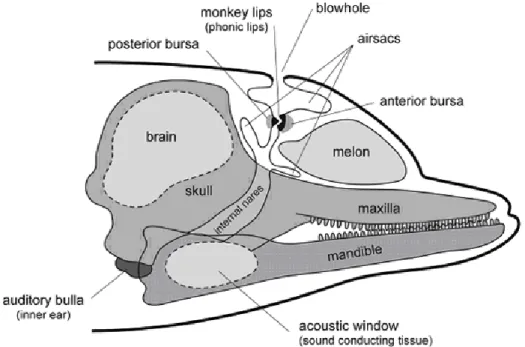
Delphinids have two bilateral sets of phonic lips, one associated with each nasal passage (Cranford, et al., 1996) (Figure 1). These sets are different in size in nearly all species of the family, with the right side being larger than the left (Cranford et al., 2015). Despite this bilateral configuration, there is a current debate in the literature about the existence of a single versus a multiple click generator in delphinids.
Figure 1: Schematic Illustration of a dolphin’s head anatomy. Modified and adapted from Cranford et al., (1996). Image taken from
https://matthewhardcastle.wordpress.com/2012/09/30/hello-world/
For instance, a study conducted on two species of delphinds, bottlenose dolphins (Tursiops truncatus) and false killer whales (Pseudorca crassidens) placed two contact hydrophones on the head of the animals, each one next to one pair of phonic lips. Then they asked the animals to perform a detection task of a target 2.6m away. By the observation of the time-of-arrival differences between both hydrophones, the authors suggested that not only the two studied species but all the delphinids click only with the right side phonic lips (Madsen et al., 2013). This conclusion disregards with the observations of several authors in which the left-side phonic lips do indeed produce clicks but less frequently than the right-side (Cranford et al., 2011; Mackay and Liaw, 1981). Madsen et al. (2013) suggested that highly trained animals could be biased by the simplicity of the detection task asked during their experiments and only
needed to produce clicks with the right side’s phonic lips. However, all these studies have been conducted with animals in captivity and to date it is unknown how dolphins in the wild choose the parameters of their sound generation system (Cranford et al., 2015).
Regarding whistle production, it was believed that they were generated by a resonance phenomenon in the air-filled cavities of the upper nasal pathways (Lilly, 1962; Mackay and Liaw, 1981). However, this idea was challenged by Murray et al., (1998) who suggested that whistles were tissue-borne vocalizations. A more recent experiment validated this hypothesis (Madsen et al., 2012): the authors analyzed recordings of a bottlenose dolphin that was given heliox to breathe. Since the speed of sound is higher in this mixture that in air, they expected to find an increase of the fundamental frequency. However, it remained unchanged and they suggested that the whistles were generated by vibrating tissues, as in the vocal chords of humans or the syrinx in birdsong (Madsen et al., 2012).
2.2.4.2 Mechanism of reception of sounds
The auditory system of delphinids is adapted to the aquatic environment (Janik, 2009). In order to reduce the hydrodynamic drag while swimming, there is a lack of protruding parts associated with external ears. The middle and the inner ear are encased in a bony structure (tympanic bulla) that is connected to the skull by cartilage, connective tissue and fat, instead of bones (Figure 1). The absence of an external acoustic meatus is compensated by the presence of a thin region on each side of the mandible that is in intimate contact with the tissues that connect to the tympanic bulla. Through this connection between mandible and tympanic bulla, dolphins allow sound to enter into their auditory system while keeping a low
hydrodynamic drag. The physical isolation of the bulla from the skull allows the dolphin to localize sounds received by bone conduction (Reviewed in Au, 1993).
The hearing range of delphinids is 50 Hz to 150 kHz, with some variation between species (reviewed in Richardson et al., 2013). This wide range allows the perception of several harmonics as well as large frequency modulations for communication with tonal acoustic signals. Behavioral experiments have shown that bottlenose dolphins spontaneously distinguish different whistle types even if they come from other dolphin species (Caldwell et al. 1973a in Janik, 2009). Furthermore, the frequency discrimination abilities of delphinids are exceptional as they discriminate tonal sounds that differ by only 0.2–0.8 % of the fundamental frequency of the tone (Thomson and Herman, 1975, in Janik, 2009).
Several experiments have been conducted in order to determine dolphins’ echolocation limits. Using a 2.54 cm-diameter solid steel sphere and a 7.62cm-diameter stainless steel water-filled sphere, Au and Snyder (1980) measured the maximum detection range of the echolocation abilities in two bottlenose dolphin individuals. Results showed that dolphins could reach a 50% correct answer threshold at 75 m with the 2.54 diameter sphere and at 113 m with the 7.62 cm-diameter sphere. The same results were registered in a false killer whale individual (Pseudorca crassidens) (Thomas and Turl, 1990). Delphinids also detect objects under noisy conditions. In fact, bottlenose dolphins present a generally unbiased detection of a target sphere (7.62 cm-diameter) at noise levels of 77 dB or lower (Au et al., 1982). Delphinids are able to recognize differences of 1 dB in the amplitude of echoes, and to perceive subtle differences in targets with their sonar. This ability allows them to discriminate for example between a 6 cm cube and a 6 cm cylinder with a performance of 96 % accuracy (reviewed in Au, 1993).
3
Bottlenose dolphins
Bottlenose dolphins (Tursiops truncatus) are the most studied cetacean (Connor et al., 2000). This is not only because of its large easily accessible range which includes coastal waters, but also because of its history of association with humans and the fact that they are the species of cetacean most commonly kept in aquariums (Connor
et al., 2000). As a model for the study of cetacean communication, bottlenose dolphins are very interesting because of their social structure, cognitive capacities and vocal production.
3.1 Bottlenose dolphins’ Social structure
Bottlenose dolphins’ social structure consists of highly dynamic fission-fusion groups, in which individuals associate in small groups that often vary in size and composition, and persists from minutes to hours or days at a time (Connor et al., 1998; Connor et
al., 2000). Groups typically contain between five and seven individuals, but nursery groups tend to be larger for increased protection against predators (Mann et al., 2000; Smolker et al., 1992; Wells, 2003). Bottlenose dolphins express affiliation by proximity, physical contact such as pectoral or body rubbing (Sakai et al., 2006; Dudzinski et al., 2009) and synchronous movement (Fellner et al., 2013).
There is a difference between the sexes concerning the nature of social bonds formed within the groups. Bonds between males tend to be stronger than those between females (Connor et al., 1992; Connor et al., 2001). In fact, adult males form consistent groups of two or three individuals called alliances that remain intact for years, and which is thought to optimize access to females in estrus (Connor et al., 1992). The individuals from these alliances are not genetically related, but tend to be of similar age and were often raised in the same nursery group (Wells et al., 1990).
In contrast, females tend to form weaker bonds with other females but have a wider social network, this is because their associations change according to their reproductive status (Pearson, 2011). Female bottlenose dolphins spend most of their time with other females at a similar point of their reproductive lives (Wells et al., 1990). They rarely associate with males, except when cycling (Würsig and Pearson, 2015).
Calves remain with their mothers for an average of four years, during which they learn foraging techniques and social skills (Mann et al., 2000). After this time, they form juvenile groups of mixed gender (Wells et al., 1987).
Under human care, dolphins do not choose their group members; however preferential associations between individuals have been observed that resemble findings in free ranging bottlenose dolphins (Birgersson et al., 2014).
3.2 Cognitive capacities of bottlenose dolphins
Several studies on cognition in bottlenose dolphins show that these animals have remarkable abilities which make them a very interesting model of study for understanding social cognition in the animal kingdom.
3.2.1 Attention
Bottlenose dolphins’ brains are capable of remaining alert and attentive during the entire diurnal cycle (Pack, 2015). This was highlighted by research in which two captive dolphins were asked to press a paddle within 21 seconds of hearing a target sound. The dolphins were required to maintain their attention and press the paddle only when the target sound appeared and in order to get a reward. Mean performance levels in correct target detections across the sessions were over 94 percent for both animals. The dolphins sustained their attention over 120 hours (the
maximum duration tested) with no significant decrease in performance, with no differences between day and night (Ridgway et al., 2006).
3.2.2 Working Memory
A study on working memory for sounds heard passively and objects inspected visually used a delayed matching-to-sample (MTS) procedure in which a stimulus was presented to a dolphin briefly, and after a delay interval, several comparison stimuli appeared. The dolphin was asked to indicate which comparison matched the sample. Herman and Gordon (1974) found that matching accuracy remained consistent across hundreds of pairs of novel sounds for nearly all time delays (they tested up to 120 seconds delay). For visually inspected objects, the matching accuracy of the dolphin was sustained above time delays of 30 seconds, and then gradually declined, remaining at 70 percent correct with delays up to 80 seconds (the longest delay tested) (Herman et al., 1989). These experiments show that bottlenose dolphins’ working memory is well developed, that it uses information arriving in different modalities, and that it is comparable to the visual working memory in nonhuman primates (Herman and Gordon, 1974).
3.2.3 Long term memory
Bottlenose dolphins’ long-term memory has been tested with the recognition of familiar vs. non familiar “signature whistles”, a kind of whistles that are unique for an individual (King and Janik, 2013). First a given dolphin was habituated to unfamiliar whistles, and then its behavior was observed for either a familiar or a non-familiar signature whistle. The results showed a greater responding to familiar signature whistles than to unfamiliar whistles even if the time of separation with its congeners was 20 years, the maximum separation time tested (Bruck, 2013).
3.2.4 Communication
Bottlenose dolphins have shown outstanding abilities in communication: they are capable of vocal learning and reference, where they have been known to copy novel sounds and use them to refer to objects (Richards et al., 1984). They also understand syntactic rules of an artificial signaling system based on acoustic and hand signals (Herman et al., 1986). Bottlenose dolphins naturally produce signature whistles when they are separated from their companions (Janik and Sayigh, 2013) and they appear to use signature whistles referentially to address each other (King and Janik, 2013). However, there is no evidence in wild for the referential use of non-signature whistles or non-whistle sounds, or for the use of syntax (Herman, 2010).
3.2.5 Social and self-knowledge and awareness
Social knowledge is defined as the possession of information about another and may include understanding another’s actions, the networks of individuals and their associations in a society (Connor and Mann, 2006). Social awareness is the understanding of another’s attention state and knowledge (Pack, 2015).
Bottlenose dolphins are capable of social imitation; they can be trained to imitate the behaviors of conspecifics (Herman, 2002). Also, they are capable of joint attention which allows a shared perception, occuring when a dolphin listens or eavesdrops to the clicks and echoes produced by another individual nearby (Xitco and Roitblat, 1996). However, there is a lack of studies on how much dolphin’s guide each other’s attention using echolocation.
Bottlenose dolphins are capable of mirror self-recognition (Reiss and Marino, 2001), a capacity that indicates self-awareness (Lewis, 1991). This ability is rare in the animal kingdom and was once thought to be unique to humans (Amsterdam, 1972)
and great apes (Gallup, 1970). However, more recently studies have shown that Asian elephants (Elephas maximus) (Plotnik et al., 2006), and magpies (Pica pica) (Prior at al., 2008) are able to recognize their image in the mirror.
3.2.6 Social learning and tool use
Bottlenose dolphins are capable of extensive and rich vocal and behavioral imitation, one of the forms of social learning (Marino et al., 2007). We can find different types of social learning in the species: vertical, horizontal and obliquus.
Bottlenose dolphins in Shark Bay (Australia) have been observed breaking off sponges (Echinodictyum mesenterinum) and wearing them over their rostrum as a protection while foraging on the seafloor (Smolker et al., 1997). This behavior is carried out by only some individuals of the population, most of them females (Mann and Patterson, 2013), calves learn this behavior from their mothers in their second or third year of life (Mann and Sargeant, 2003). This is not only an example of tool use in the species, but is also a vertical transmitted cultural behavior as individuals (mostly daughters) will only sponge if their mother also sponged (Mann et al., 2008; Mann et al., 2012).
Bottlenose dolphins are also capable of horizontal social learning, since in captivity young calves have been observed imitating other calves (Kuczaj et al., 2006). In the wild, bottlenose dolphins’ calves model their signature whistles (see section 3.3.1.2) on signature whistles of community members, possibly those with whom they associate only rarely; this is an example of obliquus learning.
3.3 Vocal production of bottlenose dolphins
Bottlenose dolphins are a highly mobile species, as individuals of the same group can be separated by hundreds of meters within a habitat of limited visibility (Connor
most effective strategy for animals to assess their social and natural environment. Therefore, bottlenose dolphins display a very complex and rich sound production.
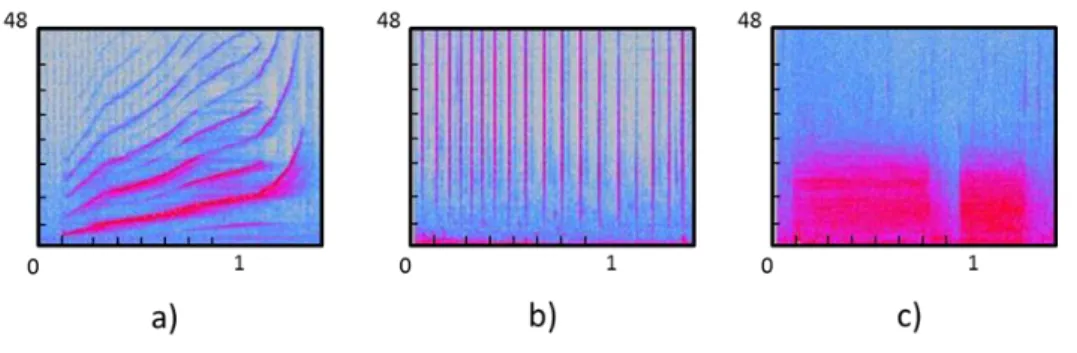
The diversity of sounds emitted by this species has been classified in different ways by researchers and in addition the same names are given for types of vocalizations produced by different dolphin species; therefore it has been challenging to find a consensus for the range of T. truncatus vocalizations in the literature. Currently, the described vocalizations are categorized into three structural categories and two functional classes. Structurally, the sounds emitted by the bottlenose dolphins are found within: whistles or tonal sounds (reviewed in Janik, 2009), clicks or pulsed sounds (Au, 1993), and burst-pulsed sounds (Lopez and Bernal-Shirai, 2009) (Figure 2).
Functionally, sound emissions may be used for echolocation (used for orientation and navigation), or may have a role in communication and social interactions (reviewed in Herzing, 2000).
Figure 2: Spectrogram examples: a) whistle b) click train c) two burst-pulsed sounds. X axis represents the time in seconds and Y axis represents the frequency in kHz.
3.3.1 Whistles
Whistles are frequency modulated signals with fundamental frequencies from 800Hz to 28.5kHz and durations between 100ms and 4sec (reviewed in Janik, 2009). The term “whistle” is used to refer to a unit of one continuous contour (loop), two or more repeated contours (multiloops) that can be connected or separated by a period of silence lasting between 0.03 and 0.25 sec in duration (disconnected multi-loop whistle) (Esch et al., 2009).
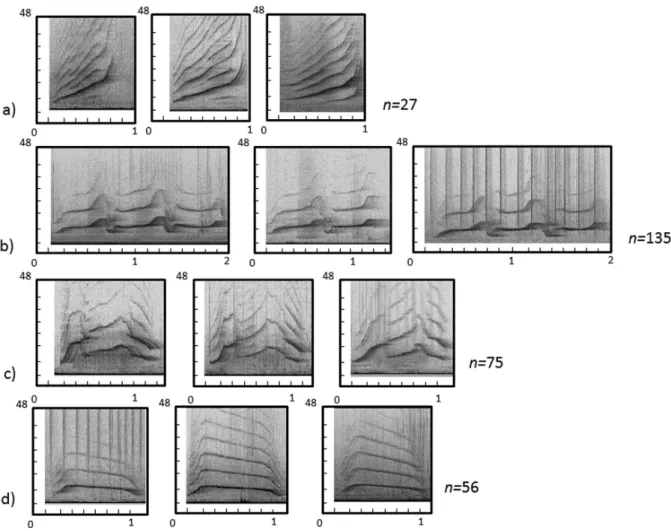
Dolphins produce signature and non-signature whistles that could be visually catalogued in six general categories with respect to the contour of its fundamental frequency (Figure 2): upsweep, down sweep, flat, convex, concave and continually modulated (Bazua-Duran, 2004; Akiyama and Ohta, 2006; Hickey et al., 2008).
Figure 3: Categories of whistles with respect to the contour of its fundamental frequency a) Upsweep b) Down sweep c) flat d) convex e) concave f) continually modulated. The upsweep whistle has been reported several times as the most frequently emitted (McCowan and Reiss, 1995; Hickey et al., 2008; Diaz-Lopez, 2011), suggesting this kind of whistle plays an important role in the bottlenose dolphin whistle repertoire (Tyack, 1986; Janik et al., 1994; Diaz-Lopez, 2011). However, the behavioural context description associated with this type of whistle remains vague and often behavioural observations are made from surface. In free ranging bottlenose dolphins the upsweep whistle type has been reported to be related to social behaviours (Diaz-Lopez, 2011), and in captivity this kind of whistle has been recorded when animals are fed by their caregivers (Akiyama and Ohta, 2006).
3.3.1.1 Non-signature whistles
Most studies on bottlenose dolphin communication focus on the production of signature whistles. However, signature whistles production corresponds only to 1% of produced whistles in captive dolphins (Janik and Slater, 1998), representing around 52% in free-ranging dolphins during social contexts (Cook et al.,2004), and reaching values of more than 90% of whistles produced only during forced isolation (Sayigh et
al., 1990). Thus, non-signature whistles constitute a considerable percentage of the bottlenose dolphins’ whistle repertoire. Despite this, there is a lack of information about the behavioral context of their production.
3.3.1.2 Signature whistles
Some individually specific whistles are called “signature whistles”. These kind of whistles were discovered by Caldwell and Caldwell in 1965, who observed that during contexts of isolation, each individual produced one distinctive kind of whistle (Caldwell and Caldwell, 1965). Further studies showed that signature whistles are copied in captivity by other individuals of the group (Tyack, 1986). In free-ranging dolphins an increase of the signature whistle emission rate has been reported during capture-release procedures, suggesting that signature whistle emission rate could be considered as a potential indicator of stress in dolphins (Esch et al., 2009b). Several authors reported signature whistle production in the context of forced isolation (Caldwell and Caldwell, 1965; Sayigh et al., 1990, 1995; Janik et al., 1994; Watwood
et al., 2005). However, outside this setting, signature whistles are more frequently emitted during social interactions than during other behavioral contexts, such as feeding or travelling (Cook et al., 2004). It has been shown that signature whistles are emitted as a contact or cohesion call between mothers and calves (Smolker et
other’s visual range (Janik and Slater, 1998).
Signature whistles may be composed of single or multiple loop (Caldwell et al., 1990). The number of loops produced in a signature whistle varies according to the behavioral context and it increases with age, which means that older individuals produce signature whistles with more loops (Caldwell et al., 1990). More recently, a study on wild dolphins showed that signature whistles are also copied by other individuals of the group, possibly to label a particular individual (Janik, 2000). After several playback experiments in captivity, it has been suggested that signature whistle mimicry might be affiliative (King et al., 2014) and the number of loops depends on whether it is produced by its owner or copied by another individual, with copies having more loops (King et al., 2013).
There is an increase in signature whistle production during late-term pregnant mothers which suggests that the fetus might be susceptible to imprinting in utero, meaning that the new-born dolphin would recognize its mother’s signature whistle right after birth (Mello and Amundin, 2005). The calves take one or two years to develop their own signature whistle (Fripp et al., 2005; Sayigh et al., 1990) and their frequency modulation pattern remains stable during their entire life (Sayigh et al., 1990). However, males’ signature whistles vary throughout life as a consequence of changing social relationships (Watwood et al., 2004). Young males may use signature whistles similar to their mother’s, while young females that tend to remain in their natal group are more likely to choose different frequency modulation patterns, probably to allow differentiation from their mothers (Sayigh et al., 1990, 1995).
3.3.2 Clicks
Clicks are short broadband signals typically lasting 40-70 μs with peak frequencies between 110 kHz and 130 kHz and peak-to-peak source levels between 210 and 228 dB at 1m re 1μPa (reviewed in Au and Hastings, 2008). Clicks are typically used in echolocation, which is the projection of clicks in order to obtain a sense of the surrounding from the echoes received (Au, 1993). During target scanning, sequences of clicks (click trains) are produced. The inter-click interval (ICI) is the time of two-way travel of the sound (TWT) to and from a target plus an echo processing period between 19 and 45 ms long (Au, 1993). During target detection, T. truncatus modify the ICI in order to focus their attention to a particular distance (Penner, 1988). However, when the target is at close ranges (<40cm), the ICI decrease to 2.5ms (Evans and Powell, 1967), suggesting the dolphins may process several echoes at a time (Au, 1993).
Bottlenose dolphins use clicks as a sensory tool to navigate or hunt for prey (reviewed in Herzing and dos Santos 2004) and obtain information from their own returning signals (Au, 1993) and by eavesdropping on the echoes produced by other dolphins (Xitco and Roitblat 1996; Gregg et al., 2007).
Bottlenose dolphins develop their ability to echolocate in the first one to three months of life (reviewed in Harder et al., 2016). Before they are one month old, calves’ clicks are of shorter duration (Reiss 1988) and lower frequency (Reiss 1988; Lindhard 1988) than adults. Additionally, at 14 days old, click trains have a shorter inter-click intervals (ICI) and shorter duration (Favaro et al. 2013) than adults.
3.3.3 Burst pulsed sounds
Burst-pulsed sounds are the least studied category and their definition is less clear in the literature (Herzing, 2000). They are often defined as rapid click trains (Janik, 2009), with many types of different sound emissions being labelled in this category (Herzing, 2000). In fact, the term is used for all the vocalizations that are not considered clicks or whistles (Janik, 2009) or, to be more precise, by all the pulsed sounds (clicks) for which no echolocation function is known (Lammers et al., 2004). Burst-pulsed sounds have received several names in literature such as: cracks, pops, barks, squeaks, squawks, rasps or moans (reviewed in Herzing, 2000). However, a more recent study, classified the total repertoire of burst-pulsed sounds made by T. truncatus in two categories depending on duration and frequency: short burst pulsed vocalizations (impulsive emissions shorter than 200ms with most energy below 5kHz) and “long burst pulsed vocalizations” (a single or sequence of pulses longer than 200ms) (Diaz-Lopez and Bernal-Shirai, 2009).
Burst-pulsed sounds have been generally associated with aggressive behaviors (Overstrom, 1983; Herzing, 1996; Sayigh et al., 2017). One kind of burst pulsed sound called “bray call” has been associated with foraging, apparently to facilitate the capture of prey (Janik, 2000).
3.4 Social behavior and vocal communication of bottlenose dolphins
Studies of bottlenose dolphins’ social behavior and communication rely on simultaneous descriptions of both visual and acoustic signals (Thomas et al., 2002). However, the main pitfall in linking acoustic production and behavior is the difficulty in identifying which dolphin in a group is the vocalizer. This challenge is caused by two
reasons: first, dolphins do not open their mouth or display any external cues when producing a sound (Janik, 2009) and second, human hearing is not well-adapted to localize sound sources underwater (Hollien, 1973). In order to overcome these obstacles, several methodologies have been developed to accurately identify witch dolphin is emitting the sound.
3.4.1 Forced Isolation
Forced isolation of bottlenose dolphins allowed scientists to discover the existence of signature whistles (Caldwell et al., 1990) and enabled them to make the first descriptions about its use (Sayigh et al., 1990; Janik et al., 1994; Sayigh et al., 1995; Sayig et al., 1998). However, this methodology does not allow addressing research questions regarding how the bottlenose dolphins use their vocalizations while they are swimming freely within their social group.
3.4.2 Tagging
The principle describes attaching a suction cup with a built-in hydrophone to an animal. The use of a tag with an embedded hydrophone produced the first evidence the mimicry of signature whistles (Tyack, 1986). However, the presence of such a tag could conceivably lead to modification of the subject’s behaviors and its vocalization rate (Tyack, 1986).
3.4.3 Bubble stream emission.
Several authors use the production of bubbles streams concurrent with whistle production to identify the dolphin vocalizing (Mc Cowan and Reiss, 1995; Herzing, 1996). However, more recent studies showed that only some kind of whistles are accompanied by bubbles while being produced, and thus they are not representative of the entire whistle repertoire of the species (Fripp, 2005, 2006).
3.4.4 Hydrophone arrays
The use of hydrophones arrays is a non-intrusive method that uses the differences of arrival of sound to each hydrophone to calculate the direction of the source of sound. Hydrophones arrays can be fixed or mobile.
Fixed hydrophone arrays have been conceived with two (Lopez-Rivas and Bazua-Duran, 2010), three (Watkins and Schevill, 1974), four (Brensing et al., 2001; Quick
et al., 2008) and eight hydrophones (Thomas et al., 2002). With these kinds of arrays, the behavioral observations are obtained from surface, which allows collecting only a very small percentage of the dolphins’ behavioral activity (Janik, 2009).
Mobile arrays consists of an underwater camera with a number of hydrophones, and are able to collect more details about the dolphin’s behavior. They have been designed with two (Dudzinski et al., 1995), three (Hoffman-Kuhnt et al., 2016), four (Au and Herzing, 2003; Schotten et al., 2004) and 16 hydrophones (Ball and Buck, 2005). Their main disadvantage is that dolphins are highly mobile species and the narrow angle of the underwater camera allows the localization of only those dolphins vocalizing right in front of it.
4
Aims of the thesis
To summarize, bottlenose dolphins are social cetaceans living in a fission-fusion groups. They rely mainly on the acoustic channel to communicate over long distances or in habitats of limited visibility. They possess advanced cognitive abilities, such as being able to remain alert during the entire day, and having a working memory comparable to nonhuman primates and a long term memory of at least 20 years. They are capable of vocal learning, referencing, and can be taught to
understand syntactic rules. There is a general lack of information about the use of these abilities within their social group. However, we know that bottlenose dolphins’ vocal production includes whistles, clicks and burst-pulsed sounds, with some whistles called “signature whistles” potentially being used to address each other. In order to understand how these animals communicate, it is necessary to combine acoustic localization methods with underwater behavioral observations, and at the moment the current methodologies are not satisfactory. During this thesis, we developed an easily deployable system that identifies the animal producing the sound and allows concurrent underwater behavioral observations. We tested this methodology with free ranging and captive bottlenose dolphins.
The present PhD thesis aims to better understand the communication of bottlenose dolphins within their social group. First, I developed two studies aiming to describe how captive dolphin’s vocal activity varies in relationship with behavior and interaction with humans. For this, I focused first on signature whistle production (Chapter 1) and then on non-signature whistle production linked to observed underwater behaviors (Chapter 2). These two studies highlight the necessity to link the vocal production to its owner.
Second, I present the conception and implementation of an innovative methodology that allows the localization of the dolphin vocalizing in a three-dimensional environment, and which can be used in captivity and with free-ranging dolphins. This methodology will be fully described in chapter 3.
Finally, I present two applications of this localization methodology to address research questions regarding the exploratory behavior of a dolphin calf (Chapter 4) and the use of vocalizations for coordinated movements in bottlenose dolphins (Chapter 5).
RESULTS
Chapter 1: Modulation of Whistle Production Related
to Training Sessions in Bottlenose Dolphins
(Tursiops truncatus) Under Human Care
Juliana Lopez Marulanda1, Olivier Adam1,2 and Fabienne Delfour3,4
1Institute of Neurosciences Paris Saclay, Université Paris Sud, CNRS UMR 9197
Orsay, France
2Institut Jean Le Rond d’Alembert, Sorbonne Universités, UPMC Univ Paris 06,
CNRS UMR 7190 Paris, France
3Laboratoire d’Ethologie Expérimentale et Comparée E.A. 4443 (LEEC), Université
Paris 13, Sorbonne Paris Cité Villetaneuse, France
4Parc Astérix, Plailly, France
Context
Bottlenose dolphins are highly social cetaceans that strongly rely on acoustic communication and signaling. The diversity of sounds emitted by the species has been structurally classified in whistles, clicks and burst-pulsed sounds. Whistles are continuous narrow-band frequency modulated signals. Some individually specific whistles are called “signature whistles” and are used as cohesion calls.
Research questions
The management of dolphins in captivity is largely based on several training/feeding sessions that are held per day. However, it remains unknown how the scheduled training/feeding sessions in bottlenose dolphins under human care modulate the emission rate of different whistles types (e.g., signature whistles). This study aims to describe the possible effects that training/feeding sessions, have on the emission rate of non- signature and signature whistles, in a group of captive bottlenose dolphins.
Analysis
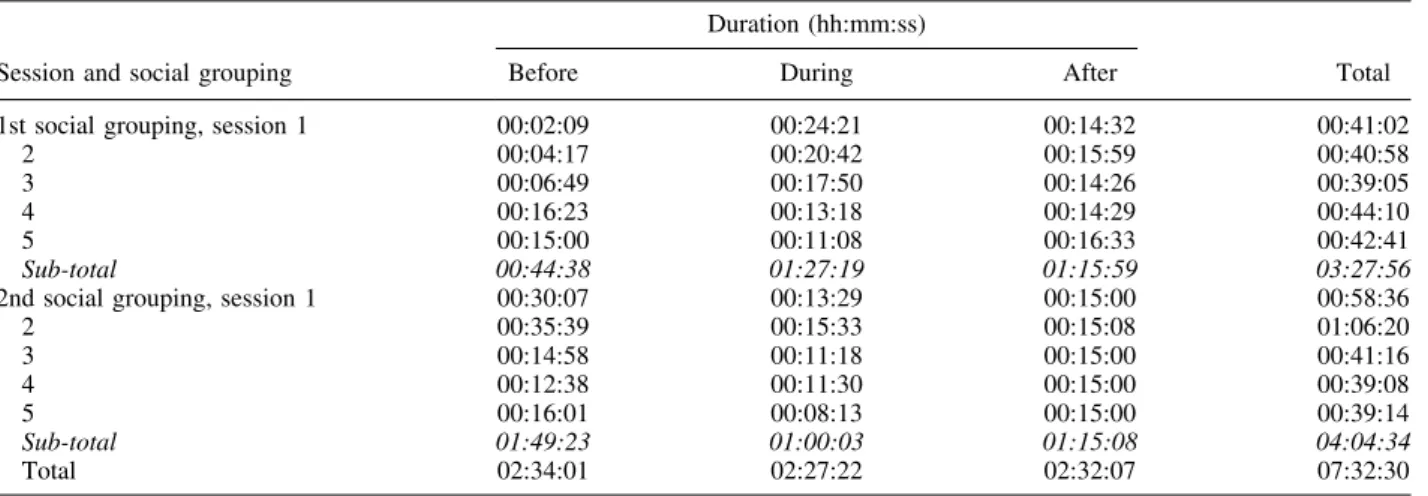
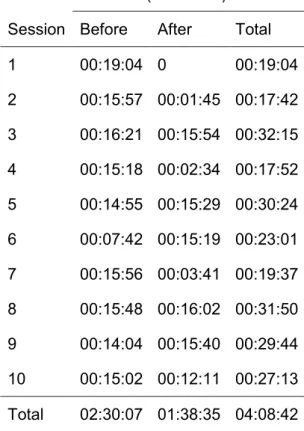
The study was conducted on a group of 8 (in November 2014) and 9 (in May 2015) bottlenose dolphins at the Parc Asterix dolphinarium (Plailly, France). Whistles were recorded approximately 15 min before, during and 15 min after ten training sessions. We applied the SIGID method to identify signature whistles within our catalog of whistle types. Mean values of whistles emission rate and signature whistle emission rate per minute were calculated for the recordings before, during and after each training session.
Results
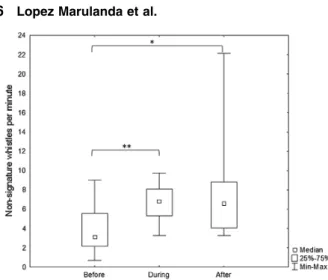
The dolphins’ overall whistle emission rate did not significantly change before, during and after the training sessions. However, the non-signature emission rate was higher during and afterwards than before the training sessions and the signature whistle emission rate was significantly higher after than before the training sessions. The emission rate varied between the different signatures whistles types.
Conclusion
In conclusion, our study shows that non-signature and particular signature whistle emission rate increases after scheduled training sessions in Parc Asterix dolphi- narium. We suggest that animals might have been seeking social interactions after the sessions. However, in order to validate this hypothesis, it is necessary to directly observe the animals’ behaviors and to link the patterns of group association with whistle emissions.
RESEARCH ARTICLE
Modulation of Whistle Production Related to Training
Sessions in Bottlenose Dolphins (Tursiops truncatus)
Under Human Care
Juliana Lopez Marulanda,1* Olivier Adam,1,2and Fabienne Delfour3
1Institute of Neurosciences Paris Saclay, Universit!e Paris Sud, CNRS UMR 9197Orsay, France
2Institut Jean Le Rond d’Alembert, Sorbonne Universit!es, UPMC Univ Paris 06, CNRS UMR 7190Paris, France 3Laboratoire d’Ethologie Exp!erimentale et Compar!ee E.A. 4443 (LEEC), Universit!e Paris 13, Sorbonne Paris
Cit!eVilletaneuse, France
Bottlenose dolphins are highly social cetaceans with an extensive sound production including clicks, burst-pulsed sounds, and whistles. Some whistles, known as signature whistles, are individually specific. These acoustic signatures are commonly described as being emitted in contexts of stress during forced isolation and as group cohesion calls. Interactions between humans and captive dolphins is largely based on positive reinforcement conditioning within several training/feeding sessions per day. Vocal behavior of dolphins during these interactions might vary. To investigate this, we recorded 10 bottlenose dolphins of Parc Asterix dolphinarium (France) before, during and after 10 training sessions for a total duration of 7 hr and 32 min. We detected 3,272 whistles with 2,884 presenting a quality good enough to be categorized. We created a catalog of whistle types by visual categorization verified by five naive judges (Fleiss’ Kappa Test). We then applied the SIGID method to identify the signatures whistles present in our recordings. We found 279 whistles belonging to one of the four identified signature whistle types. The remaining 2,605 were classified as non-signature whistles. The non-signature whistles emission rate was higher during and after the training sessions than before. Emission rate of three signature whistles types significantly increased afterwards as compared to before the training sessions. We suggest that dolphins use their signature whistles when they return to their intraspecific social interactions succeeding scheduled and human-organized training sessions. More observations are needed to make conclusions about the function of signature whistles in relation to training sessions. Zoo Biol. XX: XX–XX, 2016. © 2016 Wiley Periodicals, Inc.
Keywords: signature whistle; whistle; communication; dolphinarium
INTRODUCTION
Bottlenose dolphins (Tursiops truncatus) are highly social cetaceans that live in a fission–fusion society where individuals associate in small groups that can vary in composition according to age, sex, reproductive status, and activity [Connor et al., 2000; Mann et al., 2000; Gibson and Mann, 2008; Tsai and Mann, 2013]. In this extremely mobile species, group members can be separated by hundreds of meters within a habitat with limited visibility [Connor et al., 1998]. Interactions based on the use of acoustic signals seem to be the most effective communication strategy under these conditions [Janik, 1999a,b].
Consequently, bottlenose dolphins display an extensive sound production including clicks or pulsed
sounds [Au, 1993; Au and Fay, 2012], burst-pulsed sounds [L!opez and Shirai, 2009], and whistles or tonal sounds (reviewed in Janik, 2009). The term “whistle” is used to refer to a unit of one continuous contour (loop), two or more
!Correspondence to: Juliana Lopez Marulanda, Institute of
Neuro-sciences Paris Saclay, University Paris Sud, CNRS UMR 9197, Orsay 91405, France. E-mail: [email protected]
Received 13 April 2016; Revised 05 September 2016; Accepted 20 September 2016
DOI: 10.1002/zoo.21328
Published online XX Month Year in Wiley Online Library (wileyonlinelibrary.com).