HAL Id: tel-01794196
https://tel.archives-ouvertes.fr/tel-01794196
Submitted on 17 May 2018
HAL is a multi-disciplinary open access
archive for the deposit and dissemination of sci-entific research documents, whether they are pub-lished or not. The documents may come from teaching and research institutions in France or abroad, or from public or private research centers.
L’archive ouverte pluridisciplinaire HAL, est destinée au dépôt et à la diffusion de documents scientifiques de niveau recherche, publiés ou non, émanant des établissements d’enseignement et de recherche français ou étrangers, des laboratoires publics ou privés.
A simplified energy performance assessment method
supporting system design and fed by EU product policy
data : application to heating systems in buildings
Maria Calero Pastor
To cite this version:
Maria Calero Pastor. A simplified energy performance assessment method supporting system design and fed by EU product policy data : application to heating systems in buildings. Construction durable. Université Grenoble Alpes, 2018. English. �NNT : 2018GREAI015�. �tel-01794196�
THÈSE
Pour obtenir le grade de
DOCTEUR DE LA
COMMUNAUTÉ UNIVERSITÉ GRENOBLE ALPES
Spécialité : GI : Génie Industriel : conception and production Arrêté ministériel : 25 mai 2016
Présentée par
Maria CALERO PASTOR
Thèse dirigée par Daniel BRISSAUD Professeur INP, Grenoble INP
préparée au sein du Laboratoire G-SCOP - Sciences pour la Conception, l'Optimisation et la
Production de Grenoble dans l'École Doctorale IMEP 2 - Ingénierie - Matériaux, Mécanique, Environnement, Energétique, Procédés, Production.
Méthode simplifiée d'évaluation de la performance énergétique utilisable en conception et alimentée par des données issues de politiques publiques de produit: application aux systèmes de chauffage de bâtiments
A simplified energy performance assessment method supporting system design and fed by EU product policy data: application to heating systems in buildings
Thèse soutenue publiquement le 7 février 2018, devant le jury composé de :
Monsieur Daniel BRISSAUD
Professeur, Université Grenoble Alpes, Directeur de thèse
Monsieur Jo DEWULF
Professeur, University of Ghent, Président
M. Fabrice MATHIEUX
Chercheur, European Commission – Joint Research Center, Co-directeur de thèse
Monsieur Daniel FROELICH
Professeur, Arts et Metiers Paris Tech Chambéry, Examinateur
Madame Tatiana REYES
Maître de Conférences, Université de Technologie de Troyes, Rapporteur
Monsieur Xavier BOUCHER
Dedicado a mis hijos Carlota y Mateo,
que han llegado a este mundo al mismo tiempo que esta tesis.
La finalización de esta tesis supone para mí la culminación de una etapa muy importante de mi vida. Han sido unos años muy felices aunque no siempre fáciles y bastante movidos con tanto viaje entre Italia, España y Francia. Llegados a este punto, me gustaría agradecer a todas aquellas personas que me han ayudado durante este tiempo ya sea a nivel profesional o personal.
Agradezco especialmente:
A mi director de tesis Daniel Brissaud y co-director Fabrice Mathieux por darme la oportunidad de realizar esta tesis. En especial a Fabrice, por su dedicación y apoyo constructivo desde el principio y en cada momento de esta tesis.
Al Joint Research Center por ser la institución que me ha permitido poder llevar a cabo esta tesis a la vez que desempeñar un trabajo muy interesante para la Comisión Europea.
A Marcos, mi compañero de vida, por su respeto y apoyo en mis decisiones y por su paciencia.
A mis padres, al resto de mi familia y a mis amigos de siempre por su cariño incondicional y por sus ánimos.
A mi colega Fulvio por compartir sus conocimientos conmigo y servirme de inspiración en los momentos bajos.
A Gianni Frison, por haberme facilitado los datos para el caso de estudio y a su familia por su hospitalidad y ayuda con Carlota.
Por último, a esa comunidad internacional de amigos y colegas que me han acompañado durante mi bonita estancia en Ispra.
RÉSUMÉ
La performance environnementale des produits influence largement la performance des systèmes. De plus, les systèmes présentent encore un potentiel d'économie d'énergie inexploité pour la performance environnementale globale, comparé aux produits individuels qui les composent.
L'objectif de ce travail est de proposer une approche pour l'évaluation de performance énergétique de systèmes, en tenant compte d'information / de données livrées par les politiques européennes de produits (Directives Eco-conception et Étiquetage énergétique, Verdissement des marchés publics, Ecolabel Européen). L'hypothèse considérée ici est que les politiques environnementales des produits, qui ont été très utiles pour faciliter un système de notation homogène sur le marché européen des produits, peuvent également être avantageusement utilisées dans une démarche visant pour évaluer la performance énergétique des systèmes.
Ce travail de recherche propose une méthode simplifiée pour soutenir la conception de systèmes de chauffage performants en utilisant les données des politiques environnent ales de produits de l'Union Européenne, disponibles en phase de conception. Tout d'abord, une modélisation du système avec une approche "top-down" est utilisée pour prendre en compte les aspects système (conditions géographiques, caractéristiques du bâtiment, etc.). Deuxièmement, la performance énergétique du système est calculée à partir d'une approche "bottom-up", à partir de la performance des produits et des sous-systèmes composant le système. La méthode comporte 5 étapes divisées en deux phases principales: diagnostic du système initial et amélioration. La méthode est supportée par un outil de calcul original qui détermine les paramètres énergétiques (demande d'énergie, consommation d'énergie et rendement énergétique) au niveau du système en utilisant les données de performance telles que documentées par les politiques produits de l'Union Européenne. La méthode permet d'évaluer la performance d'un système de chauffage en définissant les systèmes les plus mauvais et les meilleurs possibles. La méthode est flexible et permet d'évaluer différentes configurations de produits et peut donc soutenir les activités de conception des systèmes de chauffage de bâtiment.
La méthode est testée sur une étude de cas, la re-conception conception d'un système de chauffage existant d'une habitation dans le nord de l'Italie, incluant un système d'eau chaude sanitaire solaire et un système de chauffage des locaux. L'étude de cas démontre le potentiel d'amélioration du système de chauffage basé sur les résultats produits par la méthode, en aidant à sélectionner les produits actuellement disponibles sur le marché. En outre, sur la base de l'évaluation, plusieurs variantes de re-conception peuvent être proposées combinant différentes performances des produits qui composent les systèmes de chauffage. La thèse analyse également l'évolution des différentes approches adoptées par les politiques de produits de l'Union Européenne (approche produit, approche produit étendu et approche système). En particulier, le concept de "package" (ou produits combinés)
défini dans les réglementations d'étiquetage énergétique des systèmes de chauffage est étudié en détail. L'étiquette du "package" du règlement 811/2013 est mise en œuvre dans la même étude de cas, de sorte que les résultats puissent être comparés à ceux des sections précédentes. Il est démontré que le concept de "package" peut également soutenir les décisions prises dans la phase de conception du système de chauffage, en particulier dans la sélection des composants appropriés en fonction de l'estimation de la performance du système. En outre, le chapitre 6, composé essentiellement d'un article publié dans un journal scientifique, analyse le lien entre les politiques publiques européennes relatives aux produits du bâtiment et celles liées à la performance énergétique des bâtiments: il est conclu qu'elles pourraient être mieux alignées.
ABSTRACT
Environmental performance of products largely influences performance of systems. Moreover, systems have still an untapped energy-saving potential concerning environmental performances at system level rather than at the level of the individual products of which they are composed.
The objective of this work is to propose an approach to deal with energy performance assessments at system level considering information/data from European product policies (Ecodesign, Energy Labels, Green Public Procurement and EU Ecolabel). The hypothesis here is that environmental product policies, that have been very useful in facilitating a homogeneous rating scheme in the EU market for individual products, can also be advantageously used in a method to assess the energy performance of systems.
This research work proposes a simplified method for supporting the design of good performing heating systems using data from EU product policies, which is available at the design stage. Firstly, a system modelling with a top-down approach is used so that system aspects (geographical conditions, building characteristics, etc.) are regarded. Secondly, the system energy performance is calculated from a bottom-up approach so that, from the performance of the products and sub-systems composing the system. The method has 5 steps divided in two main phases: diagnostic of the initial system and improvement. The method is supported by an original calculation tool which determines the energy parameters (energy demand, energy losses, energy consumption and low-emission energy efficiency) at system level using performance figures from EU product policies. It helps assessing how good a heating system is by setting the worst, benchmark and best possible systems. The method is flexible, and allows different product configurations to be assessed and can hence support the design activities of heating systems.
The method is tested on a real case study, the re-design of two existing heating systems of a dwelling in north Italy: a solar hot water system and a space heating system. The case study demonstrates the potential of improvement of the heating systems based on the results produced by the method, and helps selecting products currently available in the market. In addition, based on the initial assessment, several improved design alternatives can be proposed combining different performance levels of the products which compose the heating systems.
The dissertation also analyses the evolution of the different approaches of EU product policies (product, extended product and system approaches). In particular, the package concept set in the EU Energy Labelling regulations of heating systems is studied in detail. The package label of Regulation 811/2013 is implemented on the same prior case study so that results can be compared with the ones from applying the method proposed. It is shown that the package concept can also support decisions made in the building design phase especially in the choice of appropriate components based on estimation of system performances. In addition, it is also
analysed the link of building-related product policies with the Energy Performance of Buildings Directive, and it is concluded that they should be somehow better aligned.
8
INDEX
1. INTRODUCTION ... 16
1.1 Socio-economic and environmental impacts of energy in the building sector 16 1.2 Importance of HVAC systems design ... 17
1.3 Formalization of the research question ... 19
1.4 Dissertation structure ... 20
2. STATE OF THE ART ... 22
2.1 Environmental assessment methods applied to ecodesign ... 22
2.2 Engineering systems: the case of HVAC systems in buildings ... 23
2.3 Energy performance of HVAC systems in building design ... 24
2.4 Environmental assessments of HVAC systems in the scientific literature ... 27
2.5 Analysis of EU product policies on HVAC systems ... 33
2.5.1 EU product policies features in heating and cooling systems ... 34
2.5.2 Environmental assessments of HVAC systems in EU product policies . 37 2.6 Conclusions of the SoA ... 44
3. DESIGN METHOD REQUIREMENTS ... 46
3.1 Research methodology of the dissertation ... 46
3.2 Discussion of the SoA ... 47
3.2.1 How to design good performing HVAC systems ... 48
3.2.2 Environmental assessments on HVAC systems: scientific literature versus product policies methodologies ... 48
3.2.3 Method requirements ... 50
4. DESIGN METHOD AND CALCULATION TOOL PROPOSAL ... 51
4.1 Energy performing parameters ... 52
4.2 Procedure of the method ... 53
4.2.1 Phase 1. Diagnostic of the initial system ... 55
4.2.1.1 Step 1. Global context and system modelling... 55
4.2.1.2 Step 2. Estimation of the performance of the initial system ... 56
4.2.1.3 Step 3. Study of the influence of relevant individual components in the overall system. ... 56
9
4.2.2.1 Step 4. Analysis of the best, benchmark and worst systems. ... 58
4.2.2.2 Step 5. Analysis of other feasible alternatives. ... 58
4.3 The calculation tool ... 59
4.3.1 Calculation of the energy heating demand of the dwelling ... 64
4.3.2 Calculation of the energy losses and the non-renewable energy consumption ... 64
4.3.3 Calculation of the low-emission energy efficiency ... 66
5. A CASE STUDY: RE-DESIGN OF A SOLAR SANITARY HOT WATER SYSTEM AND SPACE HEATING SYSTEM IN A DWELLING ... 67
5.1 Implementation of the method in the case study ... 67
5.1.1 Phase 1: Diagnostic of the initial system ... 67
5.1.1.1 Step 1. Global context and heating system modelling ... 67
5.1.1.2 Step 2. Estimation of the performance of the initial system ... 69
5.1.1.3 Step 3. Study of the influence of relevant individual components in the overall system ... 76
5.1.1.4 Summary of outputs of phase 1 ... 81
5.1.2 Phase 2. Improvement: investigation of a better performing system ... 82
5.1.2.1 Step 4. Analysis of the best, benchmark and worst systems ... 82
5.1.2.2 Step 5. Analysis of other alternatives ... 85
5.1.3 Economic analysis of design alternatives ... 89
5.2 Extended analysis of the case study ... 92
5.2.1 Change of location: from north to south Italy ... 92
5.2.1.1 Step 2. Estimation of the performance of the initial system ... 92
5.2.1.2 Step 3. Study of the influence of relevant individual components in the overall system ... 95
5.2.2 Enlarge the energy demand: double people ... 96
5.2.2.1 Step 2. Estimation of the performance of the initial system ... 96
5.2.2.2 Step 3. Study of the influence of relevant individual components in the overall system ... 99
5.2.3 Change of technology of the main generator: from a boiler to a heat pump 100 5.2.3.1 Step 2. Estimation of the performance of the initial system ... 101
5.2.3.2 Step 3. Study of the influence of relevant individual components in the overall system ... 103
10
5.3 Summary and discussion of the extended analysis of the case study ... 104
6. ANALYSIS OF ANOTHER SYSTEM APPROACH IN PRODUCT POLICIES: THE PACKAGE LABEL ... 109
6.1 Introduction ... 109
6.2 From product to system approaches in European sustainable product policies: analysis of the package concept of heating systems in buildings. ... 110
6.3 Further discussion: the package label vs. the method proposed ... 130
6.4 Conclusion ... 131
7. DISCUSSION, CONCLUSIONS AND PERSPECTIVES ... 133
7.1 Conclusions ... 133
7.2 Limitations and perspectives ... 136
8. REFERENCES ... 138
9. LISTS OF PUBLICATIONS OF THE AUTHOR DURING THE PREPARATION OF THE PHD ... 148
11
Figures
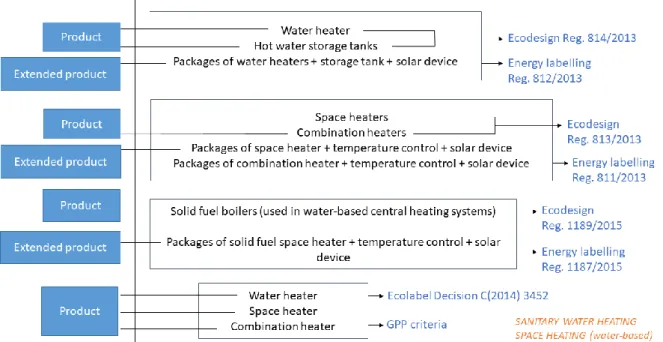
Figure 1. Overview of EU product policies on water-based heaters ... 35
Figure 2. Overview of EU product policies on local space heaters ... 36
Figure 3. Overview of EU product policies on air conditioners ... 36
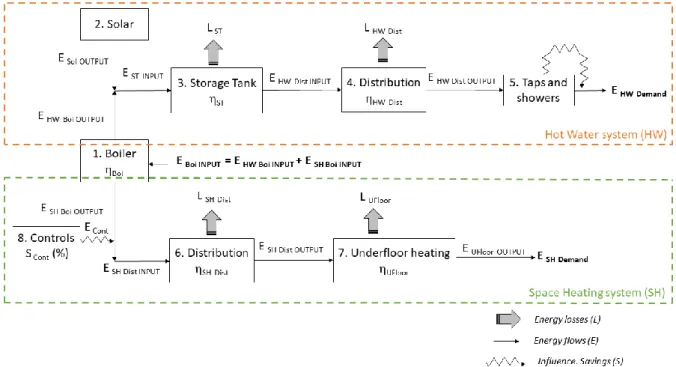
Figure 4. General heating system model within the global context ... 55
Figure 5. Inputs and outputs of the method and calculation tool ... 60
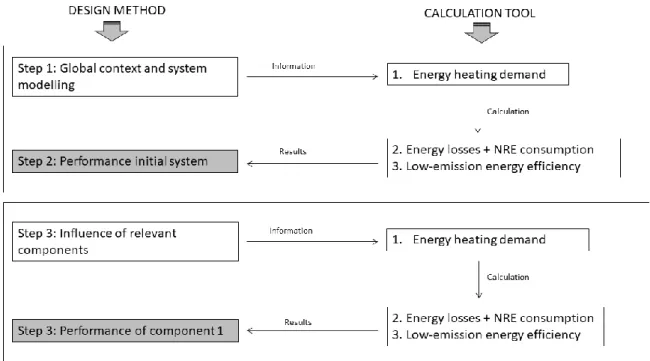
Figure 6. Relationship between the design method and the calculation tool ... 61
Figure 7. Energy flows of the heating system. ... 65
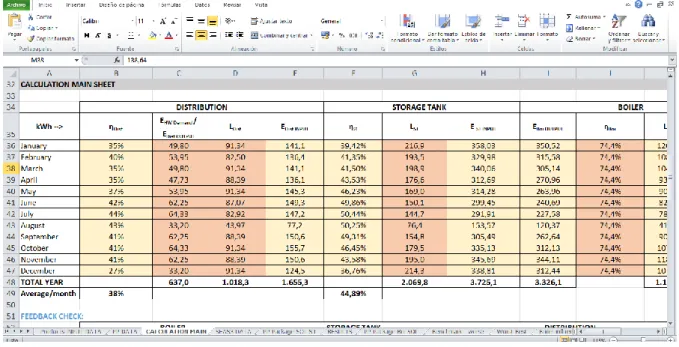
Figure 8. Screenshot of the MS Excel file created for the case study ... 67
Figure 9. Heating systems of the case study. ... 68
Figure 10. System modelling of the case study ... 69
Figure 11. Energy flow chart of the heating systems of the case study. ... 73
Figure 12. Contribution of each component to the overall energy losses of the heating systems of the current design. ... 74
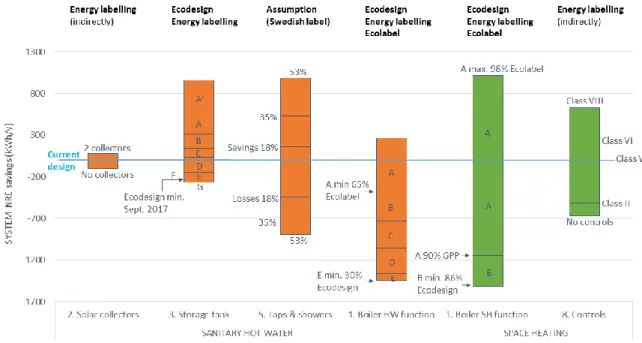
Figure 13. Results of the improvement potential analysis of individual relevant components. ... 81
Figure 14. Energy demand, consumption and losses of the worst, benchmark and best combinations of the sanitary hot water system. ... 84
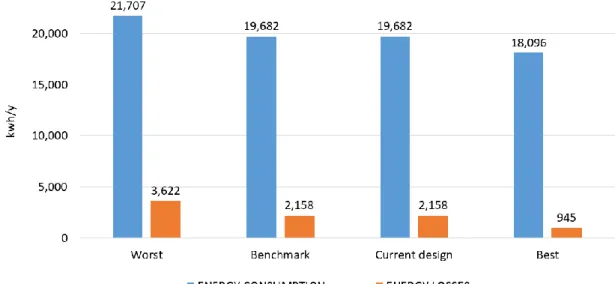
Figure 15. Energy consumption and losses of the best, benchmark and worst combinations of the space heating system. ... 85
Figure 16. Alternative solutions based on combining products with different performance levels in the sanitary hot water system. ... 86
Figure 17. Alternatives solutions from the combination of different components performance levels in the space heating system. ... 88
Figure 18. Contribution of each component to the overall energy losses of the case study in south Italy. ... 94
Figure 19. Results of the improvement potential analysis of individual components of the case study in south Italy ... 96
Figure 20. Contribution of each component to the overall energy losses of the case study with double people. ... 98
Figure 21. Results of the improvement potential analysis of individual components of the case study with double people ... 100
Figure 22. Contribution of each component to the overall energy losses of the case study with a heat pump. ... 102
Figure 23. Results of the improvement potential analysis of individual components in the case study with heat pump ... 104
13
Tables
Table 1. Services delivered by HVAC systems in the scientific literature (own analysis) ... 27
Table 2. Functions and sub-functions identified in HVAC components in the scientific literature review (own analysis) ... 28
Table 3. Components identified in environmental assessments of HVAC systems in the scientific literature (own analysis) ... 29
Table 4. Types of environmental assessments on HVAC in the scientific literature ... 32
Table 5. Principles of European product policies (Calero-Pastor et al., 2014) ... 33
Table 6. Services delivered by HVAC components regulated by EU product policies (own analysis) ... 37
Table 7. HVAC products/components covered by EU product policies, per function in the system (own analysis). ... 38
Table 8. Summary of environmental aspects included in EU product policies of HVAC components (own analysis) ... 40
Table 9 Overview of the method ... 54
Table 10. Performance levels of a component i ... 57
Table 11. Example of performance levels of n components assessed at step 3 ... 57
Table 12. Example of performance levels assessed at step 5 ... 59
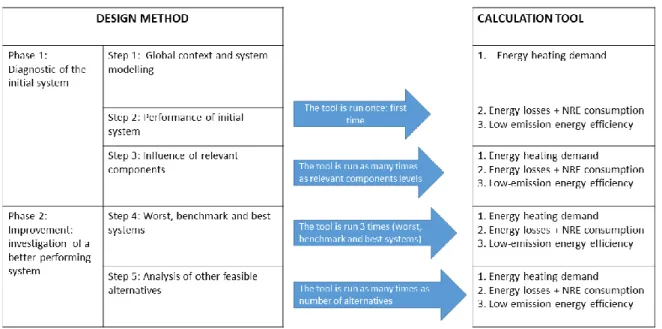
Table 13. Use of the calculation tool in the method ... 62
Table 14. Components’ performance figures can be collected or calculated using EU product policies or other instruments. ... 65
Table 15. Energy demand, solar and non-solar energy demand (kWh/y) of the current design. ... 70
Table 16. Performance of the components of the sanitary hot water system of the current design. ... 71
Table 17. Performance of the components of the space heating system of the current design. ... 72
Table 18. Energy flows of the sanitary hot water system of the current design (kWh/y). ... 73
Table 19. Energy flows of the space heating system of the current design (kWh/y). ... 74
Table 20. Energy performance parameters of the heating systems of the current design. .... 75
Table 21. Performance levels of the water heating efficiency of the boiler. ... 76
Table 22. Performance levels of the seasonal space heating efficiency of the boiler. ... 77
Table 23. Performance levels of the storage tank. ... 78
Table 24. Performance levels of the temperature control. ... 78
14
Table 26. Data on the improvement potential analysis of individual components of the current
design. ... 80
Table 27. Worst, benchmark and best combinations of components’ performance levels. ... 83
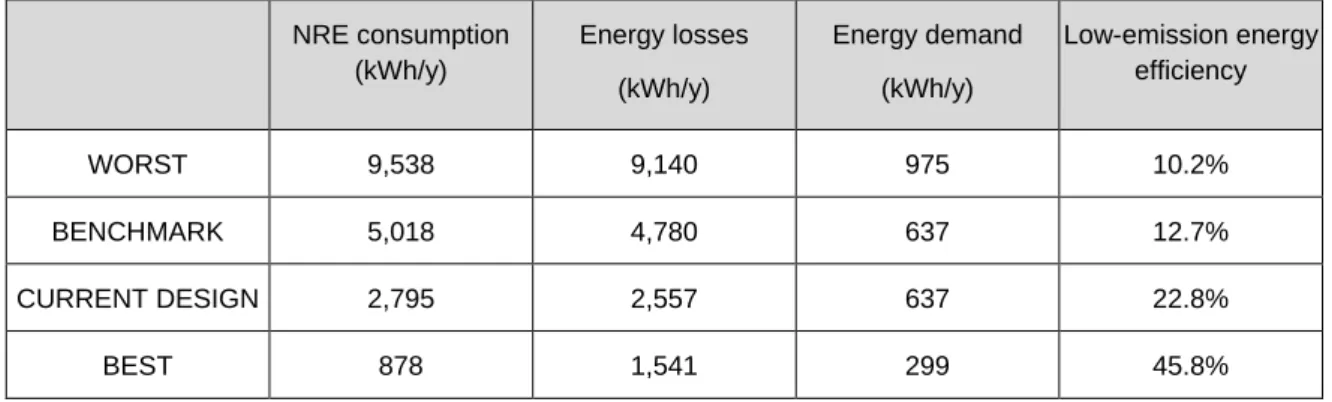
Table 28. Energy performance parameters for the worst, benchmark and best combinations of the sanitary hot water system. ... 83
Table 29. Energy performance parameters for the worst, benchmark and best combinations of the space heating system. ... 84
Table 30. Summary of design options of the sanitary hot water system ... 87
Table 31. Energy performance parameters of the design options of the sanitary hot water system ... 87
Table 32. Summary of design options of the space heating system ... 88
Table 33. Energy performance parameters of the design options of the space heating system. ... 89
Table 34. Assumptions of improved taps and showers for the economic analysis ... 90
Table 35. Economic results of design options of the sanitary hot water system (€) ... 91
Table 36. Economic results of design options of the space heating system (€) ... 91
Table 37. Energy demand, solar and non-solar energy demand of the case study in south Italy (kWh/y) ... 93
Table 38. Energy flows of the sanitary hot water system of case study in south Italy (kWh/y) ... 93
Table 39. Energy flows of the space heating system of the case study in south Italy (kWh/y) ... 94
Table 40. Energy performance parameters of the heating systems of the case study in south Italy (Palermo) ... 95
Table 41. Energy demand, solar and non-solar energy demand of the case study with double people (kWh/y). ... 97
Table 42. Energy flows of the sanitary hot water system of the case study with double people (kWh/y). ... 97
Table 43. Energy flows of the space heating system of the case study with double people (kWh/y). ... 98
Table 44. Energy performance parameters of the heating systems of the case study with double people. ... 99
Table 45. Energy flows of the sanitary hot water system of the case study with a heat pump (kWh/y). ... 101
Table 46. Energy flows of the space heating system of the case study with a heat pump (kWh/y). ... 101
Table 47. Energy performance parameters of the heating systems of the case study with a heat pump ... 102
15
Table 48. Seasonal space heating energy efficiency classes of low-temperature heat pumps for low-temperature applications ... 103 Table 49. Summary of energy performance parameters of the extended analysis of the case study ... 105 Table 50. Summary of energy losses of components of the extended analysis of the case study (kWh/y and %) ... 106 Table 51. Summary of the improvement potential of each component of the extended analysis of the case study (kWh/y of savings) ... 106 Table 52. Order of components to be improved in the extended analysis of the case study (from most to least savings) ... 107
16
1. INTRODUCTION
1.1 Socio-economic and environmental impacts of energy in the building sector
The population growth and economic development causes an unavoidable increase in the use of energy. The European Union (EU) consumes 11.6% of the world’s energy consumption. In 2015, greenhouse gases (GHGs) emissions in the EU-28 were of 4,451.8 million of tonnes of CO2 equivalents and 8.88% was due to
residential uses (Eurostat, 2017a).
The production and use of energy has great impacts on the society and the environment. It produces environmental impacts to air, water and land such as depletion of scarce resources, air and water pollution or climate change. These environmental impacts can be turned into illnesses and damages to ecosystems. Besides the costs on public health and restoration of ecosystems, energy also has an important economic burden due to the dependency on the supply and prices of fossil fuels. The EU-28 imports half of the energy it consumes and fossil fuels (petroleum and products, gas and solid fuels) represent 72% of the total energy consumption (Eurostat, 2017b). The EU has launched several initiatives for increasing the energy efficiency and reducing the energy demand with the aim of mitigating the coupling of economic growth with energy consumption. Some of these instruments are the promotion of co-generation and renewable energy sources, the energy performance of buildings and the energy labelling for domestic appliances.
The household sector accounts for 25.4% of the total energy consumption in the EU (Eurostat 2017b). The greatest energy saving potential lies in buildings (EC, 2011a). In 2012, half of the EU’s energy consumption (546 Mtoe) facilitated heating and cooling, and much of this was wasted through insufficient insulation or inefficient equipment in buildings, among others (EC, 2016a). Indeed, Heating Ventilation and Air Conditioning (HVAC) systems account for 50% of the total energy consumption of buildings (Pérez-Lombard et al., 2008).
Greater energy efficiency in new and existing buildings is crucial in order to reach the goal of the European Commission’s Energy Roadmap for reducing the GHGs emissions by 80-95% by 2050 compared to 1990 (EC, 2011b).The implementation of the Energy Performance of Buildings Directive (EPBD) (EC, 2010a) promotes energy efficiency by reducing the amount of energy consumed to maintain the indoor environment through heating, cooling, lighting, operating appliances and the use of renewable energy in buildings. EPBD requires Member States to set system requirements with respect of overall energy performance, proper installation, appropriate dimensioning, adjustment and control for new, replacement and upgrading technical building systems. Furthermore, the Energy Efficiency Directive (EC, 2012a) requires that 3% of the total floor area of heated and/or cooled zones of public bodies’ buildings be renovated each year to meet at least requirements set in the EPBD.
17
The Ecodesign and Energy Labelling Directives (EC, 2009a; EC, 2010b) promote the production and consumption of more energy-efficient products. Typical Energy-using Products (EuP) used in buildings (e.g. boilers) have already been regulated for many years. The review of the Ecodesign Directive in 2009 extended its scope to include Energy-related Products (ErP), addressing other relevant building products (e.g. windows, taps and showers, insulation components). In addition, although these policies have been initially focused on products, some products groups have recently adopt a more system approach including additional components which influence the overall system performance (e.g. lighting and heating systems).
However, although policies already co-exist at the macro- (i.e. buildings, through the EPBD) and micro- (i.e. building components, through the Ecodesign and Energy Labelling Directives) levels, there is still a technological gap between building designers and regulators that needs to be filled in order to ensure the achievement of overall energy efficiency objectives (Allouhi et al., 2015).
1.2 Importance of HVAC systems design
The word system comes from Greek and means a whole compounded of arranged parts. Indeed, ancient Greek thinkers discovered the fundamentals of systems. Aristotle’s famous statement “the whole is more than the sum of its parts” could be taken as the first definition of system. He studied extensively living organisms and postulated that the form and the matter could only be separated by means of abstraction. Later, the mechanical philosophy emerged bringing contradictory terms, such as reductionism and rationalism as an opposition to the holism and abstraction from Aristotle. Indeed, Galilei, Descartes, Newton or Copernicus enabled a scientific revolution which focused on decomposing matter in smaller and smaller parts (Maurer, 2017). Taking into account both approaches, “a real system is arranged in compliance with the physical elements composing the whole whereas an abstract system is arranged according to its function, with the properties characterizing the whole” (Ziebik and Hoinka, 2013). Nowadays, both the holistic-abstract and reductionist-rational approaches prevail for the analysis of systems.
Today’s complex systems are composed of many components that are very heterogeneous and interact among them and within the outside environment. Some production systems (Ghadimi et al., 2015; Trevisan and Brissaud, 2016) and buildings are examples of complex systems characterised additionally by their specific interaction with their users (Cor et al., 2014) and inhabitants. The sustainability of these systems is a challenge and in particular, the energy consumption. Their performance mainly depends on decisions made at the design step.
There are huge methodological challenges regarding the definition of systems, the scope and boundaries of a system, the modelling of components that make up a system and its interactions, and the measurement of these interactions inside the system. The system definition can include greater or smaller system boundaries.
18
Building systems may include many components and sub-systems in charge of providing several services to users. These services can be shelter, food, HVAC systems, connectivity to internet and artificial light. This dissertation focuses on HVAC systems in buildings.
Nowadays, there are many environmental assessment methods for the design of products and systems. Ideally, environmental assessments should be done with a life-cycle perspective in order to be able to act on the life cycle phase with higher impacts. To consider all life cycle phases in environmental assessments avoids the transfer of the impacts of one life phase to another. Most of the methods are simple and qualitative (e.g. materials, energy and toxicity matrix, multicriteria analysis, etc.) while others are more complex and quantitative (e.g. Life Cycle Analysis). Ecodesign of products and systems should focus on most significant environmental aspects and life cycle phases. On the one hand, environmental performances of products largely influence performances of systems. On the other hand, systems have a great energy-saving potential at system level rather than at the level of the individual products of which they are composed.
Buildings impact the environment through different means along their life cycle (energy use, emissions to air, depletion of raw materials, water use, waste water or demolition waste, etc.) However, the use phase of buildings is by far the most important life cycle phase for existing and new buildings and this is dominated by the energy demand for heating (Nemry et al., 2010). The fact of using non-renewable energy sources generates emissions to the atmosphere as a consequence of the burning of fossil fuels. In addition, ErP installed in the building usually have higher impacts in the use phase, being the energy consumption also the main responsible. Then, reducing the energy consumption of buildings and ErP is contributing to improve the overall environmental performance.
Design of HVAC systems is often carried out according to energy (heating/cooling) demands and optimisation is rarely applied (Randaxhe et al., 2015). The choice of products to be installed in HVAC systems is usually made with regard to load calculations (Harish and Kumar, 2016). Optimisation methods have started being used recently in building design (Machairas et al., 2014).
Four European environmental product policies, Ecodesign and Energy Labelling Directives, EU Green Public Procurement (GPP) and EU Ecolabel have the common goal of making the EU market more sustainable (EC, 2008a). Indeed, they have been very successful in improving the energy efficiency of building products, especially those involved in HVAC systems such as water or space heaters (EC, 2016a). However, even greater saving potentials could be achieved when the focus is done at the system level rather than at regulating products alone. Policy makers have already recognised the limitations of considering isolated products instead of products’ systems, and have proposed to move these product policies to a more system approach including additional components which greatly influence the overall performance.
19
In products’ systems, the energy savings potential of the system approach is undervalued at market level, since usually these systems are sold by unit of product. Nowadays, the competence of ErP according to environmental product policies are based on energy efficiency figures which make consumers to choose the product which in theory, consumes less energy. But once the device has been installed, the real energy consumption can greatly vary, depending on the interactions the device has with other components of the system and with the building. Thus, to consider a system approach at the design step of products’ systems is crucial for improving the overall environmental performance.
In conclusion, on the one hand, the system approach is crucial at the stage of products’ systems in order to consider the system optimisation; on the other hand, the product innovation is also very relevant to reduce the energy consumption at system level. Both approaches have different target (system or products) but the same common goal: to reduce the overall energy consumption. However, in practice they are not really aligned. There is a need of bringing together these two approaches in the same direction.
1.3 Formalization of the research question
Building engineers are responsible for the proper and efficient design of HVAC systems. They should provide the technical specifications for the procurement process of the products, part of the system, to be installed.
In the market, a wide range of product performance levels, from bad to very good, can be found. The choice of the product to be installed would depend on the market availability, the price and the technical characteristics such as the nominal load or the installation requirements, among others. However, the level of performance is rarely regarded because it is difficult to make fair comparison of products. European product policy data provides a reliable rating scheme with which to make product choices based on their energy performance.
Then, a HVAC system could be composed of several products with different performance levels. In addition, each product has a different weight in the system performance. Usually, the critical products are those which directly consume the energy (energy generators) or those with high energy losses. Furthermore, the energy demand of the dwelling greatly influences the final energy consumption. Otherwise, each dwelling and each HVAC system behaves differently according to its specific features. This makes a challenging task to know whether an HVAC system is performing well or not since there could be many acceptable solutions.
It is the system designer duty to choose a suitable combination of products performance levels which will make up a good system performance. This requires the task to predict the system performance according to different products performance levels.
20 General research question
How would be an appropriate energy performance assessment method to support the design of an HVAC system composed of products that have different energy performance levels?
Example: a sanitary hot water system
The sanitary hot water system is composed of an electric water heater, a distribution system, four taps and two showers. The taps and showers have high performance (awarded by an EU Ecolabel according to EC, 2013a) and the boiler has an average performance (with an energy class B according to EC, 2013b).
Which would be the environmental performance of the system of these characteristics? Would be this a good system?
Which component is influencing more the overall system performance, the boiler, the distribution or the taps and showers?
If the boiler has a high performance (an energy class A) and the taps and showers an average performance (i.e. no EU Ecolabel) the system performance would be better or worse than the initial one?
How could I most easily improve the initial system?
Could I outweigh a bad performance of the boiler (i.e. energy class C) with a good distribution system (little losses) and good taps and showers?
This PhD presents a method useful at the design step for assessing the energy performance of heating systems based on products performances taken from European environmental product policy data.
1.4 Dissertation structure
Section 1 introduces the topic of the energy issue in the societal framework. Specific figures on energy use and environmental impact are given for the EU. Household energy use is highlighted, especially the contribution of HVAC systems in buildings. The importance to design efficient HVAC systems is also addressed. HVAC systems are part of the bigger system ‘buildings’ but are composed of many ErP. Finally, the section concludes with the research question.
Section 2 explores the State of the Art (SoA) of the main topics which could influence the development of the method. It first addresses the scientific literature review on ecodesign methods, engineering systems analysis and energy performance of HVAC systems with a detailed focus on environmental assessments on HVAC systems. Secondly, current EU product policies on HVAC systems are examined and in particular, the environmental assessment methods applied.
Section 3 presents how the PhD topic was conceived and the research methodology. In addition, this section discusses the SoA from the previous section in order to identify method requirements.
21
Section 4 proposes a design method and a calculation tool to be used within the method. The method has 5 steps divided in two phases: diagnostic of the initial system and improvement. The calculation tool determines the energy parameters (energy demand, energy losses, energy consumption and low-emission energy efficiency) at system level using performance figures from EU product policies. The calculation tool uses information from the method and gives feedback of results to the method.
Section 5 implements each step of the method in a real case study, a re-design of the heating systems of a dwelling in north Italy: a solar hot water system and a space heating system. The calculation tool shows how EU product policy data is used to do the system energy performance assessment. An additional economic analysis is carried out on the improved design alternatives. Finally, an extended analysis of the case study serves to check the validity of the method under changing conditions. Section 6 analyses the recent evolution of the system approach of EU product policies, in particular the package label applied to heating systems. These topics are addressed through a scientific paper recently published in the journal Energies. The dissertation finalises with an overall discussion of the method, main conclusions and added value, limitations and perspective (Section 7).
22
2. STATE OF THE ART
2.1 Environmental assessment methods applied to ecodesign
Mass production of industrial products causes great environmental impacts, not only during its manufacturing but also when these products are distributed, used and further disposed. The importance of considering life cycle thinking in the design of products reduces the potential shifting of impacts from one life cycle phase to another one.
In this regard, some ISO standards provide guidelines to assess and report the environmental performance of products. These include Environmental Labels and Declarations (ISO 14020, 14021, 14024 and 14025), Life Cycle Assessment (ISO 14040 and 14044) and Design for environment (ISO/TR 14062). Their common goal is to provide guidance on the improving of products from an environmental point of view.
Most of the environmental impacts along the life cycle of products could be avoided if environmental aspects are regarded at the early stage of design. Ecodesign or Design for the Environment minimises significant environmental impacts of all life cycle phases of a product’s life and considers stakeholders requirements in the design and development of a product (ISO/TR 14062:2002).
Several environmental assessment methods can be applied to design. Life cycle assessment (LCA) quantifies environmental impacts in all the life cycle stages of a product, from the raw material extraction, material processing, manufacturing of the product, its use, and end-of-life (ISO 14040:2006). However, the time and effort needed to perform a complete LCA might not be practical for design (Millet et. al, 2007). Streamlined LCA could be more appropriate regardless the loss of accuracy on the results (Verghese at al., 2010).
Then, it is acceptable that design for the environment focuses only in those life cycles and/or environmental aspects which have higher impacts. Furthermore, the consideration of the environmental dimension in addition to the conventional design requirements with a life cycle approach could be enough to call it ecodesign. Indeed, the assessment criteria in the design of products should be the result of a multidimensional analysis. Product design should be a compromise solution between various requirements identified at different life cycle stages. These requirements include aspects such as, functionality, cost efficiency, durability, safety, resource efficiency, etc.
Under these premises, other simpler methods could be applied to ecodesign such as the Materials Energy and Toxicity (MET) matrix (Knight and Jenkins, 2009), checklists (Moultrie et al., 2016) , multicriteria analysis (Ramanujan et al., 2014), the Strengths, Weaknesses, Opportunities and Threats (SWOT) matrix (Pesonen and Horn, 2012), eco-roadmap (Donnelly et al., 2006), hierarchy of focussing (Hauschild et al., 2004) and life cycle costing (LCC) (Iraldo et al., 2017) among others.
23
Many authors have used LCA on building design (Azzouz et al., 2017; Russell-Smith, 2015; Basbagill et al., 2013). Checklists are used for building sustainability performance assessment such as in BREAM or LEED certifications. Multicriteria and SWOT analysis have been also applied to assess environmental performance of buildings (Kabak et al., 2014; Stevanovic et al., 2017). LCC has been used often for building design (Goussous and Al-Refaie, 2014; Liu et al., 2015; Aparicio-Ruiz et al., 2014).
In conclusion, several environmental methods exist with a life cycle perspective but the simpler ones are more suitable for the early stages of design. Furthermore, such methods have been already used to assess environmental performance of buildings. A detailed review on environmental assessments on HVAC systems is given forward in section 2.4.
2.2 Engineering systems: the case of HVAC systems in buildings
As introduced in section 1.2, system analysis could be done in two directions. The first one is focusing in the system (Aristotle’s view), its behaviour as a whole and how its parts contribute to the overall behaviour and thus, a top-down approach. The second one is focusing in decomposing the system into smaller parts (Galilei, Descartes, etc. view) and studying their individual behaviours in order to predict how the system behaves and thus, bottom-up approach. Nowadays, both approaches are useful for system analysis. However, the top-down approach is more complex and less implemented.
From an engineering point of view, the International Council of Systems Engineering, defines a system as a group of elements that work together to enable results that would not be possible by the elements alone (INCOSE, 2017). Complex systems are characterised by many connected elements which interact among themselves and with the whole. Examples of complex systems are some manufacturing processes (e.g. automotive or aeronautical), product service-systems (e.g. data centres or product leasing) or energy grids. In this regard, buildings could be considered as complex energy systems since they are composed of many materials and components which interact among them and with the outside environment. In addition, user interactions with the building also influence the energy performance of the whole building (Peuportier et al., 2013).
The performance of complex systems is dynamic and changes according to conditions of use, maintenance, component upgrading, etc. (Tchertchian et al., 2016). During the conceptual design of complex engineering systems not all the information is available and the collection, understanding and analysis of data could be a challenging task (Amaechi and Counsell, 2012). The decisions made in the building design phase (Annunziata et al., 2016) and in particular on the components chosen to compose the system are crucial to avoid major environmental impacts. HVAC systems are part of the bigger system “building” and at the same time, each of these systems is composed of several components and/or sub-systems which aim at
24
delivering the required service (heat, ventilation or air conditioning) to users. However, each component/sub-system has its own particular sub-function and they are physically connected and/or interrelated among them. For instance, the European Standard CEN 15316-1 (CEN, 2006) on heating systems in buildings considers the following components’ functions: the energy generation, the storage, the distribution, the delivery of the service and the controls.
To sum up, HVAC systems ecodesign should consider the outside environment and the building in which they are installed as well as the products which they are composed of.
2.3 Energy performance of HVAC systems in building design
From the whole life cycle of ErP and EuP, the use phase is by far the phase with highest environmental impacts mainly due to the energy consumption (see section 1.2). Therefore, the ecodesign of these products should focus in improving the energy efficiency and thus, in reducing the energy consumption in the use phase. In a building, the energy consumption of HVAC systems depends on its energy efficiency as a system and on the energy required (or demand) of the dwelling in which these are installed.
The general formula of the energy efficiency (η) of a system is defined as the ratio between the energy output and the energy input.
Equation 1: η = EOUTPUT/EINTPUT
At component level, the energy efficiency of equipment is the percentage of total energy input that is consumed in useful energy. At the building level, according to the EPBD Directive (EC, 2010a), the ‘energy performance of a building’ means the calculated or measured amount of energy needed to meet the energy demand associated with a typical use of the building, which includes, inter alia, energy used for heating, cooling, ventilation, hot water and lighting.
According to EPBD, a building that has a very high energy performance is called a ‘nearly zero-energy building’ and is that one in which very low amount of energy is required and this should be covered mainly by energy from renewable sources. In other words, the goal of these buildings is to minimise the (non-renewable) energy
consumption. In summary, a low energy demand and the use of renewable energy
sources is crucial to reduce the energy consumption. A low energy demand could be achieved for instance with good wall and windows isolation, with high equipment efficiencies or with low energy losses of components. The use of renewable energies sources reduces the need of non-renewables.
Thus, following the same reasoning, aN HVAC system that has a very high performance is that one which requires low energy and in which this, should be covered in a great extent by renewable energy. This approach has been used not only by the EPBD but also in other building-related policies oriented towards
low-25
emission designs such as Regulation 811/2013 (EC, 2013e). In fact, this has been an effective way in which such policies have rewarded renewable energy sources as well as energy-saving components.
One way to give credits to installations which use renewable sources is not including the renewable energy in the efficiency formula as part of the energy input (Equation 1). Then, the energy efficiency is the ratio between the energy demand and the energy consumption (Pérez-Lombard et al., 2011). This efficiency is also called low-emission energy performance (Fesanghary et al., 2012) because it aims at minimising the non-renewable energy and thus, to reduce the effect of emissions to atmosphere such as CO2 or equivalents originated mainly from the burning of fossil
fuels. Then, efficiencies higher than 100% are accepted under this definition of efficiency.
Simulation tools have been used in the past forty years to integrate multiple aspects of building and HVAC system design based on technical and usage performance or on energy consumption, among others (Ellis and Mathews, 2002). Indeed, energy assessment tools of the building behaviour have been a key factor of success of building energy regulations in effectively controlling the energy consumption (Allouhi et al., 2015). However, simulation tools are rarely used during the design phase of the building (Schlueter and Thesseling, 2009). In Europe, the energy certification of buildings according to EPBD is calculated before the users start to use the dwelling, so that all the HVAC devices are already installed.
Simulation software needs detailed and numerous data. However, during the design process, the collection of data is time consuming. Thus, although building simulation tools can precisely model HVAC systems, sometimes fail when they cannot be fed with enough and adequate data in the early design stages, and deliver useful results quite late in the design process. These tools require product parameters that often are not supplied by products’ manufacturers. They are time consuming and some are expensive. In addition, despite the increased number of improvements in simulation tools, there can still be up to 40% difference between predicted and real energy consumption in buildings (Trčka and Hensen, 2010). Thus, some loss of accuracy might be acceptable if the design process could be sped up. When data is not all available, some calculations should be estimated with more or more or less accuracy depending on the time and effort the designer is willing to invest. Simplified tools such as conceptual system design or the use of simple equations or rules of thumb require less input data, lower user expertise and yield more easily interpreted results. Trčka and Hensen (2010) stated that a combination of HVAC simulation tools with conceptual design could be useful in system modelling since the advantages of the former match well with the flexibility of the latter. The combination of complex and simple tools has been often used in the environmental impact assessments of HVAC solutions (e.g. Zambrana-Vasquez, 2015; Yang et al., 2008). BREEAM and LEEDS certification schemes combine computer tools to determine the energy performance
26
of the building together with checklists and/or scales to give credits to the better performing buildings.
BREEAM building certification provides two options to recognise buildings that minimise the operational energy consumption through a good design. The first assessment option is to use approved building energy calculation software and takes into account the building’s operational energy demand, the buildings’ primary energy consumption and the total resulting CO2 emissions. Modelling should be carried out
by a suitable qualified energy modelling engineer. A benchmark scale is provided so that to award with more or less BREEAM credits. When the first option is not available, a second option determines the energy performance of the building using a checklist, which set the number of credits available for this issue (BREEAM, 2017a). This checklist includes lighting, water heat generator efficiency, low and zero carbon technologies, building fabric, space heat generator efficiency and cooling and ventilation (BREEAM, 2017b).
Likewise, LEED building certification for homes provides also two ways for optimising the energy performance. The first one is using ENERGY STAR and FEMP (Federal Energy Management Program) which designate energy efficient products and the use of a building energy simulation computer tool. The second one consists in following eight steps: 1. determine the climate zone, 2. identify energy use target for building, 3. research and designate energy efficient products, 4. engage an energy modeller to perform energy analysis, 5. develop preliminary energy model, 6. model potential HVAC system types, 7. develop energy model for proposed design, and 8. establish energy baseline (USGBC, 2017).
There are many building performance tools which model HVAC systems such as tools for pipe/duct sizing (AFT Fathom, DOLPHIN, Duct Calculator, etc.) for equipment sizing and selection (Carrier HAP, Trane TRACE 700, EnergyPLus, etc.), for control analysis (EnergyPlus, TRNSYS, MATLAB, etc.), for energy performance analysis (Carrier HAP, Trane TRACE 700, EnergyPLus, etc.) or for system optimisation (GenOpt). As shown in the examples, usually, the same tool does several types of analysis. Tools for energy performance analysis and system optimisation are used to calculated different sub-system performances, to analyse system operation strategy and to compare alternatives (Trcka and Hensen, 2010). They model each sub-system of the dwelling for predicting firstly the energy demand (from the geographical context, building envelope, solar irradiation, user behaviour, etc.) and secondly, the energy consumption of HVAC systems through energy balances according to the installed equipment (heat/cool/light generators, fluid distribution systems, storage equipment, heat/cool/ventilation emitters, etc.).
To conclude, a good performing building is that one that requires low amount of energy and this is provided by renewable sources. A low energy demand could be achieved with a proper building and installations isolation (avoiding losses) or through high equipment efficiencies. In addition, simulation tools combined with simple methods are useful in design and are already used (e.g. BREEAM, LEED).
27
2.4 Environmental assessments of HVAC systems in the scientific literature
In this section, the results of the analysis of 17 scientific papers with regard environmental assessments in HVAC systems are presented. The environmental assessments of these papers are all carried out from ‘systems to products’ (top-down approach) and they cover different building services (Table 1).
Table 1. Services delivered by HVAC systems in the scientific literature (own analysis)
Scientific paper Sanitary hot water Space heating Space cooling Ventilation Yang et al., 2008 x x Shah et al., 2008 x x Beccalli et al., 2012 x x Koroneos et al., 2012 x x x Debacker et al., 2013 x x x Prek, 2004 x Qu et al., 2010 x x Hang et al., 2012 x
Abusoglu and Sedeeq, 2013 x
Zambrana-Vasquez et al., 2015 x
Blom et al., 2010 x x
Nyman and Smonson, 2005 x
Ucar et al., 2006 x
Morrison et al., 2004 x x
Chyng et al., 2003 x x
Heikkila, 2006 x
Heikkila, 2004 x
From Table 1 it can be concluded that only few of the considered HVAC systems deliver only one service and most of them include a heating system.
The top-down analysis has delivered a number of components of each of the HVAC systems analysed in the literature review. The HVAC system is decomposed into their integrated parts (products or components and sub-systems). Then, I decided to classify components according to the function they deliver inside the HVAC system (CEN, 2006); generation of the service, storage, distribution or control. Equivalent products are those fulfilling the same function. Analysing the function of components one by one of all the papers, additional sub-functions were identified (Table 2). Hence, it was possible a more detailed classification of components, according to their sub-function in the system (Table 2 and Table 3).
28
Table 2. Functions and sub-functions identified in HVAC components in the scientific literature review (own analysis)
FUNCTION SUB-FUNCTION
PRODUCTION OF THE
SERVICE Harvest of energy
Storage of energy carrier Conversion/transfer energy
Storage of the medium or the service
Evacuation/exchange of gases
Protection
DISTRIBUTION Distribution of the medium or the service
DELIVERY Delivery of the end-use service
CONTROLS System controls
Table 3 shows the detail of the analysis of only 6 relevant references (from those 17). HVAC systems from the analysed papers are very heterogeneous with regard of the type of components they include. Papers considering passive services i.e. those which do not use energy (e.g. natural ventilation) were not included in the analysis. Then, all the systems analysed in the journal papers include a component which produces the service, either by generating and/or by harvesting the energy. Distribution components are mostly considered in the papers (when they are present in the system). Delivery components and controls were mentioned but not included in the journal papers analysed; however, other papers exist only focused on these components (e.g. Rhee and Kim, 2015).
The task of classifying every component of each systems found in the journal papers allowed the identification of the sub-functions proposed in Table 2. Consequently, any component of a HVAC system (at least of those 17 journal papers analysed) could be classified in one of the sub-functions proposed.
29
Table 3. Components identified in environmental assessments of HVAC systems in the scientific literature (own analysis)
SCIENTIFIC PAPERS
COMPONENTS’ FUNCTIONS
PRODUCTION of the service DISTRIBUTION DELIVERY CONTROL
Reference COMPONENTS SUB-FUNCTIONS/ SYSTEMS INCLUDED Harvest of energy Storage of energy carrier Conversion/ transfer of energy Storage of medium or the service Evacuati on/ exchang e gases
Protection Distribution of the medium or the service
Delivery of end-use service Controls Yang et al., 2008
1. Two-pipe hot water heating (boiler) system with mechanical ventilation - - Boiler Heat recovery ventilator - - Expansion tank
Pipes and fittings (water) Circulating pump
Radiators
-
2. Forced air heating (furnace
with blower) system. - - Furnace - - - Ducts (air) Diffusers -
Shah et al., 2008
1. Central natural gas furnace heating and conventional central air-conditioning
-
- Furnace Air conditioner
- Chimney -
Duct network (cold and
warm air) Fan coil (air
conditioner) -
2. Natural gas powered hydronic heating and conventional central air-conditioning
- -
Boiler
Condenser unit - - -
Pipe network (water) Ducts (air)
Radiators
Fan coil -
3. Electric air–air heat pump for
heating as well as cooling. - - Heat pump - - - Ducts - -
Beccalli et al., 2012
Solar heating and cooling system
Evacuated tube solar collector field
Absorption chiller Auxiliary gas boiler
Hot water storage tank
Wet cooling tower
3 pumps 2 pipe fan
30 SCIENTIFIC PAPERS
COMPONENTS’ FUNCTIONS
PRODUCTION of the service DISTRIBUTION DELIVERY CONTROL
Reference COMPONENTS SUB-FUNCTIONS/ SYSTEMS INCLUDED Harvest of energy Storage of energy carrier Conversion/ transfer of energy Storage of medium or the service Evacuati on/ exchang e gases
Protection Distribution of the medium or the service
Delivery of end-use service Controls Koroneos et al., 2012
1. Solar heating system
Solar collector Geothermal
pipes
-
Solar heat exchanger Geothermal heat exchanger Hot water storage tank - - - In-floor pipe system (water) -
2. Domestic hot water system
Solar collector Geothermal
pipes
-
Solar heat exchanger Geothermal heat
exchanger Electric resistance
Hot water
storage tank - - pipes - -
3. Solar cooling system Solar collector -
Absorption chiller Auxiliary electric resistance Cold water storage tank. Hot water storage tank Cooling tower - - In-floor pipe system (water) -
31 SCIENTIFIC PAPERS
COMPONENTS’ FUNCTIONS
PRODUCTION of the service DISTRIBUTION DELIVERY CONTROL
Reference COMPONENTS SUB-FUNCTIONS/ SYSTEMS INCLUDED Harvest of energy Storage of energy carrier Conversion/ transfer of energy Storage of medium or the service Evacuati on/ exchang e gases
Protection Distribution of the medium or the service
Delivery of end-use service Controls Debacker et al., 2013
1.Space heating services
(different generators) - - Gas boiler Heat pump Oil boiler Pellet furnace - - - - Panel radiator (steel plate) Floor heating Manual valves Clock control Room thermostat Outside temperature sensor
2.Domestic hot water services
(different systems) - -
Geyser (gas boiler) Electric boiler Oil boiler Heat pump Pellet furnace Solar boiler Different capacities of hot water storage tank - - - - - Ventilation - - Single exhaust ventilator Supply ventilator - - - - Qu et al., 2010
Solar thermal absorption cooling and heating system
Linear parabolic through solar - Double effect absorption chiller Heat recovery heat
exchanger Auxiliary gas boiler
- Cooling tower Expansion tank Three-way valve Pump - -
32
Table 4 summarises the type of methodologies to assess environmental performance of the HVAC systems found in the scientific literature.
Table 4. Types of environmental assessments on HVAC in the scientific literature
Scientific paper
TYPE OF PERFORMANCE ANALYSIS TYPE OF ENVIRONMENTAL ASSESSMENT
Yang et al., 2008
Coefficient of Performance of the HVAC system. Expanded cumulative exergy consumption.
Life-cycle energy use: pre-operation + operation phases (not LCA methodology). GWP of embodied impacts.
Shah et al., 2008
-
SimaPro 5.0 software. Franklin and ETH-ESU databases. Impact 2002+ method: 14 midpoint categories.
Becalli et al., 2012
Global Energy Requirement, NRE, energy return ratio. Primary energy consumption.
SimaPro software. Ecoinvent database. Cumulative Energy demand (CED) and EPD 2008 methods.
Koroneos et al., 2012
Exergy analysis (use phase)
SimaPro and Gabi (software and databases). 8 impact categories. Only manufacturing phase.
Debacker et al., 2013
- Ecoinvent database, among other sources. Cradle to grave.
Prek, 2004 - Eco-indicator 95 method
Qu et al., 2010 System performance (+system optimisation).
Renewable energy use -
Hang et al., 2012
- SimaPro 7.1 software. Ecoinvent database. CED. Cradle to grave. Carbon footprint.
Abusoglu and Sedeeq,
2013 Energy and exergy analysis
SimaPro 7.1 software. Ecoinvent database. Impact 2002+ (14 mid-point environmental aspects)
Zambrana-Vasquez et
al., 2015 -
SimaPro 7.3.2 software. Ecoinvent 2.2 database. CML2 baseline 2000 V2.05 method. 10 impact categories. CED. Blom et al., 2010
- Ecoinvent, Idemat and EcoQuantum databases. CML 2000. 9 impacts categories.
Mikko et al., 2005 - LCA
Ucar et al., 2006 Exergoeconomic analysis. Optimisation. - Morrison et al., 2004 Seasonal performance -
Chyng et al., 2003 COP (Coefficient of Performance) - Heikkila, 2006
- LCA. EPS Design System 4.0. 4 impact categories.
Heikkila, 2004
- LCA. EPS Design System 4.0. Weighting (EPS 200 default method).
33
LCA is used in 12 of the 17 scientific papers analysed. Almost all the LCAs are carried out with software and/or databases. Performance analysis is also undertaken (8 of 17) in terms of energy consumption, exergy or energy performance. In addition to the use phase, some papers consider the manufacturing phase (e.g. Yang et al., 2008 or Koroneos et al., 2012). However, as expected, results of the analysis carried out in the journal papers show that most of the environmental impacts concentrate in the use phase and this is due to the energy consumption. Exergy analysis is undertaken in 4 papers in order to include the efficiency of the production of the energy sources used by the HVAC systems.
To summarise, HVAC systems analysis in the scientific literature show that they usually deliver more than one service. This fact makes system analysis even more complex. Heating systems are included in most of the papers analysed. Decomposing these systems into components or products, common functions and sub-functions are identified for all HVAC products found in the literature (17 scientific papers). LCA is often used as environmental assessment method; however, only one assessment is carried out at the design stage (Qu et al., 2010). Almost all papers (except for those in which only the manufacturing phase is assessed) conclude that energy consumption in the use phase is the most important environmental impact.
2.5 Analysis of EU product policies on HVAC systems
This section focuses on four product policies: the Ecodesign and Energy Labelling Directives (EC, 2009; EC, 2010b), Green Public Procurement (GPP) (EC, 2008b) and the EU Ecolabel (EC, 2010c). The common goal of these product policies is to make the EU market more sustainable (EC, 2008a). From a market perspective they have different objectives and they are also addressed to different actors (Table 5).
Table 5. Principles of European product policies (Calero-Pastor et al., 2014)
European Product
Policies Market objective Mandatory?
Targeted actor of the policy
Ecodesign Directive
Cut out from the market the least environmental performing products
Yes Market
authorities
Labelling Directive
Push the market towards more environmentally performing products
Yes Consumers
EU Green Public Procurement
Increase the market of good environmentally performing products
No Public
administration
EU Ecolabel Awards the environmental
excellence of products No
Consumer and businesses