Architectural Innovation, Functional Emergence and Diversification in Engineering Systems by Submitted to the Engineering Systems Division in Partial Fulfillment of the Requirements for the Degree of Doctor of Philosophy in Technology, Management and Policy at the MASSACHUSETTS INSTITUTE OF TECHNOLOGY January 2007 © 2007 by the Massachusetts Institute of Technology. All Rights Reserved. Signature of Author……… Engineering Systems Division January 19, 2007 Certified by………...………...……… Joseph M. Sussman, JR East Professor of Civil and Environmental Engineering and Engineering Systems, Thesis Committee Chair Certified by...………...……. …...……… David D. Clark, Senior Research Scientist, MIT Computer Science and Artificial Intelligence Laboratory Thesis Supervisor Certified by ……….……...……… Joel Cutcher‐Gershenfeld, Senior Research Scientist, MIT Sloan School of Management, Executive Director, Engineering Systems Learning Center Thesis Committee Member Certified by ……….……...……… David Wise, John. F. Stambaugh Professor of Political Economy, Harvard University Thesis Committee Member Accepted by ……….……...……… Richard de Neufville, Professor of Engineering Systems Chair, ESD Education Committee Carlos Alberto Osorio‐Urzúa B.S. in Engineering, Engineer in Industrial Engineering – Universidad de Chile, 1997 Master in Public Policy – Harvard University, 2001 M.S. in Technology and Policy – Massachusetts Institute of Technology, 2004
Architectural Innovation, Functional Emergence and Diversification in
Engineering Systems
by Carlos Alberto Osorio‐Urzúa Submitted to the Engineering Systems Division on January 19, 2007 in Partial Fulfillment of the Requirements for the Degree of Doctor of Philosophy in Technology, Management and Policy. Abstract The evolution of the architecture of long‐lived complex socio‐technical systems have important consequences and can happen in unexpected ways. This dissertation explores this question through the study of the architectural evolution of Municipal Electric Utilities (MEUs) and their diversification into broadband services in the United States. Our research seeks answers to questions of process (why and how did this happen?), impact (what was the economic effect of this evolution?), theory (what is the phenomenon thatexplains this evolution?) and method (how can we study such changes?).
The number of MEUs offering broadband services increased by more than 200% between 2000 and 2005, which made MEUs one of the most important providers of fiber‐based broadband services in the nation. As a result, the entry of MEUs into broadband became a heavily debated policy issue at local, state, and national levels, and many laws were proposed for restricting or broadening their role in broadband. Our research provides the first evidence about the economic impact of this phenomenon for better‐informed policy making.
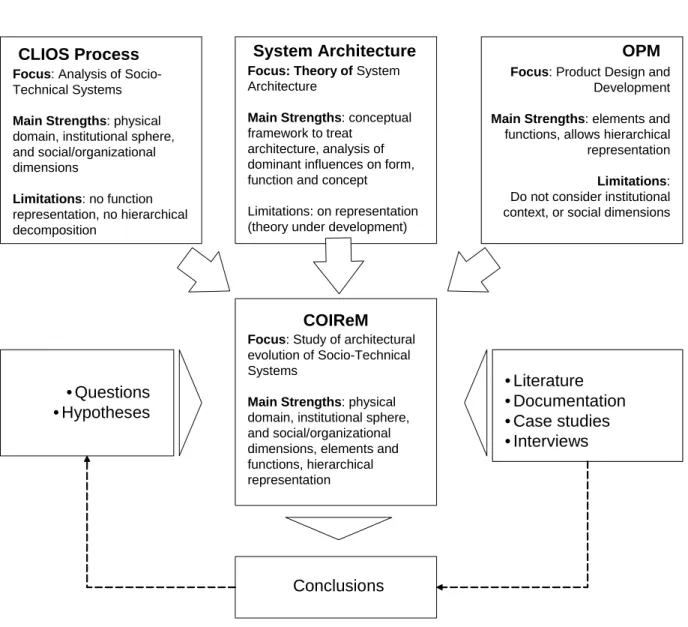
The analysis of the architectural evolution of MEUs required appropriate methods. We integrated the Representation Stage of the Complex Large Interconnected Open Socio‐Technical (CLIOS) Process and Object Process Methodology (OPM) under a framework for system architecture analysis, and developed the CLIOS‐OPM Integrated Representation Method (COIReM). COIReM’s objective is to study the architectural evolution of socio‐technical systems. We applied it to the evolution of MEUs using data from case study research, documentation, field research and interviews. We find that the evolution of MEUs and their entry into broadband services resulted from a process we define as Functional Emergence (FE): the process by which a new externally delivered
function emerges triggered by the combined effect of technical and contextual changes
affecting internal functions of a complex socio‐technical system.
The diversification of MEUs into broadband shows that small technological changes related to the internal functions of the system in the presence of regulatory and organizational adaptation, can stimulate the emergence of new externally delivered
functions. Especially in organizations with high absorptive capacity and dynamic
capabilities, these new functions can become sources of strategic diversification. The inability to understand these dynamics can create dramatic competitive disadvantages. For example, in this case technical changes created significant resources that, while not being perceived as valuable by the system itself, were greatly valued and demanded by an active local customer base.
The impact of this evolution was studied quantitatively using Matched Sample Estimators. Results showed that: (i) the adoption of IP‐enabled services had a positive impact on the internal efficiency of MEUs, (ii) there is no evidence to support the contention advanced in some policy discussions that MEUs are subsidizing their broadband business with funds from their electric power operations, and (iii) MEU‐ based broadband is associated with higher growth rates in the number of local business establishments, even after adjusting for the presence of private broadband providers.
These qualitative and quantitative results have important implications for policy making. We argue that the entry of MEU into broadband owes more to their nature as an electric utility than as a municipal agency. We suggest that, as result of the economies of scope between electric power and broadband services, MEUs represent a case of sustainable broadband facilities‐based providers and that, given the effects in internal efficiency and local economic development, they should be exempted from state legislation preventing local governments from offering telecommunication services.
This research makes four main contributions. First, it uncovers a new behavior of complex technological systems: small technological and contextual changes affecting internal components and functions can produce the emergence of new external functions. Second, we propose a new framework to study the architectural evolution of socio‐technical systems. Third, it provided evidence that, in the case of MEUs, this behavior is observable and measurable. Finally, the thesis provides a framework with which to formulate intervening policy measures.
Thesis Committee Chair: Professor Joseph M. Sussman
Title: JR East Professor of Civil and Environmental Engineering and Engineering Systems
To Magdalena, for your love, endurance and unconditional support
Acknowledgments
This work is the culmination of a learning and transformation process that was only possible due to the help, guidance, advice, support and love of many people. I was lucky enough to have Joe Sussman as dissertation advisor and mentor. I have learned much about what it takes to create high quality research, and what makes the difference in places like MIT. His patience and guidance only equal the generosity of his time and suggestions on the multiple Sunday afternoon he borrowed from his family to meet me at MIT to talk about this work. Many times he challenged me to go beyond what I thought was possible, taking way beyond my comfort zone, and many times I found myself growing and learning how to break thru.I have received enormous support from Dr. David Clark, Sharon Gillett and William Lehr from the MIT Communications Future Program (CFP), and its industrial sponsors. Each meeting with Dave was enlightening, and gave birth to new interesting questions or ideas about this research. I am indebted to Sharon and Bill for their patience and guidance through some of my first steps in telecom policy research, and for pushing me to go beyond the numbers in order to “get the story”.
I am most grateful for the financial support from CFP and MIT’s Program on Internet and Telecommunications Convergence and their industrial sponsors, listed at http://cfp.mit.edu/ and http://itc.mit.edu, and to the Digital Government Program of the U.S. National Science Foundation for its support through grant #EIA‐0306723. The opinions and conclusions of this report, however, only represent my views and do not imply any endorsement by the National Science Foundation, CFP, ITC, or its sponsors.
I am most grateful to the advice and time given by Prof. David Wise, from Harvard University, and Prof. Joel Cutcher‐Gershenfeld, now at University of Illinois, Urbana‐ Champaign. Their advice on quantitative and qualitative methods, and approach to research were extremely valuable.
Joel leads the list of other ESD faculty to whom I owe much of what I have become. I met Joel and Chris Magee on the Doctoral Seminar on Engineering Systems. Their insights and guidance created a lasting impression on me and introduced me to the study of complex socio‐technical systems. Joel and Chris were always available for comments and mentoring, including issues not related to class.
I was introduced by Dave Clark, Annalisa Weigel, Chris Magee, Joel Moses, and Daniel Whitney my interest for the study of the architecture of complex systems. I have to thank them to plant in me the career decision of knowing more and further develop
the theory of system architecture, and contribute to create a better practice of system architecting.
Prof. Richard de Neufville, Eda Daniel and Beth Milnes were always a great support. Their doors were always open, and always had a word of advice for the doctoral students. I am deeply grateful for their support, and guidance.
Terry Hill was instrumental in completing this work. She not only did an excellent editing work, she provided very valuable ideas and insights about how to convey the message in the best possible way. I am very much in debt for her hard work, ideas and patience to teach an engineer how to write properly.
I would like to acknowledge the help from the American Public Power Association in providing the data necessary for my analysis, and providing contacts with Braintree Electric and Light Department (BELD), Owensboro Municipal Utility (OMU) and Kutztown’s Hometown Utilicom (HU). I am very grateful to the managers and workers at BELD, OMU and HU for giving me their time, sharing their stories, and letting me dig into their history, reasons and process for deploying broadband services.
An important part of my life at MIT was enriched by the daily life among students. I owe words of gratitude to special friends that made life more enjoyable. Chintan Vaishnav, an office mate turn into a friend, was a great company and source of insights. I also thank Sinan Aral, Betsy Masiello, Daniel Hojman and Daniela Colodro, Luis and Sylvia Valenzuela, and many others that would be too long to list for helping make these years more enjoyable.
I owe special words of gratitude to my friend Xenia Dormandy for graciously hosting and putting up with me for more than two months during the final stages of the writing process.
Finally, most of my gratitude goes to Magdalena. This dissertation is yours. Your hard work, support, and friendship were the fuel to keep me on track on this process. This dissertation is only completed because you loved me, supported me, and have walked with me. I cannot finish thanking for your patience to stay with Felipe, Benjamin and Sebastian in Santiago while I was finishing this work in Cambridge. I will now start making up to you for the time we have been apart.
Table of Contents
Glossary of Terms………...11 Chapter 1: Introduction ... 13 1.1 The entry of municipal electric utilities into telecommunications ... 14 1.1.1 Historical Background... 14 1.1.2 Why is this Relevant? ... 16 1.2 Approach: research questions, hypotheses, and methods... 17 1.2.1 Methods for Qualitative Research: analyzing the process of evolution 18 1.2.1.1 Theory of System Architecture ... 18 1.2.1.2 Case Studies ... 191.2.1.3 COIReM: a new qualitative method for studying architectural evolution 19 1.2.2 Methods for Quantitative Research: studying the effects of architectural innovation 20 1.3 Results from Qualitative Research: why and how did this happen? ... 22 1.4 Results from Quantitative Research: what difference does it make? ... 23 1.5 Policy Implications... 25 1.6 Contributions to Theory... 28 1.6.1 CLIOSP‐OPM Integrated Representation Method (COIReM) ... 28
1.6.2 Functional Emergence ... 29 1.7 Organization of this Dissertation... 31 Chapter 2: Review of the Literature and Contributions to Theory ... 33 2.1 Theory of System Architecture ... 34 2.1.1 What is System Architecture? ... 34 2.1.2 Evolution of System Architecture... 36 2.1.3 Decomposition and Representation of System Architecture... 38
2.2 Organizational Theory, Learning, and the Development of Architectural Innovations ... 40
2.2.1 What do we mean by “architectural innovation”? ... 40
2.2.2 Organizational knowledge and learning as factors for architectural innovation 41 2.3 Public Management and the Creation of Public Value ... 43 2.4 Complex Socio‐Technical Systems ... 45 2.5 The Economic Impact of Information and Communication Technologies ... 47 2.5.1 Measuring the Economic Impact of MEU‐Based Broadband... 49 2.5.2 Positions about the Economic Impact of Municipal Broadband... 49 2.5.3 Methodological Considerations... 51 Chapter 3: Qualitative Research: Motivation for and Development of COIReM ... 53 3.1 Research Objectives ... 53 3.1.1 Understanding the transition of MEUs into broadband ... 53 3.1.2 Understanding the sources of architectural evolution ... 54 3.2 The Theory of System Architecture: A General Theoretical Framework ... 55 3.3 Object Process Methodology ... 57 3.4 The CLIOS Process... 60 3.5 CLIOSP‐OPM Integrated Representation Method... 64
3.5.1 COIReM Terminology and Representation Operators... 65 3.5.2 Differentiating the External and Internal Institutional Spheres... 70 3.5.3 Combining Research Approaches to Create COIReM... 72 3.5.4 Focus on System Evolution ... 74 3.5.5 Using COIReM: Steps in the Research Process... 76 Chapter 4: Qualitative Analysis: Why and How MEUs Became Broadband Providers 83 4.1 Research Questions and Hypotheses: ... 84 4.2 Stage 1 ‐ Understanding the Setting... 84 4.2.1 Step 1 – System Description ... 85 4.2.2 Step 2 – Historical Analysis ... 87 4.2.3 Step 3 – Identification of Major Subsystems of the CLIOS System:... 95 4.2.4 Step 4 – Population of Internal and External Institutional Sphere: ... 97 4.2.4.1 Internal Institutional Sphere... 97 4.2.4.2 External Institutional Sphere... 98 4.3 Stage 2 ‐ Building a Generic Representation... 103 4.3.1 Step 5 – Form and Functional Decomposition... 104 4.3.2 Step 6 – Population of Each Subsystem in the Physical Domain: ... 108 4.3.2.1 Electric Power Subsystem... 108 4.3.2.2 Economic Activity Subsystem... 113 4.3.2.3 Broadband Subsystem... 117
4.3.3 Step 7 –Identify Common Drivers and Add Projections from Internal Institutional Sphere to Representation in Step 6 ... 121
4.3.4 Step 8 – Add Projections from External Institutional Sphere to Representation in Step 7:... 132
4.3.5 Step 9 – Representation of Institutional Sphere:... 140
4.4.1 Selection of Case Studies... 144
4.4.2 Case Studies: Summary... 146
4.5 Stage 4: Validation and Advancing of the Findings: ... 150
4.5.1 Step 11 – Revision and validation of COIReM Representation:... 150
4.5.2 Step 12 – Observations about the Evolution of the System’s Architecture: ... 152
4.5.2.1 Adoption of IP‐Enabled Solutions by MEUs: the effect of regulatory and technical changes in critical components... 153
4.5.2.2 Electric Utility Mentality: reliability and long‐term investments ... 155
4.5.2.3 Organizational Adaptation: absorptive capacity and dynamic capabilities 156 4.5.2.4 Diversification: from internal IT‐based solutions to external broadband services ... 158
4.6 Evaluation of COIReM Analysis... 161
Chapter 5: Measuring the Economic Effects: What difference does it make? ... 163
5.1 Research Design: Research Questions, Hypotheses and Method... 164
5.1.1 Research Questions and Hypotheses ... 164
5.1.2 Empirical Method: Randomized Control Trials and Matched Panel Estimator 167 5.1.3 Functional Form for Measuring Growth Rates... 169 5.2 Building the Database ... 170 5.2.1 Data Sources ... 170 5.2.2 Merging Datasets and Aggregating Data... 171 5.3 Economic Effect of IP‐Enabled SCADA and AMR on MEU Internal Efficiency .. 173 5.3.1 Cost Efficiency per Unit of Output (MWh) ... 176 5.3.2 Price per Unit of Output (MWh)... 177 5.4 Cross‐Subsidies from Electric Power to Communications ... 178
5.5 Effect of MEU‐based Broadband on Local Economic Development... 180 5.5.1 Growth Rate of Local Business Establishments... 183 5.5.2 Business Establishments in IT‐Intensive Sectors ... 184 5.5.3 Employment ... 186 5.5.4 Salary ... 186 5.5.5 Limitations of the Data and our Research ... 187 5.6 Summary and, Conclusions... 188 5.6.1 Internal Efficiency Hypothesis: information technology does matter for electric power ... 188 5.6.2 Cross‐subsidies: MEU broadband does not appear to be subsidized by electric power price increases... 189
5.6.3 Local Economic Development Hypothesis: broadband deployed by MEUs matter to the economy... 190 5.6.4 Opportunities... 191 5.6.5 Challenges ... 191 Chapter 6: A New Theory of Functional Emergence for Socio‐Technical Systems... 195 6.1 Previous Work on Functional Emergence... 195 6.2 A New Theory of Functional Emergence for Socio‐Technical Systems... 198 6.2.1 Changes in Critical Components ... 199 6.2.2 Changes in Context... 202 6.2.3 Internal Emergence and Learning ... 203 6.2.4 External Emergence and Diversification ... 204 6.3 Planning for Functional Emergence ... 205 6.4 Conclusions... 207
Chapter 7: Conclusions, Policy Recommendations, and Suggestions for Future Research 209 7.1 Conclusions from Qualitative and Quantitative Research ... 210
7.1.1 Evolution and Diversification of MEUs into Broadband Services... 210 7.1.2 Economic Effects of the Architectural Evolution of MEUs... 213 7.1.3 CLIOSP‐OPM Integrated Representation Method... 214 7.1.4 Functional Emergence ... 215 7.2 Policy Recommendations... 216 7.3 Directions for Future Research ... 218 7.3.1 Municipal Electric Utilities ... 218 7.3.2 COIReM... 219 7.3.3 Architectural Evolution of Long‐Lived Engineering Systems ... 220 7.3.4 Functional Emergence ... 220 7.3.5 Architectural Innovation... 221 Appendix 1 : Interview Questionnaire ... 223
Appendix 2 : Case Study of Braintree Electric and Light Department ‐‐ Braintree, MA 225 Appendix 3 Case Study of Hometown Utilicom ‐‐ Kutztown, PA... 231 Appendix 4 : Case Study of Owensboro Municipal Utility ‐‐ Owensboro, KY ... 237 Appendix 5 : Tables from Econometric Analysis... 243 References ... 255
Glossary of Terms
: ACGE : Administration Costs and General Expenditures AMR : Automatic Meter Reading APPA : American Public Power Association ATM : Asynchronous Transfer Mode CLIOS : Complex Large Interconnected Open Socio‐Technical COIReM : CLIOS‐OPM Integrated Representation Method CPE : Customer Premise Equipment CSSI : Customer Service, Support and Information DOE : U.S. Department of Energy DSL : Digital Subscriber Line D‐EDF : Designed Externally Delivered Function EDF : Externally Delivered Function E‐EDF : Emerged Externally Delivered Function EIA : Energy Information Administration EPRI : Electric Power Research Institute FCC : U.S. Federal Communications Commission FERC : U.S. Federal Energy Regulatory Commission FTTP : Fiber‐To‐The‐PremisesHFC : Hybrid‐Fiber Coaxial IOU : Investor‐Owned Utility MEU : Municipal Electric Utility MSE : Matched Sample Estimators NARUC : National Association of Regulatory Utility Commissioners NATOA : National Association of Telecommunications Officers and Advisors NERC : North American Electric Reliability Council OLT : Optical Line Terminals ONT : Optical Network Terminal OPN : Outside Plant Network OPM : Object Process Methodology PSTN : Public Switched Telephone Network PUC : Public Utility Commission RCT : Randomized Control Trial SCADA : Supervisory Control and Data Acquisition TCP/IP : Transmission Control Protocol/Internet Protocol USPS : U.S. Postal Service USTA : United States Telecom Association WDM : Wavelength Division Multiplexing ZCTA : Zip Code Tabulation Area
Chapter 1: Introduction
The availability of broadband is a vital component of national competitiveness in a globalizing economy. The relative scarcity of this resource is an increasing problem for the United States as it continues to fall behind other developed countries. In this context, an increasing number of electric utilities owned by local governments have become broadband providers, bringing affordable broadband to suburban and rural areas. This trend has brought immediate market, legal, and public relations responses from telecommunications providers and prohibitions from state legislatures.This dissertation studies the causes, processes, and effects of the architectural evolution of Municipal Electric Utilities (MEUs) and their diversification into providing external broadband services. In this context, this research answers two substantive questions: (i) why and how did this happen? and (ii) what has been the economic effect on localities?
In addition to describing this process and illuminating the impacts of this evolution, the search for answers to these questions reveals two counterintuitive trends, one regarding the technology choices within the utilities and response of other entities, and one regarding the entry and leadership of local governments in increasingly market‐ driven services. The implications of the data analysis developed in this project are significant in thinking about the future of telecommunications.
In addition, the dissertation makes two theoretical contributions: First, it demonstrates the effectiveness of a new approach to thinking about such systems that brings together robust qualitative and quantitative analytic methods. The research undertaken here required the integration of two pre‐existing research methodologies, the Complex Large Interconnected Open Socio‐Technical (CLIOS) Process and Object
Process Methodology (OPM), into a third approach, which we are calling the CLIOS‐ OPM Integrated Representation Method (COIReM).
Second, this study extends the definition of “Functional Emergence” and proposes it as a property of socio‐technical systems, borrowing a term from neurosciences and artificial intelligence. Here, functional emergence refers to the way in which new externally delivered functions are forged from internal functions in the crucible of the technical, social, and regulatory changes affecting a socio‐technical system. In the case of MEUs, regulatory changes induced the replacement and upgrade of components required to control and monitor electric power systems. The technical changes in the new generations of these components enabled organizational learning and adaptation within MEUs triggering the emergence of their broadband services.
1.1 The entry of municipal electric utilities into telecommunications
Experts predicted that large investor‐owned utilities (IOUs) would become the third entrant into telecommunications, after telephone companies and cable television providers. Contrary to expectations, the major entrants were small municipally‐owned utilities which stepped in to fill the void in localities lacking sufficient services. Furthermore, the forecast was that, if this happened, electric utilities would deploy communications services over their existing power line networks, using Power Line Communications (PLC) technology. However, the MEUs who first entered the broadband market did so using newly adopted fiber‐optic networks. This technology option, common among telecommunications providers, is known for being expensive and highly complicated to deploy, requiring very sophisticated technical knowledge. This study explains the reasons MEUs chose this technology, and demonstrates the factors in their successful deployment of wired and wireless services over local fiber optic backbones.
1.1.1 Historical Background
Municipal electric utilities were created early in the development of the electric power industry as local governments responded to the increasing need for electricity. Demand for public lighting outside large urban areas had begun to exceed supply, at that time controlled by the private sector.
In 1882 there were only four municipal electric systems in the United States (Vennard 1968). Meanwhile, in the following decade the number of privately owned central electric stations increased to more than 2000; by 1902, there were more than 3,600 private utilities. The number of municipal electrics also grew, reaching 847 the same year (Vennard 1968; Chung 1997; Granovetter and McGuire 1998).
Despite this growth, by 1930 less than 12% of rural areas had access to electric power. MEUs were developed to fill this vacuum; by 1932 1,863 MEUs‐‐a large proportion of those currently in operation—had been established. In 1935, President Franklin Delano Roosevelt established the Rural Electrification Administration, a pillar of the New Deal, which brought power to 1.5 million farms in its first two years.
Since then, the evolution of electric utilities has been driven first, by current and future expectations for load demand, and second, by limitations imposed by policies and previous decisions about each electric utility (Rustebakke 1983), which is known as the “legacy of the architecture” (Crawley and Weigel 2004). These expectations and limitations, plus the technical evolution of electric utilities, provided the basis for the architecture and components of current grids. Built between 1950 and 1970 (CIGRE 2000), these grids represent the dominant design of today’s utilities (Hughes 1983).
As electric power gained importance and became a general purpose technology, the demand and operating context of private and public electric utilities also broadened, and command and control functions became critical. One of the latest changes in the architecture of electric utilities was the adoption of Supervisory Control and Data Acquisition (SCADA) and Automatic Meter Reading (AMR). These technologies enhanced a system’s command and control capabilities, and increased the robustness and reliability of the grid. MEUs first implemented SCADA and AMR using twisted‐ pair telephone lines during the late 1970s and early 1980s (Tamarkin 1992).
For MEUs, these investments became an important architectural basis for the deployment of external broadband services during the late 1990s. As the infrastructure used by many electric utilities for operating SCADA and AMR began to decay (around 1995), many municipal electric utilities began to consider options for replacing it with assets that would last for the next 20 to 40 years.
By the end of 2005, 446 MEUs had deployed SCADA, 305 had AMR, and 272 had deployed communications within their respective municipal governments. Interestingly, by the same time, 665 MEUs were also offering some type of external advanced telecommunication services, and 260 of them were offering external high‐ speed Internet access.
This dissertation studies why and how this happened, and outlines the economic effect of this evolution on the efficiency of the internal operations of MEUs, and on the economic development of the markets they serve.
1.1.2 Why is this Relevant?
As they are electric power agencies, the entry of MEUs into broadband services by using fiber optic networks was unexpected. Experts anticipated that large investor‐ owned electric utilities (IOUs) would become the third facilities‐based telecommunications provider. Contrary to those expectations, we see an extensive number of small municipally‐owned utilities entering telecommunications and a relative absence of IOUs. Experts also predicted that electric utilities would enter telecommunications by leveraging the economies of scope of their already available power line networks through the use of Power Line Communications (PLC) technology. Instead they deployed new fiber optic network backbones.
The policy debate has become highly polarized, and it has been based on limited or anecdotal evidence about the positive or negative effects of broadband services deployed by MEUs. No empirical study has been conducted to test the hypothesis that IP‐enabled solutions for command and control is associated with positive effects on the internal efficiency of MEUs. No empirical analysis has tested whether broadband deployed by MEUs is associated with positive effect on the local economy. Finally, there has been no empirical examination of the hypothesis that MEUs cross‐subsidize their broadband operations with revenues from their electric power services, allowing them to underprice private broadband providers.
Since the enactment of the Telecommunications Act of 1996, the telecommunications sector has become increasingly market‐driven. However, the deployment of broadband services by municipalities in general, and MEUs in particular, is an example of local government action. More specifically, the entry of MEUs in broadband services is relevant from the perspective of local government involvement in private business in general, and broadband Internet access in particular, for two reasons: (i) it presents a case of increasing public ownership of telecommunications infrastructure, in times when the tendency is towards privatization and market‐orientation, and (ii) it illustrates a case in which an important fraction of the innovators in deployment of next generation broadband access technology is comprised of public agencies instead of private companies.
The involvement of MEUs in broadband shows that local government agencies are capable of being innovators in deploying new‐generation telecommunications infrastructure: Broadband delivered by municipalities represent 32% of all homes served by fiber‐to‐the‐home in the United States, and MEUs represent most of this share (Gillett 2004).
MEU‐based broadband is a special case of municipal broadband, in which new high speed Internet services are deployed by the electric utility owned by the local government, instead of by a new department.
Recent research has linked the deployment of external telecommunication services by MEUs to their adoption of new technologies for Supervisory Control and Data Acquisition (SCADA) and Automatic Meter Reading (AMR) (Osorio 2004; Gillett, Lehr et al. 2006). This research established the existence of a relationship, but did not explain its nature. Our research fills this gap.
The positive relationship between the deployment of broadband by municipal electric utilities and economic development may appear intuitively true, but it has its subtleties. The existence of this relationship is being heavily contested in policy forums, largely in discussions based on anecdotal evidence or limited analysis1. This study is the first investigation that studies this relationship using econometric methods and place‐ level data from MEUs from the continental United States.
This research contributes to the understanding of an additional policy controversy. Besides the economic effects of the entry of MEU into broadband, its opponents have argued that MEUs undercut private competition by supporting broadband operations with revenue generated from their electric business. Our research provides the first empirical analysis testing this hypothesis. 1.2 Approach: research questions, hypotheses, and methods The entry of electric utilities into the broadband business provides a case study of the evolution of socio‐technical systems. It is a special case of a more general phenomenon: the architectural evolution of socio‐technical systems that can lead to diversification into new types of services. This research is relevant from the perspective of socio‐technical systems in general, and engineering systems in particular, because it is a case of gradual and unforeseen evolution and adaptation in one sector (electric power) created by technical changes in another (telecommunications).
There are two complementary approaches to studying the process and effects of the architectural evolution of MEUs and their diversification into advanced telecommunication services. The first research question is about the process of architectural evolution. To answer it, we develop and use a qualitative approach to
1 Ford and Koutsky (2005) presented a more limited study focused on the effect of municipal broadband
on sales across ten counties in the state of Florida, and Burton and Hicks (2005) analyze its benefits in Central Appalachia.
explore why and how MEUs became broadband providers. The second question focuses on the economic effects of this evolution. To explore this issue, we use a quantitative approach to assess the impact of deploying new generation SCADA and AMR on MEUs’ internal efficiency, and the impact on local economies when MEUs become broadband providers. The methods are summarized below and addressed more comprehensively in Chapter 3.
1.2.1 Methods for Qualitative Research: analyzing the process of evolution
There are two underlying questions for qualitative research: (i) why did MEUs became broadband providers?, and (ii) how did this happened? We present three hypotheses:
1. Changes in technology and regulatory context triggered the adoption of IP‐ enabled solutions for controlling and monitoring electric power systems, which created important endowments of data transmission capacity that exhibited economies of scope for advanced communication services,
2. The adoption, and later operation and deployment of the new technology allowed organizational learning and adaptation within MEUs that created capacities for offering communication services, and
3. As MEU managers identified the need for local provision of broadband services in rural and suburban areas, they decided to take advantage of the community‐ owned surplus of the new resource (bandwidth) and start offering broadband services.
We test these hypotheses by studying the evolution of the architecture of MEUs. Our qualitative research is based on the theory of system architecture. The information analyzed was derived from case studies of three MEUs selected. To compare and find common elements among them, we developed a hybrid methodology, COIReM mentioned above, based on an integration of the CLIOS Process and OPM.
1.2.1.1 Theory of System Architecture
We define a system’s architecture as the way in which a “concept” maps a systems’ “form” onto its “function”, a definition proposed by Crawley and Weigel (2004). “Function” refers to the visible external function of a system, also called its externally delivered function (EDF). In the case of MEUs, their “designed” EDF is the provision of electric power.
The evolution of MEUs and their diversification into telecommunication services is a case of architectural evolution, but most of all, of architectural innovation. Architectural
evolution results from changes to the form, function and/or concept of a system’s architecture. Architectural innovation is defined as “the reconfiguration of a new system to
link together existing components in a new way” that are often “triggered by changes in a component”, while the overall concept of the system remains unchanged (Henderson
and Clark 1990). Architectural innovations are created by a special type of architectural evolution that, by its nature, can have important competitive effects such as, in our case, the entry of MEU’s into telecommunications. Building on Henderson and Clark, we suggest here that architectural innovations can be triggered not only by technical, but also by social, organizational, or contextual changes.
The theory of system architecture provides a general framework for understanding several influences on the concept, form, and function of MEUs.
1.2.1.2 Case Studies
Data that would reveal the critical factors in the architecture of MEUs were derived from detailed case studies of three MEUs. Case study research provides a way to examine and collect data and information about the evolution of the technology and organizations by direct observation in the field and by examining data from interviews, documentation, and archival records. As a method, it is a especially relevant for understanding the why and how of a phenomenon (Yin 1984). In this dissertation, the case studies of three municipal electric utilities: Braintree Electric & Light Department (BELD), in Braintree, MA; Hometown Utilicom, in Kutztown, PA; and Owensboro Municipal Utility (OMU) in Owensboro, KY. They were chosen based on (i) when they deployed new generation technology for their internal operations, (ii) the type of technology chosen for offering external broadband services, (iii) when they deployed external broadband services, and (iv) their overall socio‐economic context.
1.2.1.3 COIReM: a new qualitative method for studying architectural evolution
In this dissertation we examine the architectural evolution of MEUs by applying a new method, the CLIOSP‐OPM Integrated Representation Method (COIReM)‐‐to the case‐study data. This approach integrates two methods: The Representation Stage of the Complex Large Interconnected Open Socio‐Technical (CLIOS) Process (Dodder, Sussman et al. 2005) and Object Process Methodology (OPM) (Dori 2002).
The CLIOS Process was developed to study “a system’s underlying structure and behavior, identifying strategic options for improving the system’s performance, and deploying and monitoring those strategic options.”(Dodder, Sussman et al. 2005). OPM was developed to study and design product and system engineering.
Chapter 3 details the way in which the strong points of these two approaches were combined to produce COIReM, explains the rationale behind COIReM, and presents its application to our research problem.
COIReM enables us to understand the architectural evolution of MEUs as a CLIOS System. The objective is to discover how the concept, form, and externally delivered function of its subsystems were affected from three perspectives: (i) the physical infrastructure, (ii) the organization, and (iii) the institutional context.
Understanding why and how MEUs became broadband providers still leaves the question about the economic effects of such evolution.
1.2.2 Methods for Quantitative Research: studying the effects of architectural innovation
The overall research question here is: What has been the economic effect of the evolution of MEUs into broadband providers? More specifically: How has it affected the MEUs internally, and how has it affected the communities they serve? The answers to these questions might seem intuitive, but there are various reasons why they are not. We discuss them in the literature review in Chapter 2 and on our econometric results in Chapter 5. A derivative question of particular interest to policy makers whether MEUs cross‐subsidize their broadband operations with revenues from their electric power services. This is relevant because, by doing it, MEUs could underprice private broadband providers driving them out of business.
We hypothesize that the adoption of IP‐enabled SCADA and AMR solutions enhances the internal efficiency of the electrical operations provided by MEUs. We test this “Internal Efficiency Hypothesis” by examining the effects of these IT solutions on (i) price; (ii) consumer service, sales, and information cost; and (iii) administrative costs and general expenses per MWh. Each MEU analyzed had the systems in place by 2000; the effects are measured for 2003. MEU officials claim that fiber optic network infrastructure was first deployed to operate IP‐enabled SCADA and AMR. This analysis examines whether such investments have had any effect on the electric power systems. We also test the hypothesis that MEUs do cross‐subsidize their broadband operations using revenues from their electric power services. This is the Cross‐Subsidy Hypothesis.
The last hypothesis is that towns in which MEUs have deployed external broadband services will exhibit higher levels of local economic development than similar towns with no MEU‐based broadband. As explained in section 1.4, this relationship has not been confirmed in prior research; we test this “Local Economic Development
Hypothesis”2 by analyzing the (i) growth rate of local business establishments, (ii) growth rate of employment, (iii) growth rate of average salaries between 2000 and 2002, and (iv) share of local business establishments in IT‐intensive sector by 2002.
In a perfect world, these questions could be answered by selecting a population, or a representative sample, and randomly assigning a “treatment” to a part of it (the
treatment group). This method, common in medicine and biological science, is known as
randomized control trial (RCT). In the case of this dissertation, the “treatments” are (i) the deployment of IP‐enabled SCADA and AMR (to test the Internal Efficiency Hypothesis) and (ii) the deployment of external broadband (to test the Local Economic Development Hypothesis).
The test groups would be probabilistically similar with one exception: The treatment
group would adopt or deploy the technologies. The control group would not. We could
ascertain the average effect of the treatments by analyzing the difference in a defined outcome variable between the treatment and control groups. For the Internal Efficiency Hypothesis, the outcome variables are measures of internal efficiency (e.g. price per MWh3), while for the Local Economic Development Hypothesis are measures for economic growth (e.g. rate of growth of local business establishments).
This type of experiment is impossible to implement when the units of observations are large engineering systems and the treatments are expensive technology deployments. The reason is simple. Carrying out such experiments would require for MEUs in the treatment group (i) to adopt IP‐enabled SCADA and AMR to test the Internal Efficiency Hypothesis, and (ii) to deploy external broadband networks to test the Local Economic Development Hypothesis. The time and costs associated with the implementation and possible effects of either experiment would be prohibitive.
However, another method is available. Matched Sample Estimators (MSE), developed by Abadie, Drukker, Herr and Imbens (2001) emulates randomized control trial in everything except the randomly assigned treatments. In a population or sample, MSE takes every treatment observation and pairs it with an observation of a case most closely matched in all other variables from the untreated group (control observation). Then, MSE calculates the difference in the outcome variable between treatment and control groups to reveal the average effect of the treatment.
2 The econometric analysis of the relationship between deploying internal services and becoming a
provider of external telecommunication services, and the effect of the presence of private telecommunication providers, is studied in Gillett, Lehr and Osorio (2006).
1.3 Results from Qualitative Research: why and how did this happen?
This dissertation answers the qualitative questions of why and how municipal electric utilities became broadband providers by (i) stating our hypotheses for why and how this happened (stated in Section 1.2.1), and (ii) iteratively applying COIReM to test these hypotheses. Four explanations for these phenomena emerged:
i. Internal technical needs caused MEUs to adopt fiber optic technology.
Municipal electric utilities reached the beginning of the 21st century with
infrastructure for monitoring and control that either needed replacement or did not exist. In the cases where MEUs had traditional SCADA and AMR, their infrastructure had reached the end of its design life or was plagued by reliability problems. Competitive pressures created by new regulatory settings, the liberalization of the electric power industry, and the reliability problems of the National Grid further stimulated the need for SCADA and AMR. It was time to replace the existing infrastructure.
However, technical changes in the information technology sector had greatly advanced the critical components of SCADA and AMR solutions the electric power networks required for their operations. In the late nineties, MEUs made the transition from traditional solutions working over dedicated communication channels to new IP‐enabled control and monitoring systems working over fiber optic networks. By adopting this infrastructure MEUs acquired a new resource ‐‐bandwidth‐‐ in excess of their needs, and valuable for telecommunication services. The upgraded infrastructure created possibilities for MEUs beyond the electric power business. Interviews and examination of meeting minutes reveal that among first‐adopters, MEU executives were not aware ex‐ante that the internal technical changes would open the way to a new business for MEUs in telecommunication services.
ii. The culture of MEUs included long‐range financial perspectives and a major concern with efficiency.
At first, MEUs did not adopt new technology with the intent to become broadband providers, but to enhance both the reliability of their electric operations and, as shown in Section 1.5 and chapters 4 and 5, their internal efficiency. While some might question the decision to deploy complex and costly fiber optic networks merely to operate SCADA and AMR, the choice can be easily understood by considering the
electric utility mentality.
Reliability has always been a major driver in the electric power industry, and IP‐ enabled SCADA and AMR and fiber optics can deliver it. These IP‐enabled solutions
provide the real‐time and remote control, monitoring, and response needed to prevent failures in network elements including those on customer premises. The old systems, however, focused mainly on failure alert. Furthermore, fiber optic cables are not affected by electromagnetic and radio frequency interference and are now as durable as copper wires.
Fiber optic cables are also the kind of long‐lived assets, lasting 20‐40 years, in which electric utilities traditional invest and amortize accordingly. This is a far different investment horizon and rationale than those of private telecommunication firms, which require higher discount rates and nearer investment horizons.
iii. MEU personnel had the capacity to absorb knowledge and learn about fiber optic technology and see its possibilities.
MEU employees had the basic knowledge to learn how to operate these new technologies not only for their own benefit but for third parties as well. They were able to absorb the new knowledge, understand its implications, and adapt their capabilities accordingly. In some cases, their linemen became proficient in splicing and deploying fiber optic cables, while in others some technology‐savvy members of their labor force got engaged in the deployment and operation of the new systems. As time passed by, MEUs realized the range of possibilities available through the new infrastructure, and began to deploy services to other local government agencies. At that point, the MEUs became de facto broadband providers.
iv. Communities in which some MEUs operated had demand for broadband services that could be supplied by excess capacity of the new fiber optic systems.
The decision to diversify into telecommunications arose from a two‐ or three‐year process in which local people and businesses, elected officials, and MEU management and personnel continually discussed the funding, opportunities, and limitations of such investments. In the beginning they focused on investments in new infrastructure needed for electric utility operations. Later, the focus broadened to include other potential applications of such investments. They recognized that the infrastructure had spare bandwidth capacity that could be used to meet the growing demand of residents and businesses for high‐speed Internet access.
1.4 Results from Quantitative Research: what difference does it make?
The three hypotheses about the effects of the evolutionary process described in Section 1.2.2 can be addressed through quantitative means: (i) What difference does the adoption of IP‐enabled solutions for systems control make for the internal efficiency of MEUs? (ii) Do MEUs cross‐subsidize between their electric power and business
operations, getting an unfair competitive advantage as compared to private broadband providers? And (iii) What difference does it make for a local economy if an MEU becomes a broadband provider? Chapter 5 presents detailed answers to these questions, which are summarized below.
Assessing the effect of the new system on internal efficiency requires comparing groups of MEUs that are similar in many dimensions, with the exception of the adoption of the new IP‐enabled SCADA and AMR. By the same token, assessing the effect of MEU‐based broadband on the local economy requires comparison among towns that are similar in many dimensions, with exception of the availability of MEU‐ based broadband.
We answer these questions by using Matched Sample Estimator (MSE), which was summarized in section 1.2.2 and is described in detail in Section 5.1. MSE is a quasi‐ experimental method developed by Abadie, Drukker, Herr and Imbens (2001). It emulates randomized control trial in everything, except the random assignation of treatments. It takes every treatment observation and pairs it with the observation of the control groups that most closely matches it across a group of observed variables. Then, MSE calculates the difference in the outcome variable between treatment and control groups to reveal the average effect of the treatment. MSE is the closest option to performing randomized control trial, which is known as the optimal approach to be used in cases like ours.
i. Internal Efficiency Hypothesis: adopting IP‐enabled solutions enhances MEU efficiency
The analysis of the Internal Efficiency Hypothesis evaluates the merits of the initial motivations for deploying IP‐enabled communication networks in MEUs. This research is the first work assessing the impact of such deployments on the efficiency of the provision of electric power by municipally‐owned electric utilities.
Our findings support the fact that the adoption of IP‐enabled SCADA and AMR enhances the efficiency of MEUs. We found that MEUs adopting the new technology exhibit lower customer service, sales information costs, and are able to offer lower electric power prices than non‐adopter MEUs. We conclude, in brief that in regard to the internal efficiency hypotheses, MEUs that adopted the new IT‐bases systems for internal control and monitoring exhibit higher efficiency than non‐adopters. Chapter 5 presents and discusses these results in more detail. ii. Cross‐Subsidies Hypothesis: no evidence of subsidies from electric power to broadband As a subsidiary point, we also examined the hypothesis that MEU subsidize their broadband operations with funds from their electric power operations. This is
important because, if MEUs were subsidizing their broadband operations with funds from their electric power business, then they would be able to offer prices that would be artificially lower and thus drive private providers out of the market.
We tested whether deploying external broadband by MEUs with IP‐enabled command and control systems was associated with effects on the price or cost of their electric power services. Everything else being equal, an increase in the price per unit of electric power following deployment of broadband services would indicate that MEUs were subsidizing their communication services with resources from their electric power businesses.
Based on our results, we found no evidence to support this hypothesis. Analysis of the cross‐subsidy hypothesis demonstrated no statistically significant evidence of cross‐subsidies, refuting the idea that about cross‐subsidies from electric power to communication services in MEUs.
iii. Local Economic Development Hypothesis:
The relationship between the deployment of broadband by MEUs and local economic development is far from obvious. Discussion has been based mostly on anecdotal evidence and limited regional analysis. This research presents the first empirical analysis of the hypothesis that broadband deployed by municipal electric utilities positively affects local economic development using nation‐wide data.
Some have argued that “the connection between municipal broadband and economic
growth has never been demonstrated and probably never will be” (Bast 2005). Others have
argued that municipal broadband systems can create “a dramatic increase in economic
growth” (Ford and Koutsky 2005). These arguments are discussed in Chapter 5.
In relation to the hypothesis regarding local economic development, our research showed that MEU deployment of broadband was associated with an increase in the growth rate of local businesses, whether or not broadband was also available from private providers. However, we found no statistically significant effect from broadband deployment of MEUs on the growth rate in average salaries and employment or on growth in the share of business establishments in IT‐intensive sectors.
1.5 Policy Implications
The importance of broadband for US competitiveness and economic development has been a topic of increasingly active debates in policy, industry, and academic forums. A number of critics have pointed out that the United States has ceded its leadership on
the deployment, innovation, quality of service of broadband to Asian nations (Bleha 2005; Forbes 2005; Weiser and Bleha 2005). In his 2004 presidential campaign, President George W. Bush declared universal broadband access to be a major national goal (Squeo 2004; Trembly 2004; Fein 2005): ʺ[t]his country needs a national goal for…universal, affordable access for broadband technology by 2007” (Squeo 2004)
In this context, the opportunities created by the architectural evolution of MEUs appear to be promising and oriented in the right direction.
Reality shows, however, that these opportunities are at risk. The number of states prohibiting municipal entry into telecommunications is increasing. Fourteen states have adopted barriers to the entry of municipal entities into some, or all, types of telecommunication services by 20064. These laws appear to emanate from pressure on legislators from existing telecommunications companies rather than from carefully planned state‐level telecommunication policy for increasing competition or innovation.
For instance, Hometown Utilicom (HU) of Kutztown, PA, was awarded the 2003 Governor’s Award for Local Economic Excellence in the category of Information Technology in recognition for their deployment of local broadband services5. The award sent a message to other local governments that Kutztown was an example to be emulated.
About a year later, however, the state sent a totally contrary message, passing a law prohibiting any local government or other political subdivision of the state from providing advanced telecommunication services unless no private company was currently or had the intention of providing services for the following 14 months. This legislation followed a negotiated settlement between Verizon and the Wireless Philadelphia Project, according to Dianah Neff, Chief Information Officer for the City of Philadelphia (Fisher 2005).
The opportunities created by the architectural evolution of MEUs are also at risk because of the underlying assumption that MEUs cross‐subsidize their broadband services with electric power operations. This assumption is used to create public policy that would eliminate the opportunity for electric utilities in general, and MEUs in
4 Arkansas, Florida, Missouri, Minnesota, Nebraska, Nevada, Pennsylvania, South Carolina, Tennessee,
Texas, Utah, Virginia, Washington, and Wisconsin.
5 Letter from Dennis Yablonsky, Secretary Designee, Department of Community and Economic
Development, Commonwealth of Pennsylvania, to Frank Caruso, Director of Information Technology, Hometown Utilicom, dated February 14, 2003.
particular, to cross‐subsidize. This can be done in by requiring them to comply with financial and accounting regulatory procedures that would ensure that no cross‐subsidy is done. Also, legislation can simply prohibit MEUs from entering the broadband market.
Our analysis shows no evidence of cross‐subsidies from electric power rates, or costs, to telecommunications services. It also demonstrates that the electric power prices of IP‐ enabled MEUs that provide external broadband are statistically the same as those of MEUs not providing broadband.
This research underscores the position that regulatory approaches to telecommunications and electric power are limiting the application of technology‐based economies of scope that could increase local government efficiency, enhance economic growth, and foster competition in the telecommunications market. A stated national goal for the United States is to build much‐needed broadband infrastructure and provide affordable broadband access by 2007. Public policy in regard to MEU‐provided broadband, however, has focused excessively on issues of telecommunication competition. The future for municipal broadband thus remains unclear.
Information and communication technologies (ICT) have reached a point where the convergence between telephony, cable television and data transmission is just another example of convergence among network services. The course of these convergences seems to predict an even more drastic convergence among different types of network services.
As ICT becomes ubiquitous, the cost and difficulty of deployment and operation are decreasing and their data transmission capacity is increasing. As the use of ICT for general purposes increase, knowledge that once belonged only to experts is becoming basic technical knowledge in all organizations that deploy and manage their own network infrastructures.
The implications of this research show how important is to (a) understand how technical changes needs to be reflected in new public policy; (b) recognize when these policies need to be changed and updated, and (c) design public policies with an understanding of how technical change could affect them in the future. If these issues are not addressed, the opportunities created by the architectural evolution of MEUs will not be the only ones at risk, because similar arguments could be used to prevent other players from entering broadband services.