UNIVERSITY OF SHERBROOKE Faculté d’éducation
Pratique empathique: journaux de lecture de réflection au CÉGEP Empathetic Practice: Reflective Reading Journals in the CEGEP Classroom
par
Nazareth Arabaghian 07213366
Essai présenté à la Faculté d’éducation en vue de l’obtention du grade de
Maître en enseignement (M.Éd.) Maîtrise en enseignement au collegial
June 2015
UNIVERSITÉ DE SHERBROOKE
Faculté d’éducation
Maîtrise en enseignement au collegial
Pratique empathique journaux de lecture de réflection au CÉGEP
Empathetic Practice: Personal Reading Reflections in the CEGEP Classroom
par
Nazareth Arabaghian
a été évalué par un jury compose des personnes suivantes:
Dr. John (Jock) Mackay Directeur de l’essai
SUMMARY
In order to observe whether or not students appreciate the opportunity to learn affectively, this research was designed as an exploratory project aimed at identifying the ways in which reflective reading journals enabled students to respond empathetically to works of literary fiction. To understand the relationship between the act of reading and the experience of empathy, several questions were asked. The main question was: In what ways do reflective reading journals encourage students to read and understand works of fiction empathetically? Related concerns were taken into consideration: How do students describe their experience of empathy in response to the literary techniques such as plot and characterization? Students were also expected to consider the ways in which their thoughts on writing reflective reading journals underscored the need to forge empathetic awareness of the variety of opinions, experiences, and perspectives expressed in the works of fiction.
Since no control was exercised over the selection of the participants, the research project used whatever sample was available when the course was offered in the Fall 2013 semester. The students who had signed up for the course were required to submit a total of five reflective reading journals at five different times during the semester. Fifty reflective reading journals were randomly selected for this research project. To help students organize their responses with specific features of the works of fiction in mind, four prompts were presented. These guiding prompts were meant to encourage active reading by urging students to react to decisions made by characters or to ask them questions, to reflect on a pertinent bit of dialogue, and/or to consider the ways in which characters relate to each other. Each prompt also urged students to relate their thoughts to their personal lives. A content analysis of the students’ reflective reading journals was used to identify empathy-related themes. An inductive open
coding of this data was performed after the semester had ended and the students’ final grades were submitted.
Students were also asked to provide feedback to fixed-alternative and open-ended questions. A questionnaire was administered at the end of the semester, after all five reflective journals were submitted, evaluated, and returned. Students were surveyed on whether they believed reflective reading journals helped them to think deeply about characters and whether or not they considered it important to express their emotions in response to their reading of literary fiction. The open-ended questions asked the students to provide feedback on how they felt about writing reflectively and to explain whether or not they found the practice of writing reflective reading journals helpful in building self-awareness. A content analysis was performed on the students’ responses to the open-ended questions in order to see whether or not recurrent themes corroborated with the conclusions found in the literature on reading and empathy. The themes that emerged in the reflective reading journals and the feedback provided in the questionnaire indicated that students see the experience of empathy as an important correlative to reading, thinking, and understanding.
In general, students found this academic exercise helpful in providing a platform to inspire critical reflection, to express feelings, and to foster empathetic concern for others. The findings accentuated the students’ intellectual and emotional engagement with literary fiction. In sum, the collected qualitative data (themes and questionnaire responses) was consistent with the information found in the literature on empathy. This exploratory research offers evidence of the benefits of reflective journaling as a means to nurture the students’ empathetic imagination. The conclusions drawn in the literature on active learning, fiction, and reflective journaling provide English teachers with the theoretical support necessary to fashion learning practices that are meaningful and rewarding for CEGEP students at an affective level.
RÉSUMÉ
Dans le but d'observer si les étudiants apprécient ou non la possibilité d'apprendre affectivement, cette recherche a été conçue comme un projet exploratoire visant à identifier les moyens que les journaux de lecture de réflexion ont permis aux étudiants de répondre avec empathie aux oeuvres de fiction littéraire. Pour comprendre la relation entre l'acte de lecture et l'expérience de l'empathie, plusieurs questions ont été posées. La question principale était la suivante: de quelles façons les journaux de lecture de réflexion encouragent les étudiants à lire et comprendre des oeuvres de fiction avec empathie? Des préoccupations du même ordre ont été prises en considération: Comment les étudiants décrivent-ils leur expérience de l'empathie en réponse aux techniques littéraires telles que l'intrigue et la caractérisation? Les étudiants doivent aussi examiner les façons dont leurs idées sur la rédaction de journaux de lecture de réflexion ont mis en évidence la nécessité de forger la prise de conscience empathique de la diversité d'opinions, d'expériences et de perspectives exprimée dans les oeuvres de fiction.
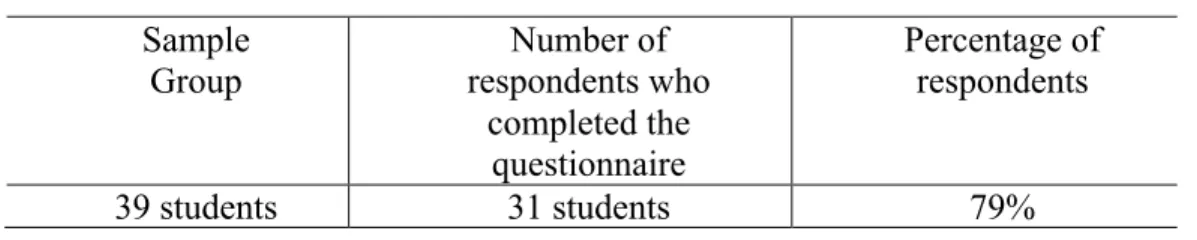
Puisqu' aucun contrôle n' a été exercé sur la sélection des participants, le projet de recherche a utilisé un échantillon qui était disponible lorsque le cours a été offert à l'automne 2013. Comme le cours faisait partie du flux obligatoire, les 39 étudiants inscrits au cours ont été pris à partir d'un échantillon représentatif de la population du CÉGEP John Abbott. Le cours a été sous-titré "anglais 103: l'individu et la société", et les oeuvres de fiction que les étudiants ont étudiées, ont été prises à partir de la première moitié du xxe siècle. Un post-cours de niveau d'entrée dans l'un des composant de bloc-anglais, ce cours "thèmes" s'est concentré sur de la fiction qui dramatise la relation fragile entre l'individuel et le collectif.
Les étudiants étaient tenus de soumettre un total de cinq journaux de lecture de réflexion à cinq moments différents au cours du semestre. Cinquante journaux de lecture de réflexion ont été choisis au hasard pour ce projet de recherche. Pour aider les étudiants à organiser leurs réponses avec des caractéristiques spécifiques des oeuvres de fiction en esprit, quatre questions guides ont été présentées. Ces questions guides étaient destinées à encourager la lecture active en exhortant les étudiants à réagir aux décisions prises par des personnages ou à leur poser des questions, à réfléchir sur certain dialogue pertinent, et/ou à examiner les façons dont les personnages sont liés les uns aux autres. Chaque question guide a aussi prié les élèves à porter leurs réflexions sur leur vie personnelle. Une analyse du contenu de leurs journaux de lecture de réflexion a été utilisée pour identifier les thèmes liées à l'empathie. En raison de la nature inductive de la recherche, un codage ouvert des données a été effectué après la fin du semestre et les notes finales ont été présentées.
Les étudiants ont également été invités à fournir des commentaires en réponse aux questions fixes et aux questions ouvertes. Un questionnaire a été administré à la fin du semestre, après la soumission, l'évaluation et le retour des cinq journaux. Les élèves ont été interrogés pour savoir s'ils croyaient que les journaux de lecture de réflexion les ont aidés à réfléchir profondément au sujet des personnages et s'ils jugeaient important d'exprimer leurs émotions en réponse à leur lecture de la fiction littéraire. Les questions ouvertes avaient demandé aux étudiants de fournir des commentaires sur ce qu'ils pensaient de la rédaction de lecture de réflexion, et d'expliquer s'ils trouvaient cette pratique utile pour renforcer la connaissance de soi. Une analyse du contenu a été effectuée sur les réponses des étudiants à des questions ouvertes afin de voir si oui ou non les thèmes récurrents ont corroboré les conclusions trouvées dans la recherche sur la lecture et l'empathie. Les thèmes ressortis et les commentaires fournis dans le questionnaire ont indiqué que les étudiants considèrent l'expérience de l'empathie comme un important corrélatif à la lecture, la réflexion et la compréhension.
En général, les étudiants ont trouvé cet exercice académique utile à fournir une plate-forme pour une réflexion critique, pour exprimer leurs sentiments et pour promouvoir un souci empathique des autres. Les conclusions ont accentué l'engagement intellectuel et affectif des étudiants avec la fiction littéraire. Les données qualitatives (thèmes des rédactions et réponses au questionnaire) recueillies étaient cohérentes avec l'information trouvée dans la recherche sur l'empathie. Ce project de recherche exploratoire offre la preuve des avantages de la rédaction de lecture de réflection comme un moyen pour alimenter l’imagination empathique des étudiants. Les conclusions tirées de la recherche sur l'apprentissage actif, la fiction, et la rédaction de réflexion fournissent aux professeurs d'anglais l'appui théorique nécessaire pour façonner à un niveau affectif des pratiques d'apprentissage importantes et enrichissantes pour les étudiants du CÉGEP.
TABLE OF CONTENTS SUMMARY ………...… 4 RÉSUMÉ ………... 6 LIST OF TABLES ………... 11 LIST OF FIGURES ………. 12 ACKNOWLEDGEMENTS ……… 13 INTRODUCTION ………... 14
CHAPTER ONE: PROBLEM STATEMENT ……….. 16
CHAPTER TWO: LITERATURE REVIEW ………... 19
1 INTRODUCTION ……….. 19
2 EMPATHY ………... 19
2.1 Definition ……… 19
2.2 Differences Between Sympathy and Empathy ……… 21
2.3 Types of Empathy: Affective and Cognitive ………... 22
2.4 Reading and Empathy ………. 23
3 THE SIMULATIVE FUNCTION OF FICTION ………... 25
4 SELF-REFLECTIVE UNDERSTANDING ……….….. 28
4.1 Reading and Self-reflection ……….. 28
4.2 Journaling and Self-reflection ……….. 30
5 RESEARCH QUESTION ..………. 32
CHAPTER THREE: CONCEPTUAL FRAMEWORK ……….. 34
1 AFFECTIVE PROCESSES ……… 34
2 COGNITIVE EFFECTS: MENTAL SIMULATIONS ……….. 35
3 READER RESPONSE THEORY ..……… 36
CHAPTER FOUR: METHODOLOGY………. 42
1 RESEARCH DESIGN ……… 42
2 POPULATION: SAMPLE & CONTEXT ……….. 43
2.1 Context: Description of English 103—Literary Themes ……….. 43
3 INSTRUMENTATION AND DATA COLLECTION. ………. 47
3.1 The Reflective Reading Journals …...……….. 47
3.2 Evaluation and Process for the Reflective Reading Journals ...……… 48
3.3 The Questionnaire ………. 51
4 PROCEDURE AND ETHICAL CONCERN .………..………….. 53
CHAPTER FIVE: PRESENTATION OF FINDINGS ……… 55
1 INTRODUCTION ……… 55
2 THEMES REVEALED IN THE REFLECTIVE READING JOURNAL ... 55
3 REFLECTIVE READING JOURNAL 1 ...………. 56
3.1 Theme 1—The Sense of Self-Worth and Feeling Appreciated ………. 56
3.2 Theme 2—Feelings of Gratitude and Responsible Outlook ………….. 57
3.3 Theme 3—Challenging Routine and Daily Expectations ….. …………58
4 REFLECTIVE READING JOURNALS 2 &3 ………... 59
4.1 Theme 4— The Need to Express and Withhold Emotions ………….. 59
4.2 Theme 5—Acknowledging and Understanding Differing Outlooks ………. 61
4.3 Theme 6—Individual Voice Versus Conventional Wisdom ………… 62
5 REFLECTIVE READING JOURNALS 4 & 5 ……….. 63
5.1 Theme 7—Questioning Norms and Safeguarding Individualism …... 63
5.2 Theme 8—Lacking Concern for Others and Gratifying One’s Ego ... 64
6 QUESTIONNAIRE DATA ……….... 66
6.1 Respondents ……….... 66
6.2 Demographic Information About Respondents ……….. 66
6.3 Summary of Responses to the Questionnaire Items ………... 68
7 THEMES REVEALED IN THE OPEN-ENDED QUESTIONS ………. 71
7.1 Question #8—Has writing reflective journals based on the readings helped you express your feelings? ……….. 72
7.2 Question #9—Has writing reflective journals based on the readings
helped you understand the experience of others? ………... 74
7.3 Question #10—Has writing reflective journals based on the readings helped you become self-reflective? ……… 76
8 SUMMARY ………77
CHAPTER SIX: DISCUSSION AND CONCLUSION ……… 79
1 INTRODUCTION ……….. 79
2 THEMES IN THE REFLECTIVE READING JOURNALS ………. 80
2.1 Summary of Themes Revealed in Journal 1……….. 80
2.2 Summary of Themes Revealed in Journals 2 & 3 ……… 80
2.3 Summary of Themes Revealed in Journals 4 & 5 ……….... 81
2.4 Discussion ……… 81
3 THEMES IN OPEN-ENDED QUESTIONS OF QUESTIONNAIRE …. 83 3.1 Summary of Themes Revealed in Question #8 ………... 83
3.2 Summary of Themes Revealed in Question #9 ………... 83
3.3 Summary of Themes Revealed in Question #10 ………. 83
3.4 Discussion ………... 84
4 APPLICATION AND LIMITATIONS ………. 86
4.1. Application of Findings ……….. 86
4.2. Limitations of the Study ……….. 87
5 CONCLUSION ……….. 89
BIBLIOGRAPHICAL REFERENCES ………... 91
APPENDIX A: ETHICS COMMITTEE APPROVAL LETTER ………….. 96
APPENDIX B: STUDENT CONSENT FORM ………. 98
APPENDIX C: REFLECTIVE READING JOURNAL PROMPTS ………. 101
LIST OF TABLES
Table 1 Total Number of Reflective Reading Journals Submitted ……. 50 Table 2 Key Themes Revealed in Reflective Reading Journals ………. 56 Table 3 Student Respondents ……….. 66 Table 4 Program of Study of Respondents ………67 Table 5 Responses to Questionnaire Items #4-7 ………. 69 Table 6 Key Themes Revealed in the Open-Ended Question #8 ……… 72 Table 7 Key Themes Revealed in the Open-Ended Question #9 ……… 74 Table 8 Key Themes Revealed in the Open-Ended Question #10 …….. 76
LIST OF FIGURES
Figure 1 Age of Respondents ………. 66 Figure 2 Sex of Respondents ……….. 66
ACKNOWLEDGEMENTS
I would like to express my deepest gratitude to my research supervisor Dr. John (Jock) Mackay for providing encouragement and guidance. Thank you for your kindness and generosity. I also wish to thank Corinne for her unwavering patience. I don’t know how I could have completed this project without your unconditional love and support.
INTRODUCTION
CEGEP teachers should take heed of the curricular benefits of affective learning. Striking a balance between reason and emotion is a particularly important aim for the English teacher who wishes to instill in the students a passion for reading and reflecting. One way to nurture this sort of lasting learning experience is for teachers to challenge the notion that students are passive learners who read merely to retain information for an upcoming test. On the contrary, current studies on reading and writing instruction suggest that students find the experience of reading most meaningful when they get to reflect upon and write down what they are feeling.
The aim of this exploratory research project is to provide some insight into the ways in which reflective reading journals allow students to read literary fiction empathetically. The hope is, on the one hand, to build an understanding of whether or not students believe reflective reading is a worthwhile academic exercise. On the other hand, it is to see whether or not the findings in the studies on empathetic reading and the students’ personal feedback on the practice of writing reflective journals agree. Furthermore, it is hoped that the themes that emerge in the students’ reflective journals and the answers to the corresponding questionnaire items suggest an increased understanding of the relationship between reading and the possibility of empathetic concern.
One can argue that reading is synonymous with learning; it is a recurring educational theme that transcends departmental, disciplinary, and even possibly cultural divides. In effect, reading can be taken for granted as the only constant in the learning equation—that is, irrespective of the institution, the act of reading must be considered a mandatory feature of learning in and across the disciplines. This is especially true for the CEGEP learner who, depending on the subject or program of study, can be asked to read everything from axioms and graphs to the
periodic table of elements and metaphor. Yet, far too often students read merely in order to retain the required information for a quiz before moving on to other tasks.
The learning benefits of active reading and purposeful reflection in the CEGEP context cannot be overstated. In assigning reflective reading journals, teachers not only manage to encourage students to become aware of, and later identify with, their own personal attitudes and values. They also encourage them to think about the emotions elicited and to record these. Students are, in essence, pushed to balance autonomous and subjective outlooks with increasingly critical and self-reflective understanding. The journal therefore encourages the students to reflect on the conceptions of personal and social selves which they are exposed to during their experience of reading literary texts.
Consequently, as this study observes, empathy is enacted by involving oneself intellectually as well as emotionally, and by making the learning experience more meaningful through self-reflection. While a CEGEP student’s time in an English class is relatively limited—in general one semester is equivalent to 60 hours of class time, meetings usually taking place twice a week for the duration of fifteen weeks—and since English classes tend to require consistent, sustained, and ongoing training in reading and writing, teachers may find it difficult to always have to devise and introduce new lesson plans to keep students motivated and actively engaged.
Training students to read analytically and with critical acumen is, put curtly, time-consuming and challenging, especially given the fact that CEGEP teachers encounter a plethora of learning skills and cognitive abilities in the classroom. However, in order to create a more emotionally and intellectually vibrant curriculum, teachers could consider assigning reflective journals as a desirable pedagogical approach for the promotion of active and lasting learning.
CHAPTER ONE: PROBLEM STATEMENT
Why is it important to assign reflective reading journals in a CEGEP English literature classroom? This researcher contends that keeping a reflective journal during the process of reading promotes reflective thinking. Studies corroborate by suggesting that keeping a journal of one’s feelings in response to a story helps readers refine their sense of self through reflective practice (Boud, 2001; Kremenitzer, 2005). The reflective reading journals can enable students to take stock of what they are feeling and, if and when shared, can help teachers observe how readers respond to personal feelings, concerns, dilemmas that fictional characters contend with. In sum, the reflective journal is a model pedagogical tool that encourages empathetic identification, underscores the importance of self-awareness and understanding, and bolsters metacognition (Schon, in Boud, 2001; Kremenitzer, 2005).
Since empathy requires active—that is, conscious and deliberate— mental involvement, the concept applies quite naturally to our imaginative interactions with humans (characters) found in fiction (Mar, Oatley, Djikic, & Mullin, 2011; Morson, 2011). As an infectious catalyst, empathy inspires emotional and intellectual awareness. It is the English teacher’s hope that exposure to literary fiction will not only help students acquire valuable insight into human experience; it may also help students adopt a responsible outlook upon the world. In other words, by reading works of fiction, students get to reflect upon the nature of identity not only in factual terms or on global scales but also on an individual, humanized level, consequently gleaning further insight into the human condition.
The interaction between reading and reflection, moreover, underscores the privileged place occupied by the reading identity in the learner’s self-concepts. Specifically, how learners see themselves as readers should
impact their voluntary reading engagement (Irwin, 2003). Urging readers to engage themselves in writing could afford researchers some light into what is going on in the readers’ mental and emotional registers. What is required from teachers and researchers, as Irwin (2003) suggests, is the willingness to encourage affirmative, sustained, and voluntary engagement in reading and writing as necessary correlatives to effective learning. By assigning reflective reading journals, teachers enable students to grapple with difficult but worthwhile questions about one’s self, beliefs, viewpoints, anxieties, and so on (Hiemstra, 2001).
Because the art and science of teaching relies heavily on the transmission of disciplinary knowledge and proficient development of intellectual competencies, teachers sometimes forget that equally vital for effective learning is to balance reasoning with emotional engagement (Mayer & Salovey, 1997). Although most studies on fiction and empathy deal with Canadian and American undergraduate university-level samples, the topic remains the special domain of the CEGEP literature classroom in which students perform a balancing act between the intellect and emotions (Oatley, 2004). Such studies describe observations regarding the nature of empathetic reading, their theoretical bent focusing predominantly on the theory-of-mind (simulation), affective learning, critical reading skills, and the higher-learning ideals of self-reflection and awareness of social interaction.
Specifically, because students are urged to identify emotionally with the content of what they learn—and by reflecting upon their idiosyncratic feelings and those of the people they read about, as evidenced in the studies by Coplan (2004), Mar, Oatley, Hirsh, dela P, and Peterson (2006), Mar, Djikic, and Oatley (2008), and Djikic, Oatley, Zoeterman, and Peterson (2009)—they begin to forge an emotionally, intellectually, and morally responsible outlook. Therefore, in order to develop a nuanced appreciation for ongoing important contributions to the general field of literacy and literary education, it is necessary to set the
topic of empathetic reading within the framework of a discussion on the conceptual nature of empathy, on the affective processes inherent in self-reflection, and on the imaginative assessment of real-life experiences by means of the simulative function of fiction.
CHAPTER TWO: LITERATURE REVIEW
1. INTRODUCTION
The literature on the psychology of reading purports to highlight the relationship between reading and the development of the reader’s capacity for empathy and self-awareness. Similarly, the research on journal writing also underscores the need for readers to engage with the learning material not only from a distance—that is, by writing objective, impersonal academic essays that conduct a formal analysis of texts—but also from within a more personal purview that encourages readers to stake an emotional claim in the learning experience. As a reflective practice, journal-writing helps readers not only to describe their thoughts in response to the reading material; it also encourages the building of emotional intelligence through self-reflection (Goleman 1998, cited in Jarvis, 2001; Mayer & Salovey, 1997). The studies on learning/reflection journals and empathy draw encouraging conclusions about the benefits of reflective reading and writing.
2. EMPATHY
2.1 Definition
Before investigating the ways in which one gauges the function of empathy through the act of reading, one must first decipher the possible meaning(s) of what Mar (2011) deems a “notoriously heterogeneous construct” (p. 113). The Merriam-Webster online dictionary defines the word “empathy” in two interrelated ways. It is, firstly, the “imaginative projection of a subjective state into an object so that the object appears to be infused with it” (The online Merriam-Webster). Empathy is further defined as “the action of understanding, being aware of, being sensitive to, and vicariously experience the feelings,
thoughts and experience of another of either the past or present without having the feelings, thoughts, and experience fully communicated in an objectively explicit manner” (The online Merriam-Webster).
There is, in fact, almost unanimous agreement in the research on reading that empathy entails the emotional willingness to enter another’s skin so as to better recognize and understand phenomena from the perspective of another person’s life experience. Since the occurrence of empathy comes out of affective engagement with the content of learning—that is, its subject matter—it is, according to Suzanne Keen’s conception of the theory of narrative empathy, “provoked by witnessing another’s emotional state, by hearing about another’s condition, or even by reading” (Keen, 2006, p. 208).
Moreover, the research on empathy and reading defines the word “empathy” by placing it in its historical context and original usage. While the term found currency in the first decade of the twentieth century, its conceptual beginnings can be traced back to earlier nineteenth-century manifestations. The phrase sich einfuhlen, for instance, was used by the German philosopher and theologian, Johann Gottfried von Herder (1744-1803), to suggest the admiration for and subsequent identification with an object about which one desires a deeper cognitive grasp (Aragona, Kotzalidis, & Puzella, 2013). The German philosophers Robert Vischer (1847-1933) and Theodor Lipps (1851-1914) used the term in the study of aesthetics to explain the process of feeling one’s way into something else, whereas the psychologist Edward Titchner (1867-1927) used it to denote the experience of “feeling into,” a direct translation from the German term Einfuhlung (Aragona, et al., 2013; Lipps and Titchener, cited in Keen, 2006; Mar & Oatley, 2008).
This process of feeling one’s way into another person’s emotional experience becomes, in early twentieth-century philosophy, an imaginative turning away from one’s subjective conception of the world so as to better
appreciate the experience of a person other than oneself (Finlay, 2005). According to Hodges & Myers (2007), this form of empathetic understanding is premised on the individual’s ability to consider the outlook of the other person imaginatively, without appropriating or substituting the experience of the other as one’s own. A distinction between self and other is made, since empathy is occasioned only insofar as “one understands the other person’s experience as if it were being experienced by the self, but without the self actually experiencing it” (Hodges & Myers, 2007, p. 296).
2.2 Differences between Sympathy and Empathy
Since the original usages of the word, empathy has been regularly confused with the related notion of sympathy. While both terms denote forms of caring, they are not, as Anita Nowak (2014) posits, synonymous terms (TEDx Talks, 2014). Sympathy means feeling for someone else or caring for that person’s safety and wellbeing; it also connotes the ability to be moved by another person’s experience (Hodges & Myers, 2007). Empathy, on the other hand, is about imagining someone else’s emotional and intellectual states, and thus to some extent sharing that other person’s mental experience (Coplan, 2004; Morson, 2011). A deliberately imaginative exercise, empathy is about feeling with someone else’s emotional experiences (Eisenberg, 2000, cited in Mar & Oatley, 2008).
Furthermore, if sympathy encourages feeling for another person’s predicament, empathy triggers, in theory if not in practice, a sort of kinship, bridging the gap between the empathetic individual and the person cared for. Citing Vignemont and Singer (2006), Mar et al. (2011) describe empathy as a process of observing or imagining the sharing of feelings similar to those of another person, “knowing that the other is the source of one’s own emotion” (pp. 823-824). While sympathy means being concerned about another’s wellbeing (feeling for), empathy requires that, in deliberately imagining or simulating
another’s point of view, emotions, or intellectual mind frame, one become more actively and deeply engaged with the experience of others (Coplan, 2004; Morson, 2011). A practical distinction between the two often conflated terms would be to see sympathy as the act of feeling for someone, in contrast to feeling with someone, which is an act germane to the experience of empathy.
2.3 Types of Empathy: Affective and Cognitive
In their research on empathy, Hodges & Myers (2007) and, more recently, Nowak (TEDx Talks, 2014), distinguish between two types of empathetic concern: affective (emotional) and cognitive empathy. While it is often thought that the experience of empathy is a form of emotional attachment or a form of conflation between one individual’s feelings and another’s, the research suggests that, on the contrary, empathy manifests itself best when both emotion and cognition are taken into consideration (Hodges & Myers, 2007; Nowak, 2014). Hodges & Myers (2007) underscore the need to understand the interrelated functions of both emotional and cognitive functions inherent in empathetic responses. On the one hand, they describe three mutually dependent components in the experience of emotional empathy: tapping into another person’s emotional register by ostensibly feeling the same thing along with that person; experiencing sympathetic anguish and becoming sorrowful when exposed to another person’s pain or suffering; and feeling compassion or concern for the plight of others (Hodges & Myers, 2007). On the other hand, cognitive empathy does not distinguish between the need to feel and the need to think of the object of one’s empathetic concern.
Specifically, cognitive empathy stands out as the more comprehensive type of empathetic experience; it presupposes an ability on the part of one individual to not only register the emotional conduct of another, but also to take into consideration the thoughts of the other person, however different from one’s own the thoughts of the other may be (Hodges & Myers, 2007). This sort of
experience relates to the concept of altruism, which some would suggest underscores the importance of selflessness as perhaps vital to the experience of empathy (Keen, 2006). Altruism, according to the online Merriam-Webster dictionary, constitutes “feelings and behavior that show a desire to help other people and a lack of selfishness.” More specifically, to behave altruistically is to assume an “unselfish regard for or devotion to the welfare of others” (The online Merriam-Webster).
To expand on the notion of deliberate simulation of others’ experiences, Coplan (2004) defines “empathy” as a process that includes both intellect (cognition) and emotion (affect), entailing an act of imaginative “role-taking” or “perspective-taking.” This process consists of the imaginative “adoption” of characters’ emotional states, an important step toward establishing an effective understanding of the experience of empathy in works of literature (Heath, 2008). Coplan (2004) and Heath (2008) explain that empathy is occasioned dynamically when a reader takes up, as an imaginative experience, the psychological (this includes the emotional) states of characters so as to experience (and understand) what he/she experiences fictionally.
2.4 Reading and Empathy
Conscientious readers learn to perceive the act of reading as a process of simultaneous inclusion of emotions and reason: readers must understand the content of what they read, but they also experience feelings triggered by the subject matter and the narrative artistry that shape the content of what they are reading. More specifically, as Keen (2006) suggests, no judicious study of reading and empathy would consider cognition and affect as “quarantin[ed]” mental operations (p. 213). In reading fiction, readers open themselves up emotionally and intellectually to the experience of others and to the world around them. Empathy is occasioned imaginatively when both affective and cognitive processes are kept within purview of the learning experience (Coplan,
2004; Keen, 2006; Mayer & Salovey, 1997). As Schonert-Reich and Hymel (2007) contend, knowledge that equates intellectual growth with the disinterested acquisition of factual information fails to account for the importance of developing “essential social and emotional skills such as compassion and empathy,” which are key to helping foster personal awareness and social responsibility (p. 20).
Empathetic learning, then, is a process of building emotional growth, since it allows readers to keep their emotions in full view (Mayer & Salovey, 1997). Since the way individuals feel affects how they engage with their personal and social contexts, the classroom should accommodate and incorporate learners’ emotional approach to academic tasks as a significant part of the learning process (Schonert-Reich & Hymel, 2007). Furthermore, in order to fully appreciate the educational benefits of exposure to fiction, readers must rely upon and tap into emotional and intellectual registers so as to develop emotional intelligence (Mayer & Salovey, 1997). Thus, the practice of empathy necessitates the readers’ dynamic engagement in affective and cognitive processes that help them interpret and understand the fictional world presented within the text (Coplan, 2004; Morson, 2011). Also, according to Mayer and Salovey’s conception of the curricular function of emotional intelligence, reading stories helps students develop emotionally: “The ways in which the feelings of characters motivate their actions, which in turn moves forward the plot, is a lesson in emotional perception for young adults as much as it is in plot construction” (Mayer & Salovey, 1997, p. 20).
In one study, Mar et al. (2006) define empathy as predicated on the extent to which reader responses to fiction and nonfiction offer negative or positive indicators of social ability. The authors also make the distinction between fiction as a genre of narrative storytelling and nonfiction as generally informational in nature. Since works of fiction include representations of the actual world with events and “agents” forming a sequential plot, the authors
contend that these differ from works of nonfiction since expository prose does not necessarily offer simulative narrative parallels to the actual world, whereas fiction does.
As such, as one possible means of establishing an association between the types of reading, the ability of readers to put themselves in the story, and the possession of social abilities, the authors administered an Interpersonal Reactivity index (IRI) survey to 94 students from the University of Toronto (63 females and 31 males) ranging in age from 17 to 57. The survey (taken from Davis, 1980) consisted of a 28-item self-report measure of empathetic responses broken down into four subscales: (1) Fantasy, (2) Perspective-taking, (3) Empathetic concern, and (4) Personal distress. Students were asked to indicate the degree to which statements are self-descriptive. The items on the report refer to one’s ability or willingness to identify with the characters of the works of fiction. The authors used a five-point Likert scale to rate and measure the student feedback. According to the authors, the IRI method had been validated (Davis 1983), correlating reliably with other measures of empathy. The authors found a positive association between exposure to works of fiction and social abilities such as empathetic identification.
3. THE SIMULATIVE FUNCTION OF FICTION
Corroborating with the theoretical significance of theory-of-mind/mental simulation processes, the research on reading and empathy is explicit in its account of the benefits of reading in general and fiction in particular. Cognitive simulation is explained thoroughly by Oatley (2009), whose thoughts on the narrative/simulation interaction continue to influence research on the psychology of fiction. The idea—what psychologists call theory-of-mind—is that narrative fiction is a stand-in for a simulation that runs on the human mind and functions by mirroring emotions and thoughts of others in a constructed, that is, fictional environment. Becoming absorbed in a work of fiction, in other words, promotes
a form of transport from one state of being to another, a transaction between the emotional and cognitive registers of readers and that of fictional characters.
This sort of co-mingling between reader and character allows conscientious readers to distinguish between their emotional and intellectual outlooks and those of the characters (McRobie, 2013; Nussbaum, 2003). Rather than remain passive recipients of the experiential content of the fictional world, the readers are required to actively engage with the narrative so as to form within their own minds recognition of the emotions and mental states of others (Oatley, 2009). This, in short, is what the research on reading names the process of empathy. Although the emotions encountered in works of fiction are features of the simulation, the feelings and mental processes triggered by the act of reading are real: the mind becomes a processor that allows readers to vicariously experience in real life the range of emotional experience they are exposed to in fiction (Oatley, 2010). Researchers agree that this negotiation between readers and the mental simulations prompted by fiction could improve social interaction and inclusive understanding (Coplan, 2004; Mar, Oatley, & Peterson, 2009; Mar et al., 2011; Nussbaum, 1995, cited in Mar et al., 2006; Oatley, 2010).
It is important to note, therefore, that readers of fiction not only tend to become more empathetic and adroit at imagining the emotional and intellectual plight of others; they also become less egocentric, more open to sociability, and willing to connect with the world beyond their immediate concerns (Mar et al., 2008; Oatley, 2009). As such, it comes as no surprise that becoming absorbed in a story usually comes as a consequence of the readers’ longing to identify with characters and their plight, however “unreal” these may be. A work of literature is unique insofar as it inspires in the reader an attentive concern for (or care about) the fate of fictional, that is, fabricated or unreal, human beings in constructed scenarios (Nussbaum, 2003). Understanding what motivates characters and learning to appreciate the nuances of their intentional and inadvertent actions parallel the readers’ real desires for personal and social
connection with their real contexts (Mar, Oatley, & Eng, 2003, cited in Mar et al., 2006).
Fictional representations of the characters’ consciousness also contribute, as Suzanne Keen (2006) argues, “to empathetic experiences, opening readers’ minds to others, changing attitudes, and even predisposing readers to altruism” (Keen, 2006, p. 213). In keeping with the theory of simulation, it is helpful to note that, when used judiciously, the literary devices and techniques that writers have at their disposal become tools to help trigger the mental simulations that prompt readers to engage in empathetic identification and emotional transactions with fictional characters (Mar et al., 2008; Morson, 2011; Oatley, 2010).
Furthermore, what the research shows is that works of fiction—and the uses of first-person narratives, in particular—are influential in fostering an empathetic engagement between readers and the characters whose lives they examine and learn about (Mar et al., 2011; Nussbaum, 2003). The assumption here is that a more intimate rapport is struck when authors use narrative techniques—such as narrative point of view and characterization—that help bridge the emotional gap between the reader and the simulated world of the character (Ozyurek & Trabasso, 1997 and Rall & Harris, 2000, cited in Mar et al., 2006).
While critics generally agree that reading prompts awareness of the scope and potential for social engagement, the verdict on the sources of empathetic responses is largely in favor of fiction as opposed to other forms of literature like poetry, drama, or expository nonfiction (Mar et al., 2006). Some argue that readers of fiction become absorbed by the content of the literature, which in turn triggers the empathetic transaction between self and others (Mar et al., 2008). Since nonfiction is expository in nature, it remains an effective tool in learning about fact, data, and observable phenomena; whereas works of fiction typically use narrative structure (e.g., plot) and technique (e.g., characterization)
not only to move readers emotionally, but also to convey information about personal and social worlds (Mar et al., 2006; Mar et al., 2011). Because fiction simulates fictional selves caught in an imaginative social universe, it continues to model the very real social world in which readers find themselves in life (Oatley, 2009).
4. SELF-REFLECTIVE UNDERSTANDING
4.1 Reading and Self-reflection
Interestingly, in their respective research on adolescents’ attitudes toward reading, Mizokawa and Hansen-Krening (2000) as well as Irwin (2003) highlight the significant impact of reading on individuals’ developing sense of self. Whereas for Mizokawa and Hansen-Krening (2000) reading is a catalyst for ongoing self-reflection, going beyond semantic, semiotic, or syntactical pleasures, Irwin (2003) proposes that measures taken to understand the role of reading in the average adolescent’s life should consider the ways in which affective constructs of adolescents’ selves enhance their perceptions of reading as an invaluable feature of learning.
Self-reflection is made possible by writing down one’s thoughts in response to the reading experience (Boud, 2001; Kremenitzer, 2005). Shedding further conceptual light on the possibilities of empathetic reading are studies that suggest a heightened interest in the relationship between reflective writing practice and the potential that these may have on the construction of self-awareness. The cognitive and emotive benefits of chronicling one’s reading experience in writing are highlighted in Creme (2005) and Jarvis (2001). Illustrating the need to foster a self-conscious awareness of the reader’s identity is the corresponding idea of the “readerly” self-construct. Central to Irwin’s (2003) argument on the need to help readers build a positive outlook on reading is George Kelly’s Personal Construct Theory (PCT)—the theory that individuals
create idiosyncratic views of the world by fashioning patterns through which to engage in that world in authentic fashion.
Irwin examines the influence that PCT has had on educational psychologists who reaffirm the notion, described at length in John Dewey (1938), that learning is never quite divorced from individuals’ personal constructs and their desire to engage in learning as an ongoing process of cognitive and emotional growth. Some students, it is argued, actively disregard knowledge precisely when it does not—or does not seem to—subscribe to previously established self-identities (Irwin, 2003). CEGEP students are still in the process of building their reading self-constructs. In granting them the opportunity to consider their personal outlooks in reflective reading journals, they are continuously encouraged to question the ways in which the construction of a reading self-identity corresponds effectively to the world as they see and continue to understand it.
Citing the work of Gerard Coles, Irwin (2003) reminds teachers that there is “a clear link between reading and emotional development” (p. 30), and that “learners need guidance to alter their self-concept in addition to cognitive skills assistance” (p. 30). An example of the importance of this dynamic approach to reading is found in a study conducted by Djikic et al. (2009), who define the potentially transformative impact that art, including fiction, has on one’s personality. According to the authors, reading consists of an interaction between an emotional engagement and possible personal transformation. One hundred sixty-six first-year undergraduate students (112 women and 54 men) from an undisclosed urban university participated in a controlled experiment aimed at registering the possible differences in participants’ perceptions of their own personal traits in works of fiction or nonfictional (controlled) accounts of the same content, the main difference between the two being the inclusion or absence of artistic (literary) form.
Both groups of students received course credit for their participation. The authors made use of questionnaires, such as the Big Five Inventory (BFI)—a 44-item scale measuring the big five dimensions of personality, including extroversion, conscientiousness, agreeableness, emotional stability/neuroticism, and openness—and an emotion checklist that prompts participants to indicate, on an 11-point scale, the degree to which they feel a particular emotion (such as sadness, anxiety, contentment, etc.) at a given moment. One group was asked to read a work of short fiction (Anton Chekhov’s story “The Lady with the Toy Dog”) and the other group read a text with the same content but in documentary (nonfictional) form. The authors used a five-point Likert scale to determine to what extent participants found the texts “artistic” or “interesting” followed by a Big Five Inventory scale measuring dimensions of personality and an emotion checklist containing ten emotions to help readers identify what they felt during the reading process. Compared to the nonfiction (control) group, participants in the fiction group showed more answers that were indicative of personal engagement with the reading material, thereby conveying potential cues for personal transformations.
4.2 Journaling and Self-reflection
According to John Bean (2011), journaling and writing short responses
offer students much more than the ability to explore ideas about the formal—that is, rhetorical and analytical—scope of a piece of writing, however important this may be to the creation of aesthetic appreciation and reading comprehension. The focus on writing reflective journals is not so much on the systematic identification and explanation of a text’s implicit range of techniques and devices; the emphasis is rather on helping readers develop appreciation for reading as an act of exploration and writing as reflective practice in response to literature. Journaling, then, is seen as a desirable tool for the promotion of exploration and discovery (Bean, 2011).
Research also shows that keeping a written account of the reading experience helps readers develop their cognitive and emotional abilities (Creme, 2005; Jarvis, 2001). As Jarvis suggests, a well-rounded reflective response to a reading should, in essence, build on the reader’s affective and cognitive learning potential (2001). Put more succinctly, Creme (2005) argues that, as a result of using journal reflections as learning tools, the “very construction of a thinking and feeling, intellectually engaged writing subject itself fosters learning” (p. 293). In addition to the emotional and intellectual benefits, the experience of keeping a written record of one’s thoughts and feelings is valuable insofar as it promotes the interaction between the reading material and the reader’s personal life experience (Dyment & O’Connell, 2006; Hiemstra, 2001; Mills, 2008).
In pragmatic terms, writing journal reflections gives readers the chance to develop critical-thinking skills, allowing them to show what they know about the material being studied and whether or not the information garnered is grounded experientially (Dyment & O’Connell, 2006). Other studies go further by suggesting that engaging in this sort of reflective practice can help encourage readers not only to build an increased understanding of the reading content, but also to help them build awareness of the process by which their own perspectives develop, their ideas evolve, and even their personal views are challenged by the reading material (Dunlap, 2006; Dyment & O’Connell, 2010; Hiemstra, 2001).
The pedagogical aim of assigning reflective reading journals is, therefore, twofold: on the one hand, to inspire critical reception and understanding of subject matter by requiring in-depth or higher-order modes of thinking; on the other hand, to encourage self-reflection and the construction of self-awareness as worthwhile learning goals (Dyment & O’Connell, 2010; Hiemstra, 2001; Lund, 1985). Bean (2011) also outlines practical reasons why incorporating reflective writing—as a form of journaling in which students get to explore reading as process as well as reading for content analysis and the development of
understanding—is a sound pedagogical decision. In addition to fostering high-order thinking skills, autonomous reading and exploration of personal voice, students are given the opportunity to explore meaning rather than merely seek it in passive ways (2011).
5. RESEARCH QUESTION
This research project asks the following question: In what ways can
reflective journals encourage students to read works of literary fiction empathetically? It is hoped that the themes that emerge in the students’ reflective journals and the answers to the corresponding questionnaire items shed increasing understanding on the relationship between reading and the possibility of empathetic concern. Also anticipated are students’ answers to the following questions, which pertain to the experience of penning reflection journals: Do the reflective journals help readers express their feelings? Do they afford readers the opportunity to take others’ experiences into consideration in thoughtful ways? And do they help readers become more conscientiously self-reflective?
While the general aim here is to examine students’ empathetic engagement with the act of reading and responding to works of literary fiction, this project also takes the following related questions into consideration: How do students describe their empathetic rapport with characters (fictionalized human participants in works of imagination), plot lines (series of events), and themes (central ideas). The purpose here is to observe whether or not the students respond emotionally to the works of literature, and to describe the ways in which they draw possible links between the events in the fictionalized worlds and the ones they encounter in real-life contexts. Also of interest is the corresponding need to observe the ways in which going beyond exposure to the fundamentals of literary techniques and rhetorical devices encourage a form of reading that is emotionally engaging.
Another secondary aim is to identify instances of empathy students tend to show in their reflective reading responses—a question inspired (and supported) by the distinctions made in the literature on empathy between affective and cognitive types of empathetic responses. In other words, the study considers whether or not, and how, the students might be concerned with the wellbeing of characters and identify the degree to which the conflicts inherent in the narratives resonate with them. Specifically, do the students’ reflective responses to the readings underscore an awareness of the potential impact fostered by exposure to the variety of opinions, experience, and perspectives expressed in fiction?
Finally, a third consideration is to ask what, if anything, the reflective journals may highlight about the ways students see themselves as readers. Although this line of query may prompt tentative speculation, it remains pertinent: to challenge researchers and teachers to consider what the observations provided in the reflections could reveal about the possible anxieties, concerns, and/or insights students have regarding their active participation in the act of reading. The acts of reading and responding to fiction can teach students to deliberate thoughtfully about ideas, but this should not impede their ability to identify and understand the degree to which the learning experience can also strengthen the empathetic imagination and deepen their understanding of the individual in a social context.
CHAPTER THREE: CONCEPTUAL FRAMEWORK
Mar and Oatley (2008) argue that the research methodologies for academic deliberations on reading and empathy should consider a wide array of disciplinary venues from the social sciences to developmental psychology, philosophy, and literary theory (Mar & Oatley, 2008). Underpinning this project on the topic of empathy and reading are the following theoretical approaches: affective processes, which take into consideration one’s potential for increased emotional intelligence, self-understanding, and social awareness; the cognitive effects of mental simulations; and reader-response theory, which emphasizes the role of reading as interpretive practice.
1. AFFECTIVE PROCESSES
The focus on weighing the importance of reading as an inviolable element in today’s post-secondary education continues to inspire psychologists, teachers, and academics to study reading from beyond the perspective of cognition. The taxonomy of affective domain developed by Krathwohl, Bloom, & Masia (Krathwohl et al., 1956, as reported by Huitt, 2001) forms the significant backdrop to the present study on reading and empathy. Building on Bloom’s stages of cognitive development, the taxonomy of affective domain organizes the learning process in several steps of increasing difficulty. At the lower levels of commitment, affective learning ranges from a neutral exposure to/awareness of expert opinion to the ability to record notes and posit questions about the information received. Furthermore, it sees the learner moving from moderate emotional engagement to valuing and organizing information by selecting and arranging the learning acquired. Finally, reaching the highest level of emotional commitment, the reader is prompted to use the newly acquired learning as valuable social and cultural capital (Huitt, 2001). Moreover, one’s increased ability to develop awareness of the interplay between feelings and critical thinking
can, according to studies on emotional intelligence, lead to the promotion of “emotional and intellectual growth” (Mayer & Salovey, 1997, p. 5). This is theoretically relevant, since this project aims in part to describe the nature/types of empathetic responses students generate about the works of literature they read by drawing on cognitive and affective knowledge.
Mayer and Salovey’s four-branch model helps frame an understanding of emotional intelligence by defining it in terms of specific abilities. The first ability is to actively perceive emotions in oneself and in others. Reading fiction, in effect, allows one to identify emotional concerns and dilemmas that underscore plot and dramatic conflict. Secondly, in relating to emotions as depicted in stories and then using emotions during the process of deliberate reflection, readers rely on emotion as a facilitator of thought. A third process that bolsters an emotionally intelligent outlook is the ability to understand the relations between various emotional experiences; in the case of empathetic reading, this would entail that a reader refine his or her synthesizing skills in identifying and appreciating the nuanced significance inferred in the plethora of emotional occurrences found in fiction. Finally, the fourth ability requires that one manage emotions by comprehending the social implications inherent in one another’s emotional experiences (Mayer & Salovey, 1997).
2. COGNITIVE EFFECTS: MENTAL SIMULATIONS
A key objective in the literature classroom is to put the emphasis on the generation of feelings, elicited indirectly or explicitly by the learners’ attitudes, beliefs, values, experiences, and biases. The act of reading allows readers to experience life vicariously by conceptualizing the social world found in narrative fiction (Mar & Oatley, 2008). Some studies claim that a steady diet of fiction improves empathetic responses: the more people read, the more they are able to adopt someone else’s perspective, consequently possibly transferring this sort of positive transaction onto the real world in forms of pro-social action (Mar et al.,
2006). If fiction provides a model social world that reciprocates the machinations of the real world, it may hold true that readers could possibly experience changes in attitudes vis-à-vis others, modify how they see themselves, and develop awareness of modes of social interaction (Mar et al., 2008).
Consequently, this project considers the influence of the cognitive formulations of mental schemas/simulations to explain the impact of fiction upon the readers’ empathetic engagement with the reading content. From this perspective, the researcher could investigate how readers come to understand and appreciate the lives they read about because the very same process of “schematic constructions of others used in everyday life,” as Gerrig states, “are the same as those used when understanding a piece of fictional literature” (Gerrig, 1998, cited in Djikic et al., 2009).
This reciprocal cognitive procedure—also known as “theory-of-mind” (or what some call a form of “mentalizing”)—holds that works of fiction simulate emotional and social experience by offering imagined worlds in which are found models of emotional and mental experiences that help readers make sense of their own emotional and social lives (Mar & Oatley, 2008). As a result of this interaction, readers may encounter ideas and experience feelings that they can adopt as their own, empathizing with the experiential unfolding in the work of literature, and consequently interiorizing others’ emotions and thoughts as new additions to their personal cognitive/emotional registers (Mar & Oatley, 2008).
3. READER RESPONSE THEORY
The practice of close reading—the act of deciphering meaning by observing, identifying, and assessing the relationships between words, syntactical units of meaning, and textual codes inscribed in the language of tropes within a text—has been a vital fixture of English studies and a mainstay in the classroom for nearly a century. Some even argue that it has become the principle mode of
reading pedagogy in today’s English studies curricula (Bialostosky, 2006). Close reading was the brainchild of the New Criticism, a school of thought that defined reading as a practice that brings closer together the reader and the features of the text.
First introduced in the early 1920s by English literary scholar I. A. Richards (1893-1979) and American modernist poet T. S. Eliot (1888-1965), and practiced institutionally well into the 1980s, this reading theory emphasized the importance of scrutinizing the inherent features of the text. Part of its aim was to encourage students to discard or dismiss extra-textual factors, such as the voicing of personal feelings, considering the influence of culture, or looking into the biography of a writer. These matters remained extrinsic to the text, it was argued, and as such to consider them would infringe on an authentic experience of reading a work of literature, since texts, the New Critics’ practitioners believed, were self-contained and self-generating carriers of meaning.
The belief that the text (and its influence) is an autotelic work of art devoid of outside “interference” has been challenged and its assumptions called into question. Recent studies show that the close-reading practice advocated by the New Criticism may have left a misleading mark on how student should be taught how to read, the manner in which they could engage with literature, and even the proficiency with which they may develop their skills in literacy (Barlow, 2007; Chick, 2008). In fact, studies pertaining to reading pedagogy conclude that a continued unbridled use of New Criticism strategies is probably doing student-readers more harm than good (Barlow, 2007; Bialostosky, 2006; Chick, 2008; Scholes, 2002). Specifically, instead of bringing readers “closer” to the texts—for instance by soliciting their personal input instead of merely relying on the aesthetic pleasures provided by a text’s verbal universe—the form of close reading that was used in the past may have pushed readers to inadvertently cultivate a suspicion of the cultural, personal, or social significance of forces extrinsic to the reading material. Yet these are the very forces, it seems, that can
actually contribute favorably to a reader’s increased understanding of and lasting relationship with a text (Barlow, 2007; Bialostosky, 2006).
In effect, an increasing number of studies propose that today’s young readers are much more receptive to an education that is rooted in multiple literacies. In order to promote a desirable autonomous engagement with the discipline, English teachers are advised to create curricula that push students to make widespread connections not only with their daily forms of discourse (online media, social networks, and so on) but also with their own emotional and personal viewpoints—concepts and themes that the New Criticism methodology would surely dismiss as redundantly extra-textual (Chick, 2008; Loy, 2008; Moje, Young, Readence, & Moore, 2000; Perkins, 1993). Some argue further that when the learners’ immediate personal and cultural contexts are taken into consideration and believed to be essential to the lessons taught, they acquire more motivation to learn (Ivey & Broaddus, 2001).
Readers are hence encouraged to become dynamic agents in the process of deciphering textual meaning. No longer performing the role of passive recipients of information, readers are now prone to be considered participants who not only actively seek out textual knowledge but who also consider the impact reading has on their budding sense of self. Where cultural and literary theories like the New Criticism previously considered the text to be a self-contained unit of knowledge through (and out of) which readers would access correct readings and interpretations, reader-response theory came to prominence as a school of thought by shifting the focus of investigation onto the act of reading and its effect upon the reader instead. In light of this change in ways of seeing the role of the reader, reader-response theory calls into question the previously held assumption that readers are vessels into which the text pours streams of information. Significantly, with reader-response theory, the reader now becomes the focal point of investigation in the act of interpretive reading.
The focus on the fictional universe and the simulated models gauged within the readers’ minds also confirms the importance of active participation. This idea that the readers and the text are working together finds its root in reader-response criticism, a theoretical approach to reading and literary criticism that takes as its fundamental premise the importance of the readers’ active participation in the act of creating meaning (Bressler, 1999). Reader-response theory is particularly relevant to studies on reading and empathy, since important light is shed on the role of the readers in addressing how they are affected, what they experience emotionally, why certain narrative techniques prompt empathetic outlooks, and so on. Similarly, a major premise of reader-response theory holds that the reading act is essentially a transactional process shared between reader and text, the contents of the latter eliciting emotions and even shaping the readers’ experience at the moment of encounter (Bressler, 1999). What’s important in this theoretical focus is reflecting on what transpires when reader and text interact or engage in emotional and mental transactions.
An important advocate of this change in the perception of literary education and the role of the reader, Louise M. Rosenblatt (1904-2005) argued that textual studies needed to move away from antiquated notions of text as the sole conveyor of meaning to a more transactional view of readers and texts as “partners in the interpretive process” (Bressler, 1999, p.66). What is entailed in Rosenblatt’s concept of interpretation-as-transaction is the notion that readers and the reading material now engage in a dynamic or mutual interaction. The reader brings to the task of reading certain predispositions—that is, personal beliefs, memories, and opinions—that could influence how a text is read and understood.
Yet, the transactional nature of reading also underscores the text’s ability to narrow the readers’ interpretive scope and to give shape to their perspectives (Bressler, 1999). In fact, reader-response theory puts the onus not only on the reader but also on the text’s ability to affect the readers. As a result, readers no longer take the back seat as they read; they no longer feel the need to defer to a