STARCH DERIVATIVES AS CARRIERS FOR BIOACTIVE
AGENTS
DISSERTATION
PRESENTED
AS PARTIAL FULFILLMENT
OF THE DOCTORATE IN CHEMISTRY
BY
KHALEEL SAKEER
Avertissement
La diffusion de cette thèse se fait dans le respect des droits de son auteur, qui a signé le formulaire Autorisation de reproduire et de diffuser un travail de recherche de cycles supérieurs (SDU-522 - Rév.07-2011 ). Cette autorisation stipule que «conformément à l'article 11 du Règlement no 8 des études de cycles supérieurs, [l'auteur] concède à l'Université du Québec à Montréal une licence non exclusive d'utilisation et de publication de la totalité ou d'une partie importante de [son] travail de recherche pour des fins pédagogiques et non commerciales. Plus précisément, [l'auteur] autorise l'Université du Québec à Montréal à reproduire, diffuser, prêter, distribuer ou vendre des copies de [son] travail de recherche à des fins non commerciales sur quelque support que ce soit, y compris l'Internet. Cette licence et cette autorisation n'entraînent pas une renonciation de [la] part [de l'auteur] à [ses] droits moraux ni à [ses] droits de propriété intellectuelle. Sauf entente contraire, [l'auteur] conserve la liberté de diffuser et de commercialiser ou non ce travail dont [il] possède un exemplaire.»
DÉRIVÉS D'AMIDON COMME MATRICES POUR DES
AGENTS BIOACTIFS
THÈSE
PRÉSENTÉE
COMME EXIGENCE PARTIELLE
DU DOCTORAT EN CHIMIE
PAR
KHALEEL SAKEER
me to be one of his Ph.D. students. I appreciate ail his contributions of time, ideas, and funding to make my Ph.D. experience productive and stimulating. Great thanks to the members of Prof Mateescu laboratory, namely, Dr. Pompilia Ispas-Szabo, Dr. Canh Le Tien and all PhD and masters students. They have contributed immensely to my persona} and professional time at UQAM. The group has been a source of friendships as weil as good advice and collaboration. Also thanks are due to Prof. Tatiana Scorza, from the Department of Biological Sciences (UQAM), for ber contribution and support.
I am grateful to Professor Huu Van Tra and to Professor Sylvain Canesi for being a supportive pro gram director. Also thanks a lot to the administrative staff of the department of chemistry for always being nice and cooperative, particularly Sonia Lachance.
The research for this thesis was supported by NSERC (disco very pro gram- granted to M.A. Mateescu). This support is deeply acknowledged.
Lastly, I would like to thank my family for ali their love and encouragement. For my father who raised me with a love of science and supported me in ali my pursuits.
At the end I would like express appreciation to my beloved, supportive, encouraging, and patient wife Y AZI who spent sleepless nights and was always my support during all stages of this Ph.D. Thank y ou.
TABLE OF CONTENTS ... v
LIST OF FIGURES ... xü LIST OF TABLES ... xvii
LIST OF ABBREVIATIONS ... xvüi LIST OF SYMBOLS AND UNITS ... xxii
RÉSUMÉ ••••••••••••••••••••••••••••••••••••••••••••••••••••••••••••••••••••••••••••••••••• XXIV ABSTRACT ... xxvi
PARTI-CHAPTERI STARCH DERIVATIVES AS SELF-ASSEMBLED BIOMATERIALS FOR PHARMACEUTICAL AND BIOMEDICAL APPLICATIONS ... 2
1.1.Starch and cross-linked starch derivatives for use as pharmaceutical excipients .3 1.1.1. Gelatinized star ch and cross-linked starch as pharmaceutical excipients ... .3
1.1.1.1. Starch as excipient in pharmaceutical formulation ... 6
1.1.1.2. Cross-linked starch as excipient for drug de li very ... 9
1.1.1.3. Cross-linked starch as binder and disintegrant ... 11
1.1.1.4. Cross-linked starch as implant ... 12
1.1.1.5. Cross-linked starch for separation of macrophages ... 12
1.2.Carboxymethyl starch as multifunctional excipient ... 13
1.2.1. Carboxymethyl starch as disintegrant : Explotab®, Primojel® ... 15
1.2.2. Carboxymethyl starch as excipient for high loaded pharmaceutical dosage form ... 16
1.2.3. Carboxymethyl starch as pH responsive excipient ... 16
1.2.4. Carboxymethyl starch as pH-independent excipient ... 17
CHAPTERII
COMPLEXES OF ST ARCH AND CHITOSAN ... .. 19
2.1. Introduction ... 19
2.2. Unmodified starch- chitosan complexes ... 20
2.2.1. Unmodified starch- chitosan films ... 20
2.2.1. Unmodified starch- chitosan tablets ... 24
2.2.3. Unmodified starch- chitosan scaffolds ... 24
2.3. Modified starch- chitosan complex ... 25
2.3 .1. Cross-linked starch - chitosan microspheres ... 25
2.3.2. Carboxymethyl starch- chitosan physical mixture ... 27
2.3.3. Carboxymethyl starch- chitosan polyelectrolyte complex (PEC) ... 29
2.3.4. Carboxylated starch-chitosan nanoparticles ... 33
2.3.5. Carboxylated starch-chitosan scaffolds ... 33
2.3.6. Maleic starch half-ester acid- chitosan polyelectrolyte complex ... 34
CHAPTERIII MACROPHAGES IN BIOMEDICAL SCIENCE ... 36
3.1. Origin and Role of Macrophages ... 36
3.2. Macrophages for biomedical applications ... 38
3.3. Techniques of macrophages separation ... .40
CHAPTERIV PROJECT PRESENTATION AND RESEARCH ACHIEVEMENTS . ....... .42
PART II- EXPERIMENTAL CONTRIBUTIONS ... .47
CHAPTERV STAR CH MATERIALS AS BIOCOMP ATIBLE SUPPORTS AND ROCEDURE FOR FAST SEP ARA TION OF MACROPHAGES ... 48
Contribution of the main author and of the co-authors ... .49
Abstract ... 50
5.1. Introduction ... 51
5.2. Materials and methods ... 52
5.2.1. Materials ... 52
5.2.2. Preparation of starch filmogenic materials ... 53
5.2.3. Evaluation of substitution degree of derivatives ... 54
5.2.4. Fourier transform infrared (FT-IR) analysis ... 55
5.2.5. 1H NMR measurements .............. 55
5.2.6. Scanning electron microscopy (SEM) ... 55
5.2.7. Film casting and macrophage culture ... 55
5.2.7.1. Preparation of film-forming solutions of starch materials ... 55
5.2.7.2. Macrophage incubation ... 56
5.2.7.3. Microscopy ... 56
5.2.7.4. Susceptibility to enzymatic hydrolysis of starch films ... 57
5.2.7.5.Determination of enzymatic activity on the starch filmogenic supports ... 57
5.2.7.6. Macrophage cell recovery and counting ... 58
5.2.7.7. Macrophage activation ... 58
5.2.7.8. Quantitation oftumor necrosis factor (TNF-a) ... 58
5.2.8. Statistical Analysis ... 58
5.3. Results and discussions ... 59
5.3.1. Pol ymer and film characterization ... 59
5.3.2. Macrophage cells attachment and recovery by film amylolysis ... 66
5.4. Conclusion ... 71
CHAPTER VI
AMPHOL YTIC ST ARCH EXCIPIENTS FOR HIGH LOADED DRUG
FORMULATIONS: MECHANISTIC INSIGHTS ... 72
Contribution of the main author and of the co-authors ... 73
Abstract ... 74
6.1. Introduction ... 76
6.2. Materials and methods ... 78
6.2.1. Materials ... 78
6.2.2. Preparation of starch derivatives ... 78
6.2.3. Evaluation of the degree of substitution ... 80
6.2.4. Zeta potential (Ç) and pH determination ... 81
6.2.5. Viscosity determination ... 81
6.2.6. Fourier transform infrared (FT-IR) analysis ... 82
6.2.7. 1H NMR measurements ... 82
6.2.8. Thermogravimetric analysis ... 82
6.2.9. Scanning electron microscopy (SEM) ... 82
6.2.10. X-ray diffraction ... 83
6.2.11. Micromeritics properties of starch derivatives powders ... 83
6.2.12. Preparation oftablets ... 84
6.2.13. Determination of the fluid uptake and erosion ... 84
6.2.14. In vitro dissolution tests ... 85
6.2.15. Release kinetic patterns ... 86
6.2.16. Statistical analysis ... 86
6.3. Results and discussions ... 86
6.3.1. Structural insights ... 86
6.3.2. Fourier transform infrared (FT-IR) analysis ... 89
6.3.4. 1H NMR measurements ... 90
6.3.6. X-ray powder diffraction ... 92
6.3.7. Scanning electron microscopy (SEM) ... 93
6.3.8. Micromeritics properties of starch derivatives powders ... 95
6.3.9. Determination of the fluid uptake and erosion ... 96
6.3.10. In vitro dissolution tests ... 100
6.4. Conclusion ... 110
6.5. Acknowledgements ... 110
CHAPTER VII SELF-STABILIZING AMPHOLYTIC STARCH EXCIPIENTS FOR SUSTAINED RELEASE OF HIGHLY SOLUBLE DRUGS: THE CASE STUDY OF METFORMIN ... 111
Contribution of the main author and of the co-authors ... 112
Abstract ... 113
7 .1. Introduction ... 114
7.2. Materials and Methods ... 117
7.2.1. Materials ... 117
7.2.2. Preparation of ampholytic starch derivatives ... 117
7.2.3. Evaluation of the degree ofsubstitution ... 118
7.2.4. Preparation oftablets ... 119
7.2.5. Determination ofthe fluid uptake and erosion ... 119
7.2.6. Fourier transform infrared (FT-IR) analysis ... 120
7.2.7. 1H NMR measurements ... 120
7.2.8. Thermogravimetric analysis ... 121
7.2.9. Scanning electron microscopy (SEM) ... 121
7.2.10. X-ray diffraction ... 121
7.2.11. In vitro dissolution tests ... 121
7.2.12. Release kinetic patterns ... 122
7.3. Results
7.3 .1. Ampholytic starch characterization and structural insights ... .122
7.3.2. Scanning electron microscopy (SEM) ... 124
7.3.3. Fourier transfonn infrared (FT-IR) analysis ... .124
7.3.4. 1H NMR measurements ... 127
7.3.5. Thermogravimetric analysis ... 128
7.3.6. X-ray powder diffraction ... 130
7.3.7. In vitro dissolution tests ... 132
7.3.8. Determination of the fluid uptake and erosion ... .138
7.4. Discussions ... 138
7.5. Conclusion ... 142
7 .6. Acknowledgements ... 142
CHAPTER VIII DISCUSSION AND CONCLUSIONS ... 143
CHAPTERIX ANNEXES: Published Articles, Abstracts and Posters: ... . 157
A.1. Published Articles: A.1.1 Starch materials as biocompatible supports and procedure for fast separation of macrophages. Published in Carbohydrate Polymers, 2017, vol. 163, 108-117 ... 159
A.1.2 Self-stabilizing ampholytic starch excipients for sustained release of highly soluble drugs: the case study of metformin. Published in AAPS PharmSciTech, 2017, DOl: 10.1208/s12249-017-0723-3 ... 169
Published in International Journal ofPharmaceutics, 2017, vol535,
201-216 ... 184 A.1. Oral presentation
A self-stabilizing ampholytic starch excipients for sustained release of highly soluble drugs: the case of metformin. 19th Annual CBGRC, November 18th' 2016, Concordia University. Montreal, Que bec, Canada ... 200
A.2. Extended abstract:
New class of self-stabilizing ampholytic starch as excipients for drug sustained release. Control Release Society annual meeting, July 16-19,2017. Boston, Massachusetts, USA ..
... 202 A.3. Posters
A.4.1. Ampholytic starch excipients for high loaded drug formulations. 7e Colloque
Pharmaquam (Université du Québec à Montréal). 31 August, 2017. Montréal, Québec,
Canada ... 204 A.4.2. Novel ampholytic starch derivatives as excipients for high loaded drug
formulations. 7e Colloque RQRM (Réseau québécois de recherche sur les médicaments). 30 Sept- 1 Oct, 2017. Québec, Canada ... 205
1.2 Schematic representation of a mode1 for the structural arrangement 6 of high amylose cross-linked starch with a low cross-linking degree in the dry (a) and hydrated (b) state
1.3 Drug release time from monolithic tablets with cross-linked starch 11 and hypothetical assembling at various cross-linking degrees
1.4 Starch structure with hydroxyl groups numbered. Chemical 13
1.5 Structure of carboxymethyl starch (CM-St). 14
2.1 Chemical structure of chitosan. 19
2.2 Chemical structure of starch presenting (a) amylose and (b) 20 amylopectin.
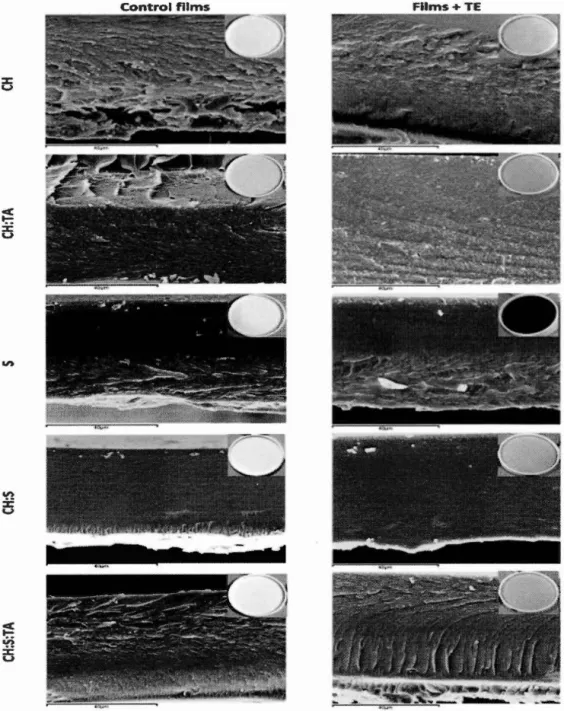
2.3 SEM micrographs of the cross-sections of the films containing or 23 not thyme extract (TE).
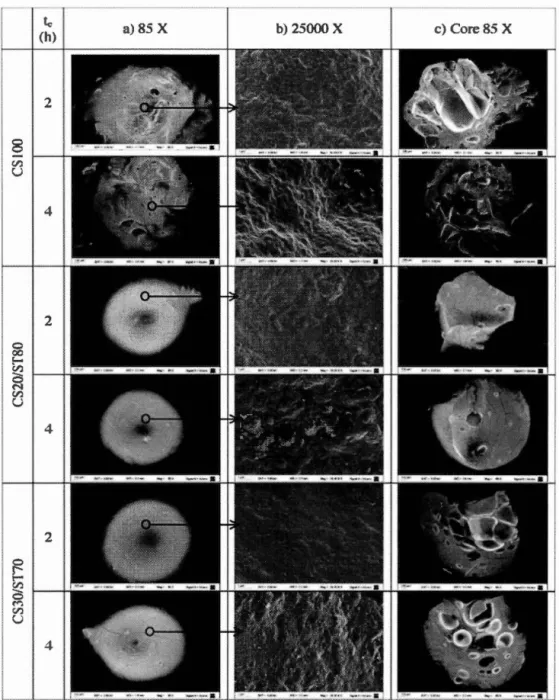
2. 4 Scanning electron micrographs of beads prepared with 2 h or 4 h of 26 crosslinking time.
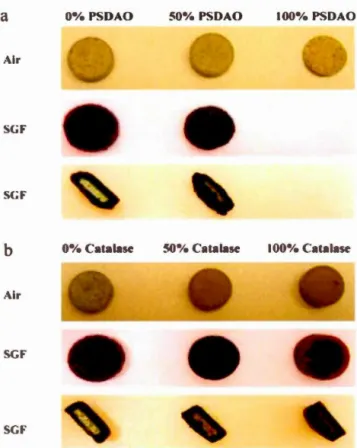
2. 5 pH stability of enzyme formulations rn tablets based on CM- 29 St:Chitosan.
2. 6 Scanning electron microscopy micrographs of (a) CM-St, (b) 31 chitosan-400, ( c) chitosan-700, and (d) PEC at magnifications of 100x and 500x and voltage of 15 kV
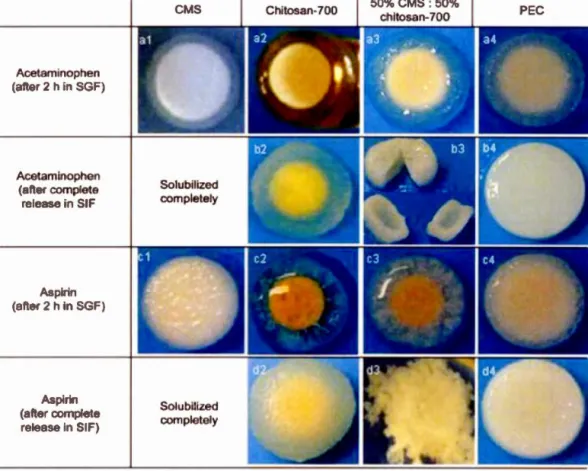
2. 7 Photographs of CM-St (CMS), chitosan-700, 50% CMS:50% 32 chitosan-700 and PEC ta blets
2.8 The SEM images of composite scaffolds (a) chitosan pure, (b) 70% 34 chitosan and 30% starch, ( c) 50 % chitosan and 50% starch, and ( d) 30 % chitosan and 70% starch
2.9 Starch (St) maleate half-ester (MSA) structure 35
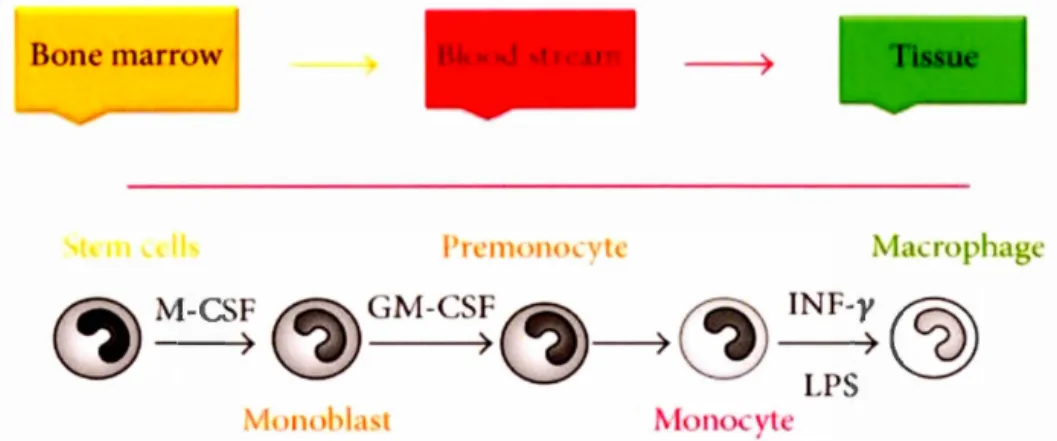
3.1 Monocyte and macrophage differentiation 36
3.2 Preparation of macrophage-based microrobots. 40
4.1 Schematic presentation of project 46
5.1 Design of deviee and procedure with adhesion ( 1) and amylolysis 56
(2) steps for fast recovery of macrophages.
5.2 FT -IR spectra of Gelatinized starch (G-St), Acetate starch (Ac-St), 60 Carboxymethyl starch (CM-St) and Amino-Ethyl starch (AE-St).
5.3 1H NMR spectra of Gelatinized starch (Red), Acetate starch (Green), 61 Carboxymethyl starch (Blue) and Amino-Ethyl starch (Black).
5.4 Water contact angle measurement for insert coating films of 62 Gelatinized starch (G-St), Acetate starch (Ac-St), Carboxymethyl starch (CM-St) and Amino-Ethyl starch (AE-St) (n = 3).
5.5 Scanning electron microscopy micrographs of Native starch (Hylon 63 VII), (a) Gelatinized starch (G-St), (b) Acetate starch (Ac-St), (c) Carboxymethyl starch (CM-St) and (d) Arnino-Ethyl starch (AE-St) powders at magnifications of 1 OOx and 1 OOOx.
5.6 Scanning electron microscopy micrographs of films. 65 5. 7 Confocal fluorescence microscopy images showing live cells (green) 66
and dead macrophage cells (red).
5.8 (A) Release reducing sugar (J..tmol) after Gelatinized starch (G-St), 69 Acetate starch (Ac-St), Carboxymethyl starch (CM-St), and Arnino-Ethyl starch (AE-St) film hydrolysis by alpha-amylase; (B) Percentage of dead cells (%) incubated on cell insert coated with G-St, Ac-St, CM-St and AE-St; (C) Macrophage count with an initial number (6.5x10⁵) and incubated 48 hon inserts coated with film of G-St, Ac-St, AE-St or Control (uncoated); (D) Tumor necrosis factor TNF-a (pg/mL) from recovered macrophage activated by lipopolysaccharide (LPS) 50 ng/mL.
6.1 Graphical abstract for ampholytic starch excipients 75
6.2 Schematical presentation of starch derivatization with sodium 87
monochloroacetate and with chloroethylamine hydrochloride to generate ampholytic starch carrying carboxymethyl (CM) and aminoethyl (AE) functions obtained by one step (OS) or two steps (TS) preparation methods.
6.3 FT-IR spectra of Native Starch (red), CMAESt (OS) (blue), 89
CMAESt (TS) (black) and AECMSt (TS) (green).
6.5 1H NMR spectra in D20 (I) and in DMSO-d6 (11) for Native Starch 90
(1), CMAESt (OS) (2), CMAESt (TS) (3) and AECMSt (TS) (4).
6.6 Thermogravimetric (TG) and its derivative (DTG) diagrams of 92
Native Starch (black), CMAESt (OS) (blue), CMAESt (TS) (green) and AECMSt (TS) (red).
6. 7 X-ray diffraction patterns of Native Starch (A), CMAESt (OS) (B), 93
CMAESt (TS) (C) and AECMSt (TS) (D) powders.
6.8 Scanning electron microscopy micrographs of Native Starch (A), 94
CMAESt (OS) (B), CMAESt (TS) (C) and AECMSt (TS) (D)
powders at magnifications of 1 OOx and 1 OOOx.
6.9 Fluid uptake (1), Erosion (11) and axial tablet swelling (diameter 97 changes) (III) of a drug-free tablet formulated with CM-AE-St (OS),
CM-AE-St (TS) and AE-CM-St (TS) as a matrix forming agents in SGF and SIF.
6.10 Fluid uptake (I), Erosion (Il) and axial ta blet swelling (III) of a 98 drug-free tablet formulated with CM-AE-St (OS), CM-AE-St (TS) and AE-CM-St (TS) as a matrix forming agents incubated 2 h in SGF and then in SIF for 6 h.
6.11 Release profiles of Aspirin (I), Metformin (11), Mesalamine (III) and 101 Acetaminophen (IV) in SGF and in SIF from tablets (60% loading)
formulated with CM-AE-St (OS), CM-AE-St (TS) and AE-CM-St
6.12 Release profiles of Aspirin (I), Metformin (II), Mesalamine (III) and 104 Acetaminophen (IV) from tablet ( 60% loading) formulated with CM-AE-St (OS), CM-AE-St (TS) and AE-CM-St (TS) as a matrix forming polymers followed for 2 h in SGF then transferred to SIF.
7.1 Hypothetical presentation of (A) starch derivatization with sodium 123 monochloroacetate and with chloroethylamine hydrochloride.
7.2 Scanning electron microscopy micrographs of (A) Native Starch, 125 (B) CM- St (DS 0.02), (B ') CM- St (DS 0.06), (C) CM-AE-St (DS 0.02-0.024), (C') CM-AE-St (DS 0.06-0.019), (D) CM-AE-St (DS 0.02-0.049), (D') CM-AE-St (DS 0.06-0.045), (E) CM-AE-St (DS 0.02-0.064) and (E') CM-AE-St (DS 0.06-0.059) at magnification of
1000.
7.3 FT-IR spectra of (Red) Native Starch and of (I): (Blue) CM- St (DS 126 0.02), (Black) CM-AE-St (DS 0.02-0.024), (Green) CM-AE-St (DS 0.02-0.049), and (Brown) CM-AE-St (DS 0.02-0.064), and of (II) (Blue) CM- St (DS 0.06), (Black) CM-AE-St (DS 0.06-0.019,
(Green) CM-AE-St (DS 0.06-0.045), and (Brown) CM-AE-St (DS 0.06-0.059).
7.4 1H NMR spectra I): (A) CM- St (DS 0.02), (B) CM-AE-St (DS 0.02- 127-0.024), (C) CM-AE-St (DS 0.02-0.049), and (D) CM-AE-St (DS 128 0.02-0.064). and II) of (A') CM- St (DS 0.06), (B ') CM-AE-St (DS 0.06-0.019, (C') CM-AE-St (DS 0.06-0.045), and (D') CM-AE-St (DS 0.06-0.059).
7.5 Thermogravimetric (TG) and its derivative (DTG) diagram of 129 Native Starch (Red) and ofi) (Blue) CM- St (DS 0.02), (Black) CM-AE-St (DS 0.02-0.024), (Green) CM-CM-AE-St (DS 0.02-0.049), and (Brown) CM-AE-St (DS 0.02-0.064). and of II) (Blue) CM- St (DS 0.06), (Black) CM-AE-St (DS 0.06-0.019, (Green) CM-AE-St (DS 0.06-0.045), and (Brown) CM-AE-St (DS 0.06-0.059).
7.6 X-ray diffraction patterns of (A) Native Starch and of (I): (B) CM- 131 St (DS 0.02), (C) CM-AE-St (DS 0.02-0.024), (D) CM-AE-St (DS 0.02-0.049), and (E) CM-AE-St (DS 0.02-0.064). and (II): (B ' )CM-St (DS 0.06), (C') CM-AE-)CM-St (DS 0.06-0.019, (D') CM-AE-St (DS
0.06-0.045), and (E') CM-AE-St (DS 0.06-0.059).
7. 7 Release profiles of metformin from 1 000 mg tablet ( 60% loading) of 13 3 1): (A) CM- St (DS 0.02), (B) CM-AE-St (DS 0.02-0.024), (C) CM-AE-St (DS 0.02-0.049), and (D) CM-AE-St (DS 0.02-0.064). Il) and of (A') CM- St (DS 0.06), (B') CM-AE-St (DS 0.06-0.019, (C') CM-AE-St (DS 0.06-0.045), and (D') CM-AE-St (DS 0.06-0.059) at pH 1.2 (left) and pH 6.8 (right) side.
7.8 Release profiles (1), Fluid uptake and Erosion (Il), Axial and Radial 137 tablet dimension changes (III) of Glumetza® (G) and tablet based on CM-AE-St(DS 0.06-0.059) oblong (0) of 1 g (50% loading).
6.1 Viscosity (cP) of starch derivatives at 1 % w/v in distilled water 88 (W) and in SIF measured after 4 h and respectively after 48 h, at
25°C
6.2 Micromeritic properties of starch derivatives powders 95 6.3 Structures of bioactive molecules in neutra!, SGF, and SIF 102
media.
6.4 Time (h) of 90% drug release from monolithic tablet contained 105 ampholytic starch derivatives as matrix forming agents in SGF,
SIF and SGF followed by SIF.
6.5 Kinetic parameters of Aspirin (i), Metformin (ii), Mesalamine 107 (iii), and acetaminophen (iv) from tablets (60% loading) formulated with CMAESt (OS) (I), CMAESt (TS) (II) and AECMSt (TS) (III) as a matrix forming excipients in SGF then transferred to SIF.
6.6 Kinetic parameters of Aspirin (i), Metformin (ii), Mesalamine 108 (iii), and Acetaminophen (iv) released in SGF and in SIF from tablets (60% loading) formulated with CM-AE-St (OS) (I), CM-AE-St (TS) (II) and AE-CM-St (TS) (III) as matrix forming excipients
7.1 Kinetic equations and corresponding values of metformin release 13 5 from tablets (60% loading) based on (A) CM-AE-St (DS 0. 02-0.064), (B) CM-AE-St (DS 0.06-0.059) at pH 1.2 and pH 6.8,
8.1
and from tablets (50% loading) based on (C) CM-AE-St (DS 0.06-0.059) compared to Glumetza®.
AC-ST-CL API
ALP
AE-CM-St (TS) AE-St AE-ST-CLe
BCS f)bulk CaCM-ST 13 CNMR CM-AE-St CM-AE-St (OS) CM-AE-St (TS) CM-St CM-ST-CL CMS-MS CI Cs, CHAcetate starch cross-linked Active pharmaceutical ingredient Alkaline phosphatase assay
Aminoethyl carboxymethyl starch two steps Aminoethyl starch
Aminoethyl starch cross-linked Angle of repose
Biopharmaceutical classification system Bulk density
Calcium carboxymethyl-starch
Carbon-13 nuclear magnetic resonance Carboxymethyl arninoethyl starch
Carboxymethyl aminoethyl starch one steps Carboxymethyl aminoethyl starch two steps Carboxymethyl starch
Carboxymethyl starch cross-linked
Carboxymethyl starch mucoadhesive microspheres Carr' s index
CEAHC CFX CSFS cld CLHAS DS DAO DSC DMSO DTX EMA EACM EADCM FT-IR GIT G-St HR HPMC Hex-hGRF Infy LPS MNP Chloroethylamine hydrochloride Ciprofloxacin Colony-stimulating factors Cross-linking degree
Cross-linked high amylose starch
Degree of substitution
Diamine oxidase
Differentiai scanning calorimetry
Dimethyl sulfoxide
Docetaxel
Electromagnetic actuation
Ethylaminocarboxymethyl
Ethylaminodicarboxymethyl
Fourier transform infrared (spectroscopy)
Gastrointestinal tract
Gelatinized starch
Hausner' s ratio
Hydroxypropyl methylcellulose
Human growth hormone-releasing factor analog
Interferon -y
Lipopolysaccharide
MSA Maleic starch half-ester acid
MDT Maximal decomposition temperature
MW Molecular weight
MMT Montmorillonite
NPS Nanoparticles
os
One step methodPSDAO Plant diamine oxidase
PEC Polyelectrolyte complex
PLGA Poly-lactic-co-glycolic-acid
1
HNMR Proton nuclear magnetic resonance
QA Quatemary ammonium
SEM Scanning electron microscopy
SGF Simulated gastric fluid
SIF Simulated intestinal fluid
NaCM-ST Sodium carboxymethyl-starch
SMCA Sodium monochloroacetate
St, S, ST Starch
TA Tannic acid
Ptap Tapped density
TGA Thermogravimetric analysis
3D Three-dimensional
TS
TE
UV/VIS USP XRDç
Two steps method Thyme extract
Ultraviolet-visible spectroscopy United States Pharmacopeia X-ray diffraction
w/w !-lill mm kV
oc
rpm M v/v 1-1S/cmw
mol w/v mMu
nm ng J.!L pg ppmWeight per weight Micrometer Millimeter Kilovolt
Degree centigrade (Celsius) Rotation per minute
Mol ar
Volume per volume
MicroSiemens per centimetre Weight
Mole
Weight per volume Millimolar Unit Nanometer Nanogram Micro liter Pico gram Part per million
MHz MegaHertz rn V Millivolt 0 Degree
A
Angstrom À Lambda mmol Millimole 28 Scattering anglesDans la continuité des travaux de notre laboratoire sur 1 'amidon et ses dérivés, le présent projet se penche sur l'ouverture de nouveaux aspects sur l'utilisation de l'amidon dans des applications biomédicales et pharmaceutiques, en se concentrant sur des dérivés de l'amidon en tant que biomatériaux pour la séparation des cellules macrophages qu'excipient potentiel pour la libération contrôlée des médicaments.
L'amidon gélatinisé (G-St), l'acétate d'amidon (Ac-St), le carboxyméthyl amidon (CM-St) et l'aminoéthyl amidon (AE-St) ont été synthétisés et évalués comme supports pour la fixation et le détachement des macrophages (ligne RA W 264.7). Les films obtenus à
partir des dérivés d'amidon, présentent une susceptibilité à une hydrolyse douce par l'alpha-amylase (amylolyse), libérant ainsi les macrophages adhérés. Ce nouveau procédé permet une séparation rapide des macrophages par leurs adhésion aux films d'amidon, suivie par leur libération suite à l'hydrolyse du film avec de l'alpha-amylase, avec des rendements excellents et une grande viabilité des cellules récupérées. Meilleurs résultats ont été obtenus avec des cellules macrophages en utilisent des inserts revêtus par G-St et par Ac-St. L'interaction possible entre les macrophages et les films d'amidon a été étudiée par comptage cellulaire, pourcentage de mortalité cellulaire ainsi que par le niveau de facteur de nécrose tumorale (TNF-a). La viabilité des cellules avec la méthode présentée était sensiblement plus élevée en comparaison avec les méthodes actuelles de détachement des cellules: grattage ou vortex. Des nouveaux excipients ont été obtenus à base d'amidon ampholytique: des matériaux présentant des fonctions acides (ex: carboxymethyl [CM]) et basiques (ex: aminoethyl [AE]) greffées sur la macromolécule d'amidon. Les dérivés ampholytiques d'amidon ont été préparés par deux approches différentes. La méthode à une étape (one step [OS]) consiste en l'ajout de deux réactifs (sodium monochloroacétate [SMCA] et le chlorhydrate de
chloroéthylamine [CEAHC]) simultanément. Différemment, dans la méthode à deux étapes (two steps [TS]) le carboxyméthyle amidon (CM-St), et l'aminoéthyle amidon (AE-St) ont été préparés séparément dans une première étape, chacun traité avec l'autre agent de fonctionnalisation. Les polymères obtenus ont été caractérisés par infrarouge à transformée de Fourier (IRTF), résonance magnétique nucléaire du proton
eH
RMN), microscopie électronique à balayage (SEM), l'analyse thermogravimétrique (ATG), diffraction des rayons X et potentiel Zeta (Ç). Des comprimés monolithiques avec une charge de 60% d'acide acétylsalicylique (ASA) ou de metformine ou de mésalamine ou d'acétaminophène ont été préparés cornn1e traceurs modèles par compressiondirecte de l'agent actif avec les différents dérivés ampholytiques de l'amidon. Les tests de dissolution ont été effectués dans du fluide gastrique simulé (SGF) et dans du fluide intestinal simulé (SIF). Les résultats ont montré que l'ordre d'addition des réactifs peut affecter les propriétés du polymère-excipient. Par exemple, CM-AE-St (OS) peut contrôler la libération de médicaments principalement dans le SIF, alors que l'AE-CM-St (TS) a prolongé la libération des médicaments dans la SGF. D'autre part, le CM-AE-St (TS) donne les meilleurs résultats de libération des médicaments dans le SGF et dans le SIF. Lorsque les tests de dissolution in vitro ont été effectués durant 2 h en SGF puis suivis par SIF, tous les dérivés ampholytiques d'amidon ont pu contrôler la libération des médicaments acides, amphotères ou neutres pendant environ 24 h.
Dans le contexte d'un intérêt croissant pour les dispositifs médicaux à libération contrôlée et pour les comprimés a contenance élevée en agents actifs fortement hydrosolubles, il y a un besoin de nouveaux excipients capables de garder la taille des comprimes suffisamment petite pour permettre d'être avalés facilement et obtenus avec une méthode de production simple. Les dérivés ampholytiques d'amidon synthétisés en deux étapes CM-AE-St (TS) ont été obtenus en différents degrés de substitution en faisant varier le nombre de groupes CM et AE sur la macromolécule d'amidon. La metformine, un agent antidiabétique largement utilisé (système de classification biopharmaceutique: BCS, classe I) a été sélectionnée comme agent actif modèle et des comprimés monolithiques avec des charges 50% et 60% ont été préparés par compression directe de l'agent actif avec diverses CM-AE-St. Les tests de dissolution des agents actifs in vitro ont montré que des degrés de substitution plus élevés avec des groupes CM et AE favorisent la capacité du CM-AE-St ampholytique
à contrôler la libération de l'agent actif dans le fluide gastrique simulé et dans le fluide intestinal simulé. Les comprimés basés sur les dérivés ampholytiques CM-AE-St charges avec de la metformine (50% charge) ont été comparés à la forme commerciale Glumetza® (50% de charge). La libération du médicament a été contrôlée pendant 12h présentant un profil de dissolution selon le modèle Higuchi similaire pour les deux formes posologiques. Ces nouveaux dérivés ampholytiques d'amidon offrent, comme excipients, une alternative simple et pratique pour formuler et fabriquer des comprimés contenant des agents bioactifs hautement solubles, en une seule étape de compression directe.
Mots clés: Séparation des macrophages, amidon ampholytique, libération contrôlée,
toxicity and abundant sources.
In continuation of our laboratory achievements on starch and starch derivatives as biomaterials, the present doctoral project is proposed to open new windows on the utilization of starch in biomedical and pharmaceutical applications, focuing on novel ampholytic starch derivatives as potential excipients for controlled drug delivery dosage forms.
Gelatinized starch (G-St), acetate starch (Ac-St), carboxymethyl starch (CM-St) and aminoethyl starch (AE-St) were synthesized and evaluated as supports for attachment and
recovery of macrophages (RA W 264.7 line). These polymers were first assayed for novel macrophage adhesion materials. The films obtained from starch derivatives presented a certain susceptibility to mild hydrolysis with alpha-amylase, liberating the adhered macrophages. The possible interaction between macrophages and starch films was
investigated through cell counting, cell viability and tumor necrosis factor (TNF-a) levels. This novel method allows a fast macrophage separation with excellent yields and high viability of recovered cells, especially on insert deviees coated with G-St and on Ac-St. The viability of macrophage cells obtained with the presented method was higher than recorded with current methods of cells detachment: scrapping or vortex.
The Ampholytic starch represents a novel class of excipients based on the macromolecular
starch backbone carrying anionic (i.e. carboxymethyl) and cationic (i.e. aminoethyl)
functional groups. The arnpholytic carboxymethyl aminoethyl starch (CM-AE-St) excipients were prepared by two different approaches. For One step (OS) method, where the two reactants (sodium monochloroacetate [SMCA] and chloroethylamine hydrochloride [CEAHC]) were added simultaneously. In the two
steps (TS) method either carboxymethyl starch (CM-St) or aminoethyl starch (AE-St) was prepared separately in the first step, then followed by an interaction with the second reactant: CEAHC or SMCA, respectively. The obtained polymers have been characterized by Fourier transform infrared (FT -IR) spectroscopy, Proton nuclear magnetic resonance
CH
NMR), Scanning electron microscopy (SEM),Thermogravimetric analysis (TGA), X-ray diffraction and Zeta potential (Ç). Monolithic tablets with 60% loading of Acetylsalicylic acid (ASA) or Metformin or Mesalamine or Acetaminophen as model drugs were prepared by direct compression of the active molecule with various ampholytic starch derivatives. The dissolution studies were done in simulated gastric fluid (SGF) and in simulated intestinal fluid (SIF). The result showed that the order of addition of reagents affects the properties of the polymerie excipients. For instance, CM-AE-St (OS) was able to control the release of medication mainly in SIF, whereas AE-CM-St (TS) prolonged the release of medication in SGF. On the other hand, CM-AE-St (TS) gives the best drug release behaviour in both SGF and in SIF. When the in vitro dissolution tests were carried out first for 2 h in SGF and followed by SIF, all ampholytic starch derivatives were able to modulate the release of acidic (i.e. aspirin), amphoteric (i.e. mesalamine ), and neutral (i.e. acetaminophen) drugs for about 24 h.
In the context of a growing interest for sustained drug release deviees and for high loaded dosage forms with medications having high water solubility (i.e. metformin),
there is a need for new excipients able to keep the tablet size small enough to allow it to be easily swallowed alongside with a simple method of tablet production. The ampholytic starch derivatives CM-AE-St were obtained at different degrees of substitution by varying the number of CM and AE groups on starch macromolecule. Metformin, a largely used anti-diabetes drug (biopharmaceutical classification system: BCS, class 1) was selected as a model drug and monolithic tablets with 50% and 60% loading prepared by direct compression of the active molecule with various CM-AE-St derivatives. The in vitro drug dissolution tests showed that higher degrees
of substitution for both CM- and AE- groups favor the ability of ampholytic CM-AE-St to control drug release in simulated gastric fluid and in simulated intestinal fluid.
Tablets based on CM-AE-St ampholytic derivative were compared to the commercial Glumetza® (50% loading). The drug release was controlled for 12 h and the two dosage forms exhibited similar Higuchi's model dissolution profiles. These new ampholytic starch derivatives offer a simple and convenient alternative to formulate and manufacture highly soluble drugs in a single step process.
Keywords: Macrophage separation, ampholytic starch, controlled release, monolithic tablets, high loading formulations.
Self-assembling can be defined as the capacity of certain molecules, macromolecules, or composite materials to associate themselves and to form complexes or networks or even other structures with novel properties. Self-assembling has been studied for the last few decades due to the ability of these polymers to offer a rich variety of morphologies as well as their potential applications in many fields, such as biomedical applications, micro-electronics, photoelectric and optical processes (Lehn, 1990; Lehn, 1993; Ikkala and ten Brinke, 2002; Janata and Josowicz, 2003; Li et al.,
2014). Self-assembly is scientifically interesting and technologically important for at se veral reasons:
a) Self-assembling is centrally important in life. Cells contain an astonishing range of complex structures such as lipid membranes, folded proteins, protein aggregates, structured nucleic acids, molecular machines, and several others self-assembled materials (V ella, 1994).
b) Self-assembly pro vides routes to a range of materials with regular structures for example: molecular crystals (Schwiebert et al., 1996), liquid crystals
(Schmidt-Mende et al., 2001), and semi-crystalline and phase-separated
polymers (De Rosa et al., 2000).
c) Self-assembly also occurs widely in systems of super-molecular components, and there is great potential for their use in biomedical and material science (Whitesides, 1995).
d) Self-assembly seems to offer one of the most general strategies available for generating nanostructures.
The self-assembling process may occur:
1. By association (with themselves and/or with different structures) via various types
of interactions (hydrogen associations, Van der Waals forces, hydrophobie
stabilization, ionie interactions, click noncovalent recognition) (Mateescu et al., 2015a)
2. By inclusion/complexation (structure A which includes structure B), such as
inclusion complexes of starch ( clathrates ), like iodine blue inclusion complexes of starch (known since the early 1930s) or of cyclodextrins (Loftsson and Duchêne, 2007) and the recently studied Rotaxanes with various oligomers (a Rotaxane is a mechanically interlocked molecular architecture consisting of a dumbbell shaped molecule which is threaded through a macrocycle) (Ariga et al., 2008; Harada et al., 2009; Xue et al., 20 15).
1.1. Starch and starch derivatives for use as pharmaceutical excipients
1.1.1. Gelatinized starch and cross-linked starch as pharmaceutical excipients
Excipients are important components of conventional and novel drug products, providing specifie functions in the formulation of pharmaceutical dosage forms. Starch in its native or modified forms has been widely used as a pharmaceutical excipient (Sasaki et al., 2000; Massicotte et al., 2008). The modifications of starch could be either physical (i.e., heating, pressure) or chemical (cross-linked or
functionalized with nonpolar, polar or charged groups). The obtained polymer after
modification is aimed to have a specifie application. Depending on respiratory, gastric, intestinal, or colonie delivery site, starch will need specifie functionalities for
the targeted delivery (Mateescu et al., 2015b).
Gelatinization is the simplest physical modification occurring in native starch. Also modified starch that was directly derivatized from native starch can be gelatinized. Thus, modified starches can be destabilized/stabilized via self-assembling phenomena
(Mateescu et al., 20 15b ). Interaction of amylose and amylopectin with water will
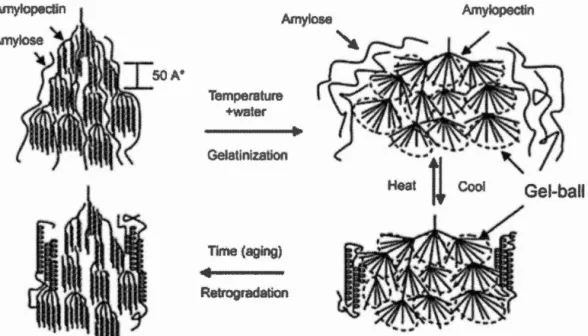
1.1 ). In the dry state, the he li cal arrangements in volve chain-chain stabilization by self-assembling via hydroxyl groups and the degree of organization and compaction can be very high. By interaction with water and by heating, a destructuring 1
disassembling of starch grain occurs and amylose and amylopectin chains gain more freedom. The phenomenon, known as gelatinization, has been studied since the early 1950s by various groups, and applications are numerous, in food, paper, and textiles industries. During the past three decades, more relevant applications have been described in drug delivery systems (Biliaderis, 1991 ). Progressive swelling and starch grain breakage become possible via multiple interactions between -OH groups existing on both sides (glucopyranosic residues and water), resulting in the disentanglement of the initial B-type pattern of amylose by alteration of hydrogen bonding. During gelatinization water acts as a plasticizer and is first absorbed in the amorphous space of starch. In fact, three main processes occur in the starch granule: granule swelling, crystal or double-helical melting, and amylose leaching. Penetration of water increases randomness in the starch granule structure and decreases the number and size of crystalline regions. Stress caused by this swelling phenomenon interrupts structure organization and allows for leaching of amylose macromolecules to surrounding water. By heating, such regions become more diffuse and the chains begin to disassemble and separate into amorphous forms. The gelatinization temperature of starch depends on the source, amount of water, pH, types and concentration of salt, and the degree of the amylopectin branching. Once the heating is stopped, the random coiled amylose will be stabilized and spontaneous associations of amylose chains will occur, generating a self-assembled gel (gelification). This phenomenon (gelification) consists of structural modifications occurring during heating and cooling of starch. It can be followed by differentiai scanning calorimetry (DSC) and FT-IR (Bernazzani et al., 2001 ), and by carbon-13 nuclear magnetic resonance (13C NMR) spectroscopy (Le Bail et al., 1999).
Amylose Temperature +water Gelatinlzation nme(aging)
..
Retrogradation..
-
-Heat ..
u
eoo1 G,el-ballFig 1.1 Amylose and amylopectin in dry phase and after interaction with water [from(Liu et al., 2009)].
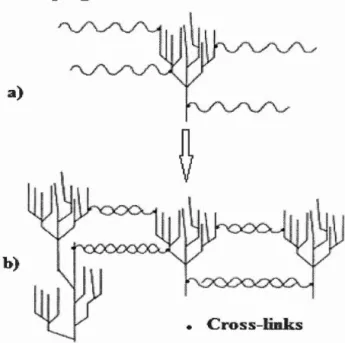
Cross-linking is a common approach to improve the performance of starch for various applications. It was first introduced in the middle of last century. It can be done with ionie or covalent cross-linkers and was applied in the past to obtain food with specifie textures and for stabilization of starch gels (Fig 1.2). There are chemical and physical cross-linking methods (Hennink and Van Nostrum, 2002; Xiao, 2013).
Chemical cross-linking consists of reactions between polymer chains with suitable bi-functional or multibi-functional reagents. The cross-linking agents can have either low or high molecular weight (MW). Chemically cross-linked starch hydrogels can be currently obtained by treatment with low MW of bi-functional or multifunctional
compounds such as glutaraldehyde, epichlorohydrin, tripolyphosphate, and
bicarboxylic or tricarboxylic acid (Lenaerts et al., 1991; Dumoulin et al., 1998; Hirsch and Kokini, 2002; Simkovic et al., 2004; Seker and Hanna, 2006).
Physical cross-linking of polymers involves non-covalent interactions as hydrogen bonding or, for starch ionie derivatives, electrostatic attraction between chains or groups with opposite charges, with advantages in economical, biocompatibility, and biodegradability aspects (Coviello et al., 2007; Ye et al., 2016).
Supe.rgelation. of 'c:.ross linked starch
a)
b)
• Cross-links
Fig 1.2 Schematic representation of a model for the structural arrangement of high amylose cross-linked starch with a low cross-linking degree in the dry (a) and hydrated (b) state [from (Lenaerts et al., 1998)].
1.1.1.1. Starch as excipients in pharmaceutical formulation
Starch-based excipients have been shown to offer numerous advantages in drug production in terms of lower cost, safety, and product quality. Native starch has traditionally been used for the production of bulk granules, capsules, and tablets. It has multiple uses in different physical forms as a binder (an important excipient to be added in tablet formulation).
Binders or adhesives are the substances that promote cohesiveness. Starch is utilized either in dry form in a direct compression method. Starch powders can be converted into granules through a process known as granulation. This is an operation by which small powdery particles are agglomerated into larger entities called granules (Bos et al., 1987).
Disintegrants: A disintegrant is an excipient added to a drug mix intended to be formulated into oral ta blets or capsules having the role to facilitate the breakup of the tablets or hard shell capsules into smaller particles and to promote the rapid release and subsequent absorption of the active drug (Bos et al., 1987; Desai et al., 2014b; Akin-Ajani et al., 2016).
Diluents: A diluent (also called fillers) is excipient added primarily to low dose conventional formulations such as tablets, capsules, and granules to increase weight,
facilitate mixing, and improve content uniformity) (Jivraj et al., 2000).
Glidants: Glidants are excipients that reduce inter-particulate friction, resulting in
improved flow of granules and powders (Builders and Arhewoh, 2016). Maize starch BP (BP, 2007) has been used as a glidant in ta blets and capsules production, other starch types such as cassava (Auletta et al., 1999), yam (Musa et al., 2003), fonio (Muazu et al., 201 0) have been investigated as potential glidants in tablets production
Lubricants are excipients added usually in small quantities to powders and granules during tablets and capsules production. There are three functional roles identified with lubricants:
1. decreasing the friction at the interface between a tablet's surface and the die wall during ejection by interposing at intermediate layer between the particle constituents of the tablets and the die wall during ejection,
111. prevention of the sticking of the tablets to the face of the punch and of granules, and powder mix sticking to the dosators and tamping pins of capsule filling machines) (Bos et al., 1987).
As a pharmaceutical excipient, starch is employed in different physical forms (Sasaki
et al., 2000). When used as a gel in the form of heat swollen aqueous dispersion, it serves as a binder in granules for tablet production. As an un-gelatinized dry, soft powder, starch can be employed as disintegrant, diluent, and glidant in conventional tablets or capsules formulations. lt is also used as a carrier and lubricant for body and face powders and as a surface carrier for co lors and flavors (Bos et al., 1987; Sanghvi
et al., 1993).
Freshly made starch mucilage prepared as a gel by heat treatment of the starch dispersion in water has been extensively used as a binder in tablets and capsules production using the wet granulation technique. The starch mucilage is incorporated as a gel and functions as a glue to provide the necessary binding force that holds the powder particles together in order to form the required agglomerates. When the agglomerates are compressed under optimal load, stable robust tablets are formed (Garr and Bangudu, 1991 ). Another important attribute of starch wh en used as binder is its compatibility with other adjuvants and active pharmaceutical ingredients (APis) used in many conventional and novel formulations. The powder mix often comprises the APis and other excipients which are granulated to produce uniform distribution of the API. When starch gel is used as a binder, the granules are produced by wet granulation process, usually by massing the powder mix and the starch gel to form a wet mass which is then screened through sieves of appropria te mesh size ( 1000 -1700 J.Lm), depending on the range of the granule size desired (Bos et al., 1987). The agglomerates are then dried in hot air at different temperatures depending on the nature of the API or other excipients or desired formulation type (Pilpel et al., 1978; Joneja et al., 1999; Akin-Ajani et al., 2005). The major attributes of wet granulation using native starch as a binder include enhanced powder density and flow,
homogeneity of the ingredients, enhanced compaction, improved drug release, reduced dust during production and desirable tablet, and granule appearance (Joneja
et al., 1999). Native starch gel is incorporated at concentrations of 3-20o/o w/w of the
granule or tablet weight. Typical concentration is usually 5-10% w/w, depending on the starch type (Sasaki et al., 2000). The optimal quantity of the gel required to produce robust granules or tablets is predetermined by optimization studies using any or combinations of such parameters as granule flow, tablet friability and hardness, disintegration time, and dissolution rate (Sasaki et al., 2000). When used appropriately at optimal concentrations for granule formulation. Starch will add sufficient cohesion to the powder mix to produce granules of desirable and optimal physico-mechanical properties. The granules can be packed into sachets, capsule shells or can be compressed into tablets. Among the accessible starches, corn starch is the most frequently used in conventional granulation and tablet production technology. However various studies indicate that other starches from non-conventional sources such as breadfruit and cocoyam starches have also shown potential as binders and can serve as a substitute for corn starch (Adebayo and Itiola,
1998).
1.1.1.2. Cross-linked starch as excipients for drug delivery
Beginning in the 1990s, severa! materials based on epichlorohydrin cross-linked starch have been introduced as excipients for drug controlled de li very (Lenaerts et al.,
1991; Dumoulin et al., 1998; Cury et al., 2008). One of these modified starches known as Contramid™ is presently used in severa! formulations (i.e., once-per-day tramadol tablets commercially available in the United States, Canada, and Europe) or is under development for new modified release products. Contramid™ is a brand name for a cross-linked starch used as excipient for sustained drug release (Cartilier
et al., 1996; Dumoulin et al., 1998; Ispas-Szabo et al., 1999). Tablets were prepared by direct compression of the dry mixture of cross-linked starch and drug powders. A nonmonotonous dependency of the release time upon the cross-linking degree was
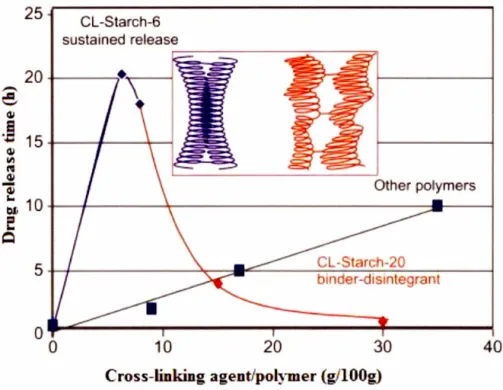
found. Thus, a slightly increase of the cross-linking degree of amylose generates an extension of drug-release time, with maximal values for degrees of cross-linking ( cld) (ranging from 3 up to 6). Cross-linking degree was defined as the amount (g) of cross-linker i.e. epichlorohydrin used to cross-link 100 g of pol ymer under specifie conditions (Ispas-Szabo et al., 1999). A hypothesis has been suggested that moderate cross-linking of amylose signifies a reduced frequency of cross-linking (glycerin bridges introduced by epichlorohydrin reaction) and allows the matrix to be stabilized in proper conformation. At higher degrees of cross-linking, with a higher density of glycerin bridges, the mobility and ability of the amylose chains to forman adequate water gel barrier are limited (Cartilier et al., 1996). The cross-linked starch matrix allows close to linear release kinetics for periods of 24 h or even longer for sorne types of therapeutic agents. There are various types of drugs with lower aqueous solubility, giving total release times longer than 40 h. However, for oral administration, release times higher than 20-24 h are not worthwhile. A system that can accelerate the release rate was proposed for these drugs. It has previously been demonstrated that amylose gels, chemically modified with epichlorohydrin, can still be recognized as a substrate by a-amylase and can still be biodegradable, depending on the degree of cross-linking (Schell et al., 1981). The structural hypothesis was that the double helices that arise from amylose branches can be better stabilized at a lower cross-linking degree ( cld) that allows enough chain flexibility and thus enhances self-assembly by hydrogen association (Fig 1.3). At higher cld (i.e. 20), the hydrogen association is not allowed, due to a higher cross-linking between chains of amylose and amylopectin. This will limit chain flexibility and decrease hydrogen bonding (Ispas-Szabo et al., 1999). Furthermore, this will expose hydroxyl groups acting as a binder in the solid state and as a fast disintegrant in dissolution fluids (Dumoulin et al., 1994). The fast hydration of hydroxyl groups may keep granules insoluble (because of cross-linking), but not the shape of the tablet, which is rapidly disintegrated (Cartilier et al., 1996). These drastically different properties obtained
with the same type of treatment (but a different ratio of reagents) fit weil with the concept ofmultitask excipients (Mateescu et al., 1995; Cartilier etal., 1996).
.-.
e
Qi25
CL-Starch-6sustained release
20 +-- --> 'r- ----l ~~èiiii~
·~
15 +--- - 11.---\---! Qi ~~~ Ill ~ Qi-
Qi ~ 10+-~~---+---~~--~ E ~ ran 0.-~---~---~---~---~ 0 10 20 30 40Cross-tinking agent/polymer (gllOOg)
Fig 1.3 Drug release time from monolithic tablets with cross-linked starch and
hypothetical assembling at various cross-linking degrees [from (Mateescu et al., 2014a)].
1.1.1.3. Cross-linked starch as binder and disintegrant
Disintegrants are substances requested for sorne tablet formulations that promote their dispersion and resulting in a faster dissolution of the drug. Cross-linked starch was
used as binder and disintegrant excipient with the brand name Liamid® for tablet preparation. lt was obtained from high amylose starch by cross-linking at a higher degree (Cartilier et al., 1996). Liamid® ( cross-linked starch) was the first
unique excipient presenting both binder and disintegrant properties. The binding properties of cross-linked amylose are comparable or even superior in sorne instances, to microcrystalline cellulose (Avicel PH-102™) which is widely used as a binder in solid dosage form preparations. Certain cross-linked amyloses also present excellent disintegration properties, thus preventing the need of an additional excipient having these properties in the tablet (Rolland and Frank, 1971; Cartilier et al., 1996) 1.1.1.4. Cross-linked starch as implant
Cross-linked high amylose starch (CLHAS) has been proposed as a platform for implants. Désévaux et, al 2002 prepared an implant for in vitro and in vivo delivery of ciprofloxacin (CFX). The results showed that CLHAS implants with 1% hydrogenated vegetable oil and 7.5% CFX provided the longest period of drug delivery without any initial burst effect (Désévaux et al., 2002a). The in vivo results showed excellent biocompatibility and bioresorption of CFX alongside with the biofunctionality of CLHAS implants. The delivery profile of CFX with 20.0% implant loading appeared to be the best of all formulations tested and was appropriate for the intended use in local antibacterial therapy particularly for treatment of osteomyelitis (Désévaux et al., 2002c ). CLHAS matrix implants containing ciprofloxacin have a considerable potential as a parenteral controlled delivery system for local prevention and treatment of bone and soft tissue infections (Désévaux et al., 2002c ). CLHAS was also investigated as a solid implant for evaluation of host response in mice and as a possible delivery system for a human growth hormone-releasing factor analog (Hex-hGRF) in pigs (Désévaux et al., 2002b ). The results were also encouraged the development of CLHAS implants as a sustained delivery system for peptidic drugs (Désévaux et al., 2002b ).
1.1.1.5. Cross-linked starch for separation of macrophages.
Desmangles et al, (1992) proposed a new biomedical application of starch derivatives. Cross-linked starch (using epichlorohydrin as cross-linker) was prepared
and used as chromatographie gel support to selectively isolate, retain and detach macrophage cells. The attached macrophages were successfully detached enzymatically from the gel by liquefaction of the cross-linked starch beads by
a-amylase solution. The results showed that cross-linked starch was compatible to
macrophage cells and that 90% of cell population was attached to cross-linked starch
with viability of the recovered cells higher than 90% (Desmangles et al., 1992).
1.2. Carboxymethyl starch as a multifunctional excipient
Starch modifications mean that structural alterations at the molecular level will affect the assembling capacities (i.e., hydrogen bonding) in a controllable manner and thus will allow its applications to expand. Starch modification could be achieved through
physical treatment (using heat or moisture), decomposition (acid or enzymatic
hydrolysis), and derivatization such as cross-linking, etherification, esterification, or
grafting of starch backbone. Chemical modifications of functional groups in the
starch molecule result in marked alteration of physicochemical properties, such as
gelatinization and swelling behavior. The most used derivatization procedures involve one, two or all three hydroxyl groups existing on each anhydroglucose unit
(Volkert et al., 2004; Heinze and Koschella, 2005). The reactivity decreases in the
following order C2>C6>C3 (Massicotte et al, 2008) (Fig 1.4).
Fig 1.4 Starch structure with hydroxyl groups numbered.
The degree of substitution (DS) was defined as the average number of substituents
the nature of the newly introduced groups. Starch derivatives could be classified into two classes: nonionic derivatives and ionie compounds. In the nonionic category,
starch solubility was increased by substitution with hydroxyethyl or hydroxypropyl substituents. It becomes possible that the presence of the groups introduced on the starch chain decreases the intermolecular hydrogen bonding between adjacent starch chains and new conformations, new interactions, and new stable self-assembly may occur. Hydroxyethyl starch (HES) exhibits higher aqueous solubility than starch and is less degradable by alpha amylase enzyme (Moad, 2011). In the ionie category,
carboxymethyl starch was synthesized (Mulhbacher et al., 2001; Heinze et al., 2004; Mulhbacher and Mateescu, 2005; Mateescu et al., 2006; Spychaj et al., 2013). Carboxymethylation is the substitution of part of the hydroxyl groups of glucose units with anionic carboxymethyl (CM) groups, which improve the hydrophilicity of starch (Fig 1.5). CH20R
)-o
0~0
R= H R=CH2COONa ORFigure 1.5 Chemical structure of carboxymethyl starch (CM-St).
Furthermore, the carboxyl groups of such excipients respond different! y to pH values of gastric acidity, neutra} or slightly alkaline pH values of intestinal and colonie media (Mateescu et al., 20 15a). They are protonated and more compact in acidic
environment and are deprotonated and ionized at neutral pH in the intestinal tract,
carboxymethyl starch (CM-St) was described by Chowdhury in 1924 (Sloan et al., 1962). CM-St was prepared by the reaction of starch in an alkaline solution ( 40% aqueous NaOH) with monochloroacetic acid. The degree of substitution (DS) of carboxymethyl starch is defined as the average number of carboxymethyl groups per
glucose unit. Adding bulky functional groups like carboxymethyl or carboxyethyl
groups reduces the tendency of the starch to recrystallize and makes the starch less prone to be damaged by heat and bacteria. The functionalization influences the
properties of the starch with a variety of pharmaceutical applications as a binder,
disintegrant, and controlled release polymer (Emeje and Asha, 2012). CM-St has
also been reported to be capable of preventing the detrimental influence of hydrophobie lubricants (such as magnesium stearate) on the disintegration time of tablets or capsules.
1.2.1. Carboxymethyl starch as disintegrant
To improve the efficiency of disintegration, a new class of 'superdisintegrants' was
developed. These superdisintegrants include products like sodium starch glycolate
which is prepared by cross-linking of sodium carboxymethyl starch. Currently few
products are commercialized under different trademarks for example: PRIMOJEL®
commercialized by DFE Pharma (Bolhuis et al., 1994), EXPLOTAB®,
VIV AST AR® commercialized by JRS Pharma (Bolhuis and Anthony A., 2006;
Bolhuis et al., 2009) and GLYCOL YS®, which is produced by Roquette Pharma.
Disintegration of orally administered solid dosage forms generally takes place in the gastro-intestinal tract. There is no single mechanism which can explain the
disintegration behavior· of sodium starch glycolate. The important proposed
mechanisms of disintegration include liquid wicking, swelling and deformation
recovery. Liquid wicking is considered to be a crucial first step for tablet
disintegration. For sodium starch glycolate, a larger rate and extent of water uptake
most important disintegration mechanism for sodium starch glycolate (Bhandari et al., 2013). Sodium starch glycolate is a hygroscopie agent that absorbs gastric and 1
or intestinal fluids and rapidly swells.
1.2.2. Carboxymethyl starch as an excipient for highly loaded pharmaceutical dosage forms
A carboxymethyl derivative of cross-linked starch was prepared by Mulhbacher et al,
2001. This chemical modification on cross-linked starch improved loading capacity when compared with cross-linked, but not ionically modified, starch (Mulhbacher et al., 2001). The cross-linked starch derivative (i.e., carboxymethyl starch cross-linked (CM-St-CL), aminoethyl AE-St-CL, and acetate Ac-St-CL) tablets afford higher loading ( 40-60% depending on drug solubility) compared with cross-linked nonderivatized starch (20-30% load) (Mulhbacher and Mateescu, 2005; Mateescu et al., 2006). Swelling and diffusion studies (Mulhbacher et al., 2004) with these derivatives allowed the elucidation of mechanisms involved in drug controlled release - hydrogel hydration and erosion were the main phenomena responsible for the good linearity found in dissolution profiles. Another attempt was to improve the loading capacity by functionalization with both cationic (Aminoethyl AE) and anionic (Carboxymethyl CM) groups on starch chain backbone. The obtained ampholytic pol ymer was able to pro long the release of highly soluble drugs required at high dose i.e. metformin (Sakeer et al., 2017a).
1.2.3. Carboxymethyl starch as pH responsive excipient
CM-St is a pH-responsive tablet excipient that modulates drug release according to the physiological pH values. An oral dosage form can be readily prepared by dry-mixing and directly compressing drugs and CM-St. The carboxyl groups of starch may dimerize by hydrogen bonds enhancing the stability of tablets. When the CM-St tablets were transferred at a higher pH in simulated intestinal fluid (SIF, pH 6.8),
protons of the matrix started to exchange with cations from the intestinal medium
enhancing hydration and facilitating the swelling, diffusion and erosion of the
matrix, as well as the release ofbioactive agents (Assaad et al., 2011). The CM-St is
added to tablets as a pH-responsive excipient to protect bioactive agents from being
destroyed by strong acidic gastric fluids (Calinescu et al., 2007).
1.2.4. Carboxymethyl starch as pH-independent excipient
A novel pH-independent matrix forming agent based on CM-St was proposed by Le
et al, in 2017. Calcium carboxymethyl-starch (CaCM-St) complex was prepared
starting from sodium carboxymethyl-starch (NaCM-St). This novel excipient
possesses a high capacity to uptake biological fluids (gastric and intestinal), hydrating
the matrix while maintaining the ta blet integrity (due to calcium complexation).
Furthermore, this complexation with Ca2+ ions allows (i) the removal of the sodium
mobile counterions of the obtained NaCM-St excipient and (ii) the reduction of the available of carboxyl groups to protonation during the passage through gastric fluid
(pH <2.0) (Le Tien and Mateescu, 2017). The advantage of this system is that it
would lessen the variability of drug release kinetics among different subjects. lt may
also prevent interactions of the matrix with the certain API such as the mesalamine,
which was found to strongly interact with CM-Stand making thus difficult its release
(Friciu et al., 2013).
1.2.5. Carboxymethyl starch microsphere for gastro-retentive formulation
Microspheres, as an oral multi-particulate drug delivery system, tend to be dispersed
in regions of the gastrointestinal tract (GIT) ensuring a more reliable and reproducible release profile and thus more uniform drug absorption (Asghar and
Chandran, 2006). Cross-linked starch due to its cost-effectiveness, large availability,
biocompatibility, biodegradability, non-immunogenicity and mucoadhesive nature
(Demirgoz et al., 2000) was considered as an excipient for mucoadhesive
Cross-linked starch microspheres were successfully used for nasal or pulmonary drug delivery (Pereswetoff-Morath, 1998; Chaudhari et al., 201 0) but their high hydration and swelling in GIT fluids had limited their use for oral drug delivery due to poor mucoadhesivity. Mulhbacher et al. (2006) have shown that mucoadhesivity of cross-linked starch at neutral pH can be improved by grafting small amount of carboxymethyl groups to starch chains. Lemieux et al. (2015), prepared carboxymethyl starch mucoadhesive microspheres (CMS-MS) in gastroretentive dosage form. The results of drug release and permeability alongside with mucoadhesive properties of the CMS-MS suggested that CMS with DS between 0.6 and 1.0 could be a suitable excipient for gastroretentive oral delivery dosage forms.
2.1. Introduction
Recently, a considerable attention has been given to chitosan because of its unique properties and abundant sourcing.
Chitosan (Fig 2.1) is derived from chi tin, which is the second most abundant polysaccharide on earth next to cellulose and is available from waste products in the shellfish industry (Wong et al., 1992). Chitosan possesses repeating units of~ 1- 4, 2-deoxy-2-aminoglucose. The amino groups can be protonated to NH3 +and readily form electrostatic interactions with anionic groups in an acid environment. Different factors can affect the properties of chitosan such as molecular weight (Park et al., 2002), and the degree of deacetylation (Wiles et al., 2000).
Figure 2.1 Chemical structure of chitosan.
Starch is widely used in food, pharmaceutical and biomedical applications due to its biocompatibility, biodegradability, non-toxicity and abundant sources (Calinescu et al., 2005; Calinescu et al., 2007; Rowe et al., 2009; Sakeer et al., 2017b)
~o\r ~o\r vF-"o~ ~o~ ~o~
1
~0~0~0~0~0-H OH H OH H OH H OH H OH (a)-0~0~
-Q-0-Q-0-Q-0-©-0-©-0-H OH H OH H OH H OH H OH (b)Figure 2.2 Chemical structure of starch presenting (a) amylose and (b) amylopectin. Starch is a carbohydrate consisting of two different structures, amylose and amylopectin. Amylose is a relatively long, linear glucan containing around 99%
a-l, 4 - linkages and around 1% a- 1, 6 - linkages, while amylopectin has a highly
branched structure containing about 95% a- 1, 4 - linkages and about 5o/o a 1, 6 -linkages (Xie et al., 2013; Chen et al., 20 15).
2.2. Unmodified starch- chitosan complexes 2.2.1. Unmodified starch- chitosan films
Different attempts were performed to prepare biodegradable blend films from starch
and chitosan (Xu et al., 2005c; Bourtoom and Chinnan, 2008; Mathew and Abraham,
2008; Feng et al., 2013; Mei et al., 2013a; Mei et al., 2013b; Aquino et al., 2015; Mei
et al., 2015; Ren et al., 2017; Talon et al., 20 17). The obtained films were suggested for different application, for example as a carrier for essen ti al oils (1v1athew et al.,
2006; Pelissari et al., 2009; Avila-S et al., 2010; Avila-Sosa et al., 2012; Mehdizadeh
et al., 2012; Shaaban and Mahmoud, 2014; Mei et al., 2015) or for drug delivery

![Figure 2.8 The SEM images of composite scaffolds (a) pure chitosan, (b) 70% chitosan and 30% starch, (c) 50% chitosan and 50% starch, and (d) 30% chitosan and 70% starch [from(Shahriarpanah et al., 2016)]](https://thumb-eu.123doks.com/thumbv2/123doknet/2900909.74767/63.906.206.733.154.567/figure-composite-scaffolds-chitosan-chitosan-chitosan-chitosan-shahriarpanah.webp)