an author's http://oatao.univ-toulouse.fr/22801
https://ieeexplore.ieee.org/document/7114469
Mhadhbi, Linda and Akaichi, Jalel and Karray, Mohamed Hedi and Archimède, Bernard Ontologies for location based services quality enhancement: the case of emergency services. (2015) In: 2015 Second International Conference on eDemocracy & eGovernment (ICEDEG), 2015 (Quito, Ecuador).
Ontologies for Location Based Services Quality
Enhancement: The Case of Emergency Services
Linda Mhadhbi
∗, Jalel Akaichi
∗, Mohamed Hedi Karray
†and Bernard Archimde
† ∗ ISG-University of Tunis, TunisiaEmail: [email protected] [email protected]
† ENIT-University of Toulouse, France
Email:[email protected] [email protected]
Abstract—A good health rescue system is primarily based on a good emergency management. Therefore, physicians in general and mobile ones in particular have to react promptly and efficiently to save human lives and help people with serious or life-threatening conditions especially if they are called to treat them far from medical institutions. Taking effective and swift actions to reach the patient and/or the medical institution in time may help to reduce serious problems, and consequently improve the chances of patient cure and/or survival that present the primary concern of the physician. To overcome the emergency management limits of nowadays, this paper propose a medical assistance system based on ontologies that manage and exploit the large and rapidly growing volume of medical data in order to facilitate the on road decision making for the mobile physician. This work, more than determining the nearest health care institution, answers to the physician needs to distinguish whether the closest health care institution have the necessary medical resources (Equipments, services, staff etc.) and whether these resources are available to fulfill the patient needs.
Keywords: Mobile physician, Emergency management, On-tology, Continuous k-Nearest Neighbors, Location-based ser-vices
I. INTRODUCTION
Over the last decade, worldwide, thousands of people die every year due to the inappropriate emergency management, the inadequate response and bad decisions made and poorly taken by rescue teams. Regardless what kinds of emergency we are talking about, they are all characterized by unexpectedness and waywardness. The need to enhance emergency manage-ment is becoming primordial. In fact, a good health rescue system is primarily based on a good emergency management. Therefore, physicians in general and mobile ones in particular have to react promptly and efficiently to save human lives and help people with serious or life-threatening conditions especially if they are called to treat them far from medical institutions. Taking effective and swift actions to reach the patient and/or the health institution in time may help to reduce serious problems, and consequently improve the chances of patient cure and/or survival that present the primary concern of the physician.
The lives and health of millions of people are affected by emergencies every day; therefore providing tools which assists mobile physician in managing emergency during critical and/
or urgent situations cases become a must. Indeed, technologies and software tools destined to improve emergency tasks per-forming are particularly interesting for their ability to address the growing information overload that clinicians face and to react promptly and efficiently when facing urgent hazards.
Hence, in light of these facts and in order to facilitate the on road decision making for the mobile physician, this paper propose an Ontology-based medical assistance system, that allows finding out as quickly as possible the needed medical resources and reserves the most suitable health care institutions according to the patient state. Specifically, this work answers the following three research questions:
• How to localize rapidly the closets health care institution
to the emergency scene? (1)
• How to find out the needed medical resources to deal
with the patient state? (2)
• Does the localized health care institution contain the
necessary medical resources to fulfil the patient needs? (3)
The work will be organized as follows: In section 1, we discuss firstly the problematic of emergency management then our proposed solution. In section 2, we present the previous works done on emergency management, the emerging of mobile communication technologies in health care field and then we specify with researches using ontologies. In section 3, we describe the main focus of the proposed medical support system and we depict in detail the architecture of our system to show its main functionalities. In section 4, we present the running phase especially the designed ontologies and we will discuss the obtained results. Finally, we conclude and outline the future directions of our work.
II. PROBLEMATIC AND SOLUTION
In a traditional emergency system, a regulator physician is in charge of providing appropriate responses to emergency calls through an emergency hotline. He evaluates the medical emergency and decides whether it requires sending the rescue team to carry the patient to the closest medical care institution or not. Using this kind of traditional system can, obviously help to determine roughly a medical institution; however it cannot help to predict the availability of the needed medical
resources such as equipment and specialized staff. In fact, the state of the patient and also the medical institution are continually changing.
Moreover, many countries suffer from the problem of med-ical care desertification. In fact, some of their areas lack of expert physicians and/or well-equipped health care institutions, while others are saturated. The question that arises is whether the patient should be transferred to the closest hospital that may not contain all of the needed medical resources and he will wait for a while to receive a medical intervention or just drive him to the farthest hospital that is well equipped according to the patient state to get the appropriate medical intervention in time.
Regarding this above issues, there are some researches in literature for supporting mobile physician in emergency management that assure mainly finding the nearest health care institution [1]. The previous work provides an efficient solution for localizing health care institutions; however it doesn’t care if the localized points of interest include the needed medical resources (equipment, skilled staff, etc.), and whether these resources are available or not.
This work proposes a medical assistance system destined to improve in an efficient way the task of mobile physician in performing emergency cases. In a first step, the proposed approach determines, using the CkNN algorithm, the closest health care institutions to the emergency scene. In a second step, it determines, using an ontology model, the health care institutions including the needed medical resources suitable for the patient state and case. The first step is based on Delaunay triangulation approach [1] to respond to the first question (1) asked at the beginning of the introduction. This approach offers a route calculator algorithm that outperforms the existing algorithms by permitting the modelling of a road network through a triangulation. The used approach is able to establish a restoration of a valid response for a Contin-uous k-Nearest Neighbours (CkNNs) on road, while taking into account the dynamic changes of locations from which queries are issued. The second step, based on an ontology model, answers to the other questions asked above (2) and (3). The ontology model provides structured description and relationships between health care institutions data, and offers high expressivity and reasoning capability. It, also, permits to perform semantic annotations in order to define the role of each concept; this is useful, especially, for checking if a missing medical resource can be substituted by equiva-lent one. To perform this step many challenges have to be surpassed. In fact, decision support processes in emergency management systems are extremely difficult; this is due to the complexity of the tasks addressed like the unpredictable demand in terms of timing, geographic location and the short lead time for large amounts of a wide variety of health care data. Moreover, the domain of ontology imposes two main challenges; The first one is related to the collection and the formalization of the needful data and the construction of a set of ontologies integrating all necessary knowledge of the emergency management. These tasks are performed thanks to
the corpus composed of existing documents and ontologies already developed, and the information provided thanks to the collaboration with the experts of the domain.
The second challenge take place when establishing mecha-nisms for reasoning about health care ontologys data, handling subjectivity, modeling relations and dealing with vagueness. This includes the definition of knowledges rules, inference mechanisms and use of tools in order to provide information for the decision support system.
III. THE STATE OF THE ART
During the last decade, telecommunication technologies has been played a magnificent major role in the development of systems across all fields [2], which facilitate tasks in all aspects of life and changes radically the daily life activities [3]. It is well known that mobile health (or wireless telemedicine) is considered as an emerging area in telecare and emergency management systems. M-health has been receiving a lot of at-tention from healthcare professionals, patients and researchers. More specifically, m-health is involved in improving deci-sion making, expanding healthcare coverage and especially providing suitable healthcare in emergency cases [4]. These latter opens up new opportunities to ensure patient’s treatment, overcoming all temporal and spatial complications between physicians and patients. It allows both physicians and patients to move freely, while maintaining access to critical clinical data. In this context, pervasive healthcare systems present the solution of all these problems. Also, Location Based Services is taking part of the enhancement of the efficacy of pervasive systems, which provide instant and reliable services [5] to deliver data to real world users.
Nowadays, information systems are omnipresent in the area of health care. It aims to stimulate exchanges between the different medical communities, to improve practices in the health sector and more understand the mechanisms and the interpretation of medical reasoning, abstraction and the development of knowledge. Quality of care and patient safety [6] are major issues in the context of automation of health information systems. Emergency management is playing an important role in enhancing health care quality and patient well-being. The problem of emergency management is being reflected in many scientific research works but still, there is a lot of work to do. In fact, there have been considerable efforts performed to propose improvements in the ability to respond to emergencies.
A Clinical Decision Support System (CDSS), proposed in [7] encloses a variety of tools aimed to improve clinical decision-making. The CDSS aims to reduce medical errors and increase health care quality and efficiency. In [1] a pervasive assistance system, based on a new route guidance approach, is proposed for mobile physicians on the road. This system ensures finding the closest hospitals for mobile queries on a road network using a new technique named Delaunay triangulation (DT). This method, applied on road networks, is able to establish the Continuous k-Nearest Neighbor (CkNNs) while taking into account the dynamic changes of locations from which queries
are sent. In [8], a pervasive assistance system is proposed to mobile physicians in order to find the most suitable road to transfer the patient to the health care institution without ob-stacles that may appear on the road. Basing on this approach, the physician can save his patients life from complication since he can find the appropriate route to transfer his patient in a minimum of time. The approach is assured by an algorithm based on The largest empty circle geometric technique. In fact, in this above works, authors are not focusing on the task of checking the availability of the medical resources in hospitals and finding out the appropriate health care institu-tion to the patient state. Our work has some common point with [9] tries to make headway in emergency planning and management using a domain ontology for Medical Emergency Management in Mass Gathering (MEMMG) but this latter focus on mass gathering like in big events such as sporting events, music concerts, New Years gathering, festivals etc. In [10], rescue allocation problems over Mass Casualty Incidents (MCI) are solved thanks to a multi-agent-based solution. The authors suggested three main groups of agents to allocate the available limited resources (Hospital agents, Transport agents and Patient agents). These agents aim to transfer the patients in MCI to the most appropriate hospital to his case severity. This latter has a similar subject area to our approach although it takes into account only the MCI. In [11], authors propose also a multi-agent decision-making support dedicated to the management of pre-hospital emergency services. This approach integrates vehicles fleet management, the scheduling planning, the deposits capacity and replacements management, the covering of the demand and the management of special events. The proposed solution is composed of two main parts. The first part is a reactive multi-agent model and the second part corresponds to a decision-making support system that facilitates to the user the intervention and the visualization of results. It establishes priorities for the allocation of calls depending on the severity of the patient condition.
Semantic web technologies have been used in DSS during the past decade to solve different tasks, such as information integration and sharing, knowledge representation and reason-ing etc.
In order to make sense of linked data and allow views and queries over datasets: ontologies are commonly used. The word “ontology” is used in different senses and seems to generate many polemics in Artificial Intelligence. The most principle difference is between the philosophical sense, in which it refers to the subject of the nature of being and existence, and the computational sense, which emerged in the recent years in the knowledge sharing community, in which it refers to the specification of a conceptualization [12]. It is a description that permits to study conceptions of reality and relationships in a topic area as well as rules for combining concepts and relations to define extensions to the vocabulary. It is the most common semantic web technology that is applied to DSS [13].
The Domain Ontology for Emergency Management (DOEM) is presented in [14]. It allows a faster and more
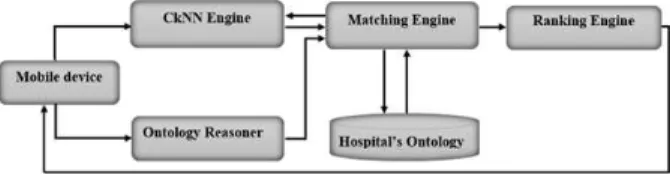
Fig. 1: General architecture of the proposed system
efficient decision making through selecting and implementing the best course of actions by gathering and analyzing large amount of information from multiple stakeholders to have an explicit and shared structure of EM concepts and their relationships among terms and attributes, as well as strict rules to specify relationships [15].
Moreover, emergency management can significantly take advantage of the use of ontologies due to the fact that emergency cases may involve different health care institution and imply various operations that can complicate the decision making process.
In our proposed work, we aim to find out the availability of the needed medical resources in hospitals while the patient is being cared because of its dynamic and uncertain change in order to ensure timely emergency response.
IV. MAIN FOCUS OF THE RESEARCH
In order to explain our idea of work, we present the architecture of our solution as shown in figure 1. Our system is based on a cloud-computing platform: At first, in case of emergency the mobile physician queries our system using the remote mobile device far from medical structures. Thanks to the GPS integrated in the mobile device, the system localizes the mobile physician and searches in a first step the list of the closest health care institutions. In parallel, basing on the diagnostic made by the physician, the system relates the patient disease to the list of needed medical resources as specialized staff and medical equipments in the appropriate service. Then, the system checks the availability of each medical resource in the list of closest health care institution by applying a matching between the needs and the hospital’s knowledge base. Subsequently, the system will rank the list of closest hospitals regarding the availability of the needed medical equipments, the patient state and the distance that connect each hospital to the emergency location. Finally, the ranked list will be transmitted to the mobile physician who will make the decision.
Thereafter, to clarify the different interactions of our system and to unveil the most important parts of the understudy system, we present the business process of the proposed work (see figure 2); First, the CkNN engine takes as an entry the location of the mobile physician to search out the nearest health care institution by applying CkNNs.
Then, we have the ontology reasoner which is connected to a knowledge base, which contains two ontologies that we will be described later.
Fig. 2: Business process of our solution
the needed medical resources in each hospital in the selected list from the knowledge base. Finally, the system displays a comparative visualization and the result of the matchmaking will be a ranked list and this latter will be selected by the mobile physician who make the last decision. In case that the system does not find an appropriate result, it will go back to the CkNN engine to expand the search area.
V. REALIZATION
A. Modelling ontologies
To identify the ontology main concepts (i.e. classes) and their subclasses, we have collected data in collaboration with medical emergency experts in order to encapsulate the knowl-edge of the medical emergency experts in a formal way as well as from resources such as, journals and papers for emergency management.
We developed our first ontology named Hospital ontology that is dedicated to the description of health care institutions. In particular, it contains hospitals, the different services, med-ical equipment and specialized staffs of each hospital.
• Each hospital regroups several services: The concept
“hospital” is linked to the concept “service” using an object property “Has”.
• Each service has its own medical equipments: The
con-cept “service” is related to the concon-cept “equipments” by the object property “HasEq”.
• Each service has a list of specialized staff: The concept
“staff” is linked to his service with the object property “WorkIn”.
Figure 3 and 4 depicts an overview of the graph, which illustrate our first developed ontology in two levels (due to
Fig. 3: A snapshot of hospital ontology created by OntoGraf in Prot´eg´e 4.3 (Medical equipments level)
Fig. 4: A snapshot of hospital ontology created by OntoGraf in Prot´eg´e 4.3 (Staff level)
the space limit).
At this level, we used three ”object property” to show the relationship between the different concepts of the ontology:
In this hospital ontology, we insert a Boolean attribute in each medical resources named “Availability” in order to show whether this resource is available at this time or not. Thus, to check if a missing medical resource can be replaced by another one that have the same functionality and respond to the same requirements, we resort to semantic annotation to define the role of each medical resources (concept) in the ontology. The semantic annotations must be sufciently consistent, specialized and rich. It helps to visualize and assemble important information about the data [16]. Of course, one major role of prot´eg´e is as an editor of ontologies related to annotations.
As for example (Figure 5), in case the cardiac ultrasound machine is not available during the emergency it can be replaced with an ultrasound machine basing on the comparison
Fig. 5: Example of semantic annotation in Prot´eg´e
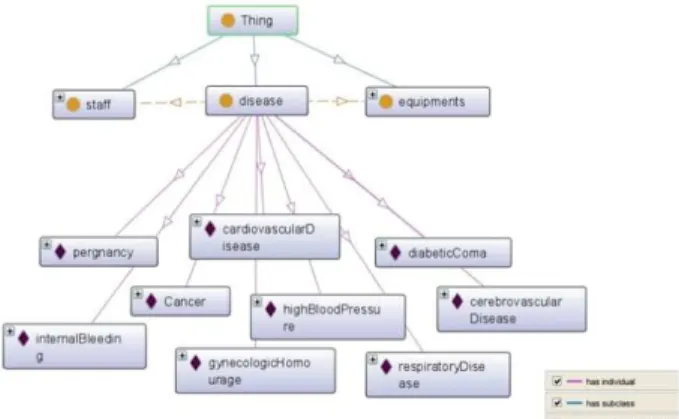
Fig. 6: A snapshot of disease ontology created by OntoGraf in Prot´eg´e 4.3
of semantic annotation of every medical device. The process of analyzing the semantic annotation is realized using our pro-posed algorithm which will be detailed later. Each equipment is defined by a list of key words that will be extracted and compared latter to check if an equipment could be replaced by another.
The second ontology named disease ontology is destined to describe urgent and critical care of patients. In other words, this ontology takes the lid off the needed medical resources including medical resources and specialized staff for each disease. Figure 6 show an overview of the graph, which illustrate the second developed ontology. The use of this ontology offers a gain of time during emergency case: the mobile physician just inter the exact disease of the patient and the system query this ontology to find out the needed medical resources that fulfill the mobile physician needs.
At this level, we used an object property “needs” to reveal the necessary medical equipments and specialized staff to a certain disease. For example the patient disease is Cancer, the object property “Needs” permit us to find out the list of the needed medical resources that should be available in the health care institution in order to improve the services provided for patients in critical or/and urgent situations.
B. The process of matching patients disease and physician’s needs
As the domain, an ontology-based system dealing with medical data has been chosen. All the information have been moved into an OWL ontology file, which controls all the content and the structure of the application, and makes it possible to reason on the provided information to create new facts from already given logic statements.
In this context, we chose SPARQL Protocol and RDF Query Language (SPARQL) to interrogate our ontologies. SPARQL is an RDF query language of the semantic web. It permits us to explore data by querying unknown relationships, pull values from data and transform RDF data from one vocabulary to another.
In particular, we used SPARQL in one hand to extract the needed medical resources from disease ontology including equipments and skilled staff regarding the patient’s disease analyzed by the physician in the first place. On the other hand, we employed SPARQL to identify the available med-ical resources in each health care institution in the CKNNs list basing on the Boolean attribute Availability as well as identifying its semantic annotation.
Once we have the list of the needed medical hardware and skilled staffs (EqN) for the patient disease and the list of the available medical resources present in the nearest hospitals (EqH) we developed an algorithm named Matching. It compares these two lists in a first step in order to get the number of available medical resources. In addition, each common element is removed from both lists to optimize the execution time of the algorithm. In a second step, it analyses the semantic annotation of the remaining resources in order to verify if it can be replaced with another. The final number of available medical resources presents the main criterion of ranking of the nearest health care institution.
C. The process of health care institution’s ranking
Various software tools implementing Multiple Criteria Deci-sion Aid MCDA methods have appeared over the last decades. Whether in our daily or professional lives there are typically multiple conflicting criteria that need to be evaluated in making decisions. Therefore, this method researches aim to support efficient decision making process that involves multiple criteria [17].
In our context, we decided to use the Weighted Product Modelling method (WPM) to rank the list of health care institutions where each alternative is compared with the others ones by multiplying a number of ratios, one for each criterion. Each ratio is raised to the power equivalent to the relative weight of the corresponding criterion. In general, in order to compare two alternatives AK and AL, the following formula has to be calculated: R(AK/AL) = N ! j=1 (aKj/aLj)wj Where:
• N is the number of criteria.
• aij is the actual value of the i-th alternative in terms of
the j-th criterion.
• wj is the weight of the j-th criterion.
If the term R (AK/ AL) is greater than or equal to one, then it indicates that alternative AK is more desirable than alternative AL. The preferred alternative is the better one or at least it is equal to all the other alternatives. In our specific case, the decision problem is based on a set of definite alternatives A which is the list of the nearest health care institution returned by the CKNNs search (H1, H2) and a set of criteria C. The first Criteria of ranking is the distance that separate the localization of the mobile physician and the closest hospitals. Our second criteria is the number of available medical resources of each health care institution of the candidate list (The result of the Matching algorithm). The weight of each criteria depends on the state of the patient, that is to say if the patient state is critical we prefer the criteria of distance than the available needs and it will get a higher weight. If the patient state is urgent, we rely more on the criteria of the available needs in our ranking as shown in Table 1. Physicians define the choice of the different criteria’s weight. A higher value for a given criterion represents its relative importance over the other criteria.
TABLE I: The weights of the different criteria Weight of C1 Weight of C2
Critical state 0,4 0,6
Urgent state 0,6 0,4
VI. EXPERIMENTATION: AUSE CASE ANALYSIS
In this section, we present a use case to show the performance of the developed decision-support system. Let us suppose that a patient suffers from a cardiac vascular disease and he is localized in Tarbes.
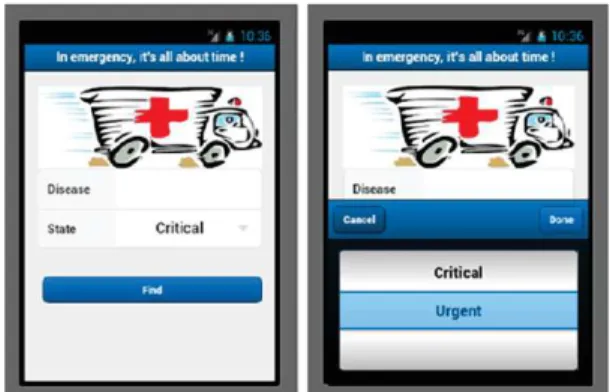
Figure 7 shows a screenshot of the mobile physician decision-support system first interface where the mobile physician, after doing his diagnostic, will enter the exact disease of the patient (cardiovascular disease) and his state whether it is critical or urgent (critical in our use case).
Fig. 7: Screenshot of the first interface of the decision-support system
The system will search in a first step the localization of the mobile physician and find out the list of the closest medical institutions in this region. The result will be as shown in Table 2.
TABLE II: Result of the CkNNs engine List of closest health care institutions Distance (in
minute)
Tarbes Hospital 6 minutes
Lourdes Hospital 24 minutes
Pau Hospital 32 minutes
Toulouse Hospital 80 minutes In parallel, the system will associate the needed medical re-sources including appropriate equipments and specialized staff to the disease given by the mobile physician (cardiovascular disease in this use case) by applying SPARQL query on the first ontology.
In order to enhance decision-making and facilitate the task of the mobile physician, it is useful to query our ontologies. Different queries can be made, for example, we will search the needed medical equipment for a cardiovascular disease (Figure 8). The query result is as shown in Figure 9.
• Which are the needed medical equipment for the
cardio-vascular disease?
Fig. 9: Result of SPARQL query (The needed medical equip-ment for cardiovascular disease)
Therefore, the system will identify in a first step the avail-able medical resources in each health care institution of the resulting list of the CKNNs search. In a second step, it will apply a matching between the result providing by the ontology engine and the one providing by the CkNNs engine using our developed algorithm in order to get the second criteria of ranking, which is the number of the available medical resources in each candidate hospital. The final result will be a list of candidate hospital ranked using the Weighted Product Modelling method as shown in Figure 10.
Fig. 10: Screenshot of the resulting interface of the DSS Once this result is displayed to the mobile physician, he will make the final decision about the appropriate health care institution. Finally, basing on the mobile physician decision,
the system will lead him to the chosen hospital by going through the closest route as shown in Figure 11.
Fig. 11: Screenshot of the final interface of the decision-support system
The primary purpose of the test phase is to compare our developed system to the classical way of emergency man-agement. Our developed decision-support system dedicated to mobile physician has more advantages. In fact, it provides especially tools for filtering necessary medical resources such as equipments and specialized staff to the emergency case in order to find the most suitable health care institution. It allows supporting mobile physicians in handling emergency cases, saving time during emergencies and limiting the potential loss of life.
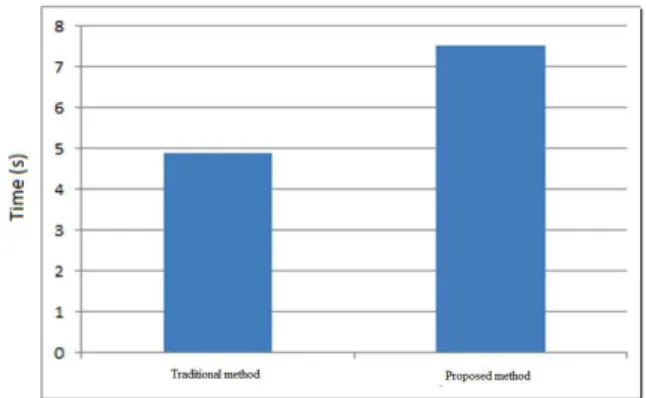
However, the execution time of our system is slightly longer than the traditional system of emergency management due to several parameters that handle searching the nearest and the most appropriate health care institution (Figure 12). To conclude, we see our system as an excellent and effective tool of improvements to existing emergency management processes, it significantly reduce delay in emergency response.
Fig. 12: Comparison between the traditional system and our proposed work
VII. CONCLUSION AND FUTURE WORKS
When facing emergency cases, mobile physicians have to be qualified to make quick and efficient decision in a limited time according to available information. However, the amount of information may overburden the cognitive skills of the most experienced and specialists, and consequently make patients lives at risk. Indeed, managing automatically information about health care institutions and patients states may provide a great support to match patients and physicians needs with medical resources and skilled staffs available in the nearest health care institutions. We propose in this work a medical assistance system destined to improve in an efficient way the task of mobile physician in performing emergency cases. In a first step, the proposed approach determines, using the CkNN algorithm, the closest health care institutions to the emergency scene. In a second step, it determines, using an ontology model, the health care institutions including the needed medical resources suitable for the patient state and case.
As future work, we plan to optimize further the emergency management system by providing mobile physicians with tools able to enhance the diagnostic process which will, obviously, accelerate the localization process of the adequate health care institutions. We will also provide these latter with tools permitting their participation in updating their static and dynamic information. Static ones will deal with the equipment and staff assigned to them; however dynamic ones will deal with their availability according to their defined schedules and assignments at the time of the localization process. Moreover, we will take into account the context, of the paths leading to health care institutions, such as the traffic state. Indeed, taking into account of these aspects and others will contribute to care efficiently about patients, by minimizing, in one hand the non-treatment time, and, in other hand by localizing the most appropriate health care institutions.
REFERENCES
[1] Khayati and Akaichi, “Pervasive assistance system for mobile physicians on the road,” International Journal of Healthcare Technology and
Management, pp. 82–100, 2009.
[2] R. S. Istepanian and J. C. Lacal, “Emerging mobile communication tech-nologies for health: some imperative notes on m-health,” in Engineering
in Medicine and Biology Society, 2003. Proceedings of the 25th Annual International Conference of the IEEE, 2003, pp. 1414–1416.
[3] E. Blomqvist, “The use of semantic web technologies for decision support–a survey,” Semantic Web, pp. 177–201, 2014.
[4] J. Schweitzer and C. Synowiec, “The economics of ehealth and mhealth,”
Journal of health communication, pp. 73–81, 2012.
[5] M. Bakhouya and J. Gaber, “Ubiquitous and pervasive application design,” Encyclopedia of Mobile Computing & Commerce, 2007. [6] R. Amalberti, Y. Auroy, D. Berwick, and P. Barach, “Five system barriers
to achieving ultrasafe health care,” Annals of Internal Medicine, pp. 756– 764, 2005.
[7] M. Musen, B. Middleton, and R. Greenes, “Clinical decision-support systems,” in Biomedical Informatics, E. H. Shortliffe and J. J. Cimino, Eds., 2014, pp. 643–674.
[8] H. Faiez and J. Akaichi, “Pervasive system for searching the appropriate road: A mobile physician on road network case study,” 2014.
[9] P. D. Haghighi, F. Burstein, A. B. Zaslavsky, P. Arbon, and S. Kr-ishnaswamy, “The role of domain ontology for medical emergency management in mass gatherings.” in DSS, 2010, pp. 520–531. [10] A. Gabdulkhakova, B. Konig-Ries, and D. A. Rizvanov, “An agent-based
solution to the resource allocation problem in emergency situations,” in
Web Services (ECOWS), 2011 Ninth IEEE European Conference on,
2011, pp. 151–157.
[11] A. Chennaoui and M. Paquet, “Multi-agent decision-making support model for the management of pre-hospital emergency services.”
Inter-national Journal of Machine Learning & Computing, 2014.
[12] N. Guarino, D. Oberle, and S. Staab, “What is an ontology?” in
Handbook on ontologies, 2009, pp. 1–17.
[13] M. Mistry, D. Shah, P. Pathak, and A. S. Zamani, “Ontologies: Need, usage and attainment of health care system,” in Intelligent Systems and
Signal Processing (ISSP), 2013 International Conference on, 2013, pp.
381–386.
[14] F. Sujanto, A. Ceglowski, F. Burstein, L. Churilov et al., “An integrated framework for comprehensive collaborative emergency management.” in
CDM, 2008, pp. 127–138.
[15] K. Sivashanmugam, K. Verma, A. P. Sheth, and J. A. Miller, “Adding semantics to web services standards.” in ICWS, 2003, pp. 395–401. [16] L. Reeve and H. Han, “Survey of semantic annotation platforms,” in
Proceedings of the 2005 ACM symposium on Applied computing, 2005,
pp. 1634–1638.
[17] J. Figueira, S. Greco, and M. Ehrgott, Multiple criteria decision analysis: