What About Canada? The Changing Dynamics of the
Indexation Theory: A Content Analysis of The Globe and
Mail and The Toronto Star
Mémoire
Marie-Soleil Normandin
Maîtrise en science politique - avec mémoire
Maître ès arts (M.A.)
What About Canada? The Changing Dynamics of
the Indexation Theory
A Content Analysis of The Globe and Mail and The Toronto
Star
Mémoire
Marie-Soleil Normandin
Sous la direction de :
Résumé
Notre projet de recherche, What about Canada? The Changing Dynamics of the Indexing
Theory: A Content Analysis of The Globe and Mail and The Toronto Star, traite de la théorie
de l'indexation dans un contexte canadien. Par conséquent, le principal problème illustré par Bennett et Pfetsch (2018) est que la théorie de l'indexation supprime les « voix alternatives » au lieu d'inclure ces « nouvelles » voix afin d'équilibrer les sources journalistiques. Dans ce nouvel environnement fracturé, il est plus complexe qu'auparavant d'équilibrer des perspectives et des opinions différentes en raison de la participation d'acteurs différents dans l'arène politique. L'argument principal de cette thèse est qu'il est impératif de tester la théorie de l'indexation et d'adapter ses éléments centraux au nouvel environnement politique. Cela signifie une inclusion de ce nouvel environnement dans les hypothèses de base qui incluront les récits alternatifs. C'est dans ce contexte que nous avons décidé d'analyser la question des politiques d'immigration au Canada et son indexation par les médias. Par conséquent, cette thèse est consacrée à une analyse des relations entre les médias et les autorités politiques officielles au Canada, notamment en abordant la question de la place des récits alternatifs dans le discours journalistique canadien.
Abstract
Our research project, “What about Canada? The Changing Dynamics of the Indexing Theory: A Content Analysis of The Globe and Mail and The Toronto Star,” is dealing with the theory of indexing in a Canadian context. Therefore, the main problem illustrated by Bennett and Pfetsch (2018) is that indexing theory removes “alternative voices,” instead of including these “new” voices in order to balance the sources. In this new fractured environment, it is more complex than before to balance different perspectives and opinions because of the involvement of different actors in the political arena. The main argument of this thesis is that it is imperative to test the theory of indexation and to adapt its central elements to the new political environment. This means an inclusion of this new environment to the basic assumptions that will include alternative narratives. It is in this context that we decided to analyze the issue of immigration policies in Canada and its indexing by the media. Consequently, this thesis is devoted to an analysis of the relationship between the media and official political authorities in Canada, in particular, by addressing the question of the place of alternative narratives in Canadian journalistic discourse.
Table of Contents
Résumé ... ii
Abstract ... iii
List of Figures ... vi
List of Tables ... vii
Acknowledgment ... viii
Introduction ... 1
A) Media, Immigration and Framing ... 2
B) Alternative narratives within the news ... 5
C) Mediated Politics ... 9
D) Thesis’s Objectives ... 10
E) Research question, hypotheses and methodology ... 12
Chapter 1 – A Press-Power Relation: Beyond the Dynamics of the Indexation Theory ... 15
1.1 Competing theories and the indexation theory elaborated by Lance Bennett ... 15
1.1.1 Tuchman and Gramsci ... 16
1.1.2 Entman and the Cascading Activation Model ... 18
1.1.3 Hallin and the Vietnam War ... 22
1.1.4 Bennett and the Indexation Theory ... 23
1.2. A new way to index? Revisiting the indexation theory ... 27
1.3 Democracy and Media – A Game Play? ... 30
Chapter 2 – Research question and Hypotheses ... 37
2.1 Question and Hypotheses ... 37
2.1.1 Theory’s predictions ... 37
2.2 Definitions and Thesis Question ... 38
2.2.1 Definitions ... 39
2.2.2 Hypotheses ... 41
Chapter 3 – Measuring and Explaining the Dissent Voices regarding Migration Policies: A Comparative Study ... 43
3.1. Qualitative analysis ... 43
3.1.1 Case selection from January 2013 to December 2016 ... 44
3.1.2 From article’s selection to software usage ... 46
3.2 Categorization of elite’s speech ... 53
3.2.1 Economic ... 55
3.2.2 Humanitarian ... 57
3.2.3 Identity ... 58
3.2.4 Public Security ... 59
3.3 Limits ... 59
Chapter 4 – The Case of Immigration in Canada ... 61
4.1 Are we really exceptional? ... 62
4.2. Canadian Multiculturalism and Quebec ... 64
4.3. Canadian immigration policies ... 66
4.4. From Harper to Trudeau ... 68
4.4.1 Stephen Harper’s Government ... 69
4.4.2 Justin Trudeau’s Government ... 71
5.1 Official Discourse on Immigration ... 74
5.2 Hypothesis 1 ... 76
5.3 Hypothesis 2 ... 86
5.4 General Conclusions ... 92
Conclusion ... 94
A) Dissident voices in Canada ... 97
i) Citizenship Act, Family Reunifications, Detention Centres, and Health Care ... 98
B) Limits ... 99
C) Future research ... 101
Bibliography ... 103
Annex A – Selected News Articles ... 115
Annex B – Dictionary for LIWC 2015 ... 126
List of Figures
Figure 1.1 Cascading Activation Model (Entman 2004, 11) 21
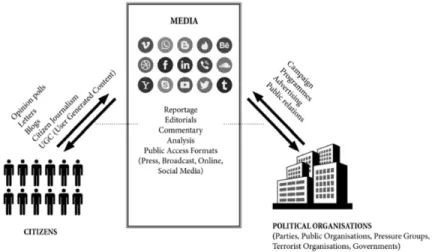
Figure 2.1 Sphere of consensus, controversy, and deviance (Hallin 1986, 117) 23 Figure 3.3 Model of Political Communication (McNair 2017, 5) 32 Figure 4.2 Canada’s Skilled-Worker Immigration System (The Economist 2015) 67
List of Tables
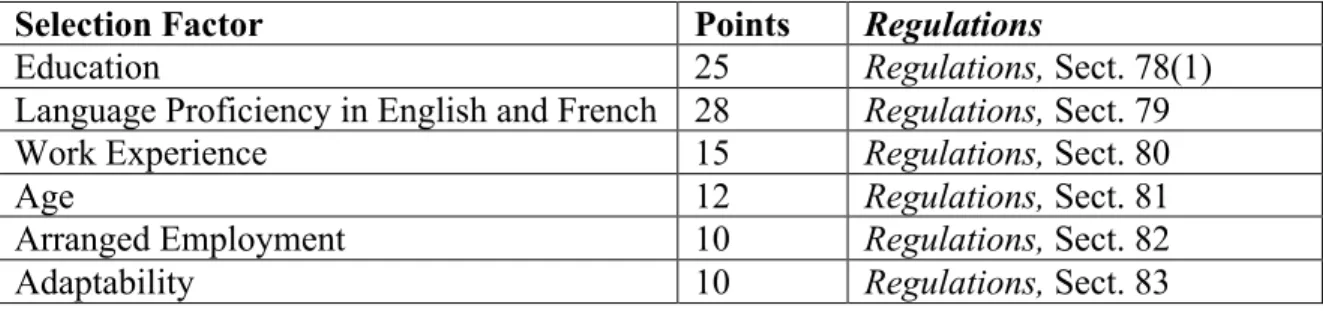
Table 1 The Points System (Liew and Galloway 2015) 68
Table 2 Distribution of Articles 73
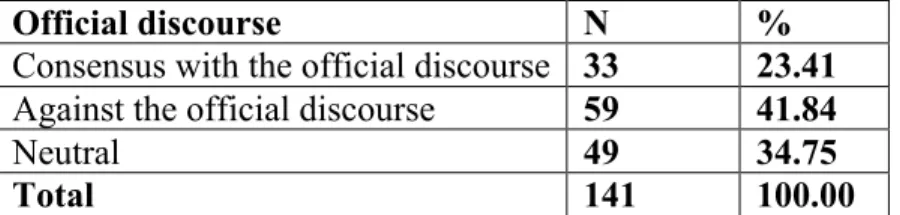
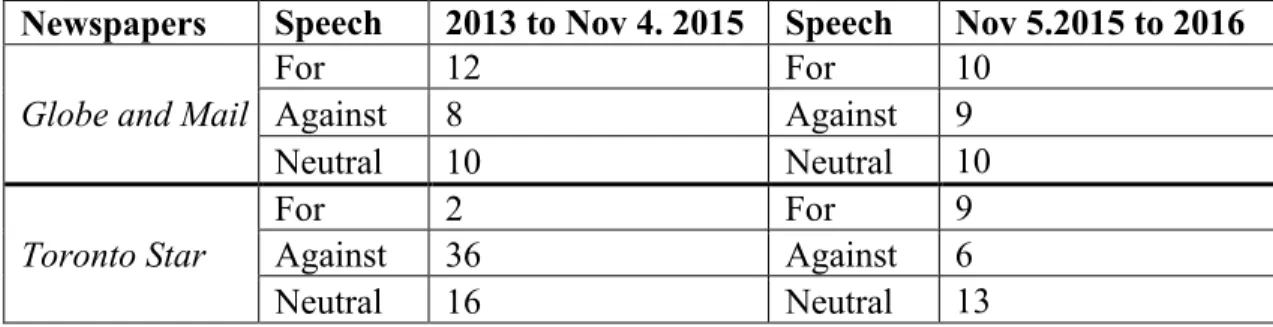
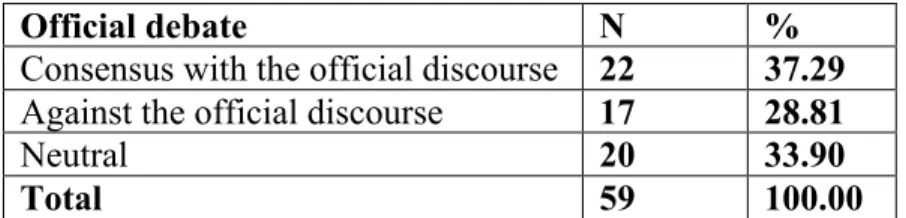
Table 3 Consensus, Legitimate Controversy and Neutral speeches 76 Table 4 Newspapers’ political transition between January 2013 and December 2016 84 Table 5 Consensus, Legitimate Controversy and Neutral speeches for The Globe and Mail 85 Table 6 Consensus, Legitimate Controversy and Neutral speeches for The Toronto Star 85
Table 7 Summary of the Findings 92
Acknowledgment
This thesis is the culmination of a two-year adventure, and an adventure that would have not been possible without these extraordinary people.
First of all, I would like to thank my thesis supervisor, Philippe Bourbeau, for his patience, his availability and above all his wise advice, which have positively contributed to my reflection. Whenever I ran into a problem or had a question about my writing, Philippe supported my ideas and my not-always-good views, which strived me to do better throughout this work. To Thierry Giasson and Eric Montigny’s well-welcomed advice, insights and research experience on the topic.
I would also like to express my gratitude to the friends and colleagues who have given me their moral and intellectual support throughout my journey. A huge shout out to Johanna who provided countless hours of laughs, and thoughtful discussions throughout this adventure. Another huge thanks to these people, that, without knowing it, helped me get throughout the day from our hallway discussions, research hours or simply out for a lunch: Véronique, Emmanuel, Emeric, Julie, and Laura.
Finally, the unconditional support of my family who helped me go through this epic roller coaster. To my mom who provided me a shoulder to laugh on, cry, discuss, and all other emotions that I went by, thank you. To my dad, or I shall say the taxi man, who without weeping got me through all my appointments between Quebec and Trois-Rivières, thank you.
‘A′ohe hana nui ke alu ‘ia.
Introduction
We are particularly interested on how Canada, in recent years1, had to deal with a more than
ever fractured political environment; this fractured environment has been fuelled by a fear of the “othering” of Canadian politics (Dauvergne 2016). As Dauvergne (2016) mentions in The
Politics of Immigration and the End of Settler Societies, managing migratory movements is
one of the most pressing issues for advanced liberal democracies like Canada; by managing migratory movements, it is suggested the ability of the government to secure its frontiers, and its ability to welcome and aid these newcomers to Canada. Considered as a traditional settler country, Canada is now adopting “a mean-spirited politics of immigration”2—a
hard-line immigration remodeling—in response to global issues such as the three shifts highlighted by Dauvergne (2016): (1) the asylum’s crisis; (2) the fear of Islamic fundamentalism, and (3) the end of the ideological multiculturalism3. These three shifts inherently and significantly
changed the already fragile line between asylum and illegal migration (Dauvergne 2016); undoubtedly, this combination of past and present events accentuated advanced liberal government’s desire to securitize immigration by enforcing security measures at our borders4, and enact laws and policies to prevent further damage to this already fragile political
environment (Dauvergne 2016; Castello 2018; Bourbeau 2008).
In Canada as in other advanced liberal democracies, different migrant groups such as asylum seekers, migrants and refugees are depicted, in newspaper reports, as an anonymous and poorly qualified group of professionals, as criminals or as “fake” claimants (Lawlor and Tolley 2017). For the reader, they are “the others” and it is this limited characterization that shapes the discourse citizens have on migrants and thus, shapes public opinion on the matter. Indeed, the media’s treatment of immigration has a direct influence on the image and opinion
1 Within this year (2015), Canada had a federal election campaign – where the Liberals took power with Justin Trudeau –, a campaign that
promised to resettle 25,000 Syrian and Iraqi refugees by the end of the year, a plan deemed ambitious by the opposition and ambiguously applauded by resettlement groups within Canada. This election promise sparked public debate and a broad media coverage. On the matter and beyond, see Hynie (2018).
2 The term “mean-spirited politics” is portrayed by Dauvergne as: “The newness of this politics is found in its intensity, its urgency, and its
legality. Never before have immigration issues been at the center of the political stage in so many places at the same time. Never before has the political attention to immigration drawn such a highly legalized response. Never before as hostility towards immigrants been quite so widespread, and quite so nasty. The politics of immigration has taken a sharp turn in the early years of the twenty-first century.” (Dauvergne 2016, 1) This term is used to counter the changing environment in which governments are facing regarding the greater influx of immigrants in their respective country.
3 These three shifts are associated to the anti-immigrant sentiment, the fear of “invasion” (here read crimmigration, this link between
immigrants and a higher risk of criminality), and the political disenchantment from traditional ways of doing politics. Cf. Will Kymlicka, (2012) Multiculturalism: Success, Failure, and the Future. Washington, DC: Migration Policy Institute.
a particular society has on this phenomenon. The way information is processed, the systematic use of stereotypes and the repetition of certain informative elements guide and eventually create a unique thought on the issue (Helbling 2014; Innes 2010; Vliegenthart and Roggeband 2007).
A) Media, Immigration and Framing
Framing, or framing theory, is understood as a theory that “help interpret and reconstruct reality” (Volkmer 2009, 408). The central aspect of framing is how individuals, in a certain cultural context, can identify, interpret and perceive the reality surrounding their everyday routine. This disentangle view of an everyday routine simplifies the individual’s vision of the received information (Goffman 1986). Today’s framing theory has “allow[ed] us to detect journalistic bias. The use of stereotypical framing, frames along gender lines, or imbalances of the representation of relevant societal communities, such as ethnic minorities within a national or transnational public, are examples of different frames that might be used.” (Volkmer 2009, 409). In the 1970s, with the rise of mass media, the agenda-setting theory posed that the media drawn the attention of the public toward certain issues copiously treated in their contents. However, nowadays, the research regarding framing in the news has been re-oriented toward the study of elite discourses (but also at reporting both sides of a single story), and at a more micro-level (Lippmann 1992; Entman 2007, 1993; Reese 2001; Scheufele 1999)
Highlighted by scholars (Benson 2017; Lawlor 2015a) over the last decades is how framing the “immigration question” influences the political outcomes. In fact, framing migration in a certain way tends—negatively or positively— to influence the public opinion on the matter. On the “immigration question,” previous studies have highlighted various macro-frames such as “threat frame” (Benson 2013), “heroic frame” (Benson 2013), and “managerialist frame” (d’Hænens and Lange 2001). Further, meso-frames have also drawn attention to include the following categories: “victimization” (Vliegenthart and Roggeband 2007),“immigrant-as-threat” (Figenschou and Thorbjørnsrud 2015), or even as a question of “diversity” (Vliegenthart and Roggeband 2007; Igartua and Cheng 2009). These meso-frames have exposed migrants as illegal, as a direct attack on the state sovereignty and
thus fragilized the State’s image on its ability to decide who can enter or not its territory (Bagaric and Morss 2005; Dauvergne 2004; Bosniak 1991). Moreover, Wallace (2018)
mentions that “Newly emerging research [such as Lawlor and Tolley (2017)] also
demonstrates the importance of disaggregating immigration as a category to focus more specifically on how various classes of immigrants are framed differently in news media, and a key difference is between immigrants and refugees.”(2018, 210)
The way in which migrants are portrayed by the mainstream media can harmfully impact the newcomers. Research regarding the framing of migrants in the news has pointed that a lack of understanding of certain key laws such as the international law, the national law regarding immigration and refugee laws, and the concept of the responsibility to protect (R2P) have a negative impact when journalists report on a story, which alters the public’s opinion on the matter (Doherty 2015; Dreher 2010; Lawlor 2015a). This poor fact checking transforms the news storyline and can lead to imbalances, which directly affect the audience, the public’s perception of newcomers and can eventually shift the rhetoric on migrants, all caused by unchecked/unreliable information (Benson 2017; Buonfino 2004). Moreover, this prejudice in connection to asylum seekers, refugees and migrants have greatly fuelled this international anti-immigration sentiment (Dijk 1987; Doherty 2015).
Public opinion on the immigration issue in Canada is also influenced by internal populist rhetoric. On populism in the West, Mudde defines populism as “a discursive strategy employed by political entrepreneurs who claim to embody a virtuous people against morally corrupt elites. Whether left or right, in opposition or in office, populists challenge pluralism and seek to undermine the liberal-democratic institutions that protect both minorities and educated elites.” (Mudde, Mérand, and Momani 2017, 5)5 Four elements are often defined as
the practical definition of the contemporary far-right and seem to make “consensus” as a starting point. According to Cas Mudde, nationalism, xenophobia, law and order, as well as chauvinism, allow the justification of the so-called groups of the populist radical right6. This
5 For a more elaborated discussion on this debated terminology, see Cas Mudde, (2016). The Populist Radical Right: A Reader. London:
Routledge.
6 The risk of populism is not solely restricted to Francophones, but also to Anglophones. Cultural sensitivities are accentuated by a problem
of democratic representation and elites-citizens discourse mismatch. Furthermore, such a social and political gap can “fester and become even more ripe for exploitation by calculating political actors, leading to the overt bigotry seen in many countries today. It is not
concept allows a basic ideological classification within a unified family, despite the heterogeneity of extreme right parties (Mudde 2016)7.
The public opinion is also influenced by the so-called “fake news” or commonly known as disinformation; even if disinformation is not a new phenomenon, social networks and new media platforms such as Twitter or Facebook as lead to a sudden bloom of these specifics “news” (L. Bennett and Livingston 2018; L. Bennett and Pfetsch 2018). In short, it is understood that disinformation is a phenomenon in which the “issuer” has the firm purpose of exercising some kind of influence and control over its “recipients” so that they act according to the issuer’s wishes. It is, therefore, a clearly intentional phenomenon, in which the issuer seeks its own benefit and in which, therefore, and as van Dijk (2006) explains, an abuse of power occurs. The new informational ecosystem has new actors, new economic and political logic, new business models and also new cultural practices, while the intensive privatization of the public sphere and media polarization have eroded the legitimacy of the media as institutions of democracy and even dislocating the social role of journalism (Norris 2010; L. Bennett and Livingston 2018). The new informational ecosystem is a scenario of power battles that is now being fought in cyberspace both through attacks between machines and disinformation strategies, and the very nature of the network makes it an especially complicated and more complex fight (Chadwick 2013).
Thus, it is important to analyze Canada’s profile with regard to its relationship with such political actors. In essence, elections do not define democracy, but they remain a critical component of the democratic process because they provide the opportunity and the basis for solidifying confidence in the institutions that support it. The electoral system plays a vital role in establishing this trust, by translating the popular will into elected representatives, parties and governments (Przeworski 1995). For this, it is necessary that the rules of the electoral game be perceived as equitable.
unimaginable that a more charismatic politician than Conservative MP Kellie Leitch, with more sophisticated tactics, could use English Canadians’ discomfort with social diversity to garner political support” (Medeiros 2018).
7 The most important common denominator to be retained is their ethnonationalist and exclusive conception of citizenship, mainly reflected
in their electoral slogans where the focus is on the common people first and foremost (Rydgren 2007; Carter 2011). This “nativist” position means that states should exclusively include members of the early installed community, and that non-primary group threaten or end up threatening the so-called homogeneous nation state (Mudde 2004; 2007). As some groups are heavily involved in immigration issues, some researchers simply refer to “anti-immigration parties” (Minkenberg 2002; Davies et al. 2002). Again, for a more elaborated discussion on this debated terminology, see Cas Mudde, (2016). The Populist Radical Right: A Reader. London: Routledge.
This fear of “othering” combined with this disenchantment also influences the way media organization has reported the news in the last years; classically, media organization had well-defined audiences, communication processes, and the effect of these processes were known. Nowadays, while the classic sphere was imposing stability and sustainability for government support, scholars have pointed out toward a legitimacy crisis fuelled or fasten by outside groups pressuring the government, and thus, delegitimizing its establishment. This crisis forces and engages news organizations and political institutions to rethink their engagement toward citizens (Bartels 2017; Aelst et al. 2017).
B) Alternative narratives within the news
The main argument of this thesis is that it is imperative to test the indexation theory and to adapt its core elements to the new political environment. This means an inclusion of the basis hypotheses that includes the alternative narratives and moves away from the pre-2000 context. In order to test the hypotheses and includes the alternative narratives, I argue that we have to (a) reconsider the environment in which marginalized voices have evolved; and (b) re-evaluate the temporal boundaries the media organizations refer to.
The environment, or spatial barriers, is understood as the political and social conditions in which marginalized voices have evolved in. Even if media, in advanced liberal democracies, monitor events for the welfare of citizens, identify key societal problems, provide a platform for debate, and analyze/control the information given by political institutions; these organizations do not capture the context in which a marginalized voice has been mobilized or even evolved (Norris 2010; Benson 2013). The issue of multiculturalism in Canada has been an economic and political cornerstone of policies for at least the last forty years, a product, initially, of Franco and Anglo-Canadian relations, in a context in which the international community began to give importance to the inclusion of principles related to the recognition of minorities within international law (Kymlicka 2001). For Kymlicka, it is possible to construct a liberal political theory permitting differentiation of citizenship on the basis of cultural belonging. To do this, he proposes an analytical tool that presents itself from
three angles: “social cultures”, “national minorities v. ethnic groups,” and “minority claims”8
(Kymlicka 2001; 2007). It is in that context that marginalized voices were mobilized, until today, in an environment inclined to inclusion and diversity, but how was it reflected in the news?
The temporal boundaries evaluation is understood as the ability of the media to act autonomously in the different spheres of power through time and how media is affected by the changing environment as to consider marginalized voices9 (Hallin 1986; L. Bennett 1990;
Livingston and Eachus 1996). As marginalized voices are event-driven, it has pushed media organizations to include marginalized voices in order to balance news’s power. In fact, pseudo-experts and new political actors challenged the political consensus agenda among elites mainly due to new technological advances such as the Internet where marginalized voices are more likely to be heard by a greater public (Benson 2017; Chadwick 2013). The temporality of the marginalized voices is reflected with our two hypotheses. Finally, it is believed, by moving away from the pre-Cold war era mindset at the epicentre of the indexation theory, that the segmentation of audiences and disinterest in politics limits the effectiveness of media organizations (Hallin 1986; L. Bennett 2012; Livingston and Eachus 1996).
It is important to define what we mean by “dissident,” “marginalized,” or “alternative” voices within the news. In 1986, Hallin defined dissident voices within his “sphere of deviance” as “the realm of those political actors and views which journalists and the political mainstream of the society reject as unworthy of being heard.” (Hallin 1986, 117) The author pursues his definition of “marginalized voices” by adding that journalists have the role of “exposing, condemning, or excluding from the public agenda those who violate or challenge
8 The first describes a system of differentiation of cultures based on the existence of “societal cultures”, the basic elements of its method of
differentiation. The second angle is based on a grid of analysis used to differentiate between “national minorities” and “ethnic groups”. Finally, the third presents the important distinctions to be considered between the different types of requests claimed by these groups (Kymlicka 2001).
9 During the Cold War era, dissident voices are labelled as Communists; in this perspective, every voice, for the Americans, is perceived
as a threat to their concept of “foreign policies.” In that way, we can clearly mention that there has been an evolution, temporal evolution, of the concept. However, today, dissident voices are still perceived as destabilizing the status quo by influencing the journalists’ report of what constitute a newsworthy story. In that sense, we have to widen the definition given to dissident voices, or at least, move away from its Cold War definition. It means the inclusion of another hypothesis to the theory, which would take into account the dissident voices as directly influencing the possible outcome of the news’ report (Hallin 1986; L. Bennett 1990; Livingston and Eachus 1996).
the political consensus.” (Hallin 1986, 117) However, what is understood by “unworthy of being heard”? Who is included and who is excluded from that definition?
In 1990, Bennett, in his article Toward a Theory of Press-State Relations, gave a greater understanding of when these voices are mobilized and who these dissident voices are. According to Bennett, dissident voices are to only be mobilized in a particular context:
Culturally speaking, it is generally reasonable for journalists to grant government officials a privileged voice in the news, unless the range of official debate on a given topic excludes or “marginalizes” stable majority opinion in society, and unless official actions raise doubts about political propriety. In these “exceptional” circumstances, it is reasonable for the press to foreground other social voices (polls, opposition groups, academics, political analysts) in news stories and editorials as checks against unrepresentative or otherwise irresponsible governments. (L. Bennett 1990, 104)
Here, “other social voices” are understood as polls, opposition groups, academics, and political analysts. However, this definition has proved to be flexible over the years10 as the
definition left us to interpret what is considered as deviant. Regardless of this flexibility, we have defined dissident voices in a domestic context as an individual or a group outside the political sphere of influence – here understood as an individual or a group not withholding power – seeking to contribute to the debate regarding a specific topic. We believe that dissident voices, “seek to define and occupy an in-between space, resistant to prevailing orthodoxy […] the dissenter affirms [his] continuing allegiance to the community [it] criticizes.” (Sarat 2012, 3)
As previously mentioned by Bennett in the 1990s, “other social voices” have already been including academics11 and opposition groups. However, we believe that it also
includes, as Benson (2017) highlighted, religious leaders/communities12, trade unionists,
community associations13, youth, community leaders14, judiciary professionals15, and
far-10 For a further understanding of dissent voices see Sarat (2012), Benson (2013; 2017), Jørgensen and Agustín (2015) and Meyer and
Laschever (2014).
11 Here, the term “academic” includes professors, think tanks, research centers, doctoral students, and administrative members such as
provost, deans or associated deans.
12 Church, synagogues, mosques, and religious associations.
13 Such as pro-immigration/anti-immigration, NGOs, and humanitarian aid organizations.
14 Here, we refer to everyday citizens, citizens impacted by the discussed issue, or citizens who have lived the issue. 15 Such as lawyers.
left or far-right organizations16 (Benson 2017). We also believe that dissident voices are not
equally heard as journalists proceed to a certain sorting. For example, marginalized voices such as academics and lawyers are more likely to be deemed acceptable to be presented to the news than a far-right figure or pseudo-experts17. These new inclusions are to balance the
sources as a way to be considered as semi-independent from the elite’s discourses (L. Bennett and Livingston 2003).
Lastly, Bennett's theory prevailed over those of Entman, Robinson, or other theoreticians for two reasons. First, this choice was made upon this idea that the indexation theory took into account the changing environment in which media organizations are embedded in. As early as 2003, Bennett is already thinking about the inclusion of dissident voices and the importance of social media and the Internet have on the way journalists report news; on the contrary, Entman’s theory prioritize a top-down approach to journalism and how these professionals are more likely to be use as “middlemen” rather than unique actors in framing various issues. In fact, “In times when the media landscape undergoes rapid change and ‘social media’ seem to make the so-called legacy media less relevant than before, it is important to stress that [it is this so-called “conflicted” or “dual” role media organization is taking in order to overcome the changing journalistic environment and to still satisfy the political elites, that interested us].” (Bruun Andersen 2017, 165) The first and the second reasons are thus intertwined. The indexation theory seemed more appropriate to our study as we are mostly intrigued by the relation between media organizations and the political elites and how these two spheres react to the changing dynamics of their surrounding environment that is at large decentered and influenced by “new” political actors (Cecen 2015). We were intrigued by how journalists are not solely acting as “mirrors” and reflecting elites’ opinions, but how journalists have also taken into account the public opinion and play on this dual aspect of journalism.
16 We also include spokespersons of these particular groups.
17 This last point might also depend on the political stance of the news organization as well as its level of journalistic standards. News
organizations that are usually more incline to sensationalism might be willing to emphasize the ‘emotion’ side of a story rather than educating the general population of a specific topic. In the context of pseudo-experts, they are deemed as “credible” by journalists as they believe in their authority, but which can ultimately cause disinformation (Benson 2017).
C) Mediated Politics
One of the core media theories is re-evaluating this fractured political environment. In its simplest formulation, the indexing theory expresses that the media coverage coincides with the interests of the political elites, broadly defining them as members of the executive, legislative or any other political group withholding power. Further, Lance Bennett suggests, with his indexing theory, that the news services of the mainstream media are indexed to the dynamics of the governmental debate (L. Bennett 1990; 2012). The author, in News: the
politics of illusion, emphasizes the role of the new communication system and its impacts on
the democratic government of the United States, answering the following question: How well do the news produced by this new system serve the needs of democracy? Exploring this question, the book analyzes, on the one hand, what is the relationship of political actors with news and, on the other, how journalists and news centres report the stories. In both relations, Lance Bennett takes into account that technological advances and the transformation of information consumption habits have forced various and important changes.
These important changes18 are illustrated by Bennett and Pfetsch (2018). Their main
observation is that the indexation theory is suppressing the so-called alternative voices, instead of including these new voices in order to balance the sources. In this fractured environment, it is more complex than before to balance views and opinions due to the implication of various actors in the political sphere, or at least groups or individuals trying to step into the political sphere and influence the audience’s opinion on certain sensitive topics such as immigration (Bennett and Livingston 2018; Bennett and Pfetsch 2018).
However, by suppressing the so-called alternative voices, researchers have constrained, for the last thirty years or so, the indexing theory to boundaries established in a context of international crisis. Thus, in this perspective, studies regarding the integration of alternative narratives have been conducted in a Cold war mindset. Within this period, researchers have concluded to a uniformity in debates mainly due to allies protecting the Americans’ interests.
18 According to Bennett and Pfetsch, “The resulting weakening of traditional bases for validating information has further opened societies
to bots, trolls, hacking, and disinformation from outside sources.”, which ultimately led to a “contemporary political communication increasingly tak[ing] place in contexts defined by diminished citizen attention, hybrid media systems, the rise of undemocratic movements and parties, and networked, often polarized, political information flows.” On hybrid media systems see (Chadwick 2013).
Throughout their analyses, researchers have concluded to similar results about the role of the press regarding foreign policy-related issues in the United States (Zaller and Chiu 1996; Livingston and Eachus 1996; Entman and Rojecki 1993; Althaus et al. 1996; Hayes and Guardino 2010). However, these studies have led Livingston and Bennett (2003; 2018) to identify two main ways to modernize the theory: a new alternative to the indexing theory (a) that include the addition of new voices, and (b) indexing the government’s debate dynamics to the media rather than the government’s elite discourses.
D) Thesis’s Objectives
To illustrate my argument, I focus on the case of immigration policies issue to Canada and how this issue is indexed by the media. The literature on immigration issues highlights four possibilities, or four frames19 (outcomes) to illustrate the case (Lawlor 2015a; Lawlor and
Tolley 2017; Benson 2017; Wallace 2018). Depending on who is mobilized in the news story, the outcome frame will vary to reflect or move away from the elite’s official rhetoric. The following frames have been selected as scholars such as Lawlor (2015a) have pointed during their analysis of various newspapers and media mediums, that government has a greater tendency to frame the immigration question in words : “generally related to five thematic issues in Canadian coverage: refugees and asylum, illegality and security, economic and labour considerations, social services, and diversity.” (Wallace 2018, 210) Additionally, Lawlor and Tolley (2017) found that different immigration category also resulted in different outcomes; refugees are often framed as a security threat as immigrants are framed in terms of economy.
Thus, each elitist’s frame is analyzed through a content analysis based on Bennett’s hypotheses and the literature on migration portrayal in news. First, the economic frame looks at immigration from the angle of its impact –positive or negative – on the national economy; second, the identity frame refers to the rhetoric used by various actors to emphasize the identity changes undergoing by the host country and its repercussions for the “nation” identity (i.e. far-right rallies throughout Canada). The humanitarian frame assesses the humanitarian imperatives associated with migratory movements and the responsibility of the
government to protect (i.e. R2P principle) its future citizens, and finally, the public security frame is highly influenced by events happening abroad and at home concerning terrorism and suspicious activities related to migrants and their relationship with kinship (i.e. 9/11 attacks, Charlie Hebdo, Bataclan) (Browning 2017). These four outcomes are perceived through the analysis and predicted how media organization framed the marginalized voices in regard to immigration policies. This different usage of the theory is anchored in the proposed testing of the core aspects of the theory in order to be coherent with the modern age of political institutions and its constant evolving environment (Chadwick 2013; L. Bennett and Pfetsch 2018). The case of immigration policies reflects how dissident voices, or alternative narratives, have been included in the news by journalists (Benson 2017; Sarat 2012).
Therefore, this thesis is devoted to analyzing the relationship that exists in Canada between the media and the official political authorities; in particular, whether the indexation and dissident voices hypotheses can predict the behaviour of Canadian media, more specifically in major national and local newspapers, here represented by The Globe and Mail, and The Toronto Star. Based on the predictions of the indexation hypotheses and the conclusions of the literature on dissident voices (a) the media coverage is oriented toward a single narrative identical to that of the official political discourse notably constituted by the Prime Minister, the government, and the parliamentary opposition20, and that (b) dissident
voices have a greater chance of inclusion once the speech outcome is not related to the official discourse, but to a public concern such as health, detention conditions or citizenship (Benson 2017; Sarat 2012; Jørgensen and Agustín 2015; Meyer and Laschever 2014).
Drawing on the theory and the term “indexation,” first introduced by Lance Bennett (2012), it allows to establish a relationship between the centres of power and the media organizations. When speaking of “indexation,” it refers to the tendency of the media to adjust the points of view of the stories that are going to be published very close to the dominant ideologies of the political institutions, who have the power to change those situations (L. Bennett 1990; 2012). According to Bennett, to achieve these adjustments, journalists resort
to framing the news in four categories: personalization, fragmentation, authority-disorder and dramatization (L. Bennett 2012). This journalistic style is thus a frame that contributes to the analysis of the strategic political game that shows a propensity of journalism in drama, conflict and negativity, with respect to individuals or political groups of the elite and that also entails a tendency to personalize the news. This study will compare the relative importance of four officials frames the public security frame (Castelli Gattinara and Morales 2017), the economic frame (d’Appollonia 2017), the identity frame (Browning 2017), and the humanitarian frame (Dijk 1987; d’Appollonia 2017).
E) Research question, hypotheses and methodology
This thesis seeks to test the literature on the indexation theory within Canada with a qualitative and longitudinal study that examines temporal evolution of the press coverage process between January 2013 to December 2016. It tackles the following question: How
does the changing dynamics of the indexation theory influence the Canadian journalistic discourse? Therefore, the two hypotheses for our research are:
(H1) The Globe and Mail and The Toronto Star have produced a coverage of the immigration policy issue oriented toward a single narrative21 identical to that of
the official Canadian political discourse when in favour of the policy. And
(H2) The Globe and Mail and The Toronto Star have more often included dissident voices, both at the national and local levels22, in their news stories when
opposing the official Canadian political discourse on the immigration policy issue.
The two hypotheses are based on our thesis question relating to the indexation theory and the literature on immigration and dissident voices. Indeed, the literature on immigration issues highlights four possibilities, or four frames (outcomes) to illustrate the case. Depending on who is mobilized in the news story, the outcome frame varies to reflect or move away from the elite’s official rhetoric (Benson 2017). This different usage of the theory is anchored in
21 Here we are referring to the four possible outcomes that are public security, identity, humanitarian or economic.
22 On the matter see Ono and Sloop (1995). If one of the previously mentioned frames is exposed as an elite’s preferred rhetoric specific to
migration policies, then there is a lesser chance for dissent voices to be included. Indeed, if media reports news specific to a frame related to economic, identity, public security or humanitarian aid then the organization is acting in a ‘semi-independent’ way (Hallin 1986; L. Bennett 1990; L. Bennett and Livingston 2003). On the contrary, if there is a ‘dissent voice’ included in the news’ story, the previous four frames are less likely to be mobilized (Benson 2017; Lawlor 2015a; Lawlor and Tolley 2017; Igartua and Cheng 2009). In that case, media organizations have a greater flexibility in reporting the story and be considered as ‘independent’ from the official discourse.
the proposed testing of the core aspects of the theory in order to be coherent with the modern age of political institutions and its constant evolving environment.
The two journals are ideologically divergent. On the one hand, The Globe and Mail is considered, economically, as liberal but politically conservative (or right on the political ‘spectrum’); on the other hand, The Toronto Star is being labelled as a liberal and centre-left (Greenburg 2000)23. The LIWC2015 software is used to facilitate and systematize the content
analysis of our newspapers’ articles. The body of articles for analysis is compiled from the
Lexis Nexis Academic database, which allowed us to gather all articles published in The Globe and Mail and The Toronto Star within our timeframe, and responding to keywords:
“immigration,” “refugee*,” “asylum seeker*” and “Canada”. For the years covered, the search returns 2,005 articles, but a total of 1,391 articles have been selected due to our inclusion factors24. Given the volume of material to be analyzed, we chose to restrict the
content analysis to a random sample of 10% of the corpus, which represents 141 articles (i.e. this random sample is simplified thanks to Stata). The initial analysis focused on the title of the article, and the language used to qualify these immigration policies through the economic, identity, humanitarian and public security discourses. These four discourses provide information regarding the indexation, or exclusion, of alternative voices within news stories. We have included opinions, chronicles, comments, letter to editors and editorials in our analysis, but duplicates have been excluded25.
We first present, in Chapter 1, the indexation theory applied to the field of communication, a theory that explores the treatment of public affairs by the media. From the beginning, different approaches from different disciplines, lines of research and definitions have influenced the theory. This chapter will enable us to expose the competing theories from
23 Additionally, theses newspapers are targeting a more diverse readership than The National Post or Le Devoir.
24 We have excluded all articles relating to foreign policies, international immigration policies or international accords. Additionally, we
have excluded articles that simply mentioned one of our keywords (i.e. “Canada,” “immigration,” “refugee,” or “asylum”) in their main body.
25 To examine the relative indexation discourse on immigration policies in Canada, we will cover a four-year period, where both the
Conservative and the Liberal parties have governed the country. This period was chosen as the basis for our analysis mainly due to the fact that a regime change happened during the 2015 elections. During this period, the Canadian political sphere moved away from the Conservatives and toward the Liberals; this transition will serve as a guideline to see if we have a continuity or discontinuity in the media organizations’ rhetoric regarding immigration policies. This selection will enable us to observe, if this is the case, a divergence of speech or even of a subject of concern to the populations concerned.
Tuchman and Entman to Hallin and Bennett. Furthermore, this literature review highlighted a new way to index with recent research.
Chapters 2 and 3 are measuring and explaining our methodological element for this thesis by focusing on the thesis’s question, hypotheses, case selection, the keywords search, and finally, our categorization of media’s frames. As of Chapter 4, it rapidly summarizes the case of immigration in Canada while emphasizing the multicultural aspect of immigration policies from Harper to Trudeau. Chapter 5 examines the changing dynamics of the indexation theory in Canada by showcasing the obtained results, and conclusively, we will recapitulate our findings concerning the inclusion of dissident voices in Canada, discusses the main limits of our research and highlights potential avenues for future research. This thesis has accentuated at its beginning on how the public sphere is disrupted by the arrival of “new” actors. Thus, the following chapter is tasked to define and described the origin of the indexation theory, and how this fragmented environment has pressured the theory to re-evaluate its position.
Chapter 1 – A Press-Power Relation: Beyond the
Dynamics of the Indexation Theory
we have turned into a public relations society. Much of the news Americans get each day was created to serve just that purpose—to be the news of the day. Many of our headlines come from events created by public relations—press conferences, speeches, press releases, canned reports, and worst of all, snappy comments by “spokesmen” or “experts.” (Pincus cited in Bennett 2012c, 111) According to one of the indexation hypotheses put forward by Bennett (1990a), journalists in the leading media tend to ponder or “index” the ideas and points of view on a topic according to the points of view presented in the discussions of the political elites. The other voices appear in the news only when they pick up some point of view within the range of the dominant governmental debate or if they are associated with acts that “establish negative interpretative contexts for these voices” (L. Bennett 1990, 107), as is usually done with protests, strikes or civil disobedience.
The indexation theory applied to the field of communication explores the treatment of public affairs by the media, including the process of construction of the journalistic message, and how the media produce effects on individuals and society. Thus, from the beginning, different approaches from different disciplines, lines of research and definitions are established around this theory, which leads soon to speak of the theory of indexation as a “fractured paradigm” (Entman 1993).
1.1 Competing theories and the indexation theory elaborated by Lance Bennett
Tuchman (1978) describes news as a window whose frames limit the perception of reality, ignoring one part while focusing attention on another. This allows to build a series of textual or visual frames that revolve around an idea making it emerge indirectly. The creation and reproduction of these frames are what we call “framing.” As pointed out by one of the authors who has worked on the concept, the frame is a scattered or ambiguous concept, which has hindered its development on solid pillars and well-defined research lines (Entman 1993). Additionally, Tuchman (1978) suggests other elements that account for the approach: the
organization of the sections, the decision of what to publish and what not, the place where the news is covered and the moment in which events happen. Finally, Hallin’s theory of spheres of influence—consensus, legitimate controversy and deviance— highlighted that framing is defined as a specialty of media studies and there is a willingness coming from scholars to develop it as an instrument of empirical measurement (Hallin 1986).
1.1.1 Tuchman and Gramsci
The theory of framing comes to describe the interactive process by which subjects interpret reality. The representations transmitted in the communicative products constitute a key factor for the understanding of the social world, since they suppose a cognitive shortcut so that the individuals can know realities of access or what surpasses their spatial and temporal limits. Tuchman compares the news with a window to which we lean out to see reality: “But the view from a window varies depending on whether it is large or small, if its glass is clear or opaque, if it faces the street or a patio. The scene also depends on where one is located, far or near, forcing the neck or looking effortlessly forward.” (Tuchman 1978, 1) In this way, communication, representation and cognition are related in the concept of symbolic mediation. Under this notion, the framing theory is based among other perspectives that, together with other theoretical perspectives such as agenda-setting or gatekeeping, recognize the power of the media to influence the cognitive processes of audiences and, so much, potentially also in their attitudes and decisions26 (Tuchman 1978).
In particular, the framing theory supposes a negation of the informative objectivism when considering that the reference schemas provided in the journalistic information are not a faithful reflection of the facts, but a symbolic representation of these realized through a series of filters for its interpretation, as they are, for example, formats, professional routines, personal characteristics of the journalist or those of the media organization (Goffman 1986).
26 Tuchman’s studies have focused on the news’ effects on both the journalists and the media organizations. The means with which a
newspaper has when covering an information vary the final product that is offered to its readers. The roles and ways of working of the informant also influence the final product or the abundance/scarcity of news that occurs on a given day. Other factors mentioned are the sources with which the journalist counts, his style, his language and his ideology. Also the place where the news is covered, the organization of the sections, or how it is cataloged in the newsroom produce one type of treatment or another: if the news is considered of great interest it will have a different coverage that if it is considered of minor importance (Tuchman 1978).
Indeed, the need to incorporate the political, social and cultural contexts where frames originate in the study of framing is due, as several researchers such as Goffman (1986) and Tuchman (1978) have pointed out, to the fact that media frames do not arise and develop in a vacuum, but rather is the consequence of the social interaction of different actors, so that research on the framing process cannot be reduced only to the experimentation on cognitive effects of information in individuals (Goffman 1986; Tuchman 1978). Thus, the critical perspective demands the consideration of the power relations that are reflected in the frames that the media project and their social consequences.
This view was already collected by the first scholars of framing in the field of media, and is based on the premise that the frames transferred by journalists serve the interests of the elites, who use them from their dominant position in the coverage of the media, which allows them, at the same time, to maintain their ideological hegemony in society (Hallin 1986; Gramsci 1971). This is due to the fact that frames not only organize reality for the media, but also to a larger extent for the public who trust in their information.
The investigations within the critical paradigm, therefore, connect the theory of framing with the concept of hegemony expressed by Gramsci. The concept of hegemony referred to the belief system or ideological structure by which the established political order is maintained and legitimized. According to Gramsci (1971), the press and other cultural institutions disseminate and reinforce the dominant perspectives27; “The functions in
question are precisely organizational and connective. The intellectuals are the dominant group’s ‘deputies’ exercising the subaltern functions of social hegemony and political
government28.” (Gramsci 1971, 12) Therefore, some researchers have highlighted, through
research and data collection, the ideological role of media organizations. Since then, the researchers consider that the media, in their coverage, give less credibility—when they do
27 The concept of hegemony comprises the political/ideological direction of a wide range of alliances achieved through consensus. This
consensus implies that the articulator of this alliance, the political party/political elites for Gramsci, manages to represent a set of heterogeneous demands, which are not the sum of the demands of different classes, but their amalgamation into an ideological political project that gives them consistency (Gramsci 1978).
28 Gramsci understands that the seizure of power, by the State, is necessary as well as constituting a new one. Therefore, he considers that
a group must be a leader before achieving it, that is, it must build its hegemony meaning the articulation of a consensus within the group. Once the State is conquered, the class that achieves it has the direction and the coercion; consequently, it is the new leader and the new dominant class (Gramsci 1978). Now, when the social class that holds power can no longer lead, when their ideology is rejected, when the consensus is released, they are replaced by another dominant group. In short, when it does not lead society forward because it cannot respond to its demands, then it leads the society to a new crisis of hegemony.
not exclude—to social narratives that do not fit with the definitions of situation inserted in the frames that they transmit to their audience. In this way, media accounts reflect the interests of the sources to which they give priority and limit alternative visions (Gramsci 1971; Curran 2005; Allen and Blinder 2018; Charon 2013).
But the inclination of the media for certain versions of reality is not necessarily a conscious process. In this sense, Tuchman (1978) points out that journalistic practices and informative routines, presented as “objective procedures,” make the news legitimize the
status quo; since journalists carry out their work on structures, mechanisms and institutional
processes, as they, at the same time, reproduce them. More specifically, it has been underlined that the frames promoted by official sources and powerful groups have a greater presence in the contents of the media. These links the investigations of the critical paradigm with the theory of indexation, arguing that the media tend to prioritize the issues and points of view pointed out by the political elites and the institutions with greater power (Tuchman 1978; L. Bennett 1990; Benson 2013; Lawlor 2015a; Dekker and Scholten 2017).
1.1.2 Entman and the Cascading Activation Model
Robert Entman has proposed the cascade activation model in 2004 in his book
Projections of Power: Framing News, Public Opinion and U.S. Foreign Policy. As a
restatement, Entman’s starting point has been the recognition of the inability of the previous models to explain the relations between the media and the political elites at present. Therefore, the author states that,
Although they offer elements for understanding, the models of hegemony [propaganda] and indexing—based fundamentally on events that occurred during the cold war—do not fit with some of the findings of this book. It is not surprising that models cannot fully account for changes in international politics and media behaviour since the Soviet Union withered. It seems the time, then, of a new model (Entman 2004, 4).
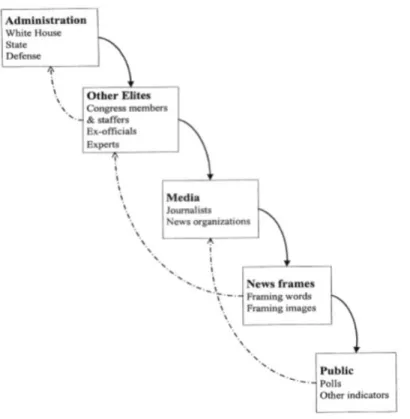
The model tries to explain the multilevel process of framing the media in foreign policy matters in the United States (See Figure 1.1)29. This process begins with a negotiation
29 For Robert Entman, as for Dietram Scheufele (1999) (see “Framing as a theory of media effects” Journal of Communication 49, nº1
(1999): 103-122), the frames are specific to the media, and are found specifically in the news (in a broad sense). Framing in other types of discourse would be called schema (idea schemes). This scheme would be the one that would travel through the waterfall, and only in the
between the political actors and key interest groups about the messages around a specific event or policy. Media filter the process of establishing an agenda and framing, who, following a hierarchy of influence, provide the public with frames based on the messages received from the political elites. But the public is also able to influence the media by reacting to the proposed frameworks. Its power to establish a counter-frame strong enough to challenge those induced by the elite depends, among other variables, on the number of messages it is capable of generating and communicating. This capacity has been multiplied in the last decade by the alternative communication networks that provide, for the first time in history, a free space for the production of messages and the connection between people. In this sense, the new communication networks are the source of the new power acquired by the masses for the construction of meanings, being also the origin, therefore, of the decomposition of the hierarchical structures of power with the political and financial elite at the top (Entman 2004; Cecen 2015).
Although the model supposes a further step in the interaction between the actors of political communication (here understood as political groups, media and citizenship), it is the foreign policy that establishes a hierarchical model with its object of study. As one descends into the levels of the cascade, the flow of information is less and less thorough, and incrementally limited to the important ideas selected, processed through schemas and then transmitted. The further the idea travels in the waterfall, the lower its connection with the “real” situation is (Entman 2004). For Entman, the cascading activation model is at the intersections of Hallin and Bennett’s work on the indexation.
[A]lthough indexing convincingly emphasizes elite opposition as a vital determinant of whether the news will deviate from the White House line, it does not explain fully why leaders sometimes contest the president’s frame and other times keep quiet, or just how much elite dissent will arise, or what it will focus on. Nor do previous models delineate comprehensively the public’s role in the larger system of communication linking presidents, elites outside the administration (including foreign leaders), journalists, news texts, and citizens (Entman 2004, 5).
news would we find the frames. However, this distinction is not so clear from the point of view of most of the authors, so here they have attributed the term “framing” for both schemes and frames.
In essence, the cascading activation model is interlinked between four categories, which influences each other’s framing outcomes: the administration, other elites, news organizations, and the public. For the model to formally pass on an idea/issue from the “top” of the cascade to the last level, it must assume that some actors of communications have more power to impose an idea and thus forces the issue to transcend all levels of the model. The “Administration” is, as a result, located at the “top” of the cascade as it is an actor withholding the greatest power to frame issues it wants to be highlighted by the “lower” levels of the model and can, additionally, take initiatives due to their inside knowledge of particular concerns, or undisclosed information. It is, then, followed by other political elites, such as opposition parties, parliamentarians, experts and foreign governments. In the “Administration” and “Other Elites” sections, the frame is negotiated, being accepted or rejected, and can be translated in a competitive situation between frames. This situation of consensus or dissent will give rise to one or more frames, which will make its way into the “Media” section. The “Media’s” role, seen as organizational entities and propagators of information, is to reflect the issue in the news and inform, in various formats, the “Public”. Here the second negotiation between frames takes place, since the “Administration” perceives the treatment of the media toward its narrative line, and a new framing process can be initiated. Lastly, the “Public” will react to the information at its disposal with a third negotiation between the frames of public opinion—that is, its reactions to present framing— , and the media. At this point it is important to mention that Robert Entman links the opinion of the public with the media, because he considers that the political elites use the media as barometers of public opinion (Entman 2004; Cecen 2015).
Figure 1.1 Cascading Activation Model (Entman 2004, 11)
What is transmitted through the waterfall are not ideas or concise information but framing or schemes of thought. This means that it is the perception and the point of view on how a certain topic should be approached that reaches the lower levels of the cascade and not the exact words or ideas. In this way, the vertical process—from top to bottom—does not imply an exact reproduction of the discourse, as the theory of consensus-making or, in part, the theory of indexing, affirms, but rather of framing. Naturally, the feedback process would imply that there might be induced framing changes from the lower levels.
Entman (2004) also analyzes the variables on which the negotiation process depends on each level of the cascade. There are basically four, although each of them has a different meaning or dimension for each actor: motivations, cultural congruence, power, and strategy. The first two variables are internal, typically representing the thought processes of each actor, while power and strategy are considered external, since they depend on the contextual context.
The motivations of the actors to accept or reject a framing or scheme of thought are, according to the author, the following: (a) minimize the cognitive cost; (b) avoid emotional dissonance; (c) react to threats against values; (d) participate in public life; (e) maintain interpersonal relationships through discussion; and (f) professional interests, such as promoting a political career or journalistic. Each of these motivations will weigh differently for each actor or individual, the latter being especially relevant for political elites and journalists (Entman 2004).
1.1.3 Hallin and the Vietnam War
Journalists’ role, according to the indexation theory, is to solely report the decisions taken by official state representatives or government officials; it is conceivable to think that it is the elites who determine the terms and the limits of the debate regarding foreign policy in the news. The theory of indexation predicts that if there is a consensus among U.S. political elites on a certain type of policy decision, journalists will present little or no critical reporting (L. Bennett 1990; 2012). On the other hand, if there is a disagreement between the elites, journalists will be able to easily broadcast negative reports on the validity of the decisions taken. Lance Bennett goes as far as to assert “only the presence of a debate among the elites legitimizes the coverage of diverging points of view and makes this gesture safer in times of crisis” (L. Bennett 2012, 22).
The indexation theory takes its foundation in the work of Hallin. His book,
Uncensored War: The Media and the Vietnam, the Vietnam War (1963–1975), has been at
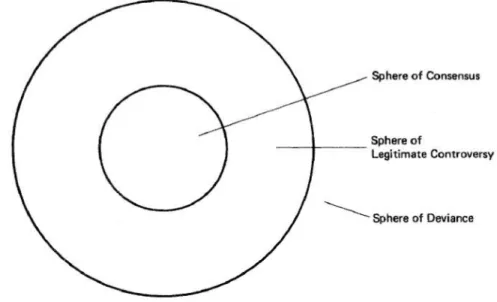
the epicentre of studies on the influence of political power in the media. Considered the first television war, Vietnam is an academic point of reference for two reasons: first, because it was a war where journalists did “something more” than tune in with the powers of the state, and second, because it was in the belief that the excessive overexposure of dead bodies and images of suffering on television screens and on the front pages of the newspapers undermined the American public’s support for the war (Hallin 1986). In his intention to revisit Vietnam, Daniel Hallin proposes an analytical framework to examine the role played by the media in that war. The author divides his analysis into three spheres (See Figure 2.2): (1) the sphere of consensus, in which the media operates within the consent of elites; (2) the
sphere of legitimate controversy, where the media reflect the dissent of the elites, and (3) the sphere of deviation, in which the media offer coverage from outside the hegemonic point of view (Hallin 1986). According to Hallin, while elite consensus prevailed around the reasons why Vietnam had to be fought, media coverage was tuned to the dominant political perspective—the sphere of consensus. Thus, for this author, the critical coverage of the media on Vietnam was a consequence of elite dissent rather than its cause.
Figure 2.1 Sphere of consensus, controversy, and deviance (Hallin 1986, 117)
The indexing model is considered, due to its proposals, as a reformulation of the propaganda model in terms much more in line with the requirements of the scientific community in political science and communication, for which it has received widespread support within academia. Even some authors, such as Piers Robinson, consider it a split or a modality of the “paradigm of making consensus” (Robinson 1999).
1.1.4 Bennett and the Indexation Theory
This is because the simplest formulation of the model has very important similarities with consensus building. In it, this model, formulated by Lance Bennett on the basis of Hallin’s proposal, states that media coverage coincides with the interests of political elites, broadly defining them as members of the executive, legislative or any other political group withholding power. This point of view has been clarified mainly through the work of Lance
Bennett, who has suggested the theory of indexing, which proposes that the news services of the media of the masses are indexed to the dynamics of the government debate. Thus, even when media coverage is critical of the executive’s policy, it simply reflects the responsibility of journalists to point out the struggles within the centre of power. The implication is that political criticism within the media is only possible when there is a conflict among the elites over the policy that is carried out (L. Bennett 1990; 2012).
The theory of indexation’s hypotheses arose from asking, “what it means” and “how to explain” the fact that media organizations are based mainly on what government representatives say. The author, Lance Bennett, of this theory clarifies that his purpose was to synthesize three groups of different theories about the press-power relationship: (1) the idea that property is a way of restricting or limiting the flow of ideas (2) the symbiosis or trans-sectionalism between journalists and public officials, and (3) the other that values the function of giving the voice to the government for being the legitimate representative of the people for the sake of governance (L. Bennett 2012).
Following the basic line of the model, Bennett (1990) argues that the media’s confidence in senior officials is rooted in three types of journalistic norms: the professional virtues of objectivity and balance, democratic responsibility, and the economic realities of the information business. The “objectivity norm” requires journalists to present “both sides” of a story. But this phenomenon has meant that the routine use of these norms has turned the press into a political institution. Bennett supports the notion that obtaining the official reaction has been institutionalized among the American press. Thus, Bennett says that this institutionalization links journalists with officials who occupy important positions of responsibility that include decision-making. In this way, Bennett creates the theory of indexing where:
Media professionals, from the meeting room to the street, tend to ‘index’ the range of voices and points of view, in the news and editorials, according to the range of dominant points of view expressed in the governmental debate on a given topic.
This working hypothesis implies that “other” (i.e., non-official) voices filling out the potential universe of news sources are included in news stories and editorials when those voices express opinions already emerging in official