HAL Id: tel-02524967
https://pastel.archives-ouvertes.fr/tel-02524967
Submitted on 30 Mar 2020HAL is a multi-disciplinary open access
archive for the deposit and dissemination of sci-entific research documents, whether they are pub-lished or not. The documents may come from teaching and research institutions in France or abroad, or from public or private research centers.
L’archive ouverte pluridisciplinaire HAL, est destinée au dépôt et à la diffusion de documents scientifiques de niveau recherche, publiés ou non, émanant des établissements d’enseignement et de recherche français ou étrangers, des laboratoires publics ou privés.
Peut-on évaluer expérimentalement l’impact des
processus participatifs en gestion de l’eau ? Etude d’une
méthode générique ciblant l’évaluation de capabilités
Sarah Loudin
To cite this version:
Sarah Loudin. Peut-on évaluer expérimentalement l’impact des processus participatifs en gestion de l’eau ? Etude d’une méthode générique ciblant l’évaluation de capabilités. Hydrology. Institut agronomique, vétérinaire et forestier de France, 2019. English. �NNT : 2019IAVF0020�. �tel-02524967�
NNT : 2019IAVF0020
T
HESE DE
D
OCTORAT
préparée àl’Institut des sciences et industries du vivant et de l’environnement (AgroParisTech) pour obtenir le grade de
Docteur de l’Institut agronomique vétérinaire et forestier de France
Spécialité : Sciences de l’eau
École doctorale n°581
Agriculture, alimentation, biologie, environnement et santé (ABIES)
par
Sarah LOUDIN
Can we use a social experiment to assess the impact of participatory
processes for water management ? Studying a generic method
tackling the evaluation of capabilities.
Directeur de thèse : Nils FERRANDCo-encadrement de la thèse : Patrice GARIN
Thèse présentée et soutenue à Montpellier, le 7 octobre 2019 : Composition du jury :
Mme Sylvie LARDON, Directrice de Recherche, INRA Présidente Mme Juliette ROUCHIER, Directrice de Recherche, CNRS Rapporteure M Jérôme BALLET, Maître de Conférences, Université de Bordeaux Rapporteur
M. Nicolas BECU, Chargé de Recherche, CNRS Examinateur
M. Alexandre Apsan FREDIANI, Associate Professor, UCL Examinateur
M. Arnaud BANOS Directeur de Recherche, CNRS Examinateur
M. Olivier BARRETEAU, ICPEF, Irstea Examinateur
M. Nils FERRAND, Chargé de Recherche, Irstea Examinateur
UMR G-EAU Irstea, 361 rue J.F. Breton, BP 5095 34196, Montpellier Cedex 5
3 “To boldly go where no one has gone before”
5
AKNOWLEDGEMENTS - REMERCIEMENTS (IN FRENCH)
Le développement et l’aboutissement de cette thèse n’auraient pas été possibles sans les nombreuses personnes qui m’ont soutenue et guidée.
Mes remerciements vont tout d’abord à mon directeur de thèse, Nils Ferrand, et à mon co-encadrant de thèse, Patrice Garin. Merci de m’avoir fait confiance pour entreprendre ce travail de thèse et de l’avoir guidé durant toute sa durée. Votre encadrement, à la fois bienveillant et complémentaire, m’aura fourni un cadre propice pour mener à bien mon travail. Nils, merci pour ton accompagnement, ton énergie et ton écoute, et pour avoir dirigé cette thèse de façon ouverte et amicale. Merci aussi de m’avoir permis d’approfondir et de présenter mes travaux dans de - plus ou moins - lointaines contrées. Patrice, merci pour ton suivi et pour tes conseils avisés et rigoureux tout au long de ma thèse, en particulier lorsque je me lançais dans la rédaction du manuscrit. Merci aussi d’avoir piloté le dépôt de ma thèse lorsque je me retrouvais privée d’internet.
Je souhaite aussi remercier Juliette Rouchier et Jérôme Ballet, rapporteur.e.s de cette thèse, ainsi que Sylvie Lardon, Alexandre Apsan Frediani, Nicolas Bécu, Arnaud Banos et Olivier Barreteau, qui ont accepté de participer au jury de cette thèse.
Je souhaite particulièrement remercier les membres de mon comité de thèse, Jérôme Pelenc, Pieter Bots, François Bousquet et Jean-Yves Jamin, qui ont suivi mon travail et accompagné son évolution depuis ses débuts. Merci à vous tous pour vos encouragements et vos précieux conseils, dont ma thèse a grandement bénéficié.
Je remercie particulièrement Jérôme, mon « référent capabilités », pour sa disponibilité et sa gentillesse. Merci de m’avoir rassurée et aiguillée à chaque fois que j’avais l’impression de me perdre dans les méandres de l’approche par les capabilités, et d’avoir pris le temps de relire une partie de ma thèse. Je souhaite aussi remercier Pieter de m’avoir invitée à venir travailler à l’Université technique de Delft, aux Pays-Bas. Merci d’avoir pris le temps de décortiquer durant mon séjour mes questionnements de thèse et de m’avoir guidé lors de la phase critique d’analyse de mes résultats. Nos discussions ont posé les bases de ce manuscrit. Je remercie aussi Bartel Van de Walle d’avoir permis ma venue à Delft, ainsi que tous les chercheur·e·s et doctorant·e·s du département « Multi-Actor Systems » pour leur accueil chaleureux.
Je souhaite chaleureusement remercier tou·te·s les membres de l’équipe IPD (Ingénierie de la participation et de la Décision) de l’UMR G-EAU, Emeline, Sylvie, Géraldine, Raphaëlle, Laura, Mélaine, Benjamin et Bruno, pour leurs contributions constructives à l’avancement de mon travail et pour avoir toujours répondu présent·e·s lorsque souvent je sollicitais leur avis et leurs conseils. Je tiens particulièrement à remercier Emeline, ma « référente évaluation & participation » : merci pour ta gentillesse et pour tous ces précieux conseils partagés durant mes quatre années de thèse. Merci aussi à Géraldine pour son aide et sa patience lorsque qu’il fallut m’expliquer les mystères de la formalisation mathématique d’un jeu. Je souhaite aussi
6
particulièrement remercier Sylvie de m’avoir permis de revenir en Tunisie présenter mes résultats de thèse aux participants (et aussi de quitter mon bureau sereinement à la fin de ma thèse). Merci aussi à toi et Jacques pour votre chaleureux accueil lors de mon séjour tunisien. Enfin, je remercie sincèrement Julien Burte et Houssem Braiki, ainsi que tou·te·s les membres de l’équipe IPD qui ont endossé le rôle de facilitateurs CappWag lors de la mise en place de mes ateliers.
La conception du jeu au cœur de l’outil de mesure développé pour cette thèse a été rendue possible grâce aux nombreux tests mis en place pour s’assurer de son bon fonctionnement. Je souhaite ainsi remercier tou·te·s les personnes qui ont accepté d’y participer. Collègues de G-EAU ou d’autres unités de recherche, professionnel·le·s du monde de l’eau, ami·e·s et ami·e·s d’ami·e·s, je vous suis reconnaissante. Merci aussi à Sander, Corentin, Anaé et Florestan pour leur aide durant cette phase de conception.
Je souhaite remercier Chrystel Fermond et Aurélie Radde, directrices des syndicats de rivière de la Drôme (SMRD) et des Usses (SMECRU), de m’avoir accordé leur confiance pour faire de ces deux bassins un possible cas d’étude pour ma thèse. Merci à vous deux pour votre gentillesse : Chrystel, se fut un plaisir de retravailler ensemble, même brièvement ! Aurélie, merci de m’avoir fait découvrir le beau lac du Bourget. Je remercie aussi les élus du SMECRU et les citoyens de la Drôme d’avoir pris le temps de participer à un atelier CappWag. Merci à ces derniers d’avoir aussi accepté de répondre avec bienveillance à mes questions.
Je tiens à remercier tous les participant·e·s aux ateliers CappWag de mes deux cas d’étude, en Tunisie et en France, sans qui ce travail n’aurait pu être mené à bien. Merci pour votre attention et pour la curiosité témoignée envers mon travail. Un merci particulier à celles et ceux qui ont accepté de répondre à mes nombreuses questions par téléphone ou en face-à-face.
Je tiens aussi à remercier le personnel administratif de mon école doctorale ABIES et de l’UMR G-EAU pour m’avoir aiguillé à travers les rouages de l’administration et grâce à qui j’ai pu bénéficier de bonnes conditions de travail durant ma thèse.
Je souhaite remercier tou·te·s les chercheur·e·s et personnes rencontré·e·s durant ma thèse et qui auront pris le temps de lire un questionnaire, un article ou un chapitre ou de me prêter régulièrement leur dictaphone pour mes entretiens : je pense notamment à William’s Daré, à Aurélien Allouche, à Sophie Bonnard, à Jeanne Riaux.
Je remercie aussi mes collègues doctorant·e·s pour leur gentillesse, leur humour et pour nos passionnants débats et discussions en tout genre durant ces quatre ans de thèse. Un merci spécial aux piliers du bureau 38 : Claire LP, Marie, Hind, Kévin L, Agnalys et Derrick ; et à tou.te.s les autres :Claire LG, Bruno, Francisco, Félix, David, Nancy, Kévin D, Mathias, Alix, Pierre LF et Pierre LV, Victor, Amal, Bastien, Martin, Mehrnaz, Brice, Paulo... Merci !
7
Je souhaite enfin remercier mes amis et ma famille qui auront également et par la force des choses participé à cette aventure. Merci à tou·te·s mes ami·e·s pour leur soutien et leurs encouragements durant cette bien longue phase de « gestation » de ma thèse. Merci pour vos appels, vos messages et vos lettres et pour les weekends relocalisés à Montpellier. Un grand merci à ma famille et ma belle-famille de m’avoir soutenue durant toute la durée de ma thèse, notamment durant ces quelques semaines où la rédaction du manuscrit dictait implacablement le déroulé de mes journées. Je souhaite aussi particulièrement remercier mes parents, Marc et Torkia, et mon frère, Thomas, pour leur soutien sans faille, depuis toujours. Enfin, un immense merci à mon compagnon Mirko pour son indéfectible optimisme et pour ses innombrables encouragements. At last, I got the job done.
8
TABLE OF CONTENTS
Aknowledgements - Remerciements (in French) ... 5
Table of contents ... 8
List of Figures... 17
List of Tables ... 21
List of acronyms and abbreviations ... 22
General introduction ... 23
1. Rationale of this thesis ... 23
2. Summary of literature review and research gaps ... 25
2.1. What is public participation and why it is important to evaluate it ... 25
2.2. The objective of my evaluation and my positioning ... 27
3. Research questions ... 29
4. Thesis structure and content ... 29
Chapter 1 – The capability approach: a theoretical framework to evaluate participatory processes ... 31
1. Introduction ... 31
2. A history of the capability approach and its academic, political, economical and social impacts ... 31
2.1. The first steps of the capability approach ... 31
2.2. Academic, political and economical uses ... 33
2.3. The capability approach applied to sustainable development and natural resources management ... 34
3. The capability approach: main concepts and definitions ... 35
3.1. The main concepts behind the capability approach ... 35
3.2. A focus on collective capabilities ... 39
3.3. A freedom decomposed ... 43
3.3.1. The scale of measurement of a collective capability ... 43
3.3.2. The three dimensions of a capability ... 44
4. The link between the capability aproach and participation ... 46
5. The capability approach put into practice ... 49
9
5.2. Methodological choices: the capability space as the privileged scale to evaluate a
participaptory process for water management ... 51
5.3. Which capabilities exactly to select? Focus on three capabilities to evaluate ... 52
5.3.1. Level of precision and appropriate number of capabilities to evaluate ... 52
5.3.2. The selection of capabilities related to collective action for natural resources management ... 53
5.3.3. The final three capabilities ... 53
6. Existing methodologies to evaluate capabilities: a review ... 56
7. Limits of and criticism addressed to the capability approach ... 58
8. Conclusion ... 60
Chapter 2 – A social experiment to evaluate capabilities ... 61
1. Introduction ... 61
2. Evaluating a participatory processes for natural resources management: an overview .... 61
3. A social experiment based on a role-playing game to evaluate participatory processes: definitions and precedents ... 63
3.1. Definitions ... 64
3.2. Role-playing games for evaluation: a review ... 64
4. The assets of a social experiment to evaluate capabilities ... 66
4.1. The controllability of the evaluation tool ... 66
4.2. The triangulation of the data ... 67
4.3. The transferability of the evaluation tool ... 68
4.4. The link between real-life freedoms and game-related freedoms ... 68
5. A social experiment to evaluate capabilities in practice: constraints and challenges ... 71
5.1. The challenge of an ex ante ex post evaluation ... 71
5.2. Other challenges to be tackled during the design of the evaluation tool ... 73
5.3. Limitations of the use of a social experiment to evaluate capabilities ... 74
6. Conclusion ... 74
Chapter 3 – The design of the evaluation apparatus CappWag ... 75
1. Introduction ... 75
2. Objectives and constraints: turning a game into a measurement tool ... 76
2.1. Ensuring the internal validity of the evaluation tool ... 77
10
2.3. Assumptions underpinning the design process ... 81
3. CappWag: A game to measure freedoms (Article “Simulation & Gaming”. Ready-to-use simulations) ... 82
3.1. Basic data ... 82
3.2. Introduction ... 83
3.3. CAPPWAG setting ... 84
3.4. The game structure ... 84
3.5. The simulation ... 87
3.6. Animation and Monitoring ... 91
3.7. Facilitator’s guide ... 93
4. The design process ... 93
4.1. A role-playing game as a space of freedom ... 93
4.1.1. Designing a scope of opportunities ... 93
4.1.2. The incentives ... 96
4.2. The design process of the game settings ...100
4.2.1. A semi-abstract role-playing game ...101
4.2.2. The physical features of the game ...102
4.2.3. A role-playing game designed to measure capabilities ...103
4.2.4. Design trade-offs ...104
4.3. Data collection: the observation process and complementary tracking apparatuses 105 4.3.1. The external observations ...105
4.3.2. The questionnaire ...106
4.3.3. The debriefing...107
4.3.4. The individual interviews ...108
5. Conclusion ...109
Chapter 4 – The implementation of CappWag: results and analyses of two case studies ...110
1. Introduction ...110
2. Methodology of analysis ...110
2.1. The scale of measurement of a collective capability ...111
2.2. The three dimensions of a capability ...112
11
2.3.1. Data selection and hierarchy ...114
2.3.2. Qualitative data ...115
2.3.3. Quantitative data...116
2.4. The differences expected between the ex ante and ex post phases ...119
2.5. Analysis reading (abbreviations, legend, players’ tracking and anonymity) ...123
2.6. CappWag in action: The implementation of CappWag on two case studies ...124
3. The tunisian case study ...126
3.1. Presentation of the Tunisian context ...126
3.2. A synthesis of the state of the capabilities in the two groups ...127
3.3. Analysis of the ex ante workshops ...128
3.3.1. Being able to express oneself in front of a group ...129
Group T1 ...129
Group T2 ...131
3.3.2. The collective rule-making and rule-implementation ...132
Group T1 ...133
Group T2 ...135
3.3.3. The collective diagnosis of a problematic situation ...139
Group T1 ...139
Group T2 ...140
3.3.4. Resources and conversion factors ...142
Group T1 ...143
Group T2 ...145
3.3.5. A comparison of the ex ante collective capabilities between the two groups ...146
4. The Master’s students case study ...149
4.1. Presentation of the student context ...149
4.1.1. A synthesis of the state of the capabilities for the FIVE groups ...153
4.1.2. Analysis of the ex ante and the ex post workshops ...156
4.2. The ex ante capabilities ...157
4.2.1. Being able to express oneself in front of a group ...157
Group S1 ...157
Group S2 ...159
12
Group S5 ...162
4.2.2. The collective rule-making and rule-implementation ...163
Group S1 ...163
Group S2 ...165
Group S4 ...167
Group S5 ...169
4.2.3. The collective diagnosis of a problematic situation ...171
Group S1 ...171
Group S2 ...173
Group S4 ...175
Group S5 ...177
4.2.4. Resources and conversion factors ...179
Group S1 ...179
Group S2 ...181
Group S4 ...182
Group S5 ...184
4.2.5. A comparison of the ex ante collective capabilities between groups S1, S2, S4 and S5 185 4.2.5.1. Collective rule-making and rule-implementation ...186
4.2.5.2. Making a collective diagnosis ...187
4.3. The ex post capabilities ...188
4.3.1. Being able to express oneself in front of a group ...188
Group S1 ...188
Group S2 ...190
Group S3 ...191
Group S4 ...193
Group S5 ...195
4.3.2. Collective rule-making and rule-implementation ...196
Group S1 ...196
Group S2 ...199
Group S3 ...201
13
Group S5 ...206
4.3.3. The collective diagnosis of a problematic situation ...208
Group S1 ...208
Group S2 ...211
Group S3 ...213
Group S4 ...214
Group S5 ...216
4.3.4. Resources and conversion factors ...217
Group S1 ...217
Group S2 ...219
Group S3 ...221
Group S4 ...222
Group S5 ...224
4.3.5. A comparison of the ex post collective capabilities between Five groups and their evolution over time ...225
4.3.5.1. The collective rule-making and rule-implementation ...225
4.3.5.2. The collective diagnosis of a problematic situation ...226
4.4. The general impact of the IWRM course on the capability space of students ...227
4.4.1. The impact of the theoretical course and the practical assignment ...229
4.4.2. The impact of the students’ collective works and socialization ...231
5. Conclusion ...232
Chapter 5 – Assessing CappWag, an exploratory tool to evaluate capabilities ...233
1. Introduction ...233
2. Discussing the methodology of analysis of our results: the three dimensions of a capability and the treatment of the collected data ...233
3. The design of the CappWag evaluation tool ...235
3.1. The design of the two role-playing games ...235
3.3.1. The scenario of the games ...235
3.3.2. The game setting ...236
3.2. The additional measurement tools ...237
3.2.1. The monitoring file and the questionnaire ...238
14
3.3. Definition of the capabilities at the center of the evaluation tool ...239
3.3.1. The definition of a “new management rule” ...239
3.3.2. The case of the collective capability “making a diagnosis” ...240
3.4. Learning how to play the game: an inevitable feature of CappWag ...241
3.5. Guidelines for future researchers and practicioners ...243
4. The use of a social experiment to evaluate participatory processes: discussing the validity of the data and the practicity of the tool ...244
4.1. The internal validity of the tool ...244
4.1.1. The appropriation of a semi-abstract game by players ...244
4.1.2. An evaluation tool and an element of the participatory process: the two traits of the CappWag experiment ...245
4.1.2.1. CappWag, a dual workshop within a participatory process ...245
4.1.2.2. The impact of the evaluation on the participatory process ...247
4.1.3. The thin boundary between a serious and a playful game ...248
4.1.4. The constrained space of the RPG to measure capabilities ...250
4.2. The external validity of the tool ...251
4.2.1. The facilitation and the observation of the game ...251
4.2.2. Translating the CappWag workshop in several languages ...252
4.3. The inclusion of the CappWag experiment in participatory processes ...253
4.3.1. The importance of winning the interest and engagement of practicioners and partcipants to ensure the implementation of the tool ...253
4.3.2. The difficulty of using a game as an evaluation tool in a participatory context .255 4.3.3. Discrepencies between the values advocated by the evaluated participatory process and the goal of the CAPPWAG games ...257
4.4. Guidelines for future researchers and practicioners ...257
5. The capability approach as a framework for the evaluation of participatory processes: assets and limitations ...258
5.1. The universality of the CappWag evaluation tool: taking into account the specificities of the implementation contexts ...259
5.2. A subjective evaluation: the reliability of the collected data in question ...260
5.2.1. The reliability of self-reporting by players ...261
15
5.3. Measuring valued freedoms with an experiment: the case of collective capabilities 263
5.3.1. The scale of evaluation ...263
5.3.2. The specifications made during the process of designing the measurement tool 264 5.3.3. The capability approach as an evaluation framework for water resources management processes: what is left to explore ...265
5.4. Guidelines for future researchers and practicioners ...267
General conclusion...268
1. Key contributions from the thesis chapters ...268
2. Adressing the research questions ...271
3. Addition of this doctoral research to knowledge ...273
3.1. The operationalization of the Capability approach ...273
3.2. The use of a role-playing game as a support for evaluation ...273
4. Shortcomings of this thesis and agenda for future research ...273
4.1. Towards more autonomous implementation...274
4.2. Extending the scope of evaluation ...274
4.2.1. Implementing the CappWag evaluation tool on a “real” participatory process ...274
4.2.2. Extending the scope of evaluation: measuring other capabilities ...275
References ...276
Annexes ...290
Annex I: A list of individual and collective capabilities related to participatory management for natural resources. ...291
Annex II: CAPPWAG (river and lake) - Instructions for the facilitator. ...295
Annex II.1 : CAPPWAG (Rivière et lac) - Instructions pour l’animateur ...295
Annex II.2: Instructions for the facilitator ...299
Annex III: CAPPWAG (river and lake) – Rules of the game (III.1: FRENCH; III.2: ENGLISH)...303
Annex III.1 : CAPPWAG - Règles du jeu ...303
Annex III.2: CAPPWAG – Rules of the game ...312
Annex IV: The monitoring file (IV.1: FRENCH; IV.2: ENGLISH). ...320
Annex IV.1 : Fiche de suivi ...320
Annex IV.2 : The monitoring file ...323
16
Annex V.1 : CAPPWAG – Fiche-bilan du facilitateur ...326
Annex V.2: CAPPWAG – Observation file for the facilitators ...328
Annex VI: Complete post-CappWag questionnaire (VI.1: FRENCH; VI.2: ENGLISH). ...329
Annexe VI.1 : Questionnaire ...329
Annexe VI.2 : Questionnaire ...337
Annex VII: Structure of the debriefing (VII.1: FRENCH; VII.2: ENGLISH). ...344
Annex VII.1: Structure du debriefing collectif ...344
Annex VII.2 : Structure of the debriefing ...346
Annex VIII: Individual interviews’ guide (VIII.1: FRENCH; VIII.2: ENGLISH). ...348
Annexe VIII.1 : Trame des entretiens individuels ...348
Annex VIII.2: Structure of the individual interviews ...349
Annex IX: Summary of the new management rules implemented by the seven groups of players during their ex ante and (if existing) ex post workshops. ...350
Résumé long (in French) ...352
Introduction ...352
L’approche par les capabilités ...353
Une expérimentation sociale basée sur un jeu de rôle pour évaluer des capabilités ...355
La mise en place de l’outil CappWag sur deux cas d’étude ...357
Discussions et conclusion ...358
Abstract ...360
17
LIST OF FIGURES
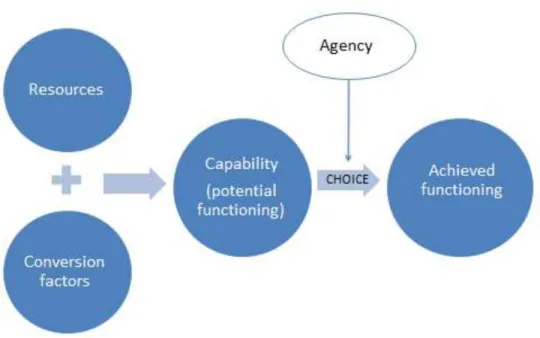
Figure 1: The five main concepts behind the capability approach at the individual level and their
sequential relationship (inspired by Pelenc, Bazile, and Ceruti (2015))... 36
Figure 2: An illustration of a capability sequence applied to the individual capability “being able to express oneself in front of a group” (inspired by Pelenc, Bazile, and Ceruti 2015) ... 38
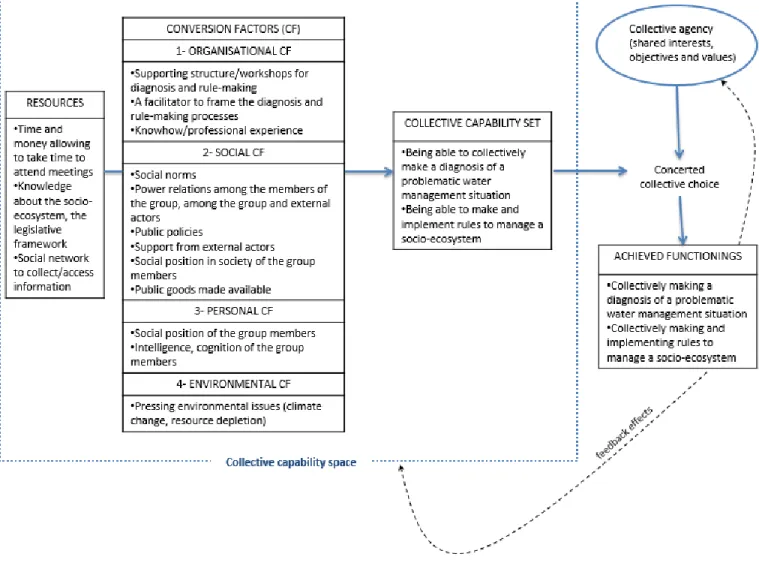
Figure 3: The five main concepts behind the capability approach at the collective level and their sequential relationship (inspired by Pelenc, Bazile, and Ceruti (2015))... 40
Figure 4: An illustration of a capability sequence applied to the collective capabilities “being able to express oneself in front of a group” (inspired by Pelenc, Bazile, and Ceruti 2015) ... 42
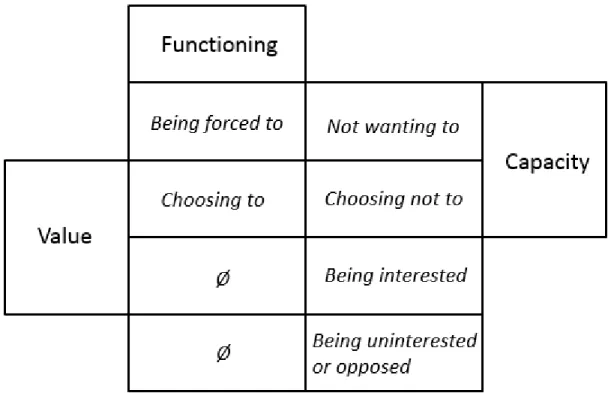
Figure 5: The three dimensions of a capability and its six possible stances. ... 45
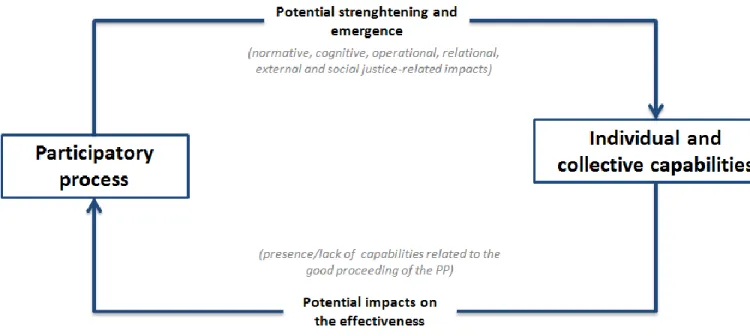
Figure 6: The twofold relationship between participatory processes and the capability approach. ... 47
Figure 7: Three decisive capabilities to ensure the efficiency of a participatory process for NRM. ... 55
Figure 8: A role-playing game as an artifact to measure real-life capabilities (adapted from (Kriz 2003). ... 70
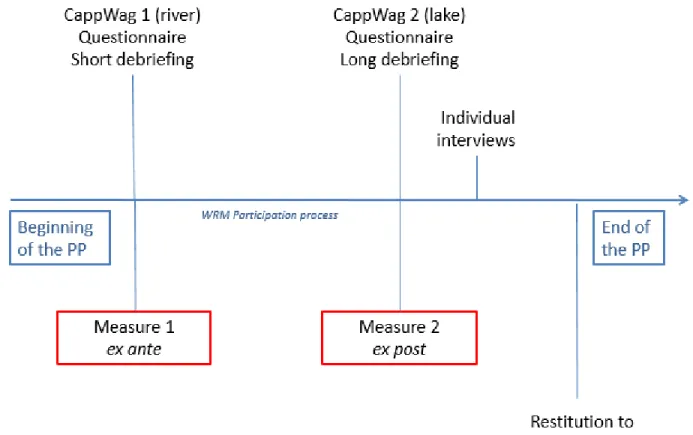
Figure 9: The timeline of an ex ante ex post evaluation using the CappWag tool. ... 72
Figure 10: An Activity card in CAPPWAG. ... 85
Figure 11: An “Innovation” Activity card in CAPPWAG. ... 86
Figure 12: Photo of the ex ante board game CAPPWAG-RIVER before the arrival of players (Loudin, 2017) ... 88
Figure 13: Flow sequence of a game round. ... 88
Figure 14: Photo of a discussion moment during a CAPPWAG-RIVER game in Bizerte, Tunisia (Loudin, 2017) ... 92
Figure 15: The design process of the CappWag experiment. ...100
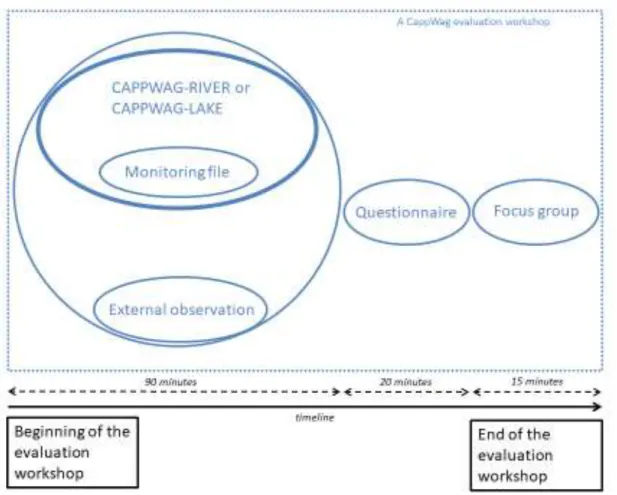
Figure 16: Design and outline of an ex ante or ex post CappWag evaluation workshop. ...105
Figure 17: The three dimensions of a capability and its six possible stances. In red is circled the four dimensions that can only be observed through additional monitoring and evaluation tools; and in green the two combinations that correspond to a capability. ...112
Figure 18: Similarities and discrepancies between the two case studies where the CappWag evaluation tool was implemented...125
Figure 19: The individual capability “being able to express oneself in a group” of Group T1’s players during the ex ante workshop. ...130
Figure 20: The individual capability “being able to express oneself in a group” of Group T2’s players during the ex ante workshop. ...132
Figure 21: The collective capability “being able to collectively make and implement management rules” of Group T1. ...135
Figure 22: The collective capability “being able to collectively make and implement management rules of Group T2. ...138
18
Figure 24: The collective capability “being able to make a diagnosis” of Group T2. ...142 Figure 25: The main resources and conversion factors that influenced the behavior of the players in Group T1 when they played the ex ante CappWag game. ...144 Figure 26: The main resources and conversion factors that influenced the behavior of the players in Group T2 when they played the ex ante CappWag game. ...146 Figure 27: The collective capability “being able to make and implement its own management rules” of Groups T1 and T2. ...147 Figure 28: The collective capability “being able to make a diagnosis” of Groups T1 and T2...148 Figure 29: The integration of the CappWag workshops (blue cells) to the MOOC-based course. ...152 Figure 30: The individual capability “being able to express oneself in a group” of Group S1’s players during the ex ante workshop. ...158 Figure 31: The individual capability “being able to express oneself in a group” of Group S2’s players during the ex ante workshop. ...160 Figure 32: The individual capability “being able to express oneself in a group” of Group S4’s players during the ex ante workshop. ...161 Figure 33: The individual capability “being able to express oneself in a group” of Group S5’s players during the ex ante workshop. ...163 Figure 34: The collective capability “being able to collectively make and implement management rules” of Group S1 during the ex ante workshop. ...165 Figure 35: The collective capability “being able to collectively make and implement management rules” of Group S2 during the ex ante workshop. ...167 Figure 36: The collective capability “being able to collectively make and implement management rules” of Group S4 during the ex ante workshop. ...169 Figure 37: The collective capability “being able to collectively make and implement management rules” of Group S5 during the ex ante workshop. ...171 Figure 38: The collective capability “being able to make a diagnosis” of Group S1 during the ex
ante workshop...173
Figure 39: The collective capability “being able to make a diagnosis” of Group S2 during the ex
ante workshop...175
Figure 40: The collective capability “being able to make a diagnosis” of Group S4 during the ex
ante workshop...177
Figure 41: The collective capability “being able to make a diagnosis” of Group S5 during the ex
ante workshop...178
Figure 42: The main resources and conversion factors that influenced the behavior of the players in Group S1 when they played the ex ante CappWag game. ...180 Figure 43: The main resources and conversion factors that influenced the behavior of the players in Group S2 when they played the ex ante CappWag game. ...182 Figure 44: The main resources and conversion factors that influenced the behavior of the players in Group S4 when they played the ex ante CappWag game. ...183 Figure 45: The main resources and conversion factors that influenced the behavior of the players in Group S5 when they played the ex ante CappWag game. ...185
19
Figure 46: The collective capability “being able to make and implement its own management rules” of Groups S1, S2, S4 and S5. ...186 Figure 47: The collective capability “making a diagnosis” of Groups S1, S2, S4 and S5. ...187 Figure 48: The individual capability “being able to express oneself in a group” of Group S1 players during the ex post workshop. ...189 Figure 49: The individual capability “being able to express oneself in a group” of Group S2 players during the ex post workshop. ...191 Figure 50: The individual capability “being able to express oneself in a group” of Group S3 players during the ex post workshop. ...192 Figure 51: The individual capability “being able to express oneself in a group” of Group S4 players during the ex post workshop. ...194 Figure 52: The individual capability “being able to express oneself in a group” of Group S5 players during the ex post workshop. ...195 Figure 53: The collective capability “being able to collectively make and implement management rules” of Group S1 during the ex post workshop. ...198 Figure 54: The collective capability “being able to collectively make and implement management rules” of Group S2 during the ex post workshop. ...201 Figure 55: The collective capability “being able to collectively make and implement management rules” of Group S3 during the ex post workshop. ...203 Figure 56: The collective capability “being able to collectively make and implement management rules” of Group S4 during the ex post workshop. ...205 Figure 57: The collective capability “being able to collectively make and implement management rules” of Group S5 during the ex post workshop. ...208 Figure 58: The collective capability “being able to make a diagnosis” of Group S1 during the ex
post workshop. ...210
Figure 59: The collective capability “being able to make a diagnosis” of Group S2 during the ex
post workshop. ...212
Figure 60: The collective capability “being able to make a diagnosis” of Group S3 during the ex
post workshop. ...214
Figure 61: The collective capability “being able to make a diagnosis” of Group S4 during the ex
post workshop. ...215
Figure 62: The collective capability “being able to make a diagnosis” of Group S5 during the ex
post workshop. ...217
Figure 63: The main resources and conversion factors that influenced the behavior of the players in Group S1 when they played the ex post CappWag game. ...219 Figure 64: The main resources and conversion factors that influenced the behavior of the players in Group S2 when they played the ex post CappWag game. ...220 Figure 65: The main resources and conversion factors that influenced the behavior of the players in Group S3 when they played the ex post CappWag game. ...222 Figure 66: The main resources and conversion factors that influenced the behavior of the players in Group 4 when they played the ex post CappWag game. ...223
20
Figure 67: The main resources and conversion factors that influenced the behavior of the players in Group S5 when they played the ex post CappWag game. ...224 Figure 68: The evolution of the collective capability “rule making and implementation” of Groups S1, S2, S4 and S5. ...226 Figure 69: The evolution of the collective capability “making a diagnosis” of Groups S1, S2, S4 and S5. ...227 Figure 70: The overlapping of formal, artificial and interest groups around a CappWag experiment. ...263
21
LIST OF TABLES
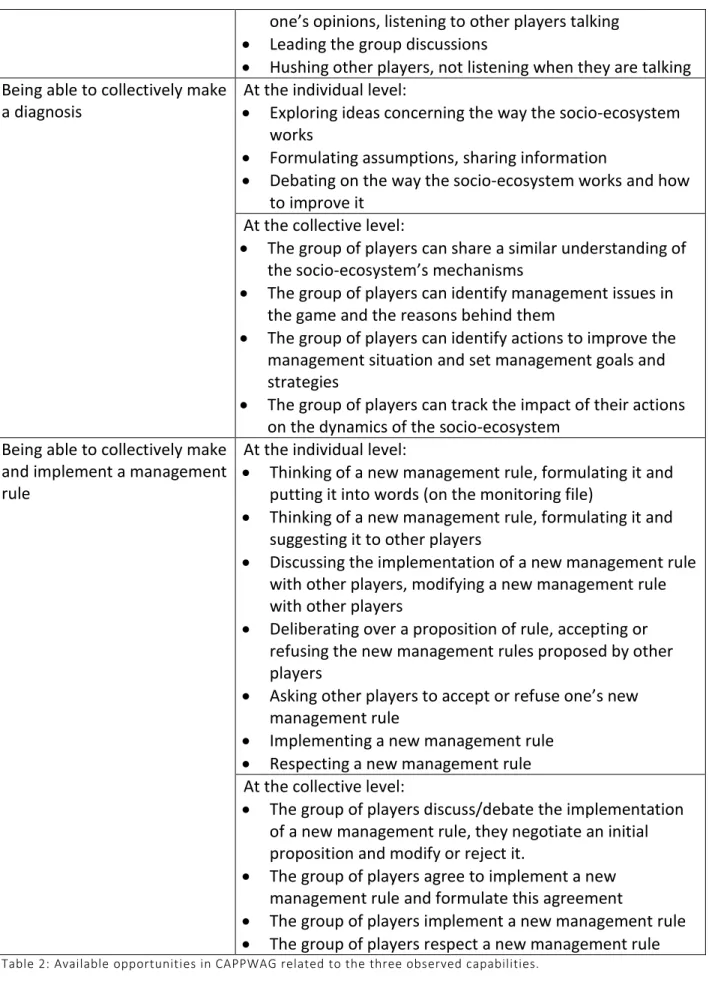
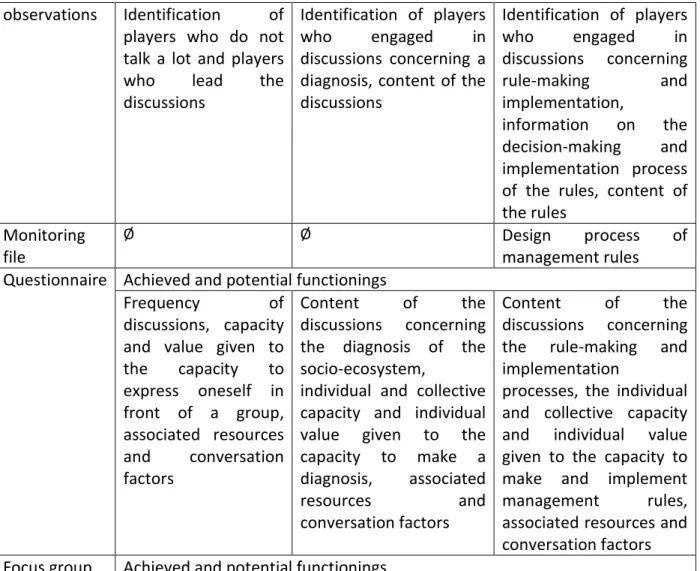
Table 1: Interpretation grid of a group’s structure and dynamics (Forsyth 2018, secs. 1–1) ... 44 Table 2: Available opportunities in CAPPWAG related to the three observed capabilities. ... 94 Table 3: Examples of new management rules that can be implemented by players in CAPPWAG, based on the typology developed by Ostrom et al (1994). ... 96 Table 4: Individual and collective incentives creating a balance between competition and cooperation. ... 98 Table 5: Main examples of the design evolution of the games RIVER and CAPPWAG-LAKE. ...101 Table 6: List of tradeoffs made during the design process of the CappWag experiment. ...104 Table 7: Qualitative data collected during a CappWag workshop with four different means. ....116 Table 8: Description of the three statistical measures used to analyze the CappWag data. ...118 Table 9: Reading of the three measures used to analyze the data: the mean, the median and the standard deviation. All values belong to a [0;1] scale. ...119 Table 10: Changes that might happen between the ex ante and the ex post CappWag workshops. ...122 Table 11: Description of the composition of the two CappWag workshops undertaken with the Tunisian participants. *The “classic” configuration corresponds to the structure described in Chapter 3: a game, a 25-question questionnaire and a 10-minute collective debriefing. ...127 Table 12: Main observations and analyses derived from the two CappWag workshops held in Bizerte, Tunisia, in August 2017. ...128 Table 13: Description of the composition of the two CappWag workshops undertaken with the students. ...151 Table 14: Main observations and analyses derived from the two CappWag workshops held with the Water Master’s students in Montpellier in October 2017 and January 2018. ...156 Table 15: A summary of the impact of the IWRM course for each group of students as evaluated by the students themselves and a discussion of the reasons behind their evaluation. ...228 Table 16: Key contributions to research from each chapter. ...271
22
LIST OF ACRONYMS AND ABBREVIATIONS
DG-ACTA: Directorate general for land use and conservation of agricultural land, attached to the Tunisian Ministry of agriculture, water resource and fisheries (in French: « Direction générale de l'aménagement et de la conservation des terres agricoles »)
IWRM: Integrated water resource management NMR: New management rule
NRM: Natural resource management PP: Participatory process
PR-OSCAR: “Monitoring and applied research program for the development and conservation of agricultural land” (in French: « Programme pilote d’observatoire et de recherche appliquée pour l’aménagement et la conservation des terres agricoles »)
RPG: Role-playing game
SPARE: Strategic planning for alpine river ecosystems SD: Standard deviation
WAG: Wat-a-game
23
GENERAL INTRODUCTION
1. RATIONALE OF THIS THESIS
“The Paris floods, that saw extreme rainfall swell the river Seine to its highest level in decades,
were made almost twice as likely because of the manmade emissions driving global warming, scientists have found” (Vaughan 2016). This opening sentence of a 2016 press article covering
the floods in the French capital exemplifies how the impact of climate change on water bodies is being more and more discussed in the society.
During the last decade, in addition to such widely covered events, a series of scientific reports (e.g. IPCC 2001; 2007; 2014) have outlined various climatic scenarios for the next decades and raised the awareness of policy-makers and the general public about the importance of climate change, climate mitigation and climate adaptation.
Water resources are particularly at risk. The predicted climate change scenarios established by the international scientific community impact them in various ways and, with these water resources, entire ecosystems and societies which rely on them to survive (e.g. for freshwater supplies, agriculture, forestry, fisheries, etc.) may also be severely impacted. In Europe for instance, “climate change is likely to significantly reduce water availability from river abstraction
and from groundwater resources” (IPCC 2014, 1272), but also to increase extreme climate
events, coastal and river flood risk and provoke changes in temperature and rainfall all over the continent, leading to meteorological droughts or heavy precipitation events. In Africa, “climate
change will amplify existing stress on water availability […](high confidence)” (IPCC 2014, 1202)
and is likely to provoke a reduction in precipitation over the northern part of the continent, as well as increasing vulnerability of agricultural systems and limiting access to safe water and sanitation.
Tension regarding the uses made of water resources may consequently grow, especially in areas where these are scarcer and where there is competition for their uses (Nordås and Gleditsch 2007; García-Ruiz et al. 2011). This is why in a spirit of democracy, stakeholders of all kinds (including citizens) who may be affected by these changes should be given the opportunity to count in the decision-making and policy-making processes related to it, so that they are not simply passive subjects but rather active agents who can influence these processes. They should consequently be able to take part in the management of their environmental resources.
Among the scholars who advocate such a paradigm, those in the field of human development have been particularly vocal about the importance for people to be able to influence the environment they live in (see for example the work of Nussbaum (2000) on the ten central freedoms that should be guaranteed for every human being). Sen himself, pioneer of the capability approach, defended this position in a 2004 article entitled “Why We Should Preserve
24
the Spotted Owl”. There he discusses a growing interest in “exploring the role of citizenship in
achieving sustainable development1
” and “positive initiatives to involve citizens in environmental policies” (Sen 2004c, 10).
But while he also points out “an increasing disappointment […] with the evident scepticism of
public authorities that it can be fruitful to appeal to a sense of social responsibility” among
citizens (Sen 2004c, 10), we argue that, on the contrary, there is increasing interest among these same authorities in involving local stakeholders in the processes of natural resources management (Reed 2008). This is particularly true in the field of water resource management (WRM) because water is a vital resource for humans. As Delli Priscoli puts it, “water for all and
meeting minimum basic needs are vitally tied to the principle of human dignity” (2004, 221).
Local stakeholders are now being more and more trusted by authorities and policy-makers to have valuable insights and capacities that allow them to be meaningfully implicated in decision-making processes related to water management. In certain countries, laws are multiplying to ensure the participation of all types of stakeholders to the management of their water resources. It is for example the case in the European Union, which adopted a Water framework directive (2000) that requires Members State to encourage the involvement of all types of stakeholders in the conception of river basin management plans.
This has led to the “mainstreaming of participation in the field of public policy for water
management and more broadly for natural resources management” (Bonnard 2015, 1). For
instance, among the list of seventeen Sustainable Development Goals adopted in 2015 by the United Nations, the sixth goal “Clean water and sanitation” considers the involvement of local communities in the water management process as an important target to reach by 20302
(United Nations n.d.). Behind the institutionalization of public participation lie several objectives: one is the transformation of participants taking part in the participation process to develop their capacities to “think, value and act” (Sen 2004c, 11), in other words, to develop their “capabilities”.
The capability approach is a theoretical framework that focuses on the freedoms of “being” or “doing” available to people and that they have reasons to value (Sen 2000a). Capabilities correspond to the valued opportunities available to a person or a group of person. Once people have access to capabilities, they can choose or not to transform them into achieved functioning, depending on their agency. The capability approach was initially conceptualized as an individual-centered approach. But several authors have argued that capabilities also exist at the collective level and correspond to opportunity freedoms that are reached and developed on the scale of a
1
We define sustainable development as a state of society where living conditions and resource uses continue to meet human needs without undermining the integrity and the stability of the natural system (Brundtland et al. 1987).
2
Target 6.B: “Support and strengthen the participation of local communities in improving water and sanitation
25
group of individuals, through the exercise of collective agency (Ibrahim 2006) and the mean of collective action (Pelenc, Bazile, and Ceruti 2015).
The development of the individual capabilities of participants who take part in a participatory process, but also of collective capabilities in a group of participants, may eventually lead to the improvement of their overall capacity to manage water resources. Participants with access to capacities related to collective action that they value should be better able to take full advantage of a participatory process, according to their interests and strategies. This may in turn lead to a more sustainable management because when participants exercise their agency and decide to act out of free will and the interest to manage water together, the decisions taken are more likely to last longer and be more acceptable. Certain conflicts may also be avoided thanks to democratic deliberation (Johnson 2002; European Commission 2003; Blomqvist 2004; Barbier and Larrue 2011).
This is what this doctoral work stems from: the need to understand what transformations public participation may induce among participants and how they may do so, through the lens of individual and collective freedoms of action.
2. SUMMARY OF LITERATURE REVIEW AND RESEARCH GAPS
2.1. WHAT IS PUBLIC PARTICIPATION AND WHY IT IS IMPORTANT TO EVALUATE IT
At the root of the spread of public participation for natural resources management lies the emergence of the “green discontent” in the 1960s, fueled by a critique of modernization and its negative effects on the environment, but also of the governance systems that frame it (Barbier and Larrue 2011, 68). Since then, academics and practitioners have questioned and criticized top-down solutions and centralized public natural resources management for their lack of legitimacy and efficiency in initiating social or governance changes (Koffi 2013; Pahl-Wostl 2009; Daniell 2012). In parallel, extensive empirical studies and theoretical developments have demonstrated that local communities and institutions could efficiently manage these resources (Ostrom 1990; Dietz, Ostrom, and Stern 2003).
Progressively, public participation was institutionalized based on three main arguments identified by Barbier and Larrue (2011): (i) the legitimization and the public acceptance of projects and the attenuation of conflicts; (ii) the improvement of the quality of decisions; (iii) the improvement of democracy in environmental decision making.
We define public participation as “arrangements” where various stakeholders gather and contribute together to a decision-making process, in a more or less direct and formal way (Van
26
den Hove 2001, 4), thereby “allowing people to influence the outcome of plans and working
processes” (European Commission 2003, iv).
The main feature of public participation is the involvement of local stakeholders (including citizens) in the environmental decision-making process. The forms taken by these processes vary greatly (e.g. advisory groups, citizen juries, collaborative modelling, etc.). These multiple formats of participatory processes correspond to multiple levels of engagement and communication among stakeholders. They depend on the contexts in which a given process takes place, its operational or democratic objectives set by its organizers or by participants themselves, or by “the capacity for stakeholders to influence outcomes” (Richards and Carter 2007; Tippett, Handley, and Ravetz 2007; in M. S. Reed 2008, 2419). At their highest level of engagement (e.g. what Arnstein (1969, 2) called “citizen control”), which is the level we will consider here, they consist in building partnerships between stakeholders and offering them a definite input into the decision-making process (Rowe and Frewer 2004; Bryson et al. 2013). Depending on this level of involvement, its shapes and the methods used, the impacts of a participatory process on the ecosystem and on participants may also vary greatly (Ridder, Mostert, and Wolters 2005).
It is generally accepted that public participation is beneficial to natural resources management (Fiorino 1990; Laird 1993; Webler 1995; Webler, Tuler, and Krueger 2001; Beierle and Cayford 2002; Lebel et al. 2006; Tàbara and Pahl-Wostl 2007; Coenen, Huitema, and O’Toole Jr 2012). In the literature, its benefits are often presented in terms of increased relevance, appropriation and durability of the decisions made within it, as well as the satisfaction of democratic expectations (European Commission 2003). Indeed, an increased understanding of the socio-ecosystem by participants may lead to improved decisions and actions. Subsequently, participants are more likely to apply new rules they would be able to influence in a system they understand better (European Commission 2003; Reed 2008; Muro and Jeffrey 2012; Hassenforder 2015).
Participatory processes can also lead to the enhancement of “the quality and durability of
environmental decisions that are made through engagement with stakeholders” (Reed 2008,
2420; Seghezzo et al. 2017). This corresponds for example to the better adaptation of the decisions resulting from the deliberative process to the local socio-cultural and environmental conditions of interventions. It can also correspond to the higher quality of the resulting decisions, depending on the initial objectives set by the organizers or the participants (e.g. the fairness of the final outcomes, their legitimacy and the direct effects on the natural resources) (Webler, Tuler, and Krueger 2001).
When the level of participants’ engagement in the process is high, participatory processes may even foster long-term autonomy (Renn, Webler, and Wiedemann 1995). They may also favor the emergence of co-generated knowledge and social learning (defined as “a change in
understanding that goes beyond the individual to become situated within wider social units or communities of practice through social interactions between actors within social networks” (Reed
27
processes may lead to long-term social and relational change, like so involving the transformation of local people and communities towards the achievement of change, as well as “the enhancement of [their] capabilities to define and address their own needs and aspirations” (Duraiappah, Pumulo, and Parry 2005, 5; Sen 2000a; Daquino 2007; Frediani 2015).
These normative expectancies and observed benefits have nonetheless been counterbalanced by certain field observations. As a result, in parallel to their development in the world of policy-making and natural resources management, participatory processes have received various criticisms. These are based on the fact that they could be used simply as a tool to achieve objectives pre-set by the governing forces (Daquino 2007). They have also been accused of serving as consensus-building processes, or as tools aimed mainly at securing funding and solving ordinary conflicts, hence losing their initial ambition of transforming society towards the enhancement of the autonomy and emancipation of marginalized individuals and groups (Barreteau, Bots, and Daniell 2010; Blondiaux and Fourniau 2011).
Consequently, progress is still required to understand, depending on specific variables such as contexts, issues or implementation protocols, how participatory processes impact the individual participants, the group and eventually their decisions and practices. That is why during the last decade the need for a new readable and comparable evaluation tool to identify and measure the transformative effects of participatory processes and produce reliable assessments has emerged among practitioners and the community of researchers throughout the world.
2.2. THE OBJECTIVE OF MY EVALUATION AND MY POSITIONING
The interest in combining the field of participatory processes’ evaluation with a recent and promising theoretical framework such as the capability approach lies in the fact that few evaluation methods exist and that this arrangement could enrich both areas.
The innovative aspect of this research also corresponds to its main challenge, which is the integration of both individual and collective capabilities into an evaluation framework. We identify two main challenges:
(i) First, it is unclear how the participation of stakeholders in a management process impacts their capacities to act, or their values. This is the case at the individual level and at the collective level;
(ii) Second, the method for measuring these transformations in the capability space3
of participants is questionable. There is no consensus on the most relevant way to
3
In Chapter 1 we describe the capability space of a person as the pool of resources, conversion factors, choice and eventually capabilities available to every person (Frediani 2010).
28
operationalize the capability approach, or on the most relevant way to evaluate participatory processes for natural resources management (NRM).
In order not to disperse our research efforts, we consequently decided right from the beginning of this thesis to exclude from our scope of analysis a number of other effects induced by participatory processes. This specification of our evaluation subject was the result of a compromise between the exploration of an innovative framework and the design of an innovative tool to evaluate participation for NRM and the practical and timeframe related to this three-year thesis. We will, thus, evaluate neither the procedural quality of participatory processes, that is to say “the effects that are directly relevant to the decision-making process,
sometimes even independently of the impact on the outcome” (Van den Hove 2001, 6) (e.g.
improving the quality of the information available to participants for the decision-making processes, improving the process efficiency in terms of time and costs, etc.), nor the substantial impact on the final decisions taken by participants (e.g. the better environmental, social, technical or economical relevance of the choices stemming from the participatory process, etc.) (see Van den Hove 2001 for an exhaustive list). Instead, we will focus solely on the valued capacities of participants and on the effects and potential transformations of these capabilities over time induced by their engagement in a participatory process.
We considered this focus beneficial to the quality of the evaluation, for researchers but also for practitioners who manage participatory processes for NRM. Indeed, the use of a reflexive tool for practitioners will give them indications as to which capabilities to strengthen among participants, during a participatory process. Public participation at its highest level of engagement is a demanding process for participants and practitioners. It consists in several steps, such as collecting and analyzing information, assessing the situation, proposing solutions and discussing their feasibility, proposing new management rules, designing and evaluating an implementation plan, etc. (Hassenforder et al. 2017). In order to ensure long-term social and relational changes among a group of participants, practitioners should ensure a constructive and inclusive deliberation process, in which every participant has the opportunity, if so wished, to discuss his or her point of view with the rest of the group (Carpini, Cook, and Jacobs 2004; Reed 2008). This also ensures that participants can take full advantage of the opportunities available to them during the process, as well as the ones they would likely to have access to. It is consequently useful for practitioners to identify a handful of the most decisive capacities in relation to these participation steps and measure them. With a one-time evaluation, practitioners would know which capability is absent, low or strong and facilitate the process accordingly. Evaluating the state of development of these capabilities over time, with multiple evaluation moments, would allow for observing if the capabilities of the participants are being strengthened by the participatory process or not. It would also be valuable for the participants who would better understand the collective dynamics taking place among their group.
This should be done with respect to the interests that participants have in these capacities, so as not to impact their motivation negatively. This is important because public participation for decision-making relies on the intrinsic motivation of people to actively engage in the process
29
over time. Without a certain appreciation of the various phases of the collective reasoning and the decision-making process, participants may eventually lose interest in it. Motivation is a key to ensure long-term changes (Hibbert, Piacentini, and Dajani 2003).
3. RESEARCH QUESTIONS
The main research question of this thesis is the following: is it possible to use a social experiment
based on a role-playing game (RPG) to evaluate the impact of participatory processes for water management on its participants?
We divide this research question into two sub-questions. Based on a social experiment relying on a RPG:
(1) Can we measure individual and collective capabilities related to collective action among a group of participants in a participatory process for water management?
(2) Can we evaluate over time, following an ex ante ex post protocol, the evolution of the same individual and collective capabilities and their link with the participatory process people are taking part in?
4. THESIS STRUCTURE AND CONTENT
This thesis is organized around five chapters, which follow a logical order. We discuss in Chapter 1 and 2 the theoretical and practical background that led to the specific design of the CappWag evaluation tool. We present its design process and its final form in Chapter 3 and the results of its implementation on two case studies in Chapter 4. All of the discussion points related to these four chapters are gathered in Chapter 5, in which we tackle the reliability and the relevance of the evaluation tool for researchers and practitioners. We present further below the content of the five chapters.
In Chapter 1, we will present the main concepts and practical applications related to the capability approach. We will discuss how participatory process impact the development of a group’s capability space and vice versa, and why we consider it as a relevant evaluative framework to observe the impacts of participatory processes on participants, both at the individual and the collective level. We will also discuss in Chapter 1 the various challenges and guidelines developed in the literature to operationalize such a readable and comparable evaluation tool and produce reliable assessments. Finally, after discussing which capabilities are the most relevant to include in our evaluation tool, we will settle for three of them: being able to
express oneself in front of a group, being able to collectively make the diagnosis of a problematic situation of management, and being able to collectively make and implement management rules.
30
In Chapter 2, we will discuss how a social experiment based on mixed qualitative and quantitative methods of evaluation is particularly suited for the evaluation of individual and collective capabilities. The use of a RPG, complemented with a questionnaire and a focus group, will be explored. Based on the literature on social experiments and games related to NRM, we will discuss how such an apparatus can provide a compromise between internal and external validity and be adaptable to various contexts and fields of implementation. A special attention will be given to the link between participant’s behaviors and actions in games and in real life. This will lead us to present in Chapter 3 the design process of our experiment, called CappWag. Building on established academic methodologies and practices, the design of CappWag will also comprise an ad hoc aspect related to its innovative use to measure valued counterfactuals. We will list and discuss the main challenges faced during the design process of CappWag (such as ensuring the internal and external validity of the measures while taking into account practicability and implementation constraints, such as its playfulness). We will present the result of this process: an evaluation apparatus made of two workshops to allow an ex ante ex post evaluation of a group of participants, based on two semi-abstract RPGs: CAPPWAG-RIVER and CAPPWAG-LAKE. We designed them as independent evaluation apparatuses that could also be used separately one from another and provide evaluators and participants with a measure of their individual and collective capabilities at a given time.
In Chapter 4, we will present the results of the first implementation of the CappWag evaluation tool on two case studies: (1) one-time evaluation workshops implemented in August 2017 with local government officers in Tunisia, in the frame of the PR-OSCAR project and (2) ex ante ex post evaluation workshops implemented with first-year Master’s students from the University of Montpellier, France, between October 2017 and January 2018. Twelve workshops in total will be discussed. For each group of participants who took part in a CappWag workshop, we will evaluate the three capabilities we focus on, as well as their resources and conversion factors. We will also discuss the differences observed between individuals and groups’ dynamics, structures and capability spaces. In the case of the Master’s students case study, we also discuss the evolution over time of these characteristics.
Finally, we will discuss in Chapter 5 the overall efficiency of the CappWag evaluation tool to capture capabilities at the level of the individuals and of the group of participants. Chapter after chapter, in a reverse order, we will discuss the strengths and weaknesses of our measures, of the design of the tool and of the relevance of using a social experiment to perform such an evaluation within participatory processes. We will eventually discuss the relevance of the capability approach to understand the interests and capacities of participants in relation with their involvement in a participatory process, and the difficulties met to capture collective capabilities, but also to simply implement the tool on the field. All along Chapter 5, we will outline improvements to be brought to the evaluation tool through a series of guidelines for future uses of CappWag. They are intended for researchers and practitioners and should help them improve the implementation and the analyses of the results of the CappWag tool.
31
CHAPTER 1 – THE CAPABILITY APPROACH: A THEORETICAL
FRAMEWORK TO EVALUATE PARTICIPATORY PROCESSES
1. INTRODUCTION
The capability approach covers vast field of research, made of intricate definitions and practical uses. From its first outline at the end of the 1980s, it evolved into today’s prolific field of study, strengthened and boosted by Sen’s Nobel Prize in Economics Sciences in 1998. Throughout this time, its main concepts have developed and the approach has been enriched by the work of scholars coming from numerous different disciplines.
In this chapter, we present the main definitions and practical applications related to the capability approach, and discuss how it provides a relevant theoretical framework to evaluate participatory processes related to WRM. The chapter is structured as follows: the first section gives an overview of the background of the capability approach and its academic, political, economical and social uses. The second section presents the main concepts that constitutes the core of the capability approach and specifies the definitions that we will adopt in this thesis. The third section explores the links between capabilities, participation and sustainable development. The fourth and fifth sections develop the operationalisation possibilities envisioned for the approach and discusses the various challenges to overcome in order to build a practical evaluation framework. Finally, the sixth section addresses the main limitations and criticism that the capability approach have received.
2. A HISTORY OF THE CAPABILITY APPROACH AND ITS ACADEMIC, POLITICAL, ECONOMICAL AND SOCIAL IMPACTS
The definitions and uses related to the capability approach evolved through the last thirty years. We recount in this section its historical evolution and uses.
2.1. THE FIRST STEPS OF THE CAPABILITY APPROACH
In 1979, Sen gave, at Stanford University, USA, the Tanner lectures on human values, called “Equality of What?” Sen raised in his speech the essential question of which attributes should be equalized among a society’s members. The metric used to perform interpersonal comparisons is crucial for it leads to the conditions’ specification in which an individual is considered disadvantaged compared to the rest of the society. Should these comparisons be built on wealth,
32
or on a broader range of resources? Should it take well-being or happiness into account? (Clément, Le Clainche, and Serra 2008). In his lecture, Sen discussed and questioned the relevance of equality measurement through primary goods or marginal or total utility and “outlined for the first time his conception of capabilities” (Deneulin and Shahani 2009a, 31). The capability approach differentiates itself from utilitarianism, which advocates the logic of rational choice theory, based on the search for well-being maximization and focuses on resource accumulation, as well as income and amounts of expenditure. According to utilitarianism, every moral action should exclusively aim at pursuing the happiness of the greater number. A moral decision should aim at maximizing collective well-being, that is to say the sum of individuals’ utility (Clément, Le Clainche, and Serra 2008). As Robeyns (2005, 96–97) explains it:
“Sen is concerned not only with the information that is included in a normative evaluation, but also with the information that is excluded. The non-utility information that is excluded by utilitarianism could be a person’s additional physical needs due to being physically disabled, but also social or moral issues, such as the principle that men and women should be paid the same wage for the same work. For a utilitarian, this principle has no intrinsic value, and men and women should not be paid the same wage as long as women are satisfied with lower wages. But it is counter-intuitive, Sen argues that such principles would not be taken into account in our moral judgements”.
The capability approach also draws on Rawls’ justice theory, which builds on theoretical and idealistic principles and advocates the use of “primary goods” (Rawls 1971). According to Rawls, primary goods are the goods that every person is supposed to desire. They can be natural (such as health, intelligence, imagination, etc.) or social (such as rights, liberties, and opportunities; income and wealth; and the social bases of self-respect). Individuals are assumed to want more rather than less of these goods. Therefore, it would be possible to evaluate individuals’ well-being according to what primary goods they have or do not have (Wenar 2013).
Sen criticizes Rawls’ use of primary goods as an answer to the “equality of what?” question because they are means and not intrinsic ends, and therefore would not serve for interpersonal comparisons and would not be able to account for the wide scope of human beings’ diversity. For Sen, the amounts and kinds of goods needed to reach the same level of well-being is different for every person (Sen 1980; 1992; 2004b; in Robeyns 2005).
Sen consequently seeks to establish a theory that could define justice based on concrete situations and focus on achieving chosen objectives, rather than on accessing the means to achieve those objectives. He also aims at presenting persons as “reasoners” with the right to make choices, that is to say, as “diverse, thinking, adaptative agents” (Gasper 2007, 356). According to Sen, these issues should be addressed through the thorough analysis of the “real
freedoms” available to people to live a valued life and to choose between different alternatives
of "being" and "doing". These real freedoms then allow people the access specific resources, or opportunities, that they can then transform into achievements, depending on which goals they