HAL Id: hal-02530956
https://hal.inrae.fr/hal-02530956
Submitted on 3 Apr 2020
HAL is a multi-disciplinary open access
archive for the deposit and dissemination of
sci-entific research documents, whether they are
pub-lished or not. The documents may come from
teaching and research institutions in France or
abroad, or from public or private research centers.
L’archive ouverte pluridisciplinaire HAL, est
destinée au dépôt et à la diffusion de documents
scientifiques de niveau recherche, publiés ou non,
émanant des établissements d’enseignement et de
recherche français ou étrangers, des laboratoires
publics ou privés.
Distributed under a Creative Commons Attribution| 4.0 International License
Characterization of Core-Shell Alginate Capsules
Mariana Pereda, Denis Poncelet, Denis Renard
To cite this version:
Mariana Pereda, Denis Poncelet, Denis Renard. Characterization of Core-Shell Alginate Capsules.
Food Biophysics, Springer Verlag (Germany), 2019. �hal-02530956�
ORIGINAL ARTICLE
Characterization of Core-Shell Alginate Capsules
Mariana Pereda1,2,3&Denis Poncelet2&Denis Renard3
Received: 1 March 2019 / Accepted: 27 June 2019
# Springer Science+Business Media, LLC, part of Springer Nature 2019 Abstract
A new droplets millifluidic/inverse gelation based process was used to produce core-shell alginate milli-capsules. Water-in-oil
(W/O) emulsion dispersed phase containing Ca2+ions was directly injected into a continuous alginate phase to generate a
secondary W/O/W emulsion. Due to the cross-linking of alginate molecules by Ca2+ions release, core-shell milli-capsules were
formed with a very high oil loading. The influence of the curing time and of the storage conditions on capsules physico-chemical properties were investigated. It was first found as expected that alginate membrane thickness increased with curing time in the collecting bath. However, a plateau was reached for the higher curing times, in close relation with previous observations (Martins, Poncelet, Marquis, Davy, & Renard, 2017b) that an external oil layer surrounded the surface of W/O emulsion drops that acted as
a barrier and hindered the release of aqueous CaCl2droplets during curing time. Compression experiments on individual capsules
revealed that alginate membrane thickness was inversely related to its mechanical properties, i.e. the thicker membrane, the lower surface Young modulus. Surface Young modulus ranged from 61 to 26 N/m at curing times of 3 and 45 min, respectively. This result was explained in terms of enhanced swelling properties of alginate membrane with curing time or storage conditions. Drying capsules led to much more resistant membranes due to the loss of water. Oil loading of 80 wt% was obtained for dry capsules whatever the conditions used.
Keywords Millifluidic . Encapsulation . Inverse gelation . Alginate . Sunflower oil
Introduction
The study of microcapsules based on biodegradable polymers is of great importance in current scientific research worldwide due to the unusual combination of properties and versatility of these materials.
Microencapsulation avoids the degradation and volatiliza-tion of bioactives, protecting and preserving their biological activity and active functional ingredients. The microencapsu-lation technique has been mainly described as a process in which small particles or droplets are surrounded by a homo-geneous or heterohomo-geneous coating, forming beads or capsules
with various applications [1]. There are three major fields of
application: food production, e.g. enhancement of nutrition by encapsulated vitamins, minerals or even pro-biotic bacteria; cosmetic industry, where encapsulation of colors and flavors became more and more popular within the last years; and drug delivery field.
Oils are widely applied in the formulation of foods, phar-maceutical and cosmetic products; however, they are often volatile, labile and sensitive to environmental factors such as
heat, light, water and oxygen [2]. An efficient strategy to
de-crease their sensitivity towards environmental conditions con-sists of its encapsulation in inert polymer matrix using
gelation/emulsification technique [3–5].
Alginate is one of the most widely used biocompatible polymers in microencapsulation, as it forms a highly versatile, biocompatible and nontoxic matrix of gel that protects the Electronic supplementary material The online version of this article
(https://doi.org/10.1007/s11483-019-09595-x) contains supplementary material, which is available to authorized users.
* Denis Renard [email protected]
1
Institute of Material Science and Technology (INTEMA) - National University of Mar del Plata, Juan B. Justo 4302, 7600 Mar del Plata, Argentina
2
Process Engineering for Environment and Food Laboratory, ONIRIS, F-44322 Nantes, France
3 UR1268 Biopolymères Interactions Assemblages, INRA,
44316 Nantes, France
active components of factors such as heat and moisture there-by enhancing stability and bioavailability. Alginates are algal
polysaccharides consisting of a linear chain of (1–4) linked
residues ofβ-D-mannuronic acid (M) and α-L-guluronic acid
(G) in different proportions and sequential arrangements [6].
This polymer has a remarkable property of quick gelation in
presence of divalent ions such as calcium ions (Ca2+).
Among the different methods used to prepare beads of gelled alginate, the most widely used encapsulation method
is the simple extrusion/external gelation [7,8], wherein the
formation of beads containing the solution of alginate and the active to be encapsulated is accomplished by using an
extruder device dripping to a bath of CaCl2solution which
induces alginate gelation [1]. The main limitations of this
technique are the large size of beads formed, which depends on the diameter of the nozzle extruder, the large quantity of oil used to generate emulsion drops which is generally wasted, and the difficulty of large scale production because beads are formed one by one. One alternative to reduce size is therefore to spray alginate solution rather than dripping to a bath of
CaCl2solution [7].
On the other hand, in the inverse gelation mechanism, oil
and CaCl2solution are emulsified and added dropwise into an
alginate solution bath [9], where Ca2+ions diffuse from the
emulsion drop to the alginate bath cross-linking the surrounding
alginate molecules [9]. This technique allows producing
core-shell capsules with an oil loading of nearly 100% (v/v) for dry capsules by using the dispersion-inversion gelation technique
[10]. In addition, the production of microcapsules using
drop-lets millifluidic is a promising strategy for oil encapsulation and allows the easy production of highly controlled and uniform
microcapsules from W/O emulsions [11]. A similar droplets
millifluidic set-up was used to produce core-shell alginate
cap-sules with an aqueous core instead of an oil core [12]. The
millifluidic device used in [11] consisted in a co-axial flow
focusing geometry; water-in-oil (W/O) emulsion drops
contain-ing Ca2+are directly injected through a capillary or needle into
the co-flowing continuous phase (alginate solution) to form micro-capsules downstream of the circuit. The oil encapsula-tion using this gelaencapsula-tion mechanism is a very recent approach
and is still scarcely studied [2,9,11]. For example, Martins
et al. (2017b) studied the different factors affecting emulsion stability, capsule size and membrane thickness. This study dem-onstrated the success of the production of (micro)-capsules based on the inverse gelation mechanism using droplets millifluidic. Monodisperse (micro)-capsules with sizes ranging
from 1.4 mm down to 140μm were produced. The present
work can be considered as a continuation of the work of Martins et al. (2017b), where the focus was on the final erties of capsules and more specifically on the mechanical prop-erties and oil content of the capsules. In many cases, the cap-sules are subjected to mechanical stresses exerted by their en-vironment that induce deformation and potential breakup. It is
important to control the mechanical properties of capsules to ensure protection and/or release of the encapsulated substances under proper conditions and also to avoid breakup during pro-cessing. The present study focused on capsules made of a de-formable membrane with an internal liquid core.
The objective of the present work is, therefore, to take advantages of the new droplets millifluidic/inverse gelation based process to produce core-shell alginate milli-capsules and to analyze the effect of varying curing time and cation concentration of the storage solution on the final properties of the obtained capsules, including oil content and mechanical properties.
The use of millifluidic devices paves the way to an integra-tive formulation of core- shell materials with a broad size
range of monodisperse capsules (fromμm to mm) and new
complex architectures. This should lead to the rapid emer-gence of new products in cosmetics or food, where the texture and visual aspect play a key role for sale.
Materials and Methods
Materials
Sodium alginate powder (Saltialgine S 60 NS) with a mannuronic (M) to guluronic (G) acid unit ratio (M/G) and a
molar mass equal to 1.37 and 1.57 × 10⁵g/mol, respectively,
was kindly donated by Cargill (France). Calcium chloride
powder (CaCl2·2H2O) (Panreac Quimica Sau, Spain),
sun-flower cooking oil (Associated Oil Packers, France), PGPR 90 (Danisco, France), Tween 20 (Sigma Aldrich, France) were used to prepare the W/O emulsions. Other chemicals reagents were obtained from Sigma Aldrich (France).
Methods
Preparation of Alginate and Calcium Chloride Solutions Ten grams of alginate powder was dissolved in 1 L of demineralized water using a magnetic stirrer. Tween 20 (0.5%, v/v) was added to the alginate solution. The calcium
chloride solution was prepared by dissolving 240 g of CaCl2·
2H2O in 1 L of demineralized water.
Preparation of the W/O Emulsions
Emulsions were prepared according to Martins et al. (2017b). One hundred millilitres of sunflower oil containing 0.96 g of surfactant (PGPR 90) was mixed using a high shear mixer (Ultra-Turrax T25, IKA, Germany) at 18000 rpm for 1 min. Sixty millilitres of calcium chloride solution (240 g/L) was then added slowly and a new shear mixing at 18000 rpm for 3 min was performed.
Capsules Production by Droplets Millifluidic
A millifluidic device with a co-axial flow focusing geometry
was used as described in [11] (Fig.1,Supplementary data). The
dispersed phase, a W/O emulsion freshly prepared (see “Preparation Of The W/O Emulsions” section) was pumped
(Harvard Apparatus PHD 2000, France) through a fused silica
capillary tube (interior diameter (ID) 530μm and outside
diam-eter (OD) 660μm) at a rate (Qemul) of 4 mL/h. The continuous
phase, an alginate solution added with Tween 20, was pumped through a Teflon tube (ID = 1.57 mm and OD = 0.5 mm) at a
rate (Qalg) of 10 mL/h. The W/O emulsion and the alginate
solutions co-flowed in the glass tube (ID = 2 mm, OD = 4 mm and length of 10 cm). As the generation of capsules using W/O emulsion requires hydrophilic surfaces, the glass tube was pre-viously immersed in a saturated-NaOH solution for 5 min at
room temperature and rinsed using tap water [13].
W/O emulsion drops were formed and dispersed in the
continuous alginate phase. Calcium ions (Ca2+) diffused from
the W/O emulsion drop cross-linking the alginate molecules. The capsules were collected in an alginate bath stirred at 50 rpm. After a curing time (time of contact between the capsules and the alginate solution) varying between 3 and 50 min, the capsules were sieved, rinsed with distilled water,
suspended in a Ca2+or Na+solution or in distilled water and
stored at 4 °C until use.
Characterization of the W/O Emulsions
Stability
W/O emulsion stabilities were performed as described by Martins et al. (2015). Hundred millilitres of W/O emulsions were placed in tubes of 100 mL with graduation of 1 mL. The emulsions were kept at ambient temperature (20 ± 2 °C) and visually inspected as a function of time in order to assess the critical time for which 1% of phase separation occurred (i.e. corresponding to 1 mL of phase separated liquid).
Microscopic Observations
W/O emulsions were diluted ten times in sunflower oil and observed under the microscope. The diluted emulsions were brought on a microscope slide using a capillary after which a cover slip was gently applied. Image acquisition was conduct-ed using an optical microscope (Leica Microsystems, France).
The size of CaCl2solution droplets (dispersed phase) was
determined by image analysis using the ImageJ 1.47v free-ware (National Institutes of Health, Bethesda, Maryland, USA). Measurements were carried out in triplicate with three repetitions. In other words, three W/O emulsions of each for-mulation were analyzed by optical microscopy. Three differ-ent zones (1.1 × 1.5 mm) for each sample were imaged and approximately one hundred droplets per zone were measured. Rheological Measurements
The viscosity of sunflower oil, alginate solution and water in-oil emulsions were investigated with a stress-controlled rhe-ometer (AR-2000, TA Instruments, New Castle, DE) equipped with a Couette geometry (DIN 412). The tempera-ture was controlled with a Peltier system. Dynamic viscosity and shear stress as a function of shear rate between 0.01 and
1000 s−1were measured. Viscosity of alginate solution at C =
1% (w/v) gave η = 35.9 ± 3.9 mPa.s while that of sunflower oil
was of 70.2 ± 1.7 mPa.s. W/O emulsion had a viscosityη =
212.5 ± 7.4 mPa.s.
Characterization of Capsules
Microscopic Observation
External diameter (D), and membrane thickness (m) of cap-sules were performed under an optical microscope (Olympus IX51, France) equipped with a camera (Olympus DP70). A 40X objective was used to image microcapsules.
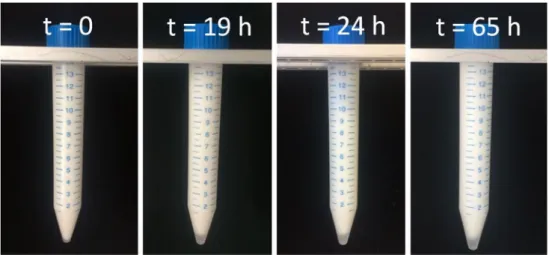
Fig. 1 Images of W/O emulsions as function of storage time
Dp controller software (version 2.1.1) was used for images
acquisition. Shell thickness (Mt) and capsules diameter (d)
were therefore calculated from image analyses on 10 capsules per experimental condition using the imageJ 1.47v freeware (National Institutes of Health, Bethesda, Mayland, USA). Total Oil Content of the Capsules
A TGA Q5000 instrument was used for the thermo-gravimetric analysis (TGA). An isothermal step at 60 °C dur-ing 30 min was applied before the ramp up to 800 °C at 10 °C/min under a nitrogen atmosphere (25 mL/min). The
capsules were dried 48 h at room temperature and aw= 0.59
(NaBr) before TGA analyses. Oil content was determined by analyzing the thermograms of pure components and capsules. Mechanical Study
A Dynamic Mechanical Analyzer (Rheometric Scientific, EEUU) equipped with a plate-plate geometry (diameter of 20 mm) was used. The upper plate had a diameter of 20 mm and the normal force was measured as a function of the com-pression in a range between 0.001 and 20 N. A force gap test was used to compress the capsules with a linear compression speed of 0.6 mm / min. The gap and the normal force being imposed were measured simultaneously at the upper plate. The surface Young modulus was calculated by a quantitative
analysis of force–displacement curves at small deformations
[14,15]. Five replicates were considered for each capsule.
Statistical Analysis
Data values obtained in the experiments were statistically an-alyzed by one-way analysis of variance (ANOVA) employing OriginLab 8.5 software. Differences between pairs of means were assessed on the basis of confidence intervals using the Tukey test. The least significance difference was P < 0.05.
Results and Discussion
Characterization of W/O Emulsions
Emulsions containing sunflower oil, CaCl2solution (240 g/L)
and PGPR 90 were prepared using a high shear mixer. The dispersed W/O phase contained the calcium content that al-lows to crosslink the alginate and form the membrane of the capsules. Knowledge of the stability is very important as it is
directly related with the Ca2+release, and therefore the
mem-brane formation.
PGPR 90 was chosen as emulsifier due to its low hydrophilic-lipophilic balance value (HLB = 1.5), which
made it prone to stabilize W/O emulsions [16].
Several images of the emulsion in function of storage time, formed by dispersing calcium aqueous phase into the sunflow-er oil containing the surfactant PGPR 90, wsunflow-ere shown in
Fig. 1. Minimal phase separation and droplet coalescence
occurred during storage over 24 h. Martins et al. (2017b) studied the effect of surfactant concentration on the stability of the emulsions. By increasing emulsifier concentration, W/ O emulsions with stabilities increasing from 0.9 to 132 h were
found. Marquez et al. [17] and Su et al. [18] found that higher
the emulsifier concentration was, lower was the size of water droplets in W/O emulsion, increasing both its viscosity and stability.
In addition to visual inspections of the emulsion stability, the drops size of the dispersed aqueous phase was measured
after 10 times dilution with oil by optical microscopy. Fig.2a
showed an image of a W/O emulsion stabilized by PGPR 90 at 6 g/L. High shear mixing led to emulsions with a narrow size distribution and a mean diameter of the dispersed aqueous
phase drops of about 1.4μm.
In order to confirm that it is a W/O emulsion, a drop of the
emulsion was dispersed in water (Fig.2b) and analyzed under
optical microscopy. A double W/O/W emulsion was formed
by an oil continuous phase and a first dispersed CaCl2solution
droplets internal phase surrounded by a second dispersed
CaCl2external phase.
Characterization of Components by TGA
Thermal degradation behavior of pure components that form the capsules (alginate, calcium and sunflower oil) was per-formed and analyzed by TGA up to 800 °C, with the idea of identifying the degradation temperature of each component.
Fig.3showed the TGA thermograms and derivative
thermo-grams dTGA of sunflower oil, CaCl2and alginate powders.
By analyzing the TGA of CaCl2·2H2O, a considerable
weight loss was clearly observed between 25 °C and 130 °C that was ascribed to the endothermic removal of crystalline and loosely bound surface water, as it was also observed by
Karunadasa et al. [19]. There was a first endothermic
dehy-dration at around 130 °C accounted for the emergence of
monohydrate calcium chloride (CaCl2.H2O) (Fig.3). A
sig-nificant reduction in weight of calcium chloride was observed during the second endothermic dehydration (between 150 and
220 °C, dTGA curve, Fig.3) that further ensured the complete
removal of crystalline water from the material. Although the magnitude of second endothermic dehydration was signifi-cantly larger than the first one, it was concluded that the re-moval of crystalline water from the monohydrate was rather
difficult compare to the dihydrate calcium chloride (Fig.3,
dTGA curve). This was a good indication of the strong asso-ciation of crystalline water in monohydrate that requires a considerable amount of thermal energy to eliminate it from
TGA/dTGA curves for sunflower oil displayed two ther-mal decomposition steps in the range of 300 to 510 °C, with
no residue remaining at 800 °C (see Fig.3). It was observed
that the first step (300 to 420 °C) corresponded to the decom-position of the polyunsaturated fatty acids. During heating, the triglycerides, which form 96 to 98% of the edible oils, produce volatile compounds, which are constantly removed by vapor generated during heating. These products (dimers, trimers, polymers) are formed principally by thermal reactions of un-saturated fatty acids, such as linoleic acid. The first step is the most important for the thermal stability of edible oils, because this is the step where decomposition of the unsaturated fatty acids begins. The thermal stability of sunflower oils is depen-dent on the composition of the fatty acids, as it is influenced
by artificial antioxidants [20]. The beginning of oxidation in
edible vegetable oils is characterized by absorption of oxygen through the fatty acid chain, subsequently forming the oxida-tion product as peroxides. This behavior is generally identified by an increase in the initial mass of the sample. The second step in the thermal decomposition of sunflower oils (420 to 520 °C) corresponds to the decomposition of monounsaturat-ed fatty acids such as oleic acid and saturatmonounsaturat-ed fatty acids, such
as palmitic acid. During this reaction, the double bonds are broken, causing the triglyceride molecules in the edible
vege-table oils to become saturated [20].
Figure3also showed TGA and dTGA curves for sodium
alginate. It is shown that the salt decomposed by dehydration
followed by degradation to Na2CO3and carbonized material
that decomposed slowly from 550 to 750 °C in N2(Fig.3), as
also noticed by other authors [21,22].
Taking into account that alginate content in the dried cap-sules as well as the degradation peaks observed by dTGA curves are negligible, compared to the sunflower oil alone, it was considered that temperature range of the oil degradation
did not overlap with those of alginate and CaCl2pure
compo-nents. By this way, it was therefore possible to use this tech-nique to determine the oil content of the wet and dried cap-sules between 300 and 510 °C.
Microcapsules Formation
Based on Martins et al. (2017b) previous results, the mecha-nism of capsule formation would occur in three steps: I- Emulsion drops characterized by a continuous oil phase
containing CaCl2solution droplets contacted the alginate
solution
II- CaCl2solution droplets near the oil-alginate solution
in-terface were able to migrate from the emulsion to the alginate phase by a mechanism of diffusion/permeation
through the oil layer [23]
III- Ca2+
ions cross-linked the alginate chains resulting in the formation of a membrane.
Effect of Curing Time
W/O emulsions containing 90 g/L of CaCl2 and 6 g/L of
PGPR 90 were co-flowed with the alginate-Tween 20 contin-uous phase in order to generate monodisperse W/O emulsion drops that finally reached the alginate bath. These capsules Fig. 2 Micrographs of (a) oil
diluted W/O emulsion (scale bar 25μm) and (b) water diluted W/ O emulsion (scale bar 250μm) resulting in the formation of a double W/O/W emulsion
100 200 300 400 500 600 700 800 -20 0 20 40 60 80 100 Sunflower oil Alginate powder CaCl2.2H2O powder Weight (%) Temperature (°C) 0.0 -0.1 -0.2 -0.3 -0.4 Deriv Weight (%/°C)
Fig. 3 Thermogravimetric analyses of sunflower oil, alginate and calcium chloride powders used to prepare capsules
were kept in contact with the alginate bath by increasing cur-ing time from 3 to 50 min. After these curcur-ing times, capsules
were filtered, rinsed with distilled water and stored in a CaCl2
solution (15 g/L) at 4 °C before microscopy observations. Size of Capsules and Membrane Thickness Microscopic ob-servations revealed that spherical capsules with a well-defined alginate membrane were collected in the alginate bath
what-ever the curing time (Fig.4).
Figure5showed the dependence of capsule diameter and
membrane thickness with curing time. The average diameter of alginate capsules ranged from 1.9 to 2.6 mm depending on curing time (significant differences at p < 0.05), with a size polydispersity lower than 10% (data not shown). Other au-thors also found that microcapsules produced using
microfluidics had extremely narrow size distributions [24].
Using droplets millifluidic process, capsule size depends on droplet dimension before getting into contact with the alginate phase, droplet dimension depending on both the internal di-ameter of the Teflon tube (which was constant and equal to 1.57 mm throughout the experimental assays) and the dis-persed over continuous flow rates ratio (also constant and equal to 0.4).
Membrane thickness measurements (made from pictures obtained by optical microscopy) showed a curing time-dependent thickness of alginate capsules which increased with
curing time (from 98 ± 28 to 306 ± 21μm at 3 and 45 min,
respectively) (significant differences at p < 0.05) (see Fig.5).
The increase of membrane thickness was significant at low curing times and reached a pseudo-plateau at high curing times. The capsules reached therefore the maximum of mem-brane thickness after 30 min of curing time. This result was consistent with the increase of diffusion resistance and the
decrease of calcium chloride concentration in time [25].
Blandino et al. [26] obtained nearly the same evolution for
the thickness of gel layer capsules as a function of time for an alginate-CMC capsule system where thickness was mea-sured by cutting the capsules into halves and examining the membranes with a microscope.
From Figs.4and5, it was concluded that capsule diameter
and membrane thickness were linearly dependent on curing time; in addition, membrane thickness reached a plateau at high curing times due to restricted calcium diffusion.
Martins et al. [11] checked that the emulsion drop surface
was surrounded by an oily layer that limited the contact of
the CaCl2solution droplets with the external media. This
ex-ternal oil layer could act as a barrier hindering the release of
aqueous CaCl2droplets during the capsule production.
Capsules Oil Content In this study, droplets millifluidic was used as a rapidly expanding technology with a unique ability
to“package” materials in the form of millicapsules, and a
natural polysaccharide from brown seaweed as a stable
container of sunflower oil. Therefore, it was very important to ascertain the capacity of the polymeric matrix to hold the
bioactive compounds.
Oil content was around 80% for all the analyzed dried millicapsules, a content quite high compare to other encapsu-lation processes based on the external and on the internal
gelation mechanisms [27]. Once the emulsion was in contact
with alginate, the process of membrane formation occurred but the oil was already encapsulated. As the contribution of the membrane weight was negligible with respect to the oil content, the increase in the curing time did not represent a
substantial change of the final core content (Fig. 2,
Supplementary data). This was the main reason why, despite the high reproducibility of the method to produce monodis-perse core-shell capsules, the oil content was always constant. Mechanical Properties of Capsules Mechanical behavior is a very important characteristic, as capsules or beads have to withstand mechanical stress caused by shear forces,
compres-sion orosmotic pressure, during the manufacture of the food
product, packaging, transport, storage, handling and consumption. In particular, mechanical stiffness of alginate gel millicapsules, controlled by the strength and number of cross-links between the polymer chains, influences the perme-ability of the capsules, property highly important for solutes
diffusion in cell encapsulation [28].
Numerous methods exist to determine the mechanical
prop-erties of capsules [29]. A well-established method consists in
uniaxial compression of a single capsule between two plates and recording the force-displacement curve. Compression ex-periments are generally sufficiently sensitive to characterize the mechanical behavior of liquid-filled alginate capsules.
Elastic characteristics such as Young modulus are calculat-ed from the initial slope of the force-displacement curve by
means of different approaches (e.g. Hertz model) [15,24,29,
30]. The advantage of single-bead measurement consists in
detailed information of a single object and variations between
beads of one production batch can be thoroughly analyzed. Otherwise, it is time consuming to collect substantial,
statisti-cal significant data [24,31].
Alginate capsules are sensitive to deformations that may lead to their rupture or to undesirable early release of their content. It was demonstrated from the analyses of force-indentation curves obtained by AFM that alginate micro-spheres, beads and capsules had almost a pure elastic behavior
[32]. Surface Young modulus, or two-dimensional Young
modulus, is therefore an interesting parameter to quantify me-chanical stability as it describes the elastic properties of the capsules. From Eq. (1), compression curves at small deforma-tions were linearly fitted in order to extract the two-dimensional (or surface) Young modulus Es under point
load-ing close to the pole [15]:
F ¼ 4Es m
apffiffiffiffiffiffiffiffiffiffiffiffiffiffiffiffiffi3 1−vsð 2ÞdD ð1Þ
In this equation, dD is the capsule displacement, F the mea-sured force, Es the surface Young modulus, m the membrane thickness, a the radius of the capsule and vs the surface Poisson
ratio for which a value of 1/3 was assumed according to [25].
Other more complicated methods of resolution by solving
nu-meric calculations were presented in further citations [33,34]. It
was therefore important to recall that Eq. 1 only holds for spherical capsules in the very small deformations regime.
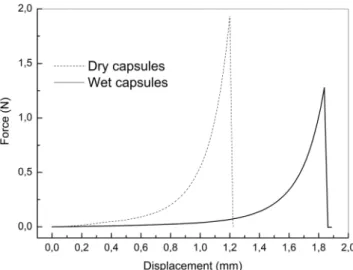
A typical force (F) versus displacement (D) curve from compression of single dry and wet alginate capsules were
shown in Fig. 6. As expected, the drying step induced an
approximately ten-fold reduction of the membrane thickness due to water loss and, consequently, a huge increase of the
surface Young modulus was noticed (see Table1and Fig.6).
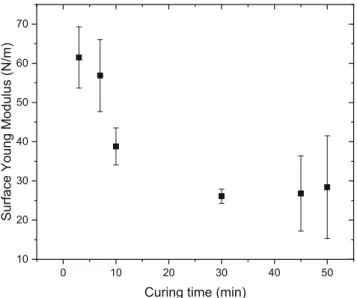
Figure7 summarized surface Young modulus values of
wet alginate capsules in function of curing time (calculated by linear regression from compression curves at small dis-placements). Surface Young moduli (significant differences at p < 0.05) approximately two-fold decreased with increasing curing time, result in apparent contradiction with the increase of membrane thickness with curing time. Surface Young mod-ulus values were in the same order of magnitude that those
obtained by Leick et al. [25] for alginate capsules obtained
from two types of alginate with different guluronic acid con-tent: 6.5 N/m and 32.9 N/m, for the higher and lower content of guluronic acid, respectively. From another study, Leick
et al. [35] found surface Young moduli of 10 and 5 N/m for
pure alginate and alginate/PLL capsules taking a Poisson ratio of zero, values consistent with the assumption of a lower cross-linking degree of the alginate/PLL composite capsules.
0 5 10 15 20 25 30 35 40 45 50 55 0.0 0.4 0.8 1.2 1.6 2.0 2.4 2.8 Diameter d (mm)
Curing time (min)
0 50 100 150 200 250 300 350 400 450 Membrane thickness Mt ( m)
Fig. 5 Diameter d (mm) and membrane thickness Mt. (μm) of wet capsules as function of curing time. Solid line corresponded to the fitting of the data by a linear function; dotted line was just eye-guide. At the 0.05 level, the pop-ulations means were significantly different
Fig. 6 Compression behavior of wet and dry capsules. Curing time = 30 min
More interestingly, each additional electrolyte adsorption lay-er (PLL or alginate) gave roughly an increase of the surface Young modulus of about 5 N/m for the investigated alginate/ PLL/alginate capsule system under the used preparation
con-ditions. Messaoud et al. [36] investigated the influence of pH
for alginate capsules, and they obtained surface Young moduli ranging from 14.9 to 22 N/m at pH 7 and pH 2, respectively, indicating that a decrease in pH resulted in a stiffer alginate membrane. The same pH-dependence thickness of composite
pectinate/shellac capsules was found by Leick et al. [37]. The
dependence of the pH value for composite capsules on the deformation was also consistent with variations of the mem-brane thickness. Memmem-branes prepared with additional shellac seemed to be thinner but stiffer. Furthermore, at the lowest pH value, the highest amount of precipitated shellac led to the strongest inhibition of calcium ion diffusion and therefore to the thinnest membranes.
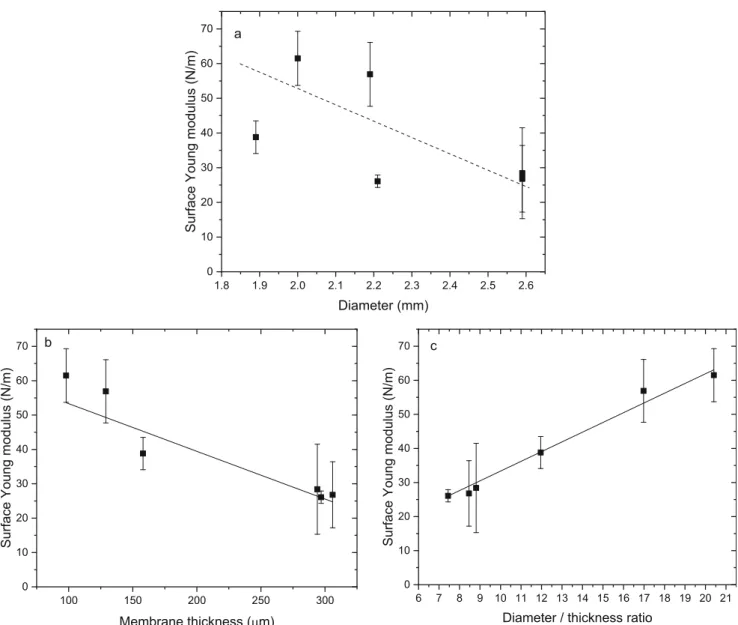
Figure8displayed the evolution of the surface Young
mod-ulus with the capsule dimensions. Apart from the slight de-crease of surface Young modulus with the inde-crease of wet
capsule diameter (Fig.8a) and the linear decay with
mem-brane thickness (Fig.8b), it was noticed that the surface
Young modulus linearly increased with the diameter /
thick-ness ratio of capsules (Fig.8c). Rachik et al. [14] reported that
the increase in membrane thickness was linked to an increase in intrinsic membrane rigidity as it was expected that the den-sity of crosslinking was larger in thicker membranes. Consequently, the surface Young modulus Es that measures the whole ability of the membrane to deform upon deforma-tion increased. Contrary, in our study, surface Young modulus ranged from 68 to 21 N/m at 3 and 50 min, respectively, (see
Table1), indicating that an increase of curing time led to an
increase of membrane thickness (see Fig.8b) and to a decrease
of the mechanical properties (lower surface Young modulus Es
values) resulting in softer alginate membranes. This decrease of the two-dimensional modulus could be explained by a higher hydration level of the membrane leading therefore to a decrease of the crosslinking degree, i.e. the density of ionic
bonds between Ca2+ and alginate would be smaller in the
thicker membrane due to water uptake. Following this hypoth-esis, calcium content from the W/O droplets quickly diffused from the emulsion-core to the alginate solution and remained constant with time. This phenomenon was clearly seen on
Figs.8b and cwhere a linear decrease was noticed for the
surface Young modulus with the increase of membrane thick-ness and diameter / thickthick-ness ratio. This result therefore gave
more confidence to the hypothesis of Martins et al. [11] who
clearly identified by optical microscopy that the emulsion drop surface was surrounded by an oily layer that limited the
contact of CaCl2solution droplets with alginate phase. This
external oil layer therefore acted as a barrier hindering the
release of aqueous CaCl2droplets during curing time.
Effect of Cation Concentration
In order to understand the effect of the storage solution on both membrane thickness and surface Young modulus, cap-sules with a curing time of 30 min in an alginate bath were
stored in NaCl solution (1.5%wt) and several CaCl2solutions
at concentrations ranging from 0 to 1.5%wt.
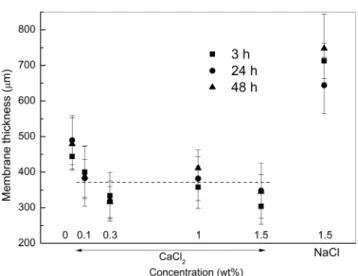
Microscopic observations were performed during a 48 h period to see the evolution of membrane thickness (see
Fig.9) (significant differences at p < 0.05). The first important
observation was that membrane thickness was higher when
capsules were stored in distilled water contrary to CaCl2
Table 1 Mechanical properties of wet and dry capsules. Curing time = 30 min. conditions Diameter D
(mm)
Membrane thickness Mt (μm)
D/Mt Surface Young modulus (N/m) Force at break (N) Wet capsules Dry capsules 2.21 ± 0.07 1.85 ± 0.14 297 ± 76 27 ± 12* 7.4 ± 0.3 60.1 ± 5.9 26.1 ± 1.8 613 ± 163 1.15 ± 0.27 1.45 ± 0.37
*Membrane thickness was estimated from other capsules that were obtained and dried in the same
0 10 20 30 40 50 10 20 30 40 50 60 70
Surface Young Modulus (N/m)
Curing time (min)
Fig. 7 Surface Young modulus (N/m) of wet capsules as function of curing time. At the 0.05 level, the populations means were significantly different
solutions, result in agreement with the swelling of alginate
membrane in time. After 24 h of storage in CaCl2solution,
membrane thickness reached a plateau whatever CaCl2
con-centration (Fig.9). This result was in accordance with the
absence of diffusion of calcium ions from inside to the outside of the capsules and conversely hindering the growth of algi-nate membrane in time. Finally, the storage of capsules in NaCl solution led to a huge increase of membrane thickness in time, result in accordance with the competition of calcium and sodium ions for alginate cross-linking and the resulting swelling of alginate membrane due to the loss of calcium ions in the cross-links. The membrane thickness measured at 48 h was used to evaluate the mechanical properties immediately after the microscopic observations.
Table2showed the surface Young modulus values
obtain-ed from the analyses of the force displacement curves. Surface
Young modulus values were constant with an average value of 35 N/m whatever the calcium concentration used for the stor-age of alginate capsules, result in agreement with the constant
value of membrane thickness (Mt ~ 360.3μm).
In order to eliminate the influence of membrane thickness on the surface Young modulus and to facilitate the comparison
between the different storage conditions, Table2also showed
a normalized Surface Young modulus defined as Es/Mt. Even if it was confirmed that Es/Mt. was constant whatever the calcium concentration used for capsules storage with Es/Mt. ~ 0.099, it was noticed that Es/Mt. two-fold decreased when capsules were stored in distilled water and more important thirty three-fold decreased when capsules were stored in NaCl. The increase of membrane thickness according to the decrease of Es/Mt. was of 33% in water and of 107% in NaCl. Swelling process of alginate membrane could be evoked to 1.8 1.9 2.0 2.1 2.2 2.3 2.4 2.5 2.6 0 10 20 30 40 50 60 70
Surface Young modulus (N/m)
Diameter (mm) a 100 150 200 250 300 0 10 20 30 40 50 60 70
Surface Young modulus (N/m)
Membrane thickness ( m) b 6 7 8 9 10 11 12 13 14 15 16 17 18 19 20 21 0 10 20 30 40 50 60 70
Surface Young modulus (N/m)
Diameter / thickness ratio c
explain the increase of membrane thickness and therefore the decrease of surface Young modulus depending on storage conditions. This swelling process would be considerably fa-vored in presence of sodium salt compare to distilled water in particular due to the competition of sodium and calcium ions for the guluronic acid residues on alginate chains favoring the large decrease of cross-linking density in the alginate network and the huge increase of water uptake within the membrane. Authors recently clearly demonstrated, using spinning drop techniques, capsule squeezing experiments and interfacial shear rheology, changes in the mechanical properties of algi-nate membrane after storage of capsules in calcium or sodium
salt solutions [38]. For instance, surface Young modulus
de-termined by compression experiments decreased from 41 to 6.0 N/m when capsules were stored in calcium and sodium salt solutions, respectively. This effect was ascribed to chang-es of the cross-linking density and therefore a reduction of cross-linking density due to ion exchange in the case of
sodium salt. It was also found recently that sugar concentra-tions above 15% (wt) reduced extensibility of alginate mole-cules and lead to a more open or less connected gel network
with aggregated alginate strands [39]. In addition, authors also
demonstrated the high swelling rate of alginate capsules with-out sugar in presence of simulated intestinal fluid, fluid con-taining sodium hydroxide and potassium phosphate. The ef-fect of sodium salt could be similar to sugar or intestinal fluid by changing the alginate network and in particular pore diam-eter allowing a higher uptake of water in the membrane. Pore diameters ranging from 2.52 to 3.94 nm were recently report-ed, using low temperature N2 adsorption-desorption analysis,
depending on alginate sample and sodium content [40].
Conclusions
Stable W/O emulsions with a narrow size distribution were obtained by homogenization using PGPR 90 as surfactant. Spherical millimetric capsules were successfully obtained by inverse gelation using droplets-based millifluidic. The effect of curing time and cation concentration on the oil content, structure and mechanical properties of capsules was analyzed. Alginate membrane thickness increased with curing time in the collecting alginate bath until a plateau was reached, in close relation with the presence of an oily layer surrounded the sur-face of W/O emulsion drops therefore limiting the contact of
CaCl2solution droplets with alginate phase. This external oil
layer therefore acted as a barrier hindering the release of
aque-ous CaCl2droplets during curing time. Compression
experi-ments on individual capsules revealed that alginate membrane thickness was inversely related to its mechanical properties, i.e. the thicker membrane, the lower surface Young modulus. This result was explained in terms of enhanced swelling properties of alginate membrane with curing time or storage conditions. Drying capsules led to much more resistant membranes due to
Table 2 Surface Young modulus values of capsules after 48 h storage in distilled water, CaCl2 or NaCl solutions. Curing time in
alginate solution = 30 min Storage solution.
(wt%)
Diameter (d, mm)
Membrane thickness (Mt,μm) d/Mt Surface Young modulus (Es, N/m)
Es/Mt (N/m/μm)
Distilled Water 2.27 ± 0.20a,c 479 ± 74a 4.7 ± 0.3a,d 23.4 ± 2.64a 0.049
CaCl20.1 2.43 ± 0.17a,b,c 388 ± 84a,b,c 6.3 ± 1.7a,b,c 28.7 ± 4.6a 0.073
CaCl20.3 2.33 ± 0.18a,b,c 316 ± 44b,c 7.4 ± 1.4b,c 39.5 ± 3.3b,c 0.125
CaCl21 2.40 ± 0.19a,b,c 392 ± 61a,b,c 6.1 ± 1.1a,b,c 29.1 ± 6.6a,b 0.074
CaCl21.5 2.60 ± 0.14b 345 ± 48c 7.5 ± 1.1c 42.6 ± 6.9c 0.123
NaCl 1.5 2.11 ± 0.14c 748 ± 96d 2.8 ± 0.5d 2.3 ± 0.1d 0.003
a,b,c,d
Different letters in the same column indicate significant differences among the different storage solutions (p < 0.05) Fig. 9 Evolution of the membrane thickness after different storage times
in distilled water, CaCl2or NaCl solutions. Curing time in alginate
solution = 30 min. At the 0.05 level, the populations means were significantly different
the loss of water. Oil loading of 80 wt% was obtained for dry capsules whatever the conditions used.
Acknowledgements We kindly acknowledge the supply of PGPR 90 by Danisco (France), the supply of alginate by Cargill (France), the technical assistance of Jean-Eudes Megret for compression experiments, and the financial support of one author (Mariana Pereda) by the National Research Council of Republic Argentina (CONICET) through the pro-gram“Becas en el Exterior para Jóvenes Investigadores del CONICET” (Argentina).
References
1. B. Lupo, A. Maestro, M. Porras, J.M. Gutiérrez, C. González, Preparation of alginate microspheres by emulsification/internal ge-lation to encapsulate cocoa polyphenols. Food Hydrocoll.38, 56– 65 (2014)
2. E. Martins, D. Renard, J. Davy, M. Marquis, D. Poncelet, Oil core microcapsules by inverse gelation technique. J. Microencapsul. 32(1), 86–95 (2015)
3. S.J. Risch, G.A.A. Reineccius, Flavor Encapsulation, ACS SymposiumSeries 370 (American Chemical Society, Washington, DC, 1988)
4. M. Jin, Y. Zheng, Q. Hu, Preparation and characterization of bovine serum albumin alginate/chitosan microspheres for oral administra-tion. Asian J. Pharm. Sci.4(4), 215–220 (2009)
5. K. Ziani, Y. Fang, D.J. McClements, Encapsulation of functional lipophilic components in surfactant-based colloidal delivery sys-tems: vitamin E, vitamin D, and lemon oil. Food Chem.134(2), 1106–1112 (2012)
6. C. Ouwerx, N. Velings, M.M. Mestdagh, M.A.V. Axelos, Physico-chemical properties and rheology of alginate gel beads formed with various divalent cations. Polymer Gels and Networks6(5), 393– 408 (1998)
7. D. Poncelet, V. Babak, C. Dulieu, A. Picot, A physico-chemical approach to production of alginate beads by emulsification-internal ionotropic gelation. Colloids Surf. A Physicochem. Eng. Asp.155(2–3), 171–176 (1999)
8. D. Quong, R.J. Neufeld, G. Skjåk-Bræk, D. Poncelet, External versus internal source of calcium during the gelation of alginate beads for DNA encapsulation. Biotechnol. Bioeng.57(4), 438– 446 (1998)
9. S. Abang, E.S. Chan, D. Poncelet, Effects of process variables on the encapsulation of oil in ca-alginate capsules using an inverse gelation technique. J. Microencapsul.29(5), 417–428 (2012) 10. E. Martins, D. Poncelet, D. Renard, A novel method of oil
encap-sulation in core-shell alginate microcapsules by dispersion-inverse gelation technique. React. Funct. Polym.114, 49–57 (2017a) 11. E. Martins, D. Poncelet, M. Marquis, J. Davy, D. Renard,
Monodisperse core-shell alginate (micro)-capsules with oil core generated from droplets millifluidic. Food Hydrocoll.63, 447– 456 (2017b)
12. J.-Y. Wang, Y. Jin, R. Xie, J.-Y. Liu, X.-J. Ju, T. Meng, L.-Y. Chu, Novel calcium-alginate capsules with aqueous core and thermo-responsive membrane. J. Colloid Interface Sci.353, 61–68 (2011) 13. A. Schmit, L. Courbin, M. Marquis, D. Renard, P. Panizza, A
pen-dant drop method for the production of calibrated double emulsions and emulsion gels. Rsc Advances4(54), 28,504–28,510 (2014) 14. M. Rachik, D. Barthes-Biesel, M. Carin, F. Edwards-Levy,
Identification of the elastic properties of an artificial capsule mem-brane with the compression test: effect of thickness. J. Colloid Interface Sci.301(1), 217–226 (2006)
15. A. Fery, R. Weinkamer, Mechanical properties of micro-and nanocapsules: Single-capsule measurements. Polymer48(25), 7221–7235 (2007)
16. A.M. Al-Sabagh, The relevance HLB of surfactants on the stability of asphalt emulsion. Colloids Surf. A Physicochem. Eng. Asp. 204(1–3), 73–83 (2002)
17. A.L. Márquez, A. Medrano, L.A. Panizzolo, J.R. Wagner, Effect of calcium salts and surfactant concentration on the stability of water-in-oil (w/o) emulsions prepared with polyglycerol polyricinoleate. J. Colloid Interface Sci.341(1), 101–108 (2010)
18. J.H. Su, J. Flanagan, Y. Hemar, H. Singh, Synergistic effects of polyglycerol ester of polyricinoleic acid and sodium caseinate on the stabilisation of water-oil-water emulsions. Food Hydrocoll. 20(2–3), 261–268 (2006)
19. K.S. Karunadasa, C.H. Manoratne, H.M.T.G.A. Pitawala, R.M.G. Rajapakse, Relative stability of hydrated/anhydrous products of calcium chloride during complete dehydration as examined by high-temperature X-ray powder diffraction. J. Phys. Chem. Solids 120, 167–172 (2018)
20. A. Souza, J.C. Santos, M.M. Conceição, M.C. Silva, S. Prasad, A thermoanalytic and kinetic study of sunflower oil. Braz. J. Chem. Eng.21(2), 265–273 (2004)
21. Zhao, Y., Huang, Z., Zhang, J., Wu, W., Wang, M., & Fan, L. (2010). Thermal Degradation of Sodium Alginate-Incorporated Soy Protein Isolate/Glycerol Composite Membranes.
22. J.P. Soares, J.E. Santos, G.O. Chierice, E.T.G. Cavalheiro, Thermal behavior of alginic acid and its sodium salt. Eclética Química29(2), 57–64 (2004)
23. A.K. Pawlik, Duplex emulsions for healthy foods (Doctoral disser-tation, University of Birmingham, 2012)
24. A. Gray, S. Egan, S. Bakalis, Z. Zhang, Determination of micro-capsule physicochemical, structural, and mechanical properties. Particuology24, 32–43 (2016)
25. S. Leick, S. Henning, P. Degen, D. Suter, H. Rehage, Deformation of liquid-filled calcium alginate capsules in a spinning drop appa-ratus. Phys. Chem. Chem. Phys.12(12), 2950–2958 (2010) 26. A. Blandino, M. Macias, D. Cantero, Formation of calcium alginate
gel capsules: influence of sodium alginate and CaCl2 concentration on gelation kinetics. J. Biosci. Bioeng.88(6), 686–689 (1999) 27. E. Martins, D. Poncelet, C.R. Ramires, D. Renard, Oil
encapsula-tion techniques using alginate as encapsulating agent: Applicaencapsula-tions and drawbacks. J. Microencapsul.34(8), 754–771 (2017c) 28. M. Briššová, I. Lacík, A.C. Powers, A.V. Anilkumar, T. Wang,
Control and measurement of permeability for design of microcap-sule cell delivery system. J. Biomed. Mater. Res.39(1), 61–70 (1998)
29. M.P. Neubauer, M. Poehlmann, A. Fery, Microcapsule mechanics: From stability to function. Adv. Colloid Interf. Sci.207, 65–80 (2014)
30. E.S. Chan, T.K. Lim, W.P. Voo, R. Pogaku, B.T. Tey, Z. Zhang, Effect of formulation of alginate beads on their mechanical behavior and stiffness. Particuology9(3), 228–234 (2011)
31. Z. Marcadé-Prieto, Zhang. Mechanical characterization of micro-spheres - capsules, cells and micromicro-spheres: A review. J. Microencapsul.29(3), 277–285 (2012)
32. M. Lekka, D. Sainz-Serp, A.J. Kulik, C. Wandrey, Hydrogel Microspheres: Influence of Chemical Composition on Surface Morphology, Local Elastic Properties, and Bulk Mechanical Characteristics. Langmuir20, 9968–9977 (2004)
33. M. Carin, D. Barthès-Biesel, F. Edwards-Lévy, C. Postel, D.C. Andrei, Compression of biocompatible liquid-filled HSA-alginate capsules: Determination of the membrane mechanical properties. Biotechnol. Bioeng.82(2), 207–212 (2003)
34. M.W. Keller, N.R. Sottos, Mechanical properties of microcapsules used in a self-healing polymer. Exp. Mech.46(6), 725–733 (2006)
35. S. Leick, A. Kemper, H. Rehage, Alginate/poly-L-lysine capsules: mechanical properties and drug releasecharacteristics. Soft Matter 7, 6684–6694 (2011)
36. G.B. Messaoud, L. Sánchez-González, A. Jacquot, L. Probst, S. Desobry, Alginate/sodium caseinate aqueous-core capsules: A pH-responsive matrix. J. Colloid Interface Sci.440, 1–8 (2015) 37. S. Leick, M. Kott, P. Degen, S. Henning, T. Päsler, D. Suter, H.
Rehage, Mechanical properties of liquid-filled shellac composite capsules. Phys. Chem. Chem. Phys.13(7), 2765–2773 (2011) 38. E. Zwar, A. Kemna, L. Richter, P. Degen, H. Rehage, Production,
deformation and mechanical investigation of magnetic alginate cap-sules. J. Phys. Condens. Matter30(8) (2018) number 085101 39. P. Lopez-Sanchez, N. Fredriksson, A. Larsson, A. Altskärc, A.
Strömb, High sugar content impacts microstructure, mechanics
and release of calcium-alginate gels. Food Hydrocoll.84, 26–33 (2018)
40. P.E. Ramos, P. Silva, M.M. Alario, L.M. Pastrana, J.A. Teixeira, M.A. Cerqueira, A.A. Vicente, Effect of alginate molecular weight and M/G ratio in beads properties foreseeing the protection of probiotics. Food Hydrocoll.77, 8–16 (2018)
Publisher’s Note Springer Nature remains neutral with regard to jurisdic-tional claims in published maps and institujurisdic-tional affiliations.