© Veedaa Soltaniband, 2020
Effects of biostimulants on soil microbiota, plant
development, crop productivity and fruit quality of
protected strawberries
Mémoire
Veedaa Soltaniband
Maîtrise en biologie végétale - avec mémoire
Maître ès sciences (M. Sc.)
Effects of biostimulants on soil microbiota,
plant development, crop productivity and
fruit quality of protected strawberries
Mémoire présenté
à la Faculté des études supérieures de l'Université Laval dans le cadre du programme de maîtrise en sols et environnement
pour l'obtention du grade de maître es sciences (M. Sc.)
DÉPARTEMENT DE PHYTOLOGIE
FACULTÉ DES SCIENCES DE L'AGRICULTURE ET DE L'ALIMENTATION UNIVERSITÉ LAVAL
QUÉBEC
Veedaa Soltaniband
Sous la direction de:
Martine Dorais
ii
Résumé
La culture de la fraise (Fragaria x ananassa Duch.), l’une des plus importantes productions horticoles au Canada, fait face à des défis importants pouvant affecter la productivité et la qualité des fruits. Par conséquent, cette étude se concentre sur l'utilisation des biostimulants les plus prometteurs pour les fraises pouvant améliorer le microbiote du sol, le développement, la productivité et la qualité des fraises produites sous abris.
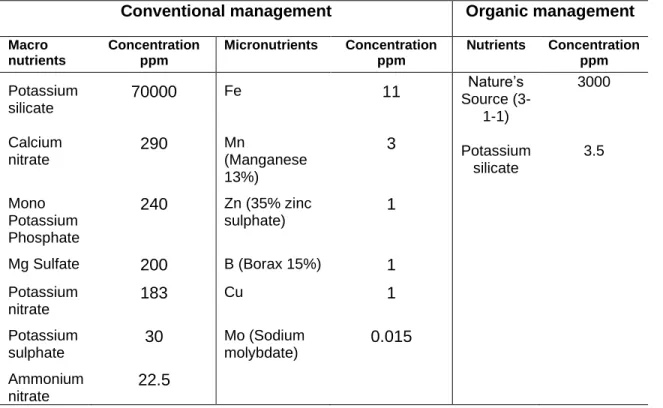
Deux expériences en blocs aléatoires complets ont été réalisées en serre et sous grands tunnels. Dans l'essai en serre, nous avons étudié l'effet de 14 traitements sous gestion conventionnelle (7 traitements) et biologique (7 traitements). Pour le système de culture conventionnelle, les traitements consistaient en: 1- Témoin (sans biostimulant), 2- Extrait d'algue, 3- Trichoderma harzianum souche T22, 4- Rhizoglomus irregulare, 5- Combinaison d'Azospirillum brasilense, Gluconacetobacter diazotrophicus et Bacillus
amyloliquefaciens, 6- Mélange des traitements 4 et 5, et 7- Formulation à base d'acide
citrique. Pour le système de culture biologique, les traitements biostimulants étaient: 8- Témoin (sans biostimulant), 9- Extrait d'algue, 10- Rhizoglomus irregulare, 11- Combinaison d'Azospirillum brasilense, Gluconacetobacter diazotrophicus et Bacillus
amyloliquefaciens, 12- Mélange des traitements 10 et 11, 13- Mélange des traitements 10
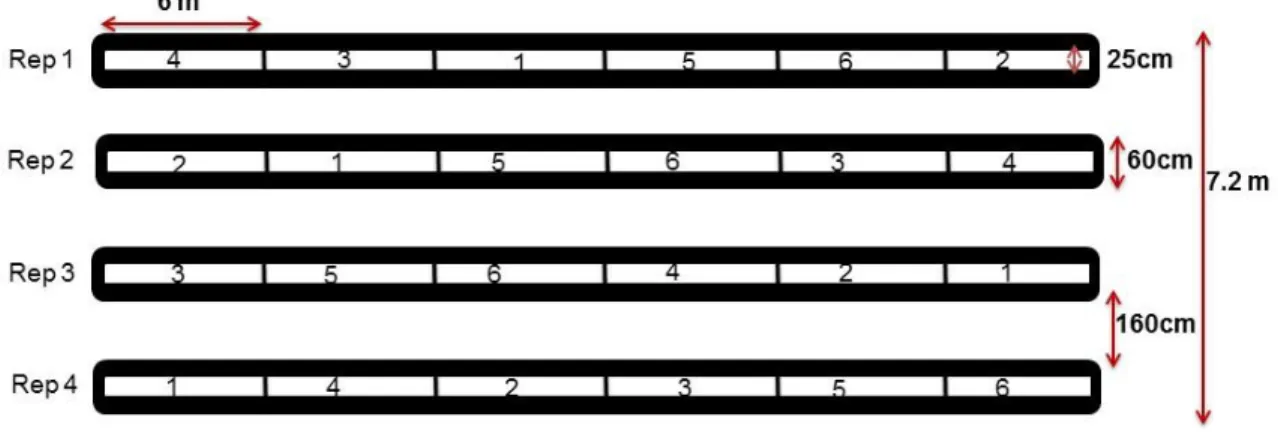
et 11 à faible fertilisation, et 14- Formulation à base d'acide citrique, dans une conception de blocs aléatoires complets avec cinq répétitions. D'autre part, dans un essai sous grands tunnels, nous avons étudié six traitements 1- Témoin (sans biostimulant), 2-
Rhizoglomus irregulare, 3- Combinaison d'Azospirillum brasilense, Gluconacetobacter diazotrophicus et Bacillus amyloliquefaciens, 4- Mélange des traitements 2 et 3, 5-
Formulation à base d'acide citrique et 6- Formulation à base d'acide citrique et lactique à l’intérieur d’un dispositif expérimental en blocs aléatoires complets de quatre répétitions. Nos résultats ont montré que les paramètres d'activité du sol étaient plus élevés sous une gestion de culture biologique, bien que les traitements de biostimulants n'ont pas augmenté l'activité microbienne du sol par rapport à leurs contrôles respectifs, à l'exception de la combinaison de mycorhizes et de bactéries pour des plantes cultivées conventionnellement sous grands tunnels. Pour les deux expériences, les biostimulants n'ont pas influencé significativement la performance photosynthétique des feuilles. Cependant, les biostimulants ont eu un impact sur le développement des plantes et certains paramètres de croissance. En serre, les mycorhizes sous régie biologique et le traitement de mycorhizes et de bactéries sous régie conventionnelle ont diminué le
iii
nombre de tiges florifères par rapport aux plantes témoins. En revanche, tous les biostimulants ont augmenté la croissance des plantes cultivées sous grands tunnels. En serre et sous régie conventionnelle, le rendement des plantes traitées avec l'acide citrique a été supérieur à celui des plantes témoins, tandis que l'acide citrique et une combinaison de mycorhizes et de bactéries sous régie biologique a augmenté le rendement. Sous grands tunnels, aucun effet significatif sur le rendement n'a été observé. Le traitement de mycorhizes et de bactéries a augmenté la teneur des fruits en ºBrix, en polyphénols et en anthocyanines des plantes cultivées en serre et sous régie biologique, tandis que
Trichoderma a augmenté la teneur en polyphénols et en anthocyanines des fruits sous
régie conventionnelle. Aucun effet des biostimulants sur le contenu des fruits en ºBrix et polyphénols n'a été observé sous grands tunnels, tandis que tous les biostimulants ont augmenté la teneur en anthocyanines des fruits.
D'après cette étude, nous pouvons conclure que certains biostimulants ont montré des effets bénéfiques, permettant ainsi d’améliorer la performance agronomique de la fraise en termes de croissance, de rendement et de la qualité des fruits de plantes cultivées sous abris. La variabilité observée entre les deux systèmes de production confirme l'importance de la validation de ces résultats sous différentes conditions de croissance et saisons de production.
iv
Abstract
The strawberry (Fragaria x ananassa Duch.) is one of the most important horticultural crops in Canada. However, several challenges limit the productivity and quality of this crop. Therefore, this study focused on using the most promising biostimulants that can improve soil microbiota, plant development, crop productivity, and berry quality in the greenhouse and high tunnels.
In order to study different biostimulants treatments, a greenhouse and high tunnel experiments were carried in a complete randomized block design with five or four replicates. For the greenhouse trial, we studied the effect of 14 treatments under conventional (7 treatments) and organic (7 treatments) growing management. Studied treatments for the conventional growing system consisted of 1- Control (without biostimulant), 2- Seaweed extract, 3- Trichoderma harzianum strain T22, 4- Rhizoglomus
irregulare, 5- Combination of Azospirillum brasilense, Gluconacetobacter diazotrophicus
and Bacillus amyloliquefaciens, 6- Mixture of treatments 4 and 5, and 7- Citric acid-based formulation. For the organic growing system, the biostimulant treatments were: 8- Control (without biostimulant), 9- Seaweed extract, 10- Rhizoglomus irregulare, 11- Combination
of Azospirillum brasilense, Gluconacetobacter diazotrophicus and Bacillus
amyloliquefaciens, 12- Mixture of treatments 10 and 11, 13- Mixture of treatments 10 and 11 with low fertilization, and 14- Citric acid-based. For the high tunnel experiment, six treatments were compared: 1- Control (without biostimulant), 2- Rhizoglomus irregulare, 3- Combination of Azospirillum brasilense, Gluconacetobacter diazotrophicus and Bacillus
amyloliquefaciens, 4- Mixture of treatments 2 and 3, 5- Citric acid-based formulation, and
6- Citric and lactic acid-based formulation.
Our results showed that soil activity parameters were higher under organic crop management compared with the conventional one, although biostimulant treatments did not increase soil microbial activity compared with their respective control, except for the combination of mycorrhiza and bacteria of high tunnel conventionally grown plants. For both experiments, biostimulants did not influence significantly leaf photosynthetic performance. However, biostimulants did impact plant development and some growth parameters. Compared with control plants, our results showed that the number of flowering stalks decreased for greenhouse organically grown plants treated with mycorrhiza and for conventionally grown plants treated with the combination of mycorrhiza and bacteria. On the other hand, all biostimulants increased the growth of plants grown
v
under the high tunnels. Concerning yield parameters, conventionally grown plants treated with citric acid produced higher total and marketable yield compared with control plants, while the marketable yield of organically grown plants was higher in the plants treated with citric acid and the combination of mycorrhiza and bacteria. In contrast to the greenhouse experiment, no yield effect was observed for high tunnel plants. In terms of berry quality,
Trichoderma increased the polyphenol and anthocyanin content of conventionally grown
berries, while a combination of mycorrhiza and bacteria increased the ºBrix, polyphenol and anthocyanin content of organically grown plants compared with control. No effect of biostimulants on ºBrix and polyphenols were observed for high tunnel plants compared with control, while all biostimulants increased berry anthocyanin content.
From our study, we can conclude that some biostimulants may improve strawberry performance in terms of growth, yield, and fruit quality. The lack of a significant difference between biostimulant treatments, due to large variability, confirms the importance of validating these results under different growing conditions and production seasons.
vi
TABLE OF CONTENT
Résumé ... ii Abstract ... iv Table of content ... vi List of Tables ... ix List of Figures... xiList of Annex ... xiv
List of Equations ... xvii
ACKNOWLEDGMENTS ... xviii
Introduction ... 1
Hypotheses and Objectives ... 2
1 Literature review ... 4
1.1 Strawberry (Fragaria x ananassa Duch.) ... 4
1.1.1 Types of cultivars ... 6
1.2 Effect of production systems ... 7
1.3 Effect of mineral nutrition on strawberry plants ... 9
1.4 Conventional vs organic ... 10
1.5 Biostimulants: an alternative free- chemical method ... 12
1.5.1 What is biostimulants? ... 12
1.5.2 Categories of biostimulants ... 14
1.5.3 Applying biostimulants ... 22
1.5.4 Biostimulants and organic farming ... 23
2 Material and methods ... 26
2.1 Greenhouse experiment ... 26
2.1.1 Treatments ... 27
2.1.2 Experimental design ... 29
2.2 High tunnel experiment ... 30
2.2.1 Growing conditions... 30
2.2.2 Treatments ... 32
2.2.3 Experimental design ... 32
2.3 Measured parameters ... 33
vii
2.3.2 Physiological parameters ... 35
2.3.3 Non-destructive growth parameters ... 37
2.3.4 Destructive growth parameters... 37
2.3.5 Foliar mineral analysis ... 38
2.3.6 Yield ... 38
2.3.7 Fruit quality ... 38
2.4 Statistical analysis ... 41
3 Results ... 42
3.1 Greenhouse experiments- winter 2018 ... 42
3.1.1 Soil activity ... 42
3.1.2 Leaf photosynthetic performance ... 51
3.1.3 Non-destructive growth parameters ... 55
3.1.4 Destructive growth parameters... 61
3.1.5 Foliar mineral content ... 63
3.1.6 Yield ... 67
3.1.7 Fruit quality ... 76
3.1.8 Principal component analysis (PCA) ... 80
3.1.9 Relationship between soil activity and leaf mineral content, and the physiological, growth, yield and quality parameters ... 81
3.2 High tunnel experiment- summer 2018 ... 84
3.2.1 Microbial activity ... 93
3.2.2 Plant physiological parameters... 94
3.2.3 Photosynthesis ... 96
3.2.4 Non-destructive growth parameters ... 98
3.2.5 Mineral analysis of leaves ... 100
3.2.6 Yield ... 101
3.2.7 Fruit quality ... 103
3.2.8 Principal component analysis (PCA) ... 106
3.2.9 Relationship between soil activity and leaf mineral content, and the physiological, growth, yield, and quality parameters ... 107
4 Discussion ... 116
4.1 Effect of biostimulants on soil microbiota ... 116
4.2 Effect of biostimulants on plant growth and development ... 117
4.2.1 Photosynthetic performance parameters ... 117
viii
4.3 Effect of biostimulants on plant biomass and leaf area ... 118
4.4 Effect of biostimulants on mineral content of leaves ... 119
4.5 Effect of biostimulants on yield and berry quality ... 120
4.5.1 Yield ... 120
4.5.2 Fruit quality ... 121
4.6 Difference between organic and conventional growing systems ... 121
Conclusion ... 125
Bibliographie ... 127
Annexe A ... 146
Annexe B ... 147
Annexe C ... 169
ix
LIST OF TABLES
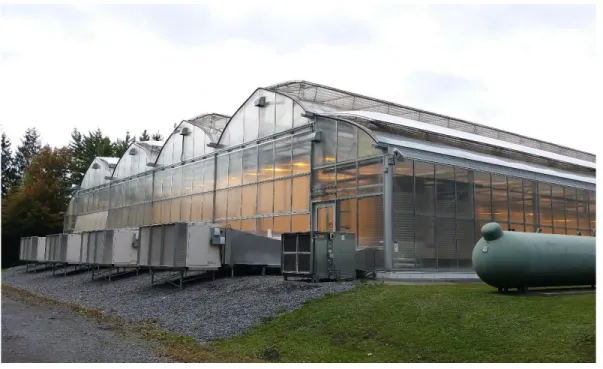
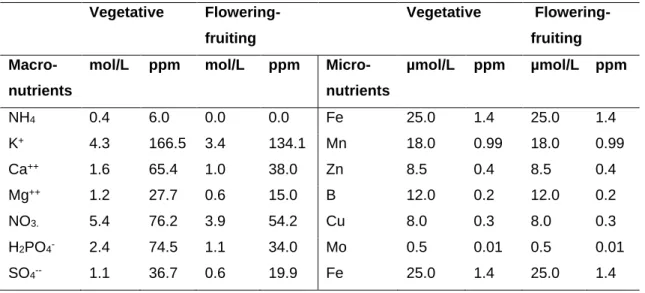
Table 2.1 Mineral elements and their concentration used for vegetative and flowering and fruiting plants grown in the high tunnels. ... 32 Table 3.1 Chlorophyll fluorescence parameters (Fv/Fm and P Index) and chlorophyll content of strawberry leaves cultivated in greenhouse under different combination of growing systems and biostimulants (n=45). ... 53 Table 3.2 Photosynthesis parameters of strawberry leaves cultivated in greenhouse under different combination of growing systems and biostimulants (n=5). ... 54 Table 3.3 Growth parameters of strawberry plants cultivated in greenhouse under
different combination of growing systems and biostimulants (n=45). ... 60 Table 3.4 Fresh and dry biomass of strawberry plants cultivated in greenhouse under different combinations of biostimulants and growing systems (n=15). ... 62 Table 3.5 Leaf mineral concentrations in the percentage of leaf dry weight of strawberry plants cultivated in greenhouse under different combinations of biostimulants and
growing systems (n=12). ... 65 Table 3.6 Interaction effect between biostimulants and measurement time for leaf
mineral concentrations of strawberry plants. ... 66 Table 3.7 Yield parameters of strawberry plants cultivated in greenhouse under
conventional and organic growing systems and biostimulant treatments during 11
harvest week (n=55). ... 70 Table 3.8 Brix value of berries from strawberry plants cultivated in greenhouse under conventional and organic growing systems and biostimulant treatments (n=20). ... 77 Table 3.9 Total polyphenol and anthocyanin concentrations of strawberry fruits cultivated in greenhouse under different combination of growing systems and biostimulants (n=10). ... 79 Table 3.10 Relationships between the mineral content of leaves and soil activity and physiological, growth, yield and quality parameters of greenhouse strawberry plants. The numbers in red are significant at P <0.05. ... 84 Table 3.11 Relationships between physiological, growth, yield and quality parameters (Winter 2018). ... 89 Table 3.12 The influence of the biostimulant treatments on the leaf chlorophyll
fluorescence parameters (Fv/Fm and P Index) and leaf chlorophyll content of strawberry plants grown under high tunnel (n=36). ... 94 Table 3.13 Photosynthesis parameters of strawberry leaves with studied biostimulants during summer experiment (n=4). ... 97 Table 3.14 Influence of the biostimulant treatments on the growth parameters of
strawberry plants grown under high-tunnel. Data are means of three measurements (July, August, and September) during summer 2018 (n=36). ... 99
x
Table 3.15 Influence of the biostimulant treatments on fresh and dry aerial biomass of strawberry plants grown under high-tunnel. Data are collected at the end of the
experiment in summer 2018 (n=12). ... 100 Table 3.16 Influence of the biostimulant treatments on mineral concentration (%) in the leaves of strawberry plants grown under high-tunnel. Data are means of three
measurements during summer 2018 (n=8). ... 101 Table 3.17 Influence of the biostimulant treatments on yield parameters of strawberry plants grown under high-tunnel. Data are means of three measurements during summer 2018 (n=158). ... 102 Table 3.18 Influence of the biostimulant treatments on fruit quality parameters of
strawberry plants grown under high-tunnel. Fruits sampled in July, August, and
September 2018 (n=24). ... 103 Table 3.19 Relationships between the mineral content of leaves and soil activity and physiological, growth, yield and quality parameters of strawberry plants in the high tunnel (Summer 2018). ... 109 Table 3.20 Relationships between physiological, growth, yield and quality parameters (Summer 2018). ... 112 Table 3.21 (continuity) Relationships between physiological, growth, yield and quality parameters (Summer 2018). ... 114
xi
LIST OF FIGURES
Figure 1.1 Anatomical structures of the strawberry plant. ... 6 Figure 2.2.1 The high-performance greenhouse complex located at Laval University, Quebec ... 26 Figure 3.1 Variations of microbial activity of the strawberry plants by growing system during winter 2018. Means followed by the same letter are not significantly different (P≤ 0.05). Microbial activity expressed by μg fluorescence h-1 g-1 dry weight of soil (See
annex B.1 for data and P values). ... 43 Figure 3.2 The influence of studied biostimulants on microbial activity of the soil during winter 2018. Means followed by the same letter are not significantly different (P≤ 0.05). Microbial activity expressed by μg fluorescence h-1 g-1 dry weight of soil (See annex B.1
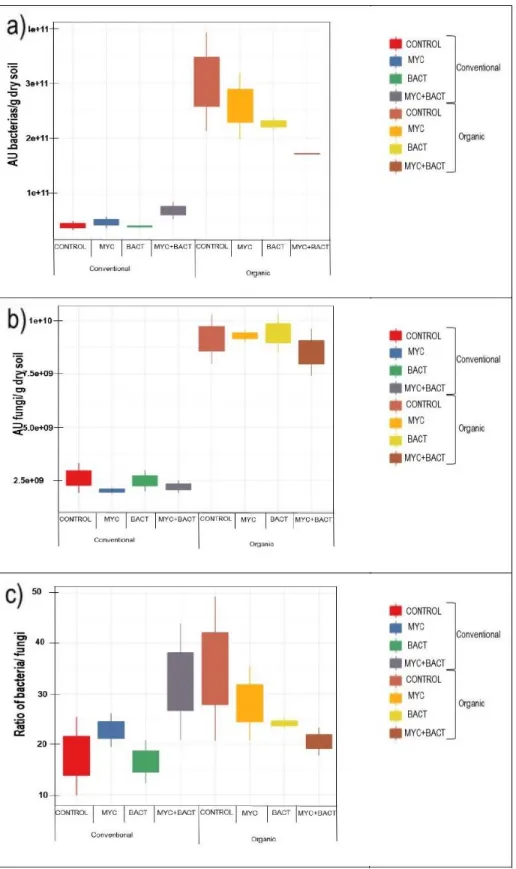
for data and P values). ... 43 Figure 3.3 Soil quantification of a) bacteria, b) fungi, and c) bacteria/ fungi in the
treatments (n=2) of conventional and organic crops. ... 46 Figure 3.4 Dominant a) bacteria, b) fungi, and c) eucaryotic groups expressed by
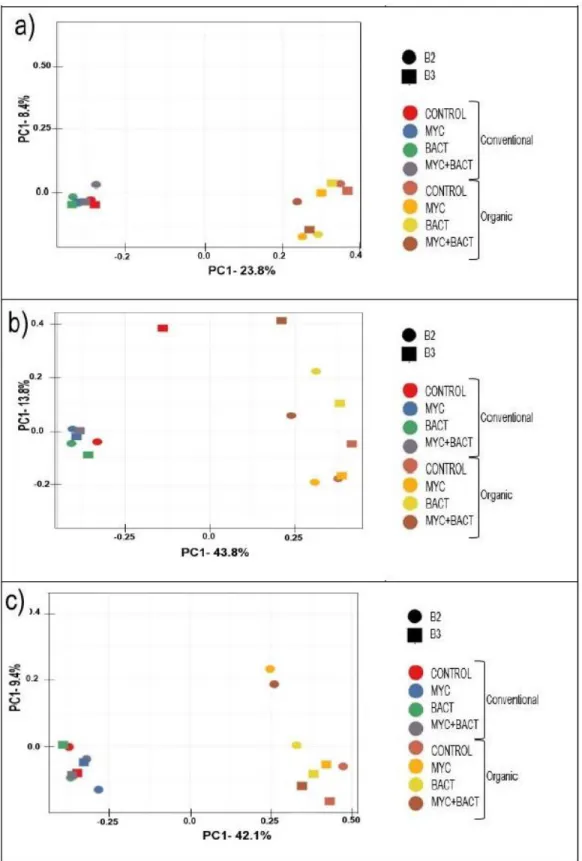
Shannon's index in the growing medium for each treatment (n=2) of conventional and organic crops... 47 Figure 3.5 PCoA of a) bacteria, b) fungi, and c) eukaryote growing medium communities for conventional and organic soil samples during the greenhouse experiment (n=2). .... 48 Figure 3.6 The relative abundance of the principal groups of a) bacteria, b) fungi, and c) eukaryote in the growing medium of conventional and organic crops after q PCR
analysis during the greenhouse experiment (n=2). ... 49 Figure 3.7 Substrate CO2 efflux of strawberry plants treated with studied biostimulants. Means followed by the same letter are not significantly different (P≤ 0.05) (n=5) (See annex B.1 for data and P values). ... 50 Figure 3.8 Variations of substrate CO2 efflux of strawberry plants by growing system
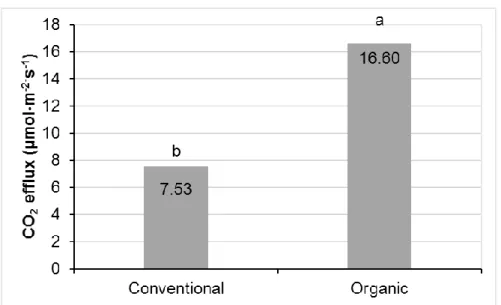
during winter 2018. Means followed by the same letter are not significantly different (P≤ 0.05). Substrate CO2 efflux expressed by μmol⋅m-2⋅s-1 (See annex B.1 for data and P
values). ... 51 Figure 3.9 Light saturation curves of strawberry leaves cultivated in greenhouse under different combinations of growing systems and biostimulants (n=5). ... 55 Figure 3.10 The Influence of time on the number of leaves in strawberry plants treated with biostimulants grown in (a) conventional and (b) organic growing systems. Means followed by the same letter are not significantly different (P≤ 0.05) (n=5). *Treatments are different from their respective control. ... 57 Figure 3.11 The influence of time on the number of flowering stalks in strawberry plants treated with biostimulants grown in (a) conventional and (b) organic growing systems. Means followed by the same letter are not significantly different (P≤ 0.05) (n=5).
xii
Figure 3.12 The influence of time on the diameter of crowns in strawberry plants treated with biostimulants grown in (a) conventional and (b) organic growing systems. Means followed by the same letter are not significantly different (P≤ 0.05) (n=5). *Treatments are different from their respective control. ... 59 Figure 3.13 Influences of time of harvest on total weight of fruits from strawberry plants treated with biostimulants grown in (a) conventional and (b) organic growing systems. Means followed by the same letter are not significantly different (P≤ 0.05) (n=5).
*Treatments are different from their respective control. ... 69 Figure 3.14 Influences of time on weight of marketable fruits from strawberry plants treated with biostimulants grown in (a) conventional and (b) organic growing systems. Means followed by the same letter are not significantly different (P≤ 0.05) (n=5).
*Treatments are different from their respective control. ... 72 Figure 3.15 Influences of time on the number of unmarketable fruits from strawberry plants treated with biostimulants grown in (a) conventional and (b) organic growing systems. Means followed by the same letter are not significantly different (P≤ 0.05) (n=5). *Treatments are different from their respective control. ... 74 Figure 3.16 Influence of time on weight of unmarketable of fruits from strawberry plants treated with biostimulants grown in (a) conventional and (b) organic growing systems. Means followed by the same letter are not significantly different (P≤ 0.05) (n=5).
*Treatments are different from their respective control. ... 75 Figure 3.17 Relationships between leaf mineral content and physiological, yield, quality and soil activity parameters during the greenhouse experiment (PCA). 1: conventional control, 2: conventional seaweed extract, 3: conventional Trichoderma, 4: conventional mycorrhiza, 5: conventional combination of bacteria, 6: conventional mixture of
mycorrhiza and bacteria, 7: conventional citric acid, 8: organic control, 9: organic seaweed, 10: organic mycorrhiza, 11: organic combination of bacteria, 12: organic mixture of mycorrhiza and bacteria, 13: organic mixture of mycorrhiza and bacteria with lower fertilization, 14: organic citric acid. ... 81 Figure 3.18 Effects of studied biostimulants on the microbial activity of the soil. Means followed by the same letter are not significantly different (P ≤ 0.05). Samples were collected in July 13th and October 24th (n=8). ... 93
Figure 3.19 The maximum quantum efficiency of photosystem II (Fv/Fm) variation on strawberry leaves of plants during the experimental period of summer 2018. Means with the same letter are not significantly different (P≤ 0.05) (n=72). ... 95 Figure 3.20 Performance index (P Index) variation on strawberry leaves of plants during the experimental period of summer 2018. Means followed by the same letter are not significantly different (P≤ 0.05) (n=72). ... 95 Figure 3.21 Evaluation of the chlorophyll content on strawberry leaves during the
experimental period of summer 2018. Means followed by the same letter are not
xiii
Figure 3.22 Light saturation curves of strawberry leaves cultivated in the high tunnel (n=4). ... 98 Figure 3.23 Effect of time on the total sugar level (°Brix) of strawberry plants. Means followed by the same letter are not significantly different (P ≤ 0.05) (n=5). ... 104 Figure 3.24 Effects of time on the total polyphenol concentration of strawberry fruits. Means followed by the same letter are not significantly different (P ≤ 0.05) (n=12). ... 105 Figure 3.25 Effects of studied biostimulants on anthocyanin concentration of the fruits. Means followed by the same letter are not significantly different (P ≤ 0.05) (n=12). ... 106 Figure 3.26 Relationships between leaf mineral content, physiological, yield, quality, and soil activity parameters during the greenhouse experiment (PCA). A: control, B:
mycorrhiza, C: combination of mycorrhiza and bacteria, D: bacteria. E1: citric acid. E2: citric and lactic acids. ... 107
xiv
LIST OF ANNEX
Annex A
Annex A. 1 Production inputs (agricultural chemicals), disease and insect control
practices during the growing period in high-tunnel- summer 2018. ... 146
Annex B
Annex B.1 Microbial activity and CO2 efflux of strawberries cultivated in greenhouse
under different combination of growing systems and biostimulants. ... 147 Annex B.2 The maximum quantum efficiency of photosystem II (Fv/Fm) variation on strawberry leaves of plants during the experimental period of winter 2018. Means with the same letter are not significantly different (P≤ 0.05). ... 148 Annex B.3 The performance index variation on strawberry leaves of plants during the experimental period of winter 2018. Means with the same letter are not significantly different (P≤ 0.05) (n=45). ... 148 Annex B.4 The performance index (P Index) variation on strawberry leaves of plants during the experimental period of winter 2018. Means with the same letter are not
significantly different (P≤ 0.05). ... 149 Annex B.5 The performance index (P Index) variation of strawberry plants by growing system during winter 2018. Means followed by the same letter are not significantly different (P≤ 0.05). ... 149 Annex B.6 Chlorophyll content variation on strawberry leaves of plants during the
experimental period of winter 2018. Means with the same letter are not significantly different (P≤ 0.05) (n=45). ... 150 Annex B.7 Chlorophyll content variation on strawberry leaves of plants during the
experimental period of winter 2018. Means with the same letter are not significantly different (P≤ 0.05). ... 150 Annex B.8 Growth parameters variation of strawberry plants treated with studied
biostimulants a) number of leaves, b) number of flowering stalks, c) number of crowns, d) diameter of stalks. Means followed by the same letter are not significantly different (P≤ 0.05) (n=15). ... 151 Annex B.9 Growth parameters variation of strawberry plants a) number of leaves, b) number of flowering stalks, c) number of crowns, d) diameter of stalks during the experimental period (winter 2018). Means followed by the same letter are not
significantly different (P≤ 0.05) (n=45). ... 152 Annex B.10 Number of leaves variation of strawberry plants by growing system during winter 2018. Means followed by the same letter are not significantly different (P≤ 0.05). ... 153
xv
Annex B.11 Biomass variation of strawberry plants treated with studied biostimulants a) shoot fresh biomass and b) shoot dry biomass. Means followed by the same letter are not significantly different (P≤ 0.05) (n=45). ... 154 Annex B.12 Biomass variation of strawberry plants treated with studied biostimulants a) root fresh biomass and b) root dry biomass. Means followed by the same letter are not significantly different (P≤ 0.05) (n=45). ... 155 Annex B.13 Leaf area variation on strawberry leaves of plants during the experimental period of winter 2018. Means with the same letter are not significantly different (P≤ 0.05) (n=45). ... 156 Annex B.14 Biomass variation of strawberry plants by growing system during winter 2018, a) shoot fresh biomass and b) shoot dry biomass. Means followed by the same letter are not significantly different (P≤ 0.05)... 157 Annex B.15 Biomass variation of strawberry plants by growing system during winter 2018, a) root fresh biomass and b) root dry biomass. Means followed by the same letter are not significantly different (P≤ 0.05). ... 158 Annex B.16 Total yield (a) total number, (b) total weight variation on strawberry plants during the experimental period of winter 2018. Means with the same letter are not
significantly different (P≤ 0.05) (n=55). ... 159 Annex B.17 Total yield (a) number, (b) weight variation of strawberry plants during the experimental period (winter 2018). Means followed by the same letter are not
significantly different (P≤ 0.05). ... 160 Annex B.18 Total yield (a) total number, (b) total weight of strawberry plants by growing system during winter 2018. Means followed by the same letter are not significantly different (P≤ 0.05). ... 161 Annex B.19 Marketable yield (a) number, (b) weight variation on strawberry plants during the experimental period of winter 2018. Means with the same letter are not significantly different (P≤ 0.05) (n=55). ... 162 Annex B.20 Marketable yield (a) number, (b) weight variation of strawberry plants by growing system during winter 2018, a) root fresh biomass and b) root dry biomass. Means followed by the same letter are not significantly different (P≤ 0.05). ... 163 Annex B.21 Marketable yield (a) total number, (b) total weight of strawberry plants by growing system during winter 2018. Means followed by the same letter are not
significantly different (P≤ 0.05). ... 164 Annex B.22 Unmarketable yield (a) number, (b) weight variation on strawberry plants during the experimental period of winter 2018. Means with the same letter are not
significantly different (P≤ 0.05) (n=55). ... 165 Annex B.23 Unmarketable yield (a) number, (b) weight variation of strawberry plants by growing system during winter 2018, a) root fresh biomass and b) root dry biomass. Means followed by the same letter are not significantly different (P≤ 0.05). ... 166
xvi
Annex B.24 The soluble sugar content (°Brix) of berries from strawberry plants treated with biostimulants and grown under conventional and organic growing systems. Means followed by the same letter are not significantly different (P≤ 0.05). ... 167 Annex B.25 Effect of time on the soluble sugar content (°Brix) of berries from strawberry plants treated with biostimulants and grown under conventional and organic growing systems. Means followed by the same letter are not significantly different (P≤ 0.05). .. 167 Annex B.26 Influence of time on the soluble sugar content (°Brix) of fruits from
strawberry plants treated with biostimulants grown in (a) conventional and (b) organic growing systems. Means followed by the same letter are not significantly different (P≤ 0.05) (n=5). ... 168
Annex C
Annex C.1 Growth parameters variation of strawberry plants a) number of flowering stalks, b) number of crowns, c) diameter of stalks during the experimental period (summer 2018). Means followed by the same letter are not significantly different (P≤ 0.05) (n=72). ... 169 Annex C.2 Total yield (a) number, (b) weight variation of strawberry plants during the experimental period (winter 2018). Means followed by the same letter are not
significantly different (P≤ 0.05). ... 170 Annex C.3 Marketable yield (a) number, (b) weight variation of strawberry plants during the experimental period (winter 2018). Means followed by the same letter are not
significantly different (P≤ 0.05). ... 171 Annex C.4 Unmarketable yield (a) number, (b) weight variation of strawberry plants during the experimental period (winter 2018). Means followed by the same letter are not significantly different (P≤ 0.05). ... 172
xvii
LIST OF EQUATIONS
Equation 2.1 ... 36 Equation 2.2 ... 36 Equation 2.3 ... 36 Equation 2.4 ... 40 Equation 2.5 ... 40xviii
ACKNOWLEDGMENTS
I would like to express my gratitude to my supervisor Dr. Martine Dorais for all her support and encouragement she gave me. I have been amazingly fortunate to have Martine as my advisor who gave me the freedom to explore on my own and at the same time the guidance to recover when my steps faltered.
My sincere thanks also go to Prof. Dr. Yves Desjardins, Prof. Dr. André Gosselin, Prof. Dr. Steeve Pepin, and Assoc. Prof. Dr. Charles Goulet. My thanks also go out to my team members for this project, Ms. Linda Gaudreau, Ms. Annie Brégard, Ms. Annie Van Sterthem, Ms. Thi Thuy An Nguyen, Mr. Louis Gauthier, Mr. Yves Gauthier, Mr. Marc Charland, Mr. Marc Bourgoin and Ms. Laura Thériault.
My deepest gratitude goes to my family for their unflagging love and unconditional support throughout my studies and my life. I would like to express my heart-felt gratitude to my dearest parents Ziba and Rostam, and my parents in-law Simin and Esmail. My cute niece Sana, and nephews Roham, Sadra, and Farham, thank you for your video calls during my work. Last but not the least, I would like to thank my dear husband Arman for standing beside me throughout this adventurous journey.
I also acknowledge the support of NSERC-CRD grants and the research partners, Les Fraises de l’Ile d’Orléans et Les Tourbières Bergers.
1
Introduction
In 2018, fruit production accounted for 20% of overall edible horticulture cash receipts with a farm gate value of 123,273 million dollars in Canada, which increased by 6.1% from 2017 to 2018 [1]. Among fruits, berries are one of the small health improving fruits among consumers worldwide by having beneficial effects on dietary and reducing the cardiovascular diseases [2, 3]. Strawberries are one of the most consumed and cultivated horticultural crops in the world [1, 4]. For growers, the important aspects of strawberry production are achieving high yield of high quality. However, increasing productivity and quality of strawberries face some major issues. The most important challenges are pests, soil diseases and for organic crops, the soil nutrient balance and nutrient availability. Conventional methods such as application of pesticides, soil fumigants, and chemical fertilizers are largely used to increase the productivity of strawberries. However, it has been shown that conventionally practices are not sustainable and have several negative effects on the ecosystem [5]. Besides, there are several problems with fumigants. The most important problem is its negative effect on the environment as well as workers who are dealing with this practice [6]. This happens because the widely used pest controlling method is not selective, and it affects beneficial microorganisms as well as targeted pathogens [7]. Besides the negative effects of pesticides on the environments, they are expensive in terms of profitability and inefficient in several cases due to pesticide resistance or their misuses.
On the other hand, demand for organic food in Canada increased by 4-fold during the last decade, with 39% represented by fruits and vegetables [8]. For strawberries, the plus value of organic strawberries in 2017 was in average 64% higher than the conventional price with a plus value reaching 308% in November [9]. Furthermore, strawberry was reported as one of the fruits with the highest level of pesticide residue, which might have a significant impact of the health of the population, particularly young children that love strawberries. Therefore, in order to achieve sustainable yield of high-quality fruits, alternative approaches are required to reduce chemical inputs, without reducing crop productivity.
Biostimulants, are considered exogenously applied as substances to plants to improve nutrition efficiency and quality attributes regardless of its nutrient content [10]. Besides, they can improve plant resilience to abiotic stresses (e.g. salinity, water stress) and biotic
2
stresses (e.g. root diseases). The interest for biostimulants is expanding quickly worldwide as they constitute promising alternatives to unsustainable approaches. In fact, the global biostimulant market was forecasted to reach 2.241 million US $ in 2018, with an annual growth of 12.5% [11]. However, little is now about the benefit of adding biostimulants under organic farming as organic amendments already constitute a source of beneficial fungi and bacteria (PGPR), humic acids as well as organic (e.g. amino acids, chitin) and inorganic components (e.g. Si).
Several reviews [10-15] and articles on biostimulants have been published in recent years. However, most of the studies were focused on the improvement of plant resilience [16-18], antifungal effects [19], and plant development [20] of conventional growing crops. Based on recent studies, we have selected the most promising biostimulants for strawberries that can improve plant development, crop productivity and berry quality under conventional and organic growing conditions.
Hypotheses and Objectives
This study proposed the use of different biostimulants as a sustainable alternative to improve the yield and quality of strawberry berries. The hypotheses that we have verified in this study are as follows:
1) In organic and conventional growing systems, biostimulants (seaweed extract, Trichoderma spp., mycorrhiza, nitrogen-fixing endosymbiosis bacteria, endosymbiotic nitrogen scavengers, phosphates and potassium solubilizing bacteria as well as organic acids) increase plant development and crop productivity by improving plant nutrient uptake.
2) Biostimulants (organic acids, Trichoderma spp., seaweed extract, mycorrhiza, endosymbiotic nitrogen scavengers, nitrogen-fixing endosymbiosis bacteria as well as phosphates and potassium solubilizing bacteria) improve the berry quality in terms of appearance, taste and nutritive value in both conventional and organic growing management.
The main objective of this study was to identify the benefits of the selected biostimulants in terms of plant development, crop productivity and fruit quality of conventional and organic berries grown under protected environment.
3 The specific objectives were
1) to compare the agronomic performance of plants grown with and without biostimulants; 2) to study the effects of biostimulants on berry quality in terms of appearance, taste and the nutritive value;
3) to characterize the impact of some biostimulants on the indigenous soil microbiota; and 4) to validate the more promising results observed under greenhouse conditions to high tunnels.
4
1
LITERATURE REVIEW
According to FAO, 9,223,815 tons of strawberries cultivated on 395,844 ha (233,017 kg/ha) were produced in the world in 2017. The major producer of this crop is China with 2,860,008 tons of strawberries and followed by USA with 1,234,134 tons Mexico 658,436, Turkey 400,167, and Egypt 318,950. [21]. In the following year, Canadians produced 29,809 tons of strawberries on 3,904 ha with a farm gate value of 123,379 million Canadian dollars [1]. Among the Canadian producing provinces, Quebec is the leading province in terms of strawberry production by producing 57% of the total national strawberries in 2018 [1].
1.1
S
TRAWBERRY(F
RAGARIA X ANANASSAD
UCH.)
Strawberry, an herbaceous, dicotyledonous, and perennial plant, is a member of the
Rosaceae family. This plant results from a cross between F. virginiana and F. chiloensis
[22]. The anatomical structures of the strawberry plant are a central stem (crown), a root system, leaves, runners or stolon, inflorescence (stems with primary flowers), and axillary crowns (see Figure 1.1) [23]. Strawberry plants form a rosette and leaves are arranged in a spiral shape. This crop grows in two phases: vegetative and reproductive. In the vegetative phase, which starts from germination until the reproductive phase, plants increase the size and produce vegetative structures. The crop produces both runners and flowering fruit stalks in the second phase. The 50-90% of the strawberry roots are in the first 10-15 cm of the soil [22].
Strawberry plant shows a high level of adaptation in different environments and growing conditions [24]; as a result, it can grow on all cultivated areas in the world from the northern to tropical lands. Generally, this crop needs sandy loam soil with pH of 5.5-7.0, good drainage conditions, moderate irrigation and fertilization, sunny locations, and temperature of 15-30°C [22]. According to Helman and Travis [25], temperature between 35 and 40°C is the critical point which inhibits strawberry growth.
The commercial strawberry plants are multiplied from plant division, seeds, and runners [26, 27]. Runners are used to produce a plug or tray plant strawberries which are an alternative method of strawberry propagation. Tray plants are mostly used for strawberry production in either a high tunnel or a greenhouse [28]. These plants have several benefits for strawberry production. Firstly, tray plants minimize the use of pesticide and reduce the
5
soil-borne diseases such as verticillium wilt (Verticillium spp.) and Phytophthora root rot (Phytophthora spp.) [29, 30]. Secondly, producers can conveniently transplant the plug plants either manually or mechanically. Thirdly, plug plants can establish well under overhead-sprinkling water applications, and this can improve water management after planting [29, 31]. These advantages motivated us to use plug plants as the type of strawberry in our investigation.
Beside strawberries soft texture, and sweetness, this crop is an essential source of fibres, vitamins like vitamin C, carotenoids [32], natural antioxidants [33], aroma [34] and essential nutrients like potassium, phosphorus, calcium, and iron [32, 35]. There is a wide variety of volatile aroma (more than 360 volatiles) in strawberries. Precisely, fruit aroma consists of a mixture of terpene alcohols, furanone, esters, lactones, and sulfur compounds [34]. Among the important flavorful components of strawberries, furaneol [2,5-dimethyl-4-hydroxy- furanone] and mesifurane [2,5-dimethyl-4-methoxy- 3(2H)-furanone] are two major aroma volatiles [36].
Strawberries are also rich in phenolic compounds such as polyphenols and anthocyanins [32, 37-39]. Da Silva [40] reported 25 different anthocyanin pigments in several cultivars of strawberries. In fact, anthocyanins are the primary source for the red color of the berry. Genetic background, environmental conditions, growth, ripening stage and storage temperature are essential factors which affect the content of phenolic compounds in the strawberry fruits [32, 41]. In this study, we have investigated the effect of several biostimulants on the phenolic compounds and anthocyanins.
6
Figure 1.1 Anatomical structures of the strawberry plant.
1.1.1 Types of cultivars
Strawberry cultivars are classified into three main subgroups based on photoperiod and temperature responses on flowering behaviors: long-day, short-day or June-bearing and day-neutral. In most of the research, short-day, and day-neutral strawberries are the main types of cultivars used for the commercial production [22]. Short-day varieties need a daylength lower than 11-16 h and temperature of 15°C for its flower buds’ initiation [42, 43] [22]. Researchers consider the cultivars as day-neutral if the effect of photoperiod on the flower initiation is not essential or absent [44]. This means that regardless of the photoperiod, plants will continue to be flowering [22].
In Canada, growers cultivate several varieties such as Monterey a day-neutral variety [45]. We choose this cultivar because of its good yield and the quality of its fruits. Monterey is resistant to two spot mites (Tetranychus urticae) and strawberry viruses. Additionally, this cultivar has more abundant fruits, better flavor, broader leaves with thicker and higher petiole length than other varieties. Monterey is moderately resistant to verticillium wilt
7
(Verticillium dahliae) and anthracnose crown rot (Colletotrichum acutatum), and moderately sensitive to powdery mildew (Podosphaera aphanis), leaf spot (Ranularia
tulasnei) and Phytophthora crown rot (Phytophthora cactorum)., which are important
strawberry plant diseases [46].
1.2
EFFECT OF PRODUCTION SYSTEMS
Genotype, temperature, and the planting date affect strawberry production in terms of quality and marketable yield. Generally, growers are producing strawberries in the field, high tunnels, and greenhouses on raised beds, hill rows, matted row system (MRS), and soilless cultures and hydroponics. Hill rows is often used for year-round production [47]. In this system, strawberries are transplanted in early fall for winter and spring season in Baton Rouge, Louisiana [48].There are two kinds of hill rows: single row bed (used in Pacific Northwest) and double row bed (used in Florida and California). Strawberries are usually transplanted in the hills with black plastic covers to increase the vegetative growth and minimize the soil-borne disease (use of preplant fumigants) and weeds. Under conventional farming, plants are fertilized by the drip irrigation system, which is under the plastic mulch [47, 48]. Several factors affect the performance of this system, including the health and size of the plant and the environmental conditions such as temperature [48, 49].
Matted row system is the widely used production system in northern regions due to the convenience of the method and lower cost [47, 50]. Strawberries obtained are generally of better quality and size when narrow beds are used and competition between plants is lower. Besides the low cost, several studies reported the advantages of the matted row systems. For example, Black et al. [51] found that plastic mulch and soil fumigants are not needed under the matted row system. However, the main disadvantage of this system is the poor harvest efficiency, fertilizer waste, and fruit rot [50].
According to Savvas et al. [52], soilless culture refers to “any method of growing plants
without the use of native soil as a rooting medium, in which the inorganic nutrients
absorbed by the roots supplied via the irrigation water”. In this hydroponic system, plants
are grown in water [53] or in inert substrate [52]. There are several kinds of substrate materials, such as minerals, organic, and artificial growing media. Plants are transplanted into one of these materials or their mixture in the gutters, slabs, bags or containers [54].
8
Jafarnia et al. [55] reported that the most common substrates for strawberries are peat, perlite, coconut fibre, rockwool, pine bark and tuff.
Soilless production systems have several advantages. First, the control of soil-borne pathogens is easier, which makes these systems to be a safe alternative to chemical products [54, 56]. Secondly, we can better manage the water and nutrients in soilless production due to optimal physicochemical properties of the growing media [53]. Jafarnia et al. [55] showed an increase in greenhouse strawberries yield by using the soilless growing system. In another study, Cecatto [57] reported that the quality of the strawberry fruits grown in soilless growing media was better than soil cultivation in terms of total soluble solids, size, and acidity of the fruits. According to Martínez et al. [58], soilless culture and growing media had significant effects on the population of the microorganisms in the rhizosphere. In another study, Martínez et al. [59] reported that strawberry yield (size and weight of the fruit) and fruit quality (firmness, polyphenol, and anthocyanin content) of strawberries grown in coir fibre were higher than plants grown in the soil. Many other studies support the beneficial effects of soilless culture for the production, growth and development of the strawberry plants [60-62]. All the discussed studies, however, did not investigate the effects of growing media under organic and conventional condition, which motivate us to put hands-on for this investigation.
More recently, most of the researchers have recommended protected cultivation such as greenhouse and high tunnel for year-round strawberry production. The most important effect of protected cultivation is minimizing the risks of pest pressures and environmental unfavorable condition [63], more often observed by growers due to climate changes. There are several pros and cons of greenhouse and high tunnel strawberry cultivation. In the greenhouse, we can handle water, light, CO2, and temperature easily compared to open
field production. Furthermore, in some growing areas, the cooling system inside the greenhouse allows having better production during the hot summer season as strawberries like a relatively low night temperature. However, these high tech greenhouses have a higher cost in terms of capital investment, carbon dioxide emission, energy and high operational costs (needed more workers) [64].
High tunnels are the most used protected cultivation system compared to the greenhouse from an economic perspective. In North America, growers generally use multi- or single bay high tunnels for commercial small fruit production, such as strawberries [65]. As
9
discussed before, the gutter system and raised beds are preferred production systems in high tunnels. Although high tunnels do not have permanent automated heating and ventilation systems as greenhouses, they provide warmer environment compared to field production (ref). Besides, high tunnels extend the growing season and protect the crops against pests, wind, rain and hail [66]. For example, Kadir et al. [67] reported that high tunnels protect strawberries from winter damage, and this method helps for high quality and quantity production. In terms of pest management, Xiao et al. [68] reported several advantages of high tunnel cultivation for strawberries. Indeed, they showed that the incidence of the Botrytis fruit rot (Botrytis cinerea) and powdery mildew (Podosphaera
aphanis f. sp. fragariae) was lower in the high tunnel growing system compared to the field
because of a short period of leaf wetness. Additionally, strawberries (cv Sweet Charlie) yield in the early season was 8-13% higher in the high tunnel compared with the field.
1.3
E
FFECT OF MINERAL NUTRITION ON STRAWBERRY PLANTSFor higher productivity and quality, strawberry plants require an excellent nutrition condition. Mineral nutrients, including macro- and microelements, affect plants due to their influence on plant growth, development, yield, and quality of the fruits. However, finding the critical and optimum levels of these elements for increasing the yield and quality is not a trivial task [69]. In this subsection, we will briefly cover some of the essential minerals which will be introductory for chapters 2 and 3 to understand the general goal of this study. After carbon, nitrogen (N) is a significant element in the plant nucleic acids, amino acids, chlorophyll, and other compounds [70, 71]. This element is available in different kinds as a fertilizer such as ammonium (NH4+) and nitrate (NO3–) ions [71]. Nitrogen plays a vital
role in the growth, development, yield (fruit firmness and size), resistance to pests and diseases, and quality of all plants including strawberry plants [62, 72, 73]. According to Tabatabaei et al. [74], the ratio of NH4+: NO3– were affected the total N absorption by
strawberry plants. They reported that a NH4+:NO3– ratio of 1:3 was the optimal ratio to
increase plant growth, yield, and quality of strawberry fruits (cv. Camarosa and Selva) in a mixture of perlite and vermiculite (1:1). In addition, the pH of the rhizosphere and the source of N-fertilizer can affect nutrient uptake and nutrient solubility [75].
Besides nitrogen, phosphorus is the other important element in the plant in terms of macromolecular structure and nutrition [75, 76]. It is available for the plant as hydrogen
10
phosphate (HPO42–) and dihydrogen phosphate (H2PO4–) ions [71]. Phosphorus plays a
critical role in growth, performance, and development, especially for root development [76, 77]. According to Choi et al. [78], the concentration of the phosphorus is important for better above-ground plant biomass.
Potassium is another element found in large quantities in the leaf and fruit tissues. The plant absorbs potassium in the form of potassium ions (K+) [79]. This element is
responsible for stomatal opening and closing, translocation of sugar, starch formation, activation of enzymes, cell osmoregulation and consequently plant growth [80]. Bibi et al. [81] reported the positive effects of the potassium on the strawberry plant. They showed that potassium (60 g/m2) increased plant growth and yield parameters of strawberries.
Besides, potassium makes huge variations in physiological, morphological, and agronomical characteristics of the strawberry plant. Therefore, this element can increase productivity and quality.
Other elements such as calcium, magnesium, and sulfur are also structural elements in the plant tissues. For example, calcium is involved in the cell membrane and cell physiology. It also has a vital role in the fungal and bacterial infection tolerance [82]. On the other hand, magnesium and sulfur are the structural components of the chlorophyll molecule, and they are involved in photosynthesis [79, 80].
Although not considered as an essential element, silicon (Si) is now recognized as a beneficial nutrient [83, 84]. For example, several researchers have shown that silicon is beneficial against several biotic and abiotic stresses [85-89]. This element is available in different types of fertilizers such as silicate salt or liquid form (potassium silicate) and can be applied in the irrigation water or soil [85, 86, 88, 90, 91]. Si is also considered as a biostimulant and will be covered in the following sections.
1.4
CONVENTIONAL VS ORGANIC
Today, most of the strawberry producers are using a conventional system using pesticides and soil fumigant methods. This system is mostly used to control pests and to increase the yield. However, today, we know that these practices are not sustainable and have several negative effects on the ecosystem. They are expensive in terms of economy and inefficient in some cases [9]. Although its beneficial health components [92], strawberry
11
fruit is recognized as one of the fruits having a high level of pesticide residues [93]. This might have a significant impact on the health of the population, particularly the children. As a sustainable alternative to conventional farming, researchers investigated organic agriculture methods, while producing high yield of high quality [9].
Today’s society puts more attention to organic horticulture. According to International Foundation for Organic Agriculture Movements [8], organic farming is defined as a system that aims to maintain the health of soils, ecosystems, and humans. Organic systems do not allow the use of synthetic pesticides and fertilizers, growth regulators, antibiotics, and genetically modified products [94]. The value of the organic food market has grown by 5.8 times over the last 15 years, reaching 97 billion USD in 2017. Organic strawberry represented around 8383 ha in the world [8]. In Canada, demand for organic food increased by four times during the last decade [8]. In North America, about 2588 ha area is under organic strawberries [8].
One of the defining aspects of organic horticulture is fertilization since only certain amendments are permitted in a perspective of maintaining fertility and soil health and limiting negative effects on the environment. Manure and compost amendments which are rich in organic matter, play an essential role to stimulate the biological activity of soils [94, 95]. As a result, the enzymatic activity and microbial biomass are high in the organic systems.
Tucker [96] used organic manure in strawberry production. He reported that the vegetative growth increased by using organic manure compared to the chemical fertilizers. Then, in 1936, Wallace [97] reported the high yield of the strawberries with organic manures. Abou-El-Hamd et al. [98] showed that the total sugars and anthocyanins of the strawberry fruits increased in the plants treated by organic manure compared with the chemical fertilizers. According to Ceglie et al. [99], strawberries grown in the conventional system have a high diameter, firmness, and chroma value compared to organically produced fruits. However, their results showed that the quality parameters of the berries (Vitamin C, sugar content, and acidity) increased in the organic system. Furthermore, Reganold et al. [100] reported the beneficial effects of organic farming on the quality of strawberry berries, health of the soil, and plant resilience to stresses via increasing the microbial activity.
12
Beside advantages that affect plant and environment, disadvantages are associated to organic farming. First, the cost of the process may be higher due to labor-intensive management. Secondly, the plants often face more diseases, weeds, and pests because of the absence of fumigants, herbicides, and pesticides in the organic system [95]. Consequently, the produced strawberries in the organic system could suffer from lower yield compared to conventional ones, although some organic growers may achieve higher yield than conventional crops. This yield decrease is on average 20% for horticultural crops [101]. One of the main sources of this decline is the soil disease, which limits the productivity in Canada like in Europe and the United States [73, 102]. To control soil diseases under conventional farming, growers mostly use fumigants. In addition to disease, nutrients are less available in the organic system due to the absence of regular or well-balanced fertilizer inputs [103] or/and the mismatch between the nutrient mineralization rate and plant nutrient needs. Therefore, these challenges motivate researchers to look for alternative methods under organic farming.
1.5
B
IOSTIMULANTS:
AN ALTERNATIVE FREE-
CHEMICAL METHODAs discussed above, depending on the plants, organic agriculture suffers from lower yield (5-32%) compared to the conventional agriculture [101, 104, 105]. Nowadays, researchers are using biostimulants in organic farming to partly solve the issue of less productive crops [14] and to improve plant resilience to biotic and abiotic stresses. The results of recent studies showed that biostimulants are also an essential and promising alternative to reduce the use of pesticides [106, 107]. Additionally, biostimulants are an innovative supplement for conventional farming, which results in better crop nutrition and protection. In the global market, European countries are the largest users of biostimulants with 40% of 2.19 billion USD in 2017, and the global market for biostimulants projected to reach 3.29 billion USD by 2021 [108]. The concept of biostimulants and their categories will be discussed in the following sections.
1.5.1 What is biostimulants?
The origin of the term “biostimulant” backs to 1950s. “Biogenic-stimulators” is proposed by Filatov [109] for the first time and was defined as: “biological material which obtained
from various living tissues (organisms, animal, human, and plant). These stimulators can be affected by metabolic and energetic processes and can stimulate the life reactions on
13
with the goal of improving plant enzyme activity with dibasic characteristics contained (like) organic acids [110]. In 1994, Herve [111] proposed the first approach for applying biostimulants on plants. According to Herve [111], the new concept of “bio-rational products” should have a systemic strategy based on chemical synthesis, biochemistry, and biotechnology to overcome the limitations in crop physiology, and more generally in plant agriculture. Herve [111], also, suggested some rules, like a low dose of usage, for “environmentally friendly” and reproducibility.
The European Biostimulant Industry Council (EBIC) describes biostimulants as “organic
or natural material products obtained from bioactive materials and/or microorganisms that
can boost several molecular and physiological processes.” According to EBIC, the
following issues must be covered in the definition of biostimulants [112]: I) recognition of the systematic effects of biostimulant components;
II) specifying the indirect impact of biostimulants on plant growth and direct effect on the soil microflora;
III) clarifying the positive effects of biostimulants on yield and improvement of the quality by increasing the crop development.
Consequently, biostimulants are different from conventional crop inputs in two respects. First, biostimulants affect different mechanisms of plants regardless of their nutrient content compared to fertilizers. Secondly, biostimulants could have an impact on the vigor of a plant, without having a direct effect against pests and disease. Therefore, they differ from crop protection products.
For better clarification of the difference between biocontrol substances and agents with biostimulants, there are other definitions of biostimulants in the current literature. According to the Biostimulant Coalition in North America biostimulants are defined as “substances, including microorganisms, that are applied to plant, seed, soil or other
growing media that may enhance the plant’s ability to assimilate applied nutrients or provide benefits to plant development. Biostimulants are not nutrients and therefore may
not make any nutrient claims or guarantees” [113]. As an alternative definition, Du Jardin
[10] defined biostimulants as “any substance or microorganism applied to plants to
enhance nutrition efficiency, abiotic stress tolerance and/or crop quality traits, regardless of its nutrient content.” Additionally, Yakhin et al. [107] suggested a similar definition of
14
as a consequence of the novel or emergent properties of the complex of constituents, and not as a sole consequence of the presence of known essential plant nutrients, plant growth
regulators, or plant protective compounds.”
Upon these definitions, we can summarize the overall roles of biostimulants as follows: I) increasing the performance of the plant (e.g. photosynthesis and plant resilience to
stresses);
II) improving water use efficiency and increasing the nutrient uptake from the soil (e.g. N, P, Fe);
III) helping for soil structure and increasing the tolerance and recovery from abiotic stresses such as salt, water, heat, and heavy metals;
IV) enhancing the plant growth;
V) promoting productivity and quality, which was one of the goals of this study [11, 13, 20, 107, 113, 114].
As a result of these advantages, we can reduce the plant’s chemical inputs, including fertilizers, the production cost, and the environmental burden by using biostimulants — these lead researchers for applying different biostimulants in different plant species in recent years [15, 115].
1.5.2 Categories of biostimulants
Researchers categorized biostimulants into different groups. In one of the first categorizations, Filatov [116] proposed four groups of the biogenic stimulants. Then, Karnok [117] categorized 15 biostimulants in a list of 59 substances and components. Next, in 2004, Ikrina and Kolbin [118] proposed nine natural raw materials for classifying the plant biostimulants. Later, Kauffman et al. [119] categorized the organic biostimulants in three groups: seaweed extracts, humic substances, and products containing amino acids. In the next year, Basak [120] classified biostimulants according to their mode of activity and the origin of their active ingredient. Recently, Du Jardin [10] grouped the biostimulants in seven categories: 1) humic and fulvic acids, 2) protein hydrolysates and other N-containing compounds, 3) seaweed extracts and botanicals , 4) chitosan and other biopolymers, 5) inorganic compounds, 6) beneficial fungi, and 7) beneficial bacteria. At the same year, La Torre et al. [121] proposed a similar classification of the biostimulants. To sum up, researchers classified biostimulants based on their functions, applications, the active ingredient, and their type of activity [107].
15
In the following subsections, we will first briefly cover the categories of biostimulants defined by Du Jardin [10] and Toscano et al. [122] that are related to our study. Consequently, four categories of biostimulants will be discussed: humic substances (HS), hydrolyzed proteins and amino acid containing products (AACP), hormone-containing products such as seaweed extracts (SE), and microorganisms. Additionally, we have studied a new category of biostimulants, called organic acids, on the strawberry plant under both organic and conventional farming.
1.5.2.1 Humic substances (HS)
Humic substances (HS) are one of the most abundant biostimulants on Earth, which are derived from the metabolic activities of the soil microbes [10, 123, 124]. Specifically, HS result from the decomposition of the microbial, animals, and plant’s residues. Generally, HS are classified into humic acids, humins, and fulvic acids based on their solubility property and molecular weights. Except for controversial cases, [123, 125], it was reported that HS of low molecular weights resulted in better impacts on crops [126, 127].
Several studies showed that HS increased the number of fruits, flowers, and the quality of the fruits of marigold, pepper, strawberries, and tomatoes grown under greenhouse condition [128, 129]. Additionally, HS can change the morphology of plant roots, increased ATPase activity, and improved the action of the nitrate assimilation enzymes [130]. Furthermore Halpern et al. [131] showed that HS promoted the soil structure and the nutrients (N, P, Mn, Cu, Zn, and Fe) plant uptake from the soil for barley. In the same year, Du Jardin [10] reviewed several studies. He proposed that the optimal root interactions between plants, organic matter, and microbes are required to increase the crop yield by humic substances. HS can be applied into the irrigation water, or directly in the soil [131]. It is noted that we should take care of several factors like the type of plant and environmental conditions for optimal results of HS.
1.5.2.2 Hydrolysed proteins and amino acid containing products (AACP)
As the second categories of biostimulants, amino acids and protein hydrolysates (PHs) can increase plant growth in many cases [11, 131, 132]. These compounds are formed by thermochemical, enzymatic hydrolysis of the dedicated biomass crops [133], plant sources (crop residues), and animal wastes such as collagen and epithelial tissues [131, 132, 134]. Amino acids and protein hydrolysates showed several effects on plants and the soil. For example, Shehata et al. [135] reported that the application of amino acids (AA) could
16
increase biomass production. In several studies, researchers proposed AA for protecting plants from biotic and abiotic stresses [136-140]. Ardebili et al. [141] reported the enhance of antioxidation levels of Aloe vera L. by using AA. As an exogenous application, AA can improve the uptake process of nutrient in plant roots and leaves [131]. They can also stimulate root branching by inhibiting primary root growth [142]. Additionally, García-Martínez et al. [143] proposed the application of AA to improve the physical and chemical characteristics of the soil via improving microbial activity. Specifically, they showed that organic matter could decompose rapidly by the increase of soil bioactivity, resulting in transforming of organic nutrients into plant-available mineral forms.
1.5.2.3 Seaweed extracts (SE)
Seaweed extracts (SE) are organic and mineral components which contain different types of hormones e.g. auxins, cytokinin, abscisic acid as well as amino acids [144, 145]. Generally, they are applied in two ways: at the root level or as foliar applications [77]. SE are heterogeneous compounds which characterized according to their parental material, the extraction solution pH, and 1H-NMR spectroscopy [131]. Brown seaweed, like Ascophyllum nodosum, Laminaria, Fucus, Turbinaria spp and Sargassum are the main source of current SE [76]. In this study, we investigate the effect of Ascophyllum
nodosum on strawberry plants.
Nowadays, researchers are using SE as biostimulants for different purposes. In their review, Khan et al. [144] reported that SE promote in vitro propagation and protect the plant against pests and pathogens. Seaweeds contain growth regulators that improve plant growth, chlorophyll levels, root development, productivity, etc. [144, 146, 147]. For example, several studies showed the benefits of SE on growth of tomato seedlings grown under greenhouse condition [148] and root development of maize [149], grapes [150, 151], and winter rapeseed [152], which were grown under conventional regime. Besides, related to our study, treatment with seaweed extract significantly increased marketable fruit yield (by 8%) and root length (by 38%) of strawberry plants cv. Albion and Fortuna [147]. To enhance yield, Kocira et al. [153] reported the beneficial effects of the foliar application of SE on common beans. The use of SE can also promote the nutrient uptake of lettuce, tomato, winter rapeseed, and grapes [150, 152, 154, 155], resulting in the macro- (N, P, K, Ca, S) and micronutrients (Mg, Zn, Mn, Fe) accumulations [155]. From a commercial point of view, Roussos et al. [156] showed that SE improved marketability and had positive