HAL Id: tel-01134970
https://pastel.archives-ouvertes.fr/tel-01134970
Submitted on 24 Mar 2015HAL is a multi-disciplinary open access archive for the deposit and dissemination of sci-entific research documents, whether they are pub-lished or not. The documents may come from teaching and research institutions in France or abroad, or from public or private research centers.
L’archive ouverte pluridisciplinaire HAL, est destinée au dépôt et à la diffusion de documents scientifiques de niveau recherche, publiés ou non, émanant des établissements d’enseignement et de recherche français ou étrangers, des laboratoires publics ou privés.
The use of biofumigation crops as an alternative to
Methyl Bromide for the management of the root-knot
nematode in greenhouse cucumber production
Garabed Haroutunian
To cite this version:
Garabed Haroutunian. The use of biofumigation crops as an alternative to Methyl Bromide for the management of the root-knot nematode in greenhouse cucumber production. Agronomy. AgroParis-Tech, 2013. English. �NNT : 2013AGPT0025�. �tel-01134970�
AgroParisTech
16 rue Claude Bernard, 75231 Paris Cedex 05
présentée et soutenue publiquement par
Garabed HAROUTUNIAN
le 25 Mars 2013
The use of biofumigation crops as an alternative to Methyl Bromide
for the management of the root-knot nematode
in greenhouse cucumber production
Doctorat ParisTech
T H È S E
pour obtenir le grade de docteur délivré par
L’Institut des Sciences et Industries
du Vivant et de l’Environnement
(AgroParisTech)
Spécialité: Agronomie, Protection des cultures
Directeur de thèse : Dr. Frédéric MARION-POLL Co-encadrement de la thèse : Dr. Saad HAFEZ
Jury
M. Bertrand NEY Professeur, Unité Environnement et Grandes Cultures,
AgroParisTech Président
M. Marc TCHAMITCHIAN Directeur de Recherches, Unité de recherche Écodéveloppement,
INRA Rapporteur
M. Philippe
CASTAGNONE-SERENO Directeur de Recherches, Institut Sophia-Agrobiotech, INRA Rapporteur M. Saad HAFEZ Professor, Parma Research and Extension Center, University of Idaho Encadrant
2
Résumé
Les nématodes à galles demeurent l’un des problèmes les plus graves des
agriculteurs de serres du Liban et du Moyen-Orient. Dans le passé, la fumigation du sol au bromure de méthyle a été considérée comme la meilleure mesure de contrôle contre ces nématodes. Toutefois, à la lumière de l’élimination globale du bromure de méthyle, l'accès aux alternatives efficaces et durables est devenu une nécessité essentielle.
L'objectif de cette étude est d'évaluer l'efficacité des deux engrais verts, le radis huileux (Raphanus sativus oleifera) et à la roquette (Eruca vesicaria sativa) appliquées avec ou sans bâche en plastique, séparément et en combinaison avec Oxamyl, dans la gestion des nématodes à galles en cultures de concombres de serre. En outre, cette étude vise à évaluer la faisabilité financière de la technique de biofumigation avec les deux cultures utilisées et de la rentabilité finale de ces engrais verts en termes de taux coût-profit par rapport au bromure de méthyle.
A cette fin, trois expériences sur le terrain ont été menées dans des serres commerciales, situées sur la zone côtière du Liban.
Dans les deux expériences A et B, des résultats cohérents ont été enregistrés en termes de production de rendements significativement plus élevés et de la réduction des
populations de nématodes avec les engrais verts utilisés avec ou sans bâche en plastique,
par rapport au témoin non traité.
Quant aux résultats obtenus par les engrais verts par rapport au bromure de méthyle, dans l'expérience A, le rendement produit par le bromure de méthyle était significativement plus élevé que celui du radis huileux avec bâche en plastique. Cependant, la différence n’était pas significative entre la réduction de la population de nématodes résultant du bromure de méthyle et celle du radis huileux avec bâche en plastique. Les différences du rendement ainsi que la réduction des nématodes étaient significatives entre le bromure de méthyle et le radis huileux sans bâche en plastique.
Dans l'expérience B, aucune différence significative n'a été observée dans le rendement ni la réduction de la population de nématodes entre aucun des deux engrais verts utilisés avec bâche en plastique et le bromure de méthyle. Ces différences étaient
3
significativement en faveur du bromure de méthyle uniquement lorsque le radis huileux a été utilisé sans bâche en plastique.
Dans l'expérience C, où Vydate (Oxamyl) a été appliqué à la dose de 1 litre par 1,000 m2 à tous les traitements, il n'y avait pas de différence significative dans le rendement ni la réduction de la population de nématodes entre chacun des deux engrais verts utilisés avec ou sans bâche en plastique et le bromure de méthyle.
L’analyse coût-profit menée sur tous les traitements appliqués dans les 3 expériences a montré que dans tous les cas, tous les traitements appliqués, qu'ils soient chimiques, non-chimique (avec ou sans bâche en plastique) ou en association ont produit des bénéfices nets supérieurs au bromure de méthyle, même lorsque le rendement produit par le bromure de méthyle était significativement plus élevée.
L'utilisation du plastique pour couvrir les radis huileux a généralement produit de meilleurs résultats en termes de production de rendements plus élevés, une meilleure réduction des populations de nématodes à galles dans le sol, ainsi conduisant à des augmentations raisonnables des profits nets.
A la base de ces résultats et à la lumière de l’élimination globale du bromure de méthyle, on peut conclure que l'utilisation du radis huileux et la roquette comme engrais verts avec bâche en plastique peut être considéré comme un outil alternatif pour la gestion des nématodes à galles dans la production de concombres de serre dans les conditions libanaises.
4
Abstract
Root-knot nematodes remain one of the most serious problems faced by greenhouse
farmers of Lebanon and the Middle East region. In the past, soil fumigation with methyl bromide has been considered as the best control measure against root-knot nematodes. However, in the light of the global phase out of methyl bromide, finding efficient and viable alternatives is an essential necessity.
The objective of this study is to evaluate the efficacy of the two biofumigation crops Oil Radish (Raphanus sativus oleifera) and Arugula (Eruca vesicaria sativa) applied with and without plastic tarp, separately and in combination with Oxamyl in the management of the root-knot nematodes in greenhouse cucumber crops. Additionally, this study aimed at assessing the financial feasibility of the biofumigation technique with the two cops used and the final profitability of these green manure crops in terms of cost to benefit ratio as compared to methyl bromide.
For this purpose, three field experiments were carried out in commercial greenhouses situated on the coastal zone of Lebanon.
In both experiments A & B consistent results were recorded in terms of production of significantly higher yields and reduction of nematode population with the biofumigation crops used whether with or without plastic cover, as compared to untreated fallow.
As to the results achieved by the biofumigation crops with respect to methyl bromide, in experiment A yield produced by methyl bromide was significantly higher than oil radish with plastic cover. However, no significant difference was found between reduction of nematode population resulting from methyl bromide and oil radish with plastic cover. Difference was significant between methyl bromide and oil radish without plastic cover in both yield and reduction of nematodes.
In experiment B no significant difference was observed in neither yield nor reduction of nematode population between any of the two biofumigation crops used with plastic cover and methyl bromide. These differences were significantly in favor of methyl bromide only when oil radish was used without plastic cover.
5
In experiment C where Vydate (Oxamyl) was incorporated at the rate of 1 liter per 1,000 m2 to all treatments, there was no significant difference in neither yield nor
reduction of nematode population between any of the two biofumigation crops used with or
without plastic cover.
Cost-benefit analysis made on all treatments applied in the 3 experiments showed that in all cases, all treatments applied, whether chemical, non-chemical (with or without plastic cover) or in combination have produced higher net profits than methyl bromide, even when yield produced by methyl bromide was significantly higher.
Use of plastic for covering oil radish has generally produced better results in terms of production of higher yields, better reduction of soil populations of root-knot nematodes and leading to reasonable increases of net profits.
Based on these findings and in the light of global phase out of methyl bromide, it can be concluded that the use of oil radish and arugula as biofumigation crops with plastic cover
can be considered as an alternative management tool for the root-knot nematode
6
Mots Clés
Alternatif Bâche en plastique Bénéfices nets Biofumigation Bromure de méthyle Concombre Coût-profit Engrais vertsEruca vesicaria sativa Liban
Nématodes à galles Oxamyl
Population Radis huileux
Raphanus sativus oleifera Rendement
Roquette Serre Vydate
7
Keywords
Alternative Arugula Biofumigation Boss Control Cost-benefit CucumberEruca vesicaria sativa Greenhouse Green manure Lebanon Management Meloidogyne incognita Methyl Bromide Mulch Nematode Net profit Oil radish Oxamyl Plastic Population
Raphanus sativus oleifera Root gall Root-knot Tarp Temperature Variety Vydate Yield
8
Table of Contents
Résumé ... 2 Abstract ... 4 Mots Clés ... 6 Keywords ... 7 Acknowledgement ... 10List of Charts and Tables ... 12
List of Figures ... 13
GENERAL INTRODUCTION ... 14
CHAPTER I ... 21
INTRODUCTION ... 21
MATERIALS AND METHODS ... 28
Experiment A ... 28
Experimental design (Experiment A) ... 34
Experiment B ... 35
Experimental design (Experiment B) ... 37
RESULTS AND DISCUSSION ... 38
Nematode Population ... 38
Temperature Effect ... 42
Root Gall Index ... 44
Fruit Yield ... 46
LITERATURE CITED... 49
CHAPTER II ... 59
INTRODUCTION ... 59
MATERIALS AND METHODS ... 68
Experimental design (Experiment C) ... 71
RESULTS AND DISCUSSION ... 72
Nematode Population ... 72
Root Gall Index ... 74
Fruit Yield ... 76
9
CHAPTER III ... 88
INTRODUCTION ... 88
MATERIALS AND METHODS ... 94
RESULTS AND DISCUSSION ... 97
Experiment A (Chapter I) ... 97
Experiment B (Chapter I) ... 98
Experiment C (Chapter II) ... 100
LITERATURE CITED... 106
10
Acknowledgement
My heartfelt gratitude goes first to the director of my thesis, Prof. Frédéric Marion-Poll, for the kind assistance he provided to me throughout the past years both in academic and administrative matters. His constructive comments on the early forms of my thesis added much to the value of this final version. The time and devotion he patiently dedicated to me despite his busy schedule are highly appreciated.
Similarly, I express my deep gratitude to Prof. Saad L. Hafez, for inspiring me the initiation of my doctoral studies in nematology, and providing his valuable guidance as co-director of my thesis, all the way since the design and implementation of the different stages of the experiments until the finalization of this thesis.
Sincere thanks also to Dr. Dalida Choubaya-Darazy for having introduced me to Prof. Marion-Poll at the very early stages of my journey and sharing her own experience with me. Additionally, I cannot forget neither the assistance provided to me by Prof. Christian Ducauze, who kindly introduced me to the ABIES-AgroParisTech Doctoral School, nor the administrative support of the members of the Scientific Directorate of AgroParisTech, namely Ms. Françoise Launay and Ms. Corinne Fiers, who thoughtfully facilitated my consecutive registrations which I used to complete from Lebanon.
Special thanks to Professors Marc Tchamitchian and Philippe Castagnone-Sereno for their review of my thesis, as well as to the President of the jury, Prof. Bertrand Ney.
I am thankful to the Ministry of Environment of Lebanon for the kind authorization granted to me for using its laboratory premises for the analysis of soil samples and detection and identification of nematodes. I equally thank the Energy and Environment Programme of UNDP Lebanon for offering most of the material needed for the implementation of the greenhouse experiments.
Furthermore, it is hard to forget the kind attitude and friendliness of two Lebanese greenhouse farmers, Mr. Nicolas Eliyya and Tony & Francis Mattar, who generously provided their commercial greenhouses without any charge for my experiments during two consecutive seasons. Similarly, I acknowledge the generosity of several Lebanese agricultural companies for offering the needed seeds, irrigation equipment and related agricultural materials for the success of the experiments. Heartfelt thanks go also to my
11
colleague, Eng. Richard El-Riachy who kindly assisted me in the execution of the experiments and data collection.
Finally, I would like to thank my wife, Aline and two daughters Palig and Narod, for standing by me throughout this long path and providing the encouragement and support I needed.
I dedicate my work to my fellow friends, the Lebanese farmers, hoping that they will find it useful in their quest for efficient, viable and feasible alternatives to Methyl Bromide.
12
List of Charts and Tables
Chart # 1.1 Percent reduction of the soil population of root-knot nematodes
(Experiment A) 39
Chart # 1.2 Percent reduction of the soil population of root-knot nematodes
(Experiment B) 39
Table # 1.1 Pre-treatment counts of initial populations of root-knot nematodes in
experiments A & B) 41
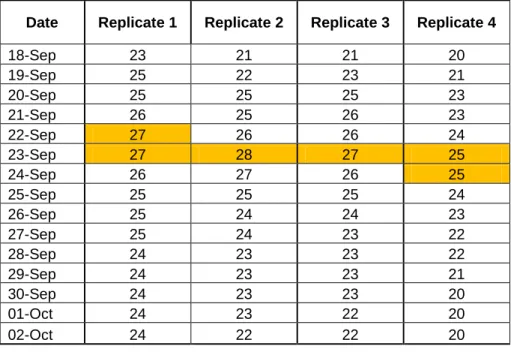
Table # 1.2 Soil Temperatures in the four replicated areas treated with oil radish
covered with plastic (Experiment A) 42
Chart # 1.3 Effect of different treatments on the cucumber root gall index at harvest
(Experiment A) 45
Chart # 1.4 Effect of different treatments on the cucumber root gall index at harvest
(Experiment B) 46
Chart # 1.5 Effect of different treatments on cucumber fruit yield (Experiment A) 47
Chart # 1.6 Effect of different treatments on cucumber fruit yield (Experiment B) 48
Chart # 2.1 Effect of different treatments on nematode population reduction in soil 73
Chart # 2.2 Effect of different treatments on the cucumber root gall index at end
season 75
Chart # 2.3 Effect of different treatments on cucumber fruit yield 77
Table # 3.1 Cost components of the different treatments 95
Table # 3.2 Total costs of the different treatments 96
Chart # 3.1 Effect of different treatments on net profit percentage (Experiment A) 97
Chart # 3.2 Effect of different treatments on net profit percentage (Experiment B) 99
Chart # 3.3 Effect of different treatments on net profit percentage (Experiment C) 100
Table # 4.1 Net profits achieved by the different treatments 101
13
List of Figures
Figure # 1 Degradation of glucosinolates into different organic compounds 22
Figure # 2 Heavy infestation of the previous tomato crop with root-knot nematodes 28
Figure # 3 The Baermann funnel apparatus 30
Figure # 4 Growth of the oil radish crop before plowing and incorporation to the
soil 30
Figure # 5 Plowing and incorporation of the oil radish crop to the soil by tractor 30
Figure # 6 Methyl Bromide fumigation and covering of the oil radish crop with
plastic 31
Figure # 7 Germination of the Parthenocarpic cucumber seeds 31
Figure # 8 Treatment areas (1 to 16) and plants marked (in red) for yield data
collection 32
Figure # 9 Timeline of operations (Experiment A) 33
Figure # 10 Experimental design (Experiment A) 34
Figure # 11 Growth of the oil radish & arugula crops before plowing and
incorporation to the soil 36
Figure # 12 Timeline of operations (Experiment B) 36
Figure # 13 Experimental design (Experiment B) 37
Figure # 14 60 days after transplantation of cucumber plants (Experiment A) 38
Figure # 15 Galls on roots taken from the untreated fallow (A) & oil radish with
plastic cover (B) 44
Figure # 16 Galls on roots taken from the different treatments (Experiment B) 45
Figure # 17 The overhead mini-sprinkler system in operation 68
Figure # 18 Plowing of the green manure crops with small tractor 69
Figure # 19 Timeline of operations (Experiment C) 70
14
GENERAL INTRODUCTION
The total agricultural area of Lebanon is 247,939 hectares, 42% of which is irrigated and 40% of Lebanese work in agriculture and related activities (FAO, 2000). Greenhouse production is a major component of the overall Lebanese agriculture. In 2001, the total area of greenhouses in Lebanon reached around 2,000 hectares, of which vegetable production occupied 92%, cut flowers 5% and strawberries 3% (UNDP-Methyl Bromide Alternatives Project-Ministry of Environment of Lebanon, 2001). More than 80% of the 33,781 greenhouses in Lebanon are located along the coastline, which stretches over 225 kilometers from North to South on the East side of the Mediterranean (UNDP-Methyl Bromide Alternatives Project-Ministry of Environment of Lebanon, 2001).
Due to Lebanon’s warm and humid climate and short winter seasons, Meloidogyne incognita (root-knot Nematode) is a major factor limiting vegetable production. Whereas some tolerant varieties of tomato exist and are widely used by farmers, all cucumber cultivars (Cucumis sativus L.) remain susceptible to M. incognita, and therefore cucumber production in Lebanon is strongly associated with pre-plant soil fumigation. Methyl Bromide was almost exclusively used for this purpose throughout many years. However, despite of its efficiency in controlling of a wide range of soil borne pests and pathogens in high-value horticultural crops, this fumigant was found to be as one of the most powerful Ozone Depleting Substances (ODS). It was reported that the Bromine atom it contains acts quickly in the stratosphere to break down sixty times as much Ozone as a Chlorine atom from CFC emissions. Methyl Bromide released from human activities was found responsible for 5 to 10% of the total Ozone depletion in the earth’s stratospheric layer (MBTOC, 1997). Based on these considerations, in 1997 parties of the Montreal Protocol for the protection of the Ozone layer agreed to phase out Methyl Bromide and replace it with ozone friendly, safe and viable alternatives throughout the world. It was also decided to start gradual decrease immediately and achieve complete phase out of Methyl Bromide by year 2005 in the developed counties, and by year 2015 in Article 5 countries, among which is Lebanon (UNEP, 2001).
Having ratified the Montreal Protocol back in the year 1993, Lebanon was committed to its resolutions. Therefore, following the implementation of a demonstration project on the
15
efficiency of various chemical and non-chemical methods as alternatives to Methyl Bromide, the Ministry of Environment of Lebanon launched two large-scale projects in the year 2002, in coordination with the United Nations Development Programme (UNDP) and the United Nations Industrial Development Organization (UNIDO), having as objective to replace Methyl Bromide with environment friendly and viable alternatives by the year 2008, seven years before the 2015 deadline.
The most common soil-borne problems necessitating Methyl Bromide fumigation in Lebanon are nematodes, fungal diseases such as Fusarium and Verticillium wilt and weeds. However, nematodes are by far farmers’ fiercest enemies. Among a variety of plant parasitic nematode species, Meloidogyne incognita (also referred to as Southern root-knot nematode) is the most wide-spread and ravaging. Root-knot nematodes cause extensive damage to a wide variety of economically important crops (Sasser, 1980). Along with M. javanica and M. arenaria, M. incognita is considered as one of the most important species in terms of both its worldwide geographical distribution and very large host range, reaching up to 3,000 different plant species (Lamberti, 1979).
In addition to the egg and adult stages, the life cycle of Meloidogyne incognita comprises four juvenile stages and four molts. The first stage juvenile develops in the egg, where the first molt usually occurs. Infective second-stage juveniles (or J2) emerge free from the egg into the soil or plant tissue, penetrate the rootlets and start feeding on the host plant by establishing feeding cells and consuming photosynthate produced in the leaves to supply their energy demands (Bergeson, 1966; Kochba and Samish, 1971). This results in the increase of root weight and decrease of shoot weight, thus shifting the root-to-shoot balance (Fortnum et al., 1991). Due to the fact that second stage juveniles of the root-knot nematodes enter the roots, create a permanent feeding site, become sedentary before molting and stay there for the rest of their life cycle, this specie is classified as sedentary endoparasite. The second, third and fourth molts occur producing the third, fourth and fifth or adult stages, respectively.
Root-knot nematodes have very small sizes, infective second stage juveniles varying between 0,3 and 0.5 mm in length. Females can reach up to 1.3 mm. Their bodies are externally coated with a transparent layer of cuticle (Sasser & Carter, 1985). They are able
16
to move easily from infested fields to clean soils through a variety of means, like equipment and machinery, transplants, organic manure, irrigation, and farm animals.
Symptoms of root-knot nematode attack are clearly visible as formation of galls on the roots and wilting of the upper parts of the infected plants. Moreover, soil-borne diseases can more easily penetrate in roots infected by nematodes, thus causing damage superior to the one caused by the nematode itself. Furthermore, Lebanon’s warm and hot climate, short winter seasons, light sandy soils, and high soil moisture enhance rapid multiplication of this species.
Due to the impending phase out of Methyl Bromide, finding alternative nematode management option has become an imperative necessity. While most chemical nematicides are either less effective, or too expensive, and associated with a negative impact on the environment and public health (Braun and Supkoff, 1994), there is increased interest in non-chemical nematode management strategies. Therefore, soil biofumigation with the use of green manure crops was among the alternatives proposed by the Lebanese Ministry of Environment in the production of vegetable crops (Methyl Bromide Alternatives-Lebanon, 2001).
Many studies indicate that plants of the Brassicaceae family have the potential of replacing fumigant nematicides in the production of a large variety of crops. Growing trap crops in nematode infected soils triggers nematode eggs to hatch and induces the larvae to enter the crop wherein they are unable to reproduce (Hafez & Sundararaj, 1999). Green manure crops also increase soil organic matter and nutrient levels, thus increasing soil productivity (Davis et al., 1996). Incorporation of nematode resistant crops in rotation with sugar beet is the most economical method of sugar beet cyst nematode management. It has the potential of reducing nematode population considerably, as it improves soil structure and retains nutrients in the soil (Redondo and Villarias, 1991).
McLeod et al. (2001) have found that three weeks after inoculation, more M. javanica were developed into mature females in tomato than in eight Brassica crops tested. Ploeg and Stapleton (2001) stated that there is significant interaction between soil temperature, treatment time needed, and effect of soil amendment with chopped broccoli leaves for nematode control. They found that whereas at 20°C adding broccoli to the soil had very little
17
effect on M. incognita and M. javanica infestation and root galls of melon, at 30-35°C dramatical reduction of infestation and galling was observed.
Among many other Brassica plants, arugula (Eruca sativa) possesses biofumigant and trap crop qualities, and it has recently gained popularity as a potential alternative to Methyl Bromide. In a study conducted to determine the effects of arugula on three different glasshouse populations of Meloidogyne hapla, egg and egg mass production occurred at a normal rate in all nematode infected tomatoes, but no eggs were produced in more than 80% of arugula plants twenty-eight (28) days after nematode inoculation (Melakeberhan et al., 2006). Fourteen to fifteen weeks after sowing, Eruca sativa and Raphanus sativus were found as poor non-host species to the root-knot nematode (Curto et al., 2005). Pattison et al. (2006) also found that Raphanus sativus (oil radish) and Sinapis alba (white mustard) are consistently resistant to nematode reproduction and the formation of root galls.
Brassica varieties with high glucosinolate content are likely to suppress soil borne pests when provided with adequate moisture, which increases the release of isothiocyanates in the soil (Morra and Kirkegaard, 2002). All fifteen Brassica green manure crops tested have substantially lowered M. javanica population levels, with significant treatment effects at both application rates of ten and twenty g/kg soil. M. javanica has produced more eggs on tomato than on most of the Brassica crops. However, no correlation was found between higher concentrations of the dominant glucosinolates (progoitrin hydroxy-3-butenyl], glucobrassicanapin [4-pentenyl] and gluconasturtiin [2-phenylethyl]) of the Brassica green manure crops and low egg production. This lead to conclude that mechanisms other than glucosinolate-derived toxicity are involved in the nematicidal activity of Brassica green manure crops (McLeod and Steel, 1999).
Potter et al. (1998) had also found that despite the suppression of 56.2-95.2% of the exposed root lesion nematodes (Pratylenchus neglectus) through soil amendment with Brassica leaf tissues, little of this nematicidal effect of Brassica leaves could be related to either total glucosinolate content or any individual glucosinolate, as determined by HPLC analysis. While total glucosinolate levels had a non-significant relationship with nematode mortality, levels of 2-phenylethyl glucosinolate was significantly correlated with nematode suppression (P < 0.001). Amendment of soils with equimolar levels of purified 2-phenylethyl isothiocyanate resulted in comparable levels of nematode mortality, which lead Potter et al.
18
to conclude that 2-phenylethyl glucosinolate had a role in the suppressive impact of Brassica green manure crops.
Further investigation of glucosinolates and their hydrolysis derivatives resulting from Brassica plants and particularly the isothiocyanates revealed that in-vitro pure glucosinolate had no effect on the root-knot nematode Globodera rostochiensis, while a mixture of 2-phenylethyl glucosinolate (1 mg/ml) and myrosinase (25%) caused 100% mortality within eight hours (Serra et al., 2002).
Several ornamentals and flowers were also used as green manure crops with satisfactory results. Chrysanthemum (Chrysanthemum coronarium) has significantly reduced M. incognita and M. javanica infection of tomato roots both in the greenhouse and microplots. Green plant parts have been more effective than flowers. Chrysanthemum has preserved its nematicidal activity even when applied as a dried material. An aqueous extract of Chrysanthemum has inhibited hatching of both M. incognita and M. javanica from eggs and egg-masses (Bar-Eyal et al., 2006).
The nematicidal and nematostatic characteristics of Tagetes species have also been subject to many studies. Sellami and Zemmouri (2001) found that mortality of M. incognita Chitwood juveniles increases at higher concentrations of aqueous extracts from different parts of Tagetes erecta plants. Egg hatching was also inhibited by 80%. Intercropping a susceptible crop (tomato) with Tagetes erecta reduced nematode population in the soil and root galling as well. In a similar study, Antoon Ploeg (2000) found that while galling and M. incognita populations were high when tomato followed tomato, they were very low when tomato was planted after pre-cropping with Tagetes patula (marigold) for eight weeks.
Some Crotalaria species have also been investigated for their susceptibility to M. incognita and M. javanica as compared to a sensitive host (tomato). Nematode invasion rates on Crotalaria spp. did not exceed 7.17% for M. incognita and 5.25% for M. javanica, while reaching 97% on tomato. Moreover, the inoculated J2 which invaded tomato plants developed into adult females, while those on Crotalaria spp. rarely developed beyond the third stage, confirming that all Crotalaria spp. evaluated are non-host or poor host plants to nematodes (Germani and Plenchette, 2005). In another study, Jourand et al. (2004) found that an aqueous extract from leaves of Crotalaria virgulata subsp. grantiana had nematostatic effect on second-stage juveniles of M. incognita at the concentration of one (1)
19
mg/ml (w/v). Furthermore, freeze-dried aqueous extract from C. grantiana leaves added to a sterile sandy substrate at the same concentration prevented M. incognita infestation of susceptible tomato plants.
Biofumigation with the use of green manure crops of the Brassica family may be an effective management practice to reduce populations of plant parasitic nematodes, thus having the potential to replace fumigant nematicides (Mojtahedi et al., 1991; McFadden et al., 1992; Spak et al., 1993; Angus et al., 1994). However, a better understanding of the actual effects of green manure crops on the root-knot nematodes is needed in order to elaborate improved management techniques.
In the past years, extensive research has been carried on the efficiency of biofumigation in the management of plant parasitic nematodes on plants of the Solanaceae family, which have a certain degree of resistance or tolerance towards these nematodes. However, little information is available on the applicability of this technique in the production of susceptible vegetable crops, such as cucumbers under greenhouses. Similarly, literature is rich in studies on the effects of different types of plastic mulches on nematode populations in the soil in different treatment methods varying from soil solarization to chemical fumigants (Singh, N.D. 1975; Wang, D. 1999, Ou, L.T. et al., 2005;), but in general, very limited data is available on the effect of covering soil treated with green manure crops with plastic on the management of nematodes through biofumigation. No such literature was found on any such effect of covering soil treated with oil radish specifically. Since biofumigation is a recent non-chemical plant protection management practice introduced in the Middle East and Mediterranean countries, no information is available on the efficacy of these crops on nematode management in these regions. In this research, two different crops of the Brassica family suitable for greenhouse production in Lebanon were identified as potential green manure crops. The efficacy of each crop, a local cultivar of arugula (Eruca vesicaria sativa) and a commercial cultivar of oil radish (Raphanus sativus oleifera cv. Boss), was investigated in terms of suppression of the root-knot nematode (M. incognita) population in the soil, and gall formation on the roots of cucumber crops in two consecutive growing seasons. Furthermore, the effect of covering the green manure crops with plastic tarp after their incorporation to the soil was tested. In addition, the effect of incorporation of a low dose of a chemical nematicide (Oxamyl-Vydate) to soil treated with each green manure crop was
20
studied. Finally, the effect of each treatment on total yield of cucumber was investigated, and a cost benefit analysis was done in order to explore the profitability of each treatment method as compared to Methyl Bromide.
In the light of the global phase out of Methyl Bromide and the recommendation made by the Lebanese Methyl Bromide Alternatives Project regarding the adoption of biofumigation as an alternative, in addition to the lack of adequate knowledge on the proper application method of this technique, scientific evaluation of the efficiency and cost effectiveness of biofumigation in Lebanon is an important area of research. In case where biofumigation (either alone or combined with low doses of some chemicals) is found a reliable and cost effective method, many small-scale farmers of Lebanon and the region would adopt it as a sound alternative to Methyl Bromide.
Therefore, the objective of this study was to evaluate the efficacy of two biofumigation crops (with and without plastic tarp) separately and in combination with Oxamyl in the management of the root-knot nematodes in greenhouse cucumbers.
Methodology followed in the design of the experiments was based on a practical and applied research approach, in order to facilitate the adoption and application of biofumigation by farmers. For this purpose, all materials used in the experiments such as seeds of the two biofumigation crops and the cucumber variety, irrigation equipment and the plastic tarp were selected according to their availability in the local market.
21
CHAPTER I
Efficiency of Oil Radish (Raphanus sativus oleifera) and Arugula (Eruca vesicaria
sativa) in Controlling Meloidogyne incognita in Greenhouse Cucumber Crops With
and Without Plastic Tarp.
INTRODUCTION
Root-knot nematodes are a group of semi-sedentary endoprasitic nematodes which form specialized feeding cells in the roots of their host plants and utilize the photosynthate produced in leaves for their energy needs (Kochba and Samish, 1971). As a result of such parasitism, root weight increases while shoot weight declines (Fortnum et al., 1991). Root-knot nematodes attack a wide range of horticultural crops causing severe damage reaching up to 25% yield loss. Meloidogyne incognita and M. javanica are the most abundant nematode species in parts of Europe, Africa, South America and the Caribbean (Trudgill et al., 2000). They are one of the most serious problems of greenhouse crop production in Lebanon as well. In the last decades soil fumigation with Methyl Bromide has been the most common method of nematode control in the country (Abou-Jawdah et al., 2000). However, due to increasing environmental concerns, Methyl Bromide is being phased out globally in accordance with the requirements of the Montreal Protocol for the preservation of the Ozone layer. Most countries will ban Methyl Bromide by year 2015 (UNEP 1992). In addition, the impacts of many pesticides on the environment and human health are currently being re-evaluated (Obenauf, 2004).
Therefore, more emphasis is currently put in the development of environment friendly, efficient and sustainable alternative techniques (Katan et al., 1976; Dufur et al., 2002). Some chemicals produced by certain plants have the potential of managing some pests and nematodes (Oka et al., 2006). Many chemicals having nematicidal properties have been isolated mainly from plants of the Asteraceae family (Gommers and Bakker, 1988). Besides having the great advantage of being safe for the environment and public health (Chitwood, 2002), these phytochemicals have shown nematicidal activity at low concentrations in-vitro (Uhlenbroek and Bijloo, 1958 & 1959). However, effective nematode management with the use of such phytochemicals in field applications could not be achieved
22
(Gommers and Bakker, 1988). It is most likely because of this that none of these chemicals have been developed into large scale commercial nematicides (Oka et al., 2006), except some formulations of neem (Azadirachta indica A. Juss.) extracts, which are commercially available and used mostly to control some insects and nematodes in IPM systems (Mojumdar, 1995). Nematicidal and fungicidal properties have been attributed to elecampane (Inula viscosa, syn. Cupularia viscosa, Dittrichia viscosa) (Asteraceae), which is a widespread plant in the Mediterranean countries. On lettuce, Oka et al. (2006) found that leaf extracts of this plant reduced M. javanica populations and gall index at concentrations as low as 0.01%. However, only a slight nematicidal effect was observed in the field (Oka et al., 2006).
The effect of many antagonistic fungi and bacteria has also been evaluated. Gautam et al. (1995) have assessed the effects of the fungus Paecilomyces lilacinus and the bacterium Bacillus subtilis separately and in combination with the common water hyacinth Eichhornia crassipes as green manure on the root-knot nematode. Both treatments of P. lilacinus and B. subtilis have increased tomato yields. However, best results were obtained when both of these biocontrol agents were used together in combination with water hyacinth as green manure (Gautam et al., 1995).
In the past decade growing interest was shown towards using cover crops in general and Brassicaceae plants as green manures for the control of soil fungi, nematodes, and other soil-borne pests in sustainable vegetable production systems (Lazzeri et al., 1993; Buskov et al., 2002; Davis et al., 1996). It has been found that the biocidal activity of these plants is due to the presence of certain organic compounds in their cells called glucosinolates, which in the presence of the myrosinase enzyme also released by the plants, are hydrolyzed into biologically active compounds such as thiocyanates, isothiocyanates, nitriles, epithionitriles (Fahey et al., 2001).
Figure # 1:
23
Reproduction of the root-knot nematode in plant roots depends on the ability of the host plant to supply the necessary habitat and energy for the development of the nematode (Fortnum et al., 2000).
A good cover crop grown for the management of plant-parasitic nematodes has non-host or poor non-host status for the target nematodes, and has suppressive effect on the nematode population in the soil when applied as green manure (Viaene and Abawi, 1998).
Several cover crops have suppressed major nematode pests efficiently (Brodie et al., 1970; McSorley and Dickson, 1995; Rodriguez-Kabana et al., 1989; Wang et al., 2002). Cereal cover crops such as rye (Secale cereale) and oat (Avena sativa) have decreased M. incognita populations better than certain leguminous cover crops like lupine (Lupinus angustifolius), crimson clover (Trifolium incarnatum) and hairy vetch (Vicia villosa) during the winter season in Florida (Wang et al., 2004).
Various studies on the host status of different Brassicaceae plants to M. incognita have produced diverse results. An experiment on the life cycle of Meloidogyne on some Brassicaceae plants has confirmed the good host status and the resulting poor nematicidal activity of these plants (Mojtahedi et al., 1991; McLeod & Steel, 1999, McSorley & Frederick, 1995).
Other experiments have shown considerable differences between root penetration and development potentials of M. incognita and M. javanica stage two juveniles in resistant Brassicaceae plants and other susceptible crops such as cucumber (Cucumis sativus), pepper (Capsicum annuum) and tomato (Lycopersicon esculentum) (Haynes & Jones, 1976, Khan & Khan, 1991).
It has also been found that while Meloidogyne completes its life cycle in four weeks on garden tomato, the same process takes fourteen weeks on Eruca sativa cv. Nemat, and it does not complete at all on Raphanus sativus cv. Boss. Therefore, Raphanus sativus cv. Boss and Eruca sativa cv. Nemat are classified as non-host and poor-host species, respectively (Curto et al., 2005).
Melakeberhan et al. (2006) have found that production of eggs and egg masses in all tomato plants infected with M. hapla has occurred normally, whereas no eggs were produced in more than 80% of the Eruca sativa plants tested after twenty-eight (28) days of inoculation. This has shown that Eruca sativa hinders the development and reproduction of
24
M. hapla, and therefore it has the potential of being used as a trap crop for the management of M. hapla.
Another laboratory experiment has shown that although the sugarbeet cyst nematode Heterodera schachtii was able to penetrate certain oil radish varieties tested (Nemex and Pegletta), reproduction was significantly suppressed and no cysts were developed over the duration of the experiment (Gardner and Caswell-Chen, 1993).
A study has found that differentiation of H. schachtii into males or females depends on the ability of the host plant to produce certain essential amino acids (Grundler et al. 1991). A study investigating host suitability of several plants has found that vetiver grass has shown clear resistance to both M. javanica and M. incognita race two (Fourie et al., 2007). Among six crucifer plants tested in Spain, Eruca vesicaria and Raphanus sativus have been the least suitable hosts for Meloidogyne arenaria and M. incognita, respectively (Liebanas & Castillo, 2004).
In-vitro trials have shown a clear nematicidal effect of glucosinolate degradation products (GLDPs) of Eruca sativa cv. Nemat, Raphanus sativus cv. Boss, and Brassica juncea sel. ISCI 99 on M. incognita. Results have indicated that GLDPs of these same plants also have an immobilization effect on J2 larvae of Meloidogyne incognita (Lazzeri et al., 2004). In another laboratory experiment incorporation of fresh broccoli (Brassica oleracea) tissue at a 10% ratio (20 g of broccoli tissue in 200 g of soil) to the top 10 cm of soil in 50 cm glass tubes has reduced Meloidogyne J2 populations by 57 to 80% in three weeks. Better results (up to 96% reduction) were obtained by mixing a much lower ratio (2%) of broccoli tissue throughout the length of the glass tube (Roubstova et al., 2007).
However, several bio-assay experiments on Brassica tissues have shown that the actual conversion ratio of glucosinolates into isothiocyanates may be very low, and that it is difficult to establish a distinct relationship between the glucosinolate content of these tissues and their pest suppressive effect in general (Angus et al., 1994; Lazzeri and Manici, 2001; Harvey et al., 2002), and nematostatic features in specific (Kirkegaard and Matthiessen, 2004). Therefore, the extent to which nematode control achieved through biofumigation can be properly attributed to the isothiocyanate gases released remains unclear.
Many studies have confirmed that the use of plastic mulch generally increases soil fertility and improves yields of various crops (Johnson et al., 1979; Sumner et al., 1978;
25
Katan et al., 1987), including cucumbers grown in nematode infested fields (Coates-Beckford et al., 1997). The application of many chemical and non-chemical nematode management techniques necessitates a plastic cover. Plastic is generally used either to increase soil temperatures or to maintain volatile fumigants or gases released by some chemicals or crops in the soil for longer periods. For this purpose, clear or transparent plastic is used to cover either the entire soil or the planting beds (Saha et al., 2007).
1,3-Dichloropropene and Chloropicrin are good examples of liquid volatile fumigants requiring plastic cover (Ou et al., 2005). Other non-volatile chemicals like Metam Sodium quickly convert into methyl isothiocyanate (MITC) when applied in moist soils, and therefore plastic cover is needed to trap the MITC released in the soil (Smelt et al., 1989). Wang et al. (1999) have found that virtually impermeable films (VIF) are 190 times less permeable to cis- and trans-1,3-Dichloropropene than regular polyethylene films (Wang et al., 1999).
Many scientists have referred to soil solarization as one of the most efficient non-chemical methods of soil treatment for nematode control (McGovern and McSorley, 1997; Chellemi et al., 1993; Heald and Robinson, 1987; McSorley and McGovern, 2000; McSorley and Parrado, 1986).
Soil solarization alone or in association with certain chemical nematicides and fungicides has been recommended by many researchers as a sound alternative to Methyl Bromide for the control of soil-borne pests and pathogens (De Vay and Stapleton, 1998; Lamberti et al., 2000). The effects of the use of various types of plastic mulches on nematodes through soil solarization have been studied. In general, transparent or clear plastic mulches have proven more effective in heating the soil than black mulches (Katan, 1981). Through a field experiment in Jamaica, Coates-Beckford et al. (1998) found that at
average monthly air temperatures above 26 oC and daily sunshine exceeding seven hours,
covering the soil with plastic mulches of suitable thickness increases cucumber yields and suppresses the population of phytoparasitic nematodes throughout the growing period (Coates-Beckford et al., 1998).
Lamberti et al. (2000) have reported that covering the soil with plastic for eight weeks at soil temperatures varying between 35 and 45 oC at 15 cm depth did not increase lettuce yields significantly in Italy, and had little effect on M. incognita. Whereas incorporation of Fenamiphos at 15 kg of ai/ha with solarization increased lettuce yields and reduced root gall
26
index significantly in a period of four weeks. Similar results were obtained on tobacco. Increasing rates of Fenamiphos and longer solarization periods have always produced better results (Lamberti et al., 2000).
However, results of nematode control with soil mulching have often been inconsistent and even contradictory. Hankin et al have found that covering the soil with plastic is an ineffective measure to control nematodes in low temperatures (Hankin et al., 1982). Others have reported that solarization does not have a long lasting suppressive effect on nematodes as compared to Methyl Bromide (Overman and Jones, 1986).
Singh (1975) has reported that the use of plastic mulch even in combination with chemical nematicides has not enhanced the effect of these chemicals on plant parasitic nematodes (Singh, 1975). Furthermore, taking into account the positive effect of higher soil temperatures caused by mulching on root growth and development, Johnson et al. (1981) have assumed that plastic mulches account for providing nematodes with additional feeding sites, thus increasing their populations. However, they have found that plastic mulches reduce crop losses and increase yield of vegetable crops (Johnson et al., 1981). While several studies have shown that covering the soil with mulch for solarization has no effect on M. incognita (Stapleton and De Vay, 1983; Barbercheck and Von Broembsen, 1986; Duncan et al., 1992), many others have found that a large variety of plant-parasitic nematodes including some Meloidogyne species can be effectively controlled by soil solarization (Siti et al., 1982; Porter & Merriman, 1983; Lamondia & Brodie, 1984). It was also found that soil solarization with plastic mulch improves plant growth as effectively as different nematicides or solarization-nematicide combinations (Stapleton & De Vay, 1986; Stapleton et al., 1987). Plastic mulching of the soil has also reduced the population densities of different plant-pathogenic nematodes in cucumber crops significantly (Coates-Beckford et al., 1997).
Around a decade later, McSorley has proposed to use solarization in combination with other non-chemical nematode control measures such as cover crops. Although he has found that whereas solarization and a poor host cowpea variety (Vigna unguiculata (L.) Walp) used alone were not effective, their combination was as effective as Methyl Bromide in reducing root-knot nematode populations and increased pepper yields even more than Methyl Bromide (McSorley, 1998).
27
Stapleton and Duncan (1998) have found that incorporating residues of broccoli and other cruciferous plants to the soil before covering it for solarization can control M. incognita even at sub-lethal temperatures (Stapleton, J.J. & Duncan, R.A., 1998). Ploeg and Stapleton (2001) have demonstrated that covering the soil with plastic mulch increases soil temperature, and found a strong correlation between soil temperature levels and the effect of soil amendment with broccoli residues on M. incognita.
Bello et al. (2004) have studied the efficacy of various sources of organic material as potential biofumigation crops. They have found that most crops studied can effectively control Meloidogyne spp. In general, they have recommended using material with a C/N ratio between eight and twenty (20), at an application rate of fifty (50) tons of material per hectare. They have mainly stressed on the necessity of covering the soil with plastic for at least fifteen (15) days and application of biofumigation only at soil temperatures above 20°C (Bello et al., 2004) for satisfactory results.
Lopez-Perez et al. (2005) have studied the effect of soil temperature on the efficiency of three plant residues and chicken manure in root-knot nematode suppression. They have found that residues of broccoli, tomato, and melon plants have all reduced galling and root-knot infestation of the subsequently grown susceptible tomato cultivar at soil temperatures of 25 °C and 30 °C, but not at 20 °C (Lopez-Perez et al., 2005). These results correspond to the earlier findings of Ploeg and Stapleton (2001) (Ploeg and Stapleton, 2001) and with recommendations by Bello et al. (2004) (Bello et al., 2004). Furthermore, through the experiment mentioned above, Lopez-Perez et al. have found that at a soil temperature of 25 °C, residues of broccoli have reduced root-knot population more than tomato and melon, but at 30 °C residues of all three plants have been equally effective. Finally, chicken manure used alone without addition of any plant residue has also reduced galling and M. incognita infestation at 30°C (Lopez-Perez et al., 2005).
Two field experiments were carried out in Lebanon to assess the efficiency of oil radish (Raphanus sativus oleifera) and arugula (Eruca vesicaria sativa) in the control of M. incognita in greenhouse cucumber crops, in addition to the effect of covering these two biofumigation crops with plastic tarp for 15 days (experiment A) and 10 days (experiment B).
28
MATERIALS AND METHODS
Two field experiments (A & B) were conducted during consecutive autumn growing seasons in two adjacent greenhouses located in the coastal area of Northern Mount Lebanon. History of heavy root-knot nematode infestation was the main criterion for the selection of both greenhouses.
Experiment A
The first experiment was conducted in a greenhouse with an area of 336 m2 (8 x 42
meters) covered with low density polyethylene (LDP) sheets of 200 microns thickness. During the previous (fall) season, the greenhouse was planted with a commercial tomato variety. The tomato crop was completed by mid-July, immediately after which the soil in the greenhouse was plowed and chemical fertilizer (NPK 17:17:17) was applied at the rate of
150 kgs per dunum (1 dunum=1000 m2). The total greenhouse area of 336 m2 was divided
into sixteen (16) plots of 4.75 x 4.00 (19 m2) each for the application of the following four treatments with four replicates for each treatment (as shown in figure # 10, page 34):
1. Control (untreated fallow) 2. Methyl Bromide
3. Oil radish (Raphanus sativus) variety “Boss” without plastic cover 4. Oil radish (Raphanus sativus) variety “Boss” with plastic cover
Figure # 2:
29
An initial soil analysis was done immediately following plowing after the end of the previous tomato crop for the confirmation of infestation of the soil with root-knot nematodes. For this purpose, a W shaped sampling pattern recommended by Hafez S. was followed, whereby five individual core samples of 500 grams were taken from the intended cucumber crop’s root zone at a depth of 25 cm from each of the sixteen (16) plots, after removing the top 5 cms of soil (Hafez, S., 1997). Every five core samples taken from each plot were mixed together and a composite representative sample of each treatment area was thus prepared for analysis. A final sample can be considered as representative if it contains a minimum of four individual cores for each acre (Hafez, S., 1997), which is equivalent to one individual core for every 1,000 m2. Therefore, samples prepared as described above were representative since they contained one individual core sample for every 3.8 m2 of each treatment area. Representative samples thus formed were analyzed at the laboratory of the Ministry of Environment of Lebanon through a combination of Cobb’s sifting and gravity method (Cobb, N.A., 1918) and the Baermann funnel technique (Baermann, G., 1917). This method was preferred due to the availability of the needed sieves and equipment in Lebanon, as well as to the fact that it minimizes the disadvantages of each method when applied separately. Furthermore, this combination method is found ideal for extraction of nematodes from relatively small soil samples. It usually results into clear samples containing less silt and debris, and allows recovery of both sluggish and active nematodes (Dela Cruz, et al., 2005).
Representative soil samples were washed, and nematodes were extracted from the soil suspensions by differential sieving with the use of 60, 200 and 400 mesh sieves (250-µm, 74-µm and 38-µm aperture respectively). Sieving through the 400 mesh screen was repeated three times in order to collect any small sized nematodes that might have been passed through the sieve the first two times. Collected nematode suspensions were then placed on the Baermann funnels which were filled with water, and kept in normal room temperature of 27 oC. After 48 hours 10 ml of water containing the root-knot nematodes having migrated to the bottom of the funnels were collected in beakers, and identification and count of these nematodes took place at room temperature (Baermann, G., 1917; Barker, K.R., 1985).
30
An overhead mini-sprinkler system was installed in the greenhouse for the irrigation of the eight oil radish plots of treatments three and four. On August 9th, the oil radish (R. sativus spp. oleifera, variety “Boss”) was sown at the rate of 3 kg per dunum. Six weeks
later, on September 18th, when the height of green manure crop reached 35-40 cm, it was
plowed and incorporated into the soil with a rotary tiller. Four plots were covered with transparent polyethylene films (50 microns), and another four plots were left uncovered.
Figure # 4:
Growth of the oil radish crop before plowing and incorporation to the soil
Figure # 5:
Plowing and incorporation of the oil radish crop to the soil by tractor
Figure # 3 (A, B, C):
The Baermann funnel apparatus
A B
31
On the same day, four plots were treated with Methyl Bromide at the rate of 100 kg/ dunum, and covered with the same type of polyethylene sheet.
Soil temperature was recorded under each of the four replicated areas treated with oil radish and covered with plastic at 30 cms depth, in order assess any correlation between the effect of oil radish and heat on the nematode population. Readings were taken on daily basis at 16:00 hours (when soil temperature would presumably be at its peak), during the entire period of two weeks when the soil was covered with plastic (from 18 September until 2 October).
Fifteen days later, on October 3rd the plastic films were removed from all covered plots and the soil was aerated for three days, after which a drip irrigation system was installed to incorporate ten plantation rows in the greenhouse.
Meanwhile, 1,000 seeds of a Parthenocarpic cucumber variety (Thiram treated Noble
F1 produced by De Ruiter Seeds) were sown in plastic pots on September 25th. Eleven (11)
days after planting, on October 6th, 840 cucumber seedlings were transplanted in the greenhouse in ten rows at an inter-row spacing of 45 cms, according to the experimental design previously developed.
Figure # 6:
Methyl Bromide fumigation and covering of the oil radish crop with plastic
Figure # 7:
32
Usual cultural practices were followed throughout the growing season in terms of irrigation, fertilization and pest control in all treatment areas identically. Irrigation was carried out daily through the drip irrigation system, generally in early mornings in order to avoid rapid evaporation of water. While the frequency of irrigation was kept constant during the entire growing season, the length of each irrigation session gradually increased throughout the season as needed. A 20-20-20 NPK + micronutrients compound soluble fertilizer was applied through the drip irrigation system starting fifteen (15) days after transplantation and was continued regularly throughout the season. Finally, chemical pesticides were used for the control of common pests and diseases such as spider mites, powdery and downy mildews equally on all treatment plots.
Collection of data initiated as early as the preliminary stages of soil preparation with soil sampling and analysis for the detection, identification and counting of root-knot nematodes in soil samples taken from each of the sixteen (16) treatment areas. This operation was first done immediately after soil preparation, following the end of the previous tomato crop (pre-treatment) on August 2nd. A second soil analysis was performed directly after the application of the different treatments (post-treatment) on October 6th. The actual cost of application of each treatment was calculated in all details, and the market value of the crop resulting from each treatment area was recorded for the evaluation of the cost/benefit analysis (Chapter III).
Following transplantation of the cucumber seedlings to the greenhouse, ten plants were marked in the middle of each treatment area and the yield resulting from these plants was recorded. For marking these plants the following procedure was followed: Each of the five plantation rows in every treatment area contained nine plants in length. The two middle rows of each treatment area were selected for harvest, and the five middle plants in each of these two rows were marked. The first two and the last two plants of each row were considered as buffers, and therefore were not marked, and harvest from these plants was not recorded.
Figure # 8:
Treatment areas (1 to 16) and plants marked (in red) for yield data collection Figure # 7: Methyl Bromide fumigation and covering of the oil radish crop with plastic
33
The plant vigor and quality of resulting yield were also evaluated. Furthermore, the actual market value of the yield was recorded for every harvest. Finally, immediately after the last harvest at the end of the season on December 16th, five plants were freed from the soil from each treatment area, and the roots were washed. Root galls were assessed using 0-10 scale, with 0 = no galls, 1 = very few small galls, 2 = numerous small galls, 3 = numerous small galls of which some are grown together, 4 = numerous small and some big galls, 5 = 25% of roots severely galled, 6 = 50% of roots severely galled, 7 = 75% of roots severely galled, 8 = no healthy roots but plant is still green, 9 = roots rotting and plant dying, 10 = plant and roots dead (Zeck, 1971).
Figure # 9:
Timeline of operations (Experiment A)
Pre-treatment soil analysis
2 August 9 August 18 September 3 October 6 October 5 November 29 December
Sowing of the biofumigation crop Plowing and covering the biofumigation crop with plastic film Removal of the plastic film Post-treatment soil analysis and transplantation of cucumber seedlings First harvest of the cucumber crop Last harvest of the cucumber crop
34
Experimental design (Experiment A)
Road side
65
90
55
90
55
90
55
90
55
90
65
8 meters
Legend Treatment areas
Buffer zone
Lines included in the buffer zone Lines of soil sampling
Lines of harvest
Untreated Fallow (Control) MeBr
Oil radish without plastic cover Oil radish with plastic cover
42
meters
1 2 3 16 15 14 13 12 11 10 9 8 7 6 5 4 Figure # 10:35
Experiment B
The second experiment (B) initiated immediately after the end of the following summer season in a greenhouse having the same area and adjacent to the one used in experiment A. The previous tomato crop was removed and the soil was plowed after the incorporation of preparatory organic and chemical fertilizers at usual rates. The total area of the greenhouse was divided into twenty (20) plots of 3.80 x 4.00 (15.20 m2) for the application of the following five treatments with four replicates each (as shown in figure # 13, page 37):
1. Control (untreated fallow) 2. Methyl Bromide
3. Oil radish (Raphanus sativus spp. oleifera) variety “Boss” without plastic cover 4. Oil radish (Raphanus sativus spp. oleifera) variety “Boss” with plastic cover 5. Arugula (Eruca vesicaria spp. sativa) with plastic cover
Initial soil samples were taken immediately after soil plowing following the end of the previous tomato crop for the confirmation of significant infestation of the soil with root-knot nematodes. For this purpose, five soil samples of 500 grams were taken from each of the twenty (20) plots from a depth of 25 cms. Every five samples were mixed together and a representative sample of each plot was analyzed at the laboratory of the Ministry of Environment of Lebanon through a combination of Cobb’s sifting and gravity method (Cobb, N.A., 1918) and the Baermann funnel technique (Baermann, G., 1917), as per details mentioned earlier (refer to experiment A).
An overhead mini-sprinkler system was then installed for the irrigation of the eight oil radish and four arugula plots.
On September 9th, both biofumigation crops (R. sativus and Eruca vesicaria) were sown in twelve (12) treatment areas in the greenhouse at the rate of 3 kg per dunum (1 dunum=1000 m2). Six weeks later (October 15th), when the height of the green manure crops reached 35-40 cm, they were plowed and incorporated into the soil with a rotary tiller. Four plots with R. sativus were covered with fifty (50) microns of transparent polyethylene films, while four others were left uncovered. Similarly, the four plots of Eruca vesicaria were covered with the same type of plastic films.
36
In parallel, four different plots were treated with Methyl Bromide at the usual rate of 100 kg. per dunum, and covered with polyethylene on October 15th. After ten days, plastic was removed from the covered biofumigation and Methyl Bromide treated plots, and the soil was aerated for three days, after which a drip irrigation system was installed to incorporate ten plantation rows in the greenhouse.
At this stage, soil samples were taken again from each of the twenty treatment plots for nematode analysis. Eight hundred and forty seedlings of a Parthenocarpic winter variety cucumber (Thiram treated Noble F1 produced by De Ruiter Seeds) were transplanted into the greenhouse on 28 October at an inter-row spacing of 45 cms. Common cultural practices were followed throughout the growing season in terms of irrigation, fertilization and pest control in all treatment plots identically.
Soil analysis was carried out to determine pre and post application population levels of the root-knot nematode in the different treatments. Furthermore, cucumber yields were recorded for each treatment throughout the growing season, in addition to the cost of each treatment and the actual market value of the yield produced from each treatment plot, for the evaluation of the cost/benefit analysis. Finally, root gall indexing was performed at the end of the season on April 16th, using a 0-10 scale as described previously.
Figure # 11:
Growth of the oil radish & arugula crops before plowing and incorporation to the soil
Figure # 12:
Timeline of operations (Experiment B)
1 September 9 September 15 October 25 October 31 October 21 December 16 April
Pre-treatment soil analysis Sowing of the biofumigation crops Plowing and covering the biofumigation crops with plastic film Removal of the plastic film
Post-treatment soil analysis and transplantation of cucumber seedlings First harvest of the cucumber crop Last harvest of the cucumber crop Figure # 12:
37
Experimental design (Experiment B)
Road side
65
90
55
90
55
90
55
90
55
90
65
8 meters
Legend Treatment areas
Buffer zone
Lines included in the buffer zone Lines of soil sampling
Lines of harvest
Untreated Fallow (Control) MeBr
Oil radish without plastic cover Oil radish with plastic cover Arugula with plastic cover