UNIVERSITÉ DE SHERBROOKE Faculté de génie
Département de Génie Chimique et Génie Biotechnologique
BIOFILTRATION DU MÉTHANE AVEC OU SANS
COMPOSÉS TRACES SUR UN MILIEU FILTRANT
INORGANIQUE
METHANE BIOFILTRATION WITH OR WITHOUT TRACE GAS COMPOUNDS ON AN INORGANIC FILTER BED
Thèse de doctorat Spécialité : Génie Chimique
Camille MÉNARD
Jury : Michèle HEITZ (directrice) Josiane NIKIEMA (co-directrice) Antonio AVALOS RAMIREZ Ryszard BZREZINSKI Peter JONES
Eric DUMONT - École des Mines de Nantes
1+1
Published Heritage Branch Direction du Patrimoine de l'édition 395 Wellington Street Ottawa ON K 1A0N 4 Canada 395, rue Wellington Ottawa ON K1A 0N4 CanadaYour file Votre référence ISBN: 978-0-499-00416-1 Our file Notre référence ISBN: 978-0-499-00416-1
NOTICE:
The author has granted a non
exclusive license allowing Library and Archives Canada to reproduce, publish, archive, preserve, conserve, communicate to the public by
telecomm unication or on the Internet, loan, distrbute and sell theses
worldwide, for commercial or non commercial purposes, in microform, paper, electronic and/or any other formats.
AVIS:
L'auteur a accordé une licence non exclusive permettant à la Bibliothèque et Archives Canada de reproduire, publier, archiver, sauvegarder, conserver, transmettre au public par télécomm unication ou par l'Internet, prêter, distribuer et vendre des thèses partout dans le monde, à des fins com merciales ou autres, sur support microforme, papier, électronique et/ou autres formats.
The author retains copyright ownership and moral rights in this thesis. Neither the thesis nor substantial extracts from it may be printed or otherwise reproduced without the author's permission.
L'auteur conserve la propriété du droit d'auteur et des droits moraux qui protege cette thèse. Ni la thèse ni des extraits substantiels de celle-ci ne doivent être imprimés ou autrement
reproduits sans son autorisation.
In compliance with the Canadian Privacy A ct some supporting forms may have been removed from this thesis.
W hile these forms may be included in the document page count, their removal does not represent any loss of content from the thesis.
Conform ém ent à la loi canadienne sur la protection de la vie privée, quelques
form ulaires secondaires ont été enlevés de cette thèse.
Bien que ces form ulaires aient inclus dans la pagination, il n'y aura aucun contenu manquant.
La vie, c ’est comme une bicyclette, il faut avancer pour ne pas perdre l 'équilibre. Albert EINSTEIN
L’émission de méthane par les activités anthropiques est un problème majeur en relation caractérisé par le changement climatique. Les sites d ’enfouissement sanitaire sont responsables de près d ’un quart des émissions de méthane au Canada, deuxième gaz à effet de serre après le dioxyde de carbone. Les solutions de récupération du biogaz, issu de la décomposition des déchets déposés dans des sites d ’enfouissement, majoritairement composé de méthane et de dioxyde de carbone, existent. La valorisation énergétique par combustion, le brûlage par torchère, se développent dans plusieurs sites. Cependant, les critères de faisabilité technique et de rentabilité économique de ces procédés ne permettent pas de couvrir l’ensemble des sources et des types d ’émissions de biogaz. Dans cette configuration de non respect de ces critères, la biofiltration est un procédé d’élimination du biogaz attractif en particulier pour les sites d ’enfouissement de petites tailles et ceux «âgés», ainsi qu’en complément des solutions de valorisation énergétique.
Les paramètres essentiels de la biofiltration du méthane sont expliqués dans une revue de littérature. De plus, une présentation de la composition complexe du biogaz est réalisée dans cette revue de littérature, permettant l’introduction d’un nouveau paramètre à prendre en considération lors de l’élimination du méthane : la présence de composés à l’état de traces. Ainsi, après l’étude approfondie de trois paramètres sur la biofiltration du méthane, la température, la quantité de solution nutritive et la concentration de dioxyde de carbone, l’étude s’est portée sur l’analyse de deux mélanges binaires avec l’introduction soit d ’un composé aromatique, (mélange méthane/toluène), soit d’un composé aromatique halogéné, (mélange méthane/chlorobenzène). Les effets de la charge d’entrée du méthane et de la variation de la concentration des composés traces ont été étudiés. Enfin, la recherche s’est finalement concentrée sur l’influence du toluène sur l’élimination du méthane en effectuant des expériences micro-cinétique et macro-cinétique sur ce mélange spécifique. La présence de ces deux composés traces s’avère .avoir un impact négatif sur l’élimination du méthane, en particulier aux charges d’entrée de méthane testées les plus élevées.
Mots-clés : Biofiltration, méthane, toluène, chlorobenzène, sites d’enfouissement sanitaire, cinétique
ABSTRACT
Anthropic methane emissions are o f major concern since it contributes to climate change. Landfills are responsible for about one quarter of methane emissions in Canada, second most important greenhouse gas after carbon dioxide.
Energetic valorization is an adapted solution to capture the biogas, produced from the decomposition of organic matter buried in sanitary landfills, and to convert this mixture of methane and carbon dioxide into heat and electricity. Many sites develop the valorization by combustion or by flaring. However, biogas emissions are not entirely treated, as some technical and economical criterion may be encountered. Biofiltration will be more appropriate for old and small landfills, and will be an efficient complementary treatment to the energetic valorization.
The most important parameters of biofiltration had been reviewed. Moreover, the complexity of the biogas mixture is presented, which underline a new parameter to take into account in methane elimination: the presence of trace gas compounds. First, three important parameters, the temperature, the amount o f nutrient solution and the concentration o f carbon dioxide, were studied to be optimized in the configuration of biofiltration o f methane alone. Then, two binary mixtures were analyzed, with the introduction of either an aromatic compound for the mixture methane/toluene, or a halogenated aromatic compound for the mixture of methane/chlorobenzene. The effect of the inlet load of methane was studied, in addition to the concentration of trace gas compounds. Finally, the study focused on the influence o f toluene on methane biofiltration in regards to the micro-kinetic or macrokinetic parameters. Both toluene and chlorobenzene, the two trace gas compounds evaluated, had a negative impact on methane biofiltration at high inlet loads of methane, while negligible effects were observed at lower methane inlet load.
Le travail effectué n’aurait pas la même valeur sans les personnes m’ayant soutenu lors de ce doctorat.
Mes remerciements se dirigent en premier lieu à Michèle Heitz, qui a dirigé cette thèse, Professeure au département de Génie Chimique et de Génie Biotechnologique de la Faculté de Génie de l’Université de Sherbrooke, pour m’avoir accueillie au sein de son laboratoire et de m’avoir soutenu pendant ces trois années.
D’autre part, j ’ai eu la chance de rencontrer des personnes fabuleuses au sein du laboratoire BIOCOM. Je remercie tout d’abord Antonio Avalos Ramirez de m ’avoir orientée tant sur le campus de l’Université que dans ma recherche tout au long de mon doctorat. Merci pour ta patience, tes nombreuses relectures et conseils. Je tiens à remercier Louise Bibeau, Josiane Nikiema pour leur présence et discussions. Je n ’oublierai pas Matthieu, Marc et Karine pour mon initiation à la langue et coutume québécoises. Tout comme les échanges sur nos thèmes de recherche respectif et les différentes discussions d’actualité et autres.
Je tiens également à remercier Serge Gagnon, Alain Lévesque, Isabelle Arsenault, Salimata Haidara, Stéphane Guay non seulement pour leurs nombreuses connaissances techniques et les différents sauvetages des appareils du laboratoire, mais aussi pour les différents moments passés ensemble à discuter. Merci également aux secrétaires, France Auclair, Louise Carbonneau, Louise Chapdelaine et Sylvie Lebrun pour leur disponibilité, leur sourire et leur aide.
Merci à Pascal Viens pour les connaissances microbiologiques apportées au projet, à Dominic Bergeron et Stéphanie de Arietta pour avoir contribué à l’avancement du projet lors de leur stage.
Je ne saurai comment remercier les personnes rencontrées à Sherbrooke pour les amitiés créées, à mes colocataires Hélène et Léa pour avoir partagé des beaux moments de vie rue Gillespie et ailleurs.
Merci à mon père, Philippe, et Sylvie, à ma mère Brigitte, à mes frères et sœurs, Etienne et Clément, Laura et Énora, de m’avoir laissé partir et de m’avoir soutenue malgré l’éloignement.
Enfin, je n’oublierai pas de remercier mon drôle de chum Vincent qui m’a accompagnée pendant ces années de doctorat.
RESUME... i
ABSTRACT... ii
REMERCIEMENTS... v
LISTE DES FIGURES...ix
LISTE DES TABLEAUX... xi
LISTE DES SYMBOLES... xiii
LISTE DES ACRONYMES... xvii
CHAPITRE 1. INTRODUCTION...1
CHAPITRE 2. ÉTAT DE L’ART...5
Avant-propos... 5
2.1 Abstract... 7
2.2 Introduction... 7
2.3 Biogas... 8
2.3.1 Landfills...8
2.3.2 Biogas generation in landfills...8
2.3.3 Biogas composition - Trace compounds... 9
2.4 Valorisation or Elimination... 14
2.4.1 Valorization as energy... 14
2.4.2 Treatment processes... 14
2.5 Theory of Methane Biofiltration...16
2.5.1 Microorganisms responsible for methane biodégradation and the Methane Mono-Oxygenase enzyme... 16
2.5.2 Presence o f trace compounds: co-metabolism and inhibition...18
2.6 Main Parameters for Methane Biofiltration... 21
2.6.1 Moisture content...21
2.6.2 Bed temperature... 22
2.6.3 Packing material... 22
2.6.4 Nutrient concentrations...22
2.6.5 Oxygen requirements and exopolysaccharides (EPS) formation... 24
2.6.6 Empty Bed Residence Time (EBRT)... 24
2.6.7 Study o f parameters in the presence of NMOCs... 25
2.7 Kinetics and the interaction with other substrates...25
2.8 Conclusion... 25
2.9 Acknowledgements...26
CHAPITRE 3. ETUDES COMPLÉMENTAIRES SUR LA BIOFILTRATION DU MÉTHANE SEUL... 27
Avant-propos ... 27
3.1 Abstract... 29
3.2 Introduction... 29
3.3 Materials and methods...32
3.3.1 Experimental set-up...32
3.3.2 Operating conditions...33
3.3.4 Parameters for modeling the effect of the temperature... 34
3.4 Results and discussion...35
3.4.1 T emperature experiments... 35
3.4.2 Experiment on the amount of nutrient solution...40
3.4.3 Experiment on the concentration of carbon dioxide... 41
3.5 Conclusion... 42
3. 6 Acknowledgements...43
CHAPITRE 4. EFFET DES GAZ TRACES, TOLUÈNE ET CHLOROBENZÈNE, SUR LA BIOFILTRATION DU MÉTHANE...45
A vant-propos... 45
4.1 Abstract... 47
4.2 Introduction... 47
4.3 Materials and methods... 48
4.3.1 Experimental set-up...t... 48
4.3.2 Operating conditions...50
4.3.3 Analytical methods...50
4.3.4 Parameters for analyzing biofilter performances...51
4.3.5 Microbial counting...51
4.4 Results and discussion...52
4.4.1 Effect of methane concentration... 52
4.4.2 Effect o f toluene on methane biodégradation profile...54
4.4.3 Effect of chlorobenzene on methane biodégradation profile... 58
4.4.4 Carbon dioxide production... 61
4.4.5 Evolution o f the pressure drop... 63
4.4.6 Effect of trace gas compounds on microbial population... 64
4.5 Conclusion...6 6 4.6 Acknowledgments...67
CHAPITRE 5. DÉTERMINATION DES PARAMÈTRES CINÉTIQUES... 69
A vant-propos... 69
P réam bule...70
5.1 Abstract... 77
5.2 Introduction... 77
5.3 Materials and Methods...79
5.3.1 Experimental set-up and operating conditions of the continuous biofilter...79
5.3.2 Analytical method...79
5.3.3 Parameters for analyzing biofilter performance...80
5.3.4 Micro-kinetics protocol...80
5.3.5 Determination of micro-kinetic constants...81
5.3.6 Equations for macrokinetic model o f C7H8 and CH4 biodégradation... 82
5.4 Results... 82
5.4.1 Micro-kinetic analysis of single-kinetic experiments...82
5.4.2 Macrokinetic analysis of the biofiltration of methane in presence of toluene...84
5.5 Discussion...8 6 5.6 Conclusion...89
5.7 Acknowledgments...90
CHAPITRE 6 CONCLUSION...91
LISTE DES RÉFÉRENCES... 109
Figure 2.1: Synthetical schema o f the pathway of CH4 oxidation... 16
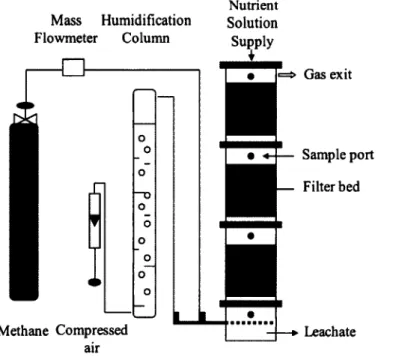
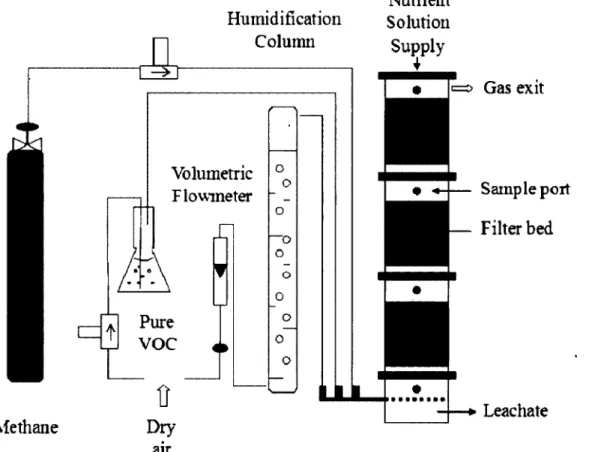
Figure 3.1: Laboratory-scale biofiltration system... 32
Figure 3.2: Inlet Load (IL), Carbon dioxide Production rate (PCO2); Elimination Capacity (EC) and Temperature (T) as a function of time for BFH... 36
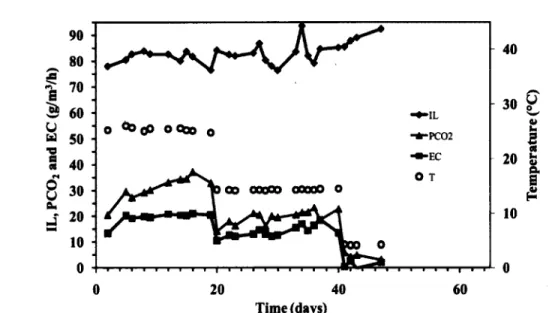
Figure 3.3: Inlet Load (IL), Carbon dioxide Production rate (PCO2), Elimination Capacity (EC) and Temperature (T) as a function o f time for BFL... 37
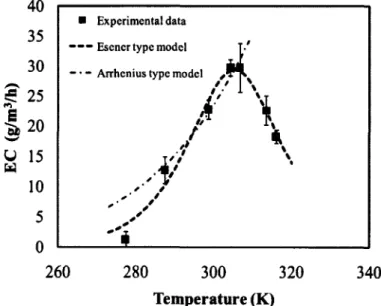
Figure 3.4: Effect of temperature on EC on methane in an inorganic biofilter... 39
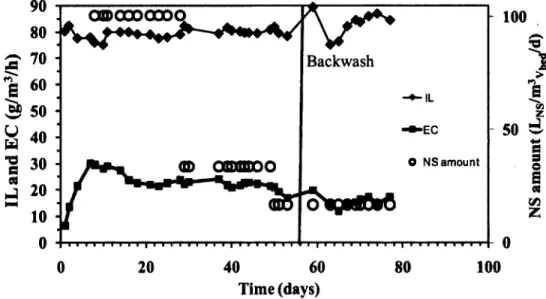
Figure 3.5: IL, EC and NS amount as a function o f time for B FA ...41
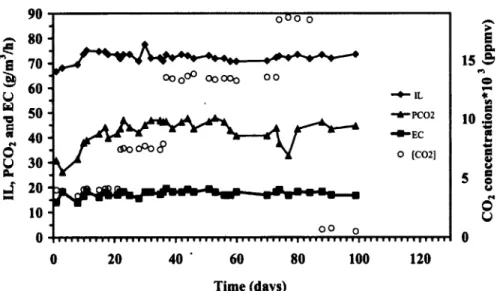
Figure 3.6: IL, EC, PCO2 and CO2 concentrations as a function o f time for B F C ... 42
Figure 4.1: Experimental set-up of the biofilter. The numbers 1,2,3 correspond to the stage number of the biofilter... 49
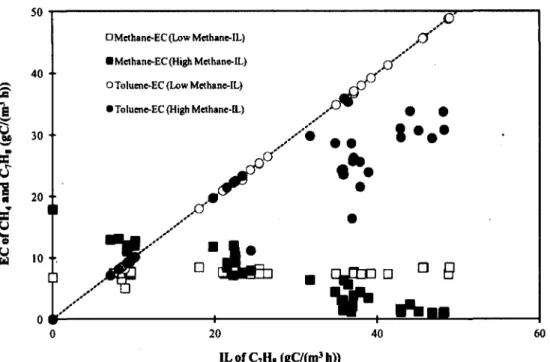
Figure 4.2: Elimination capacity of both methane and toluene as a function of inlet load of toluene at methane inlet load of 16 gC/(m3 h) (low-IL : light color) and 6 6 gC/(m3 h) (high-IL : dark color). The dotted line represents the 100% elimination of toluene... 53
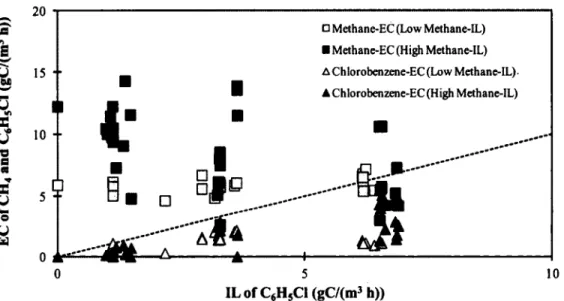
Figure 4.3: Elimination capacity of both methane and chlorobenzene as a function o f inlet load of chlorobenzene at methane inlet load of 16 gC/(m3 h) (low-IL : light color) and 6 6 gC/(m3 h) (high-IL : dark color). The dotted line represents the 100% elimination o f chlorobenzene 54 Figure 4.4: Toluene (a) and methane (b) removal per stage as a function of toluene concentration for BT1... 55
Figure 4.5: Toluene (a) and methane (b) removal per stage as a function of toluene concentration for BT2... 57
Figure 4.6: Chlorobenzene (a) and methane (b) removal per stage as a function of chlorobenzene concentration for BC1... 59
Figure 4.7: Chlorobenzene (a) and methane (b) removal per stage as a function of chlorobenzene concentration for BC2... 60
Figure 4.8: Logarithm of the average Colony Forming Unit of the entire biofilter as a function of the inlet carbon concentration for the toluene-treating biofilter (circle) and the chlorobenzene-treating biofilter (triangle)... 65
Figure 5.1: Experimental specific growth rate of microorganisms treating CH4 as a function of concentration of CH4 at the different concentrations o f C7H8 (No Toluene, Low [Toluene]: 0.7 and High [Toluene]: 3.4 gC/m3) ...83
Figure 5.2: Experimental and simulated specific growth rate o f microorganisms present in the biofilter treating CH4 in presence of low [C7H8] = 0.7 gC/m3 or high [C7H8] = 3.4 gC/m3 84 Figure 5.3: Elimination capacity of CH4 as a function of the logarithmic concentration o f CH4 for experimental data (points) and for predicted values using kinetic models (lines) at different concentrations of C7H8 (0,0.7 and 3.4 gC/m3)... 85
Figure 5.4: Experimental and simulated elimination capacity of CH4 in presence of low [C7H8] = 0.7 gC/m3 or high [C7Hg] = 3.4 gC/m3... 8 6 Figure A.l : Exemple de chromatogramme obtenu pour l’hydrolyse d ’un échantillon de biofiltres... 99
Figure B.l: Taux de production de biomasse en fonction de la capacité d ’élimination totale pour la charge d’entrée de CH4 égale à 16 gC/(m3 h) (BT1)... 102
X LISTE DES FIGURES
Figure B.2: Taux de production de biomasse en fonction de la capacité d ’élimination totale pour la charge d’entrée de CH4 égale à 6 6 gC/(m3 h) (BT2)... 103 Figure B.3: Taux de production de biomasse en fonction du temps pour la charge d’entrée de CH4 égale à 16 gC/(m3 h) (BC1)... 104 Figure B.4: Taux de production de biomasse en fonction du temps pour la charge d’entrée de CH4 égale à 6 6 gC/(m3 h) (BC2)... 105
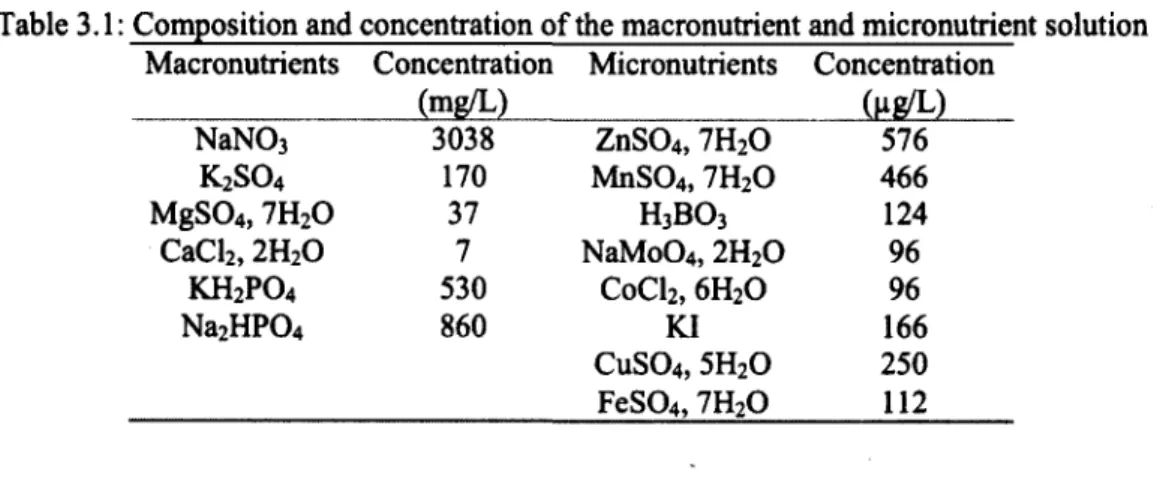
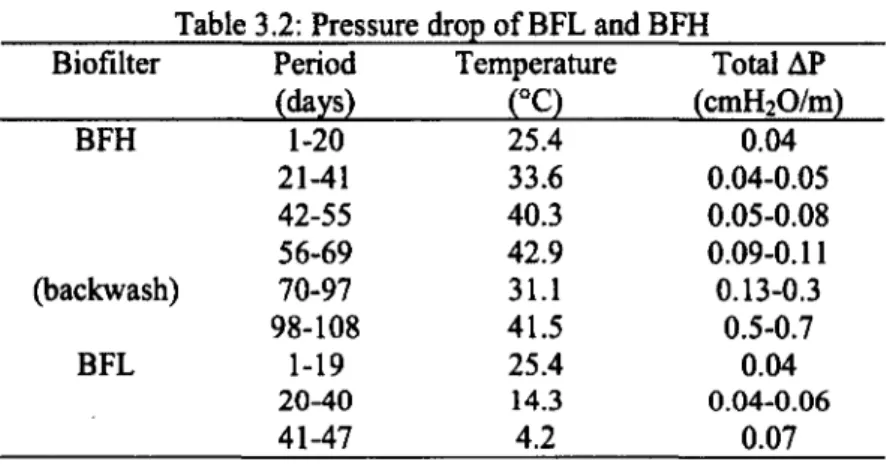
Table 2.1 : Landfill biogas composition according to biogas sample campaigns...13 Table 2.2: Experiments of CH4 oxidation in the presence of NM OCs...20 Table 3.1: Composition and concentration of the macronutrient and micronutrient solution... 33 Table 3.2: Pressure drop of BFL and BFH...38 Table 3.3: Temperature coefficients for Arrhenius and Esener models...39 Table 4.1: Composition and concentration of the macronutrient and micronutrient solution...50 Table 4.2: Results of the multiple comparisons of methane-EC means as a function of the trace gases inlet load for BT1, BT2 and BC1, BC2... 53 Table 4.3: Results of the linear regression of PCO2 as a function o f total EC for a) BT1, BT2 and b) B C 1.B C 2... 62 Table 4.4: Initial and final pressure drop of the biofilters... 63 Table 4.5: Total microbial count for each stage and the corresponding conversion (X) of toluene, chlorobenzene and methane per stage for BT1, BT2 and BC1, BC2...6 6 Table 5.1 : Micro-kinetic parameters of CH4 obtained in absence or presence of C7H8 in the biofilter...84 Table 5.2: Macrokinetic parameters of CH4 obtained in absence or presence of C7H8 in the Biofilter...86 Table 5.3: Kinetic parameters (pmax, KM) obtained for methane oxidation in presence of trace gases in conventional biofilter or soil from landfill cover...8 8 Tableau A .l: Caractéristiques des colonnes utilisées pour l’analyse HPLC des
monosaccharides... 98 Tableau A.2: Teneur en glucose (mgCôHnfVg lit filtrant sec) de chaque étage en fonction des concentrations de CH4, C7H8 et CsHsCl dans le biofiltre...99 Tableau B.l : Coefficient de rendement de biomasse associé soit à la biodégradation du CH4, soit de la biodégradation du C7H8 reportés dans la literature... 103 Tableau C.l : Définition des paramètres Cm et Cout ... 107 Tableau C.2: Bilan de masse sur le carbone des biofiltres présentant le mélange CH4/C7H8 du chapitre 5 ...108
Symboles biologique et chimique
Symbole Définition
C6H5C1 Chlorobenzène/Chlorobenzene
CôHnOé Glucose
c 7H8 Toluène/Toluene CaC03 Carbonate de calcium
CH2F2 Difluorométhane/Difluoromethane CH3COOH Acide acétique/Acetic acid
c h3f Méthylfluorure/Methylfluoride c h3o h Méthanol/Methanol
c h 4 Méthane/Methane
co2
Dioxyde de carbone/Carbon dioxide DCE Dichloroéthylène/Dichloroethylene DCM Dichlorométhane/Dichloromethane h 2 Dihydrogène/Dihydrogen h2o Eau/Water h 2s o 4 Acide sulfurique HCFC Hydrochlorofluorocarbone HCHO Formaldéhyde/FormaldehydeHC1 Acide chlorhydrique/Hydrochloric acid
Hg Mercure/Mercury
HMF Hydroxyméthylfurfural/Hydroxymethylfurfural MMO Méthane Mono Oxygénase/Methane
Monooxygenase n 2 Diazote/Nitrogen NH4+ Ammonium N 0 2- Nitrite NO-f Nitrate
02
Oxygène/OxygenPCE T étrachloroéthylène/T etrachloroethylene RuMP Ribulose monophosphate
TCA T richloroéthane/T richloroethane TCE T richloroéthylène/T richloroethylene TFA Acide trifluoroacétique
Symboles mathématiques
Symbole Définition Unité
A Facteur pré-exponentiel du modèle
d’Arrhénius
g/(mJ h) A ’ Facteur pré-exponentiel du modèle d’Esener g/(m3 h)
b Constante de mortalité de la biomasse
-Cgcc Quantité de biomasse accumulée dans le biofiltre
gC/(m3h)
C bf Concentration du polluant dans le biofilm mol/m3
CcoS Concentration du cosusbtrat mol/m3
Cgs Concentration du substrat de croissance mol/m3
C i,in Concentration du composé i à l’entrée du biofiltre
gC/m3
Ci,out Concentration du composé i à la sortie du biofiltre
gC/m3
Cin Quantité de carbone introduite dans le biofiltre
gC/(m3h)
CLix Concentration du lixiviat gC/m3
Cout Quantité de carbone sortant du biofiltre gC/(m3 h)
CsN Concentration de la solution nutritive gC/m3
D bf Coefficient de diffusion dans le biofilm m2/s D,) Coefficient de diffusion de mélange binaire m2/s Ea Énergie d’activation du modèle d’Arrhénius kJ/mol Ei, E2 Énergie d’activation du modèle d’Esener kJ/mol
I Concentration de l’inhibiteur mol/m3 ou gC/m3
i Composé i
-j Composé j
-k Facteur pré-exponentiel du modèle d’Esener
-K, Constante d’inhibition mol/m3 ou gC/m3
Km Constante de demi-saturation du modèle de Monod
mol/m3 ou gC/m3
Koo Coefficient de partition organique carbone/eau
“
Ks Constante de demi-saturation mol/m3 ou gC/m3
K sc o s Constante de demi-saturation du cosubstrat mol/m3 ou gC/m3
N Flux molaire mol/(m2 s)
P Pression Pa
Qair Débit d’air m3/s
Qsn Débit de la solution nutritive m3/s
R Constante des gaz parfaits J/(mol K)
t Temps s
T Température K ou °C
Topt Température optimale K o u ° C
rg
Capacité de transformation du substrat molcos/molGsV Volume du lit filtrant m
X Concentration de biomasse mol/m3 Xact Concentration de biomasse active mol/m3
y Fraction molaire mol/mol
Lettres grecques
p Biomasse inactive
(i Taux de croissance spécifique j' 1
Umax_______ Taux de croissance spécifique maximal_______ _______
Acronymes Définition/Définition
ASTM American Society for Testing and Materials CIV/VIC Composé inorganique volatil/Volatil inorganic
compound
CONM/NMOC Composé Organique Non méthanique/Non Methane Organic Compound
COV/VOC Composés organiques volatils/Volatil Organic Compound
EC Capacité d ’élimination/EIimination capacity EPS Substance exopolymérique/Exopolymeric
substance
GES/GHG Gaz à effet de serre/Green House Gas effect
GWP Global Warming Potential
HPLC Chromatographie liquide haute pression
IL Charge d’entrée/Inlet load
IPCC Intergovernmental Panel o f Climate Change NS Solution nutritive/Nutrient solution
PB Production de biomasse
PC 02 Production de dioxyde de carbone SES Sites d’enfouissement sanitaire STP Standard Temperature and Pressure
TC Carbone total/Total carbon
TOC Carbone organique total/Total organic carbon YB .Coefficient de rendement de biomasse YCOz Coefficient de rendement de CO2
Le méthane (CH4) est le deuxième gaz à effet de serre (GES) après le dioxyde de carbone (CO2). Son pouvoir de réchauffement global est 25 fois supérieur à celui du CO2 sur une période de temps de 100 ans. L’origine du CH4 dans l’atmosphère résulte à la fois de phénomènes naturels pour 40% et de phénomènes anthropiques pour 60%. Parmi ces derniers, au Canada en 2008, le secteur de l’énergie était responsable à 51% des émissions tandis que l’agriculture et les sites d ’enfouissement sanitaire (SES) participaient à hauteur de 24 et 20 % respectivement, l’occupation du sol représentait 4% des émissions. Selon un groupe de travail de l’Intergovemmental Panel of Climate Change (IPCC), les émissions de CH4 des SES atteignaient 18% dans le monde en 2004. Dans le bilan des GES émis par le Canada en 2008, les SES participent à hauteur de 3%.
Les SES sont des lieux conçus pour entreposer les déchets non dangereux résultant des différentes activités anthropiques (industrielles, domestiques, etc.). La présence de déchets organiques dans les SES est responsable des émissions de CH4 et de CO2 qui constituent le biogaz dans des concentrations de l’ordre de 40-60% (v/v). D’autres composés sont présents dans des proportions moindres comme les composés soufrés, chlorés, différents composés organiques volatils et l’eau. La dangerosité du biogaz, tant par l’effet explosif du CH4 à des concentrations de 5 à 15% v/v dans l’air, que son effet sur le changement climatique ou de la présence de composés cancérigènes ou toxiques, montre l’importance de maîtriser les émissions des SES.
La valorisation énergétique du biogaz a permis de mettre en avant le potentiel du biogaz comme moyen de production d’électricité et/ou de chaleur pour les besoins des SES et du voisinage proche et réduire les émissions dans un même temps. Cependant, cette solution technologique n ’est applicable que pour certaines conditions de concentrations de CH4 et de débits de gaz. Ainsi, seuls les SES de grandes tailles, recevant un minimum de 200 000 tonnes de déchets et relativement récents (moins de 2 0 ans, ou autrement dit encore ouverts) respectent ces conditions de faisabilité technique et de rentabilité économique. Les SES de petites tailles ainsi que les plus anciens ne rentrent pas dans ces critères. Par conséquent, des moyens alternatifs doivent être mis en place pour éliminer les émissions toujours présentes.
2 INTRODUCTION
Les torchères, dans lesquelles le biogaz est simplement brûlé, exigent également des concentrations de CH4 et de débit de gaz minimum. La biofiltration est un traitement d ’élimination qui a déjà fait ses preuves pour les composés odorants et quelques composés organiques volatils.
La biofiltration repose sur le principe que certaines bactéries sont capables de dégrader le CH4 en générant des produits d’oxydation comme le CO2, l’eau (H20), des sels minéraux et de la biomasse, moins dangereux que le ou les produit(s) de départ. Les études menées depuis le début des années 1990 ont permis de développer cette biotechnologie sous de nombreux aspects tant dans les connaissances sur les microorganismes que sur les procédés de mise en œuvre. Ainsi des couvertures de recouvrement aux biofiltres fermés, les capacités d’oxydation du CH4 ont été étudiées sous plusieurs aspects. Les paramètres tels que la température, le taux d’humidité, la concentration en azote et autres nutriments, les besoins en oxygène et la formation des substances exopolymériques, la charge d’entrée et le débit de résidence du gaz sont relativement bien documentés. De la même façon, les connaissances sur la nature et les propriétés du matériau filtrant sont essentielles à l’optimisation du bioprocédés. D’autant plus que le matériau retenu influe de façon significative sur le coût du procédé. Cependant, la plupart des études sont centrées sur l’élimination du CH4 seul sans interaction avec d’autres composés.
La présence de plus de 200 composés organiques non méthaniques (CONMs) différents dans le biogaz, observés dans plusieurs campagnes d’échantillonnages effectuées sur des SES, soulève l’interrogation sur les interactions probables entre le CH4 et ces CONMs. En effet, les bactéries dégradant le CH4 possèdent des propriétés de cométabolisme pouvant par conséquent dégrader d’autres sortes de composés. Par ailleurs, d’autres composés peuvent se révéler comme des inhibiteurs perturbant ainsi l’oxydation du CH4. C’est dans cette direction que la recherche de ce présent mémoire a été orientée : en ciblant un composé majoritaire, fréquemment reporté dans les analyses de biogaz comme le toluène et un composé de nature chloré, présent à de plus faibles concentrations, le chlorobenzène. L’élimination de ces deux composés par biofiltration a également été l’objet de recherche, plus fréquente pour le toluène ce qui s’explique par sa plus grande biodégradabilité.
Les objectifs du présent mémoire sont : 1) approfondir les connaissances sur la biofiltration du CH4 seul sur un lit filtrant inorganique en optimisant la température de fonctionnement du biofiltre, la quantité de solution nutritive hebdomadaire et en vérifiant l’influence de la concentration de CO2 sur l’élimination du CH4 et 2) observer et quantifier l’influence de, l’introduction de deux composés traces, le toluène et le chlorobenzène, sur les performances d’élimination du CH4.
Dans la première partie du présent mémoire, la problématique des SES, du biogaz et de la biofiltration est présentée à l’aide de la revue de littérature soumise au journal Environmental Reviews, publiée le 20 février 2012. Dans les trois chapitres suivants, les trois articles, les deux premiers publiés et le dernier soumis, permettent de faire la synthèse des expériences menées et des résultats obtenus au laboratoire. Dans le premier article figure l’optimisation de la température, de la quantité de la solution nutritive et de la concentration de CO2 sur l’élimination du CH4 seul. Le deuxième article porte sur les premières observations faites de la biofiltration de deux mélanges binaires : CIVtoluène et CIVchlorobenzène, pour deux concentrations de CHL» différentes et une variation des concentrations des composés traces. Finalement, le troisième article traite des expériences microcinétiques et macrocinétiques effectuées sur le mélange binaire CItytoluène pour déterminer et quantifier le type d’interaction observée. En préalable de cet article, une revue de littérature sur la modélisation et la cinétique est présentée.
Parmi l’ensemble des expériences réalisées, seuls certains résultats figurent dans les articles pour des questions de synthèse. Toutefois, des données intéressantes méritent d’être reportées dans ce manuscrit. Il s’agit dans un premier temps des expériences préliminaires concernant l’analyse de la biomasse, en particuliers les exopolysaccharides (EPS), formée dans les biofiltres. Ces résultats sont présentés dans l’annexe A. L’annexe B présente, quant à elle, le suivi de la production de biomasse, réalisé par pesée des biofiltres, lors des expériences faites pour l’article sur les mélanges binaires. Ces résultats apportent des éléments importants sur le fonctionnement des biofiltres.
Avant-propos
Auteurs et affiliations :
C. Ménard : étudiante au doctorat, Université de Sherbrooke, Faculté de génie, Département de Génie Chimique et de Génie Biotechnologique
A. Avalos Ramirez : post-doctorant, Université de Sherbrooke, Faculté de génie, Département de Génie Chimique et de Génie Biotechnologique et Institut de Recherche et de Développement en Agroenvironnement (IRDA), Québec, Canada
J. Nikiema : professeur associée, Université de Sherbrooke, Faculté de génie, Département de Génie Chimique et de Génie Biotechnologique et Chercheuse, Sciences Environnementales, International Water Management Institute (IWMI), Accra, Ghana
M. Heitz : professeure titulaire, Université de Sherbrooke, Faculté de génie, Département de Génie Chimique et de Génie Biotechnologique
Date d’acceptation : 1er novembre 2011 État de l’acceptation : Version finale publiée Revue : Environmental Reviews
Référence : Ménard et al., 2012a
Titre français : Biofiltration du méthane et des composés traces provenant de sites d ’enfouissement sanitaire : une revue de littérature
Contribution au document :
Cet article contribue à la thèse en faisant une revue de littérature des moyens existants de traiter les émissions de méthane et de composés traces provenant de SES. Il s’attarde en particuliers au traitement de la biofiltration en développant les différents paramètres régissant ce bioprocédé. D’autre part, il met en avant la complexité du biogaz en recensant les études rapportant des campagnes d’échantillonnages de biogaz de SES. Cet article est un état de l’art concernant la biofiltration de CH4 en présence de composés traces.
6 CHAPITRE 2
Résumé :
Une revue de littérature traitant de la génération du biogaz, de sa composition ainsi que son élimination dans les sites d’enfouissement sanitaire est effectuée. Le biogaz est essentiellement composé de méthane, cependant quelques centaines d’autres composés organiques volatiles ont été reportés. Afin de réduire ses effets néfastes sur l’environnement ou la santé humaine, différentes solutions existent comme la valorisation en tant que source d’énergie sous forme d ’électricité ou en chaleur, l’élimination par torchères ou par biofiltration. Les principaux paramètres de la biofiltration du méthane sont revus : température, taux d ’humidité, propriétés du lit filtrant, l’apport de nutiments, les besoins en oxygène, la formation des exopolysaccharides ainsi que le temps de résidence. Une analyse des propriétés cométaboliques et des interactions d’inhibition des bactéries dégradant le méthane, (les méthanotrophes), a été réalisée.
2.1 Abstract
Concerns about biogas from landfills are reviewed in terms of biogas generation, composition and elimination. Biogas is mainly composed of methane and carbon dioxide but it contains also a few hundred non-methane organic compounds. The solutions available to reduce its harmful effects on the environment and on human health are valorization as electricity or heat, flaring or biofiltration. The main parameters affecting the biofiltration of methane are reviewed: temperature, moisture content, properties of the packing material, nutrient supply, oxygen requirements, formation of exopolysaccharides and gas residence time. An analysis is performed on the cometabolic properties and the inhibition interactions of the methane- degrading bacteria, methanotrophs.
Keywords: Biofiltration - Methane - Trace Gas - Landfill emissions
2.2 Introduction
Methane (CH4) is considered as the second most important greenhouse gas (GHG) after carbon dioxide (CO2) due to its global warming potential (GWP) which is 25 times higher than the GWP for CO2 based on a 100-year time horizon [172]. Methane emissions into the atmosphere are both natural and anthropogenic phenomena with a distribution of 40% and 60% respectively. Among the natural sources, wetlands are mainly responsible for CH4 emissions followed by termites, oceans, and plant degradation [194]. Among the anthropogenic sources, CH4 originates from the energy sector, landfills, coal mining, and agriculture. In Canada, landfills were responsible for less than 3% of the total GHG emissions, but contributed to 22% of the anthropogenic CH4 production in 2008 [64].
The biogas produced from sanitary landfills consists mainly of CH4 and CO2, but water (H2O), hydrogen sulfide (H2S), hydrogen (H2), and various non-methane organic compounds (NMOCs) are also found. More than 200 NMOCs were identified in biogas from different landfills up to a total concentration of 1% v/v. More specifically, alkanes, alkenes, aromatics,
8 CHAPITRE 2
chlorinated aliphatic hydrocarbons, monoterpenes, alcohols, ketons, and siloxanes are found in biogas [5, 38,45,159].
The high calorific value o f the biogas produced during landfill exploitation makes valorization into energy possible, by producing either heat or electricity. The alternatives for biogas treatment when the CH4 concentration is not sufficient (under 30-40% v/v), such as old and small landfills, are either to flare the gas or to oxidize it biologically through biocovers or biofilters. Biofiltration has been studied both for controlling emissions of volatile organic compounds (VOCs) or volatile inorganic compounds (VICs) [54] and CH4 [138]. The C1L- degrading bacteria, methanotrophs, have also been shown to degrade others pollutants by co metabolism [80, 136]. Moreover, it is assumed that methanotrophs can be inhibited by xenobiotic compounds such as acetylene, trichloroethylene, or vinyl chloride [39,124,163].
2.3 Biogas
2.3.1 Landfills
A landfill is a place where solid wastes are stored. In practice, it is designed in several units that are continuously filled with wastes and regularly covered up with soil. When the units are full, a final biocover is spread over the surface to prevent the release of biogas and odors and to promote the revegetalization of the site. In 2008, 34 million tons of waste were produced in Canada. Among them, 75% were either stored in landfills or incinerated; the remaining 25% were recycled [181]. Landfills received both residential and non-residential wastes; the non- residential wastes consist of industrial, construction and demolition wastes. Both organic and inorganic wastes are mixed in landfills: paper, cardboard, food and garden waste, glass, metal, plastic, etc.
2.3.2 Biogas generation in landfills
Biogas production is a function of the quantity and the composition of the solid wastes deposited in landfills [132], In addition, the production can be influenced by environmental factors such as weather [38]. Biogas generation results from the anaerobic decomposition of the biodegradable fraction of buried wastes [28, 6 6]. Farquhar et Rovers [6 6] divided the process into four main steps: (1) aerobic, (2) facultative anaerobic, non-methanogenic, (3) anaerobic, methanogenic, non-steady rate and (4) anaerobic, methanogenic, steady rate. These
can then be classified into two categories: the non-methanogenic stages and the methanogenic stages. The presence o f oxygen (O2) in the first step allows to oxidize the natural organic compounds aerobically. Then, the decrease of O2 is observed, which is replaced by CO2. Step two consists of an initial stage of hydrolytic processes using enzymes where complex organic substances are reduced to smaller soluble compounds, followed by an acid fermentation stage. Once sugars and organic acids are formed, production of simpler organic acids like acetic acid (CH3COOH), water (H20 ), carbon dioxide (C 02), ammonia (NH3) and hydrogen gas (H2) are enhanced by microbial activity. Finally, CH4 is produced in the methanogenic stage (step 3 and 4), by methanogenic bacteria that break down the acids to CH4 and CO2 or by reducing CO2 with H2 [191]. The reactions of the methanogenic phase are shown as follow:
Biogas emissions from landfills can be estimated from models based on information on the volume, the age and the composition of wastes. Scharff et Jacobs [158] compared the predicted CH4 emissions from landfills with six models. The first-order gas generation equations are the most common type o f model. For example, the Canadian government uses the Scholl Canyon model (a first-order model) to estimate the CH4 production from landfill sites [63].
From theoretical and experimental studies, it has been shown that the complete anaerobic degradation of organic wastes generates about 200 Nm3 of CH» per dry ton o f biomass [191]. Most o f the emissions occur during the first 16 years of the landfill’s operation [20, 108, 132]. However, emissions of CH4 can still be found after more than 100 years [20]. Globally, the concentration of the main components of biogas, CH4, and CO2, are between 50%-60% v/v and 40%-50% v/v respectively [132,164].
2.3.3 Biogas composition - Trace compounds
The analysis of landfill emissions shows that more than 200 NMOCs can be present in totalizing up to 1% of the biogas volume [159]. These NMOCs can result from intermediate biochemical reactions associated with degradation processes or from the degradation and volatilization of other organic wastes in landfills [31, 38]. These trace compounds include, from pg.m' 3 to mg.m' 3 levels, alkanes, aromatics, chlorinated aliphatic hydrocarbons, alcohols,
CH,COOH->CH,+C02
(2 . 1)10 CHAPITRE 2
ketones, terpenes, chlorofluorocarbons, and siloxanes [38, 159, 177]. The concentration of trace compounds is shown in Table 2.1 when the biogas was sampled from pipes and (or) wells [5, 166,189] and from ambient air above the landfills [38,45, 57, 159, 213]. The second category presents lower values in terms of concentration due to the dilution of the gas in ambient air. Among this category, the order of magnitude is also contrasted and is relative to the area sampled in the landfill. For example, Chiriac et al., [38] measured the concentration of biogas compounds very close to the source (open cells), while other authors measured above the unit with a biocover [159], On the other hand, Zou et al., [213] monitored the ambient air of a landfill in China while Davoli et al., [45] and Dincer et al., [57] focused on the odorous compounds in the biogas.
Many authors agree that the presence of alcohols represents fresh refuse as they are produced from the fermentation of putrefiable materials, such as fruit and vegetables, during the first stages of anaerobic digestion [5, 45, 149, 180, 213]. Alcohol concentrations tend to decrease with time which leads to the formation of aldehydes and ketones [45].
Most studies reported the presence of alkanes with ranges from 2 to 1543 mg.m"3 for gas extraction systems and from 7.10^ to 835 pg.m' 3 for air ambient sampling. The presence of aromatic compounds like benzene, ethyl benzene, toluene, and xylene is also reported in these studies. The origin of toluene and xylene can be explained by their use as solvents in paints, paint thinners, nail varnishes, etc., while ethyl benzene is used in pesticides, varnishes, adhesives and paints [170]. The presence o f benzene and some o f its alkyl-substituted compounds is a result o f the waste degradation processes; therefore, their concentration is a function of both the decomposition of the waste and the stage reached in the decomposition process [213]. As the majority of the alkanes and the aromatic compounds are produced during the waste decomposition process, their predominance in landfill biogas is an indicator of older refuse [5, 45, 213]. Toluene, with concentrations ranging from 7-211 mg.m' 3 in gas extraction systems [166, 189] and 7.10'3-2471 pg.m' 3 in air ambient, is one of the predominant aromatic VOCs present in landfill biogas [38, 100].
Both the composition and the concentrations of chlorinated compounds vary according to the sampled biogas. The concentrations reported are generally lower than those of aromatic compounds, around 4 mg.m"3 for gas extraction systems [189] and from 0.5 to 17 pg.m' 3 for ambient air [45, 57, 213]. The presence of chlorinated organic compounds might be relative to
the use of solvents such as cleaners and disinfectants from urban and industrial sources [57]. Other potential sources are aerosols, paint removers, dyeing solvents, foam blowing agents, paint, and varnished refrigerators [38], The presence of chlorinated compounds is o f particular interest because o f their toxicity and their harmful effect on the environment [159, 213]. The (hydro)chlorofuorocarbons ((H)CFCs) represent a major part of the total chlorinated compounds, but are not always reported. Allen et a i, [5] have proven that these compounds accounted for up to 95% of the total chlorine in biogas from seven landfills. Scheutz et Kjeldsen [162] also studied these compounds as they contribute to the depletion of the ozone layer and climate change [198], The concentrations reported for two biogas cells ranged from 8.1.10' 7 for chlorobromodifluoromethane to 5.8.10' 2 pg.m"3 for 1,1-dichloro-l-fluoroethane. Many studies have reported the presence of terpenes with limonene and a-pinene as the main compounds [5, 38, 45, 166, 189, 213]. Terpenes result mainly from the volatilization of compounds from both garden and vegetable wastes, but also from fragrant household detergents and air fresheners [5], According to Davoli et al., [45] the presence of limonene is characteristic of fresh wastes as it contributed up to 40% of the emissions from a new landfill while it accounted only for 0.4 % and 0.01% for old landfills and biogas respectively.
Siloxanes have been detected in biogas due to the widespread use of silicoorganic compounds like silicones, hair and skin care products, tooth paste, silicon oil, and production of food [153, 166, 189]. The range of concentration reported is from 0.5 to 4.5 mg.m' 3 [153, 189]. The main issue about siloxanes is the formation of silicates and microcrystalline silicon dioxide after combustion, which causes the abrasion of the combustion chamber and the formation of deposits. This is of particular interest in the case of energy production from biogas.
In the same way, the presence of organochloride and organosulphur compounds in biogas results in the corrosion of combustion engines [153]. On the other hand, reduced sulfur compounds are the malodorous components of biogas, and are mainly represented by H2S [101]. Using field experimentation for different Asian landfills, Takuwa et a i, [189] measured H2S concentrations from 62 to 290 ppmv, while Kim et al., [101] reported concentrations from 336 ppbv for a closed landfill to 2340 ppmv for open landfills.
Finally, mercury compounds have also been observed as trace components in landfill gas [6 8, 115, 189]. Its origin in landfill emissions is linked to the presence o f fluorescent lamps, batteries, electrical switches, thermometers, and general wastes [115]. According to the same
12 CHAPITRE 2
authors, inorganic mercury could be transformed into more toxic methylated forms under anaerobic conditions. A few studies have pointed out the variability of mercury concentrations with values from 380-8600 ng.mf3 at sites in three different American states [114] and 28-40 ng.m' 3 for one site in China [189]. However, there is an international concern about mercury pollution and its presence in landfills is likely to decrease. For example, in Canada, products with mercury are forbidden except fluorescent lamps that have a limit o f 5 mgHg/unit and dental amalgams (0.2 gHg/amalgam)1.
1 Source W eb Environnement Canada (2000). Guide supplém entaire de déclaration à l'Inventaire National d es Rejets Polluannts (INRP) - Autres seuils, Annexe 8: Page visitée le 2 6 /0 5 /2 0 1 1
Compounds Takuwa et al., [189] Schweigkofler and Niesner ri661 Allen et al., [5] Scheutz et al., [159] Chiriac et al., [38] Dincer et al., [57] Davoli et al., [45] Zou et al., [213] Alkanes C2-C12 1.6-242 0.6-27.9 302-1543 7.10‘4-1.6.10'2 37-835 5.5 1.1-5.1 Alkenes 0.1-36 i.io^-t s.io-3 Aromatics 36-1906 Benzene 3.7-34.3 1.9-2.9 S.IO^.IO"1 0.3-0.5 7.3-73 Ethylbenzene 7.8-151 21.6-35.5 1.4.10‘2-3.4.10‘2 662 0.5-2 1.2 1.8-24 Toluene 17.1-211 6.9-37.2 6.9.10"3-2.1.10'2 2471 4.7-19 3 12-113 Xylene (o, m, p) 1.9-215 40.3-74.1 1.6.10'2-5.4.10‘2 1256 0.6-4.3 2 2.5-42 Styrene 0.2-3.9 2.1-28 Chlorinated compounds 259-1239 Chlorobenzene 0.01-0.04 0.6-2.2 Dichloromethane 2.10‘4-4.10‘4 1.4-4.4 0.4 4.9-5.1 T etrachloroethylene N.D-4 6.10^-1.7.103 3684 0.5-2.4 0.5 6.1-16.8 T richloroethylene 0.1-3.9 1.10“*-2.10'4 983 0.8-13.1 8.5-9.3 HydrochloroOuorocarbons 8.1.10‘7-5.8.10'2 Terpenes 35-652 Limonene 7.1-259 7.5-52.9 1844 9.3-80 a-pinene ND-13.1 4.4-37 272 2.7 3.3-43 13
14 CHAPITRE 2
2.4 Valorisation or Elimination
2.4.1 Valorization as energy
The calorific value of biogas, from 4.5 to 6 . 8 kWh.m‘3-STP (standard conditions for temperature and pressure)2, is equivalent to half that of natural gas. To valorize the biogas, some landfills use a system of gas wells and pipes to collect as much of the landfill gas as possible. The gas is then transported to a boiler for combustion [191]. This process is seen as economically and ecologically feasible as far as it generates energy from wastes.
The gas capture efficiency changes according to the landfill status, presenting 50%-70%, 55%- 95% and 90%-99% for daily cover soil, intermediate cover soil and final cover soil, respectively [188]. The use o f biogas is limited to a certain period of time as its calorific value decreases as the concentration of CH4 decreases [78]. According to Haubrichs et Widmann [78], biogas valorization in combined heat and power plants is only technically and economically suitable for a CH4 content superior to 30%-40% v/v and a total biogas production of about 30-50 m3-STP.h'‘.
2.4.2 Treatment processes Flaring
No resource valorization is possible with flaring, the main goal being to bum the biogas to limit its harmful effects on the environment. Flaring is used in cases where no energy valorization system is available or as a complement to the latter if excess biogas can not be valorized. According to Haubrichs et Widmann [78], a CH4 concentration of 20%-25% (v/v) and a flow rate of 10-15 m3-STP.h'' must be reached to make flaring economically feasible. Another constraint of this technology is the combustion temperature which must be equal or superior to 1200°C in order to prevent the formation of any toxic by-products such as dioxins.
2
Source Web, Association Technique Energie Environnement (ATEE): Page visitée le 4/4/2011
. h ttn ://w w w .b io a a /.a te c .in fo ^ n c w s /fu lls lo rv .p h D /a id '2 5 /ta b le a u d e la c o m p o s itio n m o y e n n e d e tro is so rte s d e b i o c a / iss u e s d e tro is fili°/o C 3 % A 8 res d e p r o d u c tio n d if t% C 3 % A 9 re n le s .h tm l
Transformation into Methanol
A few studies have been conducted on the use of biogas for methanol production by gas synthesis [99, 207, 209]. However, no industrial application of these processes has been reported [165].
Biofiltration
Biofiltration is a promising bioprocess to attenuate CH» emissions from small and old landfills, but also from large and new landfills as a post-treatment to energy valorization or flaring, when concentrations and flow rates are no longer appropriate [164],
First used in odour treatment, biofiltration is now widely used as an efficient treatment process for the removal of gaseous pollutants from air. Methane biofiltration has been studied since the discovery of microorganisms responsible for the aerobic biodégradation of CH4 in landfill cover soils [89, 117, 202], Engineered systems developed for CH4 oxidation in landfills are either biocovers or biofilters. Biocovers are generally spread over an entire landfill area or a specific sector while biofilters are defined as packed bed reactors, filled with a packing material and provided with gas collection and drainage systems [164]. Some studies are related to the biofiltration o f CH4 in the presence of trace gas compounds [33, 39,160-163]. Globally, biofiltration processes are governed by two major phenomena: (1) the transfer of pollutants from the gas to the liquid biofilm, and (2) the biological transformation of the pollutants into biomass and co-metabolic products such as CO2 and H2O [122]. However, biofiltration can not be summarized by these two processes as many interactions and mechanisms have to be taken into account since the treatment essentially occurs at the microbial level.
Operating conditions, such as the inlet load and the properties of the packing material, are crucial to better understand the way biofiltration works. It is also necessary to focus on parameters that influence the activity of the microbial community such as moisture content [3, 133, 196], temperature [202, 212], 02 content [11, 19], nutrient availability [91], pollutant concentration and, finally, the ability of microorganisms to produce exopolymeric substance (EPS) [82,204],
16 CHAPITRE 2
2.5 Theory o f Methane Biofiltration
2 .S. 1 Microorganisms responsible for methane biodégradation and the Methane Mono- Oxygenase enzyme
Methanotroph Genera
The main bacteria responsible for CH4 biodégradation are known as methanotrophs which are part of the physiological group of methylotrophs [77]. These bacteria are unique in their ability to degrade one-carbon compounds under aerobic conditions. They produce methane mono-oxygenases (MMO) enzymes, which catalyze the oxidation of CH4. The CH4 oxidation pathway is schematized in Figure 2.1. In the presence of O2, CH4 is oxidized into methanol (CH3OH) thanks to the MMO. Methanol is then transformed in formaldehyde (HCHO), the key intermediate compound in catabolism and anabolism [77]. The last step o f CH4 biodégradation into CO2 is the assimilation of HCHO either by the ribulose monophosphate (RuMP) or serine pathways, which is used to classify methanotrophs as type I or type II respectively. Other characteristics such as the phospholipid fatty acid signature or the intracytoplasmic membrane disposition are used to distinguish the two types of methanotrophs. A third category, previously called Type X, which has characteristics of both types, is now classified as a subset of type I methanotrophs [169],
Type I M ethanotrophs
RuMP pathw ay
CH
4
-► CH
3
OH -►
HCOOH -*• C 0
2
S erine pathw ay
Type II M ethanotrophs
Figure 2.1 : Synthetical schema of the pathway of CH4 oxidationTo date, the type I methanotrophs that have been identified are Methylomonas,
Methylomicrobium, Methylobacter, Methylocaldum, Methylosphaera, Methylothermus, Methylosarcina, and Methylohalobius [24, 29, 81, 98, 192, 197, 206]. Methylocystis, Methylosinus, and Methylocella, from type II, use the serine pathway for HCHO assimilation
[49, 206]. Methylococcus has the particularity of using both pathways and is part o f the third category [77].
Earlier studies found that areas with low O2 and high CH4 molar mixing ratios (1.57-1.63) are dominated by the type II methanotrophs. The opposite conditions, low CH4 and high O2 mixing, ratios (1.79-1.97), increased the number of the type I bacteria in agar diffusion columns with counter gradients of O2 and CH4 [11], However, both type I and type II methanotrophs were active and both contribute to CH4 oxidation at high CHU concentrations (10000 ppmv) in another experiment, even if the type I dominated at a CH* concentration of 1000 ppmv [79]. There is no clear line that defines the presence or absence of one community rather than another.
Methane Mono-Oxygenase Enzyme
The MMO enzyme can be expressed both in a soluble (sMMO) or a particulate (pMMO) form. The most interesting difference between those forms is their substrate specificity [201]. According to Hanson et Hanson [77], sMMO has broader substrate specificity than pMMO. Therefore, compounds such as alkanes (Cj to C5), alkenes (ethane or propene), ethers (dimethyl ester or diethyl ester), or aromatics (benzene, toluene or styrene) may be co oxidized by the sMMO [42]. Only methanotrophs from type II and from the third category are able to produce the sMMO. It must be noted that even though the pMMO has a narrower substrate range, it will oxidize alkanes up to C-5 [169],
Methanotrophs Identified in Landfill Biocovers and Biofilters
Both types of methanotrophs were detected in landfill cover soils with high CH* concentrations, up to 50%-60% v/v [132, 164]. Methylocaldum, Methylobacter,
Methylomonas, Methylomicrobium and Methylosarcina were identified among the type I
bacteria [1, 25, 206]. The presence of type II Methylocystis and Methylosinus has also been reported [25, 97, 206].
In biofilters, the analysis of methanotrophs has shown the predominance of Methylocystis from type II in either a passively vented biofilter [71] or a biofilter continuously supplied with
18 CHAPITRE 2
gas [138], Furthermore, the type II species Methylosinus was more abundant in a biofilter supplied with both CH4 and organic trace gases while methanotrophs from type I were not detected [71].
2.5.2 Presence of trace compounds: co-metabolism and inhibition
As reported by Wendlandt et al., [201] co-metabolism is defined by the transformation o f a substrate that is not solely used for growth (cosubstrate) in the presence of a known growth substrate (carbon source). As halogenated compounds are difficult to oxidize by microorganisms, a lot of studies have attempted to explain the role of the methanotrophs, more particularly the MMO enzyme, in the co-oxidation of vinyl chloride (VC), trichloroethylene (TCE) and dichloroethylene (DCE) [17, 41, 136]. Because of the co-metabolism, the oxygenase system and the necessary cofactors are expressed by the cells which grow on CH4 [201].
As the cofactors3 are not produced during the cosubstrate transformation, a competitive inhibition for the oxygenase enzyme appears between the growth substrate and the cosubstrate [201].
Methanotrophic cultures have been used for the degradation of chlorinated low-molecular- weight hydrocarbons such as TCE, VC, etc., in contaminated water [17, 136, 168]. Due to the high heterogeneity of biogas as previously shown, the co-metabolic properties of methanotrophic bacteria was also investigated in landfill biocover soils [33, 39, 160-163]. Table 2.2 summarizes a few studies on the co-oxidation of CH4 and various compounds found in landfill biogas. The following section will focus on both the co-metabolic and inhibition interactions between CH4 and the trace gases which may occur in biogas.
Chlorinated Compounds
Chlorinated compounds do not all have the same effect on CH4 biodégradation. Some compounds have been regularly studied in the presence of methanotrophs such as TCE and VC [4, 39, 41, 136, 160, 163]. TCE and VC had both a toxic effect on the sMMO at a concentration of 25 mg.L" 1 for TCE [39] and 3 pg.L" 1 for VC [136]. The toxic effects may be
3 A cofactor is a chem ical su bstance which obligatory interacts in an enzym atic reaction to a) carry th e substrate, b) accept a product and c) contribute to th e enzym e structure (w w w .chups.jussieu.fr)
induced by the oxidized molecules and (or) by their transient degradation products. A study by Scheutz et al., [163] with 22 chlorinated compounds reported one of the lowest CH* oxidation rates (35 pg.&0if l-h-1) in the presence o f VC in batch reactors.
As for DCM, it was shown that it caused a competitive inhibition of CH4 oxidation at low concentrations (0.04 mg.L'1) [39]. The effect of other compounds, such as tetrachloroethylene (PCE) or trichloroethane (TCA), on the oxidation of CH4 was also analyzed. For PCE, a toxic effect was observed on CH4 oxidation [39] while no significant effect was noticed for TCA
[4].
Concerning the HCFCs, Scheutz et Kjeldsen [162] revealed that the CH4 oxidation rate was decreased by 30% when the total HCFC concentration was increased from 0 to 1.6 mg.L'1. This decrease was caused by the combination of a competitive inhibition for the MMO enzyme and an accumulation of toxic intermediates [123]. According to the same authors, the inhibition of CH4 oxidation by HCFC-21 and HCFC-22 is irreversible. Among halogenated methanes, both methylfluoride (CH3F) and difluomethane (CH2F2) were found to be inhibitors of CH4 oxidation, but the inhibition was reversible [33, 123].
Aromatics
No significant effect on CH4 oxidation was detected due to the presence o f aromatics such as benzene or toluene [160], The CH4 conversion was as high as 77%±6% in the presence of either toluene or benzene which corresponded to an elimination capacity o f 184 g.m‘2.d'1. However, in batch reactors, benzene was found to have a toxic effect on CH4 oxidation for concentrations above 15 ppmv [39].
Table 2 2: Experiments of CH4 oxidation in the presence o f NMOCs
References CH4
concentrations (v/v)
Compounds tested Observed effects
(Inhibition concentration level in % v/v)
Sample origin
Chan et Parkin [33] 1-3% Acetylene (0-1% v/v)
Ethylene (0-1% v/v) Ethane (0-1% v/v) Methylchloride (0-1% v/v) Methylfluoride (0-1% v/v) Inhibition (0.001% v/v) Inhibition (0.1% v/v) Methanogenesis inhibition Inhibition (0.1% v/v)
Top soil from landfill
Chiemchaisri etal., [39] 5% Dichloromethane (0-34 ppmv) Trichloroethylene (0-31 ppmv) Tetrachloroethylene (0-70 ppmv) Benzene (0-45 ppmv) Competitive inhibition Competitive inhibition Toxicity Toxicity
Landfill soil biofilter
Scheutz etal., [162] 15% HCFC-21 (0-380 ppmv)
HCFC-22 (0-463 ppmv)
Competitive inhibition and toxicity
Landfill cover soil Scheutz etal., [160] 50% Tetrachloromethane (9 ppmv)
Trichloromethane (10 ppmv) Dichloromethane (366 ppmv) Trichloroethylene (19 ppmv) Vinyl Chloride (121 ppmv) Benzene (273 ppmv) Toluene (93 ppmv) No visible effect
May have toxic effect May have toxic effect No visible effect
Landfill cover soil
Albanna et a l, [4] 1 0% Trichloroethane (1 ppmv) Trichloroethylene (3 ppmv) Dichloromethane (14 ppmv) Mixture (18 ppmv)
Uncompetitive inhibition Compost biofilter
HCFC-21: dichlorofluoromethane; HCFC-22: chlorodifluoromethane
Terpenes
As seen earlier, some compounds from the terpene family may be present in biogas. Few studies report inhibition effects from terpenes on CH4 biodégradation, although laboratory experiments are usually based on samples of forest soil and atmospheric CH4 emissions rather than on samples of landfill biocovers and biogas generation [9,124]. An experimental study of CH4 oxidation with the pure strain Methylosinus trichosporium OB3b was conducted in the presence of three monoterpenes (a-pinene, limonene and y-terpinene). A strong inhibition of CH4 oxidation (>80%) by these compounds was observed [10]. A comparative study between two forest soils was also carried out to evaluate the potential influence of the same monoterpenes on atmospheric CH4 oxidation. The forest soil with a monoterpene concentration of 63.9 pmol.gdry’ 1 had a CH4 oxidation rate 3 times lower than the soil with a low concentration of monoterpenes (<Detection Limit = 0.000015 pmol.gdry'1) [124]. There are still discussions about the molecular mechanism that leads to the inhibition and adaptation of a single methanotrophic species to monoterpenes [124]. One hypothesis is based on the competitive inhibition of the active site of the sMMO by P-pinene oxide and another product resulting from p-pinene oxidation thanks to the sMMO of Methylococcus capsulatus (Bath) [76].
Acetylene
Acetylene is a well known «suicide» substrate for the MMO enzyme due to its inactivation of the enzyme and its irreversible binding to the enzyme complex [123].
2.6 Main Parameters for Methane Biofiltration
2.6.1 Moisture content
The moisture content o f the filter bed is an important parameter as microorganisms require moisture to carry out their normal metabolic activities. It was proven that CH4 oxidation decreases when the moisture content of the filter bed is less than 13% [2 2] and that it could be totally inhibited when the moisture content reaches 1.5% [196]. Reversely, the transfer of CH4 and O2, which are poorly soluble in water, can be limited due to a high moisture content and anaerobic zones can be formed [72, 97]. According to a few studies, the optimal moisture content for CH4 oxidation is 15%-20% w/w for a filter bed composed of sand, silt, and clay [196], 30% w/w for a soil composed o f silt loam and clay [3], 10%-15% w/w for a landfill
22 CHAPITRE 2
cover soil amended with earthworms [148] and between 25% to 50% for a compost filter bed [91].
2.6.2 Bed temperature
The bed temperature is linked to the moisture content as it may be responsible for drying the filter bed [196]. From laboratory studies, an optimal range of 25-36°C has been found by several authors [126, 148, 196]. Most of the methanotrophs are mesophilic and their optimal temperatures are from 20 to 30°C [91]. However, by controlling parameters such as the bed porosity, the moisture content, the amount of stabilized organic matter and the transfer o f O2, it is possible to maintain the microbial activity at temperatures under 10°C [72, 126]. From field experiments, Einola et al., [62] reported CH4 removal efficiencies varying from 0 to 22% for temperatures in the biofilter between 2-9°C while the removal increased to 96% with temperatures from 9 to 25°C. On the other hand, high temperatures, above 45°C, induce the dénaturation of enzymes, which decreases the performance o f CH4 oxidation.
2.6.3 Packing material
To support microbial growth, the packing material must have a high specific surface area, an optimum moisture content (30-60% w/wdry) [155] and a high porosity to the gas (82-98.8%) [72, 157]. Nikiema et Heitz [139] compared three inorganic packing materials with specific surface area of 470, 1250 and 1360 m2/m3 of packed bed. For an inlet load of 90 gCH4.m'3.h'1, the CH4 elimination capacities were of 17, 38, and 50 gCH4.m'3.h'', respectively.
These properties are found in inorganic filter beds or well-stabilized organic materials [90]. In fact, with these materials, there is less compaction o f the filter bed that can lead to the formation of anaerobic zones. The packing material must also be homogenized to prevent channeling problems. Compost, one of the most studied packing materials, offers a range of CH4 conversion values from 33% to 90% for inlet loads varying from 1 to 23 gCH4.m‘3.h‘' [152, 184, 190,212].
2 .6 .4 Nutrient concentrations
In addition to CH4, the microorganisms require both macronutrients such as nitrogen, phosphorus, and potassium and micronutrients such as copper, zinc, and iron among others