
Pépite | Contribution à l’émergence de nouvelles méthodes parallèles et réparties intelligentes utilisant un paradigme de programmation multi-niveaux pour le calcul extrême
275
0
0
Texte intégral
(2) Thèse de Xinzhe Wu, Université de Lille, 2019. © 2019 Tous droits réservés.. lilliad.univ-lille.fr.
(3) Thèse de Xinzhe Wu, Université de Lille, 2019. UNIVERSITY OF LILLE Doctoral School of Sciences for Engineering University Lille Nord-de-France Research Center in Computer Science, Signal and Automation of Lille. THESIS prepared and publicly defended by Xinzhe WU at Maison de la Simulation, Saclay, March 22, 2019 to obtain the title Ph.D. of Computer Science. Contribution to the Emergence of New Intelligent Parallel and Distributed Methods Using a Multi-level Programming Paradigm for Extreme Computing. Thesis supervised by Serge G. Petiton, University of Lille Members of the jury: President Reviewers. Sophie Tison Michel Daydé Michael A. Heroux. Examinators. Barbara Chapman Michaël Krajecki France Boillod-Cerneux Serge G. Petiton. Director. © 2019 Tous droits réservés.. Professor at University of Lille Professor at ENSEEIHT Senior Scientist Sandia National Laboratories, USA Professor at Stony Brook University, USA Professor at University of Reims Champagne-Ardenne Doctor, Scientist at CEA Saclay Professor at University of Lille. lilliad.univ-lille.fr.
(4) Thèse de Xinzhe Wu, Université de Lille, 2019. © 2019 Tous droits réservés.. lilliad.univ-lille.fr.
(5) Thèse de Xinzhe Wu, Université de Lille, 2019. 謹以此文獻給我的祖母劉占仙(1928-2015) This thesis is dedicated to my grandmother. Hope you can hear in the heaven.. © 2019 Tous droits réservés.. lilliad.univ-lille.fr.
(6) Thèse de Xinzhe Wu, Université de Lille, 2019. © 2019 Tous droits réservés.. lilliad.univ-lille.fr.
(7) Thèse de Xinzhe Wu, Université de Lille, 2019. Acknowledgement. First and foremost, I would like to express my gratitude to my advisor of the thesis, Prof. Serge G. Petiton, for the continuous support of my Ph.D. study and related research, for his patience, motivation, and immense knowledge. He enlightens me in the field of parallel computing and numerical algorithms. In addition, he has taught me how to conduct academic research in the past three years. I am grateful for his wise guidance and inclusiveness throughout my three years’ study. I feel so lucky to work under his supervision. I warmly thank Michel Daydé, professor at ENSEEIHT, and Michael A. Heroux, senior scientist at Sandia National Laboratories. I feel honored that they can be the reviewers of my thesis. Thanks for their revisions and relevant remarks. I would also like to thank all the members of the committee, Barbara Chapman, Sophie Tison, Michaël Krajecki and France Boillod-Cerneux for joining my defense of the thesis. My sincere thanks also go to the MYX project and CNRS for funding my thesis. I am grateful for the warm welcome shown by the Maison de la Simulation, especially Edouard Audit, for accepting me to study at this laboratory and funding me for several international conferences. I would also thank Valérie Belle and all secretary members for helping me with numerous administrative work. I have been privileged to visit with the National Supercomputing Center in Guangzhou. I want to thank them, especially Prof. Yutong Lu for sharing their knowledge and I have benefited from the fruitful discussion with them. I would like to thank ROMEO HPC Center, Université de Reims Champagne-Ardenne. They provide me the access to their supercomputer ROMEO (both 2013 and 2018 versions), which are the major platforms for the experimentation within my dissertation. I appreciate Dr. Arnaud RENARD and his engineering team for their technique supports. Special thanks to my lovely friends in Paris for their help and encouragement. I am very thankful to have these friends who enrich my life with great happiness. It is hard to forget the days of drinking Chinese liquor together, which eased my homesickness. I also want to thank those who are dear to me. Their attention and encouragements have accompanied me throughout this journey. I thank my parents for their support and unfailing confidence. Words cannot express how grateful I am to my mother and father for all of the sacrifices that you’ve made on my behalf. Thanks to my sister Kunze for being present at every moment. At the end of this journey, I thank Yuxin for being able to accompany me in the best way and to continue to inspire me daily.. © 2019 Tous droits réservés.. lilliad.univ-lille.fr.
(8) Thèse de Xinzhe Wu, Université de Lille, 2019. © 2019 Tous droits réservés.. lilliad.univ-lille.fr.
(9) Thèse de Xinzhe Wu, Université de Lille, 2019. Abstract. Krylov iterative methods are frequently used on High-Performance Computing (HPC) systems to solve the extremely large sparse linear systems and eigenvalue problems from science and engineering fields. With the increase of both number of computing units and the heterogeneity of supercomputers, time spent in the global communication and synchronization severely damage the parallel performance of iterative methods. Programming on supercomputers tends to become distributed and parallel. Algorithm development should consider the principles: 1) multi-granularity parallelism; 2) hierarchical memory; 3) minimization of global communication; 4) promotion of the asynchronicity; 5) proposition of multi-level scheduling strategies and manager engines to handle huge traffic and improve the fault tolerance. In response to these goals, we present a distributed and parallel multi-level programming paradigm for Krylov methods on HPC platforms. The first part of our work focuses on an implementation of a scalable matrix generator to create test matrices with customized eigenvalue for benchmarking iterative methods on supercomputers. In the second part, we aim to study the numerical and parallel performance of proposed distributed and parallel iterative method. Its implementation with a manager engine and runtime can handle the huge communication traffic, fault tolerance, and reusability. In the third part, an auto-tuning scheme is introduced for the smart selection of its parameters at runtime. Finally, we analyse the possibility to implement the distributed and parallel paradigm by a graph-based workflow runtime environment.. Keywords: Distributed and parallel programming formance Computing. Preconditioning Techniques. neous and homogenous architectures. © 2019 Tous droits réservés.. Krylov iterative methods. Linear systems. High Per-. Asynchronous communication. Heteroge-. Exascale supercomputer. lilliad.univ-lille.fr.
(10) Thèse de Xinzhe Wu, Université de Lille, 2019. © 2019 Tous droits réservés.. lilliad.univ-lille.fr.
(11) Thèse de Xinzhe Wu, Université de Lille, 2019. Résumé. Les méthodes itératives de Krylov sont utilisées sur les plate-formes de Calcul Haute Performance (CHP) pour résoudre les grands systèmes linéaires issus des domaines de la science et de l’ingénierie. Avec l’augmentation du nombre de cœurs et de l’hétérogénéité des superordinateurs, le temps consacré à la communication et synchronisation globales nuit gravement aux leurs performances parallèles. La programmation tend à être distribuée et parallèle. Le développement d’algorithmes devrait prendre en compte les principes: 1) parallélisme avec multigranularité; 2) mémoire hiérarchique; 3) minimisation de la communication globale; 4) promotion de l’asynchronicité; 5) proposition de stratégies d’ordonnancement et de moteurs de gestion pour gérer les trafic et la tolérance aux pannes. En réponse à ces objectifs, nous présentons un paradigme de programmation multi-niveaux distribués et parallèls pour les méthodes de Krylov sur les plates-formes de CHP. La première partie porte sur la mise en œuvre d’un générateur de matrices avec des valeurs propres prescrites pour la référence des méthodes itératives. Dans la deuxiéme partie, nous étudions les performances numériques et parallèles de la méthode itérative proposée. Son implémentation avec un moteur de gestion peut gérer le communication, la tolérance aux pannes et la réutilisabilité. Dans la troisième partie, un schéma de réglage automatique est introduit pour la sélection intelligente de ses paramètres lors de l’exécution. Enfin, nous étudions la possibilité d’implémenter ce paradigme dans un environnement d’exécution de flux de travail.. Keywords: Programmation distribuée et parallèle cul Haute Performance. Méthodes itératives de Krylov. Techniques de préconditionnement. Architectures hétérogeènes et homogènes. © 2019 Tous droits réservés.. Systèmes linéaires. Cal-. Communications asynchrones. Superordinateur exascale. lilliad.univ-lille.fr.
(12) Thèse de Xinzhe Wu, Université de Lille, 2019. © 2019 Tous droits réservés.. lilliad.univ-lille.fr.
(13) Thèse de Xinzhe Wu, Université de Lille, 2019. Contents. List of Figures. x. List of Tables. xii. List of Algorithms. xiv. List of Symbols. xv. 1 Introduction. 1. 1.1. Motivations . . . . . . . . . . . . . . . . . . . . . . . . . . . . . . . . . . . . . . .. 1. 1.2. Objectives and Contributions . . . . . . . . . . . . . . . . . . . . . . . . . . . . .. 2. 1.3. Outline . . . . . . . . . . . . . . . . . . . . . . . . . . . . . . . . . . . . . . . . .. 4. 2 State-of-the-art in High-Performance Computing 2.1. Timeline of HPC . . . . . . . . . . . . . . . . . . . . . . . . . . . . . . . . . . . .. 7. 2.2. Modern Computing Architectures . . . . . . . . . . . . . . . . . . . . . . . . . . .. 9. 2.2.1. CPU Architectures and Memory Access . . . . . . . . . . . . . . . . . . .. 9. 2.2.2. Parallel Computer Memory Architectures . . . . . . . . . . . . . . . . . .. 11. 2.2.3. Nvidia GPGPU . . . . . . . . . . . . . . . . . . . . . . . . . . . . . . . . .. 13. 2.2.4. Intel Many Integrated Cores . . . . . . . . . . . . . . . . . . . . . . . . . .. 14. 2.2.5. RISC-based (Co)processors . . . . . . . . . . . . . . . . . . . . . . . . . .. 15. 2.2.6. FPGA . . . . . . . . . . . . . . . . . . . . . . . . . . . . . . . . . . . . . .. 16. Parallel Programming Model . . . . . . . . . . . . . . . . . . . . . . . . . . . . .. 17. 2.3.1. Shared Memory Level Parallelism . . . . . . . . . . . . . . . . . . . . . . .. 17. 2.3.2. Distributed Memory Level Parallelism . . . . . . . . . . . . . . . . . . . .. 19. 2.3.3. Partitioned Global Address Space. . . . . . . . . . . . . . . . . . . . . . .. 21. 2.3.4. Task/Graph Based Parallel Programming . . . . . . . . . . . . . . . . . .. 22. Exascale Challenges of Supercomputers . . . . . . . . . . . . . . . . . . . . . . .. 24. 2.4.1. Increase of Heterogeneity for Supercomputers . . . . . . . . . . . . . . . .. 24. 2.4.2. Potential Architecture of Exascale Supercomputer . . . . . . . . . . . . .. 25. 2.4.3. Parallel Programming Challenges . . . . . . . . . . . . . . . . . . . . . . .. 27. 2.3. 2.4. 3 Krylov Subspace Methods 3.1 © 2019 Tous droits réservés.. 7. Linear Systems and Eigenvalue Problems . . . . . . . . . . . . . . . . . . . . . .. 31 31 lilliad.univ-lille.fr.
(14) Thèse de Xinzhe Wu, Université de Lille, 2019. CONTENTS. 3.2. 3.3. 3.4. 3.5. 3.6. 3.7. 3.8. Iterative Methods . . . . . . . . . . . . . . . . . . . . . . . . . . . . . . . . . . . .. 32. 3.2.1. Stationary and Multigrid Methods . . . . . . . . . . . . . . . . . . . . . .. 32. 3.2.2. Non-stationary Methods . . . . . . . . . . . . . . . . . . . . . . . . . . . .. 34. Krylov Subspace methods . . . . . . . . . . . . . . . . . . . . . . . . . . . . . . .. 35. 3.3.1. Krylov Subspace . . . . . . . . . . . . . . . . . . . . . . . . . . . . . . . .. 35. 3.3.2. Basic Arnoldi Reduction . . . . . . . . . . . . . . . . . . . . . . . . . . . .. 35. 3.3.3. Orthogonalization . . . . . . . . . . . . . . . . . . . . . . . . . . . . . . .. 36. 3.3.4. Different Krylov Subspace Methods . . . . . . . . . . . . . . . . . . . . .. 37. GMRES for Non-Hermitian Linear Systems . . . . . . . . . . . . . . . . . . . . .. 38. 3.4.1. Basic GMRES Method . . . . . . . . . . . . . . . . . . . . . . . . . . . . .. 38. 3.4.2. Variants of GMRES . . . . . . . . . . . . . . . . . . . . . . . . . . . . . .. 39. 3.4.3. GMRES Convergence Description by Spectral Information . . . . . . . . .. 40. Preconditioners for GMRES . . . . . . . . . . . . . . . . . . . . . . . . . . . . . .. 46. 3.5.1. Preconditioning by Selected Matrix . . . . . . . . . . . . . . . . . . . . . .. 46. 3.5.2. Preconditioning by Deflation . . . . . . . . . . . . . . . . . . . . . . . . .. 50. 3.5.3. Preconditioning by Polynomials - A Detailed Introduction on Least Squares Polynomial Method . . . . . . . . . . . . . . . . . . . . . . . . . . . . . .. 51. Arnoldi for Non-Hermitian Eigenvalue Problems . . . . . . . . . . . . . . . . . .. 60. 3.6.1. Basic Arnoldi Methods . . . . . . . . . . . . . . . . . . . . . . . . . . . . .. 60. 3.6.2. Variants of Arnoldi Methods . . . . . . . . . . . . . . . . . . . . . . . . .. 61. Parallel Krylov Methods on Large-scale Supercomputers . . . . . . . . . . . . . .. 62. 3.7.1. Core Operations in Krylov Methods . . . . . . . . . . . . . . . . . . . . .. 63. 3.7.2. Parallel Krylov Iterative Methods. . . . . . . . . . . . . . . . . . . . . . .. 65. 3.7.3. Parallel Implementation of Preconditioners . . . . . . . . . . . . . . . . .. 65. 3.7.4. Existing Softwares . . . . . . . . . . . . . . . . . . . . . . . . . . . . . . .. 66. Toward Extreme Computing, Some Correlated Goals . . . . . . . . . . . . . . . .. 68. 4 Sparse Matrix Generator with Given Spectra. 73. 4.1. Demand of Large Matrices with Given Spectrum . . . . . . . . . . . . . . . . . .. 73. 4.2. The Existing Collections . . . . . . . . . . . . . . . . . . . . . . . . . . . . . . . .. 74. 4.2.1. Test Matrix Providers . . . . . . . . . . . . . . . . . . . . . . . . . . . . .. 74. 4.2.2. Matrix Generators in LAPACK . . . . . . . . . . . . . . . . . . . . . . . .. 75. 4.3. Mathematical Framework of SMG2S . . . . . . . . . . . . . . . . . . . . . . . . .. 77. 4.4. Numerical Algorithm of SMG2S . . . . . . . . . . . . . . . . . . . . . . . . . . . .. 78. 4.4.1. Matrix Generation Method . . . . . . . . . . . . . . . . . . . . . . . . . .. 78. 4.4.2. Numerical Algorithm . . . . . . . . . . . . . . . . . . . . . . . . . . . . . .. 80. Our Parallel Impementation . . . . . . . . . . . . . . . . . . . . . . . . . . . . . .. 81. 4.5.1. Basic Implementation on CPUs . . . . . . . . . . . . . . . . . . . . . . . .. 82. 4.5.2. Implementation on Multi-GPU . . . . . . . . . . . . . . . . . . . . . . . .. 83. 4.5.3. Communication Optimized Implementation with MPI . . . . . . . . . . .. 84. Parallel Performance Evaluation . . . . . . . . . . . . . . . . . . . . . . . . . . .. 85. 4.6.1. Hardware . . . . . . . . . . . . . . . . . . . . . . . . . . . . . . . . . . . .. 85. 4.6.2. Strong and Weak Scalability Evaluation . . . . . . . . . . . . . . . . . . .. 85. 4.5. 4.6. © 2019 Tous droits réservés.. ii. lilliad.univ-lille.fr.
(15) Thèse de Xinzhe Wu, Université de Lille, 2019. CONTENTS. 4.6.3 4.7. 4.8. 4.9. Speedup Evaluation . . . . . . . . . . . . . . . . . . . . . . . . . . . . . .. 87. Accuracy Evaluation of the Eigenvalues of Generated Matrices with respect to the Given Ones . . . . . . . . . . . . . . . . . . . . . . . . . . . . . . . . . . . . .. 88. 4.7.1. Verification based on Shift Inverse Power Method . . . . . . . . . . . . . .. 88. 4.7.2. Experimental Results . . . . . . . . . . . . . . . . . . . . . . . . . . . . .. 90. 4.7.3. Arithmetic Precision Analysis . . . . . . . . . . . . . . . . . . . . . . . . .. 91. Package, Interface and Application . . . . . . . . . . . . . . . . . . . . . . . . . .. 94. 4.8.1. Package . . . . . . . . . . . . . . . . . . . . . . . . . . . . . . . . . . . . .. 94. 4.8.2. Interface to Other Programming Languages . . . . . . . . . . . . . . . . .. 97. 4.8.3. Interface to Scientific Libraries . . . . . . . . . . . . . . . . . . . . . . . .. 98. 4.8.4. GUI for Verification . . . . . . . . . . . . . . . . . . . . . . . . . . . . . . 100. Krylov Solvers Evaluation using SMG2S . . . . . . . . . . . . . . . . . . . . . . . 102 4.9.1. SMG2S workflow to evaluate Krylov Solvers . . . . . . . . . . . . . . . . . 102. 4.9.2. Experiments . . . . . . . . . . . . . . . . . . . . . . . . . . . . . . . . . . 102. 4.10 Conclusion. . . . . . . . . . . . . . . . . . . . . . . . . . . . . . . . . . . . . . . . 103. 5 Unite and Conquer GMRES/LS-ERAM Method. 105. 5.1. Unite and Conquer Approach . . . . . . . . . . . . . . . . . . . . . . . . . . . . . 106. 5.2. Iterative Methods based on Unite and Conquer Approach . . . . . . . . . . . . . 106. 5.3. 5.4. 5.5. 5.6. 5.2.1. Preconditioning Techniques . . . . . . . . . . . . . . . . . . . . . . . . . . 106. 5.2.2. Separation of Components . . . . . . . . . . . . . . . . . . . . . . . . . . . 109. 5.2.3. Benefits of Separating Components . . . . . . . . . . . . . . . . . . . . . . 112. Proposition of UCGLE . . . . . . . . . . . . . . . . . . . . . . . . . . . . . . . . . 112 5.3.1. Selection of Components . . . . . . . . . . . . . . . . . . . . . . . . . . . . 112. 5.3.2. Workflow . . . . . . . . . . . . . . . . . . . . . . . . . . . . . . . . . . . . 113. Distributed and Parallel Implementation . . . . . . . . . . . . . . . . . . . . . . . 113 5.4.1. Component Implementation . . . . . . . . . . . . . . . . . . . . . . . . . . 113. 5.4.2. Parameters Analysis . . . . . . . . . . . . . . . . . . . . . . . . . . . . . . 118. 5.4.3. Distributed and Parallel Manager Engine Implementation . . . . . . . . . 120. Experiment and Evaluation . . . . . . . . . . . . . . . . . . . . . . . . . . . . . . 123 5.5.1. Hardware . . . . . . . . . . . . . . . . . . . . . . . . . . . . . . . . . . . . 123. 5.5.2. Parameters Evaluation . . . . . . . . . . . . . . . . . . . . . . . . . . . . . 123. 5.5.3. Convergence Acceleration Evaluation . . . . . . . . . . . . . . . . . . . . . 129. 5.5.4. Fault Tolerance Evaluation . . . . . . . . . . . . . . . . . . . . . . . . . . 130. 5.5.5. Impacts of Spectrum on Convergence. 5.5.6. Scalability Evaluation . . . . . . . . . . . . . . . . . . . . . . . . . . . . . 138. Conclusion. . . . . . . . . . . . . . . . . . . . . 133. . . . . . . . . . . . . . . . . . . . . . . . . . . . . . . . . . . . . . . . 141. 6 UCGLE to Solve Linear Systems in Sequence with Different Right-hand Sides143. © 2019 Tous droits réservés.. 6.1. Demand to Solve Linear Systems in Sequence . . . . . . . . . . . . . . . . . . . . 143. 6.2. Existing Methods . . . . . . . . . . . . . . . . . . . . . . . . . . . . . . . . . . . . 144 6.2.1. Seed Methods . . . . . . . . . . . . . . . . . . . . . . . . . . . . . . . . . . 144. 6.2.2. Krylov Subspace Recycling Methods . . . . . . . . . . . . . . . . . . . . . 144 iii. lilliad.univ-lille.fr.
(16) Thèse de Xinzhe Wu, Université de Lille, 2019. CONTENTS. 6.3. 6.4. 6.5. UCGLE to Solve Linear Systems in Sequence by Recycling Eigenvalues. . . . . . 146. 6.3.1. Relation between Least Squares Polynomial Residual and Eigenvalues . . 148. 6.3.2. Eigenvalues Recycling to Solve Sequence of Linear Systems . . . . . . . . 148. 6.3.3. Workflow to Recycle Eigenvalues . . . . . . . . . . . . . . . . . . . . . . . 150. Experiments . . . . . . . . . . . . . . . . . . . . . . . . . . . . . . . . . . . . . . . 151 6.4.1. Hardware . . . . . . . . . . . . . . . . . . . . . . . . . . . . . . . . . . . . 152. 6.4.2. Results . . . . . . . . . . . . . . . . . . . . . . . . . . . . . . . . . . . . . 152. 6.4.3. Analysis . . . . . . . . . . . . . . . . . . . . . . . . . . . . . . . . . . . . . 155. Conclusion. . . . . . . . . . . . . . . . . . . . . . . . . . . . . . . . . . . . . . . . 156. 7 UCGLE to Solve Linear Systems Simultaneously with Multiple Right-hand Sides. 157. 7.1. Demand to Solve Linear Systems with Multiple RHSs . . . . . . . . . . . . . . . 157. 7.2. Block GMRES Method . . . . . . . . . . . . . . . . . . . . . . . . . . . . . . . . . 158. 7.3. 7.4. 7.5. 7.6 © 2019 Tous droits réservés.. 7.2.1. Block Krylov Subspace . . . . . . . . . . . . . . . . . . . . . . . . . . . . . 158. 7.2.2. Block Arnoldi Reduction. 7.2.3. Block GMRES Method . . . . . . . . . . . . . . . . . . . . . . . . . . . . 160. 7.2.4. Cost Comparison . . . . . . . . . . . . . . . . . . . . . . . . . . . . . . . . 161. 7.2.5. Challenges of Exising Methods for Large-scale Platforms . . . . . . . . . . 163. . . . . . . . . . . . . . . . . . . . . . . . . . . . 159. m-UCGLE to Solve Linear Systems with Multiple Right-hand Sides . . . . . . . 163 7.3.1. Shifted Krylov-Schur Algorithm . . . . . . . . . . . . . . . . . . . . . . . . 164. 7.3.2. Block Least Squares Polynomial for Multiple Right-hand Sides . . . . . . 165. 7.3.3. Analysis . . . . . . . . . . . . . . . . . . . . . . . . . . . . . . . . . . . . . 166. Implementation of m-UCGLE and Manager Engine . . . . . . . . . . . . . . . . . 167 7.4.1. Component Allocation . . . . . . . . . . . . . . . . . . . . . . . . . . . . . 167. 7.4.2. Asynchronous Communication . . . . . . . . . . . . . . . . . . . . . . . . 167. 7.4.3. Implementation on Hetergeneous Platforms with GPUs . . . . . . . . . . 168. 7.4.4. Checkpointing, Fault Tolerance and Reusability . . . . . . . . . . . . . . . 168. 7.4.5. Practical Implementation of m-UCGLE . . . . . . . . . . . . . . . . . . . 169. Parallel and Numerical Performance Evaluation . . . . . . . . . . . . . . . . . . . 172 7.5.1. Hardware Settings . . . . . . . . . . . . . . . . . . . . . . . . . . . . . . . 172. 7.5.2. Software Settings . . . . . . . . . . . . . . . . . . . . . . . . . . . . . . . . 174. 7.5.3. Test Problems Settings. 7.5.4. Specific Experimental Setup . . . . . . . . . . . . . . . . . . . . . . . . . . 175. 7.5.5. Convergence Evaluation . . . . . . . . . . . . . . . . . . . . . . . . . . . . 175. 7.5.6. Time Consumption Evaluation . . . . . . . . . . . . . . . . . . . . . . . . 176. 7.5.7. Strong Scalability Evaluation . . . . . . . . . . . . . . . . . . . . . . . . . 177. 7.5.8. Fault Tolerance Evaluation . . . . . . . . . . . . . . . . . . . . . . . . . . 179. 7.5.9. Analysis . . . . . . . . . . . . . . . . . . . . . . . . . . . . . . . . . . . . . 180. Conclusion. . . . . . . . . . . . . . . . . . . . . . . . . . . . . 174. . . . . . . . . . . . . . . . . . . . . . . . . . . . . . . . . . . . . . . . 180 iv. lilliad.univ-lille.fr.
(17) Thèse de Xinzhe Wu, Université de Lille, 2019. CONTENTS. 8 Auto-tuning of Parameters 8.1. 8.2. 8.3. 183. Auto-tuning Techniques . . . . . . . . . . . . . . . . . . . . . . . . . . . . . . . . 183 8.1.1. Different Levels of Auto-tuning . . . . . . . . . . . . . . . . . . . . . . . . 183. 8.1.2. Selection Modes . . . . . . . . . . . . . . . . . . . . . . . . . . . . . . . . 185. UCGLE Auto-tuning by Automatic Selection of Parameters . . . . . . . . . . . . 187 8.2.1. Selection of Parameter for Auto-tuning . . . . . . . . . . . . . . . . . . . . 187. 8.2.2. Multi-level Criteria . . . . . . . . . . . . . . . . . . . . . . . . . . . . . . . 187. 8.2.3. Heuristic and Auto-tuning Algorithm. 8.2.4. Experiments . . . . . . . . . . . . . . . . . . . . . . . . . . . . . . . . . . 192. . . . . . . . . . . . . . . . . . . . . 190. Conlusion . . . . . . . . . . . . . . . . . . . . . . . . . . . . . . . . . . . . . . . . 195. 9 YML Programming Paradigm for Unite and Conquer Approach 9.1. 9.2. 9.3. 197. YML Framework . . . . . . . . . . . . . . . . . . . . . . . . . . . . . . . . . . . . 197 9.1.1. Structure of YML . . . . . . . . . . . . . . . . . . . . . . . . . . . . . . . 198. 9.1.2. YML Design . . . . . . . . . . . . . . . . . . . . . . . . . . . . . . . . . . 198. 9.1.3. Workflow and Dataflow . . . . . . . . . . . . . . . . . . . . . . . . . . . . 200. 9.1.4. YvetteML Language . . . . . . . . . . . . . . . . . . . . . . . . . . . . . . 200. 9.1.5. YML Scheduler . . . . . . . . . . . . . . . . . . . . . . . . . . . . . . . . . 201. 9.1.6. Multi-level Programming Paradigm: YML/XMP . . . . . . . . . . . . . . 203. 9.1.7. YML Example . . . . . . . . . . . . . . . . . . . . . . . . . . . . . . . . . 204. Limitations of YML for Unite and Conquer Approach . . . . . . . . . . . . . . . 206 9.2.1. Possibility Analysis to Implement UCGLE using YML . . . . . . . . . . . 206. 9.2.2. Asynchronous Communications . . . . . . . . . . . . . . . . . . . . . . . . 208. 9.2.3. Mechanism for Convergence . . . . . . . . . . . . . . . . . . . . . . . . . . 208. Proposition of Solutions . . . . . . . . . . . . . . . . . . . . . . . . . . . . . . . . 208 9.3.1. Dynamic Graph Grammar in YML . . . . . . . . . . . . . . . . . . . . . . 208. 9.3.2. Exiting Parallel Branch . . . . . . . . . . . . . . . . . . . . . . . . . . . . 210. 9.4. Demand for MPI Correction Mechanism . . . . . . . . . . . . . . . . . . . . . . . 214. 9.5. Conclusion. . . . . . . . . . . . . . . . . . . . . . . . . . . . . . . . . . . . . . . . 214. 10 Conclusion and Perspective. 217. 10.1 Synthesis . . . . . . . . . . . . . . . . . . . . . . . . . . . . . . . . . . . . . . . . 217 10.2 Future Research . . . . . . . . . . . . . . . . . . . . . . . . . . . . . . . . . . . . 218 Bibliography. 221. Construct the Optimal Ellipse. 239. Scientific Communication. 243. © 2019 Tous droits réservés.. v. lilliad.univ-lille.fr.
(18) Thèse de Xinzhe Wu, Université de Lille, 2019. CONTENTS. © 2019 Tous droits réservés.. vi. lilliad.univ-lille.fr.
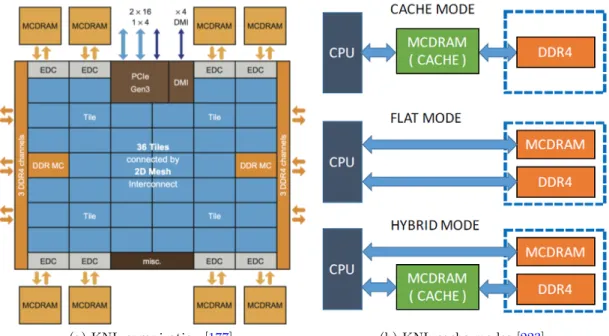
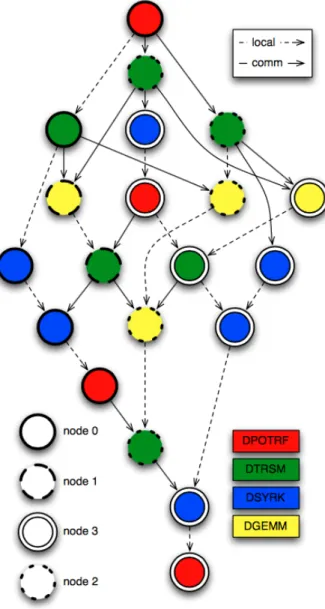
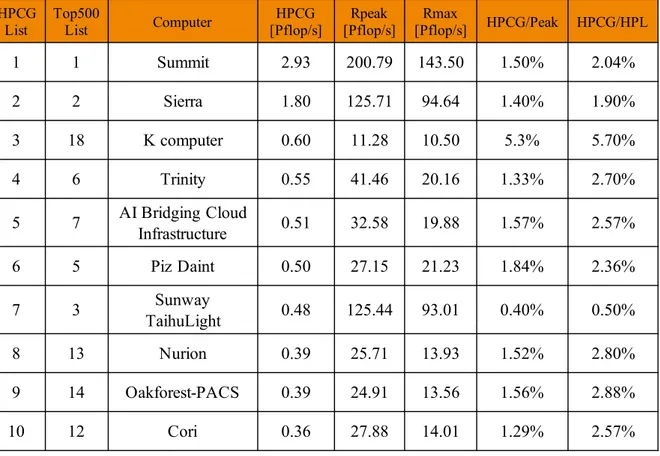
(19) Thèse de Xinzhe Wu, Université de Lille, 2019. List of Figures. 2.1. Peak performance of the fastest computer every year since the 1960s. [175] . . . .. 8. 2.2. No. 1 machine of HPL Performance each year since 1993. [209] . . . . . . . . . .. 9. 2.3. Computer architectures. . . . . . . . . . . . . . . . . . . . . . . . . . . . . . . . .. 10. 2.4. Memory Hierarchy. . . . . . . . . . . . . . . . . . . . . . . . . . . . . . . . . . . .. 11. 2.5. Parallel Computer Memory Architectures. . . . . . . . . . . . . . . . . . . . . . .. 12. 2.6. CPU vs GPU architectures [163]. . . . . . . . . . . . . . . . . . . . . . . . . . . .. 14. 2.7. Architecture and memory modes of Intel Knights Landing processor. . . . . . . .. 15. 2.8. The architecture of a sw26010 manycore processor. [95]. . . . . . . . . . . . . . .. 16. 2.9. OpenMP fork-join Model [220]. . . . . . . . . . . . . . . . . . . . . . . . . . . . .. 17. 2.10 Processing flow on CUDA. . . . . . . . . . . . . . . . . . . . . . . . . . . . . . . .. 18. 2.11 MPI point to point send and receive Model. . . . . . . . . . . . . . . . . . . . . .. 19. 2.12 Different modes of collective operations provided by MPI. . . . . . . . . . . . . .. 20. 2.13 Programmer’s and actual views of memory address in the PGAS languages. . . .. 21. 2.14 Workflow of Cholesky factorization for a 4×4 tile matrix on a 2×2 grid of processors. Figure by Bosilca et al. [41] . . . . . . . . . . . . . . . . . . . . . . . . . . . 2.15 HPL Performance in Top500 by year. [209]. 22. . . . . . . . . . . . . . . . . . . . . .. 25. 2.16 Number of systems each year boosted by accelerators. [209] . . . . . . . . . . . .. 26. 2.17 Multi-level parallelism and hierarchical architectures in supercomputers. . . . . .. 26. 2.18 Top10 HPCG list in the November 2018. Source: https://www.top500.org. . . .. 27. 3.1. Algebraic multigrid hierarchy. . . . . . . . . . . . . . . . . . . . . . . . . . . . . .. 35. 3.2. The action of A on Vm gives Vm Hm plus a rank-one matrix. . . . . . . . . . . . .. 36. 3.3. The polygon of samllest area containing the convex hull of λ(A). . . . . . . . . .. 56. 3.4. Communication Scheme of SpMV. . . . . . . . . . . . . . . . . . . . . . . . . . .. 64. 3.5. Classic Parallel implementation of Arnoldi reduction. . . . . . . . . . . . . . . . .. 65. 4.1. Nilpotent Matrix. p off-diagonal offset, d number of continuous 1, and n matrix dimension. . . . . . . . . . . . . . . . . . . . . . . . . . . . . . . . . . . . . . . . .. 4.2. 79. Matrix Generation. The left is the initial matrix M0 with given spectrum on the diagonal, and the h lower diagonals with random values; the right is the generated matrix Mt with nilpotency matrix determined by the parameters d and p. . . . .. 4.3. Matrix generation pattern example. The initial and generated matrices have same spectrum. . . . . . . . . . . . . . . . . . . . . . . . . . . . . . . . . . . . . . . . .. © 2019 Tous droits réservés.. 81 82 lilliad.univ-lille.fr.
(20) Thèse de Xinzhe Wu, Université de Lille, 2019. LIST OF FIGURES. 4.4. The structure of a CPU-GPU implementation of SpGEMM, where each GPU is attached to a CPU. The GPU is in charge of the computation, while the CPU handles the MPI communication among processes. . . . . . . . . . . . . . . . . .. 83. 4.5. AM and MA operations.. 85. 4.6. Strong and weak scaling results of SMG2S on Tianhe-2. A base 2 logarithmic. . . . . . . . . . . . . . . . . . . . . . . . . . . . . . . .. scale is used for X-axis, and a base 10 logarithmic scale for Y-axis. . . . . . . . . 4.7. Strong and weak scaling results of SMG2S on Romeo-2013. A base 2 logarithmic scale is used for X-axis, and a base 10 logarithmic scale for Y-axis. . . . . . . . .. 4.8. 87 88. Strong and weak scaling results of SMG2S on Romeo-2013 with multi-GPUs. A base 2 logarithmic scale is used for X-axis, and a base 10 logarithmic scale for Y-axis.. 4.9. . . . . . . . . . . . . . . . . . . . . . . . . . . . . . . . . . . . . . . . . .. 88. Weak scaling speedup comparison over PETSc-based SMG2S with 4 CPUs on Romeo-2013. . . . . . . . . . . . . . . . . . . . . . . . . . . . . . . . . . . . . . .. 89. 4.10 SMG2S verification workflow. . . . . . . . . . . . . . . . . . . . . . . . . . . . . .. 90. 4.11 Spec1: Clustered Eigenvalues I. . . . . . . . . . . . . . . . . . . . . . . . . . . . .. 91. 4.12 Spec2: Clustered Eigenvalues II. . . . . . . . . . . . . . . . . . . . . . . . . . . . .. 92. 4.13 Spec3: Clustered Eigenvalues III. . . . . . . . . . . . . . . . . . . . . . . . . . . .. 92. 4.14 Spec4: Conjugate and Closest Eigenvalues. . . . . . . . . . . . . . . . . . . . . . .. 93. 4.15 Spec5: Distributed Eigenvalues. . . . . . . . . . . . . . . . . . . . . . . . . . . . .. 93. 4.16 Home Screen . . . . . . . . . . . . . . . . . . . . . . . . . . . . . . . . . . . . . . 100 4.17 Home Screen Plot Capture 4.18 Home Screen Custom. . . . . . . . . . . . . . . . . . . . . . . . . . . . . . . 101. . . . . . . . . . . . . . . . . . . . . . . . . . . . . . . . . . 101. 4.19 SMG2S Workflow and Interface. . . . . . . . . . . . . . . . . . . . . . . . . . . . 102 4.20 Convergence Comparison using a matrix generated by SMG2S. . . . . . . . . . . 103 5.1. An overview of MERAM, in which three ERAM communicate with each other by asynchronous communications [84]. . . . . . . . . . . . . . . . . . . . . . . . . . . 107. 5.2. An example of MERAM: MERAM(5,7,10) vs. ERAM(10) with af 23560.mtx matrix. MERAM converges in 74 restarts, ERAM does not converge after 240 restarts [84]. . . . . . . . . . . . . . . . . . . . . . . . . . . . . . . . . . . . . . . . . . . . 108. 5.3. Cyclic relation of three computational components. . . . . . . . . . . . . . . . . . 111. 5.4. Workflow of UCGLE method. . . . . . . . . . . . . . . . . . . . . . . . . . . . . . 114. 5.5. GMRES Component. . . . . . . . . . . . . . . . . . . . . . . . . . . . . . . . . . . 115. 5.6. ERAM Component. . . . . . . . . . . . . . . . . . . . . . . . . . . . . . . . . . . 116. 5.7. LSP Component. . . . . . . . . . . . . . . . . . . . . . . . . . . . . . . . . . . . . 117. 5.8. Convergence comparison of UCGLE method vs classic GMRES. . . . . . . . . . . 118. 5.9. Creation of Several Intra-Communicators in MPI. . . . . . . . . . . . . . . . . . . 119. 5.10 Communication and different levels parallelism of UCGLE method . . . . . . . . 121 5.11 Data sending scheme from one group of process to the other. . . . . . . . . . . . 121 5.12 Data receiving scheme from one group of process to the other. . . . . . . . . . . . 122 5.13 Evaluation of GMRES subspace size mg varying from 50 to 180. d = 10, lsa = 10, f req = 10. . . . . . . . . . . . . . . . . . . . . . . . . . . . . . . . . . . . . . . . . 125 © 2019 Tous droits réservés.. viii. lilliad.univ-lille.fr.
(21) Thèse de Xinzhe Wu, Université de Lille, 2019. LIST OF FIGURES. 5.14 Evaluation of Least Squares polynomial degree d varying from 5 to 25, and mg = 100, lsa = 10, f req = 1. . . . . . . . . . . . . . . . . . . . . . . . . . . . . . . . . 125 5.15 Evaluation of Least Squares polynomial preconditioning applied times lsa varying from 5 to 18, and mg = 100, d = 10, f req = 1.. . . . . . . . . . . . . . . . . . . . 126. 5.16 Evaluation of Least Squares polynomial frequency f req varying from 1 to 5, and mg = 100, lsa = 10, d = 10. . . . . . . . . . . . . . . . . . . . . . . . . . . . . . . 127 5.17 Evaluation of eigenvalue number neigen , with and mg = 100, lsa = 10, d = 10, f req = 1. . . . . . . . . . . . . . . . . . . . . . . . . . . . . . . . . . . . . . . 128 5.18 Two strategies of large and sparse matrix generator by a original matrix utm300 of Matrix Market. . . . . . . . . . . . . . . . . . . . . . . . . . . . . . . . . . . . 130 5.19 M EG1: convergence comparison of UCGLE method vs conventional GMRES . . 130 5.20 M EG2: convergence comparison of UCGLE method vs conventional GMRES . . 131 5.21 M EG3: convergence comparison of UCGLE method vs conventional GMRES . . 131 5.22 M EG4: convergence comparison of UCGLE method vs conventional GMRES . . 132 5.23 Impacts of Spectrum on Convergence. . . . . . . . . . . . . . . . . . . . . . . . . 135 5.24 Impacts of Spectrum on Convergence. . . . . . . . . . . . . . . . . . . . . . . . . 136 5.25 Polygone region H with real part of eigenvalues positive and negative. . . . . . . 138 5.26 Scalability per iteration comparison of UCGLE with GMRES with or without preconditioners on Tianhe-2 and Romeo-2013. A base 10 logarithmic scale is used for Y-axis of (a); a base 2 logarithmic scale is used for Y-axis of (b). . . . . 139 6.1. GCR-DO workflow. . . . . . . . . . . . . . . . . . . . . . . . . . . . . . . . . . . . 146. 6.2. Workflow of UCGLE to solve linear systems in sequence by recycling of eigenvalues.150. 6.3. M at1: time comparison for solving a sequence of linear systems. (a) shows the solution time for 9 sequent linear systems; (b) shows the cases extracted from (a) after obtaining the optimal parameters in UCGLE. . . . . . . . . . . . . . . . . . 153. 6.4. M at2: time comparison for solving a sequence of linear systems. (a) shows the solution time for 9 sequent linear systems; (b) shows the cases extracted from (a) after obtaining the optimal parameters in UCGLE. . . . . . . . . . . . . . . . . . 154. 6.5. M at3: time comparison for solving a sequence of linear systems. (a) shows the solution time for 9 sequent linear systems; (b) shows the cases extracted from (a) after obtaining the optimal parameters in UCGLE. . . . . . . . . . . . . . . . . . 155. 7.1. Structure of block Hessenberg matrix. . . . . . . . . . . . . . . . . . . . . . . . . 160. 7.2. Manager Engine Implementation. . . . . . . . . . . . . . . . . . . . . . . . . . . . 168. 7.3. Manager Engine Implementation for m-UCGLE. This is an example with three block GMRES components, and two s-KS components, but these numbers can be customized for different problems. . . . . . . . . . . . . . . . . . . . . . . . . . 170. 7.4. Different strategies to divide the linear systems with 64 RHSs into subsets: (a) divide the 64 RHSs into to 16 different components of m-UCGLE, each holds 4 RHSs; (b) divide the 64 RHSs into to 4 different components of m-UCGLE, each holds 16 RHSs; (c) One classic block GMRES to solve the linear systems with 64 RHSs simultaneously. . . . . . . . . . . . . . . . . . . . . . . . . . . . . . . . . . . 174. © 2019 Tous droits réservés.. ix. lilliad.univ-lille.fr.
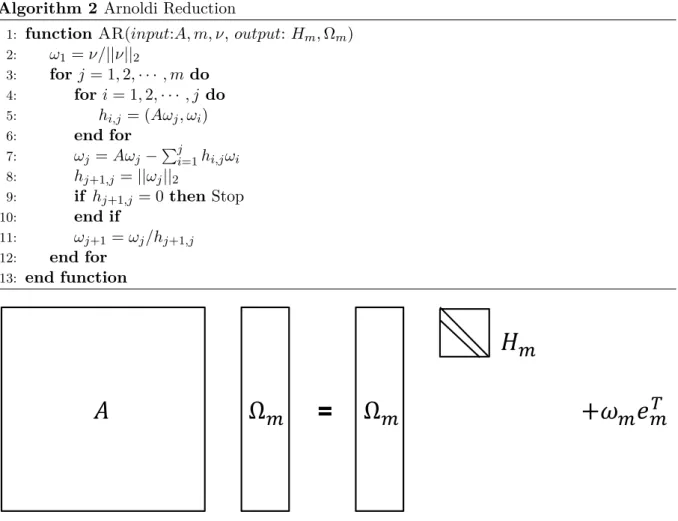
(22) Thèse de Xinzhe Wu, Université de Lille, 2019. LIST OF FIGURES. 7.5. Comparison of iteration steps and consumption time (s) of convergence and on CPUs. A base 10 logarithmic scale is used for Y-axis of Time. The × means the test do not converge in acceptable number of iterations. . . . . . . . . . . . . . . 177. 7.6. Strong scalability and speedup on CPUs and GPUs of solving time per iteration for m-BGMRES(4)*16, m-UCGLE(4)*16, m-BGMRES(16)*4, m-UCGLE(16)*4, BGMRES(64). A base 10 logarithmic scale is used for Y-axis of (a) and (c); a base 2 logarithmic scale is used for Y-axis of (b) and (d). . . . . . . . . . . . . . . . . 178. 7.7. Fault Tolerance Evaluation of m-UCGLE. . . . . . . . . . . . . . . . . . . . . . . 179. 8.1. Heuristic of lsa in UCGLE. . . . . . . . . . . . . . . . . . . . . . . . . . . . . . . 188. 8.2. Auto-tuning workflow for UCGLE. . . . . . . . . . . . . . . . . . . . . . . . . . . 193. 8.3. Convergence Comparison for UCGLE with and without Auto-tuning. . . . . . . . 194. 9.1. YML Architecture. . . . . . . . . . . . . . . . . . . . . . . . . . . . . . . . . . . . 199. 9.2. YML workflow and dataflow. . . . . . . . . . . . . . . . . . . . . . . . . . . . . . 200. 9.3. Workflow of Sum Application. . . . . . . . . . . . . . . . . . . . . . . . . . . . . . 204. 9.4. Tasks and workflow of m-UCGLE. . . . . . . . . . . . . . . . . . . . . . . . . . . 207. 9.5. Exiting Parallel Branch. . . . . . . . . . . . . . . . . . . . . . . . . . . . . . . . . 213. 1. Two-point ellipse(a, c, d). . . . . . . . . . . . . . . . . . . . . . . . . . . . . . . . 240. 2. Three-way ellipse(a, c, d). . . . . . . . . . . . . . . . . . . . . . . . . . . . . . . . 241. © 2019 Tous droits réservés.. x. lilliad.univ-lille.fr.
(23) Thèse de Xinzhe Wu, Université de Lille, 2019. List of Tables. 4.1. Comparison of memory and operation requirement between SMG2S and xLATME in LAPACK for generating a large-scale matrix with a very small bandwidth. . .. 81. 4.2. Details for weak scaling and speedup evaluation. . . . . . . . . . . . . . . . . . .. 87. 4.3. Accuracy verification results. . . . . . . . . . . . . . . . . . . . . . . . . . . . . .. 90. 4.4. Krylov solvers evaluation by SMG2S with matrix row number = 1.0 × vergence tolerance = 1 ×. 10−10. (dnc = do not converge in 8.0 ×. 104. 105 ,. con-. iterations,. the solvers and preconditioners are provided by PETSc.) . . . . . . . . . . . . . . 104 5.1. Information used by preconditioners to accelerate the convergence. . . . . . . . . 109. 5.2. Test Matrix from Matrix Market Collection. . . . . . . . . . . . . . . . . . . . . . 124. 5.3. Test matrices information . . . . . . . . . . . . . . . . . . . . . . . . . . . . . . . 129. 5.4. Summary of iteration number for convergence of 4 test matrices using SOR, Jacobi, non preconditioned GMRES,UCGLE_FT(G),UCGLE_FT(G) and UCGLE: red × in the table presents this solving procedure cannot converge to accurate solution (here absolute residual tolerance 1 × 10⁻¹⁰ for GMRES convergence test) in acceptable iteration number (20000 here). . . . . . . . . . . . . . . . . . . 129. 5.5. Spectrum generation functions: the size of all spectra is fixed as N = 2000, i ∈ 0, 1, · · · , N − 1 is the indices for the eigenvalues. . . . . . . . . . . . . . . . . . . 133. 6.1. M at1: iterative step comparison for solving a sequence of linear systems. . . . . . 152. 6.2. M at2: iterative step comparison for solving a sequence of linear systems. . . . . . 155. 6.3. M at3: iterative step comparison for solving a sequence of linear systems. . . . . . 156. 7.1. Operation Cost [107].. 7.2. Storage Requirement [107]. . . . . . . . . . . . . . . . . . . . . . . . . . . . . . . 162. 7.3. Extra cost of Block GMRES comparing with s times GMRES [107]. . . . . . . . 162. 7.4. Extra cost of Block GMRES comparing with s times GMRES. [107] . . . . . . . 163. 7.5. Memory and communication complexity comparison between m-UCGLE and. . . . . . . . . . . . . . . . . . . . . . . . . . . . . . . . . . 162. block GMRES. . . . . . . . . . . . . . . . . . . . . . . . . . . . . . . . . . . . . . 171 7.6. Spectral functions to generate six test Matrices. . . . . . . . . . . . . . . . . . . . 174. 7.7. Alternative methods for experiments, and the related number of allocated component, RHS number per component and preconditioners. . . . . . . . . . . . . . 175. © 2019 Tous droits réservés.. lilliad.univ-lille.fr.
(24) Thèse de Xinzhe Wu, Université de Lille, 2019. LIST OF TABLES. 7.8. Iteration steps of convergence comparison (SMG2S generation suite SMG2S(1, 3, 4, spec), relative tolerance for convergence test = 1.0 × 10⁻⁸ ), Krylov subspace size mg = 40, lsa = 10, d = 15, f req = 1, dnc = do not converge in 5000 iteration steps). . 176. 7.9. Consumption time (s) comparison on CPUs (SMG2S generation suite SMG2S(1, 3, 4, spec), the size of matrices = 1.792 × 10⁶ , relative tolerance for convergence test = 1.0 × 10⁻⁸ ), Krylov subspace size mg = 40, lsa = 10, d = 15, f req = 1, dnc = do not converge in 5000 iteration steps).. . . . . . . . . . . . . . . . . . . . . . 176. 8.1. Iteration steps and Time Comparison. . . . . . . . . . . . . . . . . . . . . . . . . 195. 8.2. lsai vs lsai for each restart in AT-UCGLE. . . . . . . . . . . . . . . . . . . . . . 195. © 2019 Tous droits réservés.. xii. lilliad.univ-lille.fr.
(25) Thèse de Xinzhe Wu, Université de Lille, 2019. List of Algorithms. © 2019 Tous droits réservés.. 1. Fine-coarse-fine loop of MG method . . . . . . . . . . . . . . . . . . . . . . . . .. 34. 2. Arnoldi Reduction . . . . . . . . . . . . . . . . . . . . . . . . . . . . . . . . . . .. 36. 3. Arnoldi Reduction with Modified Gram-Schmidt process . . . . . . . . . . . . . .. 37. 4. Arnoldi Reduction with Incomplete Orthogonalization process . . . . . . . . . . .. 38. 5. Basic GMRES method . . . . . . . . . . . . . . . . . . . . . . . . . . . . . . . . .. 38. 6. Restarted GMRES method . . . . . . . . . . . . . . . . . . . . . . . . . . . . . .. 39. 7. Left-Preconditioned GMRES . . . . . . . . . . . . . . . . . . . . . . . . . . . . .. 46. 8. Right-Preconditioned GMRES . . . . . . . . . . . . . . . . . . . . . . . . . . . .. 47. 9. Incomplete LU Factorization Algorithm . . . . . . . . . . . . . . . . . . . . . . .. 49. 10. AMG-Preconditioned GMRES . . . . . . . . . . . . . . . . . . . . . . . . . . . .. 50. 11. GMRES-DR(A, m, k, x0 ) . . . . . . . . . . . . . . . . . . . . . . . . . . . . . . . .. 52. 12. Chebyshev Polynomial Preconditioned GMRES . . . . . . . . . . . . . . . . . . .. 56. 13. Least Square Polynomial Generation . . . . . . . . . . . . . . . . . . . . . . . . .. 60. 14. Hybrid GMRES Preconditioned by Least Squares Polynomial . . . . . . . . . . .. 60. 15. ERAM algorithm . . . . . . . . . . . . . . . . . . . . . . . . . . . . . . . . . . . .. 61. 16. IRAM algorithm . . . . . . . . . . . . . . . . . . . . . . . . . . . . . . . . . . . .. 62. 17. Krylov-Schur Method . . . . . . . . . . . . . . . . . . . . . . . . . . . . . . . . .. 62. 18. xLATME Implementation in LAPACK . . . . . . . . . . . . . . . . . . . . . . . .. 77. 19. Matrix Generation Method . . . . . . . . . . . . . . . . . . . . . . . . . . . . . .. 80. 20. Parallel MPI AM Implementation . . . . . . . . . . . . . . . . . . . . . . . . . . .. 86. 21. Parallel MPI MA Implementation . . . . . . . . . . . . . . . . . . . . . . . . . . .. 86. 22. Shifted Inverse Power method . . . . . . . . . . . . . . . . . . . . . . . . . . . . .. 89. 23. Implementation of Components . . . . . . . . . . . . . . . . . . . . . . . . . . . . 115. 24. The seed-GMRES algorithm . . . . . . . . . . . . . . . . . . . . . . . . . . . . . . 145. 25. GCRO-DR algorithm [169]. 26. UCGLE for sequences of linear systems . . . . . . . . . . . . . . . . . . . . . . . 151. 27. Block Arnoldi Algorithm . . . . . . . . . . . . . . . . . . . . . . . . . . . . . . . . 159. 28. Block GMRES Algorithm . . . . . . . . . . . . . . . . . . . . . . . . . . . . . . . 161. 29. Shifted Krylov-Schur Method . . . . . . . . . . . . . . . . . . . . . . . . . . . . . 164. 30. Update block GMRES residual by block Least Squares polynomial . . . . . . . . 166. 31. s-KS Component . . . . . . . . . . . . . . . . . . . . . . . . . . . . . . . . . . . . 171. 32. B-LSP Component . . . . . . . . . . . . . . . . . . . . . . . . . . . . . . . . . . . 171. 33. BGMRES Component . . . . . . . . . . . . . . . . . . . . . . . . . . . . . . . . . 172. . . . . . . . . . . . . . . . . . . . . . . . . . . . . . . 147. lilliad.univ-lille.fr.
(26) Thèse de Xinzhe Wu, Université de Lille, 2019. LIST OF ALGORITHMS. 34. Manger of m-UCGLE with MPI Spawn . . . . . . . . . . . . . . . . . . . . . . . 173. 35. GMRES Component Implementation for Auto-tuing UCGLE . . . . . . . . . . . 191. 36. YML Scheduler . . . . . . . . . . . . . . . . . . . . . . . . . . . . . . . . . . . . . 203. 37. YML Scheduler Optimization . . . . . . . . . . . . . . . . . . . . . . . . . . . . . 215. © 2019 Tous droits réservés.. xiv. lilliad.univ-lille.fr.
(27) Thèse de Xinzhe Wu, Université de Lille, 2019. List of Symbols. The next list describes several symbols that will be later used within the body of the document ADLB. Asynchronous Dynamic Load Balancing. AI. Artificial Intelligence. ALU. Arithmetic Logic Unit. AMG. Algebraic Multigrid. API. Application Programming Interface. ARM. Advanced RISC Machine. BiCGSTAB. Biconjugate Gradient Stabilized Method. BLAS. Basic Linear Algebra Subprograms. BLAS3. Basic Linear Algebra Subprograms - Level 3. CAF. Coarray Fortran. CFD. Computational Fluid Dynamics. CG. Conjugate Gradient Method. COO. Coordinate Matrix Format. CPE. Compute-Processing Element. CPU. Central Processing Unit. CSR. Compressed Sparse Row Matrix Format. CUDA. Compute Unified Device Architecture. DAG. Directed Acyclic Graph. DIA. Diagonal Matrix Format. DRAM. Dynamic Radom-Acess Memory. DSP. Digital Signal Processor. © 2019 Tous droits réservés.. lilliad.univ-lille.fr.
(28) Thèse de Xinzhe Wu, Université de Lille, 2019. LIST OF ALGORITHMS. ERAM. Explicitly Restarted Arnoldi Method. FDA. Fisher Discriminant Analysis. FEM. Finite element method. FLOPS. Floating-point Operations Per Second. FPGA. Field-Programmable Gate Array. GCRO-DR. Generalized Conjugate Residual method with inner Orthogonalization and Deflated Restarting. GMG. Geometric Multigrid. GMRES. Generalized Minimal Residual Method. GMRES-DR. Deflated GMRES. GPDSP. General-Purpose Digital Signal Processor. GPGPU. General-Purpose Computing on Graphics Processing Units. GPU. Graphic Processing Unit. GUI. Graphic User Interface. HPC. High-Performance Computing. HPCG. High-Performance Conjugate Gradients. HPL. High-Performance LINPACK. I/O. Input/Output. IDL. Interface Description Language. IDR. Induced dimension reduction. ILU. Incomplete LU Factorization. IRAM. Implicitly Restarted Arnoldi Method. LAPACK. Linear Algebra PACKage. MERAM. Multiple Explicitly Restarted Arnoldi method. MG. Multigrid method. MIC. Many Integrated Cores. MINRES. Minimal Residual. MPE. Management Processing Element. © 2019 Tous droits réservés.. xvi. lilliad.univ-lille.fr.
(29) Thèse de Xinzhe Wu, Université de Lille, 2019. LIST OF ALGORITHMS. MPI. Message Passing Interface. NUMA. Non-Uniform Memory Access. OpenACC. Open Accelerators. OpenCL. Open Computing Language. OpenMP. Open Multi-Processing. OS. Operating system. PCA. Principal Component Analysis. PDE. Partial Differential Equation. PETSc. Portable, Extensible Toolkit for Scientific Computation. PGAS. Partitioned Global Address Space. Pthreads. POSIX Threads. QCD. Lattice Quantum Chromodynamics. QMR. Quasi Minimal Residual. RAM. Random Access Memory. RHS. Right-hand Sides. RISC. Reduced Instruction Set Computer. ScaLAPACK. Scalable Linear Algebra PACKage. SIMD. Single Instruction Multiple Data. SIMT. Single Instruction Multiple Thread. SLEPc. Scalable Library for Eigenvalue Problem Computations. SMP. Symmetric Multiprocessor. SOR. Successive Overrelaxation. SpGEMM. Sparse Matrix Matrix Multiplication. SPMD. Single Program Multiple Data. SpMV. Sparse Matrix Vector Multiplication. SSOR. Symmetric Successive Overrelaxation. SVD. Singular Value Decomposition. SWIG. Simplified Wrapper and Interface Generator. © 2019 Tous droits réservés.. xvii. lilliad.univ-lille.fr.
(30) Thèse de Xinzhe Wu, Université de Lille, 2019. LIST OF ALGORITHMS. TFQMR. Transpose-free Quasi Minimal Residual. UMA. Uniform Memory Access. XMP. XcalableMP. © 2019 Tous droits réservés.. xviii. lilliad.univ-lille.fr.
(31) Thèse de Xinzhe Wu, Université de Lille, 2019. Chapter 1 Introduction. 1.1. Motivations. HPC provides much larger computing power that cannot achieve with the typical desktop computers or workstations. At the early age, the HPC clusters are constructed in the UMA and NUMA models, in which all the computing units are able to access the gobal memory. That is the shared memory architecture of supercomputers, which provides a user-friendly parallel programming paradigm for the users. With the evolution of supercomputers, the lack of scalability between memory and CPUs made it difficult to construct much larger supercomputers. Therefore, the distributed memory architecture was introduced for modern supercomputing, in which each processor has its local memory. This architecture can scale the supercomputers with millions cores and more. The parallel programming for users on distributed memory architecture is much more complicated, since it is the users’ responsability to explicitly define the data communication methologies between different computing units. Nowadays, the exascale era of HPC will come soon, and the first exascale machine will be available around 2020, in which, the researchers hope to make unprecedented advancements in many fields of science and industry. In fact, the world’s most powerful machine now has already more than a million cores. With the introduction of GPUs and other accelerators on the distributed memory architecture, HPC cluster systems will not only continue to expand the number of compute nodes and CPU cores, but will also increase the heterogeneity of components. This causes the trend of transition to multi- and many cores within compute nodes that communicate explicitly through a faster interconnected network. The heterogeneity of computing units on supercomputers introduces hierarchical memory and communications. Applications on these hierarchical supercomputers can be seen as the intersection of distributed and parallel computing. Nevertheless, due to the lack of good scalability on extreme large clusters, only a few applications may achieve sustainable performance. Many scientific and industrial applications can be formulated as linear systems. A linear system can be described by an operator matrix A, an input x and an output b. The linear solvers which aim to solve these systems, are the kernels of many applications and softwares. When the operator matrix A is sparse, a collection of Krylov subspace methods, such as GMRES, CG, and BiCGSTAB, are widely used methods for solving linear systems. The Krylov subspace methods approximate the exact solution of a linear system from a given initial guess vector © 2019 Tous droits réservés.. 1. lilliad.univ-lille.fr.
(32) Thèse de Xinzhe Wu, Université de Lille, 2019. Chapter 1 – Introduction. through the Krylov subspace. Linear systems are associated with the real-world applications, such as the fusion reactions, earthquake, and weather forecast. As the complexity of applications increases, their dimension grows rapidly. For example, linear systems for seismic simulations have more than 10 billions unknowns. Therefore, Krylov subspace methods are deployed on supercomputing platforms to solve such large-scale linear systems in parallel. Nowadays, with the increase of the number of computing units and the heterogeneity of supercomputers, the communication of overall reduction and global synchronization of Krylov subspace methods become the bottleneck, which seriously damages their parallel performance. In detail, when a large-scale problem is solved by Krylov subspace methods on parallel architectures, their cost per iteration becomes the most significant concern, typically due to communication and synchronization overhead. Consequently, large scalar products, overall synchronization, and other operations involving communications among all cores have to be avoided. Parallel implementations of numerical algorithms should be optimized for more local communications and less global communications. In order to efficiently utilize the full computing power of such hierarchical computing systems, it is central to explore novel parallel methods and models for solving linear systems. These methods should not only accelerate convergence, but also have the ability to accommodate multiple granularity, multilevel memory, improve fault tolerance, reduce synchronization, and promote asynchronization.. 1.2. Objectives and Contributions. The subject of my dissertation is related to this research context, and it focuses on the proposition and analysis of a distributed and parallel programming paradigm for smart hybrid Krylov methods targeting at the exascale computing. Since more than thirty years ago, different hybrid Krylov methods were introduced to accelerate the convergence of iterative solvers by using the selected eigenvalues of systems, e.g., Chebyshev polynomial preconditioned hybrid ERAM presented by Saad [182] to accelerate the convergence of ERAM to solve eigenvalue problems; another implementation of hybrid Chebyshev Krylov subspace algorithm introuced by Elman et al. [82], which uses the Arnoldi method to simultaneously compute the required eigenvalues; a hybrid GMRES algorithm via a Richardson iteration with Leja ordering presented by Nachtigal et al. [155] and an approach introduced by Brezinski et al. [44] for solving linear systems by the combination of two arbitrary approximate solutions of two methods. The research of this thesis relies on the Unite and Conquer approach proposed by Emad et al. [83], which is a model for the design of numerical methods that combines different computational components by asynchronous communication to work for the same objective. These different components can be deployed on different platforms such as P2P, cloud and the supercomputer systems, or different processors on the same platform. The ingredients of this dissertation on building a Unite and Conquer linear solver come from previous research, e.g., the hybrid methods firstly implemented by Edjlali et al. [79] on network of heterogeneous parallel computers to solve eigenvalue problem, and a hybrid gmres/ls-arnoldi method firstly introduced by Essai et al. [86]. Unite and Conquer approach is suitable to design a new programming paradigm for iterative methods with distributed and parallel computing on modern supercomputers. Before investigating the Krylov subspace methods for solving linear systems, the first con© 2019 Tous droits réservés.. 2. lilliad.univ-lille.fr.
(33) Thèse de Xinzhe Wu, Université de Lille, 2019. 1.2. Objectives and Contributions. tribution of this work is to develop SMG2S1 : a Scalable Matrix Generator with Given Spectra, due to the importance of spectral distribution for the convergence of iterative methods. SMG2S allows the generation of large-scale non-Hermitian matrices using user-given eigenvalues. These generated matrices are also non-Hermitian and non-trivial, with very high dimensions. Recent research on social networking, big data, machine learning, and AI has increased the necessity for non-Hermitian solvers associated with much larger sparse matrices and graphs. For decades, iterative linear algebra methods have been an important part of the overall computation time of applications in various fields. The analysis of their behaviors is complex, and it is necessary to evaluate their numerical and parallel performances to solve the extremely large non-Hermitian eigenvalue and linear problems on parallel and/or distributed machines. Since the properties of spectra have impacts on the convergence of iterative methods, it is critical to generate large matrices with known spectra to benchmark them. The motivation for proposing SMG2S is also that there is currently no set of test matrices with large dimensions and different kinds of spectral characteristics to benchmark the linear solvers on supercomputers. Throughout my thesis, SMG2S serves as an important tool for studying the performance of newly designed iterative methods. After the implementation of SMG2S, the second contribution of my dissertation is to design and implement an distributed and parallel UCGLE (Unite and Conquer GMRES/LS-ERAM) method based on the Unite and Conquer approach. UCGLE is proposed to solve large-scale nonHermitian linear systems with the reduction of global communications. Most hybrid and deflated iterative methods are able to be transformed into distributed and parallel scheme based on Unite and Conquer approach. However, this dissertation only implements UCGLE as an example, which is based on a hybrid GMRES method preconditioned by Least Squares polynomial. UCGLE consists of three computational components: ERAM Component, GMRES Component, and LSP (Least Squares Polynomial) Component. GMRES Component is used to solve the systems, LSP Component and ERAM Component serve as the preconditioning part. The information used to speed up convergence are the eigenvalues. The key feature of UCGLE is asynchronous communication between these three components, which reduces the number of synchronization points and minimizes global communication. There are three levels of parallelisms in UCGLE method to explore the hierarchical computing architectures. The convergence acceleration of UCGLE is similar to a normal hybrid preconditioner. The difference between them is that the improvement of the former one is intrinsic to the methods. It means that in the conventional hybrid methods, for each preconditioning, the solving procedure should stop and wait for the temporary preconditioning procedure using the information from previous Arnoldi reduction procedure. The latter’s asynchronous communication can cover the synchronization overhead. Asynchronous communications between different computational components also improve the fault tolerance and the reusability of this method. Separating the procedure for calculating the preconditioning information (dominant eigenvalues in UCGLE) to be a component independent of the solution procedure can improve the flexibility of preconditioning, and this leads to a further improvement in numerical performance. Moreover, both the mathematical model and the implementation of UCGLE have been ex1. https://smg2s.github.io © 2019 Tous droits réservés.. 3. lilliad.univ-lille.fr.
(34) Thèse de Xinzhe Wu, Université de Lille, 2019. Chapter 1 – Introduction. tended to solve linear systems in sequence which share the same operator matrix but have different RHSs. This extension is even suitable for a series of linear systems with different operator matrices, which share a same portion of dominant eigenvalues. The eigenvalues obtained by UCGLE in solving previous systems can be recycled, improved on the fly and applied to construct new initial guess vectors for subsequent linear systems, which can achieve continuous acceleration to solve linear systems in sequence. Numerical experiments on supercomputers using different test matrices indicate a substantial decrease in both computation time and iteration steps for solving sequences of linear systems, when approximate eigenvalues are recycled to generate initial guess vectors. Afterwards, since many problems in the field of science and engineering often require to solve simultaneously large-scale linear systems with multiple RHSs, we proposed another extension of UCGLE by combining it with block version of GMRES. This variant of UCGLE is implemented with newly designed manager engine, which is capable of allocating multiple block GMRES at the same time, each block GMRES solving the linear systems with a subset of RHSs and accelerating the convergence using the eigenvalues approximated by eigensolvers. Dividing the block linear system with multiple RHSs into subsets and solving them simultaneously using different allocated linear solvers allow localizing calculations, reducing global communication, and improving parallel performance. An adaptive UCGLE is proposed with an auto-tuning scheme for selected parameters, that have the influence on its numerical and parallel performance. This work was achieved by analyzing the impacts of different parameters on the convergence.. 1.3. Outline. The dissertation is organized as follows. In Chapter 2, we will give the state-of-the-art of HPC, including the modern computing architectures for supercomputers (e.g., CPU, Nvidia GPGPU, and Intel MIC) and the parallel programming models (including OpenMP, CUDA, MPI, PGAS, the task/graph based programming, etc.). Finally, in this chapter, we will discuss the challenges of the upcoming exascale supercomputers that the whole HPC community faces. Chapter 3 covers the existing iterative methods for solving linear systems and eigenvalue problems, especially the Krylov Subspace methods. At the beginning, this chapter gives a brief introduction of the stationary and non-stationary iterative methods. Then different Krylov Subspace methods will be presented and compared. Apart from the basic introduction to methods, different preconditioners used to accelerate the convergence will be discussed, in particular the Least Squares polynomial method for constructing UCGLE will be described in detail. The relation between the convergence of Krylov subspace methods for solving linear systems and the spectral information of operator matrix A will also be analyzed in this chapter. Finally, we give an introduction of the parallel implementation of the Krylov subspace methods on modern distributed memory systems, then discuss the challenges of iterative methods facing on the coming of exascale platforms, and finally summarize the recent efforts to fit the numerical methods to much larger supercomputers. In Chapter 4, we present the parallel implementation and numerical performance evaluation of SMG2S. It is implemented on CPUs and multi-GPU platforms with specially optimized © 2019 Tous droits réservés.. 4. lilliad.univ-lille.fr.
(35) Thèse de Xinzhe Wu, Université de Lille, 2019. 1.3. Outline. communications. Efficient strong and weak scaling performance is obtained on several supercomputers. We have also proposed a method to verify its ability to guarantee the given spectra with high accuracy based on the Shift Inverse Power method. SMG2S is a released open source software developed using MPI and C++11. Moreover, the packaging, the interfaces to other programming languages and scientific libraries, and the GUI for verification are introduced. In the final part, we give an example to evaluate the numerical performance of different Krylov iterative methods using SMG2S . In Chapter 5, the implementation of UCGLE based on the scientific libraries PETSc and SLEPc for both CPUs and GPUs are presented. In this chapter, we describe the implementation of components, the manager engine, and the distributed and parallel asynchronous communications. After implementation, the selected parameters, the convergence, the impact of spectral distribution, the scalability and fault tolerance are evaluated on several supercomputers. Chapter 6 describes the extension of UCGLE for solving linear systems in sequence with different RHSs by recycling the eigenvalues. We give a survey on existing algorithms, including the seed and Krylov subspace recycling methods, and then develop the mathematical model and manager engine of UCGLE to solve linear systems in sequence. This chapter also shows the results of experiments on different supercomputers. In Chapter 7, the variant of UCGLE to solve simultaneously linear systems with multiple RHSs is presented, which is denoted as m-UCGLE. This chapter introduces the existing block methods for solving linear systems with multiple RHSs, and then analyzes the limitations of block methods on large-scale platforms. After that, a mathematical extension of Least Squares polynomial for multiple RHSs is given, and then a special novel manager engine is developed. This engine allows allocating a user-defined number of computational components at the same time. This special version of UCGLE is implemented with the linear and eigen solvers provided by the Belos and Anasazi packages of Trilinos. Finally, we give the experimental results on large-scale machines. UCGLE is a hybrid method with the combination of three different numerical methods. Thus the auto-tuning of different parameters is very important. In Chapter 8, we propose the strategy of auto-tuning for selected parameters in UCGLE. The auto-tuning heuristic is able to select the optimal parameter value for each restart of GMRES Component at runtime. Experimental results demonstrate the effectiveness of this auto-tuning scheme. All Unite and Conquer methods, including UCGLE, are able to use the workflow/taskbased programming runtimes to manage the fault tolerance, load balance and asynchronous communication of signals, arrays and vectors. In Chapter 9, we give a glance at the YML framework, and then analyze the workflow of UCGLE and the limitations of YML for Unite and Conquer approach. Finally, we propose the solutions for YML syntax and implementation, including the dynamic graph grammar, and the mechanism of exiting a parallel branch. In Chapter 10, we summarize the key results obtained in this thesis and present our concluding remarks. Finally, we suggest some possible paths to future research.. © 2019 Tous droits réservés.. 5. lilliad.univ-lille.fr.
(36) Thèse de Xinzhe Wu, Université de Lille, 2019. Chapter 1 – Introduction. © 2019 Tous droits réservés.. 6. lilliad.univ-lille.fr.
(37) Thèse de Xinzhe Wu, Université de Lille, 2019. Chapter 2 State-of-the-art in High-Performance Computing. High-Performance Computing most generally refers to the practice of aggregating computing power in a way that provides much higher performance than typical desktop computers or workstations to solve large-scale problems in science, engineering, or business. HPC is one of the most active areas of research in Computer Science because it is strategically essential to solve the large challenge problems that arise in scientific and industrial applications. The development of HPC relies on the efforts from multi-disciplines, including the computer architecture design, the parallel algorithms, and programming models, etc. This chapter gives the state-of-the-art of HPC: its history, modern computing architectures, and parallel programming models. Finally, with the advent of exascale supercomputers, we discuss the key challenges that the entire HPC community faces.. 2.1. Timeline of HPC. The terms high-performance computing and supercomputing are sometimes used interchangeably. A supercomputer is a computing platform with a high level of performance, that consists of a large number of computing units connected by a local high-speed computer bus. HPC technology is implemented in a variety of computationally intensive applications in the multidisciplinary fields, including biosciences, geographical simulation, electronic design, climate research, neuroscience, quantum mechanics, molecular modeling, nuclear fusion, etc. Supercomputers were introduced in the 1960s, and the performance of a supercomputer is measured in FLOPS. Since the first generation of supercomputers, the megascale performance was reached in the 1970s, and the gigascale performance was passed in less than decade. Finally, the terascale performance was achieved in the 1990s, and then the petascale performance was crossed in 2008 with the installation of IBM Roadrunner at Los Alamos National Laboratory in the United States. Fig. 2.1 shows the peak performance of the fastest computer every year since the 1960s. Since 1993, the TOP500 project1 ranks and details the 500 most powerful supercomputing 1. https://www.top500.org © 2019 Tous droits réservés.. 7. lilliad.univ-lille.fr.
(38) Growth of Supercomputing. Thèse de Xinzhe Wu, Université de Lille, 2019. Chapter 2 – State-of-the-art in High-Performance Computing. 1.E+18. Peak Speed (FLOPS). 1.E+15 Earth Simulator. IBM Blue Gene. ASCI White ASCI Red. 1.E+12. Fujitsu. Cray-2. 1.E+09 1.E+06. Summit. Sunway TaihuLight Tianhe-2 Fujitsu K Sequoia Tianhe-1A Cray Jaguar IBM Roadrunner IBM B/G L. Doubling Time = 1.46 years. CDC Cyber-205. CDC 7600 CDC 6600 LARC IBM 7090. ETA-10G. Cray X-MP. Cray-1 CDC Star-10. IBM 7030. IBM 704. 1.E+03 1950. 1960. 1970. 1980. 1990. 2000. 2010. 2020. Year Introduced Figure 2.1 – Peak performance of the fastest computer every year since the 1960s. [175] systems in the world and publishes an updated list of the supercomputers twice a year. The project aims to provide a reliable basis for tracking and detecting trends in HPC and bases rankings on HPL [76], a portable implementation of the high-performance LINPACK benchmark written in Fortran for distributed-memory computers. HPL is a software package that solves a (random) dense linear system in double precision (64 bits) arithmetic on distributed-memory computers. The algorithm used by HPL can be summarized by the following keywords: • two-dimensional block-cyclic data distribution; • right-looking variant of the LU factorization with row partial pivoting featuring multiple look-ahead depths; • recursive panel factorization with pivot search and column broadcast combined; • various virtual panel broadcast topologies; • bandwidth reducing swap-broadcast algorithm; • backward substitution with look-ahead of depth 1. According to the latest Top500 list in November 2018, the fastest supercomputer is the Summit of the United States, with a LINPACK benchmark score of 122.3 PFLOPS. Sunway TaihuLight, Sierra and Tianhe-2A follow closely the Summit, with the performance respectively 93 PFLOPS, 71.6 PFLOPS, and 61.4 PFLOPS. Fig. 2.2 gives the No. 1 machine of HPL performance every year since 1993. The next barrier for the HPC community to overcome is the exascale computing, which refers to the computing systems capable of at least one exaFLOPS (1018 floating point operations per second). This capacity represents a thousandfold increase over the first petascale computer which came into operation in 2008. The world first exascale supercomputer will be launched around © 2019 Tous droits réservés.. 8. lilliad.univ-lille.fr.
(39) Thèse de Xinzhe Wu, Université de Lille, 2019. 2.2. Modern Computing Architectures. No. 1’s – HPL R_max 11.0E+06 Eflop/s. Summit Sunway TaihuLight Tianhe-2 Titan Sequoia K computer Tianhe-1A Jaguar Roadrunner BlueGene/L Earth-Simulator ASCI White ASCI Red CP-PACS/2048 SR2201/1024 XP/S140 Numerical Wind Tunnel CM-5/1024. 100 Pflop/s 1.0E+05 10 Pflop/s 1.0E+04. 11.0E+03 Pflop/s 100 Tflop/s 1.0E+02 10 Tflop/s 1.0E+01. 11.0E+00 Tflop/s 100 Gflop/s 1.0E-01 10 Gflop/s 1.0E-02. 1995. 2000. 2005. 2010. 2015. Figure 2.2 – No. 1 machine of HPL Performance each year since 1993. [209] 2020. China’s first exascale supercomputer will be put into use by 2020. First exascale computer of United States is planned to be built by 2021 at Argonne National Laboratory. The post-K announced by Japan, public services will begin around 2021, and the first exascale supercomputer in Europe will appear around 2022. Exascale computing would be considered as a significant achievement in computer engineering, for it is estimated to be the order of processing power of the human brain at the neural level. Considering the development of HPC, there are always two questions proposed by the users who want to develop applications on supercomputers: • How to build such powerful supercomputers? • How to develop the applications to effectively utilize the total computational power of a supercomputer? In order to answer the above two questions, firstly, Section 2.2 outlines the modern computing architectures for building supercomputers. Different parallel programming models for developing applications on supercomputers are given in Section 2.3.. 2.2. Modern Computing Architectures. Different architectures of computing units are designed to build the supercomputers. In this section, the state-of-the-art of modern CPUs and accelerators will be reviewed.. 2.2.1. CPU Architectures and Memory Access. The development of modern CPUs is based on the Von Neumann architecture. The proposition of this computer architecture is based on the description by the mathematician and physicist John von Neumann and others in the First Draft of a Report on the EDVAC [214]. All the modern computing units are related to this concept, which consists of five parts: © 2019 Tous droits réservés.. 9. lilliad.univ-lille.fr.
Figure

+7

![Figure 5.1 – An overview of MERAM, in which three ERAM communicate with each other by asynchronous communications [84].](https://thumb-eu.123doks.com/thumbv2/123doknet/3583721.105121/137.892.134.798.130.517/figure-overview-meram-eram-communicate-asynchronous-communications.webp)
Documents relatifs
