Ce document a été numérisé par la Division de la gestion des documents et des archives de l’Université de Montréal.
L’auteur a autorisé l’Université de Montréal à reproduire et diffuser, en totalité ou en partie, par quelque moyen que ce soit et sur quelque support que ce soit, et exclusivement à des fins non lucratives d’enseignement et de recherche, des copies de ce mémoire ou de cette thèse.
L’auteur et les coauteurs le cas échéant conservent la propriété du droit d’auteur et des droits moraux qui protègent ce document. Ni la thèse ou le mémoire, ni des extraits substantiels de ce document, ne doivent être imprimés ou autrement reproduits sans l’autorisation de l’auteur.
Afin de se conformer à la Loi canadienne sur la protection des renseignements personnels, quelques formulaires secondaires, coordonnées ou signatures intégrées au texte ont pu être enlevés de ce document. Bien que cela ait pu affecter la pagination, il n’y a aucun contenu manquant.
NOTICE
This document was digitized by the Records Management & Archives Division of Université de Montréal.
The author of this thesis or dissertation has granted a nonexclusive license allowing Université de Montréal to reproduce and publish the document, in part or in whole, and in any format, solely for noncommercial educational and research purposes.
The author and co-authors if applicable retain copyright ownership and moral rights in this document. Neither the whole thesis or dissertation, nor substantial extracts from it, may be printed or otherwise reproduced without the author’s permission.
In compliance with the Canadian Privacy Act some supporting forms, contact information or signatures may have been removed from the document. While this may affect the document page count, it does not represent any loss of content from the document.
Technology adoption among Canadian dentists
Par
Shahrokh Esfandiari
Département d'Administration de la santé
y
Faculté de Médecine
Mémoire présenté à la Faculté des etudes supérieures en vue de l'obtention du grade de Maîtrise en Évaluation des technologies de la santé
April 2008
Université de Montréal F acuité de Médecine
Ce mémoire intitulée:
Technology adoption among Canadian dentists
présenté par : Shahrokh Esfandiari
A été évalué par un jury composé des personnes suivantes :
Jean-Marc Brodeur Président-rapp,orteur Renaldo Battista Directeur de recherche Brigitte Côté· Membre du jury Mémoire accepte le : ... " ... , .. , .. , ... .
There is little evidence on technology adoption in dentistry. Dentists are theones who purchase and provide the technology. The objective of this research was to gather infonnation on the detenninants of the rate of adoption of dental technologies among dental physicians. For this reason, a nation-wide cross-sectional survey was conducted . .
among all licensed Canadian dentists to measure the adoption of general dental technologies.'
Multivariate regressÎon analysis on the data from this survey revealed that the dentist's specialty, whether they own their practice, the time elapsed since their graduation, and the source of infonnation on dental technologies are significantly associated with the adoption of these technologies.
The reslilts of this study infonn all stakeholders at micro, meso and macro level on what types of c1inicians are more likely to adopt technologies in oral health. This will ease fonnulating strategies on how to assemble the infonnation about dental technologies and to improve the adoption process.
Key words: Health technology assessment - oral health - technology adoption - Dentists - health economic evaluation
Il existe peu de données sur l'adoption des technologies en dentisterie. Les dentistes sont ceux qui achètent et qui utilisent la technologie. L'objectif de cette recherche est de
1
recueillir de l'infonnation sur les détenninants du taux d'adoption de technologies dentaire panni les dentistes. Une enquête transversale à l'échelle nationale a été menée auprès de tous les dentistes canadiens licenciés, pour mesurer l'adoption des technologies dentaires
L'analyse de régression multivariée sur les données de ce sondage a révélé que selon la spécialisation des dentistes, selon s'ils sont propriétaires de leur pratique ou non; le temps écoulé depuis l'obtention de leur diplôme, et les sources d'infonnation sur les technologies de l'art dentaire sont associés de manière significative à l'adoption de ces technologies.
Les résultats de cette étude infonnent sur les types de cliniciens qui sont le plus susceptibles d'adopter des technologies de la santé bucco~dentaire. Ceci facilitera la fonnulation de stratégies sur la façon de rassembler les infonnations sur les techniques dentaires et d'améliorer le processus d'adoption des nouvelles technologies.
Mots clés: évaluation des technologies de la santé santé buccodentaire adoption -technologie - dentistes - évaluation économique
Acknowledgments
Section 1- Introduction
1.1 Adoption of new health technologies 1.2 Oral health in Canada and other developed
countries
vii
1 1
5
1.3 Oral health technology adoption in Canada 7 1.4 Oral health Techno1ogyAssessment (OHTA) .13
Section 2 An investigation of the adoption of dental technologies 16 amongst Canadian dentists
2.1 Manuscript: Oral health technology adoption among Canadian 16 dentists
2.1.1 Abstract 16
2.1.2 Introduètion 18
2.1.3 Methods and Materials 24
2.1.4 Results 27
2.1.5 Discussion 29
2.1.6 Tables 35
2.1.6.3 Table 3 2.1.6.4 Table 4
Section 3 - Technology Adoption among Canadian Dentists: Conclusions and implications for future research .3.1 Summary of thesis research
3.2 Methodologicallimits of the research 3.3 Conclusions
3.4 Original contributions of the work within this thesis 5.5 Implications for future research
References Appendix l Appendix II Appendix III Appendix IV Appendix V 37 38 39 39 41
42
43 44 45 viii Xl xiv XXI XX111First, 1 would like to thank my supervisor, Dr. Renaldo Battista for taking me on as a trainee and for all the intellectual support he has given me throughout my MSc training and the thesis work. 1 would also like t9 express my gratitude to Dr. Jocelyne Feine for her enthusiastic support, and Dr. Reza Majdzadeh for his advice on statistical analysis throughout this thesis work. 1 would thank my parents for their unconditional love throughout my life.
Finally and most importantly, 1 am indebted to my wife, Dr. Azin Alborzi, for her strength, patience, tolerance and for carrying the extra weight of parental responsibilities throughout my research work, and to my beloved children Taara and Zacharia for constantly bringing joy and happiness to my life.
Section 1- Introduction
1.1 Adoption of new health technologies
The demand for healthcare services is rising in the face of resource limitations [1]. Thus, like any other good or service, there will never be a sufficient quantity of resources available to meet demand. This is the economic concept of scarcity, as these goods and services are in short supply and will always have a higher demand than what is available. Consequently, scarcity of financial, human and technological resources is the major cause oftoday's health prbblems. As_ a result, . decisions must be made in the health care sector for the allocation of the goods and services that will result in the maximum total benefit for the members in the community. This is the concept of economic efficiency [2].
It is be1ieved that the adoption of sophisticated and costly health technologies is the major driver o~ the growing co st ·of health care services [3-6] . As new technologies help patients to reduce morbidity and mortality, they pose a heavy financial pressure on already overwrought health systems. This threatens the financial sustainability ofhealth systems and public health care budgets [7].
Sorne researchers advocate for the study of human behavior in assessing the adoption and utilization of technologies. The most comprehensive of these is the Triandis' Theory of Interpersonal Behavior [8] which encompasses many of the behavioral factors found in other mode1s such as Theory of Planned Behavior [9] or the Technology Acceptance Model [10] by considering cultural, social, and moral factors that are not accounted for in other models. Most managers ofhealth organizations name "Organizational" factors as the most important in user's . acceptance of technology. Examples of these factors are reengineering, organizational structure, management quality, politicfll and cultural processes [Il]. Whereas sorne others think that "Group" factors, such as professional values and culture, and user satisfaction are important [12]. "Individual" factors are also named important in forming user',s acceptance. Attitudes, user satisfaction, motivation, user involvement and participation are classified among these factors[13]. And the last of these factors are the Environmental level factors which include broad categories such as economic, govemment, technological, and cultural factors [14,15]. However, most ofthese studies concentrate on the implementation process of technology rather than the adoption process. The important question in assessing the adoption of a specific technology is, "what kind of physicians adopts the technology?"
Health economists blame the rising costs of health care w.ithin the last two. decades to the implementation of costly new technologies rather than increasing prices of existing technologies [16, 17]. Friedman in his study of "The rate of adoption of new procedures among physicians" discusses that the physician adaptability towards a new technology depends on the following criteria [18]; 1) Specialties, even when controlling for other characteristics, differences in the rates of adoption of new procedures among specialty groups remain. Radiologists being the most closely tied to new equipments are leading with the highest rate of adopting of new procedures whereas obstetrics and gynecologists \Vere found to have the lowest rate of adoption of new procedures.
2) Type of practice, on average physicians in solo practices adopt fewer new procedures than their counterparts in group practices do, including the hospitals. 3) Years of practice, he claims that the rate of adoption of new procedures by years of practice although of small magnitude is statistically significant. This results from two factors; il) oIder physicians are less interest~d in restructuring their methods ofpractice and b) the newer graduate~ physicians are likely to have received more recent training than their oIder counterparts.
4) Age of physiCians; up to the age of approximately 50 years, age has an increasing impact on the number of new procedures adopted by physicians. Beyond that age, it has a decreasing effect.
who are not board certified.
On the other hand, Phelps in his review of "Diffusion of Infonnation in Medical Care" in assessing the
us
medical market, states number of economic and psychological factors that might lead physicians in adopting a new technology [19]. These factors are;1) Comparative profitability between the old and new treatment.
2) Physicians may gain sorne reputation value by being "out in front" .on new treatments.
3) Physicians like others prefer to do new things when available to them, a trait that is captured in the idea of "Technological Imperative". This tenn stems from the belief that. when a clinical intervention· is possible and safe it should be undertaken without regard for its costs and benefits.
4) There is a lack of infonnation about the effectivenessof medical technologies at the time when most ofthese technologies are already in use.
Hillman [20] in his comparative· analysis of the adoption and diffusion of MRI and CT scan in the US, names two major factors in adopting high cost technologies. One is the "Attributes of Technology", which includes the time of introduction of technologies, the order they appear and their integrations into hospitals. The second is the set of "Environmental Factors" such as the
reimbursement policy that isknown as a major determinant of the rate of diffusion, regulations at the, time of adoption a~d market factors in which competition among hospitals for patients and how physicians may encourage the adoption play a role. Friedman [21] in his case study of Neonatal Intensive Care confirms his predecessors' findings in that the decision of a hospital to offer the technology is associated with teaching status, patients demand and market concentration of major competitors. Therefore, it is evident that the adoption of new innovative health technologies is a complex process that is contingent upon personal, institutional, economical and environmental variables. Unraveling this complexity requites detailed study of the adoptive behavior of those who decide to adopt and pro vide the technology in a pertinent setting in which the technology would be used. '
1.2 Oral health in Canada versus other developed countries
Dental diseases are the fourth most expensive disease to treat in industrialized nations [22]. In 2000, the European Union spent a total of€54 billion on oral health care [23]. In the United States, spending on oral health care services, including the prevention and treatment of dental caries, reached a shocking $81.5 billion in 2004 [24
J.
However, this remarkable cost cruelly underestimates the real amount spent on oral disorders each year. On top of $81.5 billion, one mustconsider the additional tens of billions of dollars required for direct medical care and indirect costs associated with severe early childhood caries,
temporomandibular disorders, trigeminal neuralgia, c1eft-lip and palate, oral and pharyngeal cancers, auto immune diseases and injuries to the head and face. The
~osts continue to rise if one takes into account the resulting loss of productivity from the nearly 170 million hoursofwork losteach year due to dental diseases and dental visits [7]. Unfortunately, the dentalliterature do es not provide specific estimates of the economic burden of oral diseases in industrialized countries. It has been shown upon evaluation that preventive programs targeted for the reduction of dental caries alone, have resulted in a substantial savings of the overall dental expenditures worldwide [22].
It is c1ear that oral health is a considerable economic activity in most developed . countries [24]. During the 1990s, in Canada, oral health expenditures increased by 64% overall, from $4.13 billion to $6.77billion. This rate of increase in oral health spending surpassed the rate of growth of inflation and total health
expenditures, which rose by 18.4% and 47.1%, respectively, over the same time period. In terms of the direct economic costs of illnesses in Canada, oral health care expenditures in 1998 ($6.30 billion) exceeded those of mental disorders ($4.68 billi0!l) t6 rank secoll(~ to cardi?vascular diseases ($6.82 billion) [25]. In the United States, oral healthcare spending grew to an astounding $81.5 billion in
2004. Consumption of oral health services has reached its highest point in history and will continue to increase as the demand for these services grows. In fact, the direct cost oforalhealth care in the United States is projected toreach $167.3 . billion in 2015 [24]. In Canada, 2007 expenditures on dental serviCes were
forecasted to make up %6.2 or CN$9.8 billion of total health care expenditures
[26].
In most developed countries .oral health is a private market and public funds account for only %10-15 of total expenditures in oral health. This rneans that for the majority of the population oral health care services are out-of-pocket
1
expenses. This is a major contributiIig factor to oral health disparities across population groups at aIl ages in Canada.
1.3 Oral health technology adoption in Canada
In an optimal hypothetical health care system, one would expect that new technologies after their proper assessments of safety with favorable cost-effectiveness ratio be rapidly adopted. The new technology would meet the equity and efficacy requirements and would be available to everyone in need. The truth is the adoption and diffusion of most technologies is not scientifically or soCially optimal. As Deber and rnany others, shown costly health technologies
follow a recognized path of adoption [27]. The early adpption begins from large hospitals with much greater resources and highly trained staff to smaller ones. The inescapable fact about a publicly funded system like the Canadian health care system is the govemment involvement. Govemment is extensively implicated in financing and management of health· services. In dealing with high cost technologies this involvement is much more apparent. ln the Canadian health care system, provincial govemments finance hospital care and manage the hospital organizations but the y do not produce hospital care.
The truth remains that in Canada like most industrialized countries, oral health care is considered by the majority of the population as private care for which patients have to pay out of their pockets to receive the care. Therefore, the studied mechanisms for adopting new health technologies mentioned in section 1.1 of this chapter may or may not be applicable in oral health.
The aforementioned behavioral models enhance our knowledge on identification of barri ers that can interfere with adoption processes, however, each of those models address specifie theoretical problems out of particular disciplinary concems. So the question still remains as to what are the determinants that affect the adoptive behavior of a health care professional?
With the present rapid advancement of knowledge and technology, c1inicians are . overwhelmed with innovative technologies. However, most c1inicians have little knowledge about the effectiveness of these i1ew products, nor do they understand how toassess these innovations. Unlike high medicaltechnologies, such as MRI and CT scanners that require elaborate decision making scherries and funding resources by hospitals and governments, dental technologies are low to medium intensity technologies, in that their adoption do es not require extensive discussions and meetings by corporate decision makers [28]. Individual dentists are the ones who decide, purchase and implement these technologies into their practices. Therefore, it is important to realize how dentists acquire new technologies in oral health and, more importantly, whether there are detenninants that may contribute to their adoptive behavior of new technologies.
It is also known that physician's behavior is inflùenced by a number of factors in addition to patient outcomes. In effect, physicians seek to optimize personal gratification, and the benefits realized from being on the cutting edge may play a role in individuals' adoptiv~ behavior by contributing to their personal satisfaction [19, 29].
Other personal characteristics may affect their likelihood of adopting new technologies. The effect of gender, age, training, expertise and the type of
practice as whether the physician practices alone or in association \Vith other physicians, as well as the location ofthe practice (rural. versus central regions) are well documented in the literature [9, Il, 28, 30, 31]. However, our search has revealed no reference in oral health which may have addressed the effect of these factors in oral health technology adoption. Therefore, we believe this research is the first of its kind in exploring the adoption of oral health technologies among dentists.
For this reason, we have decided to conduct a national survey to assess the rate of adoption and the factors that may play in the adoption of innovative oral health technologies. This will aid us in establishing the adoptive behavior of dentists in other private health systems where dentists play an important role in making decisions on the diffusion, adoption and implementation of a ne\V technology ..
We have also listed a set of barriers that are known to negatively affect physicians' adoptive behavior in choosing particular health technologies. The high cost of the technology, inadequate expertise and training, insufficient information about the safetyand effectiveness of the technology, fear of liability, lack of patient demand, lack ofproper c1inicalset-up, and lack oftrainedstaff are among the plausible barri ers in adopting health technologies. Sorne other studies suggest that the referral to other specialists and the fact that the same technology
is offered at other health facilities nearby, may hinder the adoption of the technology.
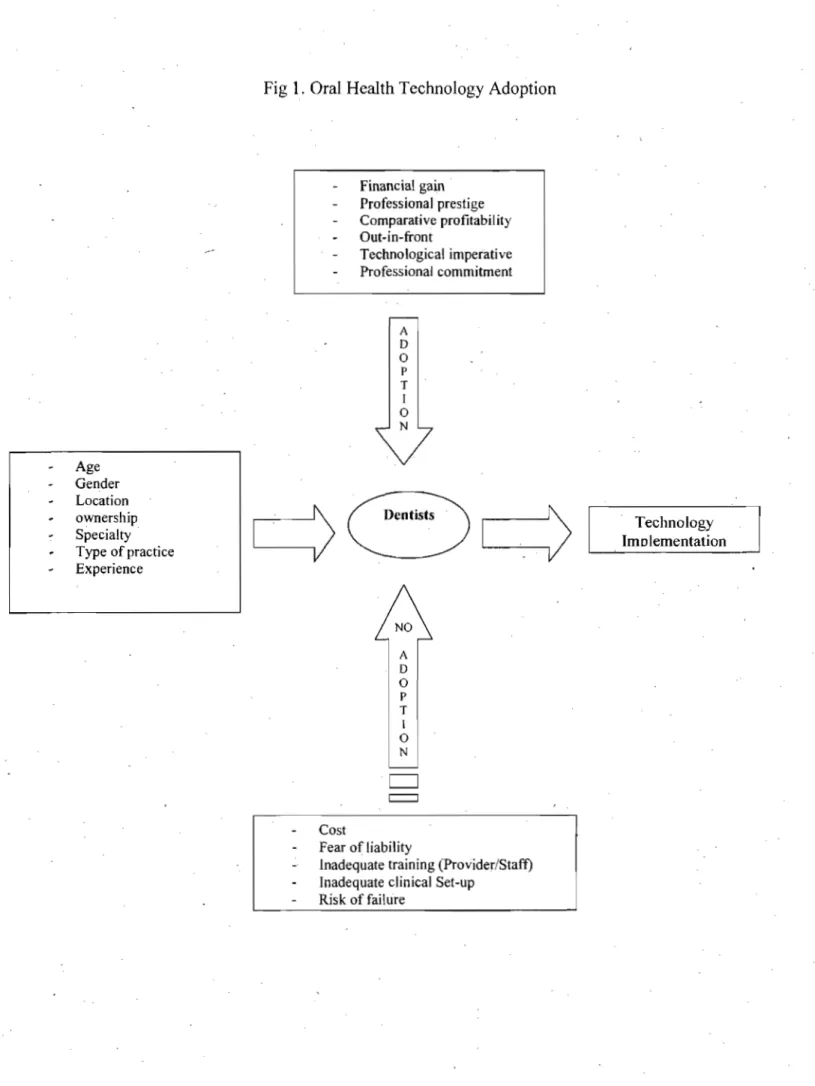
We have carefully assessed the relevance of aH the aforementioned factors and considered the elements that may affect the adoption ,of dental technologies by dentists'(Fig. 1). We then designed our questionnaires based on the results of our personal interviews and consultation processes with other dentists.
Age Gender Location ownership Specialty . Type of practice Experience
Fig 1. Oral Health Technology Adoption
Cost Financial gain Professional prestige Comparative profitability Out-in-front Technological imperative Professional commitment A D o P T 1 o N Fear of Iiability
Inadequate training (Provider/Staff) Inadequate clinical Set-up
Risk of failtire
Technology Imolementation
1.4 Oral health Technology Assessment (OHTA)
In oral health, like in any other medical field, limited infrastructure and resources hinder the provision of basic health services, let alone the oral health treatments, . to low-income populations. Subsequently, oral health is often neglected, as over 90 percent of caries remains untreated in developing communities [32]. Knowing that oral diseases are the fourth most expensive to treat, managing these diseases poses a global health dilemma [33]. Therefore, affordable and feasible preventive strategies are needed to avoid the tremendous cost of dental caries treatment.
Considering the economical, social, industrial, ethical and legal importance of the provision of oral health in our community, it is surprising that there is still no established framework to use HTA to assess oral health technologies like othet innovative health technologies. Oral health in Canada like most other industrialized countries is mainly private. Only those who receive social assistance and children in sorne regions are covered under a public dental health . plans. The most recent example of this privatization in Canada was the lobbying of Québec dentists to stop treating children and social welfare recipients covered under the public health plan. In 2008, the general association of dental surgeons in Quebec has asked all his members to opt out of the public health plan due to the increase in operating cost. Therefore, the majority of the population will have
to pay for their dental treatments out of their pocket. In this private market, other than sporadic inspections by local regulatory associations, there is no accountability for the newdental technologies that avail themselves to dentists on a daily basis. One should also consider the impact that industry imposes on dentists
It is suggested that the decision making process would be much simpler in a private health care system than the public1y funded one. This may be the case, where most decisions are taken at the micro level. Dentists often are the ones who choose, adopt and implement the technology in their c1inics. In this regard, one should also consider that dentists like their medical counterparts may be influenced by the medical and dental industry. Industty's promotion al strategies to facilitate the adopti~n of new innovative technologies play an important role in their adoption.
In this privately funded health care, HT A will still have to consider the same factors that involve the diffusion of the technology with the exception that the decision-making environment is less chaotic. This is due to the fact that most dedsions on the adoption of a dental technology are taken at micro level by dental providers.
assessment in oral health among industrialized' countries [34, 35]. Up to now there is no official document that considers the use of HT A for a~sessing oral health technologies in Canada. For much the same reasons that medical technologies are rigorously assessed, oral health technologies need to also be evaluated. It seems that who pays for the technology makes the differénc~ on how it is assessed.
Most so-called technology assessment studies in dentistry are focused on the clinical superiority of a particular technology or the economical evaluations, the bulk of which is under cost effectivenes~ studies[36]. The undisputable notion that the cost of a dental technology is crucially important in sustaining its provision tends to overshadow the importance of otheraspects of the technology. The social, industrial, ethical and legal assessment of the technology is also important, especially once the use ofthat technology is considered.the standard of care.
The determination of a technology's stage of adoption and diffusion may be the primary purpose of an assessment, which indicates that there is no single correct time to conduct an HT A in both medical and dental health care [37] . It is for this reason that we designed this study to detennine the rate of adoption of general dental technologies among Canadian oral clinicians.
Section 2 - An investigation of the adoption of dental technologies amongst Canadian dentists
2.1 Manuscript: Oral health technology adoption among Canadian dentists (submitted)
Shahrokh Esfandiari, Reza Majdzadeh, Jocelyne Feine, Renaldo N. Battista
Abstract
\
Objective: We designed this study to determine the variables that influence the adoption rate of oral health technologies amongst Canadian dentists.
Design & Setting: In this cross-sectional study, we sent an anonymous survey questionnaire to aIl licensed Canadian dentists, both general practitioners and specialists, who were member of the Canadian Dental Association (CDA). A three part questionnaire accompanied by a postage prepaid envelope was sent with the April 2006 volume of the Journal of the Canadian Dental Association in late march, 2006. No second mailing was performed.
Participants: .As of April "2006, 19,293 dentists were registered III Canada,
exttaneous to their CDA membership. By October 2007, we. received 1781 responses.
Main outcome measures: We planned to measure the effect of age, gender, language, type of specialties, ownership,' association with other dentists, and the location of practice on the adoption of any diagnostic or therapeutic technologies during the last 12 months. We successfully measured the effect ofthese variables on the adoption of new oral health technologies.
Resùlts: Our multivariate regression analysis showed significant association between explanatory variables; age, ownership, and the specialty of Canadian dentists with the newly adopted technologies. The younger dentists, who were in practice forless than eleven years, were significantly more likely to adopt new technologies than. their oIder counterparts (30+ years in praètice) [(OR 1.53, 95%CI (1.17 to 2.03)]. The Qdds of those that owned. their practices were 1.37 times higher to adopt the new technologies than those who did not owntheir practices [95%CI (1.06 to 1.76)]. Periodontists were the only specialists who adopted new technologie~ at significantly higher rate than general practitioners [OR 4.12,95% CI (1.57 to 10.79)]. Clinicians who used meeting, discussion with other colleagues, continuing educational courses, and internet were more likely to adopt new technologies than those who did not.
Conclusions: This study provides evidence' that the rate of adoption of new oral health technologies amongCanadian dentists depends mainly on dentists' years in
practice, practice ownership, information sources on the technology, and their specialties:
Introduction
Why should we study health care technology adoption? Health researchers pro duce increasing amounts of important new technologies in health care. However, there is a large gap between what it is c1aimed the new technology can do and what patients actually receive [38-40]. An important reason for this gap is the unc1ear adoption process of the new evidence.
New health care technologies are produced at an alarming rate. It is believed t4at the adoption of innovative medical. technologies may increase health care expenditures [41-43]. Although these new technologies have heen proven in efficacy studies to alter and, in most cases to improve patient outcomes, in many cases the assessment on the effectiveness of these technologies is only availahle after technologies have been adoptedand widely used [44].
There is still a great lack of understanding as to how physicians adopt and implement guidelines in their practices [38]. Although the adoption and use of new innovative technologies is guided by the expectation of improved clinical
outcomes, these decisions are mostly based on less than sufficient data. However, despite the rapid increase in medical information, there is no identified magic buUet for the adoption and implementation process, and few published studies on the topic [18, 45]. At best, we can identify a specific guideline strategy for a specific technology that may not apply to aU other related technologies [40].
Therefore, to facilitate the rate of adoption and dissemination of new effective health care technologies, studies are needed to understand the incentives and the barri ers in this process [46].
Factors to consider when assessing' oral health technology adoption
Dental technologies' are good examples of medium and low intensity health technologies whose adoption do not require mobilization of many financial and human resources. As opposed to, high intensity health technologies (i.e. CT scan, MRI, ... ) which require intense mobilization of resources fortheit adoption and diffusion into the health system [28]. For medium and low intensity technologies the classical theory of diffusion may explain the phenomenon of health
~
technology adoption by physicians (in this case, dentists). This theory stems from recognizing factors that are associated with the innovation, the characteristics of those who adopt it, the dynamics of the system in which it operates, and the
setting in which practitioners perfonn [47]. Battista in his early work on innovation and diffusion of health technologies [28], has identified three detenninants in health professional adoptive behavior. 1) Cognitive detenninants that refers to physicians' knowledge of the new technology, 2) Sociodemographic detenninants which may detennine th~ professional's attitude towards adoption of the new technology, and 3) Organizational detenninants that consider the effect of the health system in which physicians practice on their adoptive behavior.
Other researchers have stated that using the behavioral approach can help us understand the health technology adoption process [9]. The behavioral approach considers using organized activities or policies that interfere with the process or flow of human behavlor. However, as important as this approach is in understanding the health technology implementation process, it cannot completely explain the adoptive attitude of the users of technology who are mainly health care workers and physicians. Theavailable literature on human behavior does not single out anyone approàch as optimally effective in the adoption and the use of technology [30]. In fact, behavioral science conc1udes the extremely complex : nature of human adoptive processes. After their systematic reviews of health, infonnation, and behavior/organization literature Kukafka et al. [30] conc1uded that;
" ... there is niuèh to be learned about successful implementation of information systems in hëalthcare organizations. While behavioral theory supports the notion that usage behavior should be viewed from a multi-determinant perspective, none of the studies in our sample included a sufficiently broad set of the empirically investigated ,influencing factors. This fin ding may provide additional understanding of why implementation is extremely difJicult to achieve, and why it is necessary to continue developing additional insights into the reason for high failure rates associated with underutilized systems. "
So far, researchers have identified sorne key factors associated with implementation and user acceptance of Information Technologies [11]. These factors emerge from academic disciplines, such as psychology, sociology, social psychology, social anthropology, organizational behavior and development, management, and cognitive sciences. An assessment of six health technologies , across ten industrialized countries demonstrated a vast disparity in adoption and diffusion of these technologies [48]. This clearly contradicts the neat evidence-based ideology in these countries. Therefore, the need is great to invent tools for policy makers that will enhance the adoption ofhealth technologies.
Wouldn't it be much simpler for poIicy makers and decision makers in health systems to know what type of providers (physicians) will be more inclined to prescribe a particular type of technology? This kind of information could be
useful to develop educational approaches to shape physicians' adoptive behaviors towards safe, efficacious, socially accepted and cost-effective health technologies.
Education
If any single determining factor could have been named as the factor in health
technolo~y adoption by physicians, it would have been the effect of education on the adoption. It has been shown that educating physicians increases the rate of adoption of new technologies by this group [6-9]. Today, many Investigators believe that since physicians' practice beliefs influence their attitude towards technology adoption, educating physicians based on their specialty is far more effective than using generic messages in encouraging compliance with the most . recent evidence-based guidelines [8].
Age and gender
In a study of variation in recommendations for cancer screening among primary care physicians in New Mexico by Herman et
al.
[49], it was shown that the introduction of evidence-based screening only slightly influenced screening rates, with younger physicians and those with university affiliations more likely to follow recommendations. They aiso noticed that female physicians were morelikely to. endorse screenings than their male counterparts [8]. The effect of age and gender in physician's adoptive behavior in using a specifie health technology like hormone replacement therapy (HRT) is underscored by the fact that among physkians similar in age and training, male physicians discussed HRT significantly more often than did female physicians [50].
Compensation methods, practice ownership, and expertise
It has been shown that health technologies are favorably adopted if they are simple, flexible, effective, do not impede autonomy, and are not used punitively [11]. It was also shown thatphysicians' compensation methods alter the way that they use or offer technologies to their patients. Further, it is believed that those physicians who own their practices show ditferent adoptivebehavior patterns than those who work on salary [51]. The level of physician's experience is also believed to have an effect on technology adoption [52]. While sorne researchers found that physician's gender may affect their adoptive behavior, others believe
\
that the level of expertise required, the cost of the new technology, the location where it is delivered, and the time it will require to form an acceptable level of expertise determine the adoption of new technologies [50]. To this effect, Andrews et. al. [53] in their cross-sectional survey among primary care practitioners in the state of Kentucky, USA, found that practitioners in rural areas
have different adoption rate for online health technologies than their counterparts who are affiHated with centers in metropolitan regions.
To assess the adoption of the oralhealth technologies among Canadian dentists, we designed a survey instrument that largely takes account of the aforementioned factors that may or may not influence the adoptive behavior of dentists. Our questionnaire lists a detailed set of predictors that could affect the adoption rate of oral health technologies among these c1inicians. Since our literature review showed no reference to similar surveys in oral health, we believe that this national anonymous survey is the first of its kind to assess the predictors of oral health technology adoption.
Methods and Materials
Feasibility study
We adopted and modified the only North American found questionnaire on the rate of adoption ·of medical technologies. This questionnaire was used amongst medical physicians by the American Medical Association's Socioeconomic Monitoring System [54]. English and French l~nguage versions of the questionnaire were developed using a fOrWard backward techniqlle [55, 56]. The
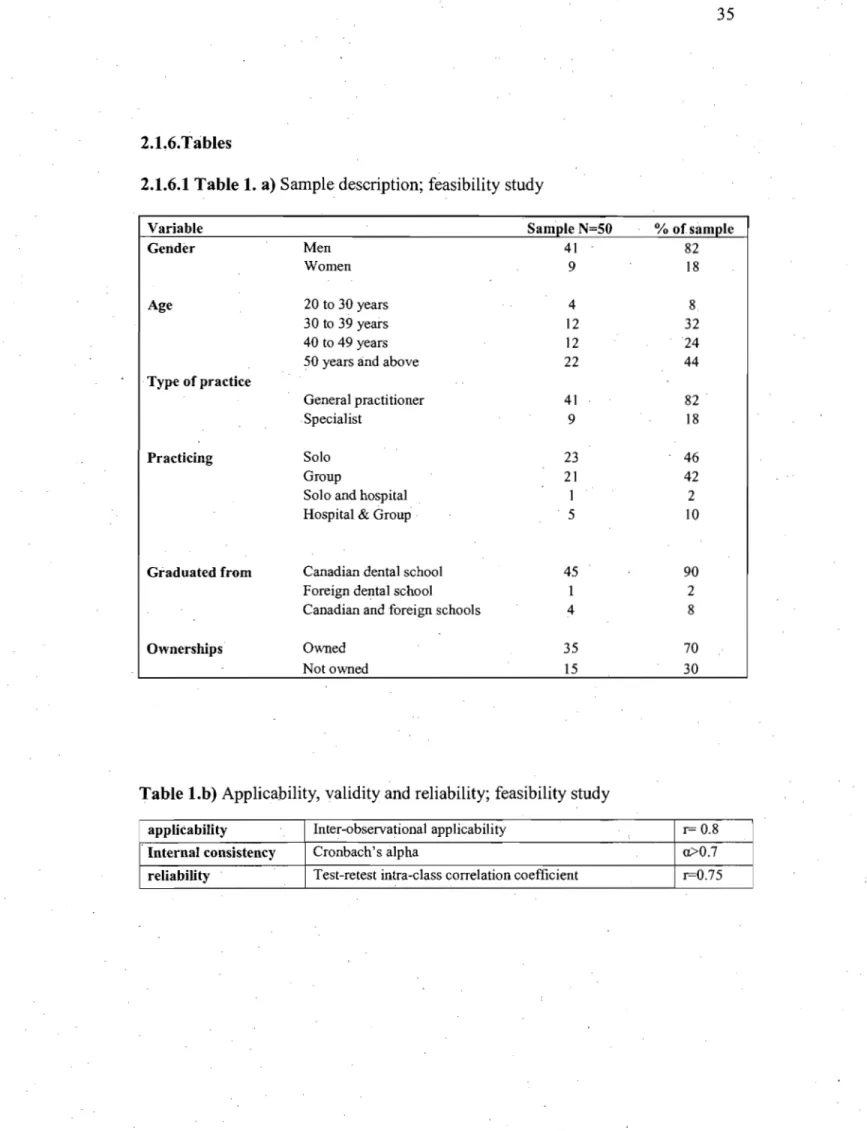
questionnaire had three parts: 1) general infonnation on sociodemographic variables and practice status, 2) general technology, and 3) implant technology. A feasibility study was perfonned among a representative sample of 50 dentists in the Greater Montreal Region priOf to the nationwide survey. In this study, we detennined the 1) general applicability, 2) reliability, 3) acceptability, 4) validity; and 5) the amount of time needed to complete the questionnaire (Table. 1 a and b). This was done by two undergraduate dental students. The questionnaires Were sent to c1inicians' by. email or fax, or handedin person to all c1inicians. AH questionnaires were collected in person and quickly reviewed for completeness. The completed questionnaire was then pre-tested for comprehensibility and content validity with general dentists and dentalstudents.
National survey
Based on the feasibility study, we have designed and· modified a cross-sectional anonymous survey questionnaire that was sent to all licensed Canadian dentists, general practitioners as well as specialists, who were registered with the Canadian Dental Association (CDA). This questionnaire also had three parts: 1) general infonnationon sociodemographic variables and practice status, 2) general technology, and 3) implant technology. The certification of ethical acceptability for research involving human subjects was obtained from ·McGill University
Institutional review Board (Appendix I). This three part questionnaire accompanièd with postage prepaid envelopewas inserted in a polybag with the April 2006 volume of the Journal of the Canadian Dental Association (JCDA) and mailed to registered Canadian Dentists who may or may not have been a member . of CDA. No second mailing was perfomled. The CDA has a record of preferred language of communication for each dentist, and this was used to determine which language version (French or English) Was sent to each address. The English and French language versions of the questionnaire were pre-tested for their linguistic equivalence (Appendices II & III).
AB questions in our survey had categorical response options. The dependent variable of interest in this report was "During the past twelve months, did you perform for the first time any new diagnostic or therapeutic procedures that reflected advances in dental knowledge or technology?"
AB statistical analyses were performed by a biostatician (RM) using statistical softwares; STATA ver.9 and SPSS ver. 13. The descriptive statistics and, the univariate analysis of the explanatory variables were performed and further foBowed by the forward and backward stepwisemultivariable logistic regression analysis to explore any significant association between the explanatory variables and the above dependent variable.
Results
As of April 2006, 19,293 dentists (15,646 English and 3,647 French) were registered in Canada. The survey was sent to all registered Canadian dental c1inicians in the April 2006 issue of Journal of Canadian Dental Association (CDA). By October 2007, we had received 1,781 responses. Descriptive statistics for our respondents, broken down by practice location, gender, age, language, type of practice, practice status, and ownerships are shown on table 2. The percentages of our respondents from Canadian provinces greatly resemble those provided by CDA throughout the country. These similarities are also observed when comparing the gender and the type of practice of our respondents and those of Canadian dentists.
A univariate statistical analysis for the association of the explanatory (independent) variables and the newly adopted general technology by Canadian dentists within the past twelve months was performed (Table 3). The information from the portion of the study dealing with implant technology is used in a separate study. This data indicates that the numbers of years that the dentists have been practicing, which country they were graduated from, their field of specialization, and . whether they owned their practice or not, as well as, the sources of information about the technology were significantly associated with the adoption
of the new technologies. Based on these results we have created a model whereby variables that showed significant association with the adoption of new technologies were included for the multivariable logistic regression analysis (Table 4).
In terms of the number of years in practice, the odds of younger dentists, who have been practicing for less than e1even years, to adopt new dental technologies is 1.53 (P<O.Ol) times higher than those oftheir colleagues who are in practice for more than 30 years. Whereas the odds of adoptingthe dental technologies among those who are in practice from 12-21 and 22-29 years decreases to"1.5 and 1.29' (P<O.O 1) respectively, compared to oIder dentists of 50+years old.
Among specialists, Periodontists were the only specialists compared to general practitioners who had shown significant willingness to adopt new dental technologies (OR 4.12, P<O.Ol). The rest of the specialists had shown no significant difference between the rates of adoption of the new dental . technologies with those of the general practitioners. The odds ofthose who owned their dental practices to adopt new dental technologies were 1.37 (p<0.02) times higher than those who worked on a salary or those who received a percentage of the billings in the practice in which they were as50ciated. Finally among those dentists who had adopted a new oraI technology within the past twelve months,
the source of information on the adopted technology played a significant role in their adoption. Professional meetings and conferences, continuing dental education courses, discussion with other dentists, internet, and other (i.e dental company sale representative, study clubs) were the sources with significant effect on the technology adoption (p<O.05) whereas, dental journals and technology assessment reports produced by govemment agencies had no significant effect.
Discussion
An anonymous survey of Canadian dentists was carried out to assess the rate of adoption of new dental technologies. In devising the survey, we have carefully reviewed the medical and dental literature to find similar surveys that may have been used to detemiine the rate of the adoption among health professionals. The only survey that remotely resembled our field of interest was the one by Friedman in 1988, which used the results of a national survey instrument with US physicians on a long-term basis for the American Medical Association's Socioeconomic Monitoring System [54]. This monitoring ,system provided a unique opportunity for assessing the medical technology adoption pro cess aniong medical physicians. Freidman found that the specialties, type of practice; years of practice, the age of the physician up to the50 years old, and the specialist board
certification were detennining factors in the rate of adoption of medical technologies among physicians. Those experienced physicians who were 50 years or older and were not board certified were less likely to adopt riew medical technology. In addition, Radiologists showed higher· adoptive attitude towards new technologies compared to other specialties. Based on these and other similar findings, we developed, validated and pilot tested our survey instrument prior to its nationwide use.
In most de~eloped countries, dentistry is a private ?1arket. Dentists, wh ether influenced by patients, sales representatives or even TV commercials, choose the
1 .
technologies that they see fit for their practices. Realizing what inspires dentists to choose or abandon certain technologies over others may require psychosocial analysis that is heavily rooted in behavioral science. The aim of this report is not· to dissect the individual factors that may have influenced dentists in adopting dental technologies, but rather to explore a set of common characteristics of dental practitioners that could affect the rate of adoption of technologies in their routine practices.
Allison and Bedos [57] who studied Canadian dentists' vièws of the utility and accessibility of dental research found a strong pattern of revising care associated with the age of the dentists. They had noticed that the likelihood of altering habits
by which dentists care for their patients increased with age except for their oldest group, aged 61 years and older, in whom they had noticed slight decrease. 8ased on that finding, the authors inferred that the older clinicians become, the more likely it is that they will change their practice habits. However, we found that the
,
,
younger dentists who had graduated more recently from dental school (0 to Il
years) have a significantly higher willingness to adopt new dental technologies than those with more work experience (30 years and more). In fact, there was a decreasing gradient in the likelihood of adoption amongst our dentist population up to the' age of 50. This finding is similar to Friedman's national physician survey [18]. Allison and Bedos [57] used different age categories «31, 3 1-45, 46-60, >60 years) 'than those in our study, which may explain in part the difference in findings between these studies since the age cut off of 50 years was ,not observed.
It can also be argued that the altering habits and adopting new general technologies are perceived differently by dentists. Factors that affect the adoption of new technologies may differ from those affecting changes in physician's clinical habits.
The significantly higher willingness of periodontists to adopt new dental technologies than other specialists could be due to rriany factors including their training methods, and the type of new technologies available (ie, more relevant to this specialty).
Despite Friedman's finding that the type of practice, that is whether. physicians practice alone or in association with other physicians, influences the physicians' adoptive behavior towards new medical technologies (i.e. those who were associated with other physicians in group practices were more likely to adopt new technologies), we found no such association among dentists in this study. However, our results confirm the notion that the power of decision making to adopt or abandon health technologies is still in the hands of the landlord c1inician or the ownerofthe practice.
Those associate c1inicians, who receive salary or a percentage of the practice's billing, irrespective of the mode of reimbursement, demonstrated no significant difference in adopting or abandoning dental technologies. It may be that c1inicians who choose to own their practices are the type of people who are more willing to take risks than those who choose to work for others. Commonly, the associated dentist who is not an acting partner in the practice has little power to"wards purchasing a new technology.
It is naïve to still believe that the relationship between the health professionals (in this case the dentists) and patients is doininated by the physicians' absolute autonomy as an informed agent who makes important health related decisions on behalf of his/her patient [58]. Today, information is easily available at the fingertips of a11 consumers. Thus, the previou.sly one-sided patient-physician
interactiOIl is now tipped towards the patient. Patients who constantly hear success stories of this and that new technology become "technology-prone" [59]. Although consumers may perceive effectiveness to be . greater than the actual health gain of advanced technologies, they are also more likely to be well informed about their particular health issues. For this reason, patients/consumers often demand that their physicians provide recent innovative technologies. Because characteristics like age, ownership and clinical expertise can determine the rate of adoption of dental technologies among these health professionals, dentists should consider the possibility that patients may eventually choose certain clinicians over others.
In an optimal medical care syst,em, new technologies and innovations would be adopted rapidly once safety and efficacy are established and favorable cost-effectiveness ratios are predicted. The technologies would be purchased and started in the most efficient and appropriate settings and' they would be available equally to everyone in need. Payment would reflect the actual costs of
. \
appropriate and efficient medical care at all times, regardless of which technologies are used and whether they are cost saving or cost increasing [20]. However, there is now evidence that the adoption of many health technologies is not scientifically or socially optimal [60]. Understanding the factors' thaï influence the adoption of medical innovation and examining the impact of past
health policies on adopted and diffused technologies are prerequisites for . developing a sound public policy.
The low response rate in our survey is a limitation that could suggest a bias towards adopters of technology. However, our participants' distribution for gender, location and type of practice is significantly comparable with those of all Canadian dentists documented by the Canadian Dental Association at the time of the survey [61]. Therefore, we believe that our sample may represent the
Canadian dentists' population.
In conclusion; the. findings of this study provide useful information for aU three levels of decision makers. At the micro level, patients and c1inici~ms could use these findings to improve their relationships. This will make it easier for patients to better understand the adoptive behavior of their c1inicians, while c1inicians strive for improving their weaknesses on adopting new health technologies. At the meso level, the university and the hospital administrators in a public1y funded oral health care system may use our findings to construct suitable regulations in provision of oral health in their institutions. Finally at the macro level, government authorities can use these findings to allocate resources in ways that will ease the present adoptive technological gaps among dentists.
2.L6.Tables
2.L6.1 Table L a) Sample description; feasibility study
Variable Sample N=50 % ofsample
GeIidcr Men 41 82
Women 9 18
Age 20 to 30 years 4 8.
30 to 39 years 12 32
40 to 49 years 12 24
50 years and above 22 44
Type of practice
General practitioner 41 82
. Specialist 9 18
Practicing Solo 23 46
Group 21 42
Solo and hospita1 2
Hospital & Group 5 10
Gl'aduated from Canadian dental school 45 90
Foreign dental school 2
Canadian and foreign schools 4 8
Ownerships Owned 35 70
Not owned 15 30
Table Lb) Applicability, validity and reliability; feasibility study
applicability Inter-observational applicability r= 0.8 InternaI consistency Cronbach's alpha 0>0.7 reliability Test-retest intra-c1ass correlation coefficient r=0.75
2.1.6.2 Table 2. Sample description; National survey ~~~e~~~\l~:Jf'~:~~~,~~<:z:;y,~\, British Columbia Ift~~~~"~';,i;k::
.
;t.;_?!~"E~~~<..
œ'''k"''''r"."",.' Nova Scotia 1:.'M:âi!itqp~!:;:;;,,a;:};
New Brunswick l$:MkPÇ.iiéwm!~E_~Y;T;g.\~;?a.;:7(f!7"<':":, :ii,~;Elj:;'~til::i;1~~~aL; Newfoundland ii. ~fr~;J3d\Va,idJ~~!mfk,;:;' Yukon ~11{QÇtAFeSr:t~&iJpffi]!t_'f' ':":\~1,: Nunavut ;;'::T8'"IGeh
i,Q{{;iju:fai:i:~~D~~~f~,J:2t.1fjf;;:fC;~.·'·'
Specialist:::li~
••
,'~:~;;;"ii::T;gTi;.::::\
"i ... · . ,;RubHçi~@a!.~!}):~. Pedodontics ~ ,lc" t;~::~.!i!: :;:::Zt~13~Qô4Q!1~:<~"
Q,:!,~llr~~" ,(i)rthq9(mtl~. Oral inedicine ~;;<:!~;r:i~~~z,;·,~;;!zf~W:pI?!~'"},','~iW(~tZ:,~W~~fi~dQÀtrç,i~!:Yy~F\" Prosthodontics ·s~;!Qsii~dëôigLqiX~JMP~:t.~,· Oral radiology Ownel'ship ù~:~l!lLIifâ(;ilçei:~.j§6t~~\i::
aRiit:;
r;ç;f;~2~\<>
2.1.6.3 Table 3. Crude analysis; National survey
During the past twelve months, did you perform for the
first Ume any new diagnostic or therapeutic procedures Using new technology during past year
that renected advances in dental knowledge or technology? 1 - - - 4
Female gender (vs male) Age:
English speaking (vs french) Provine of practice: Ontario Quebec BC, YK and NWT Prairies Atlantic region Speciality: General practitioner Prosthodontic Oral surgery Pedodontic Endodontic. Status of practice: Atone
In association with others In a hospital clinic
Information sources (usedlnot used):
224 (28.9) 261 (27.8) 624 (78.1) 767 (79.6) 263 (33.1) 350 (36.5) 187 (23.5) 227 (23.7) 161 (20.3) 172 (17.9) 121 {I5.2 126 (13.1) 63 (7.9) 84 (8.8) 372 (46.4) 458 (47.8) 393 (49.2) 456 (47.5) 34 (4.3) 45 (4.7) OR 1.05 1.00 Ll7 1.09 1.00 1.09 1.25 1.28 1.00 1.00 1.00 1.06 0.93 95% CI 0.74 1.83 0.87 1.37 0.84 1.42 0.94 1.64 0.94 1.74 0.69 1.45 0.89 2.80 0.71 4.07 0.32 2.17 1.30 1.99 2.31 0.87 1.29 0.56 1.52 P-value 0.63 0.45 0.47 ,0.11 0.10 0.99 0.09 0.19 0.73 0.11 0.37 0,43· 0.54 0.76
2.1.6.4 Table 4. Multivariableregression results; National survey During the pa st twelve months,did you perform
for the first time any new diagnostic or therapeutic procedures that reflected advances in dental
Prosthodontic Oral Pedodontic Endodontic Other Owner of the Information sources Time since
Upper quartile (30 yrs and above) ;~)"( 95% CI OR 1.92 0.81 4.53 0.75 0.31 1.86 0.61 0.21 1.82 0.46 0.14 1.58 0.70 0.17 2.88 1.00 . p-value 0.138 0.540 0.380 0.220 0.617
Section 3 - Technology Adoption among Canadian Dentists: summary, conclusions and implications for future research
3.1 Summary Of thesis research
There is no evidence on the existence ofHTA in Canadian oral health. Up to now, HTA III dentistry interpreted as a .mere cost analysisof dental
therapies/technologies. In Canada, there are systematic controls that limit the . adoption of most high cost technologies (i.e. MRI) such as prospective hospital budgeting, whereas there are often no controls for privately provided technologies like the ones used in oral health care.
Much like medical technologies, dental technologies have to be adopted at the early stages of their diffusion by the providing c1inicians.in order to be accessible to the patients. That is what prompted the preparation of a cross sectional survey among aU Canadian dentists. The objective of this thesis, therefore, was to study the attributes that may affect the adoptive attitudes of these c1inicians towards dental technologies.
The findings of this research revealed that gerierally the adoption of dental technologies in Canada is significantly associated with the specialty of the dental
c1inicians, the time elapsed from graduation, whether they own their c1inics, as well as the sources of the information on or about the new technology.
The finding that dental practitioners who do not own their c1inics are less likely to adopt new dental technologies for their patients than those who own their c1inics may be due to the nature of dental practices in Canada, where the decisions on purchasing the technology are taken by the owner of the c1inic and thereafter, the associates will use it. As to why only certain specialists significantly adopt more technologies, this may be due to many factors among which one can point to the specific training leading to the specialty and/or the nature of the discipline and its technology dependency. However, these hypotheses shouldbe further investigated. On the other hand, the finding on the effect of the sources of the information on and about the new technology is crucially important on how to effectively disseminate this information to dental practitioners.
This research suggests that they are determinants that shape the adoptive behavior of dentist towards newly introduced dental technologies. Knowing what kind of c1inicianswill be more likely to adopt the assessed technology, would 1) help the producers of the OHT A into forming recommendations that may ease the diffusion of new dental technologies into practices, and 2) inform patients, dental
c1inicians and government policy makers, who wish to influence the adoption of . a c1inically effective dental technology.
3.2 Methodologicallimits of the· research
With respect to the use of the literature used in' this research, it should be noted that most availabIe literature on the diffusion and the adoption of health technologies is heavily focused on the diffusion of the embodied technologies which are mainly the high cost technologies like CT scanners and MRI within the hospital sector. Very little evidence exists on the diffusion of the disembodied technologies such as new technologies ùsed in a private practice (other than drugs that are used at the office by physicians) which is the bulk of most dental technologies.
. The core of this thesis was a cross sectional survey which was designed to describe the diffusion and the adoption of dental technologies in Canada. The small response rate in this survey, may have underpowered the study. However, it was shown that the distribution of our respondents was comparabl~ to the Canadian dentists' population, and that the response rate of our study was also comparable to previous similar surveys in Canada [62].
In cross-sectional studies it may bedifficult to as certain the temporal order of exposure and disease, or in this study the adoptive behavior of dentists towards new technologies. Therefore, no causal inferences can be drawn from the study of the findings of this survey. The effect of the age, ownership and the type of specialty should be individually investigated to establish a conclusive causal relationship between these factors and dentists' adoptive behavior.
3.3 Conclusions
Accepting the methodological limitations of this project and the fact that sorne of the reported findings need to be confirmed in studies with larger sample sizes, the findings bf the research reported in this thesis suggest that:
1. Canadian dentists with less than Il years of practice significantly adopt new dental technologies more than their older counterparts with more experience (OR: 1.53; 95%CI: 1.17-2.03);
2. Among Canadian dental specialists, Periodontists are more willing to adopt new technologies than other specialists (OR: 4.12, 95%CI: 1.57-10.79);
3. Dentists who own their practices are more likely to adopt dental technologies than those who do not own their practices (OR: 1.37; 95%CI: 1.06-1.76);
4. Dentists who have attended professional meetings, conferences or continuing· education courses and those who have participated in discussions with other dentists, and used internet were more likely to adopt new dental technologies.
3.4 Original contributions of thework within this thesis
The original theoretical and practical contributions of the research reported in this thesis to the scientific knowledge within the field of oral health are:
1. Section one raises awareness on the significance of oral health, its effect on health care systems, and the deficiency of work concerning health technology assessment in oral health in comparison to other health fields
2. Section two reports the analysis on the determinants on the adoption of general dental technology in Canada .This report is an original contribution which has findings with potential use in oral health technology assessment (OHTA) aimed at the effective provision of this technology.
3.5 Implications for future research
The findings reported in this thesis should inspire further investigation into considerations for establishing OHTA. There is no precedent for any studies that investigated the contributing factors· on the rate of adoption of health technologies in dentistry. There is a need to understand whether dentists' . adoptive behavior for health technologies is similar to other health care
professionals who practice in private hèalth care system. Future studies should . explore these similarities, if any. Understanding the mechanism of this adoption will provide vital information on how to approach these professionals to optimize the adoption process in ways that improves the delivery of dental care to patients.
Although this study explored the adoption of general dental technologies among Canadian dentists, however, wh ether these findings are applicable towards specifie innovative technologies needs to be further explored. In addition, the applicability ofthese findings in other countries needs to be studied as weIl.
References
[1]. Romanow RJ. Building on Values: The Future of Health Care in Canada-Final Report. Ottawa: Health Canada 2002.
[2] Drummond M. Evaluation ofhealth technology: economic issues for health policy and policy issues for economic appraisal. Social Science &
Medicine. 1994 Jun;38(l2):1593-600 .
. [3] Granados A. Health technology assessment and clinical decision making: which is the best evidence? International journal of technology assessment in health care. 1999 Summer; 15(3):585-92.
[4] Jacob R, McGregor M. Assessing the impact ofhealth technology assessment. International journal of technology assessment in health care. 1997 Winter; 13( 1):68~80.
[5] Bero L JA. How consumers and policy-makers can use systematic reviews . for decision-making. Ann Intern Med. 1997;127:37-42.
[6] Cuyler RN. The challenge ofpartial hospitalization in the 1990s. The Psychiatric hospital. 1991 Spring;22(2):47-50.
[7] Reinhard! UE, Hussey PS, Anderson GF. U.S. health care spending in an international context. Health affairs (Project Hope). 2004 May-Jun;23(3):1O-25.
[8] Triandis HC. Values, attitudes, and interpersonal behavior. Nebraska Symposium on Motivation. 1980;27:195-259.
[9] Ajzen 1. The theory ofplanned behaviour. Organizational Behavior and HumanDecision ProceSs. 1991 ;50:179-211.
[10] Davis FD. Perceived usefulness, perceived ease of use, and user acceptance of information technology. MIS Quarterly. 1989; 13 :319-40.
[11] Lorenzi NM, Riley RT, Blyth AJ, Southon 0, Dixon BJ. Antecedents of the people and organizationa1 aspects ofmedical informatics: review of the literature. J Am Med Inform Assoc. 1997 Mar-Apr;4(2):79-93.
[12] Curtis B KH, Iscoe N,. A ·field study of the software design pro cess for large systems. Commun ACM. 1988;31:1268-86.
[13] Kuo SR. Implementation of asthma guideline in Taiwan--the management in medical centers. J Asthma. 2002 Dec;39(8):767-70.
[14] Rahman S. Environmental impacts ofmodern agricultural technology diffusion in Bangladesh: an analysis of farmers' perceptions and their
determinants. Journal of environmental management. 2003 Jun;68(2): 183-91.
[15] Enns HO HS .. Implementation of information technology in developing countries: experience ofMongolian internet service provider. 32nd Hawaii international conference on system sciences; 1999; Hawaii: IEEE Comput Soc;
[16] Cutler DM MM, Newhouse JP,. What Has Increased Medical-Care Spending Bought? . Am~rican Economic Review 1998;88(4):132-36.
[17] Cutler DM MM. What is technological change? In: DA W, ed. Inquiries in the Economics of Aging. Chicago: University of Chicago Press 1998:51-81.
[18] Friedman B. The rate of adoption of new procedures among physicians. Medical Care. 1985;23(8):939-45.
[19] Phelps CE. Diffusion of information in medical care. J Econ Perspect. 1992 Summer;6(3):23-A2.
[20] Hillman AL, Schwartz JS. The adoption and diffusion of CT and MRI in the United States. A comparative analysis. Medical care. 1985 Nov;23(11):1283-94.
[21] Friedman B, Devers KJ, Steiner CA, Fox S. The use of expensive health technologies in. the era ofmanaged care: the remarkable case of neonatal intensive care. Journal ofhealth politics, policy and law. 2002 Jun;27(3):441-64.
[22] Petersen PE. The World Oral Health Report 2003: continuous
improvement of oral health in the 21 st century--the approach of the WHO Global Oral Health Programme. Community dentîstry arid oral epidemiology. 2003 Dec;31 Suppl 1:3-23.
[23] Widstrom E, Eaton KA. Oral healthcare systems in the extended European union. Oral health & prevent~ve dentistry. 2004;2(3):155-94.