Science Arts & Métiers (SAM)
is an open access repository that collects the work of Arts et Métiers Institute of
Technology researchers and makes it freely available over the web where possible.
This is an author-deposited version published in: https://sam.ensam.eu Handle ID: .http://hdl.handle.net/10985/11517
To cite this version :
Guilhem GRIMAUD, Nicolas PERRY, Bertrand LARATTE - Decision Support Methodology for Designing Sustainable Recycling Process Based on ETV Standards Procedia Manufacturing -Vol. 7, p.72-78 - 2016
Any correspondence concerning this service should be sent to the repository Administrator : [email protected]
January 2017, Kruger National Park
Peer-review under responsibility of the organizing committee of SMPM 2017.
Decision Support Methodology for Designing Sustainable Recycling
Process Based on ETV Standards
Guilhem Grimaud
a,b,*, Nicolas Perry
b, Bertrand Laratte
b,caMTB Recycling, Trept, France
bArts & Métiers ParisTech, I2M-IMC, UMR 5295, Talence, France cAPESA, Technopole Izarbel, 64210 Bidart, France
Abstract
The scarcity of resources and the increasing in generation of wastes encourages the need for solutions through circular economy strategy. Recycling is mostly used as the key vector to reduce the environmental impact. Nevertheless, different end-of-life pathways are available even for same kind of waste. All recycling solutions are not equivalent in terms of secondary raw materials quality and quantity. These performance factors of recycled materials are mainly influenced by technological and economic investments, and their changes lead to huge environmental impact differences. Environmental assessment of different aluminium recycling pathways allowed us to identify the lack of decision-making process during the design phase of new recycling pathways. Using the Environmental Technology Verification (ETV) certification guidelines, our methodology allows to assess and guide the choices of designers to ensure economic, environmental and social efficiency.
Keywords: Recycling; process optimisation; Decision tool; Life Cycle Assessment; Environmental Technology Verification; ETV
1. Introduction
The amount of waste produced annually increases worldwide [1]. In addition, the complexity of this waste is also increasing for several decades as the products become more and more complex [2]. Today, scarcity of raw materials encourages recycling scenarios deployed in circular economy [3-6]. The products end-of-life scenarios are more and more complex to ensure optimal recovery of subsets and materials [7-10]. The environmental study conducted on different aluminium recycling pathways has allowed us to demonstrate the benefits of recycling by sector and differences between the environmental impacts of each pathway [11]. The environmental evaluation was conducted using Mass Flow Analysis (MFA) and Life Cycle Assessment (LCA). The aluminium smelting recycling pathway was compared to the MTB aluminium recycling process. The specificity of MTB pathway relies on the absence of fusion for metal refining. Nevertheless, it reaches standard aluminium purity up to 99.6%. This performance is obtained using only mechanical separation and optical sorting processes on shredder cables. As shown on the Fig. 1, the environmental impacts of recycled aluminium can be double depending on the recycling pathway chosen.
* Corresponding author. Tel.: +33 625 587 322; E-mail address: [email protected]
2 G. Grimaud et al. / Procedia Manufacturing 00 (2016) 000–000
Fig. 1 Comparison of the characterisation of the 2 recycled scenarios with specific electricity mix, using the recommended ILCD 2011 impact assessment methodology [12]
Beyond the results of this comparison, we were able to identify environmental hotspots of MTB aluminium recycling pathway. Several recommendations were made to the designers who may have modified the industrial process to increase the environmental performance of recycling pathway [13]. One of the outcomes was the implementation of new plastics processing solutions. This solution provides not only the gains of environmental performance but also gains of economic and social performance. The major performance gains are listed by sustainable categories in the Table 1.
Table 1 Main performance gains by solving environmental hotspots in MTB aluminium recycling pathway
Environmental performance gains Economic performance gains Social performance gains Reducing number of plastics landfilled Removing the landfill costs Creation of 2 new jobs Producing a higher quality of aluminium Increasing the price of aluminium
Producing news separate plastics News revenues from plastics
The work carried out on that specific recycling process show good results. Nevertheless, the approach used is empirical and is not based on guidelines. Therefore, it is necessary to develop an effective methodology to evaluate and guide design choices of recycling processes to ensure economic, environmental and social efficiency [14].
For more than 10 years, standards for eco-design are available such as ISO 14062 [15]. Standards provide helpful guidelines to integrate environmental issues in the design phase [16, 17]. Standards are also well integrated in the environmental management system and provide effective solutions to implement eco-design in business [18]. Hence, the large number of literatures available to provide eco-design methodologies [19] and tools based on experiments and examples of good practices [20], [21].
Notwithstanding, the literatures available are do not address eco-design processes and methodology for industrial processes. The guidelines for industrial processes are mostly focused on eco-efficiency. Though these approaches are relevant, it reduce the scope of analyses and provide narrow solutions to reducing environmental impacts. The method presented in this article attempts to provide a broader view of the efficiency of processes to move towards a comprehensive model by taking into account all the potential impacts.
The methodology is based on Environmental Technology Verification (ETV) from European commission [22]. Through the requirements provided by the ETV program to verify Eco technologies, we have established a design roadmap to help designers build sustainable recycling solutions.
2. Material and Methods
2.1. Recycling solutions design
As a starting point, our methodology concern only recycling solutions as define in Recycling Handbook [23]. Recycling aims at recycling the materials contained in the products that are recovered from the waste stream. Potentially, recycling can be done at a rate comparable with the rate with which we discard resources, but then the system must be carefully designed to minimise inevitable losses. The fraction of a material that can return to a new life cycle will depend both on the material itself and on the product it was part of, as (still) the quality and purity of the recovered material determine its future applicability. In this article, the term recycling solution only concerns the steps downstream to the initial collection of the waste. Similarly, we do not take into account the processing steps of recycled material to become new products.
The waste management pathways are mostly based on common elementary technologies. The elementary technology selection and order have a strong influence on the overall performance of the waste management scenario [24]. This assembly achieves the targets of purity and quality specific to processed wastes. Except for innovation breaks, recycling processes use simple mechanical solutions [25]. The solutions are often duplicated and adapted to the incoming waste. The assembly choices of common sub-processes are one of the key points to design efficient recycling pathways. The performance largely depends on the pathway rather than technological innovations [26].
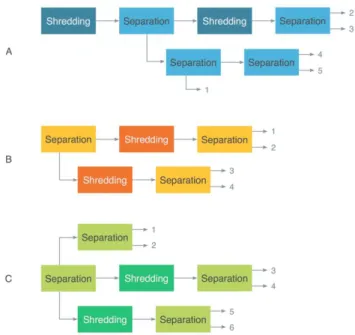
We studied a wide variety of recycling pathways. For example, the Fig. 2 shows different pathways for the same waste recycling. The technologies used and the streams vary with recycling process choices. We have determined that recycling processes can be classified into 3 types [27]: Shredding, Separation and Transport.
Fig. 2 Presentation of different pathways for the same waste
These three types of processes are subdivided into subcategories. For the shredding processes, there are 4 subcategories: shredders, shears, granulators, micronisers. Within these four subcategories there is a wide range of technologies that achieve the same objectives but for different materials, quantities, shape, etc. For all shredding technologies their performance is defined by the fineness; i.e. the solution ability to shred the material well, producing little dust and with regular particle size. The same logic is applied to the separation processes, they are defined by purity and efficiency. The purity is specific to the separation criterion. The effectiveness considers the ability to extract the elements satisfying the separation criterion. The number of sub-categories is more important. We have listed at least 9 subcategories: size, shape, weight, magnetic, eddy current separation, electrostatic separation, optical sorting, air buoyancy separation, wet buoyancy separation. Finally, transport processes are processes able to meet the material storage and progress constraints between two different technological processes. There are 3 subcategories: storage, pneumatic conveying and mechanical transport.
4 G. Grimaud et al. / Procedia Manufacturing 00 (2016) 000–000
2.2. Environmental Technology Verification Program
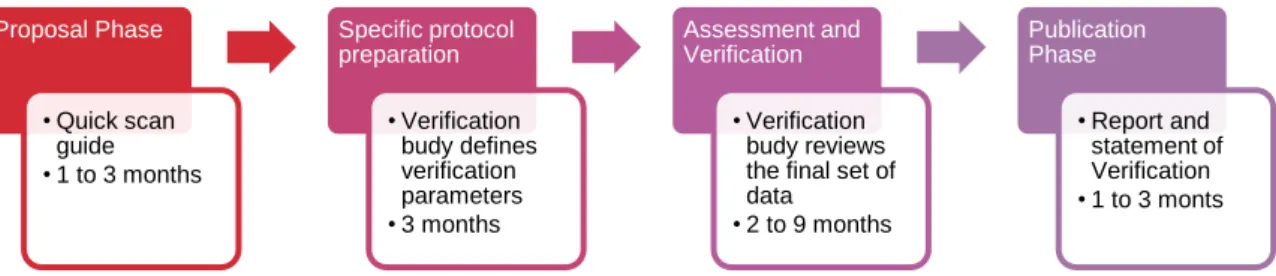
Environmental Technology Verification (ETV) is a new tool to help innovative environmental technologies reach the market. The problem at the moment is that many new clever ideas that can benefit the environment and health are not taken up simply because they are new and untried. Under ETV, claims about innovative environmental technologies can be verified, if the owner of the technology so wishes, by qualified third parties called Verification Bodies’. The Statement of Verification delivered at the end of the ETV process can be used as evidence that the claims made about the innovation is both credible and scientifically sound. [28] The EU Environmental Technology Verification is now at a pilot phase. One objective of the European commission with the ETV program is to promote environmental technologies by providing technology developers, manufacturers and investors access to third-party validation of the performance of innovative environmental technologies [22]. The main steps of the ETV program are given on Fig. 4 below.
Fig. 3 Main Steps of the European Environmental Technology Verification
All ETV verification steps combine together last 6 to 18 months [29]. In comparison, the average designing time is between 3 and 6 months. Although ETV verification time is too long for designers, the program provided general requirements, allowing a self-assessment of technology choices during the design phase. The aim of the self-verification tool is to give immediate answers to designers about the recycling pathway sustainable performance. To allow self-assessment, the ETV proposal phase Erreur !
Source du renvoi introuvable.Erreur ! Source du renvoi introuvable.Erreur ! Source du renvoi introuvable.is switched to
the background and automated. For this, a comprehensive list of key information has to be enquiring ahead of the design phase. Most of them come from the bill of specifications and this list can be refined during the design steps. Then a standard protocol is established. Currently, no solid waste recycling pathway has been verified using ETV program in Europe [30]. This pioneering position allows to propose a protocol suitable for recycling pathway. To build up the framework for the decision support methodology, a protocol is being draught by RESCOLL a French Verification body†. To build our methodology we introduced ETV verification on the aluminium cables recycling process already optimised with the results from LCA. This first verification will allow us to build the referential of the self-verification tool.
2.3. Framework Construction
To allow self-assessment of recycling pathways, the proposal phase of the ETV program is switched to the background and automated. For this, a comprehensive list of key information as to be made ahead of the design phase. Most of them come from the bill of specifications. This list can be refined during the design steps. Next, a standard protocol must be established. Currently, no solid waste recycling pathway has been verified using ETV program in Europe [30]. This pioneering position allows to propose a protocol suitable for recycling pathway. To build up the framework for the decision support methodology, a protocol is being draught by RESCOLL a Verification body. At last, to get a quick result a self-verification tool still needs to be built. By automating these steps, designers are able to get immediate answers about the sustainable performance of the recycling pathway.
RESCOLL, Research Company, F-33615 PESSAC – http://rescoll.fr/
Proposal Phase • Quick scan guide • 1 to 3 months Specific protocol preparation • Verification budy defines verification parameters • 3 months Assessment and Verification • Verification budy reviews the final set of data • 2 to 9 months Publication Phase • Report and statement of Verification • 1 to 3 monts
3. Results
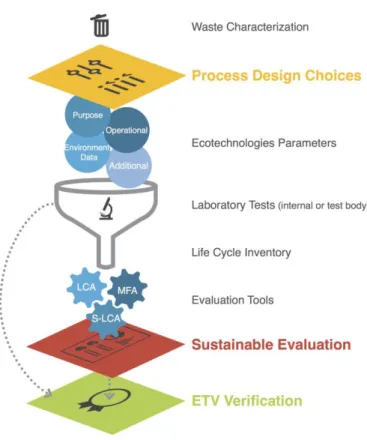
Fig. 4 Overview of the decision support methodology for designing sustainable recycling process based on ETV Standards
Fig. 4 shows the overview of the steps sequence in our design roadmap. This roadmap is divided into two mandatory key steps (process design choices and sustainable evaluation) and an optional key step (ETV verification). The intermediate steps enable designers to transform the design choices to sustainable evaluation.
3.1. Ecotechnologies Parameters and Life Cycle Inventory
As shown in Fig. 4, the process design choices during the design phase allows for establishment of the order of the technologies and processes used for the recycling pathway. They are crucial to determine the ecotechnologies parameters of the recycling pathway and the parameters are directly used in the ETV program. The verification body is split in four parameters (Fig. 4), namely;
purpose (or performance) parameters operational parameters
environmental data additional parameters
Purpose or performance parameters are related to the performance of the technology in fulfilling its purpose. It is also referred to as technical or operational performance. Purpose parameters are measurable parameters such as purity or yield. These parameters are the basis of the claims of the ETV verification because they have objective values. Operational parameters are also measurable, related to the technical conditions of the intended application and to the verification and test conditions. Unlike purpose parameters that quantify peak values, operational parameters are related to the average value of the processes to take into account the process constraints such as flow rates, production capacity, maximum temperature, concentrations of non-target compounds in the matrix, downtime, industrial process maturity, etc.
The environmental data display all information related to environmental nuisances and pollution. The study is not limited to a medium, but offers a holistic view of all 3 compartments (air, soil and water). Environmental parameters related to important potential impacts on the environment, directly and indirectly, along the life cycle; (including raw materials, production, use, recycling, end-of-life disposal). The use of LCA results to demonstrate the environmental benefits of a technological solution is quoted in the LCA Handbook [31]. Though the ETV program does not use the LCA as a quantifier, the latter helps to give context to the audit, but it is not a decision element.
6 G. Grimaud et al. / Procedia Manufacturing 00 (2016) 000–000
The additional parameters are rather qualitative parameters, related to other information about the technology that is useful for users but that may not necessarily be measurable through tests. Examples includes the following informations; space used, number of operators and required qualifications, ergonomics, the expected service time during which the claimed performance is respected, overall service life, health and safety issues, installation and maintenance requirements and operating costs.
3.2. Evaluation Phase
Table 2 Main indicators used in the sustainable performance evaluation
Environmental parameters Economic parameters Social parameters Functional unit
Consumables Energy and transport Emissions air/soil/water Quality, purity Inflow / outflow First investment Operating costs Working conditions Health and safety Governance
Socio-economic repercussions
In the case of ETV, a test body (or laboratory, Fig. 4) is needed to do the testing phase and supply all the parameters results. The series of tests is based on the protocol written by the verification body to verify the performance of the technology. As for the protocol, the lack of verification ETV in the field of materials, waste and resources allows us to determine the reference indicators. This work is conducted in collaboration with verification body RESCOLL. To broaden the scope of evaluation we also implement economic and social parameters. The essential parameters used for the self-assessment are listed in the Table 2. The ETV verification is an optional step in our design roadmap. Thus, the evaluation has been made automatically to reduce delays and lead it internally without using a test body. All the data inventory of the technology need for most of the calculations tools are all available from the previous design phases except for the input waste characterisation. Data come from different tests that can be conducted on a small scale equipment, in order to characterise the waste stream and validate the relevance of technology solutions. The recycling processes are broadly based on the assembly of common sub-processes. Regardless of the complexity of the recycling system, the final assembly is the key point to design efficient recycling pathway. Building recycling pathways with elementary blocks also allows the building of evaluation form as blocks. For now, the database is under construction but it will allow for quick results on the sustainable performance of pathways. Therefore, a centralised database of all inventory data of elementary recycling technologies provides robust analysis quickly. The previous LCA conducted on recycling processes have enabled us to be aware of hotspots and to focus data collection for these items. This database is built around the incoming flow to adapt the process parameters to processed waste.
3.3. Sustainable Evaluation and Comparison
The results from the evaluation tools provides sustainable evaluation (Fig. 4). These results compare scenarios and present the results of the performance of the studied pathway using indicators of the Table 2. The comparison allows to determine which solution is the most relevant to the constraints of the client. This decision support methodology for designing sustainable recycling process based on ETV standards is based on a simple assessment tool which allows to know the hotspots of each scenario in order to improve the overall performance.
4. Discussion and Conclusion
The evaluation is done step by step during the design phase by increasing the assessment accuracy as the data are refined. Each stakeholder is the recipients of the results and feedback related to his influences, contributions and expectations. The verification method still has to be customised for each stakeholder. This customisation is focused on both the results presentation form and the number of results to present. Secondly, comparison of the theoretical results obtained ahead of the design to actual results on the ground was done. Though lots of technical options exist for developing material recycling, the motivations for selecting recycling solutions are too often guided only by the pursuit of profit growth which leads to a greater inefficiency [32]. The idea of the decision support methodology is to promote sustainable solutions. The methodology allows to prepare the ETV verification without the need of a verification body.
However, the method was used to optimise the overall impact of recycling pathways, the decision support methodology does not help designers to identify the most impacting elements within each technology. For this an eco-design approach should be done to improve the inherent performance of each individual technology.
Acknowledgement
This work was performed within the help of Sandrine Ausset from RESCOLL ETV verification body. We also want to thank MTB Recycling and the French National Association for Technical Research (ANRT) for the funding of the PhD study (CIFRE Convention N° 2015/0226) of the first author.
References
[1] EUROSTAT, “Statistics on Waste in Europe,” Statistics Explained, 2015. [Online]. Available: http://ec.europa.eu/eurostat/statistics-explained/index.php/Waste_statistics/fr. [Accessed: 03-Apr-2016].
[2] V. Zepf, A. Reller, C. Rennie, M. Ashfield, and J. Simmons, Materials Critical to the Energy Industry: An Introduction, Second edi. London: BP, 2014. [3] Ellen MacArthur Foundation, Towards a Circular Economy: Business Rationale for an Accelerated Transition. COWES: Ellen MacArthur Foundation,
2015.
[4] Ellen MacArthur Foundation, “The New Plastics Economy: Rethinking the future of plastics,” Ellen MacArthur Foundation, p. 120, 2016.
[5] K. Lawton, C. Carter, J. Lee, A. Tan, A. de Prado Trigo, D. Luscombe, and S. Briscoe, The opportunities to business of improving resource efficiency, no. February. Luxembourg: European Commission, 2013.
[6] Bio Intelligence Service, Study on Modelling of the Economic and Environmental Impacts of Raw Material Consumption. Luxembourg: European Commission, 2014.
[7] E. Worrell and M. A. Reuter, “Recycling: A Key Factor for Resource Efficiency,” in Handbook of Recycling, Amsterdam: Elsevier Inc., 2014, pp. 3–8. [8] S. Luidold and H. Antrekowitsch, “Recovery of Metals from Different Secondary Resources (Waste),” in Handbook of Recycling, Amsterdam: Elsevier Inc.,
2014, pp. 255–268.
[9] A. Quinn, Waste Technology and Innovation Study Final Report, Department., no. August. GHD, 2009.
[10] A. Van Schaik and M. A. Reuter, “Material Centric (Aluminum and Copper) and Product Centric (Cars, WEEE, TV, Lamps, Batteries, Catalysts) Recycling and DfR Rules,” in Handbook of Recycling, Amsterdam: Elsevier Inc., 2014, pp. 307–378.
[11] G. Grimaud, N. Perry, and B. Laratte, “Life Cycle Assessment of Aluminium Recycling Process: Case of Shredder Cables,” 23rd CIRP Conference on Life Cycle Engineering, vol. may, no. 20–24, pp. 1–7, 2016.
[12] JRC - Institute for Environment and Sustainability, Characterisation factors of the ILCD Recommended Life Cycle Impact Assessment methods - EUR 25167. Brussels: European Commission, 2012.
[13] G. Grimaud, N. Perry, and B. Laratte, “Reducing Environmental Impacts of Aluminium Recycling Process Using Life Cycle Assessment,” 12th Biennial International Conference on EcoBalance, vol. October, p. 7, 2016.
[14] J. M. Allwood, “Squaring the Circular Economy: The Role of Recycling within a Hierarchy of Material Management Strategies,” in Handbook of Recycling, Amsterdam: Elsevier Inc., 2014, pp. 445–477.
[15] International Standard Organization, ISO/TR 14062 — Environmental management — Integrating environmental aspects into product design and development, vol. 2002. International, 2002, p. 32.
[16] A. Kengpol and P. Boonkanit, “The decision support framework for developing Ecodesign at conceptual phase based upon ISO/TR 14062,” International Journal of Production Economics, vol. 131, no. 1, pp. 4–14, 2011.
[17] T. H. Jørgensen, A. Remmen, and M. D. Mellado, “Integrated management systems - Three different levels of integration,” Journal of Cleaner Production, vol. 14, no. 8, pp. 713–722, 2006.
[18] Y. Leroy, “Integrate Ecodesign Good Practices in Business,” Techniques de l’Ingénieur, vol. 02 septemb, pp. 1–7, 2011.
[19] K. Donnelly, Z. Beckett-Furnell, S. Traeger, T. Okrasinski, and S. Holman, “Eco-design implemented through a product-based environmental management system,” Journal of Cleaner Production, vol. 14, no. 15–16, pp. 1357–1367, 2006.
[20] Y. Leroy, “Ecodesign: Tools and methods,” Techniques de l’Ingénieur, vol. 16 août, pp. 1–8, 2011.
[21] M. Kulak, T. Nemecek, E. Frossard, and G. Gaillard, “Eco-efficiency improvement by using integrative design and life cycle assessment. The case study of alternative bread supply chains in France,” Journal of Cleaner Production, vol. 112, pp. 2452–2461, 2016.
[22] European Commission, “General Verification Protocol for EU Environmental Technology Verification proragmme - Version 1.1.” Brussels, p. 74, 2014. [23] E. Worrell and M. A. Reuter, “Definitions and Terminology,” in Handbook of Recycling, Amsterdam: Elsevier Inc., 2014, pp. 9–16.
[24] UNEP, Recycling Rates of Metals, Internatio. Paris, 2011.
[25] C. Delavelle, “Etat De L’Art Des Technologies D’Identification Et De Tri Des Dechets,” Rapport ADEME, vol. Septembre, pp. 1–192, 2012. [26] A. Fisher, “Functional versus Innovative Products.” p. 8, 2012.
[27] K. Heiskanen, “Theory and Tools of Physical Separation/Recycling,” in Handbook of Recycling, Amsterdam: Elsevier Inc., 2014, pp. 39–61. [28] European Commission, “EU Environmental Technology Verification,” Environmental Technology Verification Program, 2016. [Online]. Available:
http://ec.europa.eu/environment/etv/. [Accessed: 13-Jul-2016].
[29] European Commission, A Comprehensive Guide for Proposers to the EU Environmental Technologies Verification Pilot Programme, Project Ad. Luxembourg: European Commission, 2012.
[30] European Commission, “ETV Program - Key documents and links,” EU Environmental Technology Verification programme, 2016. [Online]. Available: http://ec.europa.eu/environment/etv/links.htm. [Accessed: 25-Jun-2016].
[31] JRC - Institute for Environment and Sustainability, “ILCD Handbook : General guide on LCA - Detailed guidance,” in International Reference Life Cycle Data System (ILCD) Handbook - First Edition, Brussels: European Commission, 2010, p. 417.
[32] J. M. Allwood, M. F. Ashby, T. G. Gutowski, and E. Worrell, “Material efficiency: A white paper,” Resources, Conservation and Recycling, vol. 55, no. 3, pp. 362–381, 2011.
![Fig. 1 Comparison of the characterisation of the 2 recycled scenarios with specific electricity mix, using the recommended ILCD 2011 impact assessment methodology [12]](https://thumb-eu.123doks.com/thumbv2/123doknet/7296365.208783/3.892.107.795.141.516/comparison-characterisation-recycled-scenarios-electricity-recommended-assessment-methodology.webp)