Biophilic and photobiological developments of adaptive
high-performance building envelopes for Northern
Canada
Thèse
Mojtaba Parsaee
Doctorat en architecture
Philosophiæ doctor (Ph. D.)
Québec, Canada
Résumé
Les configurations des enveloppes et des fenêtres des bâtiments nordiques doivent répondre aux exigences du bien-être photobiologique et psychologique des occupants par des relations positives efficaces avec la nature subarctique. Les enveloppes de bâtiments existant dans les climats (sub)arctiques du nord du Canada n'ont pas encore permis d'établir des connexions efficaces entre l'intérieur et l'extérieur afin d'aborder les relations positives entre les humains et la nature et le bien-être photobiologique et psychologique. Des connexions intérieures-extérieures efficaces indiquent une connectivité optimale de l'intérieur avec la nature subarctique extérieure répondant au bien-être des occupants et aux besoins énergétiques. Les relations positives des occupants avec la nature subarctique correspondent à des avantages maximums et des risques minimums des climats nordiques extrêmes pour le bien-être photobiologique-psychologique.
L'objectif général de cette thèse est de favoriser les relations positives des occupants avec la nature subarctique au moyen de connexions efficaces entre l'intérieur et l'extérieur qui pourraient répondre aux facteurs de bien-être biophiliques et photobiologiques liés à la lumière du jour et aux photopériodes. Dans ce but, un modèle fondamental d'enveloppe de bâtiment adaptative à haute performance est développé comme une solution architecturale qui pourrait optimiser les connexions intérieur-extérieur et les principaux indicateurs biophiliques et photobiologiques. La thèse visait spécifiquement à articuler une approche photobiologique du design biophilique dans les climats nordiques extrêmes qui permet d'établir un cadre conceptuel et de design pour développer des enveloppes de bâtiments. La thèse visait également à identifier les lacunes des enveloppes de bâtiment existantes dans le Grand Nord du Canada ainsi que des systèmes d'enveloppes adaptatives existants en termes d'indicateurs biophysiques-photobiologiques. Les principaux éléments architecturaux des enveloppes adaptatives, notamment la configuration des fenêtres et les caractéristiques de surface des systèmes d'ombrage, en particulier la couleur et la réflectance, sont étudiés pour répondre aux besoins biophiles-photobiologiques des occupants du Nord.
Les méthodologies de la thèse comprennent une revue de la littérature pour discuter des directives récentes de design biophilique, de l'éclairage photobiologique et des études de connectivité avec la nature par rapport aux climats subarctiques, en particulier la lumière du jour et les photopériodes. Des méthodes numériques et expérimentales ont été intégrées pour évaluer les performances biophiliques, d'éclairage photobiologique, thermiques et énergétiques des systèmes d'enveloppe pour une étude de
cas d'un bureau open-plan dans le nord du Canada. Des méthodes expérimentales avec des modèles à l'échelle physique, des images à haute gamme dynamique et des techniques de post-traitement ont été utilisées pour capturer, calculer et visualiser les paramètres d'éclairage photobiologique. L'impact des caractéristiques des panneaux d'ombrage (SP) sur les performances d'éclairage photobiologique a été étudié par l'expérimentation d'environ 40 prototypes à l'échelle 1:50 et 23 prototypes à l'échelle 1:10 sous un ciel dégagé/couvert avec un éclairage naturel réel/artificiel. Des modèles numériques ont été développés pour évaluer les caractéristiques biophiques et thermiques/énergétiques des systèmes d'enveloppe.
Les résultats de la thèse comprennent un cadre théorico-conceptuel du design photobiologique - biophilique qui identifie les relations positives des occupants avec la nature subarctique à travers les enveloppes. Des scénarios d'adaptation de l'éclairage photobiologique intégrés aux exigences thermiques ont été élaborés, qui permettent de répondre aux besoins photobiologiques horaires/saisonniers des occupants du Nord dans des bâtiments différents. Les lacunes des enveloppes à une peau typique du Nord du Canada et des enveloppes à plusieurs peaux avec des profondeurs d'espaces intermédiaires/cavités et des tailles de fenêtre différentes ont été spécifiquement évaluées en termes des indicateurs biophiliques, photobiologiques et thermiques. Un modèle fondamental d'enveloppes adaptatives à haute performance est proposé pour les bâtiments du Nord, qui comprend une taille de fenêtre optimale, un système d'ombrage dynamique coloré et isolé, et un système de buffer thermique constitué d'une peau extérieure en verre. Les performances d'éclairage photobiologique des configurations des SP, incluant la couleur, la réflectance, l'orientation, l'inclinaison, la densité, la taille, l'ouverture et la position à la fenêtre, ont été caractérisées. Les résultats des élévations expérimentales/numériques montrent que l'enveloppe adaptative proposée pourrait offrir des connexions intérieures-extérieures efficaces qui répondent aux besoins photobiologiques-psychologiques et aux exigences énergétiques des occupants du Nord. Les résultats de la thèse pourraient informer les architectes et les responsables politiques sur les possibilités que les enveloppes adaptatives et les cadres photobiologiques-biophiles offrent pour améliorer le bien-être du public et l'efficacité énergétique dans les climats nordiques. Les principaux enjeux des futurs développements des bâtiments biophiliques adaptatifs dans les climats nordiques ont également été soulignés, notamment en matière d'analyses du cycle de vie et d'études socioculturelles.
Abstract
Sub-Arctic building envelope configurations must address occupants’ photobiological-psychological wellbeing through positive relationships with the outdoor sub-Arctic nature. Existing building envelopes in Northern Canada’s (sub-)Arctic climates have not, yet, enabled efficient indoor-outdoor connections to address positive human-nature relationships and photobiological-psychological wellbeing. Efficient indoor-outdoor connections indicate optimum connectivity of indoors with Northern climates in terms of occupants’ wellbeing and energy factors. Positive occupants’ relationships with the sub-Arctic nature refer to maximum benefits and minimum risks of the extreme cold weather and strong photoperiod of Northern climates for photo-biological and psychological wellbeing.
The general objective of this dissertation is to foster positive occupants’ relationships with sub-Arctic nature by enabling efficient indoor-outdoor connections which could respond to biophilic and photobiological wellbeing factors related to daylighting and photoperiods. To this end, a fundamental model of adaptive high-performance building envelopes is developed as an architectural solution which could optimize indoor-outdoor connections and main biophilic and photobiological indicators. The dissertation specifically aimed at articulating a photobiological approach to biophilic design in extreme Northern climates which enables establishing a conceptual and design framework to develop building envelopes. The thesis also focused on identifying the shortcomings of existing Canadian Northern building envelopes as well as existing adaptive envelope systems in terms of biophilic-photobiological indicators. Main architectural elements of adaptive envelopes including window configuration and surface characteristics of shading systems, in particular color and reflectance, are explored to respond to Northern occupants’ biophilic-photobiological needs.
The thesis methodologies include a scoping literature review to critically discuss recent biophilic design guidelines, photobiological lighting, and nature connectedness/relatedness studies in relation to sub-Arctic climates, especially daylighting and photoperiods. Numerical and experimental methods were integrated to evaluate biophilic, photobiological lighting, thermal and energy performance of envelope systems for a case study of an open-plan office in Northern Canada. Experimental methods with physical scale models, high dynamic range imagery and post-processing techniques were employed to capture, compute, and visualize photobiological lighting parameters. Impacts of shading panels’ (SPs) characteristics on photobiological lighting performance were
explored by experimenting approximately 40 1:50-scale prototypes and 23 1:10-scale prototypes under clear/overcast skies with actual/artificial daylighting. Numerical models were developed to evaluate biophilic and thermal/energy performance of envelope systems.
Dissertation outcomes include a theoretical-conceptual framework of photobiological-biophilic design which characterizes positive occupants’ relationships with the sub-Arctic nature through envelopes. Photobiological lighting adaptation scenarios integrated with thermal requirements were developed which could address hourly/seasonal photobiological needs of Northern occupants in different buildings. Deficiencies of typical single-skin envelopes in Northern Canada and multi-skin envelopes with different depths of intermediate spaces/cavities and window sizes were specifically evaluated in terms of biophilic, photobiological lighting and thermal indicators. A fundamental model of adaptive high-performance envelopes is proposed for Northern buildings which includes an optimum window size, a dynamic-colored-insulated shading system, and a thermal buffer system made of a glazing exterior skin. Photobiological lighting performance of SPs’ configurations, including color, reflectance, orientation, inclination, density, size, openness, and position at the window, were characterized. Results of experimental-numerical elevations reveal that the proposed adaptive envelope could offer efficient indoor-outdoor connections which respond to Northern occupants’ photobiological-psychological needs and energy requirements. Dissertation outcomes could enlighten architects and policymakers about potentials of adaptive envelopes and integrative photobiological-biophilic frameworks to improve public wellbeing and energy efficiency in Northern climates. Major issues for future developments of adaptive biophilic buildings in Northern climates were also outlined including life cycle assessments and sociocultural studies.
Table des matières
Résumé ... ii
Abstract ... iv
Table des matières ... vi
Liste des tableaux ... ix
Liste des figures ... x
Liste des abréviations ... xiii
Remerciements ... xvii Avant-propos ... xviii Introduction ... 1 Perspective on Chapter 1 ... 6 Perspective on Chapter 2 ... 7 Perspective on Chapter 3 ... 9 Perspective on Chapter 4 ... 10
Perspective on the thesis Conclusions ... 12
Chapitre 1: A photobiological approach to biophilic design in extreme climates ... 13
1.1 Résumé ... 15
1.2 Abstract ... 16
1.3 Introduction ... 17
1.4 Biophilic design constraints in extreme climates ... 18
1.5 Major deficiencies of lighting design ... 24
1.6 Contribution of photobiology to lighting design ... 25
1.6.1 IF effects in built environments ... 26
1.6.2 NIF effects in built environments ... 30
1.7 Structural analysis of biophilic design ... 36
1.8 A plausible hypothesis of adaptive envelopes ... 39
1.9 Conclusion ... 40
1.10 Acknowledgment ... 42
Chapitre 2: Biophilic, photobiological and energy-efficient design framework of adaptive building façades for Northern Canada ... 43
2.1 Résumé ... 45
2.2 Abstract ... 46
2.3 Introduction ... 47
2.4 Importance of the study ... 47
2.4.1 Importance of photobiological and biophilic factors ... 47
2.4.2 Climatic challenges in Northern Canada ... 48
2.4.3 Importance of building façades and adaption strategies... 51
2.5 Major performance indicators ... 53
2.5.1 Biological needs’ factors ... 53
2.5.2 Climatic factors ... 53
2.5.3 Biophilic factors ... 54
2.5.4 Energy factors ... 55
2.6 Performance of façades in Northern Canada ... 56
2.7 Performance of existing ABFs ... 58
2.8 ABFs’ design framework ... 60
2.7.1 Phase 1: Process environmental data... 61
2.7.2 Phase 2: Process adaptation scenarios ... 62
2.7.3 Phase 3: Operate adaptation scenarios ... 67
2.10 Authors’ contribution ... 73
2.11 Funding ... 73
2.12 Appendix 2.A ... 74
2.13 Appendix 2.B ... 76
Chapitre 3: Human-centric lighting performance of shading panels in architecture: a benchmarking study with lab scale physical models under real skies ... 78
3.1 Résumé ... 79
3.2 Abstract ... 80
3.3 Introduction ... 81
3.3.1 Human-centric lighting and photobiological units ... 81
3.3.2 Importance of the research ... 83
3.3.3 Objectives and hypotheses of the research ... 85
3.4 Methodology ... 86
3.4.1 Experimental setup ... 86
3.4.2 Models and design variables ... 87
3.4.3 Photobiological measurements and analysis ... 90
3.4.4 Outdoor context ... 91
3.5 Results ... 91
3.5.1 Daylighting features of the reference model ... 93
3.5.2 Human-centric performance of panels’ color ... 93
3.5.3 Human-centric performance of panels’ reflectance ... 95
3.5.4 Human-centric performance of panels’ orientation and openness ... 96
3.6 Discussion ... 97
3.7 Conclusion ... 100
3.8 Acknowledgment ... 101
3.9 Appendix 3.A ... 101
3.10 Appendix 3.B ... 101
Chapitre 4: Biophilic photobiological adaptive envelopes for sub-Arctic buildings ... 103
4.1 Résumé ... 104
4.2 Abstract ... 105
4.3 Introduction ... 106
4.3.1 General objectives and structure of the paper ... 107
4.3.2 Background: Biophilic-Photobiological approach to envelopes ... 108
4.4 Adaptive envelope model for biophilia and photobiology ... 111
4.4.1 Optimum window sizes to promote biophilia ... 112
4.4.2 Dynamic-colored-insulated shading panels focused on photobiology ... 112
4.4.3 Thermal buffer for potential thermal/energy efficiency ... 113
4.5 Methodology ... 114
4.5.1 Biophilic performance evaluations of the adaptive envelope ... 114
4.5.2 Photobiological lighting evaluations ... 116
4.6 Results and discussions ... 120
4.6.1 Biophilic performance of the envelope ... 120
4.6.2 Photobiological lighting performance of the biophilic envelope ... 126
4.7 Conclusions ... 141
4.8 Acknowledgment ... 142
4.9 Supplementary Information... 143
4.10 Appendix 4.A ... 146
Conclusion... 152
Key findings and contributions ... 153
Key outlines for future studies ... 160
Bibliographie ... 168
Annexe A1. Photobiological climate-based lighting adaptation scenarios for high-performance biophilic buildings ... 185
A1.1 Abstract ... 186
A1.2 Introduction ... 187
A1.3 Methodology ... 188
A1.4 Results and discussion ... 188
A1.4.1 Recommended factors and criteria ... 188
A1.4.2 Photobiological climate-based lighting adaptation scenarios ... 190
A1.5 Conclusion ... 193
A1.6 Acknowledgements ... 194
Annexe A2. Single-skin and multi-skin building envelopes in extreme sub-Arctic climates: biophilic, healthy lighting and thermal performance evaluations ... 195
A2.1 Abstract ... 196
A2.2 Introduction ... 197
A2.3 Material and methods ... 198
A2.4 Results and discussions ... 200
A2.4.1 Biophilic performance of the envelopes ... 200
A2.4.2 Healthy lighting performance of the envelopes ... 202
A2.4.3 Thermal performance of the envelopes ... 203
A2.5 Conclusions ... 204
Liste des tableaux
Table Int. 1. Summary of main objectives, hypotheses, and methodologies articulated for the
dissertation and each chapter ... 2
Table 1. 1. The IF effects of different parameters of optical radiation on human vision and corresponding photometric units and equipment [13, 50, 58, 74-76] ... 29
Table 1. 2. The NIF effects of different parameters of optical radiation on humans and corresponding photometric units and equipment [13, 66, 68, 74, 76, 89, 92-95] ... 33
Table 2. 1. An analysis of some constructed adaptive building façades (the sources of information are given in Appendix 2.A.) ... 59
Table 2. 2. Premises and criteria for developing lighting adaptation scenarios (extracted from CIE [12], DiLaura, et al. [13], Konis [57], Lucas, et al. [90], Rea and Figueiro [91], International WELL Building Institute [93], CIE [125], Boivin and Boudreau [189]) ... 65
Table 2. 3. Some recommendations for the application of multi-skin façades in cold climates and winters which could be considered in future developments for Northern Canada (given by Ghaffarianhoseini, et al. [114], Barbosa and Ip [197], Poirazis [199], Mingotti, et al. [200], Gratia and De Herde [201], Jiru, et al. [202]) ... 69
Table 2. 4. The sources of information for Table 2. 1 and photo courtesies of Figure 2. 3 ... 74
Table 2. 5. Photobiological lighting parameters ... 76
Table 3. 1. M/P ratios and color temperatures of some typical light sources provided by Berman and Clear [127], Berman and Clear [244] ... 83
Table 3. 2. Material characteristics of typical materials used in the model determined by Integrated Environmental Solutions [254], Solemma [255], Magali, et al. [256] ... 89
Table 4 | Supplementary 1. Characteristics of typical materials used in the model determined by [313, 314] ... 145
Table 4 | A. 1. Configurations of the office thermal model ... 148
Table A1. 1. Lighting parameters related to IF and NIF effects ... 189
Liste des figures
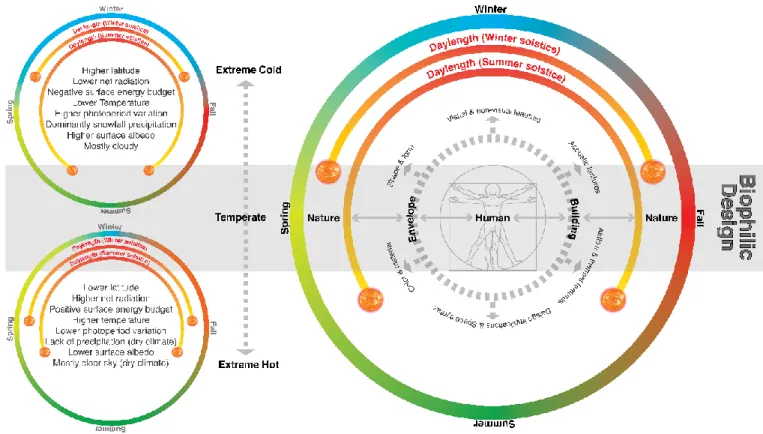
Figure AP. 1. Thesis structure and research design ... xviii Figure Int. 1. (a) Northern Canada and local seasonal photoperiods; (b) Typical building occupants’ circadian clocks and biological day/night cycles vs. typical summer/winter days in Northern Canada. ... 5 Figure 1. 1. The built environment features emphasized by biophilic design strategies in relation to dynamic climatic conditions... 19 Figure 1. 2. Global illuminance patterns versus solar and lunar altitude (Retrieved from Thorington [44]) ... 21 Figure 1. 3. Lighting features of three North American cities located in different climates (meteorological data is derived from TMY-2 published by EnergyPlus and figures are derived by using Weather spark [46] and online tools offered by Marsh [47]) ... 22 Figure 1. 4. Thermal features of three North American cities located in different climates (meteorological data is derived from TMY-2 published by EnergyPlus and figures are derived by using Weather spark [46] and online tools offered by Marsh [47]) ... 23 Figure 1. 5. Electromagnetic spectrum and corresponding photon energy and relative power at each wavelength from 100 to 850 nm and the approximate color associated with those wavelengths. The graphs are based on the data given by DiLaura, et al. [13], Baron and Suggs [49], Boyce and Raynham [58], ASTM G173-03 [64] ... 26 Figure 1. 6. Normalized relative spectral sensitivity for (A) the functions of circadian C(λ) [68, 72], melanopic Vz(λ) [66, 68], scotopic V’(λ) (CIE 1951), photopic V(λ) (CIE 1924) [13] (B); and the human photoreceptors [68, 73] ... 28 Figure 1. 7. (A) Melatonin phase shift and (B) melatonin suppression versus illuminance, melanopic lux and circadian stimulus (CS) for a single 6.5-hour exposure of white light at the cornea from a 4100K fluorescent lamp during biological night. Figures are modified and reproduced based on the data given by DiLaura et al. [13] and publicly released calculators for melanopic lux and circadian stimulus conversion by Lucas et al. [90] and Rea & Figueiro [91], respectively. (C) Regenerated figure of melatonin suppression level versus light dose (EML) based on Konis [57]. (E) ) Regenerated figure of circadian phase response of the pacemaker to time of exposure to optical radiation given by DiLaura et al. [13] ... 32 Figure 1. 8. (A) Maslow’s hierarchy of needs and (B) interpretation relevant to biophilic design ... 37 Figure 1. 9. Examples of adaptive buildings and envelopes ... 40 Figure 2. 1. (a) Northern Canada located near and above 50° N categorized into ASHRAE climate zones 7 and 8 [30]. Lighting features of the climate in Cambridge Bay, Nunavut, Canada [69.1°N], including the (b) seasonal photoperiod and day/night length sun path (c) average daily solar energy (d) solar elevation in the summer and winter solstices and spring/fall equinox and (e) sun path geometry (figures are derived from weather spark [46] and online tools offered by Marsh [47]) ... 50 Figure 2. 2. National Energy Code of Canada for Buildings’ (NECB) recommendations for the WWR, FDWR and R-value for Canada climate zones 7 and 8 corresponding to northern regions (retrieved from NRC [136], Straube [137]) ... 50 Figure 2. 3. Some examples of adaptive façade strategies built for different building uses in various climates (see Appendix 2.A for further information about these buildings and the courtesy of photos) ... 52 Figure 2. 4. Characteristics of the human, nature and buildings with respect to biophilic design recommendations (based on Browning, et al. [1] and Kellert and Calabrese [3]) and the extreme cold climate of northern latitudes ... 55 Figure 2. 5. (a) Existing buildings in Northern Quebec (b) daylighting performance inside a generic space in existing buildings in Northern Quebec ... 56 Figure 2. 6. The fundamental concept of an ABF ... 60
Figure 2. 7. A schematic example of occupancy and environment detection/control system combined
with a virtual reality visualization model (developed based on Parsaee, et al. [186] ) ... 62
Figure 2. 8. Thermal features of the climate in Cambridge Bay, Nunavut, Canada (retrieved from Weather spark [46], Marsh [47]) ... 64
Figure 2. 9. A potential hourly/seasonally lighting adaptation scenario for office buildings in kuujjuaq, Quebec, Canada. ... 67
Figure 2. 10. Different components’ configurations of a multi-skin façade (MSF) ... 70
Figure 2. 11. Primary and secondary design variables for the parametric study of ABFs’ physical components in terms of photobiological, thermal, biophilic and energy factors ... 72
Figure 3. 1. Examples of different shading panels utilized for buildings (the courtesy of photos are given in Appendix 3.A) ... 84
Figure 3. 2. (a) spectral power distributions of the D55 CIE daylighting illuminant (retrieved from DiLaura, et al. [13], ASTM G173-03 [64]), photopic responses (retrieved from DiLaura, et al. [13]) and melanopic responses (retrieved from Enezi, et al. [66], Amundadottir, et al. [68]), (b) spectral power distributions of strong blue (TCS-12). strong yellow (TCS-10) and strong red (TCS-9) colors ( retrieved from Wavform Lighting [252])... 85
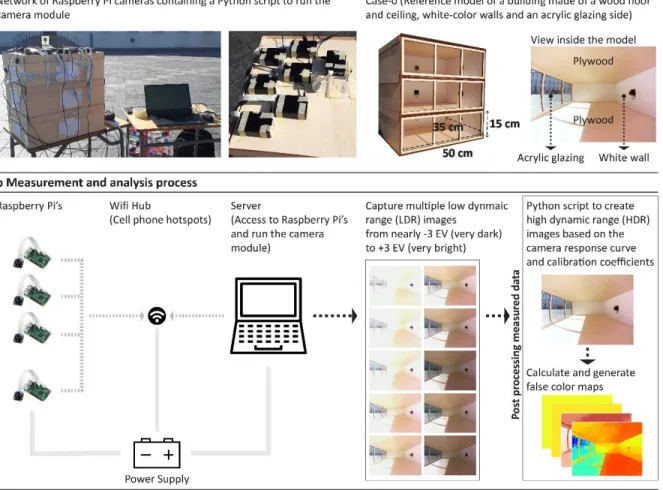
Figure 3. 3. The research experimental setup, measurement, and analysis process to evaluate different shading panels ... 87
Figure 3. 4. (a) The case studies of shading panels at the scale of 1:50, (b) different experiment scenarios to evaluate the daylighting behaviour of shading panels’ design variables... 89
Figure 3. 5. Raspberry Pi fisheye cameras’ calibration for XYZ and RBG channels ... 90
Figure 3. 6. Geographical location and outdoor solar conditions of the study during the experiment ... 91
Figure 3. 7. The frequency and accumulation of melanopic/photopic (M/P) luminance ratios within the captured scenes from the side view for all studied panels ... 92
Figure 3. 8. Daylighting features in the reference, case-0. ... 93
Figure 3. 9. Human-centric performance of some of the blue- and white-color shading panels... 94
Figure 3. 10. Human-centric performance of some of the red-color and wood shading panels ... 95
Figure 3. 11. Human-centric performance of panels’ reflectance: glossy vs. matt ... 96
Figure 3. 12. Human-centric performance of panels’ orientation and openness: Vertical vs. horizontal and small vs. large openness ... 97
Figure 3. 13. Shading panel adaptation to the lighting scenario in an office building in Cambridge Bay, Nunavut, Canada based on Parsaee, et al. [245] ... 99
Figure 3. 14. The calculated false color maps of captured scenes from the side view in the model102 Figure 4. 4. The case studies of panels with different configurations ... 119
Figure 4. 6. (a) occupants’ horizontal, vertical, and overall field of views (FOVs) to outdoors normalized to the human eye’s view angles in relation to different window sizes (WWR, WWLR, and WWHR) and habitable/transient intermediate spaces. (b) normal probability plots of occupants’ field of views for different window sizes and intermediate spaces. ... 123
Figure 4. 7. (a) Connectivity to outdoors affecting the information richness value, (b and c) analogy between the proposed envelope configuration and natural systems and phenomena representing indirect connections with nature. ... 125
Figure 4. 9. Example of M/P-ratios’ and CCTs’ false color maps of different panels’ colors under different exterior lighting conditions ... 129
Figure 4. 10. Lighting performance of panels’ colors under different lighting conditions. ... 130
Figure 4. 11. Lighting performance of panels’ reflectance under different lighting conditions ... 131
Figure 4. 12. Lighting performance of panels’ orientation, vertical vs. horizontal under the diffuse artificial sky lighting condition (CCT= 5700 °K) ... 133
Figure 4. 13. Lighting performance of panels’ horizontal inclinations under the diffuse artificial sky lighting condition (CCT= 5700 °K) ... 134
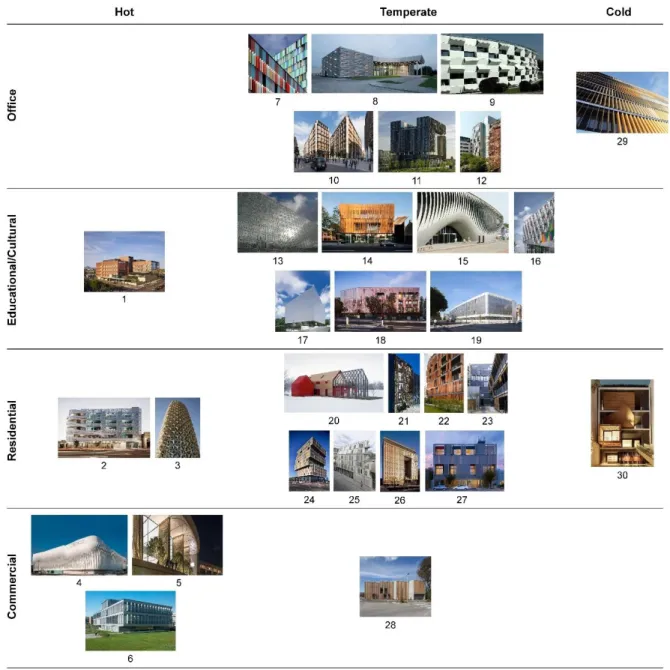
Figure 4. 14. Lighting performance of panels’ vertical inclinations under the diffuse artificial sky lighting condition (CCT= 5700 °K) ... 136 Figure 4. 15. Lighting performance of panels’ density, size, and position under the diffuse artificial sky lighting condition (CCT= 5700 °K) ... 138 Figure 4. 16. (a) adaptation of dynamic insulated panels with different colors to the local photoperiod and occupants’ seasonal photobiological needs in the reference office, considered Kuujjuaq, QC, CA, as an example location, based on [263], Parsaee, et al. [283], (b) examples of hourly adaptations of different colored panels under a typical Northern summer day with clear skies (15 June) and Northern winter day with overcast skies (20 January) (typical days were extracted from the typical meteorological year (TMY)). ... 140 Figure 4 | Supplementary 1. (a) Canada climate zone maps (retrieved from Straube [137]) (b) Recommendation of National Energy Code of Canada for Buildings (NECB) for the fenestration-and-door-to-wall ratio (FDWR) in different climate zones of Canada as the given example cities (retrieved from ASHRAE [30], NRC [136], Straube [137]), and (c) climatic conditions in Kuujjuaq, QC, CA (retrieved from Weather spark [46], Marsh [311])... 143 Figure 4 | Supplementary 2. Relative spectral sensitivity of different test color samples (TCS) published by Waveform Lighting [309], D55 daylight illuminant (retrieved from DiLaura, et al. [13], ASTM G173-03 [64]), and melanopic efficacy (retrieved from Enezi, et al. [66], Amundadottir, et al. [68]) and photopic efficacy (retrieved from DiLaura, et al. [13], CIE [312]) curves ... 144 Figure 4 | Supplementary 3. HDR imagery and post processing of lighting performance inside the scale model under direct sun lighting and artificial skies diffuse lighting ... 144 Table 4 | Supplementary 2. The experiment scenarios to evaluate the lighting performance of panels’ design variables under different exterior lighting conditions ... 146 Figure 4 | A. 1. Impacts of WWR variations on annual heating loads of the reference office with a conventional envelope under different façade directions in Kuujjuaq, CA, and impacts of the proposed envelope with different depths combined with a 20-cm scheduled insulated panels on annual heating loads of the reference office with 60% WWR under different façade directions in Kuujjuaq, CA. 150 Figure 4 | A. 2. Annual air temperature behaviors inside the proposed envelope cavity/intermediate spaces with different depths compared to annual outdoor air temperature in Kuujjuaq, CA, presented as overall variations (box plot), cumulative probability distributions and hourly variations with a fitted trend lin ... 151 Figure Con. 1. Dynamic-colored-insulated shading system developed in the thesis ... 156 Figure Con. 2. Some examples of view and lighting analysis inside the 1:10 scale models used in the thesis ... 159 Figure A1. 1. Cambridge Bay’s photoperiod and daylighting dose ... 191 Figure A1. 2. Daily photobiological lighting adaptation scenarios developed for different buildings during typical summer and winter days in Cambridge Bay, Nunavut, Canada ... 191 Figure A1. 3. Seasonal photobiological lighting adaptation scenarios developed for different building in Cambridge Bay, Nunavut, Canada ... 192 Figure A2. 1. The proposed envelopes for the reference office ... 198 Figure A2. 2. Impacts of different window sizes on occupants’ field of view (FOV) to outdoors at different viewpoints in the space ... 201 Figure A2. 3. Impacts of window sizes on healthy daylighting parameters and daylighting autonomy inside the office ... 203 Figure A2. 4. Annual heating loads of the reference office proposed with different envelope configurations and WWRs under various directions in Kuujjuaq, Quebec, Canada. ... 204
Liste des abréviations
ABF Adaptive building façade
AS Artificial sky
CBT Core body temperature
CCT Correlated color temperature
CDD Cooling degree day
CIE Commission internationale de l'éclairage
CMF Color matching functions
DS Direct sunlight
EM Equivalent melanopic
EV Exposure value
FDWR Fenestration-and-door-to-wall ratio
FOV Field of view
HDR High dynamic range
h Horizontal
HDD Heating degree day
h-FOV Horizontal field of view
IF Image forming
ipRGCs intrinsically photosensitive retinal ganglion cells
L Light (for color’s saturation)
Lat Latitude
LDR Low dynamic range
Lon Longitude
M/P Melanopic/Photopic
mRGCs Melanopsin-expressing retinal ganglion cells
MSF Multi-skin façade
NIF Non-image forming
RGB Red-Green-Blue
S Strong (for color’s saturation)
SAD Seasonal affective disorder
SHGC Solar Heat Gain Coefficient
SP Shading panel
SSH Secure shell
SV Specularity value
TCS Test color sample
v Vertical
v-FOV Vertical field of view
VT Visual transmittance
WHR window-to-wall-height ratio
WLR window-to-wall-length ratio
WWR Window-to-wall ratio
XYZ CIE tristimulus values
To my parents, Ali and Zeinab,
for their unconditional love and support
“The fact is that the difference between a
good building and a bad building, between a
good town and a bad town, is an objective
matter. It is the difference between health and
sickness, wholeness and dividedness,
self-maintenance and self-destruction. In a world
which is healthy, whole, alive, and
self-maintaining, people themselves can be alive
and self-creating. In a world which is
unwhole and self-destroying, people cannot
be alive: they will inevitably themselves be
self-destroying, and miserable.”
- Christopher Alexander
The timeless way of Building (page 25)
“Despite the great progress made in many
sciences and humanities, the concept of
process has not yet become a normal part of
the way we think about architecture…
Our current view of architecture rests on too
little awareness of becoming as the most
essential feature of the building process.
Architects are much too concerned with the
design of the world (its static structure), and
not yet concerned enough with the design of
the generative processes that create the
world (its dynamic structure).”
- Christopher Alexander
The nature of order (page 4)
Remerciements
This dissertation would not have been possible without the contribution and support of many people who encouraged and helped me in different ways.
First and foremost, I would like to express my deepest appreciation to my supervisor, Claude MH Demers, for her continuous support and guidance motivating me throughout the research. Her comments and kind willingness to share her knowledge and experiences not only helped me to efficiently conduct the research, but also mentored me in the life journey. I would also like to extend my deepest gratitude to my co-supervisors Marc Hébert, Jean-François Lalonde, and André Potvin for their valuable advice, constructive comments, and profound belief in my work. I express my special thanks to Marc for helping me in photobiological aspects and supporting me in dissemination and popularization of my research. My special thanks to Jean-François whose
enthusiasm
and invaluable support encouraged me to do my best. I also grateful to André for insightful suggestions. I could not have imagined having better supervision committees for my doctoral study.I would like to extend my sincere thanks to Mehlika Inanici, professor at Washington University, Seattle, US, for her helpful contributions and practical suggestions helping me to develop a solid experimental methodology for computational lighting assessments.
I have, also, had great pleasure of working with people in the Groupe de Recherche en Ambiances Physiques (GRAP) at the school of architecture, especially Alexis Lemonde-Cornellier. My sincere thanks to Tarlan Abazari and Carolina Espinoza Sanhueza for helping me during the installation of experimental set-ups and in-situ measurements.
I would like to acknowledge the support of the Sentinel North program of Université Laval, made possible, in part, thanks to funding from the Canada First Research Excellence Fund.
Last but not least, my deepest gratitude goes to my family, especially my parents Ali Parsaee and Zeinab Keshtkar, for their love and support throughout my life. Without their encouragement, patience, and inspiration, I would not have been able to pursue my academic and life goals.
Avant-propos
This dissertation includes an introduction and four chapters followed by conclusions and two annexes which report the research and development process of biophilic photobiological high-performance adaptive envelopes for Northern Canada. The following Figure AP-1 shows the general structure and narrative of the thesis. The instruction highlights major issues and research problems, general and specific objectives, and methodological approaches of each chapter. The introduction also presents a brief discussion of each chapter which provides a comprehensive overview of the thesis design and process. Important contributions and major limitations of the thesis are also presented in the instructions as expected items of the thesis. As displayed in Figure AP.1, Chapter 1 and annex 1 discuss a theoretical and conceptual framework of the research in terms of biophilia and photobiological lighting features in relation to northern climates, daylighting, and photoperiods. Chapter 2 and annex 2 establish a design framework of adaptive envelope systems to respond to biophilic and photobiological needs of northern occupants. Chapter 2 and annex 2 also discuss impacts of existing northern building envelopes as well as adaptive envelope systems on biophilic and photobiological requirements of northern occupants. Chapter 3 presents a benchmarking study and develops an experimental methodology to capture and visualize photobiological lighting factors in architectural models by using raspberry Pi cameras. In Chapter 4, a fundamental model of biophilic-photobiological adaptive envelopes for Northern buildings is proposed and evaluated by using experimental and numerical methods. A conclusion chapter of the thesis concludes the main contributions and outcomes of the entire thesis. The conclusion chapter also presents limitations of the research and outlines issues for future studies and development.
Figure AP. 1. Thesis structure and research design
This is a paper-based thesis format. Chapters 1-3 have already been published as scientific papers in different peer-reviewed international journals. Chapter 4 has been submitted and under reviewed. Annexes A1 and A2 have been presented and published in the conference proceedings as given in the following bibliography. Each chapter and annex have a specific instructions and literature review to
provide a background and theoretical framework of the research published as a scientific paper. Hence, some of the literature and theoretical concepts are overlapped and repeated in different chapters or annexes. Some of the chapters and annexes were published before the thesis was deposited. Thus, some of the figures and items were revised to use in the thesis based on the comments of the thesis jury, which are highlighted as footnotes in the thesis.
I, Mojtaba Parsaee, have written and submitted all papers identified as the first and corresponding author. Each co-author has contributed to different parts of the publications. Claude MH Demers has been the principal supervisor of the thesis who supervised architectural aspects related to lighting and biophilia in extreme climates. Claude has also proofread and checked the overall consistency of discussions in the papers and the thesis. Marc Hébert has co-supervised the biological aspects and reviewed the accuracy of biological discussions in the publications and the thesis. Jean-Francois Lalonde has co-supervised lighting measurements and HDR imagery and post-processing techniques as well as the overall contributions of the thesis. André Potvin has collaborated in the architectural and engineering aspects related to energy issues and building physics. In chapters 3 and 4, Mehlika Inanici, professor at Washington University, Seattle, US, has collaborated to calibrate the camera measurements and developed the HDR images’ post-processing techniques to compute photobiological lighting parameters. Mehlika’s collaborations were acknowledged as a co-author in respective publications extracted from chapters 3 and 4. The support of the sentinel North program of Université Laval, funding from the Canada First Research Excellence Fund, were acknowledged in all publications as made this doctoral research possible. The bibliography of publications is as the following. The references and bibliographies of all chapters are updated, unified, and presented as a whole at the end of the dissertation.
• Chapter 1: M. Parsaee, C. M. Demers, M. Hébert, J.-F. Lalonde, and A. Potvin, "A photobiological approach to biophilic design in extreme climates". Building and Environment, vol. 154, pp. 211-226, 2019.
• Chapter 2: M. Parsaee, C. M. Demers, M. Hébert, J.-F. Lalonde, and A. Potvin, "Biophilic, photobiological and energy-efficient design framework of adaptive building façades for Northern Canada". Indoor and Built Environment, Published online February 2020.
• Chapter 3: M. Parsaee, C. M. Demers, J.-F. Lalonde, A. Potvin, M. Inanici, and M. Hébert, "Human-centric lighting performance of shading panels in architecture: a benchmarking study with lab scale physical models under real skies". Solar Energy, vol. 204, pp. 354-368, 2020.
• Chapter 4: M. Parsaee, C. M. Demers, A. Potvin, J.-F. Lalonde, M. Inanici, and M. Hébert, "Coexist harmoniously with extreme climates: "Biophilic photobiological adaptive envelope for sub-Arctic Buildings". Solar Energy. Submitted and under reviewed, November 2020. • Annex A1: M. Parsaee, C. M. Demers, M. Hébert, J.-F. Lalonde, and A. Potvin,
"Photobiological climate-based lighting adaptation scenarios for high-performance biophilic buildings," in 35th PLEA Conference: Sustainable Architecture and Urban Design, Planning Post Carbon Cities, A Coruña, Spain, September 1-3, 2020.
• Annex A2: M. Parsaee, C. M. Demers, M. Hébert, J.-F. Lalonde, and A. Potvin, "Single-skin and multi-skin building envelopes in extreme sub-Arctic climates: biophilic, healthy lighting and thermal performance evaluations" in 35th PLEA Conference: Sustainable Architecture and Urban Design, Planning Post Carbon Cities, A Coruña, Spain, September 1-3, 2020.
Introduction
This dissertation develops adaptive high-performance envelopes based on biophilic and photobiological indicators for Northern buildings, as an architectural solution which could foster positive relationships among occupants and sub-Arctic climates by establishing efficient indoors’ connections with outdoors, especially daylighting and photoperiods. Envelope configurations and openings play key roles in connecting indoors to outdoor sub-Arctic climates. Indoor-outdoor connections through envelopes affect occupants’ wellbeing needs related to biophilic, lighting, and thermal performance of buildings. Northern Canada’s building practices and envelope configurations have not yet provided occupants with efficient indoor-outdoor connections which could address photobiological-psychological needs combined with energy requirements. The main objective of this dissertation is, hence, focused on developing Northern building envelopes to offer positive relationships among occupants and the outdoor sub-Arctic nature, especially daylighting and photoperiods, in terms of biophilic and photobiological indicators. Specific objectives, hypotheses and methodologies of dissertation chapters are summarized in Table Int.1. As shown in the table, the dissertation reports the research and development process in four chapters and two annexes. A theoretical framework of positive occupants’ relationships with sub-Arctic climates is established in Chapter 1 through integrating photobiological factors with biophilic design which enabled synthesizing lighting adaptation scenarios for building envelopes, as further presented in Annex A1. The biophilic-photobiological theoretical framework is used to develop an integrative architectural design framework of adaptive envelope systems as discussed in Chapter 2 and Annex A2. The integrative architectural framework enabled evaluating and optimizing biophilic, photobiological, thermal performance of adaptive envelope systems for Northern buildings in relation to occupants’ wellbeing and energy requirements. Photobiological lighting performance of shading panels’ characteristics were, particularly, studied in Chapter 3. Shading panels are the key element of adaptive envelope system which could optimize occupants’ connections with extreme sub-Arctic daylighting and photoperiods. The fundamental model of biophilic adaptive high-performance envelopes for Northern buildings is proposed in Chapter 4. The proposed adaptive model could foster positive occupants-naturel relationships by providing efficient indoor-outdoor connections and optimizing biophilic, healthy lighting, thermal and energy performance indicators. The research employed several methodologies to establish the theoretical and architectural frameworks and to develop adaptive envelope models based on biophilic and photobiological indicators for Northern Buildings. Scoping reviews of recent biophilic, Nature connectedness/relatedness and photobiological studies as
well as adaptive envelope systems were performed to constitute the biophilic-photobiological theoretical and architectural design frameworks. Experimental methods with physical scale models, high dynamic range (HDR) imagery and post-processing techniques were developed to evaluate photobiological lighting performance in architectural models. Numerical methods were used to evaluate biophilic and thermal/energy performance of envelopes. The conclusion chapter of the dissertation presents the outcomes and contributions of the research which could enlighten architects, lighting designers and policymakers for buildings and developments in Northern climates. Outlines for future developments and studies are also discussed in terms of technical, economic, and sociocultural aspects.
Table Int. 1. Summary of main objectives, hypotheses, and methodologies articulated for the dissertation and each chapter
Dissertation (overall)
Main objective Main hypothesis Methodological
• Foster positive relationships among occupants and sub-Arctic climates by establishing efficient indoor-outdoor connections offered by Northern building envelopes in terms of photobiological-psychological wellbeing and energy requirements with respect to daylighting and seasonal photoperiods
• Developing adaptive high-performance envelopes based on biophilic and photobiological indicators for Northern buildings could enable efficient indoor-outdoor connections responding to wellbeing and energy requirements in positive relationships with sub-Arctic climates. approach • Integrated approaches including scoping literature review, and experimental and numerical methods Chapter 1
Main objectives Main hypotheses Methodology
• Characterize biophilic design and photobiological indicators in relation to humans’ photobiological-psychological needs in sub-Arctic climates
• Establish main parameters and criteria for photobiological lighting design in relation to biophilia and building envelopes, and Northern daylighting
• Biophilic and photobiological features could define positive human-nature relationships in Northern climates. • Biophilic design has limits and potentials
for effective applications in Northern climates.
• Biophilic features have not yet integrated with photobiological requirements in Northern climates.
• Scoping literature review
Chapter 2
Main and specific objectives Main and specific hypotheses Methodologies
• Characterize performance of existing Canadian northern building envelopes and existing adaptive envelope practices in terms of biophilic and photobiological lighting factors
• Develop a design framework to optimize adaptive envelope variables for biophilic and photobiological requirements under Northern conditions
• Characterize lighting adaptation scenarios integrated with thermal requirements in Northern climates
• Northern building envelopes’
configurations and openings must respond to biophilic and photobiological needs in addition to energy factors.
• Existing adaptive envelope practices have not considered photobiological needs and seasonal photoperiods, especially for potential applications in Northern climates. • A fundamental design framework is
required to incorporate biophilic and photobiological factors with adaptive envelope configurations.
• Scoping literature review
• Case study analysis of adaptive envelope practices
Chapter 3
Main and specific objectives Main and specific hypotheses Methodologies
• Explore photobiological lighting performance of shading panels’ (SPs) characteristics, particularly color, reflectance, orientation, and openness. • Explore potential adjustments of SPs’
characteristics to photobiological lighting adaptation scenarios under Northern conditions
• Establish an experimental procedure to visualize photobiological lighting parameters in architectural models through high dynamic range (HDR) imagery and post processing techniques
• SPs’ surface characteristics, including color, reflectance, orientation, and openness, could modify daylighting spectrums corresponding to photopic and melanopic units and correlated color temperature (CCT).
• SPs with cool color could increase melanopic units and CCT in the space whereas warm color panels could increase photopic units and reduce CCT in the space.
• Visualization methods with scale models could improve the understanding of photobiological lighting design during early stages. • Experimental methods for biophilic, healthy lighting, thermal and energy performance evolutions Chapter 4
Main and specific objectives Main and specific hypotheses Methodologies
• Develop a fundamental model of adaptive high-performance envelopes for Northern buildings based on
biophilic-photobiological indicators and energy factors
• Optimize the opening size for efficient biophilic connections with outdoors • Adjust SPs design variables to hourly
photobiological, biophilic and thermal requirnemts in Northern climates
• A fundamental model of adaptive envelopes could be developed based on biophilic and photobiological indicator and energy factors to improve Northern building performance and respond to occupants’ photobiological-psychological wellbeing. • Window sizes, SPs’ characteristics and
intermediates spaces/cavities are key elements of adaptive envelopes which could optimize biophilic, photobiological and thermal factors in Northern buildings.
• Scoping literature review • Experimental, numerical, and analytical methods for integrative biophilic, healthy lighting, thermal and energy performance evolutions Annex A1
Main objectives Main hypotheses Methodologies
• Develop climate-based lighting adaptation scenarios for proper hourly/seasonal photobiological responses based on the synthesised factors and criteria in chapter 1 for different buildings uses, such as office, educational, residential and health care, under northern daylighting and seasonal photoperiods
• Lighting adaptation scenarios are required to present hurly/seasonal protocols and patterns for adjusting indoor lighting parameters to occupants’ photobiological needs in relation to daylighting availability and seasonal photoperiods.
• Lighting adaptation scenarios could be adjusted for different building uses and local photoperiods.
• Scoping literature review
Annex A2
Main objectives Main hypotheses Methodologies
• Explore the potentials and shortcomings of single-skin envelopes, representing existing Northern buildings, and multi-skin envelopes with different window sizes in terms of biophilic, healthy lighting, thermal and energy indicators under Northern climatic conditions
• Single-skin envelopes with a low opening size as existing Northern buildings could not respond to biophilic and
photobiological needs.
• Multi-skin envelopes with a high opening size could improve biophilic,
photobiological, thermal and energy performance of Northern buildings.
• Numerical and experimental methods for biophilic, healthy lighting, thermal and energy performance evolutions
The dissertation articulates efficient indoor-outdoor connections through envelopes as optimum connectivity of interior spaces with extreme Northern conditions which could respond to occupants’ wellbeing needs combined with energy efficiency requirements. Positive occupants-nature relationships are identified as maximum benefits and minimum risks of sub-Arctic nature for photobiological and psychological wellbeing. Extreme Northern climates, i.e., near and above 50° N of Canada towards the Arctic, could negatively impact occupants’ wellbeing, especially in terms of photobiological disorders related to local daylighting availability and strong seasonal photoperiods. The extreme cold weather for several months of the year, also, limits adequate outdoor activities and exposure to daylighting. Biophilia, the idea of connections with natural systems, could promote Such psychological wellbeing [1-5] in terms of the reduction of stress and anxiety [6-8], decrease of boredom, irritation and fatigue [1, 9], improvements of mental and cognitive performance, positive emotions and moods [10, 11]. Photobiological wellbeing requires proper natural/artificial lighting qualities at the proper time of the day [12] followed by sufficient darkness at nights which could regulate internal body clocks or circadian systems, wake-sleep cycles, alertness, and mood [13]. Prioritizing and maximizing the use of daylighting and accessibility to natural photoperiods in buildings are, hence, strongly recommended because of several positive effects on photobiological-psychological wellbeing [1, 3, 12, 14]. Yet, drastic seasonal photoperiods of Northern climates create long summer days and short winter days which could not generally adjust typical humans’ circadian clocks and regulate biological days and nights, as illustrated in Figure Int.1. As presented in the following chapters, this thesis formulates biophilic and photobiological indicators in relationships to Northern building envelopes in order to foster positive occupant-nature relationships through efficient connections among indoors and the outdoor sub-Arctic climate.
Figure Int. 1. (a) Northern Canada and local seasonal photoperiods; (b) Typical building occupants’ circadian clocks and biological day/night cycles vs. typical summer/winter days in Northern Canada.
Perspective on Chapter 1
Chapter 1 aims at developing a photobiological approach to biophilic design in extreme Northern climates by discussing occupants’ relationships with sub-Arctic nature in terms of biophilic features, photobiological effects and climatic conditions. A scoping literature review was conducted to critically discuss the theory of biophilia and the concept of biophilic design in relation to photobiological needs of people and extreme Northern climatic conditions, particularly in terms of daylighting and seasonal photoperiods. Connections with natural phenomena, which exist outside buildings and enclosures, are acknowledged as the core of biophilia and biophilic design. Mimicking natural patterns and connections with naturalistic features inside the space are, also, considered as biophilic features which could produce positive wellbeing effects. In chapter 1, principles of biophilic design are synthesized in relation to building envelopes and climate classifications. The scoping review enabled discussing the structural deficiencies of biophilic design to effectively incorporate in the architectural design process and to implement in extreme Northern conditions.
Chapter 1 also brings particular attention to shortcomings of biophilic design in relation to daylighting availability and strong seasonal photoperiod in Northern climates which could negatively affect photobiological wellbeing of occupants. Humans’ photobiological responses are defined in terms of image forming (IF) and non-image forming (NIF) effects of light after reaching eyes’ photoreceptors. IF effects are related to vision and formation of images in the brain. NIF effects are referred to impacts of light on circadian clocks, sleep/wake cycles, alertness, and mood. The literature review indicates health problems and disorders related to NIF effects of lighting and extreme seasonal photoperiods, such as desynchronized circadian clocks and sleep disorders, which are commonly reported in sub-Arctic climates. The human-centric lighting design, photobiological or healthy lighting approach is recognized as considering IF and NIF effects in the lighting and architectural design of buildings. Recent research on humans’ photobiological needs and human-centric lighting was studied through the scoping review to determine the main parameters, factors, and thresholds to address building occupants’ lighting needs for different activities during the day. The outcomes of the scoping review enabled establishing lighting criteria and patterns to respond to hourly photobiological needs of occupants for different activities in buildings.
Hourly/seasonal photobiological climate-based lighting adaptation scenarios were developed for different building uses in Northern Canada based on the extracted photobiological criteria, as presented in Annex A1. Lighting adaptation scenarios offer patterns and protocols to adjust main lighting parameters to occupants’ needs in buildings. Maximizing the use of daylighting, as a biophilic
feature, is prioritized in the developed climate-based lighting adaptation scenarios. Annex A1 presents different lighting adaptation scenarios which are developed for hourly/seasonal photobiological needs of occupants in typical office, educational, residential and health care buildings in relation to daily/seasonal daylighting availability and local photoperiods in a Canadian Northern city, as an example. The conclusions of Chapter 1 and Annex A1 outline major aspects for future developments of biophilic design in relation to photobiological needs and Northern climates. The conclusions, specifically, call for attention to adaptive envelope systems as a plausible architectural hypothesis which could optimize biophilic design qualities and respond to photobiological needs of occupants under Northern climatic conditions.
Perspective on Chapter 2
Chapter 2 discusses building envelopes in Northern Canada and proposes a fundamental conceptual design framework to develop adaptive envelopes for Northern climates which could respond to biophilic, photobiological, and thermal needs of occupants. The importance of building envelopes and adaptive envelope systems to address photobiological and biophilic needs of occupants under extreme climatic conditions of Northern Canada are explained. Main characteristics and features of adaptive envelope systems are explored based on previous studies and different practices for various building uses and climates. Major performance indicators to evaluate building envelopes are presented in terms of biophilic, photobiological lighting, thermal and energy efficiency factors. The performance indicators are used to discuss the shortcomings of existing Northern building envelopes which are constructed based on the Energy Code of Canada for Buildings. Annex A2 specifically shows the biophilic, photobiological, and thermal/energy performance of existing Northern building envelopes which are most often built with a single skin with a low window-to-wall ratio (WWR), i.e., around 20%. A model of Northern building envelopes with an average WWR, around 40%, was also evaluated to enable discussing the impacts of openings. Details of experimental and numerical methods for biophilic, healthy lighting, thermal and energy evaluations are summarized in Annex A2 and further explained in chapters 3 and 4. As presented in Annex A2, photobiological lighting performance of envelope models was evaluated through developing an experimental set-up with prototypes at the scale of 1:50. The experimental set-up was used to capture daylighting under clear skies inside a 1:50-prototype of an open-plan office in Northern Canada, as a case study. The numerical models of the conventional envelope models were also developed to evaluate the annual spatial daylighting performance inside the reference open-plan office in Northern Canada. The biophilic, thermal and energy performance of the envelope models were also evaluated through
numerical methods which were developed for the reference office under Northern Canada’s climatic conditions, as offered in Annex A2. The results of evaluations in Annex 2 provide a strategic insight to the deficiencies of existing Northern building envelopes’ configurations. The results also highlight essential requirements to respond to biophilic and photobiological needs of Northern occupants combined with energy efficiency factors.
Chapter 2 draws attention to the potentials and deficiencies of existing adaptive envelope models to fulfil occupants’ wellbeing needs and energy efficiency requirements in Northern climates. Approximately 30 models of adaptive envelope systems, which are constructed in different climates for various building uses, were reviewed in terms of biophilic, photobiological lighting, thermal and energy factors. The review was synthesized in relation to occupants’ needs, especially photobiological requirements, under Northern climatic conditions. Reviewing several adaptive envelope systems enabled identifying main architectural configurations and design variables which could modify buildings’ biophilic and photobiological performance. The basic architectural structure of adaptive envelopes consists of multiple skins applied to the building facades with different in-between depths. Annex A2 evaluated potential impacts of the basic architectural structure of adaptive envelopes on the performance indicators of the reference open-plan office in Northern Canada. Three models of multi-skin envelopes with different intermediate depths, from a small cavity to transient and habitable spaces, were evaluated in terms of biophilic, photobiological lighting, thermal/energy factors. A high WWR ratio, around 80%, was considered for the interior skin of the multi-skin envelope models which could hypothetically offer higher biophilic and daylighting performance. The overall performance of the multi-skin envelopes models with high WWRs was compared to the Northern buildings’ single-skin envelopes with low and average WWRs, i.e., between 20% to 40%. Annex A2 concludes the potentials and shortcomings of the proposed multi-skin envelopes to respond to occupants’ needs and Northern climatic conditions compared to the existing Northern buildings’ single-skin envelopes.
The discussions of Chapter 2 and evaluations of Annex A2 were synthesized to propose an integrative design framework for effective applications of adaptive envelope systems in Northern Canada. The synthesized framework includes the configurations, openings, and shading elements of adaptive envelope systems with multiple skins which could affect biophilic, photobiological lighting, thermal and energy performance of buildings under Northern climate conditions. The fundamental integrative design framework could enable developing and optimizing adaptive envelope configurations and adaptation mechanisms for occupants’ photobiological-psychological needs and energy issues in
Northern climates. The overall design framework consists of three phases of processing environmental data, processing adaptation scenarios, and operating adaptation scenarios. Each phase is explained in detail. Different adaptation behaviours of adaptive envelopes are explained in relation to the identified phases. Main environmental data required for evaluations of indoor-outdoor environments and occupants’ needs are determined. Developing a sensory environment to capture main environmental parameters and occupant behavior towards the envelope system is discussed in phase 1. Integrated lighting and thermal adaptation scenarios are explained in phase 2 with regards to the main criteria and parameters for lighting adaptation scenarios, as proposed in Annex A1. Phase 3 offers a methodology for parametric studies of adaptive envelope configurations in terms of main design variables affecting biophilia, photobiological lighting, thermal and energy indicators. The conclusions of chapter 2 and annex A2 combined with the outlines of chapter 1 and annex A1 call, particularly, for developments of shading panel (SP) systems in terms of photobiological lighting parameters and lighting/thermal adaptation scenarios. SPs could potentially play a key role in optimizing biophilic, photobiological lighting, thermal and energy performance of adaptive envelope systems under Northern climatic conditions. Photobiological impacts of SPs have not, yet, been studied.
Perspective on Chapter 3
Chapter 3 aims at exploring human-centric (photobiological) lighting performance of SPs and identifying the impacts of different SPs’ design variables on healthy parameters of daylighting for potential applications under Northern daylighting and seasonal photoperiods. Chapter 3 also aims at developing an experimental visualization methodology to capture and evaluate photobiological lighting parameters in architectural models which are most often used during early stages of the architectural design process. The human-centric lighting approach identifies photopic and melanopic units combined with color temperatures of lighting as photobiological parameters representing potential IF and NIF responses of building occupants. Photopic units of lighting represent potential IF effects. Melanopic units and color temperatures of lighting correspond to NIF effects. Chapter 3 provides a theoretical framework explaining the relationships of photopic and melanopic units, ratio of melanopic/photopic (M/P) and correlated color temperature (CCT) for different lighting conditions. The main hypothesis in Chapter 3 is that the color, reflectance, orientation, and openness of SPs could modify the intensity and distribution of daylighting photopic and melanopic units and color temperature in the building. Previous research has not studied impacts of such SPs’ variables on photobiological lighting parameters related to NIF effects. Studies have been focused on SPs’
impacts on parameters related to IF effects such as visual comfort, glare, and illuminance at the horizontal working plan. Several examples of existing SPs are presented which show applications of shadings in different colors and reflectance. Examples of SPs show that no particular attention has been given to potential NIF responses of occupants for different activities in the building. The human-centric lighting performance of SPs’ variables was evaluated through developing an experimental set-up with 1:50 lab scale physical models. The experimental set-set-up enables HDR imagery inside the model and post-processing per-pixel lighting analysis under clear skies. Approximately 40 models of 1:50 scale SPs were produced by considering different colors, as blue, red, white, and wood, reflectance, as glossy and matt finish, orientations, as horizontal and vertical, and openness, from large to small. SPs’ colors were chosen to potentially affect different spectrums of daylighting. HDR imagery was developed to capture light inside the scale model from back and side views by using Raspberry Pi camera modules mounted with fisheye lenses. The process to generate and calibrate HDR images are explained in detail. HDR images were post-processed to render false color maps and violin plots of photopic and melanopic units, M/P ratios, and color temperatures. The results are discussed in terms of different SPs’ variables’ impacts on photobiological lighting parameters. Potential adjustments of different SPs’ variables to photobiological lighting adaptation scenarios in Northern Canada are, also, discussed. The conclusions of Chapter 3 clarify the relationships of SPs’ variables, especially the color scheme and reflectance, and photobiological daylighting parameters in the space. Chapter 3, also, concludes main issues that must be considered in future developments of SPs for efficient applications under Northern climatic conditions. The developed experimental methodology with physical models is also shown that could improve understanding of lighting conditions in relation to architectural variables during the design process of buildings.
Perspective on Chapter 4
Chapter 4 aims at developing a fundamental model of adaptive high-performance envelopes based on biophilic and photobiological indicators for Northern buildings which could provide efficient indoor-outdoor connections and foster positive occupants-nature relationships. The fundamental model of adaptive envelopes is developed in terms of biophilic, photobiological and thermal indicators which represent occupants’ wellbeing and energy requirements under extreme Northern climatic conditions. The proposed model of adaptive high-performance envelopes consists of essential elements and configurations which could optimize biophilic, photobiological lighting, and thermal indicators. The efficiency of proposed elements and configurations is studied through experimental and numerical methods. Numerical models were used to evaluate and optimize biophilic performance of the

![Figure 1. 6. Normalized relative spectral sensitivity for (A) the functions of circadian C(λ) [68, 72], melanopic V z (λ) [66, 68], scotopic V’(λ) (CIE 1951), photopic V(λ) (CIE 1924) [13] (B); and the human photoreceptors](https://thumb-eu.123doks.com/thumbv2/123doknet/2789806.65738/48.918.126.790.222.847/normalized-relative-spectral-sensitivity-functions-circadian-melanopic-photoreceptors.webp)
![Table 1. 1. The IF effects of different parameters of optical radiation on human vision and corresponding photometric units and equipment [13, 50, 58, 74-76]](https://thumb-eu.123doks.com/thumbv2/123doknet/2789806.65738/49.918.254.660.154.1076/effects-different-parameters-optical-radiation-corresponding-photometric-equipment.webp)
![Table 1. 2. The NIF effects of different parameters of optical radiation on humans and corresponding photometric units and equipment [13, 66, 68, 74, 76, 89, 92-95]](https://thumb-eu.123doks.com/thumbv2/123doknet/2789806.65738/53.918.254.664.174.1059/effects-different-parameters-optical-radiation-corresponding-photometric-equipment.webp)

![Figure 2. 8. Thermal features of the climate in Cambridge Bay, Nunavut, Canada (retrieved from Weather spark [46], Marsh [47])](https://thumb-eu.123doks.com/thumbv2/123doknet/2789806.65738/84.918.139.781.110.498/figure-thermal-features-climate-cambridge-nunavut-retrieved-weather.webp)
![Table 3. 1. M/P ratios and color temperatures of some typical light sources provided by Berman and Clear [127], Berman and Clear [244]](https://thumb-eu.123doks.com/thumbv2/123doknet/2789806.65738/103.918.132.791.178.344/table-ratios-temperatures-typical-sources-provided-berman-berman.webp)