arXiv:1310.5630v1 [astro-ph.EP] 21 Oct 2013
Transiting hot Jupiters from WASP-South, Euler and
TRAPPIST: WASP-95b to WASP-101b
Coel Hellier
1
, D.R. Anderson
1
, A. Collier Cameron
2
, L. Delrez
3
, M. Gillon
3
,
E. Jehin
3
, M. Lendl
4
, P.F.L. Maxted
1
, F. Pepe
4
, D. Pollacco
5
, D. Queloz
4,6
,
D. S´egransan
4
, B. Smalley
1
, A.M.S. Smith
1,7
, J. Southworth
1
,
A.H.M.J. Triaud
4,8⋆
, S. Udry
4
& R.G. West
5
1Astrophysics Group, Keele University, Staffordshire, ST5 5BG, UK
2SUPA, School of Physics and Astronomy, University of St. Andrews, North Haugh, Fife, KY16 9SS, UK
3Institut d’Astrophysique et de G´eophysique, Universit´e de Li`ege, All´ee du 6 Aoˆut, 17, Bat. B5C, Li`ege 1, Belgium 4Observatoire astronomique de l’Universit´e de Gen`eve 51 ch. des Maillettes, 1290 Sauverny, Switzerland
5Department of Physics, University of Warwick, Gibbet Hill Road, Coventry CV4 7AL, UK 6Cavendish Laboratory, J J Thomson Avenue, Cambridge, CB3 0HE, UK
7N. Copernicus Astronomical Centre, Polish Academy of Sciences, Bartycka 18, 00-716 Warsaw, Poland
8Department of Physics and Kavli Institute for Astrophysics & Space Research, Massachusetts Institute of Technology, Cambridge, MA 02139, USA
date
ABSTRACT
We report the discovery of the transiting exoplanets 95b, 96b,
WASP-97b, WASP-98b, WASP-99b, WASP-100b and WASP-101b. All are hot Jupiters with
orbital periods in the range 2.1 to 5.7 d, masses of 0.5 to 2.8 M
Jup, and radii of 1.1 to
1.4 R
Jup. The orbits of all the planets are compatible with zero eccentricity. WASP-99b
shows the shallowest transit yet found by WASP-South, at 0.4%.
The host stars are of spectral type F2 to G8. Five have metallicities of [Fe/H] from
–0.03 to +0.23, while WASP-98 has a metallicity of –0.60, exceptionally low for a star
with a transiting exoplanet. Five of the host stars are brighter than V = 10.8, which
significantly extends the number of bright transiting systems available for follow-up
studies. WASP-95 shows a possible rotational modulation at a period of 20.7 d.
We discuss the completeness of WASP survey techniques by comparing to the
HAT project.
Key words:
planetary systems
1
INTRODUCTION
The WASP-South survey has dominated the discovery of
transiting hot-Jupiter exoplanets in the Southern
hemi-sphere. WASP-South is well matched to the capabilities of
the Euler/CORALIE spectrograph and the robotic
TRAP-PIST telescope, with the combination of all three proving
efficient for discovering transiting exoplanets in the range V
= 9–13.
WASP-South has now been running nearly continuously
for 7 years. Approximately 1000 candidates have been
ob-served with Euler/CORALIE, while, since December 2010,
TRAPPIST has observed 1000 lightcurves of WASP
candi-⋆ Fellow of the Swiss National Science Foundation
dates and planets. Here we present new WASP-South
plan-ets which take WASP numbering above 100.
Since WASP host stars are generally brighter than host
stars of Kepler exoplanets, ongoing WASP-South
discover-ies are important for detailed study of exoplanets and will
be prime targets for future missions such as CHEOPS and
JWST,
and proposed missions such as EChO and FINESSE.
2
OBSERVATIONS
The observational and analysis techniques used here are the
same as in recent WASP discovery papers (e.g. Hellier et al.
2012), and thus are described briefly. For detailed accounts
see the early papers including Pollacco et al. (2006),
Collier-Cameron et al. (2007a) and Pollacco et al. (2007).
In outline, WASP-South surveys the visible sky each
cTable 1.Observations
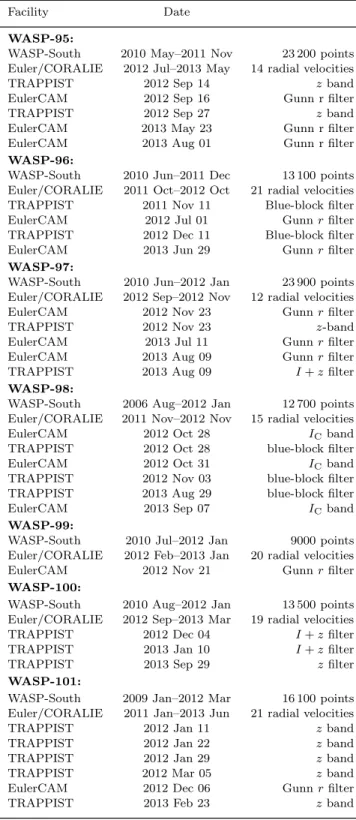
Facility Date
WASP-95:
WASP-South 2010 May–2011 Nov 23 200 points Euler/CORALIE 2012 Jul–2013 May 14 radial velocities
TRAPPIST 2012 Sep 14 zband
EulerCAM 2012 Sep 16 Gunn r filter
TRAPPIST 2012 Sep 27 zband
EulerCAM 2013 May 23 Gunn r filter
EulerCAM 2013 Aug 01 Gunn r filter
WASP-96:
WASP-South 2010 Jun–2011 Dec 13 100 points Euler/CORALIE 2011 Oct–2012 Oct 21 radial velocities TRAPPIST 2011 Nov 11 Blue-block filter
EulerCAM 2012 Jul 01 Gunn r filter
TRAPPIST 2012 Dec 11 Blue-block filter
EulerCAM 2013 Jun 29 Gunn r filter
WASP-97:
WASP-South 2010 Jun–2012 Jan 23 900 points Euler/CORALIE 2012 Sep–2012 Nov 12 radial velocities
EulerCAM 2012 Nov 23 Gunn r filter
TRAPPIST 2012 Nov 23 z-band
EulerCAM 2013 Jul 11 Gunn r filter
EulerCAM 2013 Aug 09 Gunn r filter
TRAPPIST 2013 Aug 09 I+ z filter
WASP-98:
WASP-South 2006 Aug–2012 Jan 12 700 points Euler/CORALIE 2011 Nov–2012 Nov 15 radial velocities
EulerCAM 2012 Oct 28 ICband
TRAPPIST 2012 Oct 28 blue-block filter
EulerCAM 2012 Oct 31 ICband
TRAPPIST 2012 Nov 03 blue-block filter TRAPPIST 2013 Aug 29 blue-block filter
EulerCAM 2013 Sep 07 ICband
WASP-99:
WASP-South 2010 Jul–2012 Jan 9000 points Euler/CORALIE 2012 Feb–2013 Jan 20 radial velocities
EulerCAM 2012 Nov 21 Gunn r filter
WASP-100:
WASP-South 2010 Aug–2012 Jan 13 500 points Euler/CORALIE 2012 Sep–2013 Mar 19 radial velocities
TRAPPIST 2012 Dec 04 I+ z filter
TRAPPIST 2013 Jan 10 I+ z filter
TRAPPIST 2013 Sep 29 zfilter
WASP-101:
WASP-South 2009 Jan–2012 Mar 16 100 points Euler/CORALIE 2011 Jan–2013 Jun 21 radial velocities
TRAPPIST 2012 Jan 11 zband
TRAPPIST 2012 Jan 22 zband
TRAPPIST 2012 Jan 29 zband
TRAPPIST 2012 Mar 05 zband
EulerCAM 2012 Dec 06 Gunn r filter
TRAPPIST 2013 Feb 23 zband
clear night using an array of 200mm f/1.8 lenses and a
cadence of ∼ 10 mins. Transit searching of accumulated
lightcurves leads to candidates that are passed to
TRAP-PIST (Jehin et al. 2011), a robotic 0.6-m photometric
tele-scope, which can resolve blends and check that the candidate
transits are planet-like, and to the 1.2-m Euler/CORALIE
lightcurves are then obtained with TRAPPIST and
Euler-CAM (Lendl et al. 2012). A list of the observations reported
here is given in Table 1 while the CORALIE radial velocities
are listed in Table A1.
3
THE HOST STARS
For each star, the individual CORALIE spectra were
co-added to produce a single spectrum with typical S/N of
∼
100:1 (though the fainter WASP-98, V = 13, had a S/N of
only 40:1). Our methods for spectral analysis are described
in Doyle et al. (2013). The excitation balance of the Fe i
lines was used to determine the effective temperature (T
eff),
and spectral type was estimated from T
effusing the table
in Gray (2008). The surface gravity (log g) was determined
from the ionisation balance of Fe i and Fe ii. The Ca i line
at 6439˚
A and the Na i D lines were also used as log g
di-agnostics. The metallicity was determined from equivalent
width measurements of several unblended lines.
The projected stellar rotation velocity (v sin i) was
de-termined by fitting the profiles of several unblended Fe i
lines. An instrumental FWHM of 0.11 ± 0.01 ˚
A was
deter-mined from the telluric lines around 6300˚
A.
For age estimates we use the lithium abundance and
the Sestito & Randlich (2005) calibration. We also give a
gyrochronological age, from the measured v sin i and
assum-ing that the star’s spin is perpendicular to us, so that this
is the true equatorial speed. This is then combined with the
stellar radius to give a rotational period, to compare with
the results of Barnes (2007). The results for each star are
listed in the Tables 2 to 10. We also list proper motions
from the UCAC4 catalogue of Zacharias et al. (2013). The
motions and metallicities are all compatible with the stars
being local thin-disc stars.
We searched the WASP photometry of each star for
rotational modulations by using a sine-wave fitting
algo-rithm as described by Maxted et al. (2011). We estimated the
significance of periodicities by subtracting the fitted
tran-sit lightcurve and then repeatedly and randomly permuting
the nights of observation. We found a marginally significant
modulation in WASP-95 (see Section 4.2) but not in any
of the other stars (with 95%-confidence upper limits being
typically 1 mmag).
4
SYSTEM PARAMETERS
The CORALIE radial-velocity measurements were
com-bined with the WASP, EulerCAM and TRAPPIST
photom-etry in a simultaneous Markov-chain Monte-Carlo (MCMC)
analysis to find the system parameters. For details of our
methods see Collier Cameron et al. (2007b). The
limb-darkening parameters are noted in each Table, and are taken
from the 4-parameter non-linear law of Claret (2000).
For all of our planets the data are compatible with zero
eccentricity and hence we imposed a circular orbit (see
An-derson et al. 2012 for the rationale for this). The upper limits
on the eccentricity range from 0.02 (for the V = 9.5
WASP-99) to 0.27 (for the fainter, V = 12.2, WASP-96).
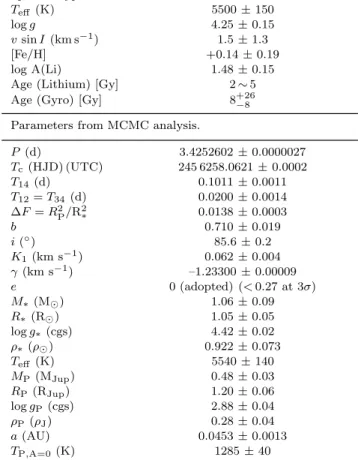
Table 2.System parameters for WASP-95. 1SWASP J222949.73–480011.0 2MASS 22294972–4800111 RA = 22h29m49.73s, Dec = –48◦00′ 11.0′′ (J2000) V mag = 10.1
Rotational modulation 2 mmag at ∼ 20.7 d pm (RA) 94.1 ± 0.9 (Dec) –8.5 ± 1.0 mas/yr Stellar parameters from spectroscopic analysis.
Spectral type G2 Teff (K) 5830 ± 140 log g 4.36 ± 0.07 vsin I (km s−1) 3.1 ± 0.6 [Fe/H] +0.14 ± 0.16 log A(Li) <0.2
Age (Lithium) [Gy] >3
Age (Gyro) [Gy] 2.4+1.7−1.0 Parameters from MCMC analysis.
P (d) 2.1846730 ± 0.0000014 Tc(HJD) (UTC) 245 6338.45851 ± 0.00024 T14(d) 0.116 ± 0.001 T12= T34(d) 0.011 ± 0.001 ∆F = R2 P/R2∗ 0.0105 ± 0.0003 b 0.19+0.21−0.13 i(◦) 88.4+1.2 −2.1 K1(km s−1) 0.1757 ± 0.0017 γ(km s−1) 6.2845 ± 0.0004 e 0 (adopted) (< 0.04 at 3σ) M∗(M⊙) 1.11 ± 0.09 R∗(R⊙) 1.13+0.08−0.04 log g∗(cgs) 4.38+0.02−0.04 ρ∗(ρ⊙) 0.78+0.04−0.13 Teff (K) 5630 ± 130 MP (MJup) 1.13+0.1−0.04 RP(RJup) 1.21 ± 0.06 log gP(cgs) 3.34+0.02−0.07 ρP(ρJ) 0.85+0..07−0.2 a(AU) 0.03416 ± 0.00083 TP,A=0(K) 1570 ± 50
Errors are 1σ; Limb-darkening coefficients were:
(Euler r) a1 = 0.701, a2 = –0.490, a3 = 1.077, a4 = –0.516 (Trap z) a1 = 0.780, a2 = –0.718, a3 = 1.082, a4 = –0.487
-0.06
0
0.06
0.6
0.8
1
1.2
1.4
Rel. mag
0.91
0.92
0.93
0.94
0.95
0.96
0.97
0.98
0.99
1
0.96
0.98
1
1.02
1.04
Relative flux
WASP
TRAPPIST
EulerCAM
TRAPPIST
EulerCAM
EulerCAM
-200
-100
0
100
200
Rel. RV (m s
-1)
CORALIE
-60
0
60
0.6
0.8
1
1.2
1.4
Bis. span
Orbital phase
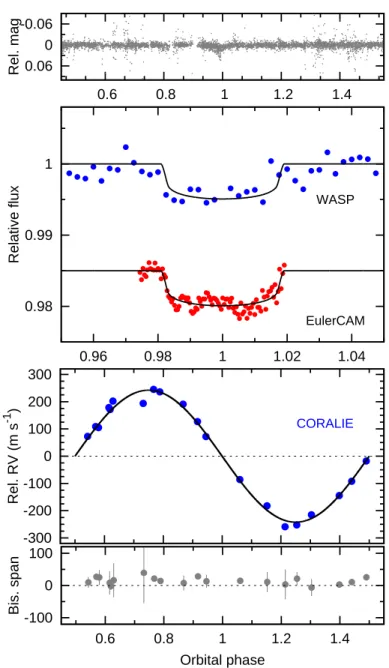
Figure 1. WASP-95b discovery data: (Top) The WASP data folded on the transit period. (Second panel) The binned WASP data with (offset) the follow-up transit lightcurves (ordered from the top as in Table 1) together with the fitted MCMC model. (Third) The CORALIE radial velocities with the fitted model. (Lowest) The bisector spans; the absence of any correlation with radial velocity is a check against transit mimics.
c
Table 3.System parameters for WASP-96. 1SWASP J000411.14–472138.2 2MASS 00041112–4721382 RA = 00h04m11.14s, Dec = –47◦21′ 38.2′′ (J2000) V mag = 12.2
Rotational modulation <1 mmag (95%) pm (RA) 23.1 ± 1.0 (Dec) 3.7 ± 1.0 mas/yr Stellar parameters from spectroscopic analysis.
Spectral type G8 Teff (K) 5500 ± 150 log g 4.25 ± 0.15 vsin I (km s−1) 1.5 ± 1.3 [Fe/H] +0.14 ± 0.19 log A(Li) 1.48 ± 0.15
Age (Lithium) [Gy] 2 ∼ 5
Age (Gyro) [Gy] 8+26−8
Parameters from MCMC analysis.
P (d) 3.4252602 ± 0.0000027 Tc(HJD) (UTC) 245 6258.0621 ± 0.0002 T14(d) 0.1011 ± 0.0011 T12= T34(d) 0.0200 ± 0.0014 ∆F = R2 P/R2∗ 0.0138 ± 0.0003 b 0.710 ± 0.019 i(◦) 85.6 ± 0.2 K1(km s−1) 0.062 ± 0.004 γ(km s−1) –1.23300 ± 0.00009 e 0 (adopted) (< 0.27 at 3σ) M∗(M⊙) 1.06 ± 0.09 R∗(R⊙) 1.05 ± 0.05 log g∗(cgs) 4.42 ± 0.02 ρ∗(ρ⊙) 0.922 ± 0.073 Teff (K) 5540 ± 140 MP (MJup) 0.48 ± 0.03 RP(RJup) 1.20 ± 0.06 log gP(cgs) 2.88 ± 0.04 ρP(ρJ) 0.28 ± 0.04 a(AU) 0.0453 ± 0.0013 TP,A=0(K) 1285 ± 40
Errors are 1σ; Limb-darkening coefficients were:
(Euler r) a1 = 0.722, a2 = –0.581, a3 = 1.203, a4 = –0.561 (Trap BB) a1 = 0.722, a2 = –0.581, a3 = 1.203, a4 = –0.561
-0.06
0
0.06
0.6
0.8
1
1.2
1.4
Rel. mag
0.93
0.94
0.95
0.96
0.97
0.98
0.99
1
0.98
1
1.02
Relative flux
WASP
TRAPPIST
EulerCAM
TRAPPIST
EulerCAM
-100
0
100
Rel. RV (m s
-1)
CORALIE
-200
-100
0
100
0.6
0.8
1
1.2
1.4
Bis. span
Orbital phase
Table 4.System parameters for WASP-97. 1SWASP J013825.04–554619.4 2MASS 01382504–5546194 RA = 01h38m25.04s, Dec = –55◦46′ 19.4′′ (J2000) V mag = 10.6
Rotational modulation <1 mmag (95%) pm (RA) 94.6 ± 1.1 (Dec) 20.8 ± 1.0 mas/yr Stellar parameters from spectroscopic analysis.
Spectral type G5 Teff (K) 5670 ± 110 log g 4.45 ± 0.08 vsin I (km s−1) 1.1 ± 0.5 [Fe/H] +0.23 ± 0.11 log A(Li) <0.85
Age (Lithium) [Gy] >5 Age (Gyro) [Gy] 11.9+16.0−8.3 Parameters from MCMC analysis.
P (d) 2.072760 ± 0.000001 Tc(HJD) (UTC) 245 6438.18683 ± 0.00018 T14(d) 0.1076 ± 0.0008 T12= T34(d) 0.011 ± 0.001 ∆F = R2 P/R2∗ 0.0119 ± 0.0002 b 0.23+0.11−0.15 i(◦) 88.0+1.3 −1.0 K1(km s−1) 0.1945 ± 0.0023 γ(km s−1) 6.80877 ± 0.00029 e 0 (adopted) (< 0.05 at 3σ) M∗(M⊙) 1.12 ± 0.06 R∗(R⊙) 1.06 ± 0.04 log g∗(cgs) 4.43 ± 0.03 ρ∗(ρ⊙) 0.93 ± 0.09 Teff (K) 5640 ± 100 MP (MJup) 1.32 ± 0.05 RP(RJup) 1.13 ± 0.06 log gP(cgs) 3.37 ± 0.04 ρP(ρJ) 0.91 ± 0.11 a(AU) 0.03303 ± 0.00056 TP,A=0(K) 1555 ± 40
Errors are 1σ; Limb-darkening coefficients were:
(Euler r) a1 = 0.700, a2 = –0.489, a3 = 1.077, a4 = –0.516 (Trap Iz) a1 = 0.778, a2 = –0.713, a3 = 1.077, a4 = –0.484
-0.06
0
0.06
0.6
0.8
1
1.2
1.4
Rel. mag
0.91
0.92
0.93
0.94
0.95
0.96
0.97
0.98
0.99
1
0.96
0.98
1
1.02
1.04
Relative flux
WASP
EulerCAM
TRAPPIST
EulerCAM
EulerCAM
TRAPPIST
-200
-100
0
100
200
Rel. RV (m s
-1)
CORALIE
-100
-50
0
50
0.6
0.8
1
1.2
1.4
Bis. span
Orbital phase
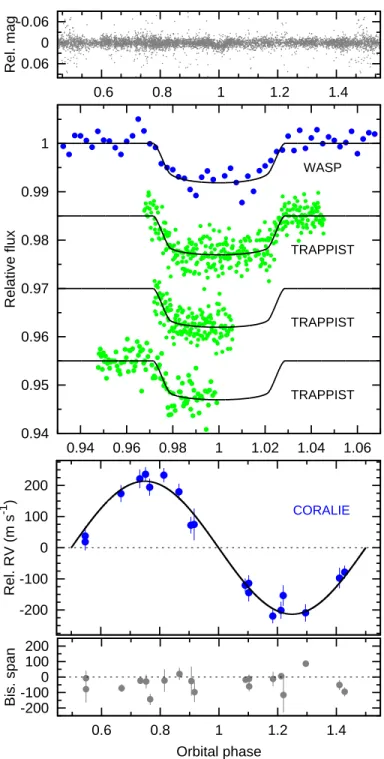
Figure 3.WASP-97b discovery data (as in Fig. 1).
c
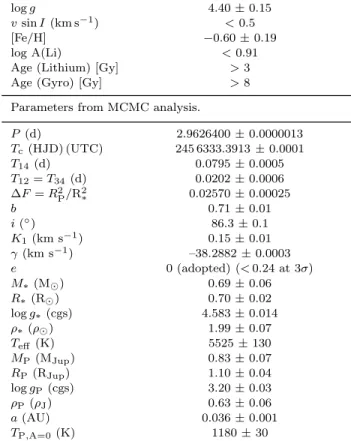
Table 5.System parameters for WASP-98. 1SWASP J035342.90–341941.7 2MASS 03534291–3419414 RA = 03h53m42.90s, Dec = –34◦19′ 41.7′′ (J2000) V mag = 13.0
Rotational modulation <2 mmag (95%) pm (RA) 32.0 ± 1.1 (Dec) –13.4 ± 1.1 mas/yr Stellar parameters from spectroscopic analysis.
Spectral type G7 Teff (K) 5550 ± 140 log g 4.40 ± 0.15 vsin I (km s−1) <0.5 [Fe/H] −0.60 ± 0.19 log A(Li) <0.91
Age (Lithium) [Gy] >3
Age (Gyro) [Gy] >8
Parameters from MCMC analysis.
P (d) 2.9626400 ± 0.0000013 Tc(HJD) (UTC) 245 6333.3913 ± 0.0001 T14(d) 0.0795 ± 0.0005 T12= T34(d) 0.0202 ± 0.0006 ∆F = R2 P/R 2 ∗ 0.02570 ± 0.00025 b 0.71 ± 0.01 i(◦) 86.3 ± 0.1 K1(km s−1) 0.15 ± 0.01 γ(km s−1) –38.2882 ± 0.0003 e 0 (adopted) (< 0.24 at 3σ) M∗(M⊙) 0.69 ± 0.06 R∗(R⊙) 0.70 ± 0.02 log g∗(cgs) 4.583 ± 0.014 ρ∗(ρ⊙) 1.99 ± 0.07 Teff (K) 5525 ± 130 MP (MJup) 0.83 ± 0.07 RP(RJup) 1.10 ± 0.04 log gP(cgs) 3.20 ± 0.03 ρP(ρJ) 0.63 ± 0.06 a(AU) 0.036 ± 0.001 TP,A=0(K) 1180 ± 30
Errors are 1σ; Limb-darkening coefficients were:
(Euler I) a1 = 0.558, a2 = –0.157, a3 = 0.576, a4 = –0.325 (Trap BB) a1 = 0.486, a2 = 0.090, a3 = 0.444, a4 = –0.294
-0.06
0
0.06
0.6
0.8
1
1.2
1.4
Rel. mag
0.88
0.89
0.9
0.91
0.92
0.93
0.94
0.95
0.96
0.97
0.98
0.99
1
0.98
1
1.02
Relative flux
WASP
EulerCAM
TRAPPIST
EulerCAM
TRAPPIST
TRAPPIST
EulerCAM
-200
-100
0
100
200
Rel. RV (m s
-1)
CORALIE
-200
-100
0
100
0.6
0.8
1
1.2
1.4
Bis. span
Orbital phase
Table 6.System parameters for WASP-99. 1SWASP J023935.44–500028.8 2MASS 02393544–5000288 RA = 02h39m35.44s, Dec = –50◦00′ 28.8′′ (J2000) V mag = 9.5
Rotational modulation <2 mmag (95%) pm (RA) –2.7 ± 1.1 (Dec) –38.1 ± 0.9 mas/yr Stellar parameters from spectroscopic analysis.
Spectral type F8 Teff (K) 6150 ± 100 log g 4.3 ± 0.1 vsin I (km s−1) 6.8 ± 0.5 [Fe/H] +0.21 ± 0.15 log A(Li) 2.52 ± 0.08
Age (Lithium) [Gy] 1 ∼ 3
Age (Gyro) [Gy] 1.4+1.1−0.6 Parameters from MCMC analysis.
P (d) 5.75251 ± 0.00004 Tc(HJD) (UTC) 245 6224.9824 ± 0.0014 T14(d) 0.219 ± 0.003 T12= T34(d) 0.0137+0.0017−0.0006 ∆F = R2 P/R 2 ∗ 0.0041 ± 0.0002 b 0.18 ± 0.17 i(◦) 88.8 ± 1.1 K1(km s−1) 0.2422 ± 0.0017 γ(km s−1) 24.9610 ± 0.0002 e 0 (adopted) (< 0.02 at 3σ) M∗(M⊙) 1.48 ± 0.10 R∗(R⊙) 1.76+0.11−0.06 log g∗(cgs) 4.12+0.02−0.04 ρ∗(ρ⊙) 0.27+0.02−0.04 Teff (K) 6180 ± 100 MP (MJup) 2.78 ± 0.13 RP(RJup) 1.10+0.08−0.05 log gP(cgs) 3.72+0.03−0.06 ρP(ρJ) 2.1 ± 0.3 a(AU) 0.0717 ± 0.0016 TP,A=0(K) 1480 ± 40
Errors are 1σ; Limb-darkening coefficients were:
(Euler r) a1 = 0.590, a2 = 0.036, a3 = 0.306, a4 = –0.205
-0.06
0
0.06
0.6
0.8
1
1.2
1.4
Rel. mag
0.98
0.99
1
0.96
0.98
1
1.02
1.04
Relative flux
WASP
EulerCAM
-300
-200
-100
0
100
200
300
Rel. RV (m s
-1)
CORALIE
-100
0
100
0.6
0.8
1
1.2
1.4
Bis. span
Orbital phase
Figure 5.WASP-99b discovery data (as in Fig. 1).
c
Table 7.System parameters for WASP-100. 1SWASP J043550.32–640137.3 2MASS 04355033–6401373 RA = 04h35m50.32s, Dec = –64◦01′ 37.3′′ (J2000) V mag = 10.8
Rotational modulation <1 mmag (95%) pm (RA) 11.9 ± 1.0 (Dec) –2.2 ± 2.3 mas/yr Stellar parameters from spectroscopic analysis.
Spectral type F2 Teff (K) 6900 ± 120 log g 4.35 ± 0.17 vsin I (km s−1) 12.8 ± 0.8 [Fe/H] −0.03 ± 0.10 log A(Li) <1.80
Age (Lithium) [Gy] too hot
Age (Gyro) [Gy] too hot
Parameters from MCMC analysis.
P (d) 2.849375 ± 0.000008 Tc(HJD) (UTC) 245 6272.3395 ± 0.0009 T14(d) 0.160 ± 0.005 T12= T34(d) 0.021 ± 0.005 ∆F = R2 P/R 2 ∗ 0.0076 ± 0.0005 b 0.64+0.08−0.16 i(◦) 82.6+2.6 −1.7 K1(km s−1) 0.213 ± 0.008 γ(km s−1) 29.9650 ± 0.0002 e 0 (adopted) (< 0.10 at 3σ) M∗(M⊙) 1.57 ± 0.10 R∗(R⊙) 2.0 ± 0.3 log g∗(cgs) 4.04 ± 0.11 ρ∗(ρ⊙) 0.20+0.10−0.05 Teff (K) 6900 ± 120 MP (MJup) 2.03 ± 0.12 RP(RJup) 1.69 ± 0.29 log gP(cgs) 3.21 ± 0.15 ρP(ρJ) 0.4 ± 0.2 a(AU) 0.0457 ± 0.0010 TP,A=0(K) 2190 ± 140
Errors are 1σ; Limb-darkening coefficients were:
(Trap Iz) a1 = 0.542, a2 = 0.086, a3 = 0.001, a4 = –0.055
-0.06
0
0.06
0.6
0.8
1
1.2
1.4
Rel. mag
0.94
0.95
0.96
0.97
0.98
0.99
1
0.94
0.96
0.98
1
1.02
1.04
1.06
Relative flux
WASP
TRAPPIST
TRAPPIST
TRAPPIST
-200
-100
0
100
200
Rel. RV (m s
-1)
CORALIE
-200
-100
0
100
200
0.6
0.8
1
1.2
1.4
Bis. span
Orbital phase
Table 8.System parameters for WASP-101. 1SWASP J063324.26–232910.2 2MASS 06332426–2329103 RA = 06h33m24.26s, Dec = –23◦29′ 10.2′′ (J2000) V mag = 10.3
Rotational modulation <1 mmag (95%) pm (RA) –2.3 ± 0.9 (Dec) 23.3 ± 1.2 mas/yr Stellar parameters from spectroscopic analysis.
Spectral type F6 Teff (K) 6380 ± 120 log g 4.31 ± 0.08 vsin I (km s−1) 12.4 ± 0.5 [Fe/H] +0.20 ± 0.12 log A(Li) 2.80 ± 0.09
Age (Lithium) [Gy] 0.5 ∼ 2 Age (Gyro) [Gy] 0.9+1.3−0.4 Parameters from MCMC analysis.
P (d) 3.585722 ± 0.000004 Tc(HJD) (UTC) 245 6164.6934 ± 0.0002 T14(d) 0.113 ± 0.001 T12= T34(d) 0.023 ± 0.001 ∆F = R2 P/R2∗ 0.0126 ± 0.0002 b 0.736 ± 0.013 i(◦) 85.0 ± 0.2 K1(km s−1) 0.054 ± 0.004 γ(km s−1) 42.6373 ± 0.0006 e 0 (adopted) (< 0.03 at 3σ) M∗(M⊙) 1.34 ± 0.07 R∗(R⊙) 1.29 ± 0.04 log g∗(cgs) 4.345 ± 0.019 ρ∗(ρ⊙) 0.626 ± 0.043 Teff (K) 6400 ± 110 MP (MJup) 0.50 ± 0.04 RP(RJup) 1.41 ± 0.05 log gP(cgs) 2.76 ± 0.04 ρP(ρJ) 0.18 ± 0.02 a(AU) 0.0506 ± 0.0009 TP,A=0(K) 1560 ± 35
Errors are 1σ; Limb-darkening coefficients were:
(Trap z) a1 = 0.640, a2 = –0.172, a3 = 0.302, a4 = –0.174 (Euler r) a1 = 0.548, a2 = 0.238, a3 = –0.010, a4 = –0.067
-0.06
0
0.06
0.6
0.8
1
1.2
1.4
Rel. mag
0.89
0.9
0.91
0.92
0.93
0.94
0.95
0.96
0.97
0.98
0.99
1
0.98
1
1.02
Relative flux
WASP
TRAPPIST
TRAPPIST
TRAPPIST
TRAPPIST
EulerCAM
TRAPPIST
-100
0
100
Rel. RV (m s
-1)
CORALIE
-100
0
100
0.6
0.8
1
1.2
1.4
Bis. span
Orbital phase
Figure 7.WASP-101b discovery data (as in Fig. 1).
c
Figure 8. Evolutionary tracks on a modified H–R diagram (ρ−1/3∗ versus Teff). The red lines are for solar metallicity, [Fe/H] = 0, showing (solid lines) mass tracks with the labelled mass, and (dashed lines) age tracks for log(age) = 7.85 & 9.15 yrs. The green lines are the same but for a higher metallicity of [Fe/H] = +0.19 and log(age) = 7.85, 9.4 & 9.8. The blue lines are the same for a lower metallicity of [Fe/H] = –0.6, and log(age) = 7.85 & 9.8 yrs. Stars are colour coded to the nearest of these metallicites. The models are from Girardi et al. (2000).
The fitted parameters were T
c, P , ∆F , T
14, b, K
1, where
T
cis the epoch of mid-transit, P is the orbital period, ∆F
is the fractional flux-deficit that would be observed during
transit in the absence of limb-darkening, T
14is the total
transit duration (from first to fourth contact), b is the impact
parameter of the planet’s path across the stellar disc, and
K
1is the stellar reflex velocity semi-amplitude.
The transit lightcurves lead directly to stellar density
but one additional constraint is required to obtain stellar
masses and radii, and hence full parametrisation of the
sys-tem. Here we use the calibrations presented by Southworth
(2011), based on masses and radii of eclipsing binaries.
For each system we list the resulting parameters in
Ta-bles 2 to 8, and plot the resulting data and models in
Fig-ures 1 to 7. We also refer the reader to Smith et al. (2012)
who present an extensive analysis of the effect of red noise in
the transit lightcurves on the resulting system parameters.
As in past WASP papers we plot the spectroscopic T
eff,
and the stellar density from fitting the transit, against the
1
10
100
Period [d]
0.00
0.01
0.02
0.03
0.04
0.05
0.06
P
n−0.2 0.0
0.2
0.4
0.6
0.8
1.0
1.2
Phase
0.04
0.02
0.00
−0.02
−0.04
Magnitude
Figure 9.The possible rotational modulation in WASP-95 at a period of 20.7 d. The horizontal lines are the 10% (dashed) and 1% (dot-dashed) false-alarm probabilities. The upper plot is the periodogram (the y-scale being the fraction of the scatter in the data that is modelled by a sinusoidal variation, weighted by the standard errors); the lower plot is the data folded on the 20.7-d period.
4.1
WASP-95
WASP-95 is a V = 10.1, G2 star with an [Fe/H] of +0.14
±
0.16. It may be slightly evolved, with an age of several
billion years.
WASP-95 shows a possible rotational modulation at a
period of 20.7 d and an amplitude of 2 mmag in the WASP
data (Fig. 9), though this is seen in only one of the two years
of data. The values of v sin i from the spectroscopic analysis
(assuming that the spin axis is perpendicular to us) and the
stellar radius from the transit analysis combine to a rotation
period of 19.7 ± 3.9 d, which is compatible with the possible
rotational modulation.
4.2
WASP-96
WASP-96 is fainter G8 star, at V = 12.2, with an [Fe/H] of
+0.14 ± 0.19. The planet is a typical hot Jupiter (P
orb=
3.4 d, M = 0.5 M
Jup, R = 1.2 R
Jup).
4.3
WASP-97
WASP-97 is a V = 10.6, G5 star, with an above-solar
metal-licity of [Fe/H] of +0.23 ± 0.11. The planet is again a typical
hot Jupiter (P
orb= 2.1 d, M = 1.3 M
Jup, R = 1.1 R
Jup).
4.4
WASP-98
At V = 13.0, 98 is at the faint end of the
WASP-South/CORALIE survey. The spectral analysis has a lower
S/N of only 40 and so is less reliable. It appears to be
excep-tionally metal poor ([Fe/H] = –0.6 ± 0.19) for a transit host
star. The spectral analysis suggests G7, though the transit
parameters lead to a lower mass of 0.7 M
⊙. The planet is a
typical hot Jupiter having a high-impact (b = 0.7) transit.
4.5
WASP-99
WASP-99 is the brightest host star reported here, at V =
9.5. Spectral analysis suggests that it is an F8 star with
[Fe/H] of +0.21 ± 0.15, though the transit analysis gives a
higher mass (M = 1.5 M
⊙) and an expanded radius (R =
1.8 R
⊙). The planet is relatively massive (M = 2.8 M
Jup),
though its mass and radius are similar to those of many
known planets.
The transit of WASP-99b is the shallowest yet found
by WASP-South, at 0.0041 ± 0.0002, along with that of
WASP-72b at 0.0043 ± 0.0004 (Gillon et al. 2013).
4.6
WASP-100
WASP-100 is a V = 10.8, F2 star of solar metallicity. The
planet is a typical bloated hot Jupiter (P
orb= 2.8 d, M =
2.0 M
Jup, R = 1.7 R
Jup) with a high irradiation (see, e.g.,
West et al. 2013).
4.7
WASP-101
WASP-101 is a V = 10.3, F6 star with [Fe/H] = +0.20 ±
0.12. The analysis is compatible with an unevolved
main-sequence star. The planet is a bloated, low-mass planet (P
orb= 3.6 d, M = 0.50 M
Jup, R = 1.4 R
Jup).
5
COMPLETENESS
With the WASP survey now passing WASP-100 we can ask
how complete the survey methods are and how many planets
we are missing. A full discussion of selection effects is a large
topic and is not attempted here, but we can use the HAT
project as a straightforward check on our techniques. The
HAT project (Bakos et al. 2004) is very similar in conception
and hardware to WASP, and thus whether a HAT planet is
also detected by us gives an indication of how many we are
overlooking.
0 5000 10000 15000 20000 9 10 11 12 13 WASP points V mag 1 37 38 19 15 9Figure 10.The number of WASP data points on each HAT planet as a function of magnitude. Red circles denote that the planet is detected by WASP, blue triangles are marginal detec-tions, black squares are non-detections. Some planets are labelled by their HAT number.
Fig. 11 shows, for each HAT planet (up to
HAT-P-46 and HATS-3b), the number of data points it has in
the WASP survey and whether we also detect it. There is
some level of subjectivity in claiming a detection, since all
WASP candidates are scrutinised by eye, and thus two
plan-ets are shown as marginal detections. Most non-detections
result from there being little or no WASP data (< 6000 data
points), but it is worthwhile to review the remaining 7 cases.
HAT-P-1 (Bakos et al. 2007) is bright and has 14 000
points in WASP data. It isn’t detected owing to some
ex-cess noise in some parts of our automated photometry, which
prevents the transit-search algorithm from finding the
tran-sits. HAT-P-9b (Shporer et al. 2009) has V = 12.3 and there
are 11 000 WASP points. There is excess noise in some of the
WASP photometry, preventing the search algorithm finding
the transit. These two are the worst failures of the WASP
techniques applied to the HAT sample.
HAT-P-37 (Bakos et al. 2012) at V = 13.2 is fainter
than any WASP planet, and also has a brighter eclipsing
bi-nary 68
′′away, which misleads the WASP search algorithms.
HAT-P-38 (Sato et al. 2012) is relatively faint (V = 12.6)
and there is relatively limited WASP data (9000 points).
Of the two marginal detections, HAT-P-19b (Hartman
et al. 2011) has 12 000 WASP points but is faint (V = 12.9)
and has an orbital period of 4.008 d. As a single-longitude
survey, WASP’s sampling hampers the finding of integer-day
periods. HAT-P-15b (Kov´
acs et al. 2010) is also below 12th
magnitude (V = 12.2), and has relatively sparse coverage
cby WASP (9000 points), and also has a long orbital of 10.86
d, giving fewer transits than the typical 2–5-d hot Jupiters.
Thus, in summary, at brighter than V = 12.8 and given
10 000 WASP points (roughly two seasons of data) we fail
to detect only 2 out of 23 HAT-discovered planets (note
that the number 23 doesn’t include independent
discover-ies by HAT of WASP planets). Thus we conclude that, in
well-covered regions of sky, the WASP-South survey
tech-niques give fairly complete discoveries for the sort of planets
findable by WASP-like surveys. That means hot Jupiters
around stars in the magnitude range V = 9–13, and
exclud-ing crowded areas of sky such as the galactic plane. It also
applies only to stars later than mid F, since hotter stars
don’t give good RV signals.
The lower period limit of 0.8 d is likely a real cut-off
in the distribution of hot Jupiters (e.g., Hellier et al. 2011),
since we routinely look for candidates down to periods of 0.5
d. The longer period limit is primarily set by the amount
of observational coverage, and our completeness will drop
off above P
orb∼
7 d, though this could increase to ‘warm’
Jupiters beyond ∼ 10 d as WASP continues to accumulate
data.
The upper limit in planetary size is also likely a real
fea-ture of hot Jupiters, given the number of systems found with
R
= 1.8–2.0 R
Jup, but not above that range. The lower size
limit of WASP discoveries is set primarily by red noise and
so is harder to evaluate. Fig. 12 shows the transit depths
of WASP planets, suggesting that we have a good
discov-ery probability down to depths of ∼ 0.5% in the magnitude
range V = 9–12. This is sufficient for R ∼
> 0.9 R
Jupgiven
R
∗<
1.3 R⊙, and ∼
> 0.7 R
Jupgiven < 1.0 R⊙, and thus is
sufficient for most hot Jupiters.
ACKNOWLEDGEMENTS
WASP-South is hosted by the South African Astronomical
Observatory and we are grateful for their ongoing support
and assistance. Funding for WASP comes from consortium
universities and from the UK’s Science and Technology
Fa-cilities Council. TRAPPIST is funded by the Belgian Fund
for Scientific Research (Fond National de la Recherche
Sci-entifique, FNRS) under the grant FRFC 2.5.594.09.F, with
the participation of the Swiss National Science Fundation
(SNF). M. Gillon and E. Jehin are FNRS Research
Asso-ciates. A.H.M.J. Triaud is a Swiss National Science
Founda-tion Fellow under grant PBGEP2-145594
REFERENCES
Anderson D. R. et al., 2012, MNRAS, 422, 1988
Bakos G. `A., Noyes R. W., Kov´acs G., Stanek K. Z., Sasselov, D. D., Domsa, I., 2004, PASP, 116, 266
Bakos, G. ´A. et al., 2007, ApJ, 656, 552 Bakos, G. ´A. et al., 2012, AJ, 144, 19 Barnes, S.A. 2007, ApJ, 669, 1167 Claret, A., 2000, A&A, 363, 1081
Collier Cameron, A., et al., 2007a, MNRAS, 375, 951 Collier Cameron, A., et al., 2007b, MNRAS, 380, 1230 Doyle, A.P. et al. 2013, MNRAS,, 428, 3164
Gillon, M., et al., 2013, A&A, 552, A82
0 0.01 0.02 0.03 8 9 10 11 12 13 Fractional depth V mag
Figure 11.The transits depths of WASP planets as a function of host-star magnitude.
Gray D.F., 2008, The observation and analysis of stellar photo-spheres, 3rd Edition (Cambridge University Press)
Hartman, J. D. et al., 2011, ApJ, 726, 52 Hellier, C. et al., 2012, MNRAS, 426, 739 Hellier, C. et al., 2011, A&A, 535, L7 Jehin, E. et al., 2011, Messenger, 145, 2 Kov´acs, G. et al., 2010, ApJ, 724, 866 Lendl, M. et al., 2012, A&A, 544, A72 Maxted, P.F.L. et al. 2011, PASP, 123, 547 Pollacco, D., et al., 2006, PASP, 118, 1407 Pollacco, D., et al., 2008, MNRAS, 385, 1576 Sato, B. et al., 2012, PASJ, 64, 97
Sestito, P. & Randlich, S., 2005, A&A, 442, 615 Shporer, A., et al., 2009, ApJ, 690, 1393 Smith A. M. S. et al. 2012, AJ, 143, 81 Southworth J., 2011, MNRAS, 417, 2166
Zacharias, N., Finch, C. T., Girard, T. M., Henden, A., Bartlett, J. L., Monet, D. G., Zacharias, M. I. 2013, AJ, 145, 44 West, R. G. et al. 2013, A&A, submitted